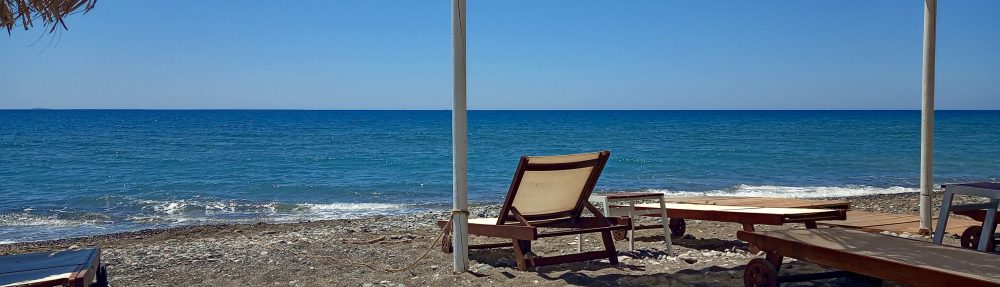

If you close your eyes when you’re in rural Greece, you can usually tell what time of year it is by the sounds that reach your ears. No one who’s lived here for any length of time could fail to understand what’s happening on all the hillsides, in all the groves and valleys, when they hear the familiar sound of the whirring ‘agitators,’ as I call them, those long implements that look like giant hairbrushes on aluminium poles that are operated by electricity, usually supplied by a petrol/diesel generator that’s often sitting on the back of a nearby 4×4, which is the kind of vehicle that’s necessary in order to negotiate the rough terrain that it has to cross to get to the most remote of the olive groves that need harvesting.
Of course, way back in the mists of time, well, a few decades ago anyway, before the invention of these ‘agitators,’ the olives would be harvested for centuries with the use of ten-foot long whips of flexible wood, cut from the kind of shrub or tree that produces primarily straight shoots, and the harvesters would literally whack the branches above them to get the fruit to disconnect and plummet to the waiting nets that have been spread all around the tree on the ground below. I referred to harvesting olives in this traditional manner in my novel ‘Eve of Deconstruction.’ Having harvested olives a few times myself, I can also vouch for the fact that not a few of those precious little balls of oil in fruit-form will clout you on the head and slip down the back of your t-shirt now and again.
Harvesting olives is a messy business. Once the harvesters are happy that the tree has surrendered all the fruit that it’s going to, there follows the business of gathering up the nets, folding them gently as you go, to get all the olives to roll together into a huge (hopefully, anyway) pile. In the harvesting process, the heart will have been cut out from the tree to enable light to get into the middle and make next year’s fruit ripen. I say ‘next year’s,’ although most olive trees are harvested every second year. The thickest of the boughs and branches that are cut from each tree can be used this very winter in a domestic open fire or log-burner, because olive wood is uniquely devoid of the kind of sap that makes most wood need at least a year to ‘dry out’ before it can be burned without causing thick smoke and an all-pervasive smell caused by the sap still remaining in the wood.
Right from our veranda this past couple of days we’ve seen early olive harvesters getting stuck into the work from soon after dawn (see photo at the top of this post). At around eleven in the morning the women arrived from the village with a packed lunch and some drinks, and the team doing the harvesting took a while to sit on upturned crates or the back of the pickup while they chewed on their bread, cheese, olives, tomatoes etc and drank coffee, or even raki or retsina. We often see whole families harvesting together too, where the men set about the trees with chainsaws and agitators, and the women get busy collecting the olives that have plummeted to the nets below and either pour them into crates or sacks for transportation to the mill.


The olive harvest is a joyous time, even though it’s extremely tough work. When Yvonne and I did it back on Rhodes, we seldom got home in the late afternoon without a selection of scratches and scrapes along both of our forearms, and our limbs would ache from the exertion. Olive harvesting is not for the physically feeble. As I write this on Tuesday November 15th, it’s a month to the day since we last had rain, and that was the horrendous storm that wreaked havoc across many of the towns and villages mainly to the west and north of the island.
The lack of rain makes the harvesting job easier and less messy, although some rain is good for finally fattening the fruit before it’s ready for harvesting. Many of the olive trees on the hillsides around the village here are absolutely laden with fruit, but much of it is still green and hasn’t fully ripened yet. This is most likely a result of the lack of rains since the summer season ended. We hear tell that it’s going to be a bumper year generally though, mainly due to last winter having been so wet. Sounds good to me, as it means that Dimitri and his mum Maria, our neighbours below, will have no problem supplying us with our olive oil requirements for the coming year.
Our other neighbour who’s also called Maria, the one who works at a hotel in Elounda during the tourist season, she still has work until the end of this month, which also involves closing the hotel up for the winter, but she is now harvesting her olives on the weekends too. Let no one tell you that Greeks are lazy people. Our hearts go out to her for having to work so hard and for so many hours. We have been sitting on our sun terrace taking our morning coffee with the cat on a few occasions this past week, only to see Maria come and go in her beaten up old Citroën Saxo, with barely a few minutes spent in her home. While there she has to check on her mum Evangelia too, of course, who, as I’ve mentioned many times, is well into her mid eighties.
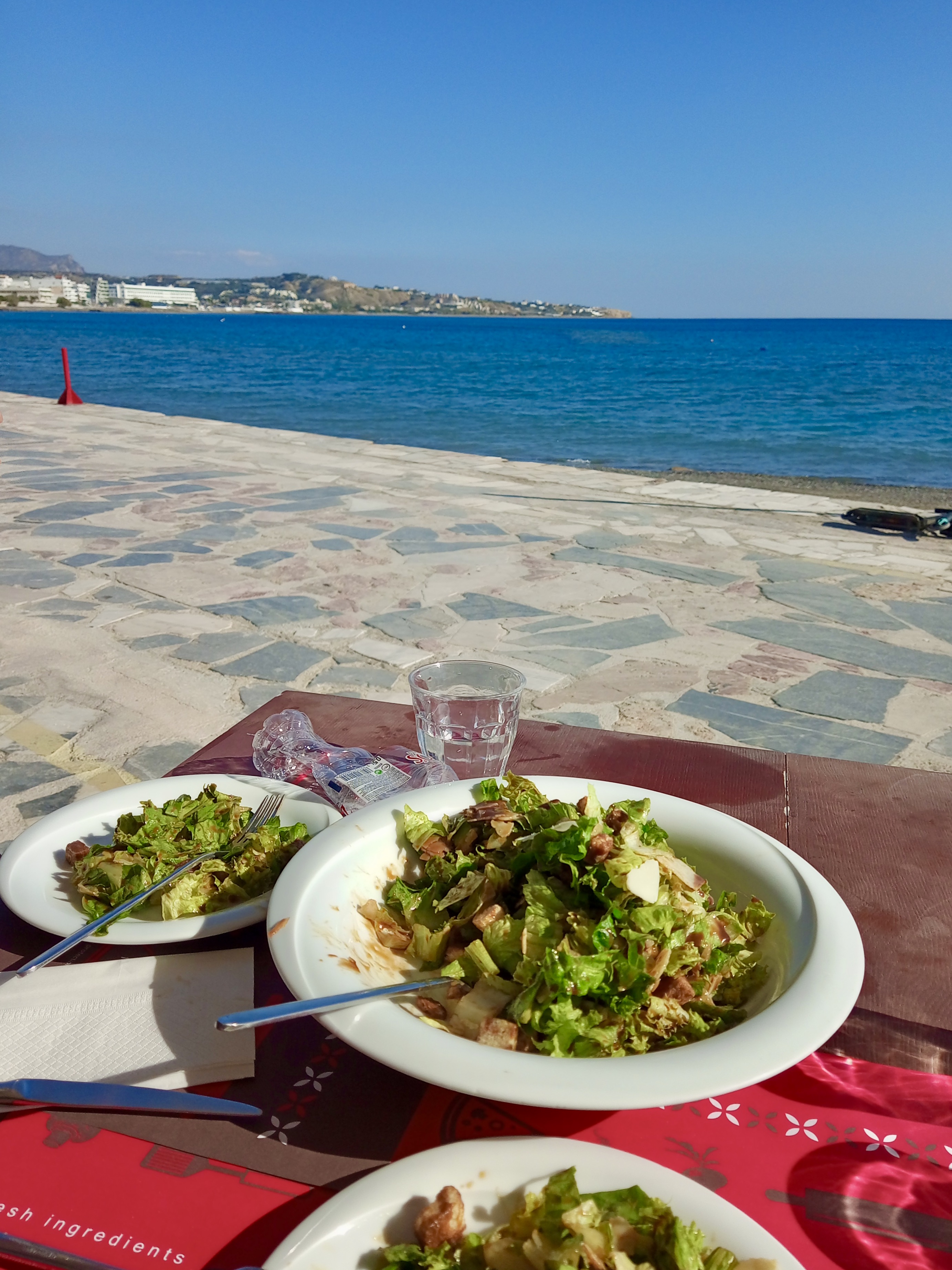
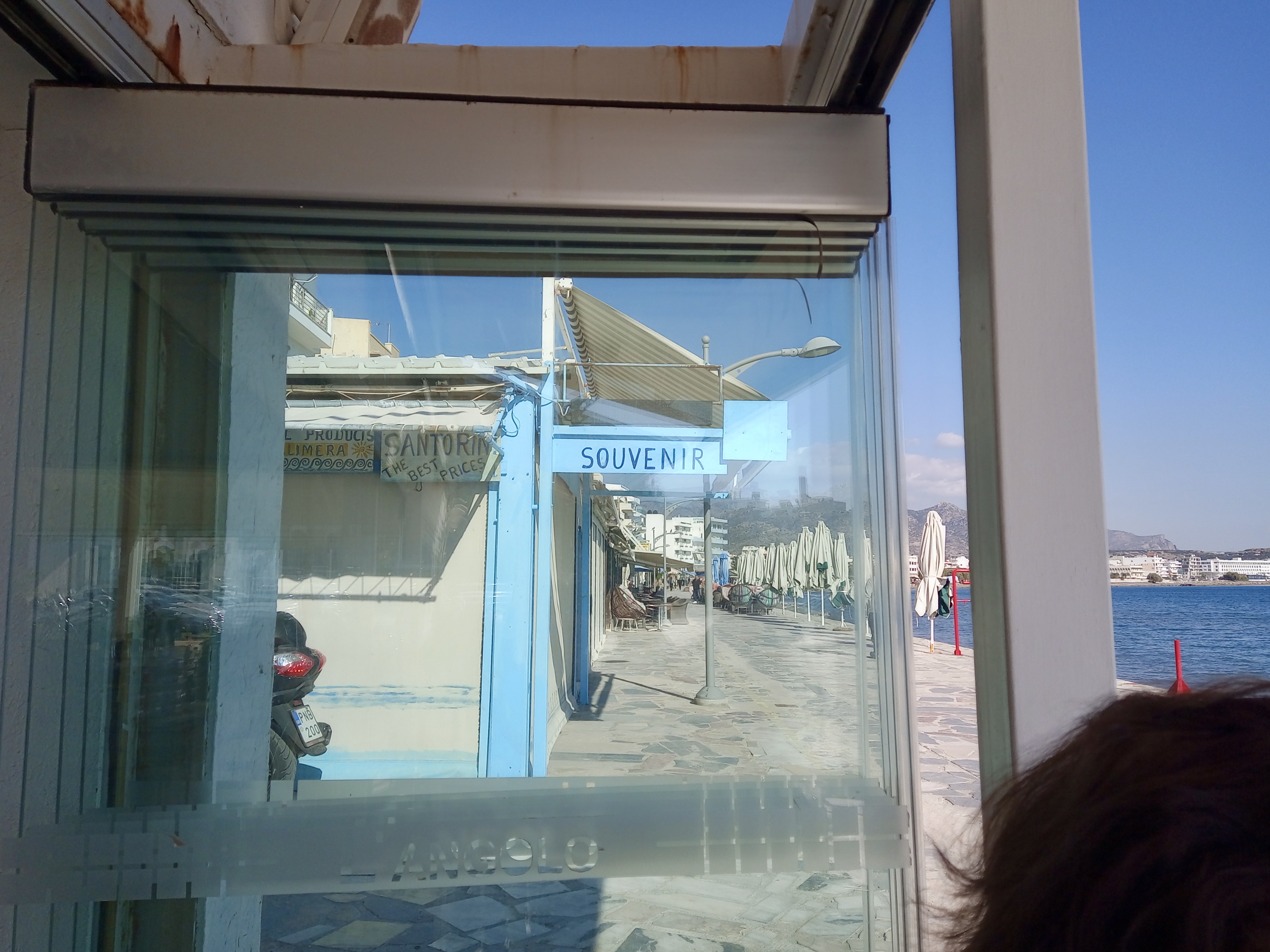
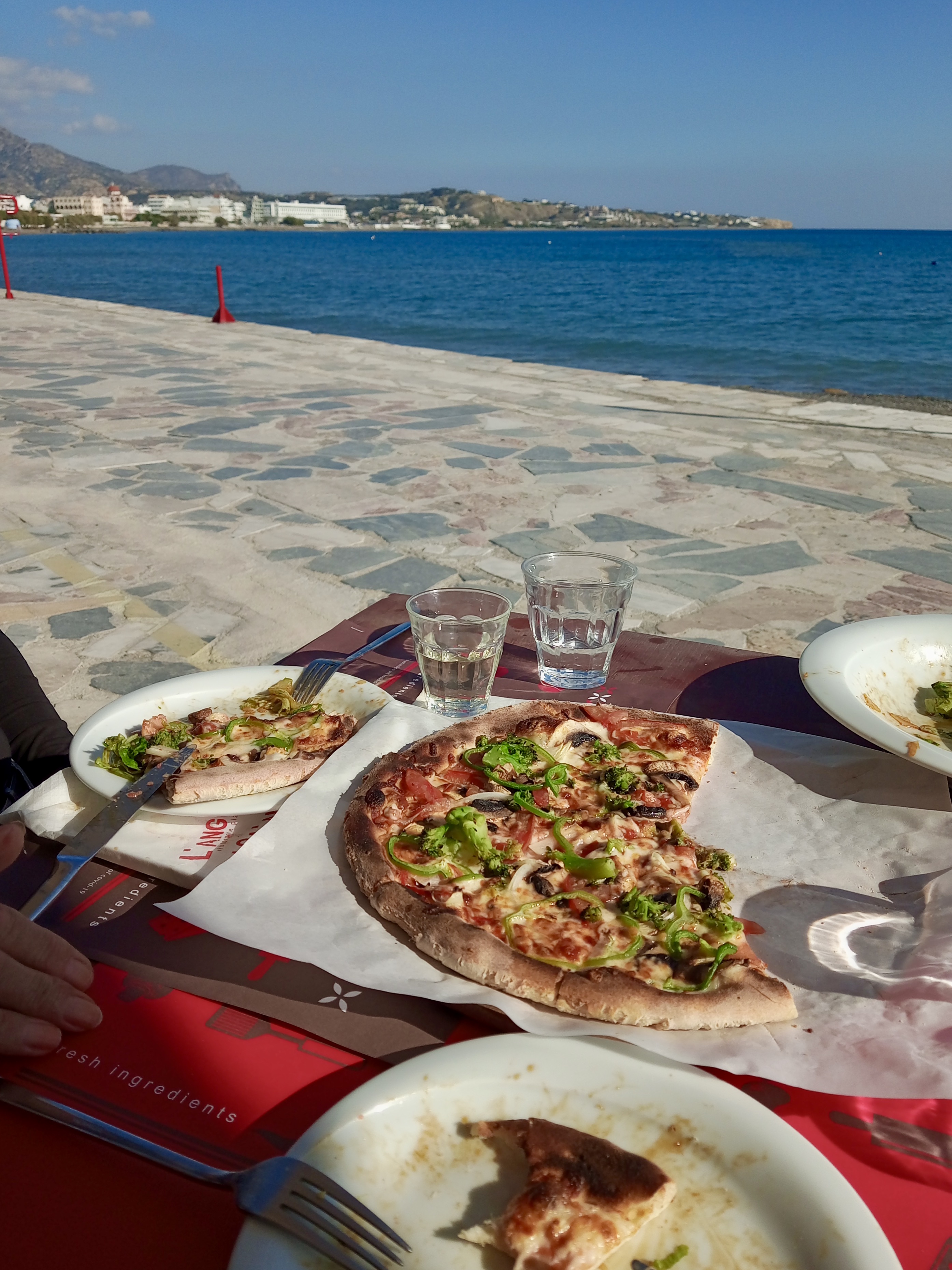
On Sunday we ate out at L’Angolo on the seafront at lunchtime. It would have been hard to imagine a more perfect day, or a more perfect lunch, in the November sunshine. So the first three photos below are of that lunch…
Before I post a few more photos, I just wanted to mention a worrying story we heard from the village of Kalo Horio, which is just over the hill from us, on the way down to Istro, on the coast of Mirabello Bay. This summer here on Crete we’ve seen many more wasps, the kind you normally see in the UK in summer, than is normal. Frankly, in over seventeen years of living in the Southern Aegean, and a few decades more of having spent a lot of time here during the summer season, I can confidently say that the ‘UK’ wasp is a rare sight on the Greek islands, something for which we’ve always been grateful, as they can be a pesky nuisance when you’re spending most of your time out of doors. This year, though, we’ve seen them regularly in the garden, and often when dining out at restaurants. I had thought that it was just us thinking that they were abnormally greater in number, until, that is, I read an article in the local press here in Lasithi that was talking about the increase in the occurrence of wasps (of the UK variety) this year.
After having referred to the fact that this kind of wasp had indeed proven to be much more common than normal here in Crete this summer, the article told of a beekeeper from Kalo Horio who was horrified to find that a colony of the things had invaded one of his beehives, killed all the bees and eaten all the honey. Now that is worrying, right? I can’t help thinking that it’s yet another indication of the effects of climate change. Here’s hoping that the wasps don’t continue to grow in number, because who knows what effect that might have on the honey industry, not to mention spoiling many an al fresco lunch or dinner party.
Let’s move on to a few photos…

Above: In the previous post I showed a photo of our Chrysanthemums in the upper garden, well, we also have some in a pot on the edge of the terrace in the lower garden, and I loved the light which filtered through the olive trees at sunset the other day as – just for a few moments – it illuminated the ‘chrysanth’ blooms in all their November glory.

Above: Another from the photo archive. in 1997 we spent a holiday on Thassos, and this was taken during a lunch out in the village of Theologos, up in the hills. Apart from us and the couple we were dining with, all the diners were from Germany, and Yvonne-Maria asked the taverna owner to put on some music to which she could dance the Kalamatiano, and he kindly obliged. While she got on with livening the place up a bit, the ‘Deutcha-diners‘ seemed to be trying their best not to notice, not that this bothered my beloved one jot, of course. The taverna owner even offered her a job, but she refused.
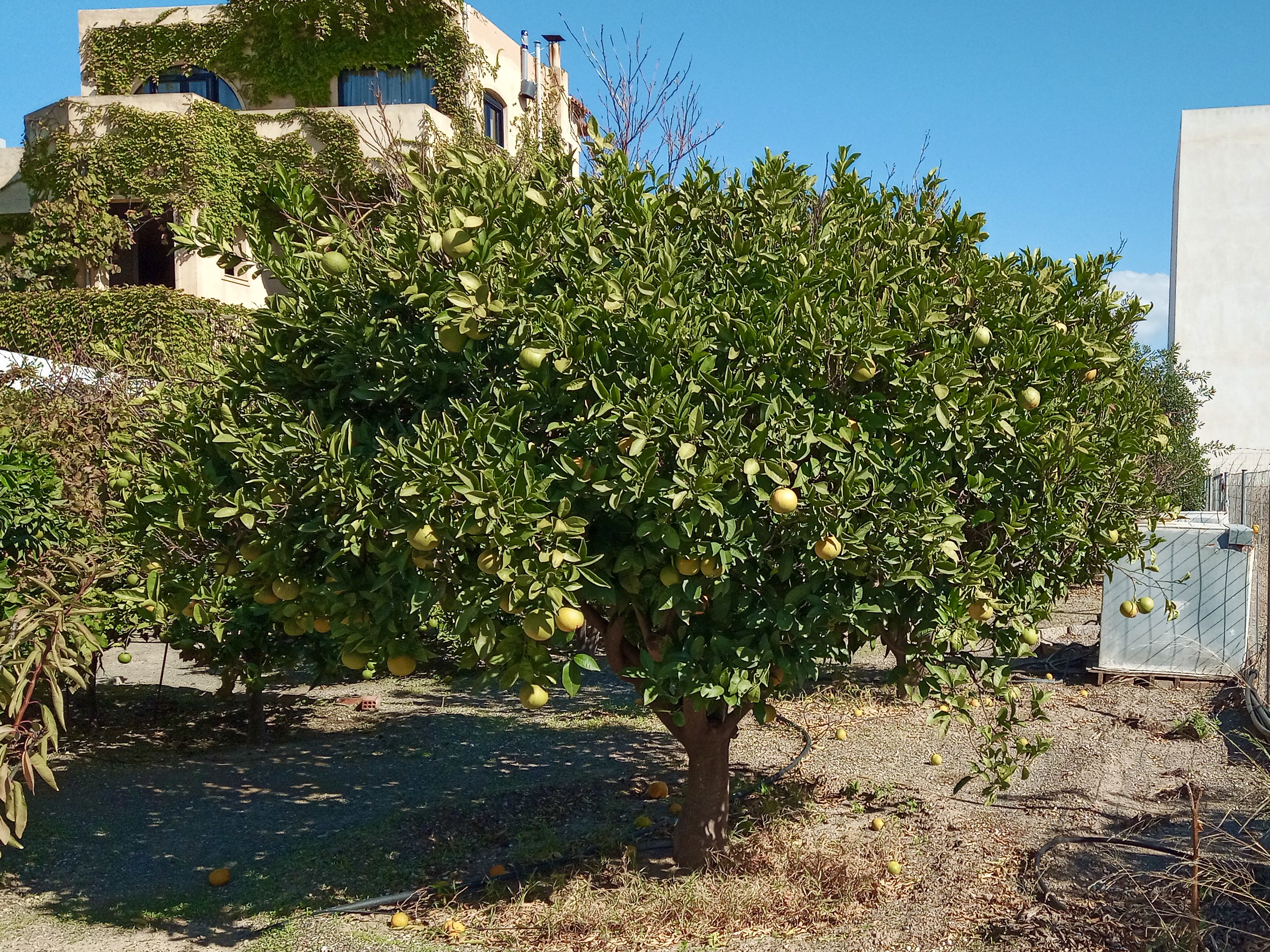
Above: Another beautifully-proportioned orange tree in a garden on the edge of Ierapetra town, almost ripe for harvesting.
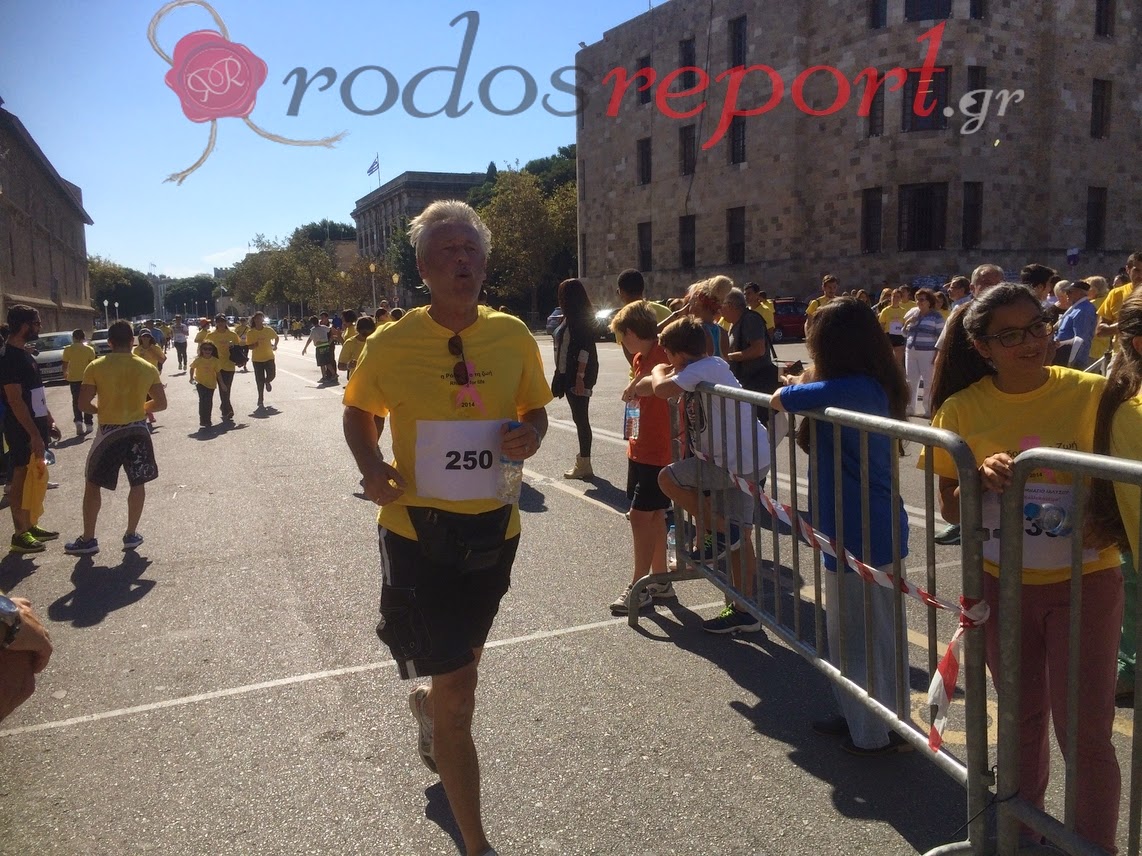
Above: And finally, here’s one from 2014, when we ran the Rhodes For Life charity run, which takes place every November. The expression on my face tells you that I was just crossing the finishing line!
•
My official web site: https://johnphilipmanuel.wixsite.com/works
Here’s my Amazon Author Page.
 Accretions