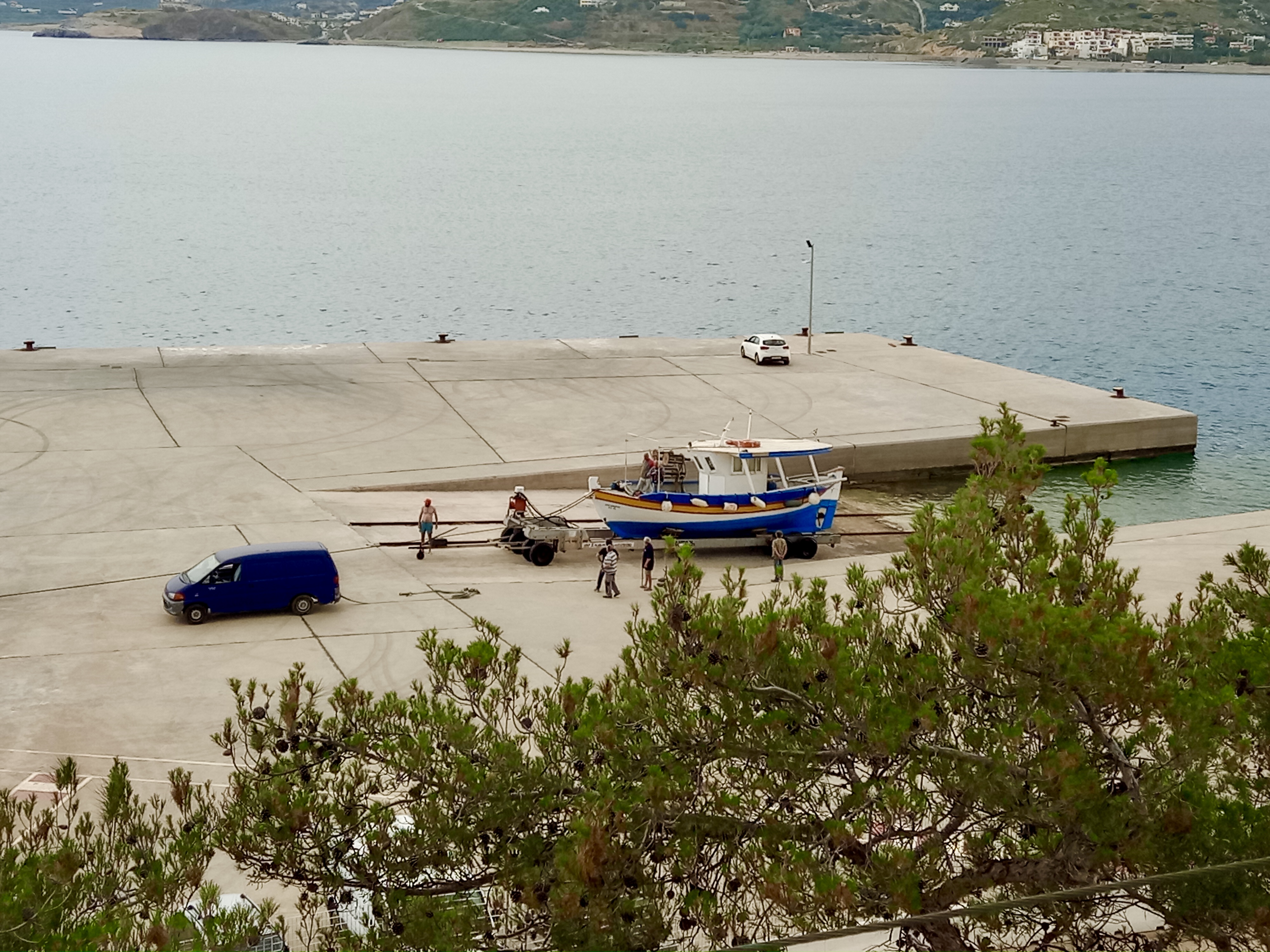
Sitting on our modest little veranda at the Nora Hotel, with a panoramic view of the seafront restaurants, bars and beach southwards to our far right, round through the hills straight across the bay to the east, where one can see the road that winds its way along the coast from Sitia and then up through the hills towards Palekastro and Vai, looking directly downwards we could see the vehicles and foot passengers on the quayside as the numbers would grow in anticipation of the arrival of the ferry either to Kassos, Karpathos and on to Rhodes, or back the other way towards Heraklion, the Cyclades and eventually Piraeus. Looking to our left we could see the open sea beyond the impressive harbour wall that ensures that the waters directly below the hotel remain calm for most of the time, irrespective of how many ‘provata’ (Lit: ‘sheep,’ the Greek equivalent of what in the UK we’d call ‘white horses’) there may be in evidence further out to sea to our north.
For many decades the ferry that plied these waters was the Prevelis, a ship built in the far east back in 1980, and subsequently purchased by ANEK shipping lines in the Aegean, who then operated her from Piraeus through the Cyclades, down here to Crete and then up to Rhodes via Kassos, Karpathos (occasionally Halki) and terminating at Rhodes. By today’s standards she’s quite small, and also, of course she’s now in her fifth decade of service and was becoming (even after a major refit a few years ago) inadequate for the demands of a ship servicing her route. So, this year, for the first time, we noted that the ferry running the same schedule as that which the Prevelis used to, is now the very comfortable, modern and much larger Blue Star Chios. We’ve travelled on Blue Star ferries many times and all their boats are superb, modern, and very stable, even in choppy seas.
So, since the ferry only passes through Sitia twice a week, it was an enjoyable spectacle to have a grandstand seat as she tied up and all the regular quayside hubbub took place while foot passengers came and went, often walking exceedingly close as huge articulated trucks backed on or drove off the ramp, and an assortment of vehicles were marshalled into and out of the ferry’s cavernous rear doors, which are hydraulically lowered to become the ramp, of course, while she’s tied up. Had there been a daily service, we may have been a little put out by the frequent noise, as she’d sound her horn too while turning to reverse up to the quay, but twice a week is altogether different, and I found myself riveted as the whole shebang went on a few metres below me. I’ve watched these port-calls many times, both from aboard the ship herself, or, as in this case, from a vantage point on land, and it never ceases to hold my attention for the duration, which can often be half an hour or so. I know how to live.
Our short breaks usually follow the same pattern. We park the car up and then don’t touch it for a whole week. When we mention to friends here in Ierapetra that we’re going to spend a week in Sitia, or maybe when we’ve come home that we spent a week there, the response is always the same. “Oh, you’ll want to go to Vai, you’ll be wanting to have a meal in Palekastro, go and swim in Zakrou Bay, eat lunch at the Hiona Taverna on the beach east of Palekastro etc. (or, in the past tense, ‘you’ll have done all those things…’).” The fact is, we’ve done all that in the past, and the last thing we want to do when taking a short break is to jump in the car and drive more of the twisty-turny roads around these parts. One place we really don’t want to go to during the season is Vai. Yes, all right, it’s a special place from a botanical and scenic point of view, but it’s also far too developed for tourism for our liking. I mean, you have to pay to park there for starters!! What? We’ve never been anywhere where we’re charged to park the car while living in Greece and we’re not going to start now thank you very much. Vai is the place to go right at the end of the season, or on bright, sunny winter days. That’s when it’s truly a paradise. Plus, the toll booth for the car park is closed. I know, that’s a luxury that holidaymakers don’t have, and they have little choice if they want to see it, and it is worth seeing, but to go during the holiday season. Got to have some perks from living here all year round, eh?
No, when we get to the Nora Hotel, where we can park up right across from the front door, we get all the stuff out of the car, lug it up to our room, and then walk everywhere for the duration, it’s bliss. Our days follow the same pattern, since at this stage in our lives we’re way past all that ‘visiting archaeological sites and walking around ruins’ phase, after having been coming to Greece for nigh on fifty years and having lived here for nearly eighteen of those. Nope, we get up, fix our muesli and fruit breakfast, sit out on the balcony to eat it, then get ready (which usually takes another hour and a half) before stepping out for the short walk to the sea front in town, where there’s a fabulous choice of café-bars to choose from in which to take our morning freddo espresso and then people-watch ’til the cows come home.
What’s lovely about Sitia too, is the fact that, while there is tourism of course (mainly French), still the majority of voices around you as you sip your coffee are Greek. I know, I admit it unreservedly, we are a couple of tourist snobs. We fail to see the attraction of being anywhere where the only voices you hear are those of your own compatriots, or of people from half the countries in northern Europe, all sitting there in their shorts, floppy fishing hats and strappy tops to show off their tattoos (no offense).
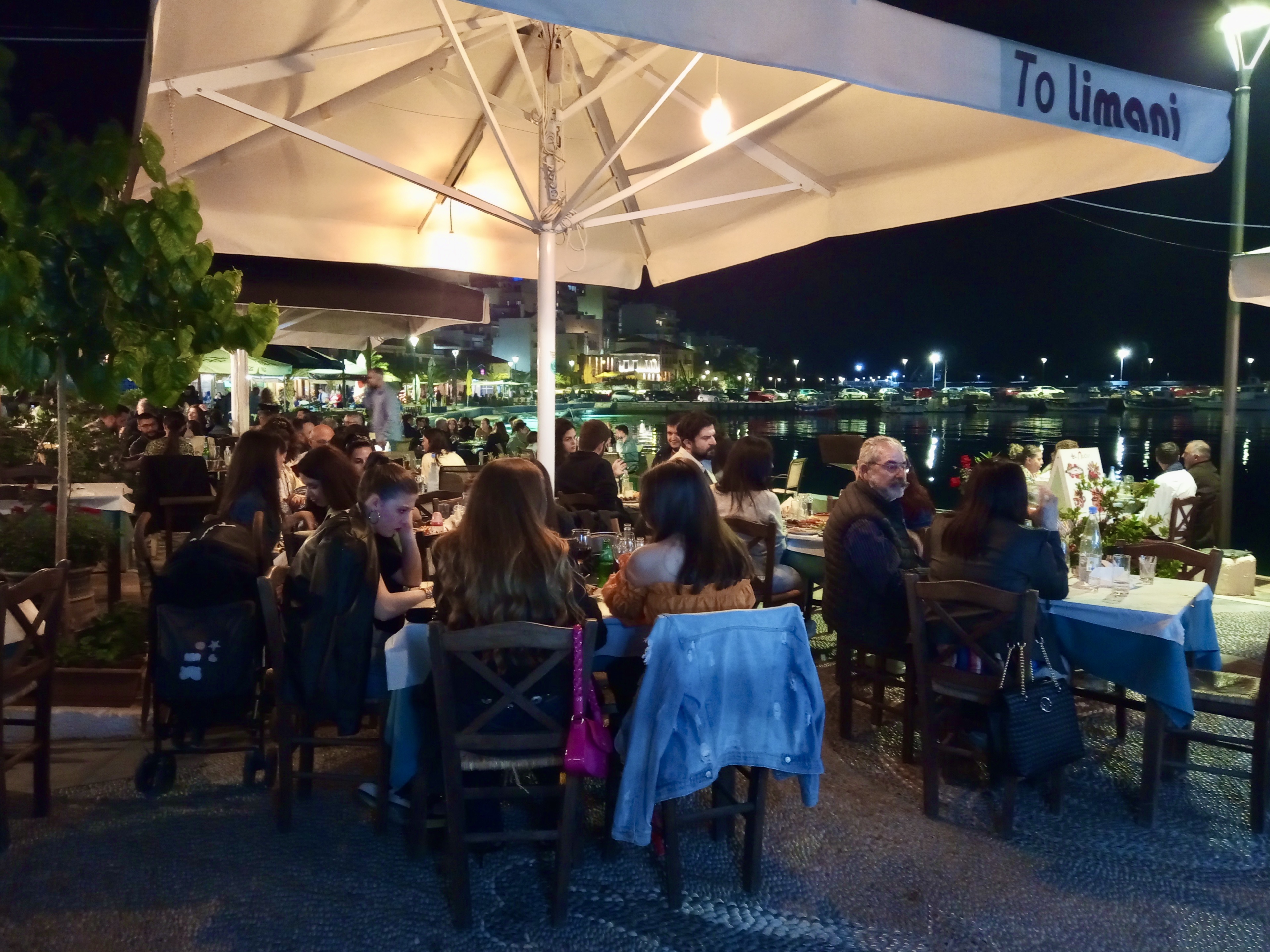
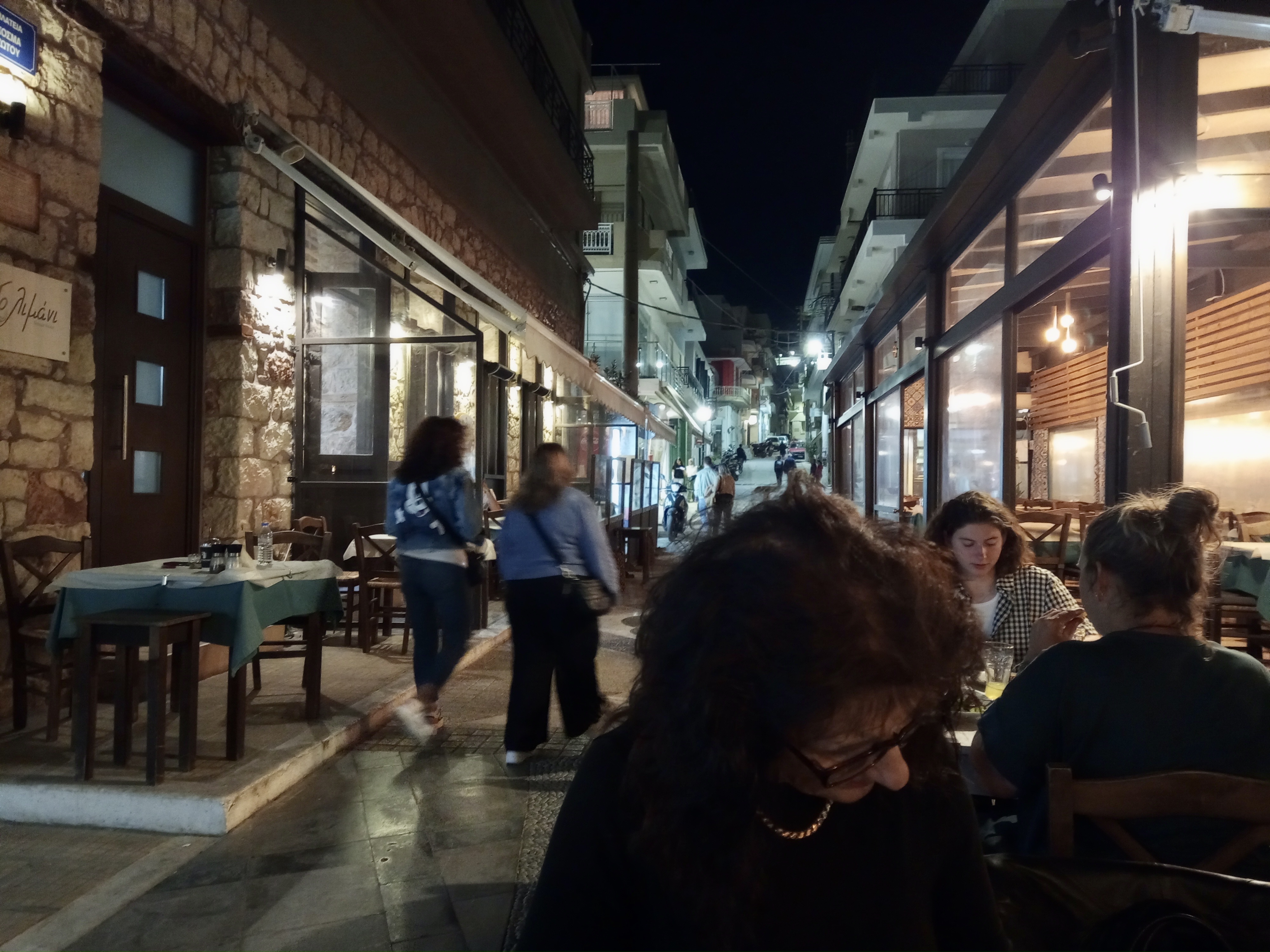
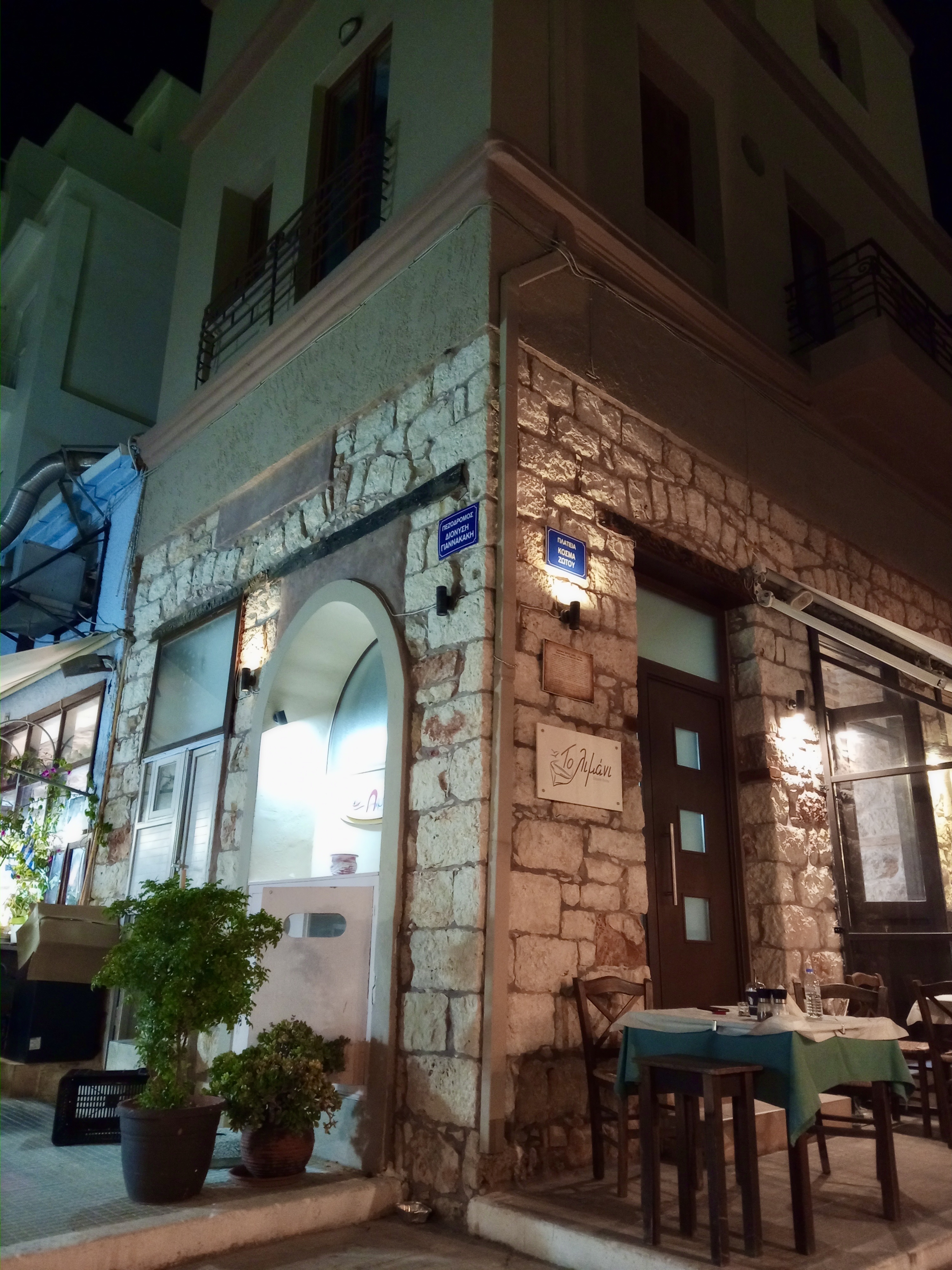
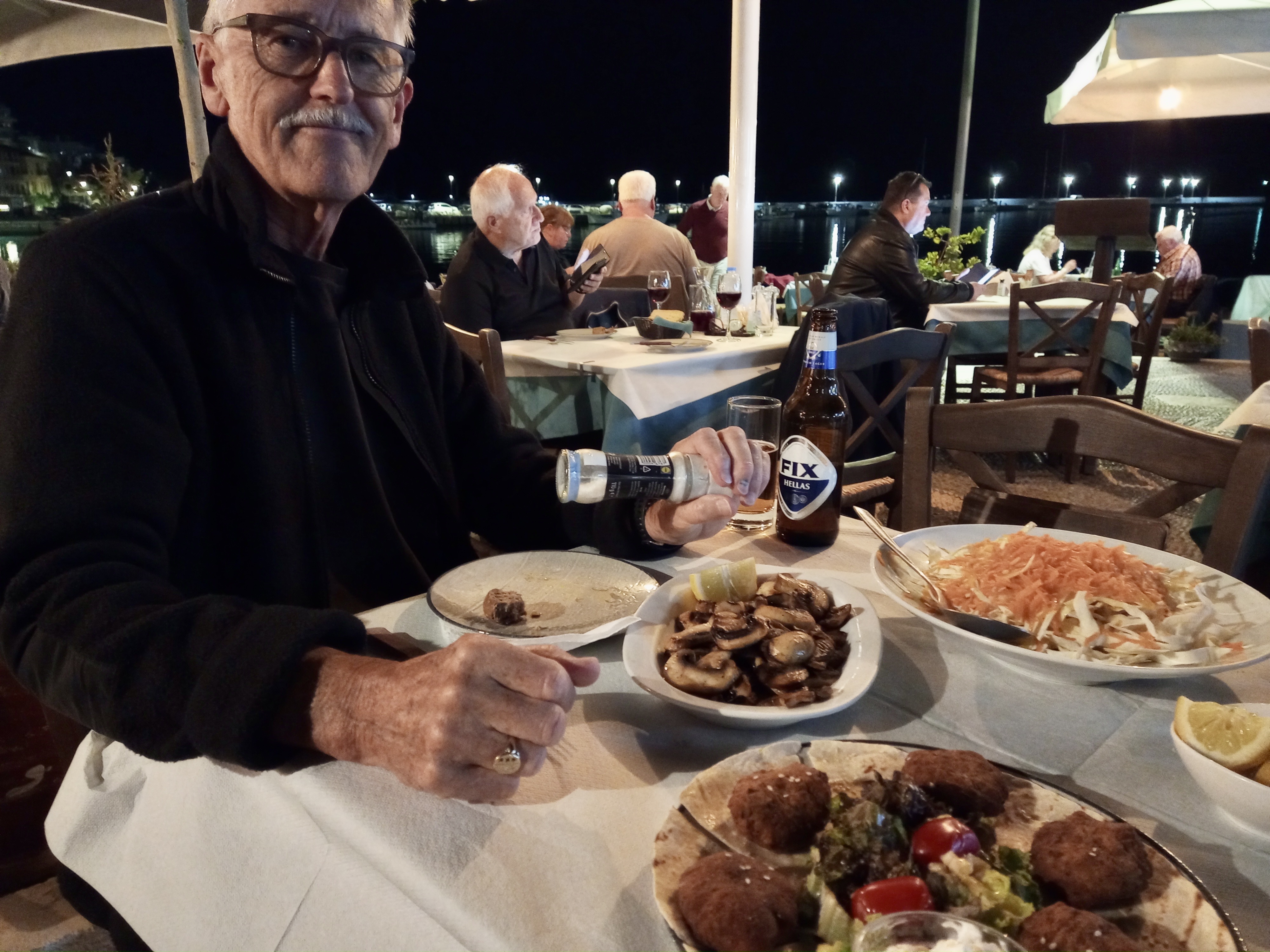
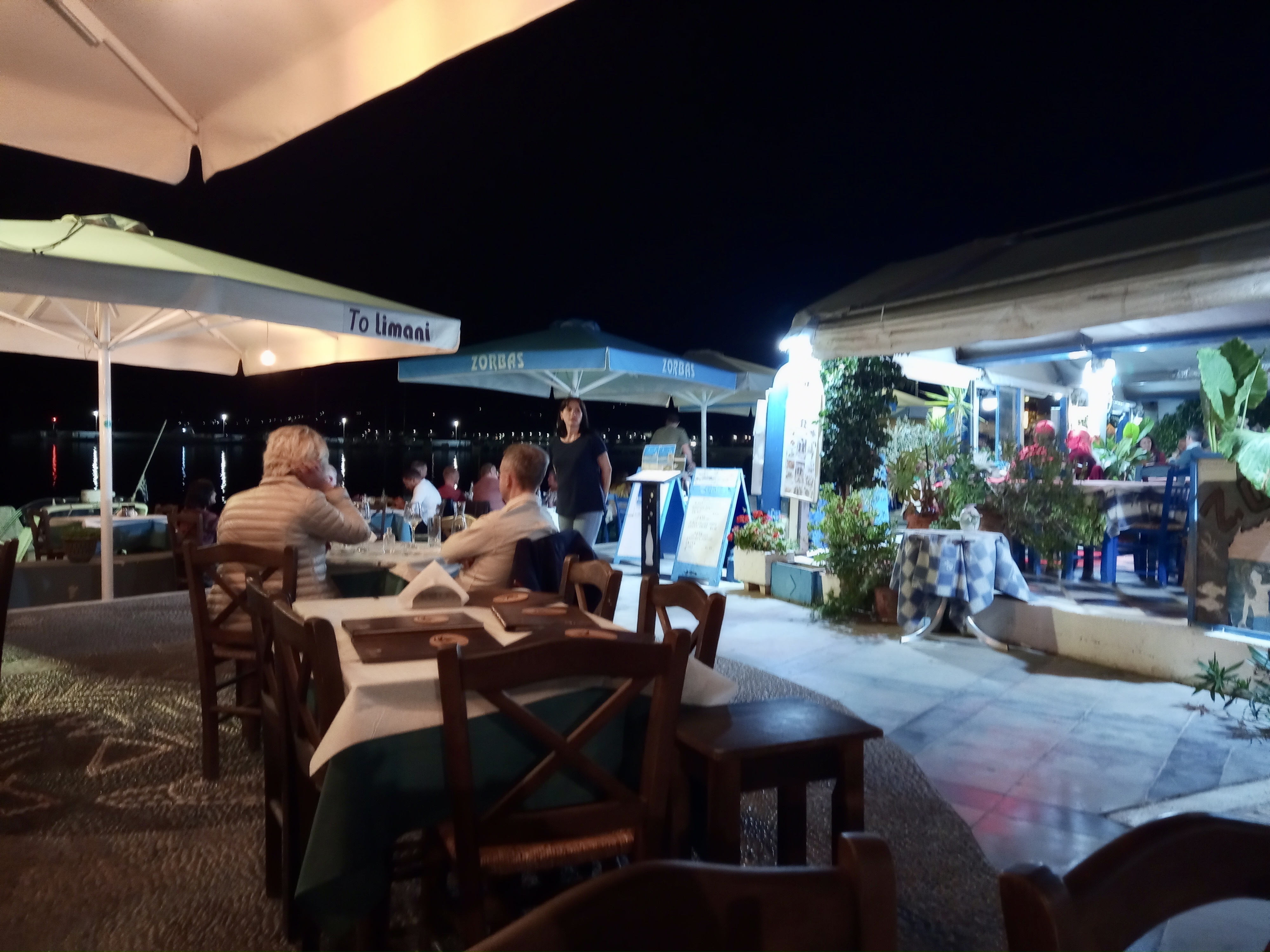
Having enjoyed the sheer pleasure of sitting for as long as we like over our coffees, we drift back to the room, maybe eat a lunch of fresh bread, chopped tomatoes and cucumber, fix ourselves a cup of Earl Grey, then slip into bed, read a book for a while, before drifting off for the afternoon siesta. We’ll get up around 5.00pm, maybe 5.30, then mooch about the room and veranda for a few hours before setting out once again around 9.00pm to go and select a taverna in which to eat the wonderful food that’s on offer here (whatever you do, order the grilled mushrooms at ‘To Limani’ taverna). The great thing about going out to eat that late is that’s when most Greeks eat out. Usually the tourists arrive at the restaurants at around 7.30pm, maybe 8.00pm, and are paying their bills by the time the Greeks arrive for the ‘second sitting’ as it were. I’m sorry, but I don’t get why people would want to eat in all-inclusive hotels, where they have the unbridled joy of eating in a bustling ‘canteen’ packed with their fellow countrymen and women. It’s nice that in Sitia there are not that many hotels of any size. Most accommodation is small, which tends to attract the more discerning traveller anyway, the kind of person who truly wants to absorb some of the atmosphere of the country which they’re visiting.
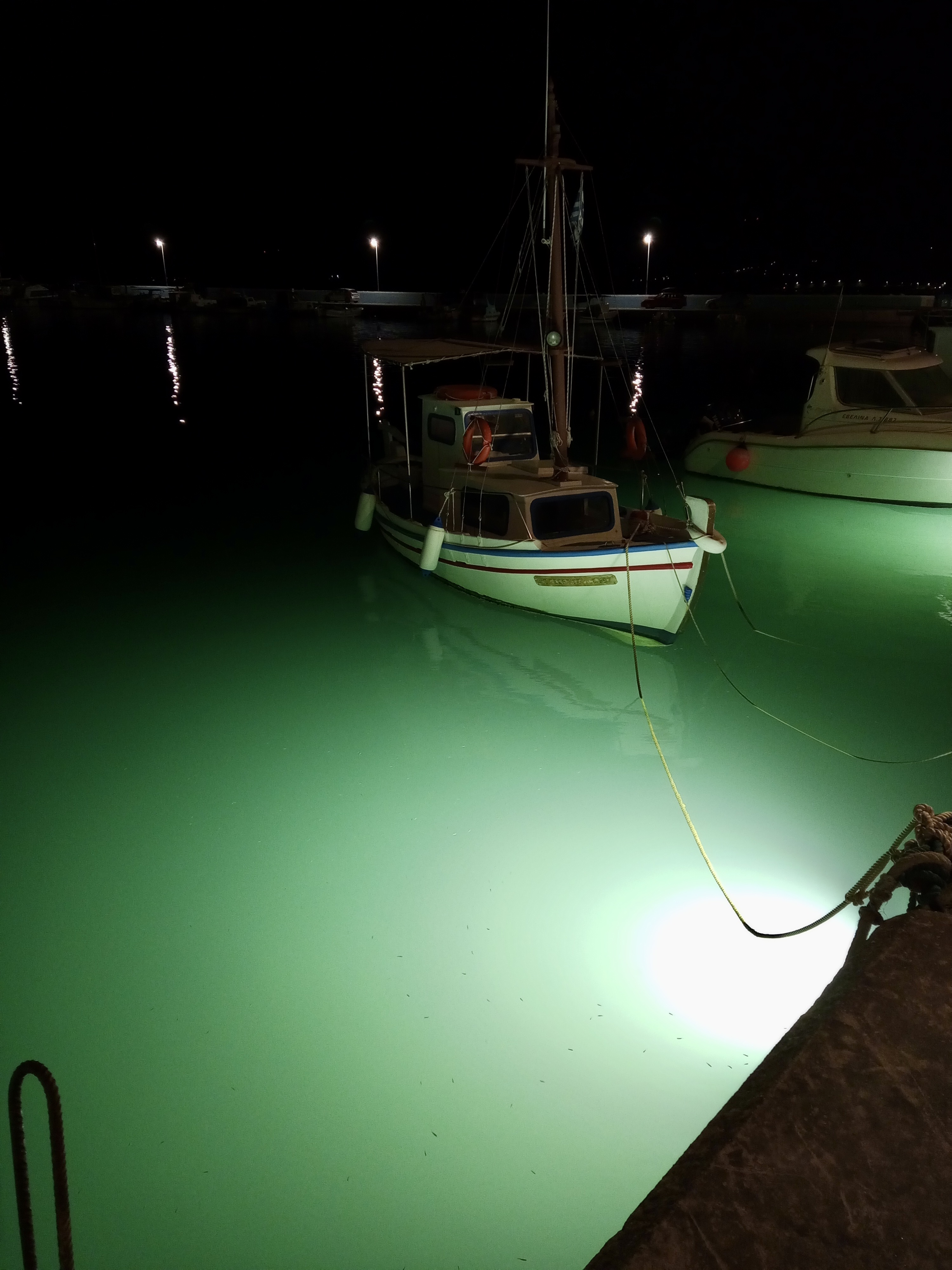
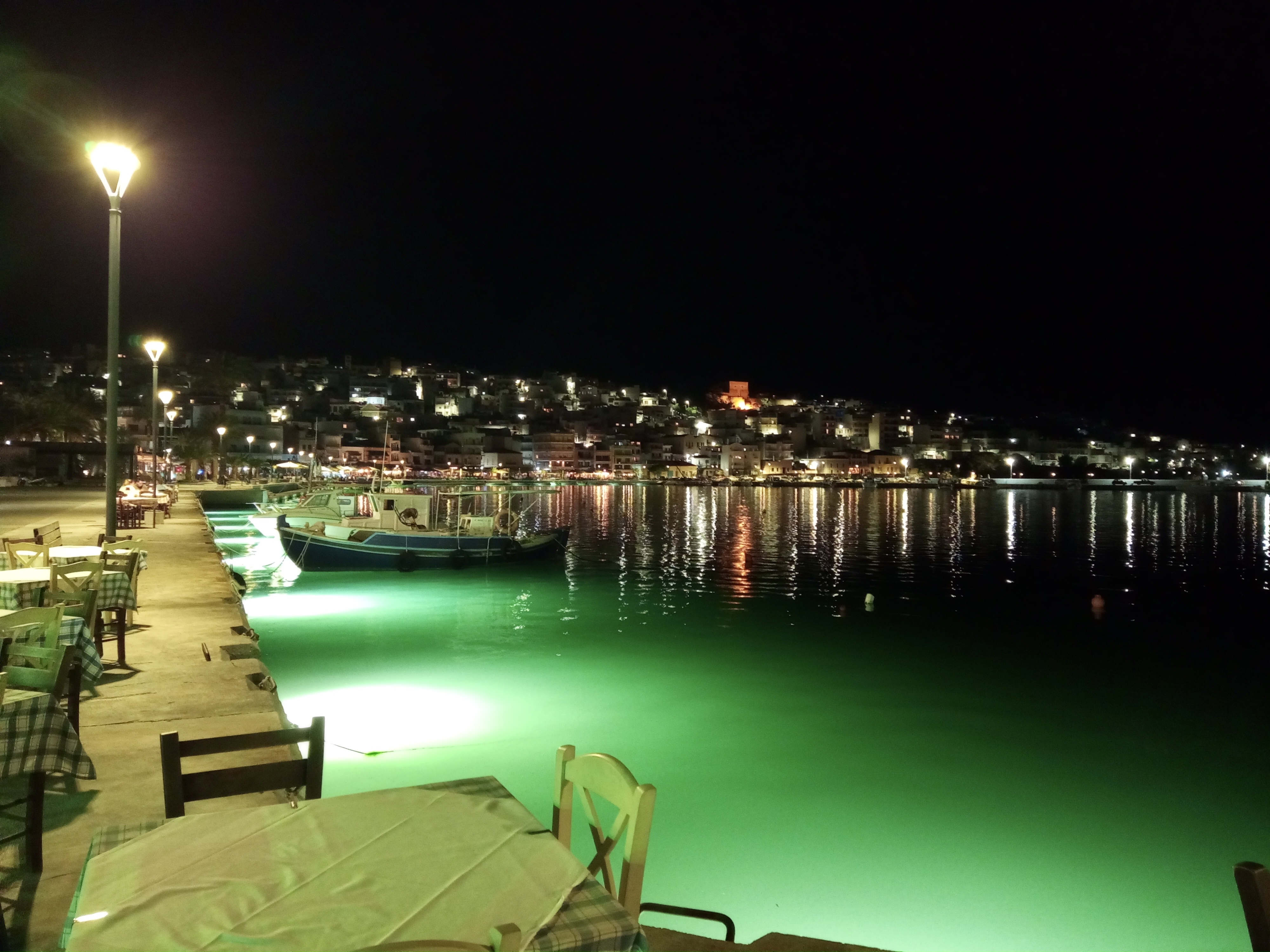
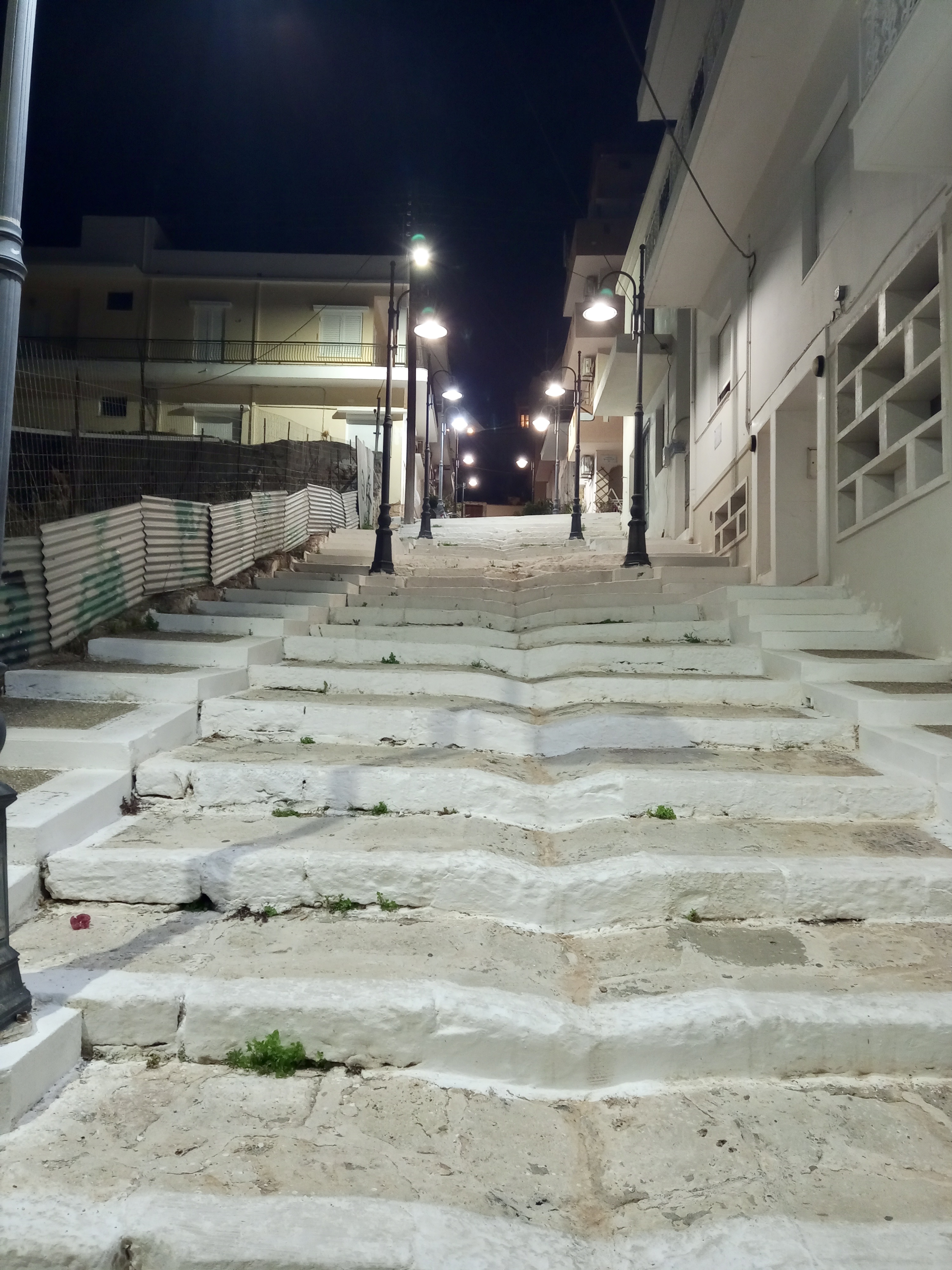
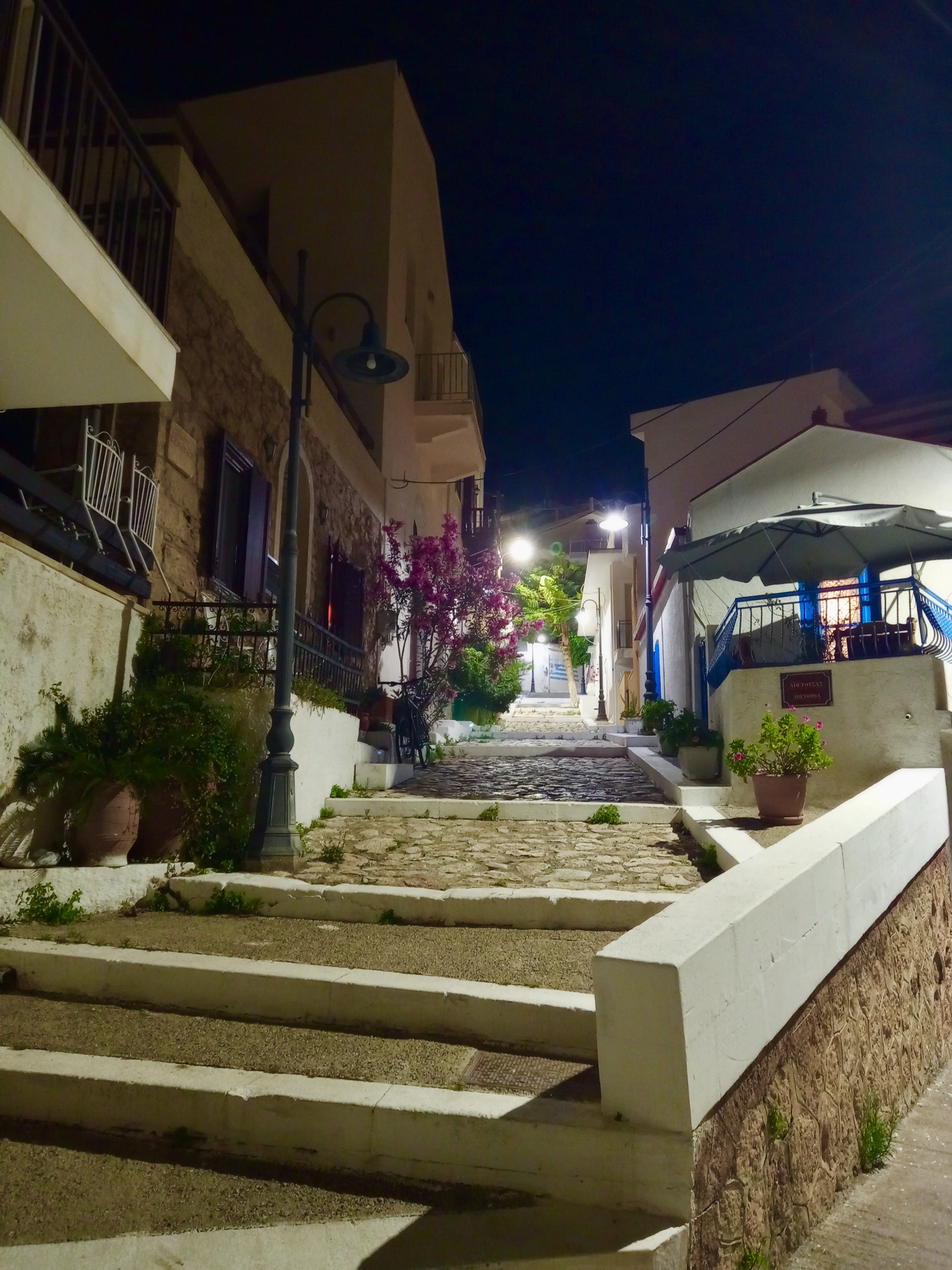
Which brings me to a bit of a cleft stick that the local business community in Sitia seems to have got itself into. I’ll tackle that in the next post though. Meanwhile, here’s batch no. 2 of the photos…
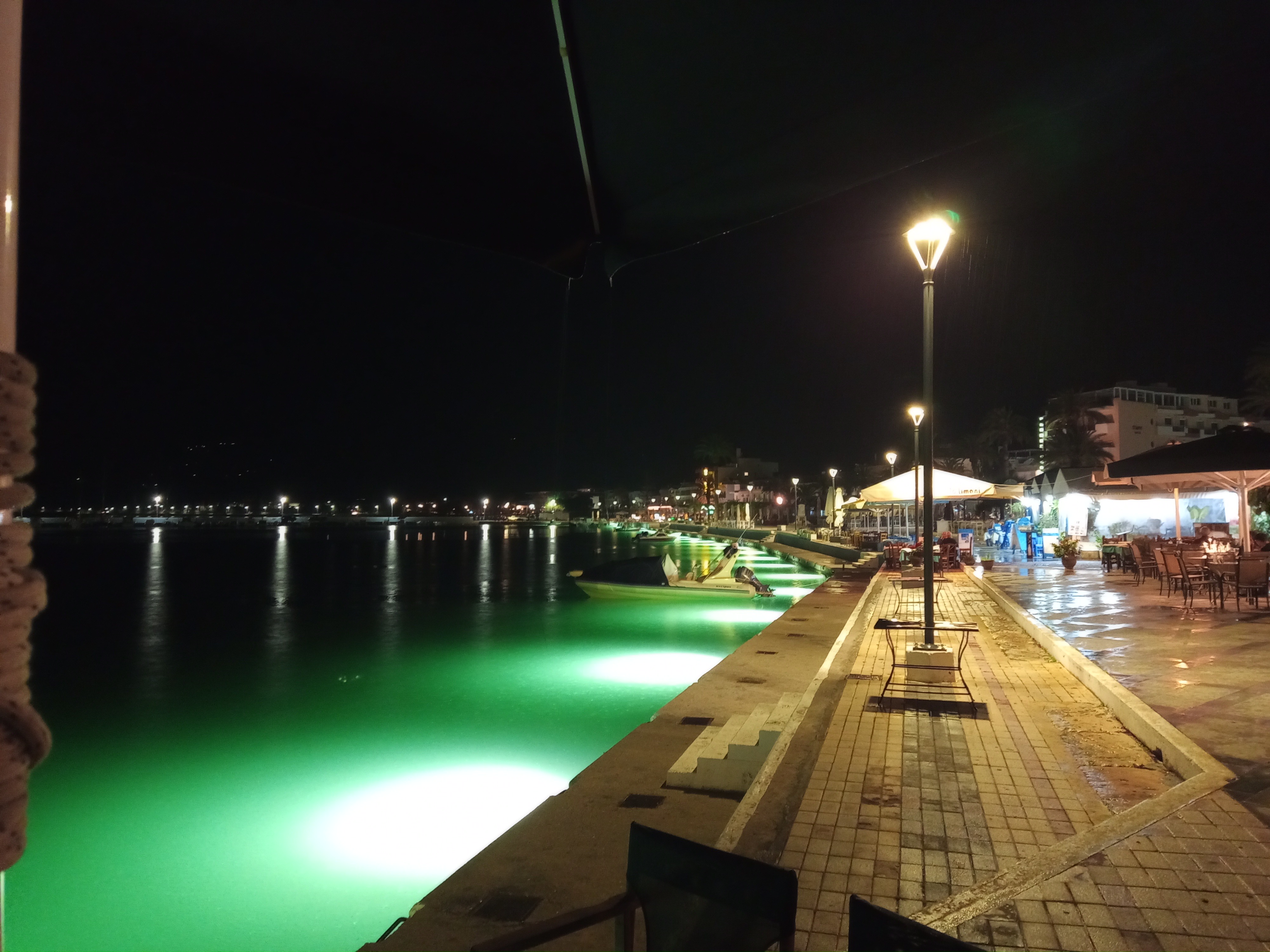
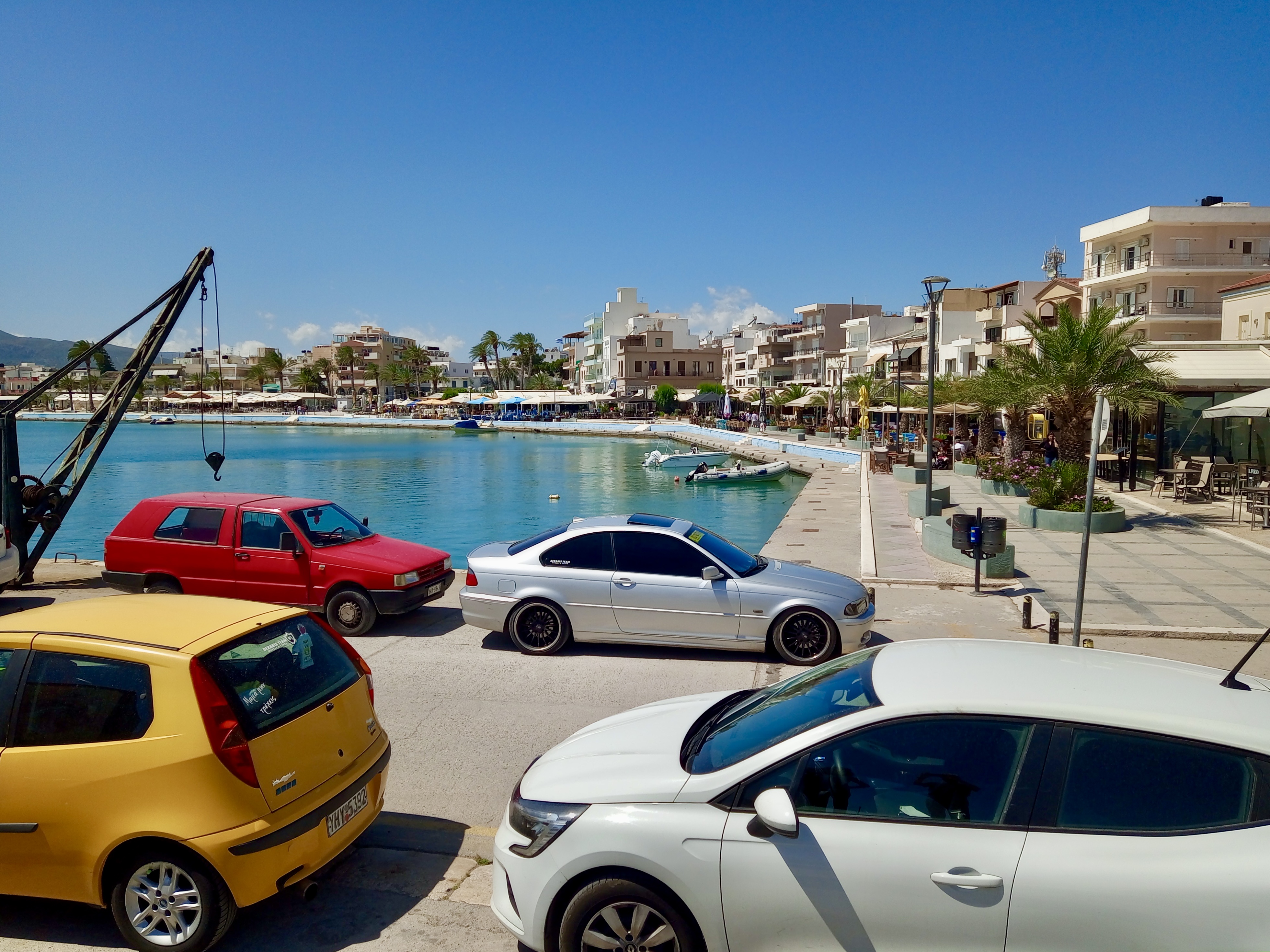
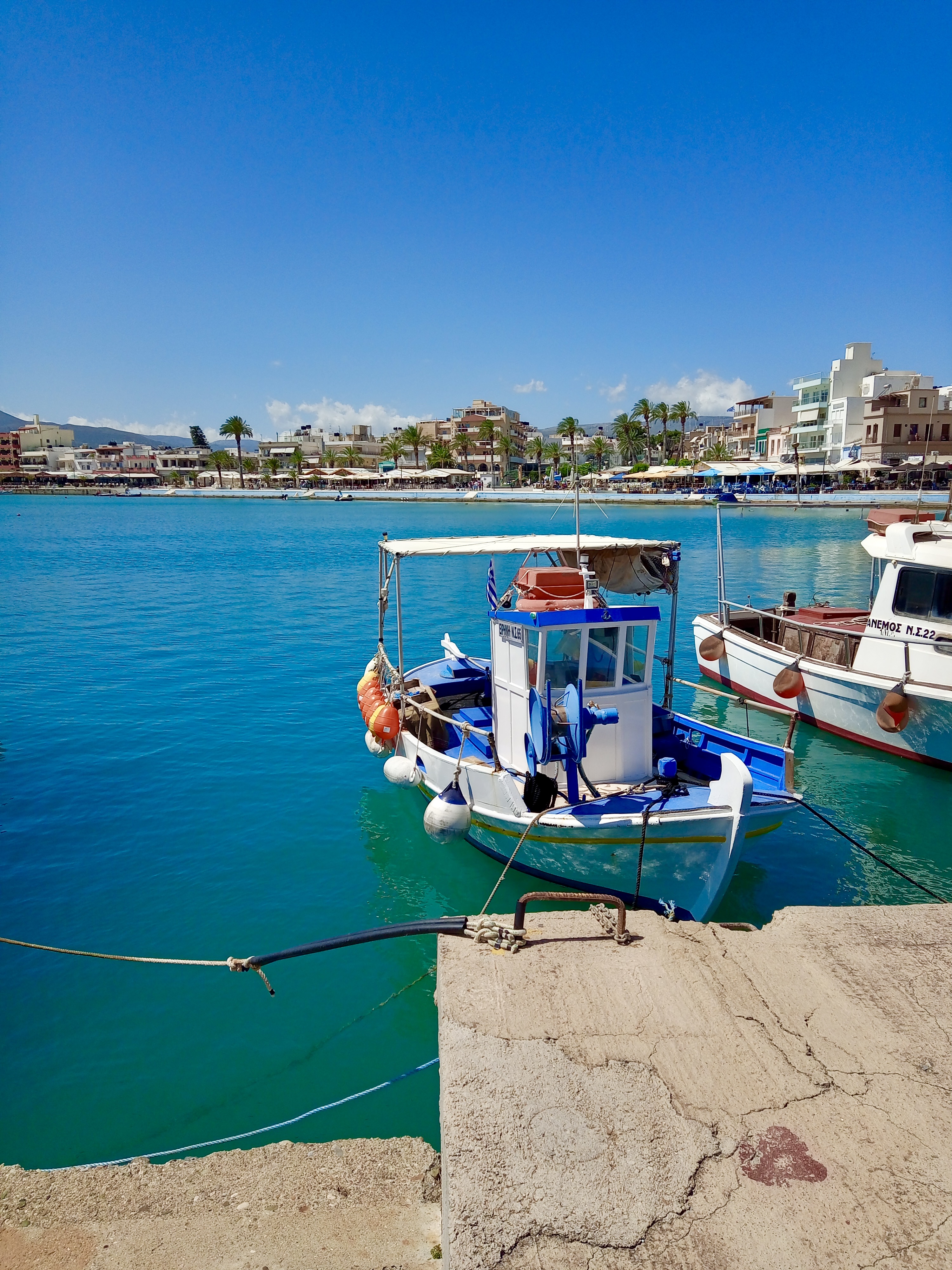
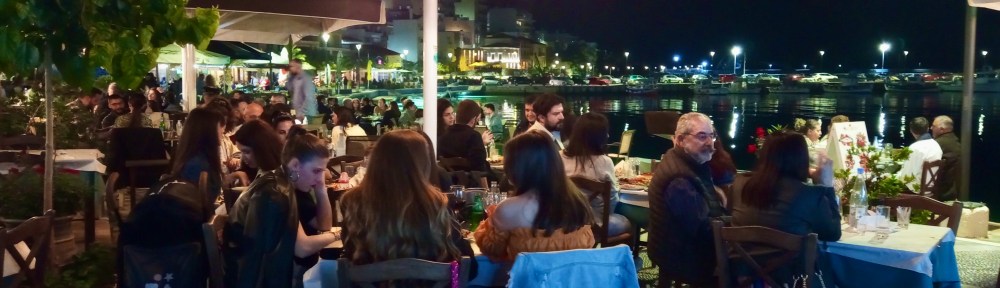
Somewhere above I mentioned the To Limani taverna, so these below [plus the one at the top of this post] were taken there…
Click HERE to go to my Amazon Author Page.
 Accretions