
Most people are aware that we’re under a bit of a heatwave at the moment. Driving back from town yesterday the temperature outside the car was showing 42º, but was only a cool 40 when we got home to the house. I don’t like it this hot, I have to admit, even though while we were enduring a cool and changeable March-through-June this year I swore that once the summer finally hit us I’d never complain about the heat this time. Even while we were enjoying our iced coffees on the beach under a straw parasol, the breeze that was blowing across our bodies was hot, like we were in a fan oven or something. Mind you, it’s when you get weather like this that you truly appreciate just how simply wonderful it is to get into that sea.
What have I got to tell you about this time? Oh yes, went round to visit a couple we’ve now known for a few years this week, the hubby Giorgos is 80 and his wife Ritsa is 76. They’re both in very good health though, I’m glad to say. Something I’d heard recently prompted me to ask about how they first met and that sparked off a truly amazing story. Well, I say amazing, it is from a British person’s standpoint, since in the UK for the past half a century and more people have by and large been free to choose who they want as a life-partner, and young people get out and about and hang-out from some time in their early teens, right?
Actually, what sparked off my curiosity was the fact that, at least here in Crete, I don’t know about the rest of Greece, among the more traditional families it’s almost unheard of for a woman whose husband has died to remarry. It’s like they’re expected to honour the memory of their deceased spouse forever, and to remarry would somehow show disrespect for the mate who is no more. Of course, with the passing of time, things have been slowly changing, but it’s still very much an ongoing tradition in the villages. If a woman is unfortunate enough to lose her hubby while still quite young, she may end up condemned to a life of many decades on her own, wearing black the whole time. She’d rather endure that than bring dishonour on the family by showing a lack of respect for her deceased husband.
When it comes to how a couple first meet, well, it seems that here in the islands, especially those that still have remote communities, a couple still, as recently as a few of decades ago, had little choice in the matter. Giorgos, the friend to which I referred above, told us that he was on his way to Canada, on a ship bound for Halifax Nova Scotia, when the news came through that the Generals had staged a coup and taken over the government in Greece. Giorgos had relatives in Canada and he was going there to work for a living and stay with them. He says that the ten-day crossing of the Atlantic was so unpleasant that he spent much of the time throwing up over the ship’s rail. In those days, when there was no internet or mobile phones, the passengers who were privileged enough to have a cabin would get a brief summary of the world’s news slid under their door on a single print-out each morning, after the ship’s telex had received the details during the night. That was how he learned of the start of the ‘dictatorship’ in April 1967. When the ship docked in Halifax, there were Greek officials present cross-examining the Greek passengers in the search for communist sympathisers. If they decided that you were one, then you didn’t stand much chance of starting that new life on the other side of the Atlantic.
Anyway, after only two years in Montreal, Giorgos received a letter from home. His parents told him that he needed to return as soon as possible, because the family had struck a deal with another family for Giorgos to marry one of their daughters, the young Ritsa.
All this I heard in response to my question, “So, how did you two meet, then?”
Ritsa takes over the narrative. She says, “I was sent to meet this Giorgo fellow, and he was told to look me over and say if I’d ‘do’ as it were. I’d never met him before, but in March 1969 we first met, and in June of that year I became his wife. That was when we started to get to know each other, because before the marriage we hadn’t been allowed to spend even one hour alone without other family members being present.” They’ve now been married for 54 years, and neither of them seems any the worse for not having known each other before the big day. Fortunately as it turned out, I suppose, they both really did fall in love with each other and had two lovely children, both of whom are now married with children of their own and living nearby.
Hearing about the culture of never allowing single youths to be alone with someone of the opposite sex reminded me of what my own wife Yvonne told me about the time when she spent the entire five weeks of her summer holiday with her cousins in Athens when she was fifteen. In the UK, at that age, you just went out and came in when you wanted to, even in the 1960’s, and it came as quite a shock and became a real irritation to her that she couldn’t simply go out and take the ‘electriko’ down to Athens centre without at least one of her cousins going with her. To have gone out alone would have been a potential cause for shame in the family. All this, remember, at the time when the hippie culture, Carnaby Street, the “Summer of Love” and all that stuff was all the rage in the USA and the UK.
Despite the obvious contrasts with the culture in the UK and America, Greek family bonds are still today much stronger than they appear to be in those other countries. Greece may be a long way behind the ‘civilised west’ in such matters, but they’re also a few decades behind when it comes to divorce, crime rates and people living alone and isolated in urban communities. Every cloud, eh?
And so to a few photographs…

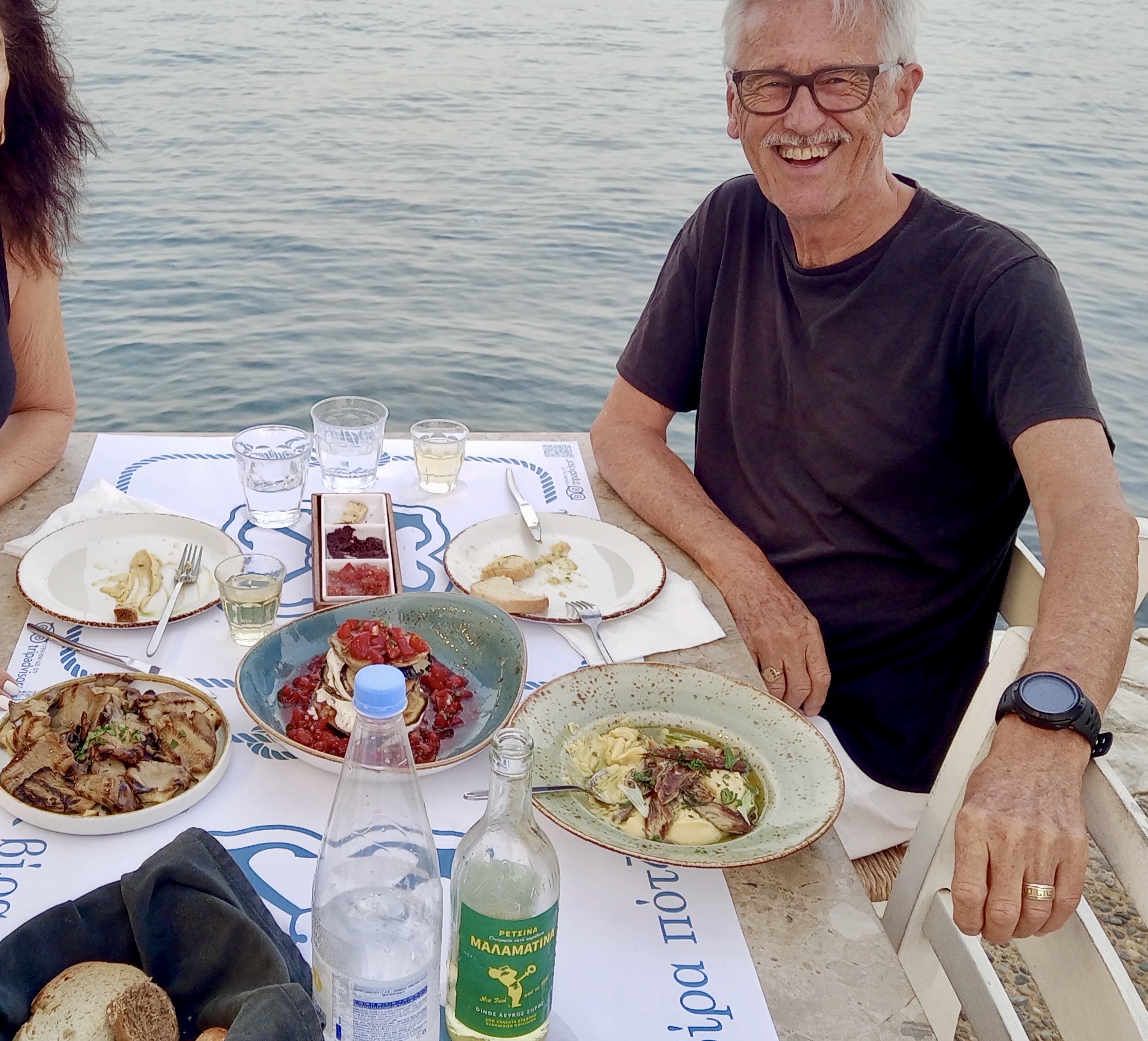

Above: The amazing and unique food at the Βίρα Πότζι restaurant in Ierapetra.
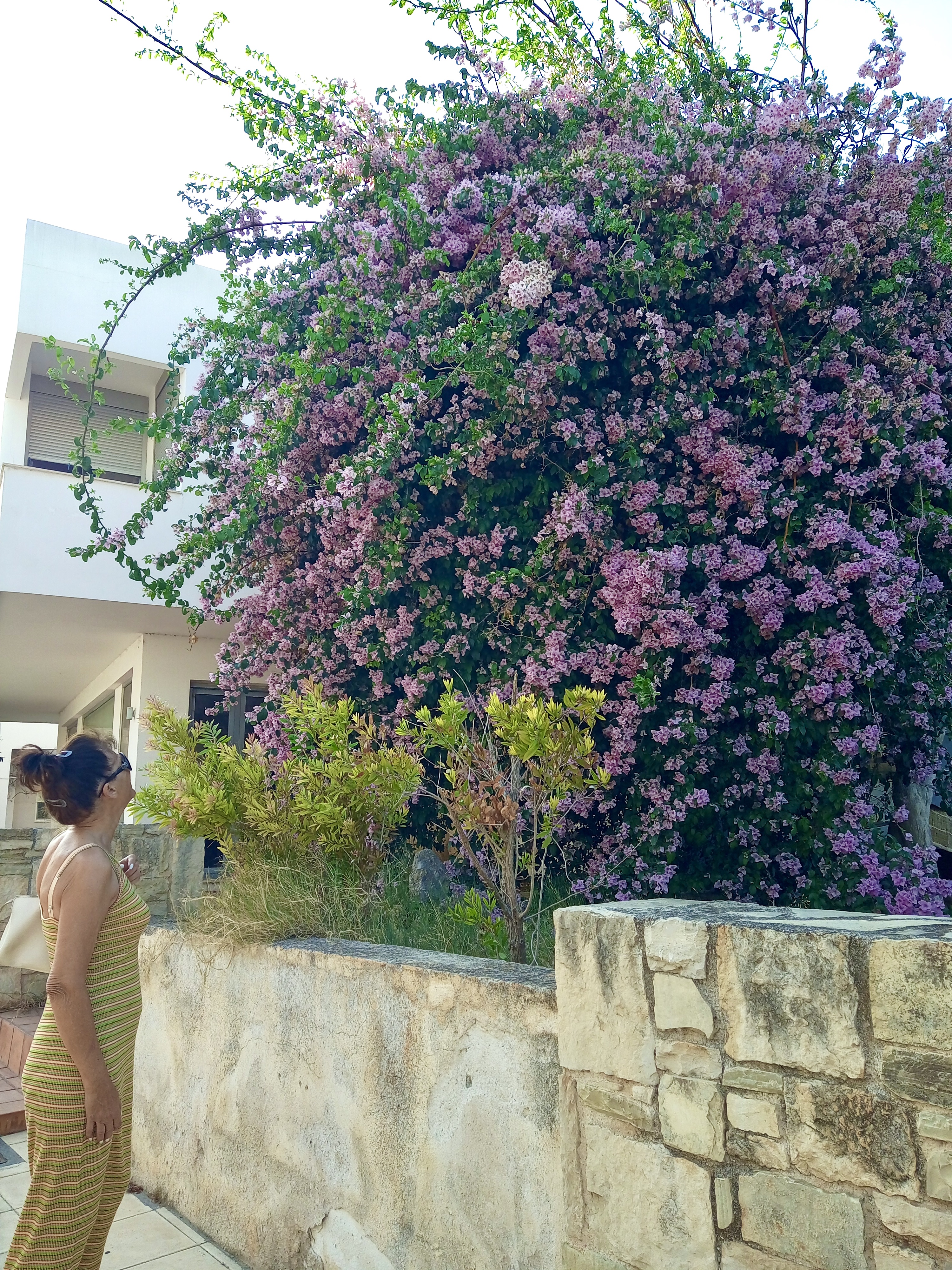
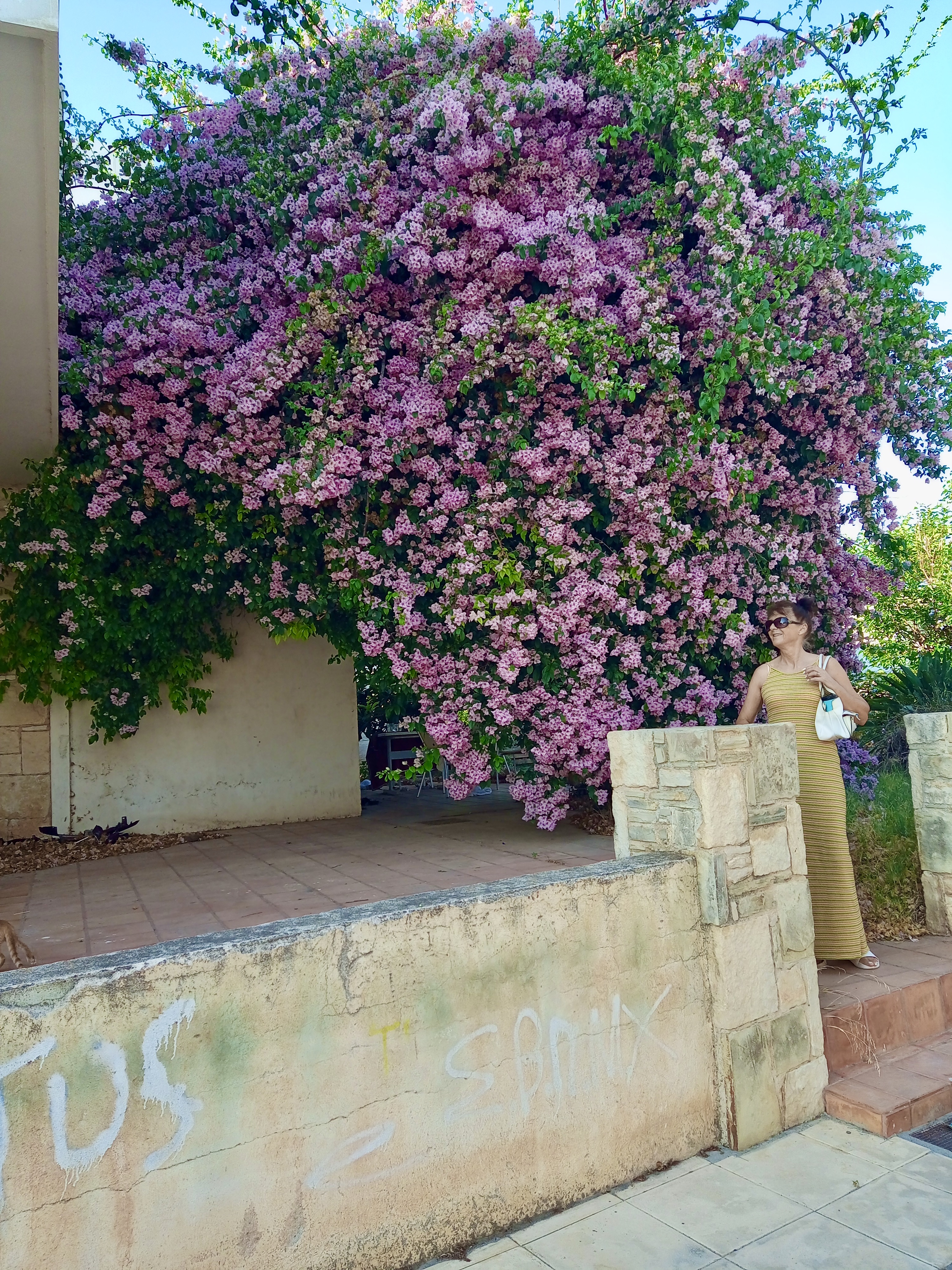

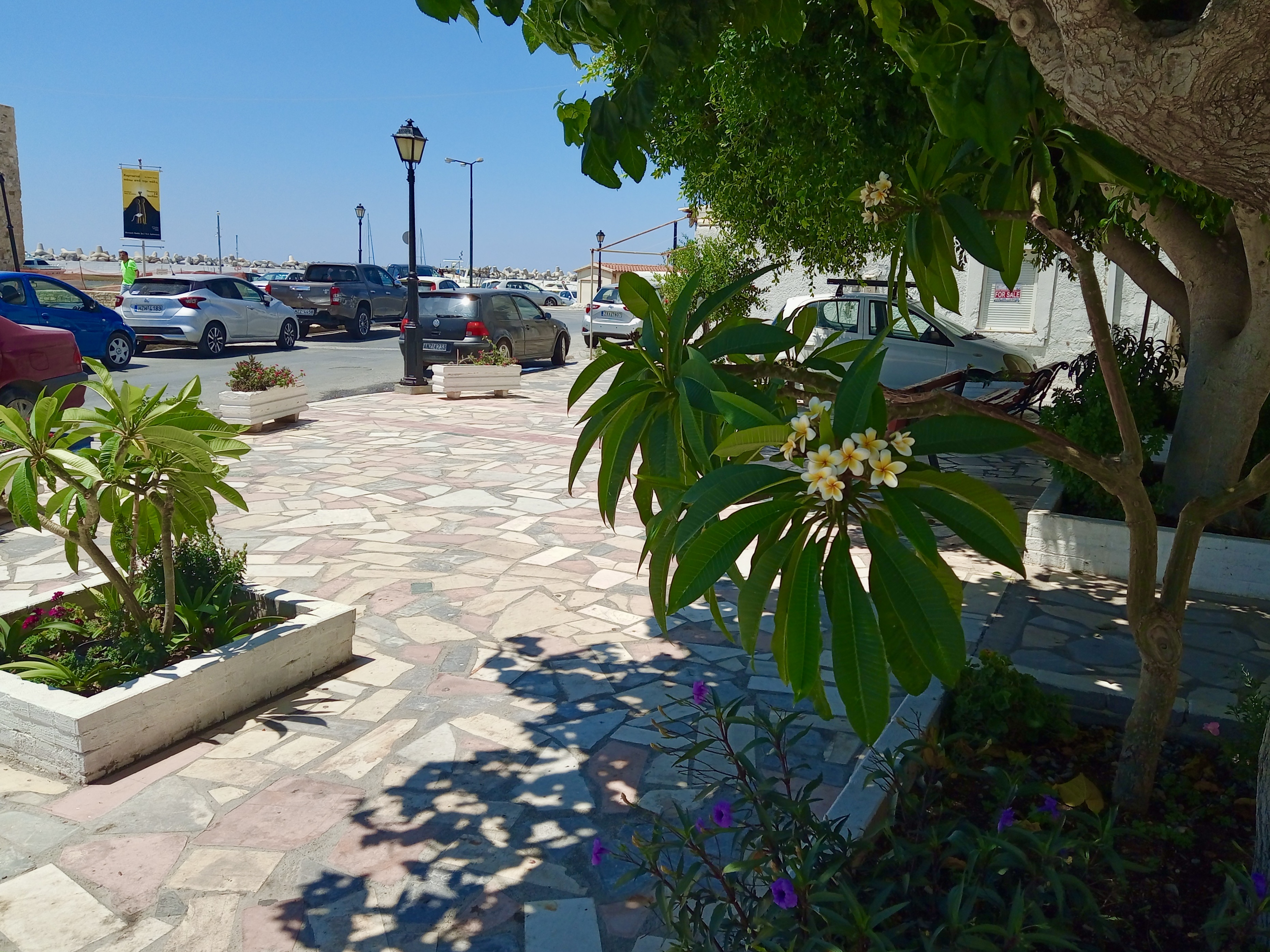
Above: A few shots taken around the town this past few days.
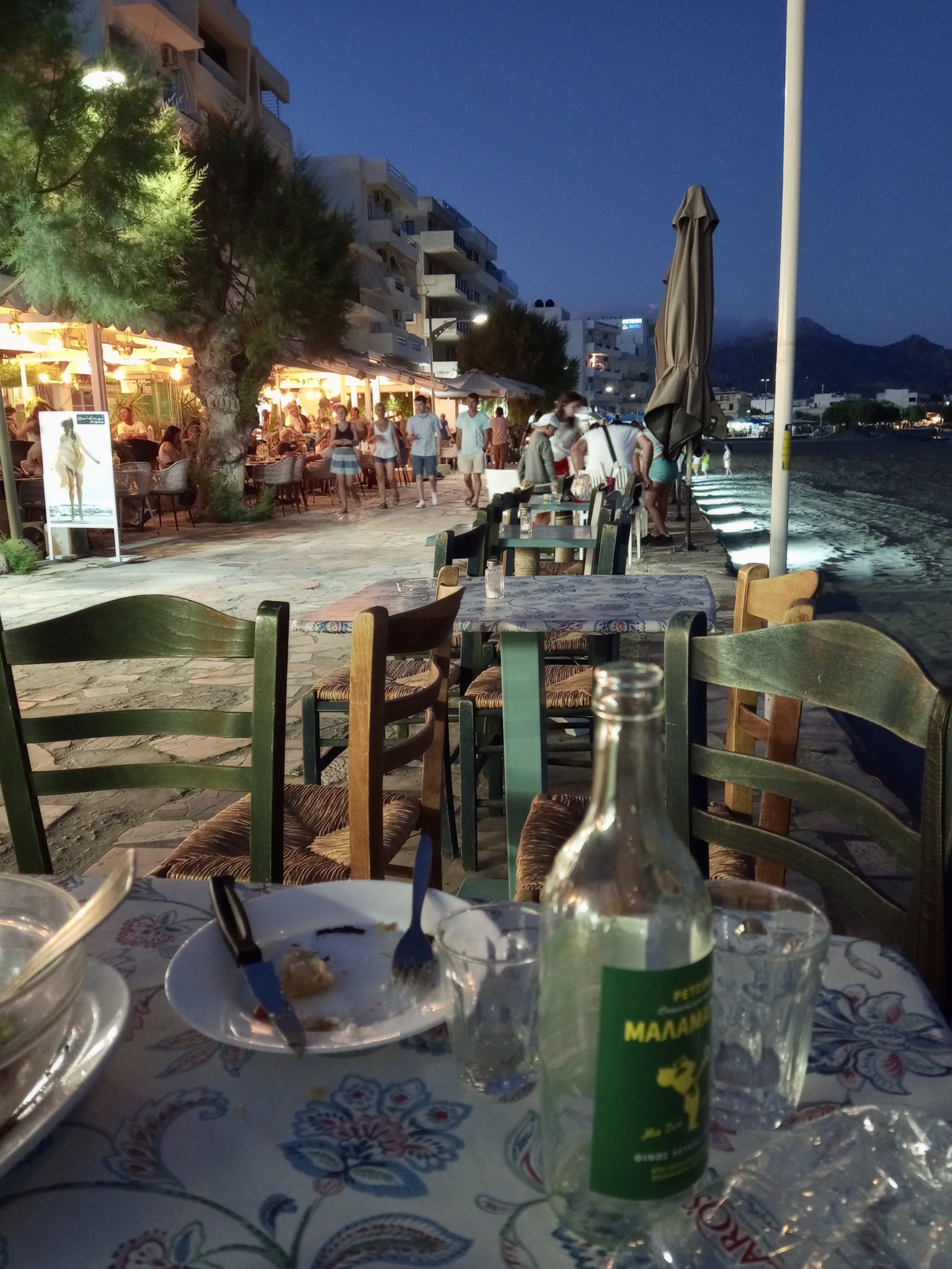
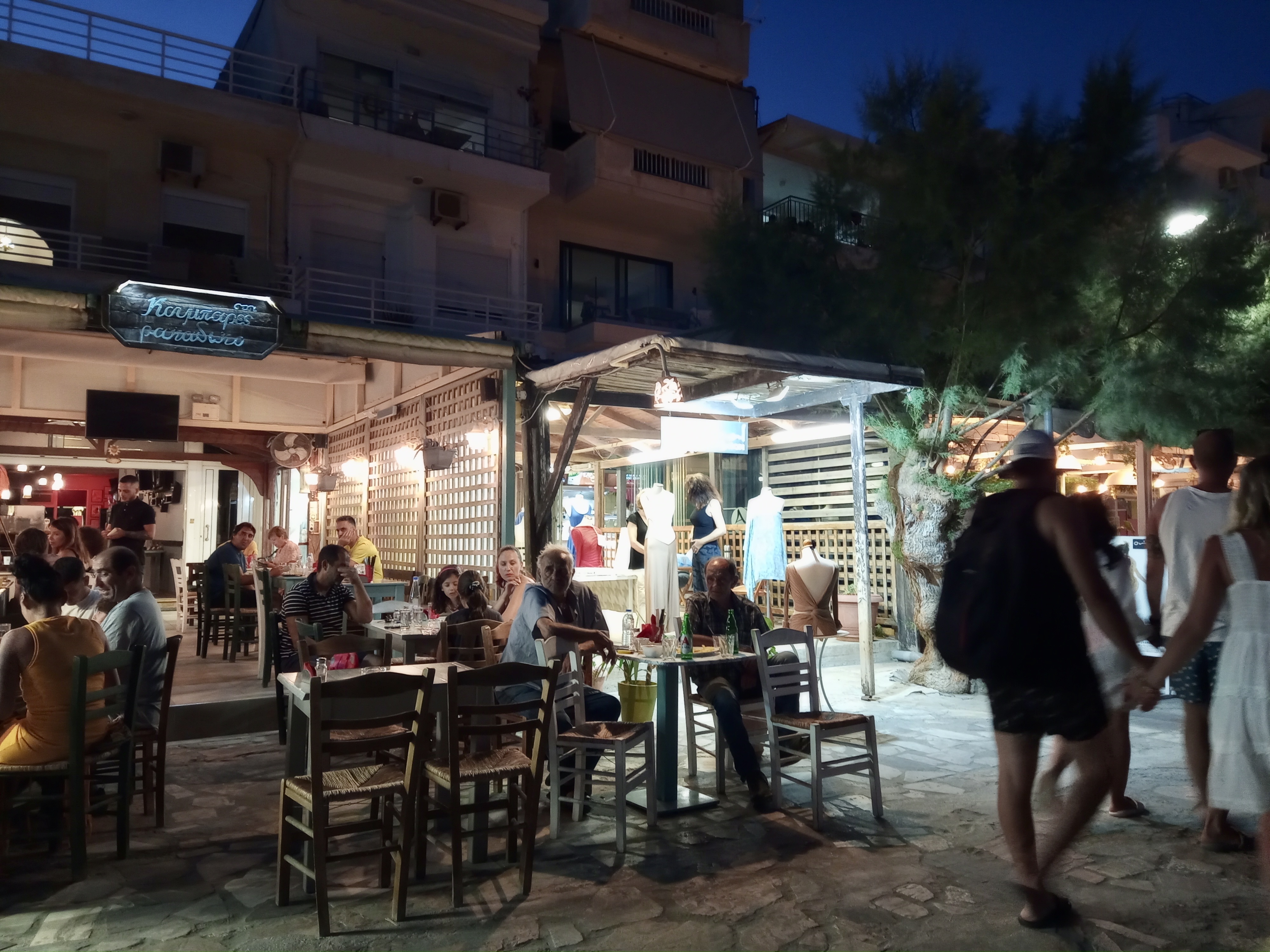
Above: At the rather traditional, yet quite funky Στσι Κουμπάρες taverna on Ierapetra sea front. In the first of those two photos, you can just about make out the newly-manufactured sandy beach that the local authority has created in front of the ‘promenade’ in Ierapetra. It’s the source of a lot of controversy, because something was needed to stop the erosion of the promenade when it gets pummeled by waves during rough days in wintertime, but this solution hasn’t proved all that popular. In the past you could sit where we were and look down at the fishes in the water. Now the water is 25 metres out across a barren stretch of imported sand, that also causes a problem at the tables when the wind blows in the wrong direction. To have shored up the seafront with steel, concrete and stone was probably too expensive, according to the Dimos anyway, so the sand was the cheaper option. The only thing is, they tried the same thing last year, and by the time this summer arrived, most of the sand that had been bulldozed on to the sea front had been washed away. It remains to be seen how it will all play out I suppose.

Above: The dial on my car’s dash showing the temperature outside as we drove home from town yesterday.
•
Click HERE to go to my Amazon Author Page. You can browse all my written works right there.
 Accretions