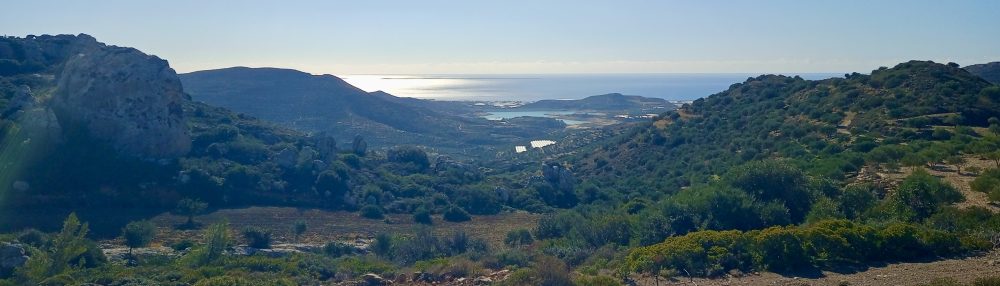

Well, it finally looks like summer has given way to autumn. After what seems like weeks of almost identical daily temperatures in the upper twenties, and overnight ones of around 20, a slightly cooler air mass has drifted across the island and today we were able to get on with pruning our olive trees under a beautiful sky, peppered with fluffy clouds and sunny intervals. There was a good breeze too, something which we also haven’t seen around the house for what seems like weeks. As the morning morphed into early afternoon, the clouds over the mountain behind us grew darker and more threatening and, as we stuffed the last of the clippings from today’s pruning session into the final one of four black bags, there were spots of rain turning the ground into a massive polka-dot pattern. The temperature had been a much more tolerable 24ºC, so how can one complain when it’s almost the middle of November?
The village is waking up from the summer torpor too. Neighbours are busy outside their houses, washing down courtyards, making their way across the road to their horafia, looking for reasons to stand on a corner and chat, without the need to seek shade and relief from the relentless heat. Old Manolis is now regularly shuffling over to the kafeneio with his walking frame. He won’t give up, and why should he, until he’s forced to by the inevitable, which he hopes is still a little way down the line in the future. The locals in our village aren’t quite so preoccupied with the olive harvest this year, because the majority of those around here had a massive harvest last year, so this year’s a ‘fallow’ year for most of the trees on the slopes around us. Yet nevertheless there is still to be heard the sound of those whirring ‘agitators’ as those who do have some fruit to gather in are busy getting the trees to give them up and send them tumbling onto the nets spread wide below.
Even though the olives are being harvested in not anything like the quantity of last year, and hopefully of next, there are still battered pickup trucks wending their ways to the mill, heavily laden with hessian sacks or plastic crates, all stuffed with the little marble-sized black and green gems. Some of them have a scruffy dog hunched on the top of the pile, tongue flapping from the corner of its mouth as it enjoys its wind-blown ride; while others have the tools of the harvest roped precariously on to the top of their ‘mound.’ Olives are truly one of the most wonderful fruits known to man, the list of uses to which their oil, not to mention the whole fruit, can be put to is seemingly endless.
On Sunday November 5th we visited a village that we hadn’t ever been to before. If you examine a map of the area here in Southern Lasithi, in fact of most of the island in truth, you can readily pick out numerous villages, some small, and some tiny, dotted around the mountainsides, some of them apparently clinging to steep slopes in such a way as to almost defy gravity. Many of them take an age to reach, because the roads that lead to them are convoluted, twisty-turny and often only of single vehicle width, with not too clever a surface either, and the time it takes to reach many of these ancient settlements from what could laughingly be called a ‘main road’ can be half an hour, often more. So we found ourselves at Sykologos, way up in the mountains somewhere between the village of Myrtos on the coast, and Viannos, in the mountains. Sykologos is only one of a dozen villages in the area, each of which takes nerves of steel to drive to, if you’re not initiated, that is. The name itself is quite strange, because if you say it quickly, it sounds like ‘Psychologos,‘ which means ‘Psychologist,’ a fact that doesn’t take a massive IQ to work out, right?
You don’t have to travel far west from Ierapetra to cross the county line from Lasithi into Heraklion. The municipal region of Heraklion, to the surprise of many, extends all the way from the north to the south coasts of the island, as, in fact, do all of the four main municipalities on Crete. Here’s a map showing all four…
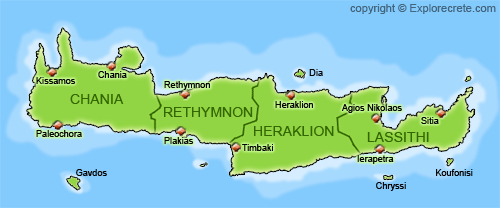
You can see from the map that three of the four prefectures, or municipalities, are named after their main towns or cities, the only exception being Lasithi, in fact. Sykologos, incidentally, is somewhere south of the letter “i” in Heraklion on that map. Like I said, the name of the village may sound when spoken like ‘psychologist,’ but the attentive listener will note that the word begins with an ‘S’ and not the Greek ‘Psi’ [Ψ], and thus means something quite different. The Greek word for fig is [I’m going to spell it phonetically here] ‘seekoh,’ [σύκο], and the word for a fig tree is ‘seekyah,’ so you can see that the name of the village is more likely a corruption of the expression ‘fig reason,’ which may allude to the reason for the village’s existence in the first place. I say ‘fig reason,’ but in truth the Greek word ‘logos’ has innumerable meanings, depending on the context. No surprises there, then. Each of those above links to the village’s name sends you to a different website, but the third of those (the one in this paragraph) is the only one that suggests that the village’s name is actually derived from a corruption of the expression (in old Greek) ‘Fig collector.’ That’s most likely to be the right explanation, I feel.
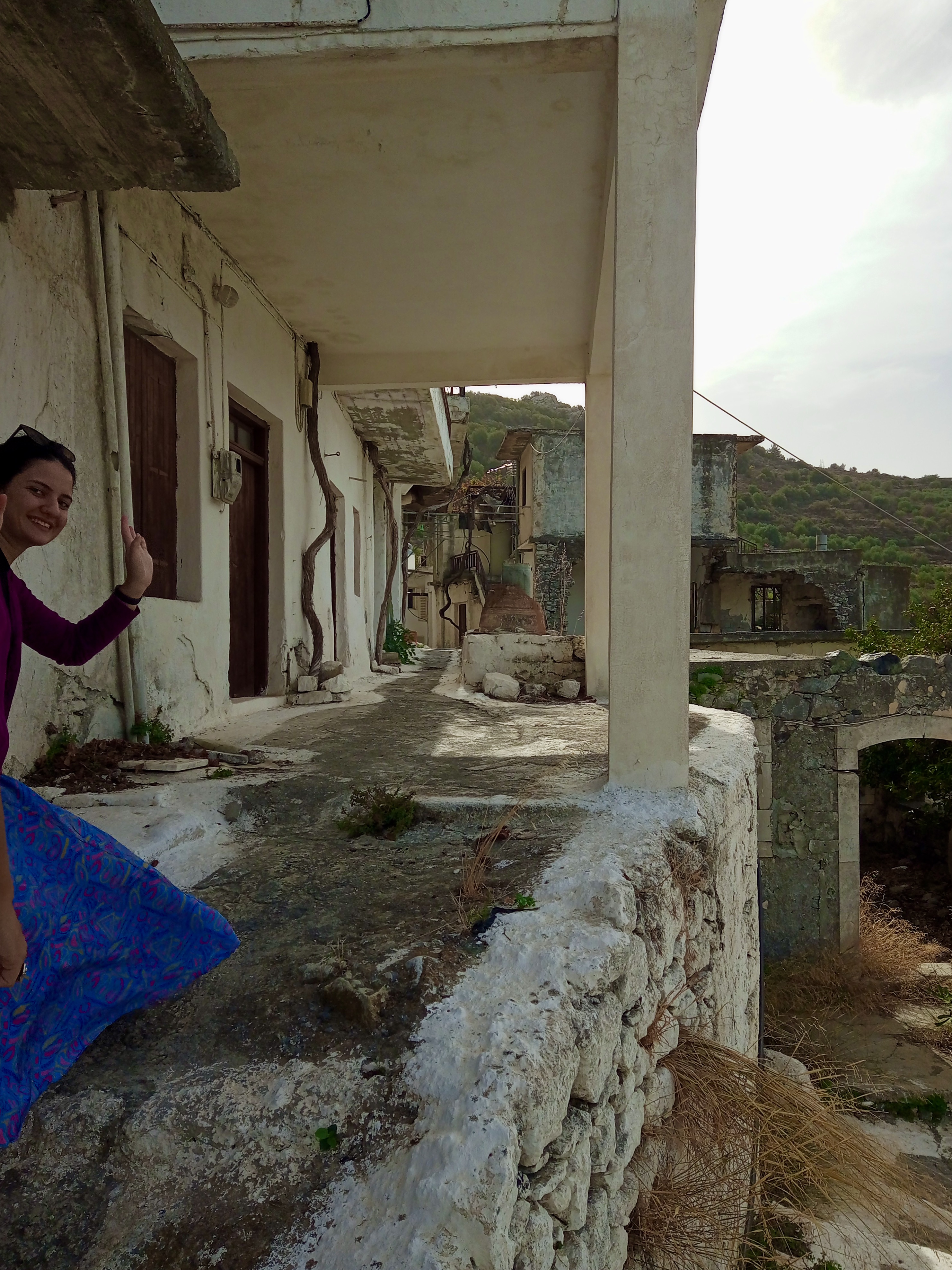
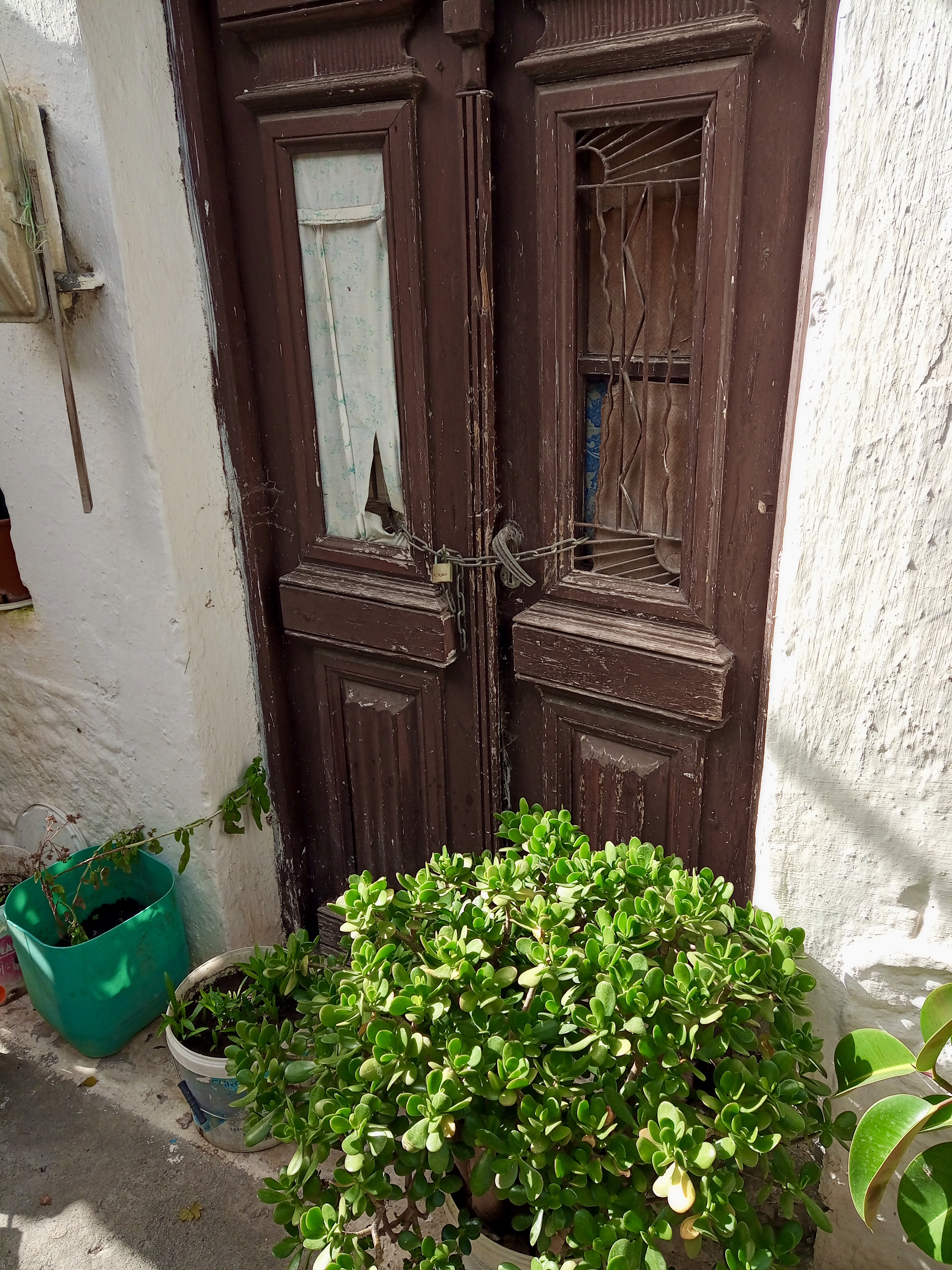
Anyway, it’s a truly remote village, which nevertheless has a couple of kafeneios and a tiny general store. The streets, with few exceptions, are completely inaccessible to vehicles, and I can’t imagine living there and having to go out to see a doctor, do some shopping, or even go down to the sea to swim. It would be a major expedition every time. It’s small wonder that many villagers in such places over the centuries will have spent their entire lives within a couple of square ‘stremmata’ of their front door. In times when every village subsisted on its own produce and was entirely without the need for contact with the outside world, that would have been OK I suppose, although had you grown up there and developed a curiosity about what was over the next hill, you’d have taken on a gargantuan task to do any such travelling. Nowadays, sadly, it’s a virtual impossibility to live somewhere and not have to go out in a vehicle a few times every week, and to do so even today in villages like Sykologos is still a major expedition. Here are a few of the photos I took while we were in the village…


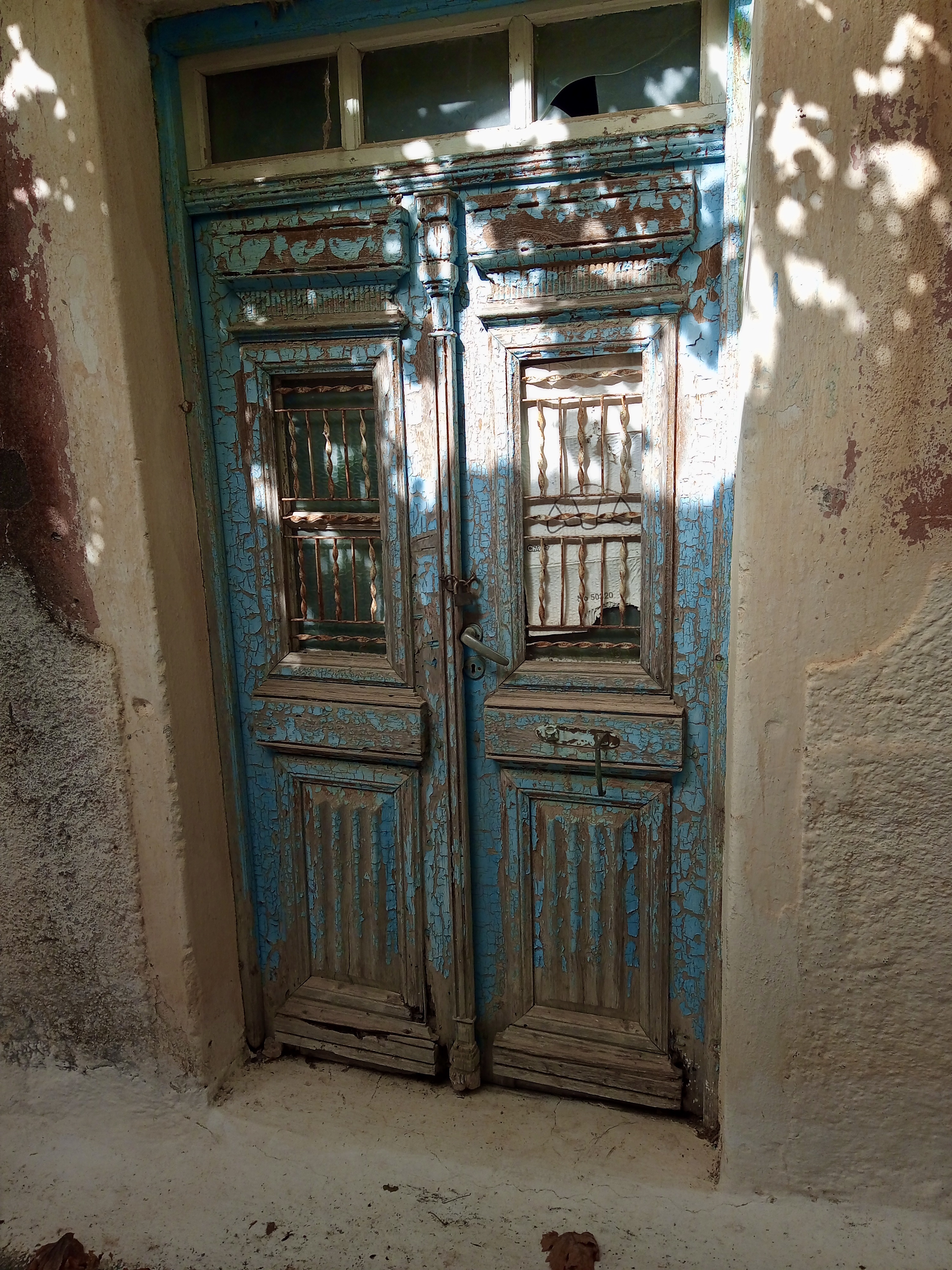


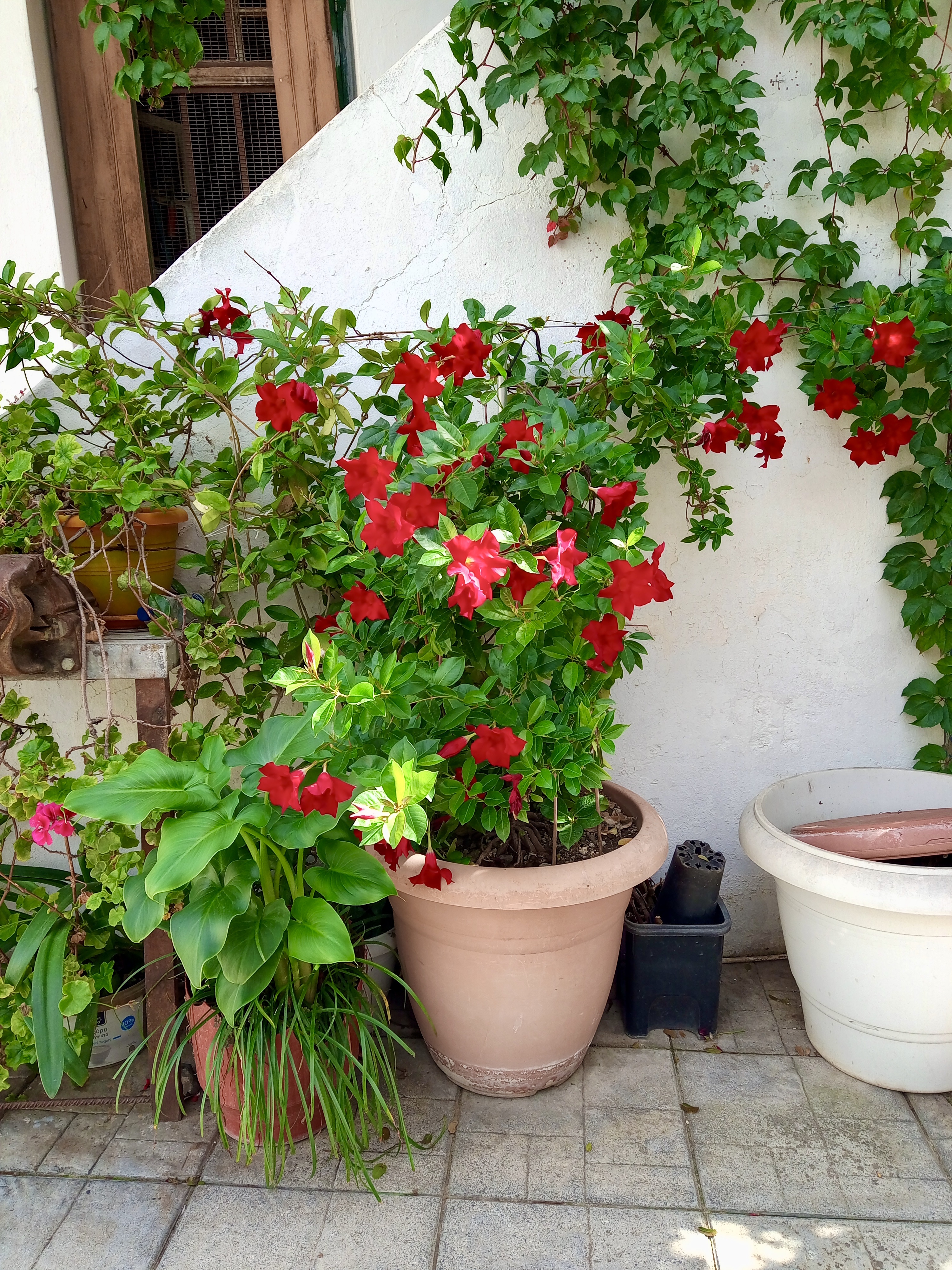
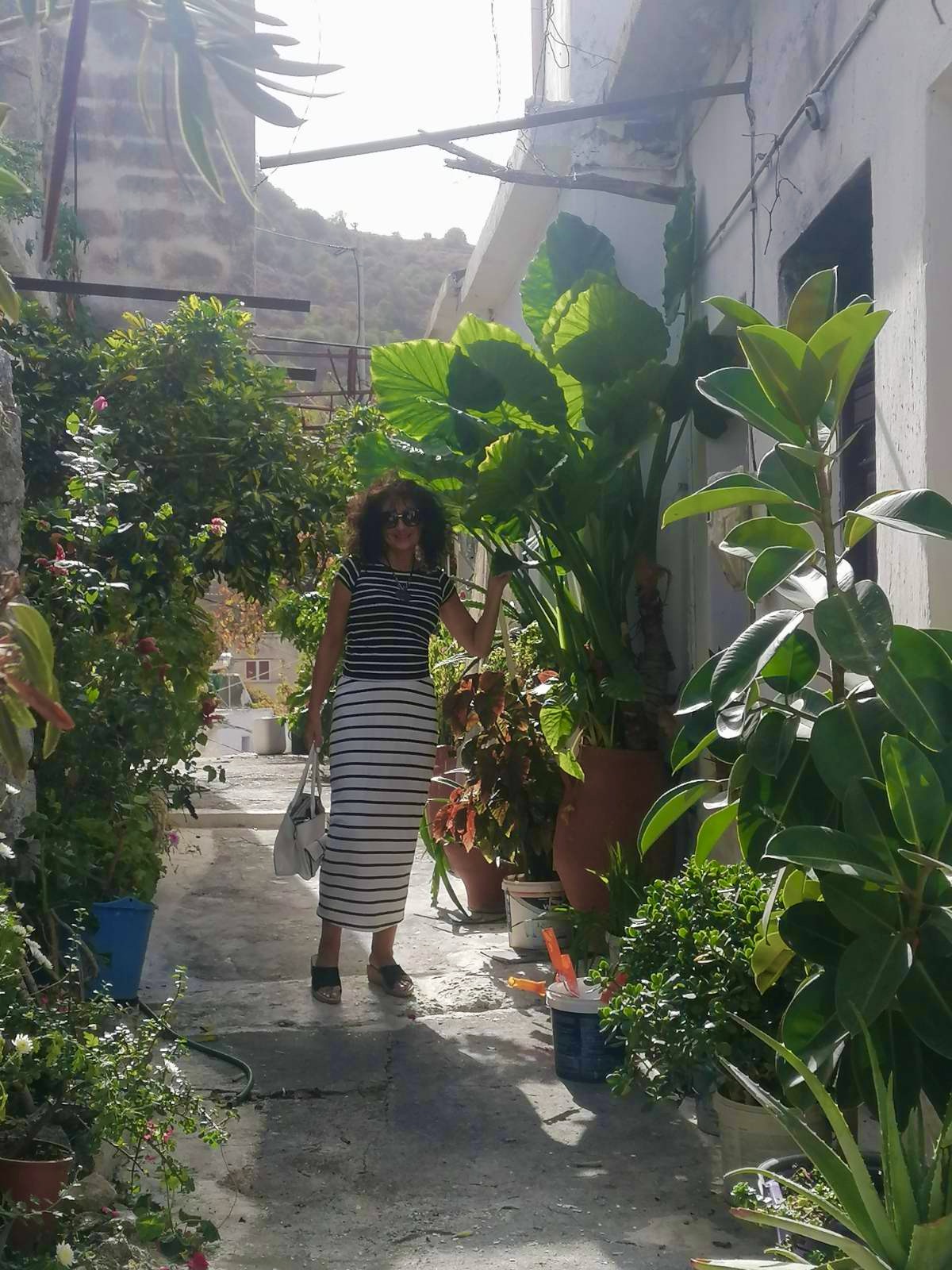
On our way home, the small group of friends with whom we’d made the trip stopped on the sea front at Myrto for a coffee. It was gorgeous there on that Sunday, with rolling breakers crashing on to the beach below us and a warm breeze ruffling our hair and clothes. As we walked back to the car, I snapped this one…
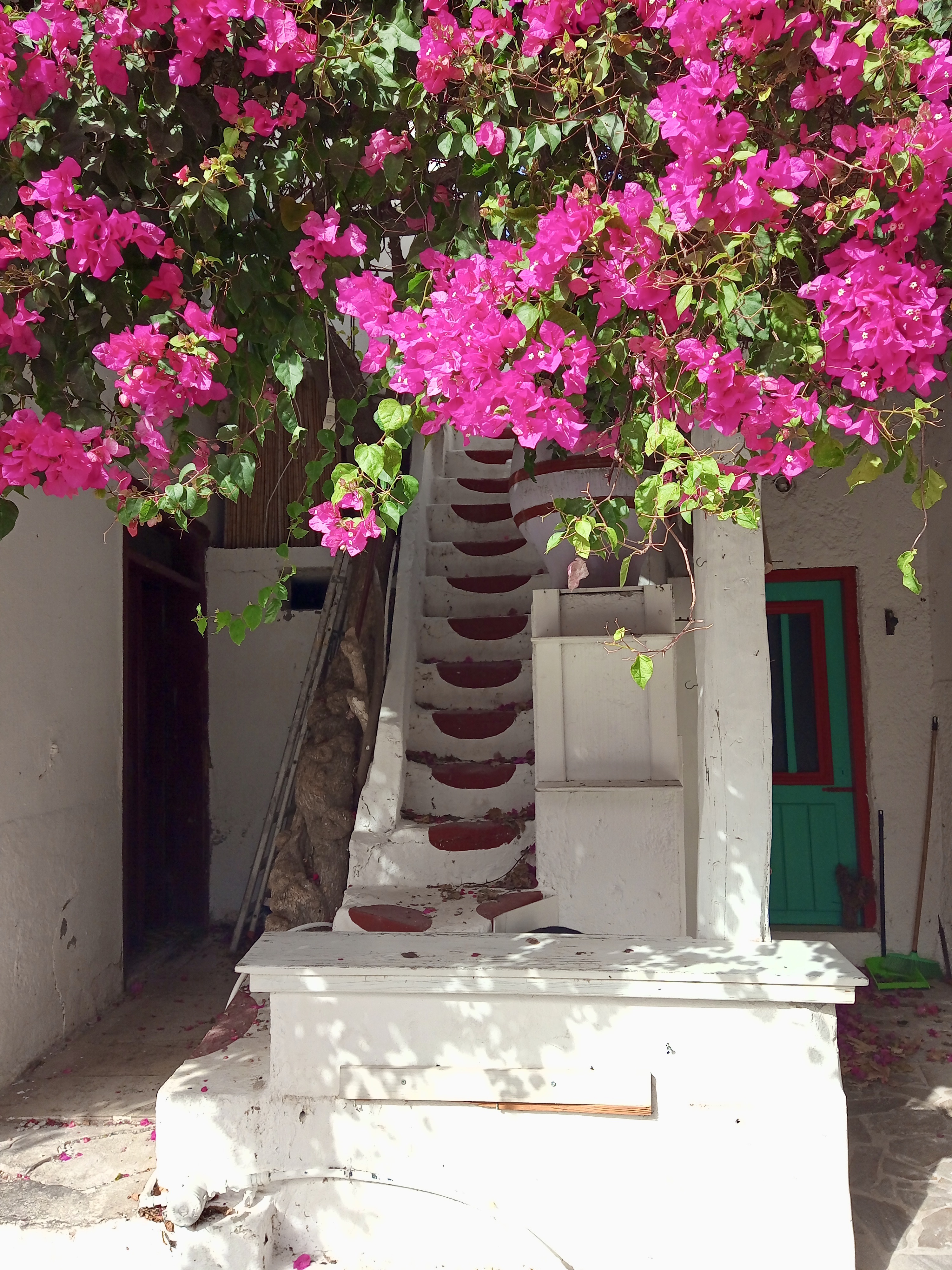
See you next time.
•
Click HERE to go to my Amazon Author Page. There you can browse all of my written works.
 Accretions