
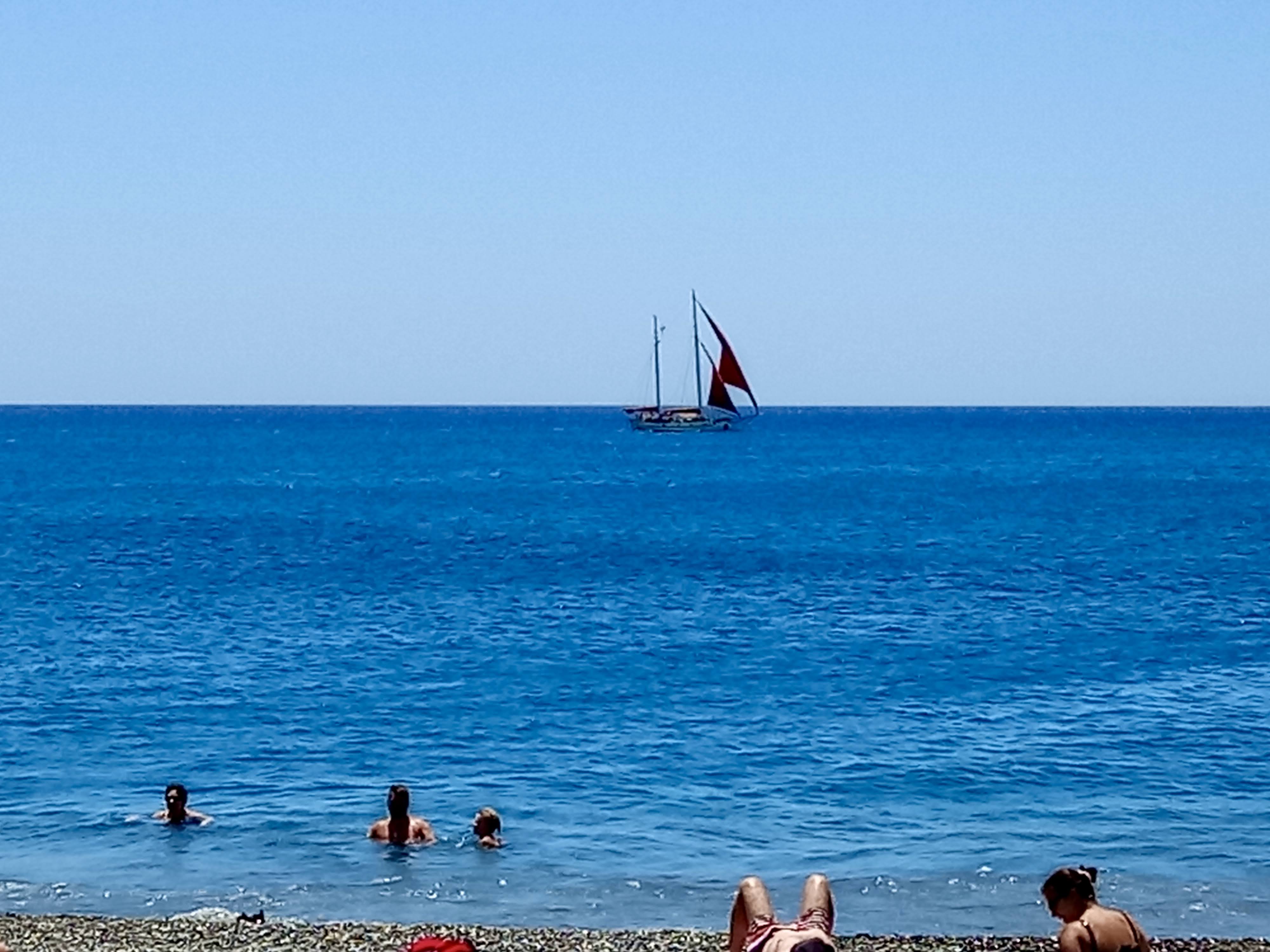
The above shot of a Ketch (watch as the aficionados shoot me down in flames here, since I know very little about such technical details!) passing our local beach was taken a few days ago. I don’t know what it is about such sailing vessels, especially those that look like they have some history behind them, but they evoke such romantic visions of past times when these vessels roamed the oceans all the time, but they do look so – well – just right, don’t they? I took another as well, so here it is…
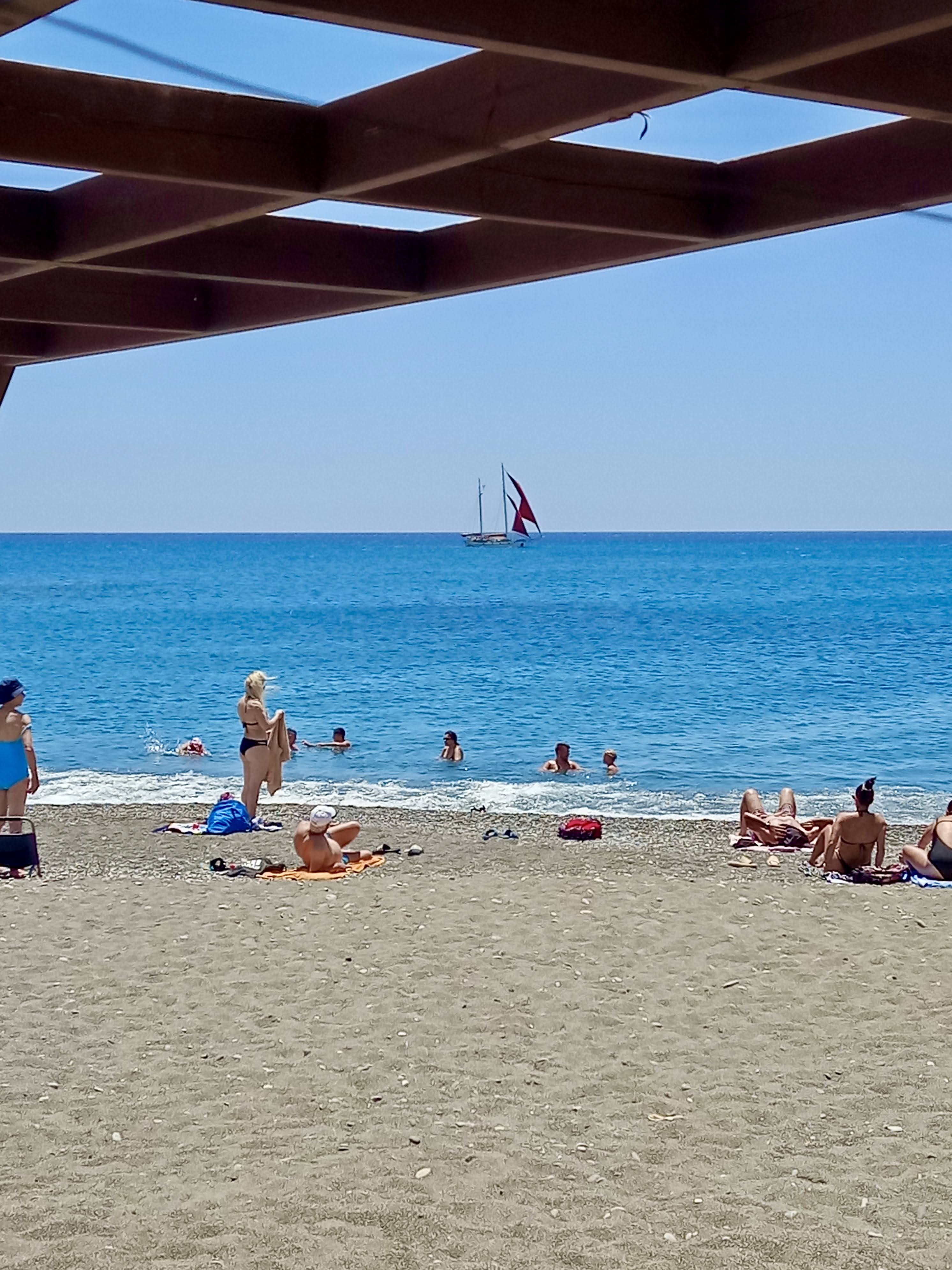
On the same day, I was rather amused by this bloke…

He stood there like that for at least half an hour or so, then he turned around and did the same thing again, but this time facing the beach. You won’t be surprised to learn that, when I heard him talking to his family a little later on, he was British! The hat is a good indicator (such sartorial elegance), as is the fact that he was evidently simply trying to brown himself off. Apart from when they go into the water to cool off, the locals simply never stay in the sun for more than a minute or two. Up until this year, and this is our fifth summer in our ‘new’ home, we’ve hardly ever heard an English voice in Ierapetra. This year, though, we’ve heard them more often, and so I did a little research, only to discover that this is the first season that TUI have contracted with a hotel a little way along the coast towards Makry Gialos, and thus I suppose we can expect to hear and see British tourists around the place a little more often now.
I called this post How does your gardenia grow? because we were talking with some locals recently about the gardenia plants in their garden. Gardenias evoke such vivid memories for me because, when I first visited Greece, which was in September of 1977, we stayed with Yvonne’s relatives in Athens for three weeks, during which we also passed a few days on my first ever Greek Island, which was Poros, in the Saronic Gulf. Incidentally, if you click on that Poros link, you’ll go to the official tourist info site for that delightful island. Just out of interest, if you look at the banner photo at the top of that page, the small village rooms where we stayed (and did so four more times over the succeeding five years) are smack in the middle of the photo, slightly right of centre. For me to try and explain exactly which rooms they are would be a bit of a struggle, but suffice it to say that once you’ve started your whole Greek experience in such circumstances, you begin to understand why I so hate big hotels, and especially the All-Inclusive variety. OK, so I had a Greek mother-in-law to make all the arrangements to begin with; but the only way, in my humble view, to truly enjoy Greece and to ‘feel’ the country, is to stay in modest accommodation in the thick of things, not out on some limb amongst a few hundred of either your own compatriots, or a mix of northern Europeans.
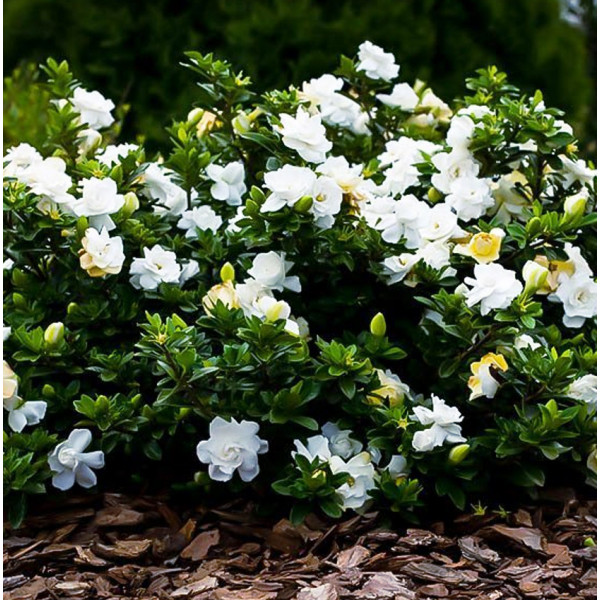
My wife’s Uncle Theodorakis grew gardenias for a living. Back then, when I first went to his house in Kato Patissia (which was a very different place in 1977 than it is these days, sad to say) the scent of these waxy, lush, creamy white flowers was heady indeed as you entered his nursery, which was situated along a fairly nondescript suburban street, oddly enough. The reason for its quite urban situation wasn’t hard to understand, because that nursery had been there since the days when Athens was more a collection of small villages that the urban conurbation that is has since become. Uncle Theodorakis made his living out of gardenias and nothing else. We’ve toyed with the idea of planting them in our garden here, but we’re a little worried about how you look after them, to be truthful. If you want to know what they look like, here’s a photo…
Theodorakis would sell the flowers to night clubs and restaurants, anywhere where there would be live music. Most people are aware that the most popular way of showing appreciation for musicians, singers and dancers during a Greek knees-up used to be by smashing plates. What perhaps you may not be aware of was that the plates that they would smash were more often than not specially made for the purpose and often not glazed in a kiln. Some years ago the Greek government of the time passed a new law (as long ago as 1969, in fact) prohibiting the smashing of plates, because the shards could injure people. It took a few decades for that law to actually bite, since during my early visits to the country throughout the seventies and eighties, plate smashing was alive and well, since I saw it many times. I used to marvel at how the staff in the club would brush all the fragments into piles along the side of the dance floor with stiff brushes, before they got going on yet another session.
When you entered the wooden gate into Uncle Theodoraki’s nursery, you passed through a few metres of rich, shiny foliage until you reached the few steps up to the veranda along the front of the house. Once you’d penetrated the gardenia ‘forest’ by but a few metres, you could have been forgiven for thinking that you were somewhere out in the wilds, the city street from which you’d just gained access seeming a whole world away. The plants were either growing out of huge terracotta pots, or were planted up in smaller pots on wooden benches, thus making the foliage and the luscious blooms around shoulder/head height. You’d have to gently nudge some delicate branches aside to avoid them brushing against you as you walked. Next time you’re near a gardenia plant, make sure you smell the flowers. Mind you, if it’s in bloom you won’t have much difficulty in doing that, because their smell is quite strong, especially if you’re near them in the early morning or early evening hours. It’s also one of the loveliest natural aromas you’re ever likely to enjoy.
Small wonder, then, that my first ever experience of gardenias, which was a mere 47 years ago, is still with me today, especially when I’m fortunate enough to be near to a gardenia plant nowadays.
Going back to the whole plate smashing thing, I only mentioned it because, owing to the new law, plates began to be replaced by flowers, and occasionally paper serviettes. If you go to a popular bouzoukia these days, by the time you reach about 3.00am, the dance floor (and often the singers sing from there, in amongst the revellers) is almost knee deep in paper serviettes, red carnation flowers and white gardenias, although these days the gardenias have lost a lot of ground to the carnations, which are cheaper. Where do the patrons get these flowers from? If you sit at a table in a bouzoukia (different link to the previous one), you’ll see members of staff regularly circulating amongst the customers carrying little wicker baskets of them, sometimes piled ten high on their arm. If you approve of either the bouzouki player or the singer, you show that approval by purchasing a basket of blossoms, getting up and then moving as close to the musician as you can before throwing the contents of the basket all over them. There is also another way of showing your appreciation, if you happen to be well-heeled enough (or want to give the impression that you are), and that’s to order a bottle of champagne from a waiter, who’ll then take it right up to the singer or bouzouki player, pop the cork while standing beside them, and then making a great show of pouring the effervescent liquid into a flute and handing it to the recipient, while pointing at you with the other hand to show them who’d shelled out for it. Aah, those were the days, when I had the stamina and the appetite to be out until dawn.
•
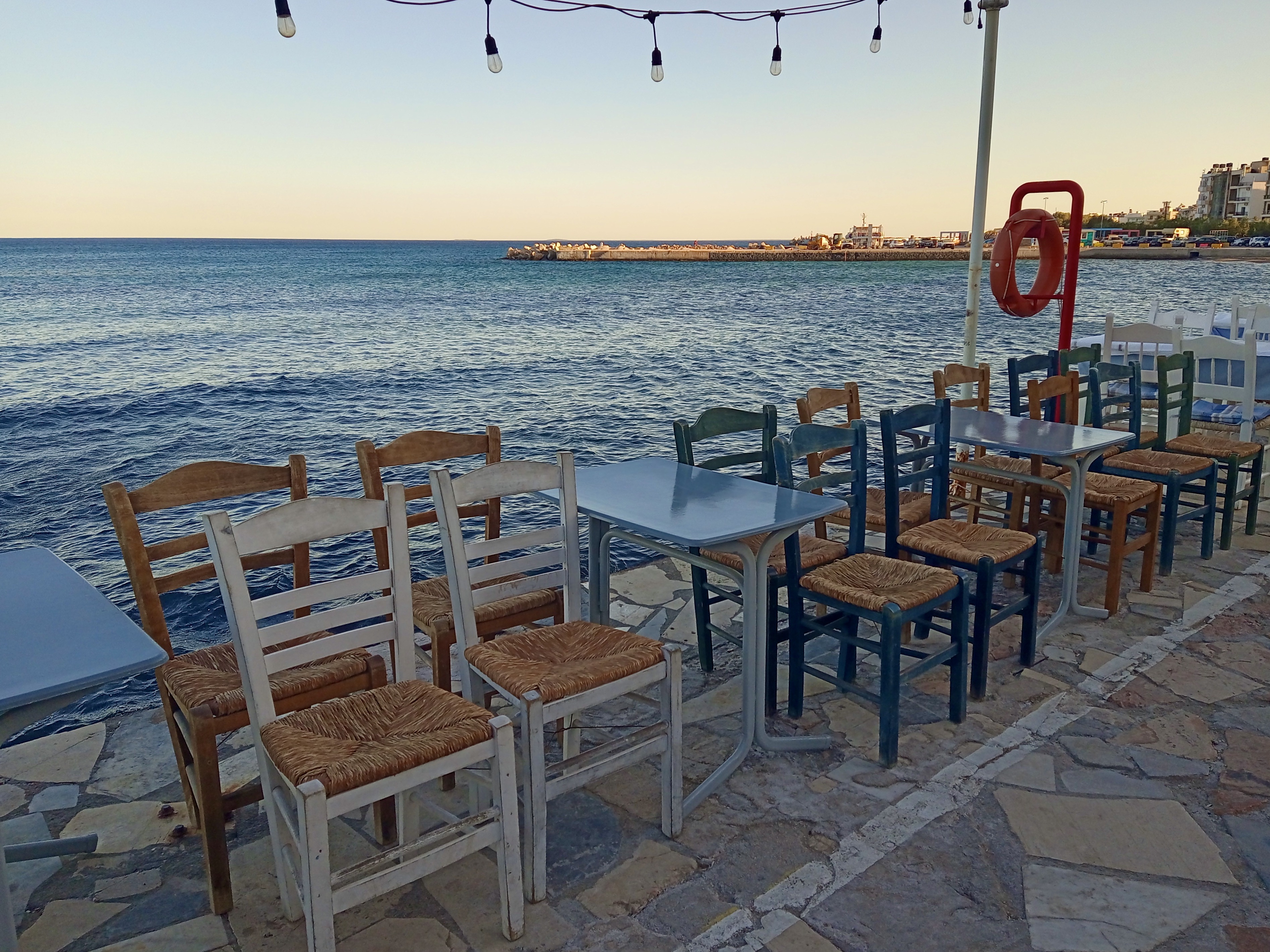
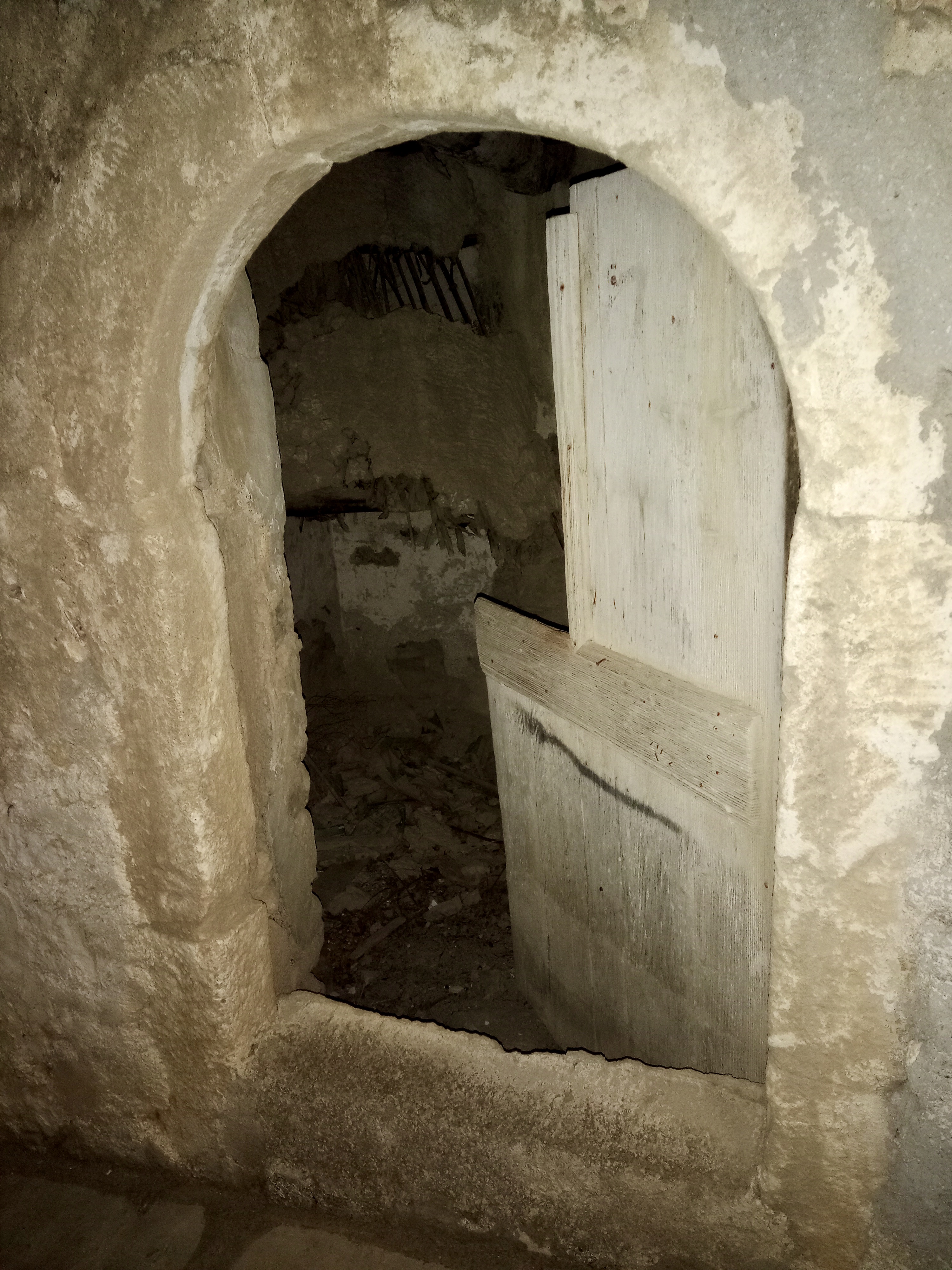
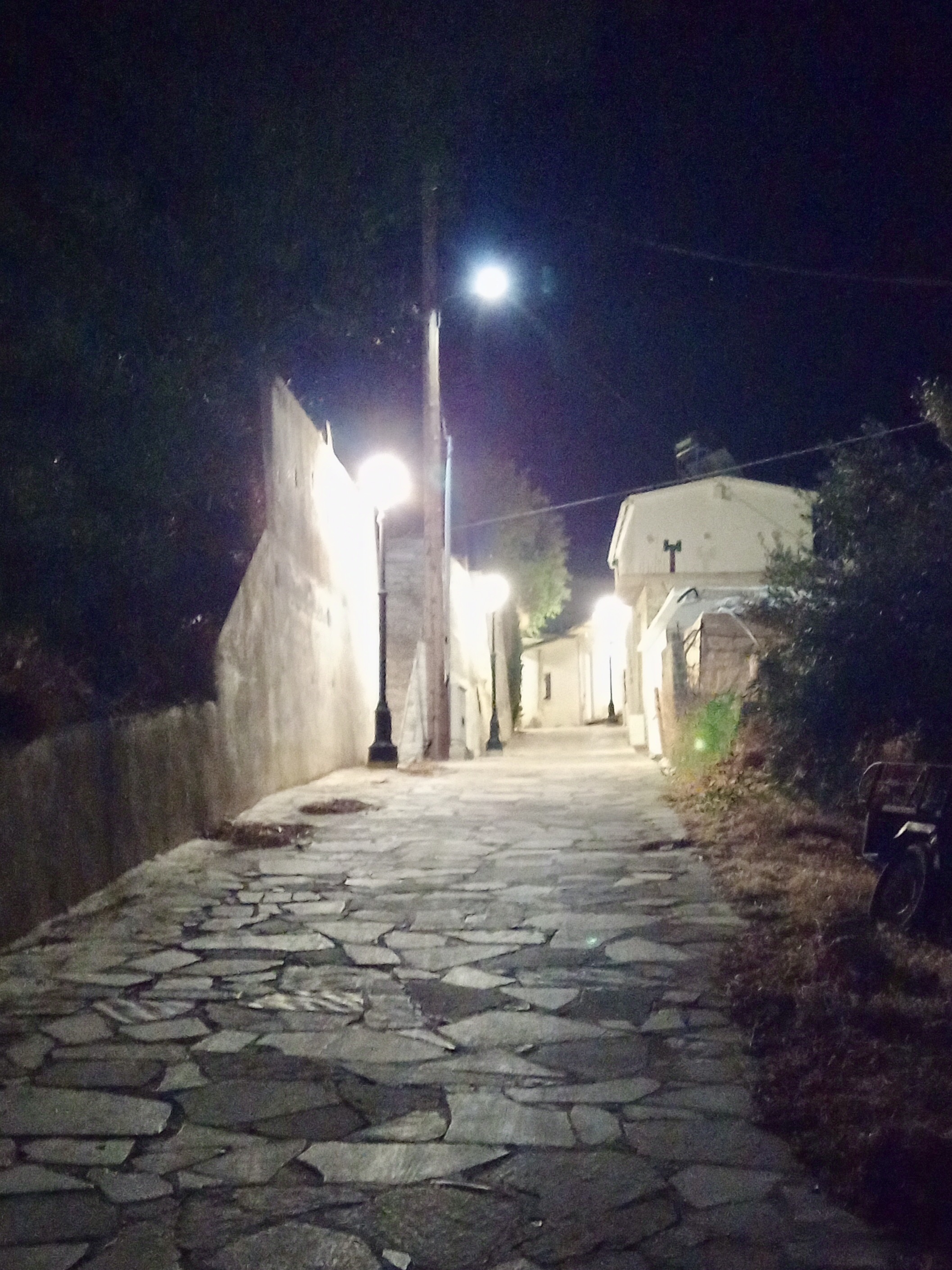
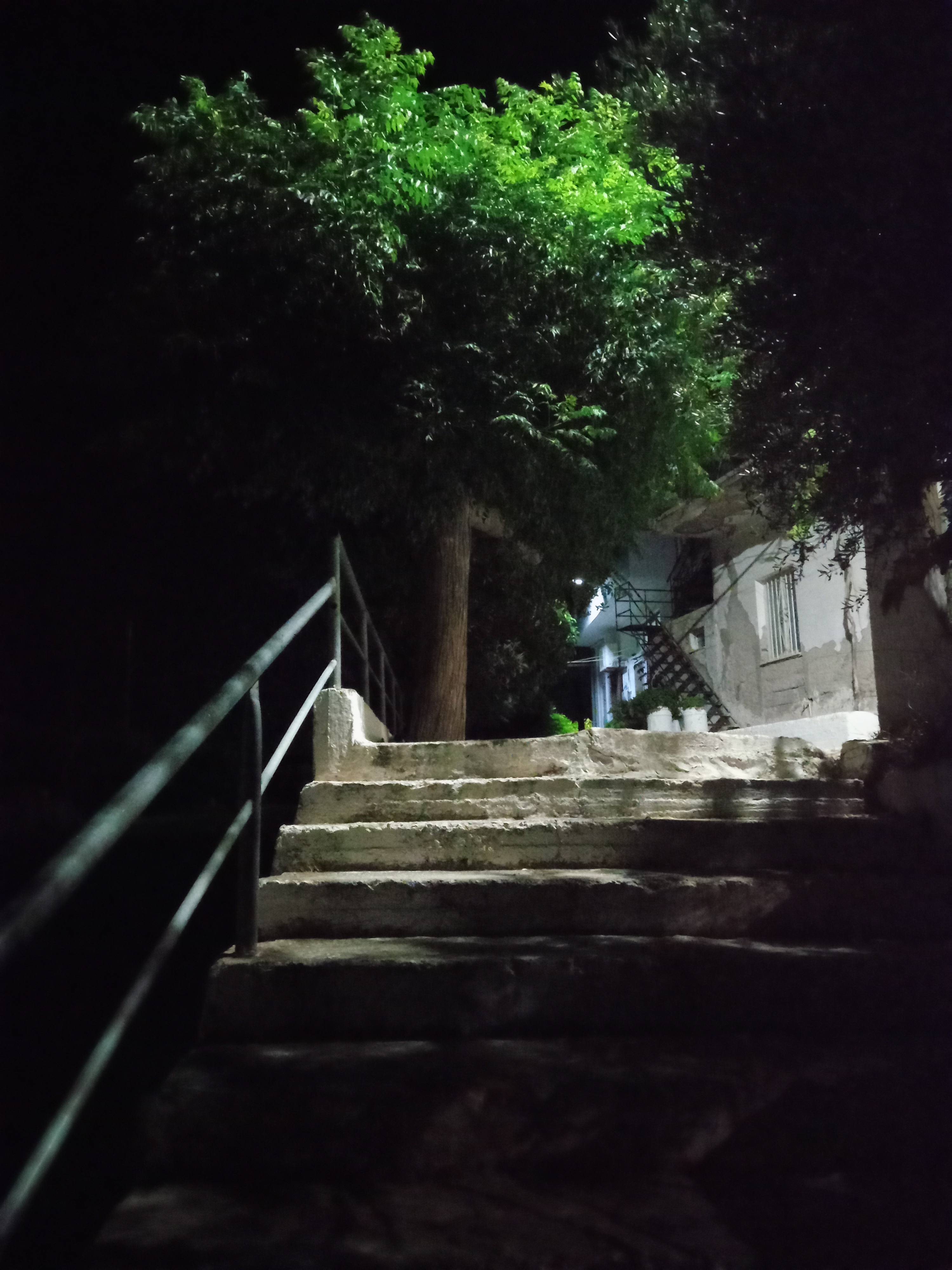
These photos below were all taken either at night, or at dusk either in the village or down in the town recently. Hope you like them…
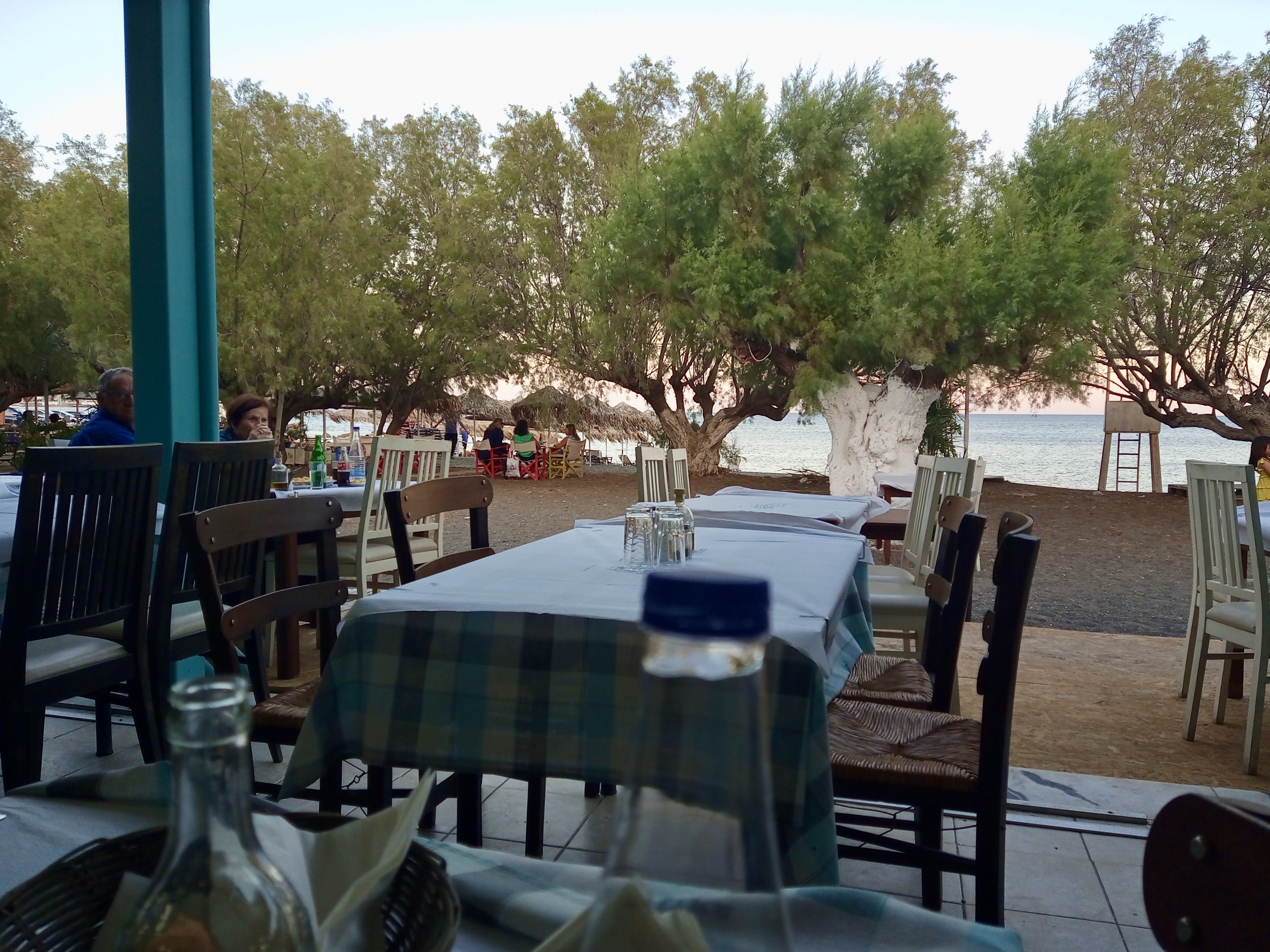
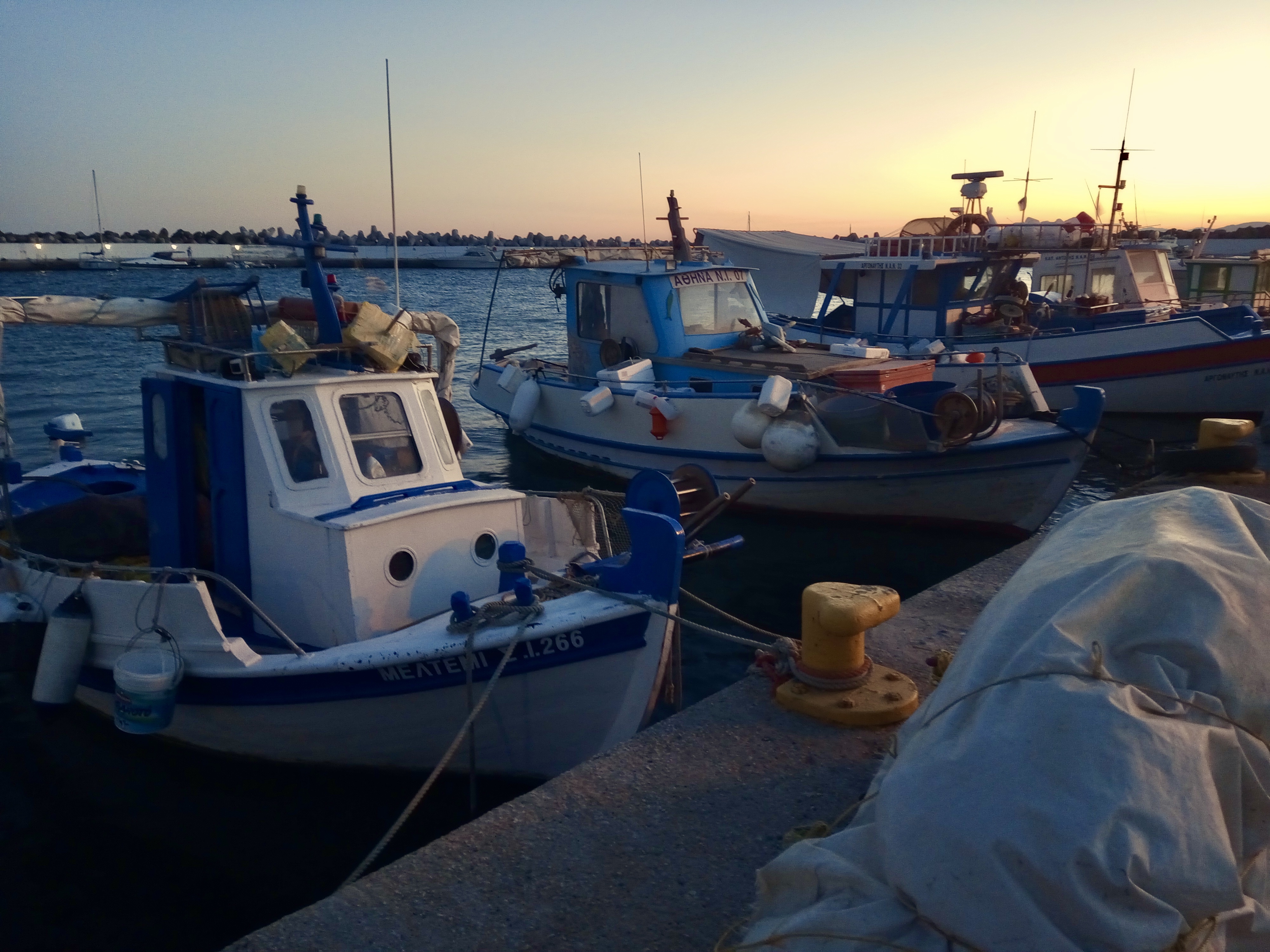
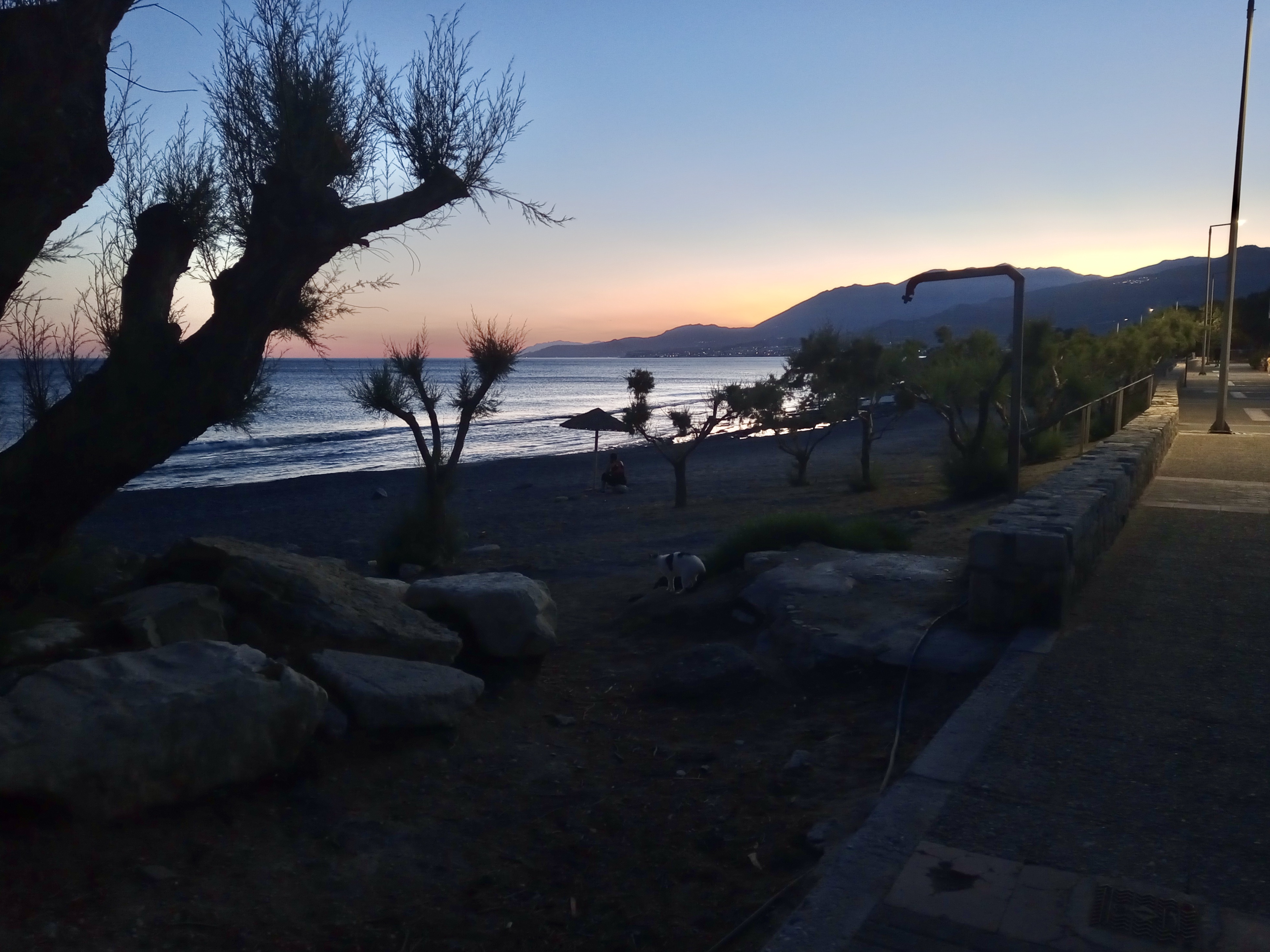
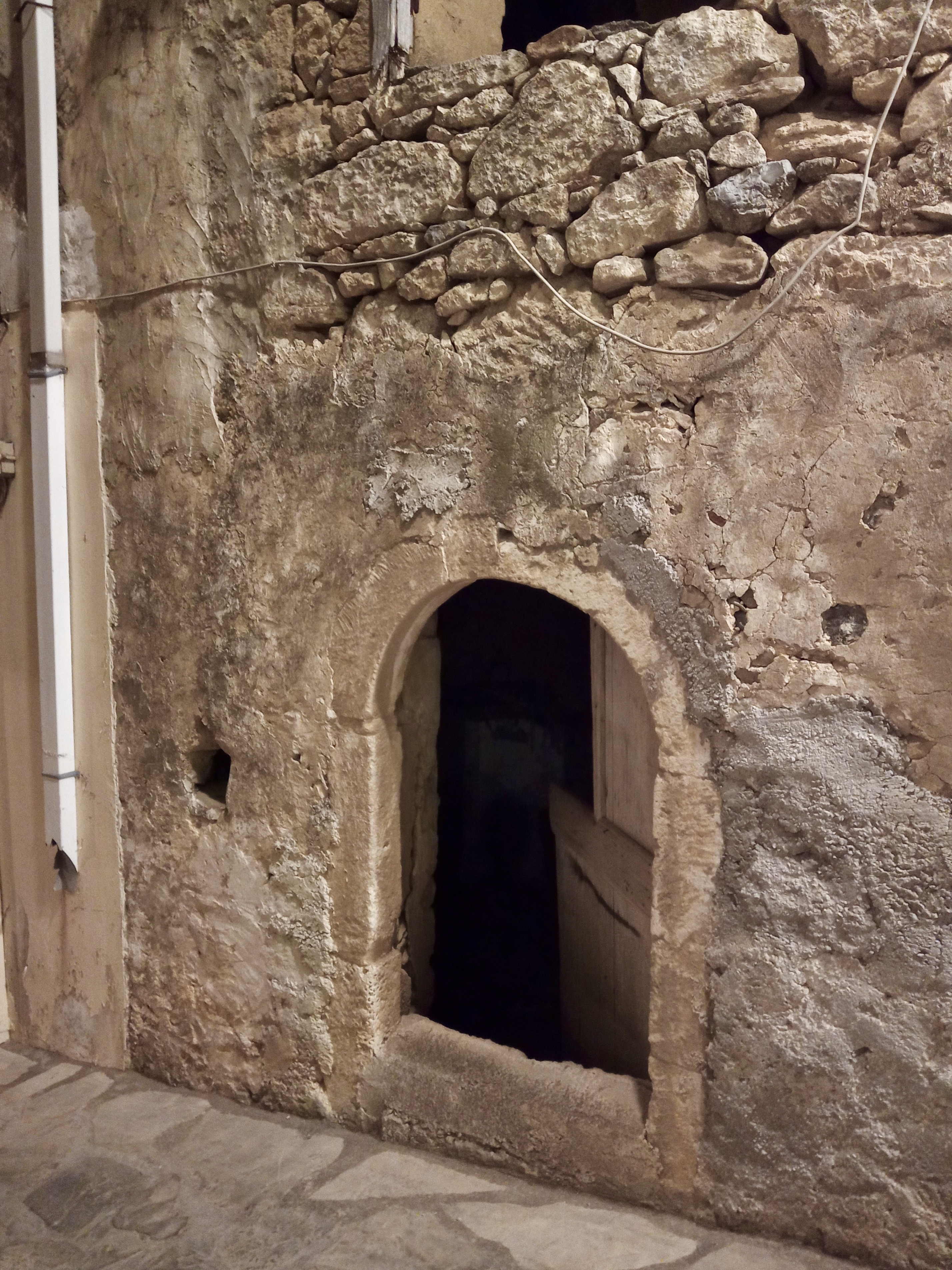

•
Click HERE to go to my Amazon Author Page. There you can browse all of my written works.
 Accretions