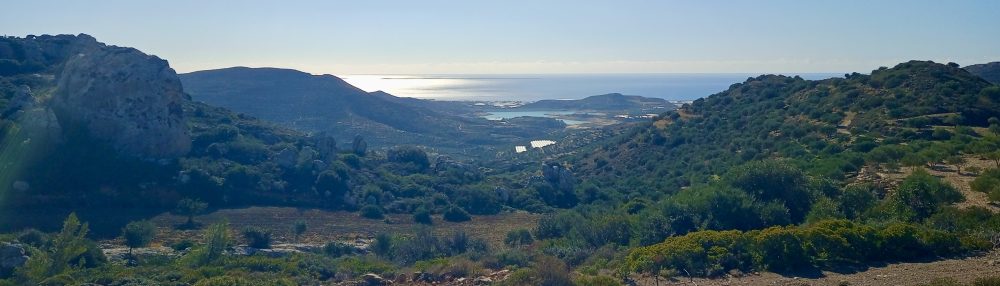

So, we finally got around to sitting down with our neighbours, former village mayor Angla’i’a and her hubby Giorgo a couple of weeks ago. As per usual, as soon as Angla’i’a caught sight of us through her screen door she told us (ordered us, more like) to sit at the outdoor table under the shade of their vast rubber tree and she’d be out in a minute with our Ellinikos. Of course, as always you don’t only get a cup of thick, syrupy Greek coffee, you also get a nibble or two, and in this case she served up a plate of koulourakia and another of melomakarona, both made by her own fair hand, naturally. Yummy. Outside her front door she had the other, larger table completely covered by a net, which was supported to keep it off the surface by a few sawn-off plastic water bottles (empty and upturned, of course). Spread across the surface of the table was, from where we were sitting, what looked like a mass of dried leaves.
Yvonne, curiosity getting the better of her, had to ask right away what it was that she and Giorgo had under that netting. “Tarhana,” replied Angla’i’a, which is also known as ‘Tragana,’ apparently.
Once she told us we knew, because we’d come across the stuff before. In fact it was Angla’i’a who’d given us a jar of it a couple of years ago. If you’ve never seen it in the state in which people store it, when dried it looks like dehydrated soya mince, or some such. When we were given a glass jar full of it, Yvonne knew what it was, but had never had occasion to use it before. It’s not, to be brutally honest here, all that appetising in its dried state, I can tell you. If you clicked on that link above you’ll already have seen that it’s composed mainly of a fermented mixture of grain and yogurt or fermented milk, and has a texture of coarse, uneven crumbs, and it is usually made into a thick soup with water, stock, or milk. When we popped open the jar that Angla’i’a gave us we nearly threw up, it smelt that rank. In fact, even though it’s vegetarian, it does a pretty good job of making you think that it’s got some kind of rancid meat in it too.
Our curiosity satisfied, we moved the conversation along, since Giorgos had joined us and we wanted to ask after his knee problem. “Eh!” He replied, “it is what it is. I just put up with it.” It doesn’t stop him, a near 90 year-old, from getting up every morning, crossing the road and tending his horafi, where he still grows a selection of vegetables for the table. He reckons that he’s cut back how much he does there nowadays, but you could have fooled us. There had been another tremor a few hours before we sat down together, so we asked what they thought of the possibility of a big quake coming some time.
“Earthquakes don’t worry me, they don’t keep me awake at nights,” said Angla’i’a, “No, what worries me is fires.” That made some sense, because we get small quakes all the time here, which is a good thing and lessens the possibility of us getting a huge one some time. But every summer, by the time you get to the end of July/early August, the land is so dry that fires can start even with the sun’s rays being magnified through a half-empty discarded water bottle thrown carelessly out of a car window. The landscape is so parched that a cigarette end can result in many stremmata being consumed by flames within hours. It’s illegal to have bonfires after April and before the rains start, usually in late October or November, for obvious reasons. If you have a patch of land that’s overgrown with weeds, it’s law that you have to cut it and dispose of the cuttings, before a certain date (varies a bit each year) in April, or you risk a hefty fine.
We caught up with our neighbours and their news, which mainly consisted of Angla’i’a’s negative comments about our new mayor, Manoli, who’s actually her nephew. Seems, though, that there’s no love lost between them. We couldn’t help but remark on all the things he’s been doing, or getting done, around the village, to which her reply was, “Yeah well, they all hit the ground running when they’re first elected. They get paid for all kinds of stuff they do during the first year or two, then after that the funding dries up, so they make sure they get what they can out of the government at the start of their term, then they do naff-all, sit around in the kafeneion most of the time.” We were in no position to comment on such things, of course.
As always the clock caught up with us and it was time to take our leave. You never leave, though, without first being given a gift, and this time was no exception. “Hold on, before you go…” said Angla’i’a, already on her way into the kitchen through the screen door. She came out a few seconds later with a plastic bag stuffed full with Vlita, a kind of horta that’s a village staple for the table of modest rural folk. It grows wild, usually around the perimeter of an irrigated field, and consists of large dark green leaves. I can’t say I’m all that fond if it, but it’s a rich source of iron and Yvonne froze what Angla’i’a gave her and now adds it (finely chopped) to her bolognese and chilli sauces, curries and even a traditional lentil soup that she makes from time to time. On top of all the leaves was a plastic container inside of which were a dozen or so Melomakarona, which are more often made for special occasions like Easter, Christmas, name days etc. But many housewives make them simply because they want to, and we’re well glad that our friend is one such woman. They’re simply scrumptious and go excellently with an iced coffee on the veranda of a morning.
It was good to have once again spent some quality time with this humble, hospitable couple, who were the first to make us welcome when we first moved into our house in the village one month short of five years ago. They genuinely seem to miss us if we let a few months go by without dropping in for a chinwag. I don’t know where the time goes. Well, I do, it goes the same way as all the time before it, but it’s good sometimes to remember what’s truly important, and being good neighbours is well up there in the list, isn’t it.
And so to the photos. The top photo on this post was taken at dusk as we ate a delicious meal at the waterside restaurant the Vira Potsi, right beside the Venetian Fortress that stands at the entrance to Ierapetra Harbour, last Monday evening. Not only did one turtle turn up, but a pair of them. My photos aren’t all that good, but here are the rest of them anyway, as just about everyone who was dining that evening crowded to the edge of the quay to strain to catch sight of these wonderful, elegant, gentle creatures…
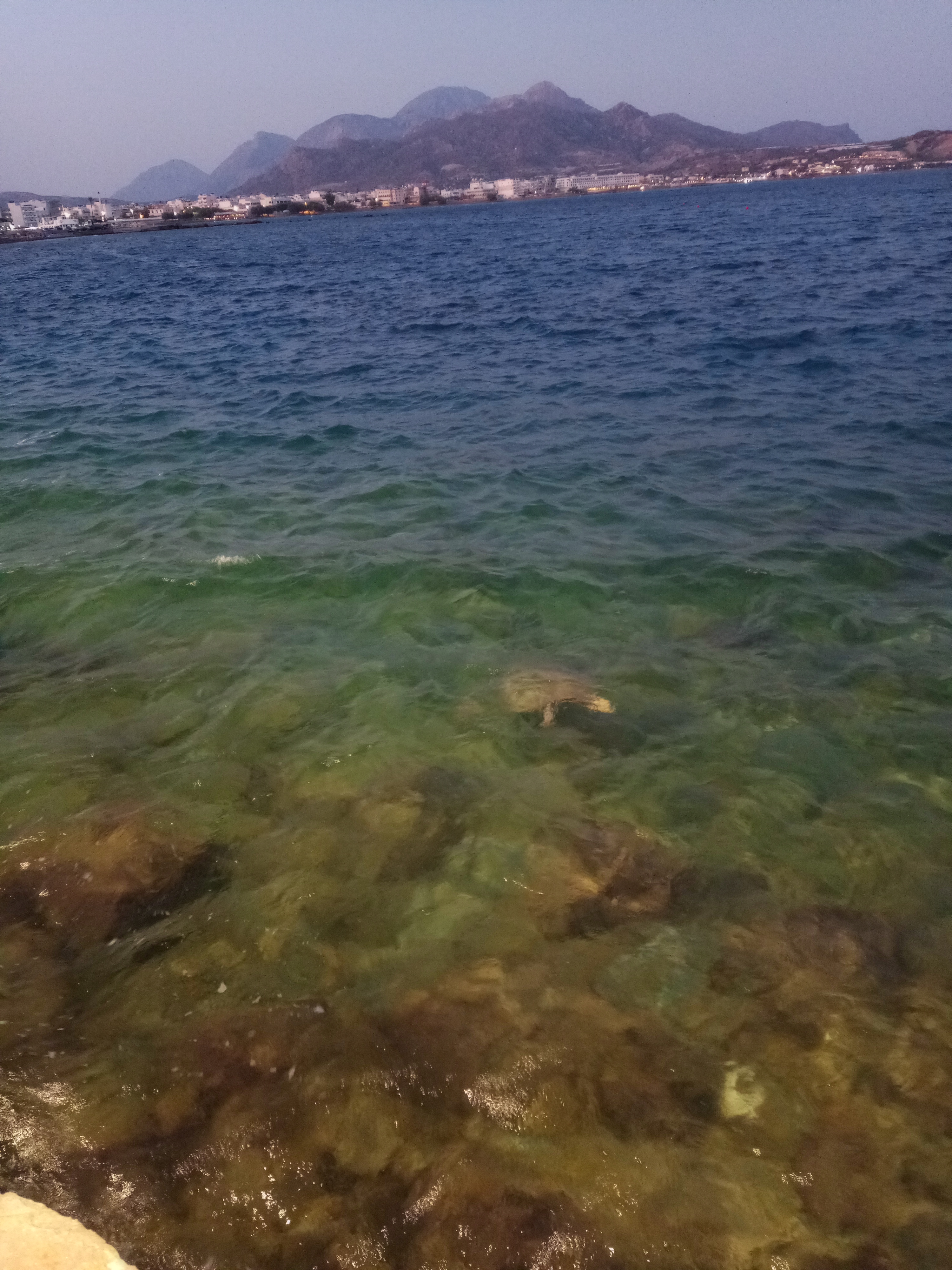
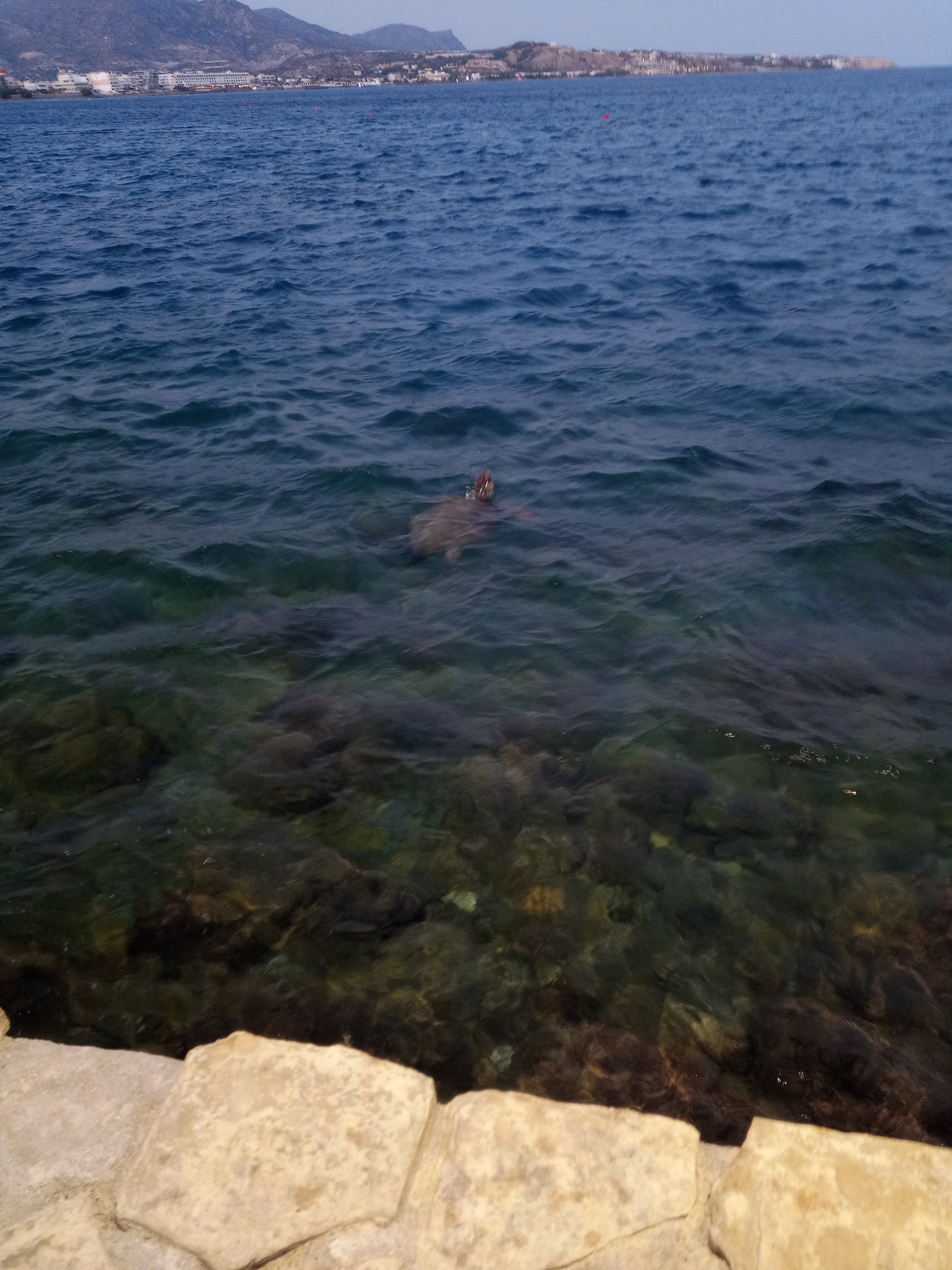
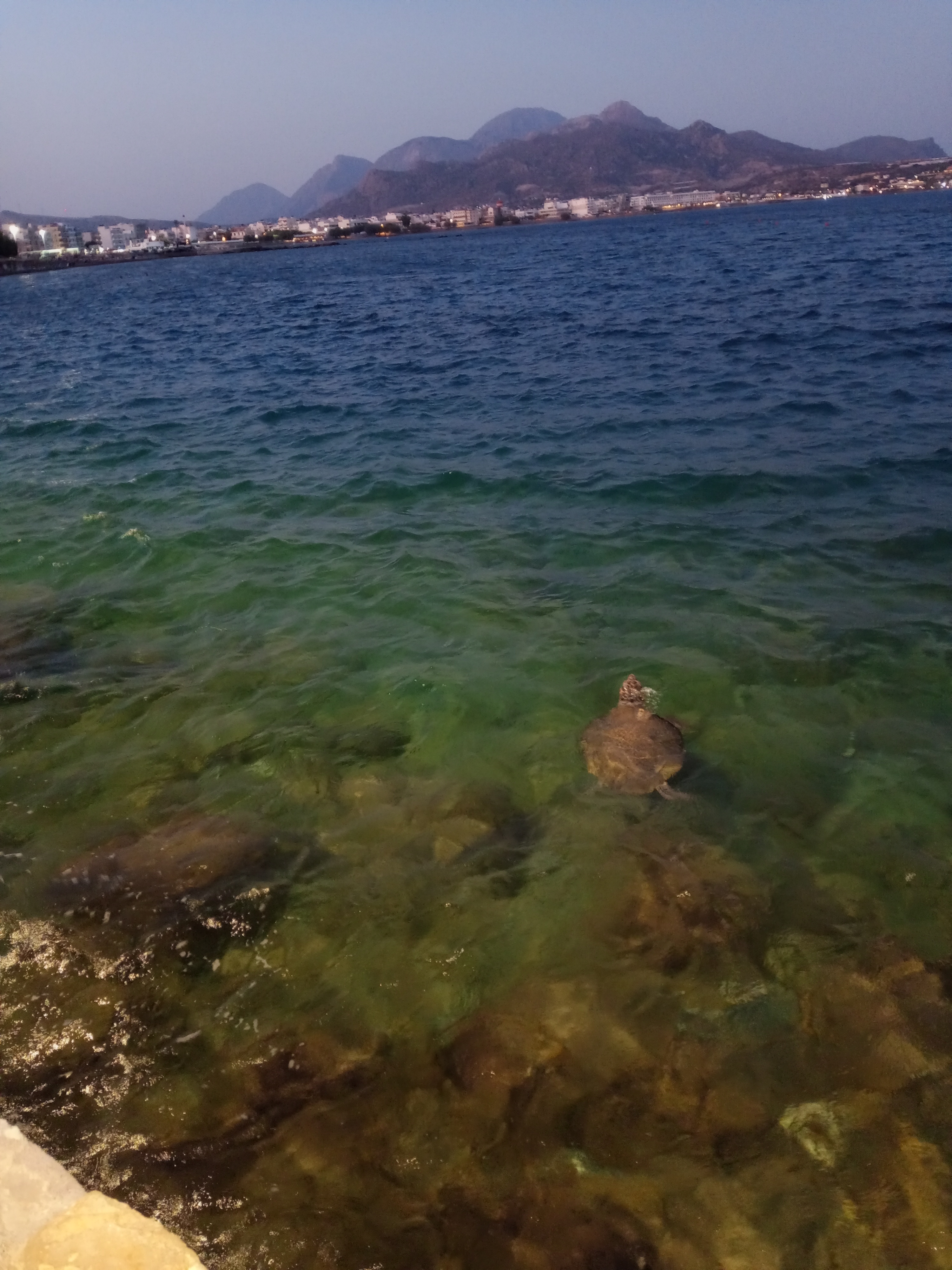

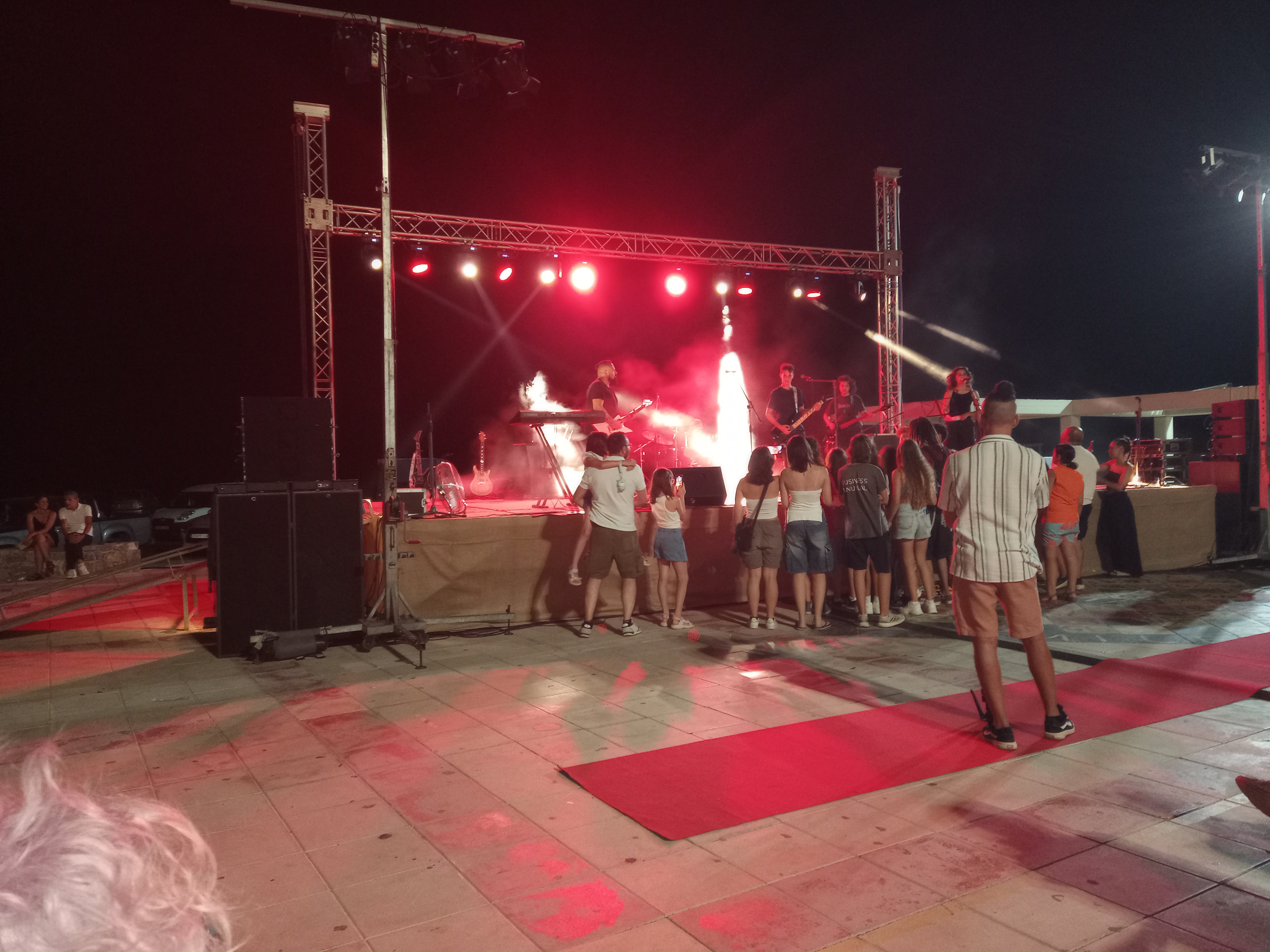
On Sunday evening there was a lively food and music festival on the waterfront in town too, all the food was contributed by restaurants and households in the surrounding area and it was all free to those who came along. The music ranged from traditional Rebetiko, through techno, to country and even a spot of heavy metal from a band of amateur school kids, rounding out the evening.


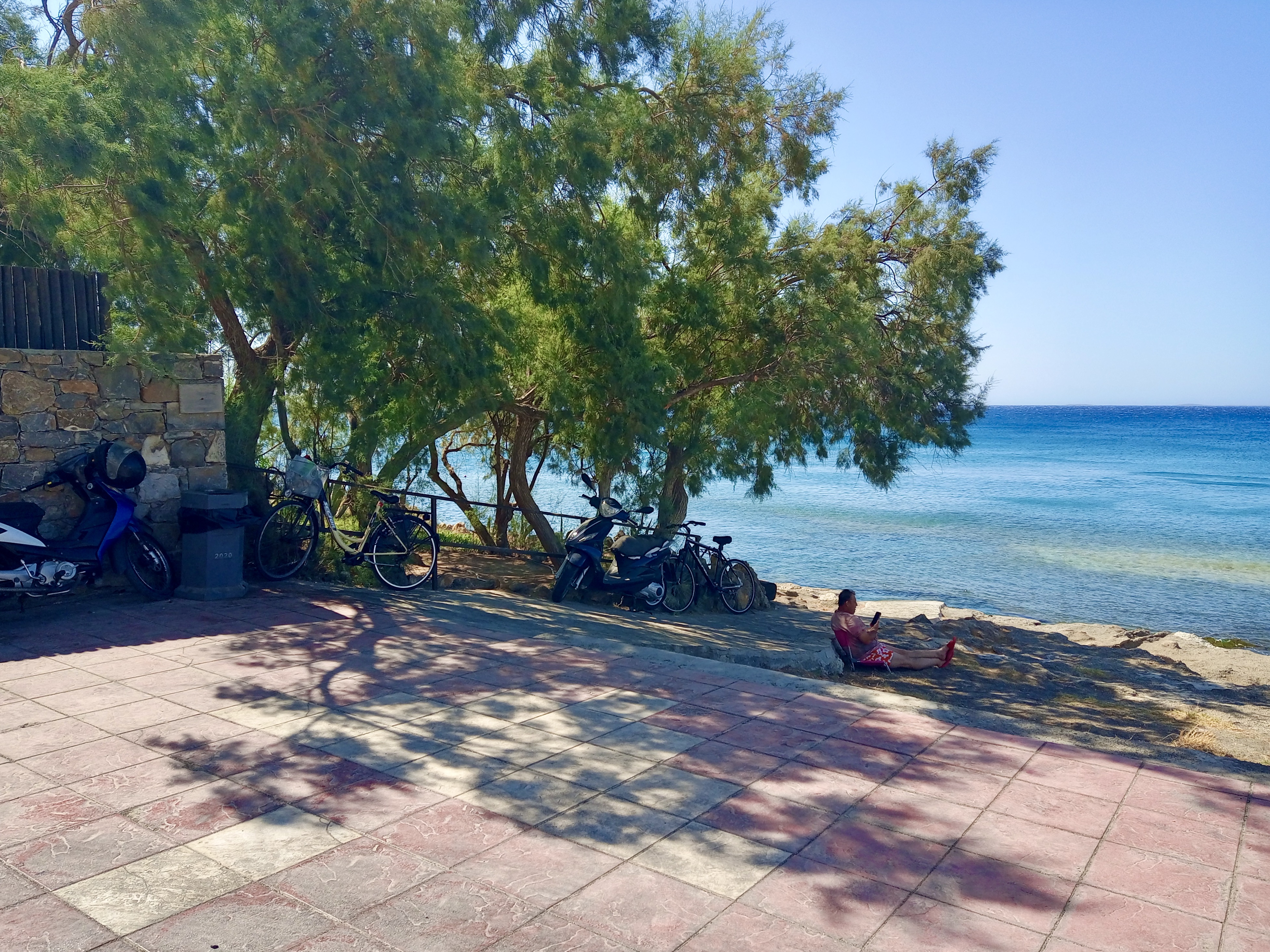
To round this one out, here are some more random photos that I quite like…



•
Click HERE to go to my Amazon Author Page. There you can browse and purchase all of my written works.
 Accretions