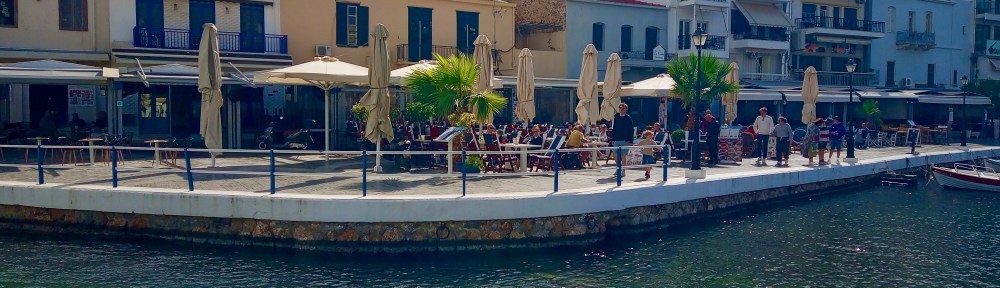
Music doesn’t half mess with your brain sometimes doesn’t it? Yvonne (as I’ve no doubt said before) loves to listen to a Greek radio station called Dalkas while she’s cooking; it’s a station that specialises in Laika music (sometimes written in English as Laiko). You know the music I mean, it’s primarily bouzouki-based and the songs are usually about shattered relationships, having a good time at the taverna, longing for the homeland on the part of Greeks who live in far-flung parts of the planet (the diaspora as it’s called), or the joy of taking a small boat out, either to travel to neighbouring island, or to go fishing. They are simple themes but the songs are always sung with such pathos that you can’t help but get a lump in your throat at those heart-on-the-sleeve vocals.
I have many fond memories (some of which I addressed in my first book, “Feta Compli!”) of the early seventies and going to my girlfriend’s house in Grosvenor, Bath, back when we were still only in the ‘going out’ stage, as it were, and shuffling through my future mother-in-law’s disc collection. Virtually all of the records were on the Minos label, and I was usually grief-stricken, not so much at the songs, since I couldn’t understand a word of them back then, but more because of the fact that their owner had no idea about how to look after vinyl records. The 7” singles were seldom in their sleeves, more likely in a dishevelled pile on the dusty floor under the stereogram, which stood on legs. You remember stereograms, right? Well, you do if you’re of a ‘certain age.’ They were usually long wide pieces of polished wood furniture, very often in the G-Plan or Ercol style, with lift-up lids concealing the record deck. At either end there were speakers hidden behind a material gauze or a slatted wooden section. In those days no self-respecting suburban home would be without one. They were like multifunctional sideboards, if you like. Oh, and they usually had a radio built in as well.
Now I’m getting to why I’m going on about all this. Going back to my thought about what music can do to your mind, when Yvonne is dancing around the kitchen these days to an ancient song that’s playing on Dalkas, I’m also affected emotionally. All those songs of the sixties and seventies that were massive in Greece back then are now the stock-in-trade of Dalkas. These days, when one of these old songs comes on, I recognise it instantly from the bouzouki intro yes, but I’m also thrilled that I can now understand what they’re singing about. All those phrases that I’d listen to and try to remember phonetically, often getting the word breaks entirely wrong, since I had no idea what they were anyway, I can now sing along to in the full understanding of what the lyric’s sentiment actually is, and what I once used to find moving simply because of the melody or the emotion in the singers voice, I now buy into totally because I understand why the singer sounds so broken hearted.
I tell you, understanding Greek takes you into a whole new world when you listen to traditional Greek singers. It’s no surprise that here in Greece the ‘singer’ is everything. In the UK music industry (and this applies to the entire English-speaking world I’d say) most artists write their own material, and bands are still probably the top-selling artists. In Greece there are mega-stars of the ‘song’ and people talk about their favourite music by using simply the surname of their favourite ‘erminevtis,’ which translates literally as ‘performer.’ Loads of singers that are hugely popular in the worldwide Greek community, and most of them embark regularly on world tours, performing in the USA, Canada, Australia and elsewhere to Greek-speaking audiences, don’t write their own material. When you buy a song by, say Nikos Oikonomopoulos, who’s one of the biggest stars at the moment, the name of the composer and the musical director (sometimes one and the same) are often as prominent as the name of the singer.
You listen to people talking about their favourite performer, and they’ll usually only refer to the surname. “Oh, I love Remos!” That would be a reference to Antonis Remos. “Vertis, he’s my favourite!” That would be Nikos Vertis then, but everyone already knows that. The voice is everything, and it’s often of no interest to a lot of the fans who actually wrote the lyrics. There are a few notable exceptions, of course, among them Yiannis Parios, or Notis Sfakianakis, both of whom are responsible for writing much of their own material, but both of those two are actually getting along in years these days. Yvonne’s absolute favourite ‘performer’ was Vasilis Karras, who died not too long ago. His voice in unmistakable, here, have a listen and see what I mean.
My mother-in-law had a few favourites, and among them was Stamatis Kokotas, who sadly died not all that long ago. He had a really distinctive voice, and you can click here to hear what I mean.
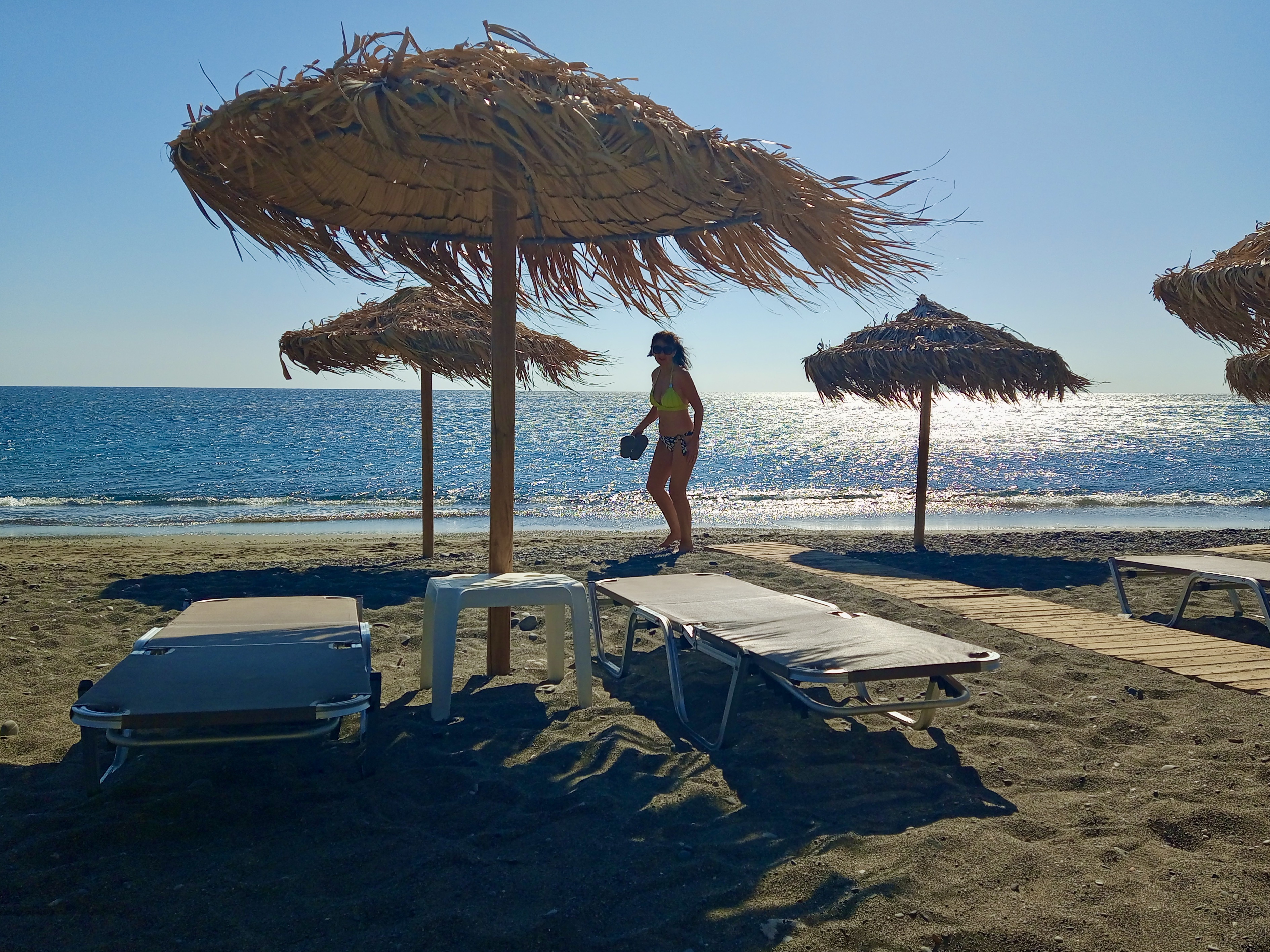
The other day, as we were having a coffee on the beach and Yvonne was listening to Dalkas on her phone, I came over all nostalgic. Like I said, music is very powerful, isn’t it. If I’m going to be completely honest, I so miss the early days when I was first becoming acquainted with this amazing country, the country of my wife’s mum, and its culture. Going to the taverna in 1977 was a far different experience on a small Greek island than it is today. I’d still rather be here than anywhere else, but there’s nowhere that hasn’t changed over the years, is there? I put the changes down to the rapid growth of tourism which, although has its good side, also has a big downside, as recent developments in Spain have illustrated. I never returned home to the UK after a trip to Greece in the years between 1977 and 1985 without having danced. Part of our regular evening experience back then would involve impromptu dancing on the part of locals, often to the accompaniment of a couple of local musicians.
Beaches, even those in easily accessible spots, were often devoid of umbrellas and sun beds. I’m a bit of a hypocrite now I suppose, because advancing years have wrought changes in me in this regard. These days I so much prefer the comfort of a lounger under an umbrella than the kind of thing we used to do when we were in our twenties. Back then we’d trek for miles across goat tracks to find idyllic beaches where we’d make do all day. We’d have brought a couple of psomakia and beef tomatoes with us for lunch. But even the ‘town beaches’ back then were often mainly a DIY experience. These days a lot of Greek beaches that were once exquisitely picturesque are now covered to the last inch with umbrellas and beds. There’s been a movement here in Greece that hasn’t perhaps gained as much publicity as that which has gone on in Spain, but involves locals demonstrating that they want their beaches back.
I’m sure that here in our still sleepy corner of Lasithi, where the sun beds and umbrellas exist, but not in such massive quantities as to cause irritation to those who also want a bit of untouched beach on which to ‘camp,’ things will probably change. I can only hope that they don’t change too quickly.
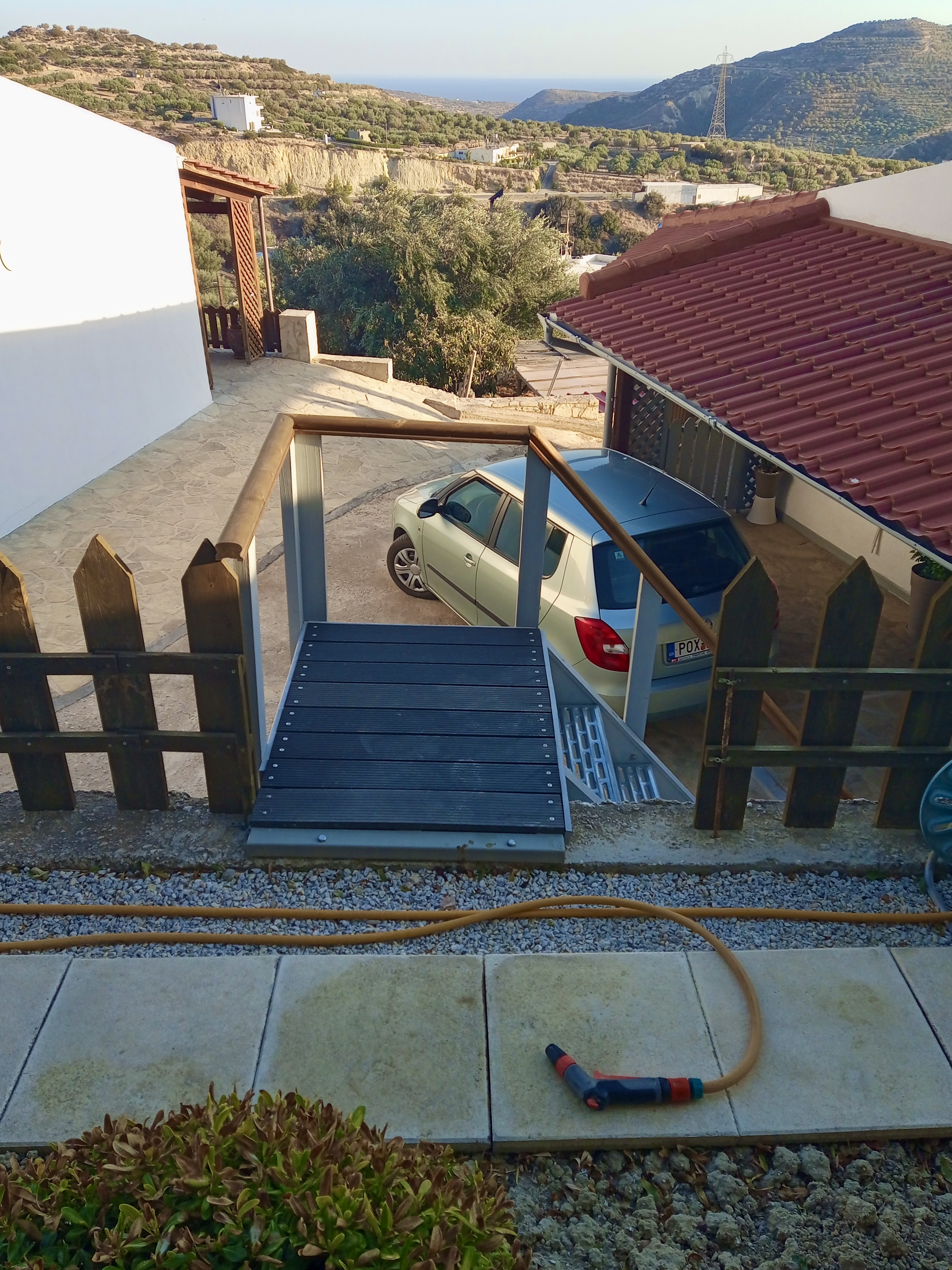
For your delectation and delight, click this link to hear a classic bouzouki track from 1967 by the great Zampetas. Marvel at the clarity of this recording too. I’m off to reflect to the sound of Zambetas’ bouzouki, I’m hopelessly lost in the past right now. Meanwhile, here are a few recent photos…




•
Click HERE to go to my Amazon Author Page.
There you can browse and purchase all of my written works.
 Accretions
Hi John, we regularly listen to Dalkas on the internet. Cheers us up in a usually drenched Scotland. Been listening since you mentioned it in a previous blog.
Regards Lindsay
Excellent Lindsay, glad you like it. Like you, even in this climate that music always makes me feel better, if a little nostalgic now and then too! 😎