Eerie, but flippin’ useful

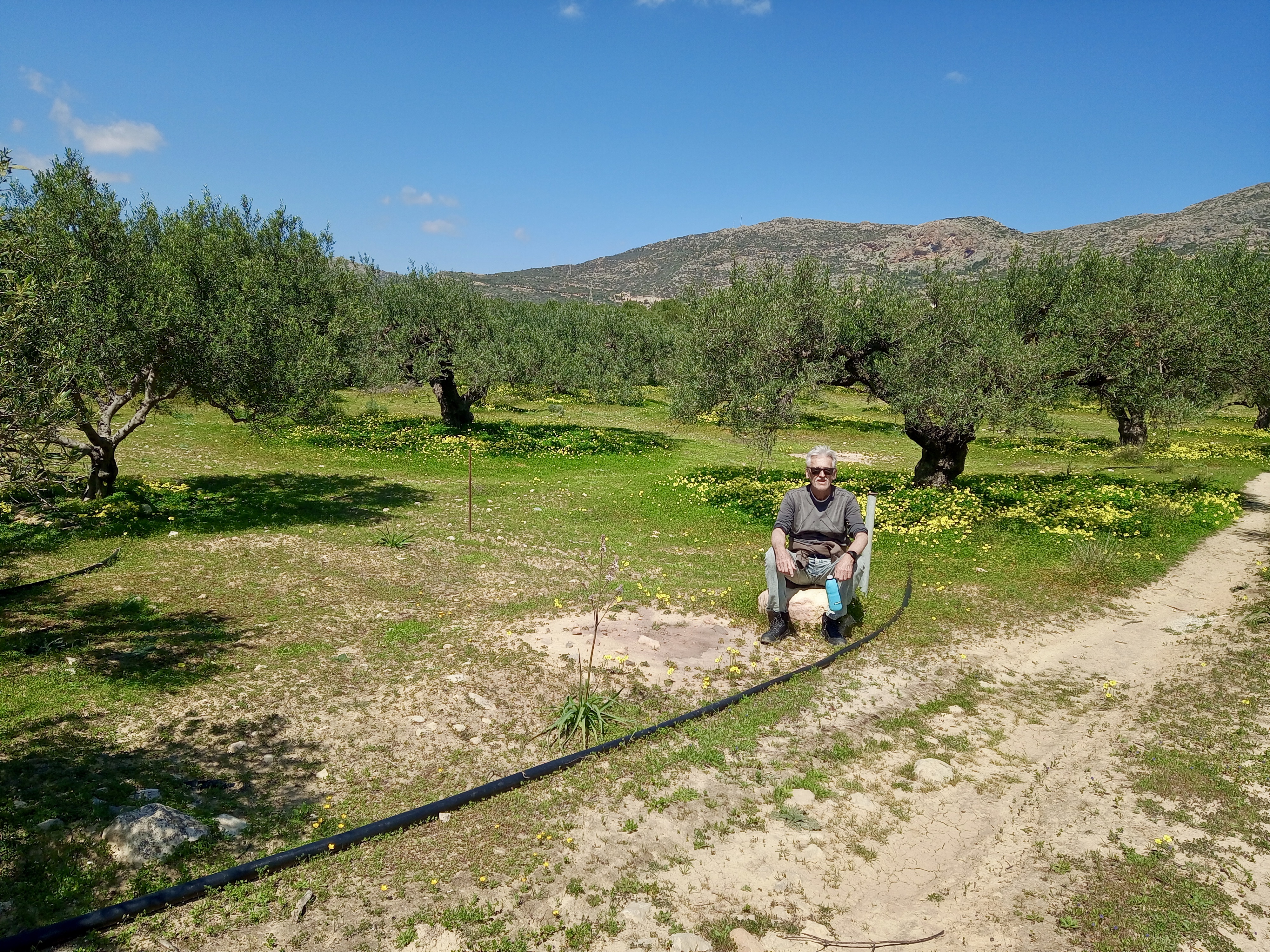
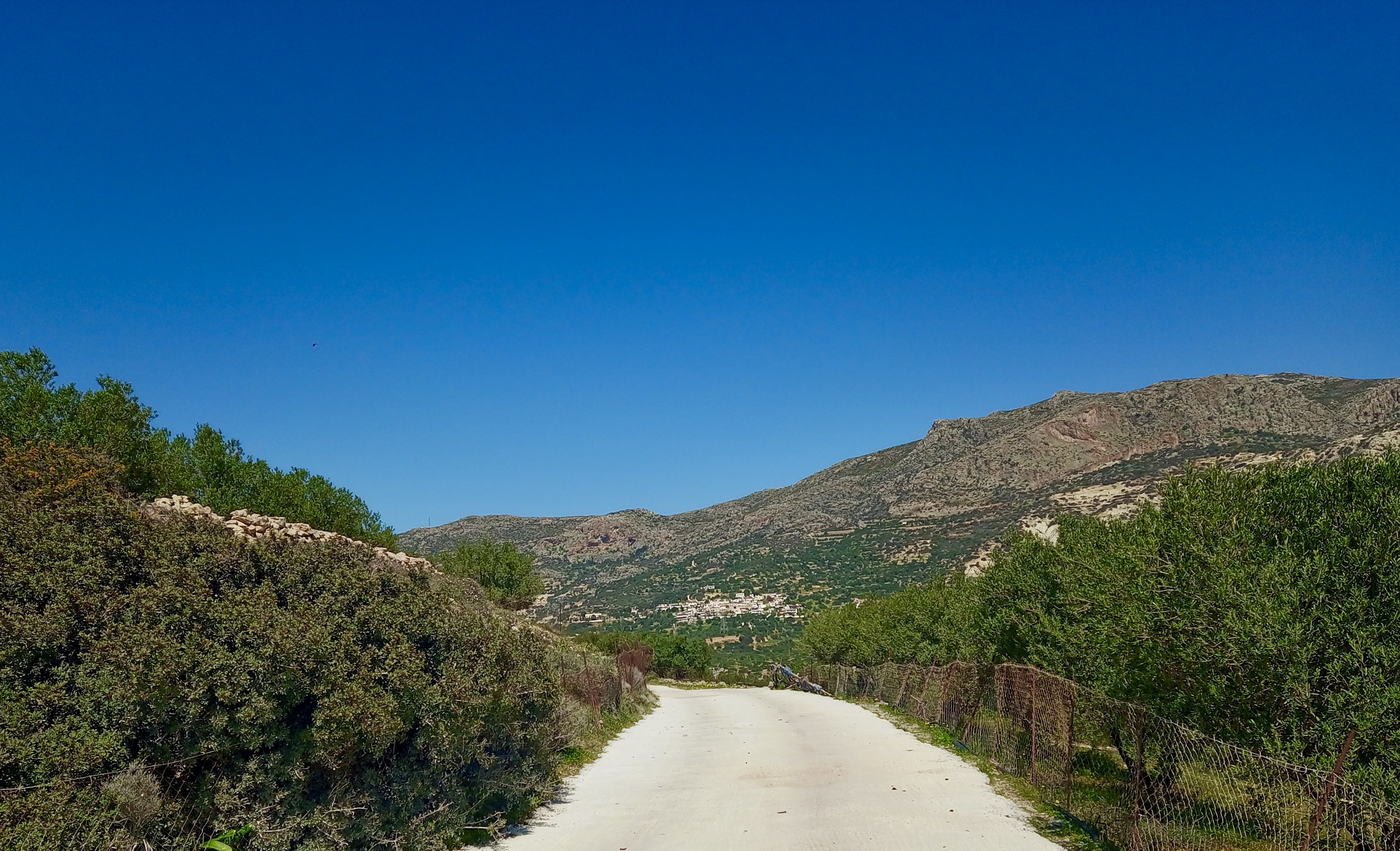
The photo above was taken March 22nd at around 12.30pm, while out on a walk up the mountain the other side of the valley from us. Yvonne says I look like I’m sitting on the toilet. Lovely. The two below were taken during the same walk. The one of the ‘road’ shows the village in the distance, and the other one shows how those lovely yellow flowers that festoon the countryside at this time of the year tend to thrive in circles in the shade of the olive trees, creating the impression that they’ve almost been cultivated in that way, when it’s merely the sunlight and shade that create the effect, but it’s lovely just the same…

More photos further down, but for now, to the reason for the title of this post: I was around at a Greek friend’s house the other day, getting some help from him regarding a query I had on the government website about my Greek Tax status, and we were using my laptop to look at the problem, when he got a bit perplexed himself and said that he didn’t quite understand why there wasn’t a link where there should have been one, so he got up and went over to his desk and did quick search on his own laptop, to see if he could resolve the issue. 

I noticed that he didn’t use Google, but the search engine (or so I thought) he used had a fairly plain interface, but came up with exhaustive answers in double-quick time. Once we’d completed our ‘session’ and sat back with a coffee to ‘chew the fat’ as it were, he mentioned that he’d already become quite hopelessly dependent on ChatGPT. 

‘Woa!” I replied, ‘Isn’t that this new A.I. thing that students are even using to write their essays for them? Isn’t it a bit risky? I mean, to be honest, I’ve not really investigated it because I’ve kind of been a bit suspicious of it. This whole A.I. thing kind of freaks me out.”

“No, no,” replied my friend Stavros, “you can just use it as a search engine, but it’s so much more intelligent than Google. To be honest, it’s revolutionised my whole online experience. You should try it.” 

I told him that I’d probably pass on that, I mean, there’s nothing quite like fear to keep you from going in a particular new direction now, is there. 

A few days later I was sitting in a coffee bar with a bunch of other friends, when some subject came up that required that one of us check online to see if we could get an answer to some question or other (probably about music). Giannis picked up his mobile phone and was quickly tapping away with his thumb (he’s only 35, so clearly one of the ‘kinito generation.’ ‘Kinito’ is what the Greeks call their cellphones, or mobiles as we Brits like to call them). In double-quick time he was reading out all kinds of facts about some rock musician or other, and I asked him where he found all this out.
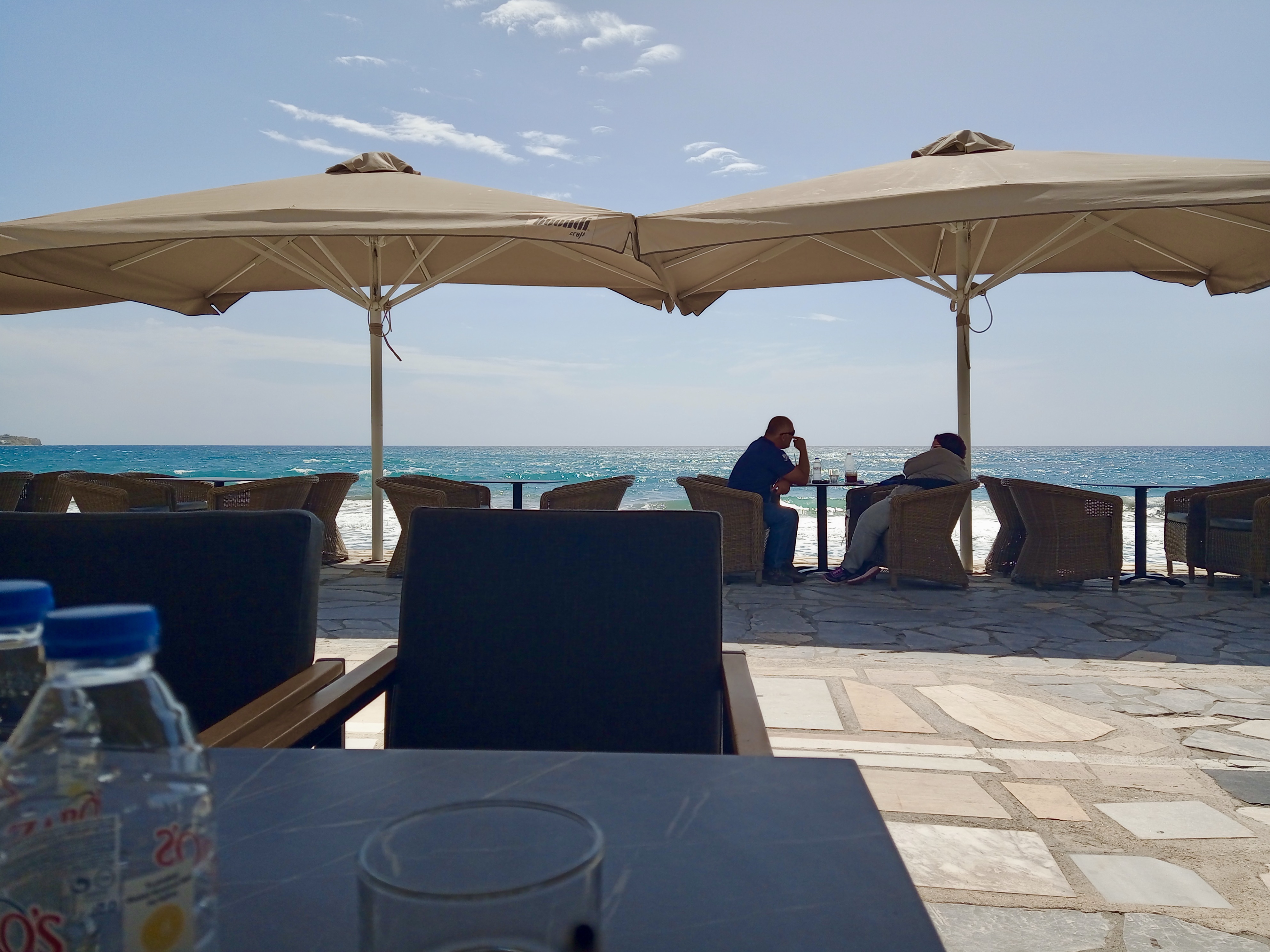
Yup, ChatGPT again. “You should get it Gianni,” he told me, “I wouldn’t be without it for anything now.”

Yes, you’re right, I succumbed. I downloaded it on my iPad and on my mobile and within a couple of taps with the thumb I too was hooked. The answers it gives to a question are simply mind bogglingly conversational, not to mention thorough, and it even asks you a subsidiary question if you want more info. So now, when we sit and watch Greek TV and all those quiz shows that we follow regularly, Trocho Tis Tichis [Wheel of Fortune], ‘Still Standing,’  ‘Millionaire’ and the Greek version of ‘The Chase’ –  I’m busy tapping stuff into ChatGPT to get answers to the questions that we don’t already know the answers to, and then we’re busy yelling at the screen in that weird way we all seem to, as if the contestant could actually hear us.

Now we wait. What’s the betting that someone will soon be writing to me to tell me how Big Brother is stealing all my personal info now, and some poor sod in some dark office in some capital city somewhere in the world even has my inside leg measurement? You know what? I’m not really that interesting a person, so I don’t care. If some shadowy power finds my personal details useful in any way, I’d be very, very surprised.

Changing the subject; I hate to mention Amazon (because there’s always someone who’ll ‘righteously’ yell at me that for moral reasons I shouldn’t be using them any more), but I’m going to anyway. The fact is, if we all took a moral stand on any and every online store or service or retailer or whatever because we don’t agree with something about the way they operate, we’d all soon be bartering for our supplies with our near neighbours in the street, wouldn’t we? At the end of the day, we need to buy goods and services that help us get through life, and it’s not up to us to adopt our own elevated arbitrary standards and thus issue judgements on all these people or organisations. “The woman on the checkout is a smoker. I don’t agree with that, so I’ll shop elsewhere.” That’s what it amounts to – if we’re being honest.

Right, having got that out of the way, you may know that the majority of my book sales are in Kindle format, and that’s just the way it is. There is no other ebook platform that comes close for worldwide availability and that’s all there is to it. Well, they’ve now just begun offering authors the chance to have their books turned into audiobooks using a virtual voice, and the service (at least for now) is free. So, as a first experiment, I’ve commissioned my favourite novel, Panayiota as an audiobook, and it’s already available on Amazon to those who subscribe to their ‘Audible’ service. If you like to use audio books, I’d be hugely grateful if you could shell out a few pennies and give this one a try. Having listened to a sample of it, I was well impressed. Apart, that is, from the way the voice pronounces the name ‘Panayiota,’ but then, you can’t have everything I suppose.

Shots away then…
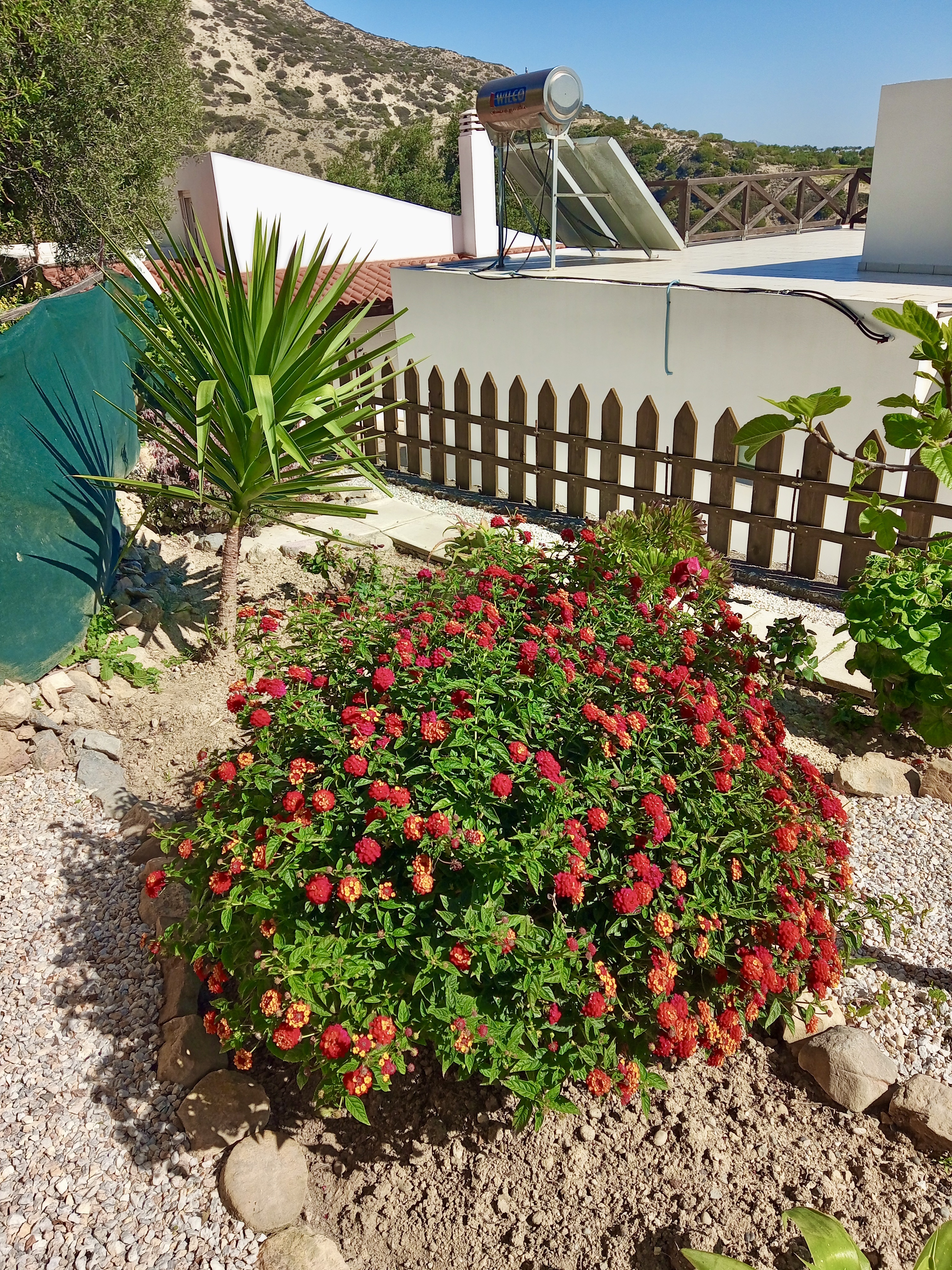
Sorry if I’m getting a bit boring, but I can’t stop studying the Lantana in our upper garden. 1. It’s simply so ‘in your face’ with its colour palette, and 2. Look at the way it attracts Red Admirals!

Above: Look at that. isn’t it simply marvellous? Just for a month or two during the winter the fig is totally bare of leaves, but then, in March, they burst open (this photo was taken 15th of the month) and the figs, which spend the dormant weeks like tiny marbles clinging to the ends of the branches, begin to swell and instill a sense of anticipation in your heart for when you’ll eventually be picking them in July-August. Eating a fig straight from the tree is a unique and pleasurable experience that everyone ought to have at least once in their lifetime, believe me.

To finish off, a couple of archive photos…
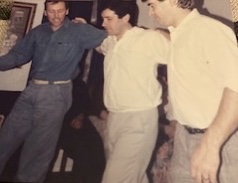
Above: Sorry about the quality of this one, but an old friend who we used to know in Cardiff back in the 1980’s recently got back in touch. Angelos is of Cypriot origin and he and his wife moved out there from Wales some time before we eventually moved here to Greece. He emailed this photo to me just this week, and I’d totally forgotten about such occasions as this, when we used to have great parties with friends of Greek origin, during which we’d dance the Hasapiko and other dances too. This one shows me on the left, with Walter Rego (who was of Italian extraction actually) and Mark Seymour, who is a Welshman with a passion for all things Greek, in fact his wife is also half-Greek like mine. Some of those parties were legendary, and wth this shot having jogged my memory, I remember one time when we even trod grapes barefoot in an old cast iron bath in Gary and Marie Moore’s back garden in a suburb of Cardiff. Marie was also of Greek (or Cypriot) origins. Good times, truly.

Above: You walk past scenes like this one every time you wander around the town. This house’s occupants aren’t very keen gardeners it seems, but what a show the wild poppies and other plants put on, just the same. One more from the archive then. This one does, I’ll admit, bring a lump to my throat…
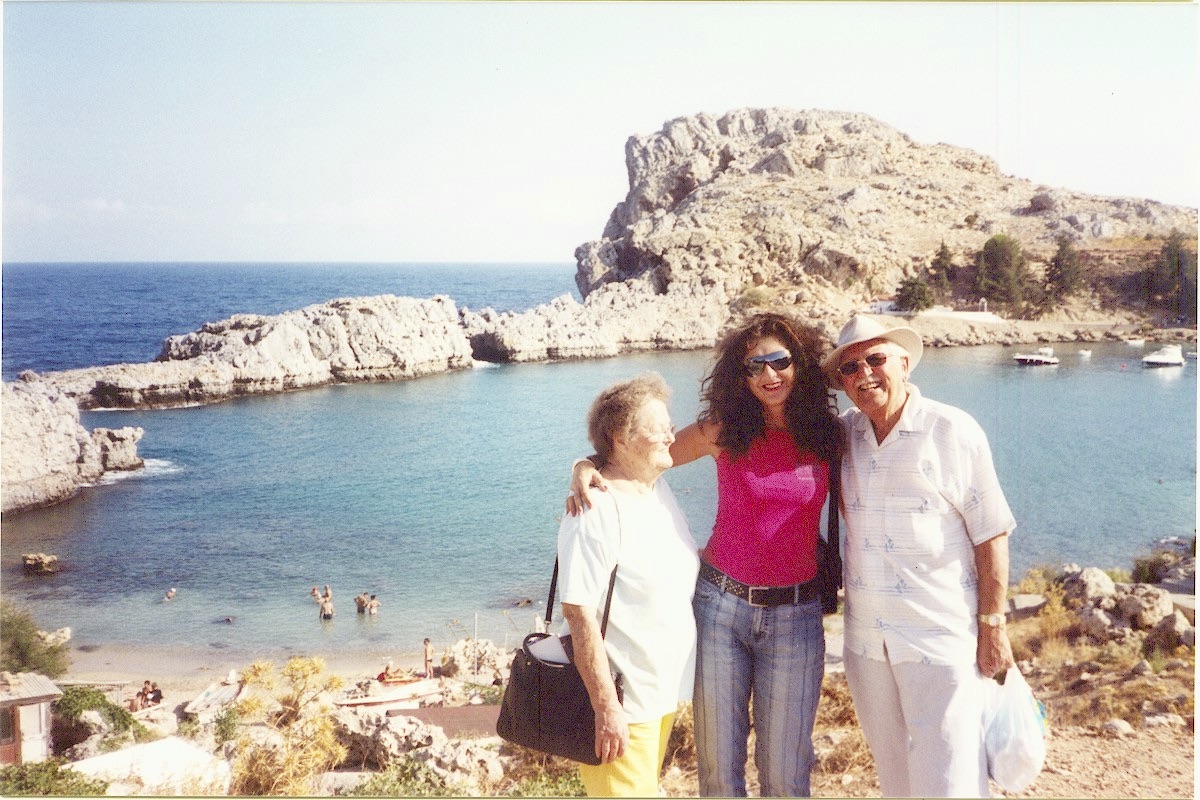
This is Yvonne with my parents, both of whom are no longer with us, back in September 2006, during their one and only visit to Greece. Taken at St. Paul’s Bay, Lindos, I can’t understand why my mum’s looking the other way, but it’s a lovely shot anyway, scanned from a print I’m afraid, so not wonderful picture quality.

Click HERE to go to my Amazon Author Page, where you can browse and purchase all of my seventeen written works.

Smile please

Thought I’d just shove a photo-heavy post on this time. Hope you like these…

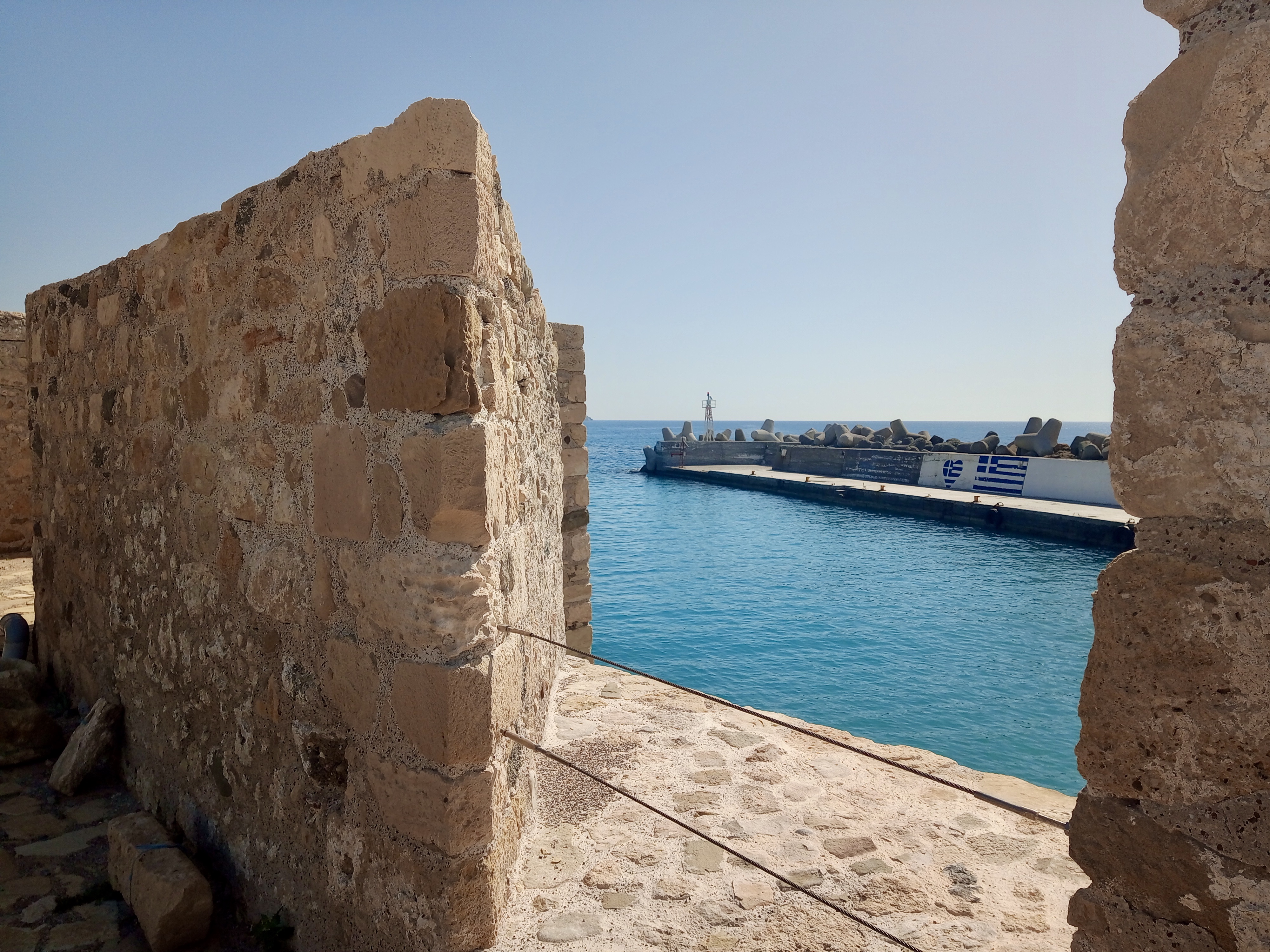
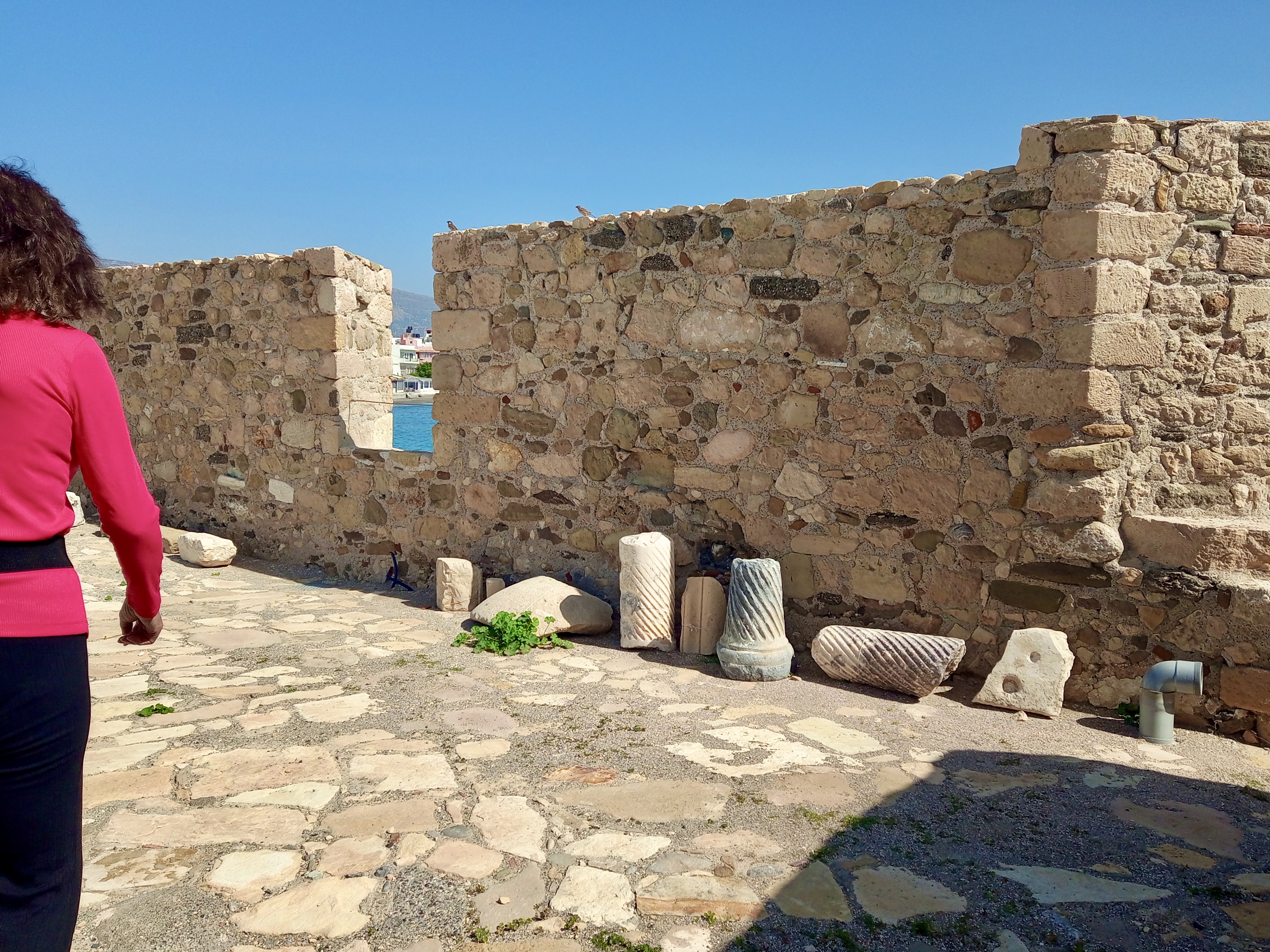
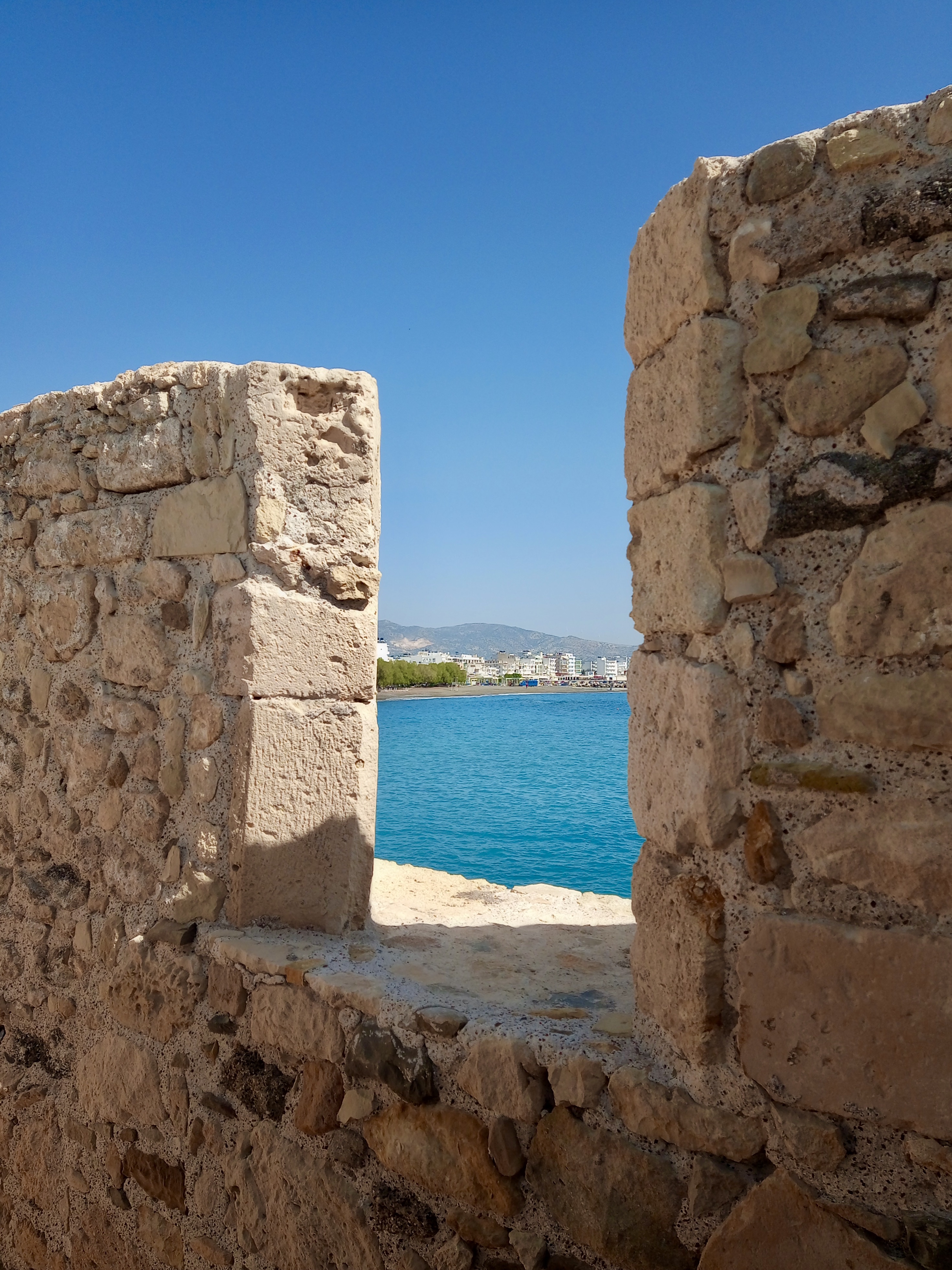
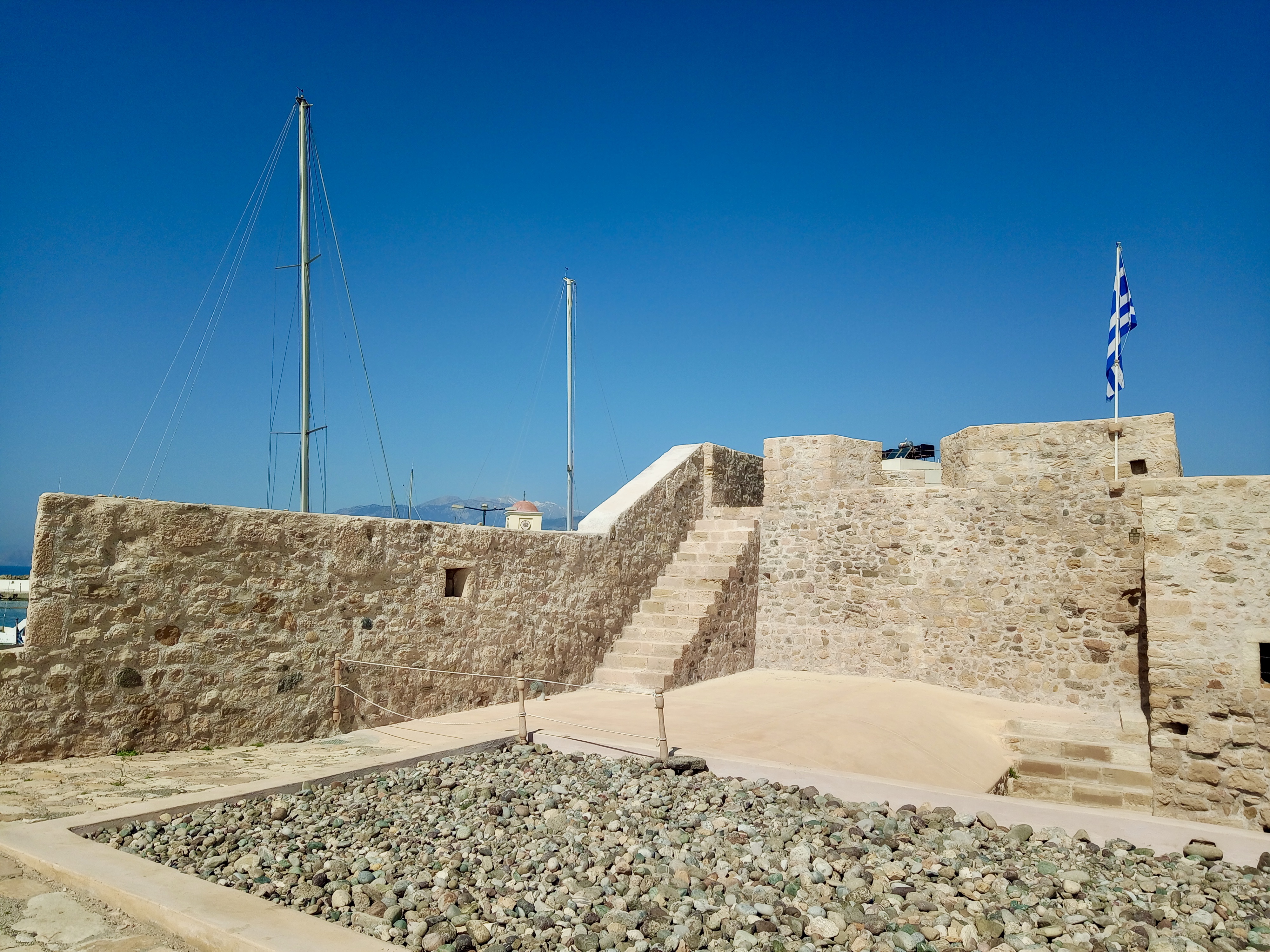
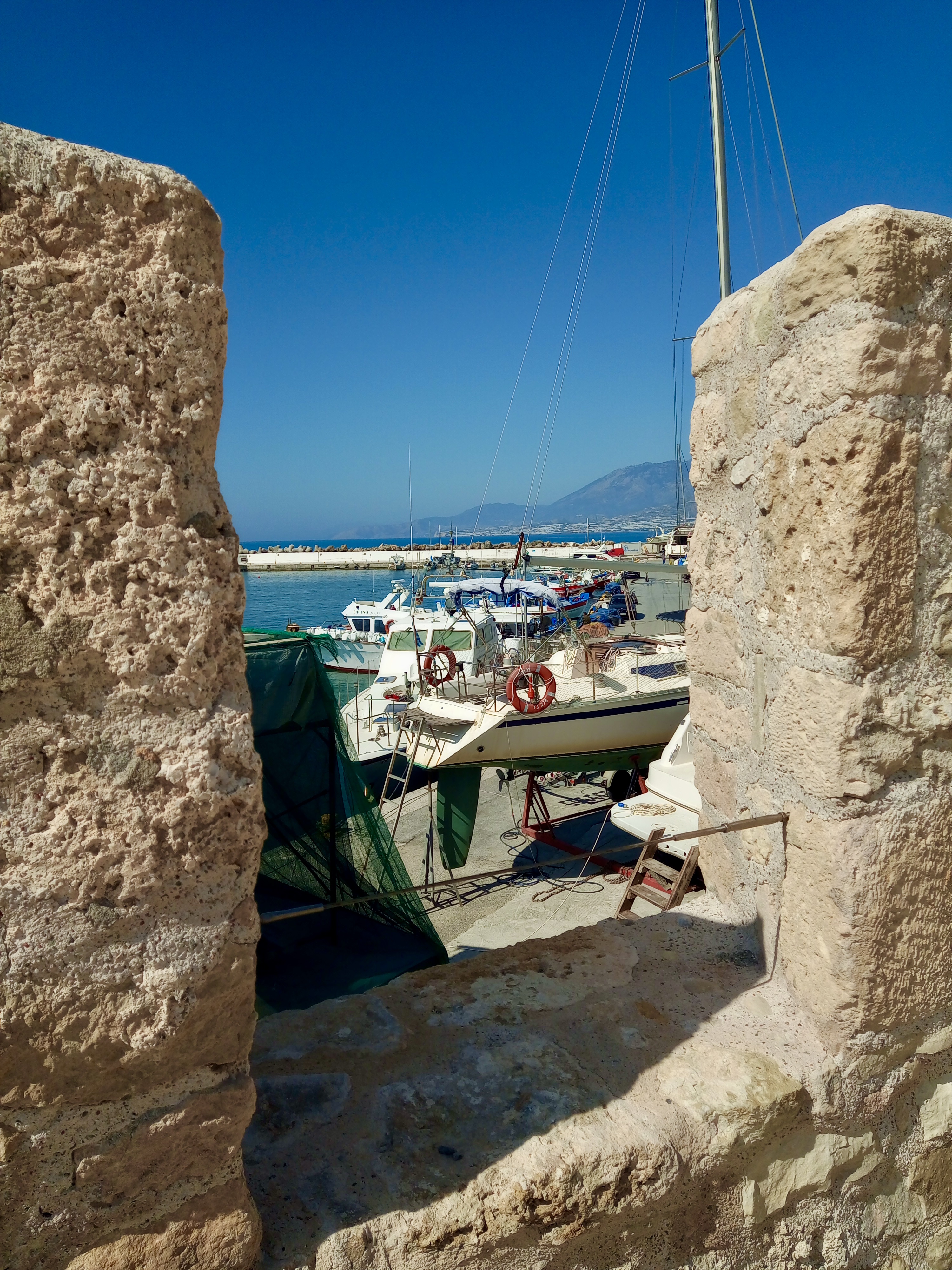
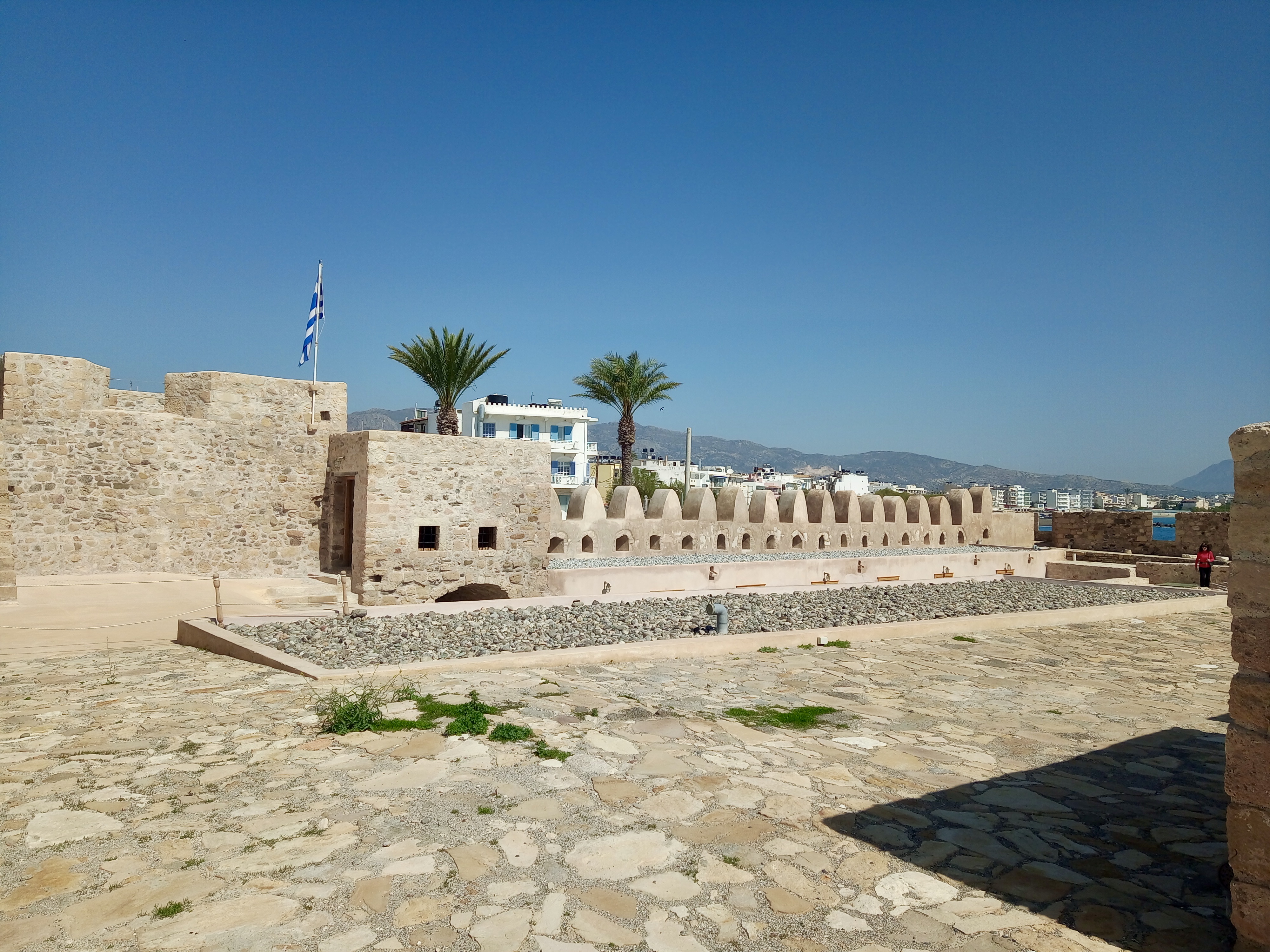
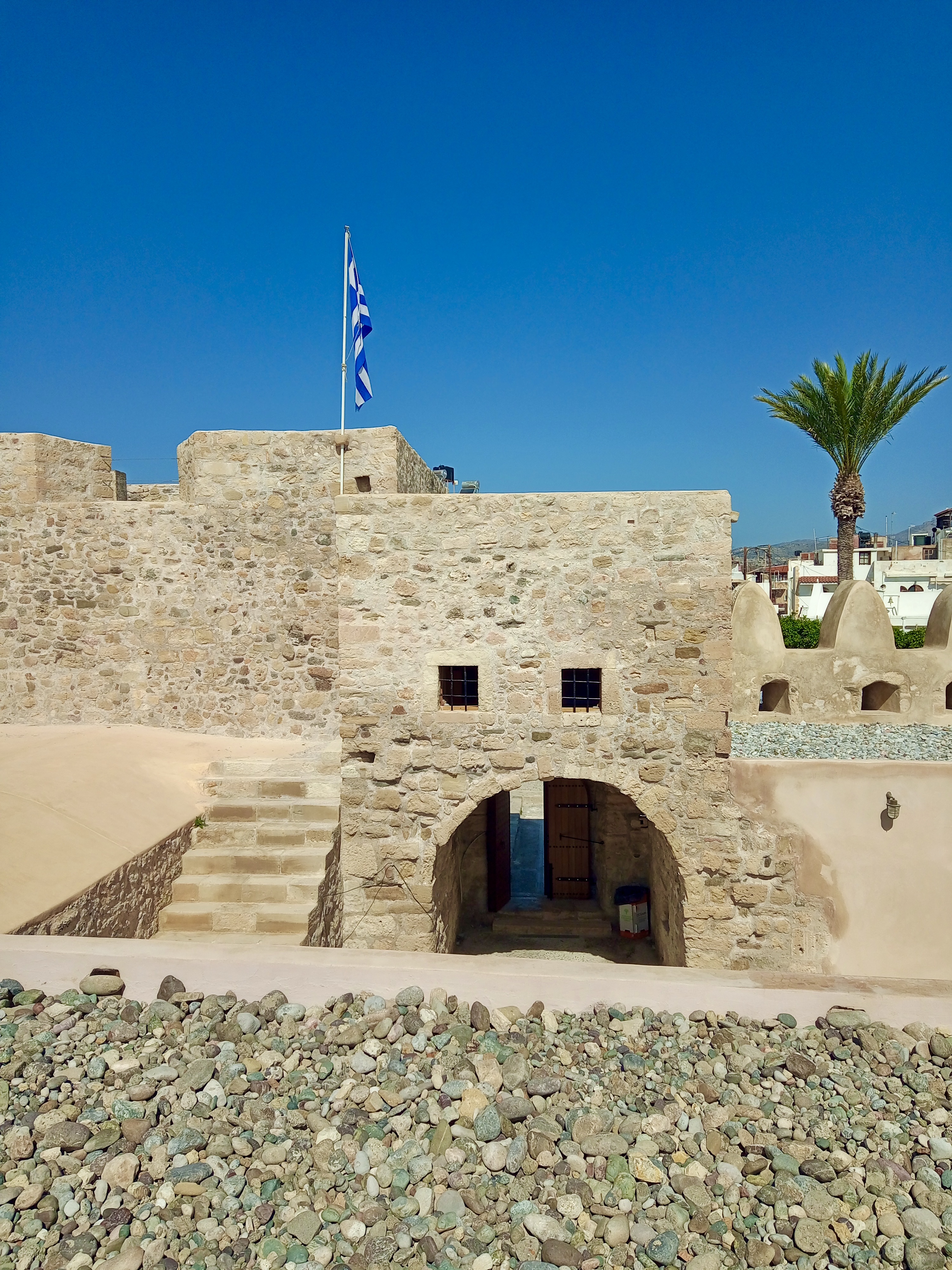
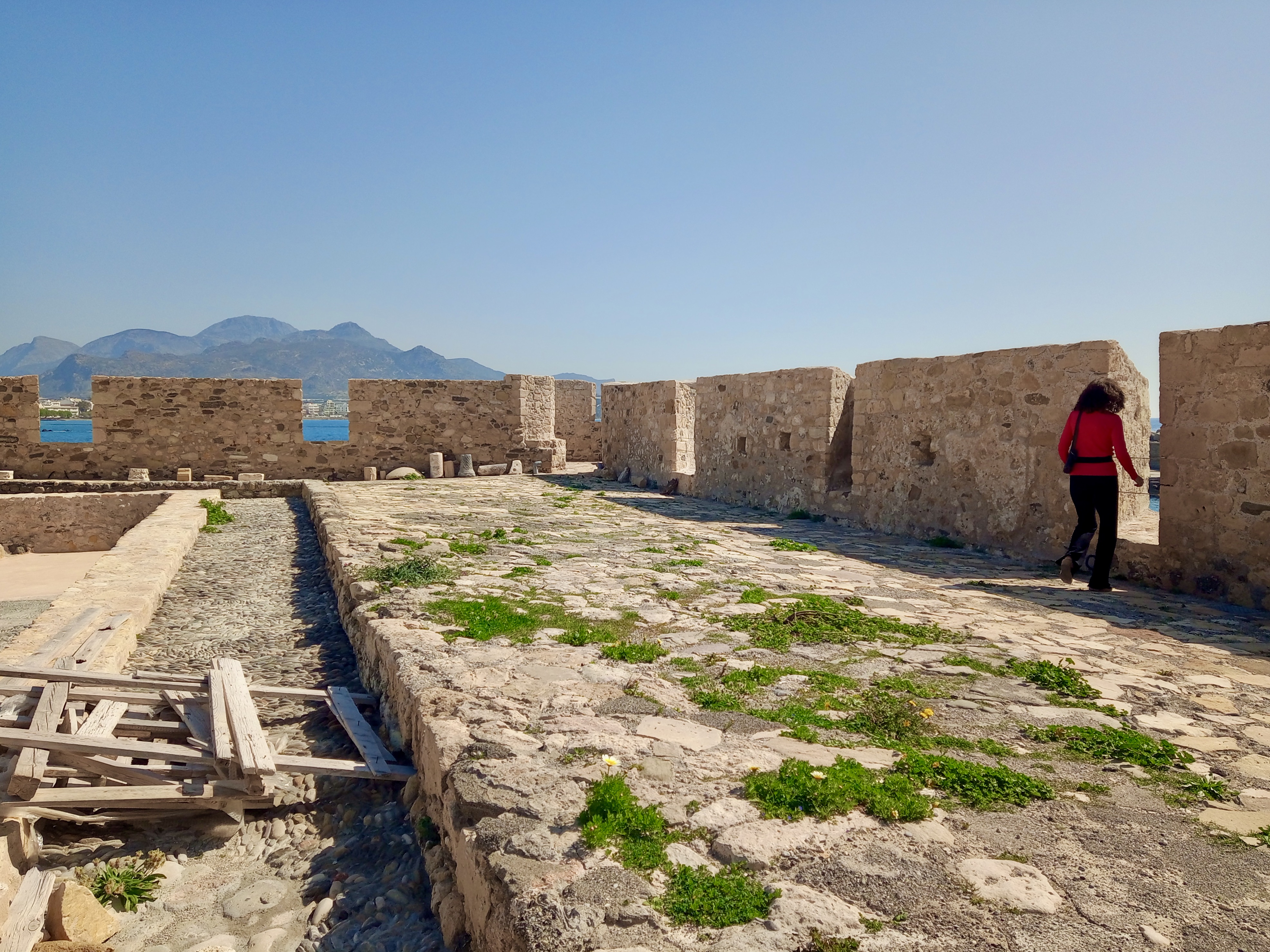
Above: Yes, they’ve finally opened the renovated Venetian fortress at the harbour entrance and it’s currently open to the public with no fee to go in. I don’t know if that might change and, to be frank, I think most people would be happy to pay a couple of Euros entry to help with the maintenance costs, but for now it’s free.

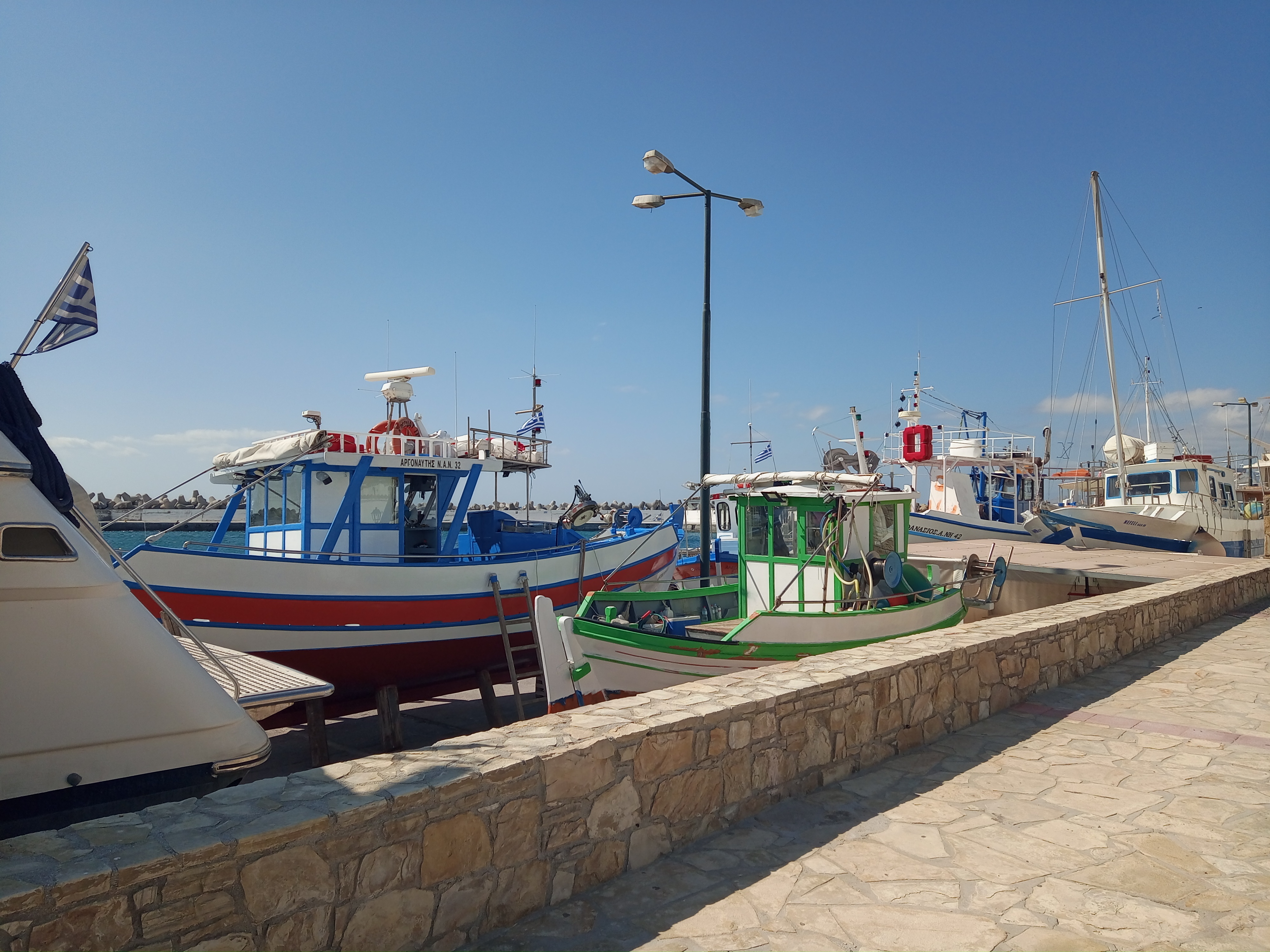
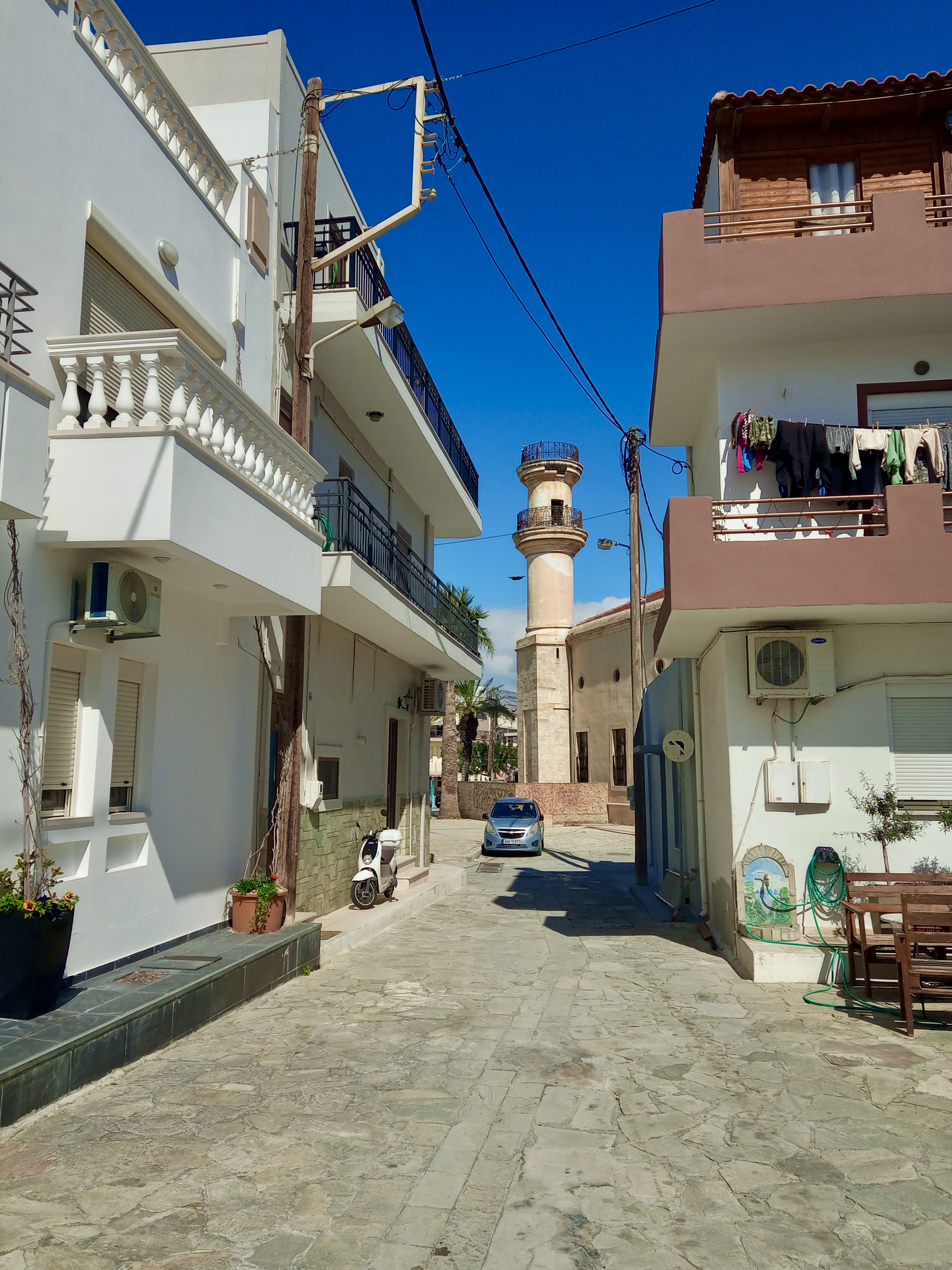
Above: Around the town this past week or two. The parrot belongs to Kostas, who runs the Acropolis Bar along the seafront. He gave the bird an ‘outing’ the other day because there were a few Greek tourists from abroad having a drink in the bar. Not sure how I feel about these birds being kept like this, and with clipped wings, but to be honest, this one seems to have a lovely relationship with his owner, and they understand each other brilliantly when Kostas handles him.

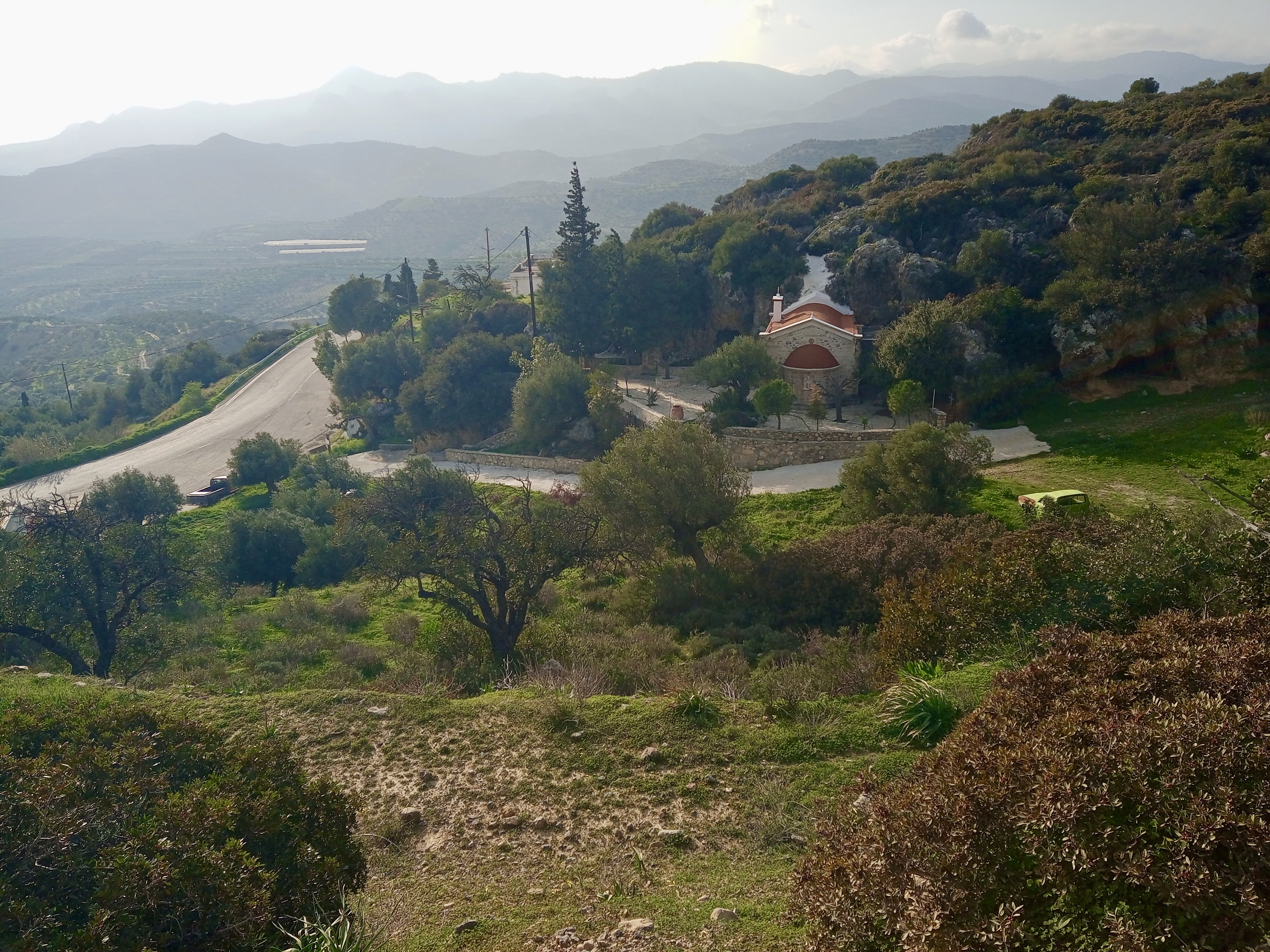
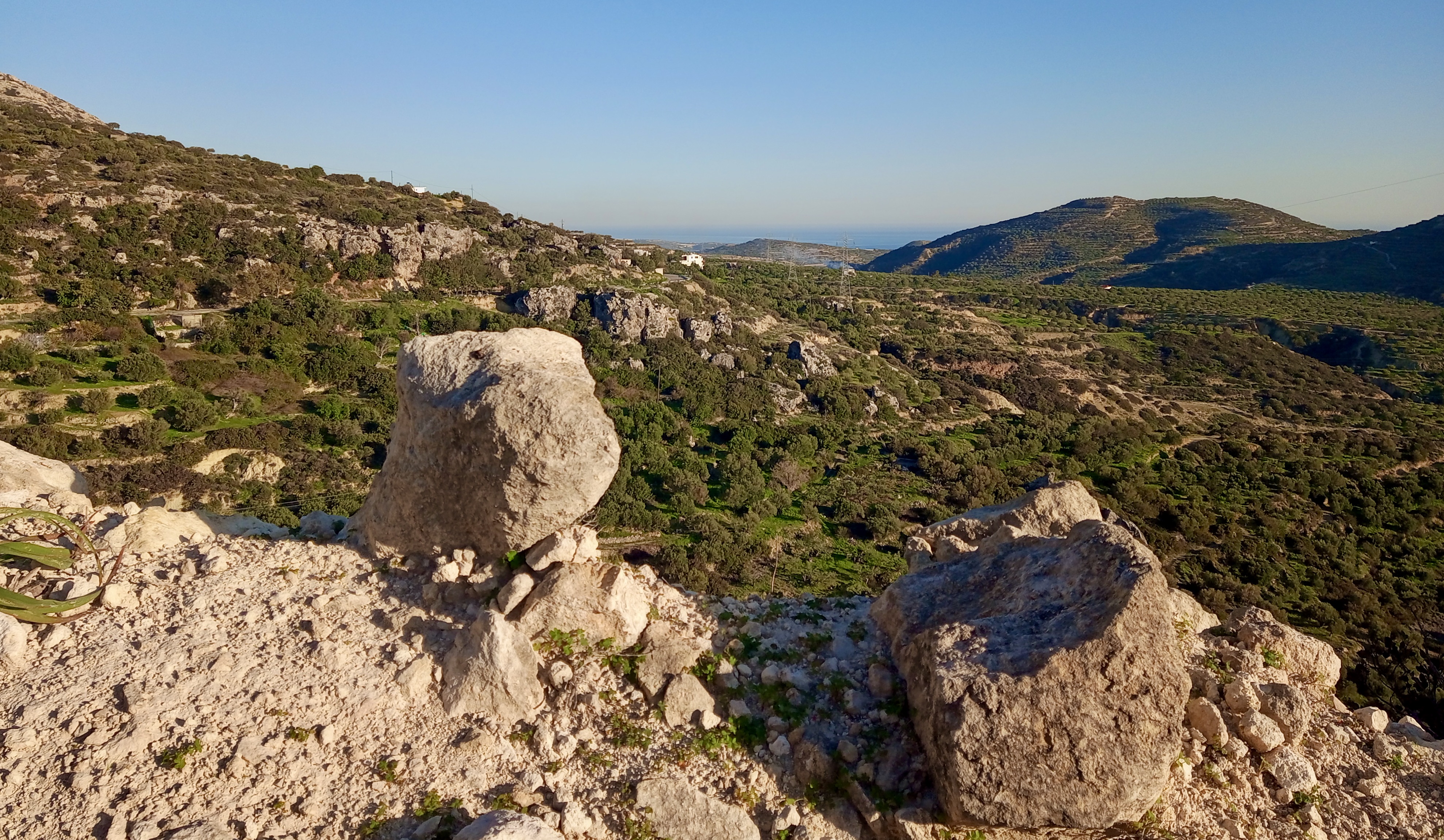
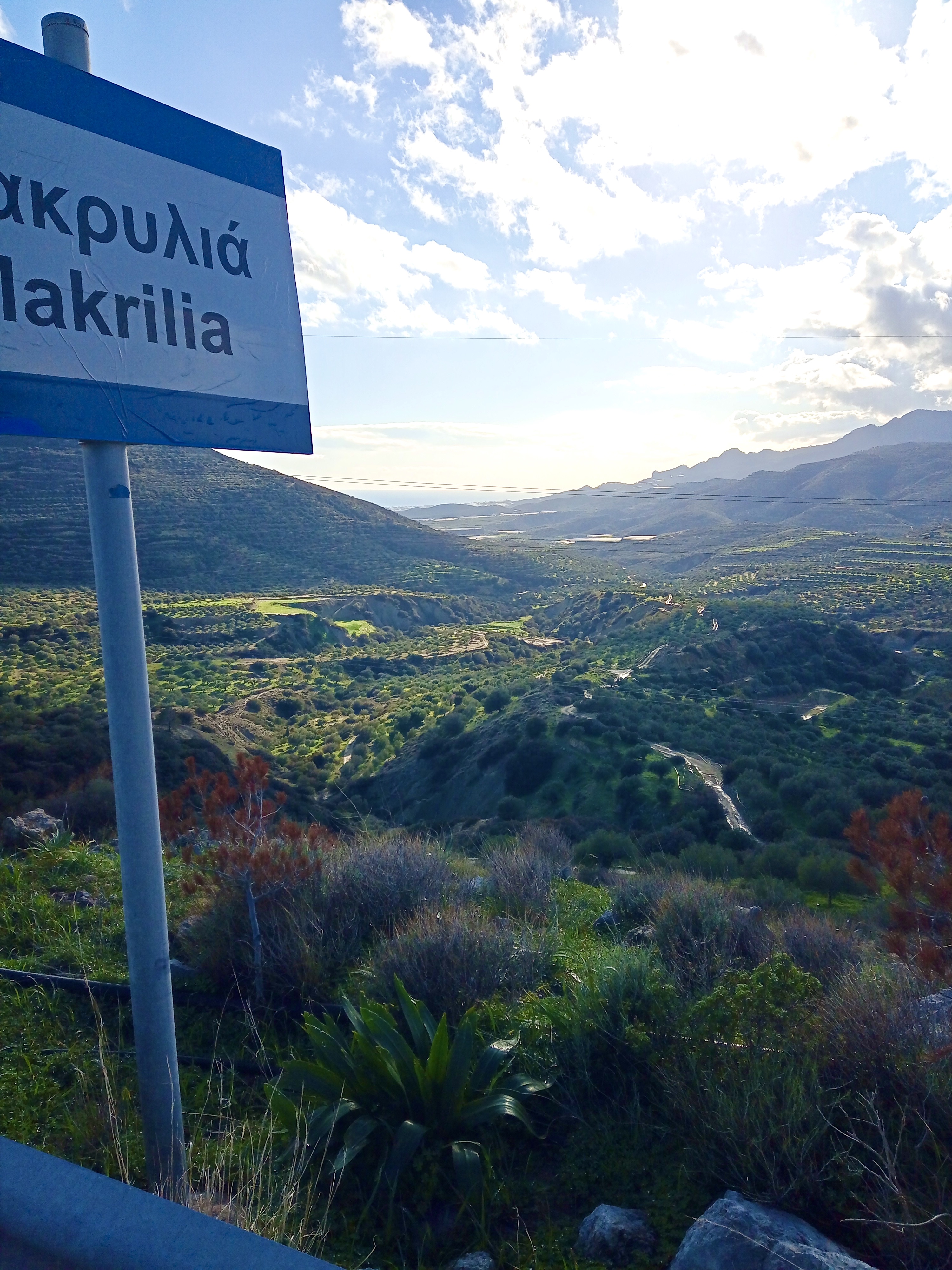
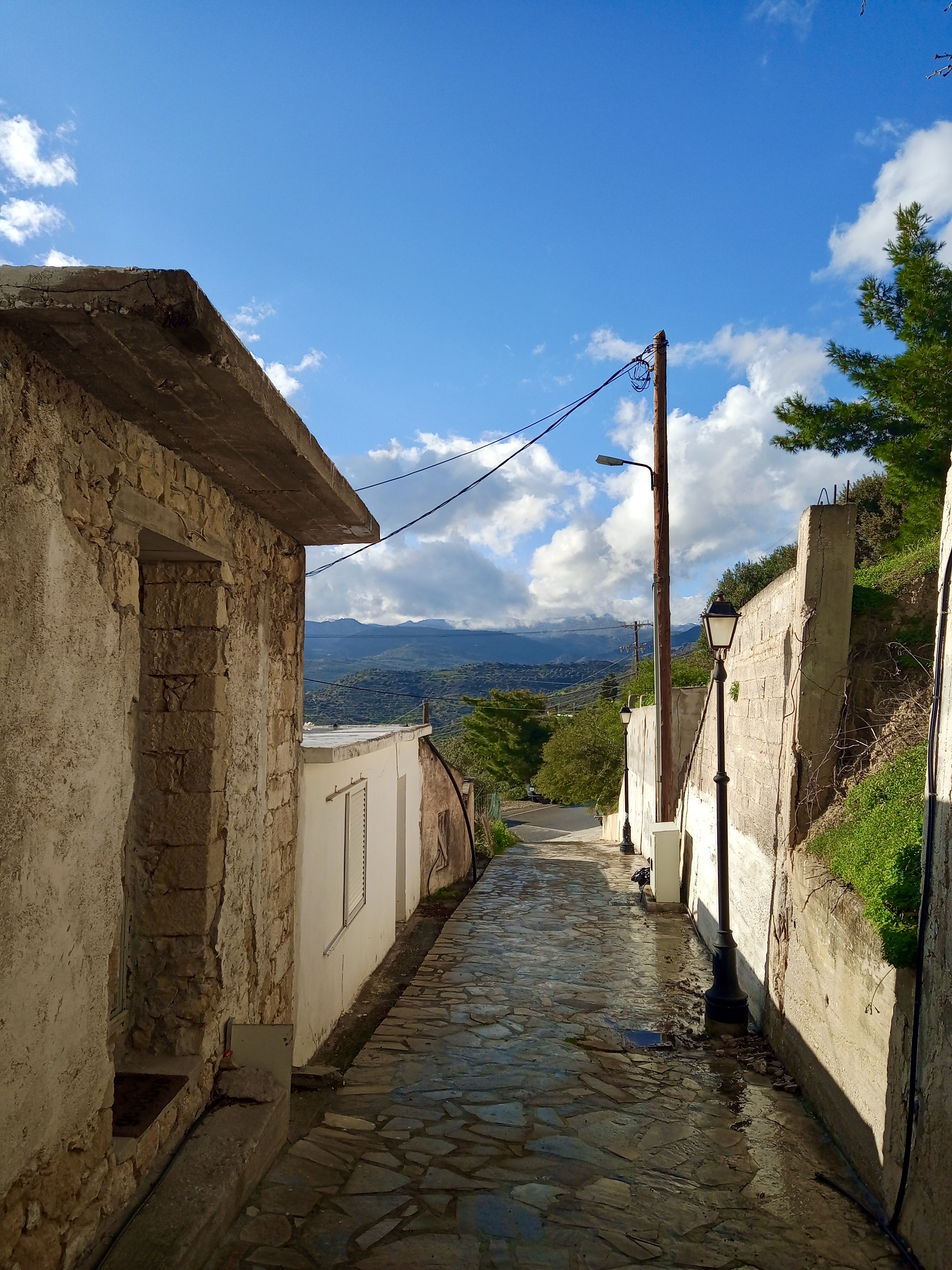
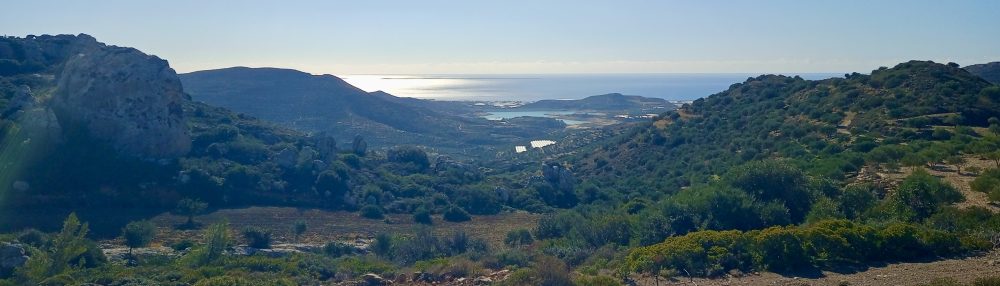
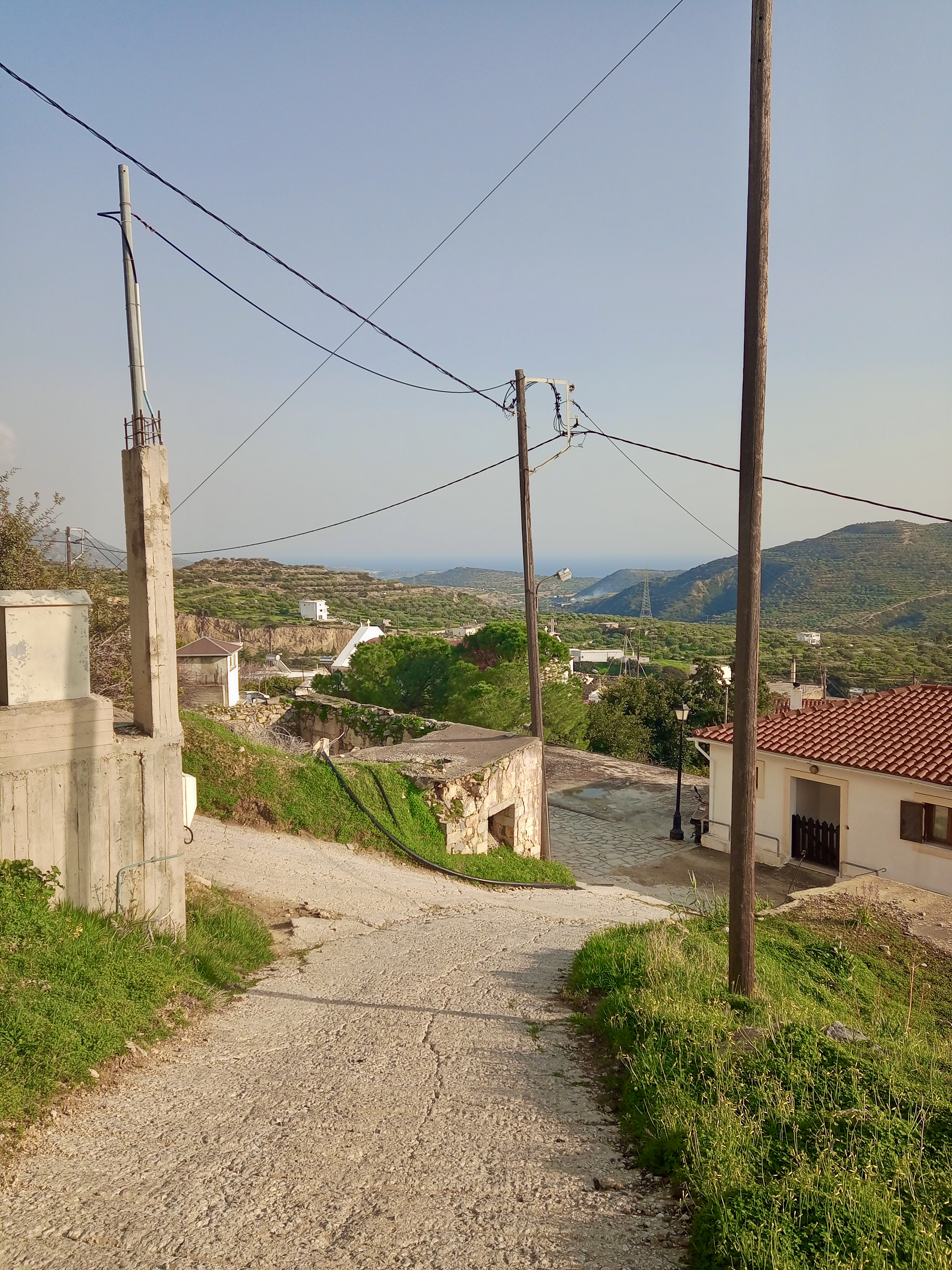
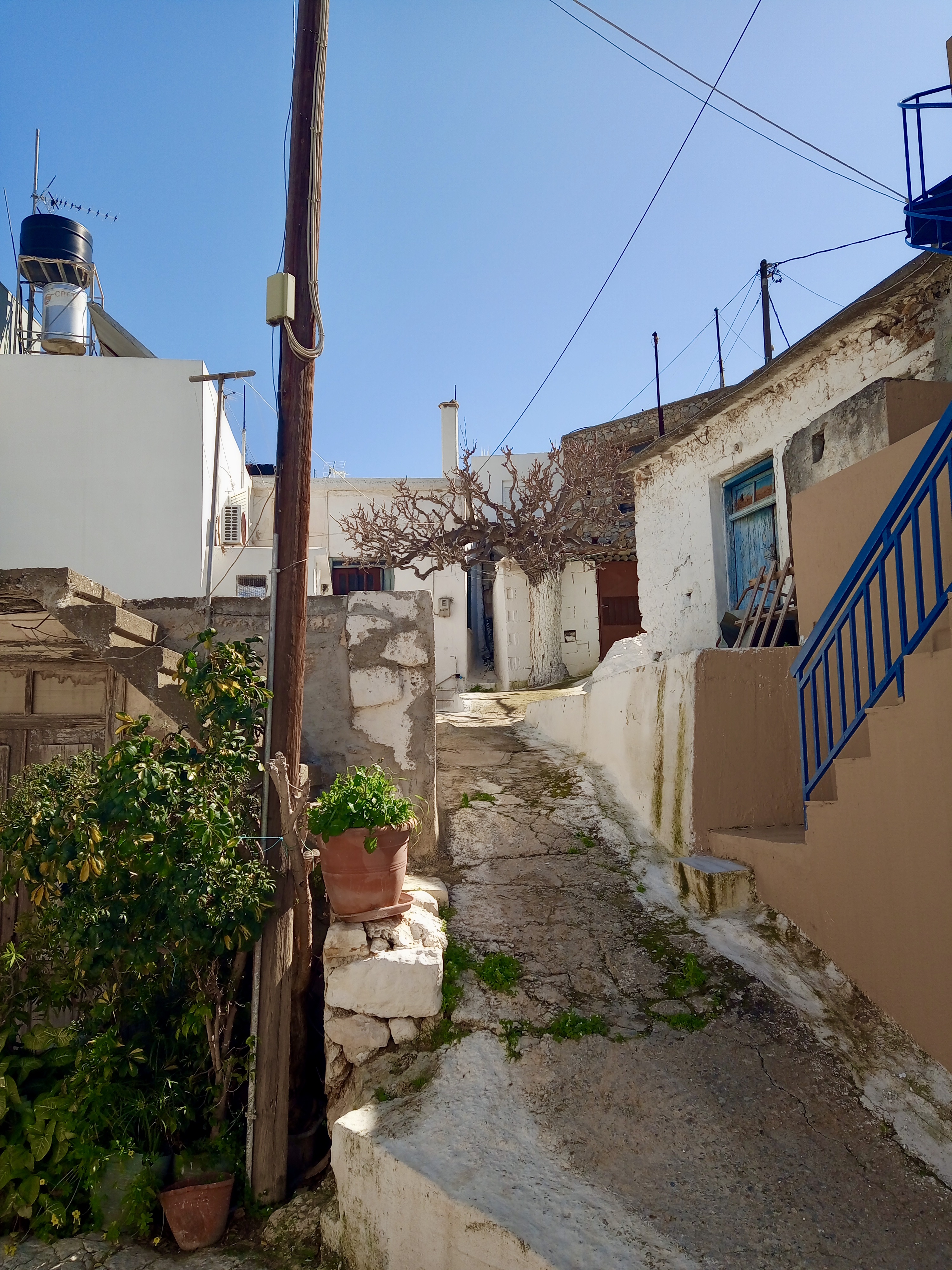
Above: Around the village this past few days. The last photo was taken from a crag across the valley. The white building you can see is where the village begins, as it sits behind that ridge, protected from most of the north winds during wintertime.

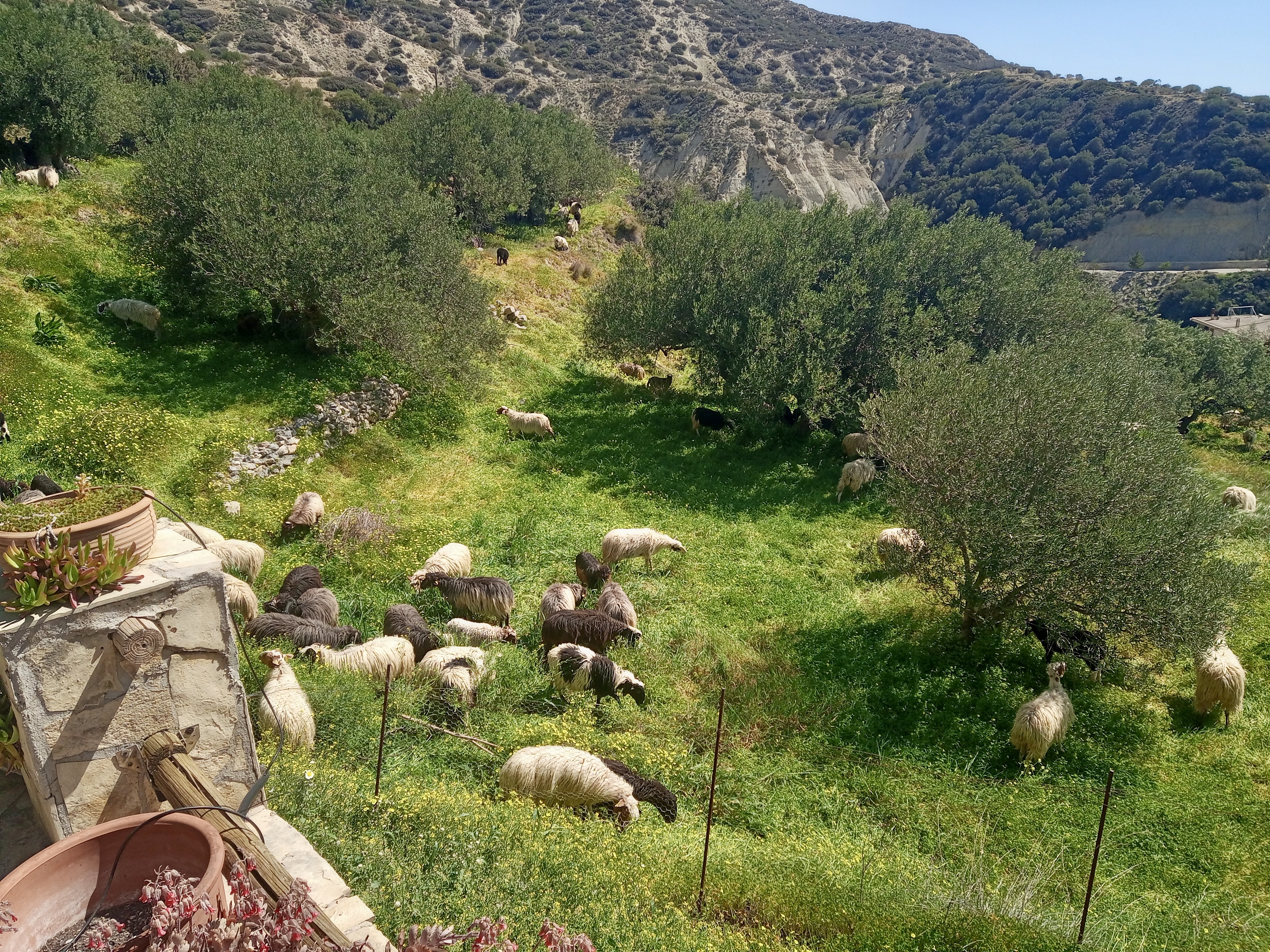
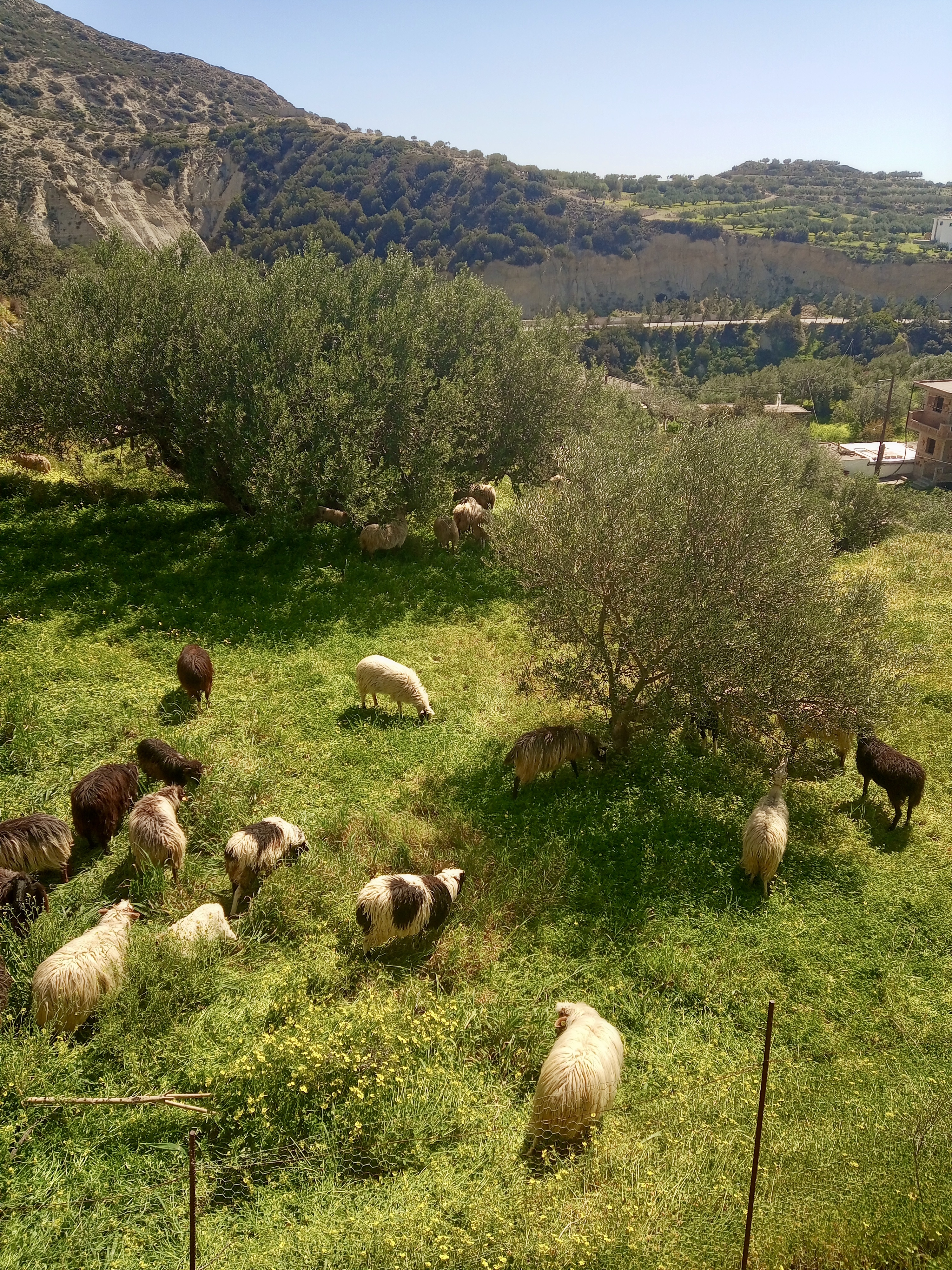
Above: These sheep were grazing in the field below the terrace that runs along from our house to our friend Sylvia’s, who uses her home for holidays. Letting the flock into such olive groves is a great way to get the grass and weeds cut. I was fascinated by the fact that their wool is long and shaggy, rather like angora goats, I thought. So I did a bit of digging and this was what I discovered: The long-haired sheep of Crete are commonly known as Sfakia sheep or Astrahan sheep. They are a hardy, local breed adapted to the island’s mountainous terrain. These sheep have long, shaggy wool and are primarily raised for milk, which is used in traditional Cretan cheeses like Graviera and Mizithra. They are well-suited to the rough landscape and can survive on minimal resources. Interesting, eh?

Click HERE to go to my Amazon Author Page, where you can browse and purchase all of my written works.

The ‘good,’ but evidently no bad or ugly

On Friday March 7th (the anniversary of my father’s birth, as it happens, he would have been 96 had he lived), we finally got the chance to go over the mountain to the village of Kalo Chorio [Good Village]. I know, odd name isn’t it? I have looked, and there doesn’t seem to be a ‘Kako Chorio’ or ‘Bad Village’ anywhere, which is probably just as well, when you think about it. Kalo Chorio is quite a large village, and we often drive through the periphery of it when cutting across the mountain to go either to Agios Nikolaos or maybe Heraklion. It’s a twisty narrow road, but cuts the journey time for us if we’re heading north or westward by probably half an hour over going down to the outskirts of Ierapetra and then heading up the main road to Pachi Ammos.

The nearest two villages to Kalo Chorio are Pyrgos (Tower) and Forti, which is really an extension of Istro, which is a bit of a ‘little Britain,’ to be honest, and it’s even been featured on more than one occasion on the UK TV show “A Place in the Sun.” No offence intended, but we tend to avoid Istro, ahem. In fact, if you click this link to the page on Wikipedia about Kalo Chorio it can be a bit deceptive, because it states that the village has “a dozen tavernas and half a dozen bars, snack bars and cafes.” That’s not the case at all, since the village is yet a few hundred metres from the main coast road that passes through Istro, and it’s actually Forti/Istro that has all those places. 

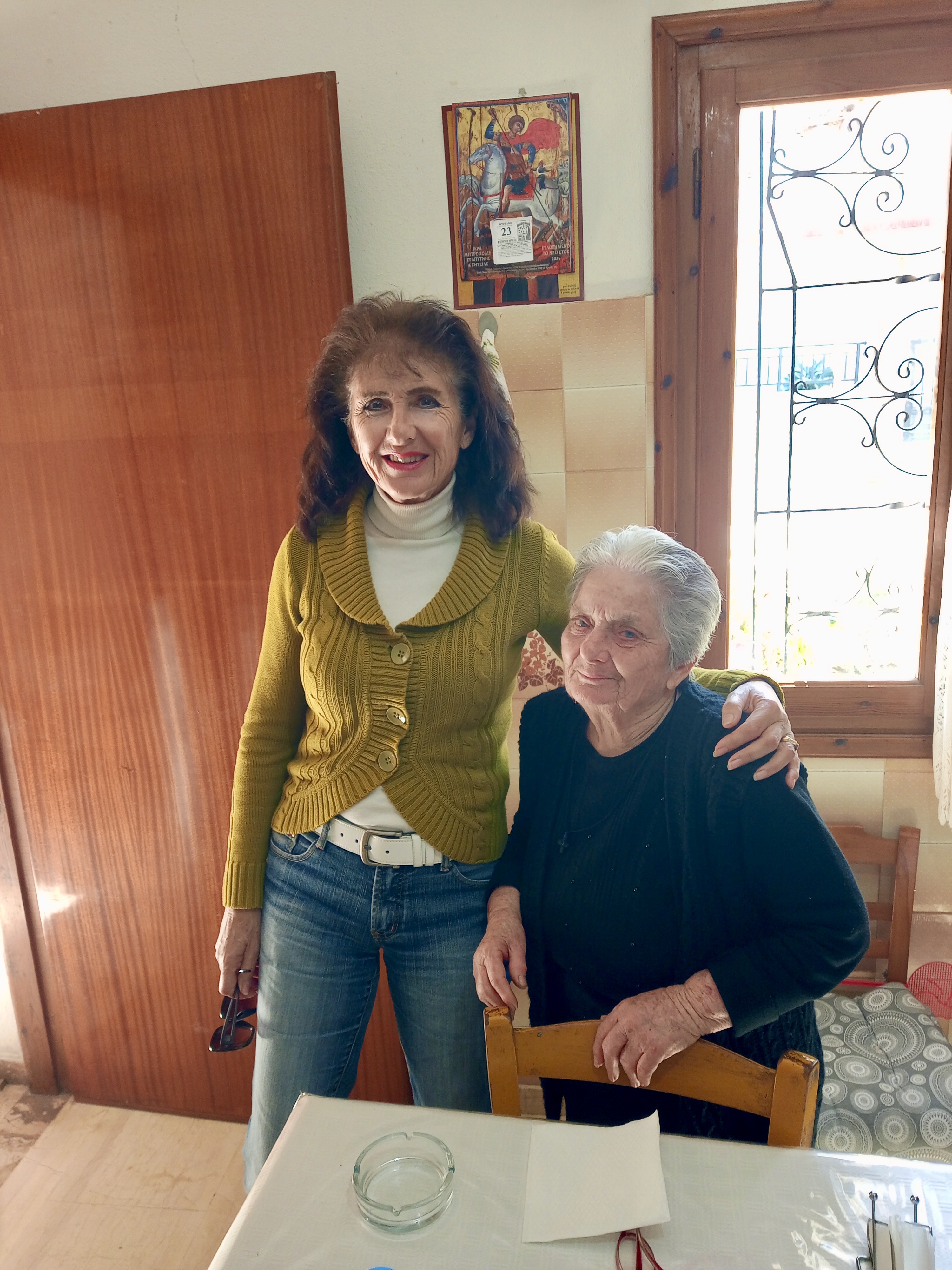
Kalo Chorio, even though it has a population of around 900 in wintertime, doesn’t even have a kafeneio, which disappointed us somewhat. We actually walked from the bottom end of the village along the short stretch of lane to Pyrgos (it’s only a couple of hundred metres, if that) and as soon as you arrive at that village, which is quite a bit smaller, you catch sight of a village kafeneio, although we decided on balance not to bother going in. This was just as well, because as we were walking back through Kalo Chorio to the car, we passed a diminutive old ya-ya busily clipping away at a very large basil plant outside her front door. We exchanged a greeting with her and she very quickly suggested that we might like to sit with her and enjoy a Greek coffee. We accepted her invitation and were soon seated around her kitchen table.

As is invariably the case when you sit at a Greek kitchen table, it’s never simply coffee that is put before you. Our host soon placed a few plates on the table too, along with the always necessary bottle of water and tumblers. There were homemade koulourakia and some that I can only describe as ‘cakes’ which appearance-wise resembled croissants to some degree. They were actually those cake-type things that a lot of Greeks make for eating with their first coffee early in the morning and, when you bite into them they’re not croissant-like at all, but a kind of plain cake with part plain and part chocolate-flavoured flour mix creating two distinct colour patches all through the middle. They’re popularly called Greek Marble Cake and can come in all kinds of guises, depending on who makes them.

Our host told us that her name was Eirini and that she’d been a widow for many decades. Yes, she has children and grandchildren, but they were all scattered about the country owing to work or study necessities. A couple of Eirini’s grandchildren are studying at Volos, way up on the eastern seaboard of the mainland, situated on the shores of the Pagasitikos Gulf and due west of the Sporades Islands, consisting of Skiathos, Skopelos, Alonnisos and a few smaller ones too. 

How did Eirini manage when it came to getting a loaf of bread, since she no longer had a stone oven in which to bake her own? Well, when she needs to do some shopping someone in the village takes her to Agios Nikolaos from time to time, but there’s also a baker’s van that cruises the village regularly and she gets whatever bread she needs from it when it stops right outside her door. That took me back to my childhood, I can tell you. From the age of 18 months until I was about ten we’d lived in Tunley, a small village to the South West of Bath, strung out along the B3115. There was a succession of lorries and vans that would stop in the village when we lived there, ranging from the Corona and Tizer lorries, through the Wall’s ice cream van to baker’s vans and coal delivery lorries. It’s an era that we’ll never see again, alas. But at least here in rural parts of Greek and her islands the remnants of that kind of life still survive for a while longer yet.

Observing the house in which we were sitting whilst Eirini went to speak to a neighbour for a few moments, we couldn’t help but compliment her on how well she keeps house. For a woman of not much more than 5 feet in height, the whole house appeared to be spotlessly clean and very tidy. How she manages to get up to the high shelves and lampshades to dust was a mystery, but there was no doubt that she does it somehow. She had a couple of immaculate tea towels hanging from a hook on her kitchen door too, and the kitchen worktops were well ordered and evidently wiped clean on a regular basis. Often when you go into a house that’s occupied by an elderly widow, it can be pretty rank to be honest. This is not said as a criticism, but many of these seniors can no longer see very well and simply don’t have the stamina to clean and dust. Eirini, on the other hand, very evidently still does, and it shows.

The time soon came for us to take our leave. It never does to outstay your welcome, especially because people like her will always extend the invitation, even when they don’t really have the time, and so to stay for a couple of hours is not showing consideration at all. Of course, when you begin the ritual of taking your leave (which often involves a whistle-stop tour of all the family photos and maybe the opportunity to compliment the host further on the house in general, and the garden), you never get out of there without a gift of some kind. In Eirini’s case, she was very proud of the fact that one of her daughters is a keen photographer, and so she gave us a lovely framed print of a close-up of an indigenous white crocus that grows in this area. 

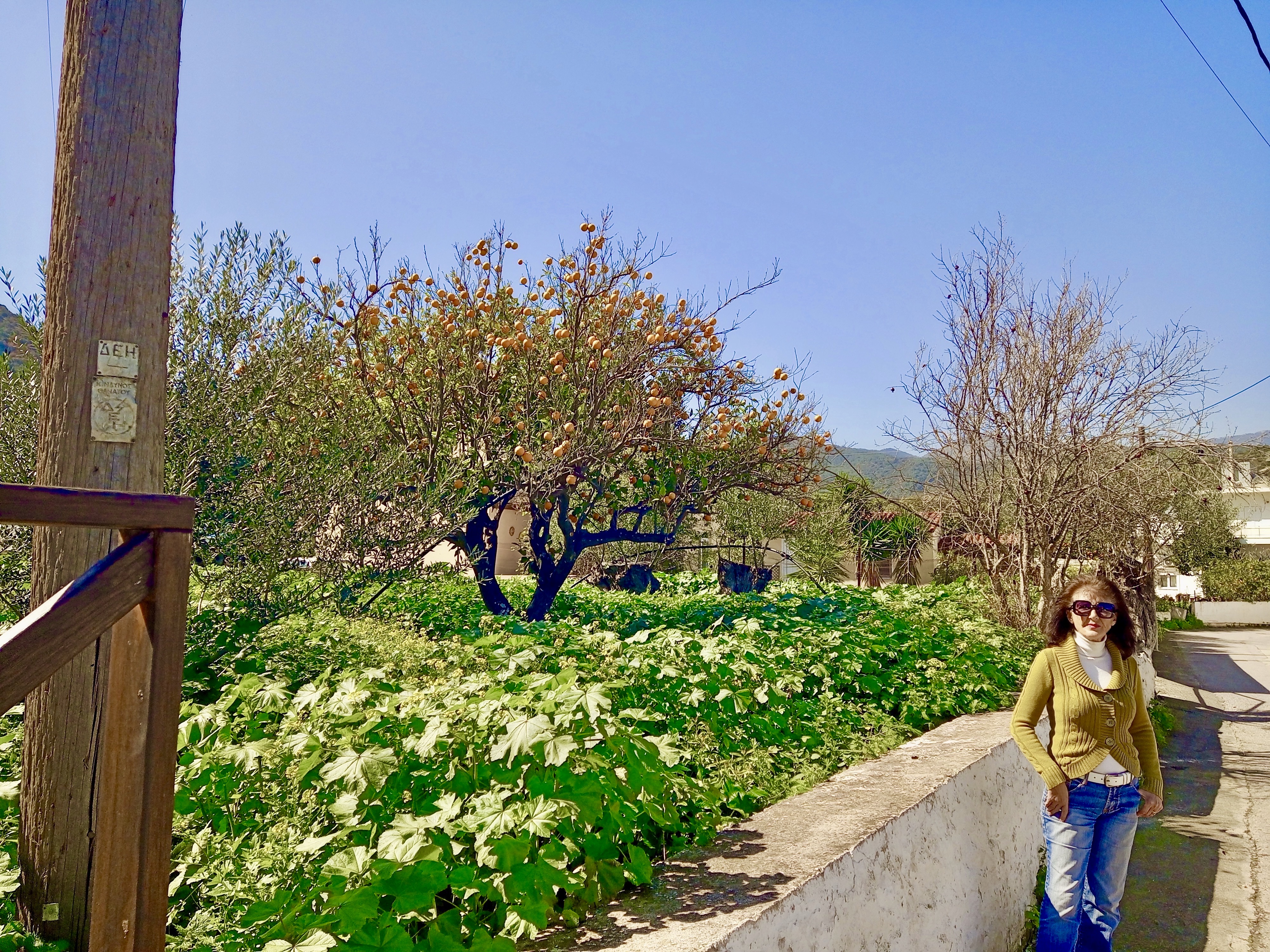
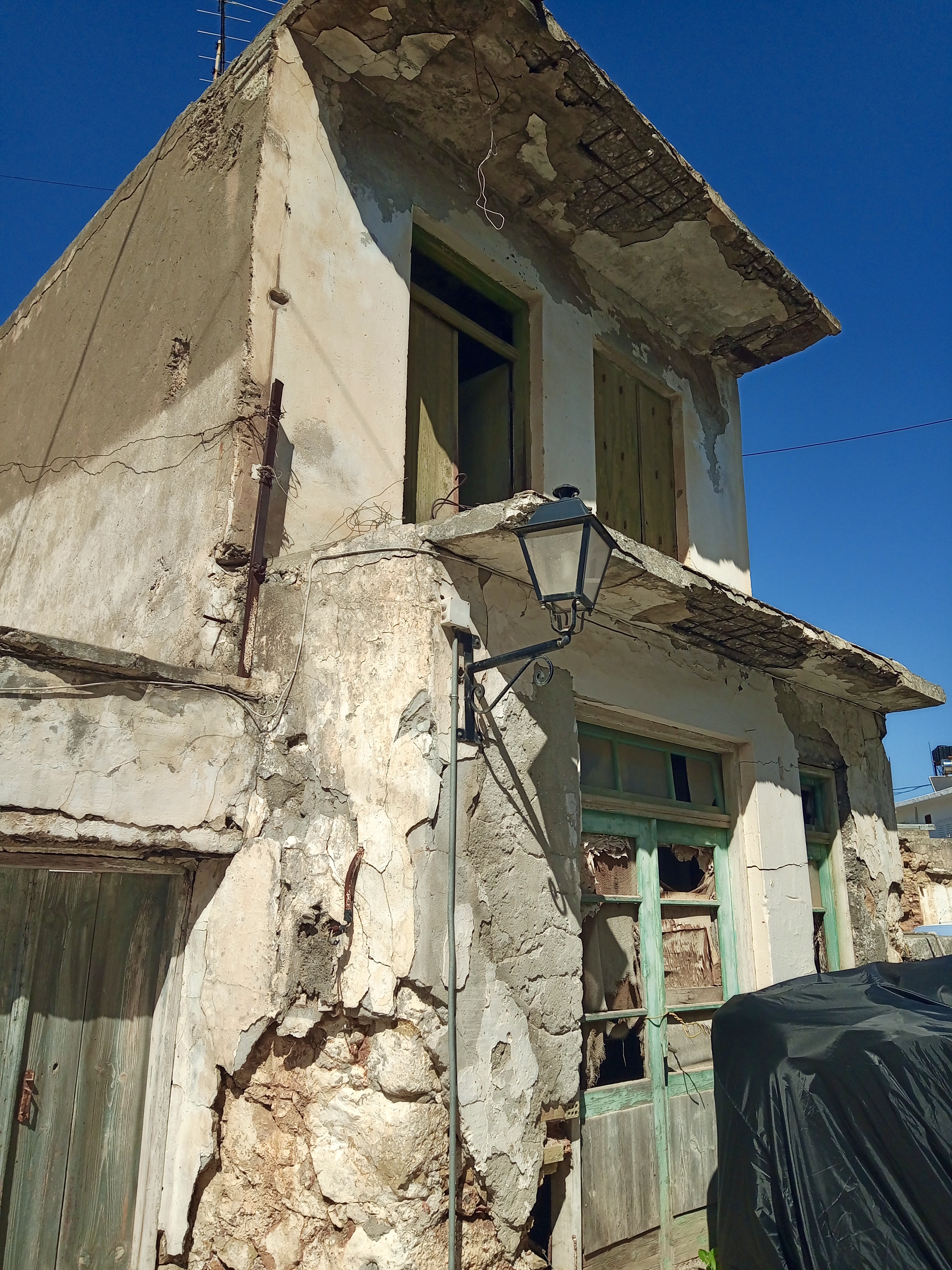
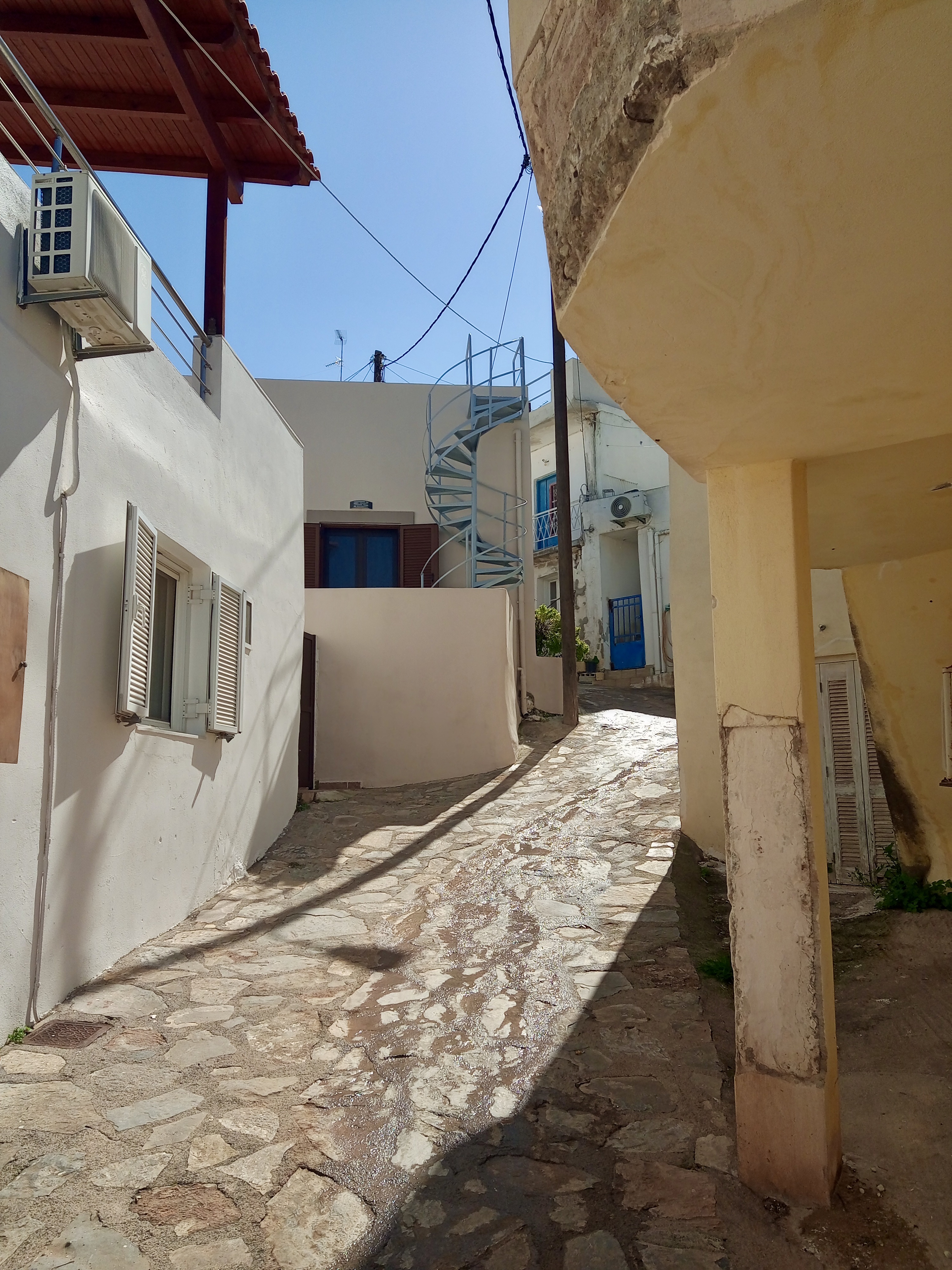
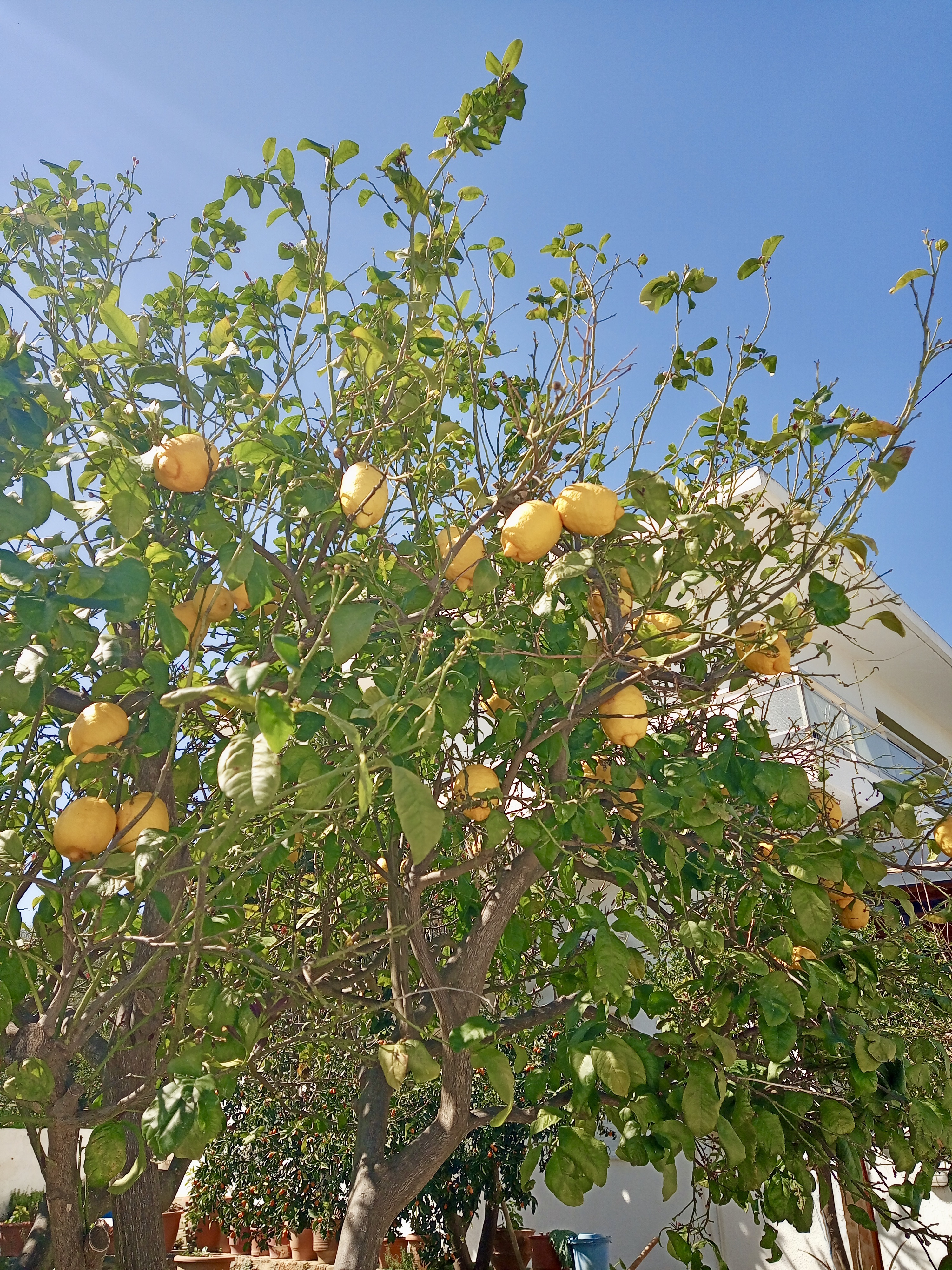
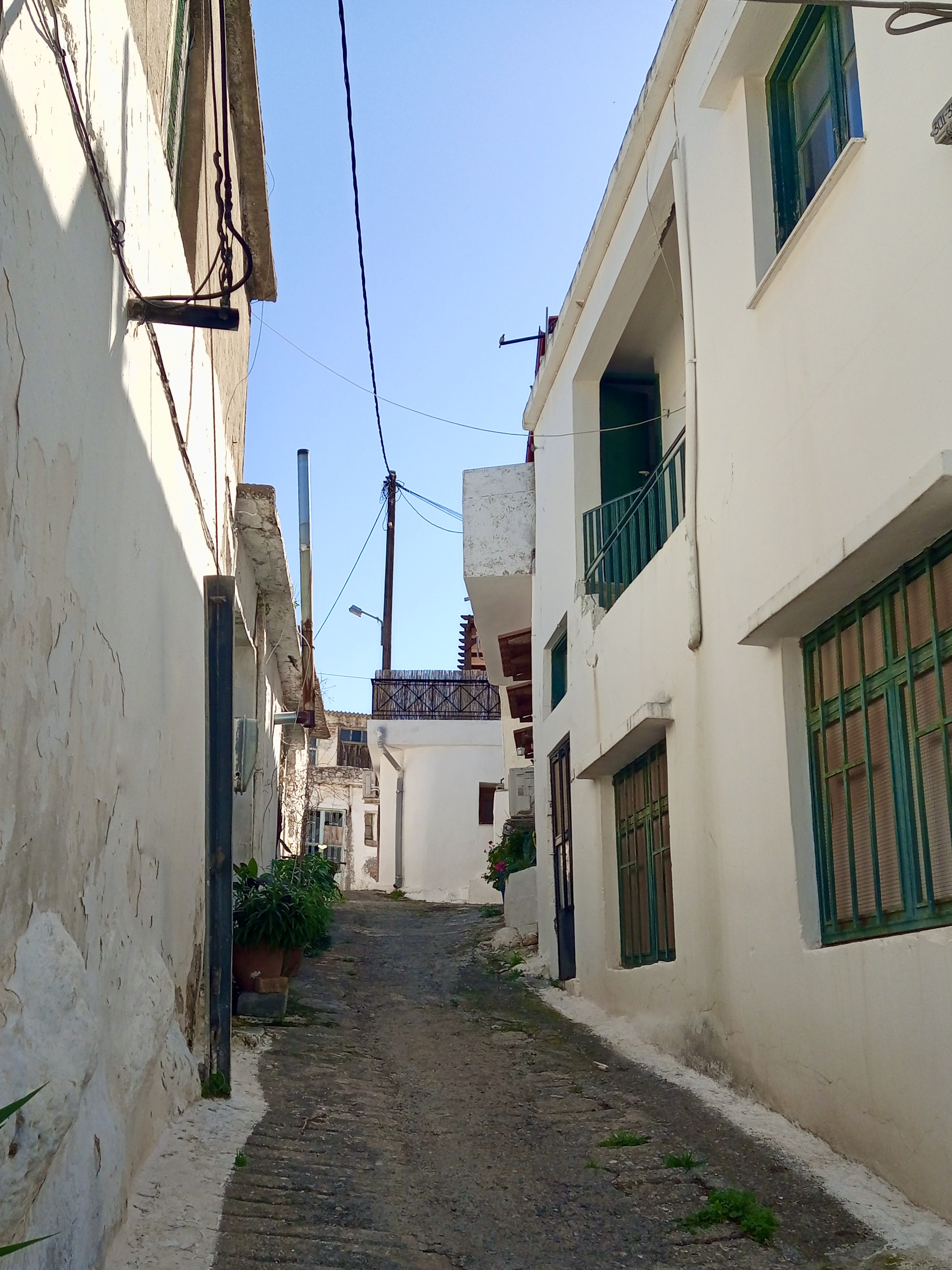
Here are the photos we took whilst strolling around the village, including one of Yvonne with Eirini…

Incidentally, although we had expected to see the AirBnB houses and apartments that were dotted around the village, we were quite surprised to find that in the midst of the village there’s also a hotel. We couldn’t believe our eyes, but then it is within spitting distance of Istro and its nearby beaches, and only 15 minutes by car from Agios Nikolaos. The hotel, in case you’re interested, is called the Koukouvagia (or Koukouvaia).

Click HERE to go to my Amazon Author Page, where you can browse and purchase all of my written works.
Plucky people

A heavy sky hangs over Ierapetra, Thursday Feb 27th, 4.00pm

As we sipped our coffee yesterday morning on the terrace, we could hear a car pulling up in the steep lane below and to our right, and someone got out and went along the narrow lane to Evangelia’s door. It looked like her grandson, Maria’s boy. I say, ‘boy,’ although he’s well into his thirties I suppose. Anyway, we thought that he’d just come to see his gran on a bank holiday, as they so often do, but he had another purpose to his visit which we were soon to learn about.

Not all that long ago, when one of Evangelia’s chickens had for some odd reason got into the habit of hanging around our house and making a nuisance of itself, knocking over potted plants and the like, I remember having called her over to see what could be done. When she’d come up the lane, found the errant bird and picked it up by its legs, and begun walking back down to her home with its wings flapping against her leg in indignation, I remember remarking that maybe it had made a bid for freedom at one point in the ‘fence’ around her chicken run that was slightly vulnerable to escape bids. We didn’t really mind the fact that the birds occasionally got out, but this one was making itself somewhat unpopular, it has to be said. Anyway, when I asked her about it, in order to put a stop to its shenanigans, she’d simple said, “tha to sfaxo,” in a very matter-of-fact manner. It means, by the way, “I’ll slaughter it.”
And that she did. We’ve become quite used to the fact that Evangelia, like so many of her contemporaries, was brought up on rural ways, on customs that have prevailed for centuries, even millennia. We don’t eat meat, as I’m sure I’ve rattled on about enough times, I know. That’s not to say, though, that we’re evangelical vegetarians. We don’t agree with the kind who self-righteously condemn carnivores and attempt to make them change their errant ways, no, that’s not our style. And, although we don’t want to have an animal killed just so that we can eat, it’s certainly not for us to come and live in a small Greek village and then start telling the locals how they ought to live. We soon learned to have a great respect for Evangelia and her contemporaries, who know what it takes to bring chicken meat from the chicken run to the table, because they themselves carry out the entire process. 

Some years ago, in the UK, we watched a TV play in which a couple of middle-aged second time arounders decided to stay in a farm cottage for a weekend. The woman was a vegetarian and the man wasn’t. Unwittingly, he’d suggested that they dine in on the Saturday evening and maybe share a chicken casserole, which he offered to cook. She’d replied that she’d only even contemplate the idea if her new beau would be prepared to kill the bird himself, then pluck it and prepare it for the cooking pot. Of course, she had no intention of eating chicken, but knew that her fella’s display of macho bravado would soon be reduced to abject defeat. He’d assured her that he’d have no problem in killing the bird (the farmer who owned the cottage having even supplied them with a live bird to serve as the victim for the feast). The action continued with the bloke haplessly chasing the reluctant chicken around a small yard, before eventually catching it and finally getting it lodged under his arm and them placing two fingers either side of its neck, with the intention of wringing it, thus killing the poor creature.

As the man looked down at the chicken’s ‘face,’ and he made direct eye contact with the bird, its eyes slowly blinking as it stared back up at him, he gave in. There was no way he could take this creature’s life. He just couldn’t do it. The point of the play, and indeed the point made by the female lead character, was that in this modern world most people are so far removed from their natural habitat and from nature in general, that people have ceased to understand quite what’s involved in animal flesh being prepared for the supermarket shelves. How many people do we know who’ve ever looked inside an abattoir, or seen what processes are gone through in order for a living, breathing creature to lose its life, then be cut into pieces and its flesh prepared for wrapping in polystyrene and cellophane? 

Yet, up until the industrial revolution, for probably the entire history of humanity people have had to be actively involved in the process right from the moment when an animal or bird was selected to become food for the table. If we modern, sanitised people were to have to kill our own meat, how many of us these days could do it?

Which is why, despite our not wanting to eat dead animals, we can’t help having a deep respect for these humble villagers who only eat what they themselves have slaughtered. Evangelia’s become much less vigorous in the five and half years that we’ve known her, which was why her grandson now has to do the dirty deed, as it were. But all the family’s involved in getting their chicken ready for the table. The lad used a cleaver to behead four or five birds yesterday morning, a process which I didn’t want to watch, and indeed to do so involved straining our heads up a bit in order to see over our fence and along the lane opposite, though we could hear the blade fall and the birds’ wings flapping after he’d done the deed, before the life ebbed out of their bodies. Once he’d done his part, he bade his grandmother farewell, popped his head into his mother’s doorway above his gran’s home too, and was on his way.

Soon, Maria came out and went down the steps and along the lane to find the carcasses. There she first used copious quantities of water to wash the bloodstains away from the surface of the lane outside her mother’s door, then perched herself on a low stool and placed a plastic bowl on the very chopping block that her son had used. She was soon plucking feathers and depositing them into a sack, and, as each carcass became totally denuded, placed them into the bowl. The whole process, from the executioner’s arrival to four or five chicken carcasses being ready for the pot, probably took no longer than half an hour. Also, while she plucked, half a dozen of the local cats sat around her, waiting, no doubt, for some choice little nibbles from the bird’s innards to be flung their way.

At least these humble folk don’t let someone else do their dirty work. They know what it takes to kill a chicken (a pig or goat too no doubt) in order for them to have meat on their table. I do wonder how many people who shop in huge supermarkets across Britain, and everywhere else in the ‘civilised’ world, who get their meat from a shelf and have no idea what goes on in order for it to arrive there, would eat that meat if they’d had to slaughter the animal themselves. I didn’t become a vegetarian for that reason, no, but it probably would have made me one had I been compelled to do it myself.

When I contemplate what a huge privilege it is to be able to spend my days in this tiny rural community, and be accepted by these open-hearted, humble people, my heart swells with appreciation. And, even though we don’t want to eat dead animals, if our neighbours’ chickens lay enough eggs for their owners to give us some now and then, we accept them gracefully, and quietly thank the chickens for their generosity.

Photo time…

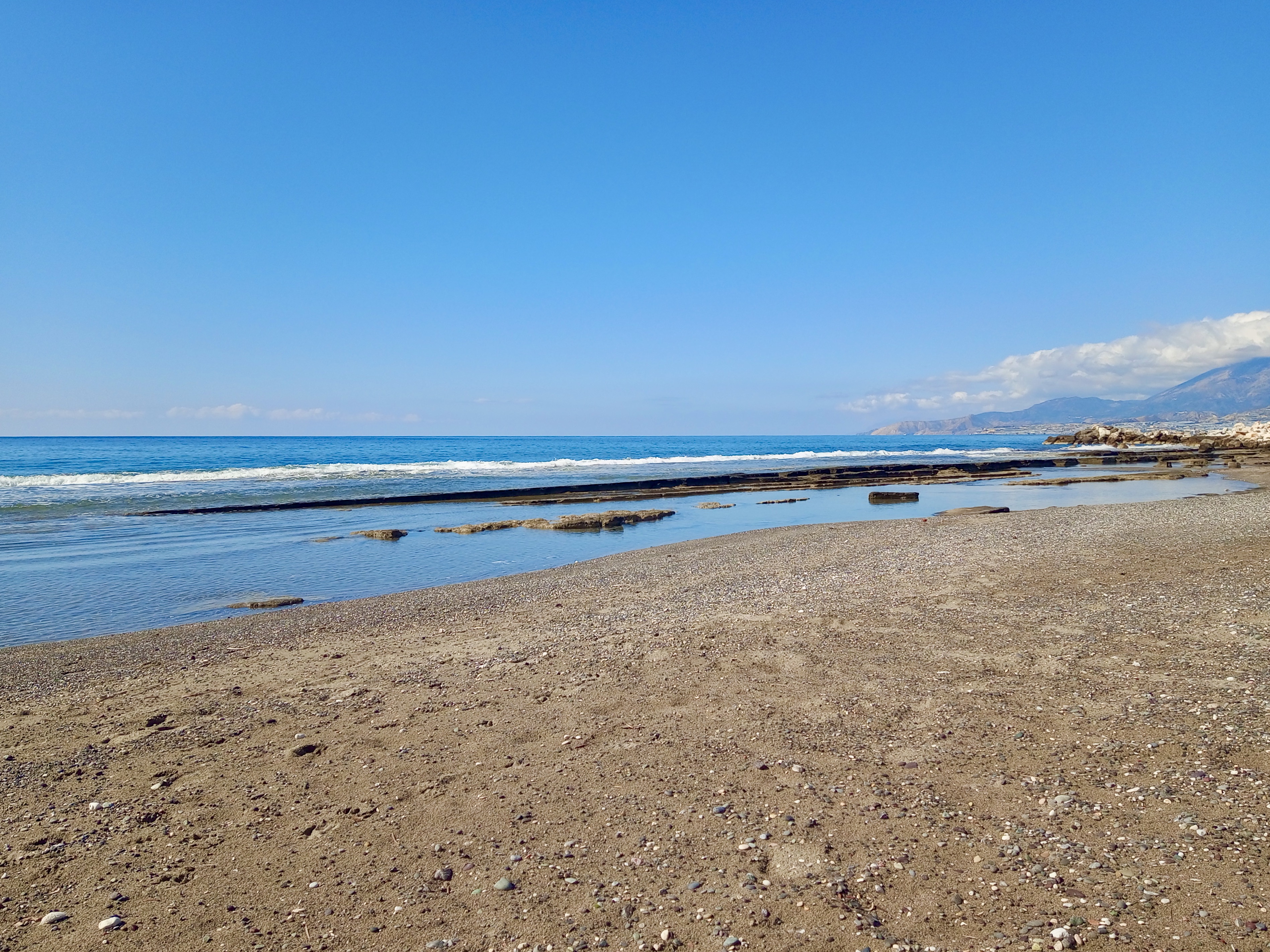
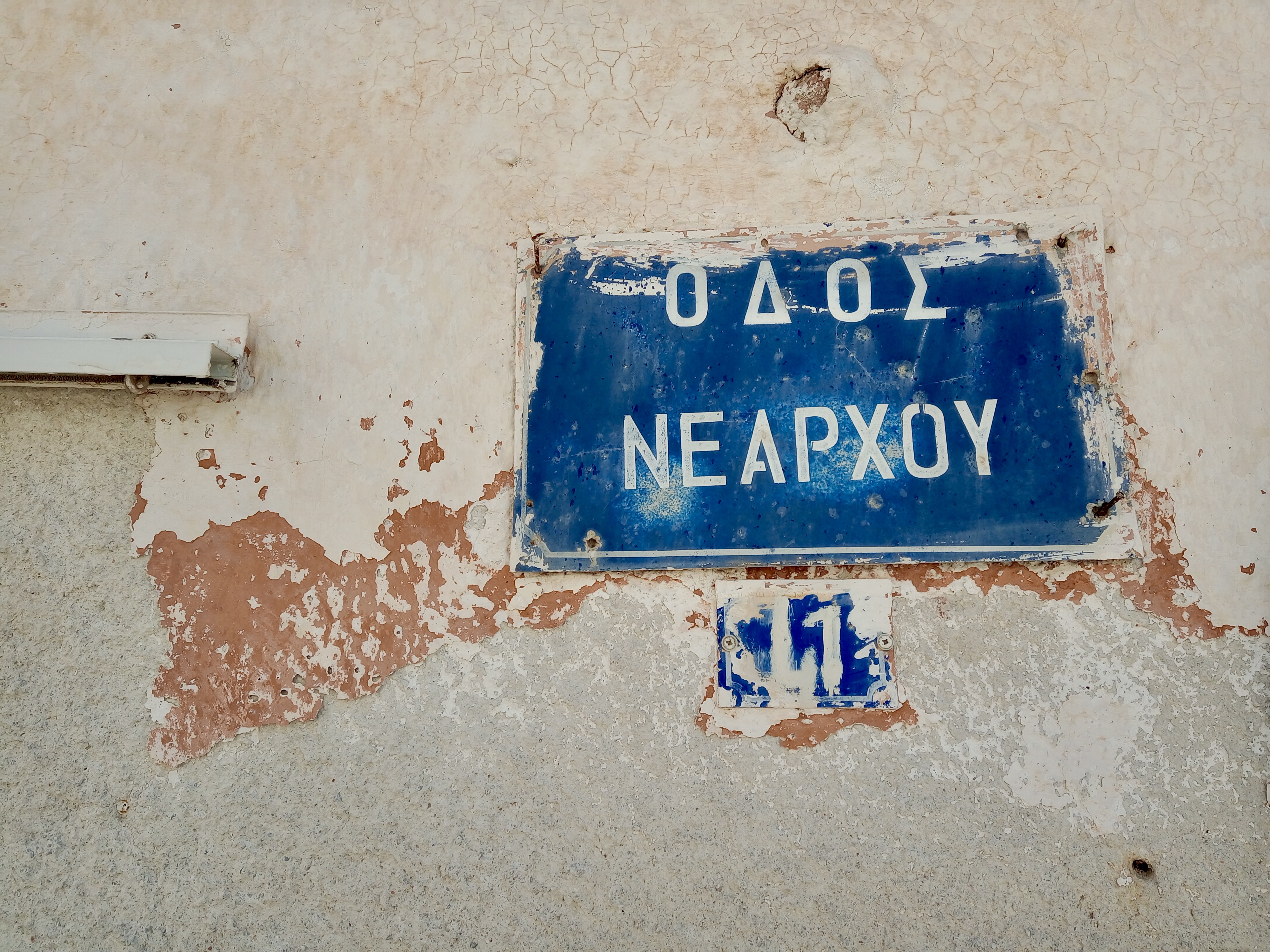
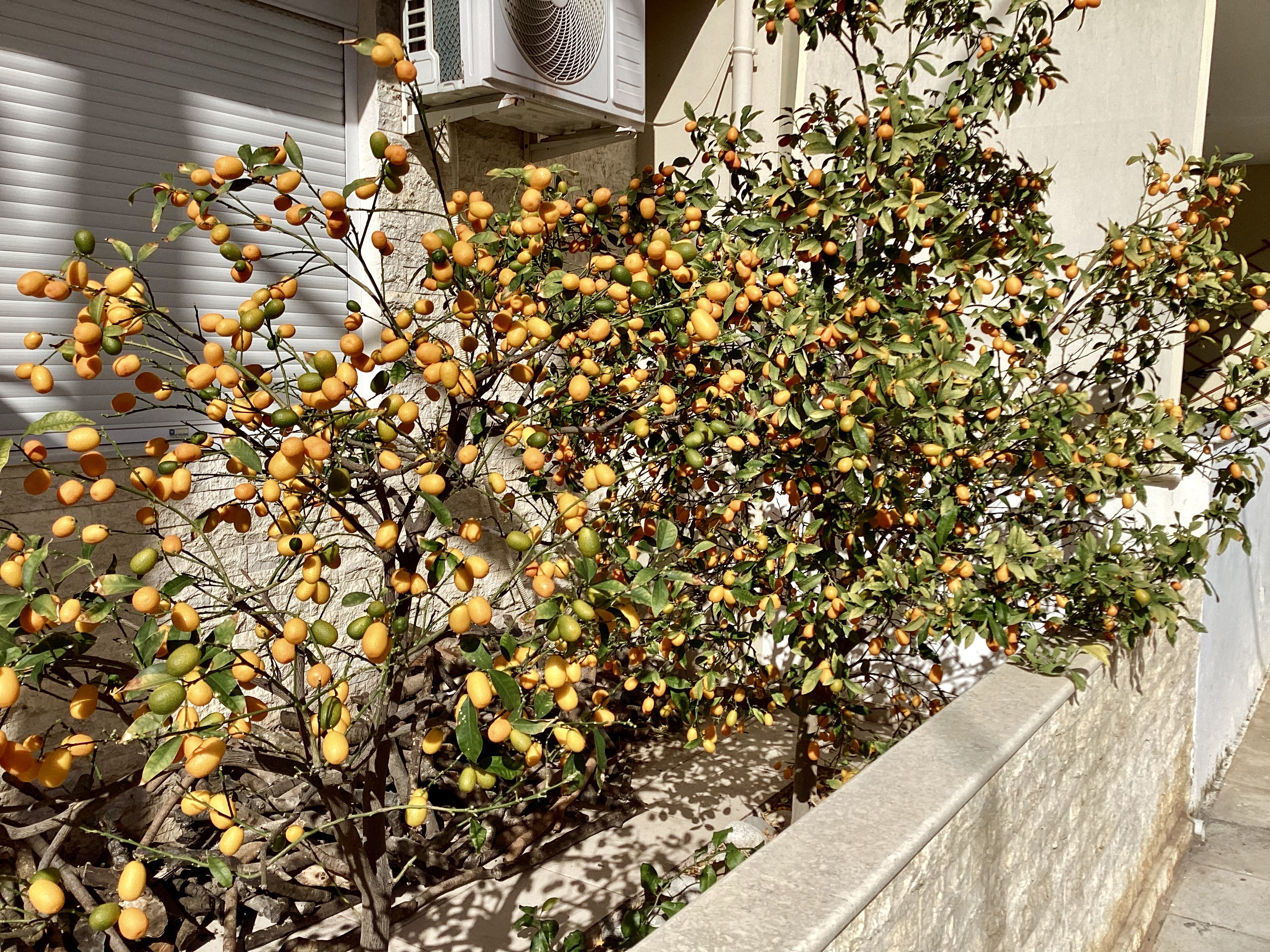
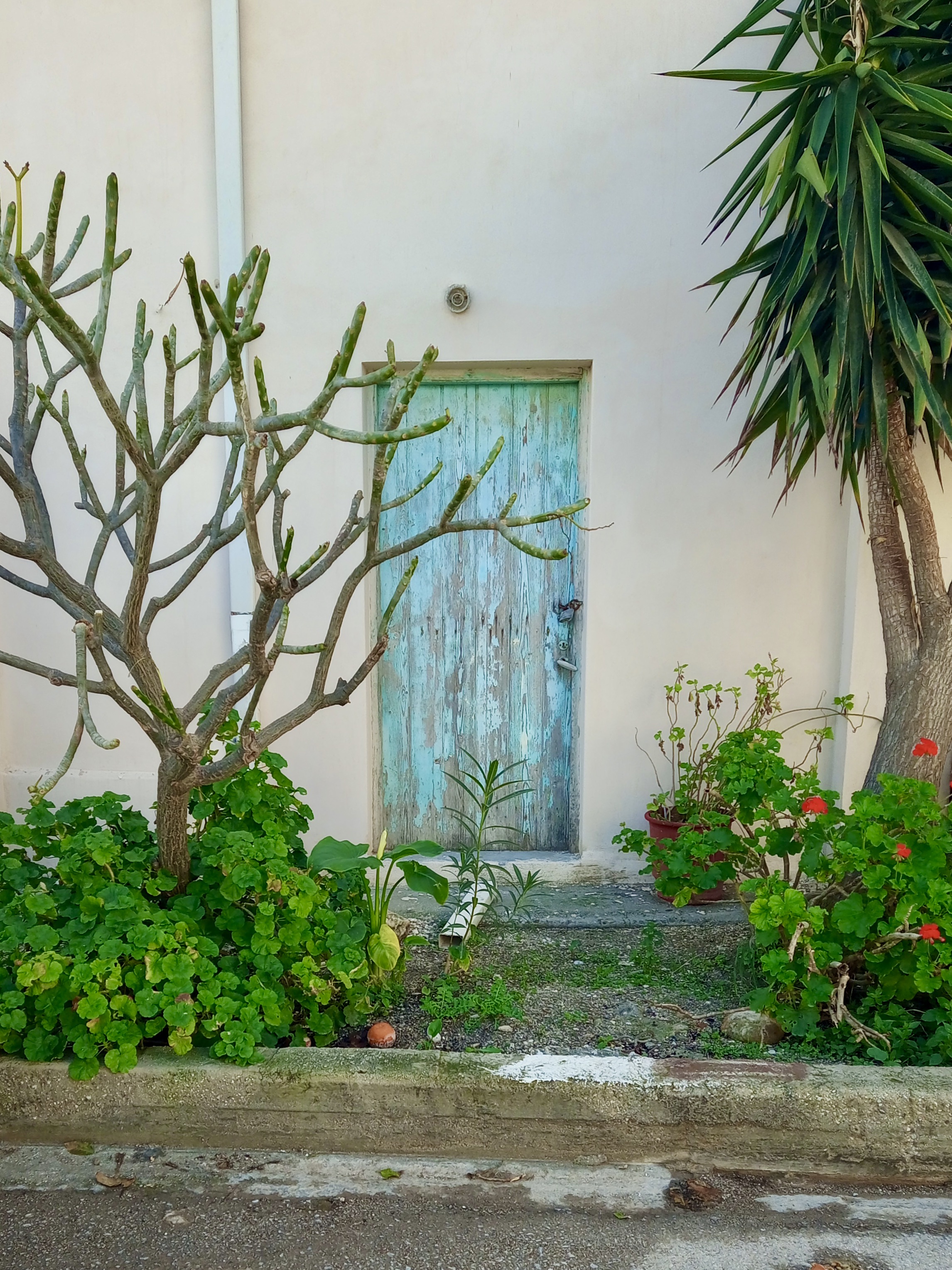
Above: A few shots from around the town on Saturday morning, March 1st.

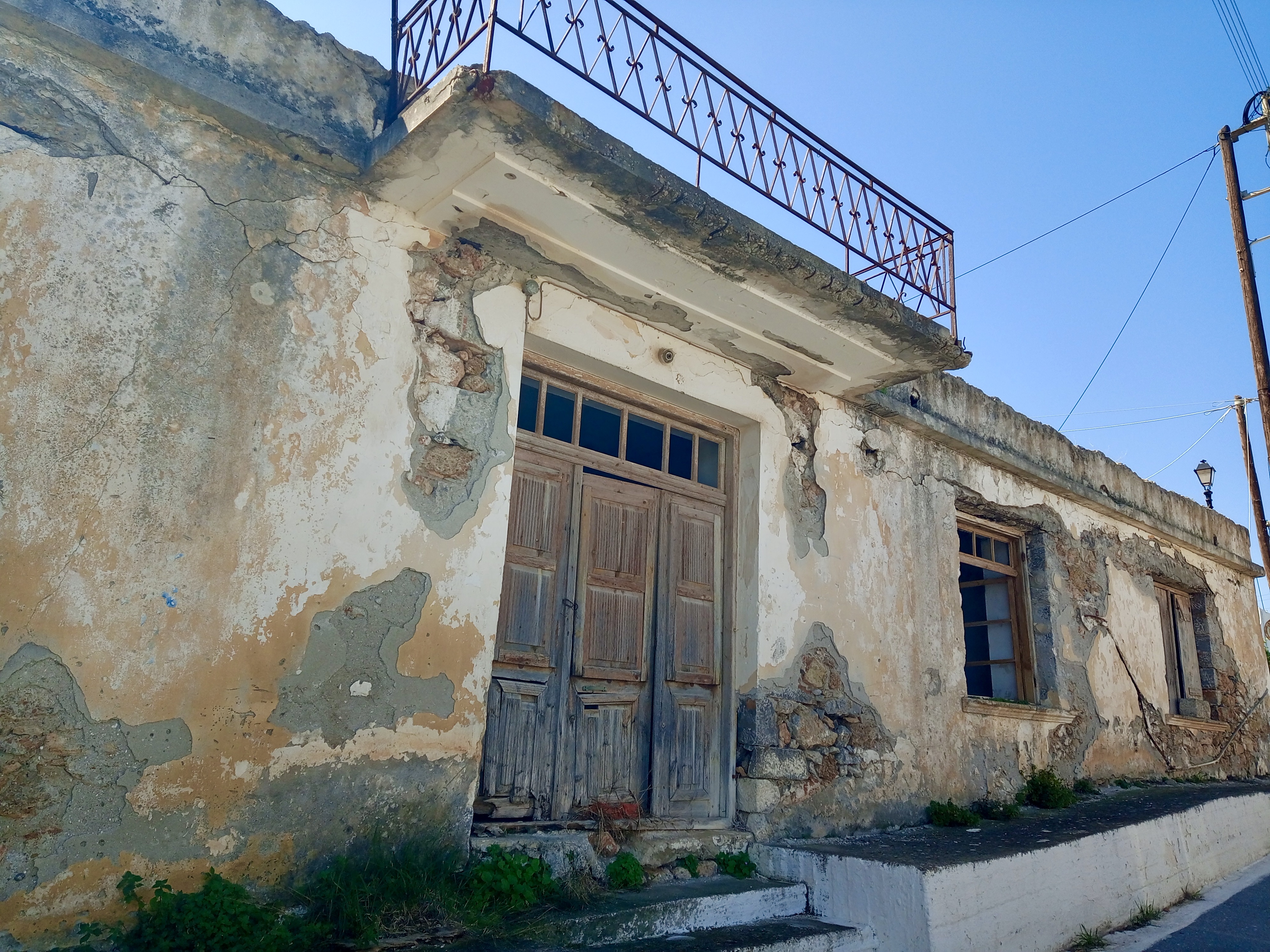
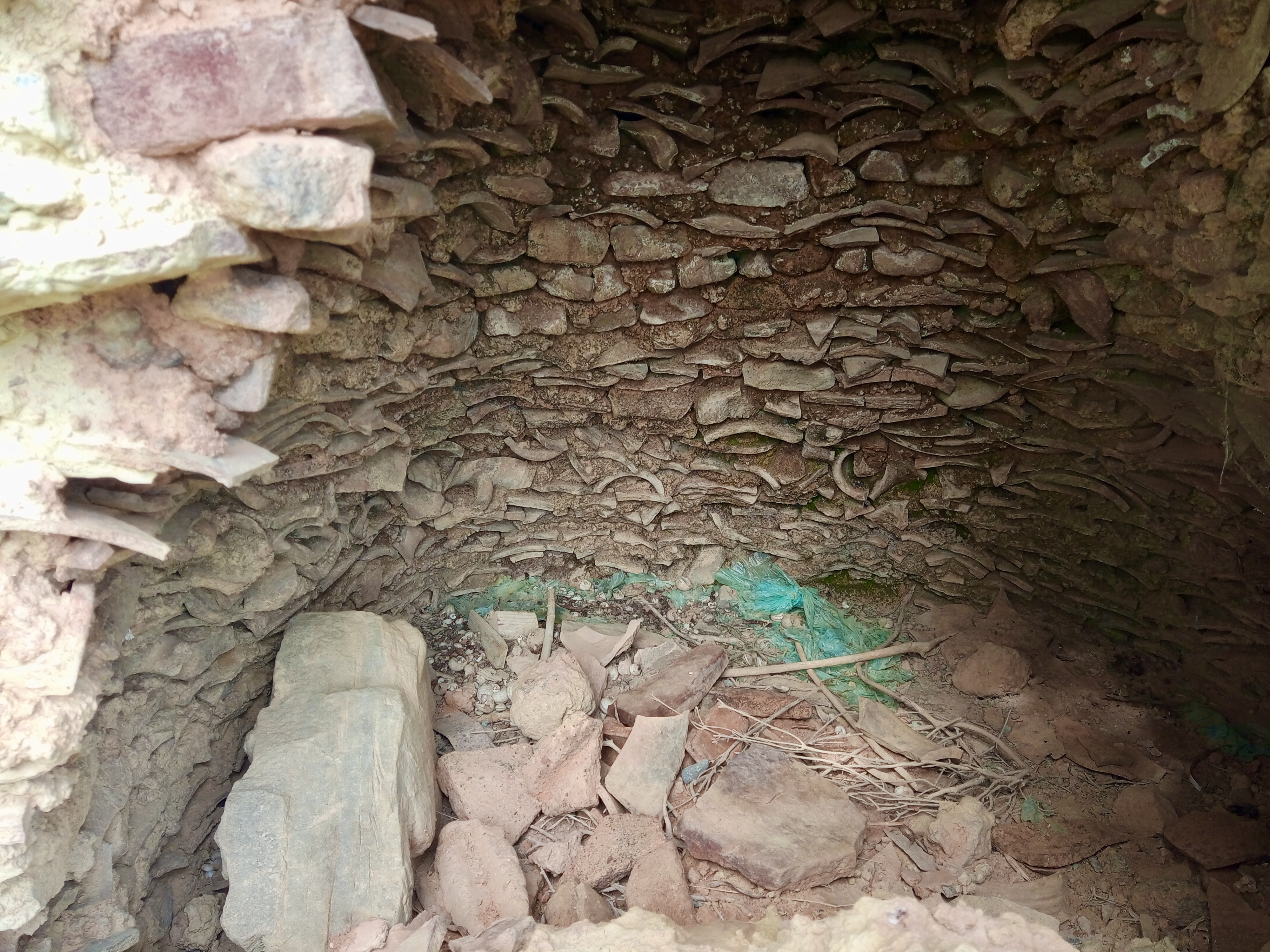
Above: The village and down a country lane, yesterday and a couple of days earlier. That old abandoned cottage always draws me in to have a mooch around. The shot of the interior of that old stone oven is intriguing. Look closely at the rear wall of the oven and you’ll see that it’s composed largely of old pieces of earthenware vessels that were broken up. If walls could talk, eh?

Above: A Painted Lady suns itself on the edge of a fallen pot in the local garden centre on the edge of town. Below: A Red Admiral that we spotted whilst on the walk back from the abandoned cottage yesterday, around 1.00pm.

Last of all, below: a close-up of one of those beautiful little irises that pepper the landscape at this time of the year…

Click HERE to go to my Amazon Author Page, where you can browse and purchase all of my written works.