

As we sipped our coffee yesterday morning on the terrace, we could hear a car pulling up in the steep lane below and to our right, and someone got out and went along the narrow lane to Evangelia’s door. It looked like her grandson, Maria’s boy. I say, ‘boy,’ although he’s well into his thirties I suppose. Anyway, we thought that he’d just come to see his gran on a bank holiday, as they so often do, but he had another purpose to his visit which we were soon to learn about.
Not all that long ago, when one of Evangelia’s chickens had for some odd reason got into the habit of hanging around our house and making a nuisance of itself, knocking over potted plants and the like, I remember having called her over to see what could be done. When she’d come up the lane, found the errant bird and picked it up by its legs, and begun walking back down to her home with its wings flapping against her leg in indignation, I remember remarking that maybe it had made a bid for freedom at one point in the ‘fence’ around her chicken run that was slightly vulnerable to escape bids. We didn’t really mind the fact that the birds occasionally got out, but this one was making itself somewhat unpopular, it has to be said. Anyway, when I asked her about it, in order to put a stop to its shenanigans, she’d simple said, “tha to sfaxo,” in a very matter-of-fact manner. It means, by the way, “I’ll slaughter it.”
And that she did. We’ve become quite used to the fact that Evangelia, like so many of her contemporaries, was brought up on rural ways, on customs that have prevailed for centuries, even millennia. We don’t eat meat, as I’m sure I’ve rattled on about enough times, I know. That’s not to say, though, that we’re evangelical vegetarians. We don’t agree with the kind who self-righteously condemn carnivores and attempt to make them change their errant ways, no, that’s not our style. And, although we don’t want to have an animal killed just so that we can eat, it’s certainly not for us to come and live in a small Greek village and then start telling the locals how they ought to live. We soon learned to have a great respect for Evangelia and her contemporaries, who know what it takes to bring chicken meat from the chicken run to the table, because they themselves carry out the entire process.
Some years ago, in the UK, we watched a TV play in which a couple of middle-aged second time arounders decided to stay in a farm cottage for a weekend. The woman was a vegetarian and the man wasn’t. Unwittingly, he’d suggested that they dine in on the Saturday evening and maybe share a chicken casserole, which he offered to cook. She’d replied that she’d only even contemplate the idea if her new beau would be prepared to kill the bird himself, then pluck it and prepare it for the cooking pot. Of course, she had no intention of eating chicken, but knew that her fella’s display of macho bravado would soon be reduced to abject defeat. He’d assured her that he’d have no problem in killing the bird (the farmer who owned the cottage having even supplied them with a live bird to serve as the victim for the feast). The action continued with the bloke haplessly chasing the reluctant chicken around a small yard, before eventually catching it and finally getting it lodged under his arm and them placing two fingers either side of its neck, with the intention of wringing it, thus killing the poor creature.
As the man looked down at the chicken’s ‘face,’ and he made direct eye contact with the bird, its eyes slowly blinking as it stared back up at him, he gave in. There was no way he could take this creature’s life. He just couldn’t do it. The point of the play, and indeed the point made by the female lead character, was that in this modern world most people are so far removed from their natural habitat and from nature in general, that people have ceased to understand quite what’s involved in animal flesh being prepared for the supermarket shelves. How many people do we know who’ve ever looked inside an abattoir, or seen what processes are gone through in order for a living, breathing creature to lose its life, then be cut into pieces and its flesh prepared for wrapping in polystyrene and cellophane?
Yet, up until the industrial revolution, for probably the entire history of humanity people have had to be actively involved in the process right from the moment when an animal or bird was selected to become food for the table. If we modern, sanitised people were to have to kill our own meat, how many of us these days could do it?
Which is why, despite our not wanting to eat dead animals, we can’t help having a deep respect for these humble villagers who only eat what they themselves have slaughtered. Evangelia’s become much less vigorous in the five and half years that we’ve known her, which was why her grandson now has to do the dirty deed, as it were. But all the family’s involved in getting their chicken ready for the table. The lad used a cleaver to behead four or five birds yesterday morning, a process which I didn’t want to watch, and indeed to do so involved straining our heads up a bit in order to see over our fence and along the lane opposite, though we could hear the blade fall and the birds’ wings flapping after he’d done the deed, before the life ebbed out of their bodies. Once he’d done his part, he bade his grandmother farewell, popped his head into his mother’s doorway above his gran’s home too, and was on his way.
Soon, Maria came out and went down the steps and along the lane to find the carcasses. There she first used copious quantities of water to wash the bloodstains away from the surface of the lane outside her mother’s door, then perched herself on a low stool and placed a plastic bowl on the very chopping block that her son had used. She was soon plucking feathers and depositing them into a sack, and, as each carcass became totally denuded, placed them into the bowl. The whole process, from the executioner’s arrival to four or five chicken carcasses being ready for the pot, probably took no longer than half an hour. Also, while she plucked, half a dozen of the local cats sat around her, waiting, no doubt, for some choice little nibbles from the bird’s innards to be flung their way.
At least these humble folk don’t let someone else do their dirty work. They know what it takes to kill a chicken (a pig or goat too no doubt) in order for them to have meat on their table. I do wonder how many people who shop in huge supermarkets across Britain, and everywhere else in the ‘civilised’ world, who get their meat from a shelf and have no idea what goes on in order for it to arrive there, would eat that meat if they’d had to slaughter the animal themselves. I didn’t become a vegetarian for that reason, no, but it probably would have made me one had I been compelled to do it myself.
When I contemplate what a huge privilege it is to be able to spend my days in this tiny rural community, and be accepted by these open-hearted, humble people, my heart swells with appreciation. And, even though we don’t want to eat dead animals, if our neighbours’ chickens lay enough eggs for their owners to give us some now and then, we accept them gracefully, and quietly thank the chickens for their generosity.
Photo time…
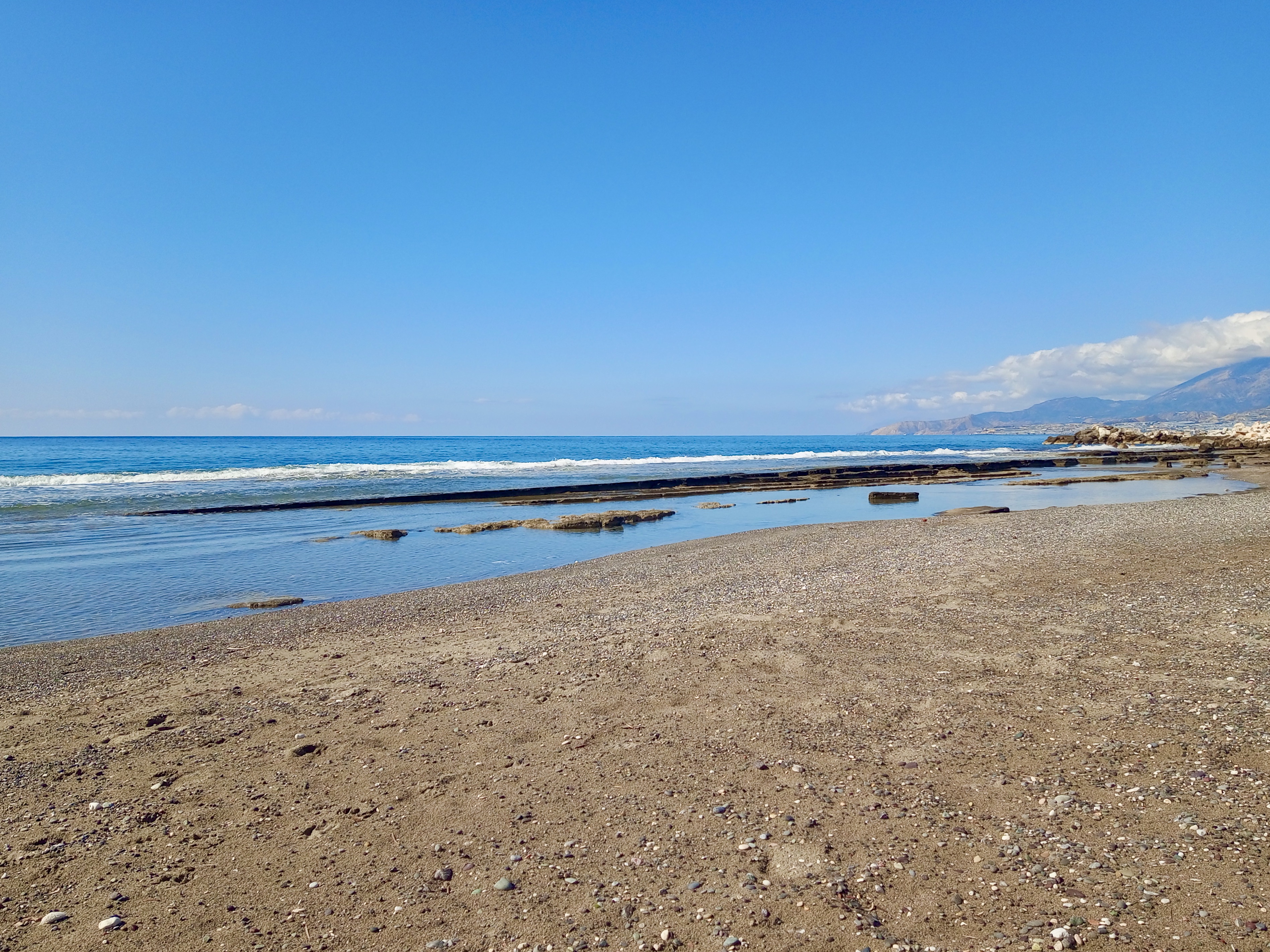
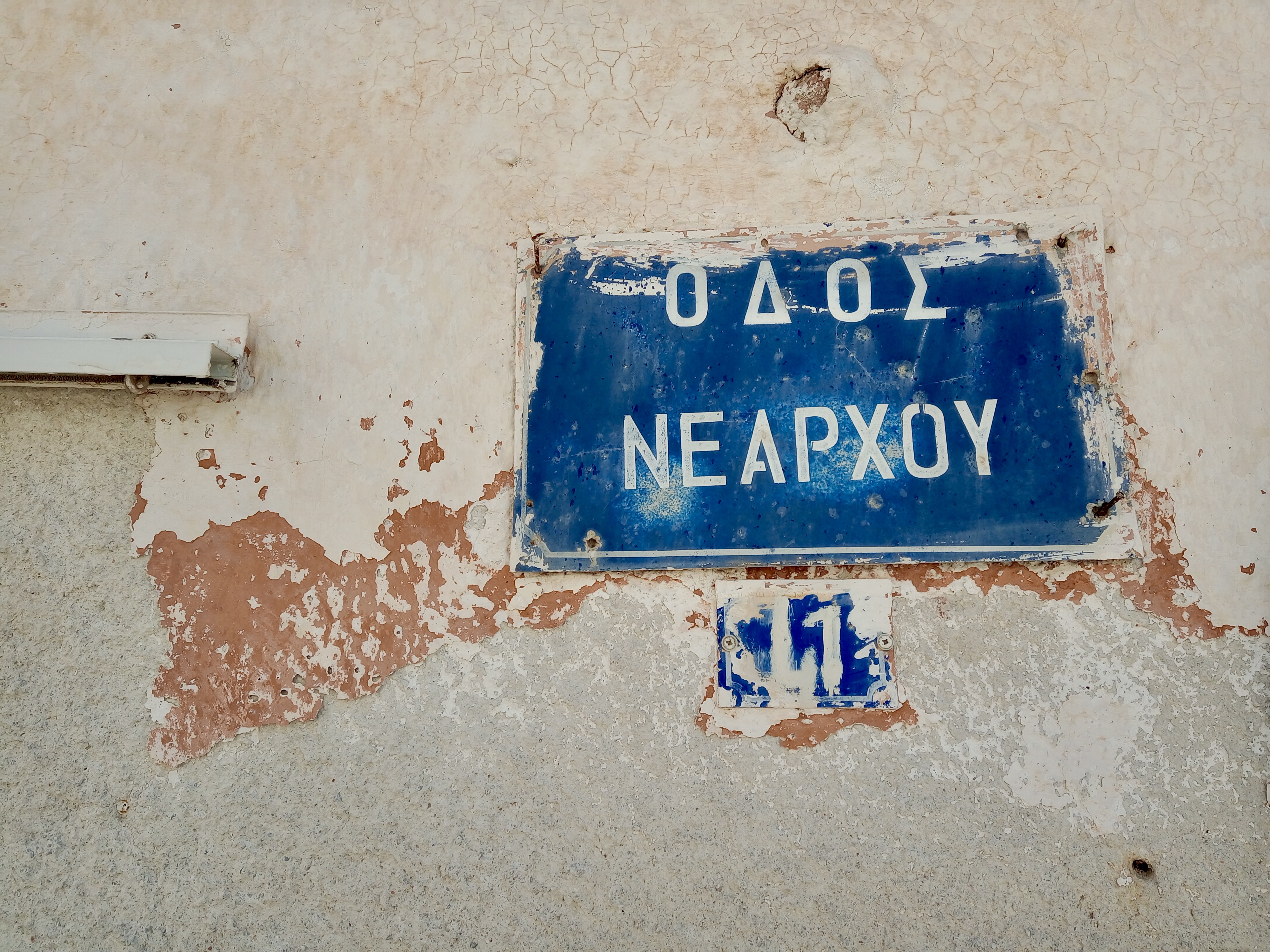

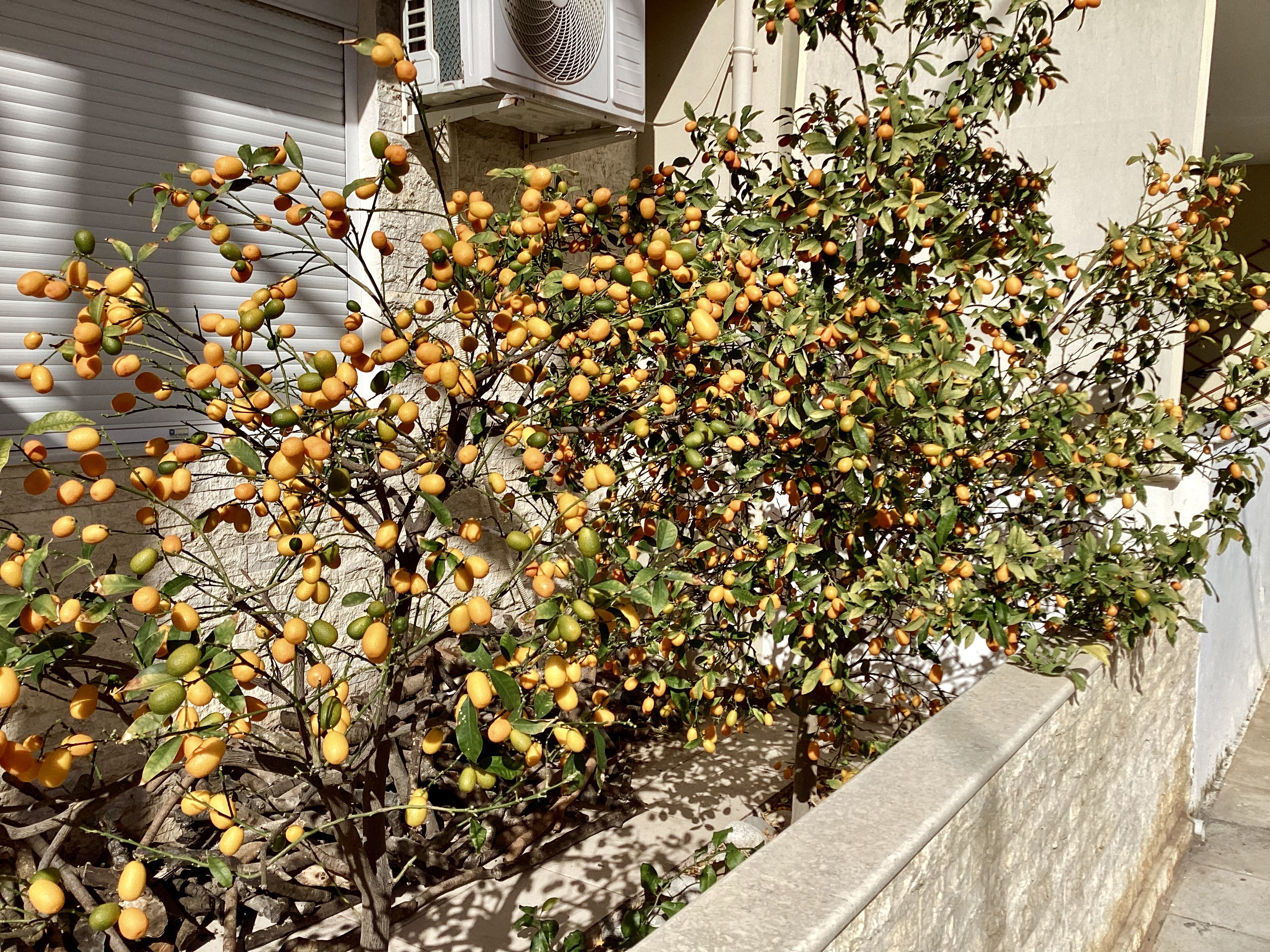
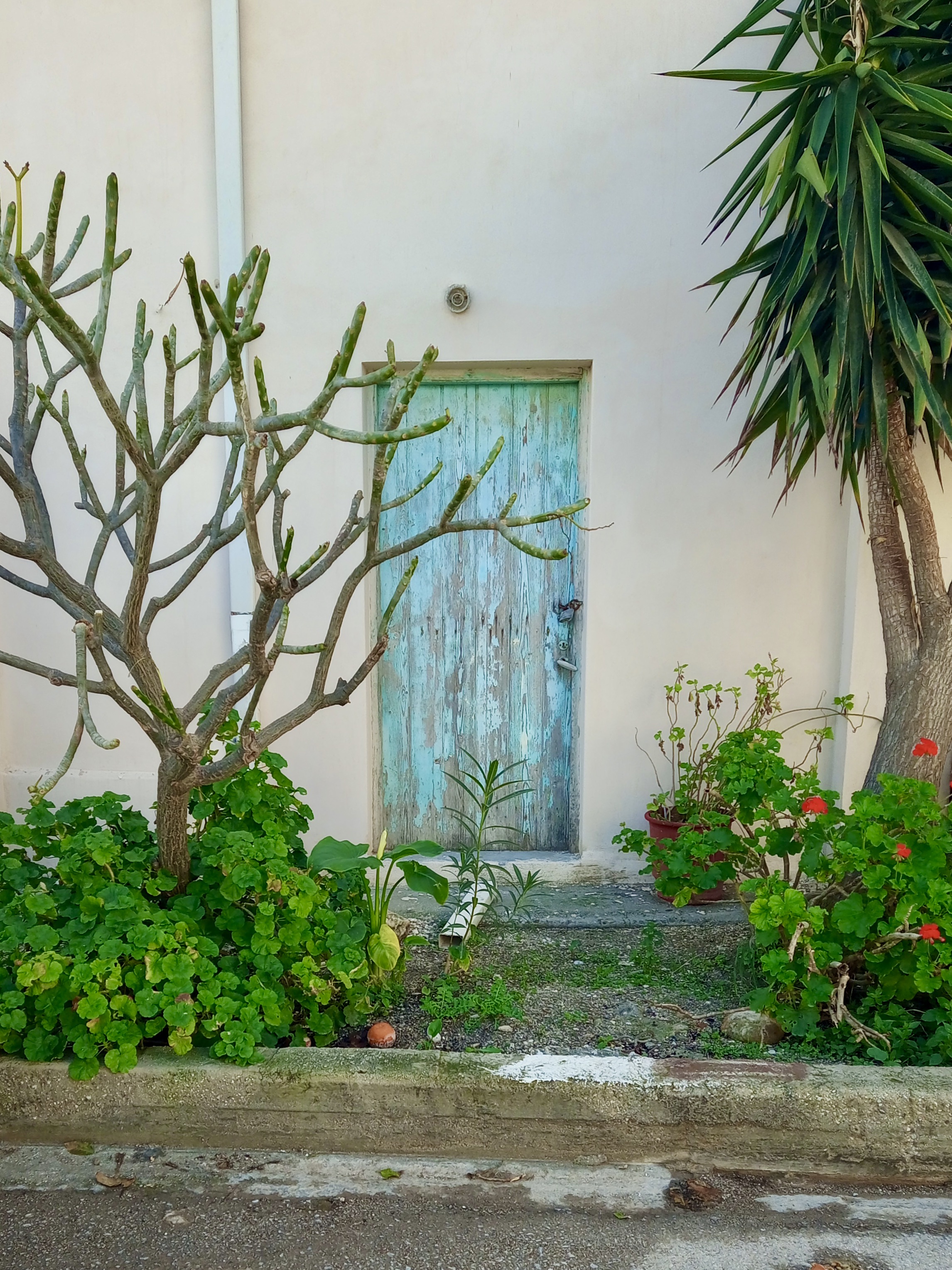
Above: A few shots from around the town on Saturday morning, March 1st.
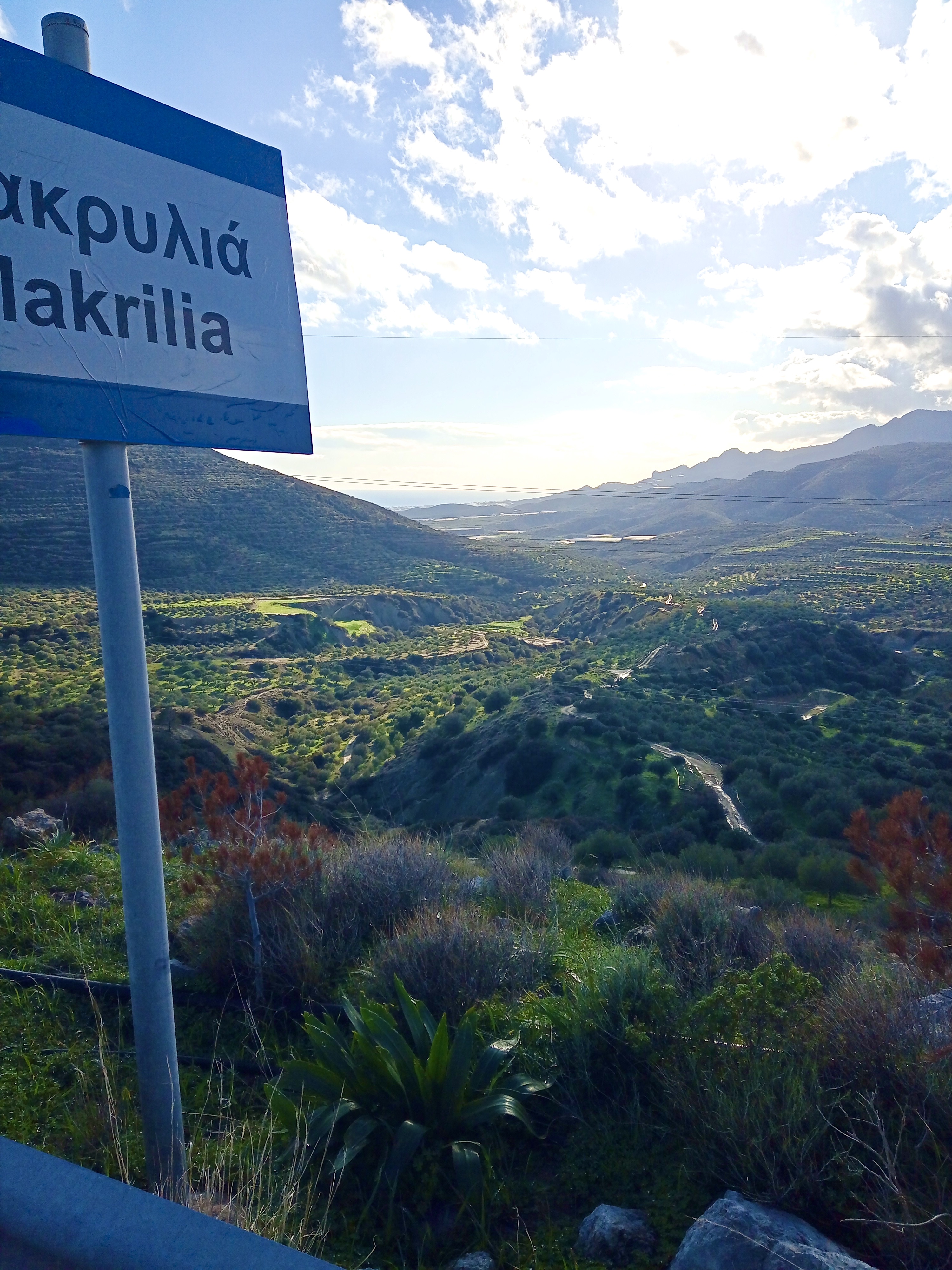
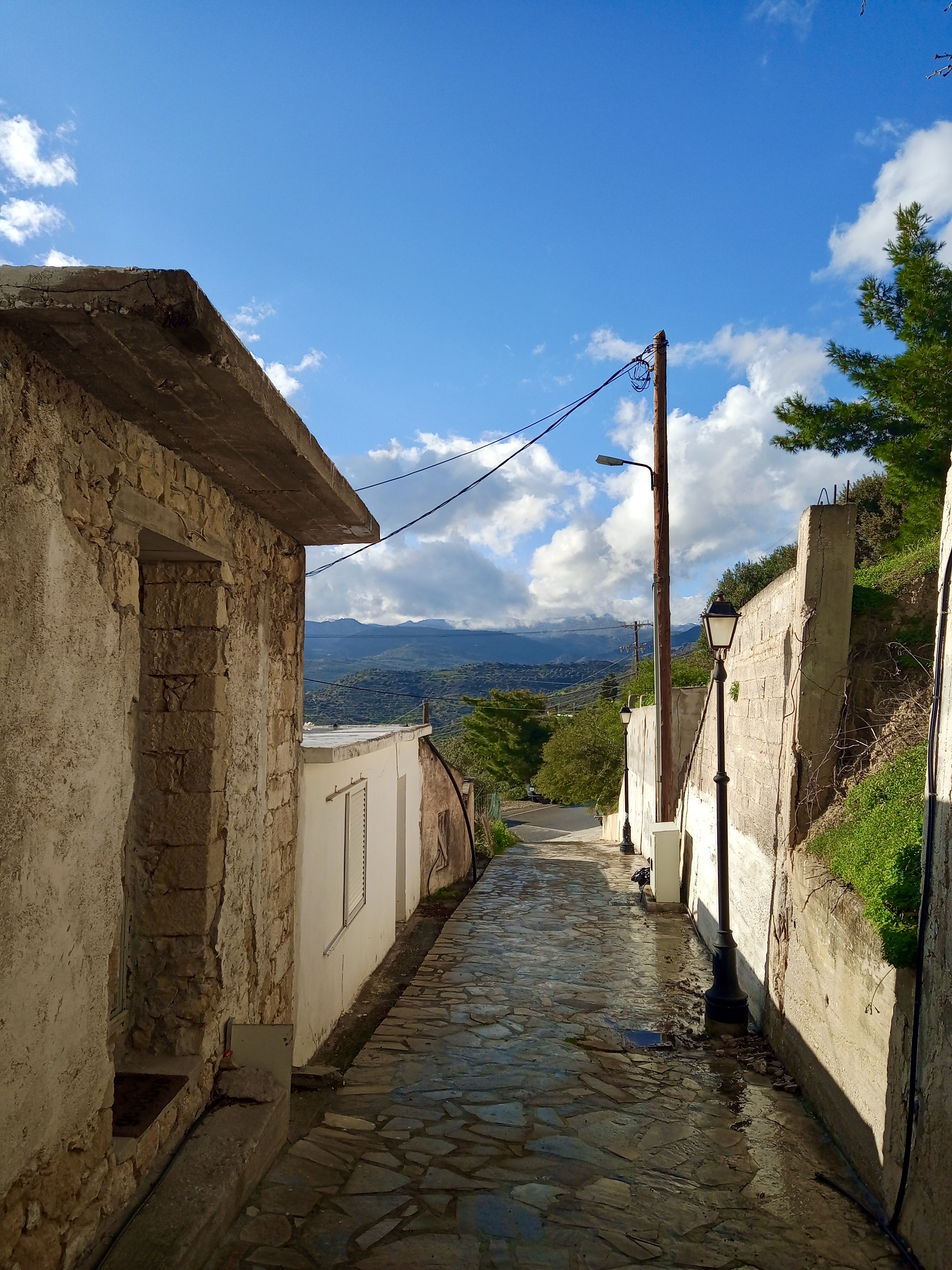

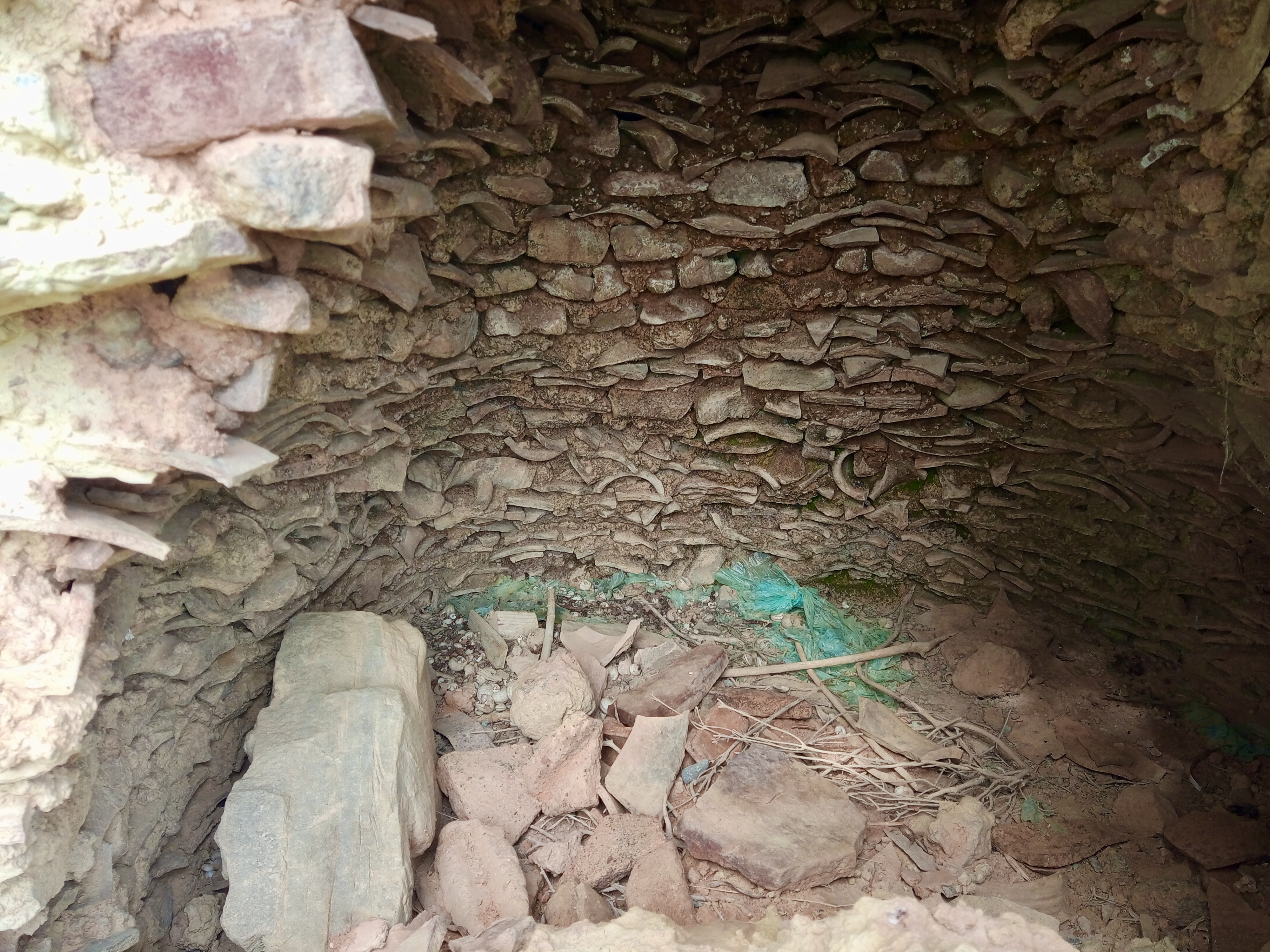


Above: The village and down a country lane, yesterday and a couple of days earlier. That old abandoned cottage always draws me in to have a mooch around. The shot of the interior of that old stone oven is intriguing. Look closely at the rear wall of the oven and you’ll see that it’s composed largely of old pieces of earthenware vessels that were broken up. If walls could talk, eh?

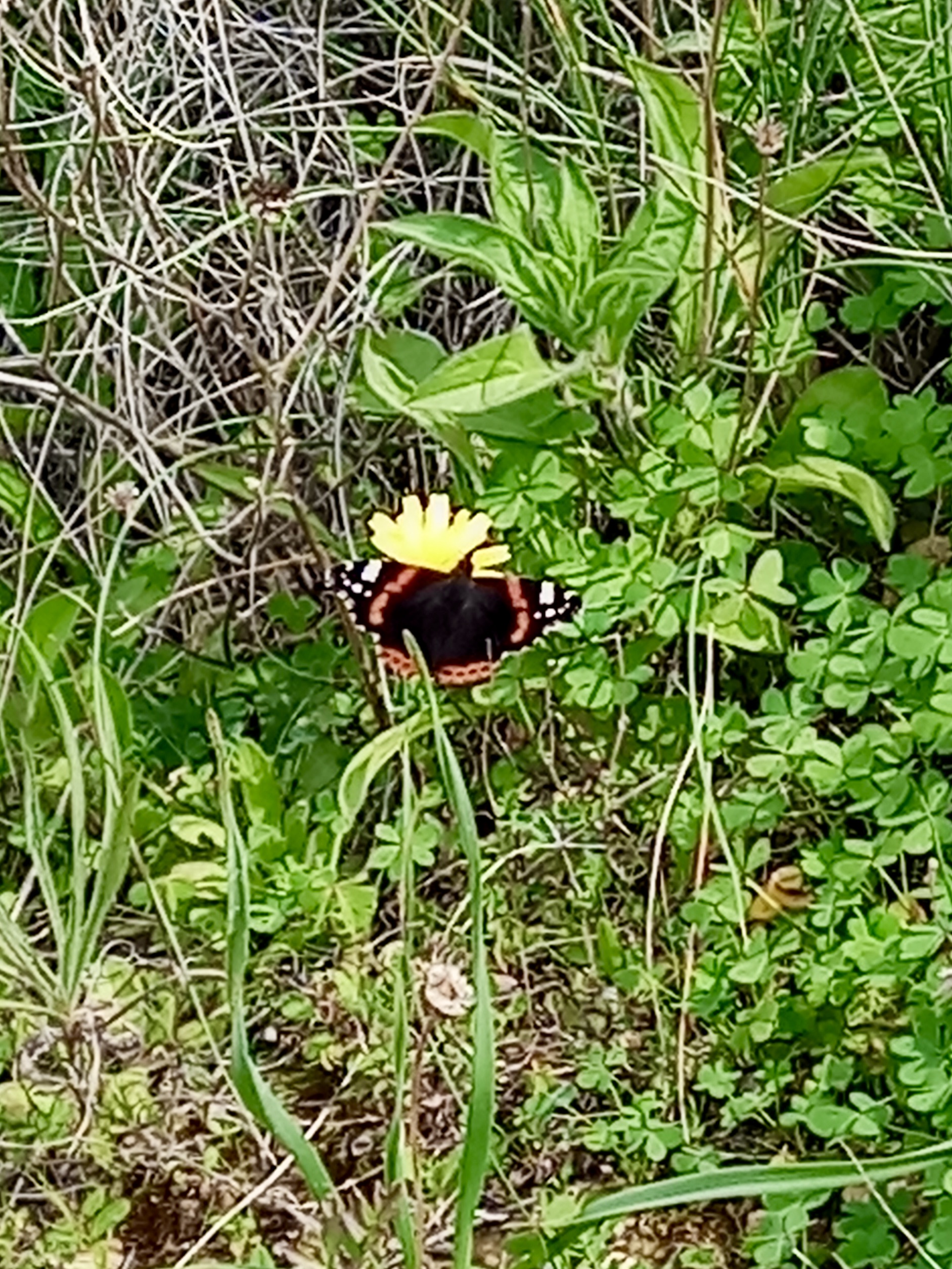
Above: A Painted Lady suns itself on the edge of a fallen pot in the local garden centre on the edge of town. Below: A Red Admiral that we spotted whilst on the walk back from the abandoned cottage yesterday, around 1.00pm.
Last of all, below: a close-up of one of those beautiful little irises that pepper the landscape at this time of the year…

•
Click HERE to go to my Amazon Author Page, where you can browse and purchase all of my written works.
 Accretions
I remember my Welsh speaking granny wringing a chicken’s neck and then me sitting on her cottage step plucking the feathers–seems to remember also that fleas were involved! She did it so that the visiting preacher could have it for his Sunday dinner at her house! I had to sit silent while they ate–but DID listen–pretended I couldn’t understand Welsh so picked up lots of good gossip!