

Twice, during our two-week stay in Sitia this year, we experienced an earthquake. Yes, twice. I’m always slightly irritated by the way in which much of the media talks these things up to such an extent that they have, firstly, tourists panicking about being drowned or swept away (which is worse anyway?) by a tsunami and, secondly, anyone in the UK who has friends or relatives either living over here or on holiday here is led to believe that we’re very liable to have been injured, lost our homes, or worse still, deceased.
I got to thinking of how many years ago it was when I first experienced an earthquake in Greece, and it was Kefallonia in 1987. We were staying at Marina Studios, on the edge of Argostoli town, right on the waterfront. It was September, and, even back then, we were in the habit of closing the shutters and taking a nap during the hottest hours of the afternoon. Out of curiosity I’ve just been checking it out on Google Earth Pro and it took me a while to find the place where we stayed, and I was pleased to see that Marina Rooms are still there, but the area bears no resemblance whatsoever to how it looked almost 40 years ago. Still, that’s ‘progress’ for you, I suppose.
Anyway, I recall being woken up at around 3.30pm by a shuddering, and the first thing I thought was that a large articulated truck (a semi, I believe, if you’re American) had just thundered past our ground-floor window. There was no damage, and it was only when we were out that evening for a meal, and someone we’d got to know in a local bar or taverna told us that it had been a quake, did we learn that that was indeed what we’d felt. Took me a while to realise that it couldn’t have been a huge lorry anyway, since there weren’t any that big on the island in 1987. Since moving out to Greece in 2005 we’ve lived through quite a few quakes and tremors, they’re just part of normal life here.
We lived for 24 years in South Wales UK before coming to Greece, and we even experienced a couple of quakes whilst there too. I worked in an office at Talbot Green, and I can still remember now the momentary quivering of the building we were in. When you consider that the whole area of the South Wales Valleys is riddled with mine shafts and tunnels from decades of coal mining, it’s no surprise, really, that things are going to ‘settle’ now and then. Of course the mines are long gone, and the slag heaps are landscaped green hills, but the shafts and tunnels are still a honeycomb way beneath the ground there.
I read somewhere that if you experience regular, modest quakes it’s much safer and less likely that you’re going to suffer a catastrophic one. The argument goes something like this: The tectonic plates are constantly moving against each other, and that means that the two surfaces ‘rub’ along in opposite directions, occasionally catching, like – say – when your toenail gets caught in your shorts when you’re trying to pull them up, but suddenly it frees itself, which would be the equivalent of that minor quake. If two sections of tectonic plate get caught in a big way and can’t slide against each other, then you’re in for trouble, because the pressure builds and one of these days it’s going to release itself when the ridge that’s catching on one side or the other snaps, which is apparently the problem in Southern California, and thus they’re always ‘waiting for the big one’ there. Here in the Southern Aegean there are several smaller plates that meet both north and south of Crete. When we get an earthquake here, it’s usually nothing to worry about, but the San Andreas fault in California is 1300 kilometres long, so, if that one blows you’ll know all about it. Let’s just hope that if and when it blows, Superman’s not taking the day off.
When we were on Rhodes we had earthquakes almost every year for 14 years. Most of the time you don’t even remark on them. Only once in that time did one merit making the news here, and that was in July of 2008. The epicentre was off the coast of Kattavia, way down south of the island, and there were no building collapses, or anything. There was one fatality though, and that was a woman in the village of Massari (or maybe Malona, they’re close to each other) who panicked, grabbed her grandchild and fled the building, tripped on the front step, fell and hit her head on a marble courtyard floor. Nine times out of ten the quakes in this area are in the region of 5 to 6 on the Richter scale. The 2008 one was a 6.4, on the upper end of the scale that we usually feel here.
The 2008 quake occurred at around 9.20am, and we were still in bed having a lie in. It lasted for around 20 seconds, which is a very long time when the ground beneath you is moving of its own accord. Count them, you’ll get the idea. In fact, we had time to get out of bed, slip on a gown, move from the bedroom to the front door, walk outside and across the courtyard on to the paved drive before it stopped. Later that day there were a couple of aftershocks too. The worst that happened that time was that a few buildings on the island suffered cracks in their walls, but that was about it.
Since we’ve been here on Crete, counting from our arrival in September of 2019, we’ve also had several notable quakes. In fact Ierapetra has felt quakes in May 2020, October 2021, five in 2024, and the most recent two, this past month, with epicentres south of Kasos Island and North of Heraklion, both under the sea. One quake hit while we were walking along the front in Ierapetra with my sister and her hubby in October 2021. It was around 12.30pm and a few ceramic souvenirs tumbled off the shelves in tourist shops as we walked past them. It was so terrifying that we had to go find a bar and quickly take a drink to steady our nerves (cue emoji with wry smile here).
So, you see from all of this that for the press to instantly talk about ‘authorities advising tourists to move away from coastal areas’ for fear of a tsunami, is scaremongering. Where on earth do they expect a few thousand holidaymakers to go then? Yes, our mobile phones squawk at us and flash a written caution, but that’s automatic, it’s not some government official being so quick as to get on-line within minutes of a quake having occurred and texting us all.
Look, you can never say never, all right? No one would be daft enough to say that we’ll never get a quake that’s big enough to cause major damage and loss of life, but our experiencing frequent ‘normal fault’ or ‘crustal extension’ quakes is part of everyday life here, and to advise tourists either to stay away, or grab their things and run when we have one of our ‘normal quakes’ is the height of irresponsibility.
Oh, and we have actually seen a tsunami while at the water’s edge in Ierapetra once. It was all of half a metre high. I must also close out this discussion by talking about the way buildings are constructed in this area. The concrete ‘frame’ containing reinforcing steel bars that has been required for decades now has proven its worth time and again, so even when buildings have been cracked and warped, people have been able to get out without suffering injury in most cases. There is one village here on Crete that has suffered houses collapsing this past couple of years, but they’re primarily old houses, built before the current regulations came into being.
Maybe it’s not the place for humour, but I can’t help echoing the words of Jerry Lee Lewis here (although he didn’t actually write the song): if you’re thinking of taking a holiday in Greece, why not ‘come on over baby, a whole lot of shaking’s going on…’ [Couldn’t resist it, sorry, if you’re easily upset, then accept my apology right here and now.]
And so to the photos…
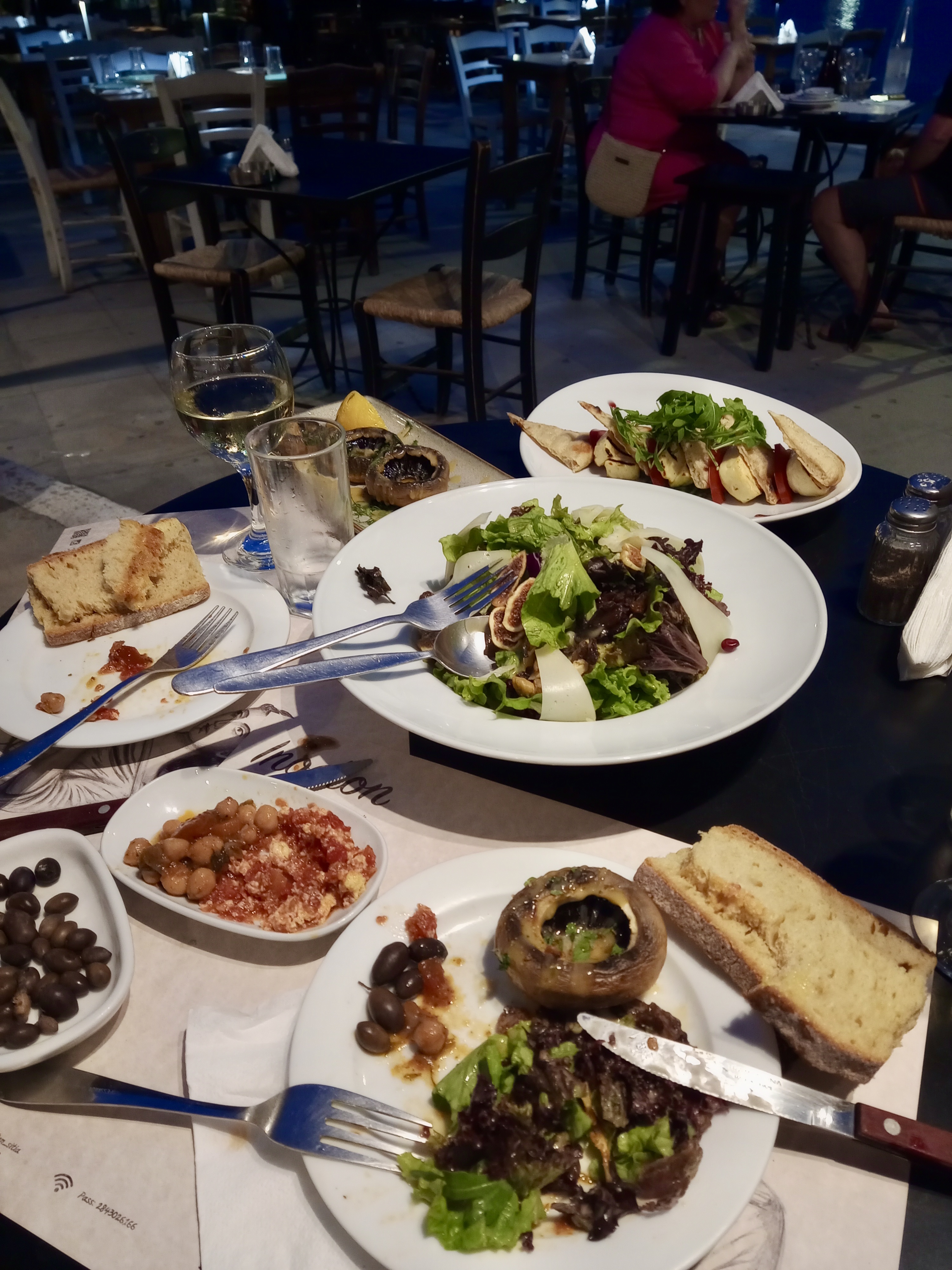
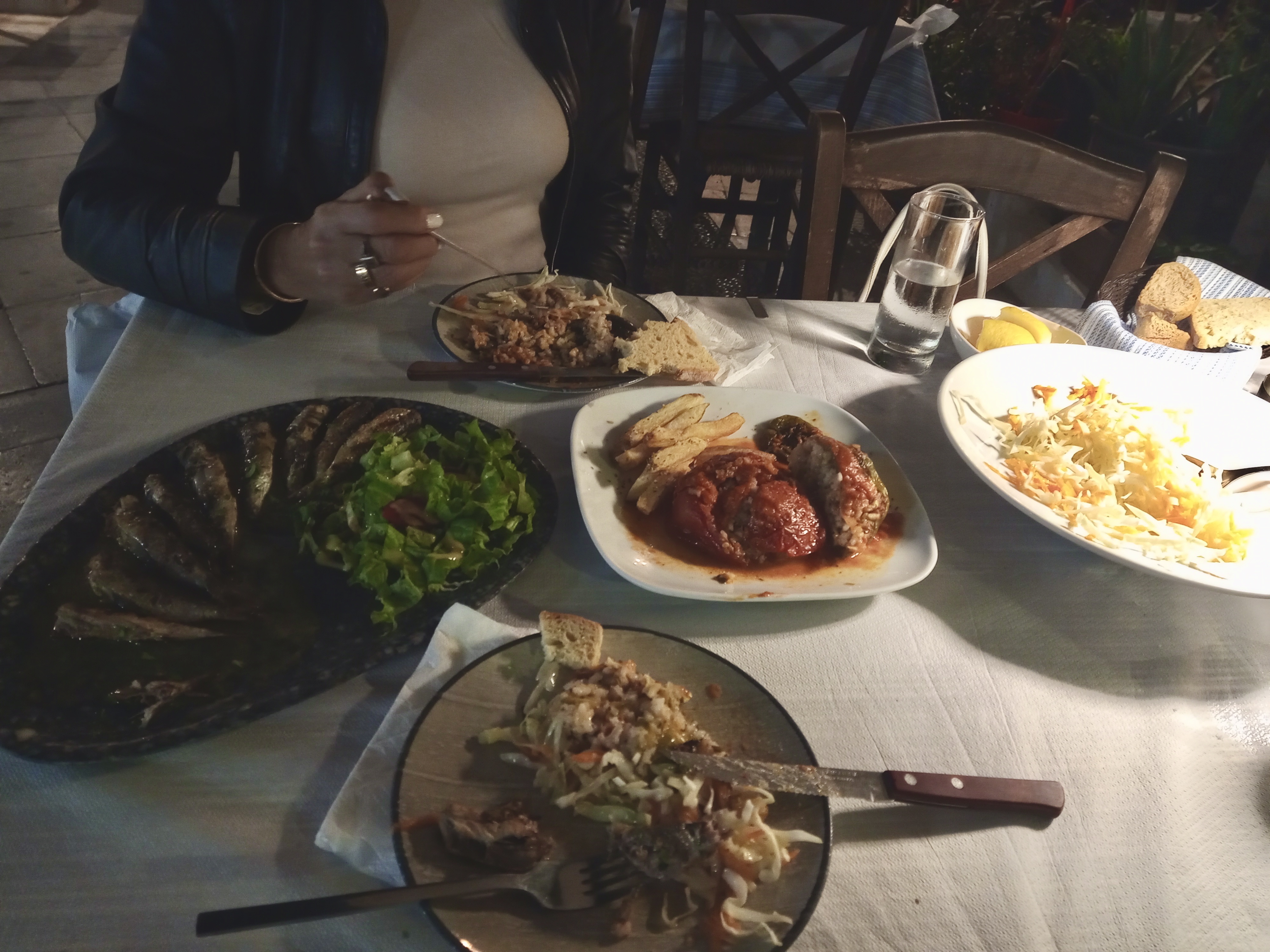
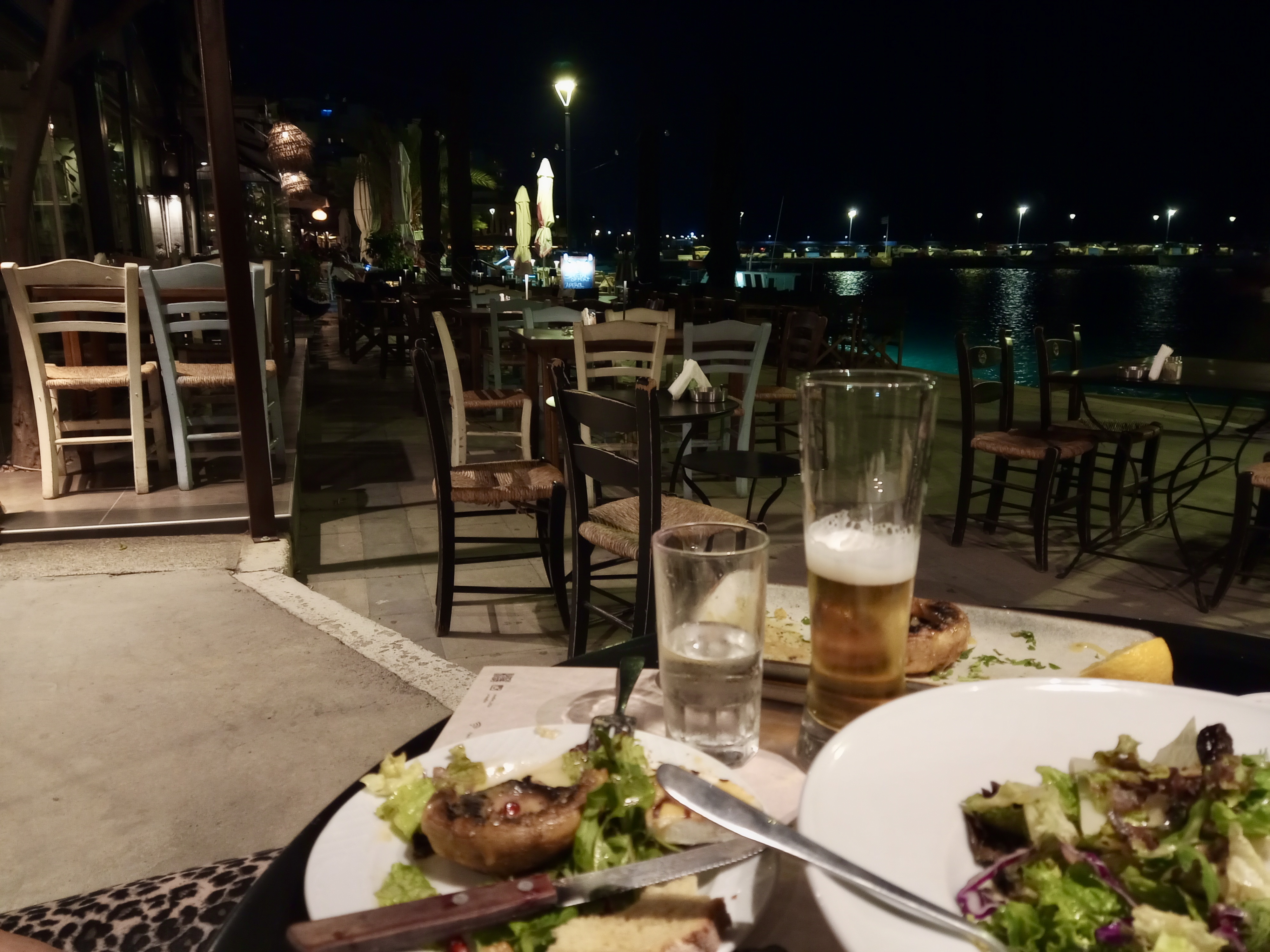
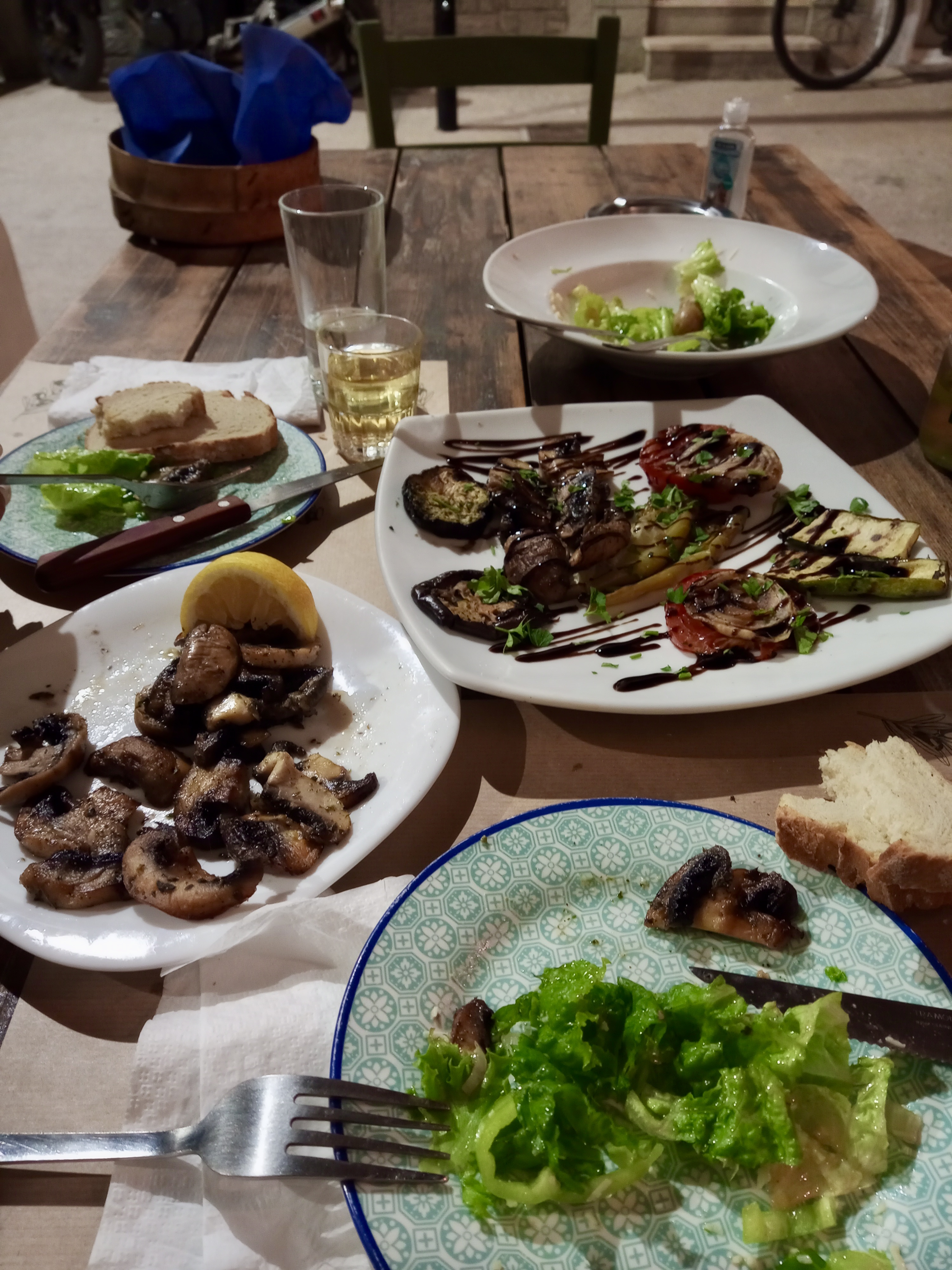


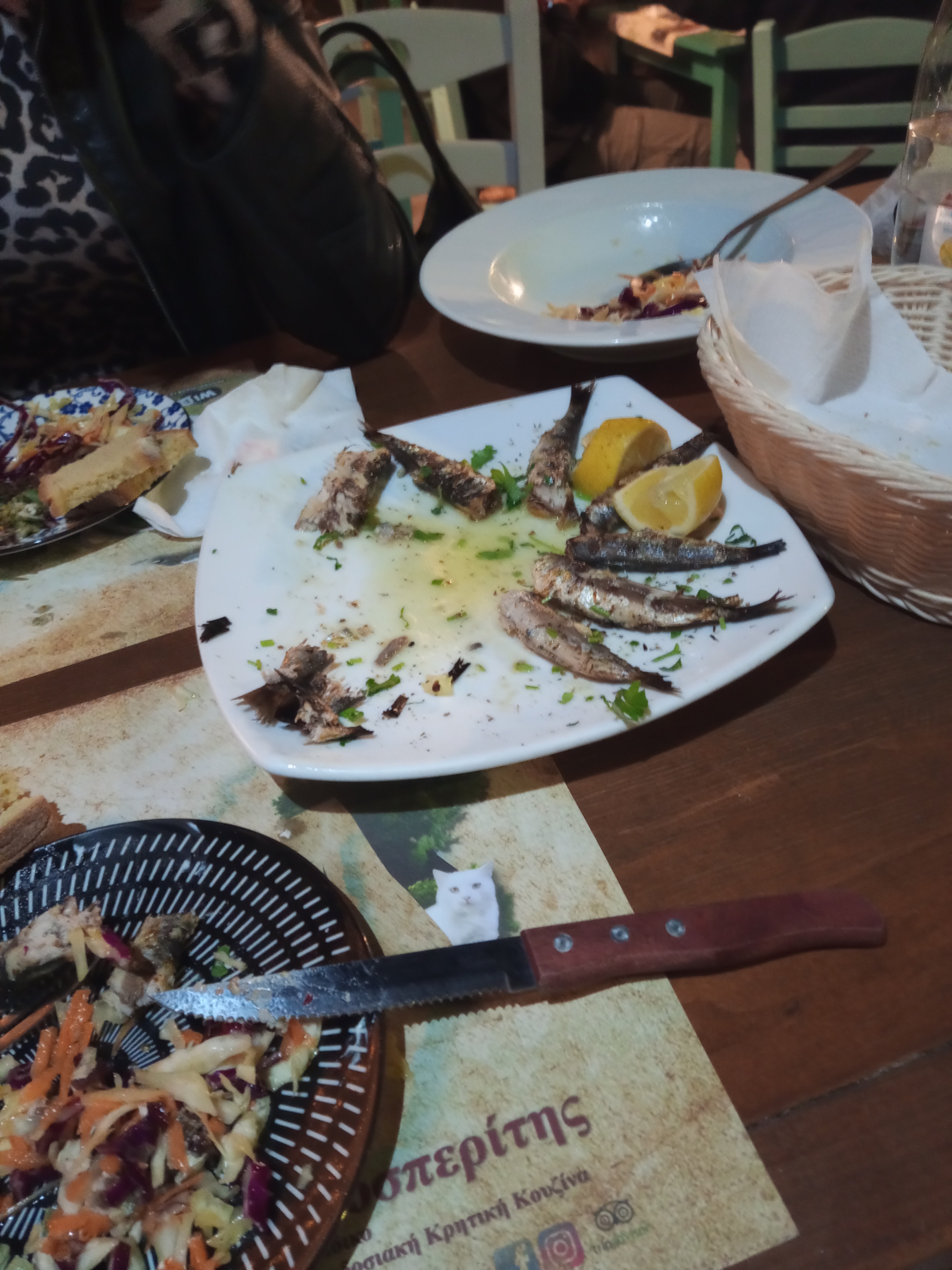
Above gallery (click on the photos for larger views): I don’t like to bang on about this, because I’m not an evangelical vegetarian. Each to his or her own I say, but that doesn’t mean I don’t believe that a lot of people shouldn’t educate themselves more on what they should and shouldn’t be eating. But there’s no denying that vegetarian (even vegan in some cases this time) food is so much more colourful than meat-based meals. We can well recommend two restaurants in particular if you’re lucky enough to be spending any time in Sitia (Shhh, OK? Keep it quiet) this year. Our absolute favourite is the Inodion, a family-run affair with impossibly friendly staff and the best presentation and portion sizes you’ll find anywhere. Their choice for veggies was outstanding and their salads TDF. In fact, on the subject of colourful meals, one night while we were eating there we had a young French couple on a nearby table gawking at our dishes in envy, as they ate their predominantly meat-based and decidedly colourless repas.
We were able to order a salad (not a basic ‘Greek’ salad, but one that contained lettuce, dried figs, walnuts, rocket, flaked Graviera cheese, onions, and a dressing that was so delicious you needed to wipe the dish clean with your bread once you’d consumed the contents), grilled mushrooms and one other dish, maybe grilled vegetables, or grilled halloumi, perhaps gigantes), add a drink (usually a half kilo of the house white, or maybe a bottle of retsina), and the food was so good and well balanced that you never needed to add condiments, and it completely filled us up. The bill rarely reached €30, so what was there to complain about?
The next restaurant that we really rate is the Limani. Here the portions are legendary and one of their best dishes is their fasolakia, which also contains cubed potato, carrots, and a few other things besides, in the delicious sauce. Their grilled mushrooms are equally as good as those of the Inodion, but theirs come sliced, whereas at the Inodion they’re whole, so it’s a different experience, and both are extremely tasty. The two restaurants are only metres from each other and we found ourselves going back to both again and again. Everywhere you go you get freebies, both at the start (mini eating olives, various ‘dips’) and at the end (slices of various cakes/tarts, halva, fresh chopped fruit, Raki or even a fruit or coffee liqueur) of the meal. Both restaurants are about the same price range and we ate ourselves full on a large salad and two ‘starter’ dishes every night. Greek salad is, of course, traditional, but since we tend to eat Greek salad at home virtually every day for lunch, a different lettuce-based salad when eating out adds variety to one’s life.
One other restaurant that deserves an honorary mention is the Aposperitis, which is next door to the Inodion. All three are right on the waterfront in the fishing harbour by the way. We ate there the first night and it was excellent too. In fact, the general standard of food at the restaurants in Sitia is very good, and the prices extremely reasonable. If you’re a bit confused by the word ‘Rakadiko’ which quite a few restaurants in this part of the world call themselves, here’s a brief explanation: The word ‘rakadiko’ in Crete means a small traditional eatery (usually a cafe or taverna) where they serve raki (or tsikoudia) and snacks. It is a place of social interaction, where people gather to drink, have a snack and chat. You could say that it is the Cretan equivalent of an ouzo bar, but with raki instead of ouzo. They usually serve traditional snacks: olives, dakos, rusk, greens, apaki, cheese pies, etc. and frequently play Cretan music (sometimes live too). That makes them sound more of a snack bar than a restaurant, but most rakadika have developed their menu into a full-blown restaurant menu these days.
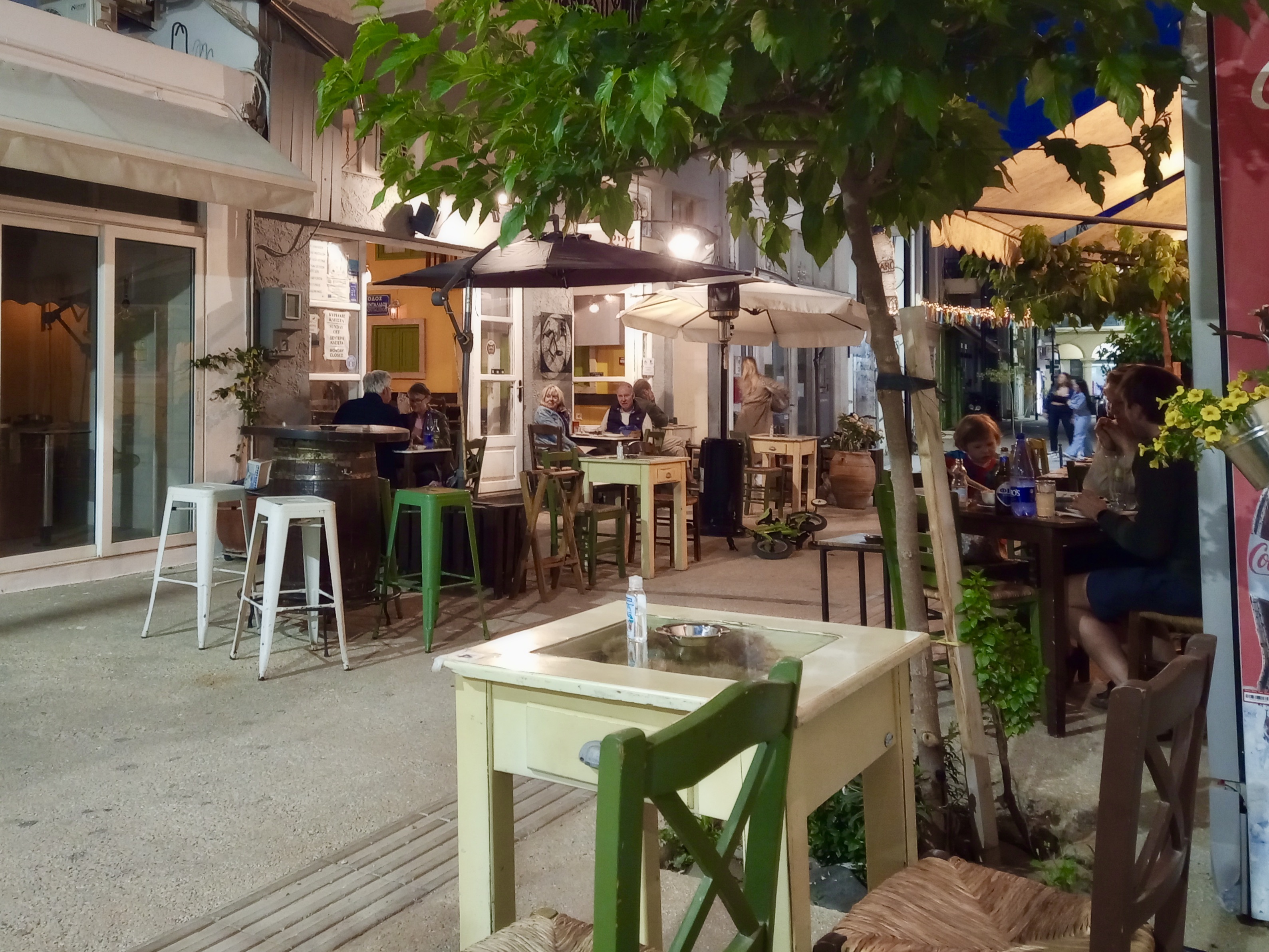
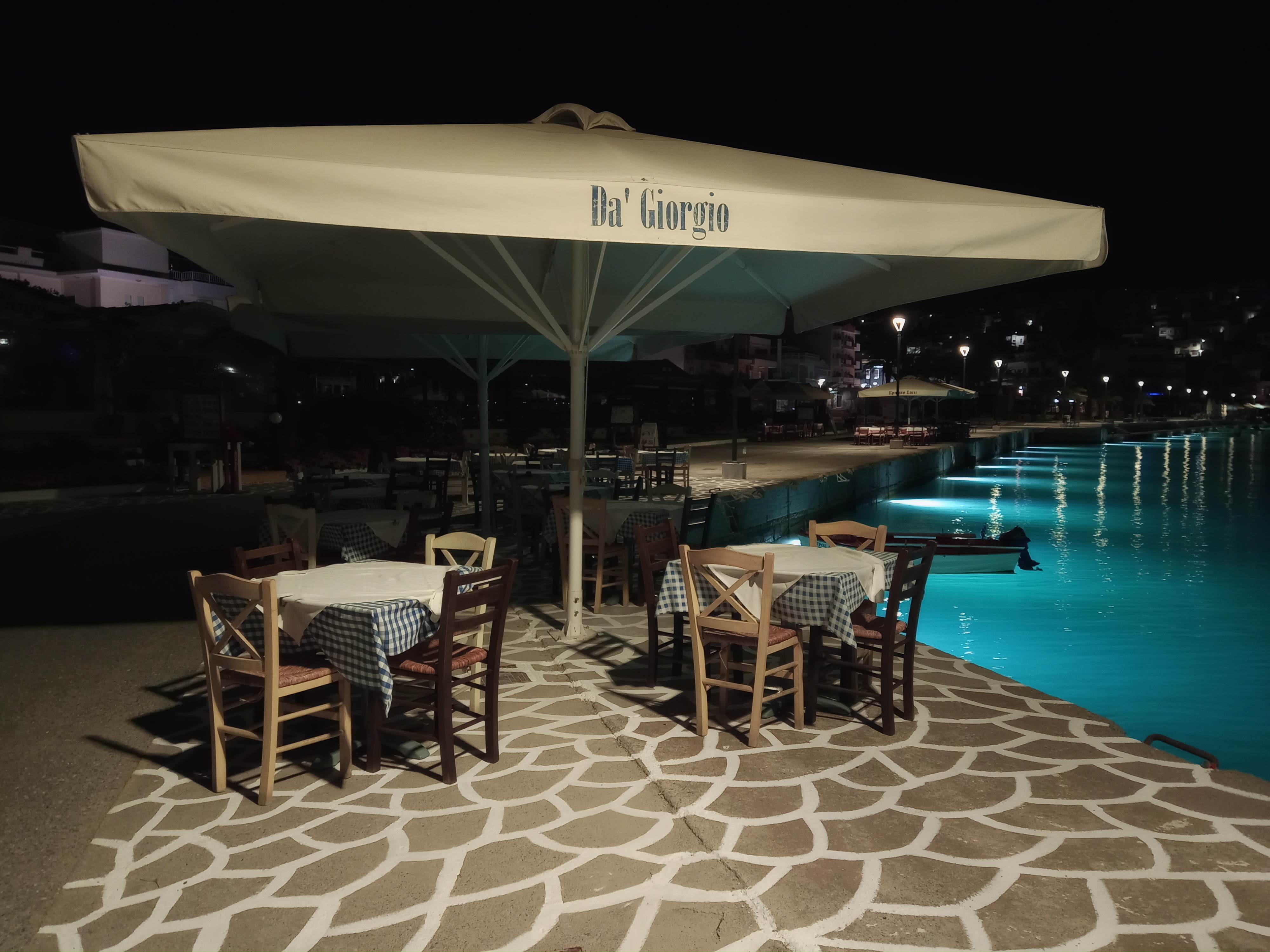
So, to finish off with, here are some restaurant and café themed photos from Sitia this year:






•
Click HERE to go to my Amazon Author Page, where you can browse and purchase all of my seventeen written works.
 Accretions