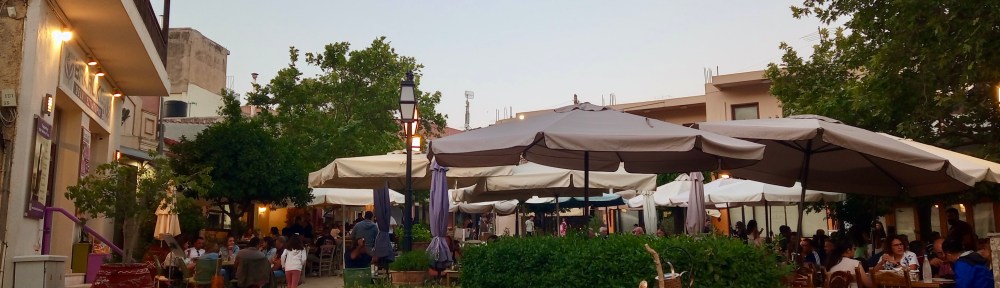

I’ve been thinking for some time about doing another post about word confusion, but still haven’t really got enough thoughts together to get on with it. Well, there is one exception, which I’ve got ready, so I’ll hit you with it. Of course, if you’re already a fluent Greek speaker you’ll not find this particularly confusing, or will you? Anyway, word similarities can get you into an awful lot of bother if you aren’t careful.
Here’s an expression that kind of illustrates what I’m trying to say: In Greek you could say the following: “Δεν υπάρχει πολύς χώρος για χορό σε αυτή τη χώρα.” Using the Roman alphabet, it reads (near enough) “Then iparkei pollees horos yia horo se afti ti hora.” The eagle-eyed among you will have spotted the word that begins ‘hor‘ three times in that sentence. Ok but, the thing is, each of those three words means something totally different. The first means ‘room/space,’ the second ‘dance/dancing’ and the third means ‘country.’ Great, eh? So the sentence actually says: “There’s not much room for dancing in this country,” but if you get any of the ‘horos/horas’ mixed up, including the ‘tonos‘ (the accent over a vowel that indicates which syllable to stress) then you’ll make no sense at all.
I find I have a similar problem when it comes to paper, card, or a map. (Oops, so I do have another example, after all). Here’s a sentence that mentions all three: “Δώσε μου ένα κομμάτι χαρτί, δώσε μου την κάρτα και μετά θα σου δείξω πού βρισκόμαστε στον χάρτη.” Phonetically, using the Roman alphabet, it reads: “Thosse mou ena commatti chartie, thosse mou tin karta ke metta tha sou theixo poo brisko-maste ston hartee.” That reads in English: “Give me a piece of paper, hand me the card, and then I’ll show you where we are on the map.” Can I remember which is which when it comes to paper, card or maps? No chance, plus you have to remember the gender of nouns too, and in Greek you don’t only have masculine and feminine, but you also have neuter nouns as well. Oh joy!
Changing the subject just a tad, I can’t remember if I told you this little anecdote, which is entirely true by the way. A young woman went up to a periptero (kiosk) to buy something small. She picked it up, and placed it on the concave perspex dish where the person working inside places your change. As yet, she hadn’t spoken a word. The bloke in the kiosk said, in Greek, “Two Euros please.” I can’t remember what she was buying, but for the sake of the story, let’s say it was some chewing gum. When she failed to understand what the man had said, she asked, “I’m sorry, but do you speak English?”
“Yes, of course,” replied the kiosk man, “That will be four Euros please.” The moral of the story? If you don’t speak at least a rudimentary bit of the language, prepare to be ripped off. Don’t get me wrong, I love the Greek people per se, and our neighbours in the village here are simply wonderful to us, but there is often a definite tendency to ‘get away with’ it if there’s a buck to be made. Stems from all those years when everything was done in cash and the people in general were deeply suspicious of things like bank accounts I suppose.
Oh, I just thought of another word confusion. The Greek word for a swimming costume is ‘το μαγιό,’ which reads ‘to magioh,’ or ‘the swimming costume.’ It applies equally to male or female costumes, unless you use the word Bikini, that is. But then, I prefer a one-piece myself, so I don’t use the word. As for a ‘mankini,’ give me a break! If, however you want to do some cooking, the verb is ‘μαγείρεμα.’ [magierima] OK, so it’s a bit longer, but you can see the similarity, right? I always end up saying that I’m going to wear my cooking, when I mean to say my swimming shorts. Hey ho, c’est la vie. Actually, the Greek word for ‘magician’ is even closer, it’s ‘ένας μάγος,’ which reads ‘enas ma’gos.’ I’m sure I’ve probably been into a store to buy a new pair of trunks and asked to try one on. Oops.
Here are some recent photos…


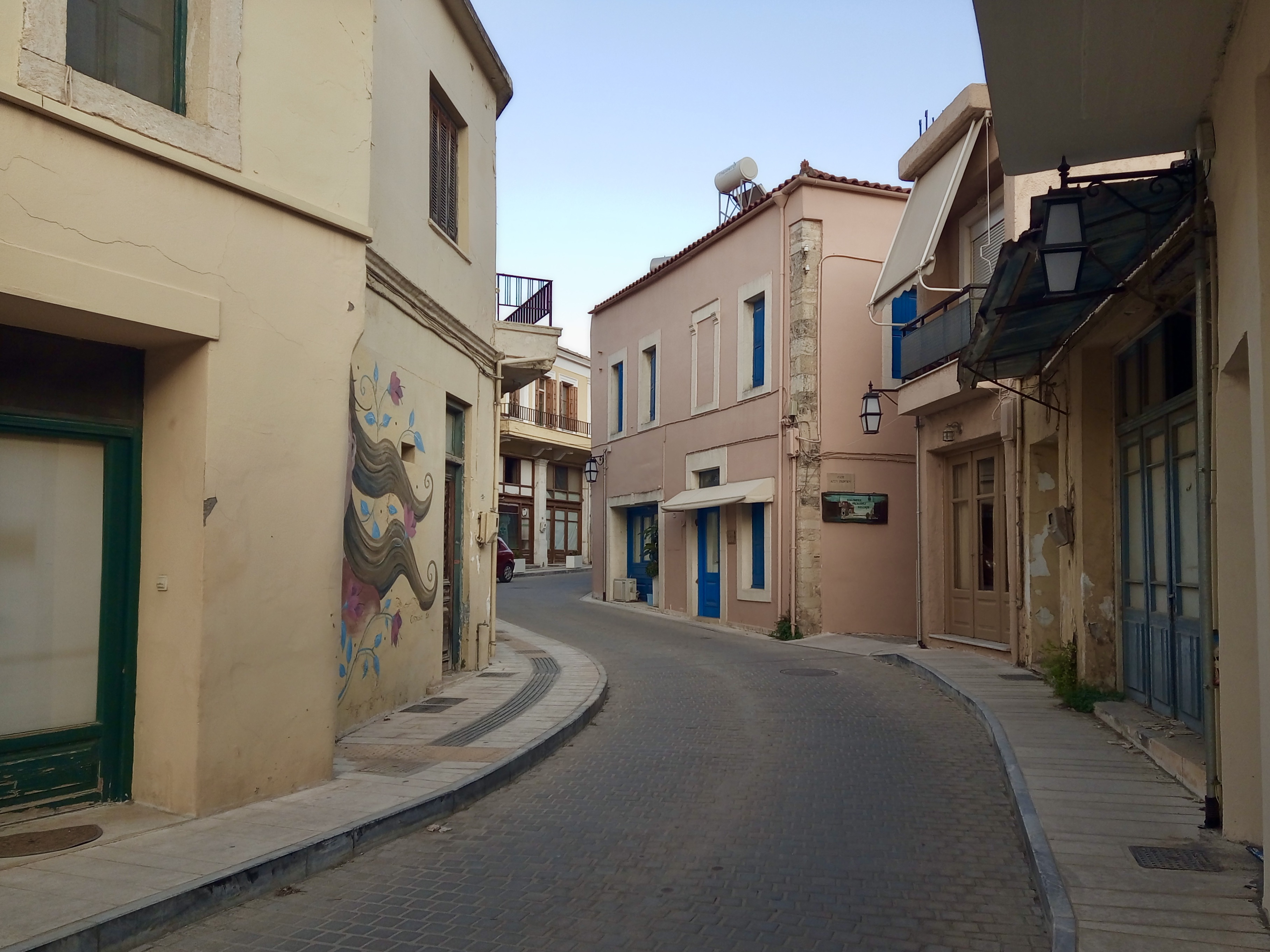

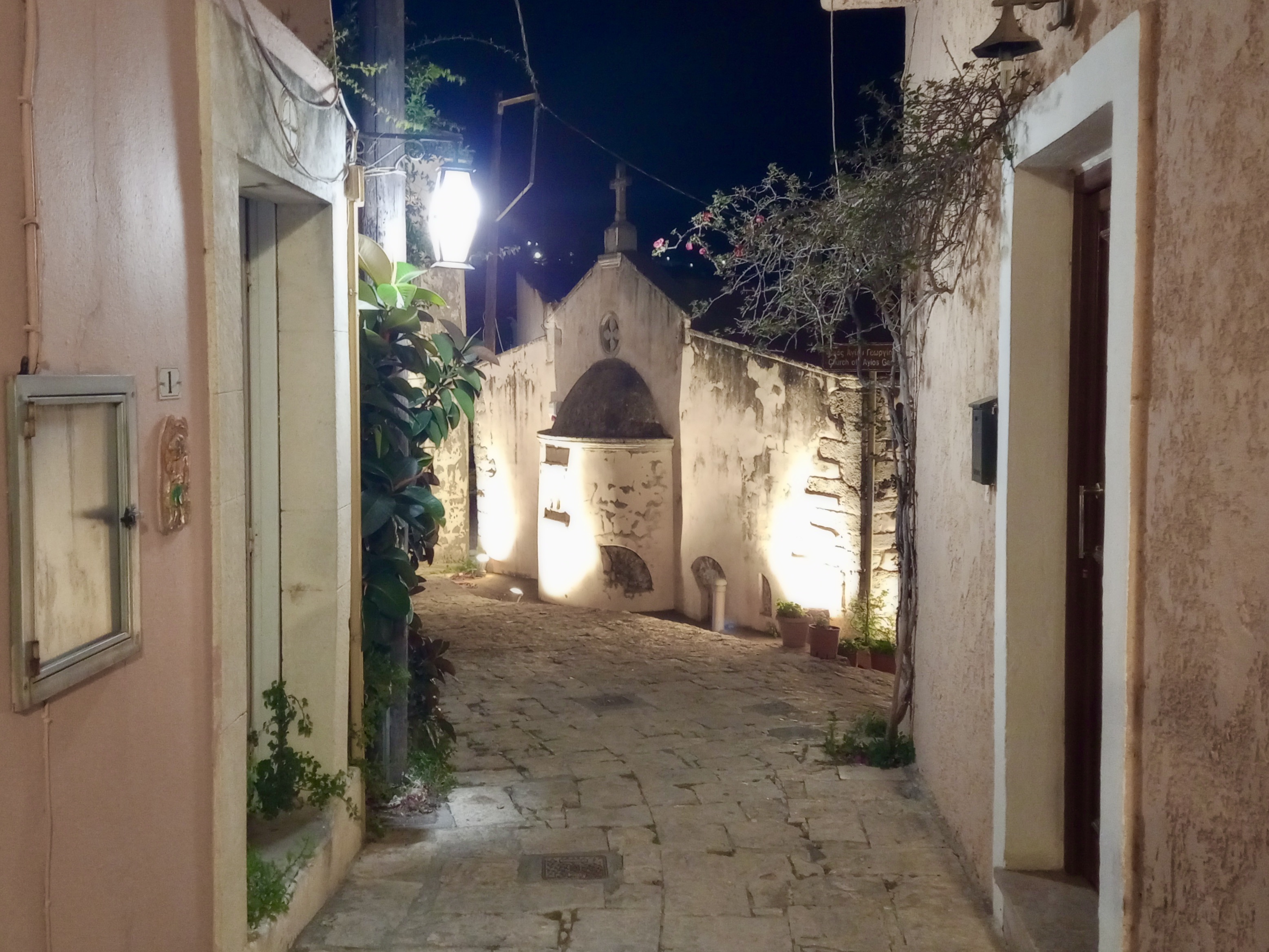

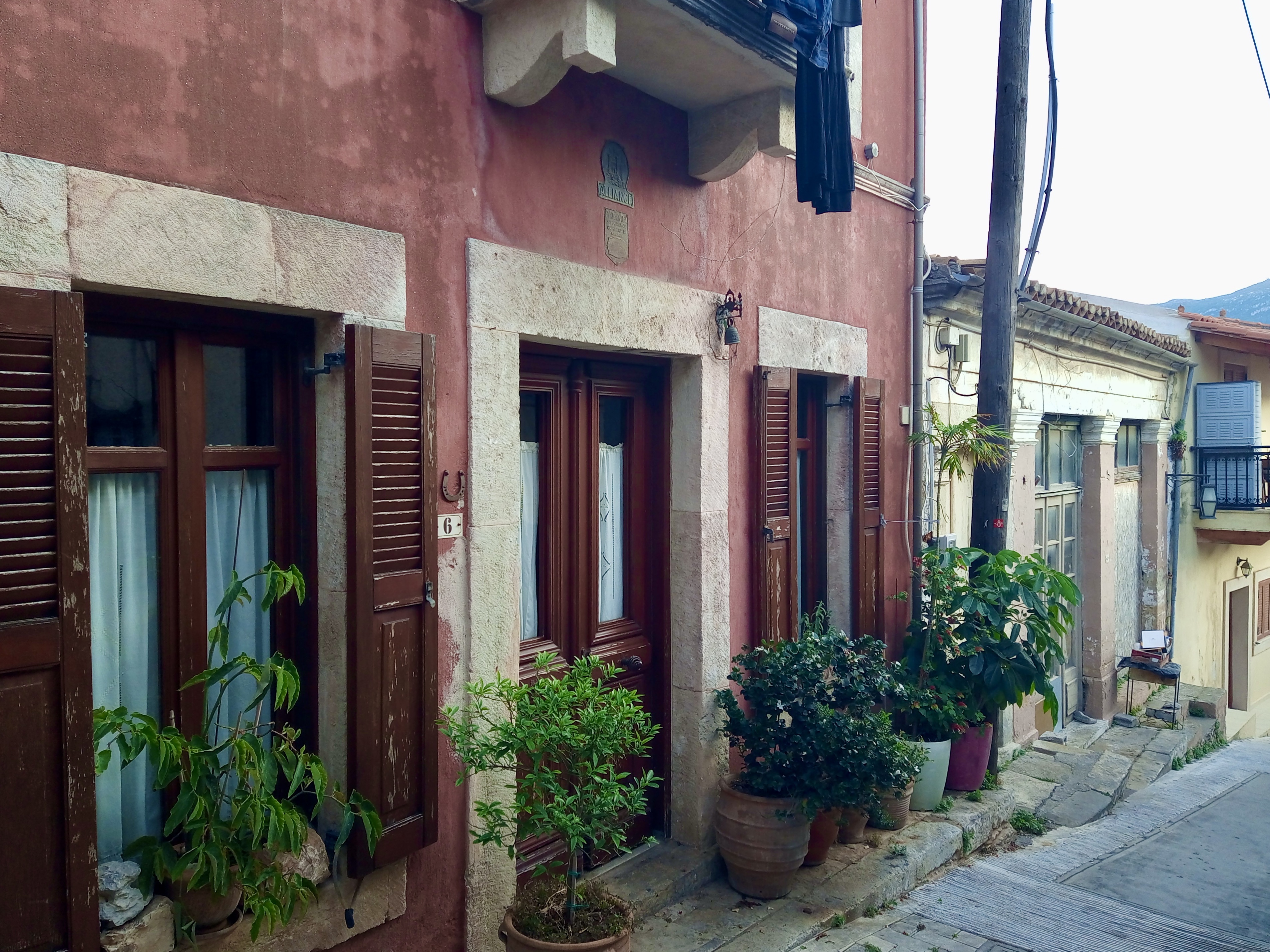


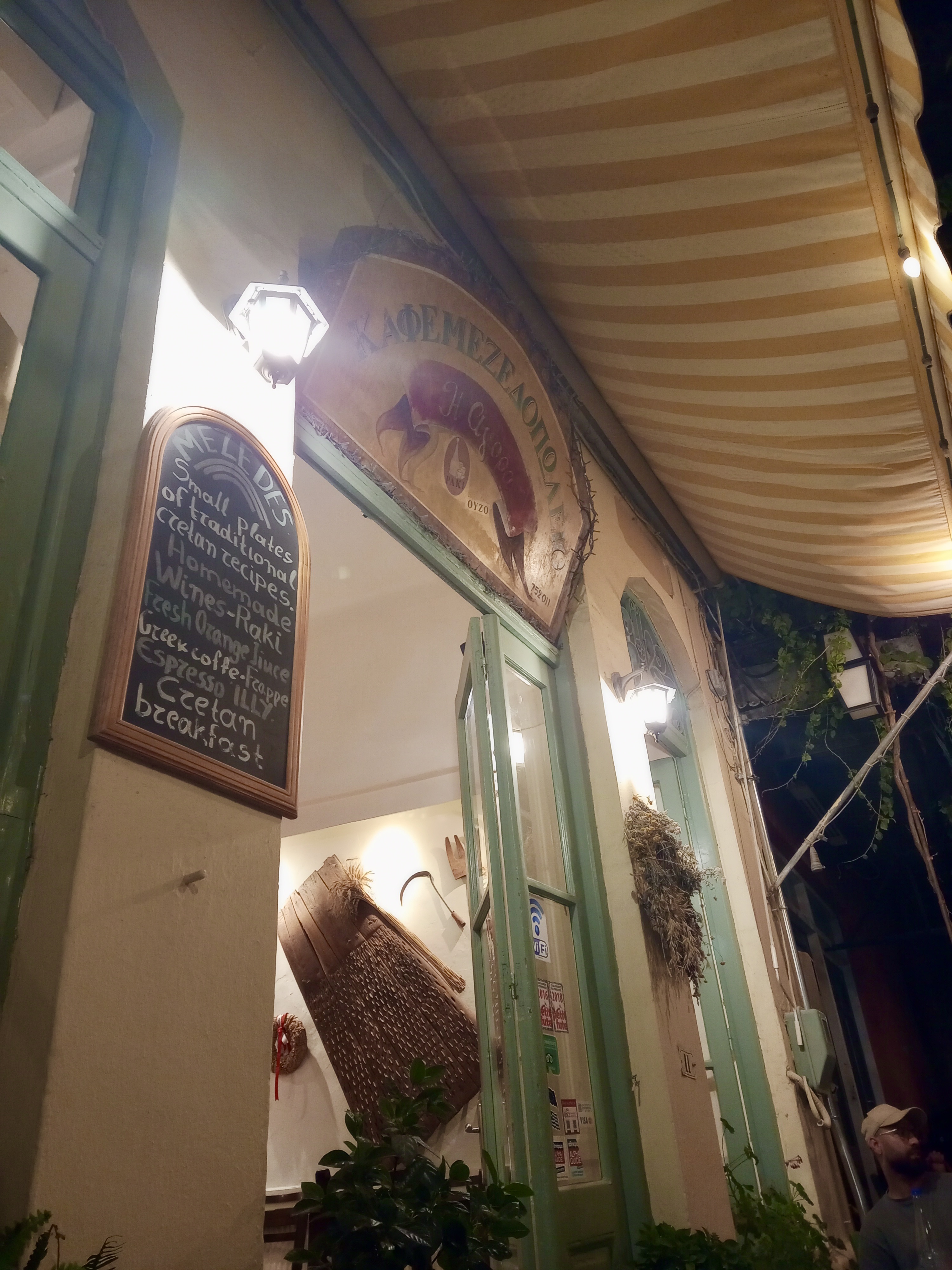
Above: Some evening shots from our recent short break in Archanes. We were there two years ago too, and wanted to go back, since it’s a lovely place to wander around and the square is a great place to eat during the evening. Here’s one more (below), as the nice distressed-looking sign on the wall did make me smile…
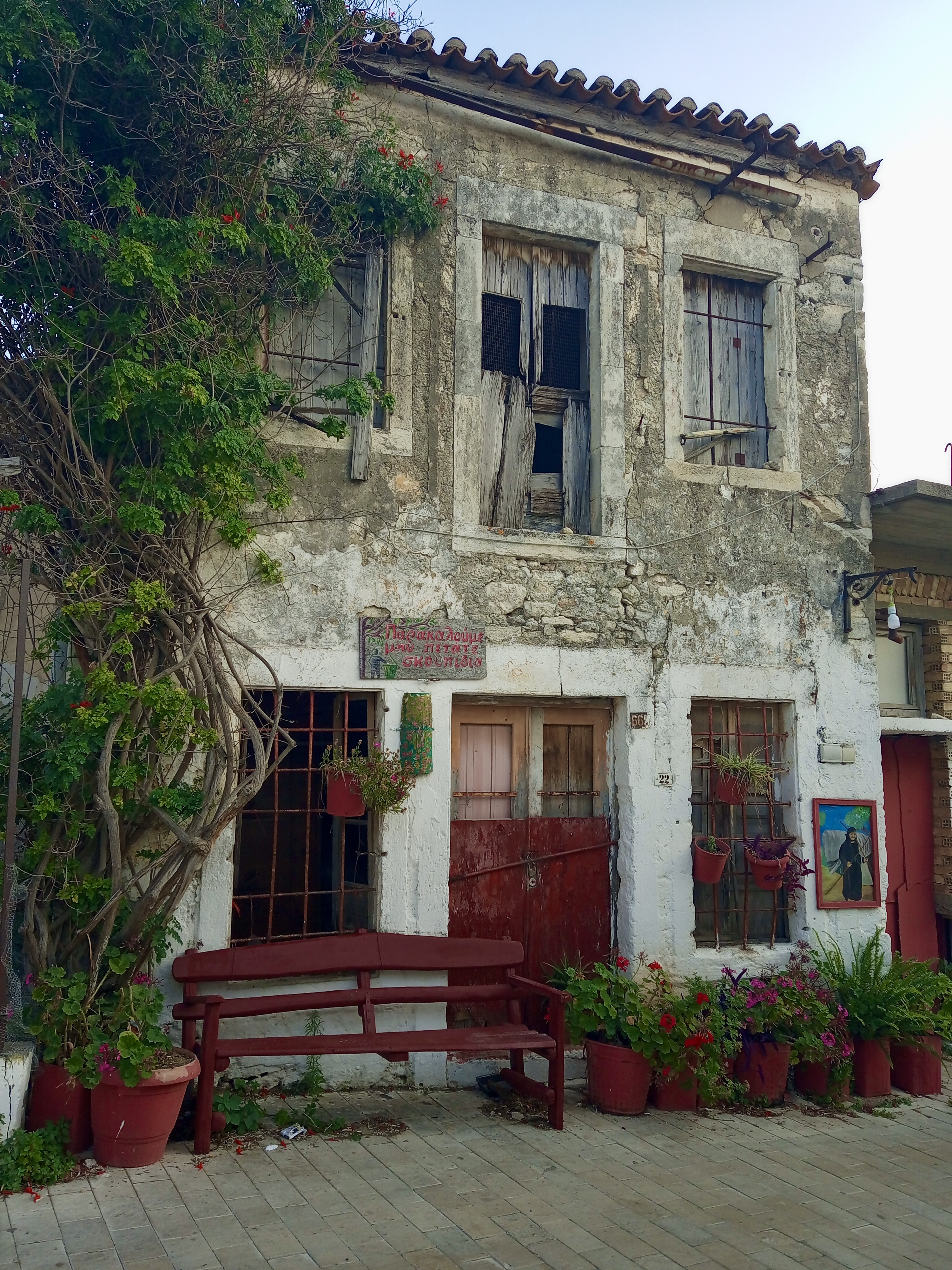
This house is apparently now unoccupied, but looks very fetching and traditional. That sign above the door and window, though, reads: “Παρακαλούμε μην πετάτε σκουπίδια,’ which translates as: “Please don’t deposit your rubbish.” Aaah, eh?
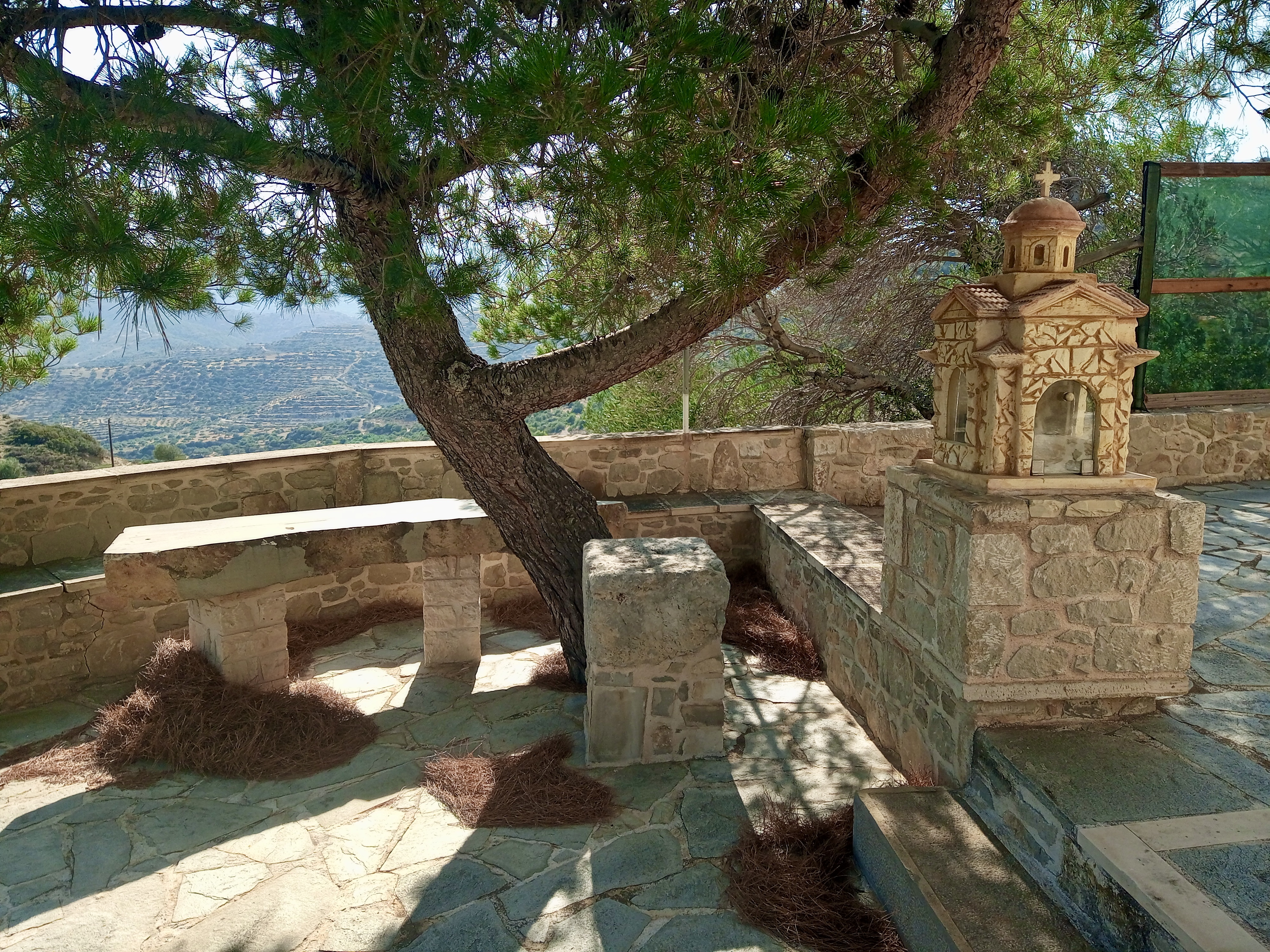
A couple more from this area…

•
Click HERE to go to my Amazon Author Page, where you can browse and purchase all of my seventeen written works.
 Accretions