

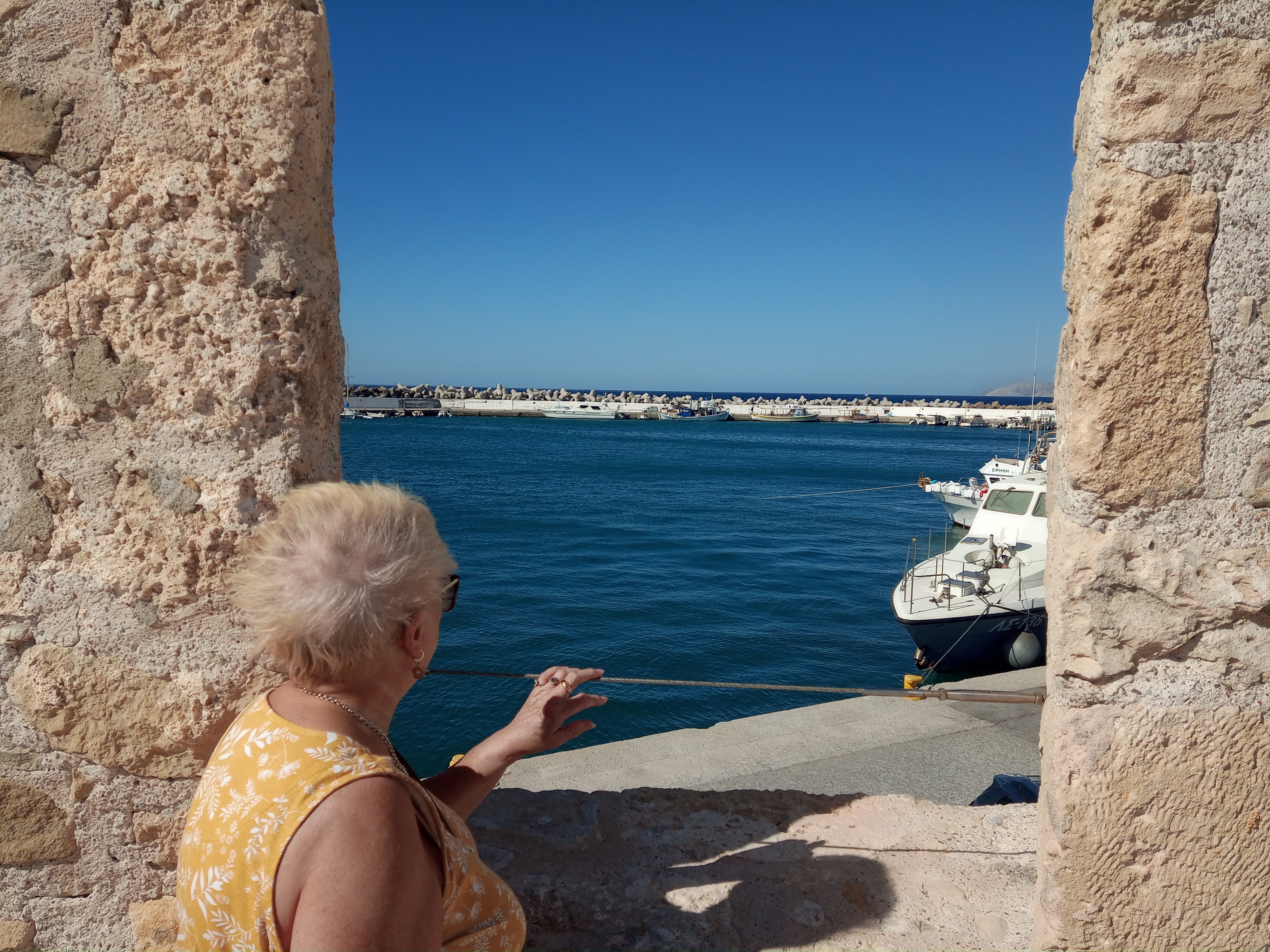
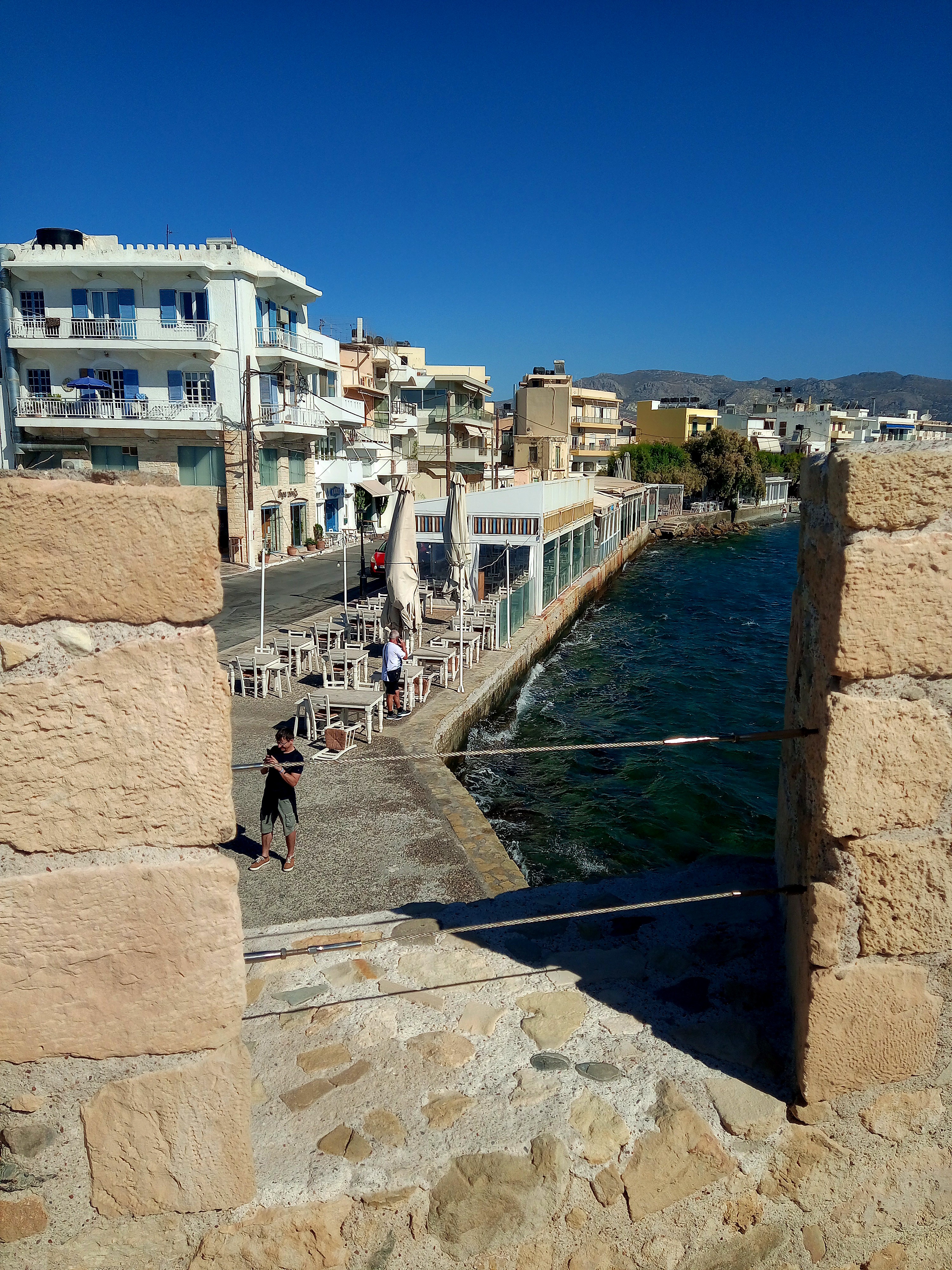
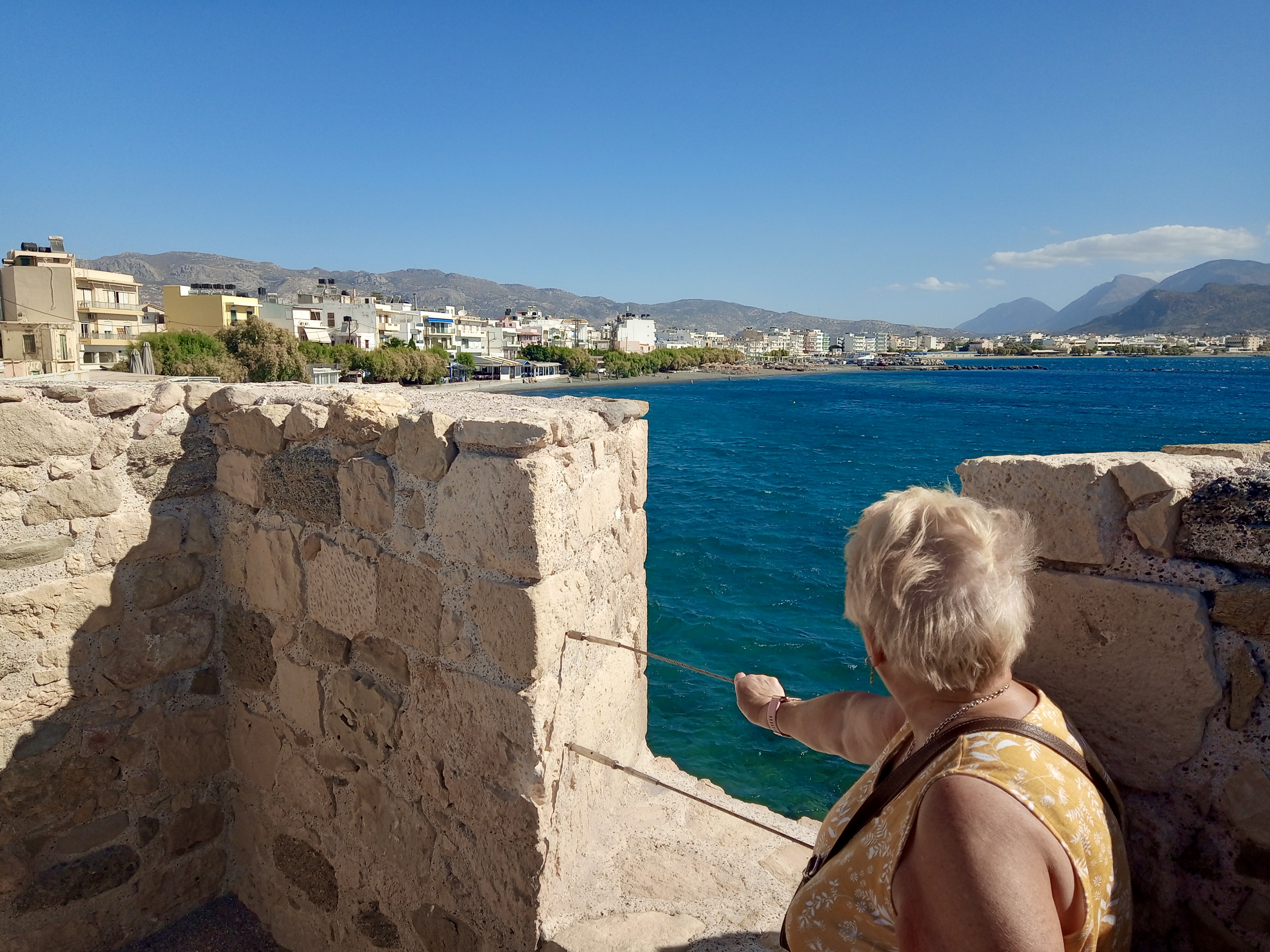
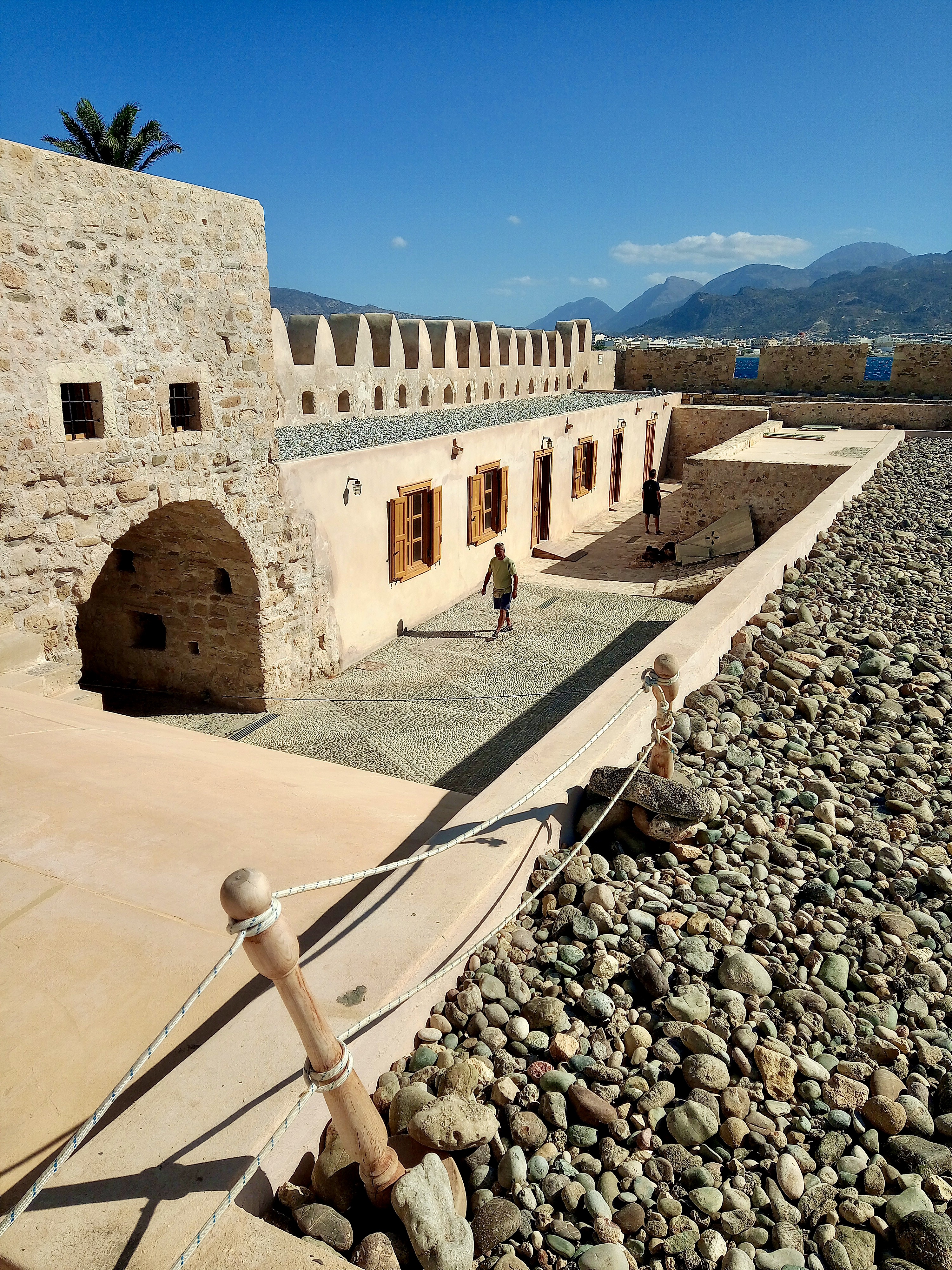
Well, my sister’s visit is drawing to a close, but I didn’t want her to go home without first seeing the beautiful job that had been done to renovate the fortress overlooking the harbour, so last Friday morning we eventually got there and took a few photos to prove it. It truly amazes me that the admission is still free. I can’t imagine such an historical monument in the UK being open to the public without there being an entrance fee and, to be honest, as long as it’s not extortionate, it makes a bit of sense. If they were to ask a mere one or two Euros I think that most people would be happy to fork out, if we want such structures to be preserved for posterity that is.
Here’s a potted history of the Fortress…
The harbour fortress at Ierapetra is called Kales/Fort Kalés. This modestly sized rectangular fortress sits on the harbour entrance and is the best-preserved fortification in an urban centre on Crete’s southern coast. Its construction dates to the Venetian period (broadly 13th–15th centuries) and was built to protect the port and town. Traditional Venetian fort-building shaped its rectangular layout. The fort suffered serious damage during the 1508 earthquake and also from Ottoman raids, and was altered during the Ottoman period (1645–1898) when repairs and modifications changed parts of its exterior and interior fabric. Its purpose was defensive control of the entrance to the harbour (preventing enemy ships from invading and protecting local trade) and nowadays, because it survives near the town centre, it’s a local historic monument illustrating Venetian/Ottoman military presence in eastern Crete. Today the fortress is an archaeological site that’s viewed as an important part of the town’s cultural heritage. Here are a few more of the photos we took last Friday. The place is very photogenic, I must say…


Anyway, I called this post ‘a quick swish a day keeps the scale away’ because I have a tip for anyone who’s resident in Greece and is fed up with how quickly their chrome bathroom fittings lose their lustre due to the build-up of limescale owing to the hardness of the water. Now, before I share this little piece of wisdom, apologies to anyone who already knows this OK? But we lived on Rhodes for a few years before we learned it from some fellow Brits who’d lived there a little longer than we had. Using strong chemical cleaners to restore the shine to your bathroom taps may be the easy option, but believe me it’s tragic for the environment, as it all goes down the plug-hole and eventually, one way or another, either ends up coming out of someone else’s tap, or in the sea, where there is already enough environmental damage done by us stupid humans to fill an encyclopaedia with depressing evidence. Yvonne and I are proud of the fact that the only cleaners we use in our bathroom are citric acid crystals, lemon juice or white vinegar.
But that wasn’t the case a few years ago when, owing to complete desperation, we resorted to buying that awful Cillit Bang stuff or something very similar, in order to get the limescale off our bathroom and kitchen chrome. One day we were discussing this with some neighbours on Rhodes when I asked to use their bathroom. I was amazed at how shiny their taps were, in view of the fact that their house was a couple of years older than ours. So I asked them how they managed to keep them so clean and shiny. You know what their answer was? And I still kick myself that it’s really so simple (but then, everything always is when you already know the answer), “Every time we use the lavatory, or the shower, or the sink, we simply wipe the fittings over with a dry towel before leaving the room. The limescale builds up when the water droplets that you leave all over the surface of the chrome evaporate in the heat, leaving the salts behind to make the surface become dull. Wipe the surface immediately and the problem disappears, et voila.”
I know, I know, some of you out there in internet land will be tut, tutting about how stupid we’d been. Yet equally, I bet there will be some out there who’ll be saying, “Well blow me down with a wet fart, but I didn’t know that!”

Above: No chemicals, no expense either, just a swish with a towel and, hey presto, no limescale.
No, it’s OK, no need to thank me. Here are some more photos, some of which are old, and some brand, spanking new:

Above: taken from the mountain road from Kritsa over to Prina, passing through the village of Kroustas along the way.


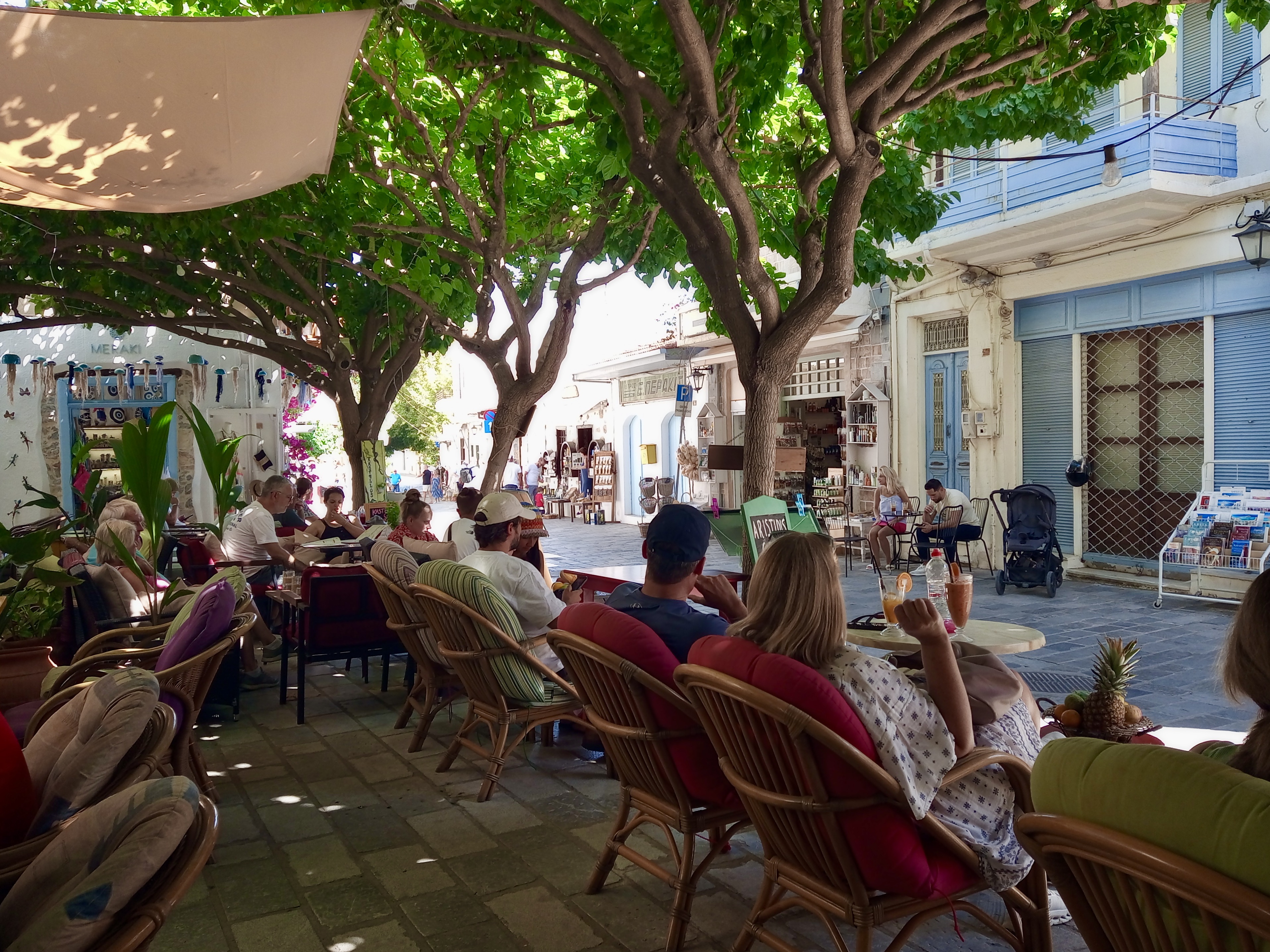
Above gallery: A few photos taken in Kritsa village, which is maybe a little too touristy for my liking, but is nevertheless worth a visit for all that, as it is a beautiful village. In fact this is a good time of the year to go, because it’s far less crowded than it would be during July and August. Just in case there is anyone out there looking at that photo of the statue of the young village girl and wondering who she is, she’s Kristotopoula, which is actually her nickname. If you want to know more about her, then the book Kritsotopoula: Girl Of Kritsa is a must. Written as a novel, but telling the true story of that brave young girl, it’s a great and also instructive Greek read.
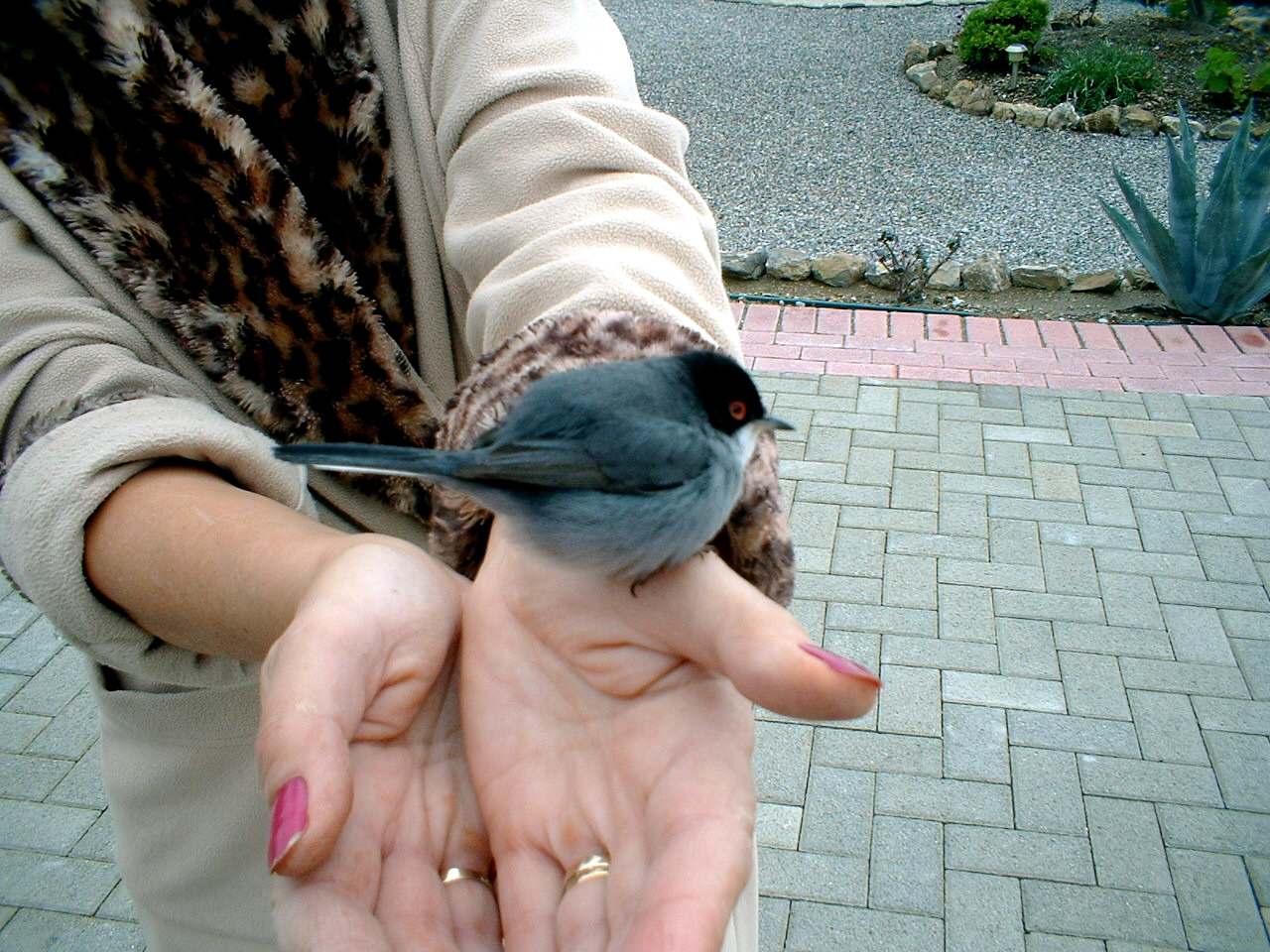
Above: Couldn’t resist chucking this one in again. It was taken many years back at our home on Rhodes. A tiny Sardinian Warbler flew into the glass of our French windows and stunned itself. He’s a male, as they’re the ones with the black heads. Females have brown heads and slightly duller plumage. We picked him up senseless from the path, smoothed his little head and body until he recovered his senses, then watched as he began to realise where he was sitting, whereupon he soon took off, none the worse for his ordeal.


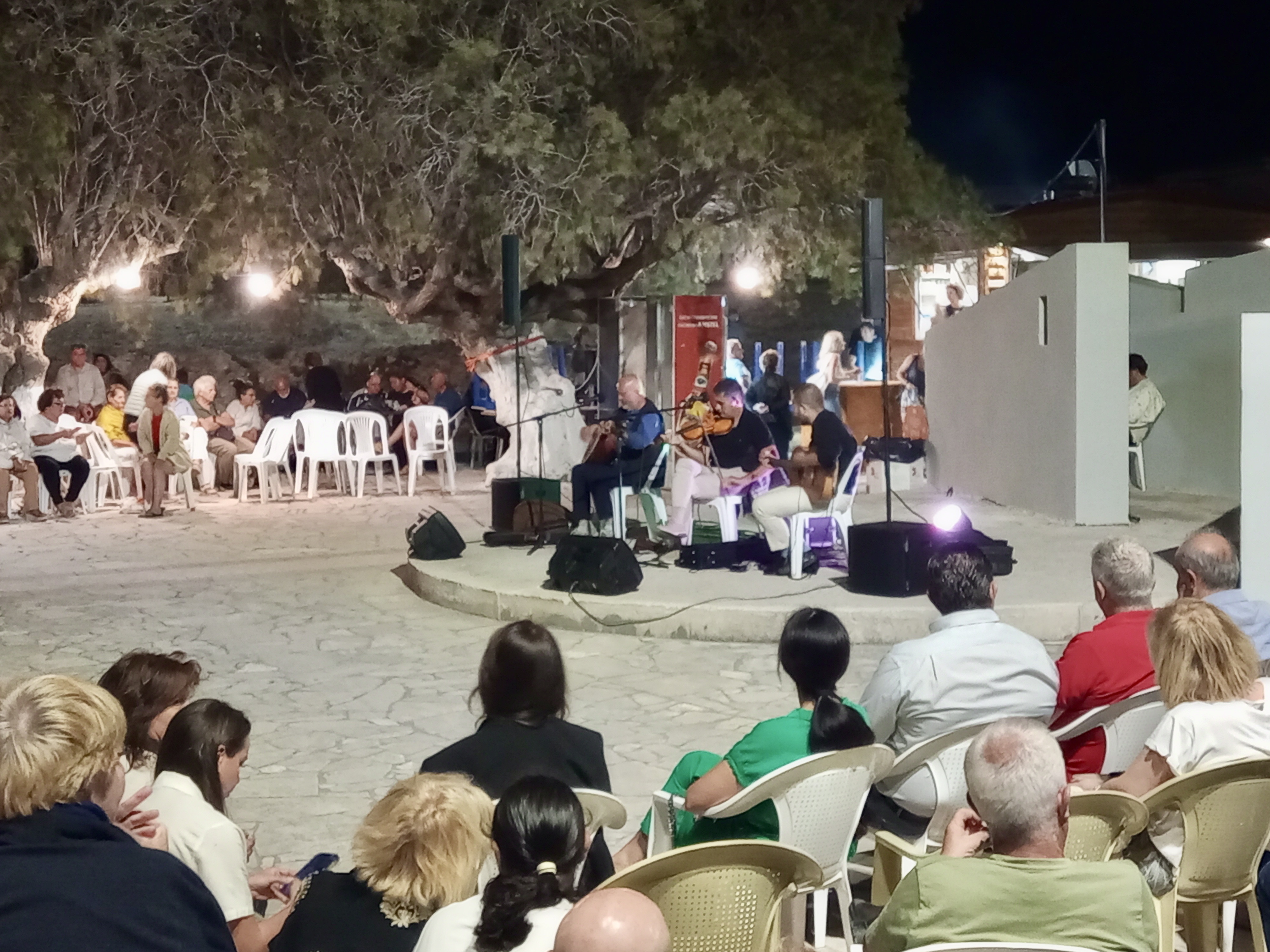
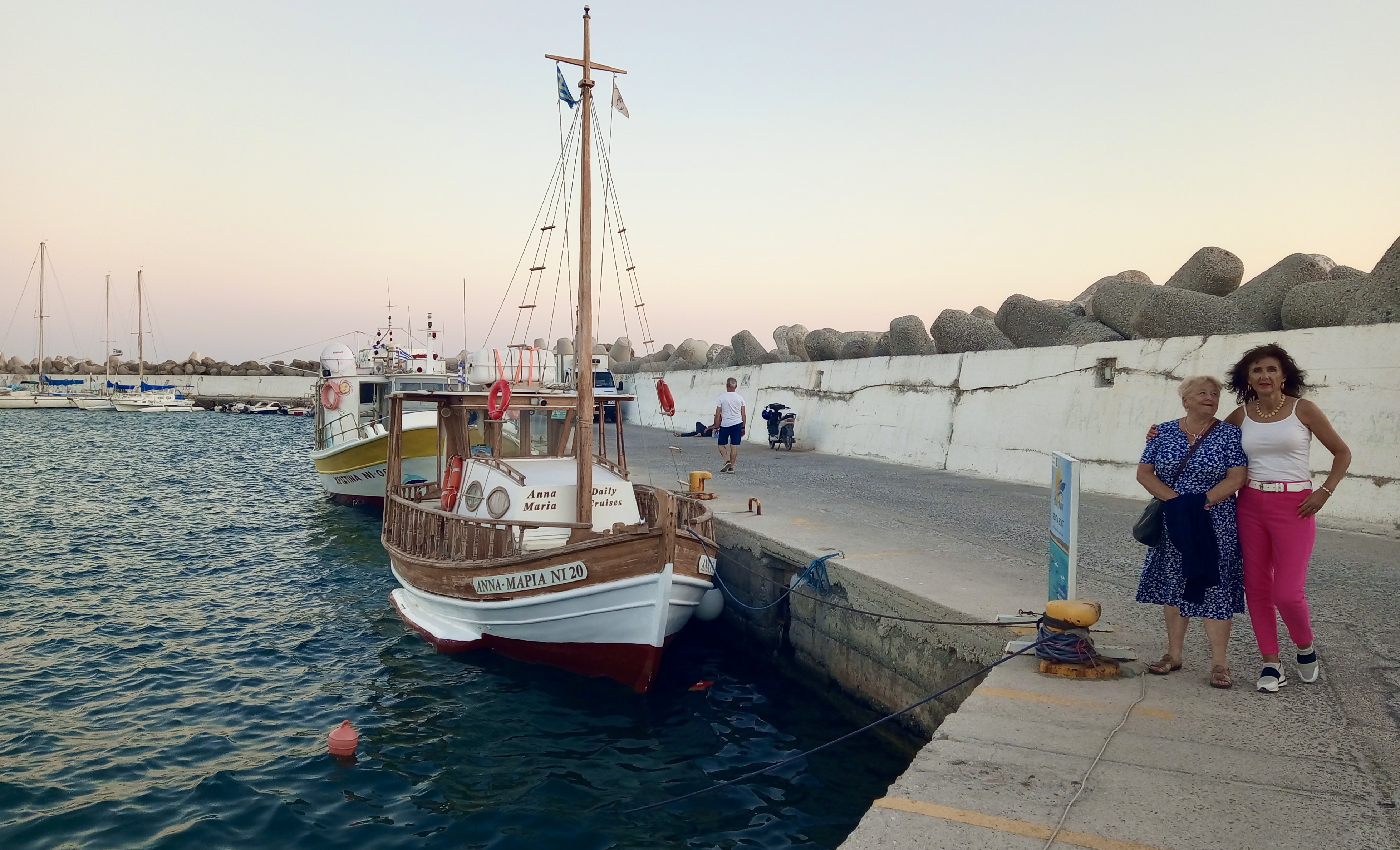
Above: A few more from around the village and town. The harbour and concert ones were taken early evening, which is why they’re not so ‘brilliant’ colour-wise.
•
Click HERE to go to my Amazon Author Page, where you can browse and purchase all of my seventeen written works.
 Accretions