Do yourself a favour…

… And be sure to read An Aegean Odyssey, by Kathryn Gauci

Here’s my personal review:

I’ve just finished Kathryn Gauci’s very personal memoir, and I’m slightly annoyed with her because it’s not longer. I’ve been so immersed in her self-awakening solo trip back to Greece after many years away that I didn’t want it to end so soon. I suppose that you’ll probably get more out of this book if, like me, you’re a hopeless Grecophile, but if you like travel writing in general, you’d better not pass this one up anyway.

Kathryn wasn’t sure she wanted to make this trip alone, since she had a perfectly good marriage, but, owing to circumstances, she went ahead anyway. Right at the very end of the book she makes a really valid point about travelling solo that I’ve often thought too, although never been able to put it into words. When you experience something on your own, it’s an entirely different thing from how it would be if accompanied by someone else, in this case, her husband. You meet people, experience feelings and emotions, see places in ways that wouldn’t be the same with someone beside you. It’s not better, it’s not worse, it’s simply different, but in such a way that you realise how much it enriches your life. If you can do it, then it’s 100% worthwhile.

Kathryn goes to places (islands, mainly) many of which I know well myself, so maybe that too made her writings resonate more deeply with me. But if you’ve any experience at all of Greek people and culture, then surely you’ll also find this work totally absorbing. She has a wonderful gift for evoking in you mental pictures of the places she’s describing, the people she’s interacting with.

Kathryn Gauci is a living treasure that all avid book readers would do well to appreciate. I’ve already gushed about this book on previous posts, but, now I’ve finished it, here are a few more quotes that especially resonated with me:

Tactility, expressions of love and friendship that are not all sexual.” Here she talks about the tendency of the Greeks, especially of close friends, even of the same sex, to walk along the street with arms around each other. It’s affection, pure and simple, and it’s indicative of a warmth that we Brits as a rule do not possess and has nothing to do with their sexual orientation.

“‘Unfortunately,’ Sotiris said, ‘many of the package tourists are not encouraged to come to the theatre. There is now a growing number of hotels who try to keep their guests entertained at the hotel in order to make them spend their money there. All-you-can-eat buffets, happy hours, and live entertainment by mediocre pop musicians have all added to the decline in audiences experiencing the real Greece.” This comment by Sotiris, a struggling Greek businessman, well expresses the locals’ view of the awful and meteoric increase in ‘all inclusive’ resorts these past few years. And this is from twenty years ago too, when ‘all Inclusive’ was still in its infancy. If you want to experience the ‘Real Greece,’ then you’re never going to find it in these altars to mass tourism that only benefit rich tour operators, hotel chains and owners.

“The moonlight has soothed my soul and energised my body. It is a moment when I truly understand that there is so much more to life than material gain. Nature in all its glory will always be with us, everywhere and for everyone, and we can all have a ringside seat if only we bother to look.” Kathryn’s on the tiny island of Karpathos when she writes this. How we humans so often fail to understand what truly brings contentment and peace of mind. If you’re in a small village on a hillside in Greece, and you actually take a moment to pause and imbibe the environment around you, then you may just crack it.

“The sea is already a deep blue-green, the surrounding mountains are bathed in a soft haze, and the air is humid. The perspiration is already dripping from my body. This is not typical Greek weather, which is normally a dry heat.” I so identified with this. Although the moment she describes took place twenty years ago, it’s indicative of a change in climate that’s affecting Greece, just like everywhere else, more and more with the passing years. I’ve been coming to this country since 1977, and most of my visits before we moved here in 2005 were made in either June or September/October. The depth of blue in the sky at that time of the year (and she writes this comment about the month of October) is impossibly vivid. You’d see a blue that we never ever saw in the UK. The reason for this has been the dry atmosphere, pure and simple. You could be very, very hot here, yet not perspire too much. In actuality, heat makes us perspire commensurately, but a dry heat means that our sweat evaporates and thus we don’t feel sticky. If the atmosphere’s humid then the sweat remains on our skin and doesn’t evaporate so easily, thus making us feel uncomfortably ‘damp.’ A humid atmosphere also makes the sky’s blue more milky. This past two decades there has been much more weather like this. So-called experts have been warning us for a long time about the possibility of rising sea levels owing to melting polar ice caps. We haven’t seen the sea level rise anything like to the extent that some had predicted, so where has all the extra water gone? In my humble opinion, it’s all around us, it’s in the atmosphere, making it more humid more often.

“The mental paralysis that creeps upon us in the modern industrial world is like a cancer. Achievement is measured by material possessions and commercial success. Like the tide that slowly ebbs away, a more spiritual and meaningful life has taken its place during these last weeks.”  Here Kathryn expresses a view about the healing nature of her Aegean Odyssey. If you immerse yourself in the ‘Real Greece,’ that is to say the little out-of-the-way tavernas and kafeneia that are frequented more by locals than by the tourist hordes, if you go up into the mountains and forests and allow the environment to seep into your psyche, if you engage in conversation with a little old lady all dressed in black, who’ll proffer you a sprig of basil, or maybe a Greek coffee if you’ll sit with her awhile, then your appreciation for what truly matters gradually and imperceptibly changes for the better. 

If you take the time to read Kathryn’s deeply personal solo odyssey, then even through its pages you’ll probably become more mellow, more able to appreciate what’s truly important in this life. So much has been said and written about why Greece is unique. If you want to understand why, reading this wonderful book will go a long way towards helping you find the answer.

Now for a few of my own photos…

Above: My late and much missed mother-in-law, Lela, on an Athens doorstep not long after the Second World War.

Above: A moody shot in the village of Meseleri, the next one about 5km up the road from us.
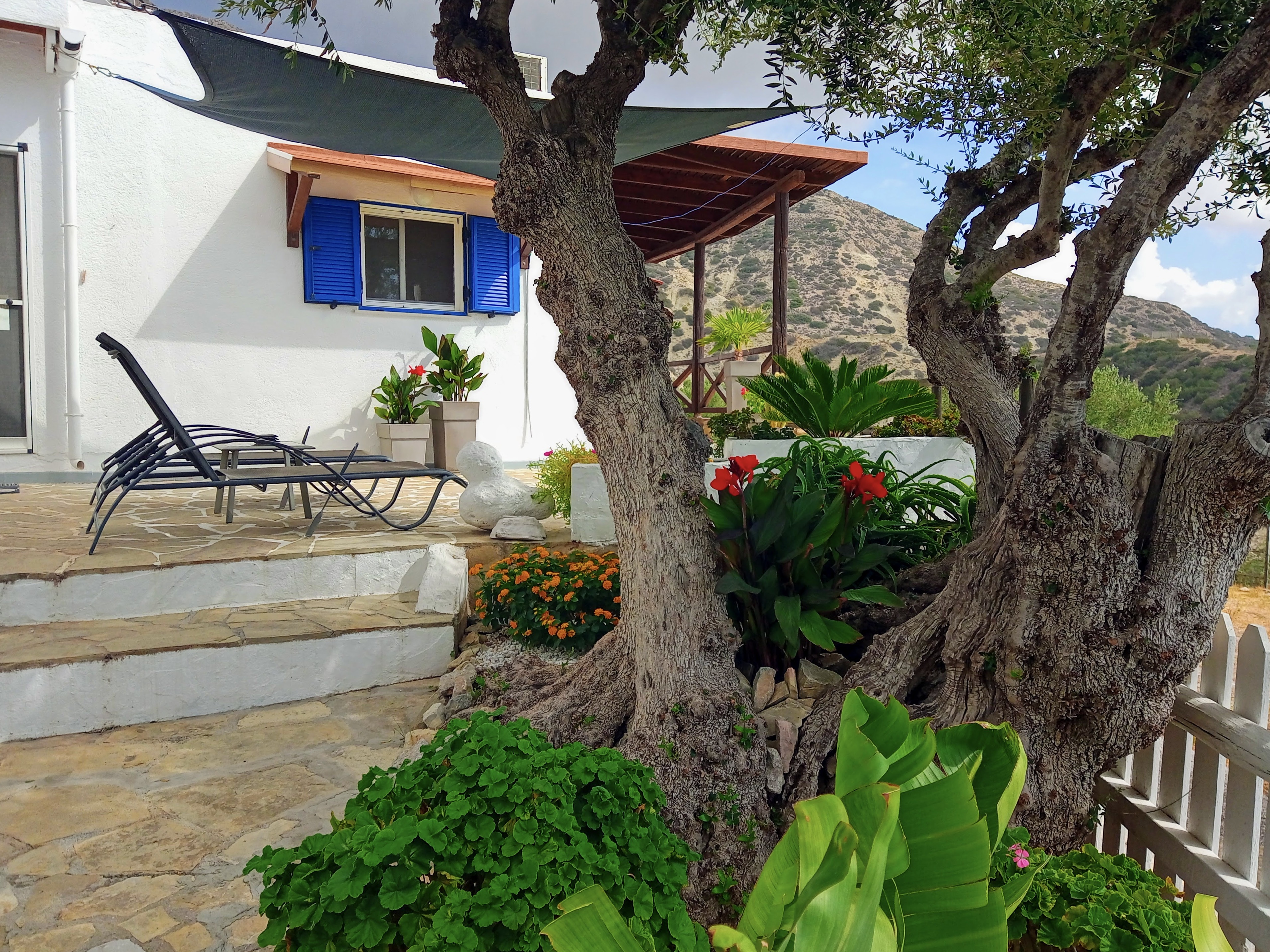
Above gallery: ‘Filling the hole in the bole’ of one of two ancient olive trees in the lower garden. That tree’s trunk is split so completely that it almost looks like two trees beside each other, although it is one rootstock. The gap between the two trunks has long looked a bit bereft to us, so when we split the canas in one of our pots beside the house recently, we first filled the ‘hole in the bole’ with a large sack of compost, then replanted the cana that we’d taken out of the overcrowded pot there. It’s already settled in well and is producing new flowers. A result!

Above gallery: After a wonderful couple of hours on the town beach on Sunday, we repaired to the Konaki taverna for lunch. It has to be said that at this time of the year the climate difference between Crete and the UK is especially noticeable!

Click HERE to go to my Amazon Author Page, where you can browse and purchase all of my seventeen written works.
A word you can’t translate

Philotimo is a cornerstone of Greek culture that embodies a complex set of virtues that are almost impossible to translate with a single word. While literally meaning “love of honor,” its true significance extends far beyond that phrase to encompass a deep sense of dignity, integrity, and selflessness. For Greeks, it is a way of life that emphasizes treating others with kindness and respect. The thing is, there’s no direct way of translating what that word means into English. What are its core values though?

Honor and integrity: At its heart, it’s about acting with a strong moral compass and doing the right thing, simply because it is the right thing to do. It’s a matter of personal and family pride, where one’s actions reflect not just on themselves but also on their community.

Generosity and selflessness: Demonstrating philotimo often involves acts of sincere, selfless kindness, such as helping others without expecting anything in return. This can be seen in everyday gestures, like a host’s warm hospitality, or in more profound examples, like citizens rescuing refugees.

Empathy and respect: The concept is deeply rooted in empathy—the ability to understand and consider the well-being of others. This drives the behavior of treating others, including strangers, with warmth, courtesy, and respect.

Humility and duty: Despite its connection to honour, philotimo is expressed with humility, and it entails an awareness that one’s behavior reflects on their family and country. It is a conscious effort to perform one’s duty and live responsibly.

I’ve known the word for many years, of course, but it sprang to mind recently as I was reading the magical and totally engaging memoir by Kathryn Gauci, ‘An Aegean Odyssey.’ Here are a few quotes from that part of the book that I’ve most recently been absorbed in:
“I pass an old woman standing outside her kafeneion, crocheting. ‘Kalimera sas,’ I say to her, bidding her good day. ‘Kalimera,’ she replies. We start a conversation. She is curious, not only that I understand her, but about my life. Am I married? Where is my husband? Do I have any children? All the usual questions that I answer time and time again in Greece. It’s always the women who ask; no Greek man has ever asked me these questions. She gives me a sprig of basil – a Greek welcome.

It was that sprig of basil that set me off on yet another reverie. A local Greek will always want to give you something, and if they have nothing else, it’ll be a sprig of basil, a flower, a koulouraki, but always it’ll be something. I think that philotimo goes a long way towards explaining too why the crime rates are so low in local village communities. There is such a deep sense of family pride and reputation at stake. OK, so it’s a fine line between aloofness and a healthy dose of pride. I say ‘pride’ in this context to refer mainly, not to an air of superiority, but to a desire to maintain the family’s reputation. It works on everyone in the ‘tribe,’ so to speak. No one wants to bring shame on their relatives, and it’s a really healthy deterrent to wrong conduct. I so identify with her words about women asking quite personal questions about one’s life too. It takes some getting used to if you’re new to Greece, but they mean no harm and wouldn’t understand our British reserve, as it were.

Another brief but telling quote from Kathryn’s travelogue, as she investigates different islands and the more remote villages on them, “Everywhere, people want to give me gifts – small gestures of remembrance – Philotimo.” She’s right, of course, no matter where you go in either rural or island Greece, this principle applies. Kathryn goes into one aging kafeneio, primarily because she wants to find a toilet, but she ends up having a rewarding conversation with the female host, not to mention three swarthy Greeks sitting at a table, whose appearance puts her on edge to begin with. Of course, within minutes they’ve called to her and asked her to join them, which in this instance she politely declines, but carries on her conversation with the café owner. When she gets up to leave and asks how much is the coffee, the reply is, “Nothing, you are my guest. I hope that you will have good memories of Crete.

This has been our experience so many times as well. I remember one particular instance on the island of Patmos, when we’d made the walk all the way from Skala, the main village and port on the island (where we were staying) all the way up to Kampos, which is quite a trek. When you reach Kampos, you arrive first at a modest little square with a picturesque little church to your right, and adjacent to that is the road leading down to Kampos beach, a further fifteen minutes away on foot. On the left is the truly delightful little cafe bar called the ‘Aroma,’ which has a very appealing shady terrace, filled with traditional-looking tables and chairs. After a fairly strenuous walk, we were only too pleased to rest our pins at a table and order a couple of iced coffees. We were also a bit peckish, so once our coffees had arrived I went inside to ask the host what she had that we could eat along with a cold coffee. She didn’t have much, but showed me a cake that she’d made that morning, one of those that’s quite common here in Greece. It’s round, with a hole in the middle (like an inner tube) and is two different colours, one rather chocolaty-looking and the other yellow, like a heavy sponge cake. It’s actually quite to our liking as it’s in no way too sweet. In fact many Greeks eat this cake at breakfast time, along with some olives, a slice or two of ham and some cheese and paximadia.

She offered to cut us a couple of chunks of cake, and I accepted gratefully.

Also seated on the terrace were an elderly couple, the wife of whom had her arm bandaged and in a sling, plus a couple of local working men taking a short break from their toil. The landlady too eventually sat down and there followed a lovely conversation, much of which involved us answering the kinds of questions that Kathryn refers to above. When we decided it was time to move on, since we wanted to make it down to the beach where we planned to have lunch beside the sea, I asked the café owner for the bill. She replied, “Oh, forget it. You’ve were my guests. Hope to see you again some day.”

And, as it happens, she eventually did. We went back to Patmos the following year for a further three weeks during springtime, and we made the same walk and sat once again in the Aroma, where this time I made sure that we paid for our drinks, since the poor woman has to make a living.

I’ve got a further 30% or so of Kathryn’s book to read before I finish it, but I’m already having withdrawal symptoms. I shall miss it when I reach the end. If you’ve done what we did and moved out here to live permanently, then you’ll easily identify with many of Kathryn Gauci’s experiences. If you simply come here for your holidays and have made sure to get away from the hordes and experience the ‘Real Greece,’ then you’ll also I’m sure find many of her experiences resonate with your own. If you’ve yet to find out what it is about this amazing country that seeps into one’s soul and never lets it escape again, then I’d advise you to start planning for a visit now, and do so without resorting to tour operators’ big hotels or All Inclusive packages, and you’ll soon be smitten, I guarantee it.

Photo time again…

Above: Our sun terrace after dark. I rather like the mood of this one.

Above: Our beloved town beach a few days ago. You can see the newly opened renovated Venetian Fortress at the far end of the bay, and to the left the harbour wall.

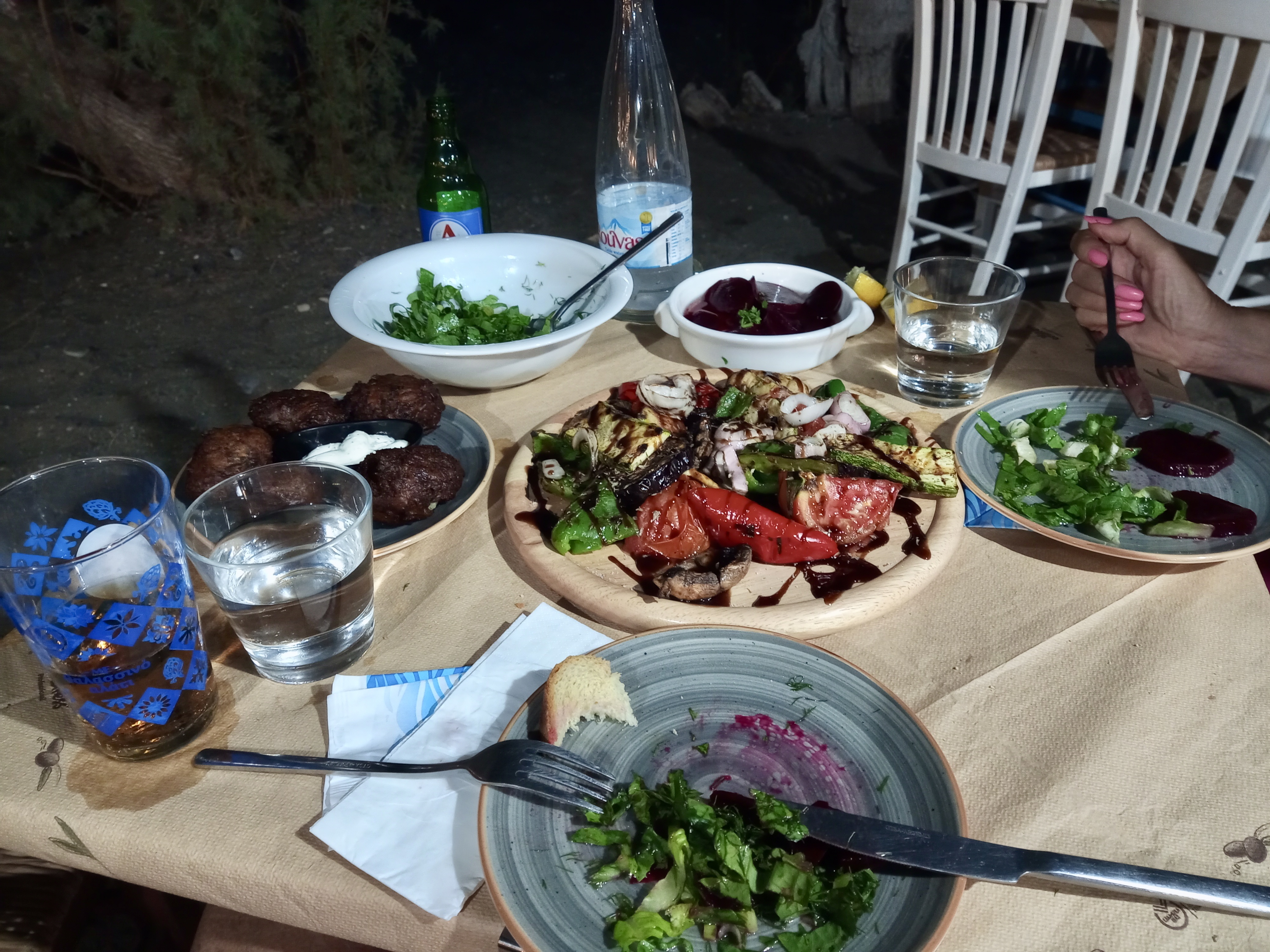
Above: The back of the same beach, showing why we so love eating and drinking here. The one below was taken during an evening meal right there, in fact:

As was this one too…

Click HERE to go to my Amazon Author Page, where you can browse and purchase all of my seventeen written works.

This and that (but maybe not the other)

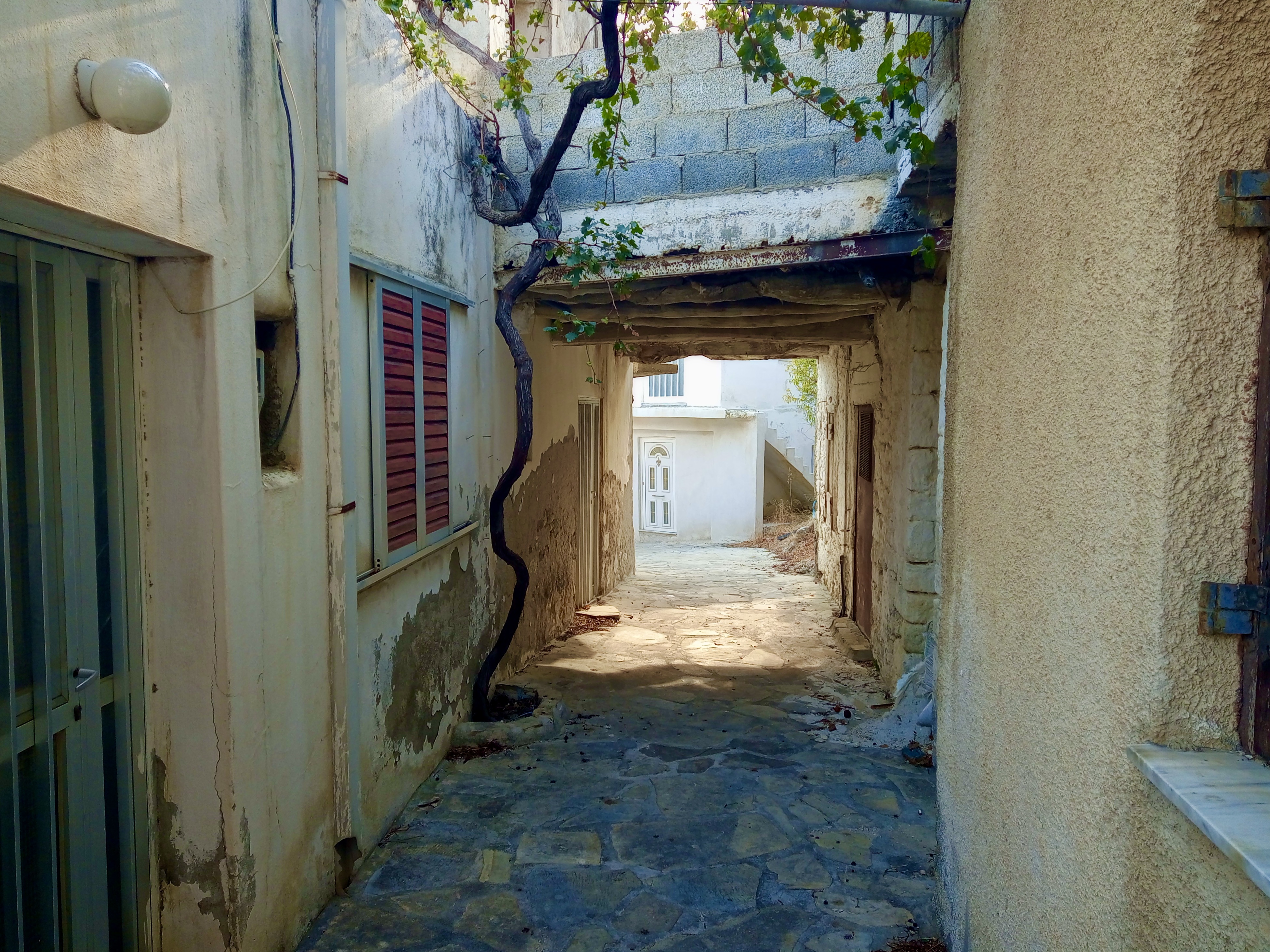
I’m getting a bit behind with all the photos I’ve been snapping lately, so this post will be mainly photos and a brief description/explanation where necessary. Hope you like them. Firstly, the one above was taken on Sunday October 12th in the area known as Mavros Kolymvos, just west of Makry Gialos at around 11.30am.

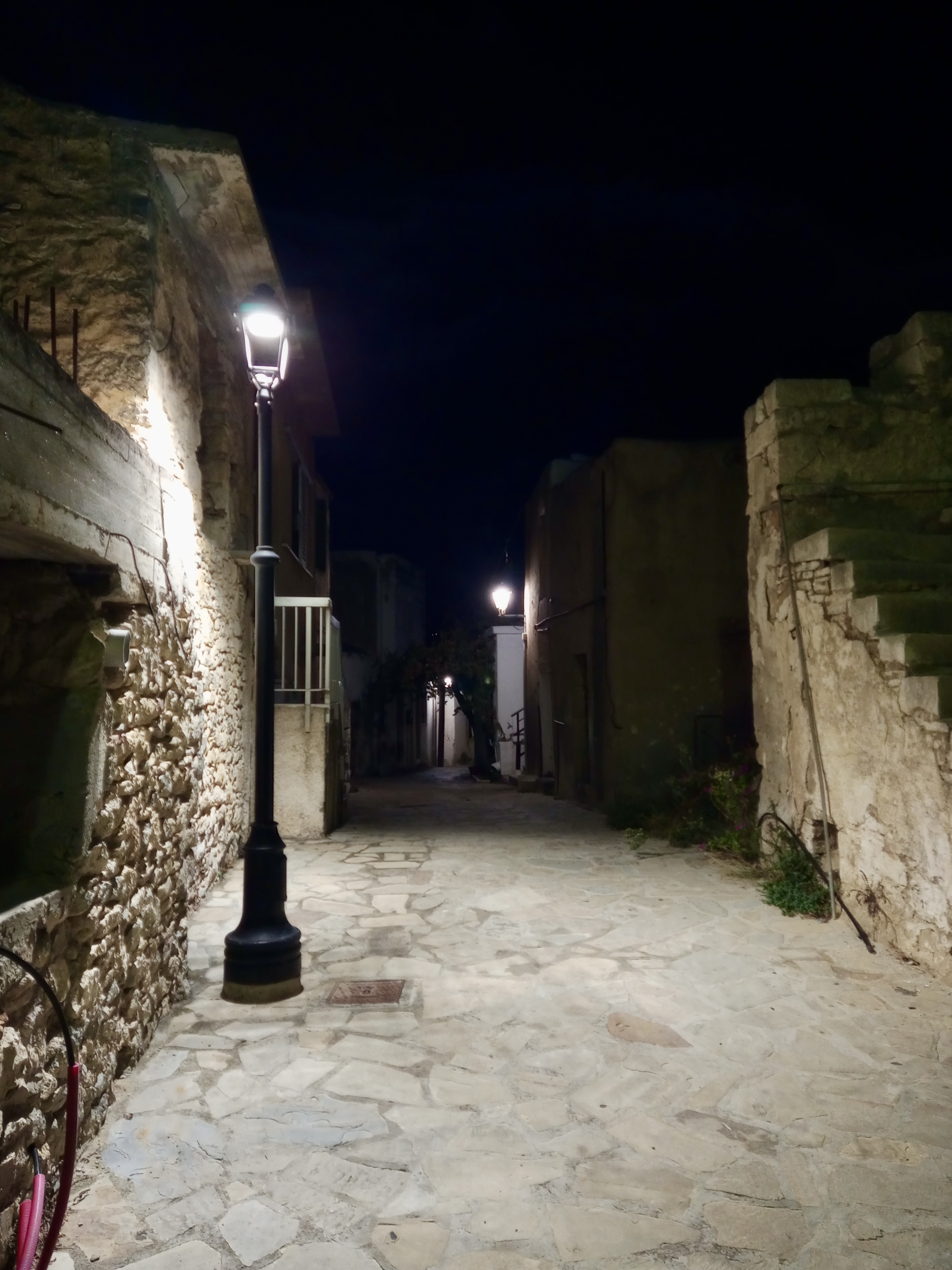
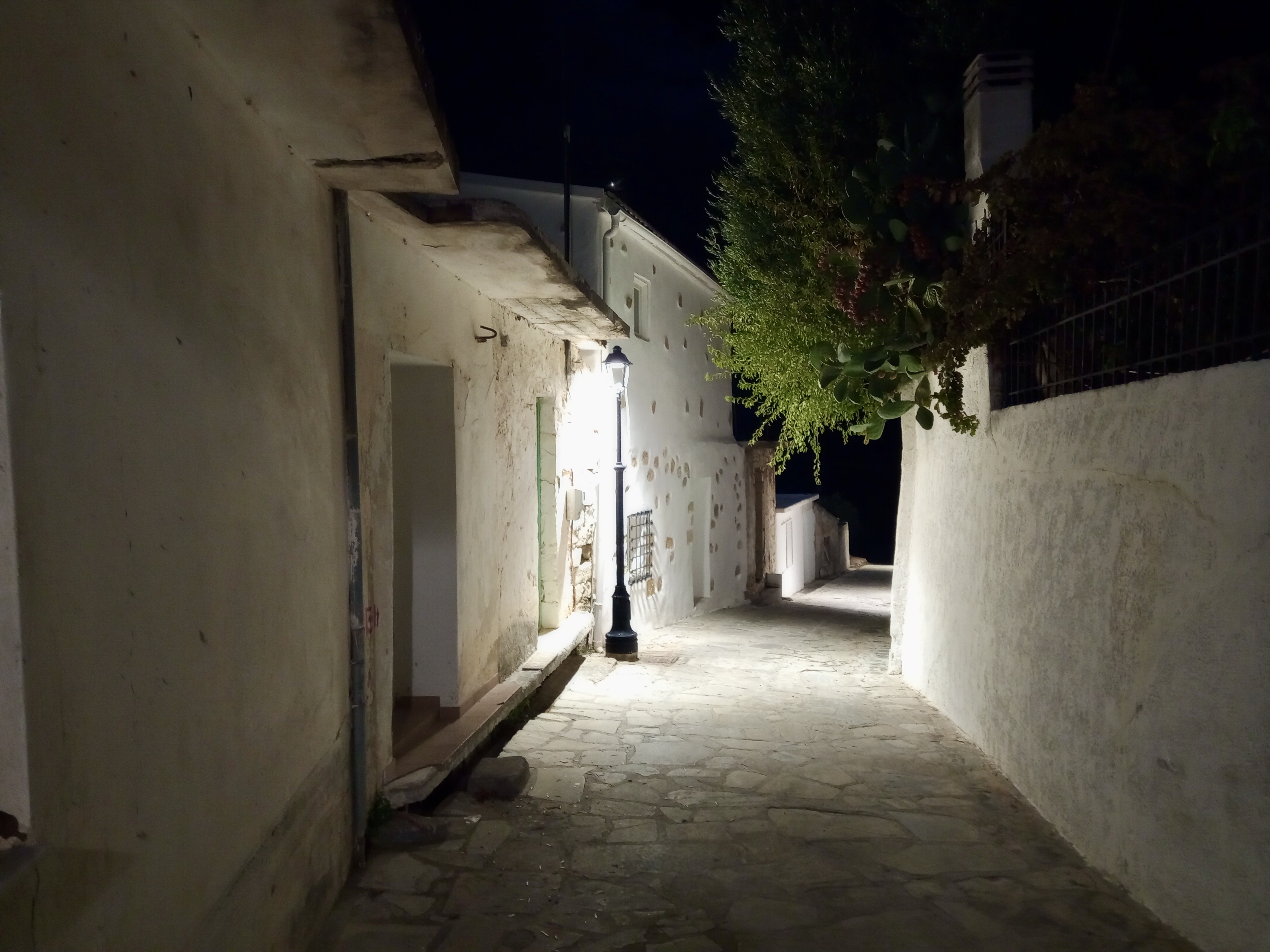
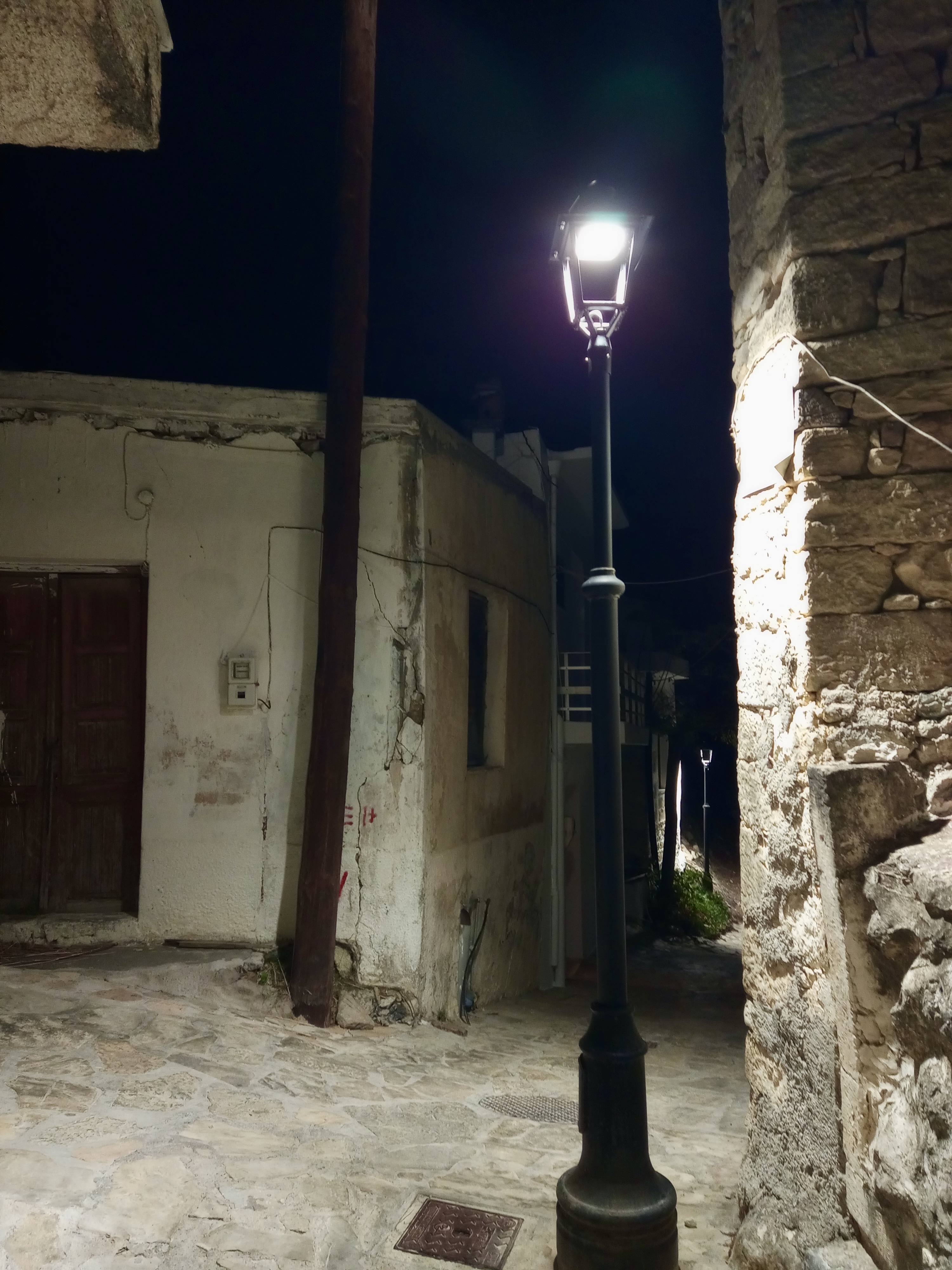
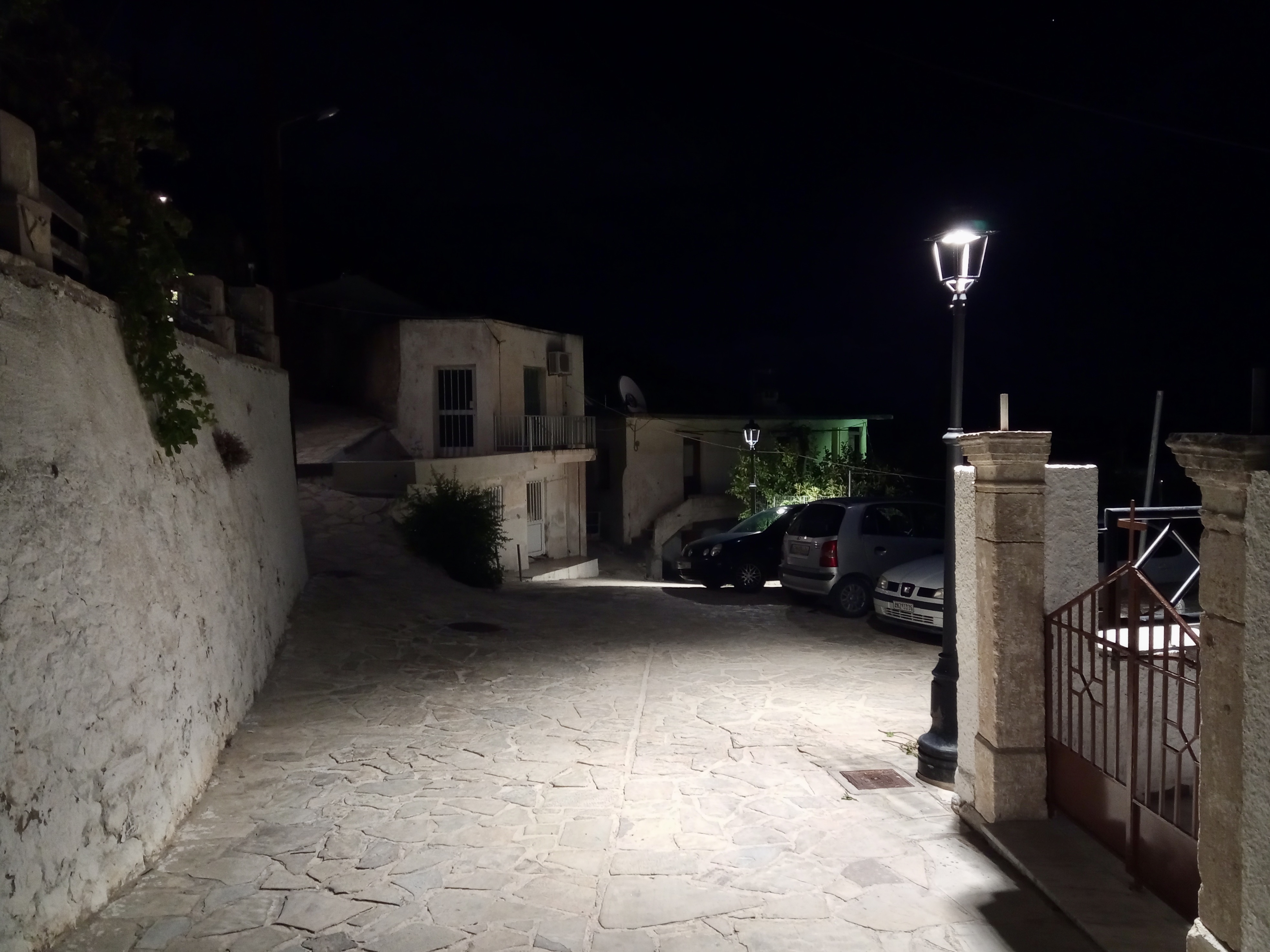
Gallery above: The new Mayor of the village (although I suppose he’s been ‘in office’ for a while now) Manolis, has been busy upgrading the traditional-looking lampposts in the village to LED type. Just a few nights ago, after a week or so of darkness while the new lamps were being fitted, they were switched on. I reckon they look pretty good. What do you think? These were taken at around 3.30am. Here are just a few more of the village in daylight too…

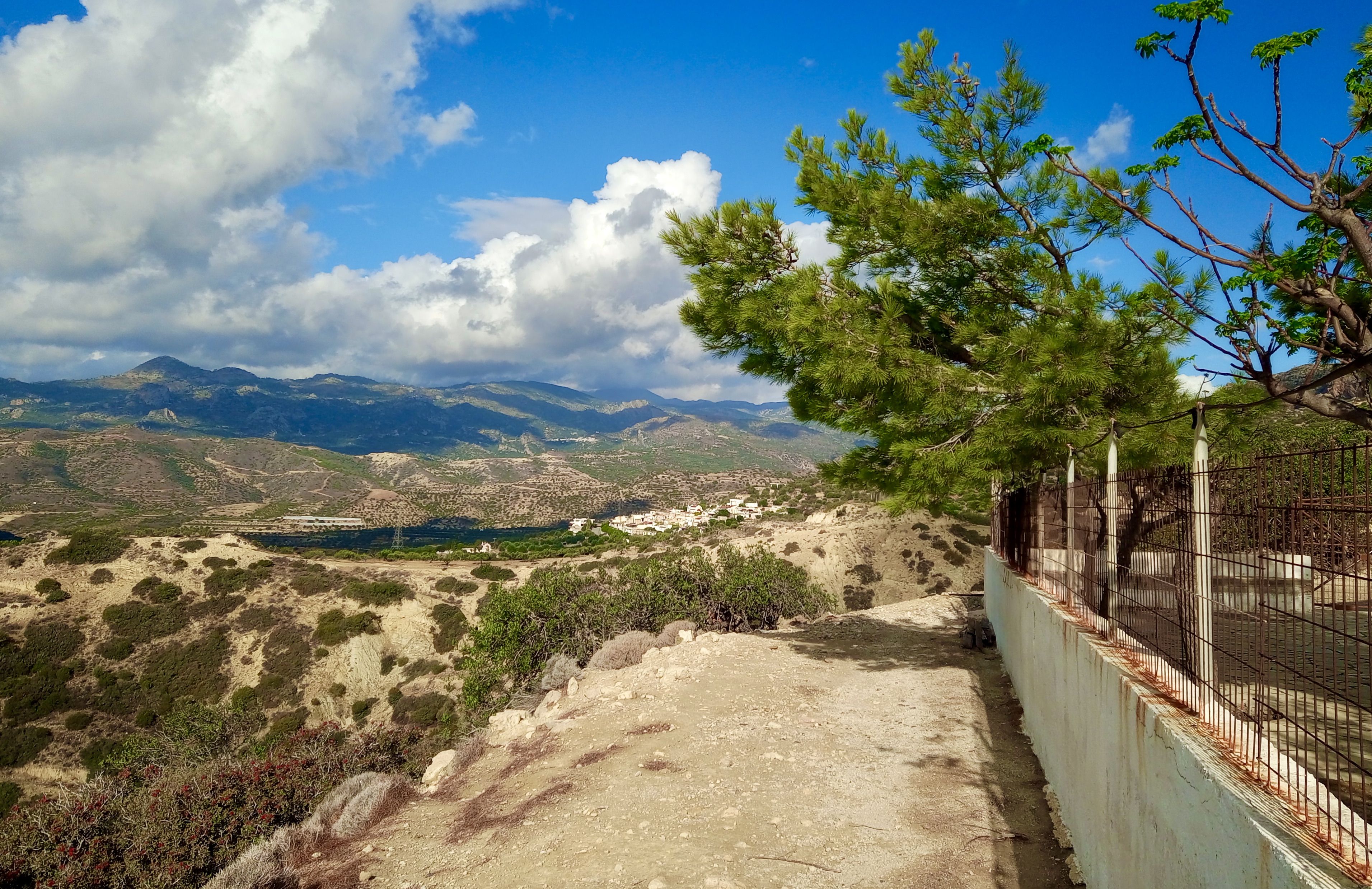
We did our first real walk of the winter on Friday October 3rd, since the temperatures have been somewhat low for the time of year since the beginning of the month (although they’re cranking up again now. It’s 25ºC outside as I type this post). With it having been slightly cooler we made the walk to the tiny church on the hillside across the valley from the village. Here are two views looking back on the village, one from around halfway to the church, and the other taken from outside the churchyard wall…

The first of those two above shows well how the olive farmers rotavate their olive groves at the end of the summer, in the hope that there will be autumn rains that will soak into the soil and fatten up their olives for the harvest that begins in earnest during November. Apart from one big short-lived storm though, they’re still waiting.

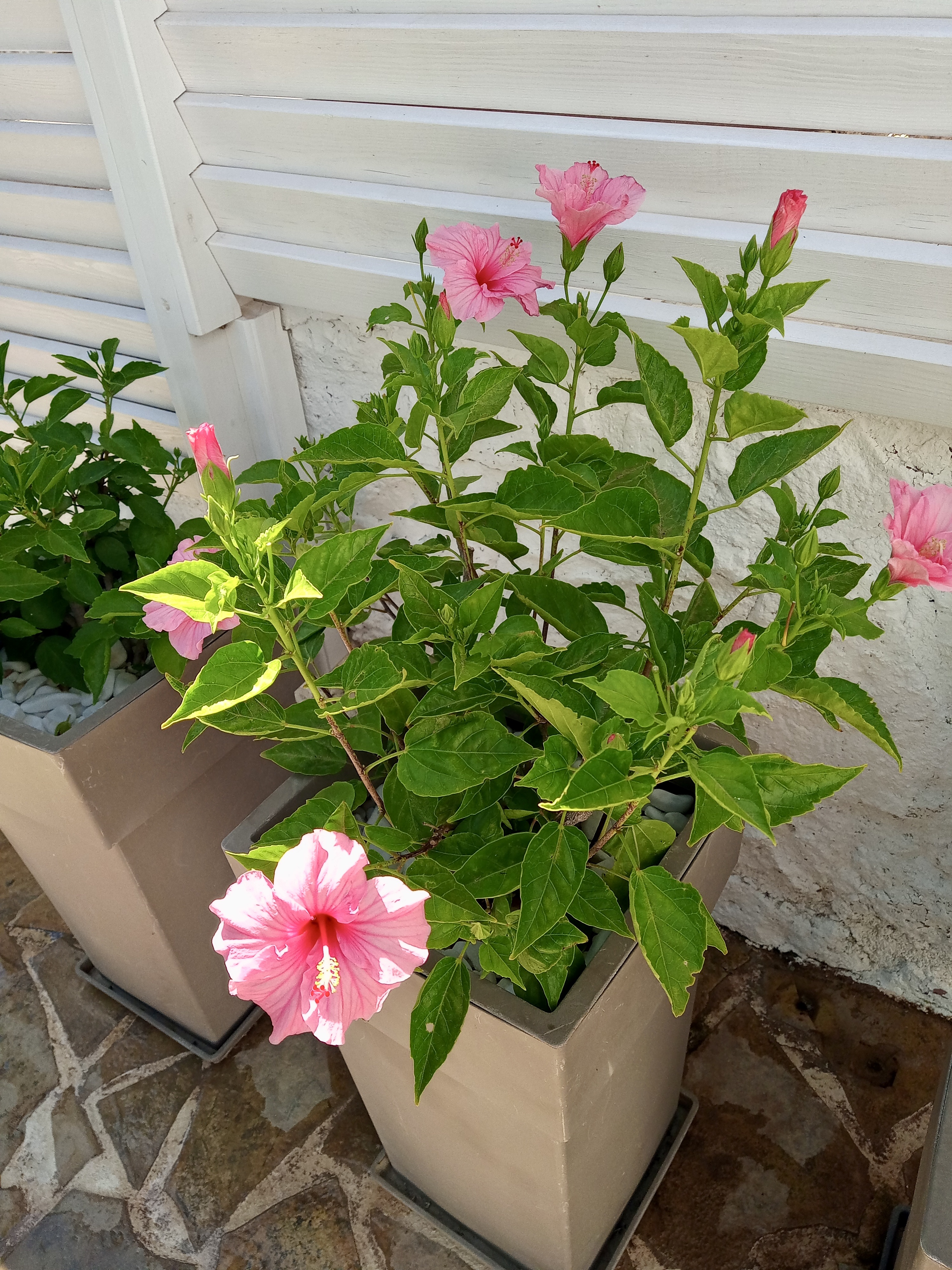
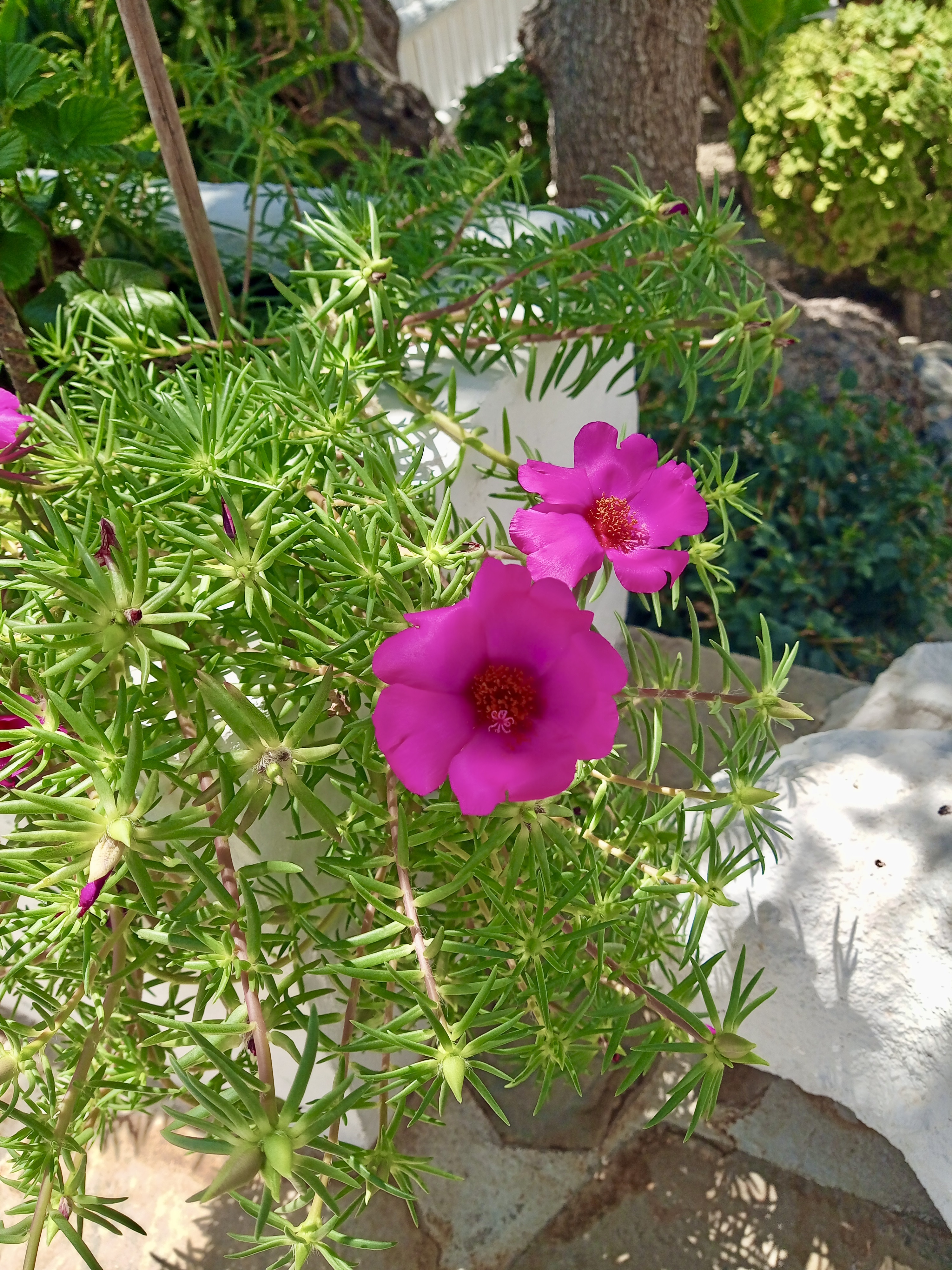
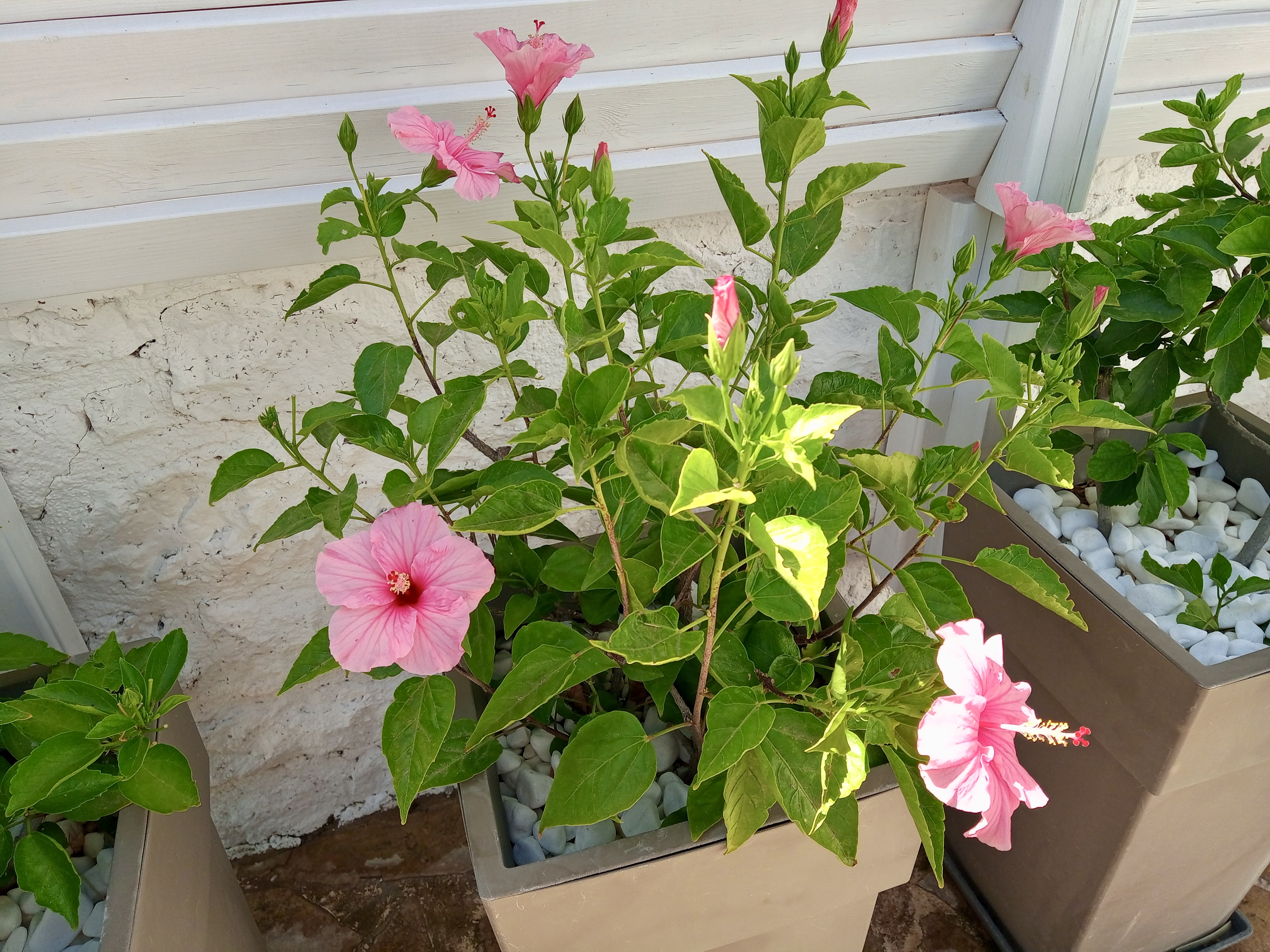
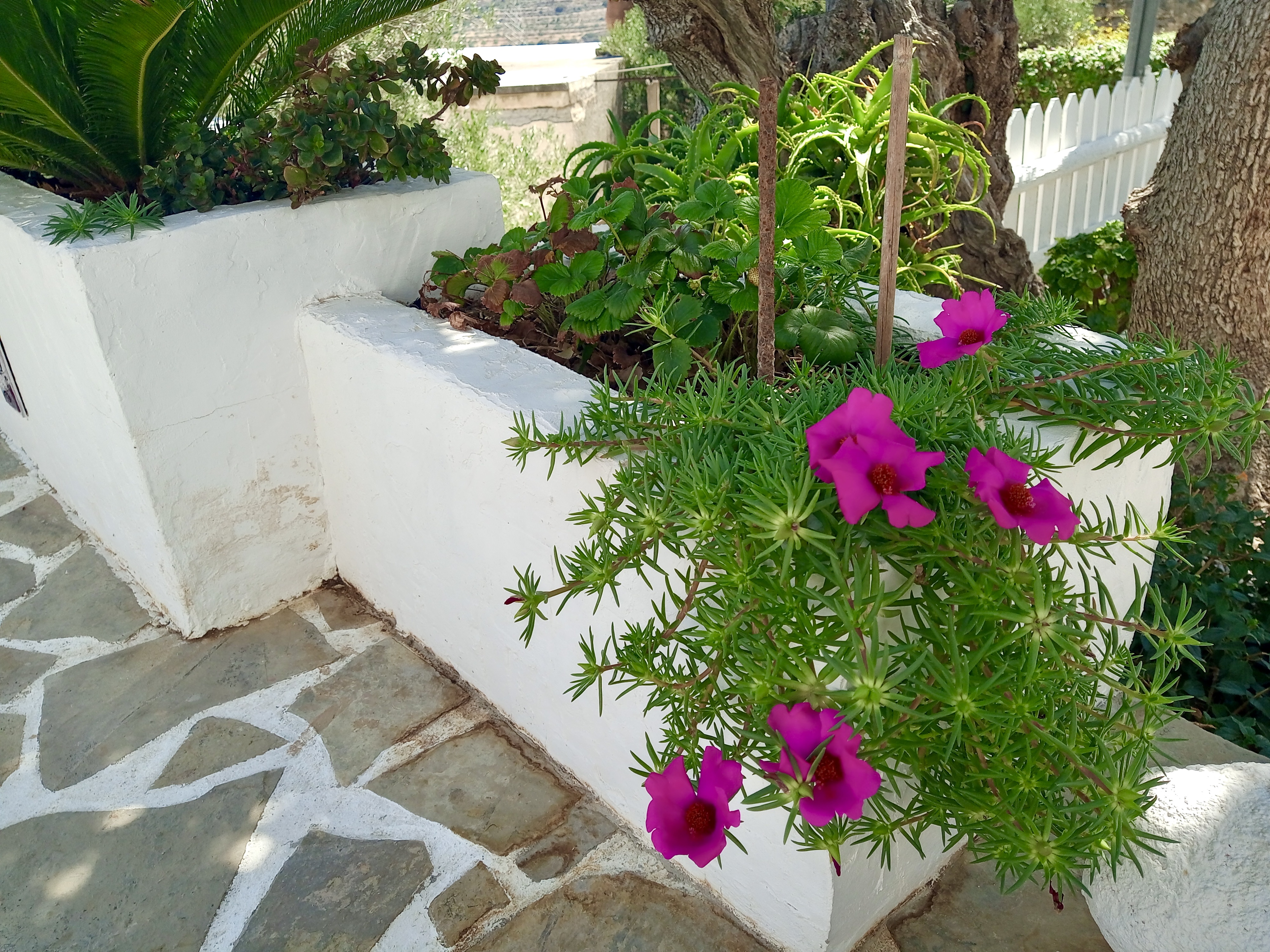
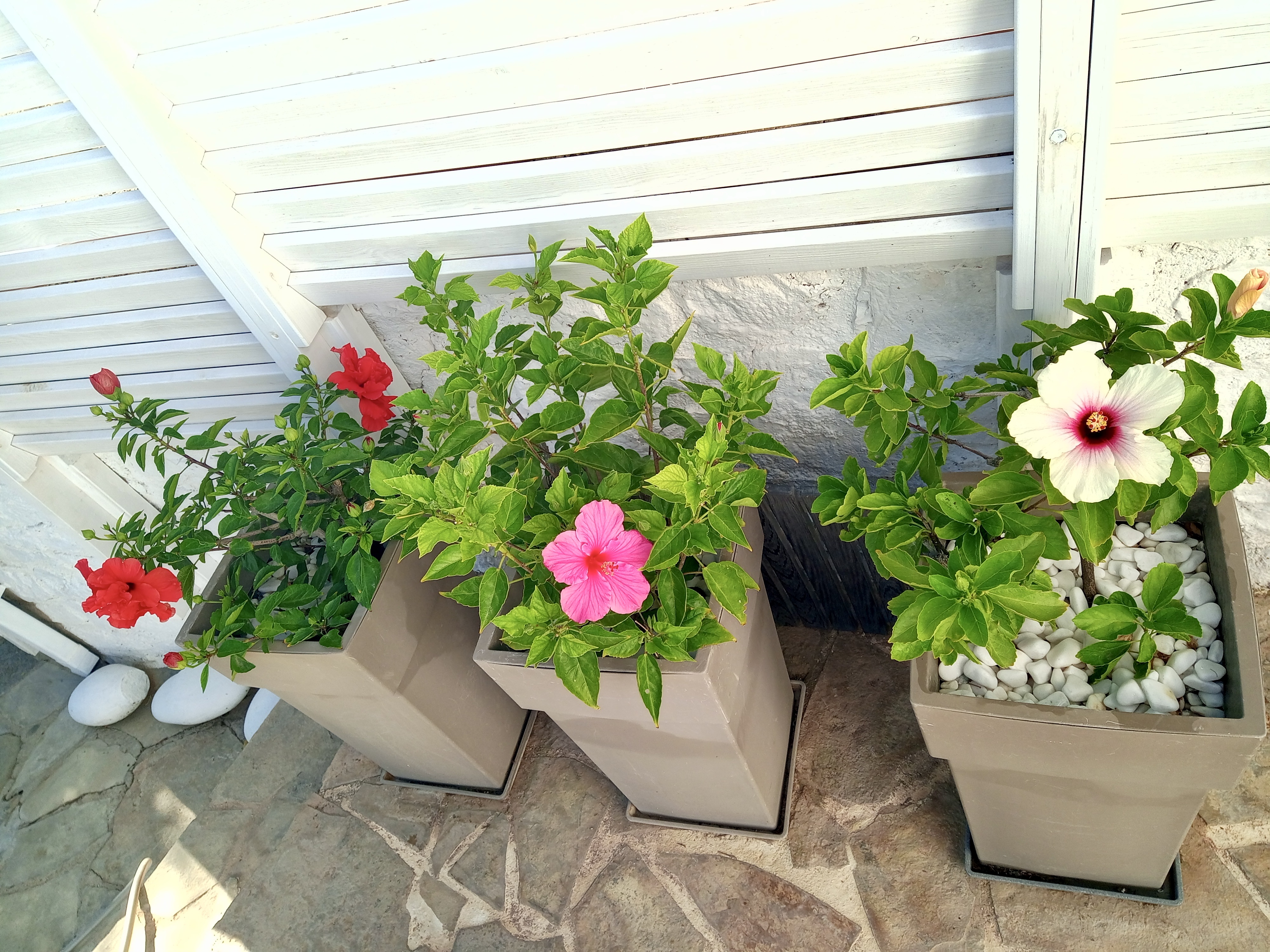
Above: I know, I’m showing off again, but since the hibiscus in their pots and the trailing plant that I put into the raised beds that I’d built have brought us so much joy this summer, I couldn’t help but take photos of them.

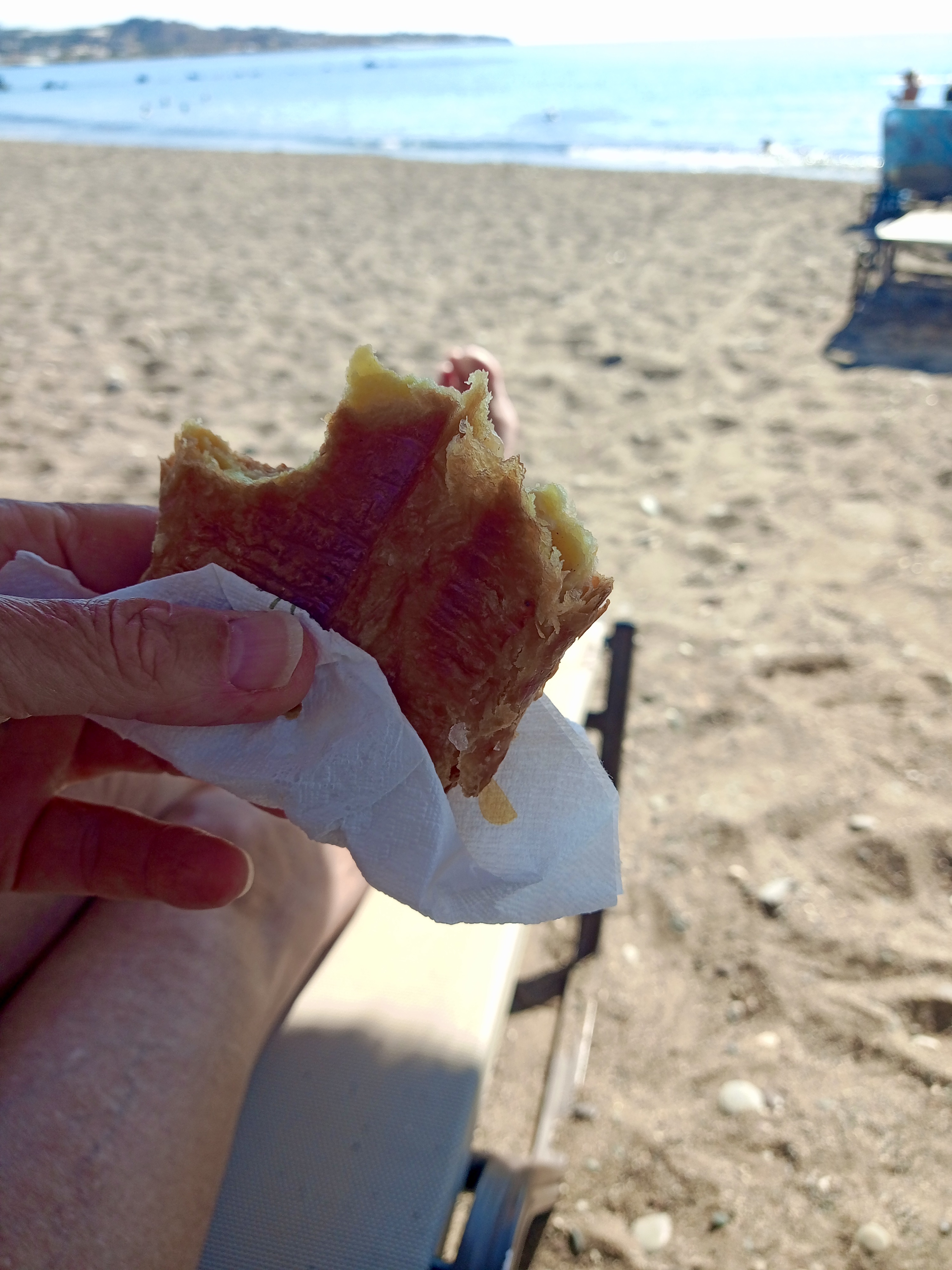
Above: A tiny cairn that someone had built on the beach. It’s only about 9 inches tall, and I couldn’t believe that it had stayed erect for as long as it had. Plus a delicious milopita (apple pastry) that comes a very close second to bougatsa as a small indulgence to accompany our iced coffees on the beach now and then.

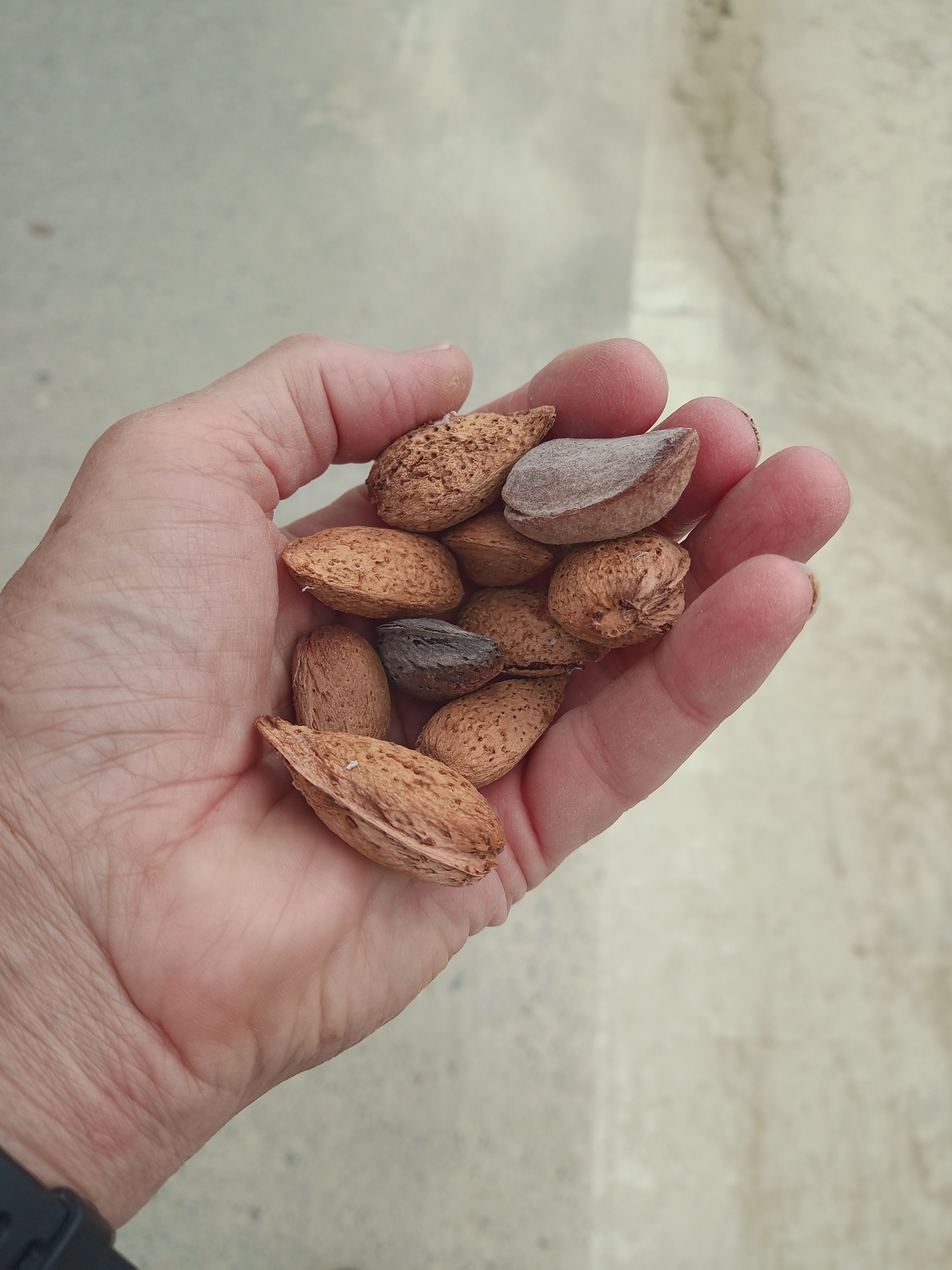
Above: When we walk the lane up the mountain from our village towards Meseleri there are a couple of almond trees right beside the road, and they’re sadly not harvested any more. So, without much encouragement needed, we stuffed our pockets with the ones we could reach. I shelled them after drying them for a couple of days and added them to our almond jar. When you consider that they are grown everywhere here, it’s a bit eye-watering to see how much you have to spend to buy them in the shops.

And, finally…

Above: In a small café in Makry Gialos on Sunday, I couldn’t help noticing this sign. Good eh?

Click HERE to go to my Amazon Author Page, where you can browse and purchase all of my seventeen written works.
Memory Jogging

I’m currently reading Kathryn Gauci’s enchanting book about her odyssey in the Aegean around twenty years ago. She travelled alone around much of the Aegean in 2005, the very year, by sheer coincidence, that my wife and I moved from the UK to live permanently in Greece. I’m currently around 40% of the way through this arresting account and I have to say that so far it’s grabbed hold of my soul and sent me down all kinds of memory lanes. Kathryn’s prose is erudite, without being pretentious. She enfolds the reader in her own experience effortlessly and the wonder of what she sees and hears during her travels and how these things affect her seeps into your head and plucks at your heart strings.

Maybe it’s affecting me this way because so much of what she writes about echoes my own experience both with Greek people and with the country itself, I don’t know. What I do know is that it’s essential reading for any grecophile, that’s for sure. Kathryn’s Greek experience has given her an ‘honorary Greekness’ in much the same way as I feel mine has done for me. She writes, for example, “Here in Greece it is possible to sit for ages with only one drink. The café and bar owners will never make you feel uncomfortable. They appreciate the true meaning of a leisurely drink.” You have to truly know how to simply sit and enjoy the moment, much in the same way as the locals do and have done since they were born, to grasp what this means, and how good it is for the soul.

Another quote from her that I really like is: “Somehow I feel different. I can sense a peacefulness I don’t think I’ve had for years. I have begun to let go and really relax, and I wasn’t even aware of it happening.” This happens when you interact with the locals, when you stop looking at your watch, when you simply savour the moment. If you’ve spent any time at all in Greece then you’ll certainly have seen the old guys simply sitting. Sometimes they’re on a rickety old chair under a tree beside the road. Sometimes they’re at their ropey old table on their terrace, under the shade of a bougainvillea, but you’ll have seen them. They know how to simply sit and watch, observe, allow the experience to calm them for the day or week ahead. 

Kathryn also knows how most Greeks view their homes. Maybe things are changing in the cities these days, but in rural areas and villages, locals hardly ever buy or sell property. It’s simply not done. Kathryn writes, “There are hardly any estate agents. Greeks very rarely buy and sell from a real estate agent unless they are in the market for exclusive properties. Estate agents, by and large cater to the foreign tourists looking for holiday homes.”

Kathryn, when growing up in the UK, had a friend whose mother was Greek. Her introduction to things such as Greek cuisine came through this channel, much the same way as mine did owing to the fact that my girlfriend (eventually my fiancee and then wife) also had a mother who was Greek, and the aromas from her kitchen were something I’d never experienced before I began frequenting her house in Ringswell Gardens, Bath, UK. The exotic smell of fish soup done with olive oil and lemon juice, for example captured my imagination in just the same way as it did hers. Maybe this is why this book is enchanting me so. I have to say that this past few days I’ve been reading it on the Kindle app on my phone while laying on a lounger on the local town beach, and it’s caused me to take stock of my life, of ours, Yvonne’s and mine, I should say.

I began this very morning (as I’m writing this part of the post late at night on Monday October 6th) by looking up from the device and taking in my surroundings with a fresh perspective for what’s probably the umpteenth time. People back in the UK often talk about either buying a property in Greece, or maybe moving out here permanently, as ‘living the dream.’ What precisely is that ‘dream’ I don’t really think we actually know. Spending a couple of weeks here during your summer holiday gives you an entirely different experience from that which you have once you’ve burned your bridges and taken the plunge, which we did back in August 2005. Yet, if you can hack it, as in navigate your way through the complex bureaucracy that’s involved, and adjusting to the mindset of the local people, you may stand a chance. Over our twenty years now of living here we’ve seen many, many folk pack it all in and go back. There have been all kinds of reasons for this, but often it’s that they simply weren’t prepared for the difference in living here during July and August and spending an entire winter here. Maybe they had grandchildren and realised that living a couple of thousand miles away meant that they were missing their children’s children’s formative years. Some have gone back owing to major health problems. There’s quite a daunting list, I can tell you. 

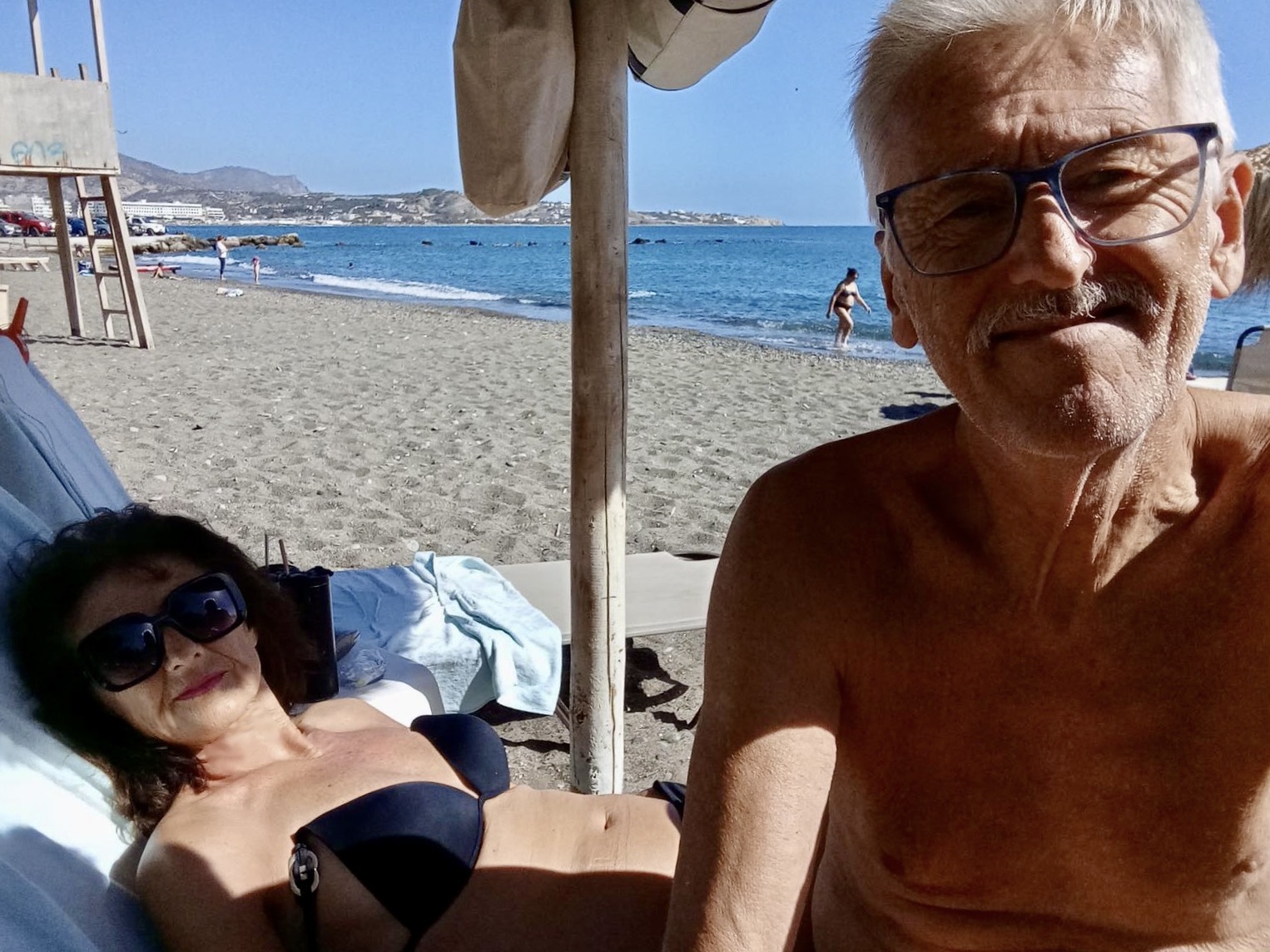
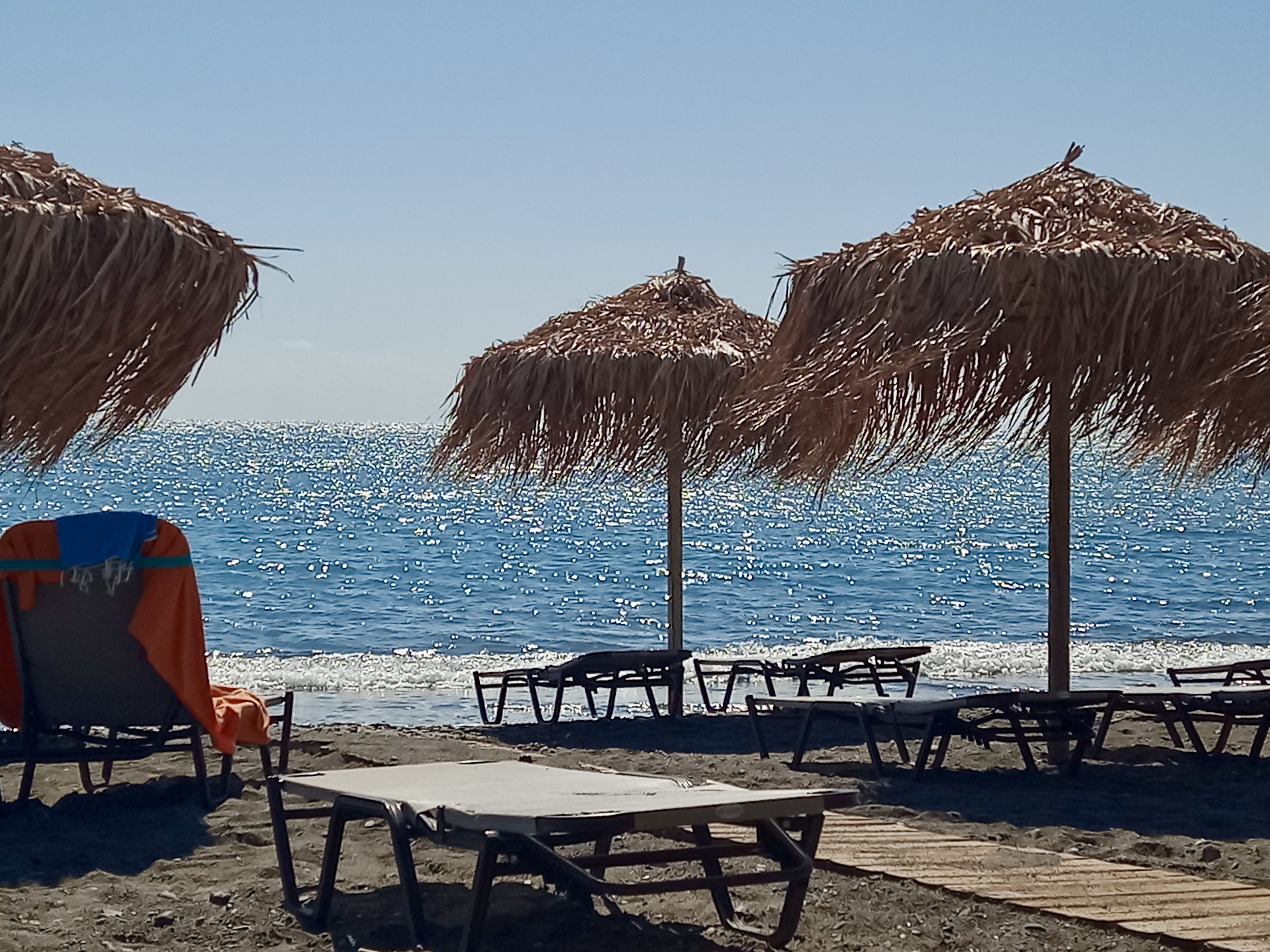
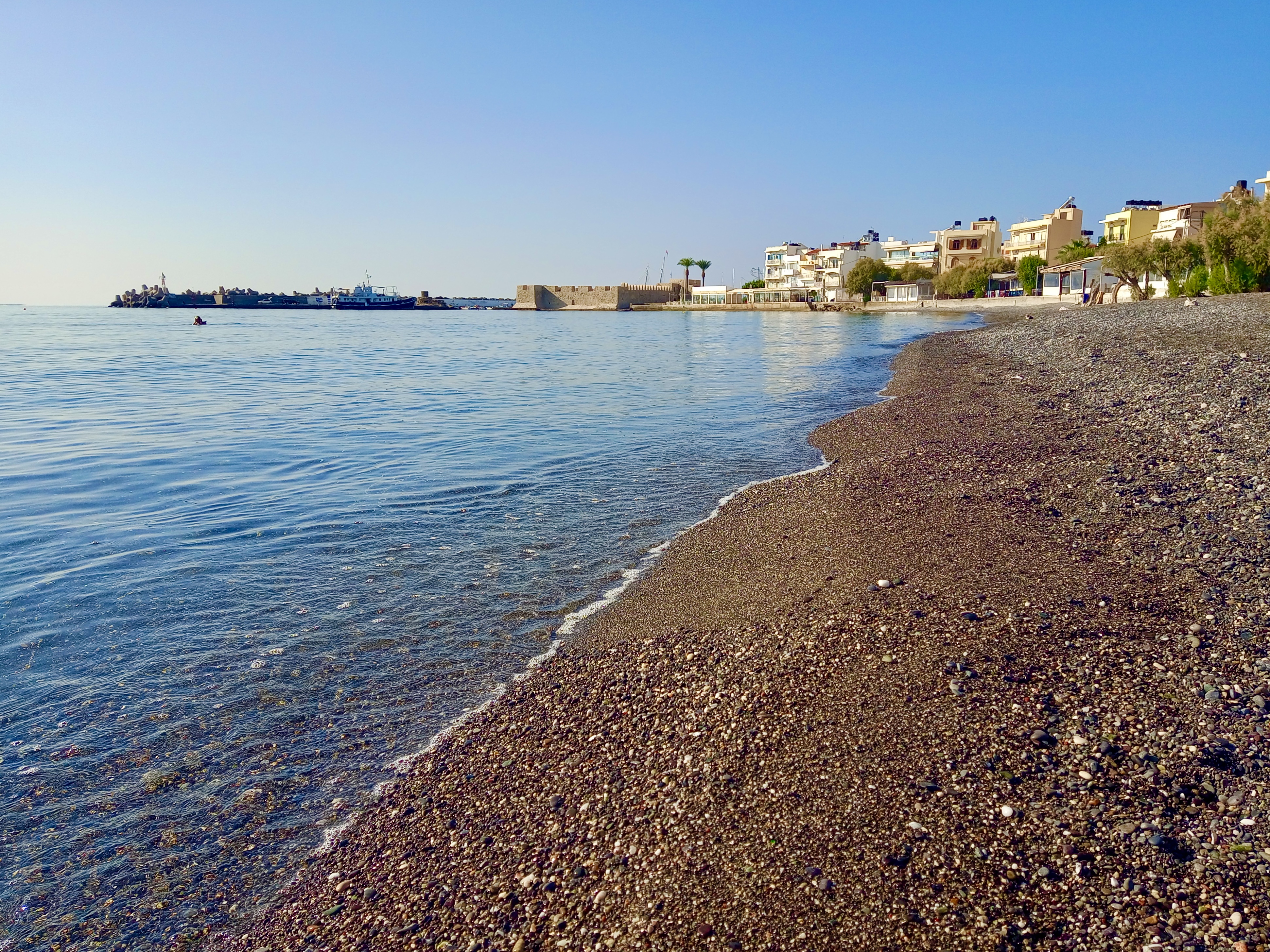
Yet as I sat on that beach this morning, I became acutely aware that I’ve never been so happy, truly. My wife was laying there, her phone playing Dalkas, a Greek Laika radio station, while she dozed, mouthing the words to most of the songs, many of which she’s known since she was a child, when her mother used to play them on her stereogram while Yvonne was growing up. Behind us there were people stretched lazily in the canvas backed director’s chairs of the beach bar, their toes wiggling into the sand while enjoying long languid conversations without the slightest time pressure. I look at this delightful little seaside town, the southernmost town not only in Greece, but in the whole of Europe, and I realise that it has just about everything that we ever sought for when looking for places to go for a summer holiday. Its tourism is very low-key. Ierapetra subsists much more on agriculture than it does on tourism. Most of the voices you hear around you while dining out, or spending an hour or two over your Freddo espresso on the beach, are Greek. After six years now of living here we know so many people, all of whom greet each other with a warm smile and exchange a few words of chit-chat before settling down to the serious business of spending time with their coffee. No one stays on the beach all day, no. Most people arrive, order their coffee, stretch out under a straw umbrella, take a dip or two, then, after a maximum of around two hours, pack up and move on to the next stage of their day. But no one does any of this in a hurry. There’s always time for a chat when you make eye contact with someone you see regularly. 

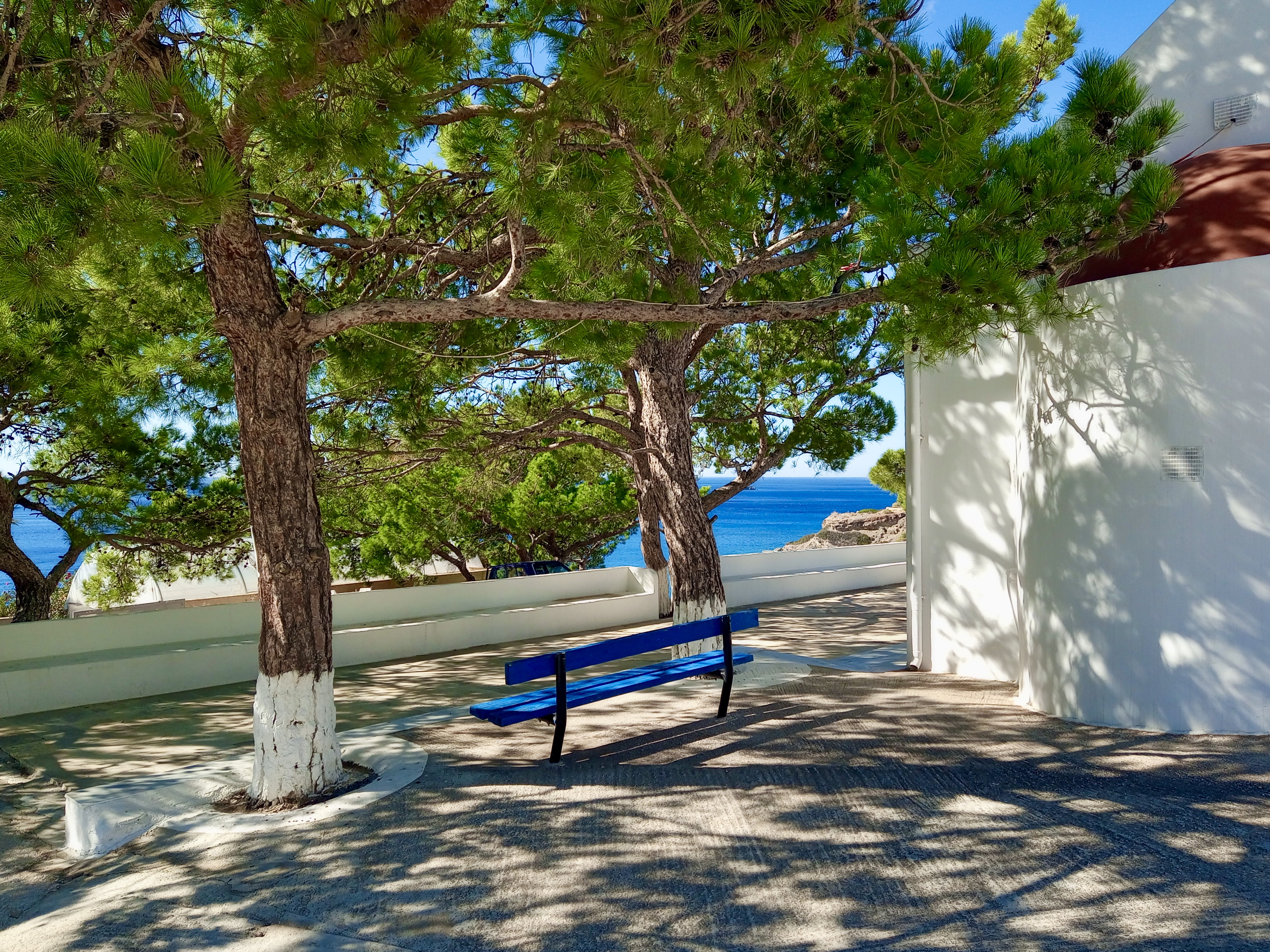
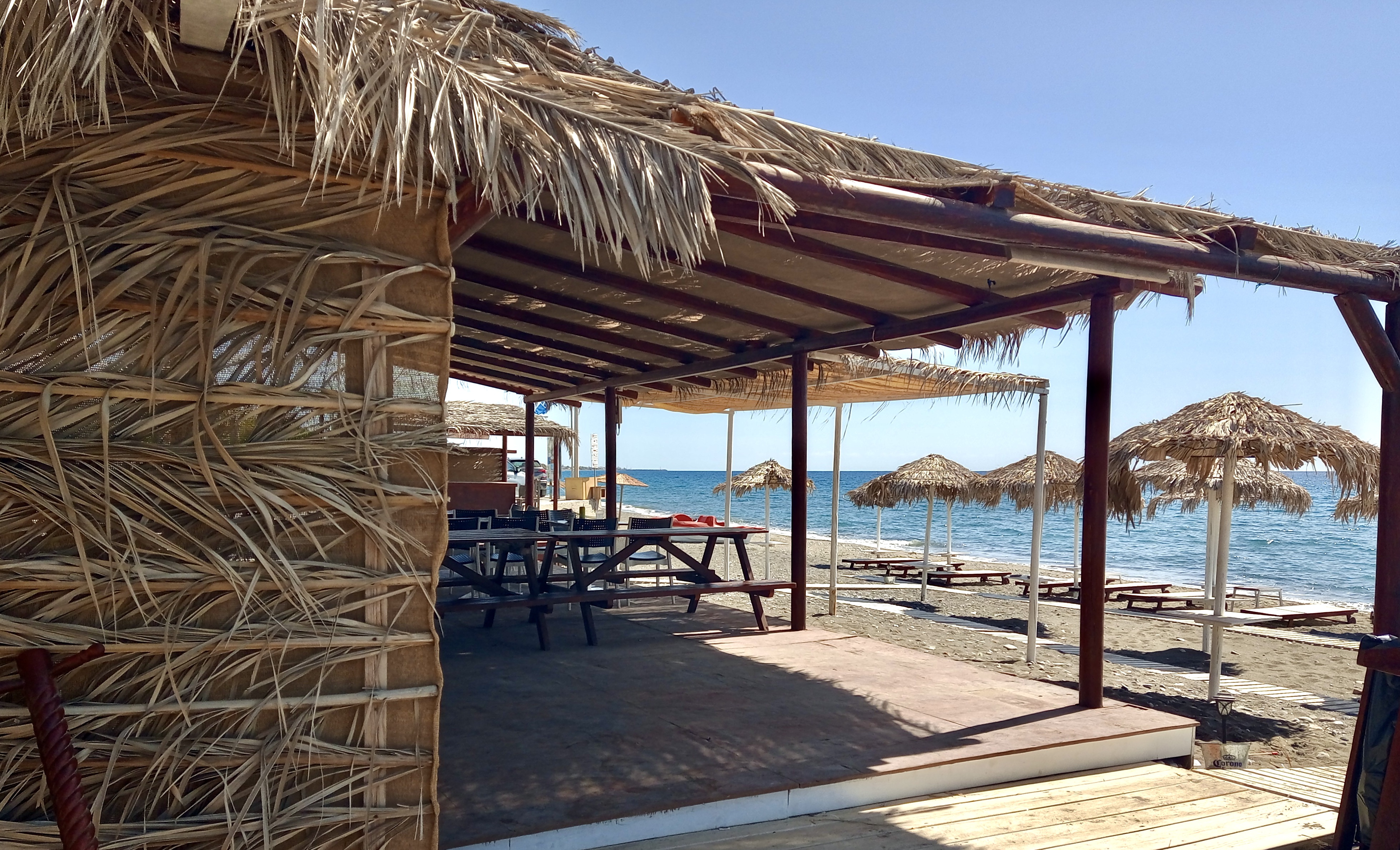
There are restaurants to cater for all budget levels, and enough coffee bars to keep one going for a lifetime. The climate is the best in all of Greece, as the photos below can testify, as they were all taken in the last week or so, some this very morning. So, I’ll close out this one with those photos. It’s now October, and the temperatures are in the mid twenties, the skies still primarily blue (although we have had a welcome rainstorm about a week ago, plus a few showers during the night, which is good) and – I guess I just have to resort here to a trite expression but, well – all’s right with the world.

The third photo in that gallery above is of a group of ladies (of a certain age) as they go about their daily ritual of treading water while exchanging local gossip. Beats the local old folks’ coffee morning at the day centre doesn’t it.

Click HERE to go to my Amazon Author Page, where you can browse and purchase all of my seventeen written works.