I’m currently reading Kathryn Gauci’s enchanting book about her odyssey in the Aegean around twenty years ago. She travelled alone around much of the Aegean in 2005, the very year, by sheer coincidence, that my wife and I moved from the UK to live permanently in Greece. I’m currently around 40% of the way through this arresting account and I have to say that so far it’s grabbed hold of my soul and sent me down all kinds of memory lanes. Kathryn’s prose is erudite, without being pretentious. She enfolds the reader in her own experience effortlessly and the wonder of what she sees and hears during her travels and how these things affect her seeps into your head and plucks at your heart strings.
Maybe it’s affecting me this way because so much of what she writes about echoes my own experience both with Greek people and with the country itself, I don’t know. What I do know is that it’s essential reading for any grecophile, that’s for sure. Kathryn’s Greek experience has given her an ‘honorary Greekness’ in much the same way as I feel mine has done for me. She writes, for example, “Here in Greece it is possible to sit for ages with only one drink. The café and bar owners will never make you feel uncomfortable. They appreciate the true meaning of a leisurely drink.” You have to truly know how to simply sit and enjoy the moment, much in the same way as the locals do and have done since they were born, to grasp what this means, and how good it is for the soul.
Another quote from her that I really like is: “Somehow I feel different. I can sense a peacefulness I don’t think I’ve had for years. I have begun to let go and really relax, and I wasn’t even aware of it happening.” This happens when you interact with the locals, when you stop looking at your watch, when you simply savour the moment. If you’ve spent any time at all in Greece then you’ll certainly have seen the old guys simply sitting. Sometimes they’re on a rickety old chair under a tree beside the road. Sometimes they’re at their ropey old table on their terrace, under the shade of a bougainvillea, but you’ll have seen them. They know how to simply sit and watch, observe, allow the experience to calm them for the day or week ahead.
Kathryn also knows how most Greeks view their homes. Maybe things are changing in the cities these days, but in rural areas and villages, locals hardly ever buy or sell property. It’s simply not done. Kathryn writes, “There are hardly any estate agents. Greeks very rarely buy and sell from a real estate agent unless they are in the market for exclusive properties. Estate agents, by and large cater to the foreign tourists looking for holiday homes.”
Kathryn, when growing up in the UK, had a friend whose mother was Greek. Her introduction to things such as Greek cuisine came through this channel, much the same way as mine did owing to the fact that my girlfriend (eventually my fiancee and then wife) also had a mother who was Greek, and the aromas from her kitchen were something I’d never experienced before I began frequenting her house in Ringswell Gardens, Bath, UK. The exotic smell of fish soup done with olive oil and lemon juice, for example captured my imagination in just the same way as it did hers. Maybe this is why this book is enchanting me so. I have to say that this past few days I’ve been reading it on the Kindle app on my phone while laying on a lounger on the local town beach, and it’s caused me to take stock of my life, of ours, Yvonne’s and mine, I should say.
I began this very morning (as I’m writing this part of the post late at night on Monday October 6th) by looking up from the device and taking in my surroundings with a fresh perspective for what’s probably the umpteenth time. People back in the UK often talk about either buying a property in Greece, or maybe moving out here permanently, as ‘living the dream.’ What precisely is that ‘dream’ I don’t really think we actually know. Spending a couple of weeks here during your summer holiday gives you an entirely different experience from that which you have once you’ve burned your bridges and taken the plunge, which we did back in August 2005. Yet, if you can hack it, as in navigate your way through the complex bureaucracy that’s involved, and adjusting to the mindset of the local people, you may stand a chance. Over our twenty years now of living here we’ve seen many, many folk pack it all in and go back. There have been all kinds of reasons for this, but often it’s that they simply weren’t prepared for the difference in living here during July and August and spending an entire winter here. Maybe they had grandchildren and realised that living a couple of thousand miles away meant that they were missing their children’s children’s formative years. Some have gone back owing to major health problems. There’s quite a daunting list, I can tell you.
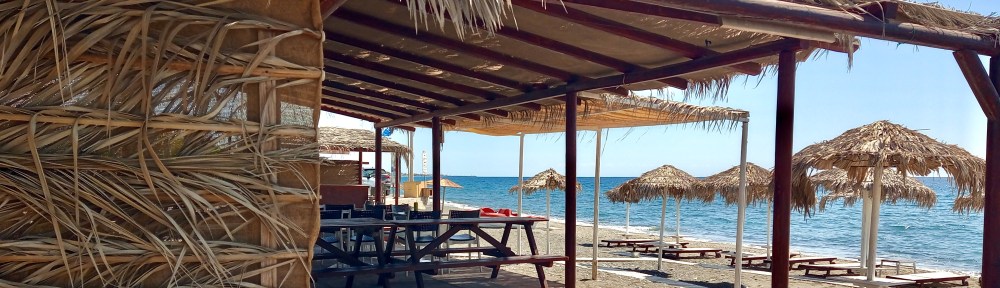
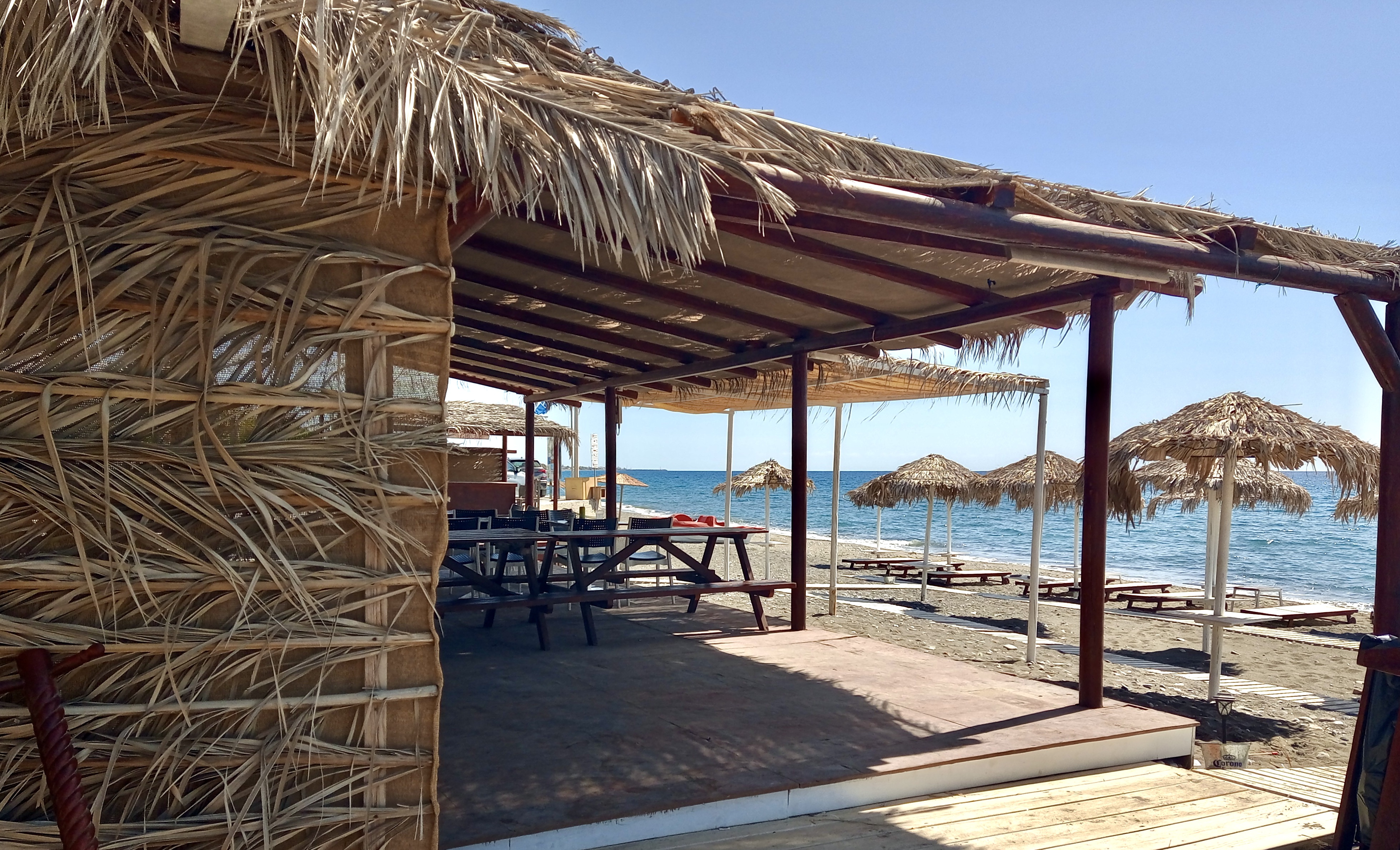
Yet as I sat on that beach this morning, I became acutely aware that I’ve never been so happy, truly. My wife was laying there, her phone playing Dalkas, a Greek Laika radio station, while she dozed, mouthing the words to most of the songs, many of which she’s known since she was a child, when her mother used to play them on her stereogram while Yvonne was growing up. Behind us there were people stretched lazily in the canvas backed director’s chairs of the beach bar, their toes wiggling into the sand while enjoying long languid conversations without the slightest time pressure. I look at this delightful little seaside town, the southernmost town not only in Greece, but in the whole of Europe, and I realise that it has just about everything that we ever sought for when looking for places to go for a summer holiday. Its tourism is very low-key. Ierapetra subsists much more on agriculture than it does on tourism. Most of the voices you hear around you while dining out, or spending an hour or two over your Freddo espresso on the beach, are Greek. After six years now of living here we know so many people, all of whom greet each other with a warm smile and exchange a few words of chit-chat before settling down to the serious business of spending time with their coffee. No one stays on the beach all day, no. Most people arrive, order their coffee, stretch out under a straw umbrella, take a dip or two, then, after a maximum of around two hours, pack up and move on to the next stage of their day. But no one does any of this in a hurry. There’s always time for a chat when you make eye contact with someone you see regularly.
There are restaurants to cater for all budget levels, and enough coffee bars to keep one going for a lifetime. The climate is the best in all of Greece, as the photos below can testify, as they were all taken in the last week or so, some this very morning. So, I’ll close out this one with those photos. It’s now October, and the temperatures are in the mid twenties, the skies still primarily blue (although we have had a welcome rainstorm about a week ago, plus a few showers during the night, which is good) and – I guess I just have to resort here to a trite expression but, well – all’s right with the world.
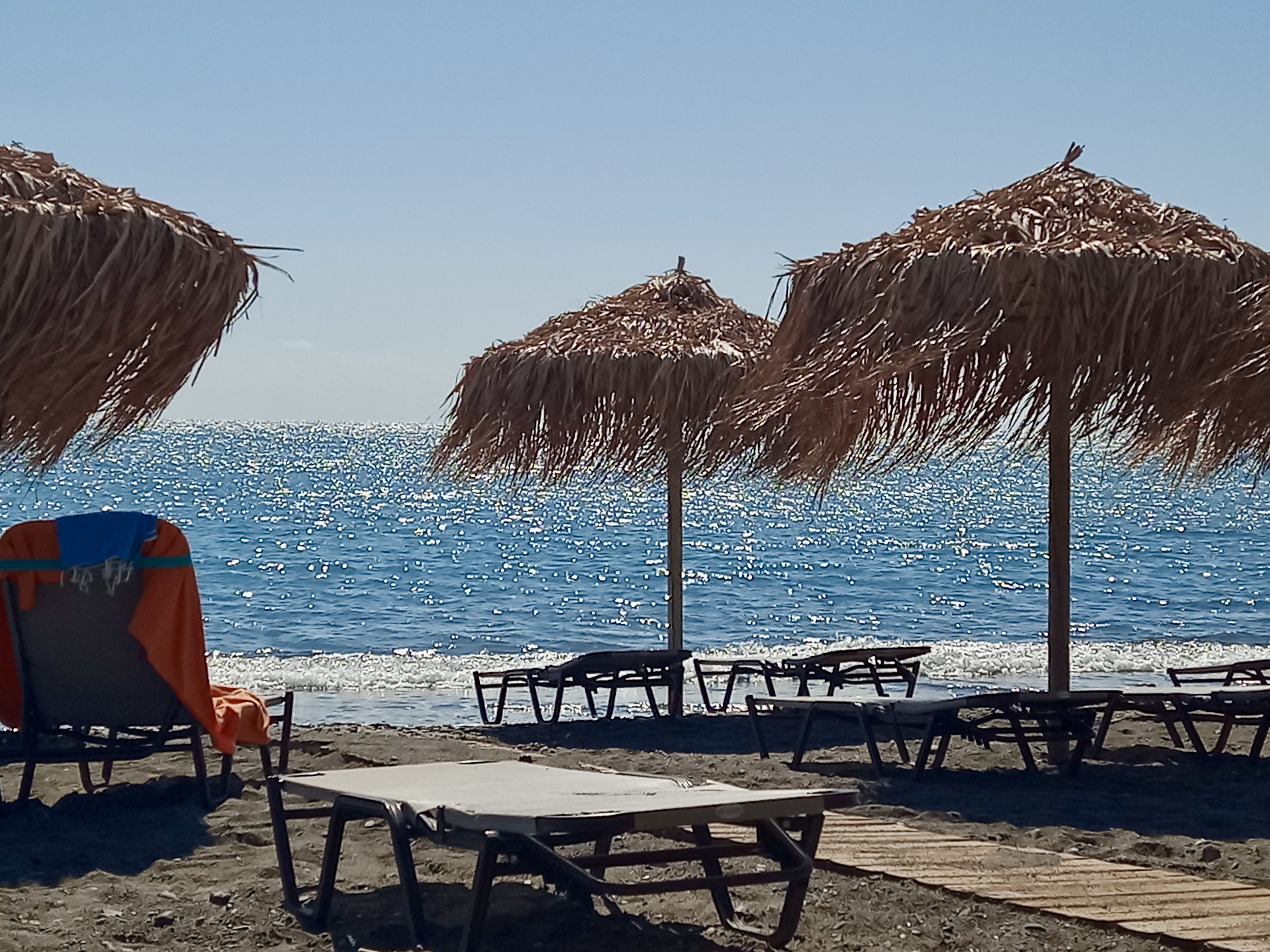


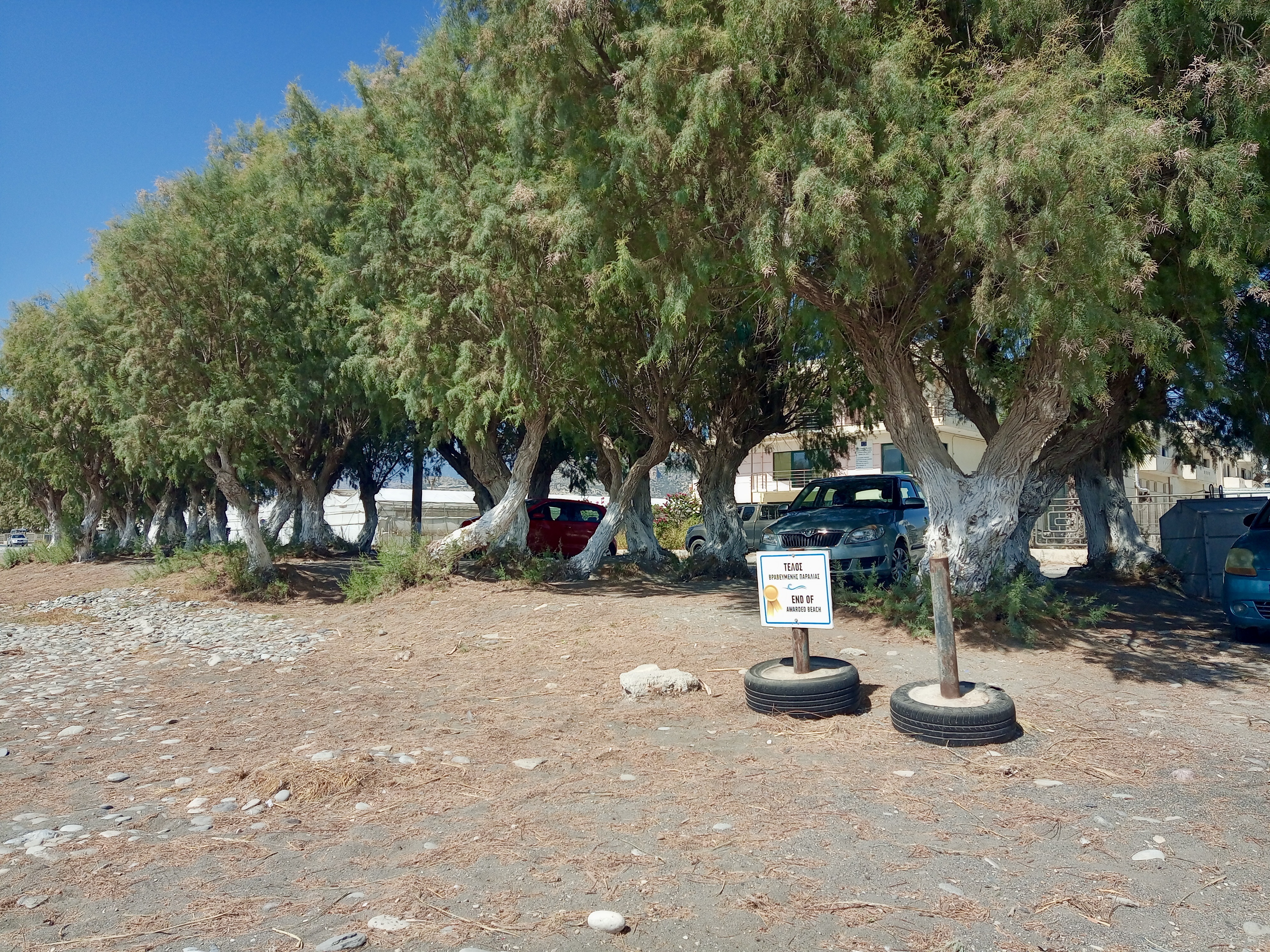


The third photo in that gallery above is of a group of ladies (of a certain age) as they go about their daily ritual of treading water while exchanging local gossip. Beats the local old folks’ coffee morning at the day centre doesn’t it.
•
Click HERE to go to my Amazon Author Page, where you can browse and purchase all of my seventeen written works.
 Accretions
I feel nearly exactly as you do reading this book. Memories rekindled and then re experienced as senses hightened once again to the joys of living in greece with greeks. My husband often remarks that he has never been more content. He thought over 50 years ago when he first holidayed here that this would be a dream place to live. The last eleven years have proven this true for both of us. I enjoyed this piece of yours very much.
Thanks so much for your words Paxi, they mean a lot to me, rest assured.