
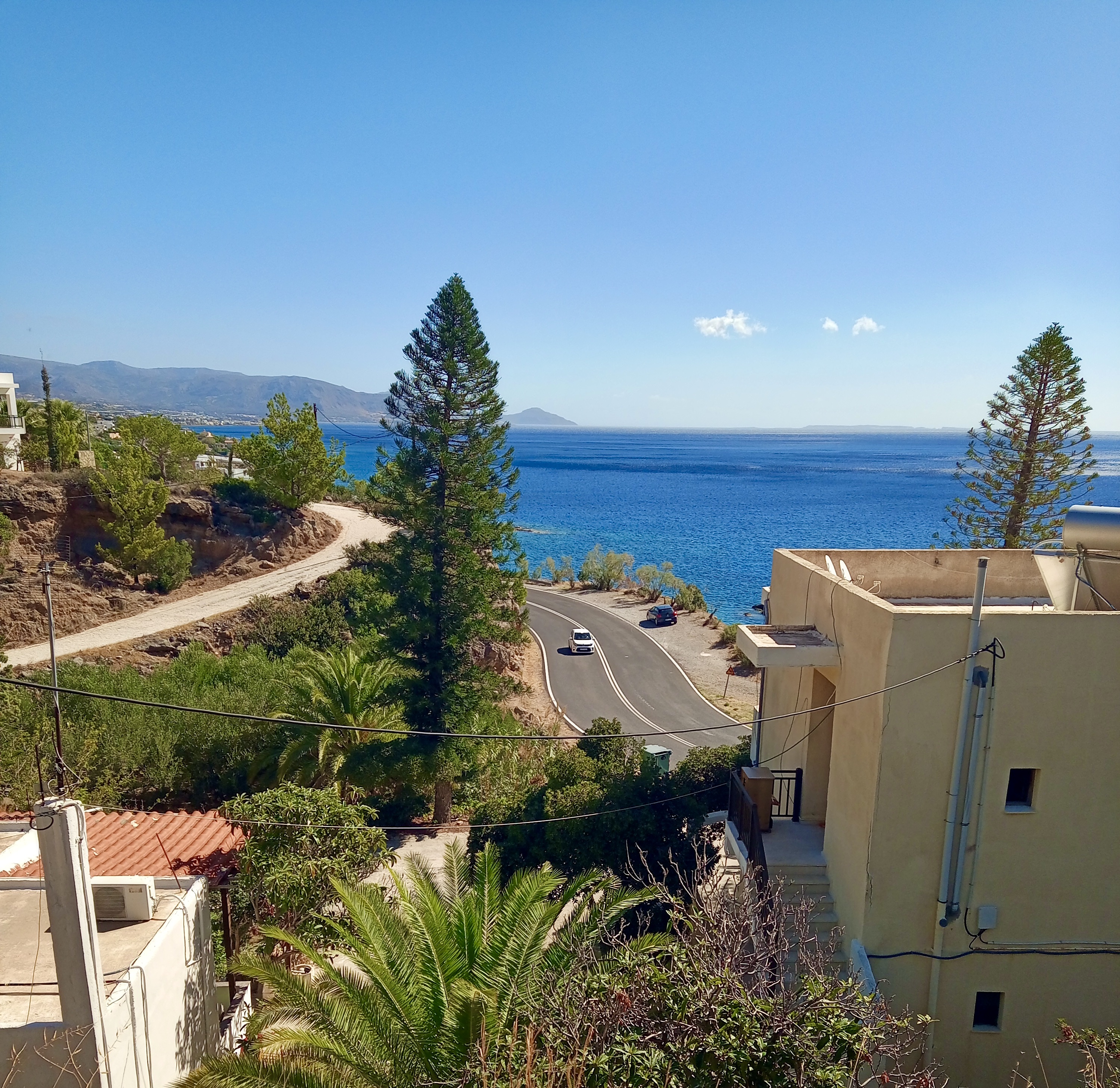
Philotimo is a cornerstone of Greek culture that embodies a complex set of virtues that are almost impossible to translate with a single word. While literally meaning “love of honor,” its true significance extends far beyond that phrase to encompass a deep sense of dignity, integrity, and selflessness. For Greeks, it is a way of life that emphasizes treating others with kindness and respect. The thing is, there’s no direct way of translating what that word means into English. What are its core values though?
Honor and integrity: At its heart, it’s about acting with a strong moral compass and doing the right thing, simply because it is the right thing to do. It’s a matter of personal and family pride, where one’s actions reflect not just on themselves but also on their community.
Generosity and selflessness: Demonstrating philotimo often involves acts of sincere, selfless kindness, such as helping others without expecting anything in return. This can be seen in everyday gestures, like a host’s warm hospitality, or in more profound examples, like citizens rescuing refugees.
Empathy and respect: The concept is deeply rooted in empathy—the ability to understand and consider the well-being of others. This drives the behavior of treating others, including strangers, with warmth, courtesy, and respect.
Humility and duty: Despite its connection to honour, philotimo is expressed with humility, and it entails an awareness that one’s behavior reflects on their family and country. It is a conscious effort to perform one’s duty and live responsibly.
I’ve known the word for many years, of course, but it sprang to mind recently as I was reading the magical and totally engaging memoir by Kathryn Gauci, ‘An Aegean Odyssey.’ Here are a few quotes from that part of the book that I’ve most recently been absorbed in:
“I pass an old woman standing outside her kafeneion, crocheting. ‘Kalimera sas,’ I say to her, bidding her good day. ‘Kalimera,’ she replies. We start a conversation. She is curious, not only that I understand her, but about my life. Am I married? Where is my husband? Do I have any children? All the usual questions that I answer time and time again in Greece. It’s always the women who ask; no Greek man has ever asked me these questions. She gives me a sprig of basil – a Greek welcome.“
It was that sprig of basil that set me off on yet another reverie. A local Greek will always want to give you something, and if they have nothing else, it’ll be a sprig of basil, a flower, a koulouraki, but always it’ll be something. I think that philotimo goes a long way towards explaining too why the crime rates are so low in local village communities. There is such a deep sense of family pride and reputation at stake. OK, so it’s a fine line between aloofness and a healthy dose of pride. I say ‘pride’ in this context to refer mainly, not to an air of superiority, but to a desire to maintain the family’s reputation. It works on everyone in the ‘tribe,’ so to speak. No one wants to bring shame on their relatives, and it’s a really healthy deterrent to wrong conduct. I so identify with her words about women asking quite personal questions about one’s life too. It takes some getting used to if you’re new to Greece, but they mean no harm and wouldn’t understand our British reserve, as it were.
Another brief but telling quote from Kathryn’s travelogue, as she investigates different islands and the more remote villages on them, “Everywhere, people want to give me gifts – small gestures of remembrance – Philotimo.” She’s right, of course, no matter where you go in either rural or island Greece, this principle applies. Kathryn goes into one aging kafeneio, primarily because she wants to find a toilet, but she ends up having a rewarding conversation with the female host, not to mention three swarthy Greeks sitting at a table, whose appearance puts her on edge to begin with. Of course, within minutes they’ve called to her and asked her to join them, which in this instance she politely declines, but carries on her conversation with the café owner. When she gets up to leave and asks how much is the coffee, the reply is, “Nothing, you are my guest. I hope that you will have good memories of Crete.”
This has been our experience so many times as well. I remember one particular instance on the island of Patmos, when we’d made the walk all the way from Skala, the main village and port on the island (where we were staying) all the way up to Kampos, which is quite a trek. When you reach Kampos, you arrive first at a modest little square with a picturesque little church to your right, and adjacent to that is the road leading down to Kampos beach, a further fifteen minutes away on foot. On the left is the truly delightful little cafe bar called the ‘Aroma,’ which has a very appealing shady terrace, filled with traditional-looking tables and chairs. After a fairly strenuous walk, we were only too pleased to rest our pins at a table and order a couple of iced coffees. We were also a bit peckish, so once our coffees had arrived I went inside to ask the host what she had that we could eat along with a cold coffee. She didn’t have much, but showed me a cake that she’d made that morning, one of those that’s quite common here in Greece. It’s round, with a hole in the middle (like an inner tube) and is two different colours, one rather chocolaty-looking and the other yellow, like a heavy sponge cake. It’s actually quite to our liking as it’s in no way too sweet. In fact many Greeks eat this cake at breakfast time, along with some olives, a slice or two of ham and some cheese and paximadia.
She offered to cut us a couple of chunks of cake, and I accepted gratefully.

Also seated on the terrace were an elderly couple, the wife of whom had her arm bandaged and in a sling, plus a couple of local working men taking a short break from their toil. The landlady too eventually sat down and there followed a lovely conversation, much of which involved us answering the kinds of questions that Kathryn refers to above. When we decided it was time to move on, since we wanted to make it down to the beach where we planned to have lunch beside the sea, I asked the café owner for the bill. She replied, “Oh, forget it. You’ve were my guests. Hope to see you again some day.”
And, as it happens, she eventually did. We went back to Patmos the following year for a further three weeks during springtime, and we made the same walk and sat once again in the Aroma, where this time I made sure that we paid for our drinks, since the poor woman has to make a living.
I’ve got a further 30% or so of Kathryn’s book to read before I finish it, but I’m already having withdrawal symptoms. I shall miss it when I reach the end. If you’ve done what we did and moved out here to live permanently, then you’ll easily identify with many of Kathryn Gauci’s experiences. If you simply come here for your holidays and have made sure to get away from the hordes and experience the ‘Real Greece,’ then you’ll also I’m sure find many of her experiences resonate with your own. If you’ve yet to find out what it is about this amazing country that seeps into one’s soul and never lets it escape again, then I’d advise you to start planning for a visit now, and do so without resorting to tour operators’ big hotels or All Inclusive packages, and you’ll soon be smitten, I guarantee it.
Photo time again…

Above: Our sun terrace after dark. I rather like the mood of this one.
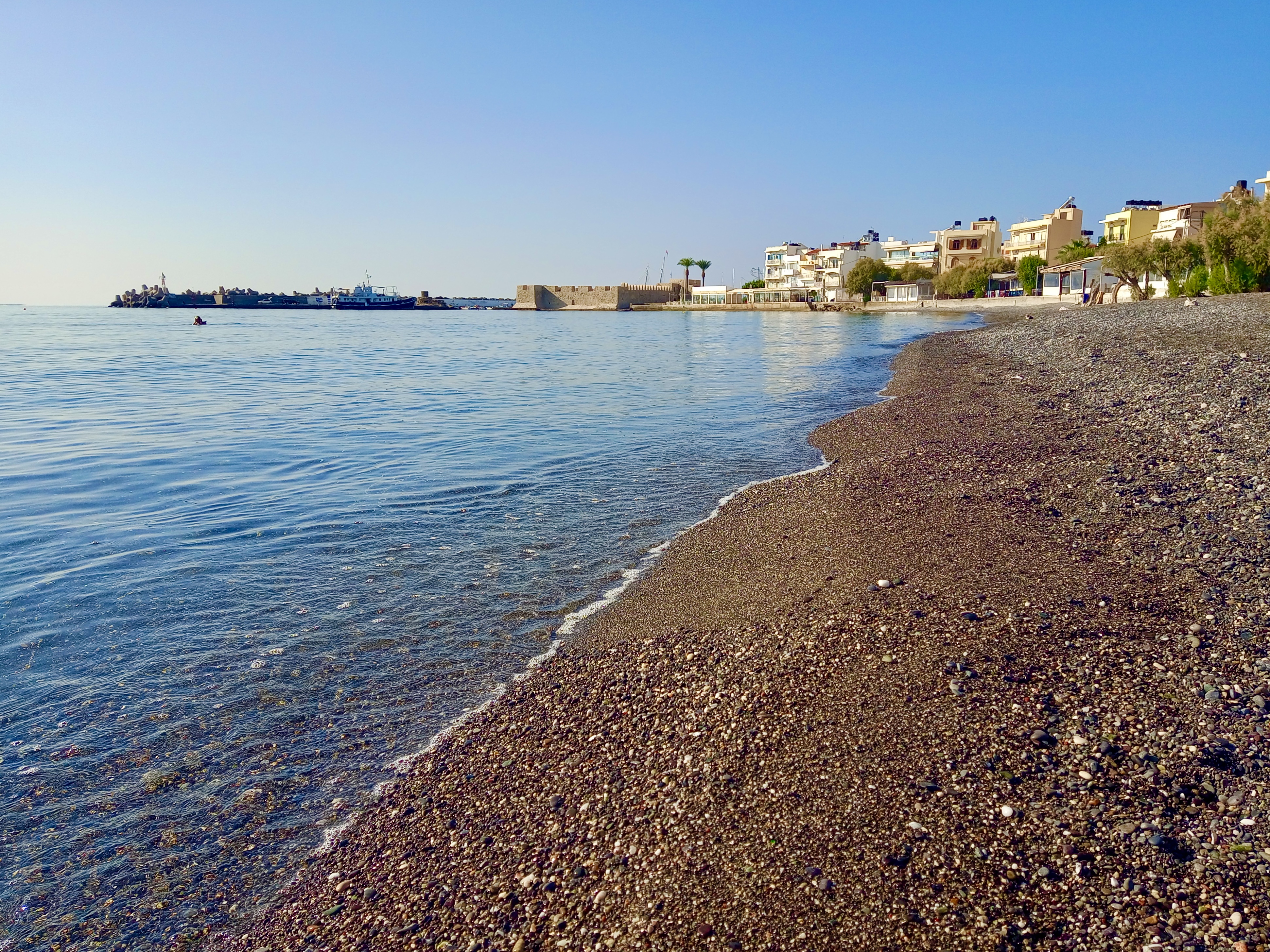
Above: Our beloved town beach a few days ago. You can see the newly opened renovated Venetian Fortress at the far end of the bay, and to the left the harbour wall.

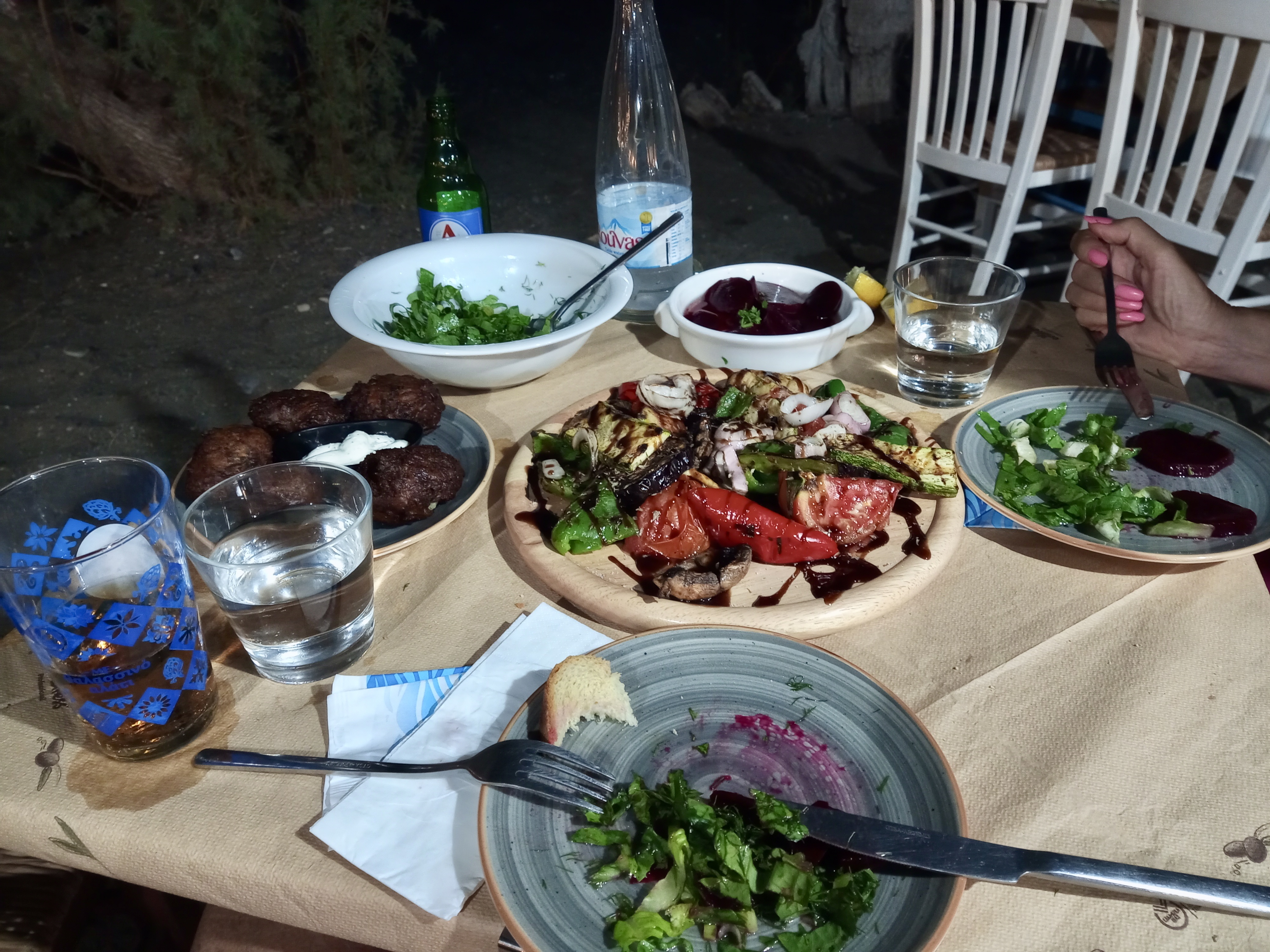
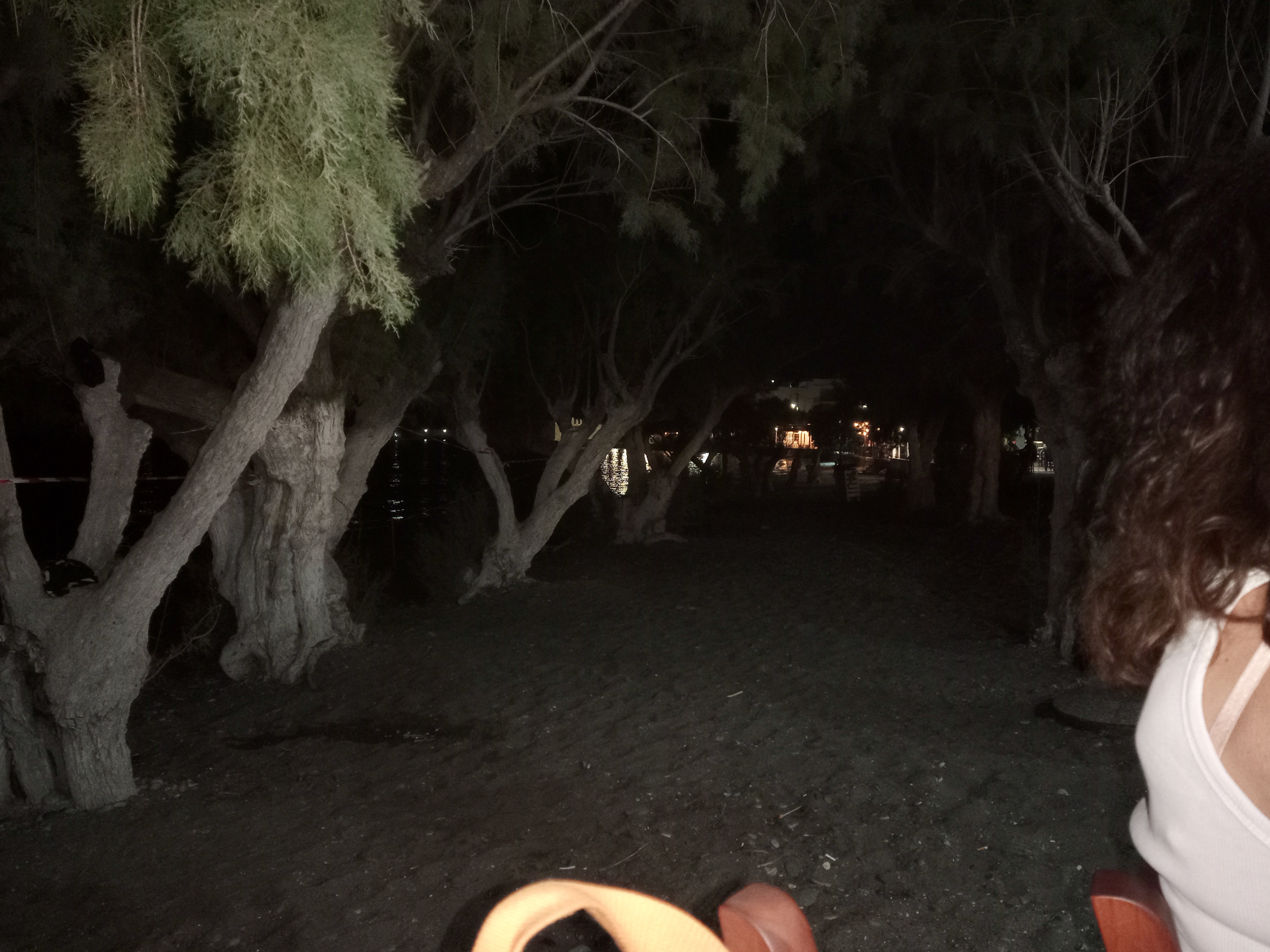
Above: The back of the same beach, showing why we so love eating and drinking here. The one below was taken during an evening meal right there, in fact:
As was this one too…
•
Click HERE to go to my Amazon Author Page, where you can browse and purchase all of my seventeen written works.
 Accretions
This is how Yvonne looks like after a strenuous hike??? Bloody hell!
I guess it’s her Greek blood Marcus, a Greek girl never goes out without paying attention to her appearance! 🤫