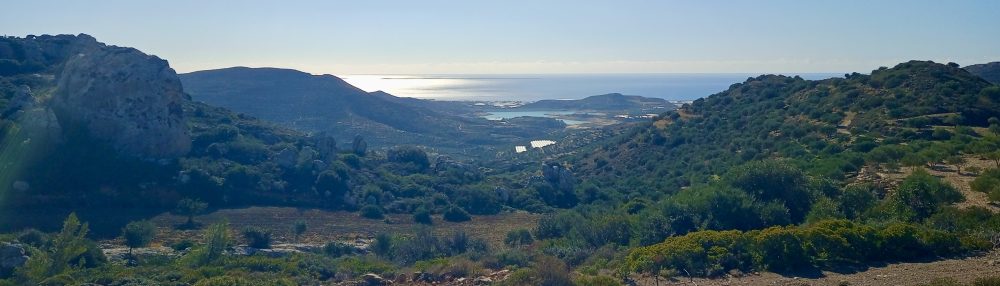

Well, the hillsides are once again echoing to the sound of portable generators, as they sit on the backs of pickup trucks in the olive groves, powering those long-poled ‘whizzers’ that the harvesters use to encourage the olives to separate from their branches and fly to the ground, where they’ll hopefully land within the area covered by the huge nets that have been spread around the base of each tree for just such a purpose. Entire families are ‘off-line’ for a couple or three weeks when it comes to having a coffee out, or spending leisure time together, depending on how many trees they own and consequently have to harvest.
They’re all in the olive groves, the women on their knees sorting the fruit from the leafy twigs that are often still attached to as it falls, and filling either plastic crates or hessian sacks with the precious yield that will hopefully keep them in oil for the coming year or two. The men are setting to with the ‘whizzing’ machines, their arms aching as they keep the long poles nearly vertical so as to reach the highest branches where the deep purple fruit may be tantalising them with its presence. They’ll also be wielding chainsaws as they reach the end of each tree’s turn, in order to cut away the central boughs of the tree so as to let the light in for next year’s harvest. I say ‘next year’s,’ but I mean probably next year’s but one, since olive trees produce their best harvest on a two-year cycle.
There is joy in the olive harvest, even though people work their socks off while doing it. But this year there’s also uncertainty as to how good it will be, since we’ve hardly seen any rainfall since last spring. I know that this area is the sunniest region in all of Greece, but for all that, we still expect autumn rains to come, which is why olive farmers are busy rotavating their olive groves in September-October, so that the hoped-for autumn rain will penetrate the previously concrete-hardened soil and reach the tree roots, thus getting sucked up into the trunk and eventually deposited in the fruit, fattening it up for the harvest to come. If there is no autumn rainfall, then the fruit will not fatten up and thus the olive yield will be poorer.
It’s a tragedy that this past month or so has brought unprecedented rainfall to north western Greece and the Ionian Islands, causing rivers to burst their banks, sweeping away bridges and becoming vast, angry, boiling torrents of brown mud. Many crops have been destroyed in that part of the country as the land sits under several feet of dirty water. Villages and towns have seen their streets become cataracts of churning muddy water as their houses and stores have suffered incalculable damage. The forecasters on Greek TV have told us that some parts of the Ionian coast and islands have received a year’s rainfall in just a few days, it’s been that bad. It’s officially the wettest autumn there for more than 25 years. It’s been heartbreaking to watch local people being interviewed by the TV reporters, and seeing the hopeless desperation in their faces.
How ironic that here, in eastern Crete, people are praying for rain. The reservoir that feeds Ierapetra town, as well as most of the fruit-growers’ hothouses in the region too, is still less than half-full, when normally at this time it would be full, or nearly so. There is finally talk of the possibility of constructing desalination plants along the coast somewhere. It seems to me, and I’m no expert in such things, that this is the only logical solution. Even though we’re thankful that this area is not so tourist-dependent as other parts of Crete and Greece in general, there is still the relentless construction of new buildings, new hothouses, and so on, and all of it draws its water supply from a reservoir that was constructed in 1986, when there were significantly fewer fruit and veg farms and houses, warehouses and tourist accommodation than there is today.
The Bramiana Reservoir near Ierapetra, which was built primarily to provide irrigation for the extensive greenhouse cultivations in the plain surrounding Ierapetra, covers an area of approximately 1,050 acres [about 4250 stremmata, which is the measure of land used here in Greece] and has since become an important wetland area, attracting significant populations of migratory birds and other wildlife. We’re privileged to live near enough to be able to walk to its shores in about an hour from our house here in the village. It’s a delightful country walk taking us around the back of a mountain, the other side of which sits the village of Gra Ligia and the town of Ierapetra itself.
We’ve been thrilled in the past to watch the migratory birds and water fowl that stop over there on their way either north or south, and whenever we go there we always see herons. There are also wild tortoises in and around its shores too, and we have to be careful not to walk on them, as they will trundle lazily across the path, disguised so well that you don’t see them until you’re almost on top of one.
Anyway, I intended in this piece to muse about the passing of the seasons. It only seems like yesterday that we were pruning our three olive trees the last time, yet here we are at it again, another twelve months having flown past. We’re out there with saws, loppers and secateurs, busily cutting branches and boughs, chopping it all up into small pieces so that it can be crammed into black bags for disposal.
The other day some friends who have a flat in Ierapetra and a house in Kavousi gave us a huge bag of freshly picked apples. It’s odd to see fresh apples, because they’re not grown much in these parts. Kavousi, however, which is only about 20km north east of us, has a very different climate as it sits on a north facing slope just a few km up the hill from Pachia Amos, at the southern tip of Mirabello Bay. There our friends have an orchard and at this time of year give away massive bagfuls of apples to all their friends, the harvest is so abundant. Nature is amazingly generous, and the fact that all the locals whom we have got to know regularly give us aubergines, cucumbers, tomatoes, peppers, courgettes from their surplus bears out that fact.
We’re even growing a bit of veg for ourselves now in among the pelargoniums in our lower garden. Well, maybe I exaggerate somewhat. We planted a couple of dozen lettuce a few weeks ago and they’re now big enough so that we can cut leaves for salads on a daily basis. That’s about it really. We can either buy vegetables at very cheap prices, or as often as not get them given us for free, so that it doesn’t warrant us making the effort, since we were a bit of a dismal failure last time we tried it.
The seasons are all wonderful, even though here spring and autumn are slightly academic, they’re so brief. But every month of the year has a specific characteristic, usually revolving around what fruit or vegetables are ripe at the time. So we wend our way through the year with our diet changing in subtle ways, depending on what’s in season, and, before we know it, another year has gone around and here we are again enjoying comfortable temperatures in the lower 20’s Celsius during the day and the upper teens at night. We still haven’t needed to heat the house at all during the lengthening dark evenings. Maybe in a couple of weeks time we’ll dig out our electric radiators, we’ll see.
Photo time.
The photo at the top of this post was taken in the village. It’s the truck belonging to our neighbours and the plastic drums show what season we’re in. Freshly pressed oil will be transported from the mill in these drums, although most Greeks won’t store their oil in plastic containers, but rather they’ll transfer it to steel vats. Oil stored in plastic or PVC drums will acquire a different taste if it’s left in contact with the drum for long. It’s not good for the health, so metal containers are the preferred method of storing oil for any length of time.
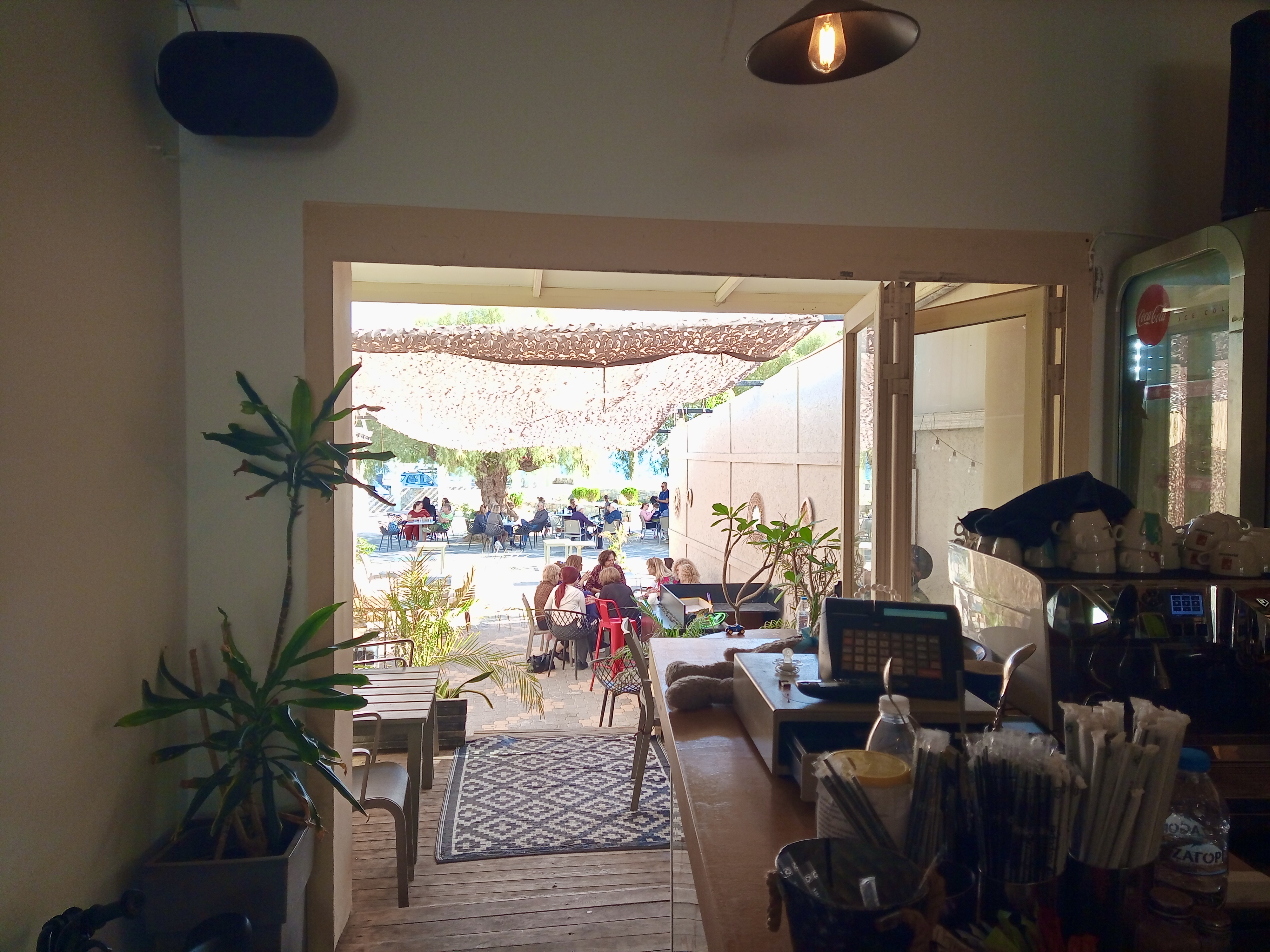
Above: The Tortuga Bar on the front in Ierapetra on a busy Sunday morning.

Above: One of the joys of getting up at this time of the year is opening all the doors and windows in the house, because the temperature now is so much more comfortable than it is during high summer. At 8.00 in the morning, this is the view from our ‘back door,’ the long shadows of our sun loungers revealing what the hour is too.
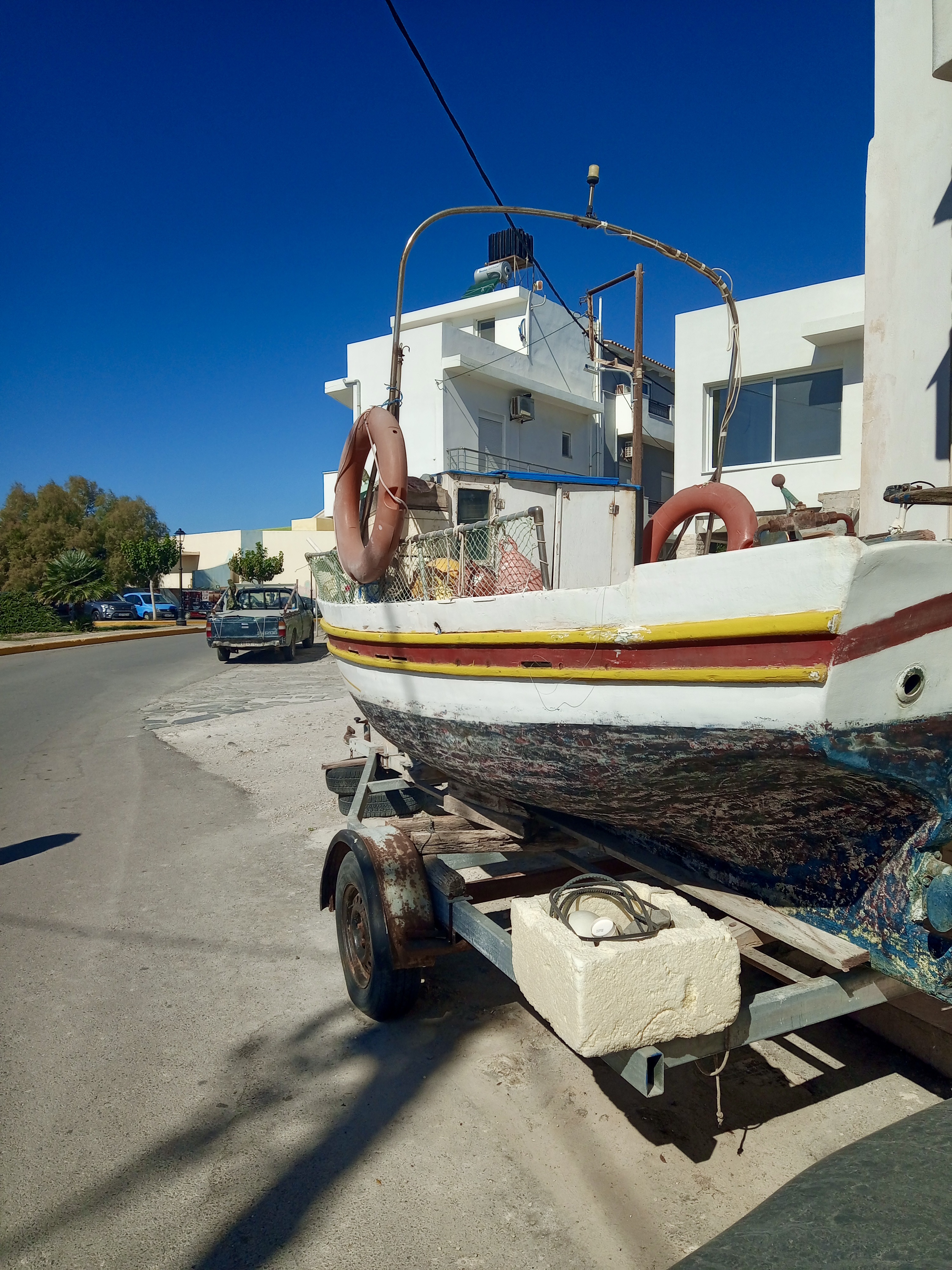
Above: Taken near the fishing harbour, on 31st October at 9.16am.
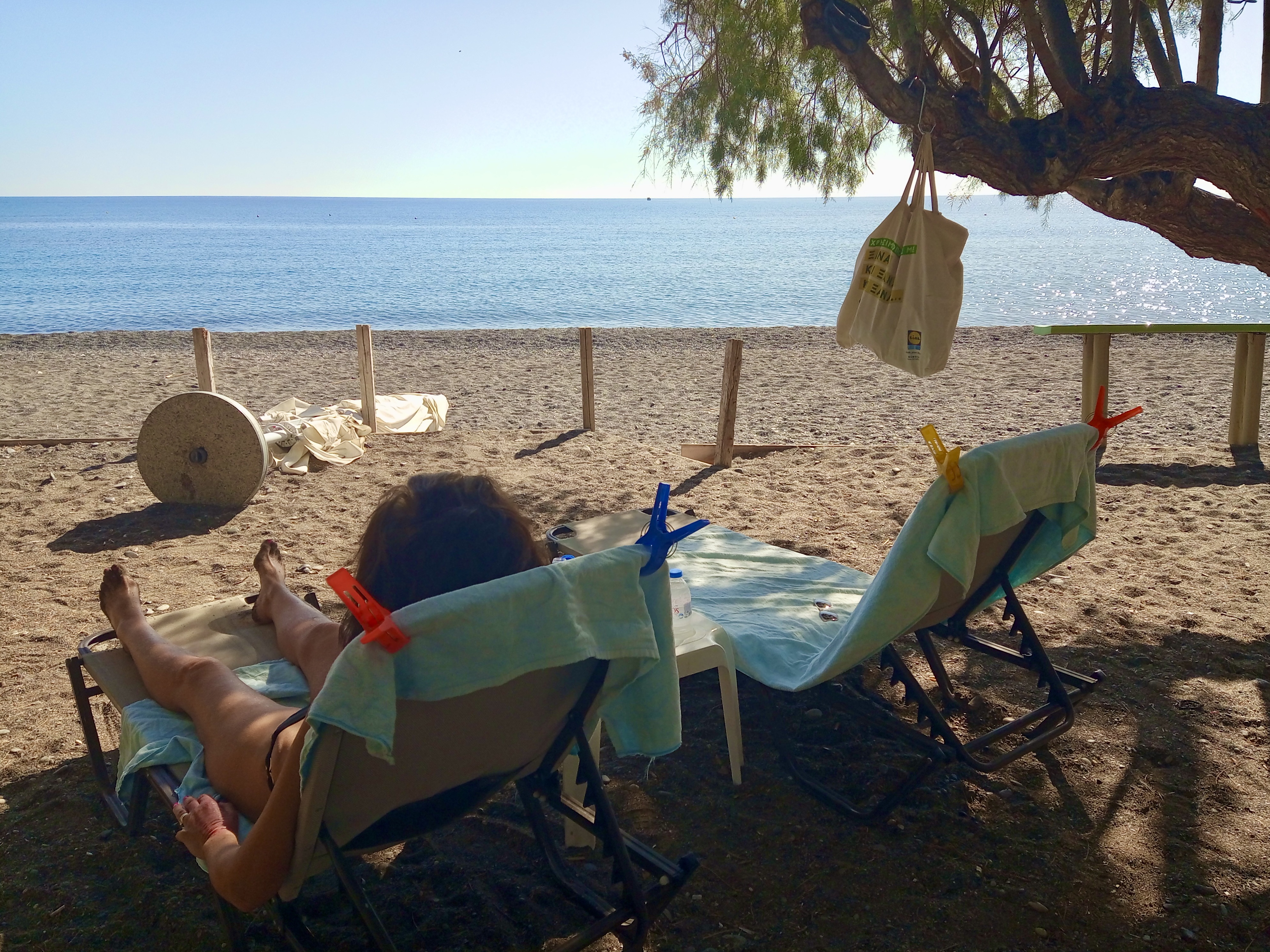
Above: The beach in the town is now wonderfully empty, but that doesn’t stop us from taking a swim a couple of times each week!

Above: Finally, one shot from the archives. This was taken a mere four decades ago in Argostoli, Kefallonia. Yup, my hair once did have some colour to it!! We were just getting ready to go out to eat at around 8.00pm.
•
Click HERE to go to my Amazon Author Page, where you can browse and purchase all of my seventeen written works.
 Accretions
Olive trees given as part of a dowry decades ago.