

Firstly, to put your mind at rest here, there will be no mention of native American headdresses, fireman’s outfits or helmeted highway patrol officers prancing around and singing about a young mens’ youth hostel chain; no. We’ve been talking a lot lately about how much more rooted the Greeks are to their place of origin than British people appear to be these days. Everyone in Greece, it seems, is strongly attached to their home village, or even suburb, and – if due to whatever reason they’ve had to move away – they always head back there whenever the opportunity arises; which would, of course, include bank holidays and celebrations, not to mention retirement.
In the UK, it seems to us that people no longer have an attachment to where they were born and raised. Even the fact that properties are referred to as ‘starter homes’ indicates clearly that a house is considered an asset that will be bought and sold as people move through their working lives. People dream of retiring to the coast, or maybe too, of course, somewhere abroad. In Greece, when people reach retirement, if they have moved away, they’ll more often than not want to go home to the village where they were raised, where they still have lots of surviving family and, no doubt too, they’ll still have a property that’s waiting for them to move back in.
If you watch the TV and listen to the conversation on a quiz show between the show’s host and a contestant, invariably they’ll ask the question, ‘Where are you from?’ The reply will always be either the actual place where the person was born and raised and still lives, or, if they’ve moved away, they’ll always be sure to make the point that, although they now live in, say, downtown Athens, they’re actually from – and here they’ll name their home village – with a great degree of pride too, I might add.
Still in Greece, by and large, people are very reluctant to sell a house. Here, that building is their heritage, it’s what keeps them grounded, it goes a long way towards helping them keep mentally and emotionally stable, content. I’ve read articles by psychologists who suggest that people who move home often (and that’s far more common in the UK than it is here in Greece) actually do harm to their sense of wellbeing and emotional stability. It seems that identifying with your place of origin is important for the soul, bringing a stability that is lost to those who simply view a house as an asset to be bought and sold. In short, if you sever your roots, you suffer emotionally, and often end up being much more susceptible to stress and anxiety.
We know of so many cases where Greeks have lived and worked abroad, in such faraway places as the USA, Canada or Australia, yet when they reach retirement they pack up and move back to their place of origin here in Greece. It’s like they have a ‘homing’ instinct that kicks in as soon as circumstances allow for it. We also have a few friends who live in the US, for example, who are almost unbearably torn because they’ve had children in Baltimore, for example, who’ve now grown up and have kids of their own and view themselves as Americans first and Greeks second (if it factors in their thinking at all), and the parents (who’ve now become grandparents) feel an unsolvable heartache, owing to the fact that they’ve retired and want to go back to their little village on the Greek island where they were born, yet fear that doing so will mean not seeing their kids and grandkids from one year to the next. We knew one couple to whom we became quite close during our years on Rhodes who hailed from Kattavia, a tiny village right in the south of the island, and because they couldn’t bear not to see their kids and grandkids, would fly over to Rhodes for maybe four or five months each year, but went back to America every time so that they wouldn’t lose that close contact with their family. The journey was a long one, with a couple of changes of plane, and they did this well into their late seventies, but still couldn’t move back for good, even though that was what their hearts yearned to do.
I’ve lost count, actually, of the number of older couples that we’ve met during our 20 years here in Greece who’ve come back to their ‘katagogi’ as the Greeks call it, which means literally their place of ‘origin’ to live out their golden years among friends and family around whom they grew up.
A Greek’s attachment to his or her place of origin is all consuming, truly it is. Here still, even though things are slowly changing, there are villages like ours (I say ‘ours’, but you know what I mean, it’s ‘ours’ in the sense that we’ve adopted it as our forever home, but we’re still basically interlopers) whose inhabitants consist of many folk in their seventies through nineties who’ve hardly ever travelled as far as the nearest town, leave alone to another country. Our near neighbours across the lane include Kyria Evangelia, who’s now touching 90, and has never been anywhere more than about 20 kilometres away from the house where she was born, raised, married, brought up three kids, widowed and now potters around in her twilight years. She still lives in the same house, which has never been brought into the 21st century. She still goes outdoors to get from her kitchen to her ‘saloni’ (lounge) and also to her bathroom. The tiny street in which she lives also serves as her hallway.
Yvonne and I have moved house more often during our fifty years of marriage than we’d originally have anticipated. It’s not always been through choice, though and, oddly enough, the longest period of time that we’ve lived anywhere in one place was the 14 years we spent on Rhodes. We’ve never moved simply as a means of climbing the ‘property ladder’ though, or indeed as a means of making more money. In the six years since we arrived here in the village, it’s been a therapeutic experience for us. That stability which we’ve witnessed among our Greek neighbours, that joy that they derive from moving amongst the same close friends, neighbours and family throughout their lives, has rubbed off on us, and we love it.
I don’t think we’ll be putting our house on the market for the foreseeable future.
Photo time...
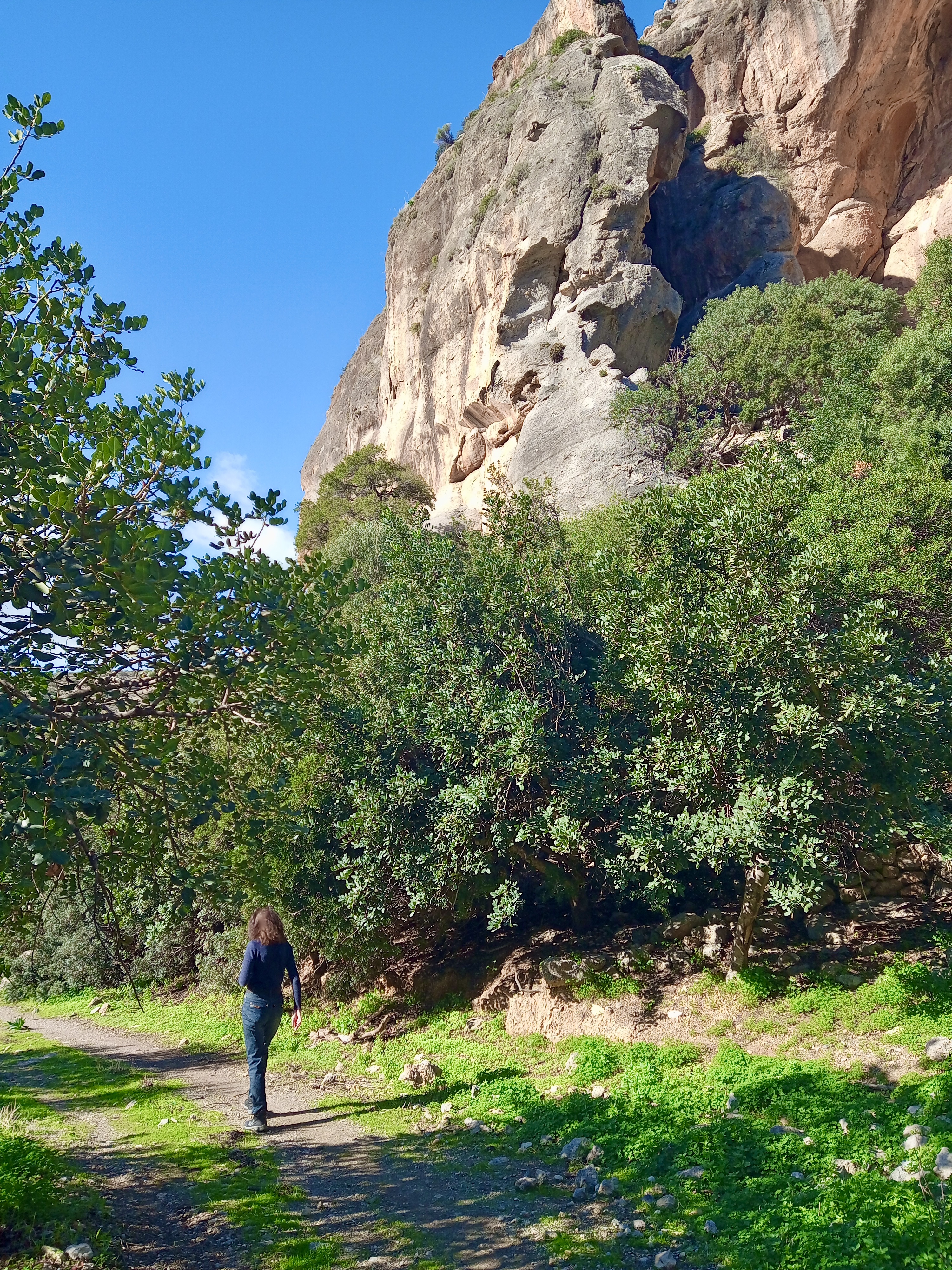

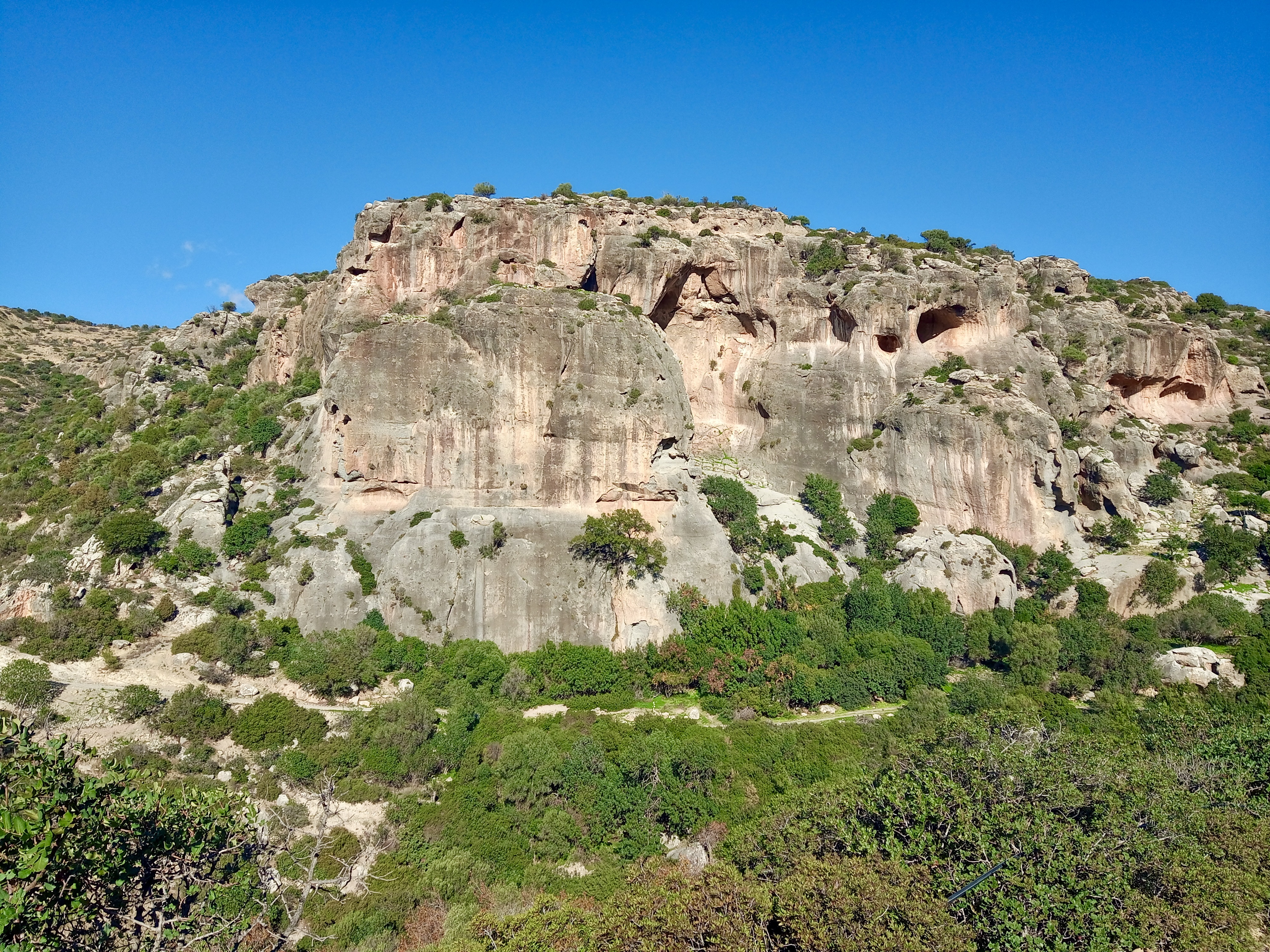


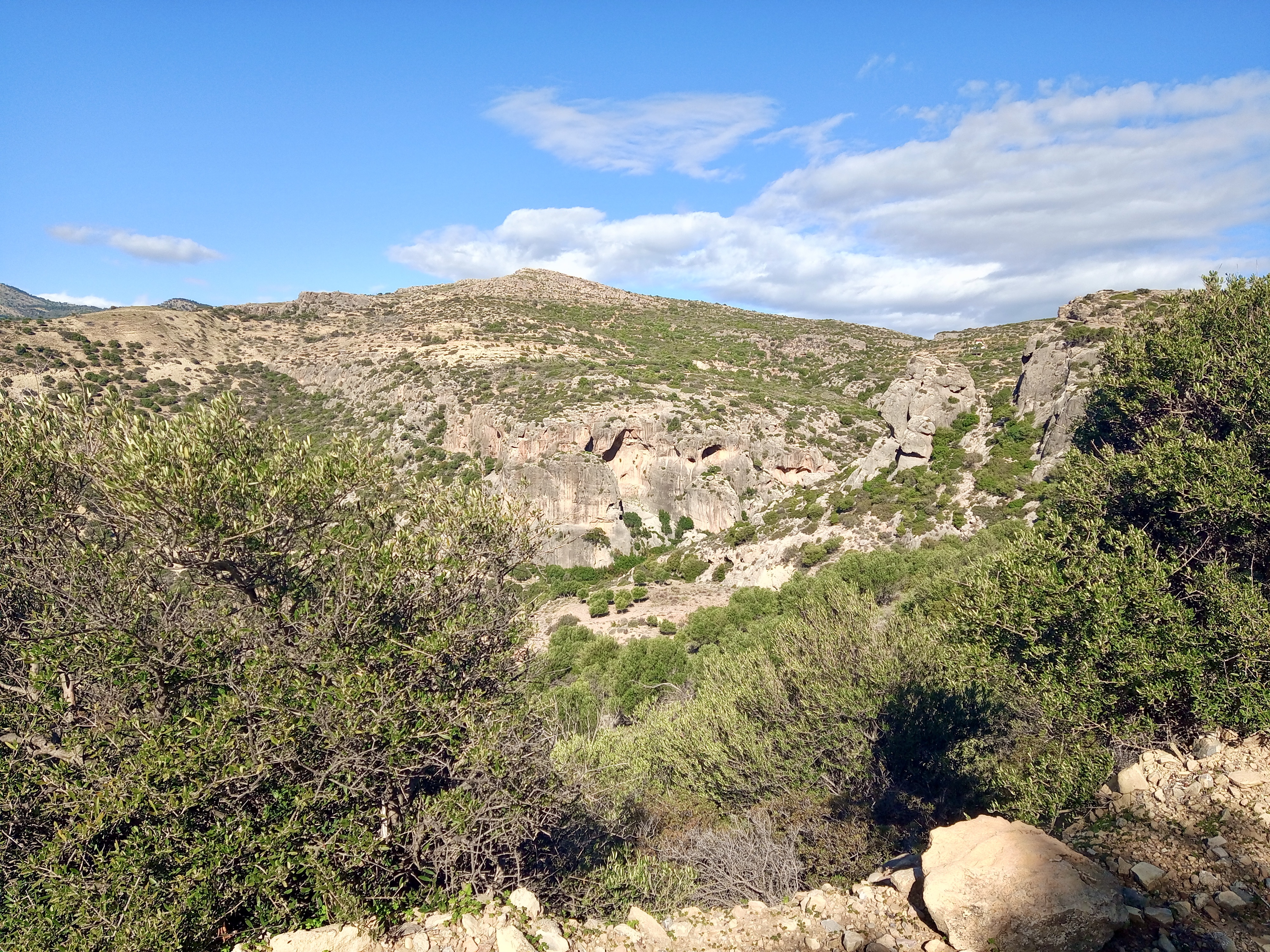
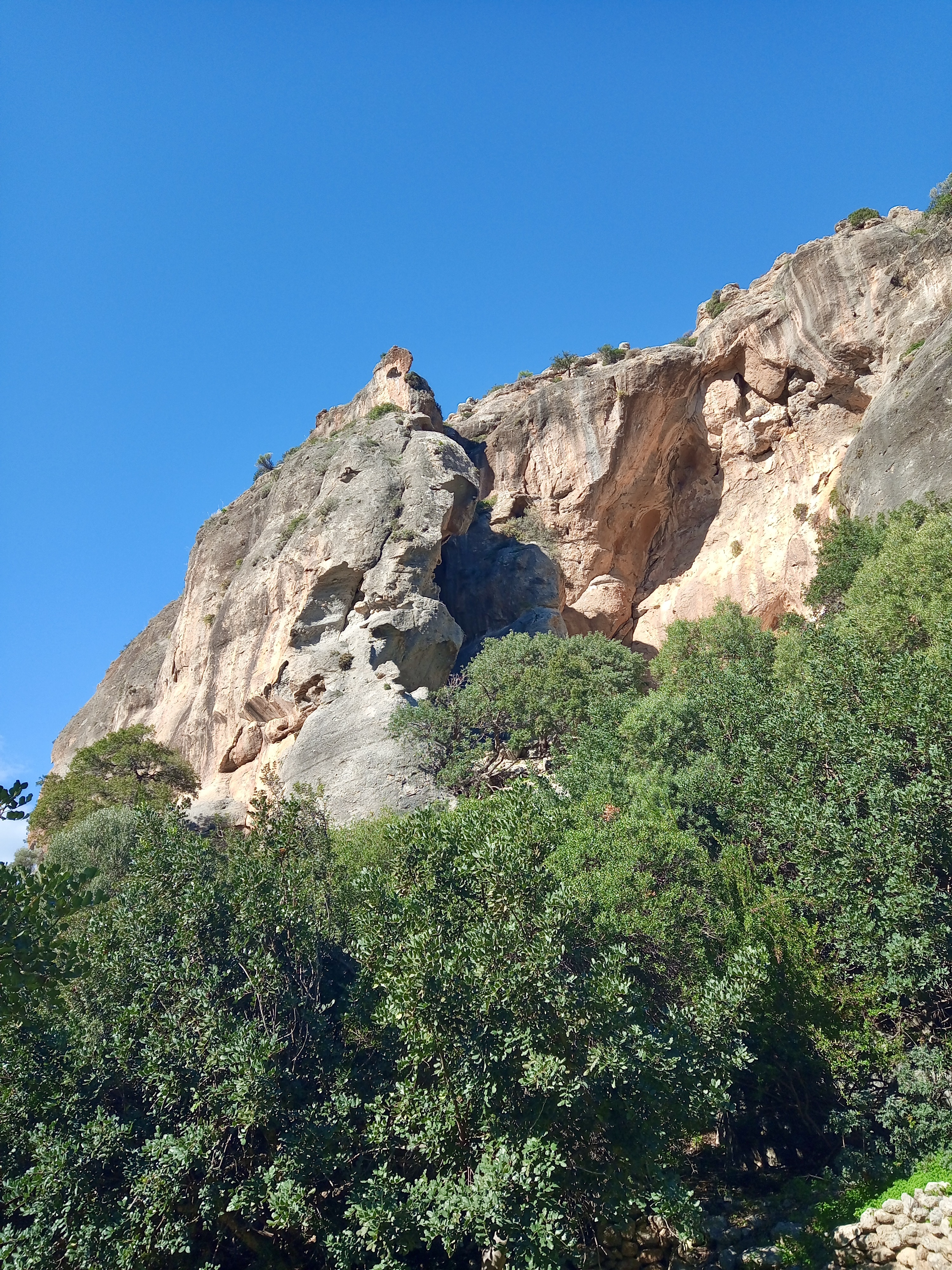

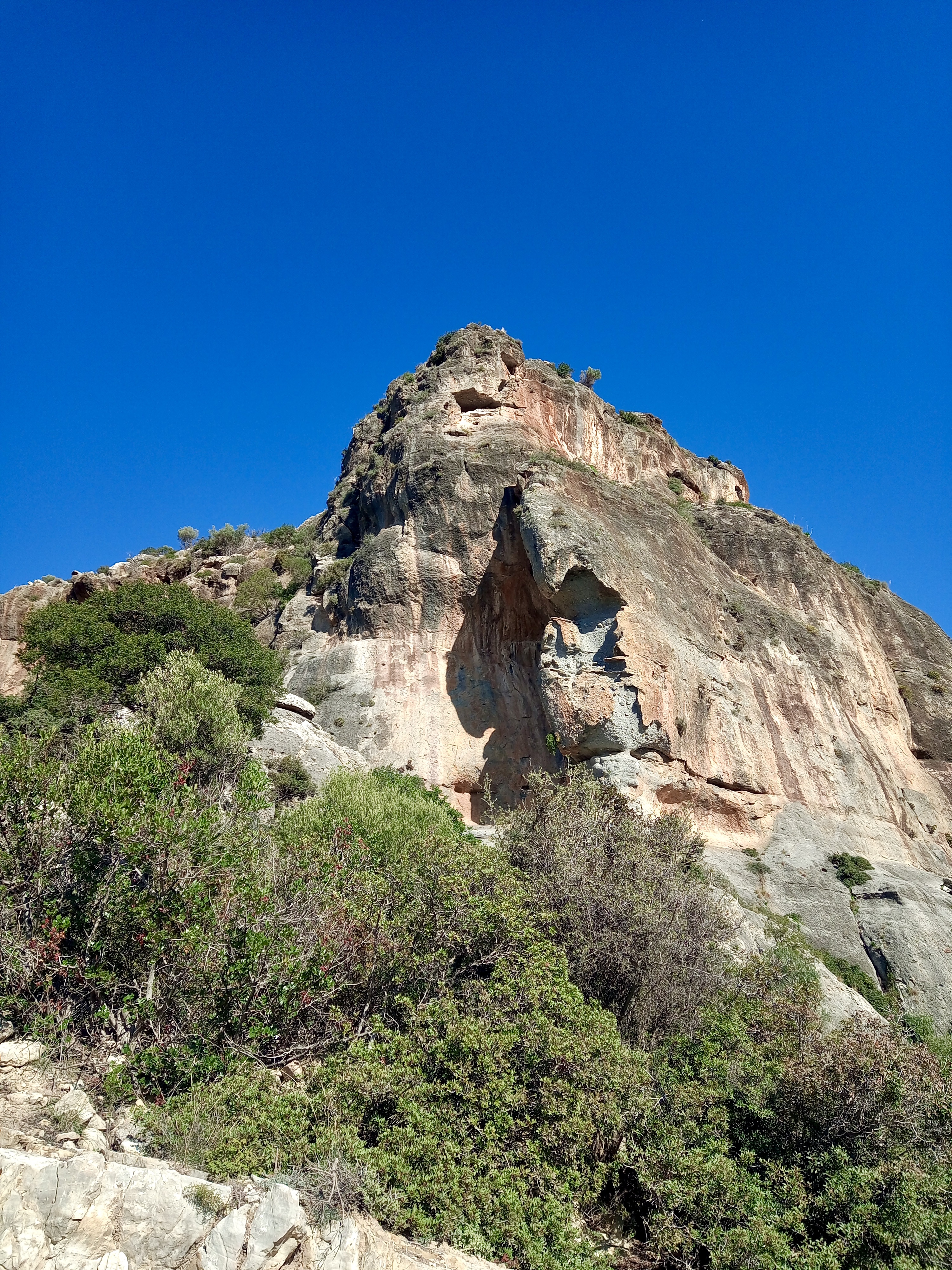
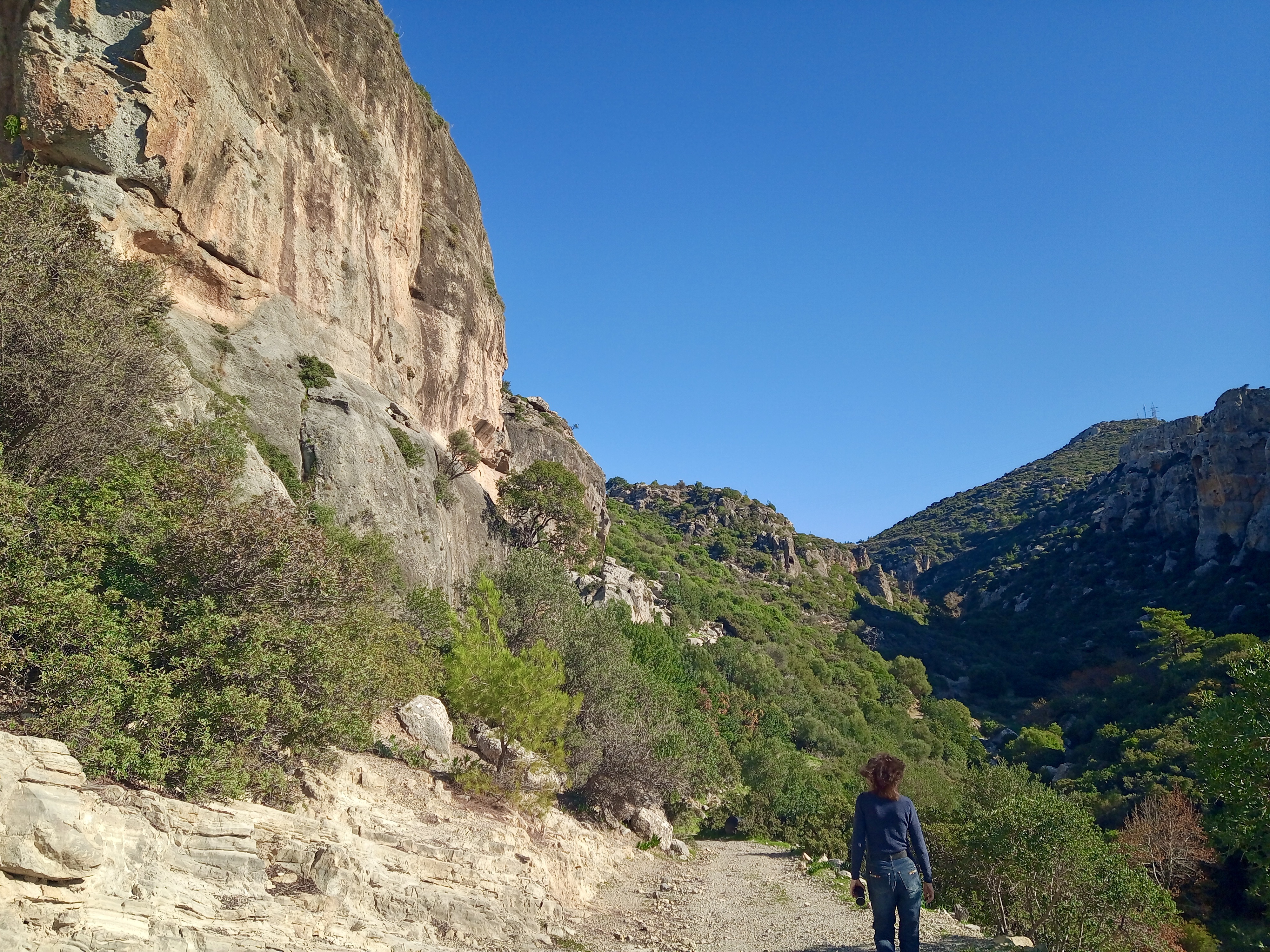
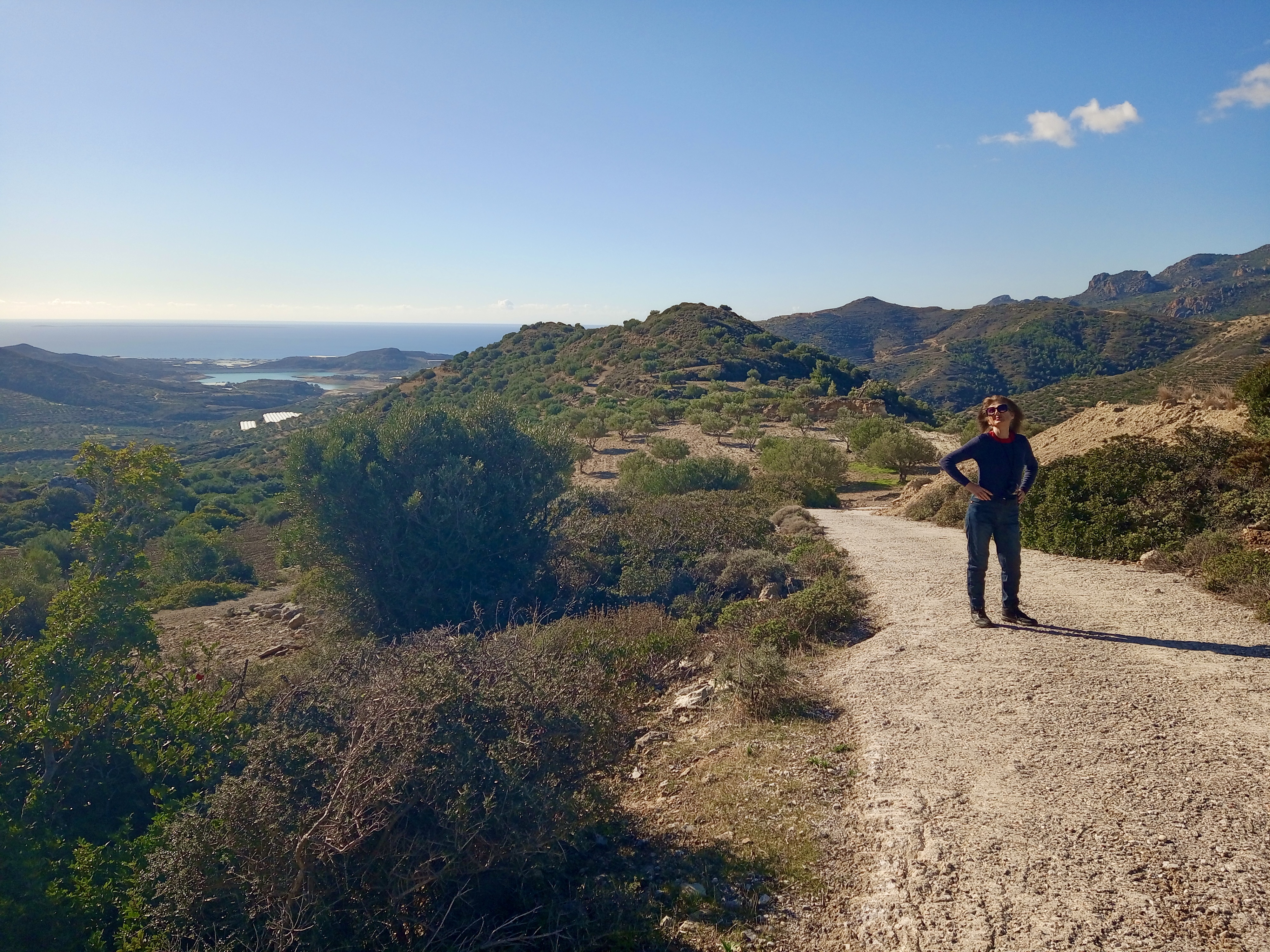


Above gallery (click on them to get a better view): These were taken just the other day, when we took a walk to the mouth of the steep gorge that sits just south of Meseleri. It’s very dramatic and, owing to the density of the undergrowth, impossible to navigate on foot from one end to the other. The best one can do is to walk down to the southern mouth and gaze upwards in awe. It’s well worth the effort though, because you can look at the Griffon vulture colony there and marvel at these majestic birds as they either sit way above you, staring down with disdain, or soar on the thermals right over your head. The two photos with the red circles indicate where a Griffon was sitting sunning itself the whole time we were there. Sadly I don’t have a zoom on my phone’s camera (well, apart from the digital one that ends up blurring the shot) and so you have to look carefully to see that bird, but he or she’s there, trust me.

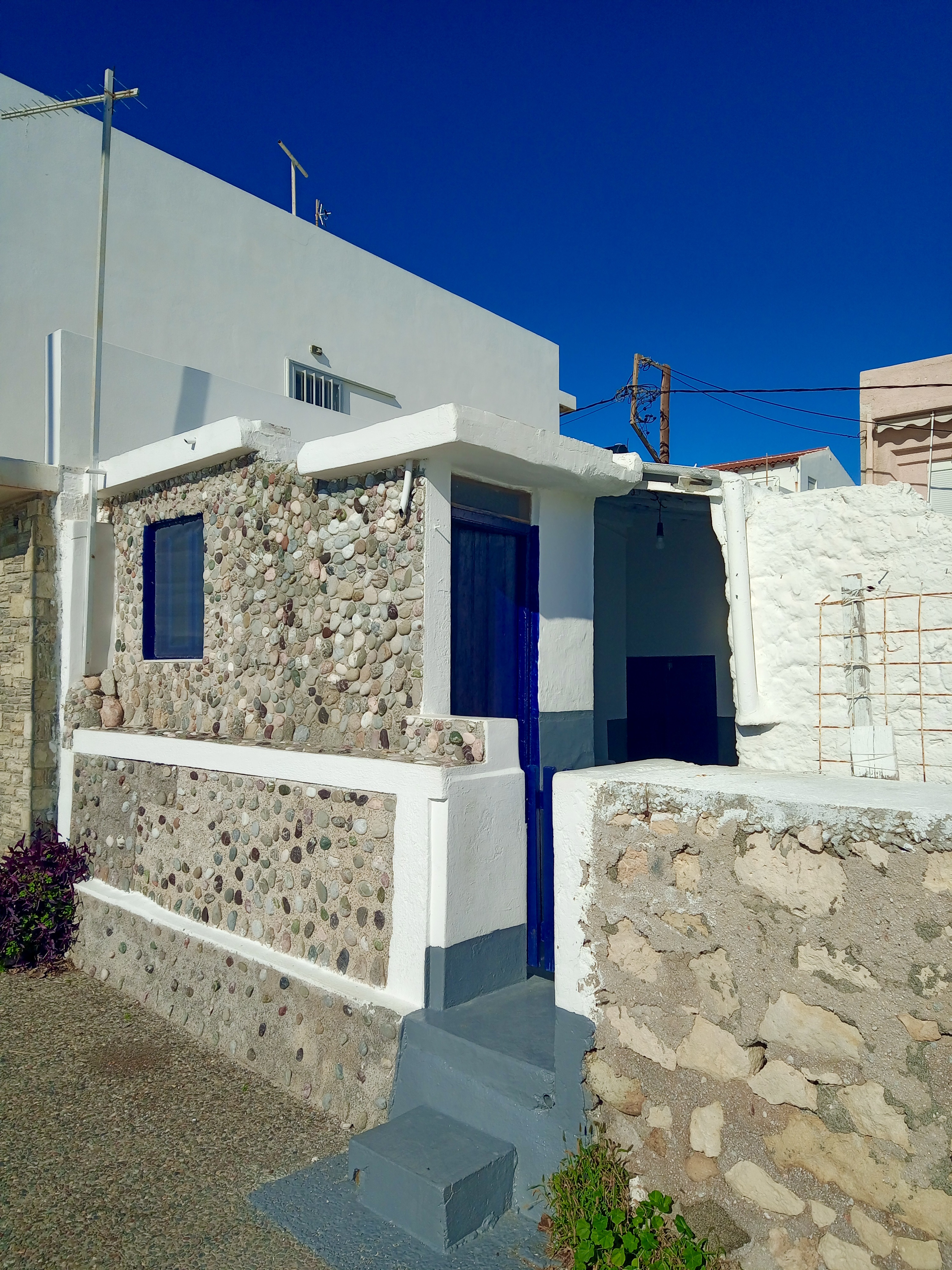
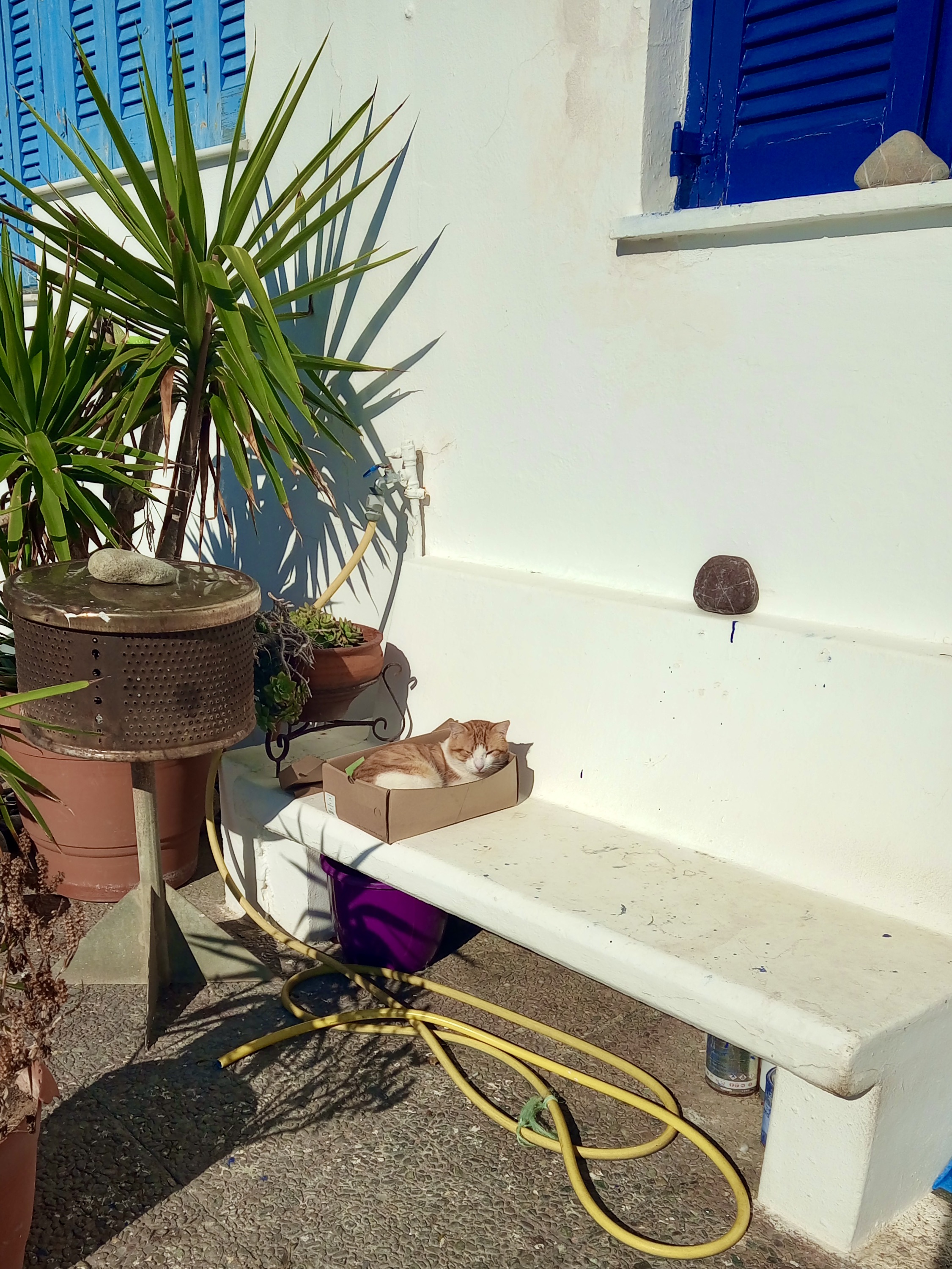
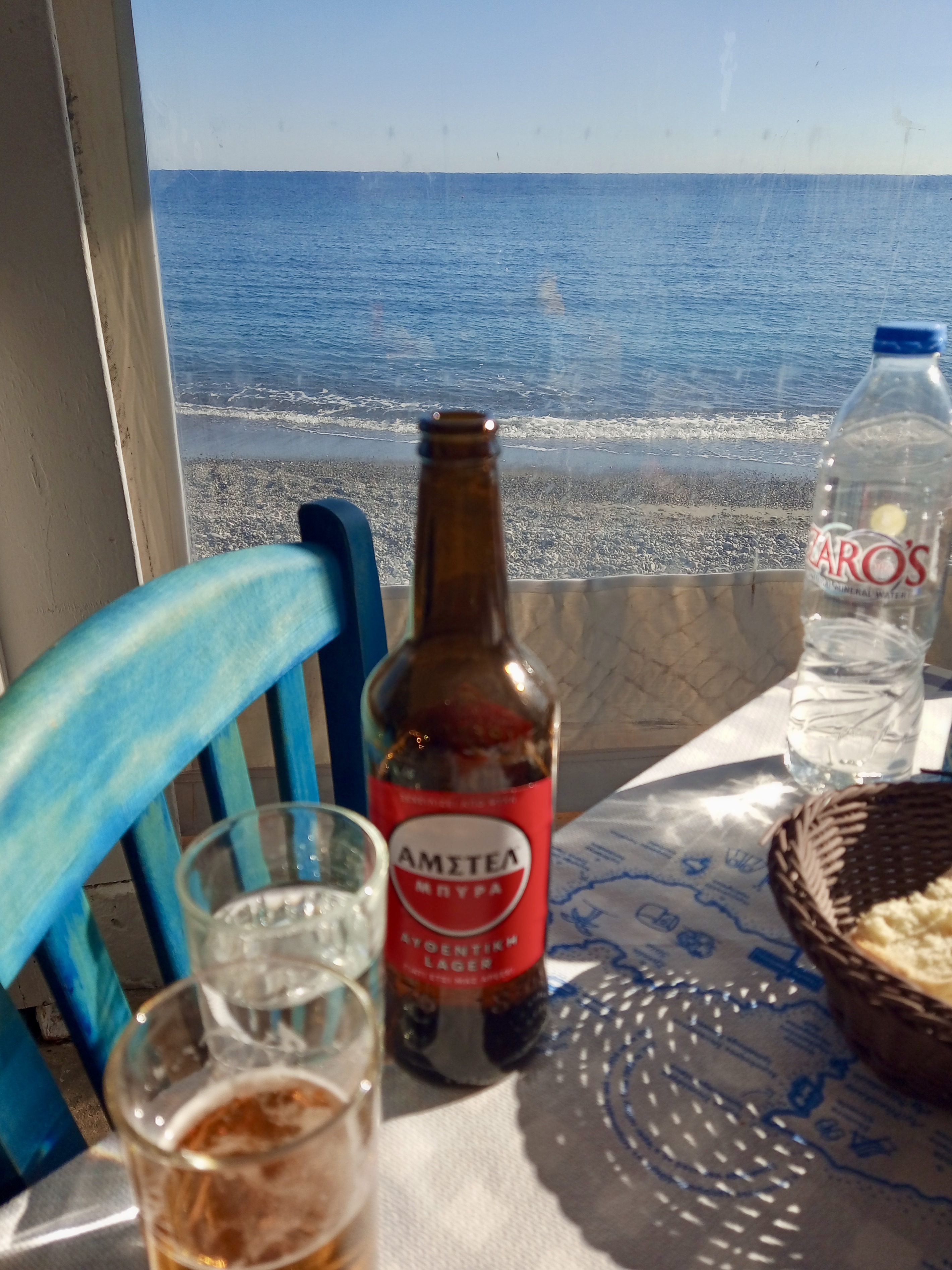
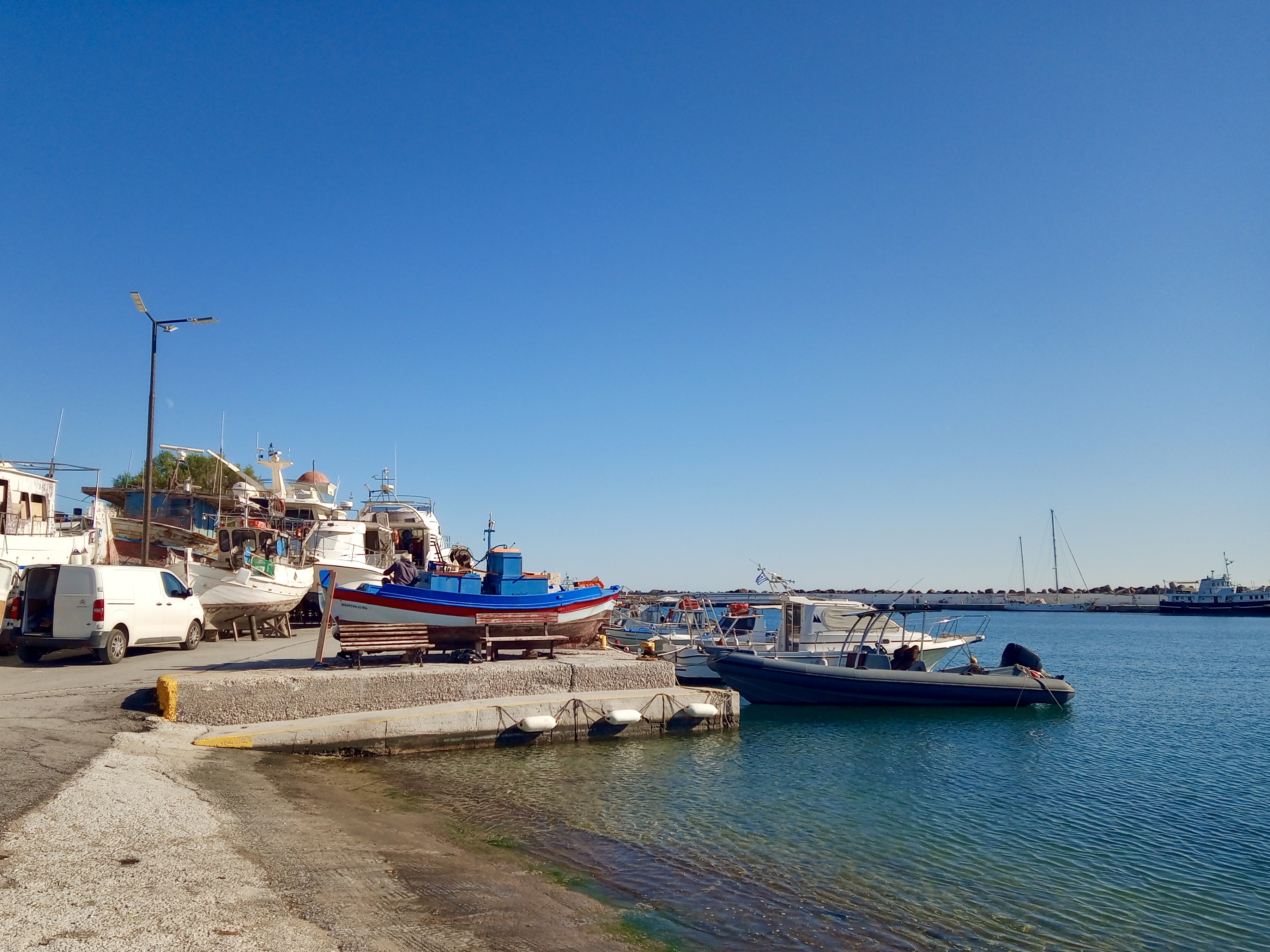

Above gallery: These were taken last Sunday, when we took a walk on the sea front and fishing harbour, then went to lunch at the Konaki restaurant.
And, finally, one from the archive. This is my sister-in-law Christina with uncle Theodoraki, taken some years ago, not long before he died. Theodoraki was an accomplished accordion player, and I have fond memories of one night at a taverna on the waterfront at Kalamos, where he whipped out his instrument (they can’t touch you for it) after we’d eaten and serenaded us under a clear view of the Milky Way, with the waters of the Aegean lapping just feet away. He used to grow gardenias for a living and, if you visited his nursery, the aroma was overwhelming and quite heavenly. The nursery was slap bang in the middle of the Kato Patissia area of Athens, which back then was a very nice area. Sadly, it’s a bit run down these days.

•
If you enjoy my blog posts, then maybe think about supporting me by purchasing one of my written works. Your support would be very much appreciated, rest assured. Click HERE to go to my Amazon Author Page.
 Accretions