Wet and dry

I don’t know whether it’s to do with the jet stream, climate change, or that it’s simply one of those winters, but the wind has been in the south far more often than is the norm recently, and when you couple that with the fact that it’s reached gale force a few times, the result has been disaster for a few of the waterfront restaurants down in the town, including our beloved Konaki, run by our good friend Yianni, he of the declining tooth population.

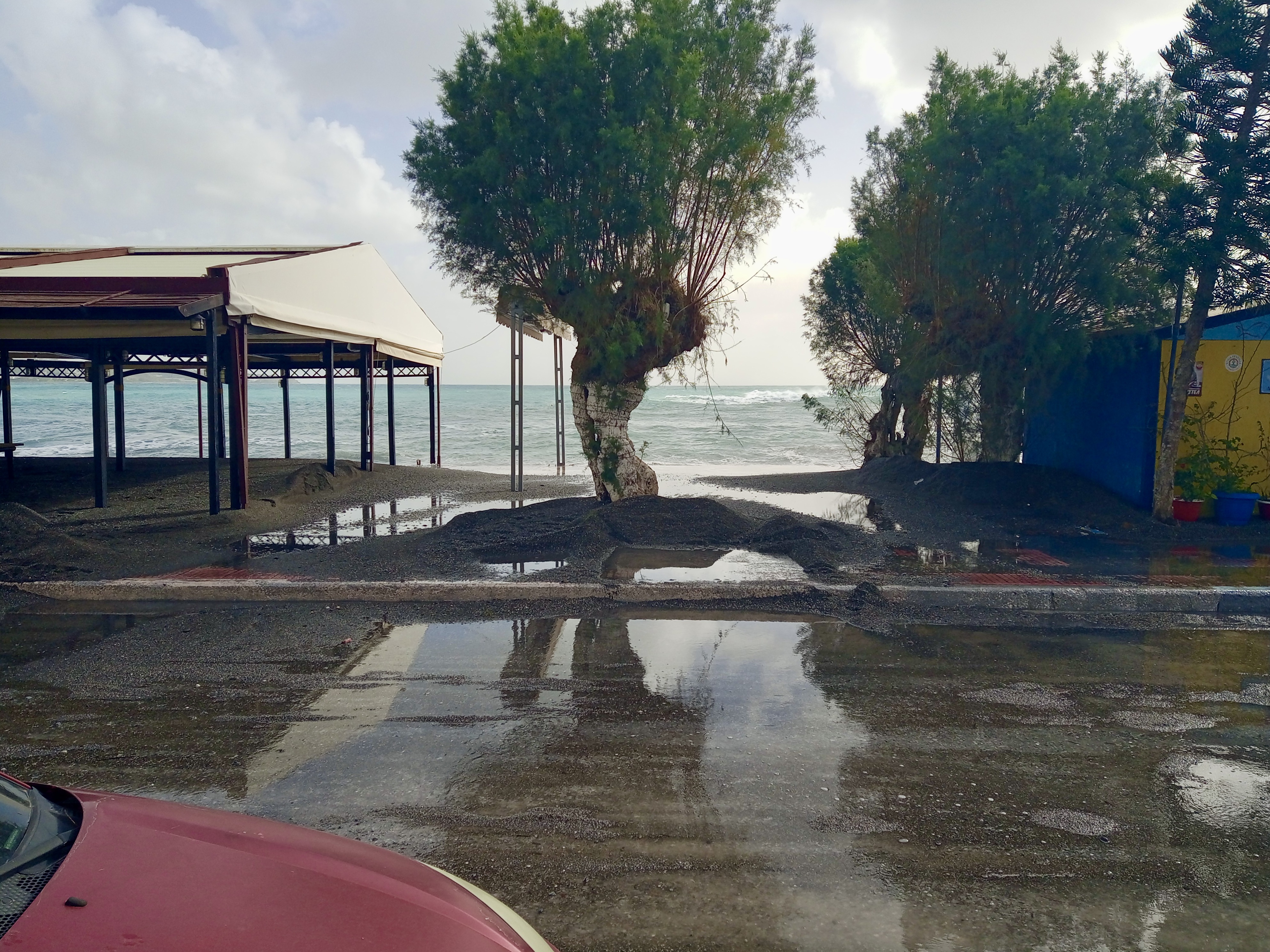
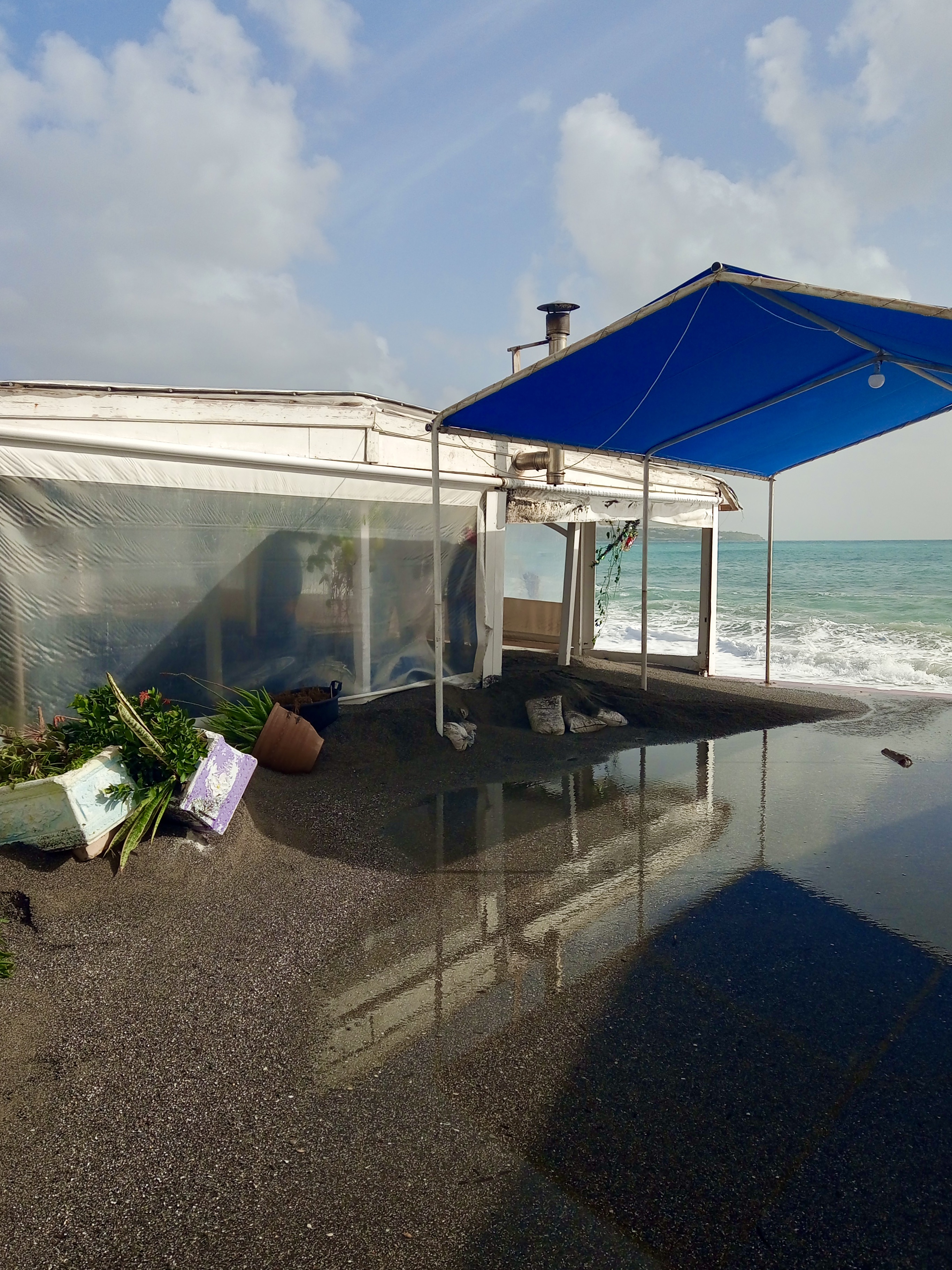
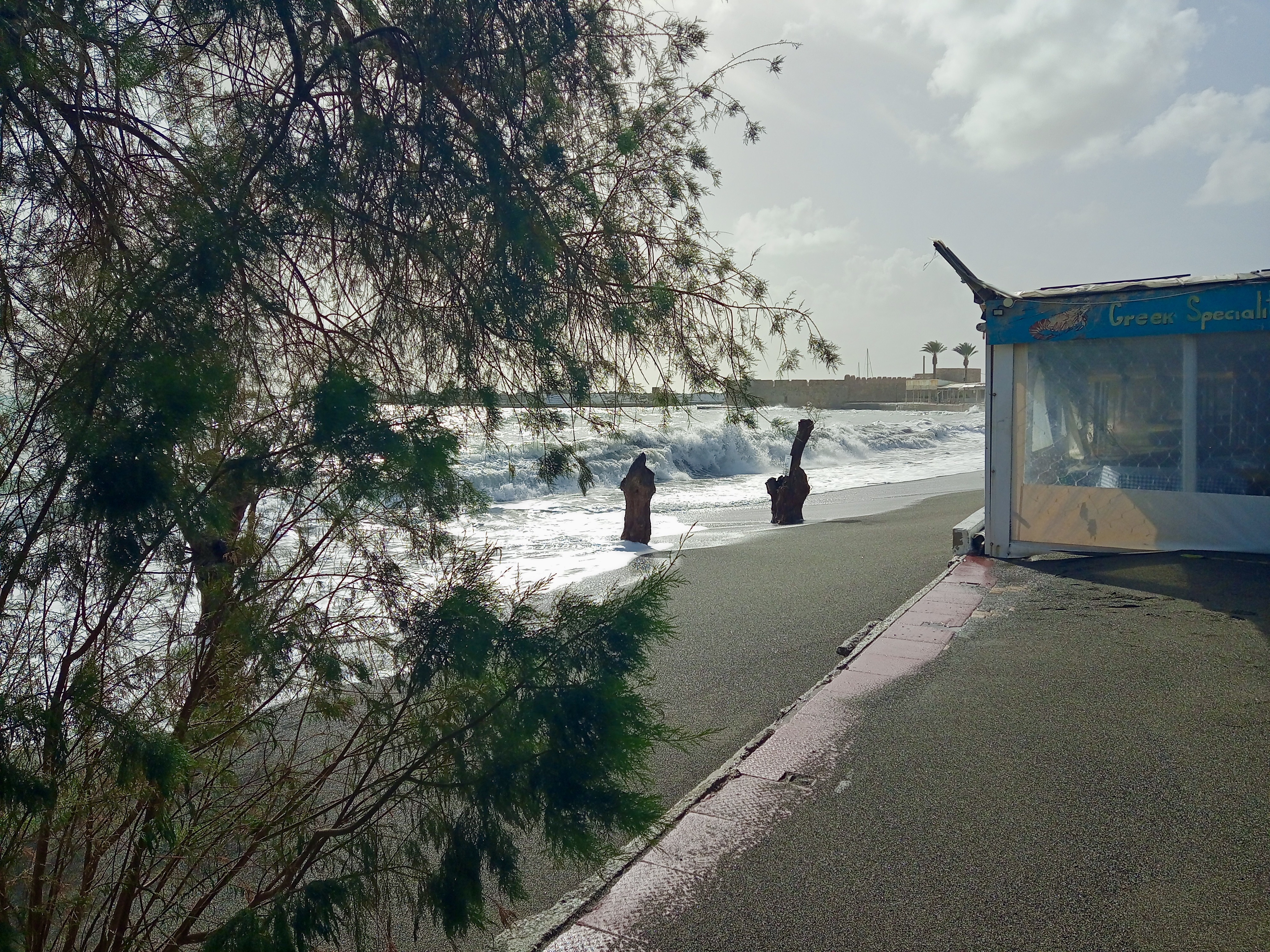
The photo at the top of this post shows just how close to the sea Yianni’s place is, and in the foreground, where you see all that sand, well that’s actually a paved terrace normally. All that sand was deposited there by an angry sea on Thursday, January 22nd. During that day the sea charged right through the restaurant and on to to the road behind it, which subsequently had to be closed for a day or two as a result…
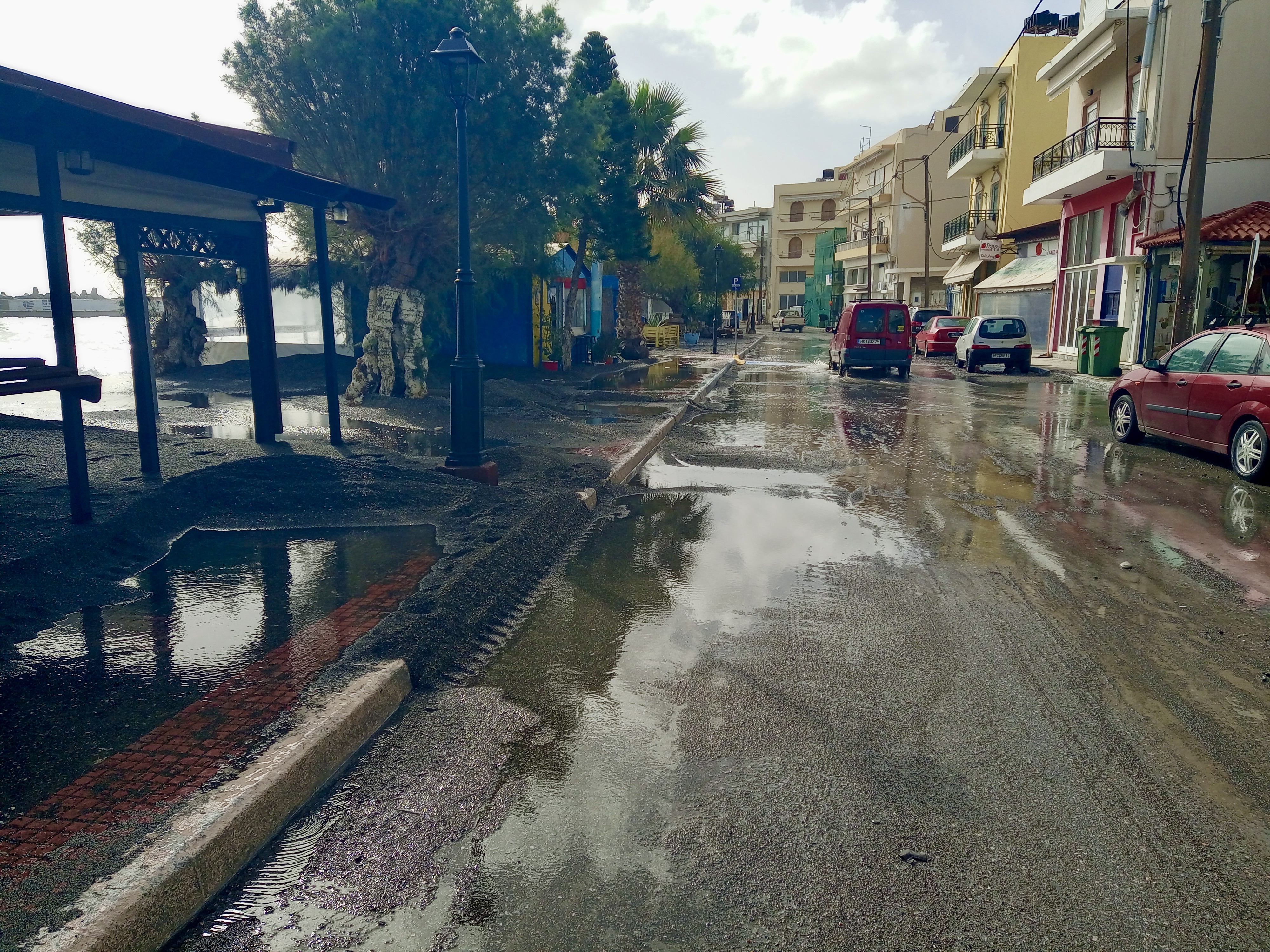
Bear in mind that I took these photos during the following day, Friday January 23rd, as the restaurant and bar owners along the front were attempting a cleanup operation. When we reached the door of the Konaki, this was what we saw…
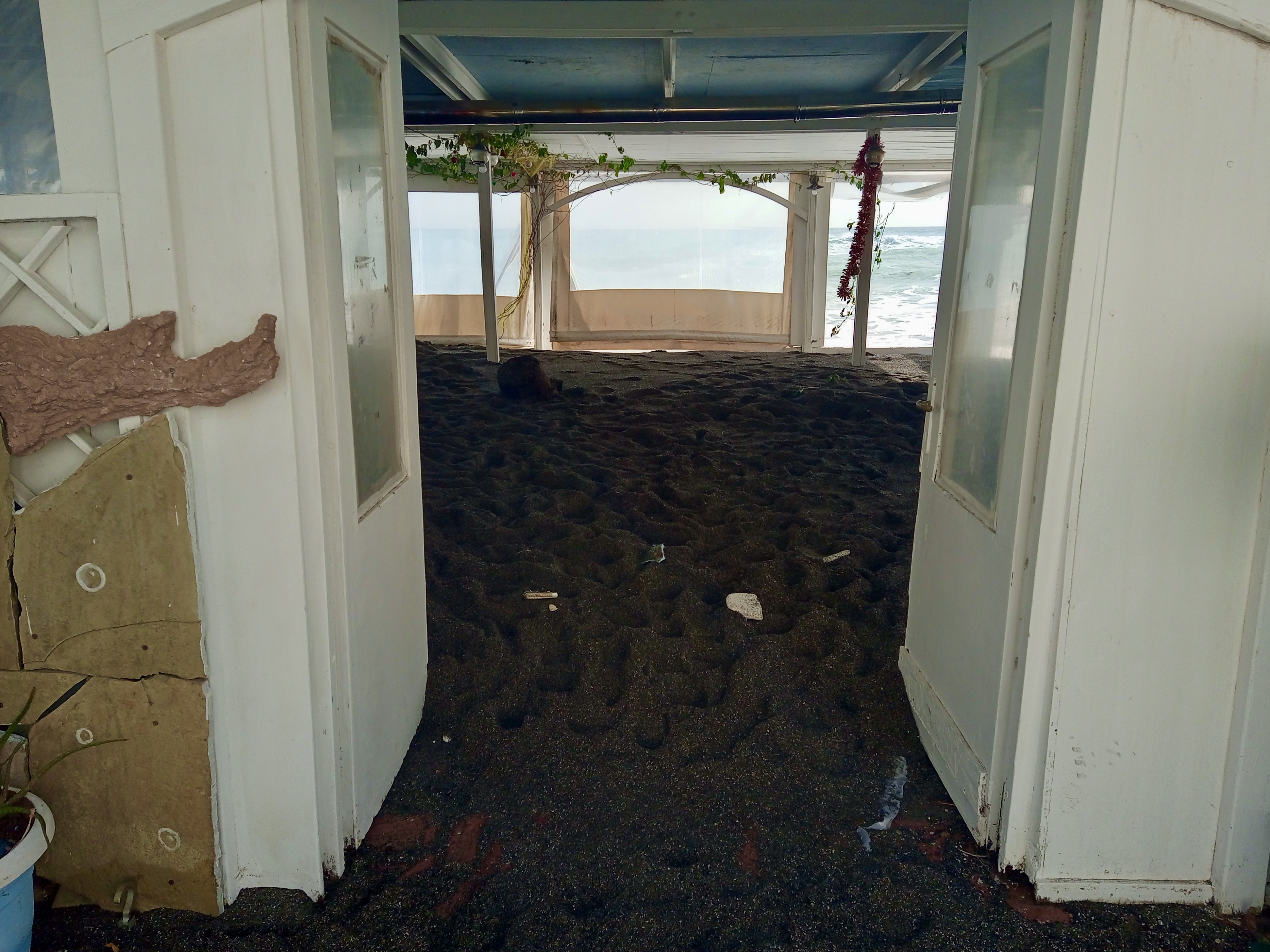
What you’re looking at there is a pile of sand at least a metre high, and it was all deposited there by the sea. As we stood and gaped at this awful scene, Yiannis approached us from the restaurant building across the road. He looked extremely flustered and very dirty, as he was in the middle of trying to shovel all those tons of sand back on to the beach. What he needed in there was a mini JCB, but he didn’t have one and, anyway, whilst it may have helped with the sand extraction, it would have caused other issues with the structure of the ‘pergola,’ as they call these covered terraces along the back of the beach.

We offered to roll our sleeves up and to help, but he had a team of family members and friends all doing what they could and, although he thanked us for our willing spirit, we weren’t dressed for the kind of work that was involved. We felt so bad for him because his is one of the few restaurants along the back of the beach that stays open all winter, and we and many of our friends go there often on bright sunny days during these off-season months. We asked him if he was used to this kind of problem during the winter months, to which he replied (as we’d expected and suspected):

No, no. We often have the sea creep under the polythene screens during winter storms, but never in thirty years of running this place have I seen this. Sand a metre deep in the middle of the taverna floor is unheard of.” We were so, so sad to hear him say this, because he was close to tears as he spoke. When you consider that there are also electrical sockets in there powering his fridges, where he keeps drinks and fresh fish, plus a house phone and the cash register, as well as a mini sound system that he uses to play music for his diners, and all that had been swamped by seawater and sand, I dreaded to think of what it was all going to cost him.

Where you see all that sand is usually where there would be the tables and chairs, replete with blue and white check tablecloths. The restaurant floor usually looks like this…
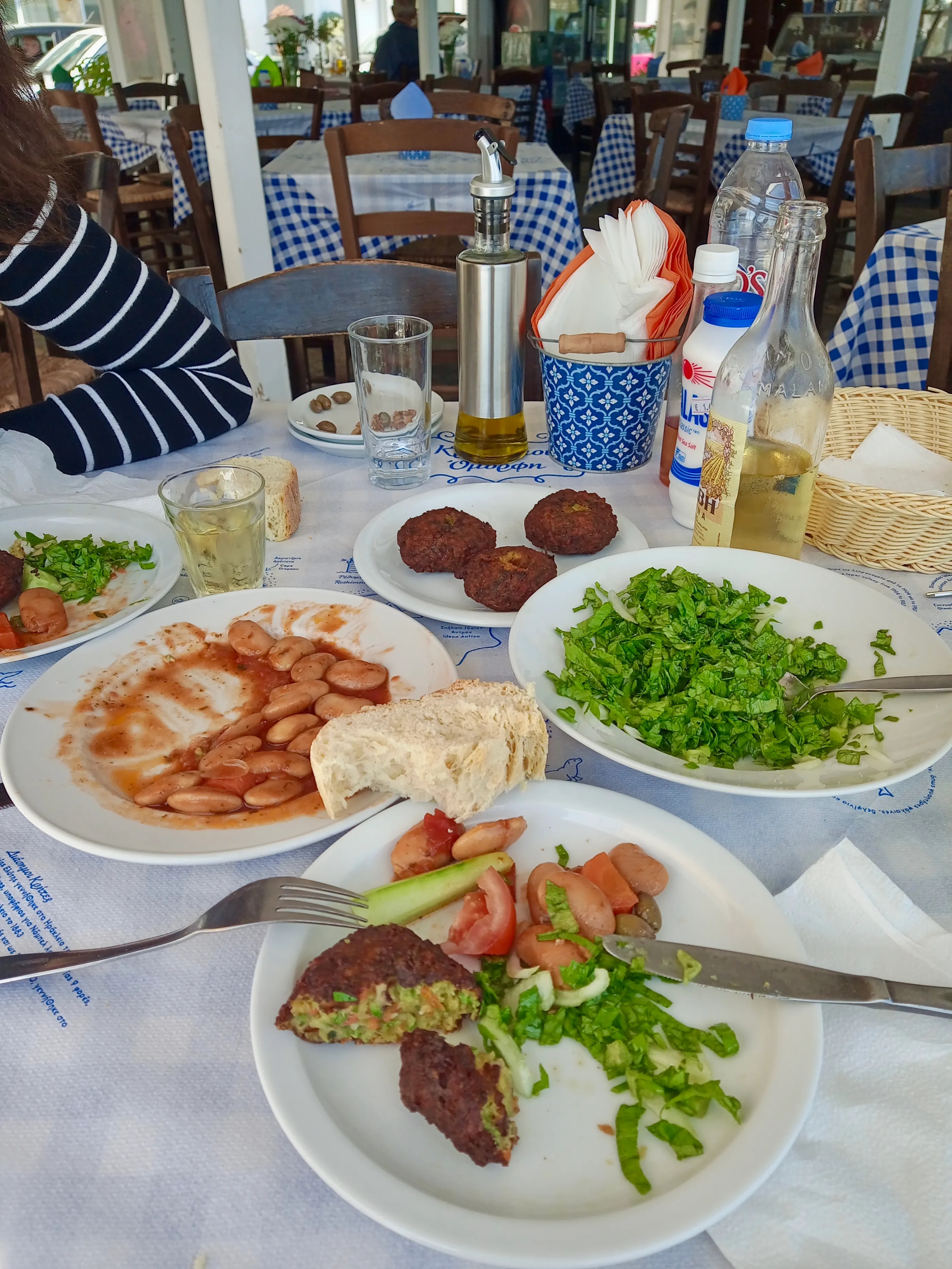
Since it was on the Friday when we had this conversation with Yianni, I thought that maybe he’d have it all cleaned up and be able to open again by Sunday. How wrong I was. He told us that he didn’t think that was likely, and he was right. Just a few days later the sea became just as agitated as it had been on that Thursday, and all the cleanup work that the restaurateurs had done was undone again. In fact, I’m typing this on Thursday January 29th and the southerly winds are again up to gale force. It’s heartbreaking because those who do open at this time of the year are losing a lot of income, plus the cost of the repairs after the cleanup will no doubt be considerable. As of today the forecast is still for the winds to remain in the south for days to come, which is extremely bad news indeed. To have the winds in the south for as long as they have been this past couple of weeks is unprecedented.

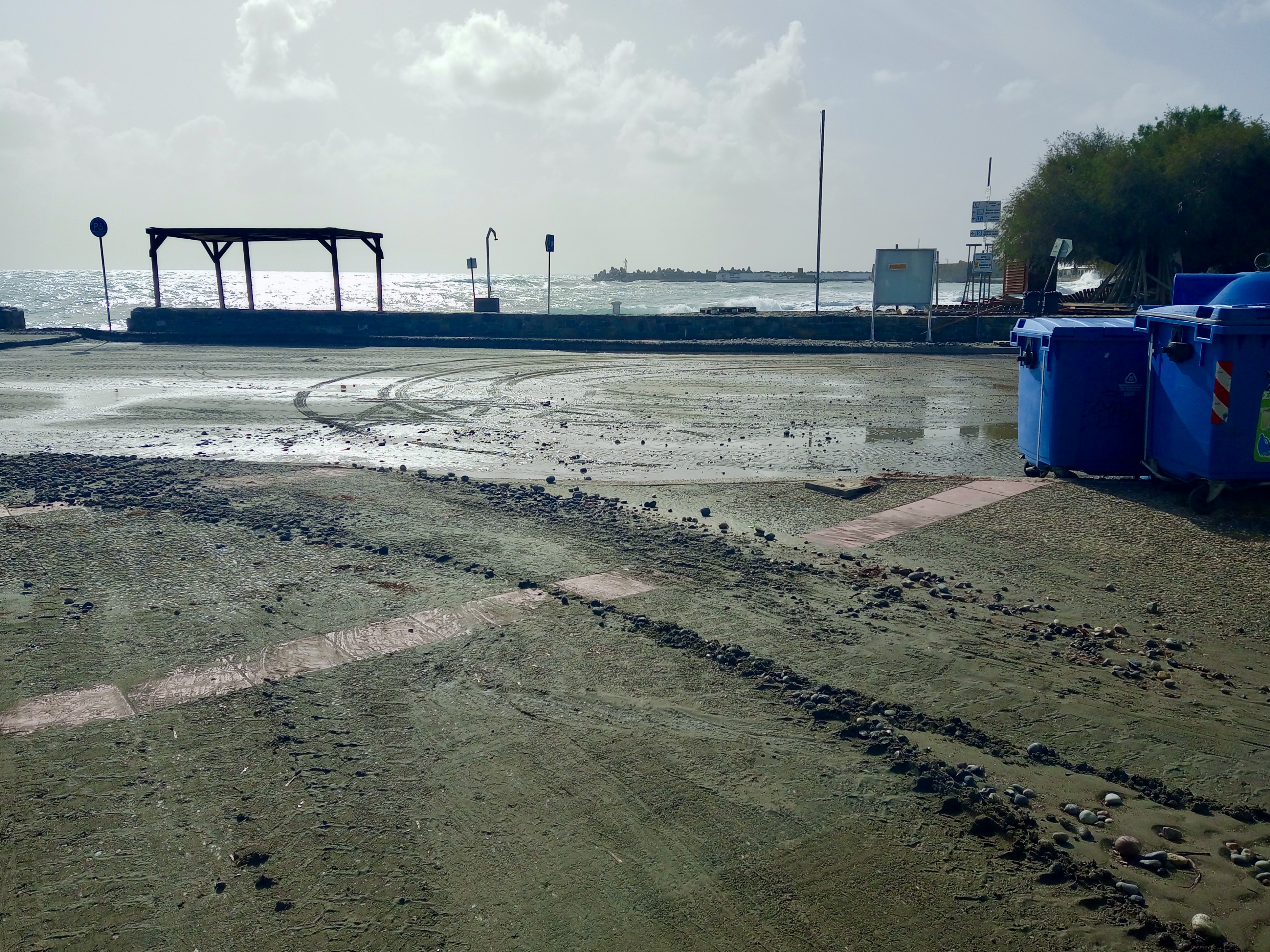
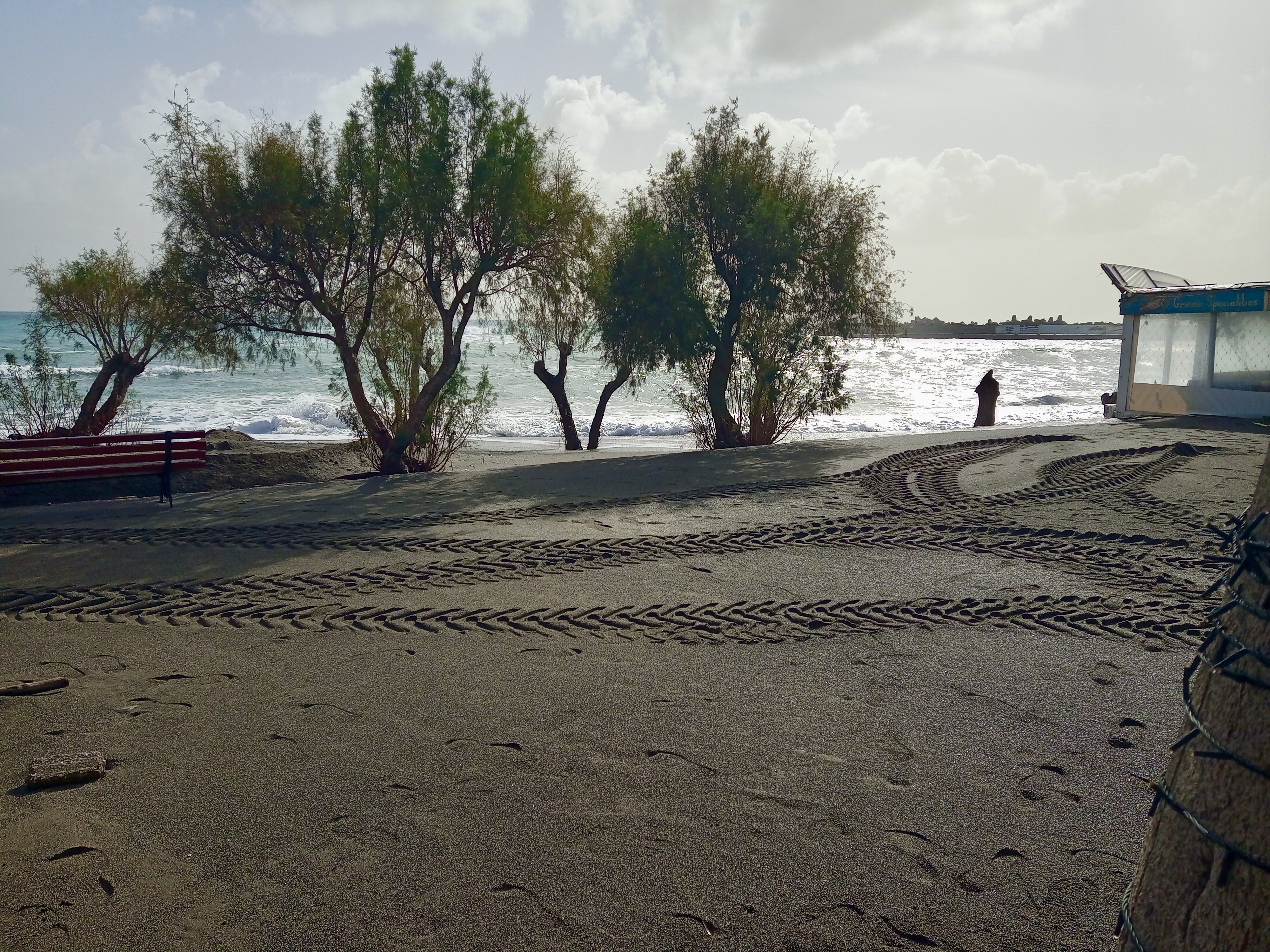
Here are the other photos I took after the first storm…
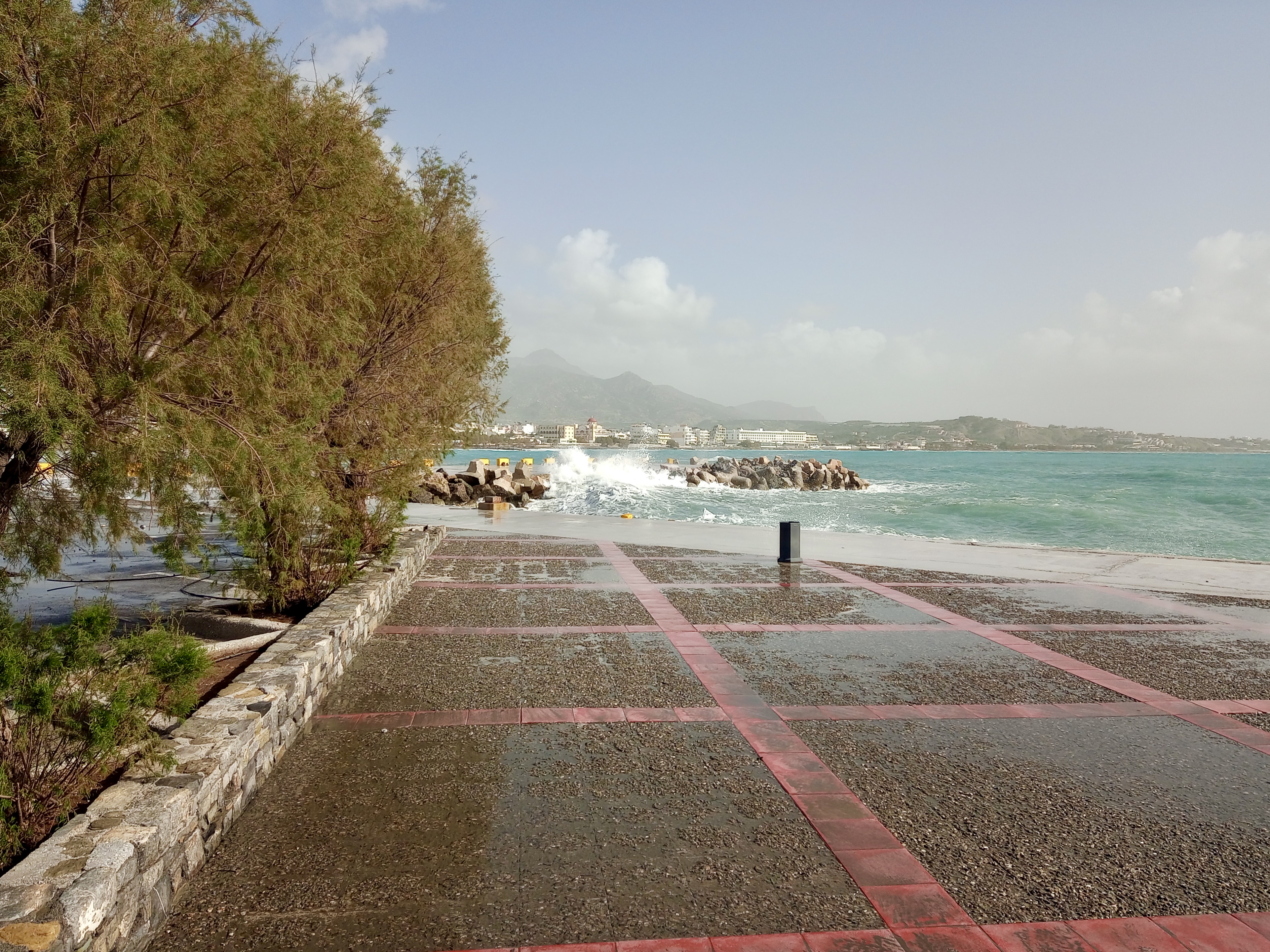
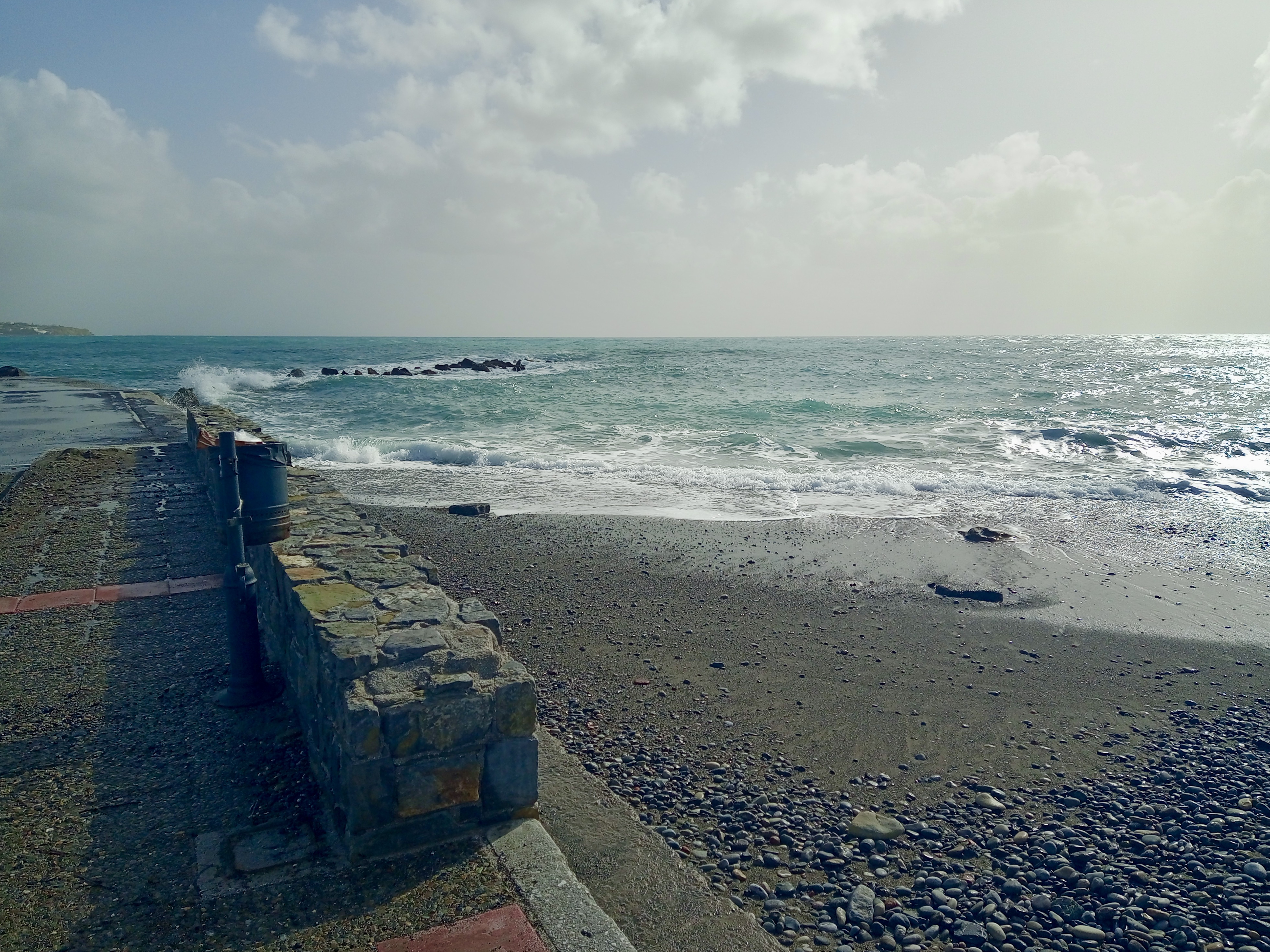
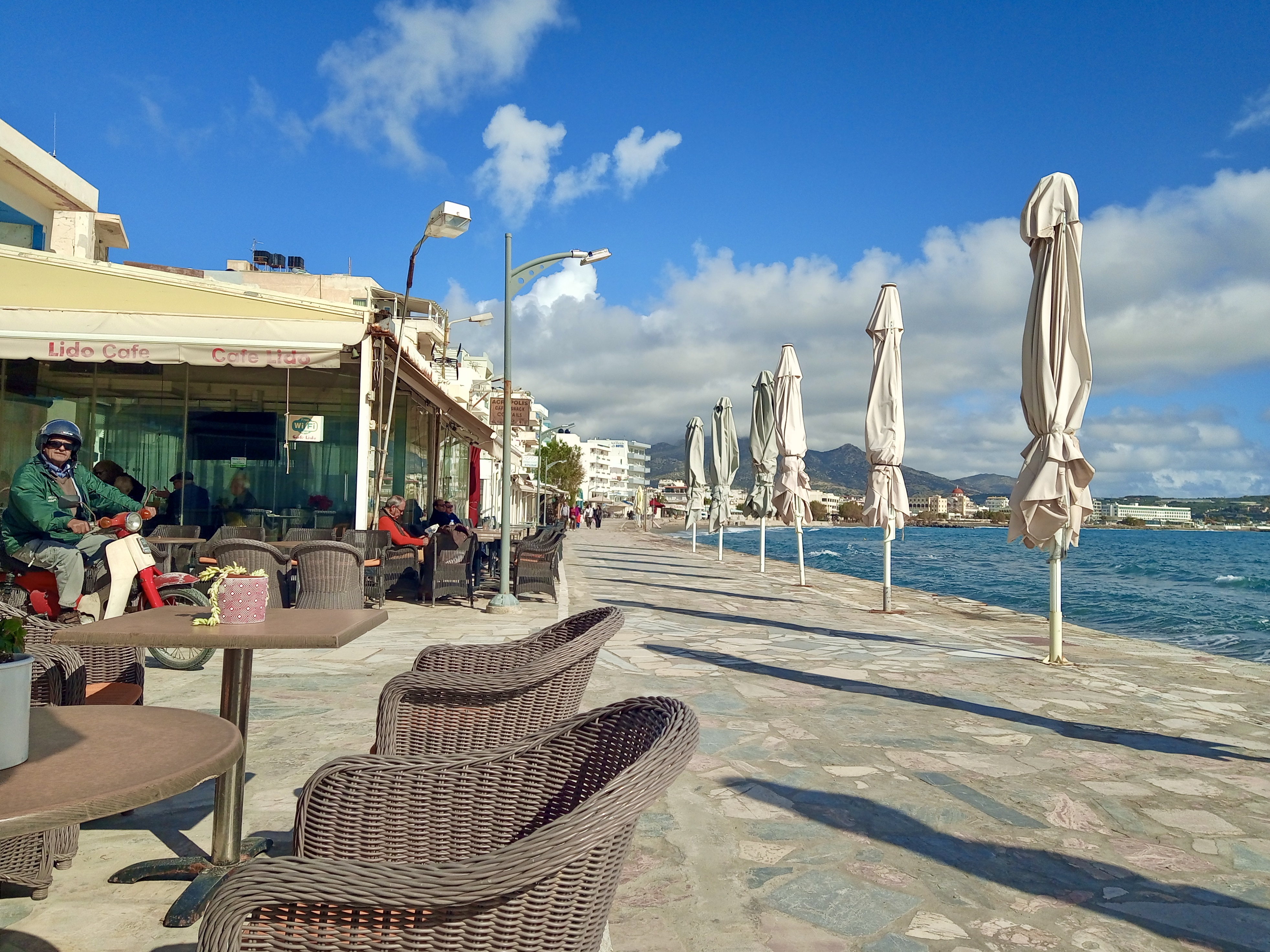
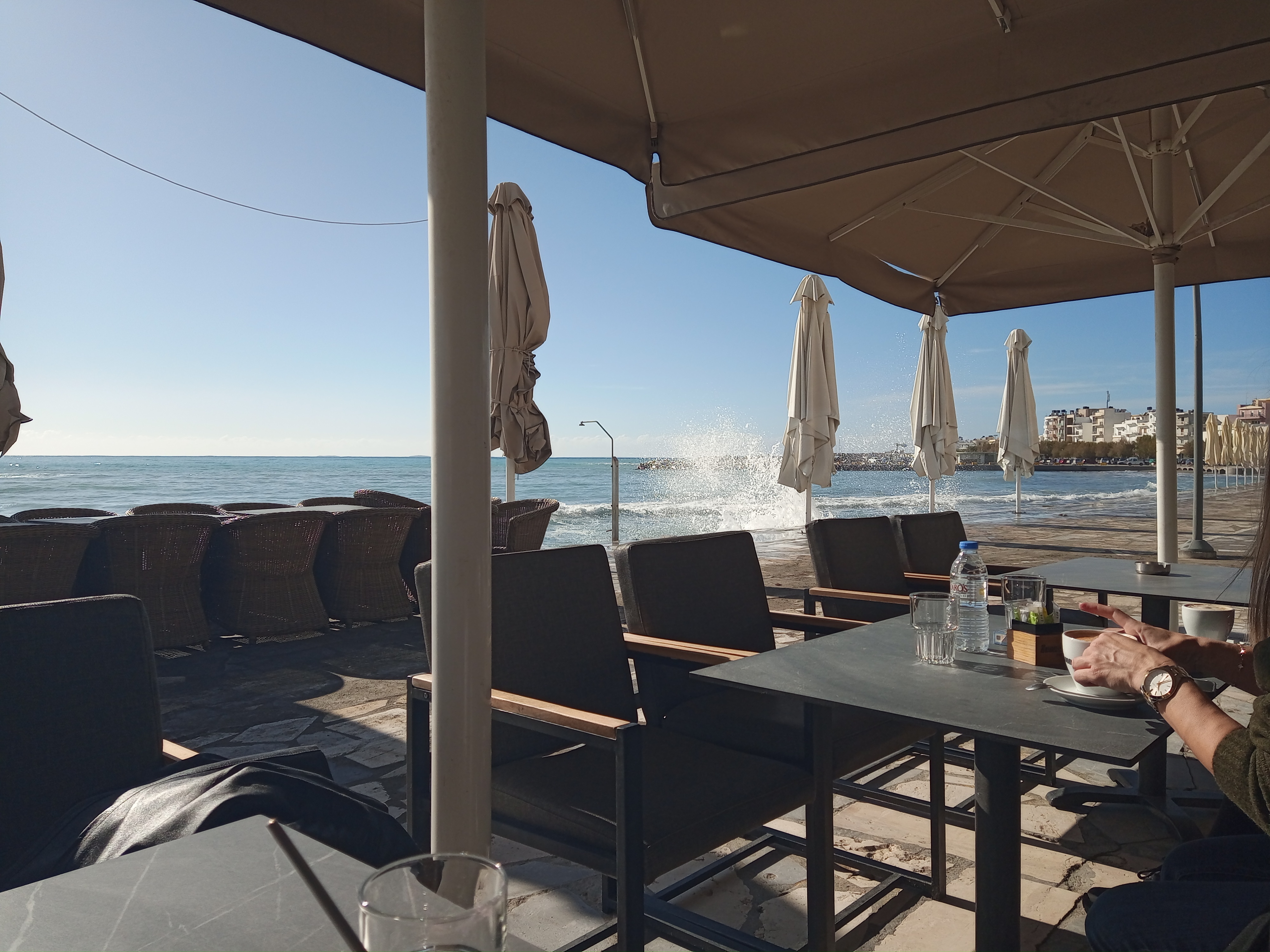
What’s doubly frustrating is the fact that between the storms, the weather has been like this…
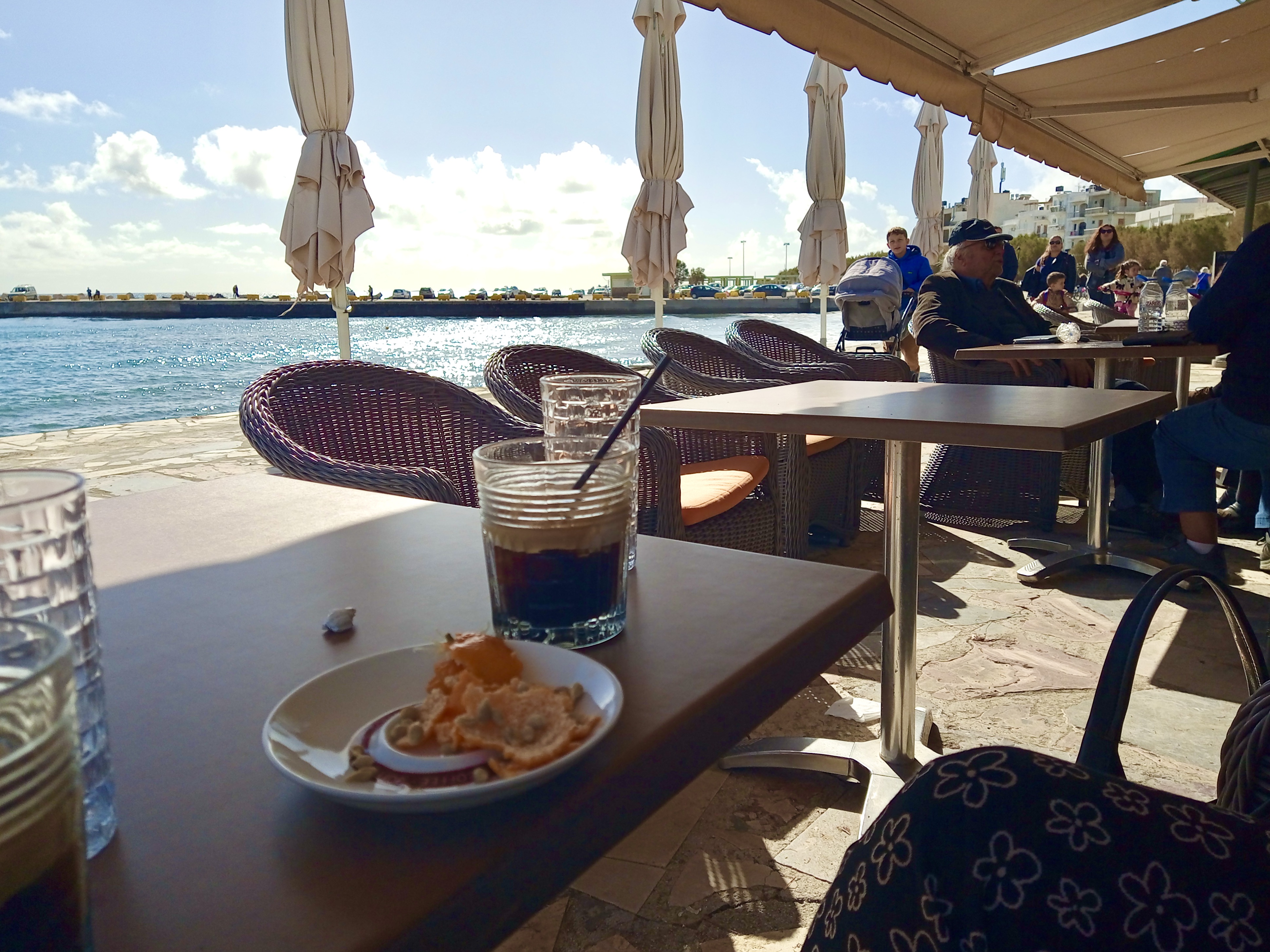
OK, so one of the above shots shows the sea creating a spume of spray along the promenade, but that doesn’t cause all that much bother there. The beach where all the damage has been done is a few hundred yards to the right of this area. Spare a thought for the likes of Yianni, and let’s hope that the winds will soon swing around to their prevailing direction, which is north to northwest, soon.

If you enjoy my blog posts, then maybe think about supporting me by purchasing one of my written works. Your support would be very much appreciated, rest assured. Click HERE to go to my Amazon Author Page.

Thank you.
Furry, fluffy floors

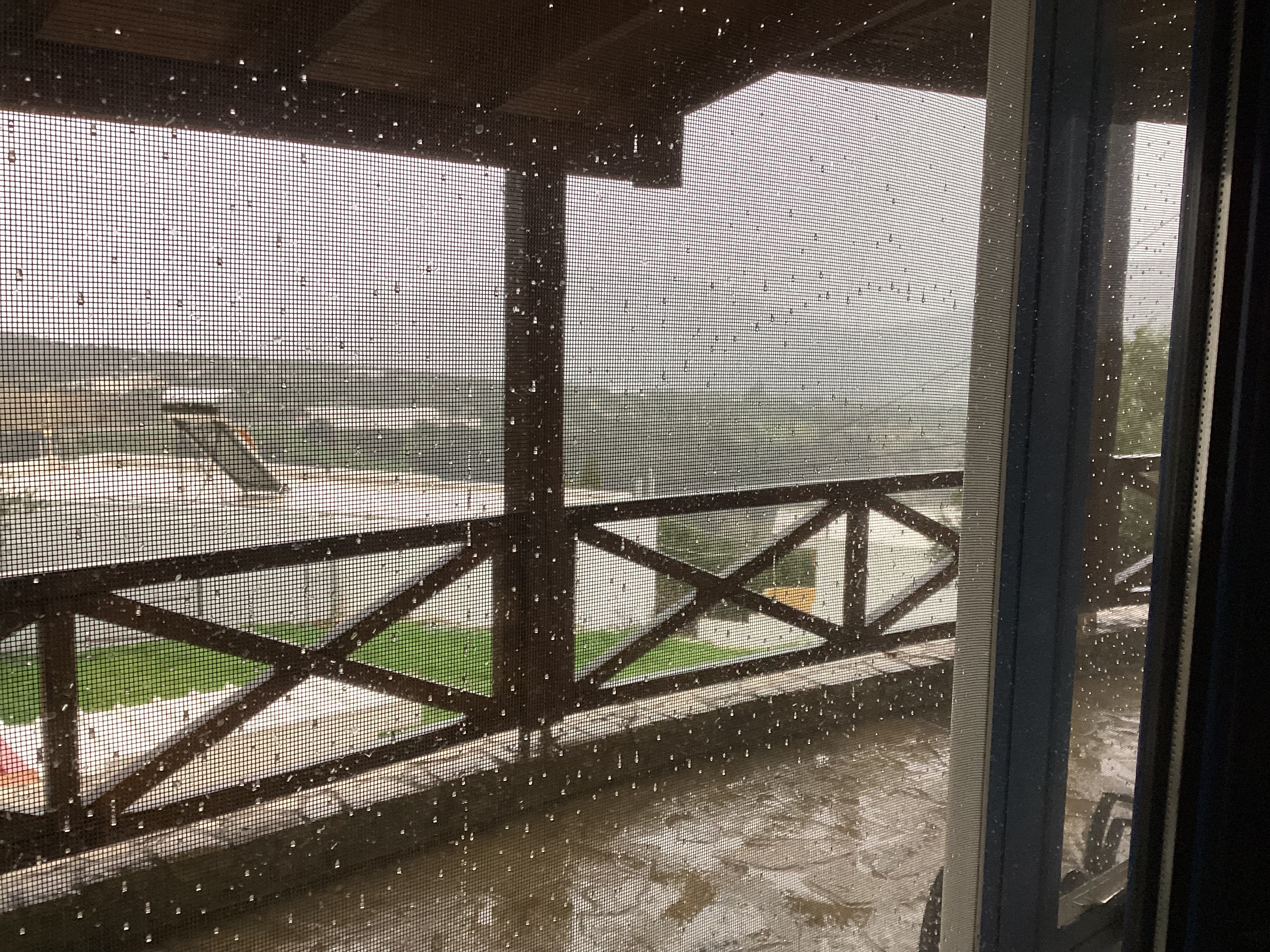
Well folks, if it makes you feel any better, the weather here’s diabolical at the moment. OK, so we don’t get this kind of weather too often, but when we do, it throws it all at us, and that’s what it’s doing today. The prevailing winds here are north to north west, which means that the western end of the island as well as the north coast in general tend to see more of the bad weather during the winter than we do, but today the wind’s blowing south, south east, so it’s coming straight up the valley and hitting our veranda full on. The sea down on Ierapetra seafront is definitely crashing over the promenade.

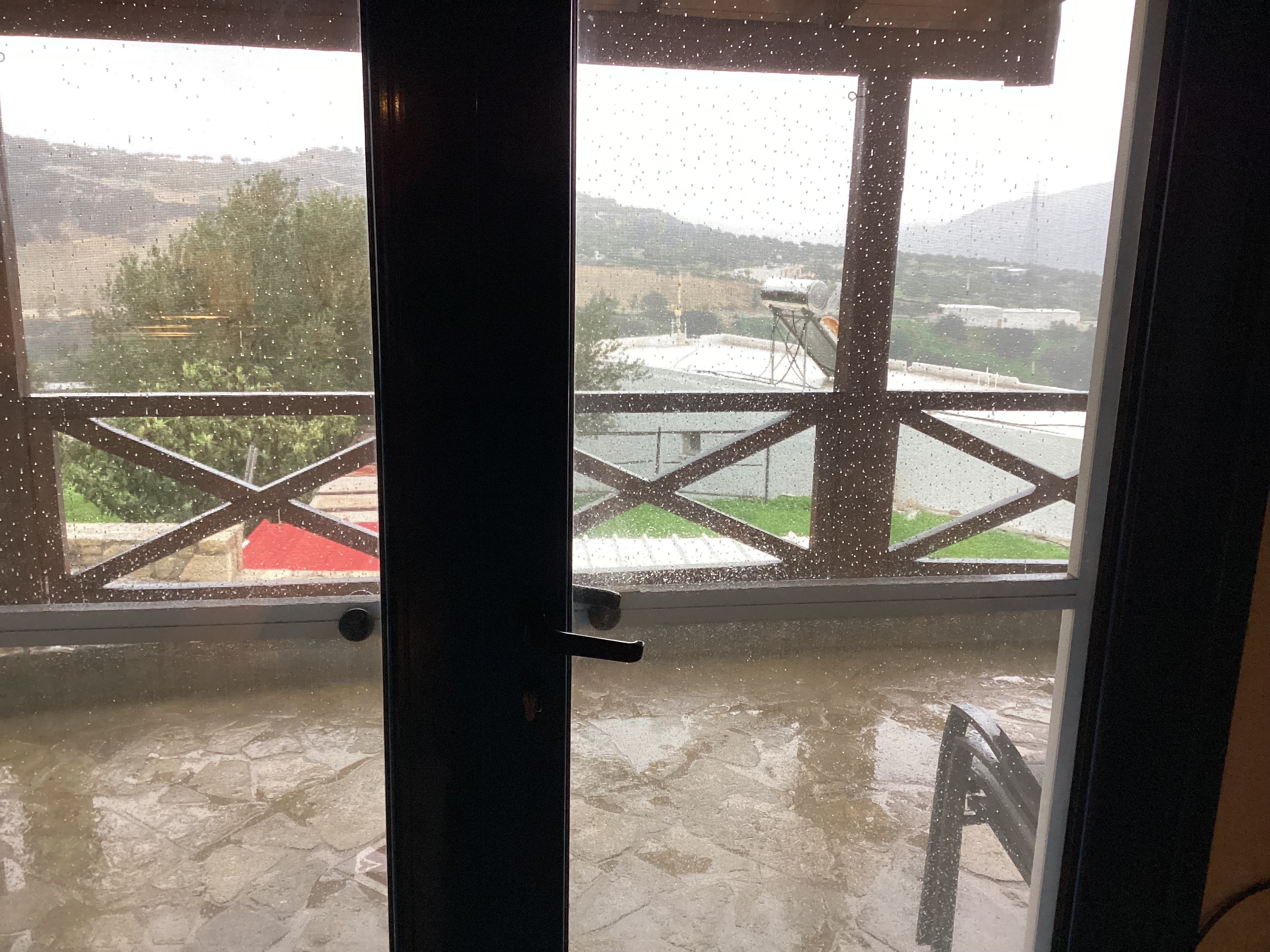
Usually, when it rains here in winter, we can still sit out on the veranda to drink our coffee in the mornings, because the rain seldom gets the place wet at all. When the wind’s in this direction though, the veranda gets soaked, and we even have droplets of water on the mosquito nets in front of our French windows…

Nice, eh? It’s one of those days when you simply need to keep the house warm and be sure to have a good book in front of you. Either that or write a blog post. It’s a bit of a stark contrast with this time last year, when we had three weeks of unbroken sunshine in January and temperatures around the 20ºC mark for most of the time. Outside at the moment it’s around 11ºC, which for us is flippin’ freezing.

Still, in general, such weather doesn’t usually last long, and tomorrow the forecast is sunny and 17º, so I guess we can’t complain too much. We heat our hot water using our roof-mounted solar heating system, the kind you see on top of just about every house in Greece. You know the setup, there’s a glass panel (which the Greeks amusingly call the kathrefti, meaning ‘mirror’) and, above that, the horizontally mounted cylinder, which the locals call the ‘boiler,’ and that’s exactly how they pronounce it by the way, as it’s an anglicisation. A lot of people also have an electric immersion heater element fitted inside the cylinder, so that on days like this you can flip a switch in your fuse panel on the wall and heat the water electrically. We opted not to bother with that and, to be honest, most winters (and this is now our seventh in this house) we’ve never experienced more than a handful of days on which we didn’t have any hot water in the taps. I’ve a sneaking suspicion though that todays’ going to be one of those days.

I’ve got to say, too, that the local farmers (and that’s what most people are in this area) are loving it. For the reservoir to fill up to an acceptable level, and one that gives them the chance of having enough water to get them through the coming summer, they often tell us that however much rain we get during the winter months, it’s never enough. In the previous post you’ll have seen the photos I took showing the reservoir below us, and maybe you can’t tell, especially if you’re not from around these parts, but it’s still only a little more than half-full at the moment, having reached its lowest ever level by the time we got to the back end of last year. The current level, though, is at least evidence that this winter’s rains have been giving it a helping hand, and it’s hoped that if we continue to get a little rain every week then it’ll be full by the time the summer hits us with a vengeance. Judging by how much rain we’ve been getting this past few years though, it’s doubtful. 

Mind you, as I sit here typing this and gazing up at the scene outside through the French windows, I could be forgiven for thinking that I ought to consider following Noah’s example when it comes to building projects.

Now, with all this talk about rain, you’re probably (if you’re not comatose by now) wondering why this post is called ‘furry, fluffy floors.’ That has to do with the locals’ quaint habit of covering every available surface with shaggy rugs and throws from December through March every year. We first came across this custom during our 14 years on Rhodes. Friends’ homes, whom we’d frequented often during the summer months, all of which have cool ceramic tiled floors, or maybe that polished crushed marble effect that seems to have gone out of fashion in recent times, seldom sported any floor coverings, since to walk barefoot on such floors during a Greek summer is a way of cooling oneself down a little. Come winter, though, it’s ‘all change.’

It seemed to us that just about everyone had a stash somewhere of really shaggy rugs and blankets and, once the evenings get a bit cooler and the winter months arrive, out of that ‘stash’ they’ll extract all these brightly coloured shaggy whatnots and throw them all over the floors and furniture. The first time we visited Mihali and Soula’s house back on Rhodes during the first winter we were there it came as a bit of a shock. Their normally sparse lounge and dining room was now knee deep in shaggy pile and fluff. Not only that, but the normally subdued colour palette was now visually smashed to smithereens because all their ‘throws’ and rugs were in garish colours, from bright orange, through chocolate brown, to red and pink stripes, aaaargh.

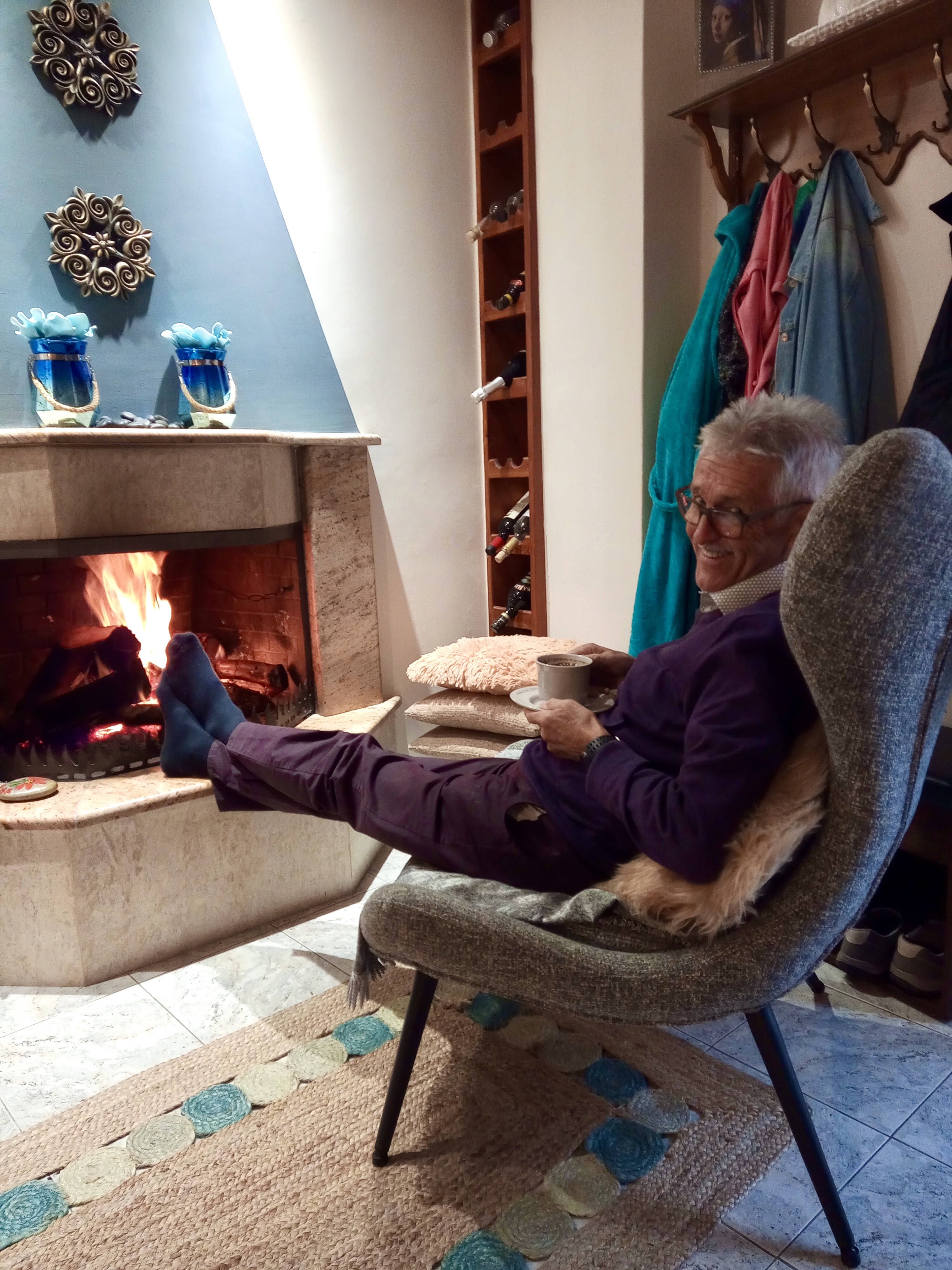
Not many Greek homes don’t have a ‘tzaki,’ or open hearth as we’d call it in the UK, on which they burn copious quantities of wood, the heat from which largely just goes straight up the chimney. In order to get any benefit at all from it you have to sit right on top of it, barely escaping third degree burns on your tootsies. So they’ll happily chuck a very, very shaggy rug on the floor right up to the edge of the hearth, in many cases. Why there aren’t more house fires from stray embers and sparks is beyond me.

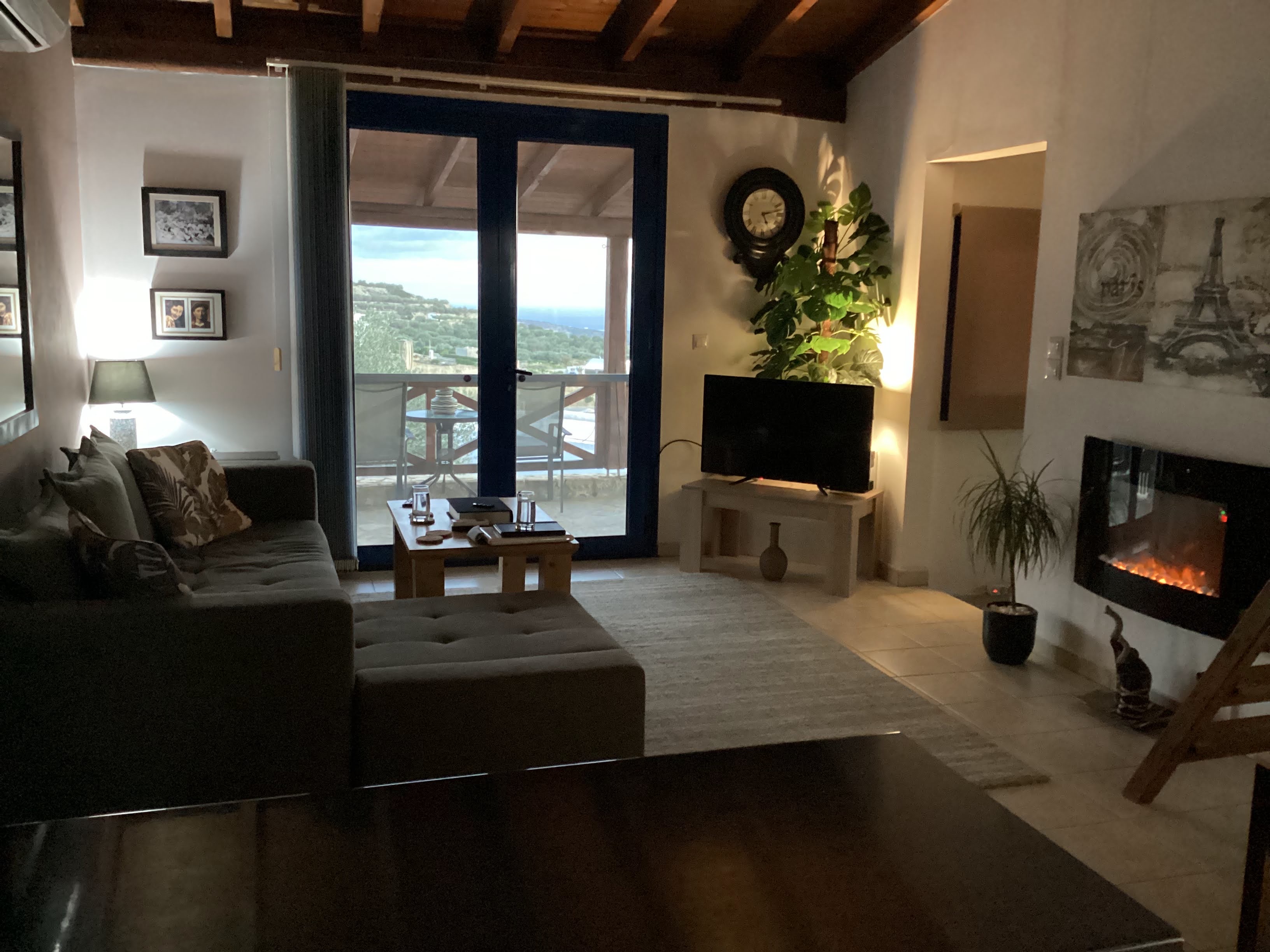
This was taken at some friends’ house in Myrtos, not our place. Our place is below…

A couple of years ago, as the summer was drawing to a close, one of our friends, whom I shall call Despoina, came up to lunch with her hubby Manoli. As they were leaving, she told us that she was going to give us something, because she couldn’t bear to see our house without its share of shagpile for the winter months. Despite our trying our level best to express our desire not to have such a ‘luxury,’ she still rocked up a couple of days later with a huge two metre square rug with pile that must have been at least three inches deep. Had it actually been sheepskin, it would have needed about six sheep, maybe more, to make one of that size. The thing weighed a ton and I’m not exaggerating, and she proceeded to march into our lounge and cast it upon the floor, all the time looking sideways at us with that ‘aren’t you grateful that I’ve saved you from getting frostbite in your toes this winter’ look in her eyes.

Once she’d gone, and we knew that she wouldn’t probably be dropping by again for at least a number of weeks, we immediately took it up again and tried to fold it up and put it away somewhere. That was when another conundrum struck us. Where on earth do you store such a thing? It would have totally consumed one section of our wardrobes, even if we’d had one to spare, which we didn’t. In the end, almost wrecking my hands and sustaining several blisters in the process, I attacked it with some robust dressmaker’s scissors and cut the thing in two. At least then we were able to stuff the two parts into huge heavy-duty polythene bags, the type you get from a dry cleaners. I don’t know where we got them from, but at least we had them. We learned that they all got these rugs and throws dry cleaned every spring before stowing them away for the summer, but exactly where they found to stow all of the dozen or so that most of them kept is still a mystery to us.

We eventually quietly disposed of the one that Despoina had given us by leaving the two parts beside a wheelie bin, the standard way of passing unwanted yet still serviceable household items and clothes on in these parts. We just had to hope that she wouldn’t remember it, or indeed pass by that particular bin before someone had spotted it and rescued it for their own place.

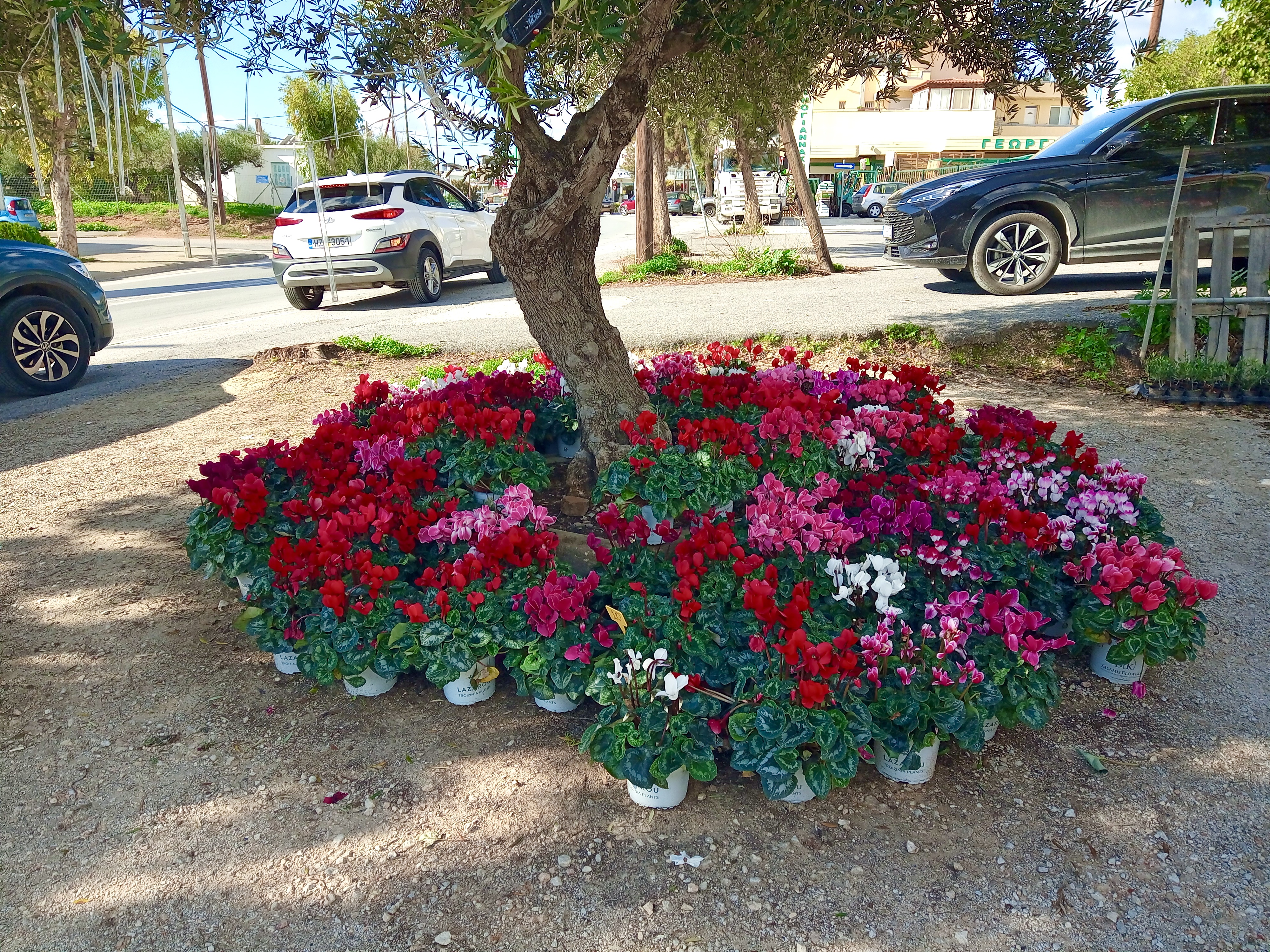
Here’s a nice shot from outside a garden centre in Ierapetra a week or so ago…

Yes, that’s right, they’re all cyclamen.

If you enjoy my blog posts, then maybe think about supporting me by purchasing one of my written works. Your support would be very much appreciated, rest assured. Click HERE to go to my Amazon Author Page.

Thank you.
The Birds

I went for a brief power walk last evening, which involved me going just a few hundred metres north of the village and then back again. It was while I was standing very still, gazing at the huge sweeping valley below me, extending all the way around the mountain opposite to the Bramiana Lake just above Gra Ligia, and westwards to the foothills of the Lasithi Plateau and the high villages of Kalamafka and Anatoli, which are often lost in the mists of low cloud at this time of the year, and which are swathed in gloom from around mid afternoon, owing to the fact that they’re on the eastern slopes of snow-peaked mountains, behind which the sun sinks early in its westward track on those shorter winter days, that I heard my first blackbird song of 2026.

Now, I’m no ornithological scholar, but from a few decades ago, when we used to live in the beautiful Vale of Glamorgan in South Wales UK, both Yvonne and I did become keen birdwatchers, albeit amateur ones. We bought a selection of books to identify wild birds and took great delight in counting the number of species we’d spot during our country walks around the area of the village of St. Athan, where we lived during our final five years in the UK before relocating to Greece in August of 2005.

We’d often arrive back at our modest little bungalow having counted well over 20 different bird species. Out would come the books and – over a cup of hot chocolate – we’d thumb through the pages scanning colour illustrations checking on some of the ID’s and reading up on the habits and habitats of those birds that we’d seen through our pocket binoculars. Among the ones that we’d get especially excited about were the bullfinch and the gold crest and, as each spring approached, we’d scan the skies for the early arrivals of the summer swallow population, maybe swifts and martins too. On frosty winter days we’d thrill to see a flock of fieldfare on the frigid, white-coated grass in a meadow glimpsed through a farm gate near St. Mary Church, for example.

It was during those days that we learned something about the blackbird’s song. Firstly, it’s only the males that sing and, secondly, they only sing in the UK from around mid-February until some time in August. The rest of the year the most sound you’d get from a blackbird would be the brief chatter one would make as it took off from a bush in the hedgerow and flew further away when we’d come too close and disturbed it.

When we first arrived in Rhodes, we’d been excited to learn what bird species we’d be likely to see around us, since the house we were living in was on a rural hillside, far from most human habitation. What surprised us the most was just how many of the species that we’d lived amongst in the UK that were also present in the southern Aegean. Of course, there are some that we see both back on Rhodes and here in Lasithi on a regular basis that we’d never seen in the UK, although, in the far south of the British Isles, some of these species do occasionally venture when it’s a hot summer, which is, of course, becoming more often this past few years. 

Actually, in the valley where we lived for fourteen years on Rhodes, we’d usually hear blackbirds, but seldom see any. They were always present, but for some reason not often within a few hundred metres of our garden, even though we’d regularly hear their song. Here though, for whatever reason, we get them very close to the house, even though we’re on the furthest edge of a tiny village. It’s been my experience that blackbirds sing broadly in the same months here as they do in the UK, but, what I heard last evening suggests that, owing to the warmer climate maybe, they may begin singing a month or so earlier. 

I’m only going on about blackbird song because, if you’re familiar with it, you’ll know that seldom does a songbird sing more beautifully than a blackbird perched atop a large shrub or in a modest tree. The song of the blackbird is one of nature’s most evocative and beautiful gifts for your ears in my humble opinion. Plus, when I hear one sing, if I close my eyes, I can imagine myself back in the rolling green British countryside at the best time of the year. If you can hear the blackbird singing in the UK, then you know that the prospect of spring is either near, or that it’s indeed upon us, or that the early part of the summer has still not passed, leading to the inevitable decline in the weather patterns as the year moves deeper into its second half, meaning that the best of the weather for that year is behind you and the shorter days, falling leaves and eventual bare trees are what you now have to look forward to. As long and the blackbird is singing, you have hope.

Here, OK, so the weather’s a lot more reliable than it is in the UK and, even when the blackbird ceases to sing for another year during August, you still have months of cloudless skies and swim opportunities ahead of you. You still have warm evenings when you can sit beside the sea and enjoy a meal at a restaurant in good company and with a starry sky and vivid moon to keep you company. But every time I hear the blackbird, it gives me fond memories of our lives back in our country of origin. Don’t get me wrong, I have zero regrets about the path we’ve chosen to follow in life, but that doesn’t stop me thinking back to good times in rich, green meadows and pints on country pub lawns.

The blackbird is a good companion. Listen out for him. If you live in the UK, then you may yet have a few weeks to wait until he starts to sing, but, if you live anywhere near us, maybe you too have already heard your first blackbird song of 2026, and have found it a joy, as I did last evening, just as the sun was setting.

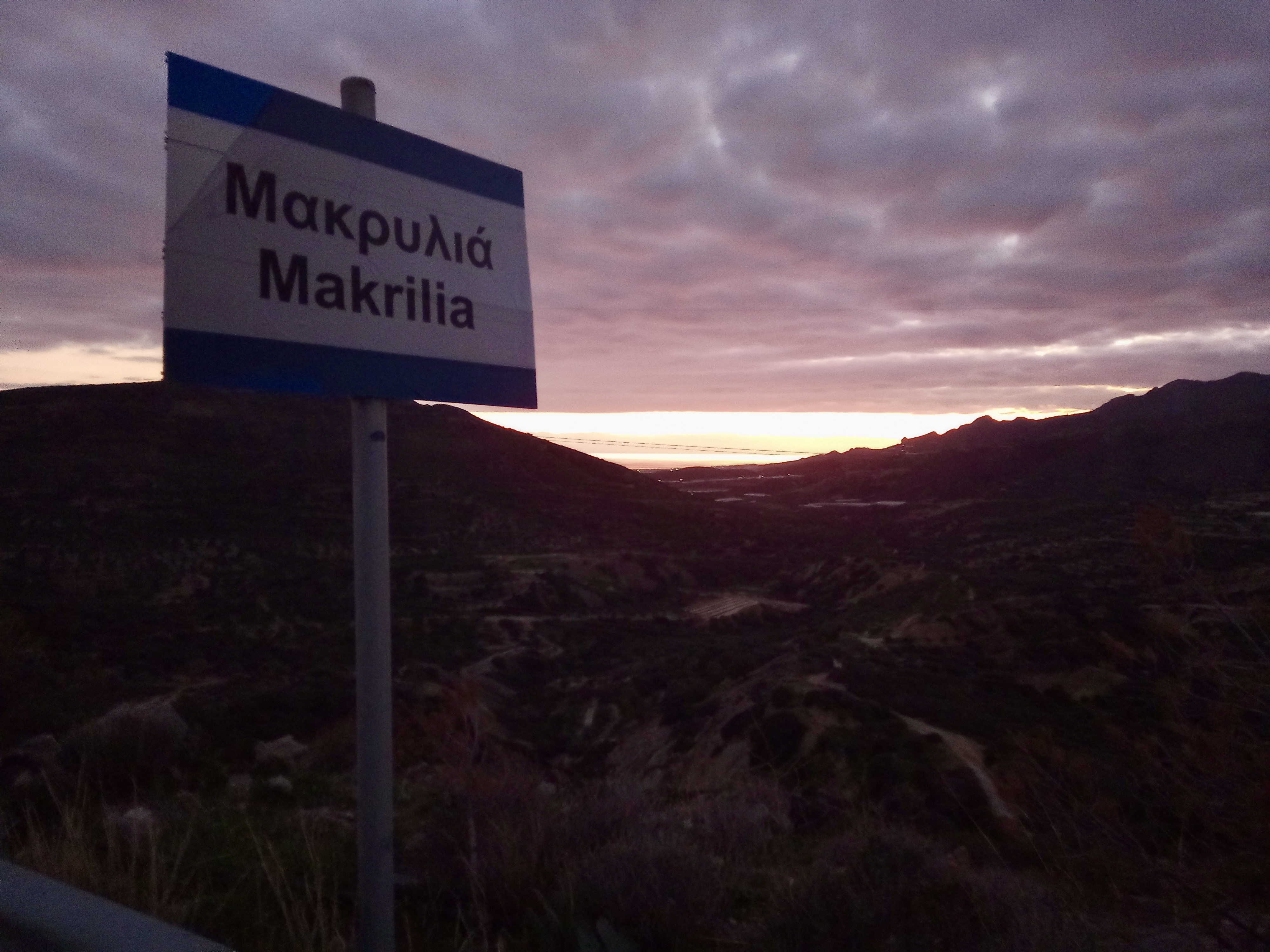
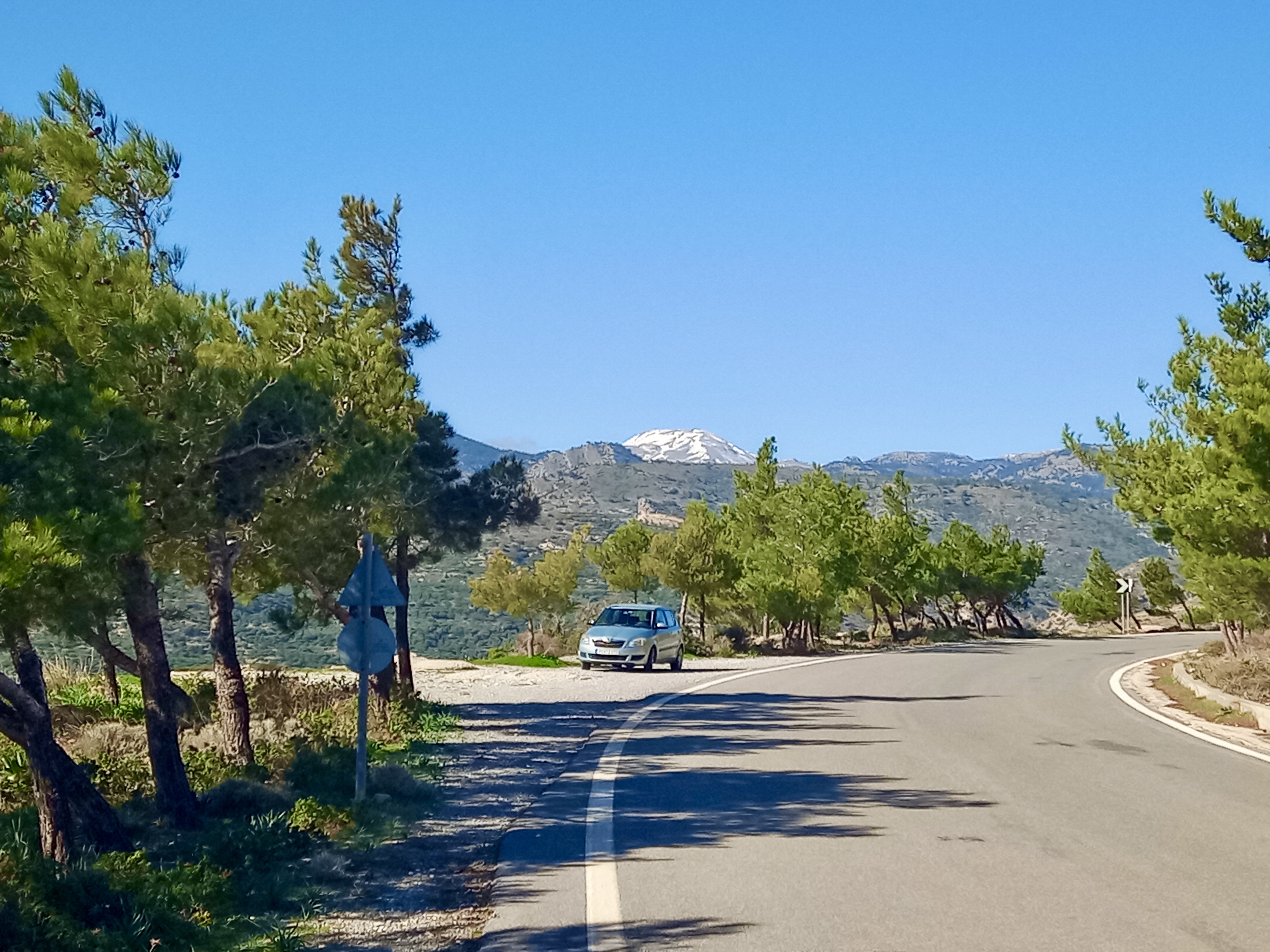
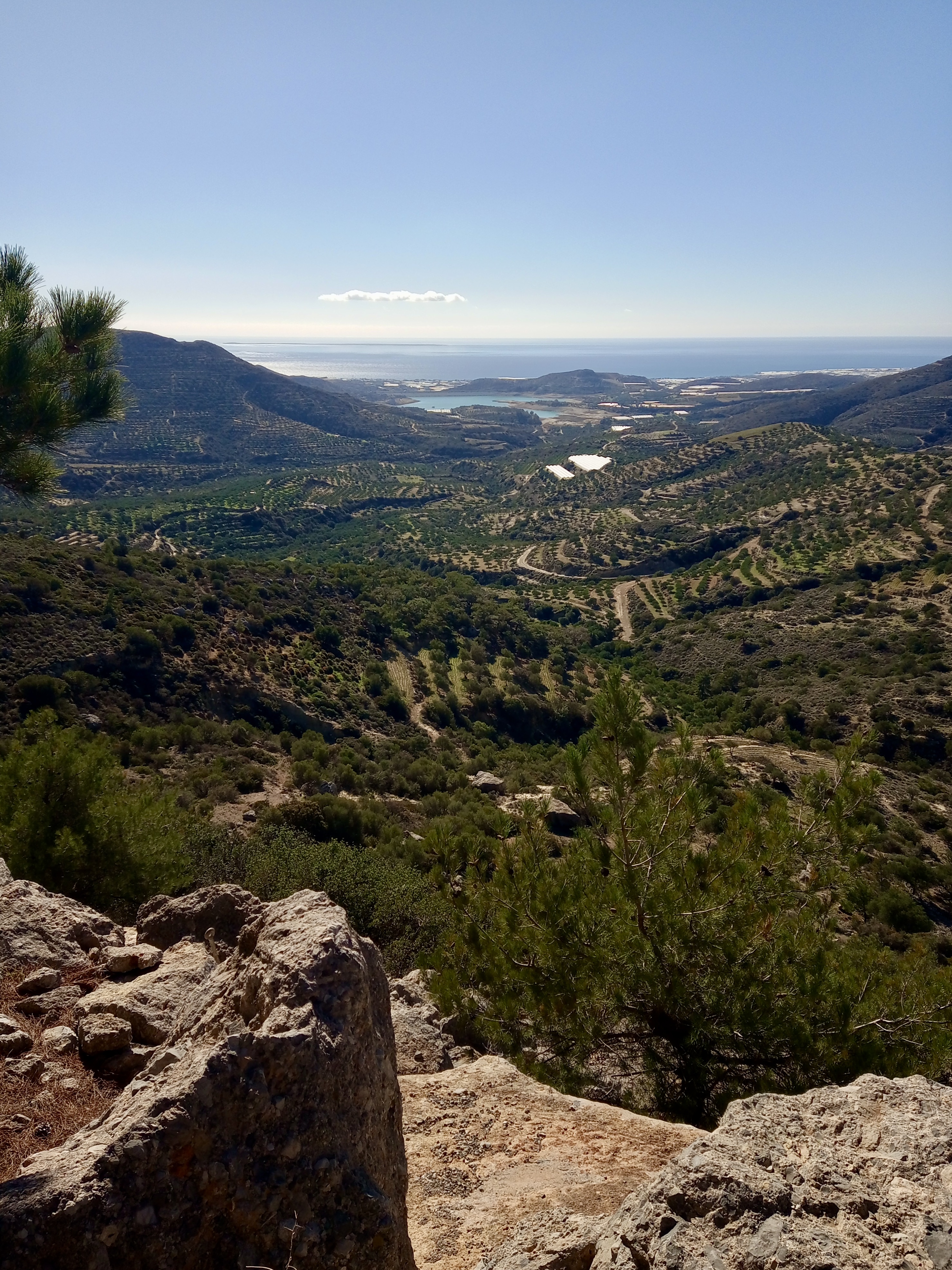
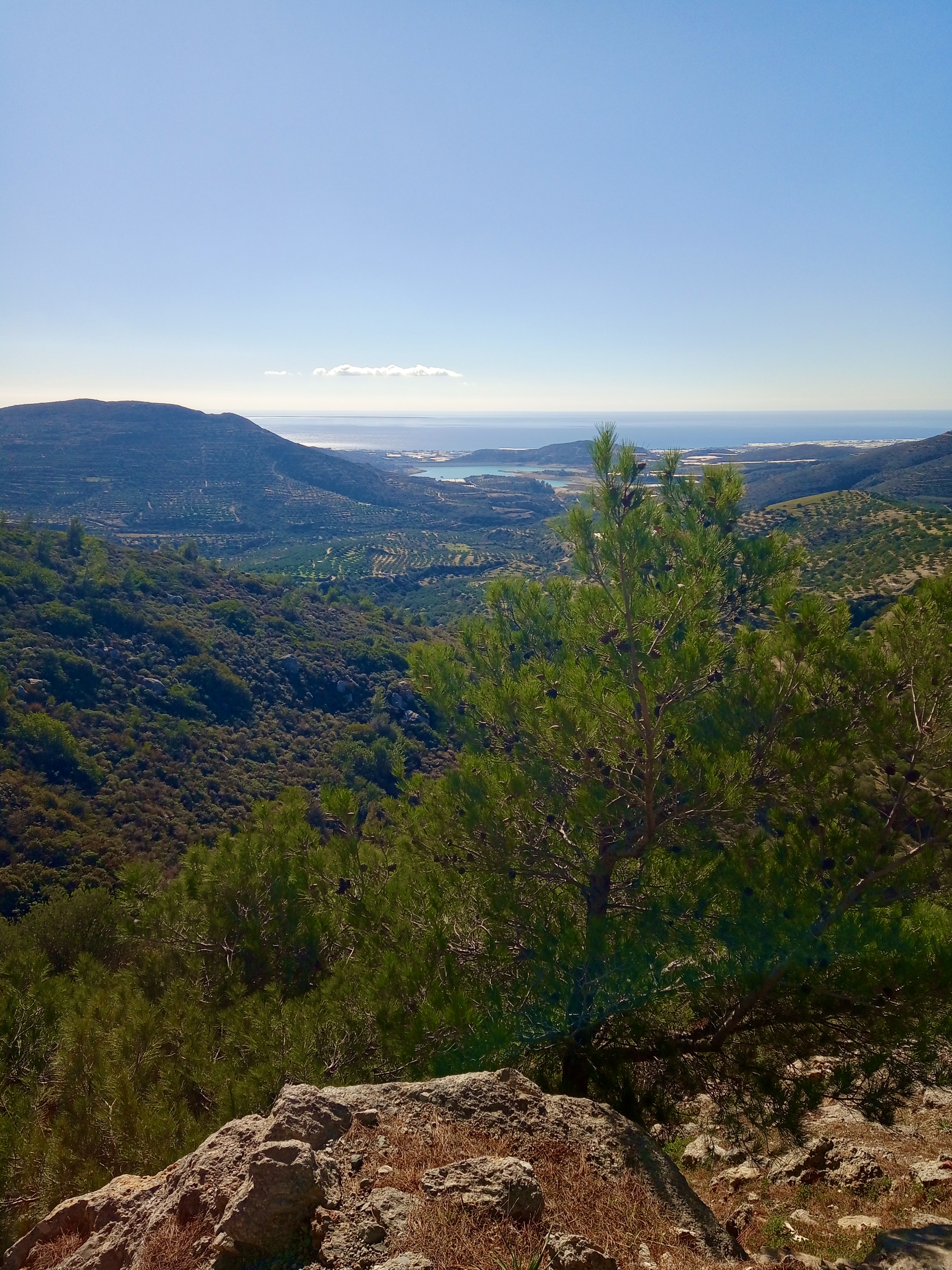
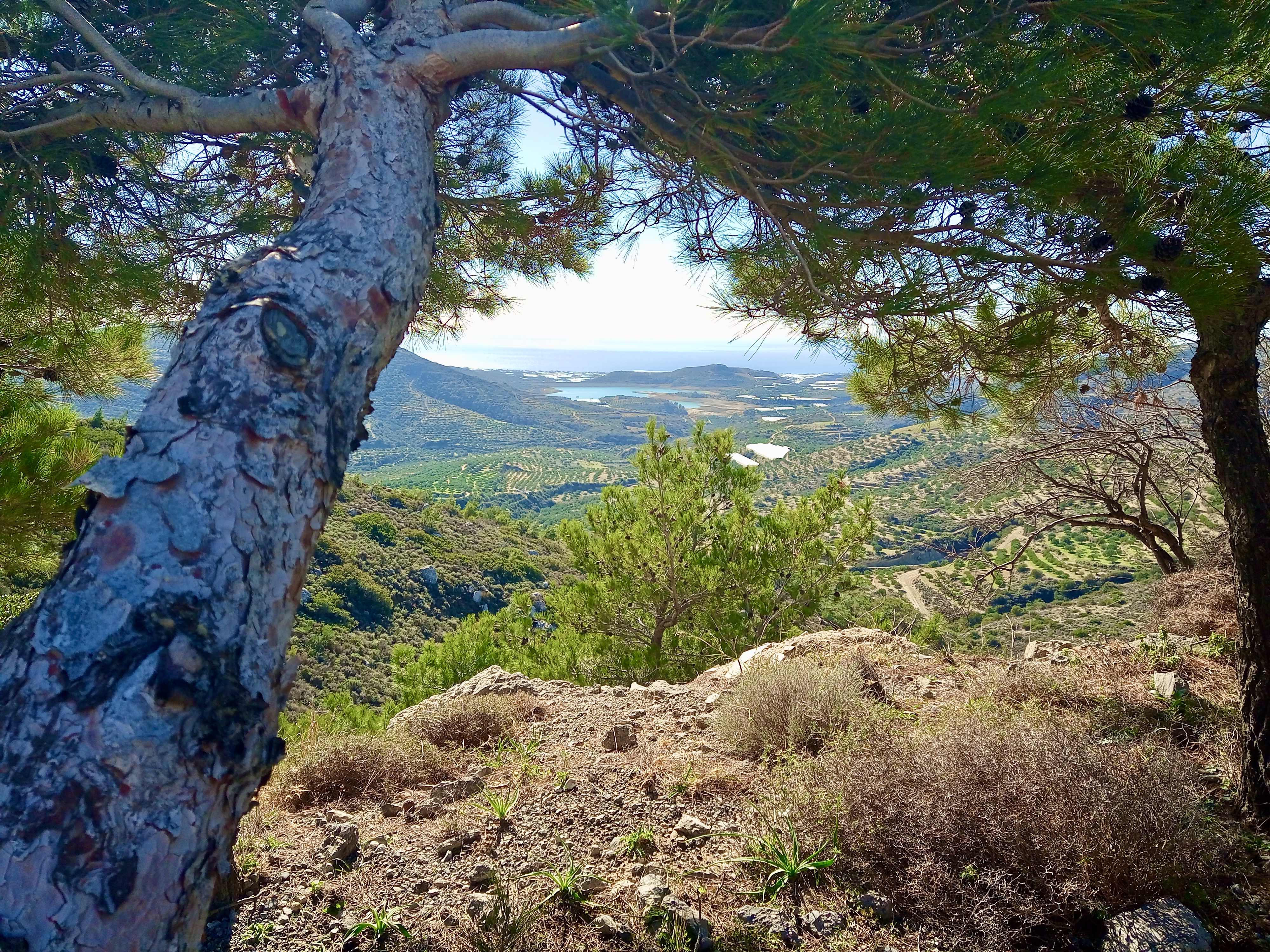
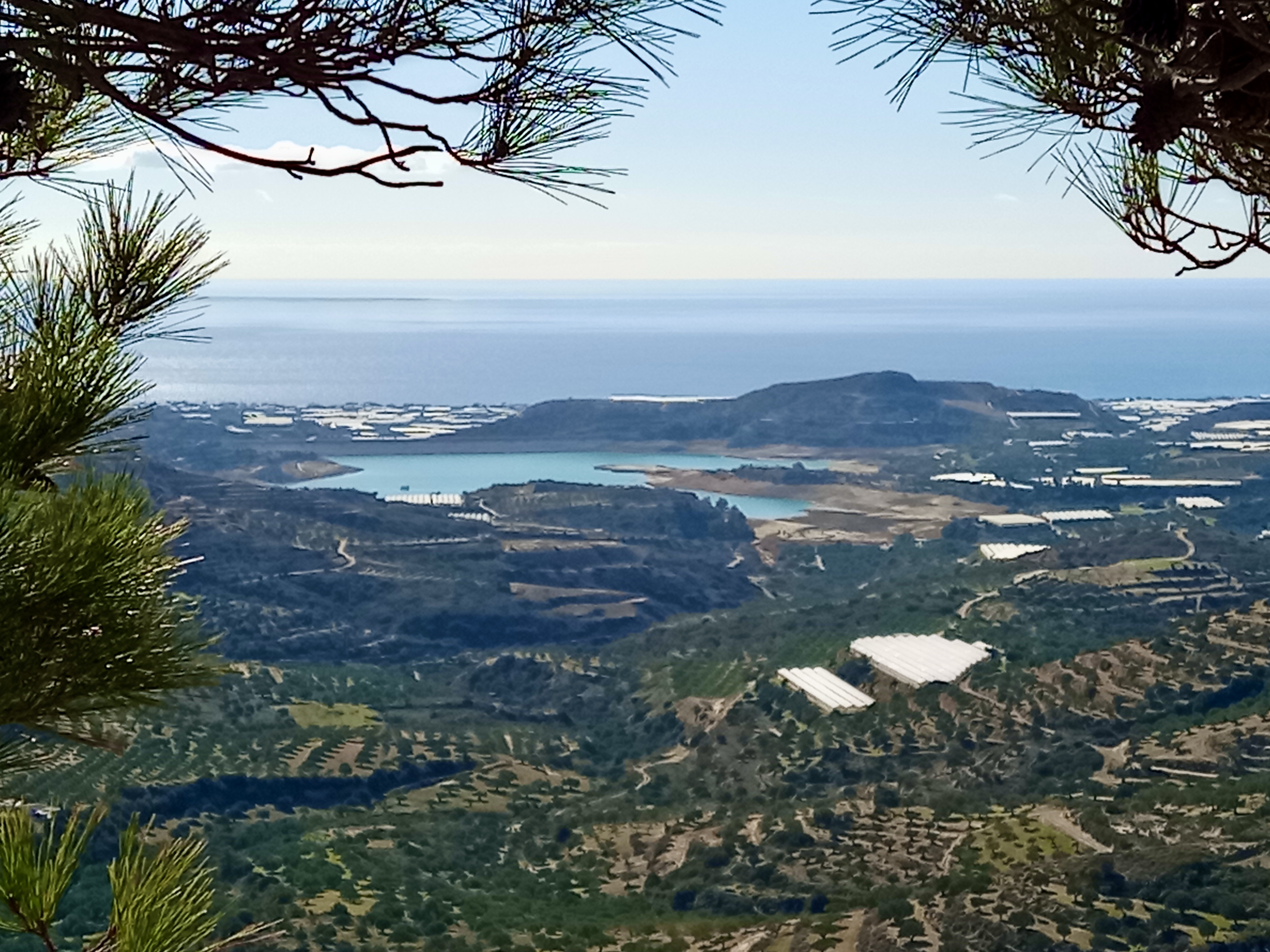
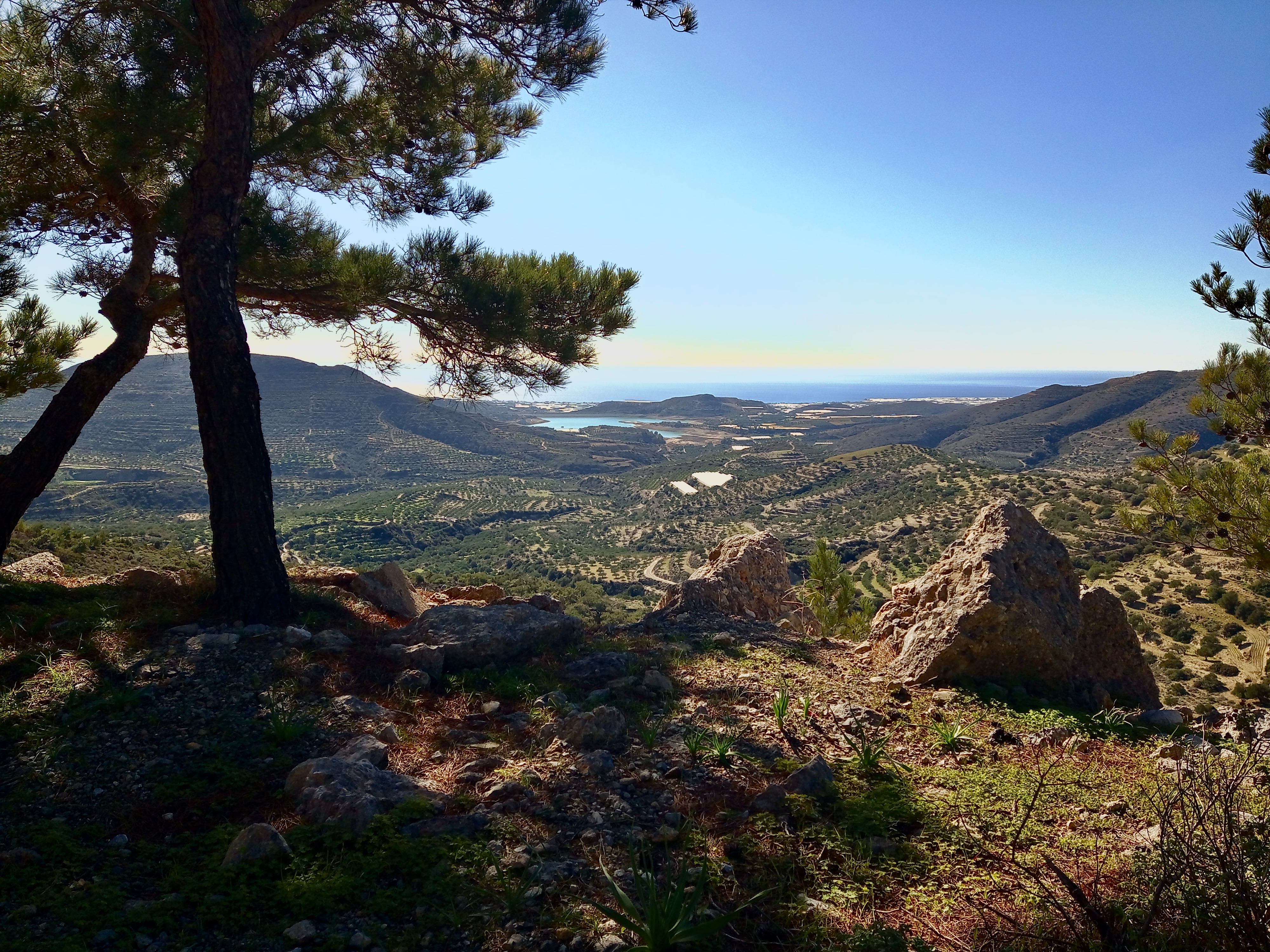
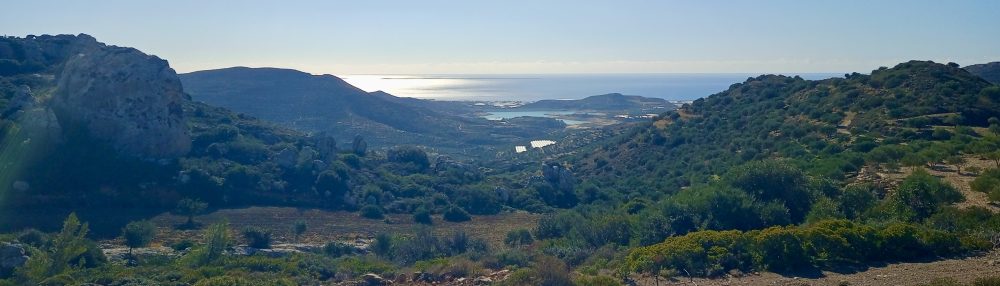
Above gallery: Taken at around midday yesterday (January 15th), on the road between our village and Meseleri, at the spot where you can gaze down upon the reservoir and out across the villages of Gra Ligia and Stomio to the sea beyond.

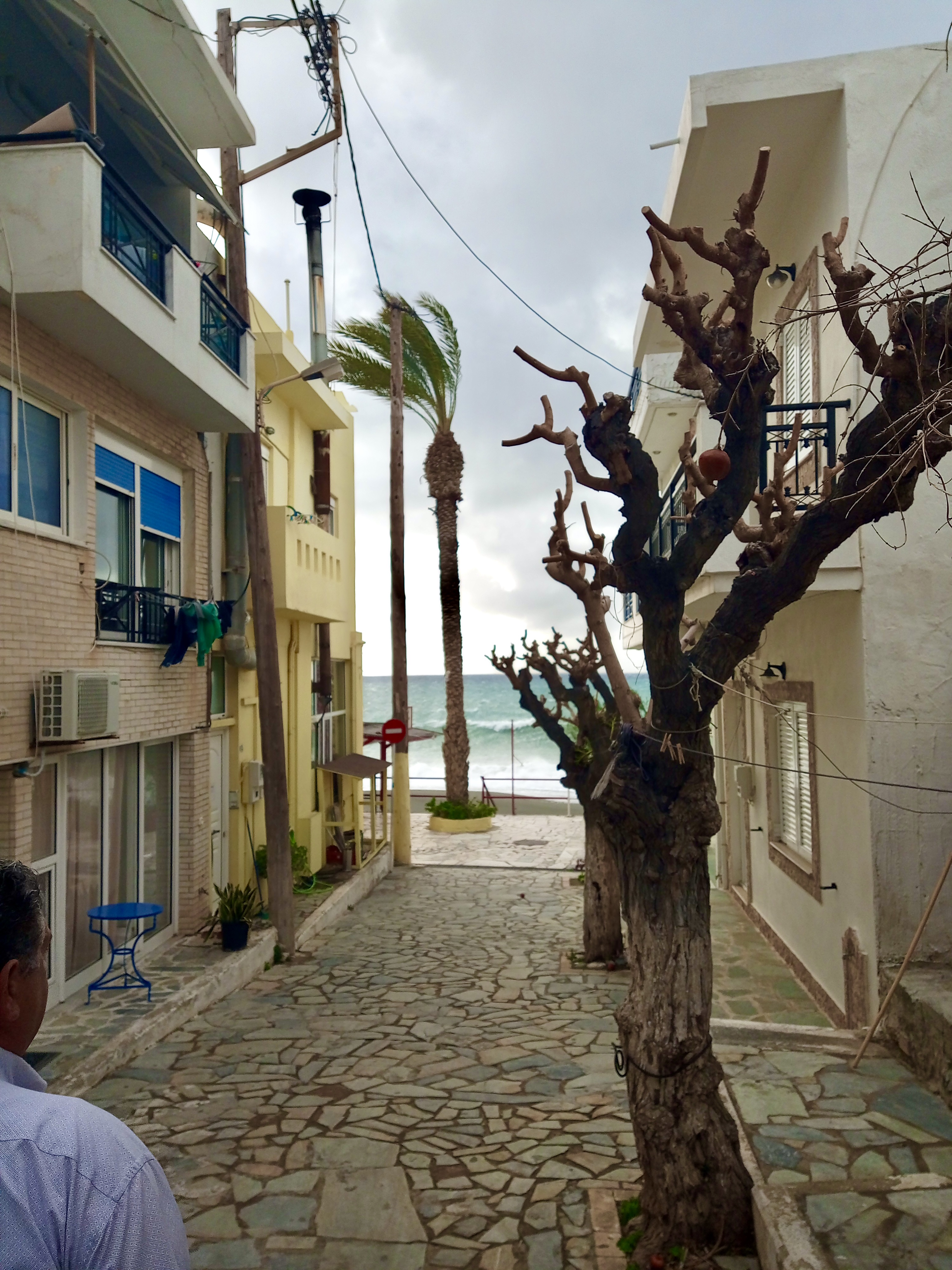
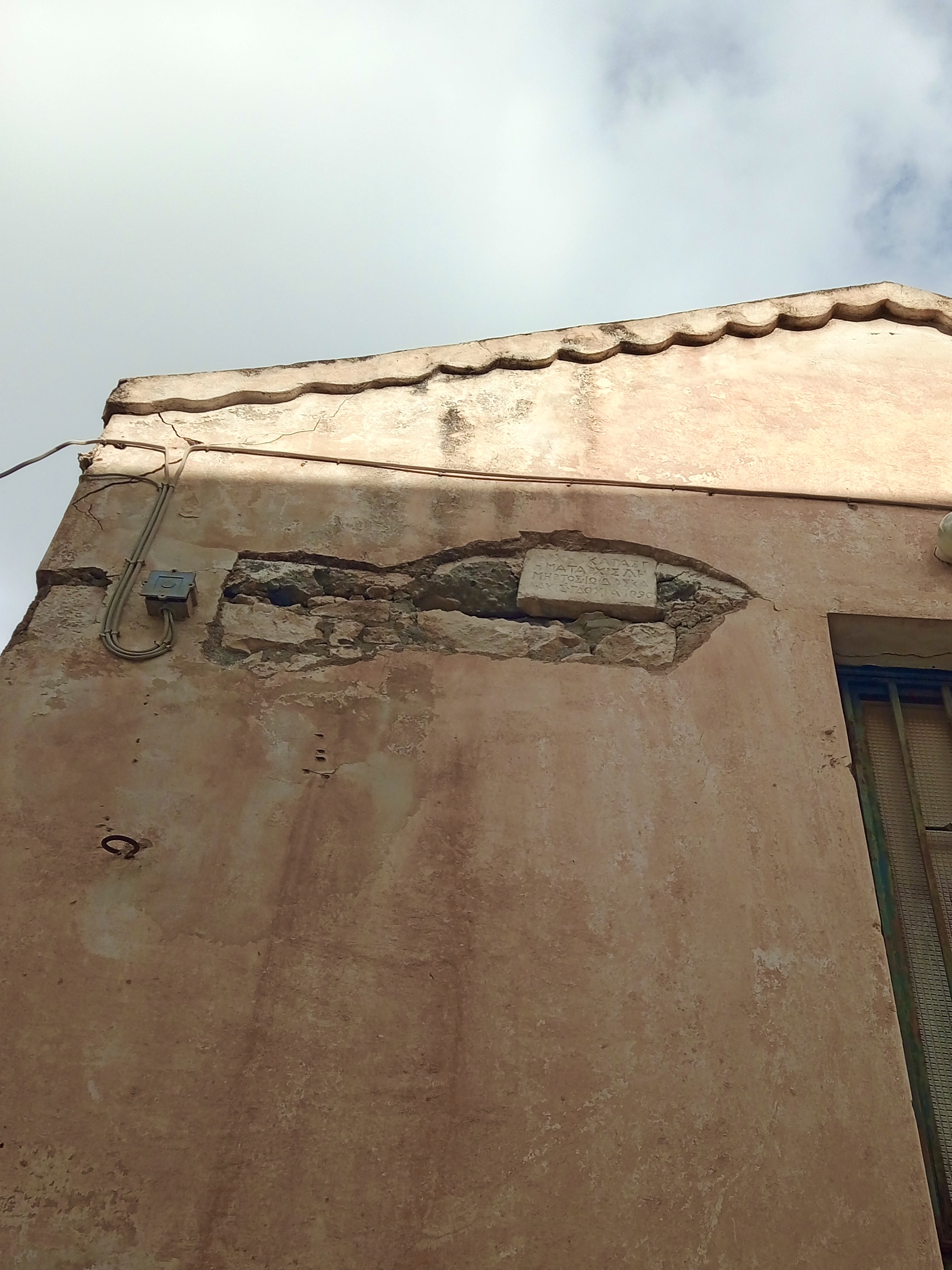
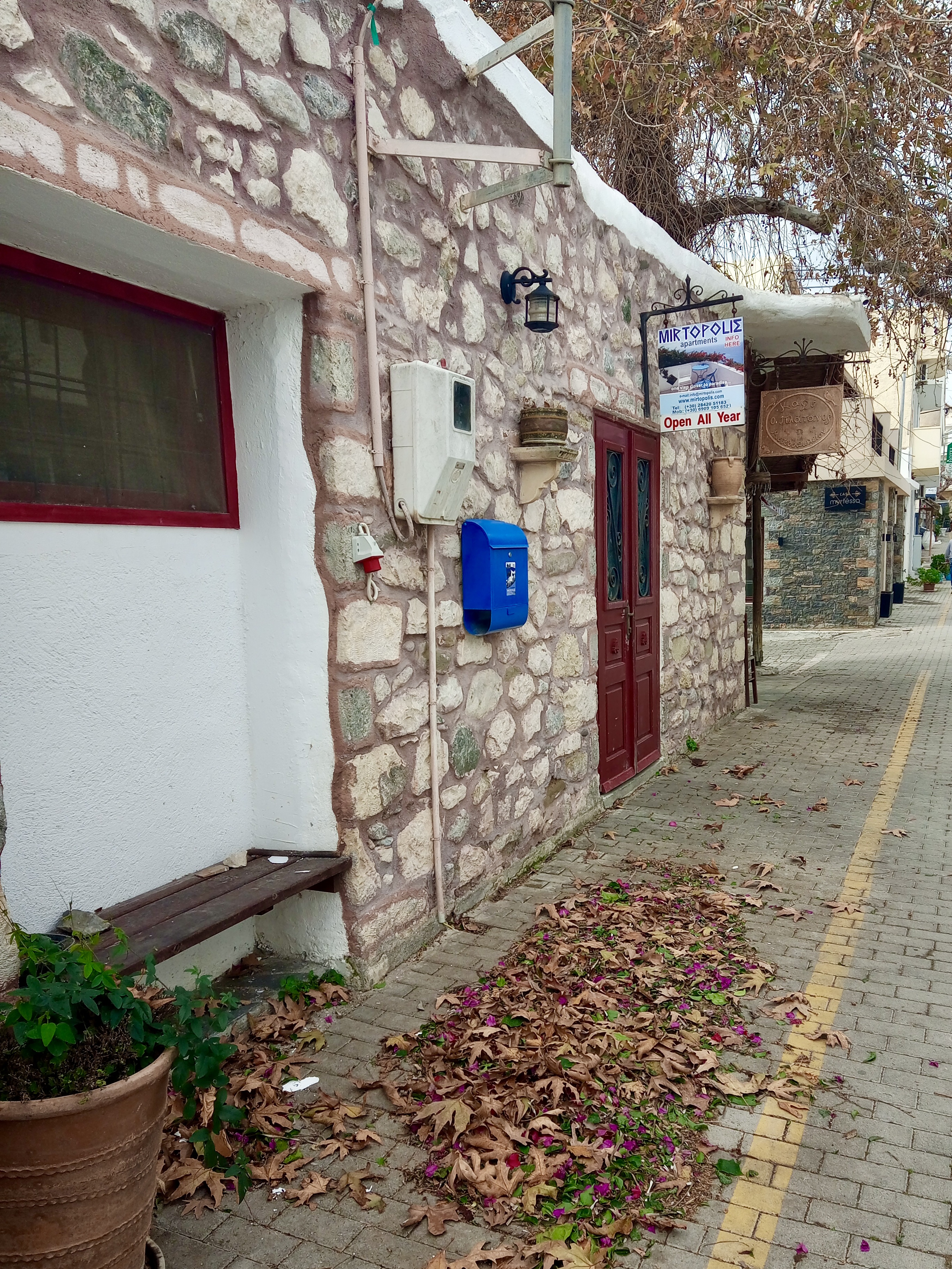
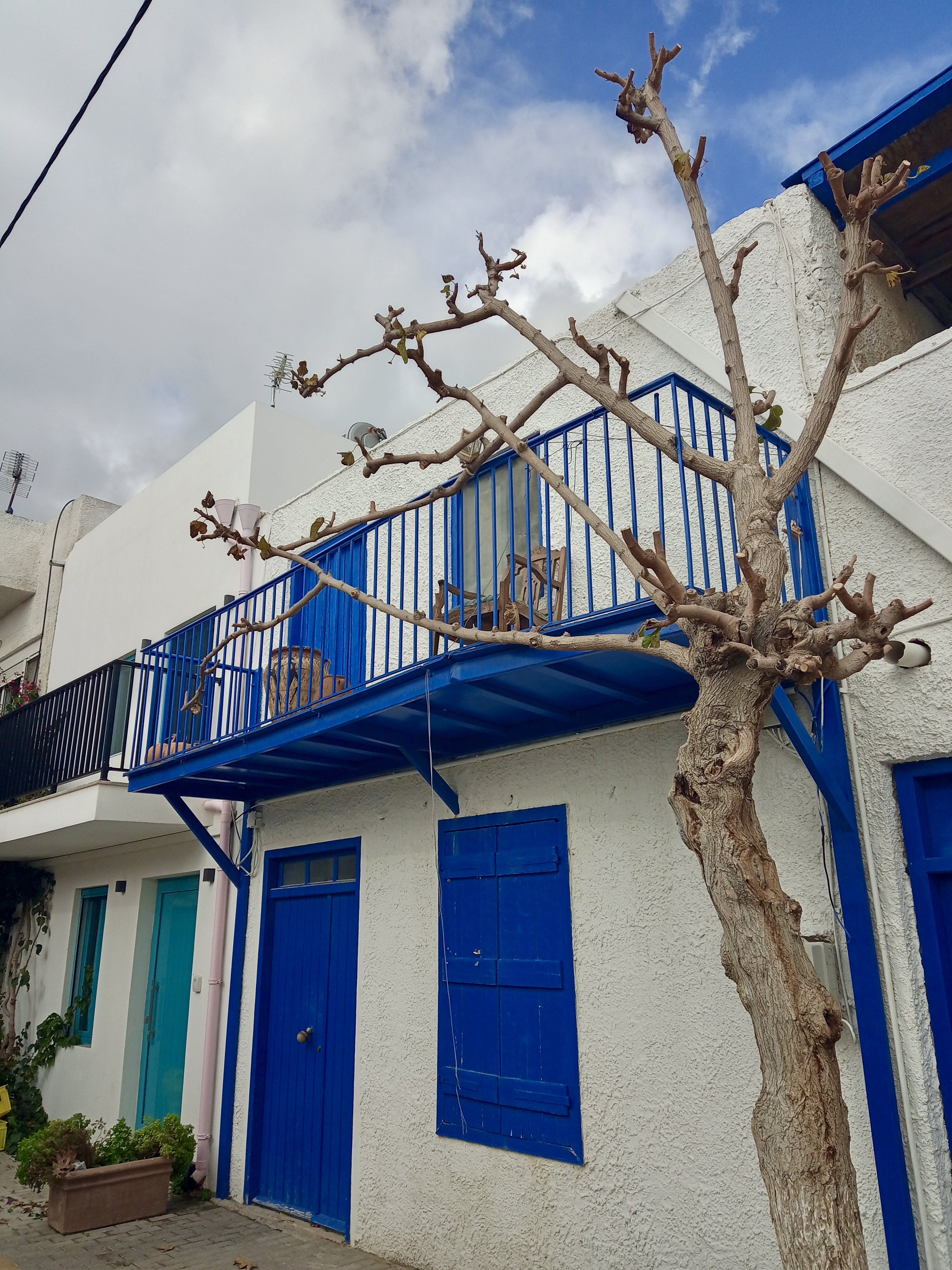
Above gallery: A few shots taken in Myrtos on a blustery and showery day last Sunday.

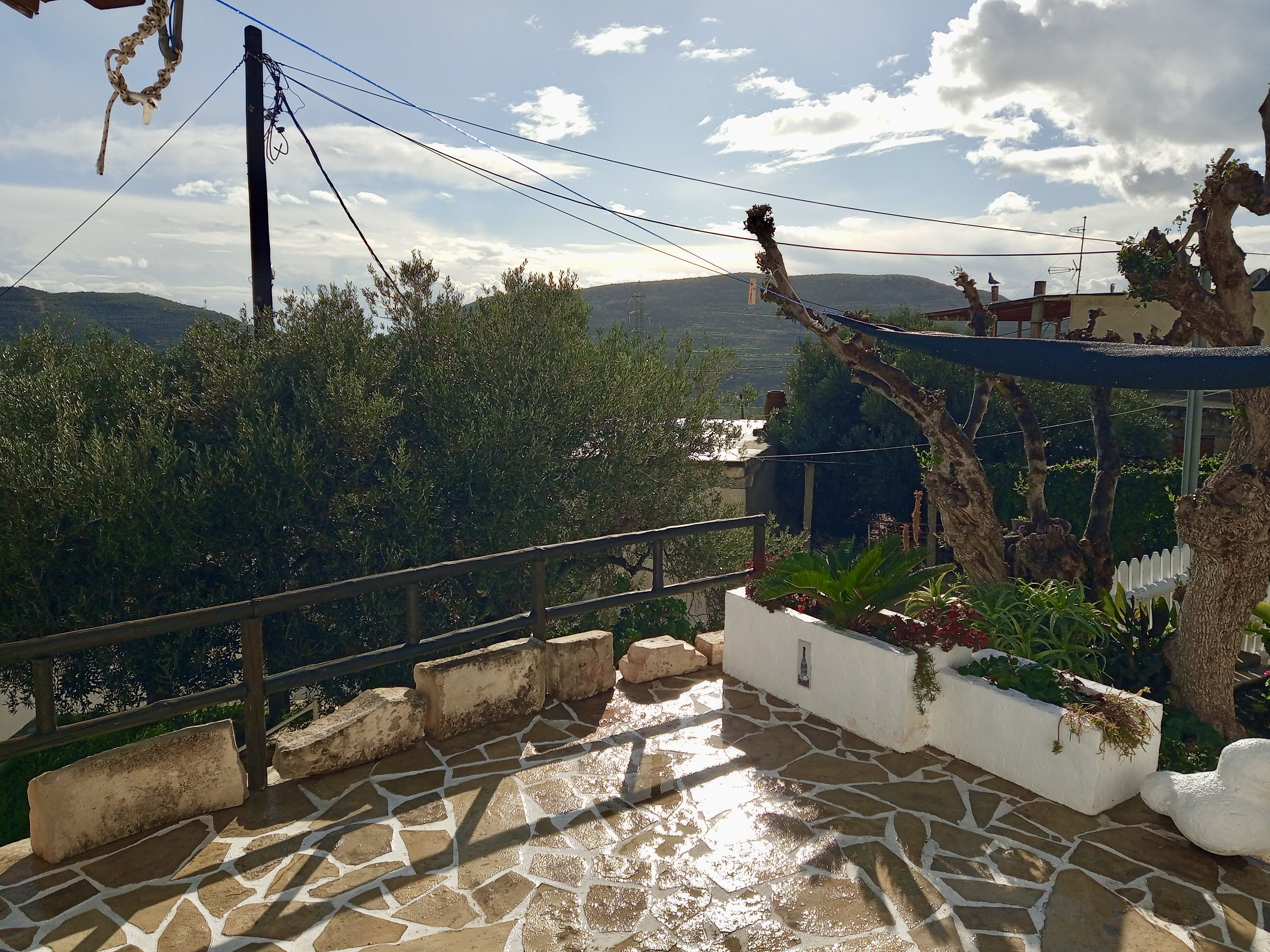
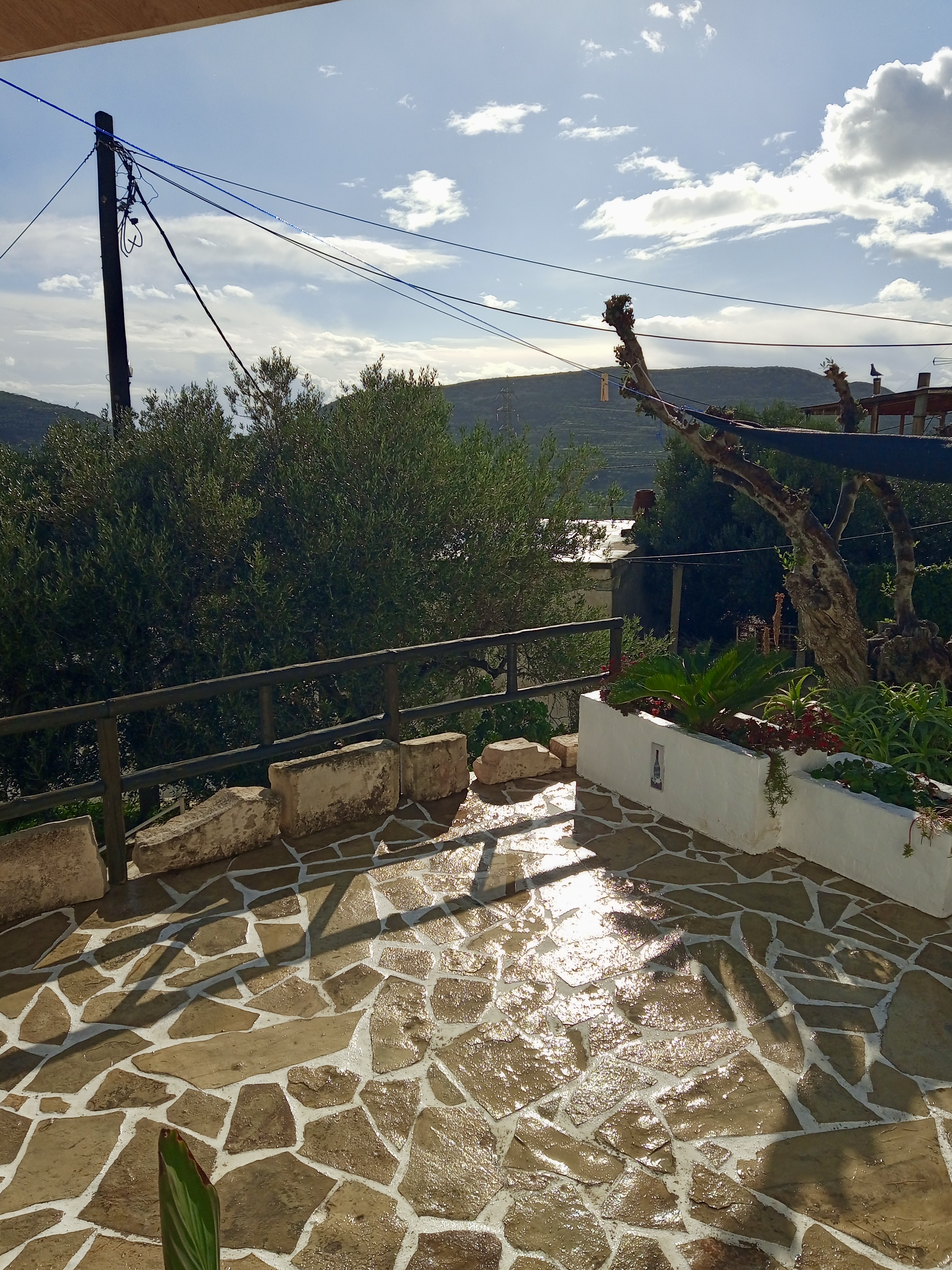
Above: One of a bougainvillea in the village just a few metres up the hill from our home and two of our terrace in the sunshine just after a shower.

If you enjoy my blog posts, then maybe think about supporting me by purchasing one of my written works. Your support would be very much appreciated, rest assured. Click HERE to go to my Amazon Author Page.

Thank you.
Gorge yourself

Today was one of those days that my dear old dad would have described as ‘glorious.’ A cloudless sky, very little wind, and a temperature of around 19-20ºC made it the kind of day that makes us truly love the winter months here on Crete. Not every day’s like this, of course but, to our delight, plenty enough are, because it’s the kind of weather that means you can get out and about without worrying about getting so, so hot and sweaty that you want to hide from the fierceness of the burning sun, as is the case in the summer months. No, today was perfect outdoor weather. So out we went.
I’d recently seen a photo that intrigued me on one of the local Facebook groups for this area. It showed a gorge that was truly spectacular and I was very excited to read that it was less than half an hour away from our front door. All we needed was the right day to go and explore it, and today was that day.

The gorge is called Sarakinas, and it’s situated up in the hills not far above the village of Myrtos, on the coast west of Ierapetra. Head up the road towards Viannou and only a few hundred metres up you’ll see a sign on the right for the village of Mythi. Follow the twisty-turny road to the village, then, once you reach it, there is a sign telling you which way to the gorge, or ‘canyon’ as the sign says. That’s only part of the story though, because you’ll soon arrive at a crossroads where, guess what, there is no sign telling you which way to go now.

As it happened, right beside the road on your left at that junction there’s a modest little café/bar, and emerging from among the few tables was a wizened old guy who looked like a werewolf who’d been drawing his pension for about a century or so. He was about to cross the narrow road in front of us with his walking frame (his ‘pi’ as the Greeks call them), so I opened my door and called out to him, asking him if he knew the right road to take in order to reach the canyon, the Greek word for which is ‘ferangi.’

He seemed delighted that I’d chosen to ask him, and enthusiastically pointed, precariously taking one hand off his frame, to indicate that we were to turn right, and it was only about another kilometre or so to the gorge, where there is a modest parking area. Off we went.

Mythi village, by the way, seemed to us to be quite well kept, with a couple of bars and a taverna or two. Many of the houses looked far too smart to be owned by locals, and so we got the impression that there was possibly a high percentage of foreigners who either lived there, or owned properties that were in all probability rented out via AirBnB or the like. Since it’s only five minutes by road from Myrtos, that figured. I’d imagine that it’s a much less sleepy community in the summertime.

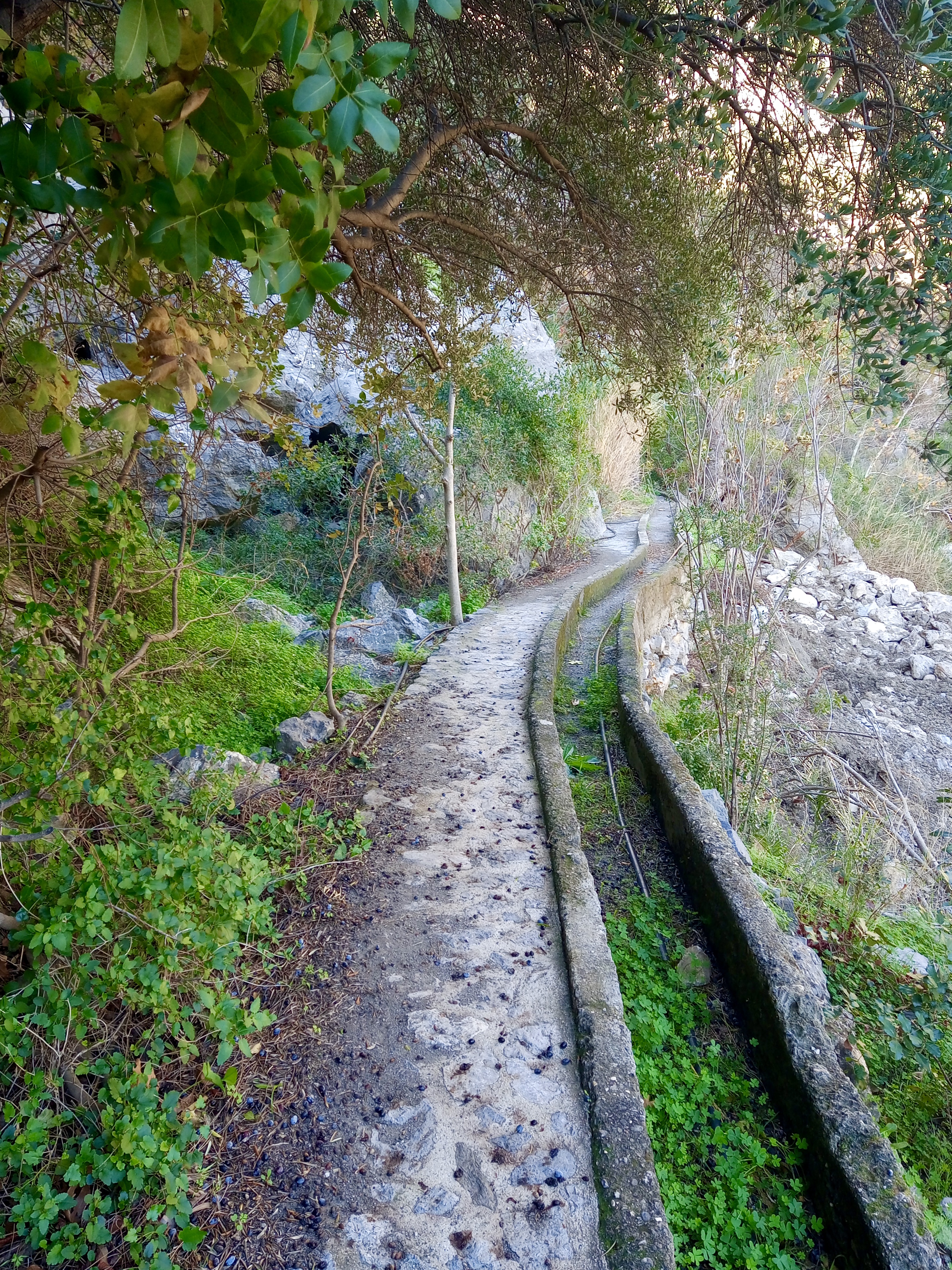
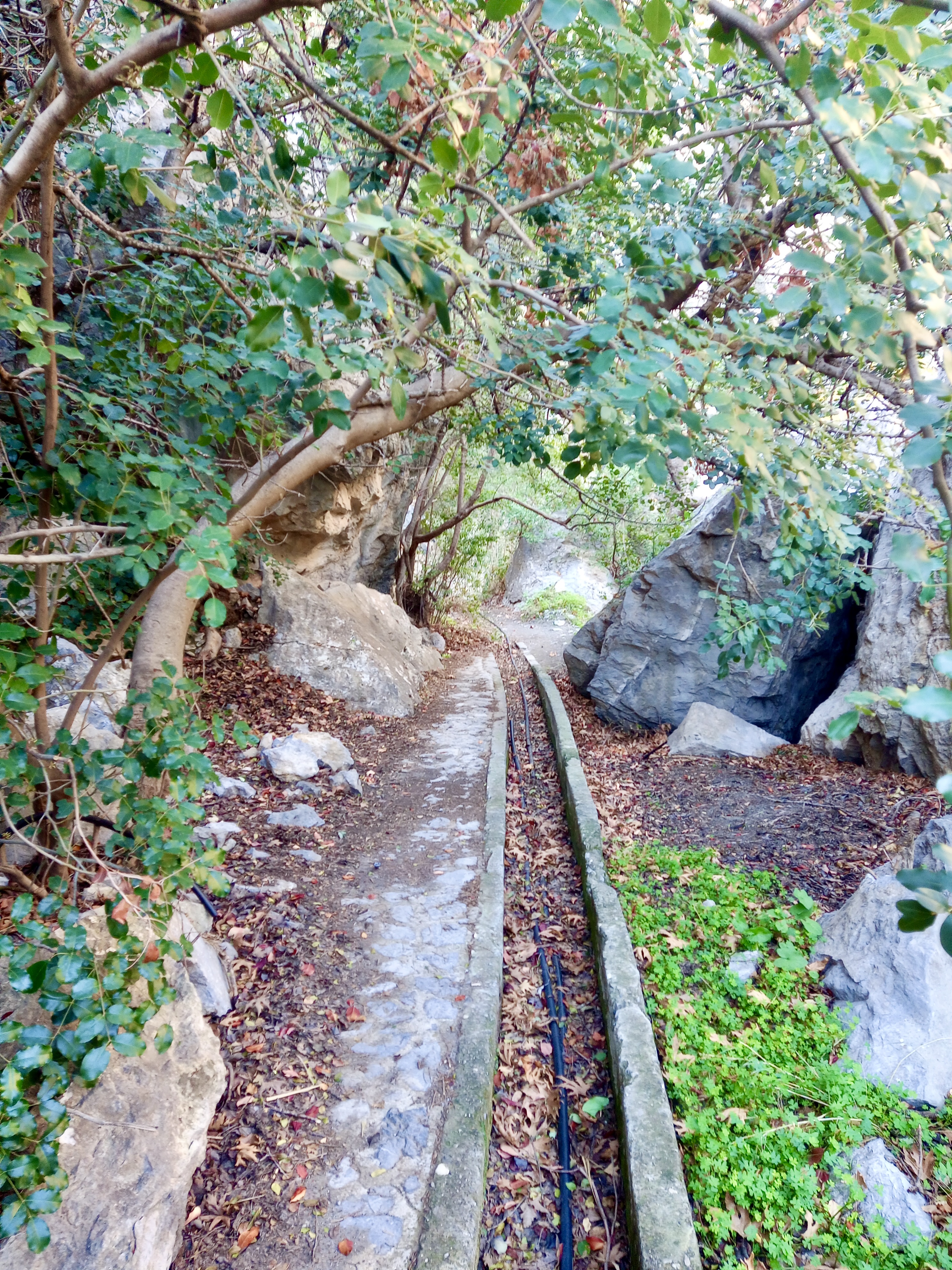
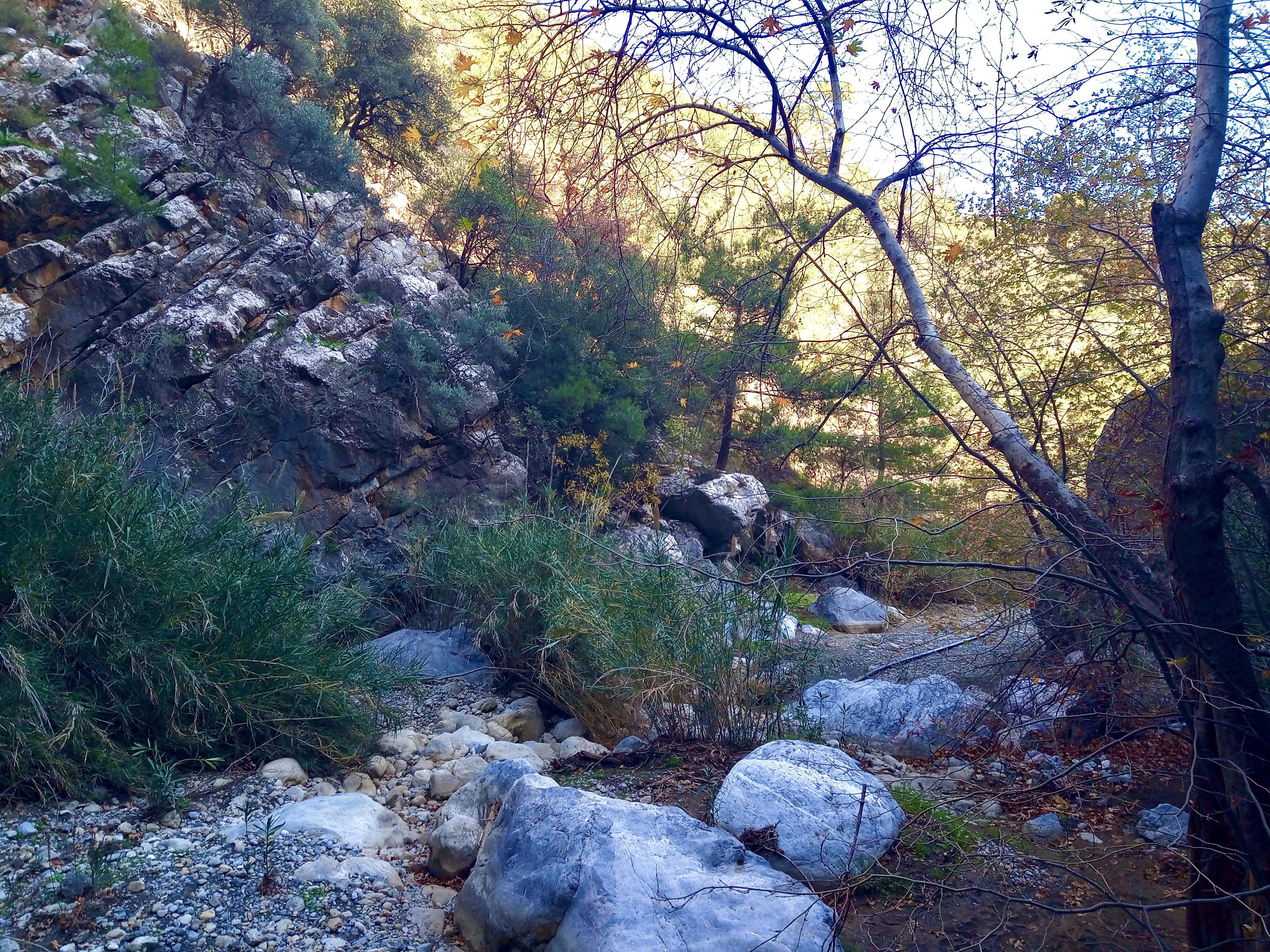
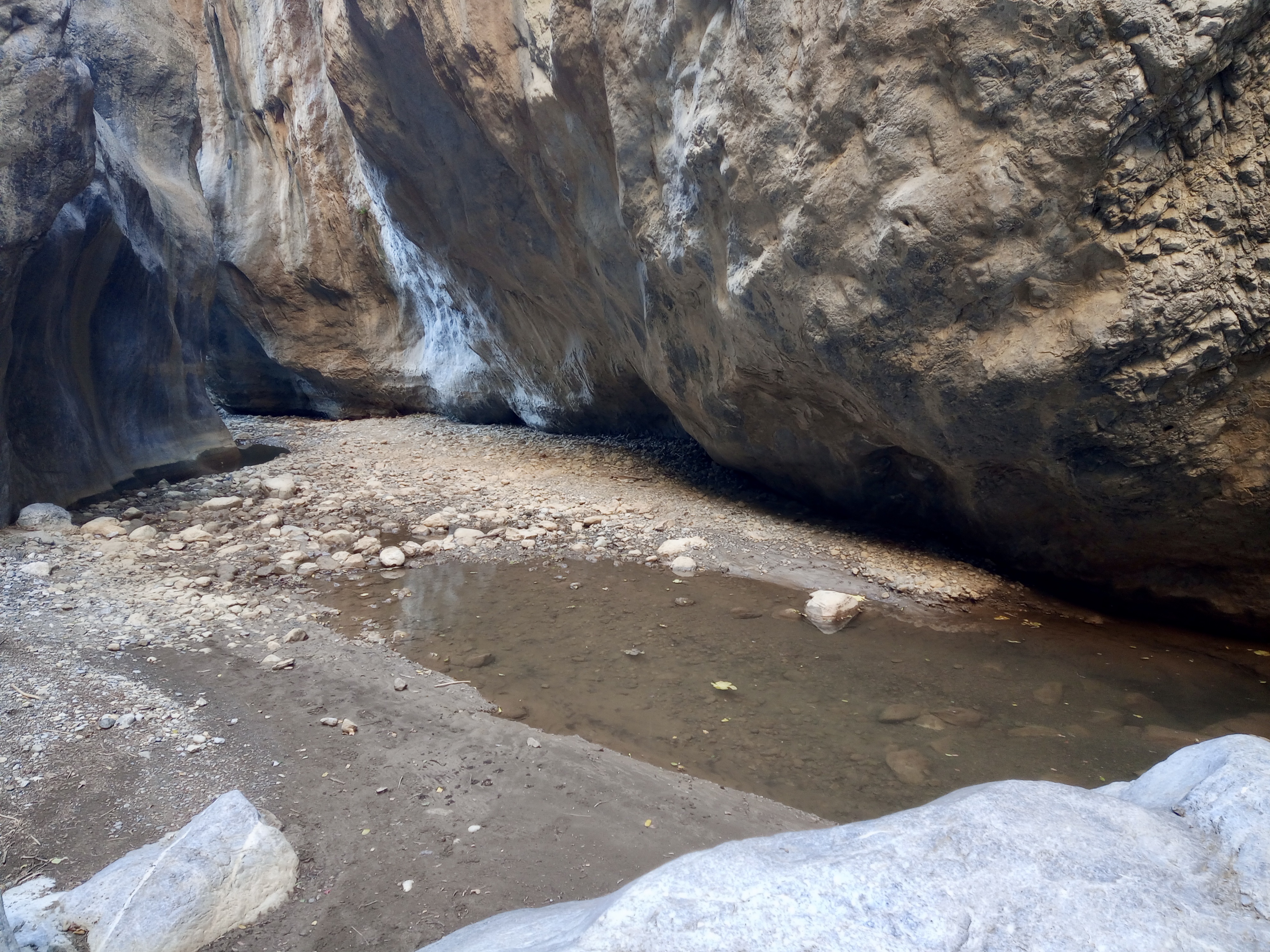
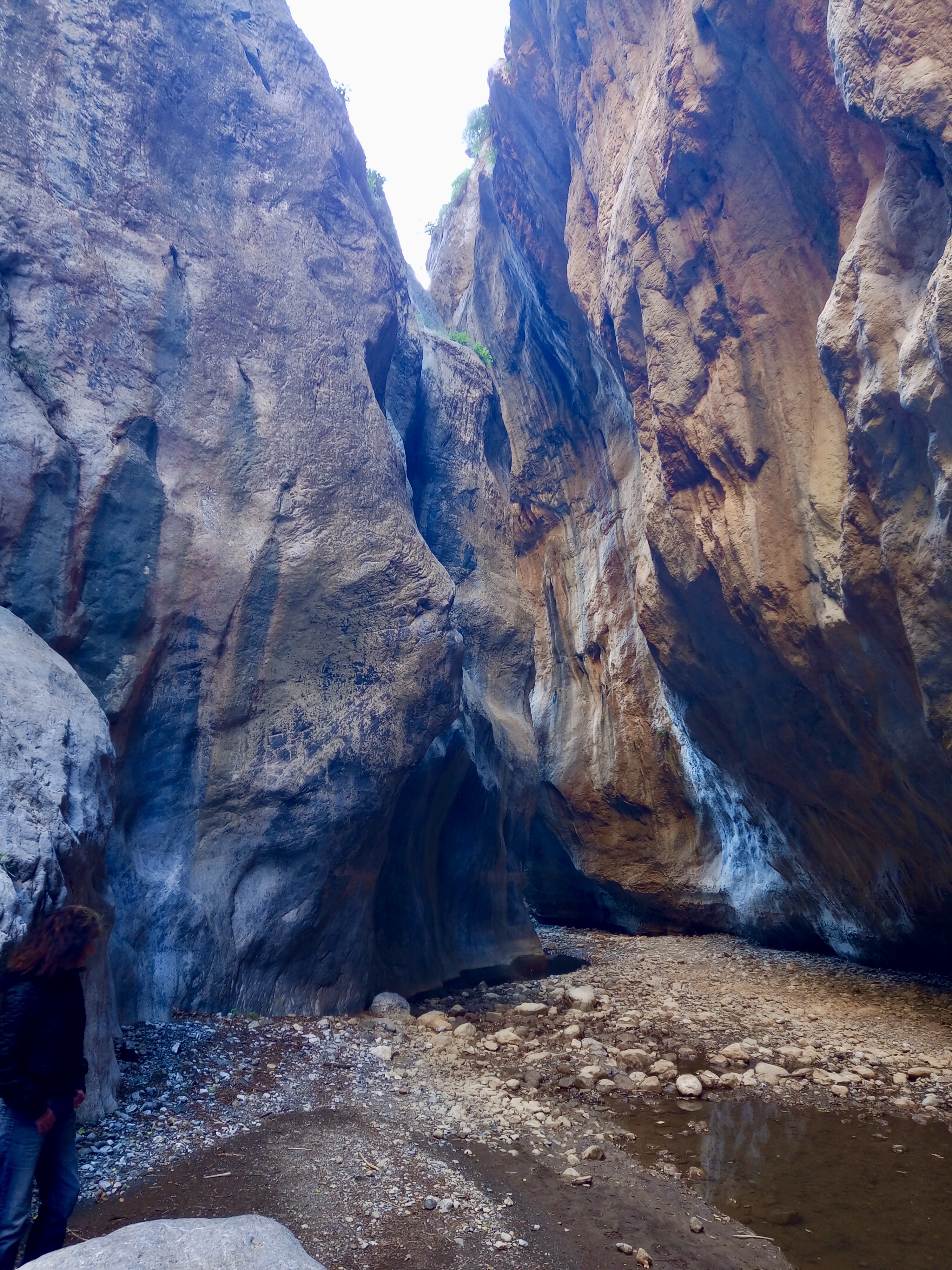
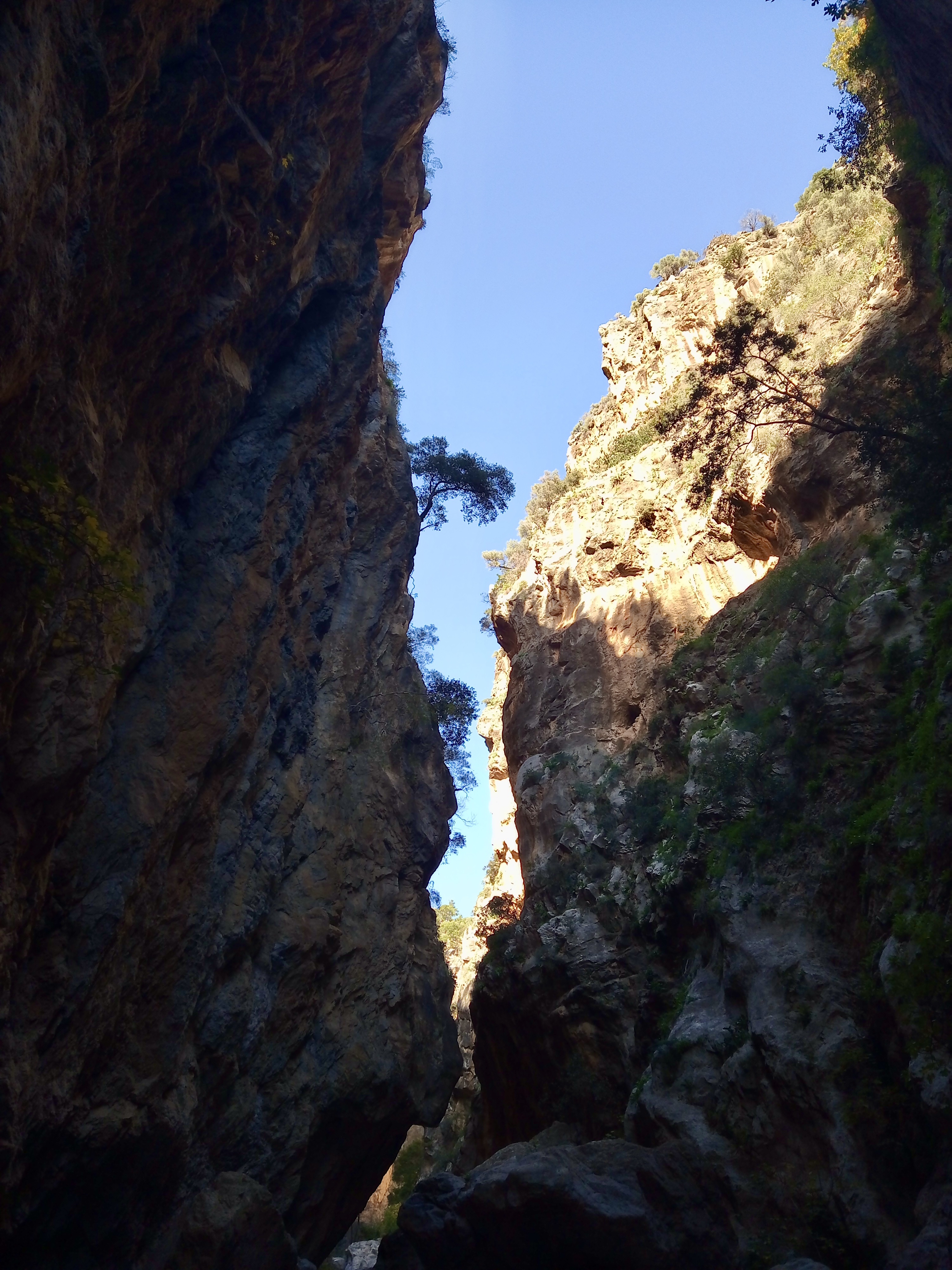
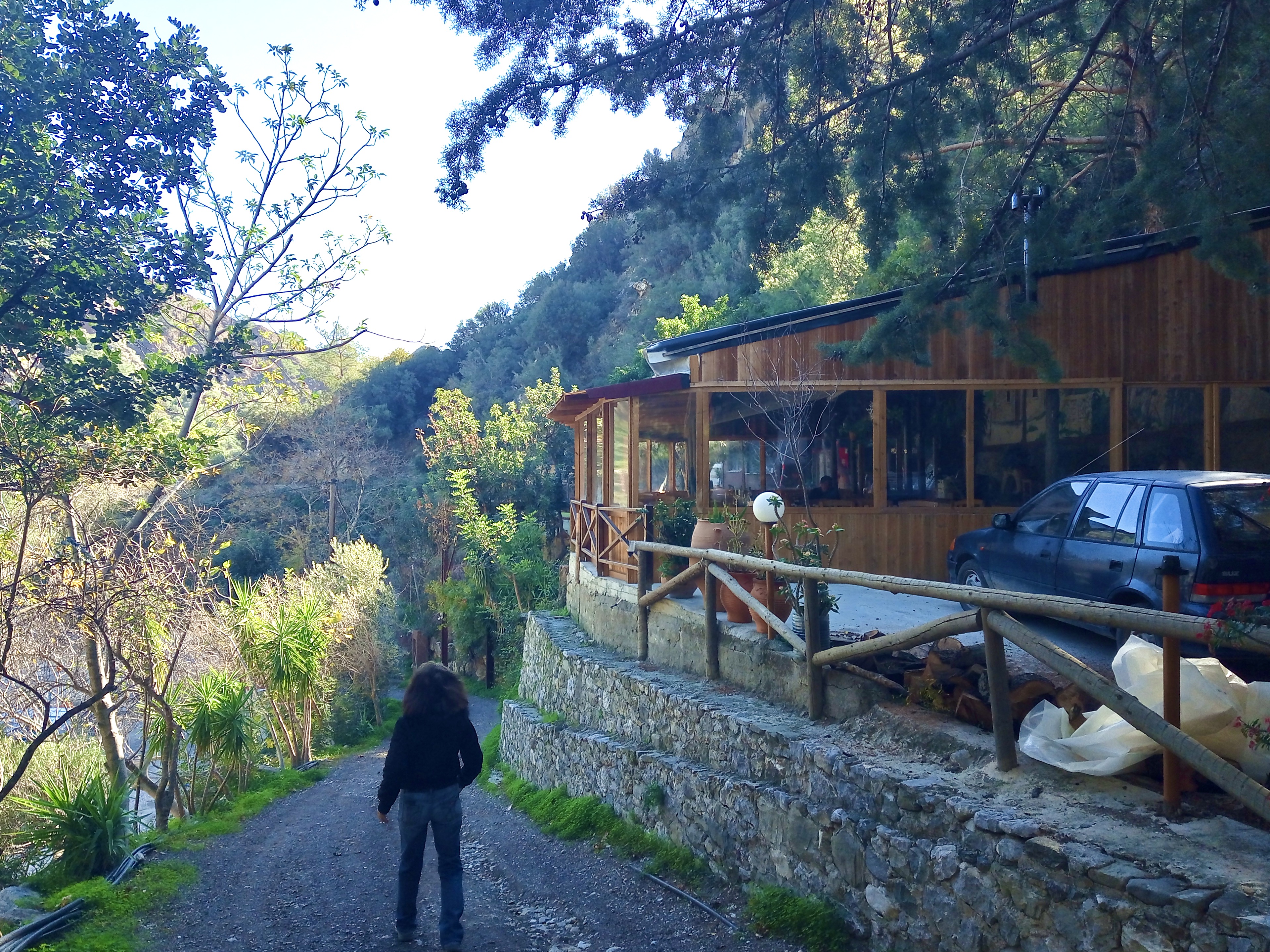
Anyway, it’s easy enough to get to the gorge’s southernmost entry point, which isn’t all that attractive since there’s a large concrete installation right beside the car park, where the sound of water pumps humming is pretty loud. Don’t let that put you off though. Take the walking path that ascends to the left of the pumping station and you’ll soon pass a pretty little taverna above and to the left where the owner was chainsawing logs as we passed and confirmed that we were heading in the right direction for the gorge. In very short order, this is what you’re confronted with…

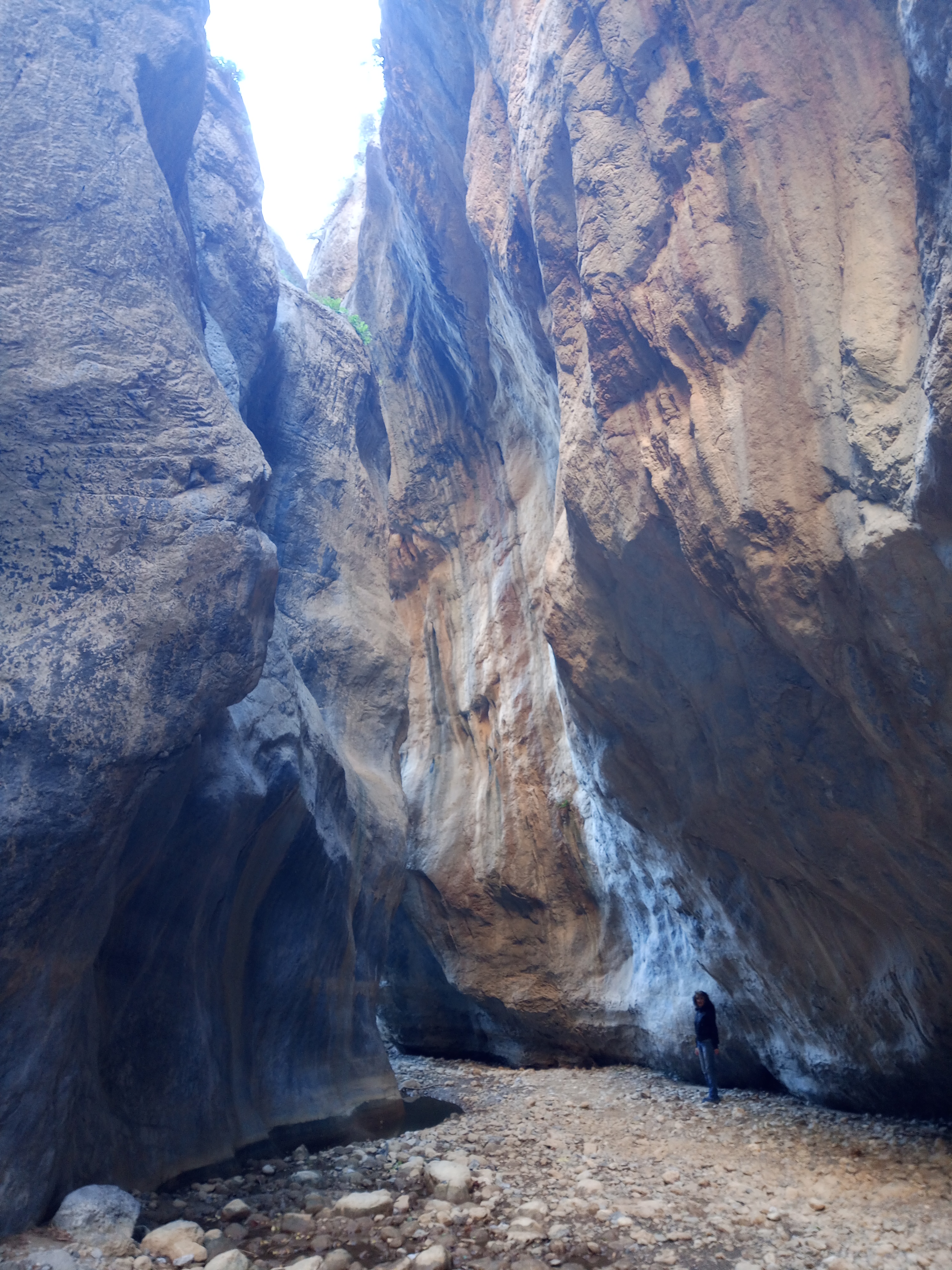
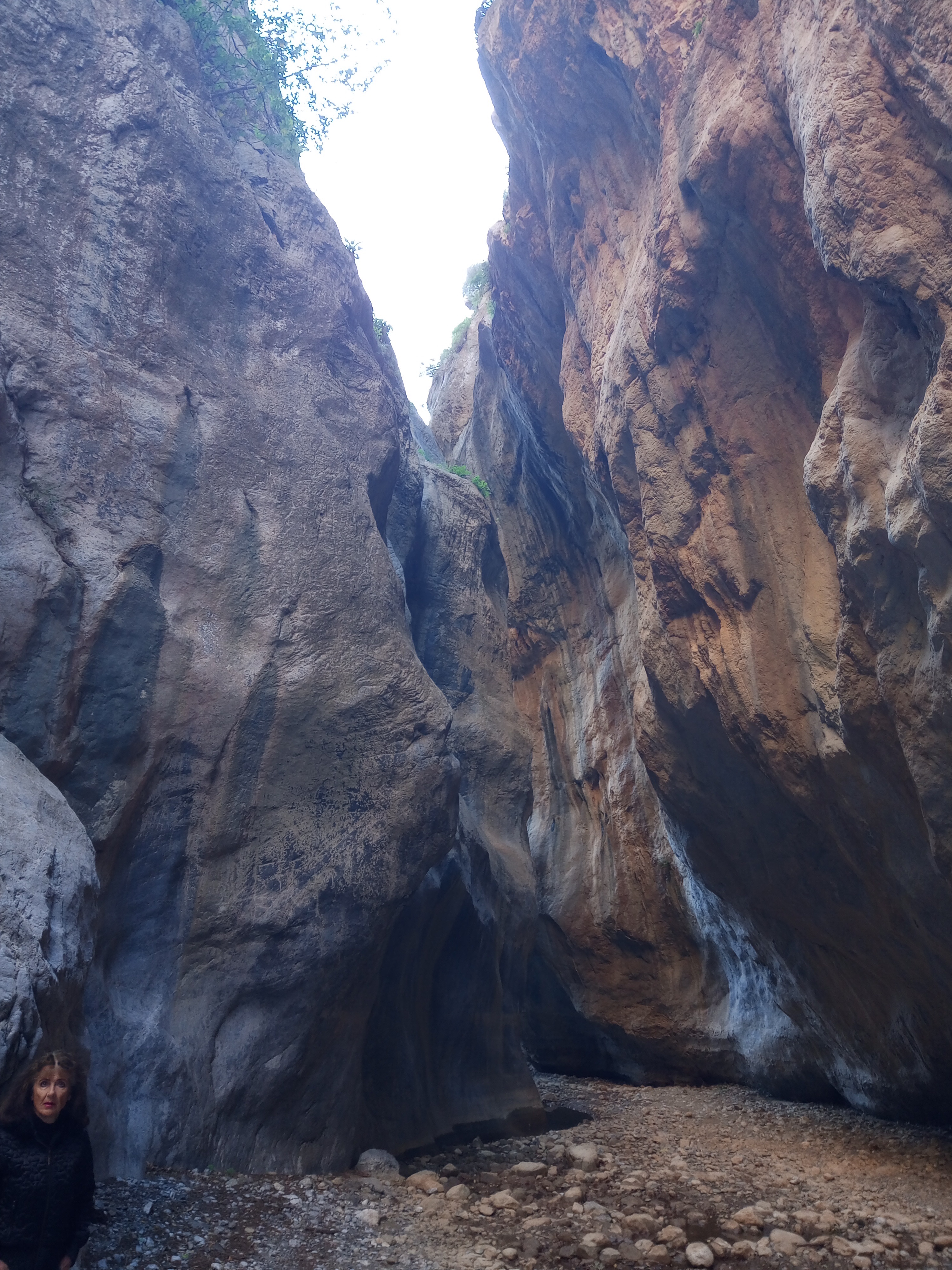
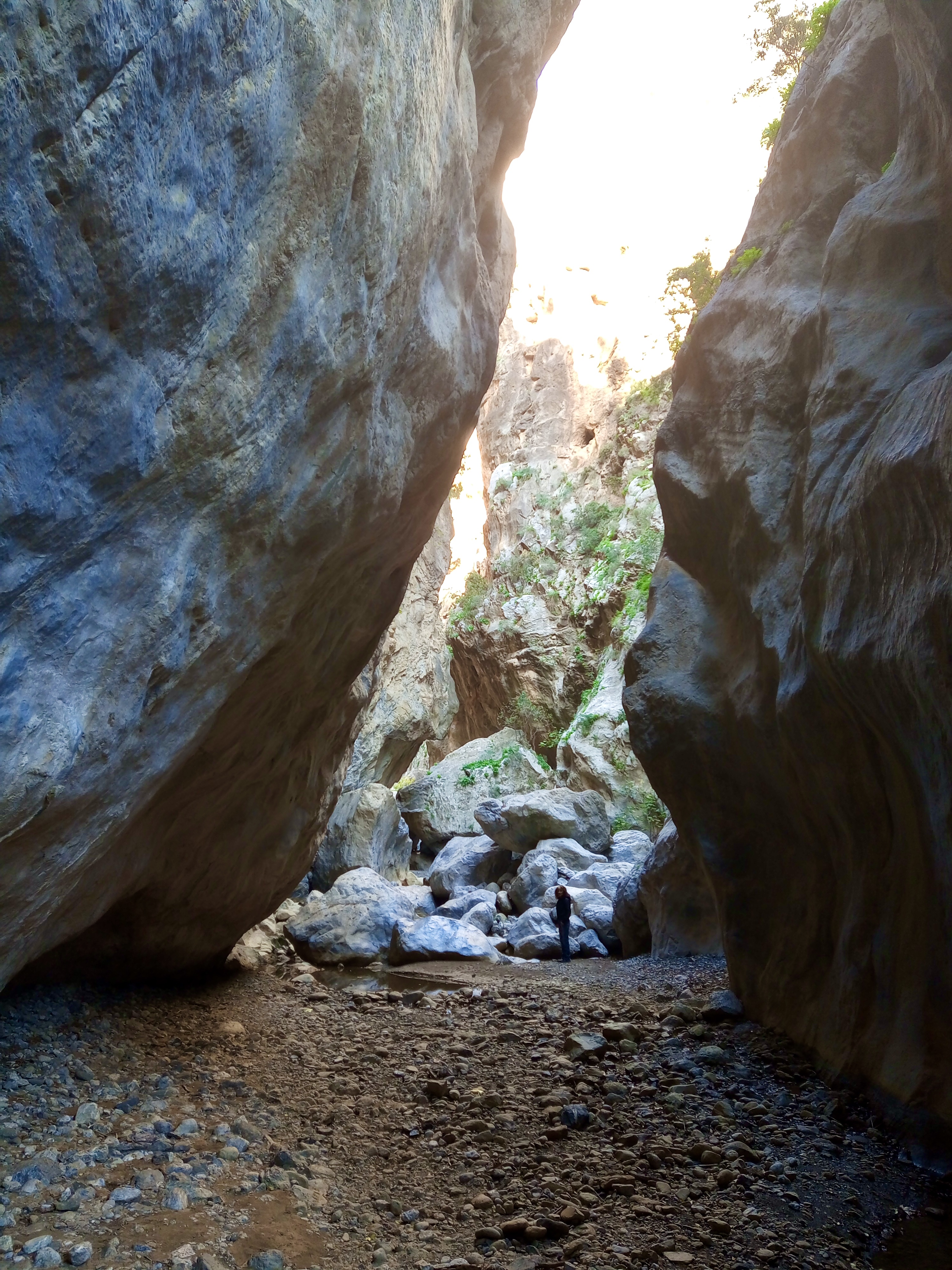
As you can see from the third of those photos, the path soon peters out and you have to set off on a stony slope (photo 4) down to the dried riverbed, where, as long as you persevere, you’ll soon be rewarded with this…

The ones in the above gallery where Yvonne is in shot give you an idea of the scale of what you’re walking through. Oh yes, it’s impressive all right. We eventually reach the point where, in order to negotiate your way to the upper part of the gorge, you need to become a mountaineer, so we called it a halt there, as those last two photos show above.

Heading back, we were soon descending the path beside the little taverna, just metres above the car park again…

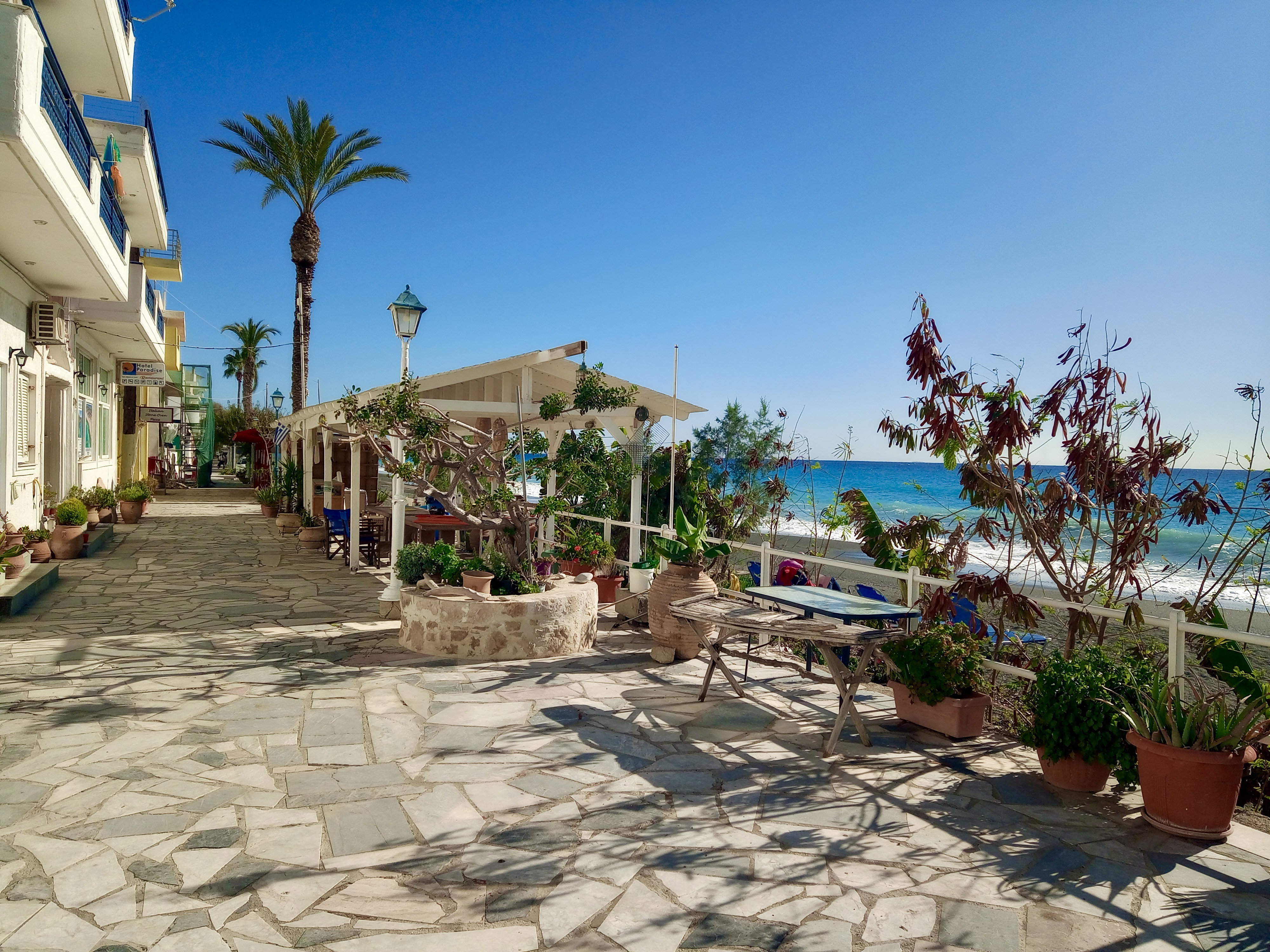
And, not many minutes later, we were strolling along Myrtos seafront, which is very different at this time of the year from how it appears to the tourist during the summer…

If you do find yourselves in our neck of the woods this coming summer, I’d highly recommend a visit to the Sarakinas Gorge, although it’s not for anyone who’s not too steady on their feet, or hasn’t got a sturdy pair of walking boots with them. It would be the height of folly to attempt it in flip flops, OK? You have been warned.

If you enjoy my blog posts, then maybe think about supporting me by purchasing one of my written works. Your support would be very much appreciated, rest assured. Click HERE to go to my Amazon Author Page.