Musings from South East Crete. Accretions: "Growth or increase by the gradual accumulation of additional layers or matter. A thing formed or added by gradual growth or increase." This is a spasmodic diary of life in south eastern Crete by writer John Manuel.
This isn’t easy, but my mind’s made up. I’ve decided to knock it on the head, pack it in, call it a day, as regards the blog. I’ve thoroughly enjoyed this past decade and half, during which I’ve been posting first on my ‘Ramblings from Rhodes’ blog, and more recently, as in from late 2019, here on my Cretan blog, but in all honesty I don’t have the appetite for it any more. I’m more than grateful for my modest but loyal readership out there, some of whom I know have been reading my drivel almost since the very start back around 2009-2010 when we lived on Rhodes and my writing ‘career’ was still very much in its infancy.
Looking around on line, it’s clear that my absence will not cause much of a vacuum, since it seems to me that over the years that I’ve been doing this the internet has almost become crowded with others doing something similar. I shouldn’t be surprised really, because Greece is such a wonderful country (warts and all) that it’s no surprise that among the ex-pats moving here there will surely be a lot of people who simply want to share their own personal experience of this extraordinary part of our planet with anyone who’ll listen, even if it’s with their eyes rather than their ears.
Of course, I won’t be taking the blog down as such, it’ll still be here for reference, but, as from this post onwards, I’ll in all probability not be adding any more for an indefinite period. I remember an old friend back on Rhodes who used to run a taverna on Stegna Beach, and she used to refer to ‘την παύση μου’ when she talked about the business being wound up. It always struck me as one of those expressions that doesn’t translate all that well, since the literal translation of ‘μια παύση’ means ‘a pause,’ when in actuality it was a finish, a winding up, a termination of the business. Sometimes locals here will say ‘I took a pause’ when they mean they stopped, as in – for example – working for a living, when they retired.
So here I am folks, and I’m ‘pausing,’ only most likely in a permanent sense. If you’ve enjoyed my writing over the years, then I thank you sincerely from the bottom of my heart for taking the time in your precious lives to do so. Every second is a valuable commodity, and to think that you may have spent untold seconds, minutes and – in the case of my books – hours reading what I’ve written is, to me, an inestimable privilege.
The books, all seventeen of them, plus my one short story, ‘Outage’ will all remain on Amazon and available (with the sole exception of the short story), both as paperbacks as well as Kindle downloads, indefinitely. If you haven’t yet read all of them (or indeed any of them!) I can only invite you to do so, since they don’t cost much more than a cup of coffee in the case of the downloads, and you’ll be making an aging would-be writer very happy if you do.
I’ll also keep the facebook page ‘John Manuel – the Books’ going for a while yet too. There I shall announce it as soon as the latest book ‘Everything You Ever Wanted to Know About Greece’ etc finally comes out as a paperback, plus I’ll probably still post the odd link to other Greek info that may be of interest to those who follow it. I’ll also post photos there from time to time, new as well as old, as they take my fancy, or I think that you might just like to see them.
Right now I don’t see myself writing another book but, never say never, as the saying goes. When I first sat down to write ‘Feta Compli!’ all those years ago, I thought that I probably only had the one book in me. I ended up writing eight non-fiction works, so I was a bit out with that prediction, wasn’t I? Also, when I wrote the first novel, ‘The View From Kleoboulos’ I never dreamed that I’d ever write another, and I ended up writing nine. I have to admit though, that as regards any ideas for a new plot, I’m currently experiencing a monumental writer’s block, so no use holding your breath there either.
Once again, thank you so, so much for granting me the time to become a small part of your life, if only for a few minutes. It’s a privilege I shall never, ever take for granted, I assure you. I wish you all the best, and do please carry on reading about all things Greek. In this currently extremely volatile world, we need places like Greece and her islands to bring us a little respite, a little sanity, even if the Greeks themselves can appear a little mad now and then. Oh, and I have no intention of retiring from being an Admin on the Facebook group ‘A Good Greek Read,’ either. There’ll be no ‘pause’ where that’s concerned.
But right now, well, it’s time I took a pause. Thank you, thank you for having been there. I hope that whatever you may have read of my writings, either here or in the books, has brought you some small enjoyment and that you’ll always think well of me.
John Manuel
Lasithi, Crete,
February 24th 2026
•
If you’ve enjoyed my blog posts, then maybe think about supporting me by purchasing one of my written works. Your support would be very much appreciated, rest assured.Click HERE to go to my Amazon Author Page.
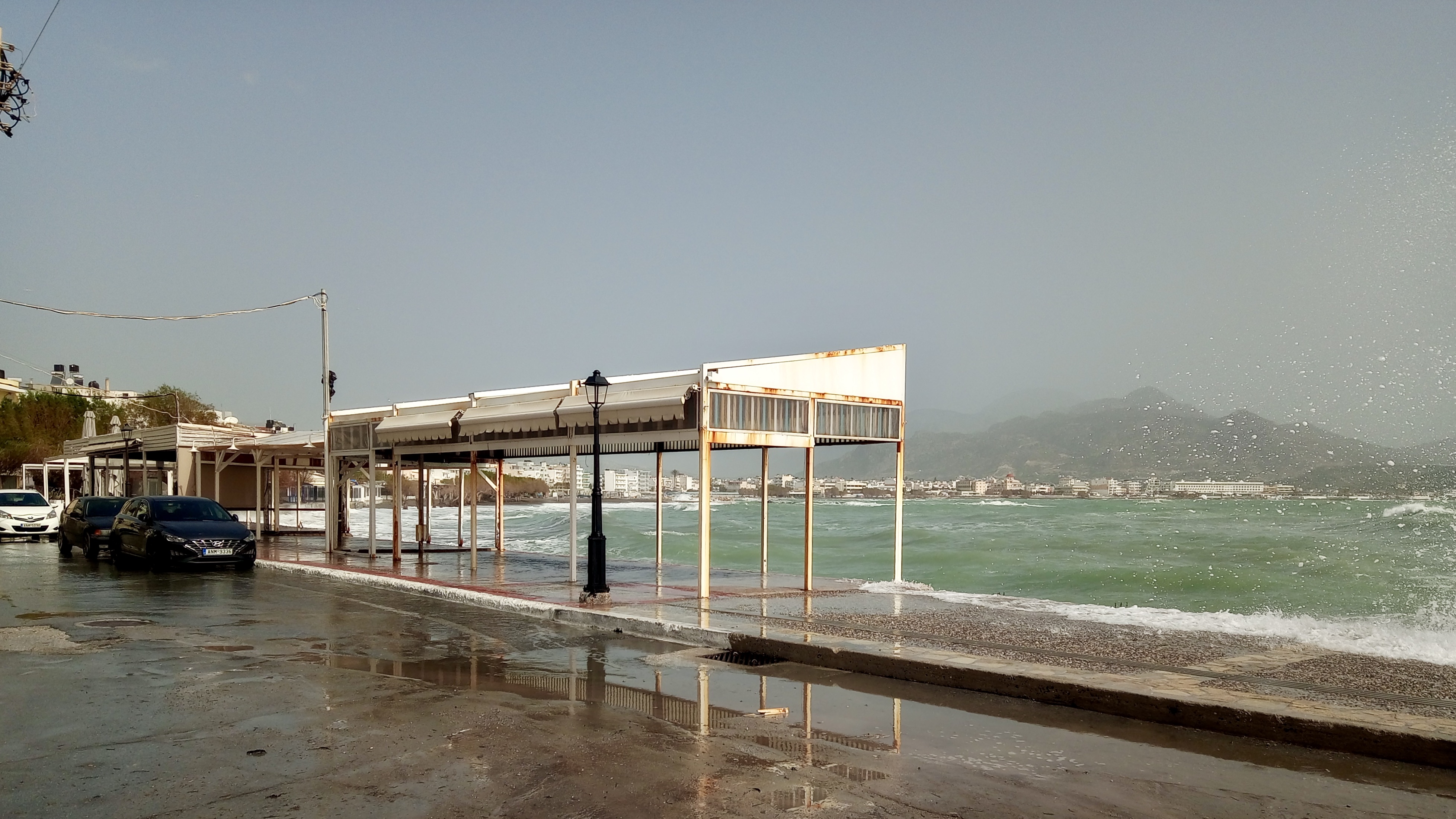
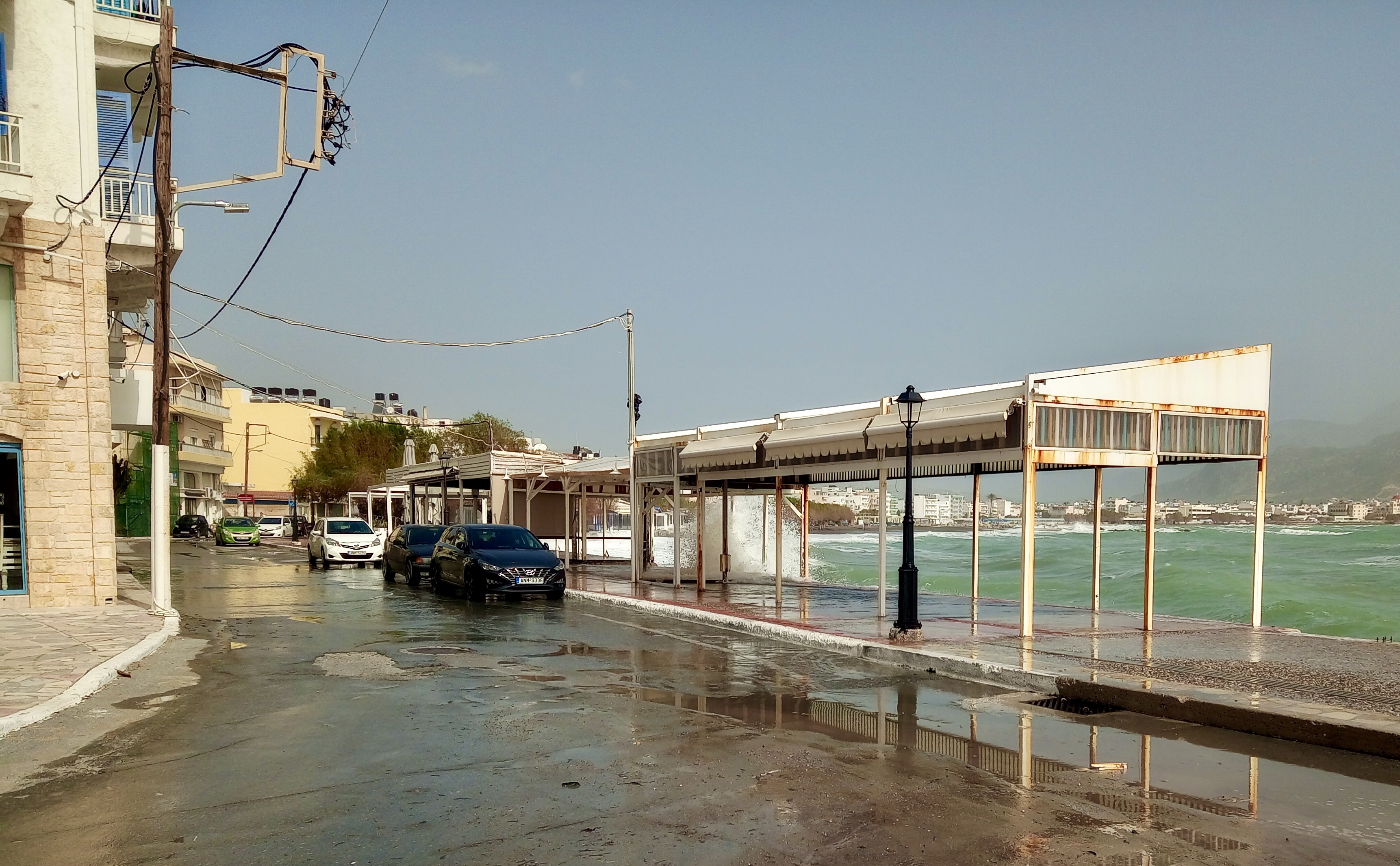
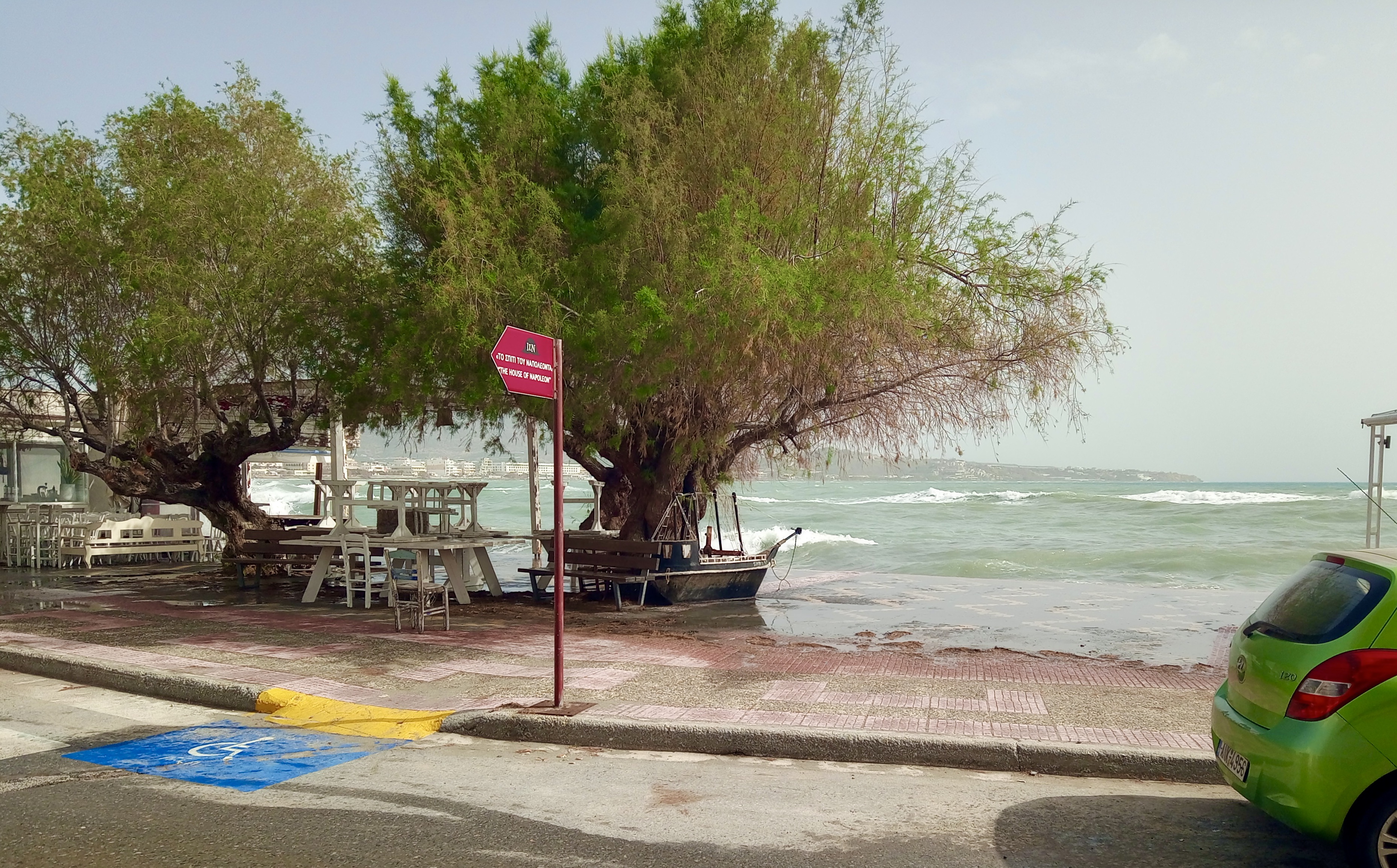
Of course, there’s probably not a soul who’s unaware of the extreme weather that’s been battering most of Europe this past couple of months and, notwithstanding some pretty unpleasant results of the sea’s incursion along the waterfront in Ierapetra, we’ve actually got off pretty lightly here in comparison to many other places, I know. I was talking to our friend Mihali the other evening, and he’s almost seventy now and was born in the village of Orino, up in the mountains to the east of the town, so – apart from a few years in his twenties when he lived in Athens – he’s lived here all his life. He told me that this past couple of months of southerlies has been without precedent.
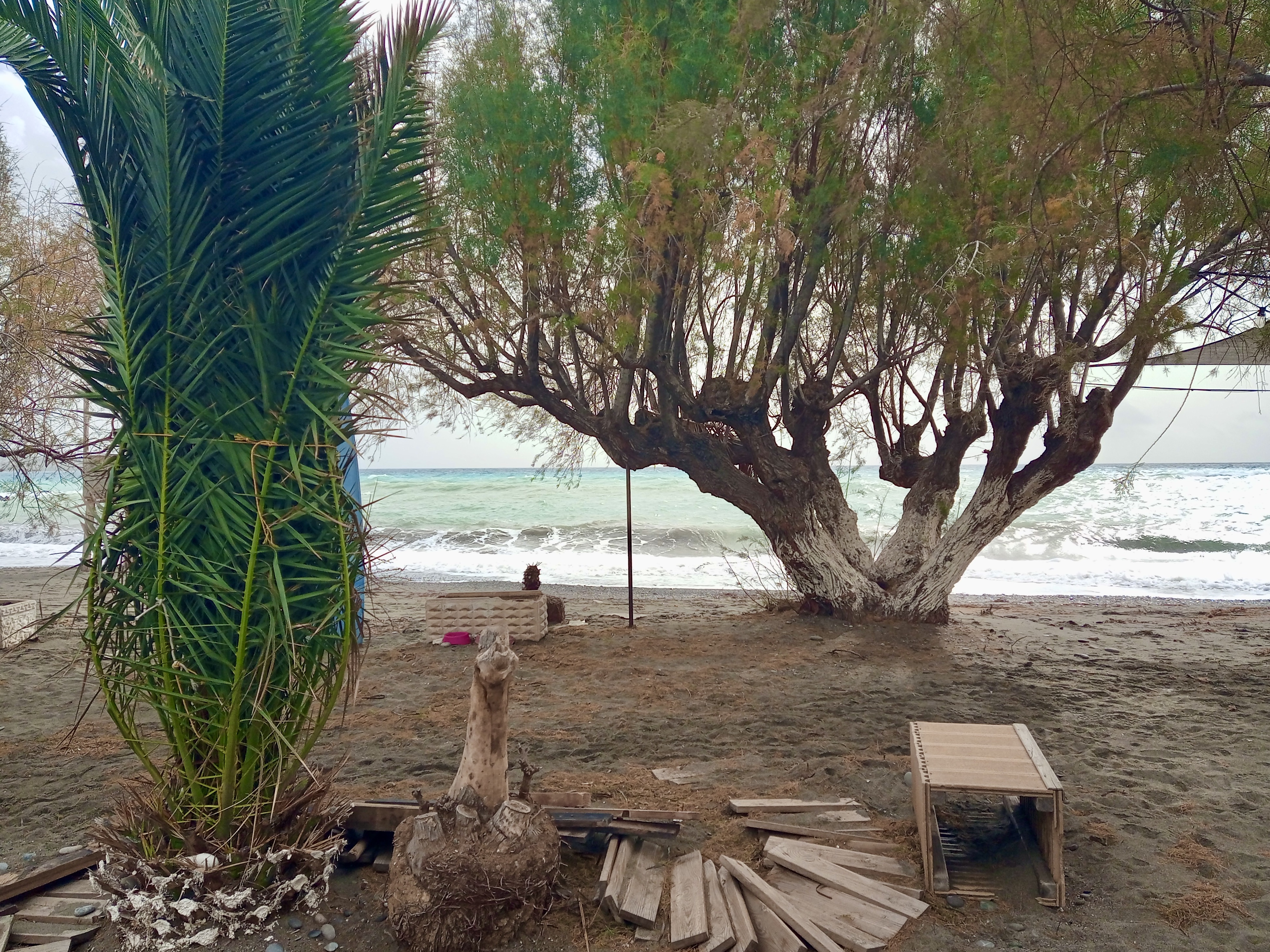
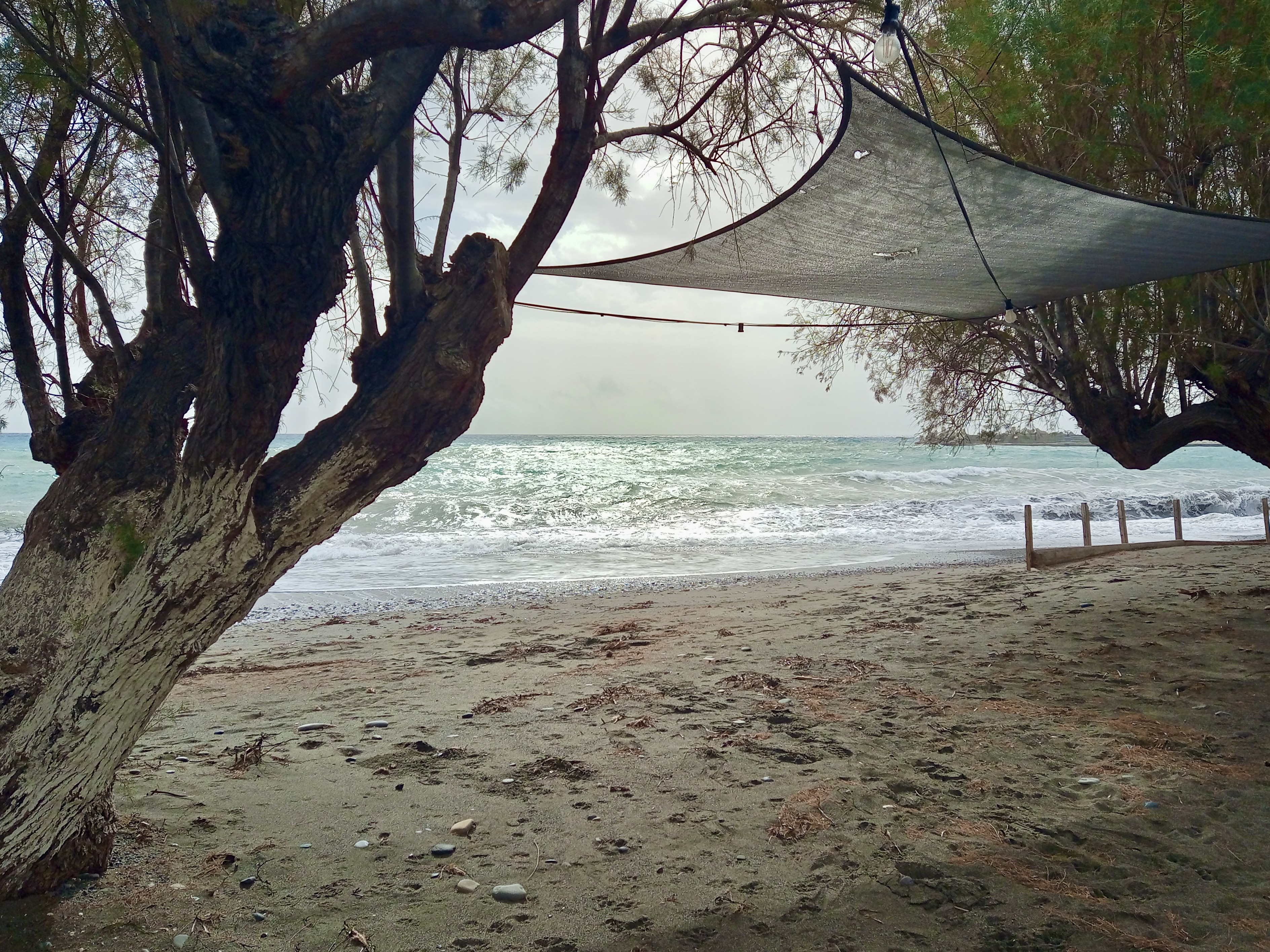
If you look at Ierapetra’s location along the south coast of Crete, it’s fairly evident that it’s exposed to the open sea and that there’s no land at all between us and North Africa, which is about 300-400km to the south, depending on where you make landfall. The nearest African country to us is Lybia. The prevailing winds in this area, however, are northerlies, which means that this part of the Cretan coast is usually well protected, and suffers a lot less wind than the north of the island. As a result, there is a stone ‘promenade’ along part of the town’s shoreline, and a beach a little further along to the south and west. Behind the beach is a series of bars and restaurants, all of which are within metres of the water’s edge. It doesn’t take a rocket scientist to realise that, were the winds to remain from the south for any length of time, the coastline of the town would suffer damage, and that’s exactly what’s been happening this past couple of months.
The weather itself hasn’t been all that extreme. Each week we’ve had the usual clutch of bright sunny days, interspersed with some much needed rain, and the locals rejoice in this, since once the early summer arrives the rainfall is virtually nil until October/November – if we’re lucky that is. Last year the rains didn’t really arrive until the very end of December, but it does seem to have caught up somewhat since then.
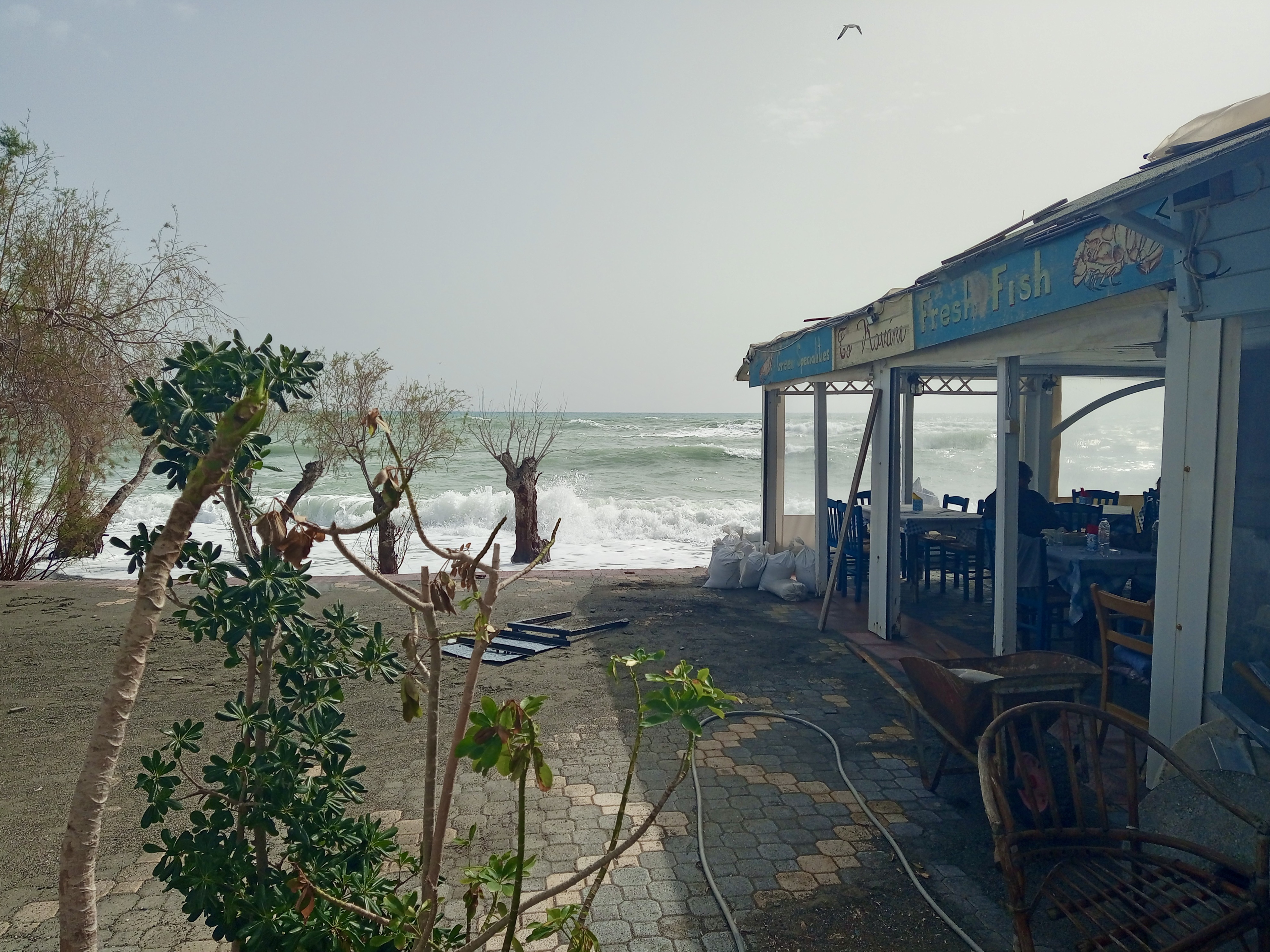
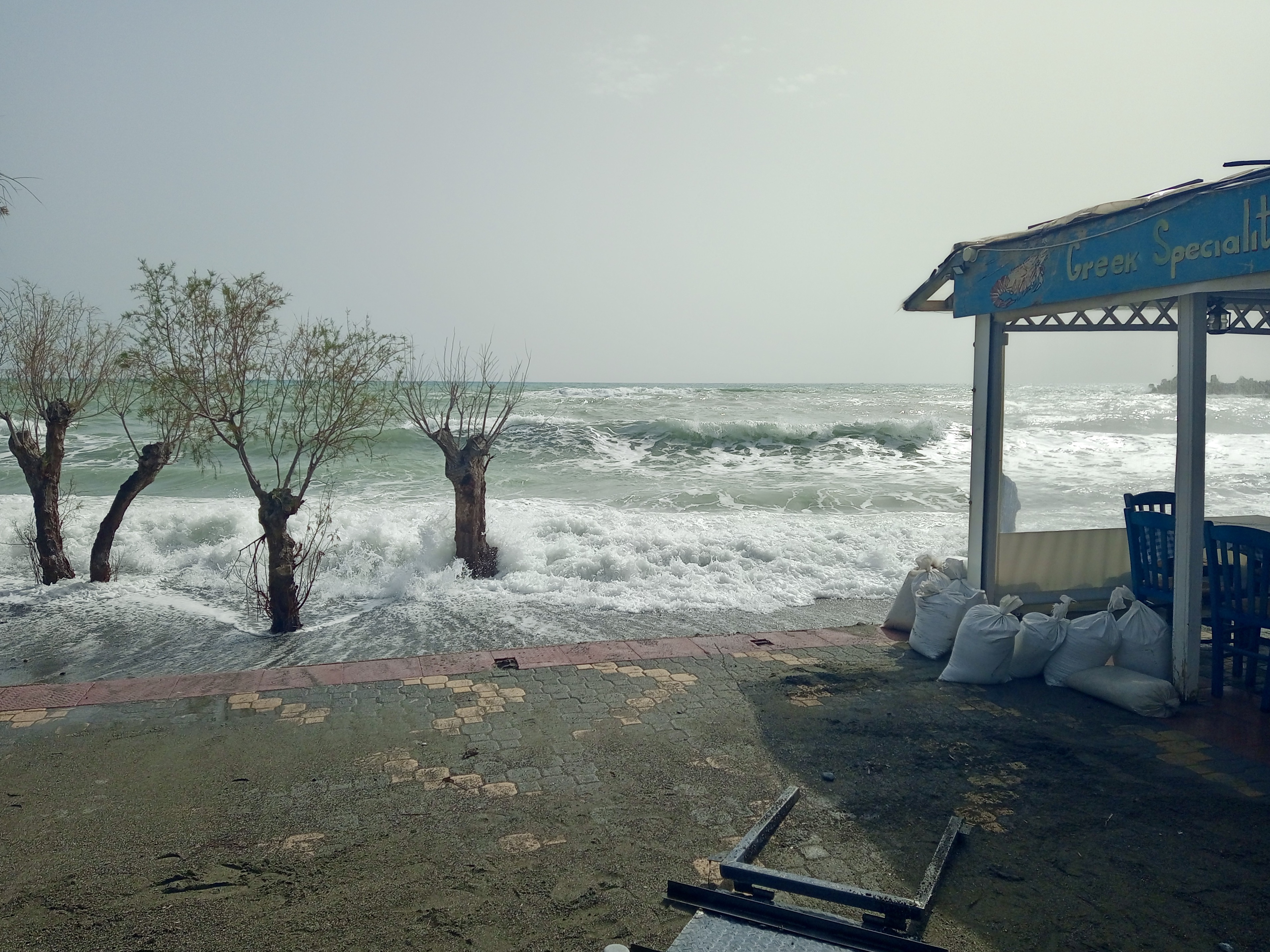
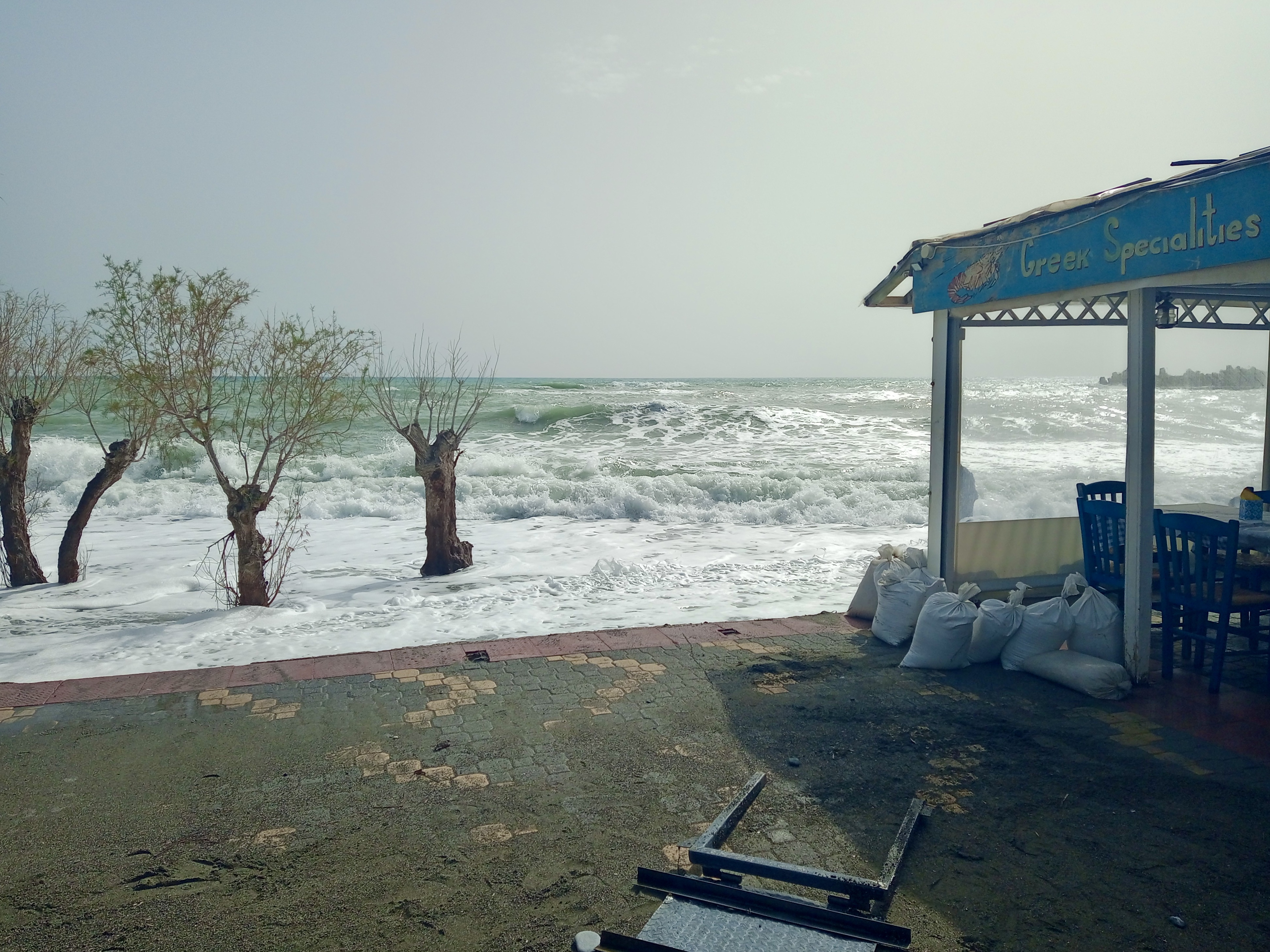
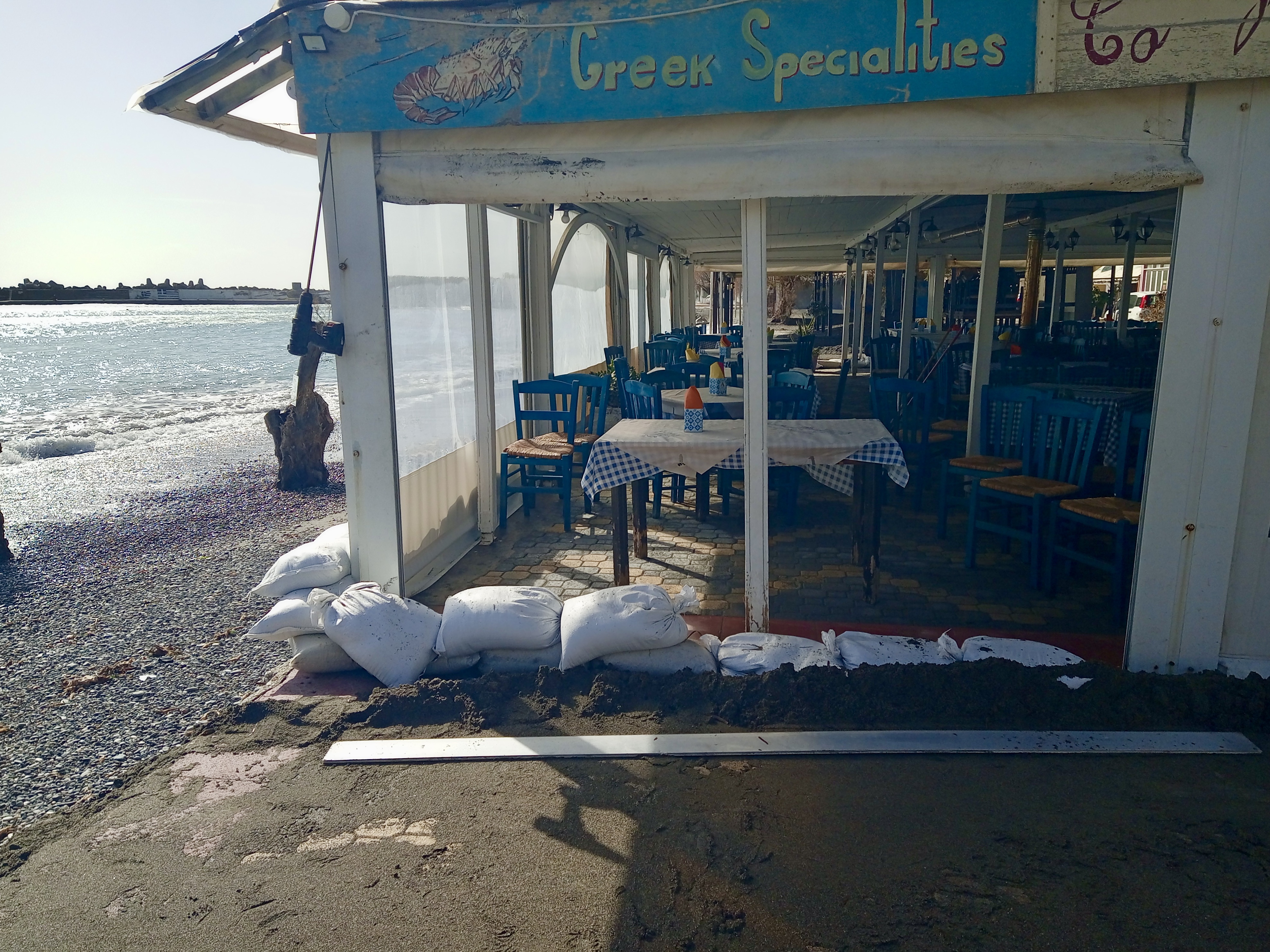
I’ve talked a few times during my posts this winter about the Konaki taverna, run by our good friend Yianni, and how he was faced with a metre-deep pile of sand and shingle that the sea deposited on his terrace a couple of weeks ago. At one point he’d completed a mammoth clear-up, and then it happened all over again. This time he had place some sandbags along the front to try and reduce the damage, but they were only partially successful. And he’s not the only one. Just about all the businesses from the Napoleon restaurant along to the Bira Potsi, adjacent to the fortress at the harbour entrance, have suffered. The road behind the restaurants and bars, across which the waiters scurry bringing food and drinks to their clientele, has been turned into a saltwater river innumerable times now, and the result has been that it had to be closed while the cleanup took place.
We watch a particularly good weather forecast on Greek TV and it always gives a prognosis for up to a week in advance and, sadly, apart from the occasional day here and there, the winds have stubbornly refused to swing back around to the normal direction. Due north of us is the coastal village of Pachi Ammos, at the southernmost extremity of Mirabello Bay, where the sea is invariably much rougher than it is here in Ierapetra, but all the local Facebook groups around here have been showing photos of a flat calm sea up there. Whilst this is nice for them, it’s not the norm. So, we wait and hope that the normal weather patterns will return soon.
On a positive note, our neighbour Maria (Diminutive Dimitri’s mum) dropped by the day before yesterday to bring us some cooked food that she’d prepared. She did this last year too at about this time, and we think it has to do with the fact that the Greeks (at least the more religious ones) are about to enter Greek Lent (Sarakosti), the most significant fasting period in the Orthodox calendar, which lasts roughly 48 days from ‘Clean Monday’ until Easter Sunday. This year that’s from February 23 to April 11. Maria starts to cook vegetarian with a vengeance, and she brought us a lovely casserole which was laced with all kinds of fresh herbs, it was delicious. She told us that her boys (her three sons, only one of which still lives at home) turned their noses up at it, and by the sound of it they’re not as likely to be abstaining from their carnivorous habits as she will be for the duration.
Their loss was our gain I’d say.
And so to the photos. By the way, the video at the top was shot last Wednesday at around 11.00am.
Above: The hillside just near our house. Isn’t it lovely at this time of the year? We occasionally see badgers in this field too.
Above: All these were also shot on Feb 18th, along the stretch of seafront that I was talking about at the start of this post. You can see Yianni’s sandbags.
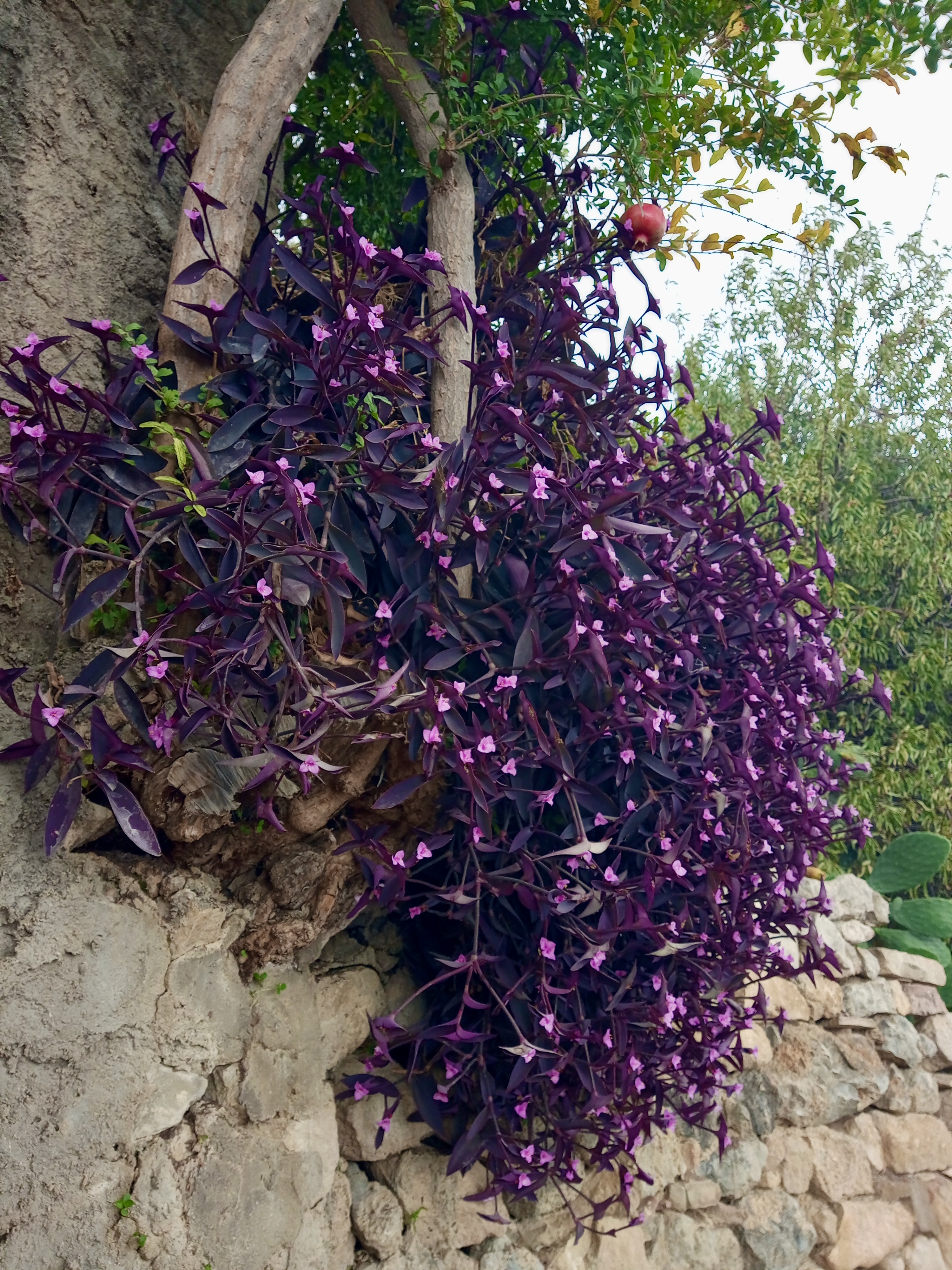
Above: This wonderful Purple Heart (Tradescantia Pallida) has seeded itself on the wall behind our upper garden. Isn’t it glorious?
•
If you enjoy my blog posts, then maybe think about supporting me by purchasing one of my written works. Your support would be very much appreciated, rest assured.Click HERE to go to my Amazon Author Page.
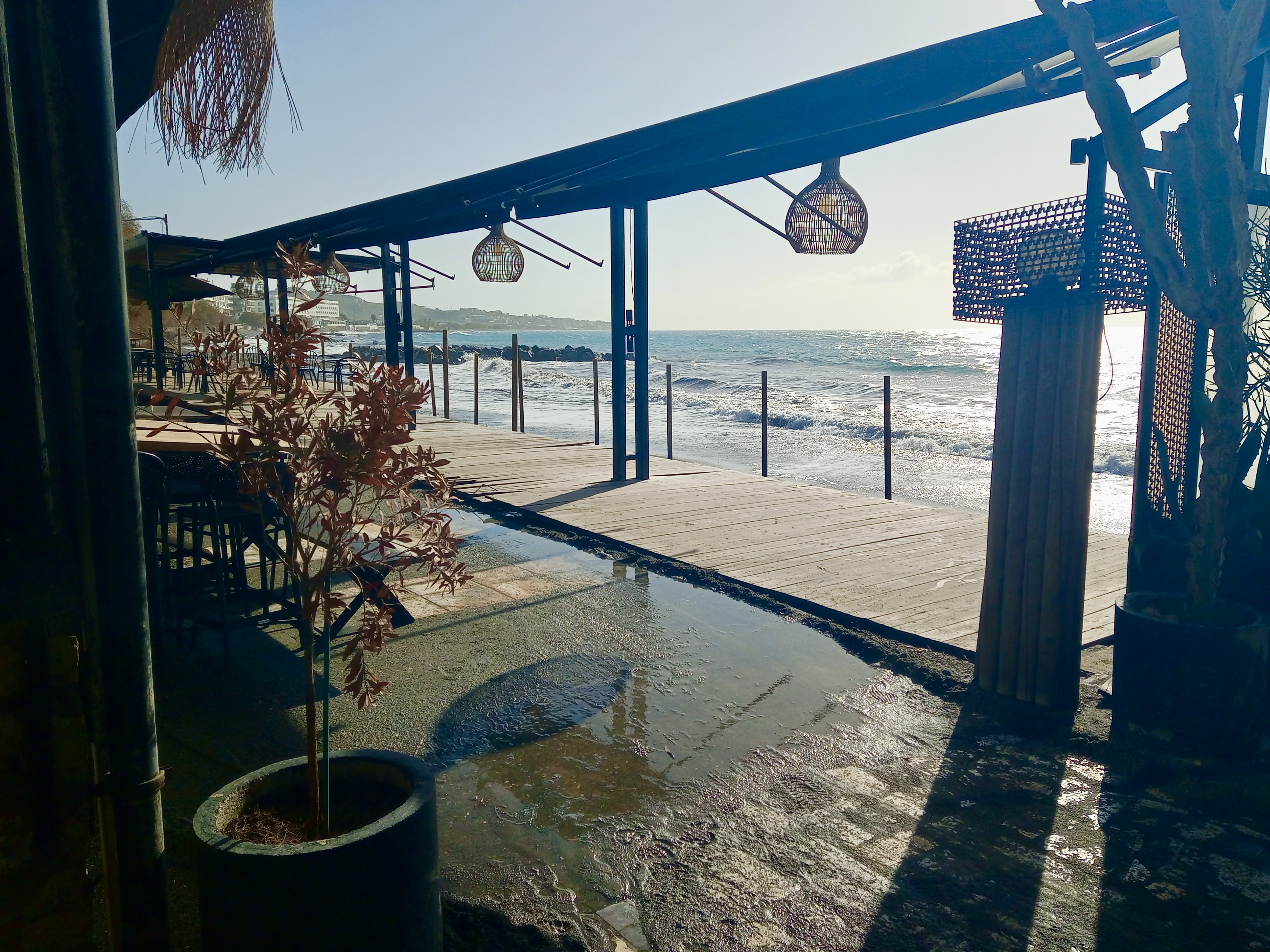
A couple of years ago the local authority added a few hundred tons of sand to the seafront in an effort to slow down the erosion of the stone ‘promenade’ from here at the Waikiki Bar(above) all the way southwards to the L’Angolo restaurant. The idea was to create a bit of a beach to prevent the sea from battering the promenade during the winter months, since there has been quite a bit of damage over the years and it’ll cost millions to fully repair it. During the first summer that this new ‘beach’ existed the sand caused the bar owners and restaurateurs all along the front a fair bit of bother because, when there was a breeze, you could sit at one of the tables on the waterfront and get sandblasted. The sand would get into everything, your food, your drinks, it would cover the newly laid tablecloths, crockery and cutlery – in short it was a blooming nightmare on windy days.
For a while the sand stayed put, but with each passing winter the sea has taken away more and more of it, until now when the sea is once again lapping at several hundred metres of the quayside, or promenade, once again. For a couple of years the Waikiki had a beach that was twice as wide as it had been for ages below its boardwalk section, enabling the owners to place a few more umbrellas there for customers to use while taking a dip. As of now though, after the wildest winter in living memory, most of the beach below the Waikiki is gone again, as you can see in the photo at the top. I say the ‘wildest winter’ because that’s what it’s been for most of Europe, although in fact we here have got off lightly by comparison to many other places.
I reported in this post though, about how our good friend Yianni had suffered when a few tons of sand were deposited all over his taverna’s beachside terrace, and it meant that he couldn’t open for what turned out to be a couple of weeks. There are no guarantees that it won’t happen again, but he’s had to do a massive clear-up in order to be able to get some income coming in, since he is normally open all winter long. Fortunately, although there has been some rough weather and high seas since it happened, the wind’s direction has been kinder to that stretch of beach and they haven’t had a repeat of that awful Thursday a couple of weeks ago, although they have come close once or twice. In fact, The Konaki is now open and we’re going there for lunch this coming Sunday, all being well. I took this shot below a couple of days ago, and Yianni’s sandbags are clearly visible as he attempts to limit any further damage…
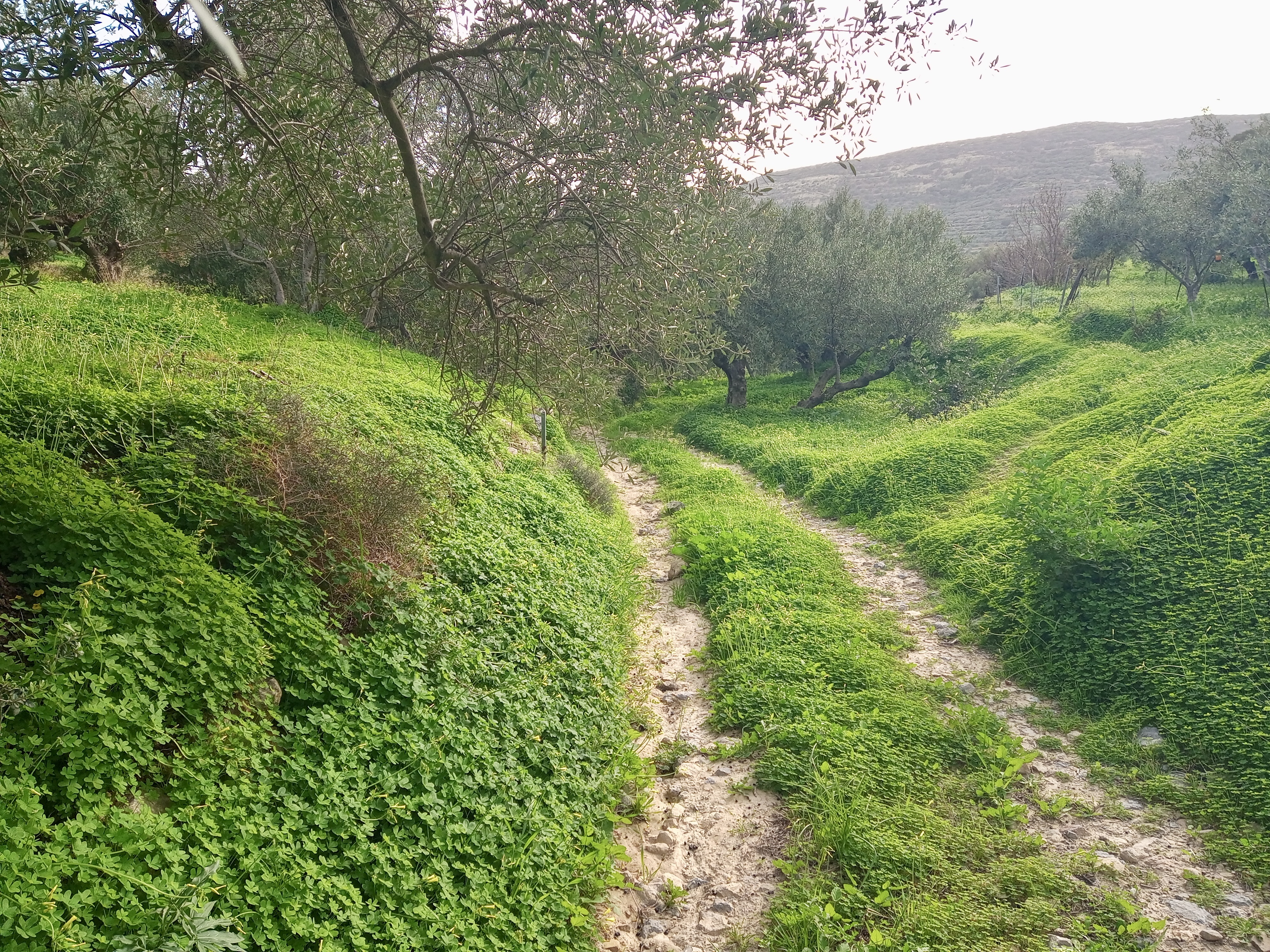
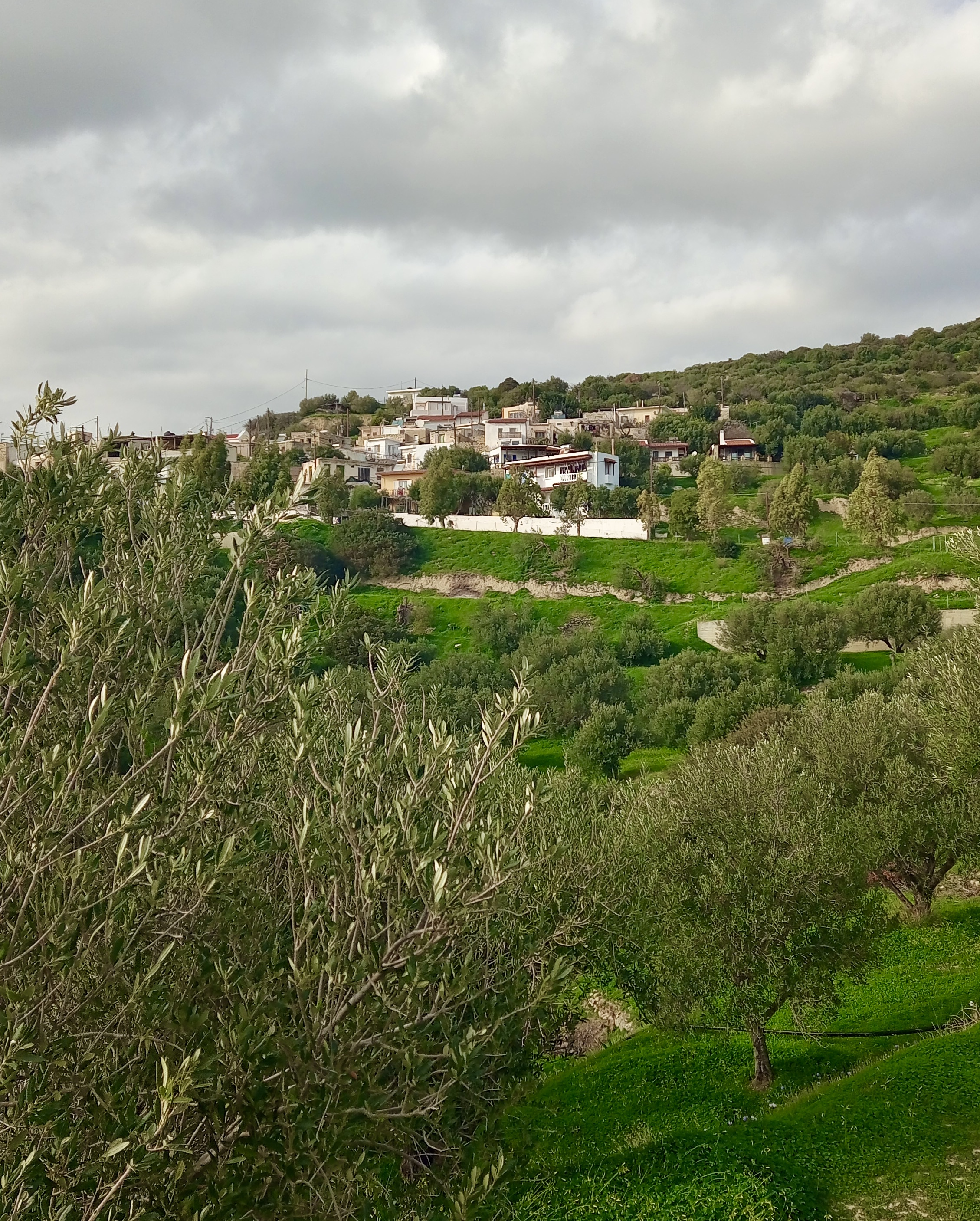
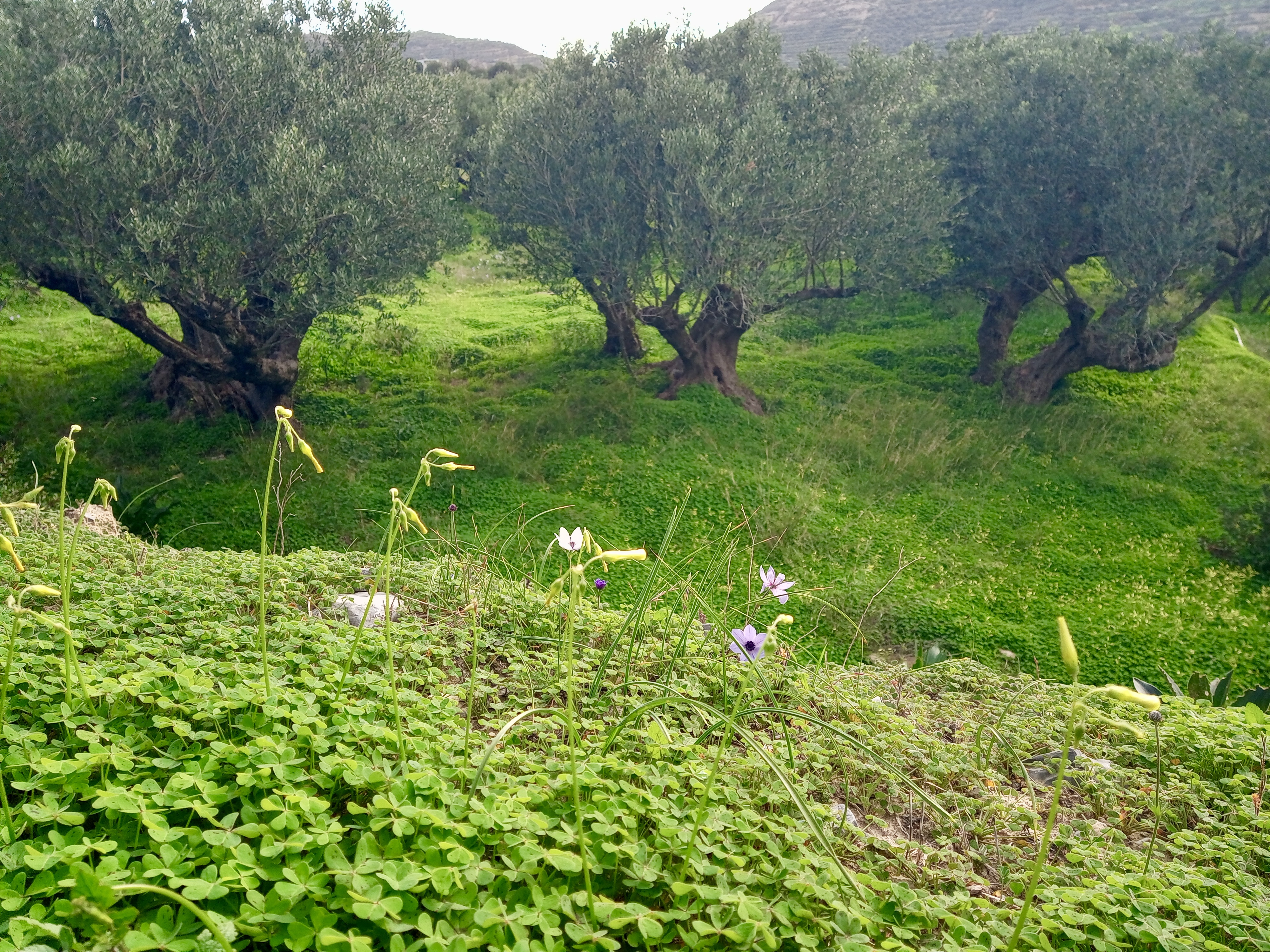
On a slightly lighter note, one of the wonderful things about this time of the year is just how green the countryside becomes, something that summer visitors seldom get to see. Here are three shots taken just near the village during a walk this week…
Our house is visible in the centre photo. If you can see the canopy over a veranda just above and behind the white house almost in the centre of the shot, that’s our place (you can, of course, click on the photos for a larger view). The white house is actually the home of Maria and her son Dimitri, who left a plastic bag full to bursting outside our door again yesterday (we found it when we came home from shopping in town), full of peppers and cucumbers from their ‘horafia.’
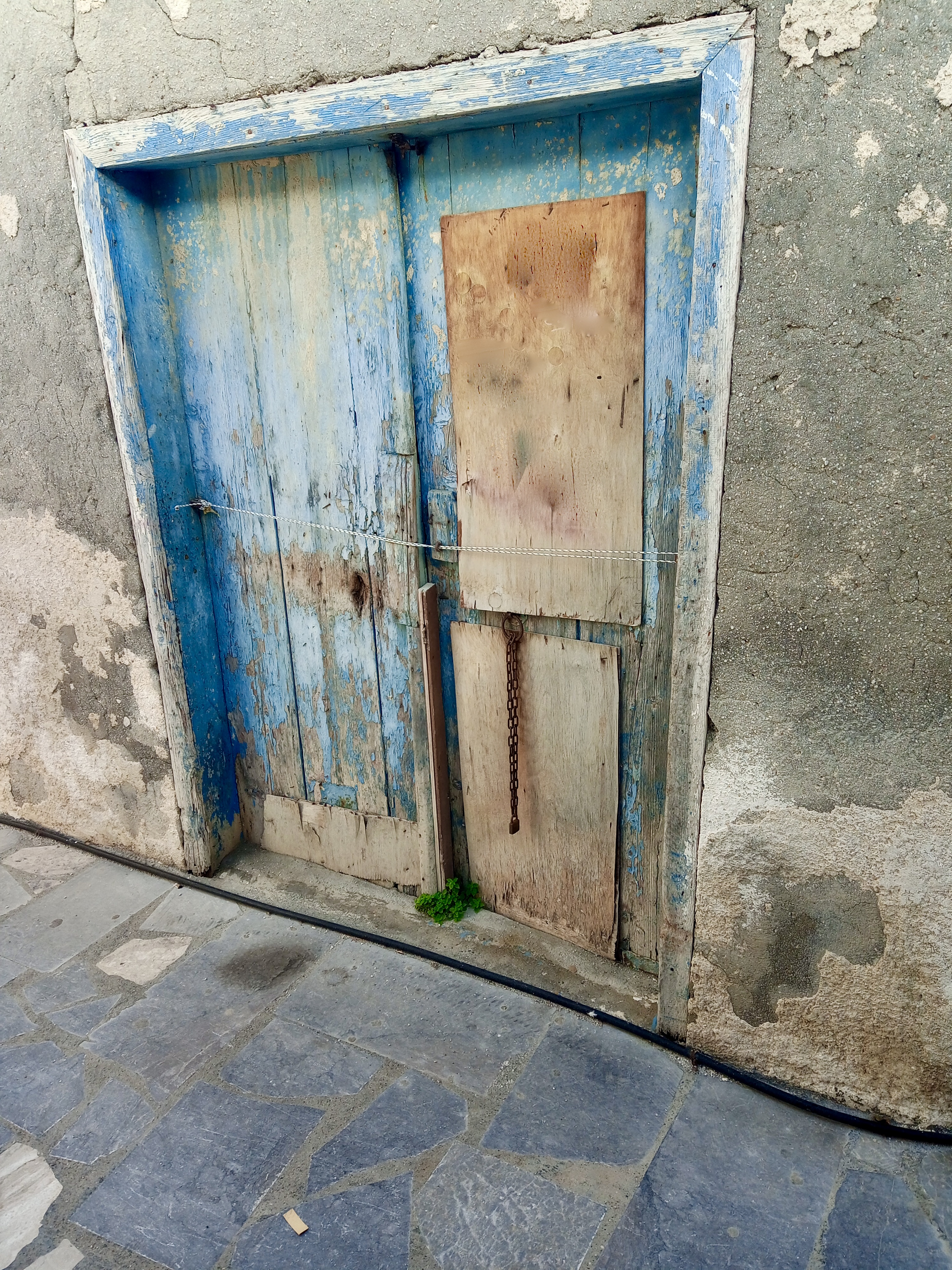
If doorways could talk, eh? Here’s one in Ierapetra Old Town that I liked the look of as we walked past it…
•
If you enjoy my blog posts, then maybe think about supporting me by purchasing one of my written works. Your support would be very much appreciated, rest assured.Click HERE to go to my Amazon Author Page.
We were sitting in the Kougioumoutsakis corner café at the beach end of the street called Dimokratias the other day, just across the road from the Archeological Museum, and something happened that reminded us of one of the really nice things about the culture here. It wasn’t anything spectacular, just a small ‘event’ that illustrated just how much respect is shown to older people in this society.
We like it in the Kougioumoutsakis, but it isn’t always easy to sit there because it’s a small café that, like most of them, has its regulars, and if they’re all in at the same time, we can’t find a table and so have to move on and go get our coffee somewhere else. It’s not a hard decision; well, actually, it can be, because we have a half a dozen or so favourite cafés now in the town and making the decision can be more difficult than you’d think. We usually manage though.
So, there we were, having arrived when a table was empty, and thus we were able to sit down and pretty soon were in conversation with a few of the regulars. When we first used to sit there the talk was all about where we were from, where we now lived, how we learned the language, whether we live here all year round, who we bought our house from, and so it goes on. In fact, the man we bought our house from was very well known in the area. His name was Giorgos Anifantakis, and he had a nickname ‘Rebetis’ that everyone knew him by. When we were going through the round of making new acquaintances when we first moved here, we only had to tell those who enquired that we’d bought the house from ‘Rebeti’ and they all knew not only him, but the house too.
In fact, he died rather unexpectedly just last week, as it happens. We attended his funeral here in the village and it was standing room only, there were that many people present. The circumstances surrounding his death were tragic too, as he’d fallen asleep in bed, a cigarette still burning, and his apartment had caught fire. The day he died there were reports in the local media showing a fire truck parked outside his home, but the stories were light on detail, merely stating that a 70 year-old man had died in his bed and how tragic it was, plus warnings about how dangerous it is to smoke in bed, as would be expected. The photo of the fire appliance was taken at night and so it wasn’t immediately apparent as to the location. Only as we spoke to locals at the café the following day did someone tell us whom it was that had died, and it came as a shock. Anyway, I’m going off course a little in mentioning Giorgo’s death, but still it leaves us (and many others) in shock, sadly.
While we sat enjoying both the company and the coffee, a car pulled up at the kerb and a young man jumped out of the driver’s seat, ran around to the back door, opened it and began helping an evidently frail older gentleman to get out of the vehicle. Instantly the young waiter from the café/bar ran over to offer assistance and the older man was aided to shuffle with some difficulty towards one of the occupied tables on the terrace. Now, this table already had four or five people sitting around it and, on the face of it, it looked like there was no room for an extra person to join them. There occurred a commotion, though, as everyone shifted along a bit, a chair was grabbed from a neighbouring table, after the person grabbing it had enquired from the couple sitting there if that chair was surplus to requirements, and it was inserted in the gap that had been created by the already present group, and the elderly arrival given every assistance needed to get himself installed upon it at the table. Once installed, those around the table, who included a couple of middle aged women, a younger man, and two other guys who may well have been the husbands of the women, all took their turns in getting up (where necessary) embracing the older fellow with warm hugs and double cheek kisses and making him feel a lot like royalty, it seemed to us.
Now, you might be forgiven for thinking, ‘what’s so special about that then?’ But this kind of occurrence is not rare, and it well illustrates how people treat their seniors here in Greece. We see it time and again, how people take great care to show the utmost respect to their old folk and accord them almost VIP treatment wherever they go. It’s no coincidence that there are still very few old folks’ homes in Greece, because it’s anathema to most Greeks to abdicate their responsibility toward them. There are, of course, cases where medical aid is needed on a daily basis for some who’ve become infirm, or maybe suffering from dementia but, by and large, a Greek family surrounds its old folk with round the clock care as a matter of honour. And before anyone reaches for the mouse to send a message slating me for knocking what happens in UK families, I’m not knocking my compatriots, OK? We’re all products of the culture in which we’re nurtured and, as such, that’s why we do the things that we do. The difference in the two cultures is, however, evident in this aspect of society.
A few metres up the lane from our garden gate there lives an old lady called Sofia, I’ve mentioned her now and then on this blog. She’s a tiny frail old thing who always dresses entirely in black and is never to be seen without her babushka, or head scarf (in Greek typically a Tsembéri, or Mantili), tied neatly and firmly with a knot under her leathery chin. She has a daughter and granddaughter both of whom live down in the town, six kilometres from here, yet they never fail to come up every day, driving up the extremely steep slope to Sofia’s front door, and bring her food, clean and tidy her modest home, and sometimes patiently take her for a short walk (which requires in itself a lot of patience, because Sofia can hardly put one foot in front of the other more that once every couple of minutes) around a couple of blocks to help her get out of the house and get some much needed exercise. Sofia’s house has no outdoor area at all. Her front door is also the main light source for her lounge/dining room/ kitchen, the only other being a small window over her kitchen sink. The door opens directly on to the steep street outside, and it’s at this door that she puts down scraps for the local cat population, five or six of which often gather at the same time each day, safe in the knowledge that she’ll emerge and place a crumpled piece of aluminium foil on the ground with some leftovers in it for them to fight over.
In the UK I’d say that the majority of people in Sofia’s situation and state of health (she has mild dementia) would long ago been placed in a ‘home.’ Sofia is adamant that she’s not going anywhere, and her progeny accept this.
Back on Rhodes, in the village of Kalathos, where a lot of our Greek friends lived during our fourteen years on that island, there were four siblings of a similar age to Yvonne and I, three brothers and a sister, who cared for their mother in her own home after their father had died in his nineties. Petros, who worked six months a year as a night porter in a hotel in nearby Pefkos, was in his mid sixties when he’d forsake his comfy bed and loyal wife to go up into the village and give his sister some respite by sitting all night (when he wasn’t working) with his mother, who herself by this time was pushing 100 years of age, and resolutely refused to have a foreign live-in helper in the house. A lot of families do employ, for example, Bulgarian women, whose family all still live back in their home country, to live in as 24/7 carers and housekeepers for their aging parents, who can’t be left on their own. Petros’ mother, when they tried this arrangement, made life so miserable for the carers that none of them could stick it, and each time a new one was found they’d never last more than a couple of weeks before handing in their resignation. So, the siblings, despite themselves moving from middle age to the next stage in their lives, took it upon themselves to work shifts around the clock to keep their mother secure in her own home. She needed to get up and go to the toilet five or six times during a night, and Petros had to assist his mother through the process just as his sister did when it was her turn. I never heard either of them complain. Despite the pressure on them, and the hardship of keeping it all together, they considered it their unquestionable duty to provide care for the woman who’d nurtured them throughout their childhood.
It’s still a very family-oriented society here, and it’s born out by the fact that, as I mentioned in another post recently, Greek people generally never lose contact with their roots. They all love and cherish their home village, and their parents’ or grandparents’ generation have often never moved house in their entire lives. They still live in the house where they were born, and will in all probability die there too. It’s no accident that, as an upshot of this, crime levels in villages such as ours are extremely low, because everyone knows everyone. Kids can play safely out of sight of their parents’ watchful eyes, since everywhere in the village they’re surrounded by neighbours who serve as their extended family.
In short, it’s this kind of society that produces a deep calm and contentment among folk who often have very little materially. It bears out the truth of the old adage, ‘the best things in life are free.’
Photo time…
Above: Two photos taken as we were going into the Chocolicious café near the beach on Sunday morning. The winds continue to be mainly from the south, making any cleanup operation difficult, because what progress they may make can easily be undone within the space of a few hours if the winds get up again.
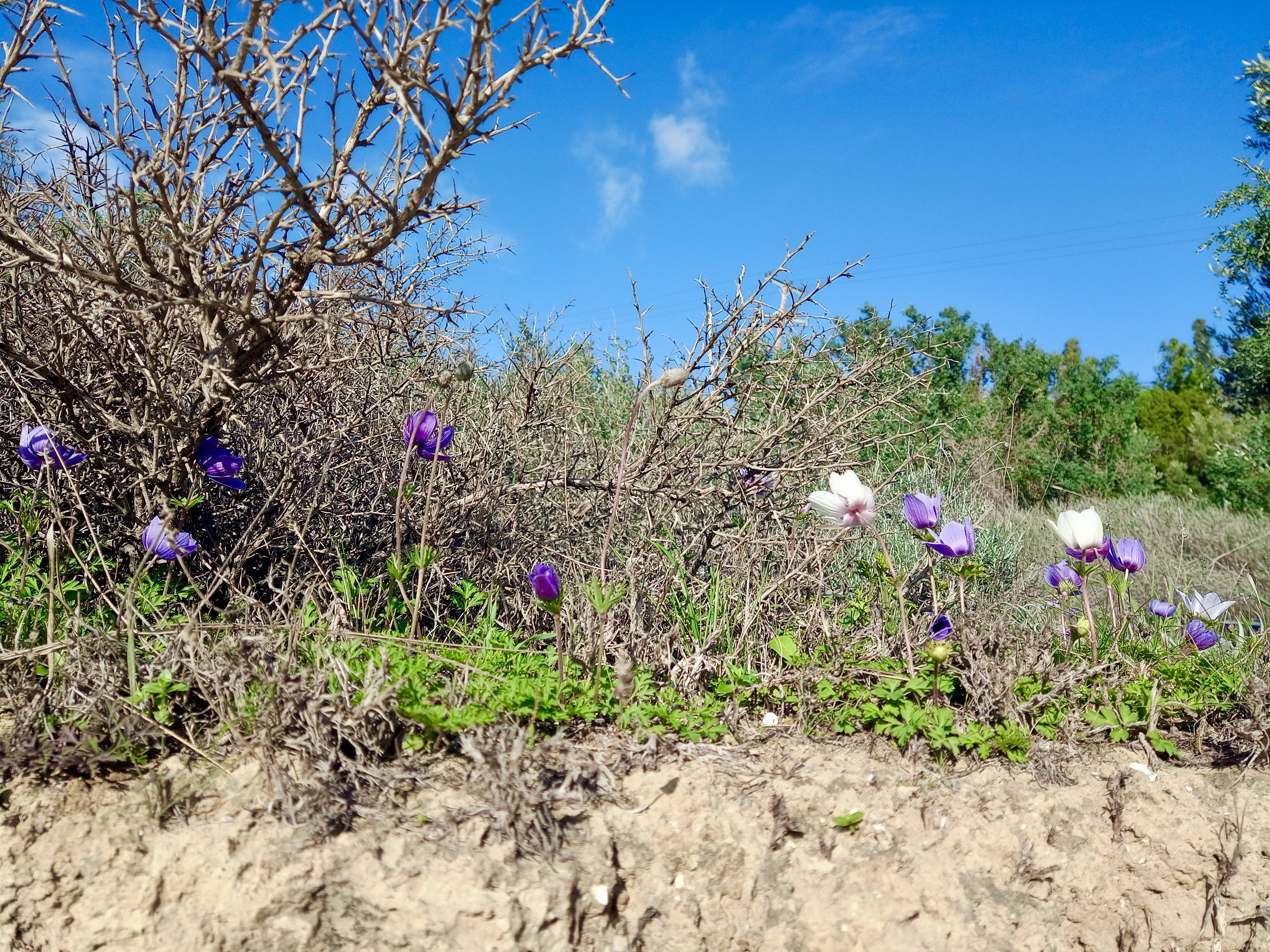
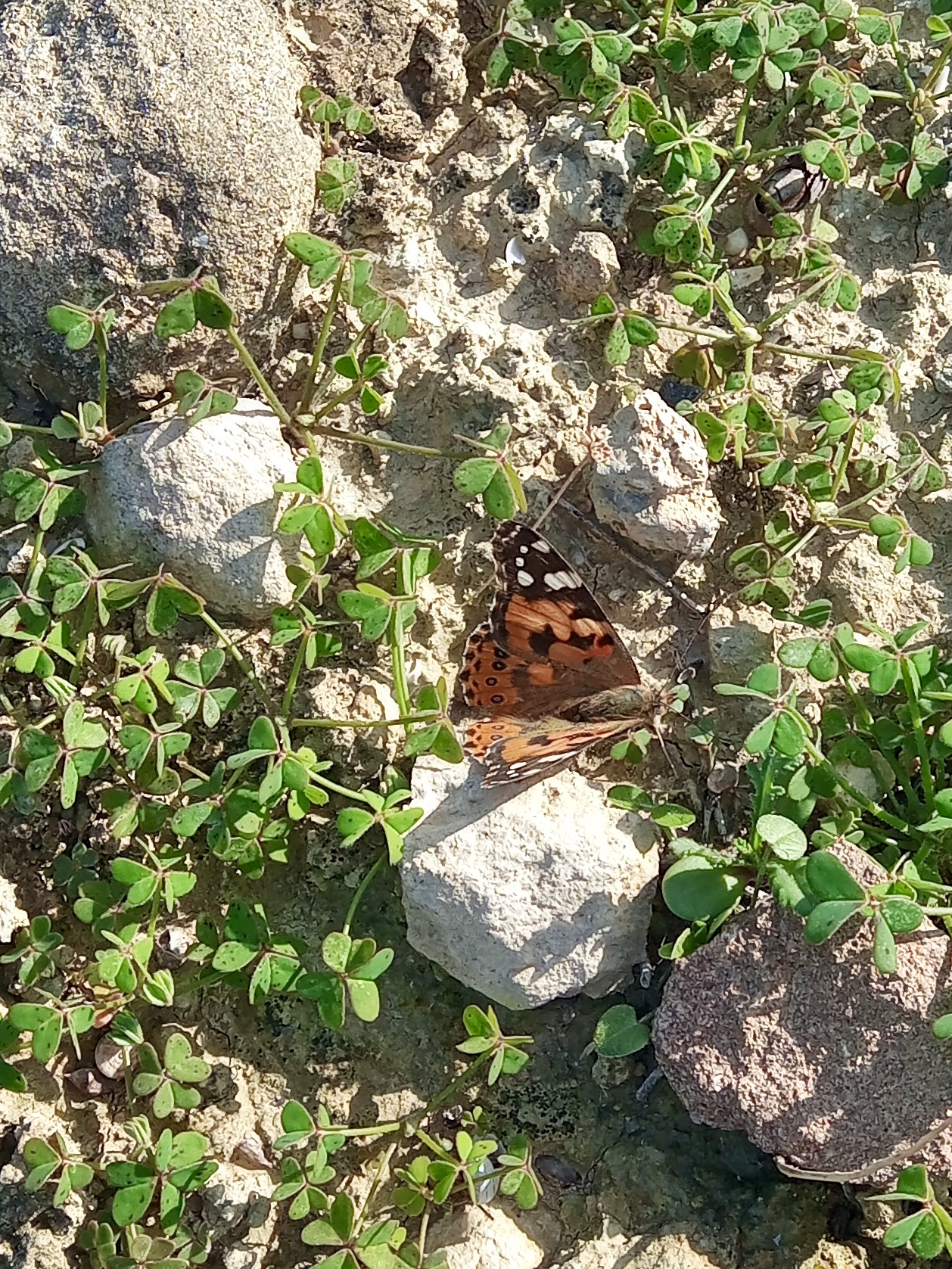
Photo at the top of this post: Taken during an hour-long walk in the area surrounding the village this past couple of days. The anemones have been late this year, I assume owing to the very dry December, although the rains have certainly made up for that during January, and the reservoir is filling nicely, causing a lot of farmers to repeat the phrase “Doxa to Theo!” frequently. It was during the same walk that I spied this lovely Painted Lady butterfly warming itself in the sunlight…
•
If you enjoy my blog posts, then maybe think about supporting me by purchasing one of my written works. Your support would be very much appreciated, rest assured.Click HERE to go to my Amazon Author Page.
 Accretions