Stopped by the ‘law’…

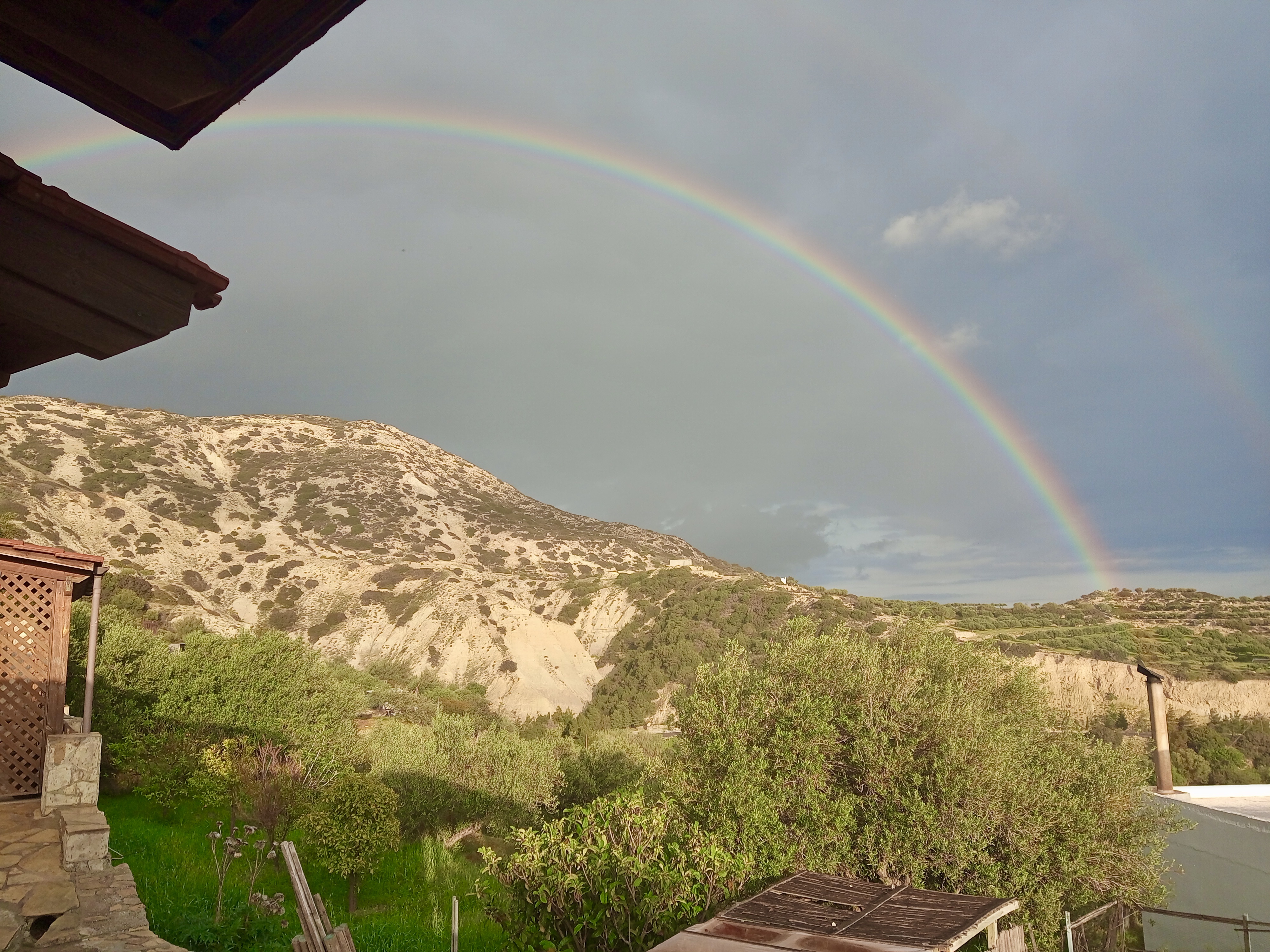
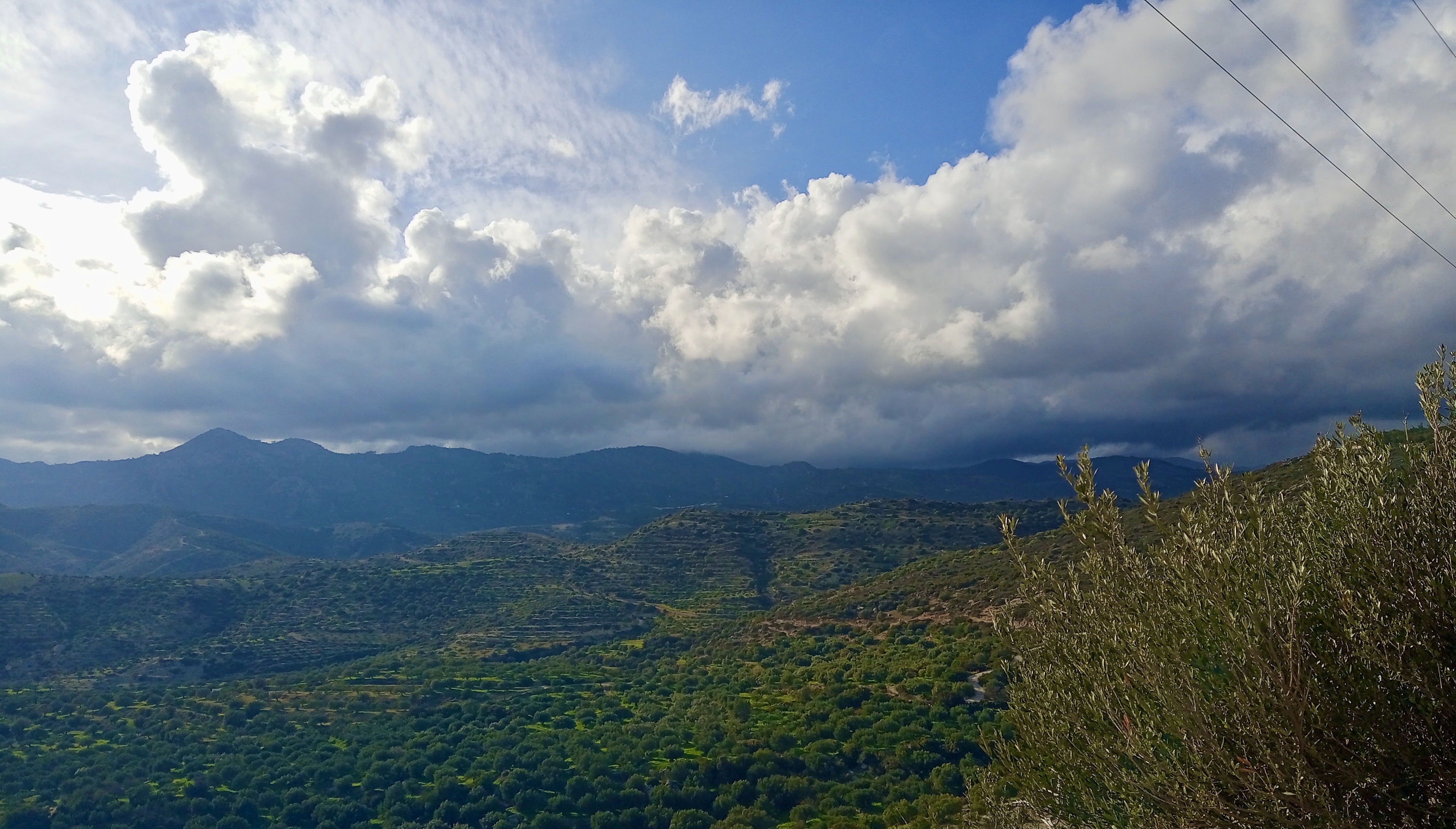
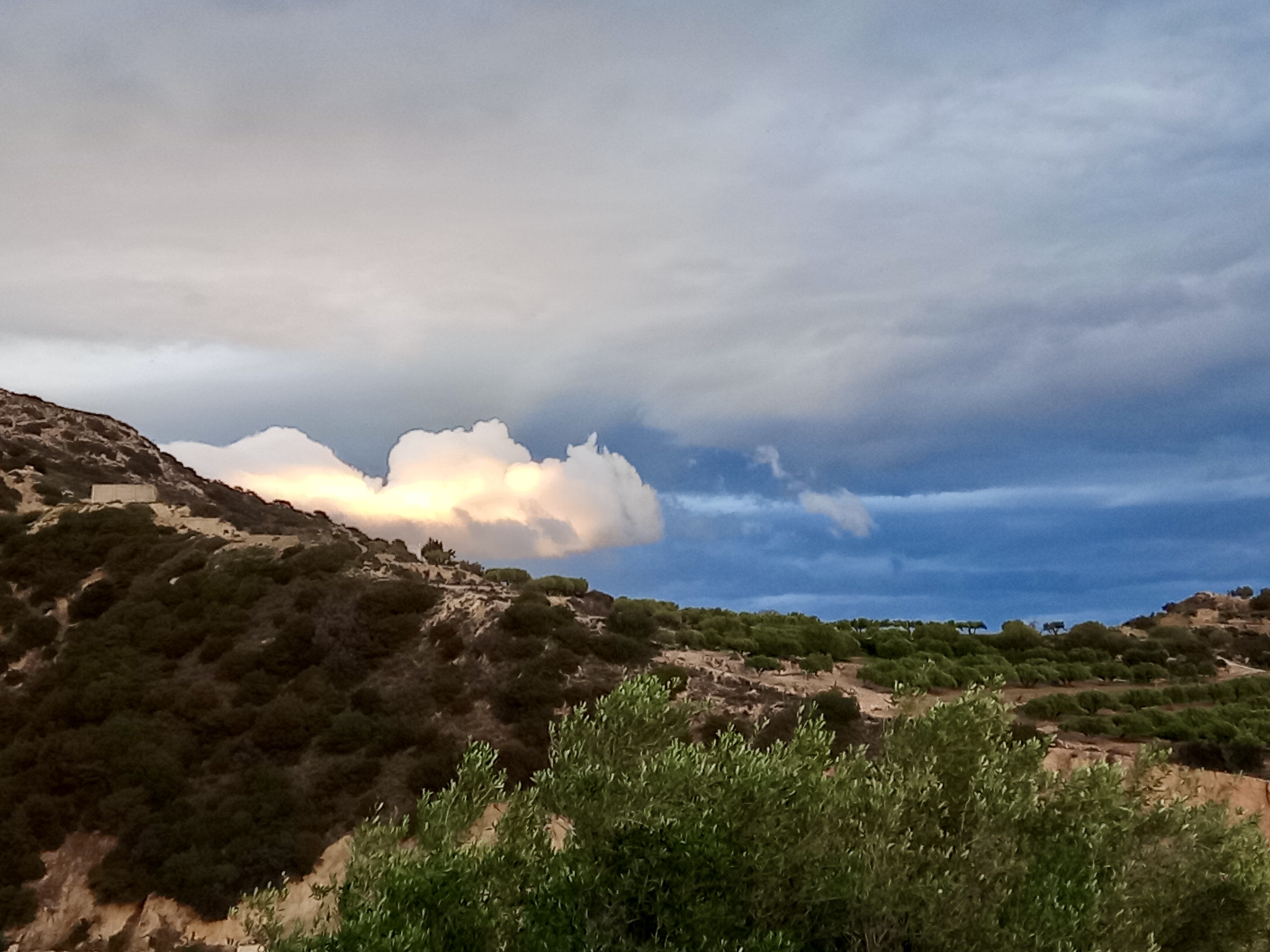
An unusual light phenomenon in the clouds during early evening last Thursday, the last time we had clouds and rain.

I was coming back from Gra Ligia the other day, in the car with Mihalis, our friend who used to work for the local Dimos and knows more people than just about anyone around here, which was just as well, as I’ll reveal in a mo. The road from Gra Ligia to Ierapetra is a few kilometres of almost dead straight asphalt, with farming supplies, agricultural tool and vehicle retailers, animal feed warehouses and the like strung out along its length. Add to that list a couple of café/bars, bakeries and filling stations, and you get the general idea. That’s to say, it’s hardly the most picturesque road you’re liable to find around these parts. Mind you, if you were piloting a light aircraft that got into difficulties, you’d probably be able to make an emergency landing on it, no trouble.

During the almost six years that we’ve now lived in the area, I hadn’t until this particular day even noticed that there are speed limit signs along the length of that road, together in many places with signs that forbid overtaking. The road is so straight and well wide enough that if anyone comes up behind a vehicle that’s moving irritably slowly, they just zoom on past, causing little if any bother to those coming in the opposite direction. I also hadn’t noticed (let’s face it, the Greeks don’t!) that for most of the length of that road the lines in the middle are double, unbroken and white. In Europe, that’s the universal indicator to motorists that overtaking isn’t allowed. Actually, in the UK it’s interpreted to mean that you could overtake, but not if it meant crossing those double lines. In most cases the width of the road would mean you inevitably would, and thus the basic understanding of the lines is, ‘no overtaking.’ 

If you drive along the piece of road in question, you’ll inevitably come up behind a slow-moving pickup truck or six. Lots of these are super deluxe with great fat alloy wheels and cost a small fortune, but a lot of them are forty-year old (and more) Japanese models that are still just about serviceable and being driven by ancient old papoudes who can barely see over the steering wheel, but they’ve been going along that road to get to and from their horafia, or to buy fertilizer or feed, for all of their working lives. These are the ones that everyone, and I mean everyone, just speeds on past, and it doesn’t really involve a great deal of risk.

Unfortunately, since the police don’t have an awful lot of gangland murders or jewellery heists to deal with around here, they do tend to lurk in a parking lot (and they’ve many to choose from) along that road and enjoy pulling folks over to check their papers and, if they’re really lucky, impose on-the-spot fines for overtaking or exceeding the rather frustrating 50kph speed limit. Keeps them out of trouble I suppose.

So, there was Mihalis, driving back towards town, with me in the passenger seat, our windows rolled down and he with his regulation forearm extending out of the window to catch the air, as it were, when a flashing blue light caught our eye and there was this young stocky policeman with his wayfarers glistening in the sunshine pointing at us and indicating very definitely that we were to pull in, where a smart white and blue police pickup was parked up, just far enough off the line of sight to be able to catch one unawares. Leaning against the bonnet (OK guys, the ‘hood’ if you like) was another young officer, also with his slick shades poised cooly beneath his peaked cap, apparently examining his fingernails so as to look disinterested, which he was, of course, anything but.

Now, we’d been the last in a line of maybe six or seven vehicles, all moving at the same pace, which was around 60kph. OK, that was a little over the limit, but everyone was guilty, not just us. I hadn’t even noticed, but Mihalis had apparently drifted out slightly, making it look as if he was contemplating an overtake, when all he was doing was taking a look along the road for some reason or other, or, more likely, adjusting his sunglasses on the bridge of his nose, thus losing concentration for a second or two.

Mihalis pulled into the parking lot, the police pickup just behind us when we came to a halt. The officer who’d flagged us down was at the driver’s window in seconds and asked Mihalis for his papers. 

I may not have mentioned this before, but his Toyota 4×4 SUV isn’t the neatest of vehicles inside. I wouldn’t say that it was total mayhem, but there were papers, small packs of tissues, spent coffee cups (the cardboard ones), rags for wiping the windows, CD cases all over the place. Every pocket was bulging with ‘stuff,’ as was the glove compartment when Mihalis opened it during his search for his insurance certificate. You have to be able to show your drivers license, your ID, your current insurance certificate and proof that you’ve paid your annual road tax when they stop you. The road tax having been paid (and here, everyone pays it in December for the following year) is no longer made evident by a screen sticker, no. When you pay it you print out a kind of certificate, which is about A6 size, and you keep it in your vehicle in case you get stopped. Once a car’s four years old you have to start taking it every two years for its roadworthiness test at the KTEO depot too, and in the intervening year it has to go anyway for an emissions test. If the vehicle is roadworthy, and hence passes its test, the engineer who examined it will place a small circular sticker on the rear number plate, and this is colour coded and indicates when the next test is due, so it’s a simple matter of looking at the rear plate to see if the car’s been tested and passed. 

Usually the officer who stops you will ask pretty early in the conversation for your license plate number anyway, because, let’s face it, if it’s your vehicle then you ought to remember your number, right? If you can’t tell the policeman your number while sitting in the driver’s seat, then it’s a good indicator that maybe you’ve just stolen it.

Mihalis, whilst flinging open glove compartments and poking around in door pockets, was mumbling “I could have sworn I had it in the car. Where the hell is it?” He was talking as much to himself as to either me or the young policeman. If you can’t produce the required papers, the next step is that the officer will ask you to step out of the car.

“Step out of the vehicle sir, and come with me please,” said the young man in uniform, and I’d have sworn he said this with a smirk beginning to spread from the corners of his mouth. ‘I’ve got one here,’ I reckon he was saying to himself, ‘Yesss!’

I remained where I was, sliding ever so slightly further down in my seat and thinking about calling Yvonne, because she and Soula, Mihalis’ wife, were waiting for us on a corner in the town. We were on our way to pick them up and we were already late. Mihalis is a Greek, after all. Why change the habit of a lifetime? 

As Mihalis and the first policeman reached the other officer, who now joined the conversation, I had visions of him being fined a couple of hundred Euros for crossing the double white lines, maybe breaking the speed limit, probably both. Did he have his cards on him? I’m sure he didn’t carry enough cash. At first, although I couldn’t actually hear what was being said, it sounded a bit sharp, that conversation. Oh dear. The three men were about five metres behind me, but the noise from passing vehicles was making it hard to make anything out.

After about five minutes, Mihalis got back into the car, a huge grin all over his face. I waited until he’d started the car up and we’d pulled out into the road again before asking him what I was desperate to learn – had they fined him? Did he have to go to the police station within 48 hours and show all his papers?

“Oh no, Gianni,” he replied, “Everything’s OK. No problem. Have you called the girls?”

‘Yes,” I replied, “they’re OK about it. But what happened back there?”

Now, Mihalis is a recent retiree, after spending a few decades working for the Dimos, and finally ending up as head of the Cleansing Department. In fact, the bloke who’d now been given his job regularly asks him back in an advisory capacity, which suits him fine as it makes him still feel useful. Like I’ve said before in previous posts, as well as in the book “Moving Islands,” There isn’t a café owner in Ierapetra who doesn’t know him and whose café bar doesn’t regularly grant him a free coffee. Of course, I should have known, there aren’t many policemen who don’t know who he is either.

“So, go on then, tell me – what happened? Did they fine you?” I asked, with some degree of apprehension.

“Oh no, that second man was the son of my previous deputy’s daughter. I’ve known the family for years. Turns out he recently got married and his wife’s already expecting their first. Lovely people. He was only too pleased to see me and catch up a while.”

Needless to say, the reason for us getting pulled over was soon forgotten and we were sent on our way with very best wishes. It’s not what you know, eh?

•

This post’s batch of photos…

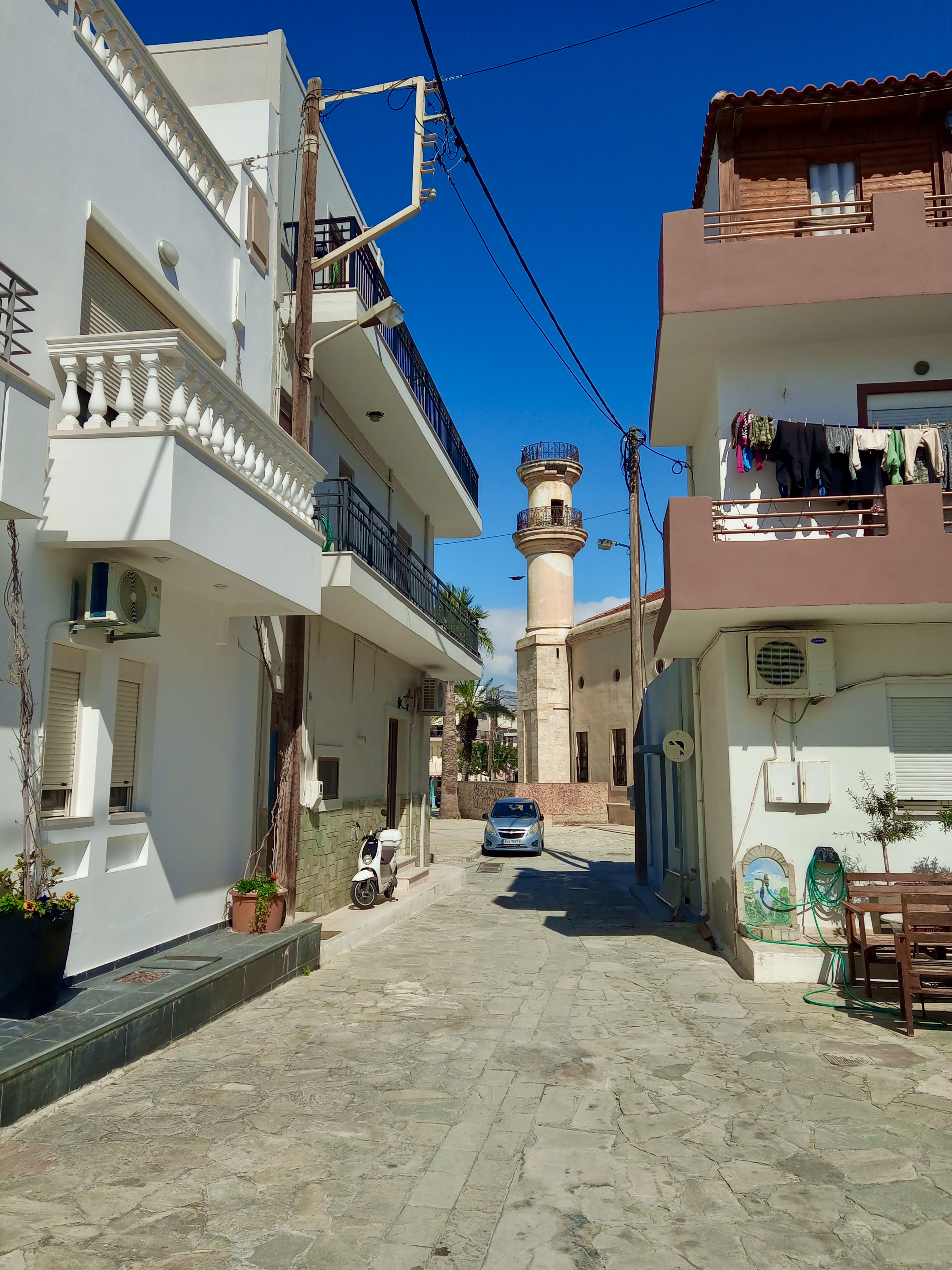
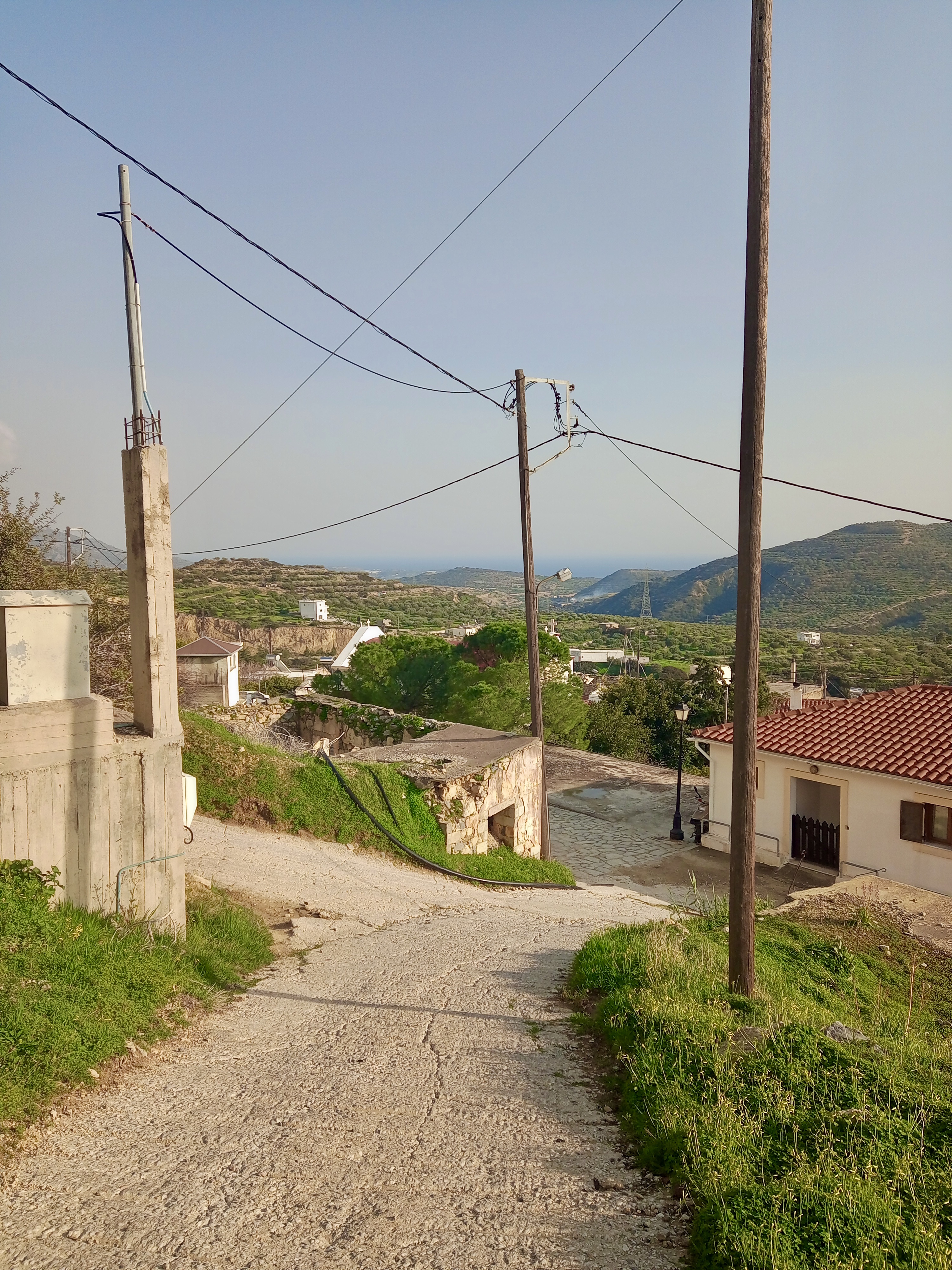
Above: We couldn’t believe our ears and eyes when, yesterday, as we were supping our coffees on the terrace, this vehicle crept up the lane, no doubt completely unaware that you can’t get through at the top in a regular-sized vehicle. Dimitri does it all the time on his quad bike, but this bloke soon realised that he’d need to back all the way down to the road again. I thought at first that it was Google Maps, but it was the other outfit, Apple, preparing images for their version of Street View, which I believe they call “Look Around.” As he was backing gingerly down the steep lane, I called out in Greek to ask if he needed any help. He replied in heavily accented English, “You speak English? I don’t speak Greek?” Would you Adam and Eve it, but he was a young Bulgarian bloke, sent into Greece just to do this work.

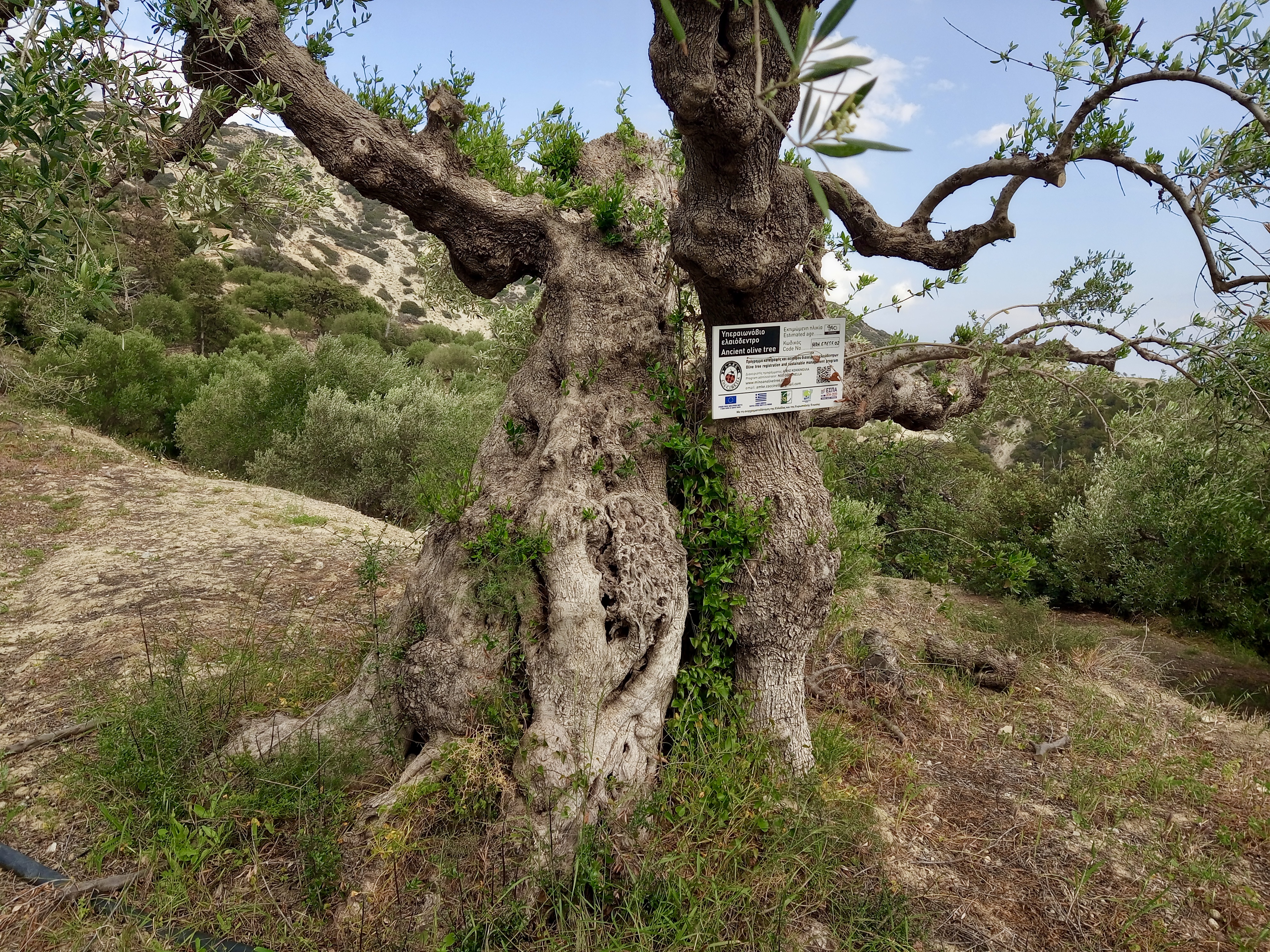
I went for a walk around ‘dingly dell’ the other afternoon. It was the first time I’d done that circuit for quite a while. These below are from that walk…
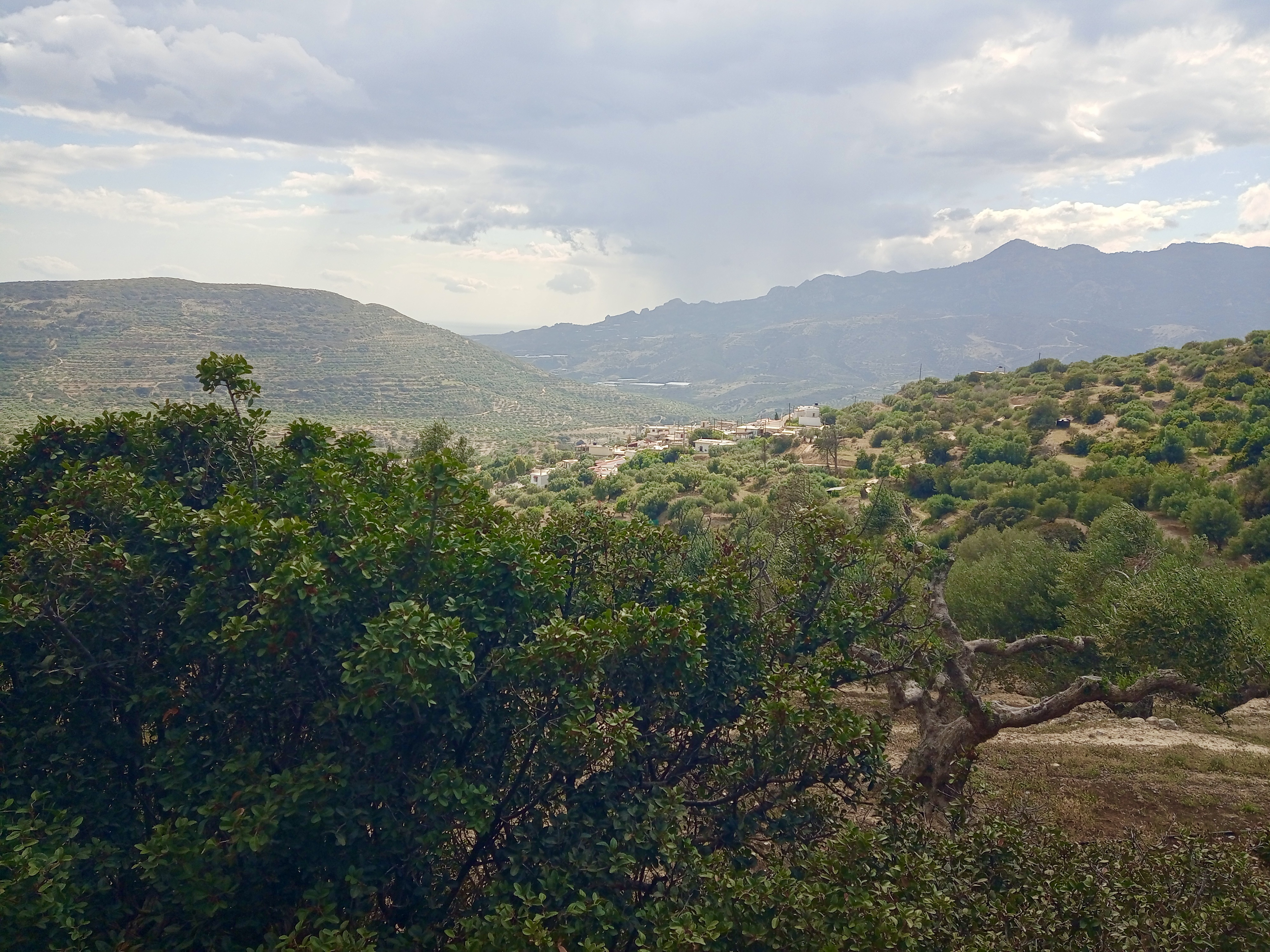
The sun’s out and the temperatures are climbing rapidly now, after a very changeable April that even got me slightly depressed. I know we need the rain, but it’s been unseasonably cold for April. It’s begun making up for that now though. The forecast is for the low to mid thirties this coming weekend, and we’re off to Sitia on Saturday for our annual two-week holiday in Greece! Below are some shots from the terrace, as we were having coffee on Monday morning…

•

Click HERE to go to my Amazon Author Page, where you can browse and purchase all of my seventeen written works.
Have a good time

This past few days there have been several stories on the Greek media about a problem that many hotels have around the country. As we see the country slowly beginning to open up for the summer season, it seems that the belief is that some tens of thousands more employees are needed to staff the hotels that have contracts with foreign tour operators. This year the problem seems to be worse than normal. Hotels are reported not be to opening as early as they’d have liked, because they simply don’t have the manpower to operate.

The staffing problem has increased year on year for several years now, ever since the pandemic, when many who would always apply in the past for work in tourism (especially hospitality) found other ways to earn their crust and never came back. Five years ago there were reportedly around 30,000 unfilled vacancies, resulting in job ‘rationalization,’ which amounted to what the industry called ‘unifying positions.’ That simply amounted to those who were still working as waiters, room maids, bar people, clerical staff etc working even more hours than they had been already. This year the estimate is around 80,000.

It’s always been a conundrum really, because people in colder countries who want to enjoy their two weeks in the sun (I own up, that was me for many years too) don’t want to pay a penny more than they have to for their package, whereas in countries like Greece this has meant that the hotel staff were much put-upon, working ridiculous hours for very low wages. Not much has changed, sadly. If hotel and bar staff here in Greece were to be paid what they’re worth, and also given conditions that enabled them to have an hour or two off each week, this would put the prices charged by tour operators, and indeed in the cafés and bars, up to such an extent that people would be earnestly looking elsewhere to book their package. Net result? Even more misery for the workers, who would go from living like slaves (which sadly most of them do for six months every year) to having no work at all.

I don’t pretend to have any solutions. I only wish I had. All I will say is this: if you’re coming to Greece from another country this summer, do please spare a thought for those who work to make your stay an enjoyable one, and maybe look for ways to show your appreciation for these poor, hardworking people who can barely take the time for a shower, and for whom a leisurely swim is merely a dream, until the last tourist plane has left in November. How often Yvonne and I talk to those whom we know well on our favourite beach during the course of the season, and they almost all say that the idea of taking a swim in that beautiful water that’s usually only metres from where they’re working is simply a dream. 

Do please come anyway, because irrespective of how poorly paid the workers are, and how many hours each week they must toil, without you they’d be worse off still.

Snaps then…

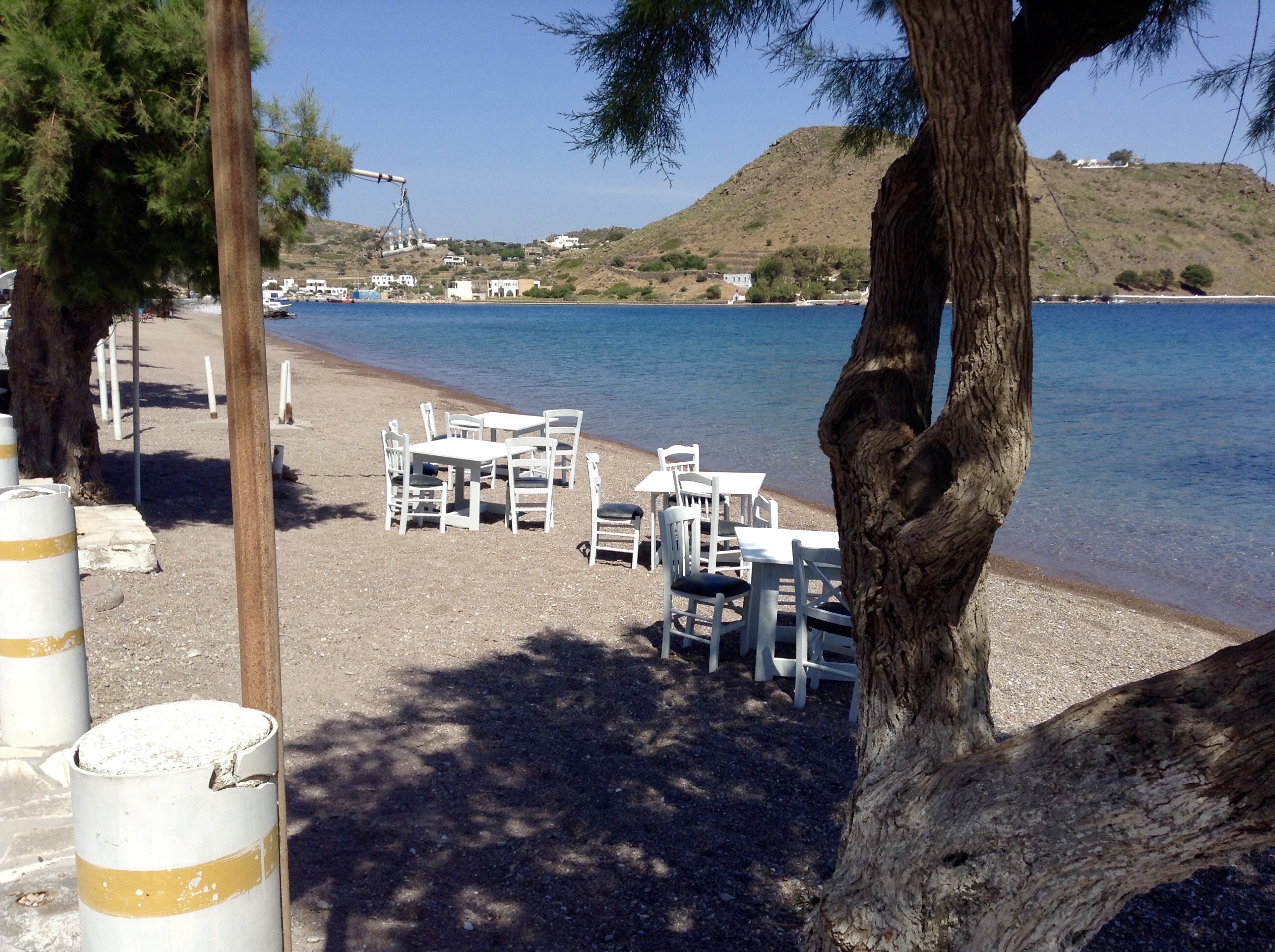
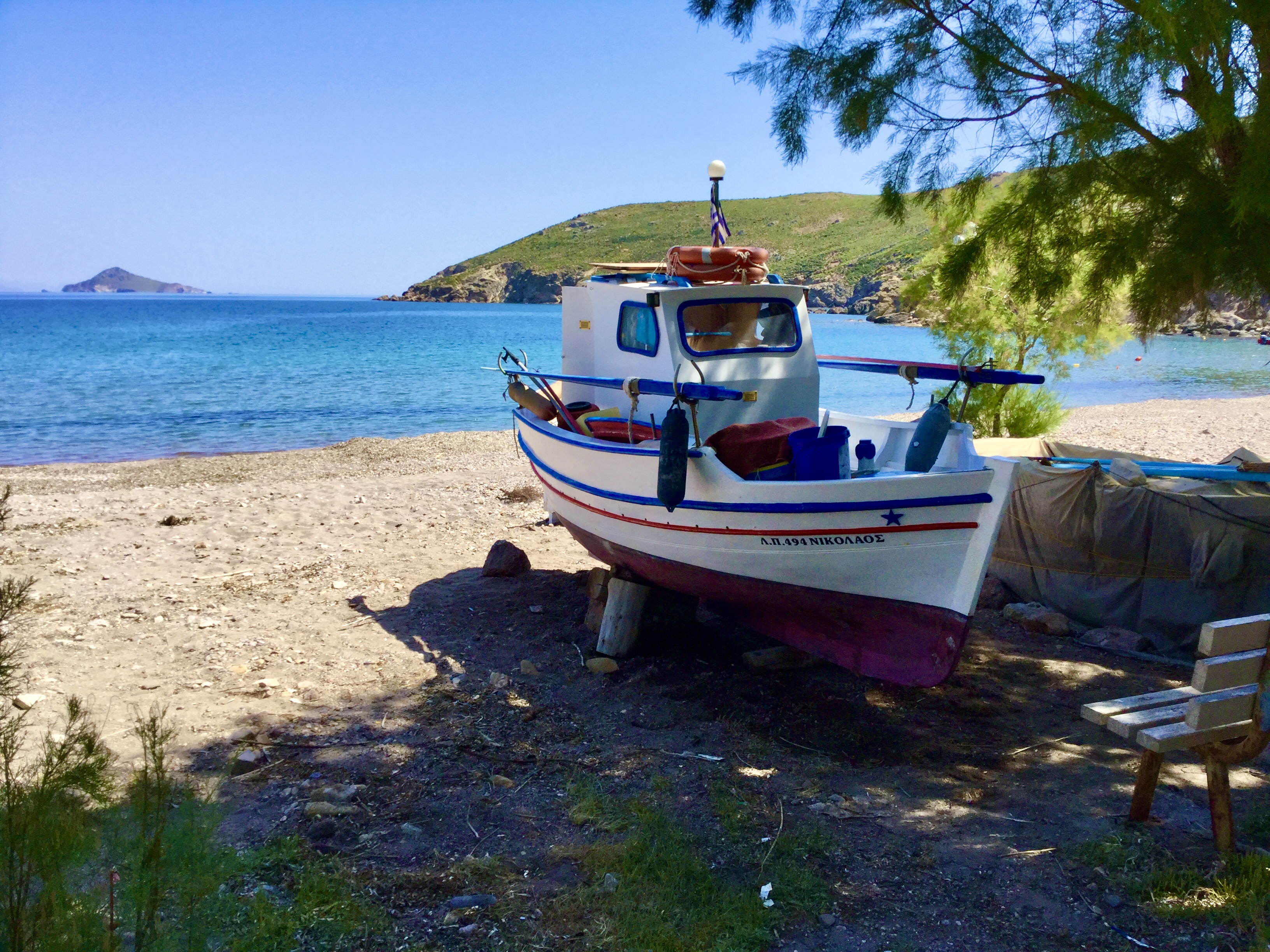
The photo at the top of this post is from May 2019, taken at Kampos Beach, Patmos.

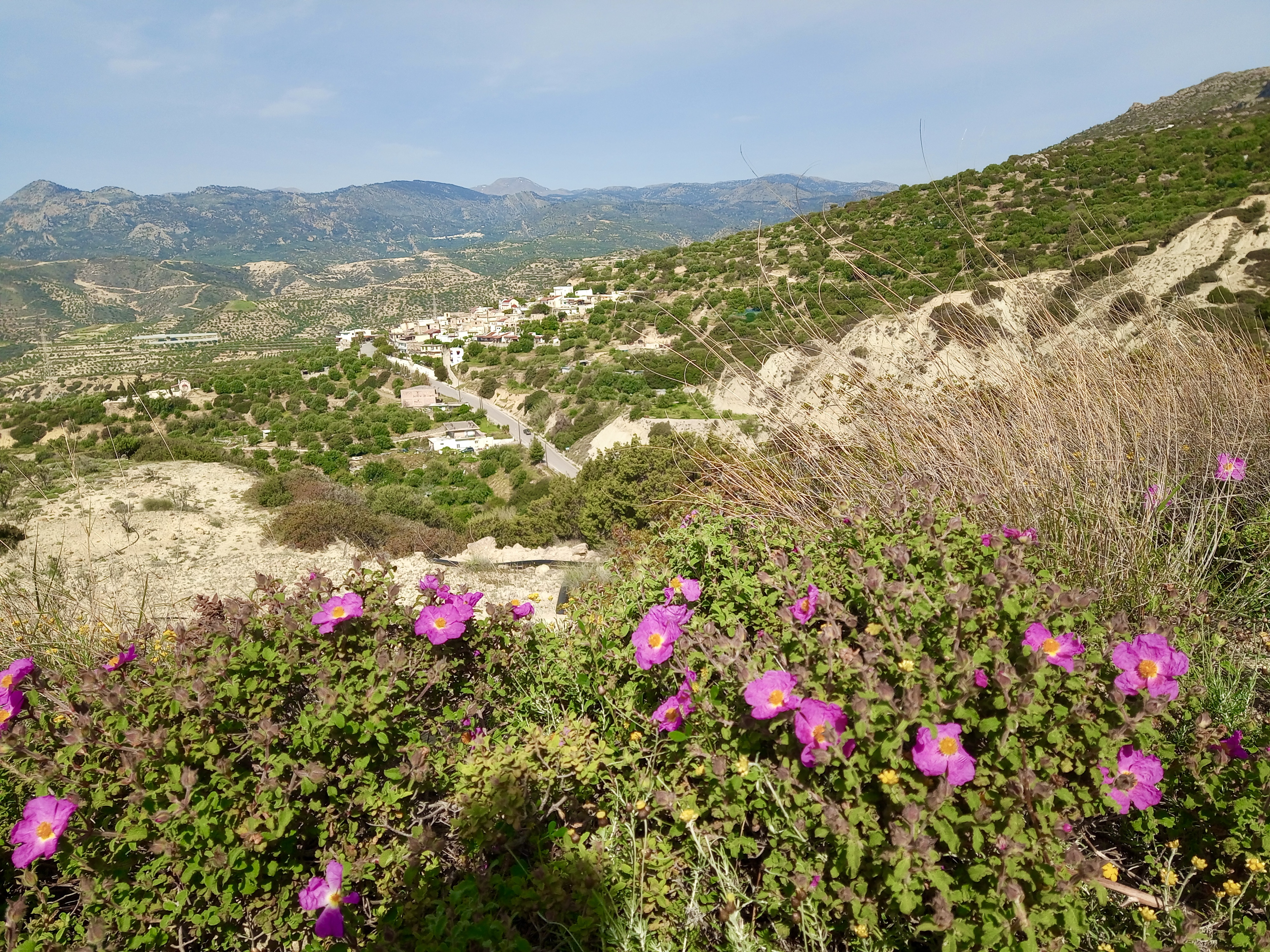
Above: Taken during a walk near the village on Monday April 28th (yesterday, in fact), and it’s an orchid, of course. Most of them have gone over by now, but this one was still looking good. I tried a plant ID app and it came up with quite a few suggestions, and I settled on ‘Fragrant Orchid,’ but maybe you can enlighten me if this is incorrect.

I haven’t taken many photos this past couple of weeks, so here are some from the archive…

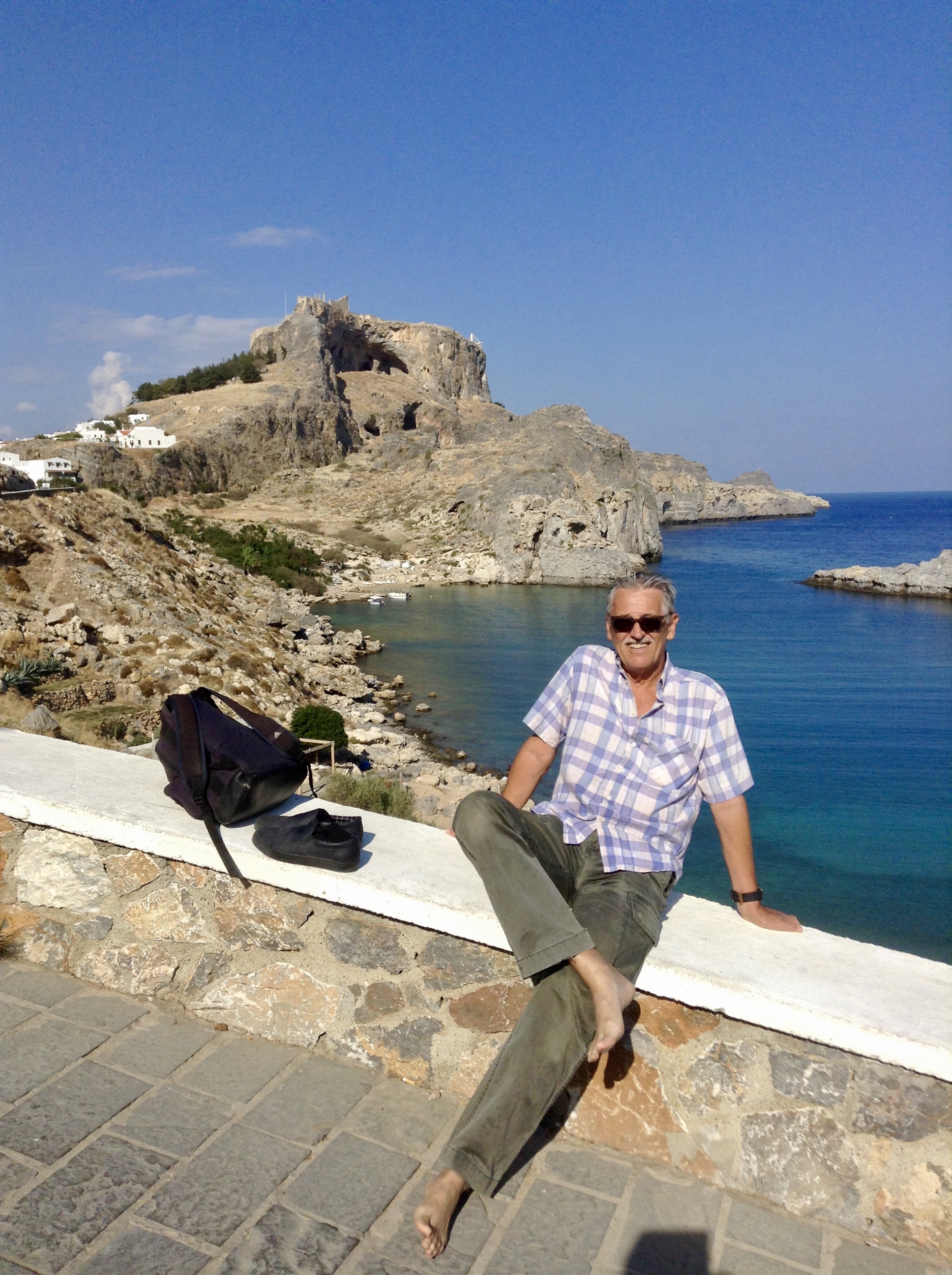
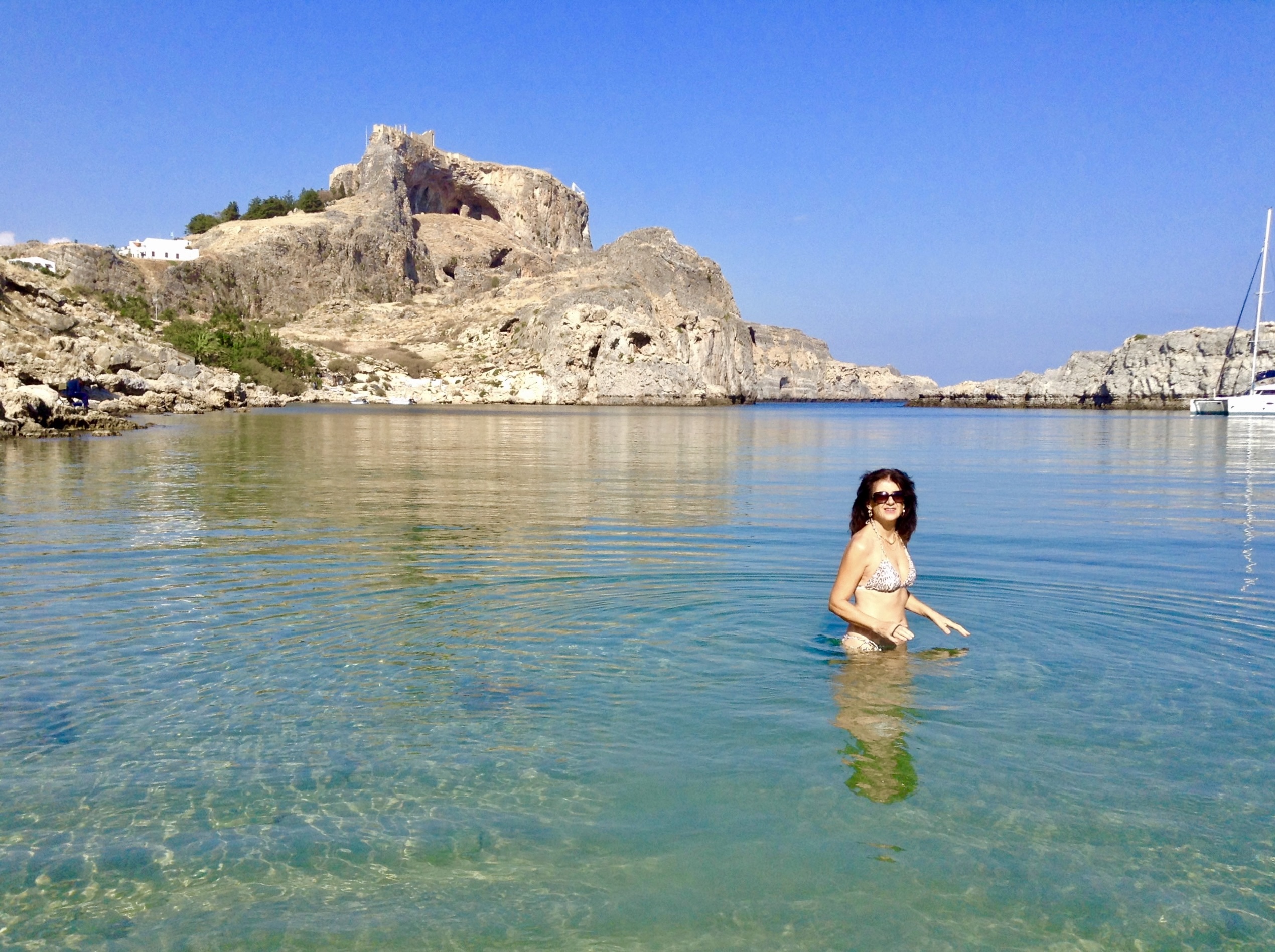
Above: All (bar one!) taken whilst we were living on Rhodes, some years ago. Come September we’ll have been living on Crete for six years. Blimey, how time flies. August marks the twentieth anniversary of our move from the UK to Greece. The group shot above is of a bunch of friends of many years from South Wales, UK, together with a couple of their kids who’d grown up in the interim since the last time we’d been together. The place is the summit of the highest mountain on Rhodes, Mount Attaviros. The first and last shots are at St. Paul’s Bay and the second one is at Bali, here on Crete, October 2020. Oh, and here’s one more I especially like, taken at the wonderful Hiona Taverna, not far from Palekastro, east of Sitia…

User Comments

You might just recognise the above photo since I used it on the front cover of my memoir book ‘A Slightly Larger Motley Collection of Greek Oddities.’

•

Click HERE to go to my Amazon Author Page, where you can browse and purchase all of my seventeen written works.

Blowing hot and cold

It’s been changeable weather lately, although only on one day in the past month or two have we not seen the sun. There have been showers, and that’s about right for the time of year, but what is wrong, and everyone’s been remarking on it, is the fact that this past few weeks the weather’s been cooler than it ought to be for March/April time.

We’ve had plenty of sunshine, but if you’ve been in the wind, or maybe in shade, it’s felt like December through February temperature-wise. Instead of 20+, we’ve had the mid teens, and on the best days it’s struggled up to around 18-19, decidedly cool for the spring months, that’s for sure. There has been rain too and, predictably, when we’ve talked about that with the neighbours, this is how the conversation’s gone (there follows a true example of a brief chat we had with Angla’i’a’s hubby Giorgo the other day, on a day when we’d seen quite a bit of good steady rainfall overnight and woken up to a still heavy sky)…

“Yia sou Giorgo, ti kaneis?”

“Eh! Still alive, but I’ve got more aches than I have limbs these days,” he said as he was just emerging from the gate into his horafi, a bagful of eggs from his hens in his hand. Yvonne continued:

“Some good rain though, last night, right? Much needed isn’t it. Ought to please the farmers.”

“Tipota.” [nothing] replied Giorgo, evidently leaving the rest unsaid, but we knew exactly what he meant. That one word implied that no, it was nowhere near enough. In fact it would need to rain non-stop for the next six weeks for the reservoir to fill up and for the farmers to be satisfied, and it wasn’t likely to do that. 

Still, there you go, it is what it is. Most Greek homes have ‘iliako,’ which is that solar panel and tank assembly which is ubiquitous on the roofs of the houses in this country. ‘Iliako’ heats the hot water that comes out of the taps in the house and, usually, a house will also have an electric cable running up to the tank, which the locals call [using a transliteration from the English] the ‘boiler.’ When we had ours fitted after moving into the house, we didn’t bother to have the emersion heater connected. We thought we’d wait and see how many days during a winter we might not have any hot water due to there having been no sunshine. This winter there have only been two days when the water’s not been hot. Even on those days it was lukewarm, not stone cold. Not bad eh?

Anyway, what usually happens around this time of the year, and I’m quite sure this year will be no exception, is that you awake up one morning and the summer’s arrived. It’s literally like a switch has been thrown and the air’s suddenly warm-to-hot (breeze or no breeze) and you start trying to stay in the shade for the next six months or so. Can’t come soon enough. One of our Greek friends said to us only this week, “I can’t wait to be complaining about the heat, it’s been so cool lately.” We’re on the same page, I’d say.

Postscript: I’m just finishing this post off the next day (April 16) and it was already 20ºC outside at 8.00am and, as I type this last bit now at 10.00am, it’s 24º. We may just have turned the corner!

Photo time…

Above: A few shots taken on Sunday, at around 11.00am, at Gra Ligia. That little red and white dinghy – did you spot the name? Not surprised there’s no one in it…

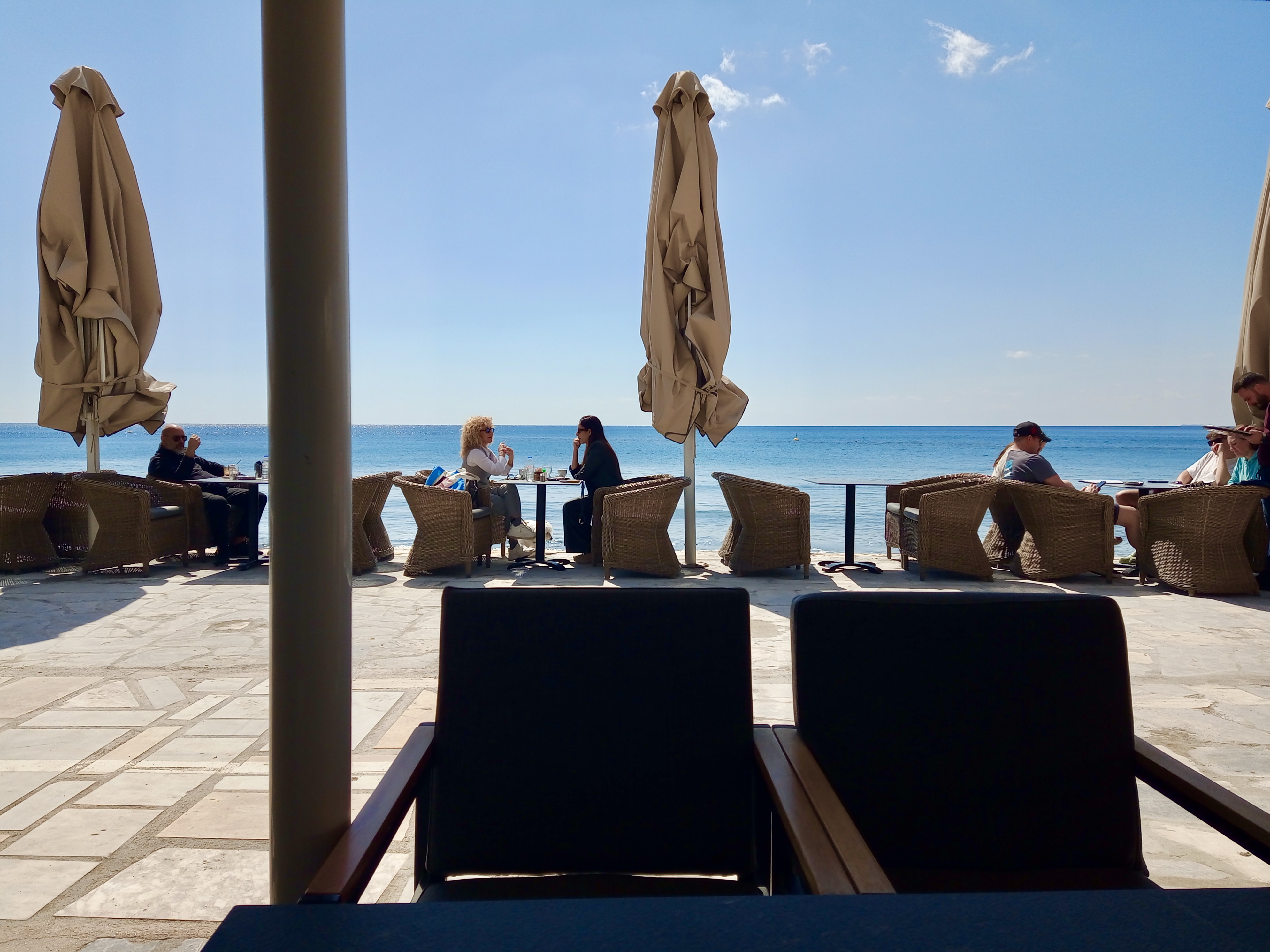
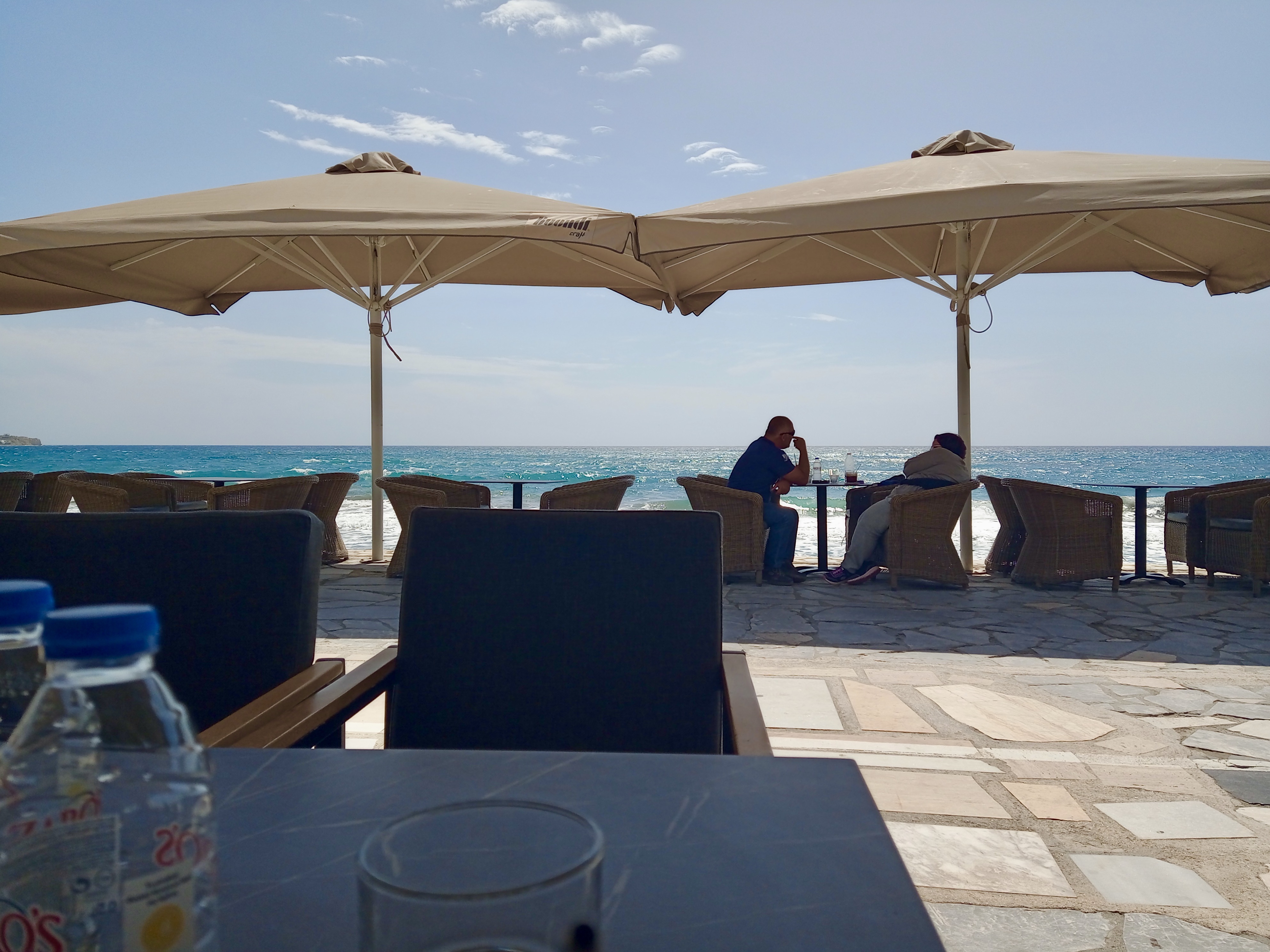
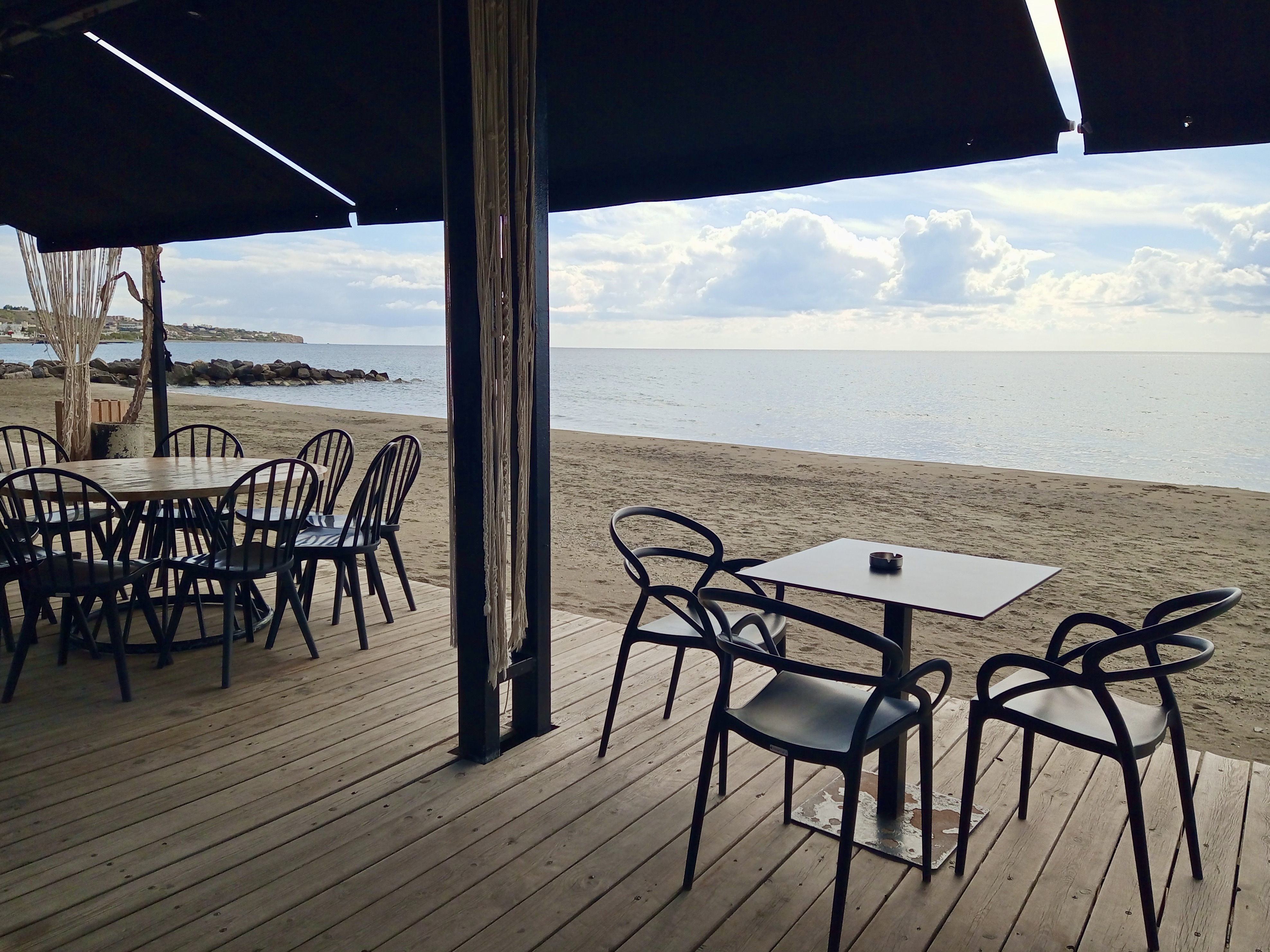
Above: Thursday April 11th around 11.30am on Ierapetra sea front. The Plaz café, of course!

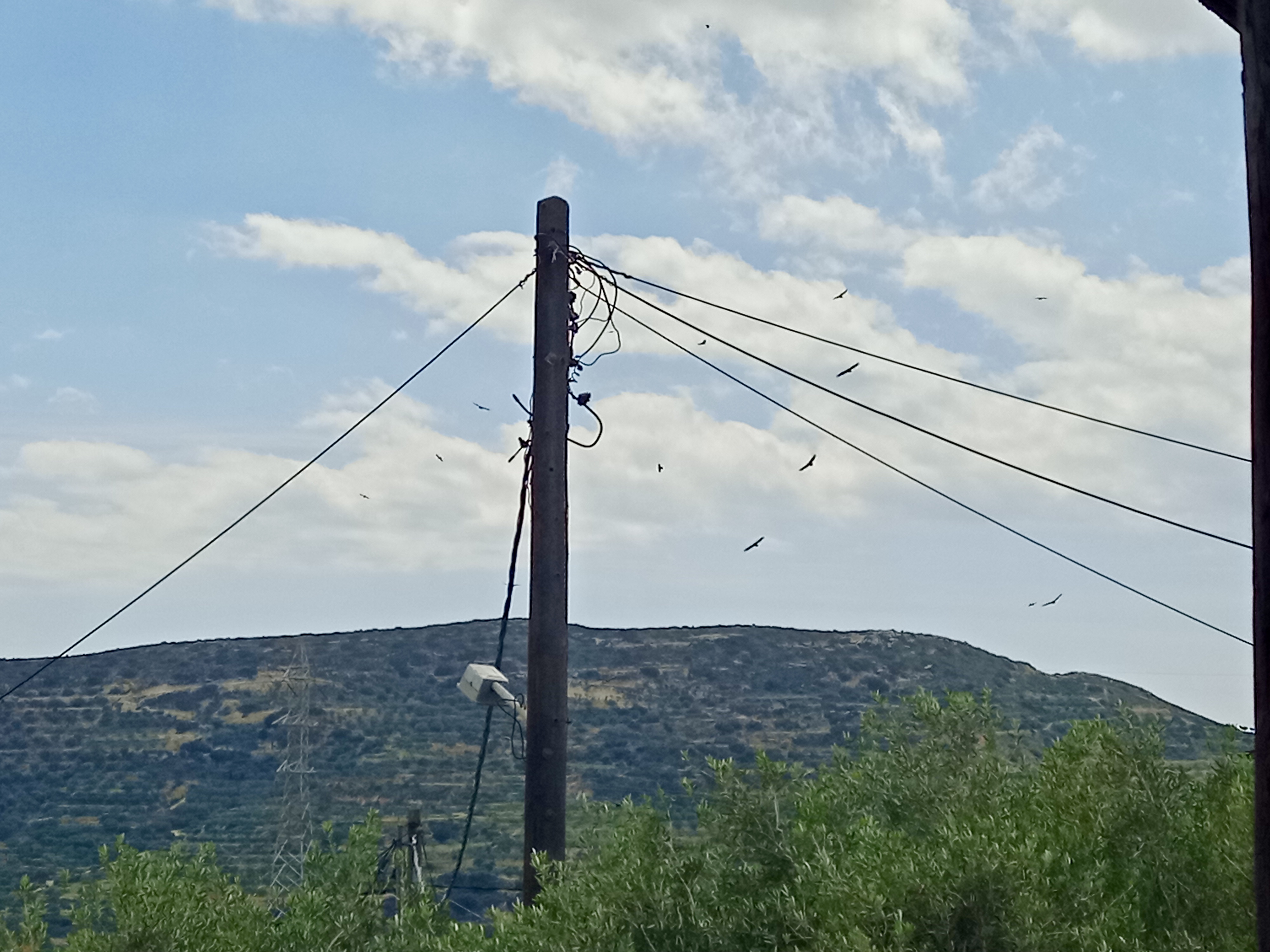
Above: A ‘kettle’ (Thx ChatGPT!!!) of Griffon Vultures circling very close to our veranda on April 10th at around 2.15pm. There must have been at least twenty of them. It’s such a shame that the photos don’t do them justice, but if you click on the individual shots you can see them larger. From where we were standing it was an awesome sight.

Above: Two shots from the beach just east of the town, where the road runs right alongside the waterfront. On the rock in the middle-left of the rock pool is a juvenile Egret. We’d disturbed it as we approached and it flew from the reeds just below us to that rock. Once again, apologies for not having a posh camera with a zoom lens.

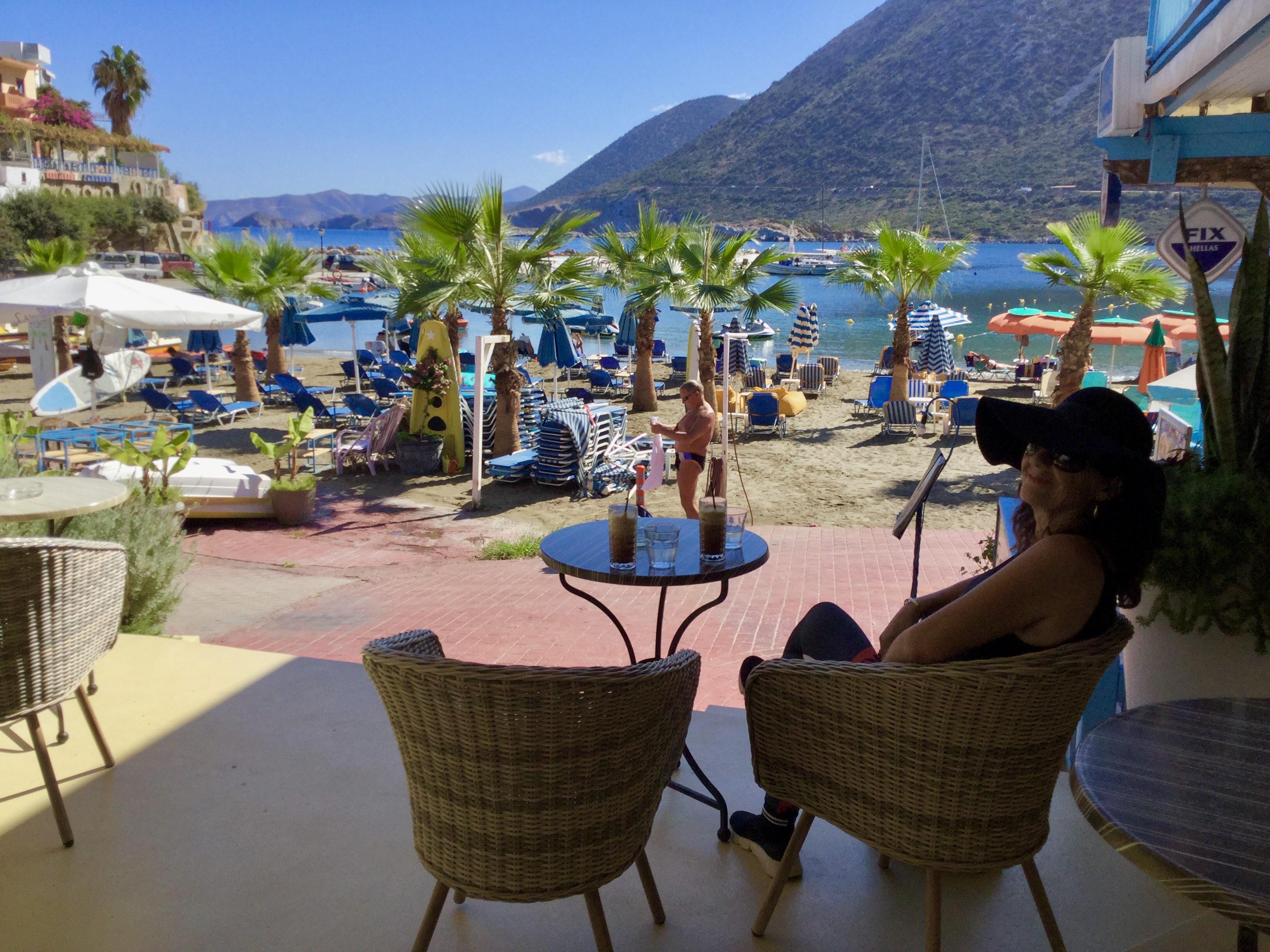
And here’s one from the archive. Taken at the Aroma café/taverna at Kampos on the island of Patmos, 8th May 2019 at around midday. I know, those legs should carry a government health warning…

•

Click HERE to go to my Amazon Author Page, where you can browse and purchase all of my seventeen written works.
Cracking oil

We’ve got oil. Must admit, it was a bit of a relief. For a couple of years now we’ve been getting our olive oil from our neighbours Dimitri and his mum Maria. OK, so in this post I mentioned how we managed to harvest about 7kg from one of our own trees this past winter, but that only gets you through a couple or three weeks, let’s be honest. It was toward the back end of last summer when Dimitri told me that the family had run out, and so he could no longer supply us, at least until the new harvest, and when that began this past November, he also mentioned that it didn’t look like being a very good one. When you look at the price of olive oil in the supermarkets this past year or so, it makes your eyes water to think about having to buy it there, because by and large the prices have more than doubled in the past 18 months or so. 

So, anyway, a couple of weeks ago I gingerly walked the few metres down the lane to their front door, knocked and waited. When Dimitri answered, I asked him if it might be possible this year to again get our supplies from him, whilst also assuring him that we wouldn’t be at all offended if he said no, since we understood that the harvest might not have been as good as was hoped for.  He told me that he’d have a chat with the rest of the boys in the family (cousins and a brother, who all run their ‘farm’ together), and that he’d get back to me, probably that very evening. I did add as a parting shot, “We’ll not be offended if it’s a ‘no,’ but I had to ask, didn’t I?”

That evening, he didn’t show. So we contented ourselves with the knowledge that he was usually as good as his word, so we’d wait until the next day and see, before starting to find another source. Next morning, as we sat supping our coffees on the terrace, from where we can just see the steep lane that runs alongside the lower garden, we heard the familiar sound of Dimitri’s quad bike, as it was coasting down the hill. If we look to our right while sitting on our sun loungers, we can usually just about see who it is passing. We didn’t need to guess, as the sound of the machine said that it had slowed to a stop and the engine had begun to idle, and then we heard Dimitri’s reedy voice calling out, “Gianni!!, Gianni!”

I shot up from the lounger and saw that there he was, with his mum perched on the passenger seat behind him, and she was holding up a 5 litre bottle full of that wonderful delicious, viscous liquid that we all know and long for – fresh, extra virgin, home produced olive oil. I opened the gate and went out to accept it from them, and we agreed on a very acceptable (not to say silly) price, and I promised to drop by that very instant with the cash, while they continued to coast the last few metres down the lane to their home.

Before I went into the house to grab my wallet, Yvonne suggested that they might want one of our lettuces. We’ve had very little success over the years with growing vegetables, but leafy green lettuces have at least been one of our success stories, and this year’s been no exception. We planted up a dozen or so in the lower bed late last year, and for weeks now have been pulling leaves and making wonderful salads for every lunchtime (when we’re at home) since. Our neighbours all regularly give us aubergines (eggplant, guys), cucumbers, tomatoes and courgettes (zucchini, guys) and the like, but we’ve never been given lettuce. So we thought, maybe, just maybe, it’s one way we can give something back. And, all modesty aside, our lettuces are a wonder to behold.

I pulled a choice example from the ground, shook off the soil and took it with me down to our neighbours’ house along with the cash for the oil. I was delighted with Maria’s response and couldn’t wait to tell Yvonne, whose thought it was after all, what a great idea it had been, and how it had further oiled the wheels of neighbourliness (‘oiled’ the wheels; see what I did there? Honestly, I amaze myself sometimes). 

Of course, you can never win in the generosity stakes with these lovely people. Not one minute after I’d handed Maria the lettuce, and Dimitri the cash, Maria said, “You need some eggs?”

A minute later I was walking back up to our house, a bag of around 12 fresh eggs in my hand and Maria’s words ringing in my ears “Any time you need eggs, just ask.”

There’s a story in the Bible about the Jews in the wilderness after they’d come out of Egyptian slavery, with Moses at the ‘helm’ so to speak. It relates how they were only in the desert a short while before they’d forgotten about how hard their lives had been back in Egypt, and instead began to moan about all the vegetables and fresh food they’d been able to eat. Never mind the beatings and killings, ‘Take us back so we can enjoy those cucumbers’ was what it amounted to. They particularly bemoaned the lack of meat. The story goes that God sent a flock of Quail, and thousands of the birds fell dead to the ground outside their tents, and the people rushed out to grab them, cook them and gorge themselves on the birds and, as a result, owing to their previously meagre diet, many of them died due to overstuffing themselves. A salutary lesson indeed.

For some reason this came to mind when, the day after we’d received the eggs from Maria, the other Maria from across the lane, who’s the daughter of Evangelia, our octogenarian friend, pulled up outside her home in her battered old car, and she began helping her aged mother out from the passenger door. We made polite conversation, since Evangelia seldom goes anywhere and it seemed to us that maybe her daughter had taken her to the doctor’s or something. Anyway, after a couple of minutes, we also offered them one of our lettuces, which they accepted readily. I was delighted to place it in Evangelia’s hand and watch as she broke into a broad smile. It’s so rarely that we can do anything for those who live around us, so it felt good.

Of course, as we should have expected, the next day, as we were pottering around in the house, Maria’s head came bobbing up the drive, and so I went out on to the veranda to greet her. Guess what she was carrying in her right hand… Yes, right first time, a bag of fresh eggs from Evangelia’s hens. When Maria (Dimitri’s mum that is, do keep up) had given us the eggs, we’d been out of them. Now, here we were 48 hours later with eggs coming out of our ears. Needless to say we’ve substituted our usual breakfast of muesli with boiled eggs and ‘soldiers’ this past few days, not to mention eaten a frittata or two!

Photo time:

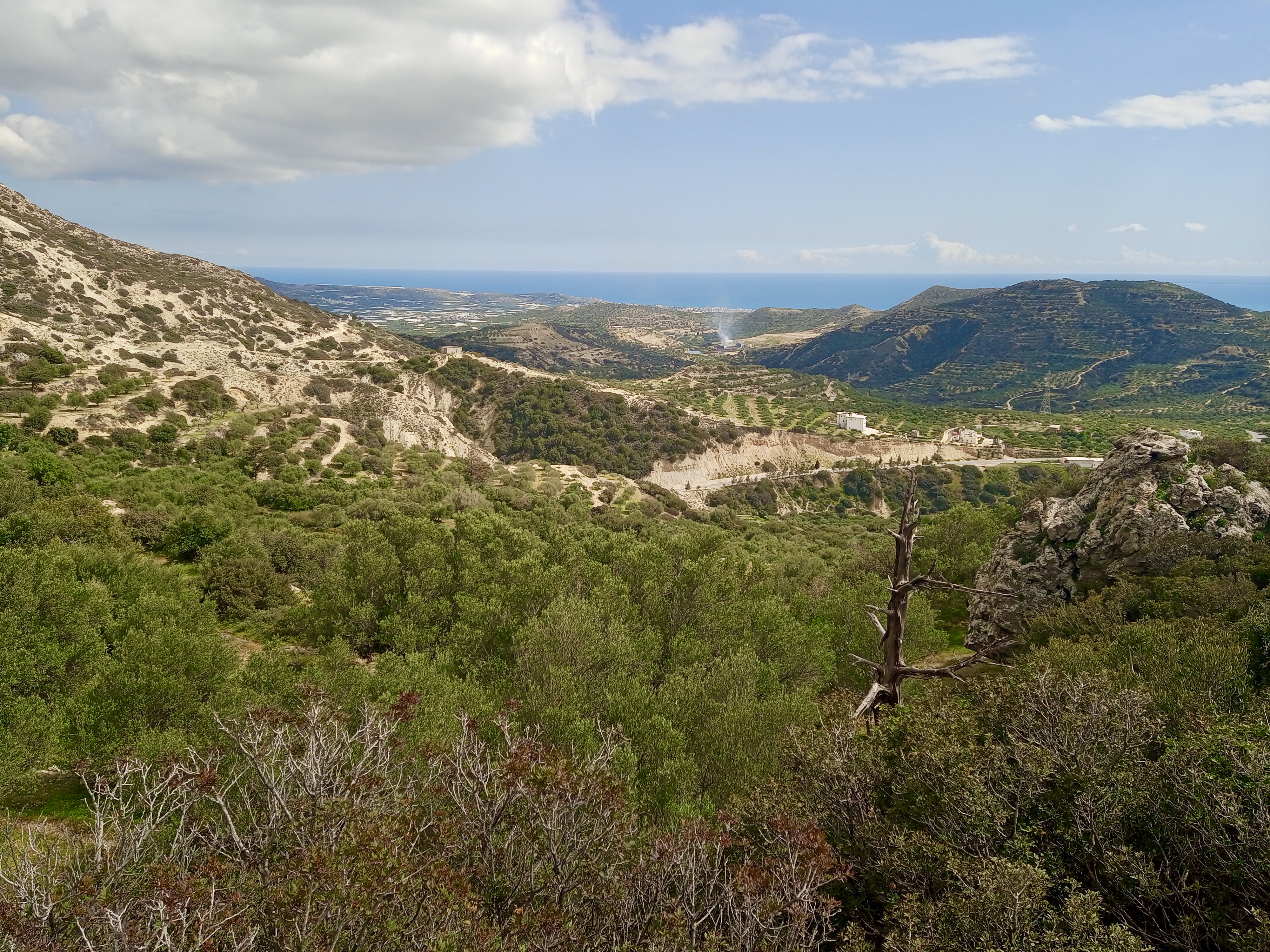
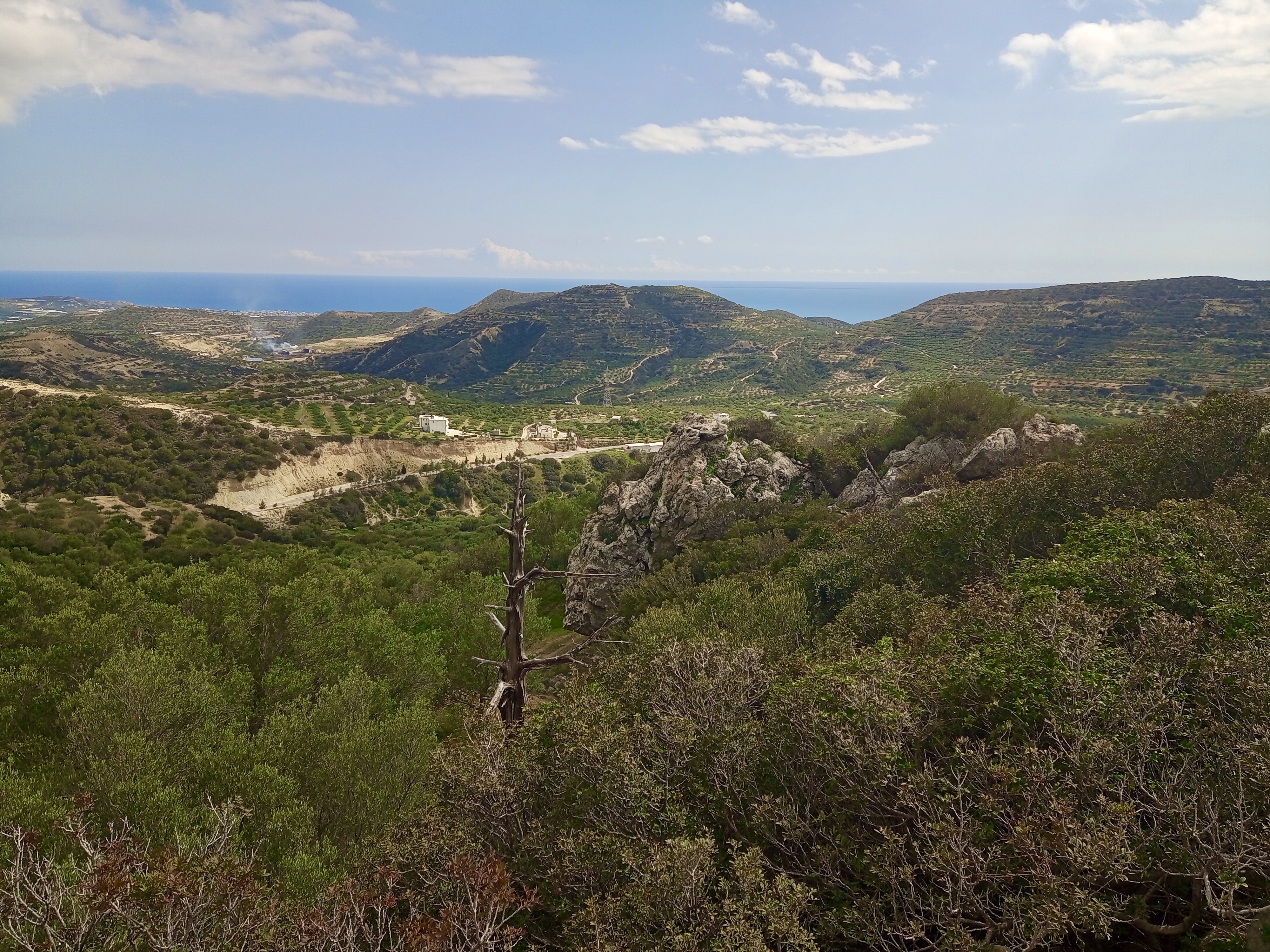
The photo at the top of this post was taken on Friday April 4th at around 3.28pm as we did a walk up the mountain behind the village. This next one’s of the same scene, after I’d rotated a few degrees to my right. You can see the same mountain is now more centre-shot, whereas in the top photo it’s on the right. I ought to have fiddled about with Pixelmator Pro and merged the two shots together, but I haven’t had time…

Here are a few more shots from the same walk:

That self same evening, the rain clouds gathered and it showered for a while, resulting in a rainbow that was so close to the house that I could almost see it touching the ground just a few hundred metres from the veranda. Should have got me wellies on and gone searching for that pot of gold…

•

Click HERE to go to my Amazon Author Page, where you can browse and purchase all of my seventeen written works.
Eerie, but flippin’ useful

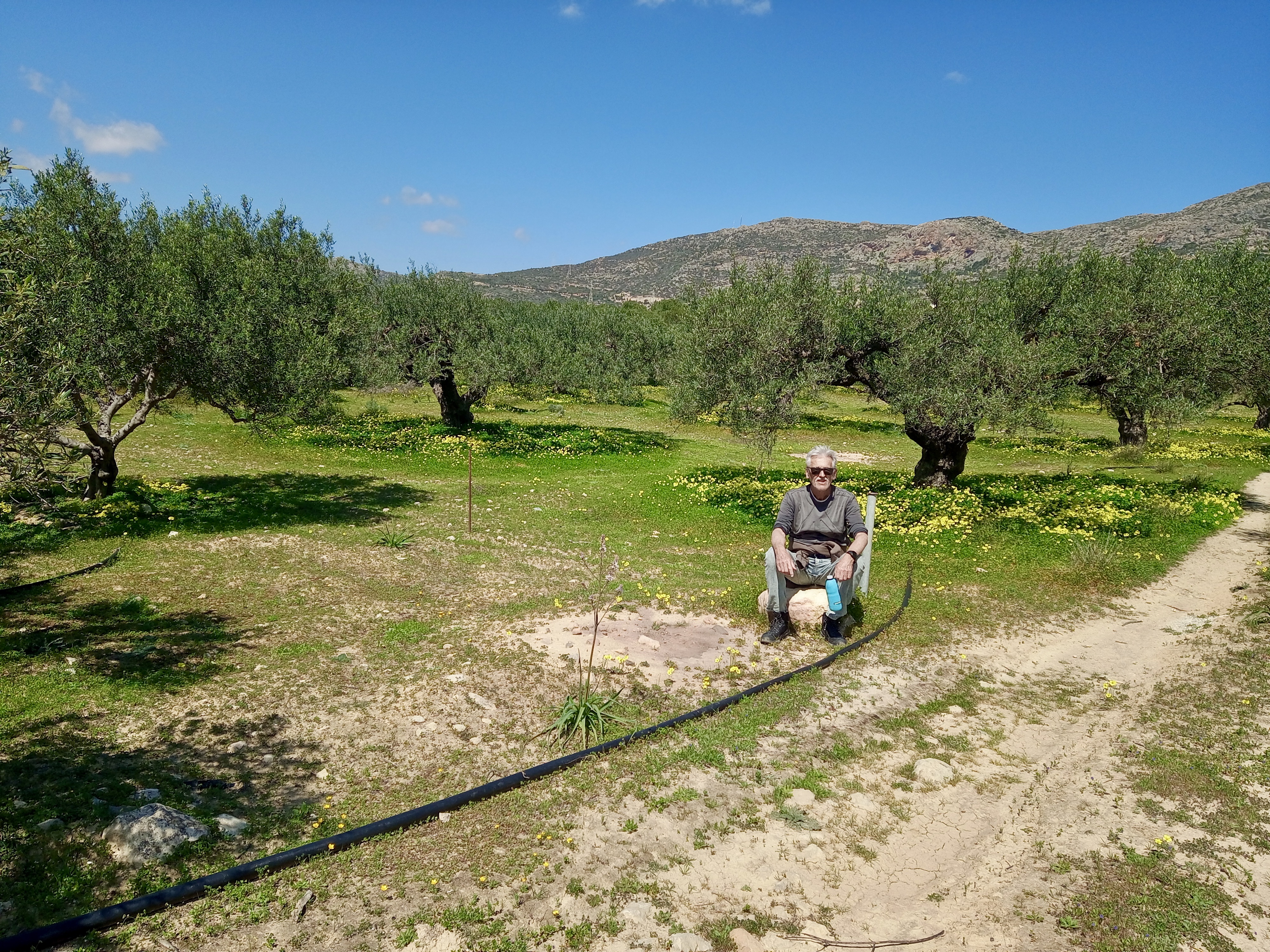
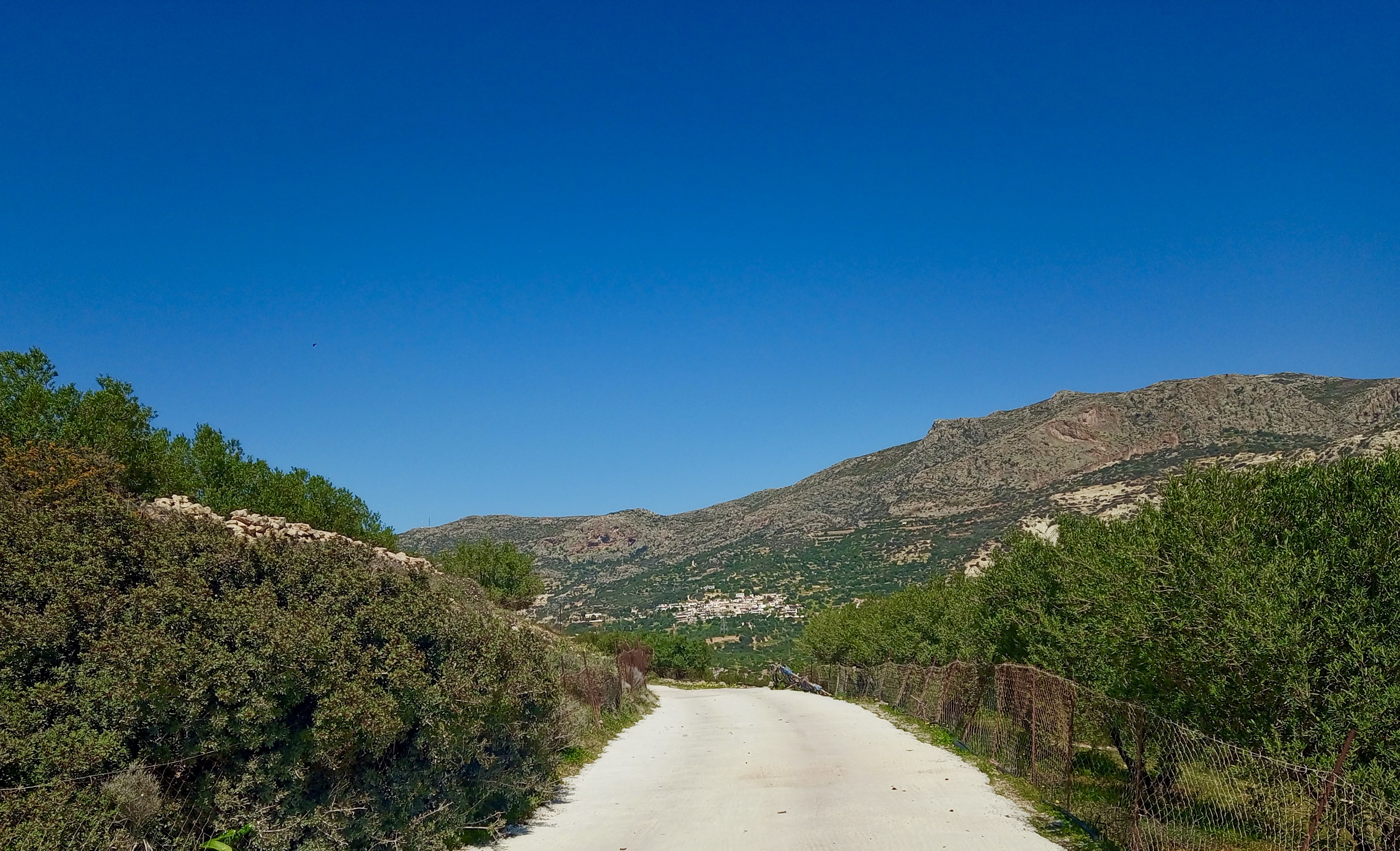
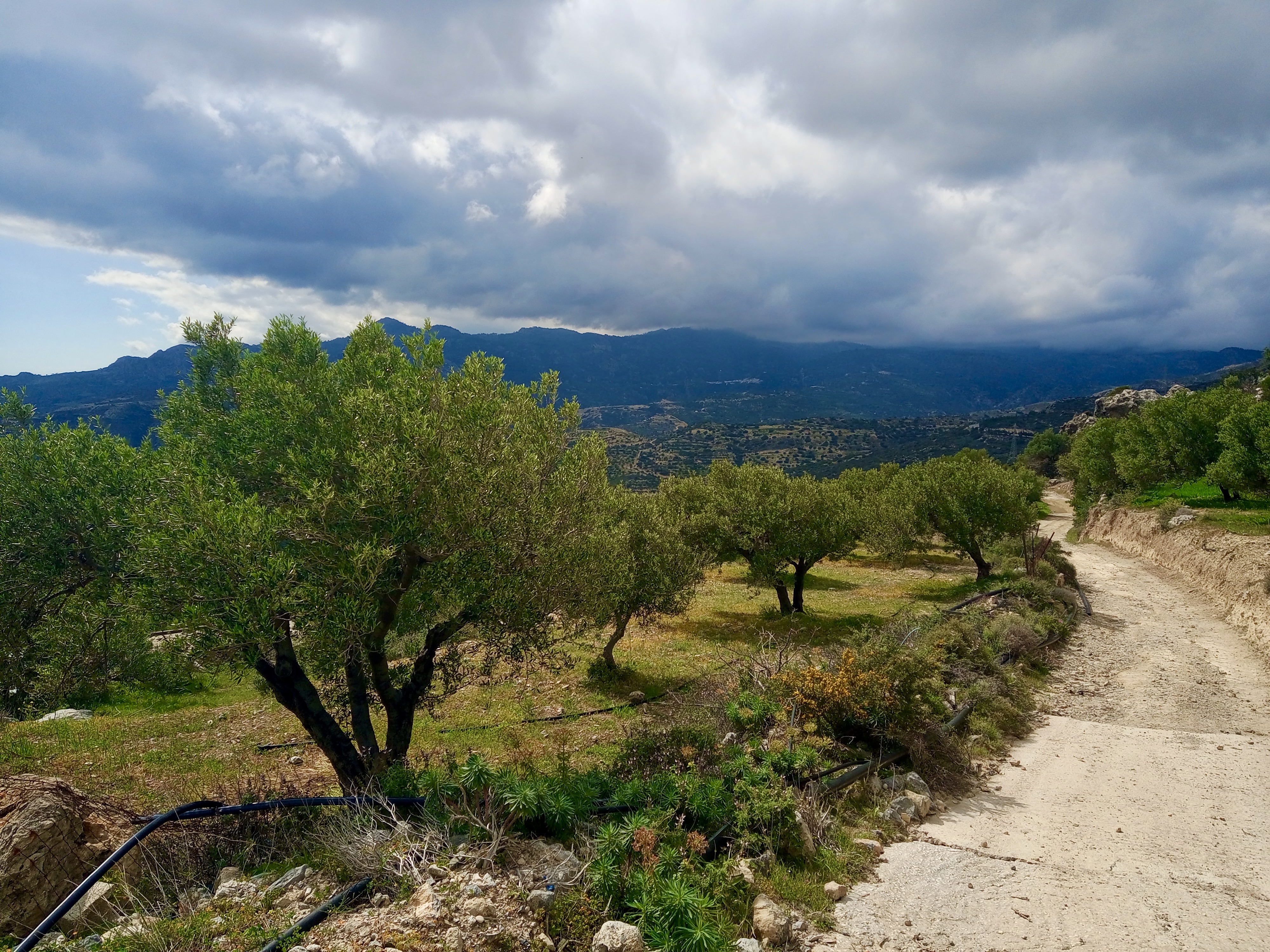
The photo above was taken March 22nd at around 12.30pm, while out on a walk up the mountain the other side of the valley from us. Yvonne says I look like I’m sitting on the toilet. Lovely. The two below were taken during the same walk. The one of the ‘road’ shows the village in the distance, and the other one shows how those lovely yellow flowers that festoon the countryside at this time of the year tend to thrive in circles in the shade of the olive trees, creating the impression that they’ve almost been cultivated in that way, when it’s merely the sunlight and shade that create the effect, but it’s lovely just the same…

More photos further down, but for now, to the reason for the title of this post: I was around at a Greek friend’s house the other day, getting some help from him regarding a query I had on the government website about my Greek Tax status, and we were using my laptop to look at the problem, when he got a bit perplexed himself and said that he didn’t quite understand why there wasn’t a link where there should have been one, so he got up and went over to his desk and did quick search on his own laptop, to see if he could resolve the issue. 

I noticed that he didn’t use Google, but the search engine (or so I thought) he used had a fairly plain interface, but came up with exhaustive answers in double-quick time. Once we’d completed our ‘session’ and sat back with a coffee to ‘chew the fat’ as it were, he mentioned that he’d already become quite hopelessly dependent on ChatGPT. 

‘Woa!” I replied, ‘Isn’t that this new A.I. thing that students are even using to write their essays for them? Isn’t it a bit risky? I mean, to be honest, I’ve not really investigated it because I’ve kind of been a bit suspicious of it. This whole A.I. thing kind of freaks me out.”

“No, no,” replied my friend Stavros, “you can just use it as a search engine, but it’s so much more intelligent than Google. To be honest, it’s revolutionised my whole online experience. You should try it.” 

I told him that I’d probably pass on that, I mean, there’s nothing quite like fear to keep you from going in a particular new direction now, is there. 

A few days later I was sitting in a coffee bar with a bunch of other friends, when some subject came up that required that one of us check online to see if we could get an answer to some question or other (probably about music). Giannis picked up his mobile phone and was quickly tapping away with his thumb (he’s only 35, so clearly one of the ‘kinito generation.’ ‘Kinito’ is what the Greeks call their cellphones, or mobiles as we Brits like to call them). In double-quick time he was reading out all kinds of facts about some rock musician or other, and I asked him where he found all this out.

Yup, ChatGPT again. “You should get it Gianni,” he told me, “I wouldn’t be without it for anything now.”

Yes, you’re right, I succumbed. I downloaded it on my iPad and on my mobile and within a couple of taps with the thumb I too was hooked. The answers it gives to a question are simply mind bogglingly conversational, not to mention thorough, and it even asks you a subsidiary question if you want more info. So now, when we sit and watch Greek TV and all those quiz shows that we follow regularly, Trocho Tis Tichis [Wheel of Fortune], ‘Still Standing,’  ‘Millionaire’ and the Greek version of ‘The Chase’ –  I’m busy tapping stuff into ChatGPT to get answers to the questions that we don’t already know the answers to, and then we’re busy yelling at the screen in that weird way we all seem to, as if the contestant could actually hear us.

Now we wait. What’s the betting that someone will soon be writing to me to tell me how Big Brother is stealing all my personal info now, and some poor sod in some dark office in some capital city somewhere in the world even has my inside leg measurement? You know what? I’m not really that interesting a person, so I don’t care. If some shadowy power finds my personal details useful in any way, I’d be very, very surprised.

Changing the subject; I hate to mention Amazon (because there’s always someone who’ll ‘righteously’ yell at me that for moral reasons I shouldn’t be using them any more), but I’m going to anyway. The fact is, if we all took a moral stand on any and every online store or service or retailer or whatever because we don’t agree with something about the way they operate, we’d all soon be bartering for our supplies with our near neighbours in the street, wouldn’t we? At the end of the day, we need to buy goods and services that help us get through life, and it’s not up to us to adopt our own elevated arbitrary standards and thus issue judgements on all these people or organisations. “The woman on the checkout is a smoker. I don’t agree with that, so I’ll shop elsewhere.” That’s what it amounts to – if we’re being honest.

Right, having got that out of the way, you may know that the majority of my book sales are in Kindle format, and that’s just the way it is. There is no other ebook platform that comes close for worldwide availability and that’s all there is to it. Well, they’ve now just begun offering authors the chance to have their books turned into audiobooks using a virtual voice, and the service (at least for now) is free. So, as a first experiment, I’ve commissioned my favourite novel, Panayiota as an audiobook, and it’s already available on Amazon to those who subscribe to their ‘Audible’ service. If you like to use audio books, I’d be hugely grateful if you could shell out a few pennies and give this one a try. Having listened to a sample of it, I was well impressed. Apart, that is, from the way the voice pronounces the name ‘Panayiota,’ but then, you can’t have everything I suppose.

Shots away then…

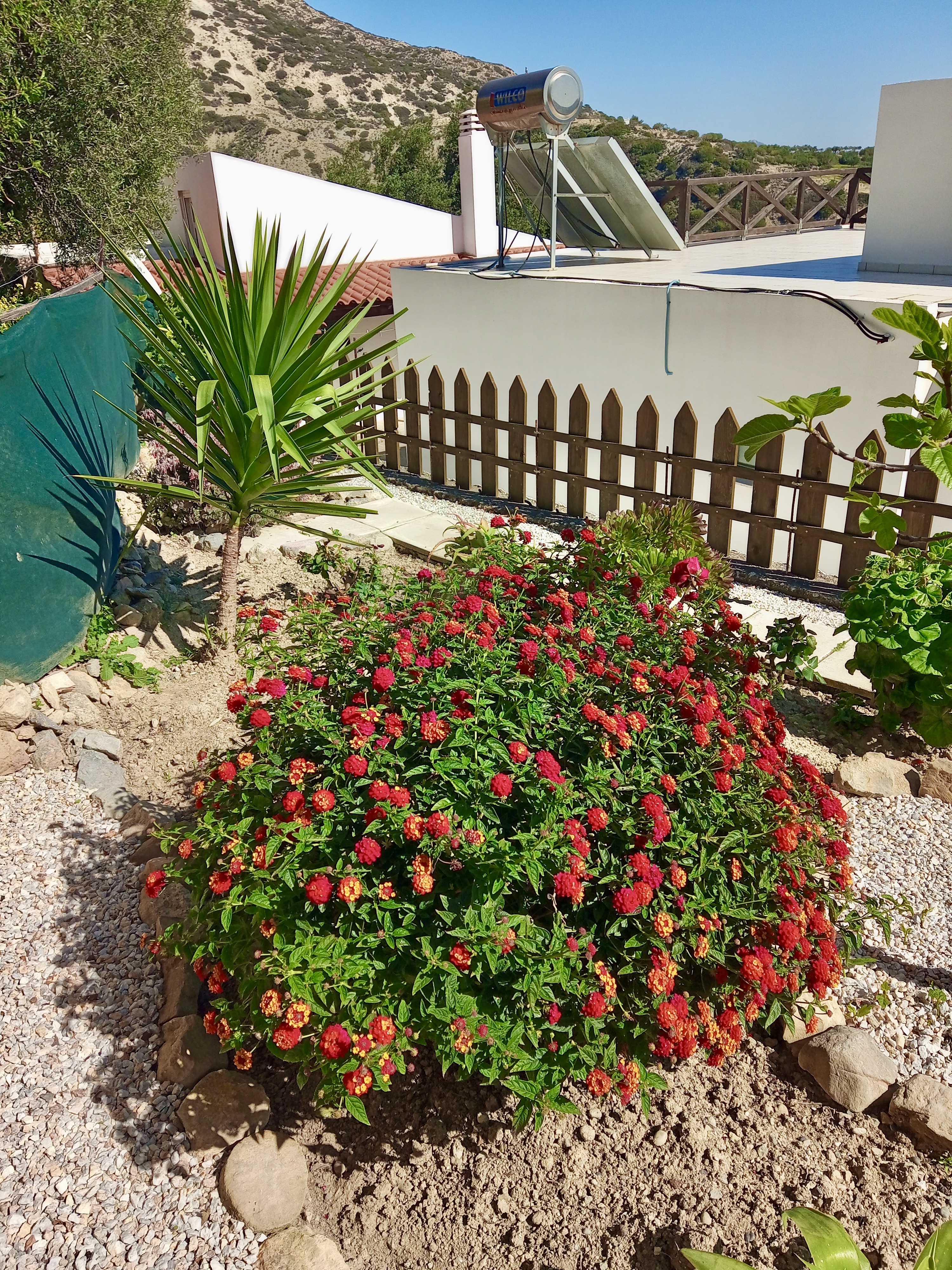
Sorry if I’m getting a bit boring, but I can’t stop studying the Lantana in our upper garden. 1. It’s simply so ‘in your face’ with its colour palette, and 2. Look at the way it attracts Red Admirals!

Above: Look at that. isn’t it simply marvellous? Just for a month or two during the winter the fig is totally bare of leaves, but then, in March, they burst open (this photo was taken 15th of the month) and the figs, which spend the dormant weeks like tiny marbles clinging to the ends of the branches, begin to swell and instill a sense of anticipation in your heart for when you’ll eventually be picking them in July-August. Eating a fig straight from the tree is a unique and pleasurable experience that everyone ought to have at least once in their lifetime, believe me.

To finish off, a couple of archive photos…

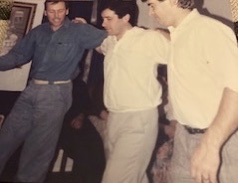
Above: Sorry about the quality of this one, but an old friend who we used to know in Cardiff back in the 1980’s recently got back in touch. Angelos is of Cypriot origin and he and his wife moved out there from Wales some time before we eventually moved here to Greece. He emailed this photo to me just this week, and I’d totally forgotten about such occasions as this, when we used to have great parties with friends of Greek origin, during which we’d dance the Hasapiko and other dances too. This one shows me on the left, with Walter Rego (who was of Italian extraction actually) and Mark Seymour, who is a Welshman with a passion for all things Greek, in fact his wife is also half-Greek like mine. Some of those parties were legendary, and wth this shot having jogged my memory, I remember one time when we even trod grapes barefoot in an old cast iron bath in Gary and Marie Moore’s back garden in a suburb of Cardiff. Marie was also of Greek (or Cypriot) origins. Good times, truly.

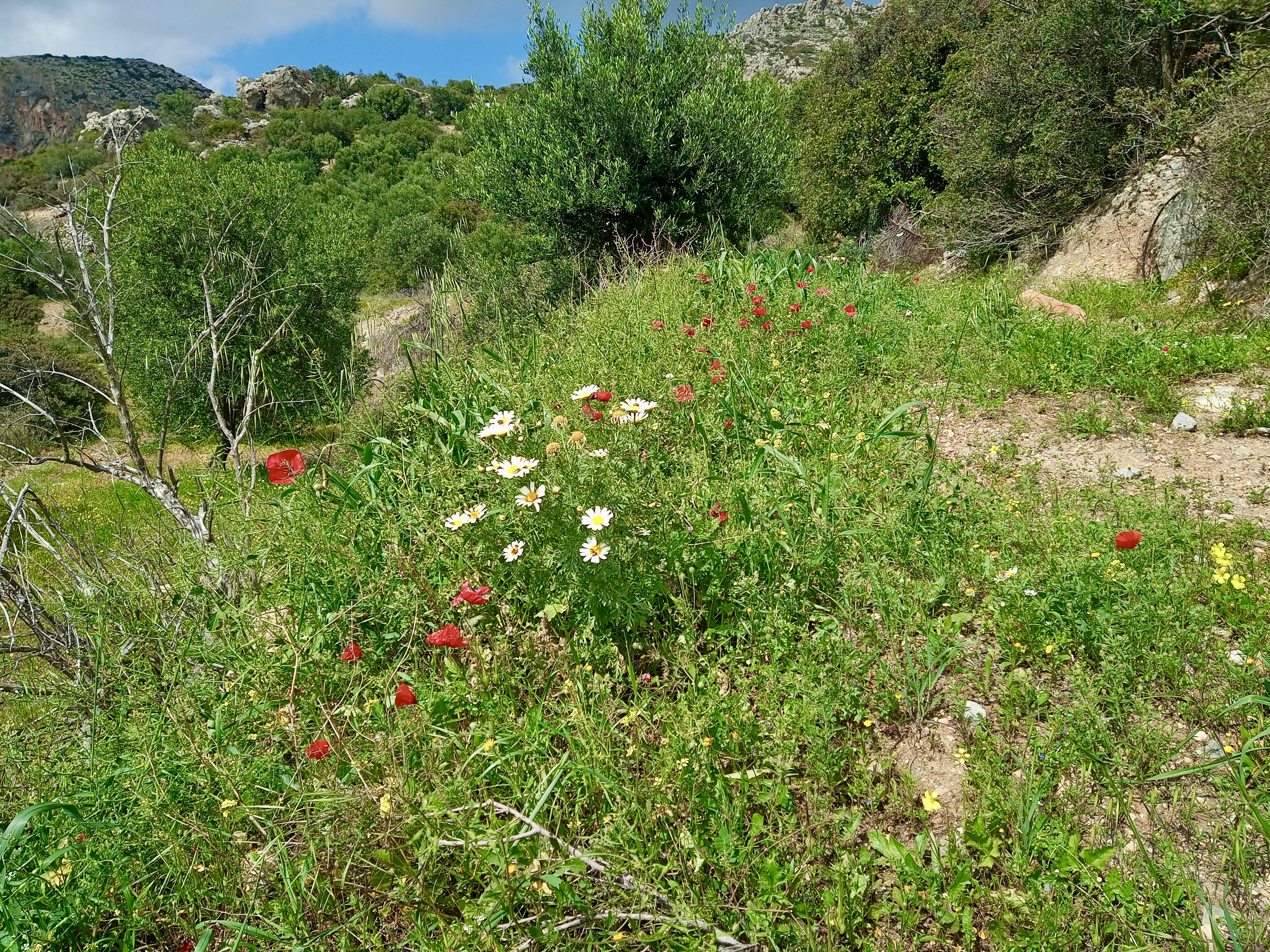
Above: You walk past scenes like this one every time you wander around the town. This house’s occupants aren’t very keen gardeners it seems, but what a show the wild poppies and other plants put on, just the same. One more from the archive then. This one does, I’ll admit, bring a lump to my throat…

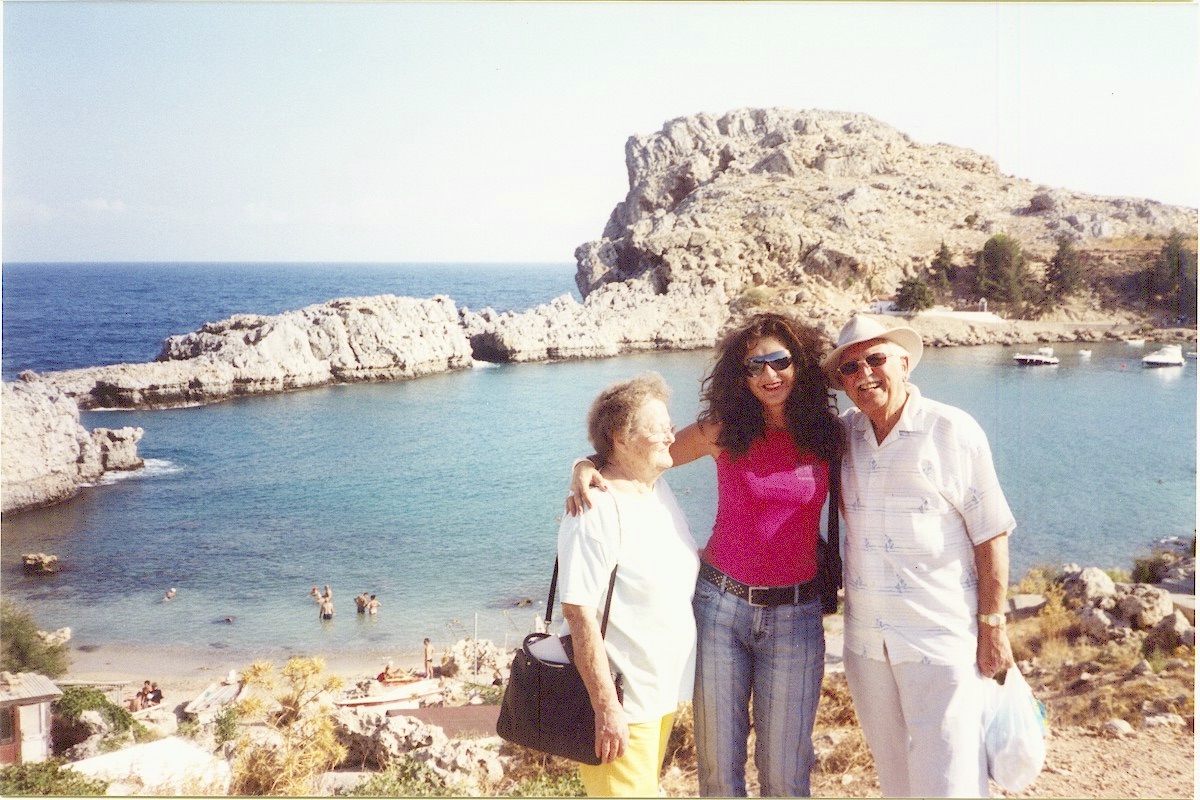
This is Yvonne with my parents, both of whom are no longer with us, back in September 2006, during their one and only visit to Greece. Taken at St. Paul’s Bay, Lindos, I can’t understand why my mum’s looking the other way, but it’s a lovely shot anyway, scanned from a print I’m afraid, so not wonderful picture quality.

•

Click HERE to go to my Amazon Author Page, where you can browse and purchase all of my seventeen written works.

Smile please

Thought I’d just shove a photo-heavy post on this time. Hope you like these…

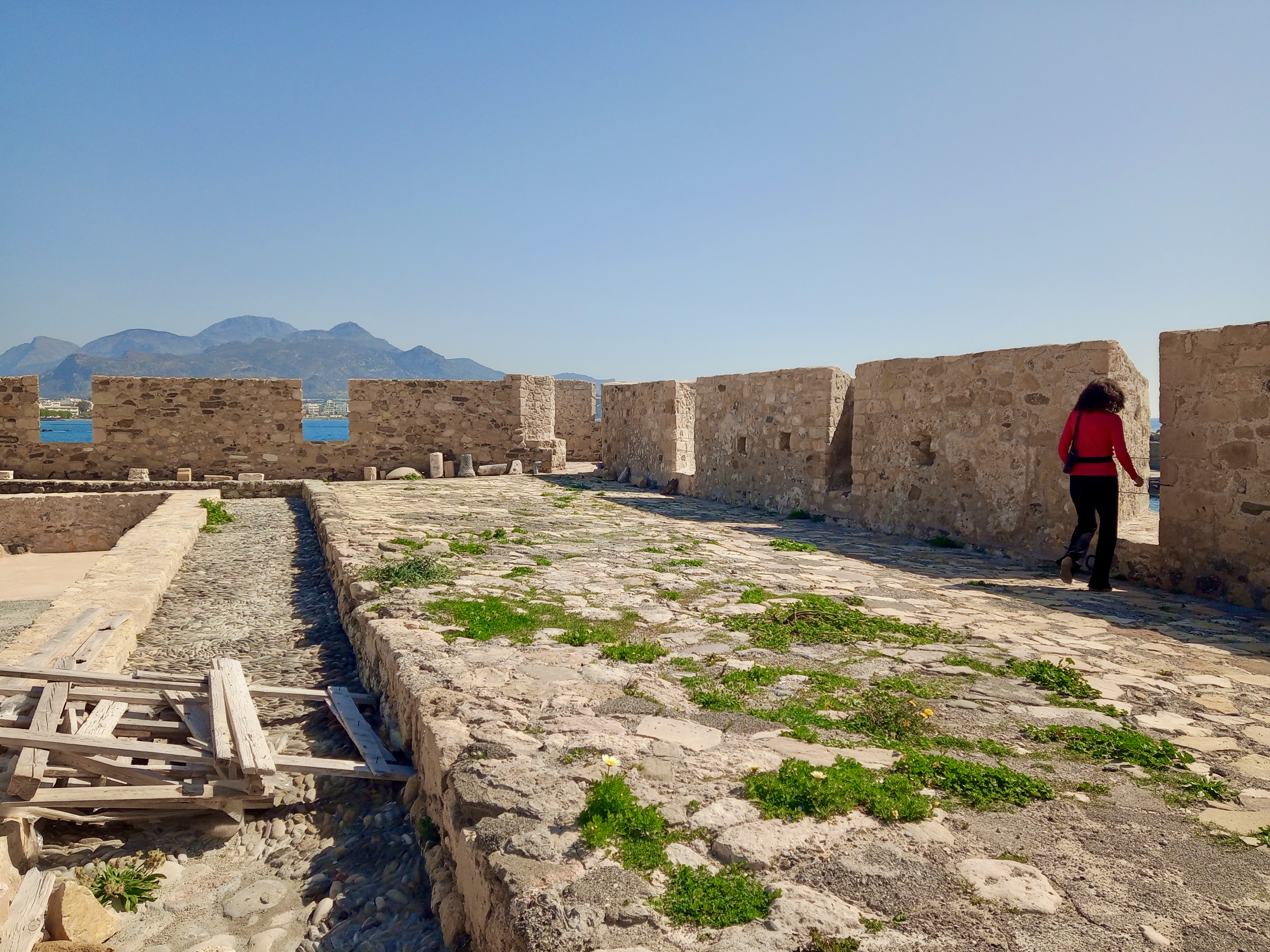
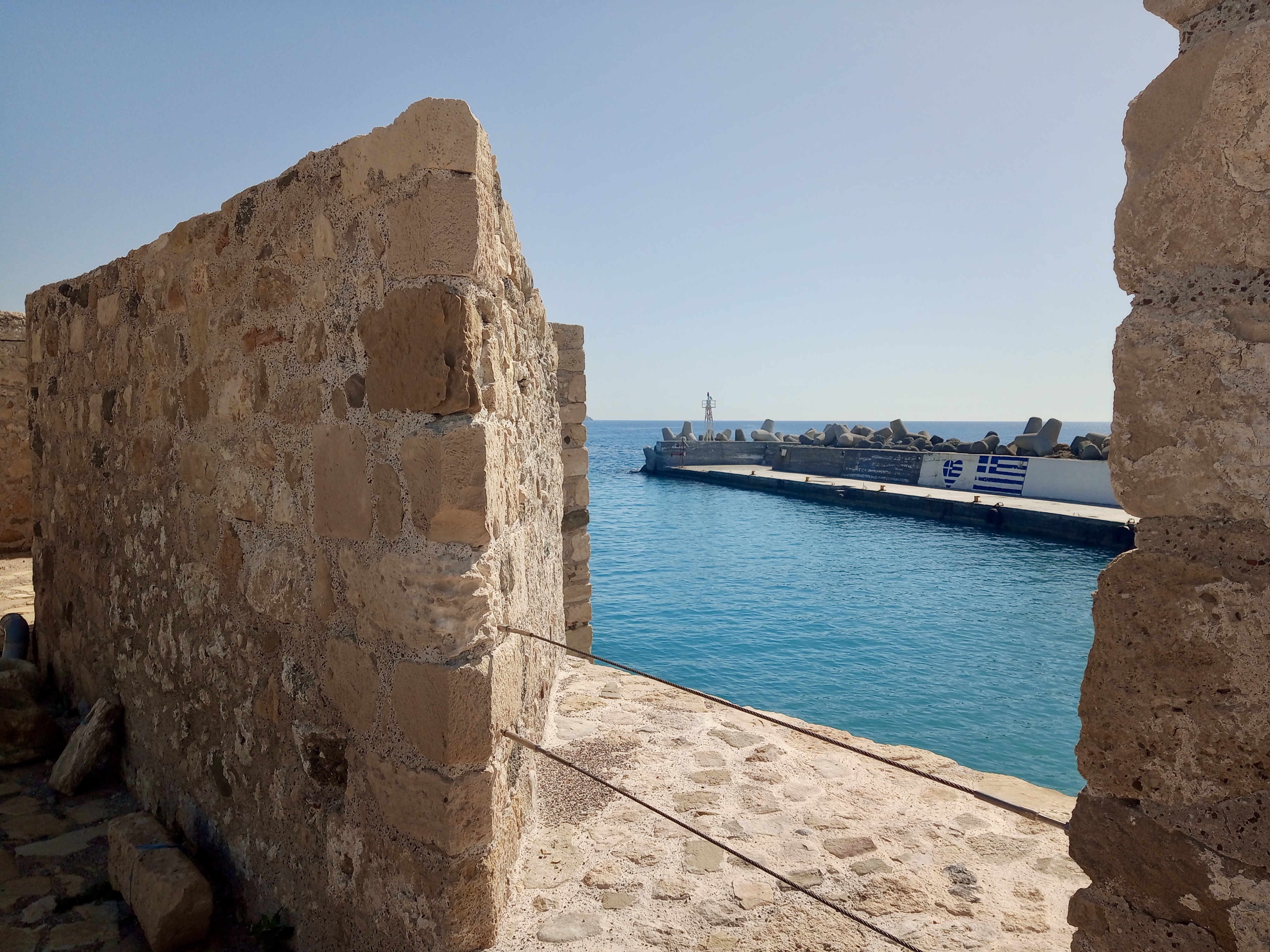
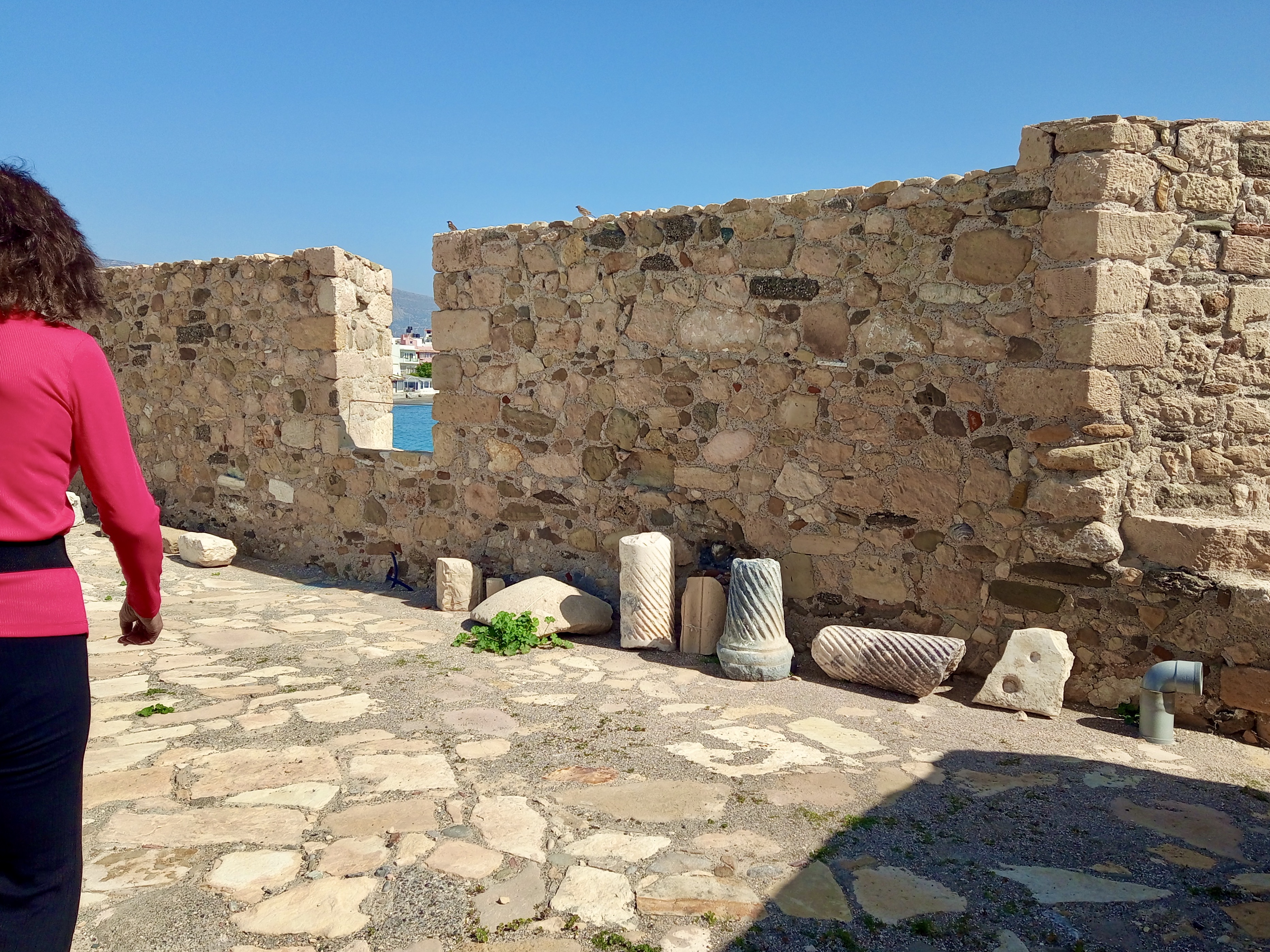
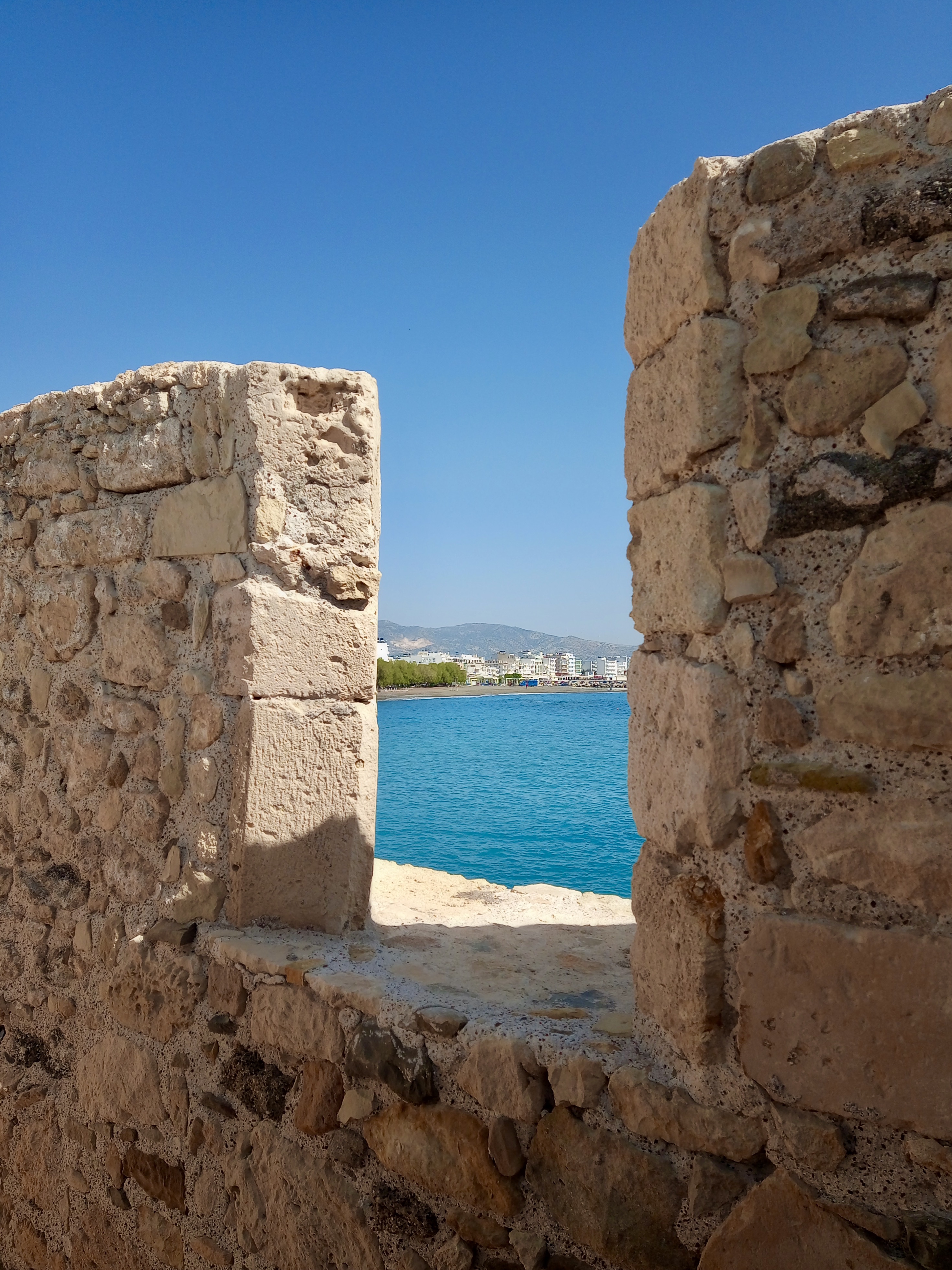
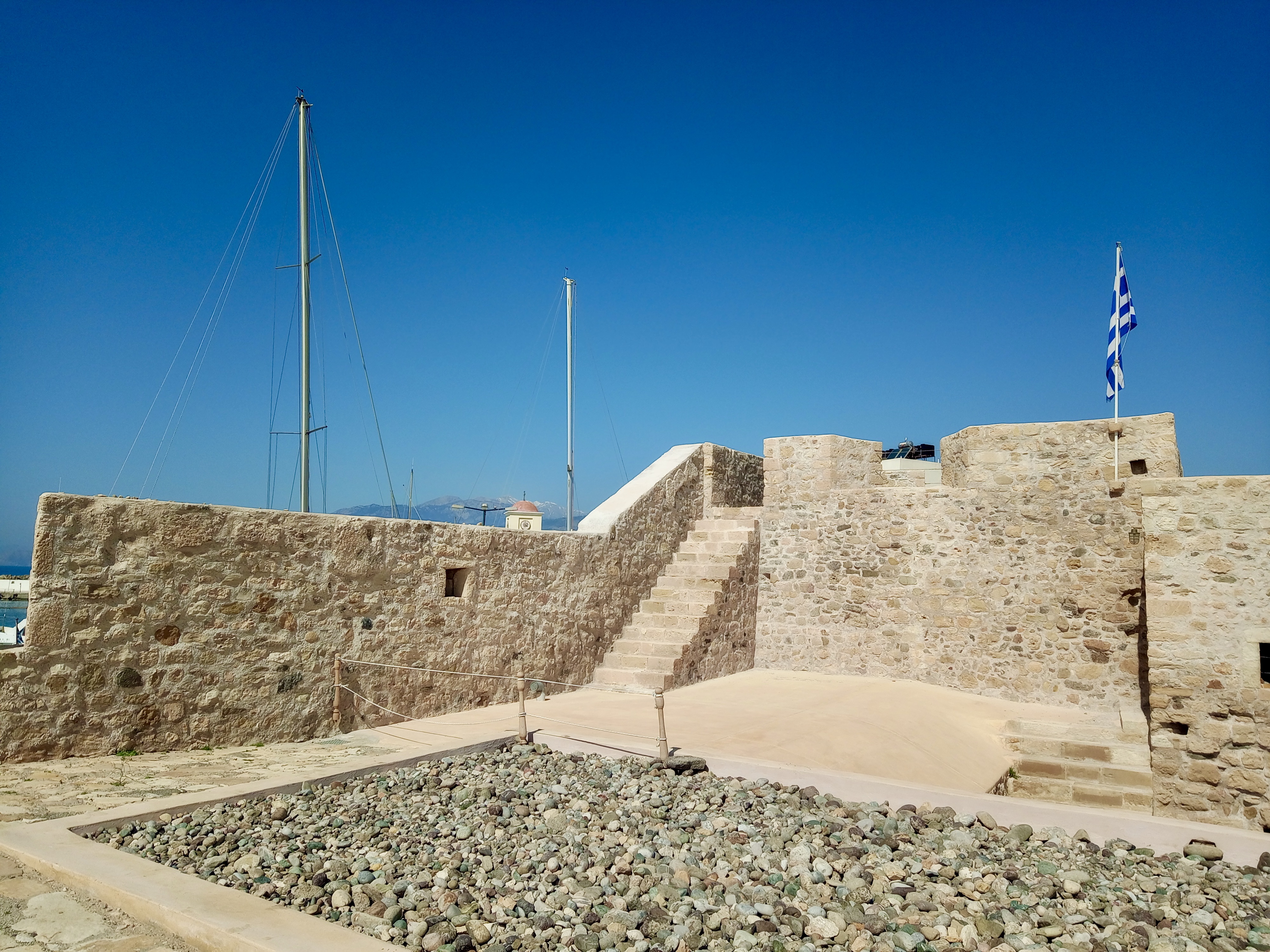
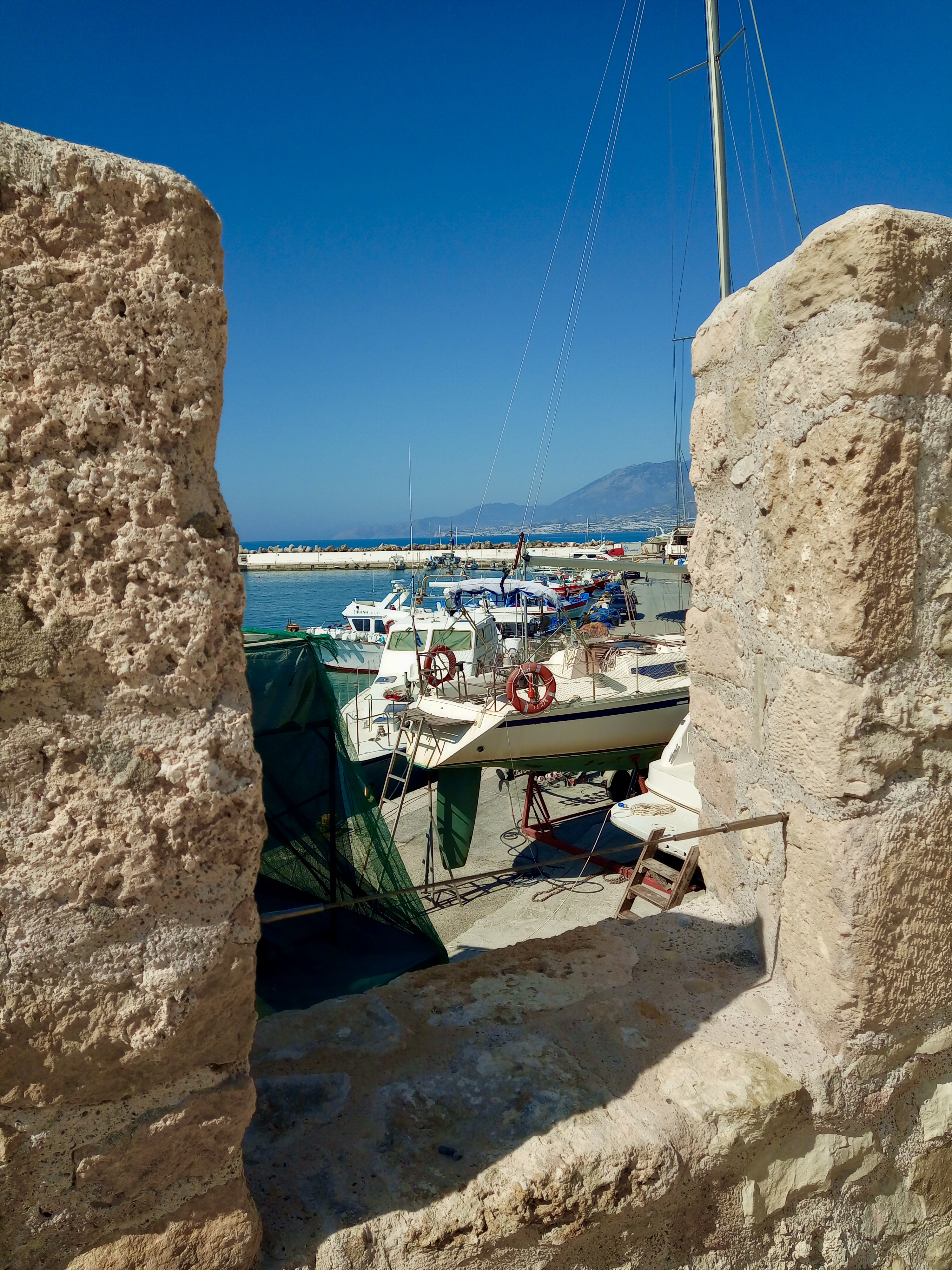
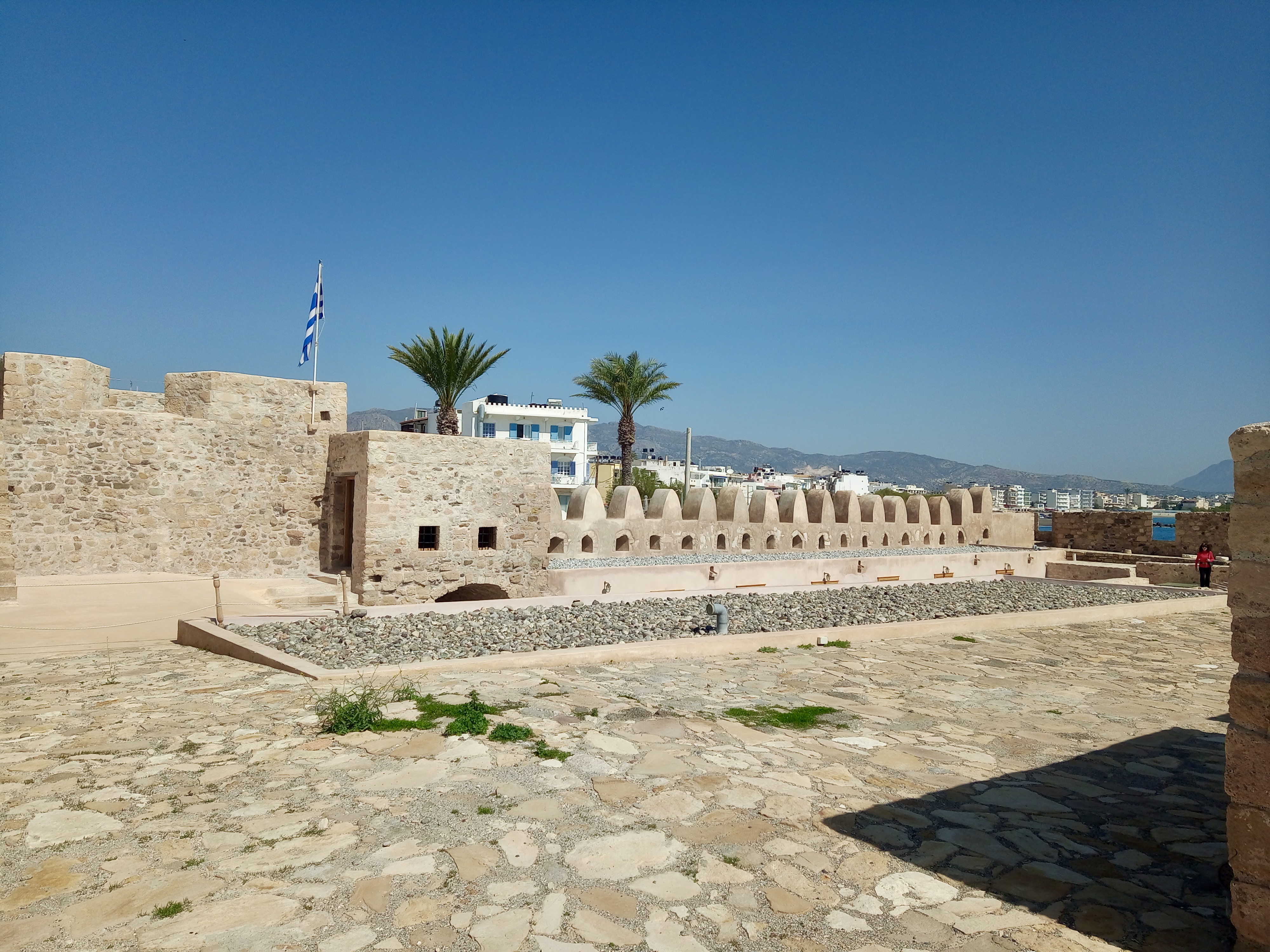
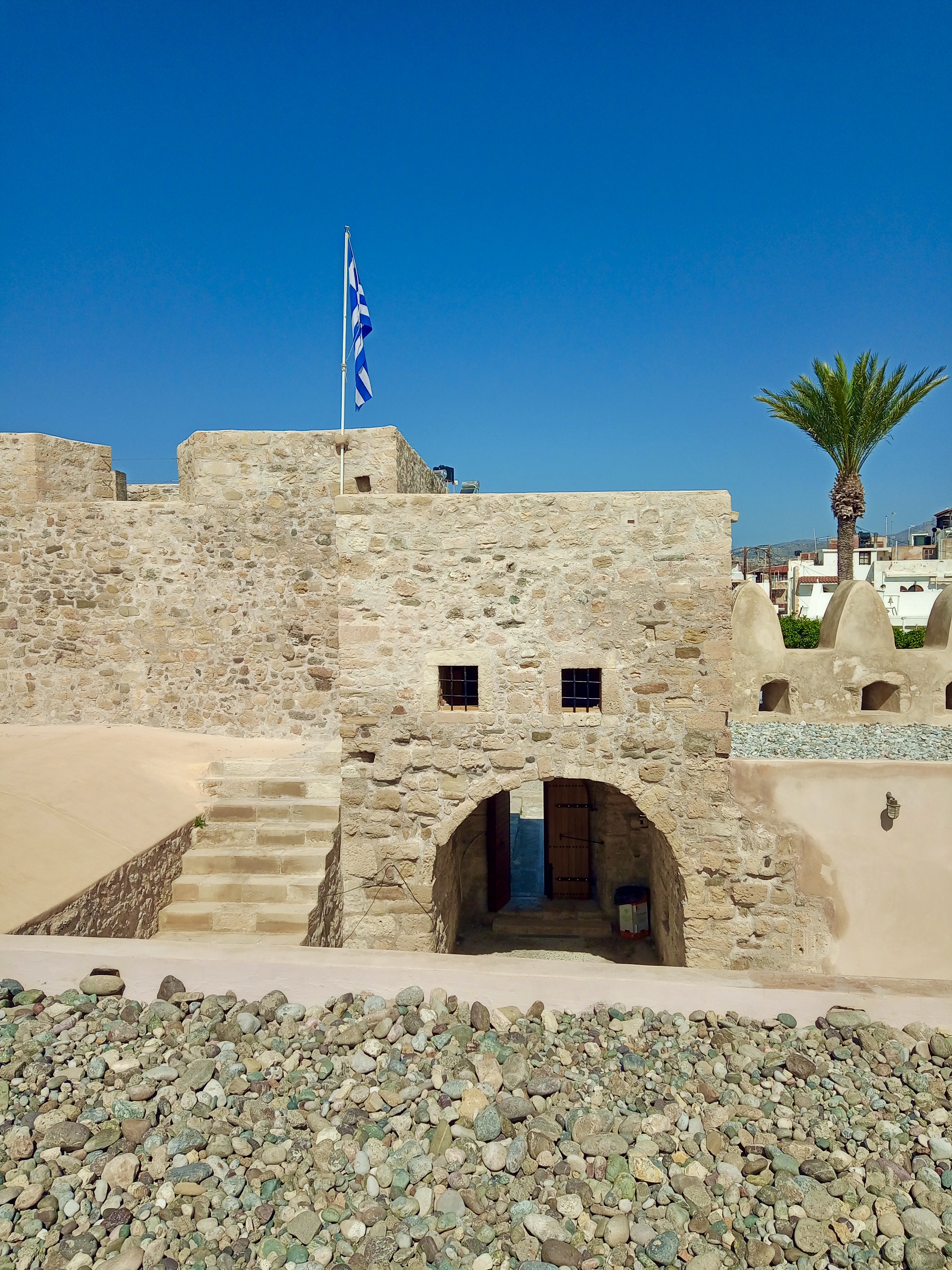
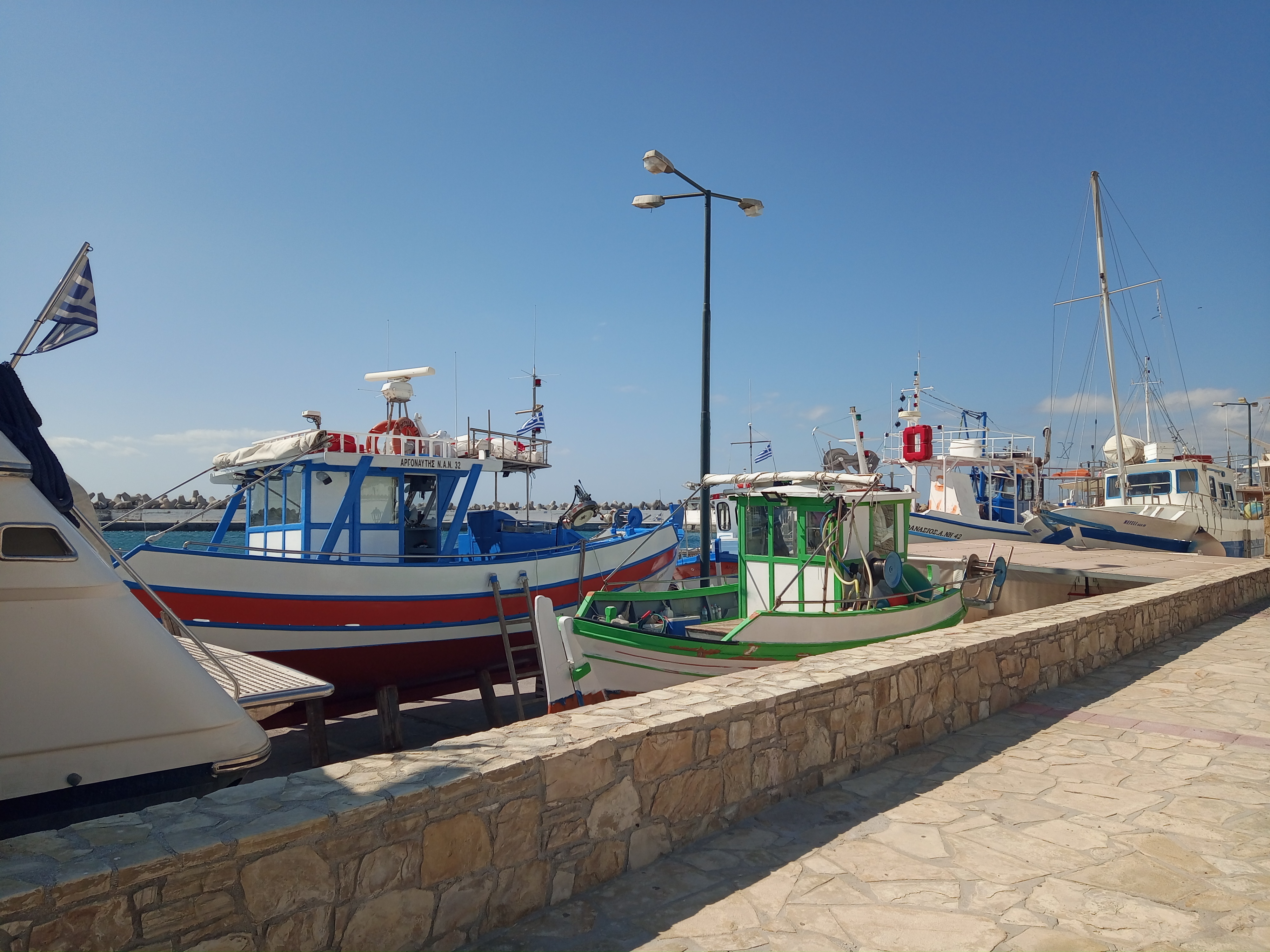
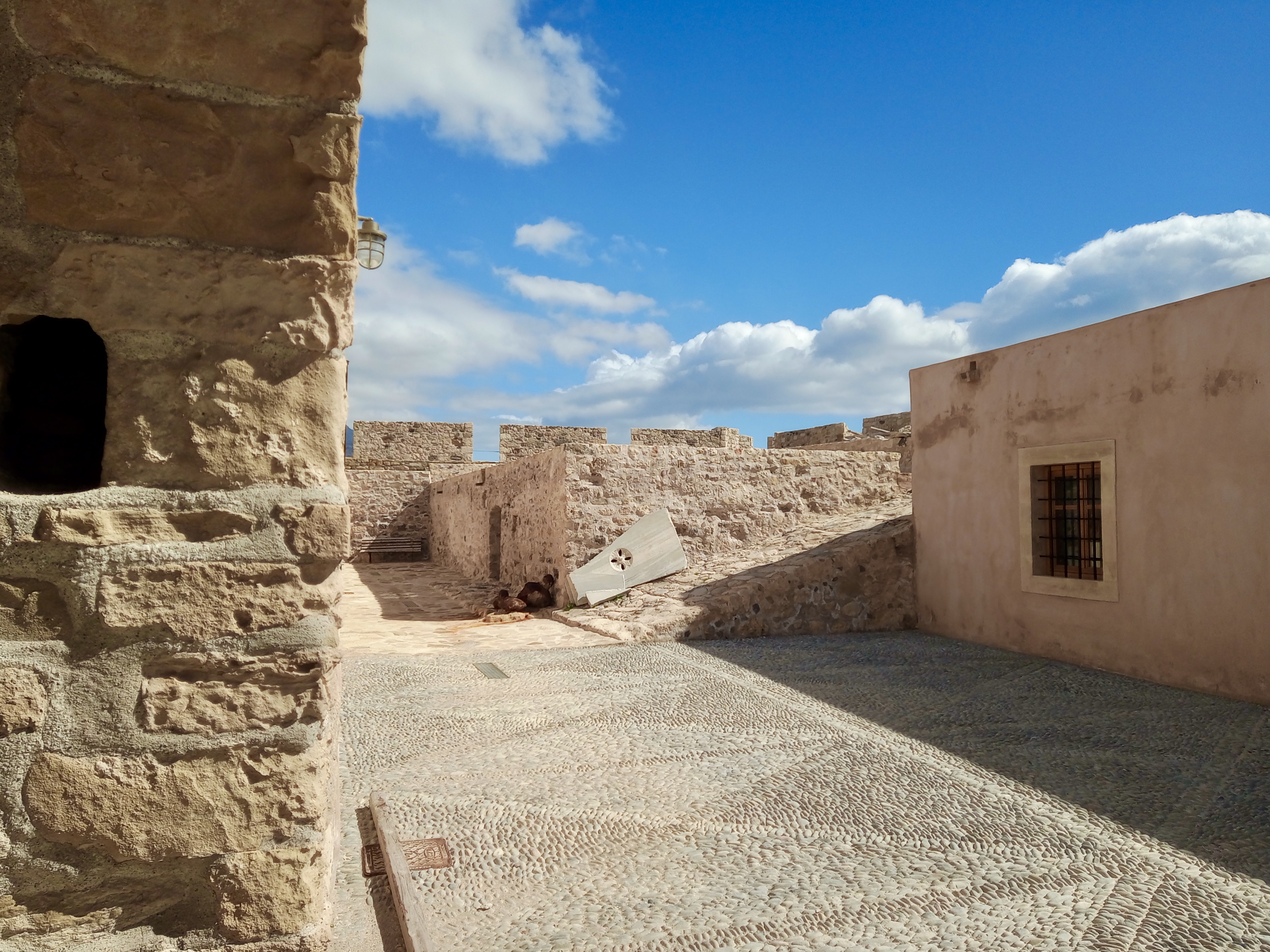
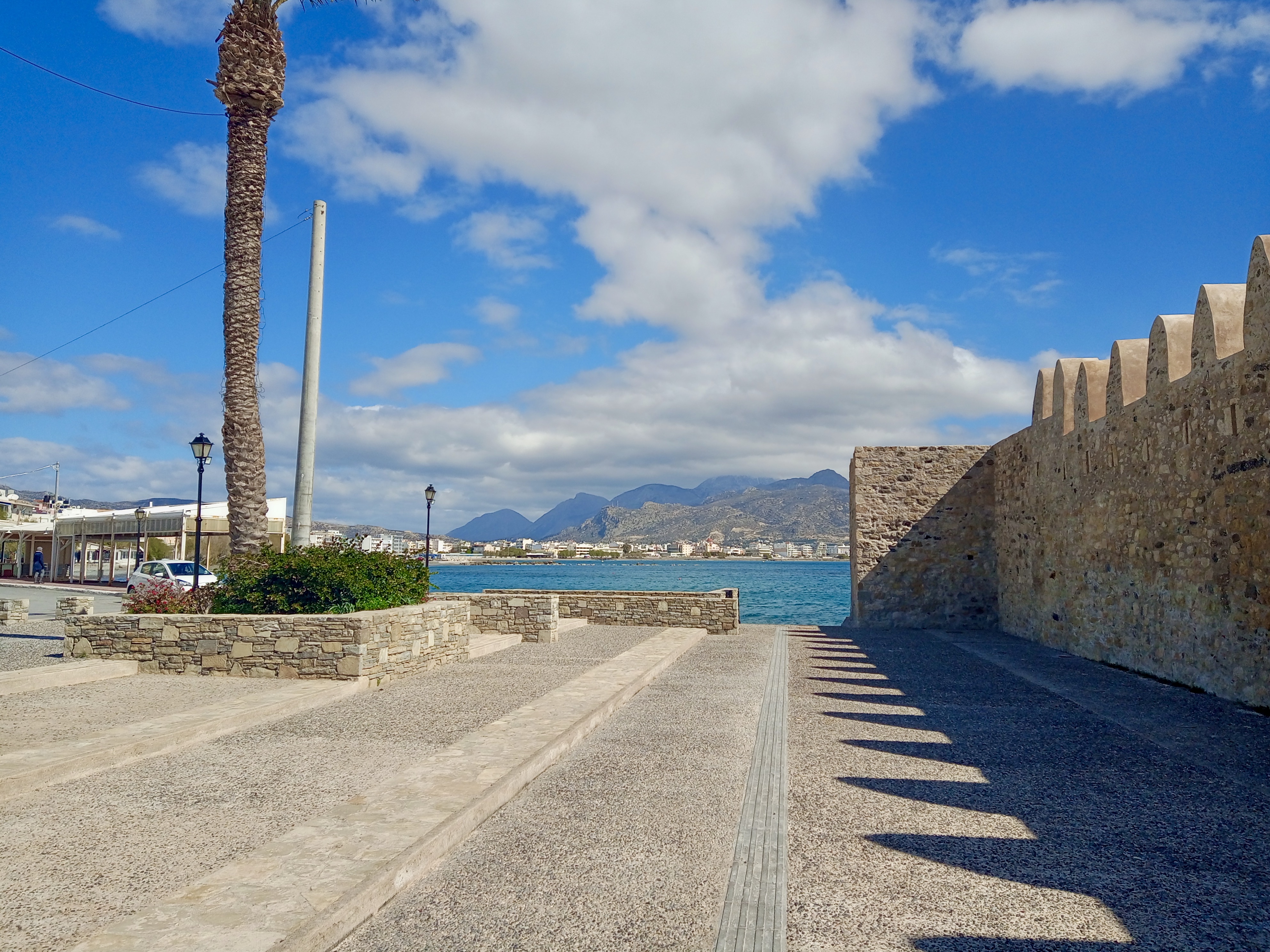
Above: Yes, they’ve finally opened the renovated Venetian fortress at the harbour entrance and it’s currently open to the public with no fee to go in. I don’t know if that might change and, to be frank, I think most people would be happy to pay a couple of Euros entry to help with the maintenance costs, but for now it’s free.

Above: Around the town this past week or two. The parrot belongs to Kostas, who runs the Acropolis Bar along the seafront. He gave the bird an ‘outing’ the other day because there were a few Greek tourists from abroad having a drink in the bar. Not sure how I feel about these birds being kept like this, and with clipped wings, but to be honest, this one seems to have a lovely relationship with his owner, and they understand each other brilliantly when Kostas handles him.

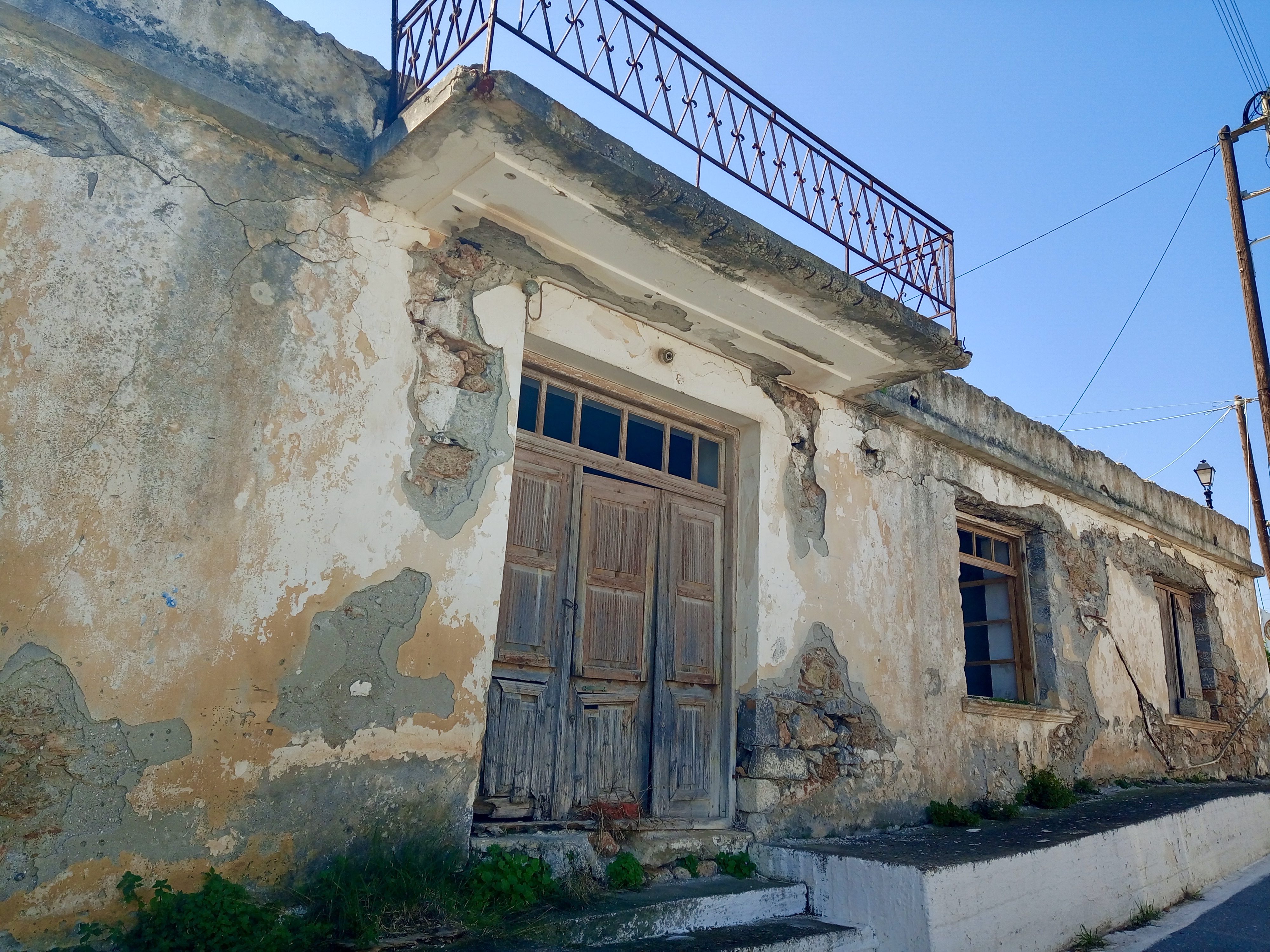
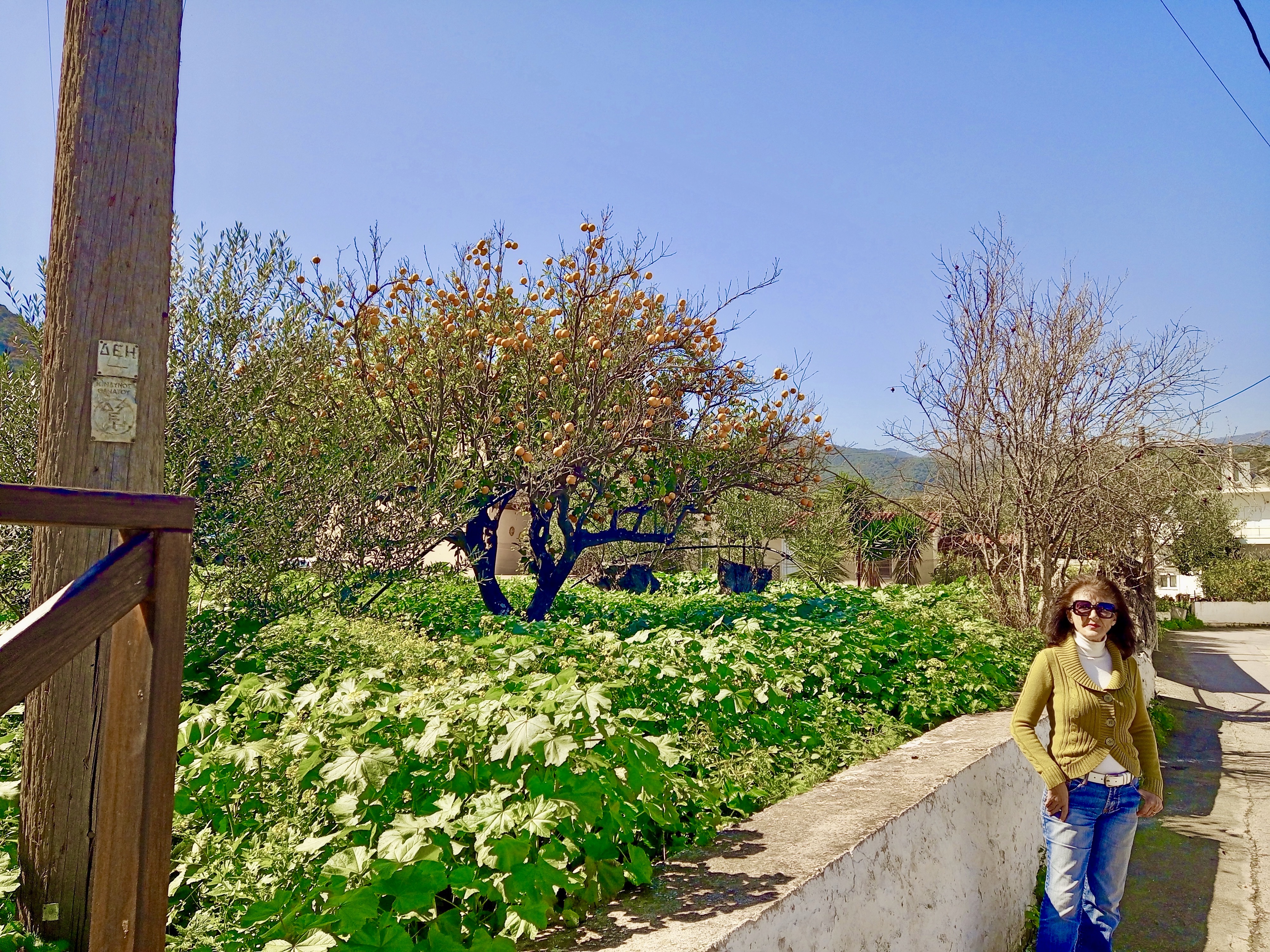
Above: Around the village this past few days. The last photo was taken from a crag across the valley. The white building you can see is where the village begins, as it sits behind that ridge, protected from most of the north winds during wintertime.

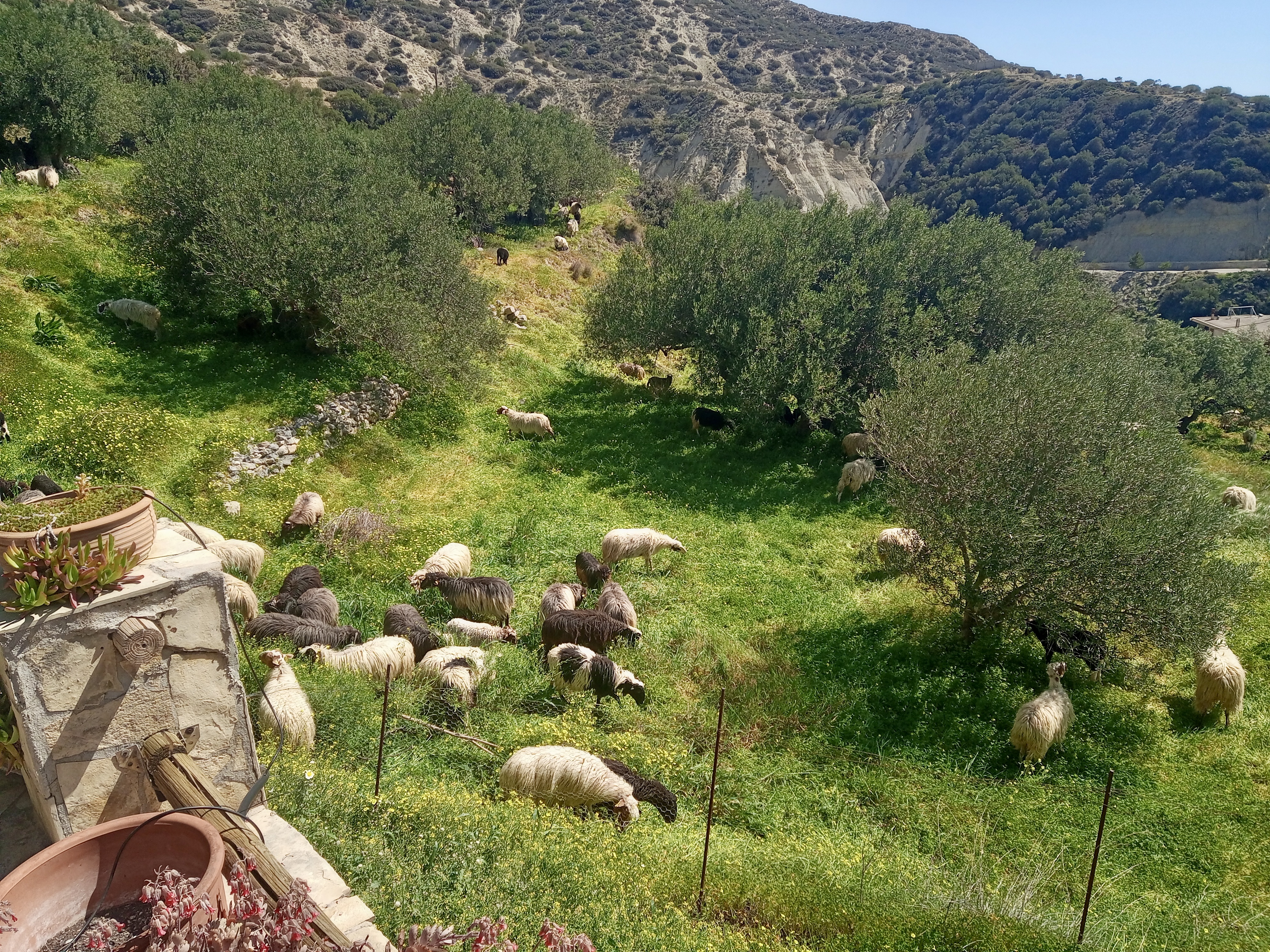
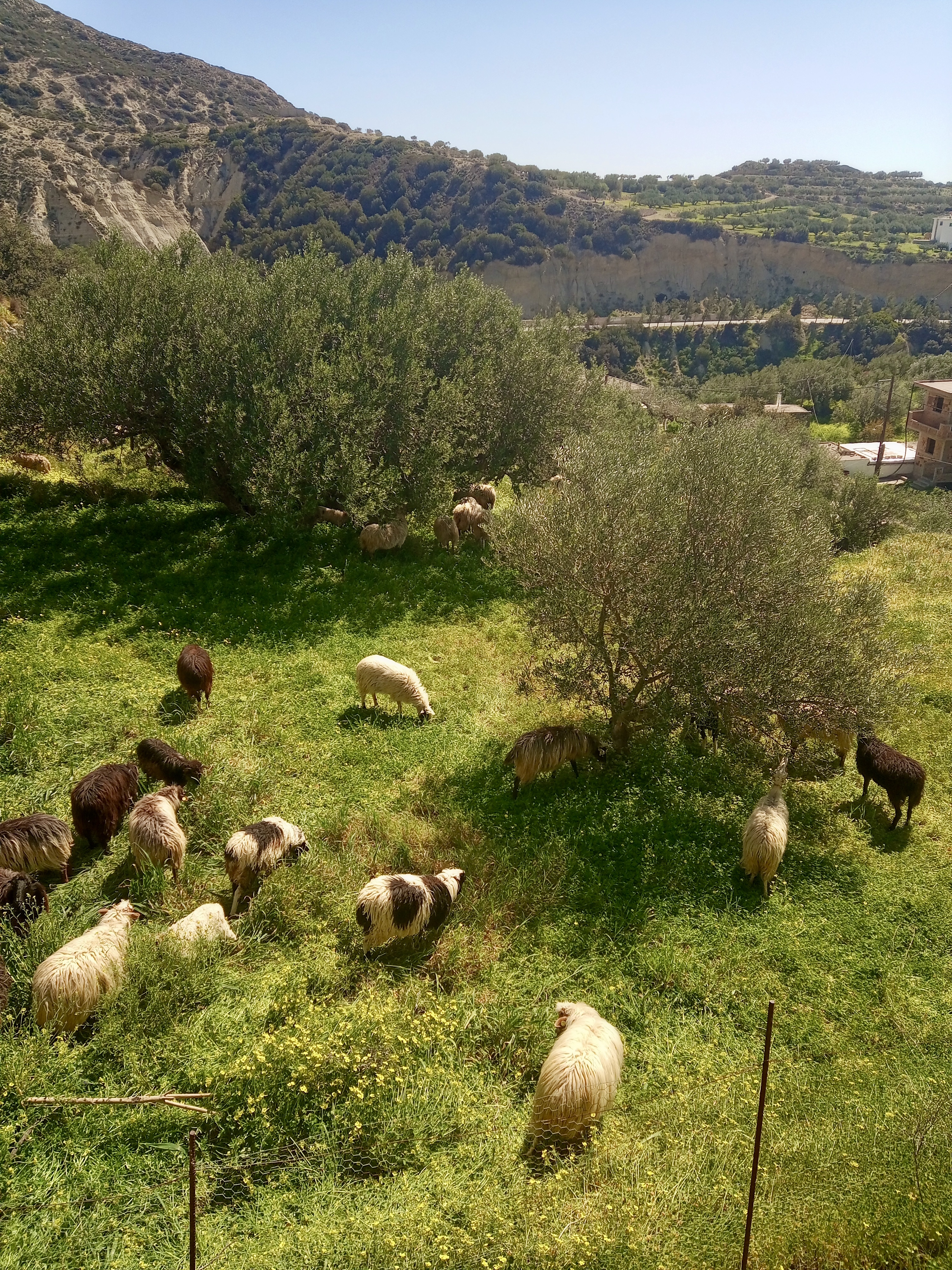
Above: These sheep were grazing in the field below the terrace that runs along from our house to our friend Sylvia’s, who uses her home for holidays. Letting the flock into such olive groves is a great way to get the grass and weeds cut. I was fascinated by the fact that their wool is long and shaggy, rather like angora goats, I thought. So I did a bit of digging and this was what I discovered: The long-haired sheep of Crete are commonly known as Sfakia sheep or Astrahan sheep. They are a hardy, local breed adapted to the island’s mountainous terrain. These sheep have long, shaggy wool and are primarily raised for milk, which is used in traditional Cretan cheeses like Graviera and Mizithra. They are well-suited to the rough landscape and can survive on minimal resources. Interesting, eh?

•

Click HERE to go to my Amazon Author Page, where you can browse and purchase all of my written works.
The ‘good,’ but evidently no bad or ugly

On Friday March 7th (the anniversary of my father’s birth, as it happens, he would have been 96 had he lived), we finally got the chance to go over the mountain to the village of Kalo Chorio [Good Village]. I know, odd name isn’t it? I have looked, and there doesn’t seem to be a ‘Kako Chorio’ or ‘Bad Village’ anywhere, which is probably just as well, when you think about it. Kalo Chorio is quite a large village, and we often drive through the periphery of it when cutting across the mountain to go either to Agios Nikolaos or maybe Heraklion. It’s a twisty narrow road, but cuts the journey time for us if we’re heading north or westward by probably half an hour over going down to the outskirts of Ierapetra and then heading up the main road to Pachi Ammos.

The nearest two villages to Kalo Chorio are Pyrgos (Tower) and Forti, which is really an extension of Istro, which is a bit of a ‘little Britain,’ to be honest, and it’s even been featured on more than one occasion on the UK TV show “A Place in the Sun.” No offence intended, but we tend to avoid Istro, ahem. In fact, if you click this link to the page on Wikipedia about Kalo Chorio it can be a bit deceptive, because it states that the village has “a dozen tavernas and half a dozen bars, snack bars and cafes.” That’s not the case at all, since the village is yet a few hundred metres from the main coast road that passes through Istro, and it’s actually Forti/Istro that has all those places. 

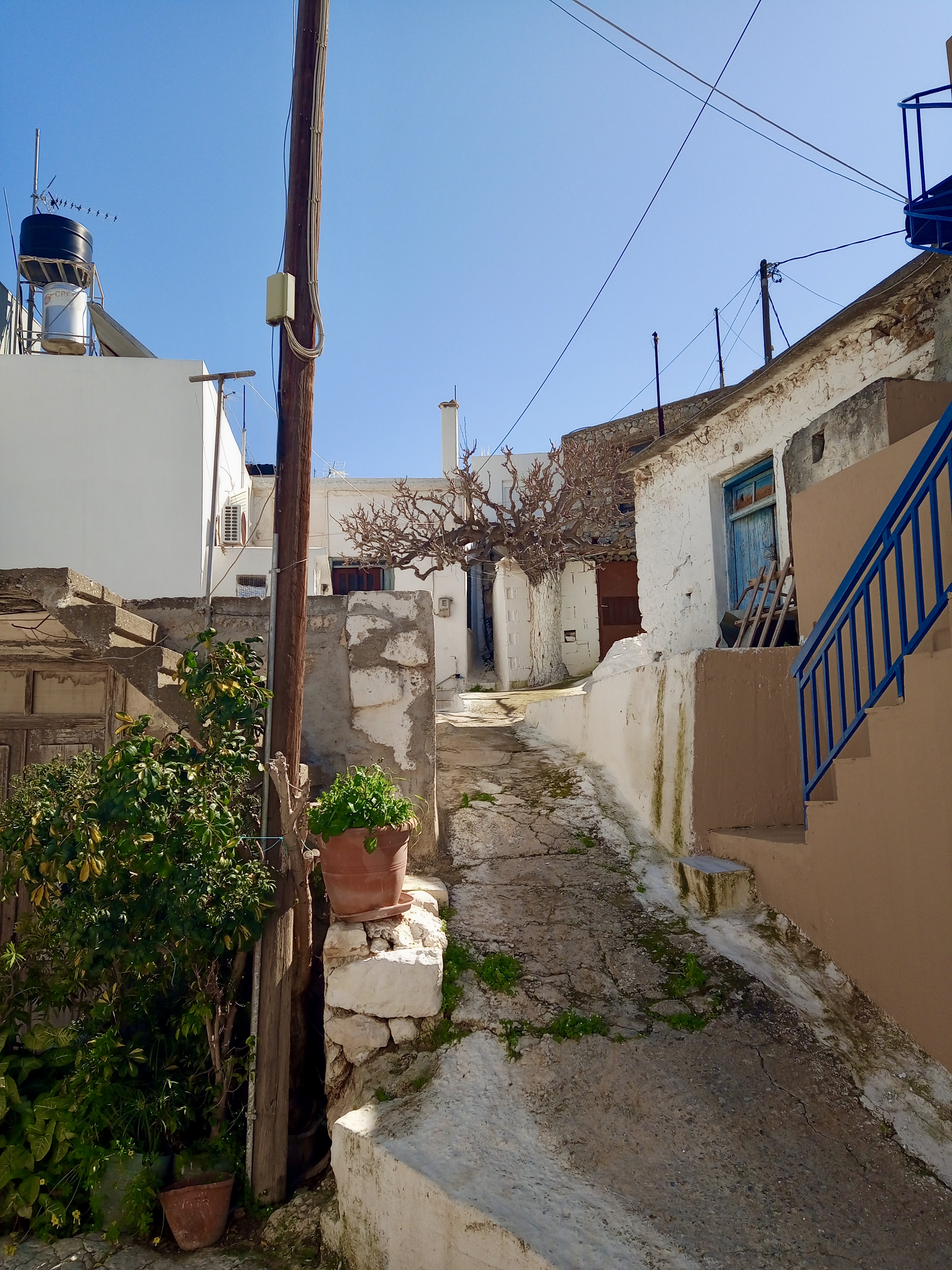
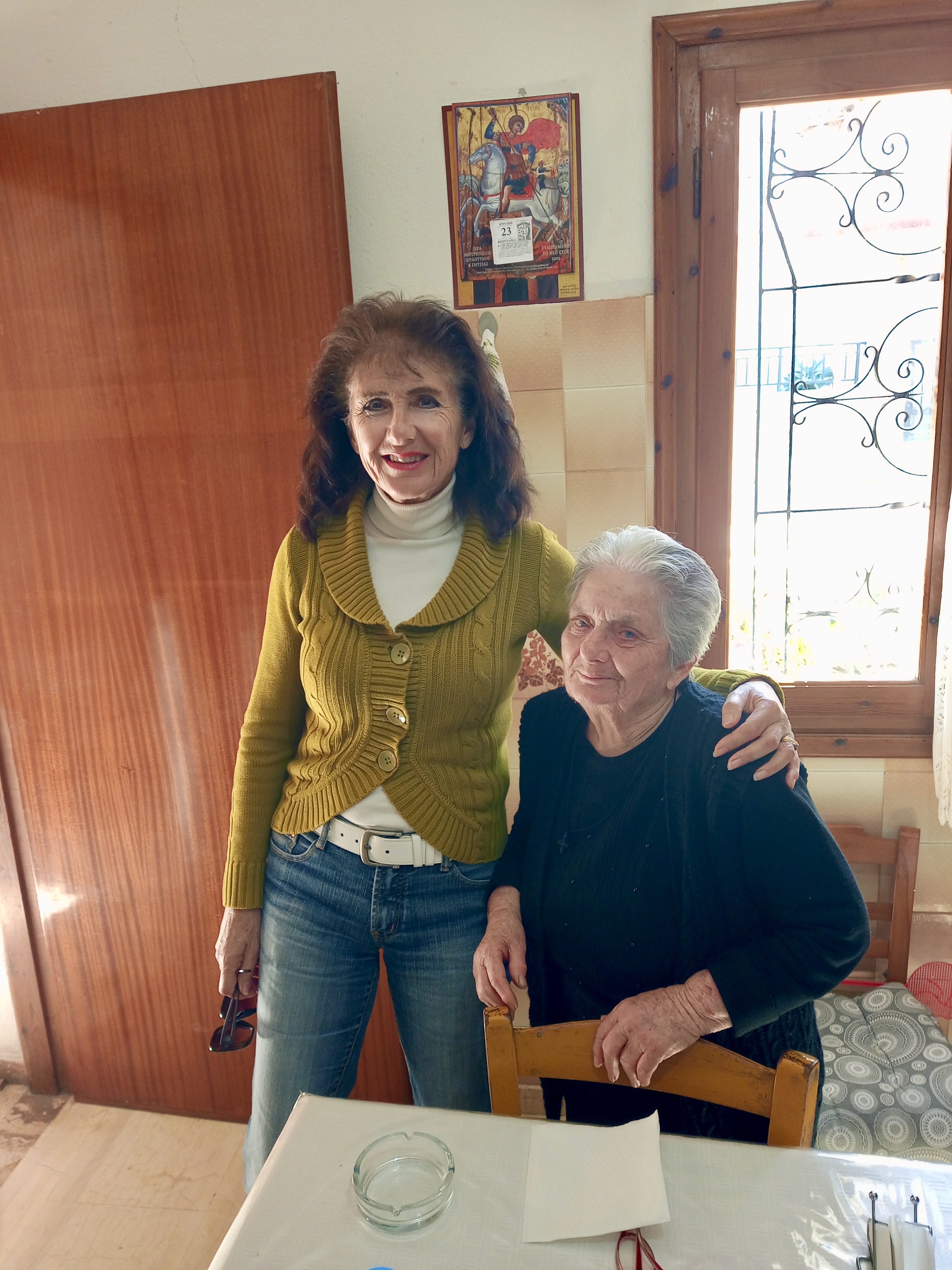
Kalo Chorio, even though it has a population of around 900 in wintertime, doesn’t even have a kafeneio, which disappointed us somewhat. We actually walked from the bottom end of the village along the short stretch of lane to Pyrgos (it’s only a couple of hundred metres, if that) and as soon as you arrive at that village, which is quite a bit smaller, you catch sight of a village kafeneio, although we decided on balance not to bother going in. This was just as well, because as we were walking back through Kalo Chorio to the car, we passed a diminutive old ya-ya busily clipping away at a very large basil plant outside her front door. We exchanged a greeting with her and she very quickly suggested that we might like to sit with her and enjoy a Greek coffee. We accepted her invitation and were soon seated around her kitchen table.

As is invariably the case when you sit at a Greek kitchen table, it’s never simply coffee that is put before you. Our host soon placed a few plates on the table too, along with the always necessary bottle of water and tumblers. There were homemade koulourakia and some that I can only describe as ‘cakes’ which appearance-wise resembled croissants to some degree. They were actually those cake-type things that a lot of Greeks make for eating with their first coffee early in the morning and, when you bite into them they’re not croissant-like at all, but a kind of plain cake with part plain and part chocolate-flavoured flour mix creating two distinct colour patches all through the middle. They’re popularly called Greek Marble Cake and can come in all kinds of guises, depending on who makes them.

Our host told us that her name was Eirini and that she’d been a widow for many decades. Yes, she has children and grandchildren, but they were all scattered about the country owing to work or study necessities. A couple of Eirini’s grandchildren are studying at Volos, way up on the eastern seaboard of the mainland, situated on the shores of the Pagasitikos Gulf and due west of the Sporades Islands, consisting of Skiathos, Skopelos, Alonnisos and a few smaller ones too. 

How did Eirini manage when it came to getting a loaf of bread, since she no longer had a stone oven in which to bake her own? Well, when she needs to do some shopping someone in the village takes her to Agios Nikolaos from time to time, but there’s also a baker’s van that cruises the village regularly and she gets whatever bread she needs from it when it stops right outside her door. That took me back to my childhood, I can tell you. From the age of 18 months until I was about ten we’d lived in Tunley, a small village to the South West of Bath, strung out along the B3115. There was a succession of lorries and vans that would stop in the village when we lived there, ranging from the Corona and Tizer lorries, through the Wall’s ice cream van to baker’s vans and coal delivery lorries. It’s an era that we’ll never see again, alas. But at least here in rural parts of Greek and her islands the remnants of that kind of life still survive for a while longer yet.

Observing the house in which we were sitting whilst Eirini went to speak to a neighbour for a few moments, we couldn’t help but compliment her on how well she keeps house. For a woman of not much more than 5 feet in height, the whole house appeared to be spotlessly clean and very tidy. How she manages to get up to the high shelves and lampshades to dust was a mystery, but there was no doubt that she does it somehow. She had a couple of immaculate tea towels hanging from a hook on her kitchen door too, and the kitchen worktops were well ordered and evidently wiped clean on a regular basis. Often when you go into a house that’s occupied by an elderly widow, it can be pretty rank to be honest. This is not said as a criticism, but many of these seniors can no longer see very well and simply don’t have the stamina to clean and dust. Eirini, on the other hand, very evidently still does, and it shows.

The time soon came for us to take our leave. It never does to outstay your welcome, especially because people like her will always extend the invitation, even when they don’t really have the time, and so to stay for a couple of hours is not showing consideration at all. Of course, when you begin the ritual of taking your leave (which often involves a whistle-stop tour of all the family photos and maybe the opportunity to compliment the host further on the house in general, and the garden), you never get out of there without a gift of some kind. In Eirini’s case, she was very proud of the fact that one of her daughters is a keen photographer, and so she gave us a lovely framed print of a close-up of an indigenous white crocus that grows in this area. 

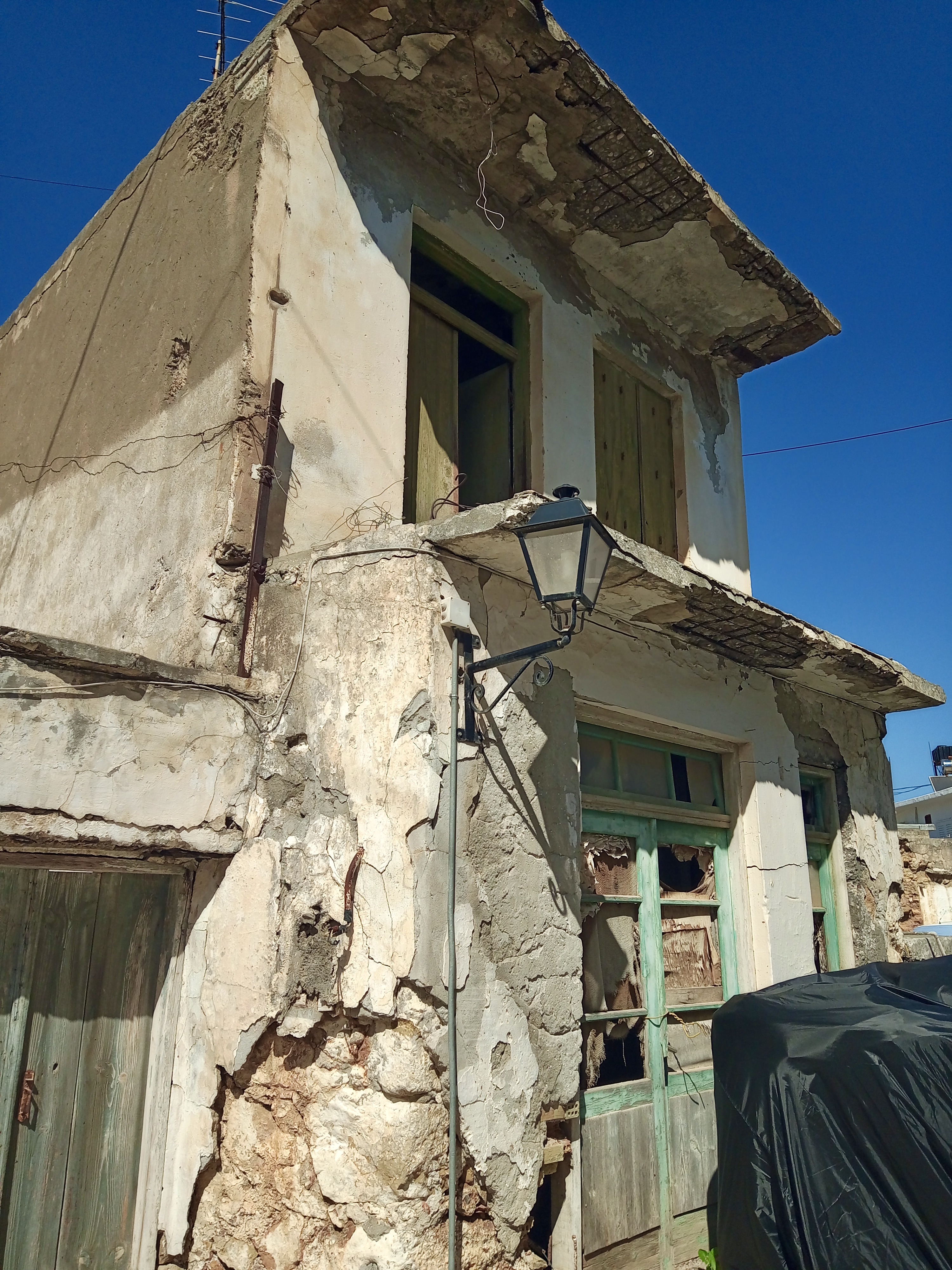
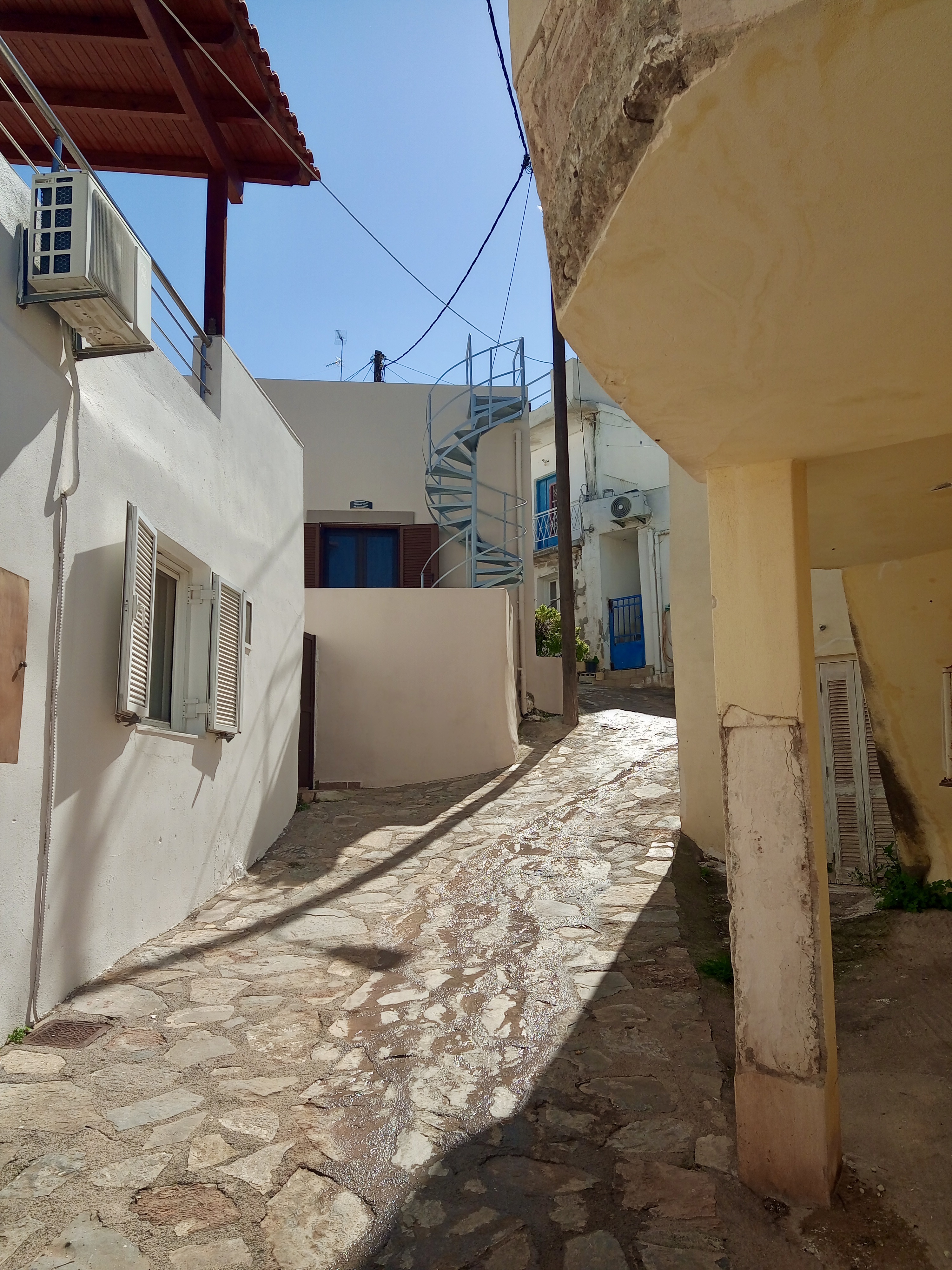
Here are the photos we took whilst strolling around the village, including one of Yvonne with Eirini…

Incidentally, although we had expected to see the AirBnB houses and apartments that were dotted around the village, we were quite surprised to find that in the midst of the village there’s also a hotel. We couldn’t believe our eyes, but then it is within spitting distance of Istro and its nearby beaches, and only 15 minutes by car from Agios Nikolaos. The hotel, in case you’re interested, is called the Koukouvagia (or Koukouvaia).

•

Click HERE to go to my Amazon Author Page, where you can browse and purchase all of my written works.

Plucky people

A heavy sky hangs over Ierapetra, Thursday Feb 27th, 4.00pm

As we sipped our coffee yesterday morning on the terrace, we could hear a car pulling up in the steep lane below and to our right, and someone got out and went along the narrow lane to Evangelia’s door. It looked like her grandson, Maria’s boy. I say, ‘boy,’ although he’s well into his thirties I suppose. Anyway, we thought that he’d just come to see his gran on a bank holiday, as they so often do, but he had another purpose to his visit which we were soon to learn about.

Not all that long ago, when one of Evangelia’s chickens had for some odd reason got into the habit of hanging around our house and making a nuisance of itself, knocking over potted plants and the like, I remember having called her over to see what could be done. When she’d come up the lane, found the errant bird and picked it up by its legs, and begun walking back down to her home with its wings flapping against her leg in indignation, I remember remarking that maybe it had made a bid for freedom at one point in the ‘fence’ around her chicken run that was slightly vulnerable to escape bids. We didn’t really mind the fact that the birds occasionally got out, but this one was making itself somewhat unpopular, it has to be said. Anyway, when I asked her about it, in order to put a stop to its shenanigans, she’d simple said, “tha to sfaxo,” in a very matter-of-fact manner. It means, by the way, “I’ll slaughter it.”

And that she did. We’ve become quite used to the fact that Evangelia, like so many of her contemporaries, was brought up on rural ways, on customs that have prevailed for centuries, even millennia. We don’t eat meat, as I’m sure I’ve rattled on about enough times, I know. That’s not to say, though, that we’re evangelical vegetarians. We don’t agree with the kind who self-righteously condemn carnivores and attempt to make them change their errant ways, no, that’s not our style. And, although we don’t want to have an animal killed just so that we can eat, it’s certainly not for us to come and live in a small Greek village and then start telling the locals how they ought to live. We soon learned to have a great respect for Evangelia and her contemporaries, who know what it takes to bring chicken meat from the chicken run to the table, because they themselves carry out the entire process. 

Some years ago, in the UK, we watched a TV play in which a couple of middle-aged second time arounders decided to stay in a farm cottage for a weekend. The woman was a vegetarian and the man wasn’t. Unwittingly, he’d suggested that they dine in on the Saturday evening and maybe share a chicken casserole, which he offered to cook. She’d replied that she’d only even contemplate the idea if her new beau would be prepared to kill the bird himself, then pluck it and prepare it for the cooking pot. Of course, she had no intention of eating chicken, but knew that her fella’s display of macho bravado would soon be reduced to abject defeat. He’d assured her that he’d have no problem in killing the bird (the farmer who owned the cottage having even supplied them with a live bird to serve as the victim for the feast). The action continued with the bloke haplessly chasing the reluctant chicken around a small yard, before eventually catching it and finally getting it lodged under his arm and them placing two fingers either side of its neck, with the intention of wringing it, thus killing the poor creature.

As the man looked down at the chicken’s ‘face,’ and he made direct eye contact with the bird, its eyes slowly blinking as it stared back up at him, he gave in. There was no way he could take this creature’s life. He just couldn’t do it. The point of the play, and indeed the point made by the female lead character, was that in this modern world most people are so far removed from their natural habitat and from nature in general, that people have ceased to understand quite what’s involved in animal flesh being prepared for the supermarket shelves. How many people do we know who’ve ever looked inside an abattoir, or seen what processes are gone through in order for a living, breathing creature to lose its life, then be cut into pieces and its flesh prepared for wrapping in polystyrene and cellophane? 

Yet, up until the industrial revolution, for probably the entire history of humanity people have had to be actively involved in the process right from the moment when an animal or bird was selected to become food for the table. If we modern, sanitised people were to have to kill our own meat, how many of us these days could do it?

Which is why, despite our not wanting to eat dead animals, we can’t help having a deep respect for these humble villagers who only eat what they themselves have slaughtered. Evangelia’s become much less vigorous in the five and half years that we’ve known her, which was why her grandson now has to do the dirty deed, as it were. But all the family’s involved in getting their chicken ready for the table. The lad used a cleaver to behead four or five birds yesterday morning, a process which I didn’t want to watch, and indeed to do so involved straining our heads up a bit in order to see over our fence and along the lane opposite, though we could hear the blade fall and the birds’ wings flapping after he’d done the deed, before the life ebbed out of their bodies. Once he’d done his part, he bade his grandmother farewell, popped his head into his mother’s doorway above his gran’s home too, and was on his way.

Soon, Maria came out and went down the steps and along the lane to find the carcasses. There she first used copious quantities of water to wash the bloodstains away from the surface of the lane outside her mother’s door, then perched herself on a low stool and placed a plastic bowl on the very chopping block that her son had used. She was soon plucking feathers and depositing them into a sack, and, as each carcass became totally denuded, placed them into the bowl. The whole process, from the executioner’s arrival to four or five chicken carcasses being ready for the pot, probably took no longer than half an hour. Also, while she plucked, half a dozen of the local cats sat around her, waiting, no doubt, for some choice little nibbles from the bird’s innards to be flung their way.

At least these humble folk don’t let someone else do their dirty work. They know what it takes to kill a chicken (a pig or goat too no doubt) in order for them to have meat on their table. I do wonder how many people who shop in huge supermarkets across Britain, and everywhere else in the ‘civilised’ world, who get their meat from a shelf and have no idea what goes on in order for it to arrive there, would eat that meat if they’d had to slaughter the animal themselves. I didn’t become a vegetarian for that reason, no, but it probably would have made me one had I been compelled to do it myself.

When I contemplate what a huge privilege it is to be able to spend my days in this tiny rural community, and be accepted by these open-hearted, humble people, my heart swells with appreciation. And, even though we don’t want to eat dead animals, if our neighbours’ chickens lay enough eggs for their owners to give us some now and then, we accept them gracefully, and quietly thank the chickens for their generosity.

Photo time…

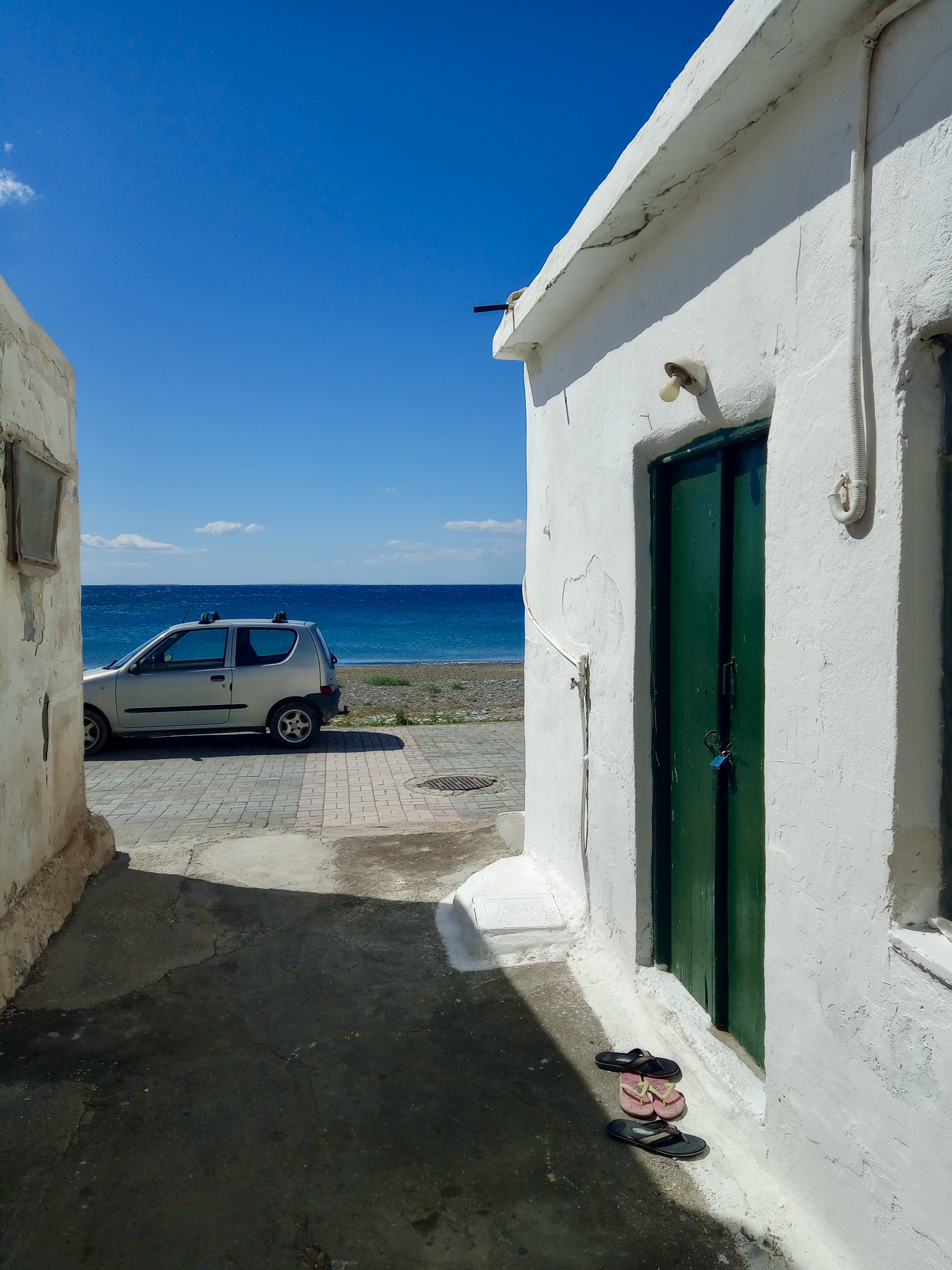
Above: A few shots from around the town on Saturday morning, March 1st.

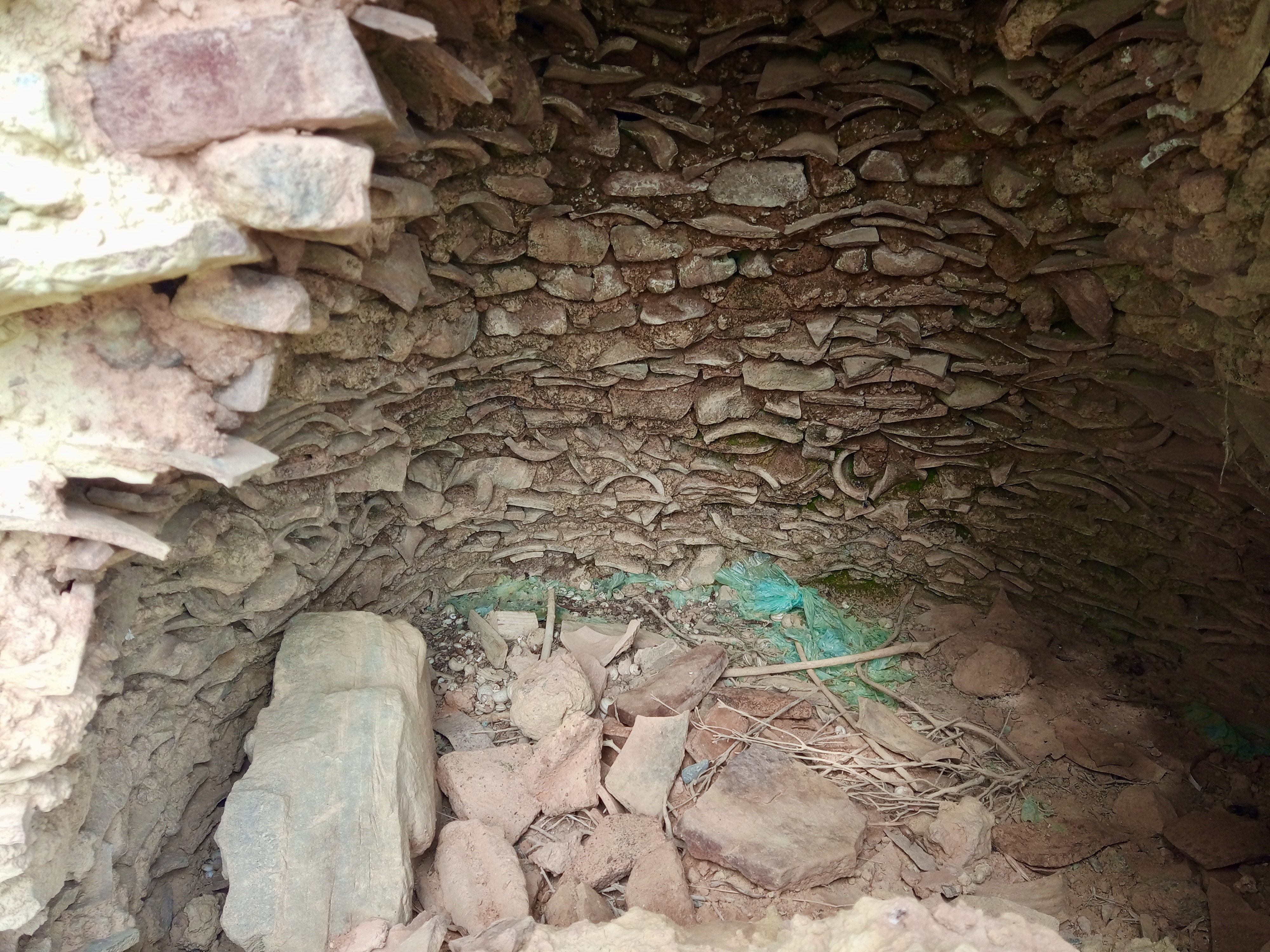
Above: The village and down a country lane, yesterday and a couple of days earlier. That old abandoned cottage always draws me in to have a mooch around. The shot of the interior of that old stone oven is intriguing. Look closely at the rear wall of the oven and you’ll see that it’s composed largely of old pieces of earthenware vessels that were broken up. If walls could talk, eh?

Above: A Painted Lady suns itself on the edge of a fallen pot in the local garden centre on the edge of town. Below: A Red Admiral that we spotted whilst on the walk back from the abandoned cottage yesterday, around 1.00pm.

Last of all, below: a close-up of one of those beautiful little irises that pepper the landscape at this time of the year…

•

Click HERE to go to my Amazon Author Page, where you can browse and purchase all of my written works.

A long overdue visit

Clouds over the Lasithi Plateau away to our west

Yesterday we dropped in to see Angla’i’a and hubby Giorgo. It’s been a long time, many months, in fact. We were a bit shocked when we tried to work out the last time we’d dropped by, and their front door is only fifty metres from our garden fence. I phoned Angla’i’a first, to see if it was OK to call by, because the last time we’d dropped in by chance she’d not been there and Giorgos had been sitting outside listening to the local radio station (see this post). We’d asked him to tell his wife that we’d been along to see them, but when I called her yesterday morning to see if we could come by, she said he’d forgotten to tell her. 

Anyway, I was a tad trepidatious about calling, because, as it had been such a long while, I half expected her to respond coolly, and say that, since we’d left it so long, we may as well not bother. I greatly underestimated her largess of heart. She was only too glad I’d called and said, “We’re here, we always are, we’ll be glad to see you.”

When she’s in she’s always at the kitchen sink or stove too, which was not a factor at all in our deciding to go see them, honest. I don’t think we’ve ever been by in the five and a half years that we’ve now lived here when she’s not had a few dishes of freshly-baked tasty nibbles on hand to go with her excellent Greek coffee. When we opened the screen door to enter her huge, warm and cozy kitchen, she was quick to come over and embrace the two of us like we were long lost family. It was a humbling experience, since I felt like we were two recalcitrant school kids. She was having none of that, though. 

Giorgos was sitting as close to their immense Tzaki (open fireplace) as he could without actually being in it, and in the hearth a couple of ash-grey logs were glowing with red, while a few small flames flickered up the chimney. I’m guessing that open fireplaces are a much older way of heating a home than a wood-burning stove (Tsoba), but to me they’re not at all efficient. I’ve not been in any Greek home during colder snaps in the winter months when the heat from that fire really radiated to all corners of the room, let alone house. Invariably you have to sit right on top of it to get the benefit, whereas the log burner, well that heats a place to sweltering level and uses less wood in the process. We’d had a log burner back on Rhodes and often would end up lounging on the sofa in our underwear while it was about 6ºC outside. I suppose if there is a downside to log burners it’s that the amount of adjustment you can make to the heat output is minimal, and so we’d often resort to simply taking clothes off. Another downside, but then this applies to the open fire/hearth too I suppose, is that once you’ve gone to bed the inevitable happens and the last log you put on to keep the heat going eventually burns away and if, like me, you get up frequently during the night, by the time you get to around 3.30am the place is getting pretty cold again.

I’ve been hoisted by my own petard regarding the weather too this past week. There I was at the end of January going on about how pleasantly warm the winter days here are and far from chilly the nights, when, no sooner had I written about that, but a cold air mass drifted down across the Balkans from somewhere east of the Baltic and the temperatures have dropped considerably. I am right in one way though, and it’s the fact that these cold snaps don’t usually last for long. When one hits you, though, it can be pretty cold. This past few days we’ve seen overnight temperatures of around 5ºC and even in the daytime it’s struggled to get up to 10. That’s cold, at least it is for this part of the world. I shouldn’t complain though, because the weather-people all say that by midway through next week we’ll be back up to the high teens and it’ll be hot in the sunshine yet again. Meantime, we crank up our electric convector heaters and stay indoors as much as we can.

Excepting, of course, for our visit to our neighbours, a long overdue visit at that. Angla’i’a placed a small table near her husband’s armchair, and with it a couple of dining chairs, so that we could all sit beside Giorgo and get some benefit from the burning logs. In the corner the Greek TV channel Bouli was showing yet another debate in the Greek Parliament and Giorgo was contributing regularly with caustic comments about what a waste of space they all were. When we broached the subject of his opinion of them all he said that if someone would give him the aircraft and the bombs he’d happily go blast the place himself, they were such a bunch of crooks. Hey ho, eh? Angla’i’a told him to turn the sound down out of respect for their visitors, which he did, but only fractionally. 

While we began catching up about all the village gossip, Angla’i’a placed a few dishes on the table before us. There were mini hortopites, tiropites and cheese pancakes (Nerates Mizithropites), plus that crispy honey-soaked sweet stuff that looks a bit like Indian poppadum gone mental, since they’d recently Christened a grandchild and these were the leftovers. Gogo, their granddaughter, is due to give birth to her first next month too, and we hadn’t seen the family in such a long while we didn’t even know she’d married. Sore subject for Giorgo, “Politico gamo” [civil wedding] he muttered, evidently seething with disapproval. I must say that for village folk a civil wedding is still a huge disappointment for all the relatives, but, it is what it is and the world is changing. We just have to change with it.

By the time we were ready to get up and take our leave, which elicited the usual “kathiste!” [stay a while] from Angla’i’a, they’d heard all about our recent hospital visits, our latest brushes with bureaucracy and our new fence. We, in turn, had heard all the developments in their family and felt totally up to speed. One of the things I’d said at some point during the conversation was how much I liked kourabiedes, but how expensive they were to buy these days. They’re usually eaten at around Christmas time, and aren’t always as readily available at other times of the year, but we’d been talking about what foods we liked and disliked, and it had been mentioned, albeit very briefly.

As per usual, we were not to be allowed to leave empty-handed. So we were bade ‘hang about’ for a few minutes while our hostess threw stuff into a plastic bag and a ‘tupper’ container for us to take with us. Apart from some cheese and ‘horta’ pies, there were some fresh eggs (which I had to pick up myself from the kitchen table, since there was no way she was going to risk the fates moving against her by actually handing them to us herself), and other stuff that she’d placed in a bag for us to take home.

When we emptied the bag out on to the kitchen worktop at home, guess what, yup, there was a lovely container filled with her homemade kourabiedes. I can’t fault that woman, I really can’t.

Below: some shots showing the sky on Feb 15th, we had mainly sunshine, whilst Gra Ligia and the Lasithi Plateau to the west of us were copping the rain:

The next few were taken around the town and sea front, 16th-18th February:

These next ones were taken Saturday 22nd February:

Last three photos above: Great news, after more than five years of renovation, the fortress that stands sentinel at the entrance to the fishing harbour is finally open to the public, and there’s no charge to go in! We’ll go in together and take a lot more photos next time we’re in town.

•

Click HERE to go to my Amazon Author Page, where you can browse and purchase all of my written works.
Budgie jabbing and bureaucracy

Just when we thought we’d had done with all the bureaucracy, we seemed to get hit from all sides by it this past few weeks. But first, I must tell you about ‘budgie jabbing.’ I must stress that no small colourful birds are in any way hurt by this practice (although, when I come to think of it, it must be a small possibility, when you learn what actually takes place), and it took me a few moments to work out what it actually was when a contestant on a Greek TV game show recently stated that it was one of their hobbies.

It’s quite entertaining actually, to listen to Greeks talking on TV quiz shows and the like. The amount of English words and phrases that are now incorporated into everyday Greek is myriad. One that recently caught my attention was this hobby of ‘budgie jabbing.’ Let me explain.

So there was Christos Ferentinos ( I know, not a very Greek-sounding name, but then my surname doesn’t sound all that English either, does it? He’s from Ioannina by the way, and he is Greek born and bred, although maybe he has some antecedents from Italy or something. I’m from Bath, in Somerset, and goodness only know where my surname originated), Greece’s very own Bruce Forsyth (although there is absolutely no resemblance physically), since he’s currently hosting what is probably about his fifth different game show, (having started out as a presenter in the 1990’s), introducing a new player on the game ‘Still Standing,’ and the contestant says that among his hobbies is this ‘budgie jabbing.’ We looked at each other in some degree of mystification; then, as the Christos began to describe what actually goes on when someone apparently ‘jabs a budgie,’ the penny dropped. ‘Budgie jabbing’ is the way a Greek pronounces bungie jumping. Ah, right, so a great wave of relief flowed over us as it dawned on us that they weren’t actually involved in some cruel sport which entails thrusting sharp objects through the bars of a small defenceless bird’s cage. Phew.

Blimey, looking back at that last paragraph, I do believe that I may have broken my own record for sentence length. I’m a dab hand at digressing and shoving loads of explanatory comments inside brackets into my sentences, as I’m sure most of you out there in internet land will know (or indeed, if you’ve read any of my non-fiction books – see, I’ve just done it again), but that sentence beginning, “So there was…” And ending with “…among his hobbies is this ‘budgie jabbing” probably merits phoning that famous record book which is sponsored by a very tasty Irish stout.

Moving swiftly on: bureaucracy, great isn’t it? We’ve only just had to renew our UK passports, which I discussed at some length in this post, and all in all the experience wasn’t too bad at all. We have both now received them by the way, and the process was relatively painless. Then, out of the blue, I received an email from the Greek government telling me that, owing to the fact that my E-9 was late in being submitted back in 2020 when we were completing the paperwork (which took an age, see my book ‘Moving Islands’) for the purchase of our house, there was a fine of around €100 to pay. 

WHAT? I mean, WHAT??? Five years down the line from having gone through the extremely trying bureaucratic process of completing the purchase of our modest little property, the government decides that they’ll hit me with a fine for some document that they say was submitted outside of the permitted time frame for submitting said document? For starters, I had no idea what an E-9 was, or indeed is. The email was quite long and written in the kind of language that someone like me, even though fluent in conversational Greek, struggled to comprehend, owing to the long-winded jargon being employed, and so I thought the best course of action first of all would be to go see our accountant. After all, perhaps this was all a mix-up, even some kind of scam. So off we trotted to see Manoli, in the hope that he’d tell us that it was indeed all a big mistake and that we didn’t need to pay up.

No such luck. After he’d gone into my account on the government web site, Manolis swirled his huge computer screen around so that I could see all the lines and numbers on it, then, pointing to various numbers and sentences, he said, “Yes, you do need to pay it Mr. John, sorry about that. For some reason you didn’t submit your E-9 in time. If you were buying your house now then it wouldn’t be a problem, because they’ve now lengthened the time limit to a year. Back in 2020 it was only three months.” Not that this helped in any way, because I was still none the wiser as to what this mysterious E-9 actually was. We’d gone to all the offices that we’d been told to go to, visited all the people we were told to visit, signed this paper and that paper, handed over wads of readies left, right and centre, and now, here we were, five years down the line, and the government decides they want another €100+ from us. 

The only slight silver lining was that all I had to do was to pay up and the whole thing would be forgotten and never raised again (Oh yeah? We’ll see, I guess). Although it did appear to be genuinely from the government, and, using the app (myAAD) downloaded to my iPad, I could pay up very conveniently and quickly, I couldn’t help thinking that the government here must have some department somewhere whose staff are dedicated to finding new ways to get expats living here to cough up, yet again.

And that’s not all; I’ve just had to renew my Greek driving licence, which I’ll talk about in the next post, because I’ve just noticed how long this one’s getting (the post, not the driving licence) and I risk my readership losing the will to live. 

Oh, and at the end of this month I need to drop by the EFKA office to renew my health insurance, which I have to do annually. At least that doesn’t cost me anything, thank goodness. 

Guess what, this past couple of months, each time I log into my Greek bank to do some online banking, I get a warning box telling me that my details on the government website need updating and would I ‘click here’ to get it done. I click on the provided link, have to input my details in order to go into my personal account with the government here, then find that I’m unable to make any changes. Not that I want to anyway, because nothing has changed at all, but the bank/government don’t seem to think so. I’m logged into my account with the Greek government, but where it says I can edit my personal details, there’s no active link. And I go round in circles. Looks like another visit to the accountant may be on the cards, eh? I’m def going to avoid a visit to the bank itself if at all possible, because I don’t have a month to spare, or the camping equipment I’d need to take with me for such a visit.

Mind you, as we sat in the Plaz café this morning, staring out across the sea and listening to the lively chat of people around us getting on with their social lives, we still decided that, all the hassle notwithstanding, we’d rather be here than anywhere else in the world.

Time for some photos…

First of all, the video at the top of this post was taken during a walk we did on Feb 12th at 3.30pm. The shepherd (one of Maria’s boys, who live in the house below ours) was driving his flock towards the village, which happens quite often during winter time. They move them from one pasture to another, sometimes involving coming right through the village. The reason why I shot the vid was because we’re suckers for the baby lambs. Hope you liked them too.

Above: This was taken from near enough where I was standing when shooting the video of the sheep. It shows the old bridge on the original road from Ierapetra to the village. The modern road is just visible passing through the trees above. The village is only a hundred metres or so to the left of shot.

Above: The view from the indoor section of the Plaz café on the waterfront, taken yesterday (Feb 14th) at around 11.30am. We had been sitting outside, but a rain shower drove everyone indoors for a while.

Above: Three more shots of the promenade taken after we’d left the Plaz. The third one is at the Waikiki Bar, a couple of hundred metres from the Plaz. And, last of all, a couple of archive photos:

Above: This beautiful young deer was grazing just a few metres from the lane leading up to our previous home at Kiotari on Rhodes. We do miss seeing the deer, as they used to wander right past our front gate when we lived there. I only hope they’re finding enough to eat since the great fire of July 2023 devastated vast areas of vegetation and forest. This was taken from my driving seat in the car.

Above: From 23rd April 2018, when we spent three weeks on Patmos.

•

Click HERE to go to my Amazon Author Page, where you can browse and purchase all of my written works.