Who calls the tune?

Music doesn’t half mess with your brain sometimes doesn’t it? Yvonne (as I’ve no doubt said before) loves to listen to a Greek radio station called Dalkas while she’s cooking; it’s a station that specialises in Laika music (sometimes written in English as Laiko). You know the music I mean, it’s primarily bouzouki-based and the songs are usually about shattered relationships, having a good time at the taverna, longing for the homeland on the part of Greeks who live in far-flung parts of the planet (the diaspora as it’s called), or the joy of taking a small boat out, either to travel to neighbouring island, or to go fishing. They are simple themes but the songs are always sung with such pathos that you can’t help but get a lump in your throat at those heart-on-the-sleeve vocals. 

I have many fond memories (some of which I addressed in my first book, “Feta Compli!”) of the early seventies and going to my girlfriend’s house in Grosvenor, Bath, back when we were still only in the ‘going out’ stage, as it were, and shuffling through my future mother-in-law’s disc collection. Virtually all of the records were on the Minos label, and I was usually grief-stricken, not so much at the songs, since I couldn’t understand a word of them back then, but more because of the fact that their owner had no idea about how to look after vinyl records. The 7” singles were seldom in their sleeves, more likely in a dishevelled pile on the dusty floor under the stereogram, which stood on legs. You remember stereograms, right? Well, you do if you’re of a ‘certain age.’ They were usually long wide pieces of polished wood furniture, very often in the G-Plan or Ercol style, with lift-up lids concealing the record deck. At either end there were speakers hidden behind a material gauze or a slatted wooden section. In those days no self-respecting suburban home would be without one. They were like multifunctional sideboards, if you like. Oh, and they usually had a radio built in as well.

Now I’m getting to why I’m going on about all this. Going back to my thought about what music can do to your mind, when Yvonne is dancing around the kitchen these days to an ancient song that’s playing on Dalkas, I’m also affected emotionally. All those songs of the sixties and seventies that were massive in Greece back then are now the stock-in-trade of Dalkas. These days, when one of these old songs comes on, I recognise it instantly from the bouzouki intro yes, but I’m also thrilled that I can now understand what they’re singing about. All those phrases that I’d listen to and try to remember phonetically, often getting the word breaks entirely wrong, since I had no idea what they were anyway, I can now sing along to in the full understanding of what the lyric’s sentiment actually is, and what I once used to find moving simply because of the melody or the emotion in the singers voice, I now buy into totally because I understand why the singer sounds so broken hearted.

I tell you, understanding Greek takes you into a whole new world when you listen to traditional Greek singers. It’s no surprise that here in Greece the ‘singer’ is everything. In the UK music industry (and this applies to the entire English-speaking world I’d say) most artists write their own material, and bands are still probably the top-selling artists. In Greece there are mega-stars of the ‘song’ and people talk about their favourite music by using simply the surname of their favourite ‘erminevtis,’ which translates literally as ‘performer.’ Loads of singers that are hugely popular in the worldwide Greek community, and most of them embark regularly on world tours, performing in the USA, Canada, Australia and elsewhere to Greek-speaking audiences, don’t write their own material. When you buy a song by, say Nikos Oikonomopoulos, who’s one of the biggest stars at the moment, the name of the composer and the musical director (sometimes one and the same) are often as prominent as the name of the singer.

You listen to people talking about their favourite performer, and they’ll usually only refer to the surname. “Oh, I love Remos!” That would be a reference to Antonis Remos. “Vertis, he’s my favourite!” That would be Nikos Vertis then, but everyone already knows that. The voice is everything, and it’s often of no interest to a lot of the fans who actually wrote the lyrics. There are a few notable exceptions, of course, among them Yiannis Parios, or Notis Sfakianakis, both of whom are responsible for writing much of their own material, but both of those two are actually getting along in years these days. Yvonne’s absolute favourite ‘performer’ was Vasilis Karras, who died not too long ago. His voice in unmistakable, here, have a listen and see what I mean.

My mother-in-law had a few favourites, and among them was Stamatis Kokotas, who sadly died not all that long ago. He had a really distinctive voice, and you can click here to hear what I mean. 

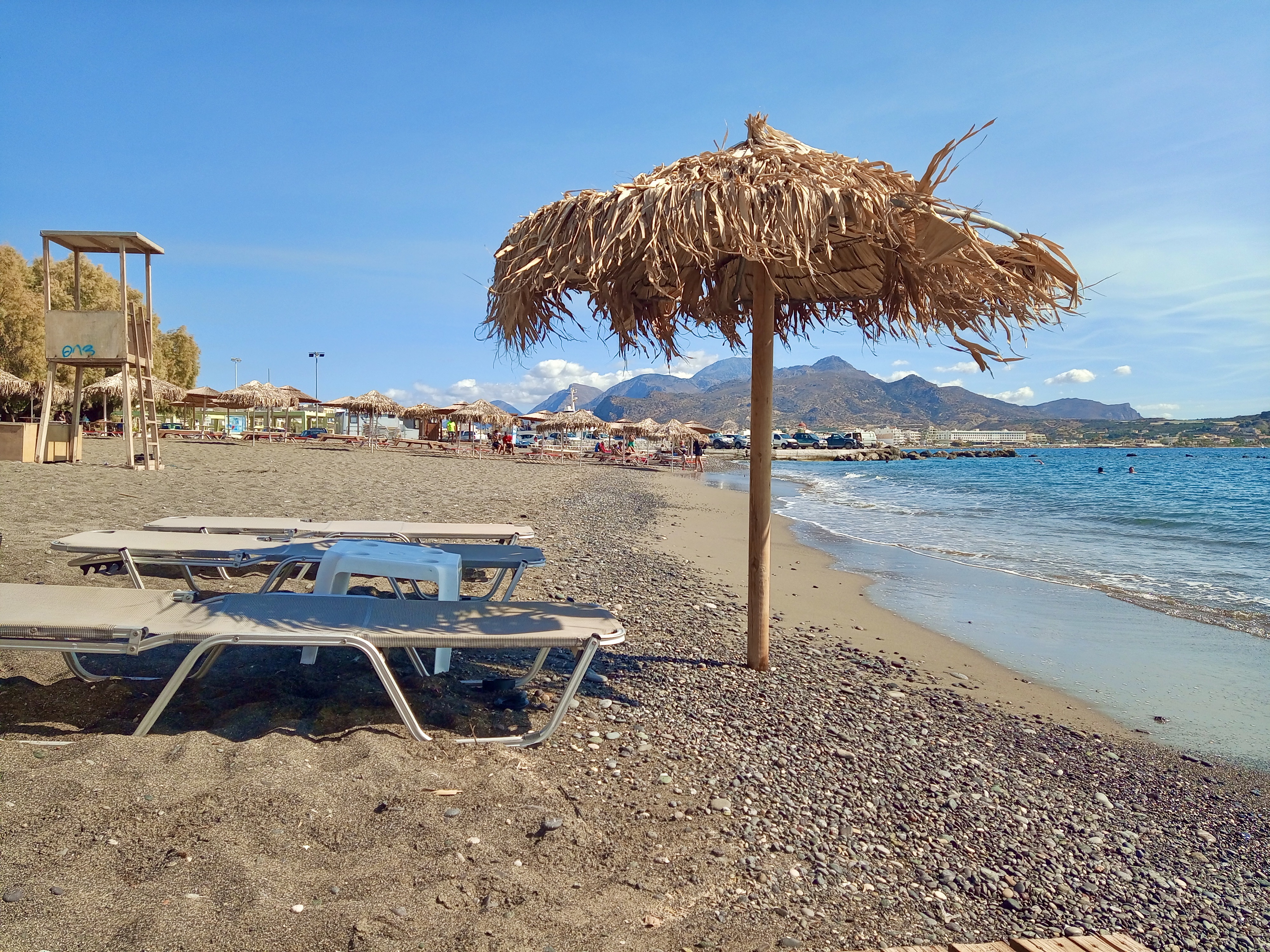
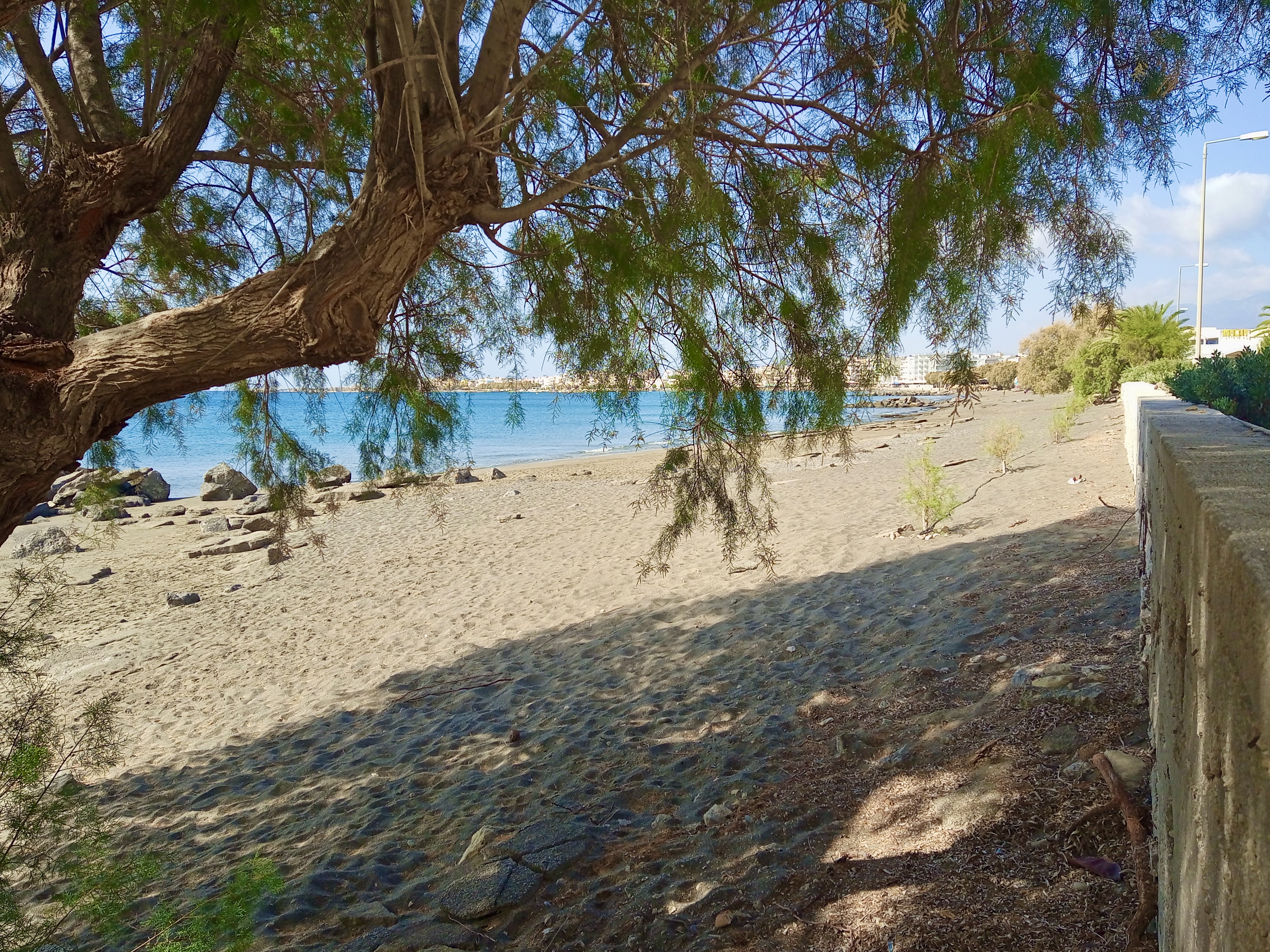
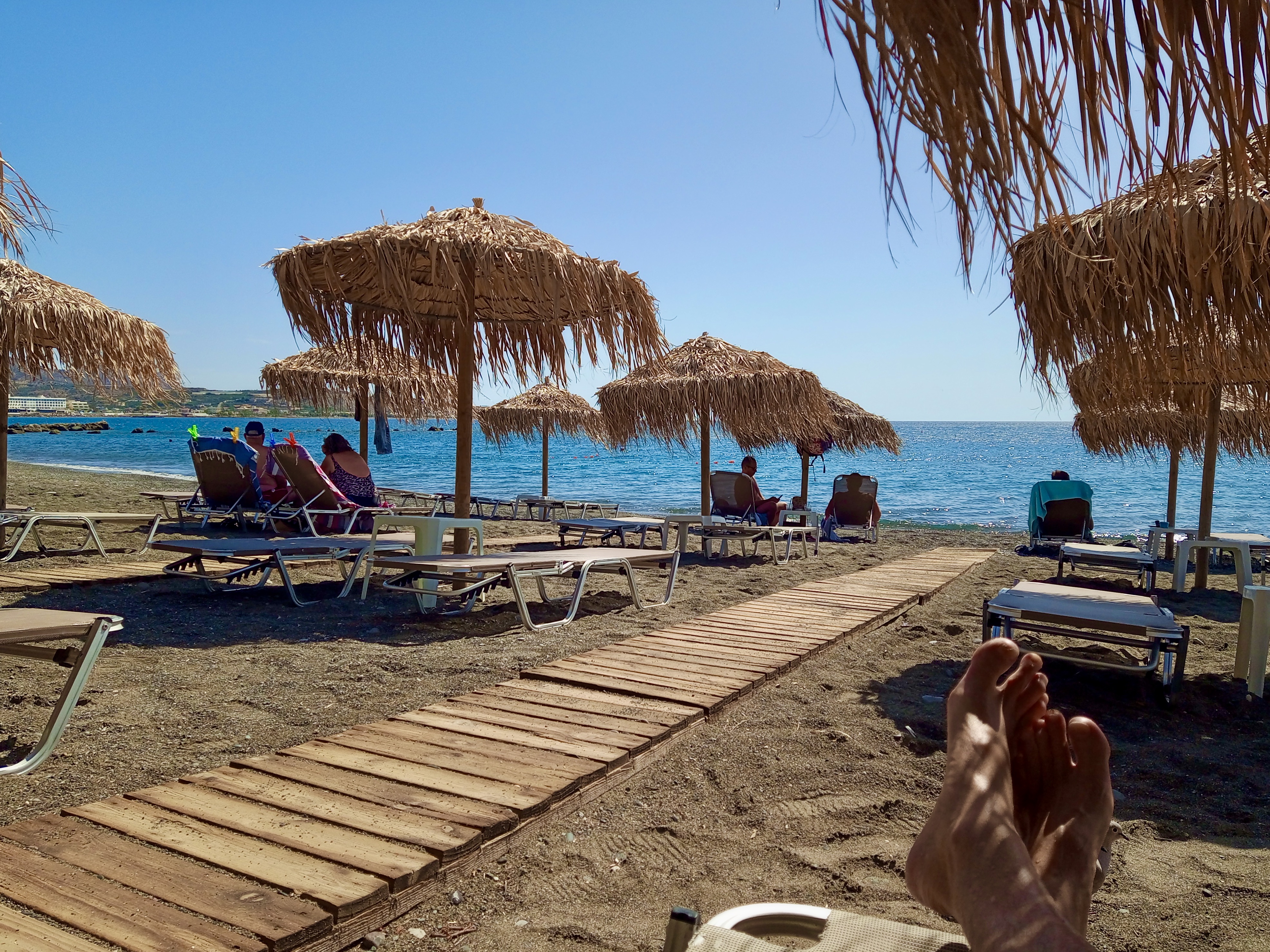
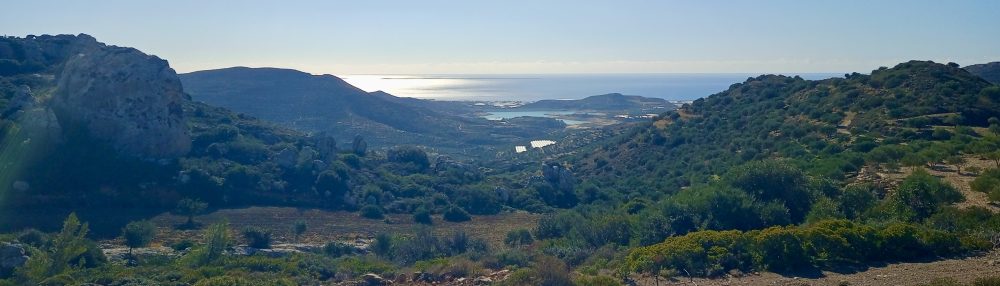
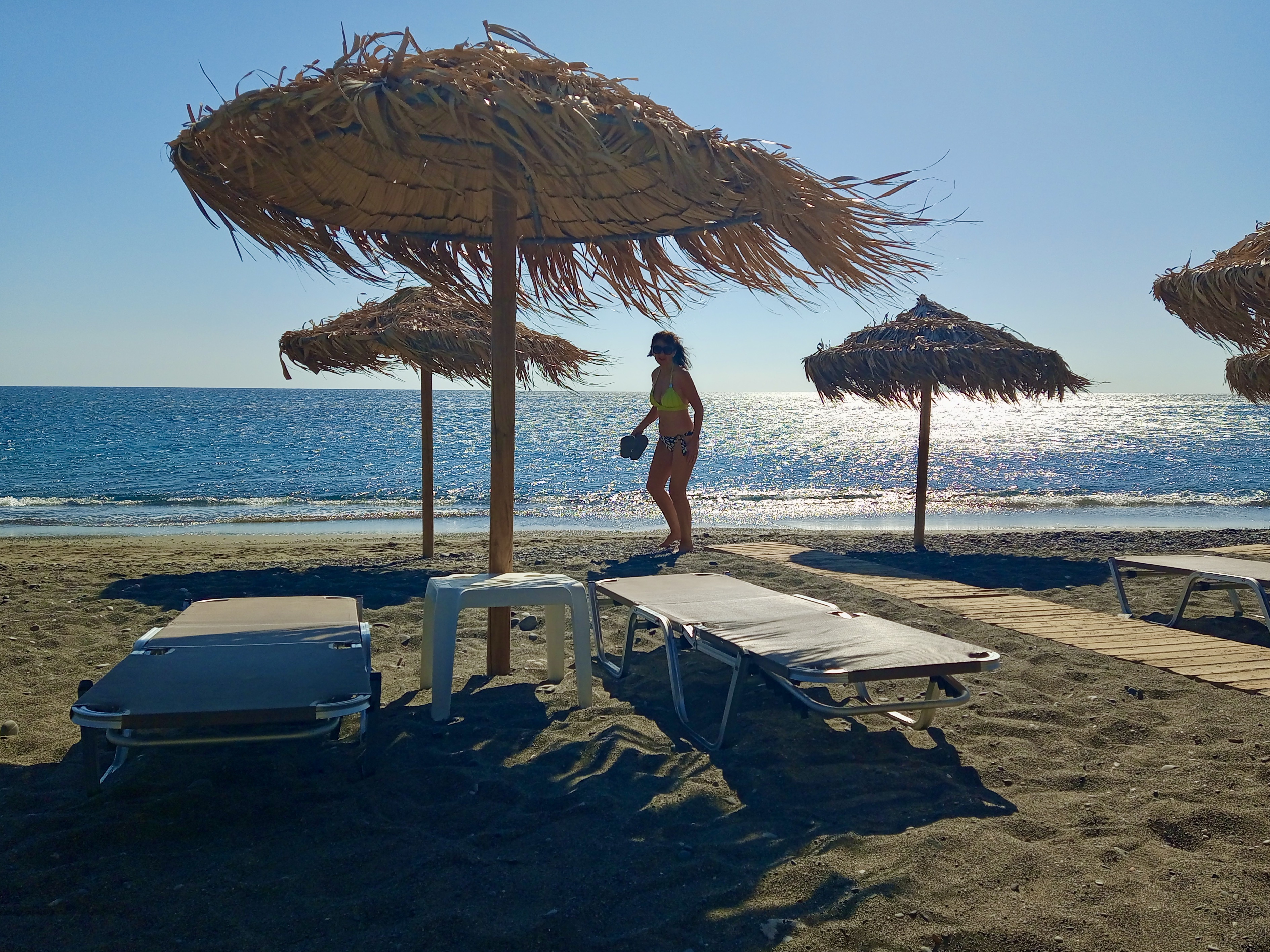
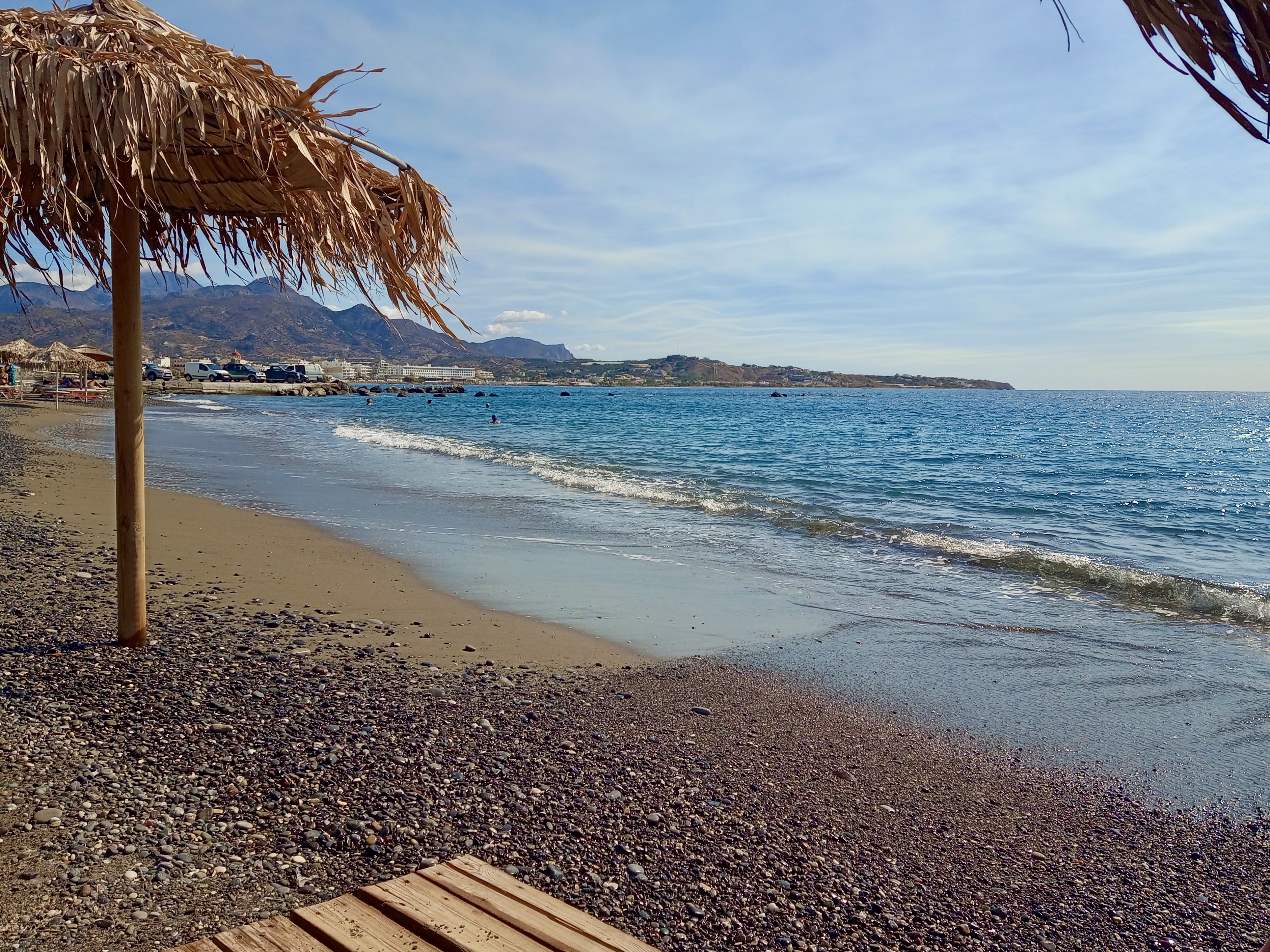
The other day, as we were having a coffee on the beach and Yvonne was listening to Dalkas on her phone, I came over all nostalgic. Like I said, music is very powerful, isn’t it. If I’m going to be completely honest, I so miss the early days when I was first becoming acquainted with this amazing country, the country of my wife’s mum, and its culture. Going to the taverna in 1977 was a far different experience on a small Greek island than it is today. I’d still rather be here than anywhere else, but there’s nowhere that hasn’t changed over the years, is there? I put the changes down to the rapid growth of tourism which, although has its good side, also has a big downside, as recent developments in Spain have illustrated. I never returned home to the UK after a trip to Greece in the years between 1977 and 1985 without having danced. Part of our regular evening experience back then would involve impromptu dancing on the part of locals, often to the accompaniment of a couple of local musicians. 

Beaches, even those in easily accessible spots, were often devoid of umbrellas and sun beds. I’m a bit of a hypocrite now I suppose, because advancing years have wrought changes in me in this regard. These days I so much prefer the comfort of a lounger under an umbrella than the kind of thing we used to do when we were in our twenties. Back then we’d trek for miles across goat tracks to find idyllic beaches where we’d make do all day. We’d have brought a couple of psomakia and beef tomatoes with us for lunch. But even the ‘town beaches’ back then were often mainly a DIY experience. These days a lot of Greek beaches that were once exquisitely picturesque are now covered to the last inch with umbrellas and beds. There’s been a movement here in Greece that hasn’t perhaps gained as much publicity as that which has gone on in Spain, but involves locals demonstrating that they want their beaches back. 

I’m sure that here in our still sleepy corner of Lasithi, where the sun beds and umbrellas exist, but not in such massive quantities as to cause irritation to those who also want a bit of untouched beach on which to ‘camp,’ things will probably change. I can only hope that they don’t change too quickly.

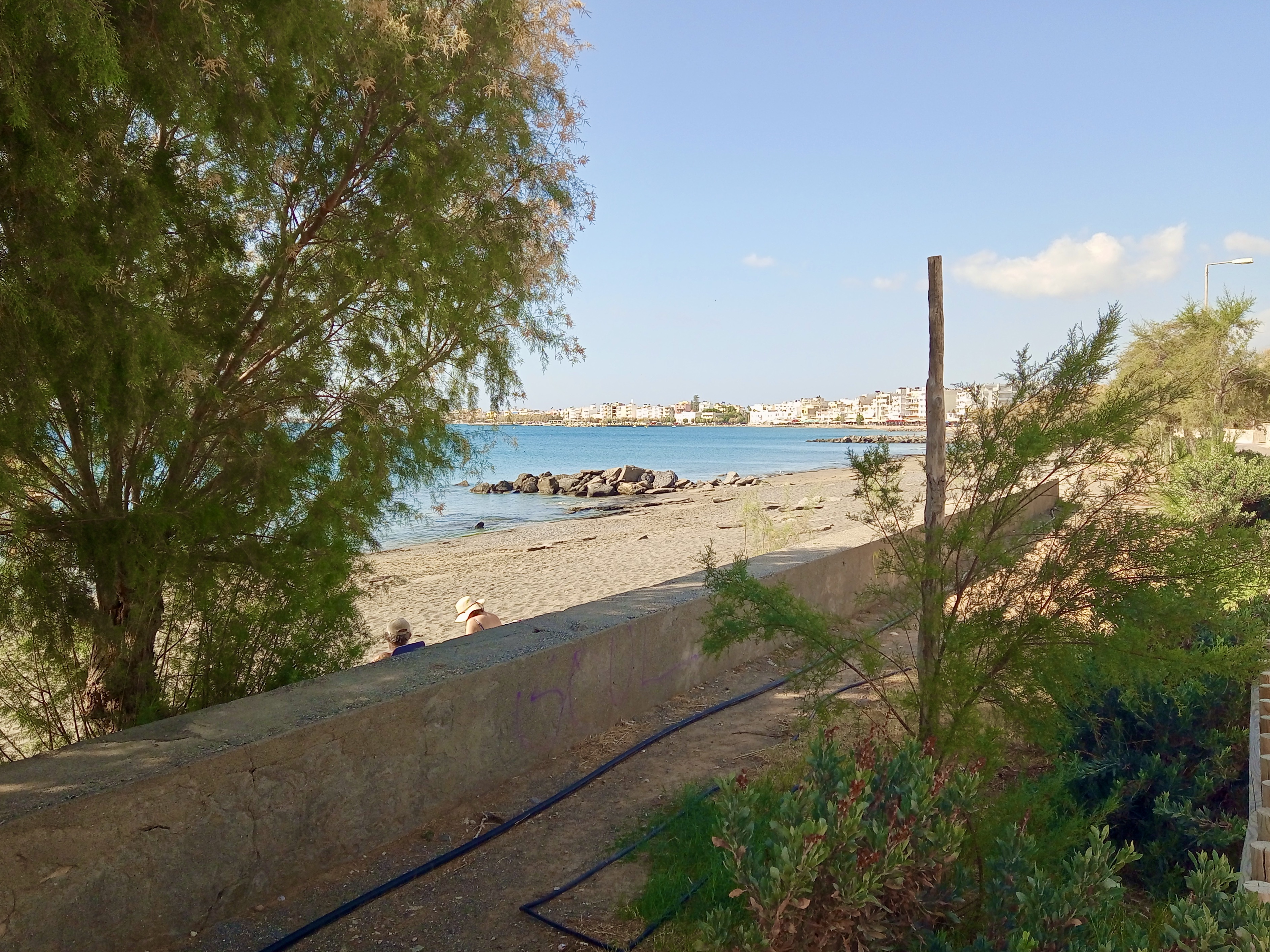
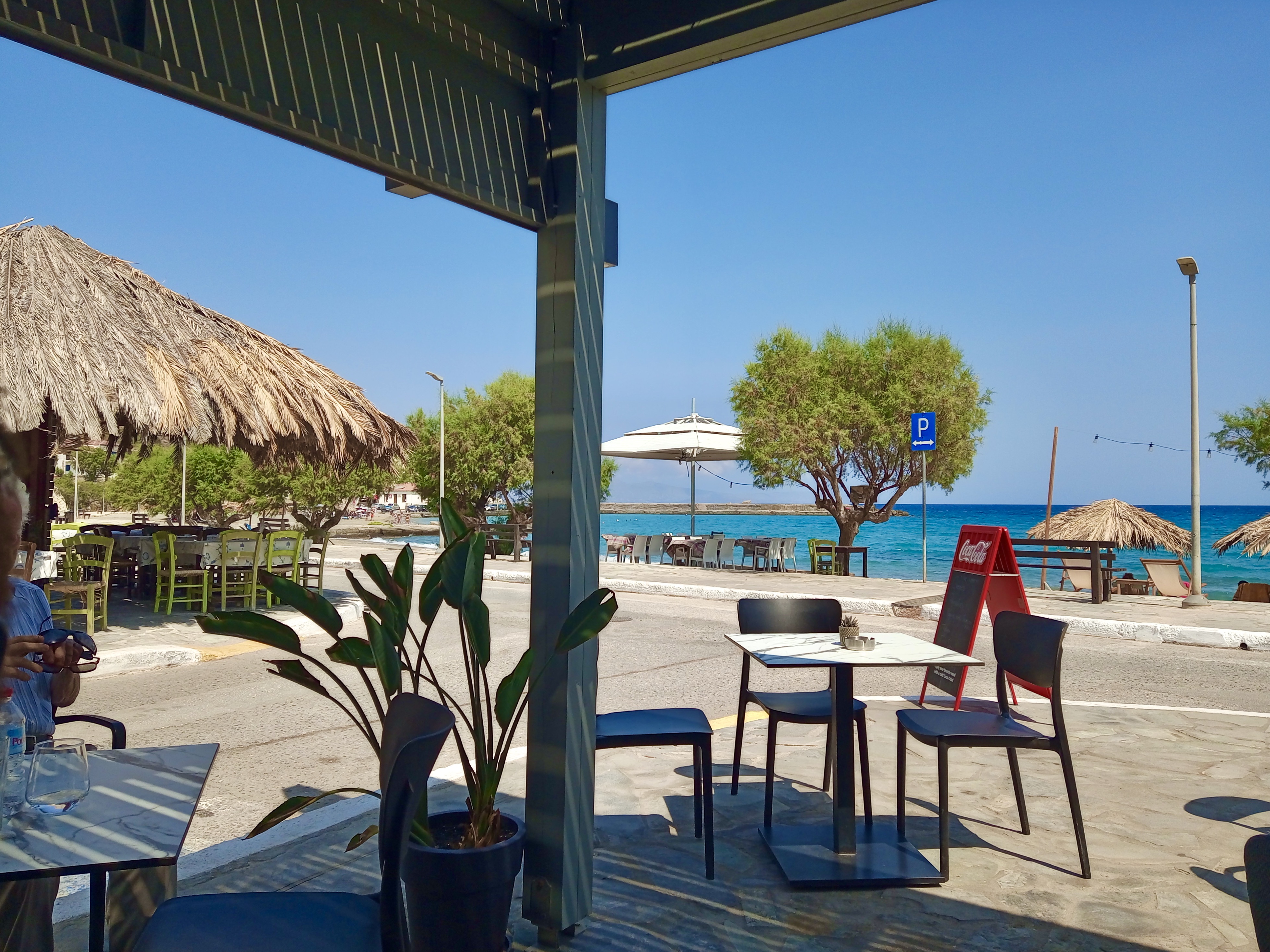
For your delectation and delight, click this link to hear a classic bouzouki track from 1967 by the great Zampetas. Marvel at the clarity of this recording too. I’m off to reflect to the sound of Zambetas’ bouzouki, I’m hopelessly lost in the past right now. Meanwhile, here are a few recent photos…

Click HERE to go to my Amazon Author Page.

There you can browse and purchase all of my written works.
Variety pick ’n mix

When we went back to the UK last month it was the first time either of us had left Greece for seven years. So, the last time we’d travelled back to the UK was when Britain was still in the European Union. None of this was on my mind when we arrived at the passport control desk on our way into the departure lounge at Heraklion airport, of course. Joining the queue to approach the glassed-in desk, behind which sat a couple of young Greek officials in smart uniforms, I thought, ‘it won’t take long to get through this part, they seem to be moving the passengers through at a fairly brisk trot.’ Of course, since it was an EasyJet flight we were taking, the majority of the passengers were British, with just a small smattering of Greeks in the mix.

When I reached the desk it was a pretty young lady who took my passport from me to examine it. I fully expected her to glance at the relevant page, hand it back to me and wave me through, as she had done with the dozen or so people that had been in the queue in front of me. She opened the passport, then began to thumb through the pages, most of which, as we all know, are blank. She appeared to do this a couple of times, all the while the expression on her face was becoming more indicative of her being somewhat flummoxed. Her brow now firmly knotted with disbelief, she nudged the uniformed young man sitting next to her, whose queue had now temporarily disappeared, and bade him look through my passport too. What on earth was going on?

We all know that it doesn’t matter how innocent and law abiding we may be, having to wait while officials, especially the uniformed variety, peruse our papers, passport, or whatever, can unnerve us no end. By the time a couple of minutes had passed, and I was still standing there with one hand resting on the desk near the gap in the glass, in readiness to receive my passport back, and a tingly chill beginning to run down my spine, I started to get really worried. I knew that my passport still had enough time on it before it needed renewal, just. So what was going on here? The young lady, my passport in her left hand, began tapping at her keyboard with her right and staring at her computer screen, evidently looking for something, but what? It’s at times like these when your imagination starts to do you no favours at all, isn’t it. I had visions of being escorted to some private room somewhere, only to encounter someone in a white coat slapping on a pair of latex gloves. Had my passport been hacked and duplicated in some way by some major international crook, and did these two young officers maybe think that I was that person? 

Just when I was starting to really freak out, the young lady looked at me, smiled and said, in Greek, “Do you have a biometric residency ID card by any chance?”

Of course, I did, and was only too quick to extract it from my purse and show it to her. She took it from me, took a very brief look at it, showed it to her comrade, and then she handed it back, along with my passport, smiled and said, “OK, thank you sir, have a good flight.

So, as I shuffled through into the madness that is a departure lounge, with all its perfume shops and bookstores, its rucksack, clothing and electronic gadget retail outlets, its hordes of passengers all trying to grab one of the far too inadequately provided curvy metal seats, I was mystified to begin with about what had gone on back there. Yvonne was behind me in the queue and I was fortunately able to tell her to have her residency card ready when she reached the desk, hence probably avoiding that pregnant delay that had so put the wind up me, and she did indeed pass through with no delay as a result. But what had been the problem?

Now, if you live in the UK and you’ve travelled to Greece since Britain left the E.U., then maybe you’ll know, but the only conclusion that I could come to about what had gone on was this…

The officials had no idea that we were actually on our outbound flight. My presenting a UK passport to her had obviously led her to think that I was returning to Britain after a holiday in Greece, rather than going to the UK for a short visit, before at some later date taking our inbound flight back here to Greece. So, isn’t it true that, now the UK is out of the European Union, UK residents can only stay in a European country for a maximum of 90 days (not sure if that’s the right number, but the principle is what I’m getting at here)? That being the case, if you’re travelling from the UK to Greece for a holiday, I’m presuming that your passport gets stamped with the date on which you entered Greece on your arrival, yes? So, in that case, what I now assume that the young lady official was looking for was a rubber stamp in my passport showing my date of arrival in the country. Not finding it, she was thinking, ‘hold on, how long’s this bloke been in Greece then?’ 

Fortunately for me, she was bright enough to conclude that I must have been an ex-pat living here full time and, that being so, I’d obviously have a residency permit to show for it. She’d been right of course, and thus, problem solved. Phew.

On the beach a week or so before we left for the UK, we got talking to a nice couple who we see regularly taking their coffees there and also having a dip, much as we do a couple or three times a week. In the course of a summer, you get to know a lot of local people when you frequent the same patch of beach every week. Here in Ierapetra, I’m thrilled to say, the beach is never overcrowded and still, even in high season, the majority of people around you are locals. Having now lived here for five years and counting, we actually have a nodding relationship with quite a lot of people, and it’s a nice feeling. It’s a community, if you like. The more regularly you see the same few people, even those who serve you your drinks, the more you tend to converse, and hence the more you find out about their lives, and they yours, of course. For instance, there’s this lovely young couple, in their thirties I’d guess, Effie and Gianni. They invariably grab an umbrella quite nearby and so, after having greeted them with a ‘kalimera’ a few times, it was only inevitable that the conversation would progress to “The sea’s really lovely today,” or “Didn’t see you yesterday, where were you?”

It soon progresses on to them wanting to find out where we’re from and what our background is, and vice versa. Quite a few of the regulars we talk to now had us wondering in the beginning about how they could afford to turn up at the beach at around 11.00am, then order their coffees and hang out for a couple of hours, taking the occasional dip along the way. Didn’t they have work to go to, for example? In Effie and Gianni’s case, they have a series of thermokipia (hothouses) where they grow vegetables not only for the local market, but also for exporting all over Greece. They’re actually up at the crack of dawn, get to work for around 6.00am and then knock off mid-morning for a few hours, before returning to work late afternoon for another few hours before knocking off for the day around 8.30pm.

Then there’s Giorgo, who actually drives a truck collecting and delivering from the farmers in our area and is based in Heraklion. He comes down to Ierapetra every day during the week, where he’ll collect produce to drive it back to the port town. But, while he’s here, he manages to steal an hour or two for a bit of R&R on the beach. He sets out from Heraklion before light most days and is back there by mid-afternoon, when he’ll knock off for the day. It was really fortuitous our getting to know Giorgo, because in the course of one conversation a while back he offered to bring us anything that we might want that we might need to go to Heraklion for, to save us making the trip ourselves. As it happened, we had been fretting about needing a fresh supply of Earl Grey tea. OK, so Lidl do their own brand (Lord Nelson) and they have a branch in Ierapetra, but, even though I rate a lot of their products highly, the Earl Grey is (IMHO) rubbish. If it has any Bergamot oil in it, then I’ve never been able to detect it. On the other hand, Marks and Spencer have a branch in Heraklion and we’ve found that our favourite Earl Grey tea ever (and we’ve been through Twinings, Liptons, Sainsbury’s own, not to mention a host of organic brands, over the years) is Marks and Spencer’s own. 

So, when Giorgos told us that he’d be glad to bring us anything we may want from Heraklion, we put our order in. When we told him we’d love a few boxes of M&S Earl Grey tea-bags he was incredulous. “That store only does clothes, doesn’t it?” He asked us. We were only too delighted to inform him that he was quite wrong. Anyway, his wife was duly despatched into town and a couple of days later our order arrived, courtesy of the very helpful Giorgo.

As we handed him the cash for the tea, I told him that we’d now ordered a lounge suite from Praktiker. It took him a second or two before he exploded in a belly laugh at my joke. 

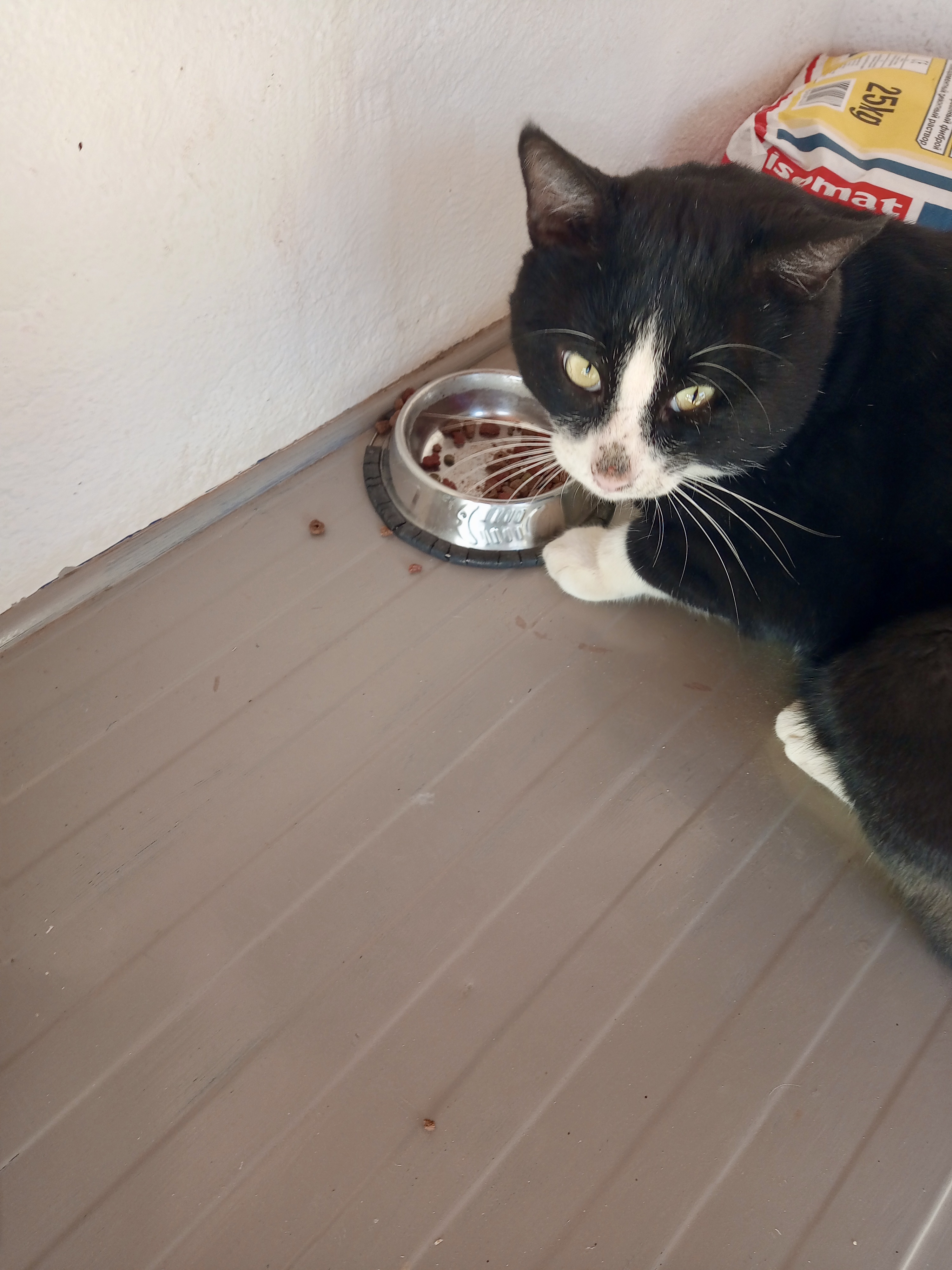
Mavkos continues to show up most days. He’s become more affectionate with each visit and has now reached the stage where he doesn’t like to finish his meal without a frequent smooth of the head. Part way through eating he’ll stop, raise his head, and look around and won’t resume eating until he’s had a ‘smooth.’ I even got to pick him up yesterday, something which he used to demand to happen before he’d eat his breakfast back before he disappeared for all those months. The only problem we now seem to have is that Ginge is well unhappy about Mavkos being back on the scene and regularly looks for opportunities to have a go at him. Ah well, we’ll see what plays out with time.

Click HERE to go to my Amazon Author Page.

There you can browse and purchase all of my written works.

The prodigal cat and other developments

The local beach is superb at this time of the year. The sea’s the warmest it’s been all summer owing to the sun having been warming it for months on end, coupled with the fact that in mid-October the air temperature is a much more tolerable mid-20’s rather than upper 30’s, making the sea, at around 27ºC, feel like a warm bath. Also, the ‘bodies’ are sparsely spread too, so all in all it’s a wonderful time to be able to swim and sip one’s coffee and appreciate life in general.

This past few days have been frustrating and mystifying in equal measure. Frustrating because I ordered a new battery for my aging MacBook Pro about three week ago, was told it would come within two days and then waited three weeks. When it finally arrived the bloke in the iLab, Lefteris, showed me that they’d sent the wrong model, and thus the whole process of ordering had to be done again, coupled with the need that Lefteris has now of sending back the ones he can’t use. I say ‘ones’ here because, apparently a MacBook Pro Retina like mine actually used two batteries in tandem. Something to do with how they fit it all into the space available in the Mac’s case I suppose.

Why mystifying though? Well, if you’ve been reading my musings for any length of time then you’ll know only too well that we used to have a cat called Mavkos. Some time early last spring he left us without a word of explanation and never came back, well, apart from one very odd visit at coffee time on the terrace one morning when he showed up months after he’d left, sauntered across the terrace in front of us, then disappeared yet again, this time apparently, or so we thought, for good. In the ensuing months we’ve been courted by three cats all vying for a place in our affections, and I’ve previously named them as Whitesock, Groucho and Ginge, the latter being the only one of those three that lets us stroke him. We’ve tried not to feed them too much, because we don’t want them to become reliant on us, it simply wouldn’t be fair on them, after all. Of the three, it seems that Ginge has won the territory battle and now all local cats defer to him when it comes to our garden, terrace, and veranda.

It all changed the day before yesterday, though. Some weeks ago while we were sipping Ellinikos with Angla’i’a and Giorgo, we’d mentioned how Mavkos had disappeared and Angla’i’a had told us, quite dispassionately, that she reckoned that he’d been run over by a car, since she was convinced that she’d seen a large black cat suffer that fate a while back. I didn’t like to press the point that Mavkos wasn’t black, but rather black and white, which to us made a difference. It meant that we could live in the hope that Angla’i’a had got it wrong. We let the subject drop and tried not to think about the possibility of it having been true. We’d have had nightmares dreaming about dear Mavkos suffering had it actually been him. Before he finally left us he’d grown up with us from a small kitten to a formidable Tom, who let us pick him up, smooth him and cuddle him until the cows came home, which they seldom do around these parts anyway, since there aren’t any. His life with us had spanned a couple of years and, by the time he abruptly abandoned us he’d become part of the family, and no mistake.

Our heartbreak at having lost Mavkos was yet another reason why we couldn’t allow Ginge, Whitesock or Groucho to wheedle themselves into our affections to the same degree as had Mavkos, I’m sure you understand why. Anyway, the day before yesterday I had to shoot down into town at around 6.00pm in order to get my Mac’s batteries fitted, a mission that you already know proved spectacularly unsuccessful, but when I drove back up to the house at around 7.00pm, Yvonne charged out of the front door in a state of agitation. As I got out of the car she pointed excitedly toward the veranda and said, “It can’t be, surely, can it? That looks like Mavkos on the chair round there. Go and have a look, quick!”

Thinking that this couldn’t be possible, I shot around to the veranda and there, curled up on what used to be his favourite chair, was this big, healthy-looking black and white cat. I approached him slowly, at which he perked up and stared at me, alarm in his eyes. Now, if you’ve ever owned a cat you’ll know that you never mistake your puddytat for another. You know your cat’s markings intimately, don’t you. And I knew instantly that I was making eye contact with Mavkos, our ‘Mavs’ whom we hadn’t seen for six months, maybe more. Yvonne had already fed him a few titbits, but he hadn’t allowed her to get near enough to stroke him. As I gradually closed up the distance between us, he shot off from the chair and ran a few feet away, then took a look back at me as if to say, “No closer, OK?

I tried talking to him, using his name frequently, but he was having none of it. Maybe, we thought, maybe he was unsure as to what kind of reception we’d give him after all this time. At least he wasn’t skin and bone, anything but, in fact, so wherever he’d been he’d been well fed all right. But on this occasion he shied away from close contact. After a further few minutes, he took one more look back at me and strode off across the terrace and out of the garden, leaving us none the wiser about how he’d survived for all this time. We went inside, both excited and dismayed at the same time. How could he not trust us to smooth him, pet him, when he surely remembered us so well? Maybe wherever he’d been living he’d been well fed, but not mollycoddled like he’d been with us, who knows. Any cat psychologists out there?

Fast forward to the following morning. I pulled back the blinds on our French windows at around 8.30am, and there, back on his chair, was the familiar shape of Mavkos. Opening the door, I crept out to him slowly, and this time he stayed on the chair. He even ‘spoke’ to me like he always used to. Stretching out my hand, and fully expecting him to recoil, I went to stroke his head, and he stayed put. I succeeded, and he behaved just like he always used to, even partially closing his eyes with pleasure as I ran my hand gently across his fur. Fortunately we still had some cat food in the cupboard, so I poured some into his dish (which we still have too, of course), put it down for him and watched while he tucked in ravenously, whilst also allowing me to pet him as much as I liked. Mavkos, it seems, is back. No explanations, no clue as to where he’d been all this time, but he’s back…

Of course, we’re not so daft as not to think that maybe we’re simply his ‘fall-back’ home. What if the people he’d been hanging out with had up and left the village for whatever reason? Surely he’d think, “I know, I’ll go back to those two mugs and they’ll feed me again.” We always fed him dry food, as we believe that it’s better for him than the wet stuff. Cats though, are like kids, right? If the other people that fed him gave him juicy meaty chunks, then no doubt that would have been why he’d stayed there and left us in the lurch, who knows. Answers on a postcard (or maybe in the comments below)…

Yesterday evening he was back again, seemingly quickly adopting his old habits. As luck would have it for him, we’d had baked potatoes with tuna/mayo filling for tea, so he was able to mop up the scraps of leftover tuna, which he lapped up rapidly, before strolling off to sit against the wall like he was back in his domain. Oh, and he’s already had one faceoff with Ginge, who’s not at all well pleased that this far larger Tom is back on what had become his patch.

OK, so time for some photos…

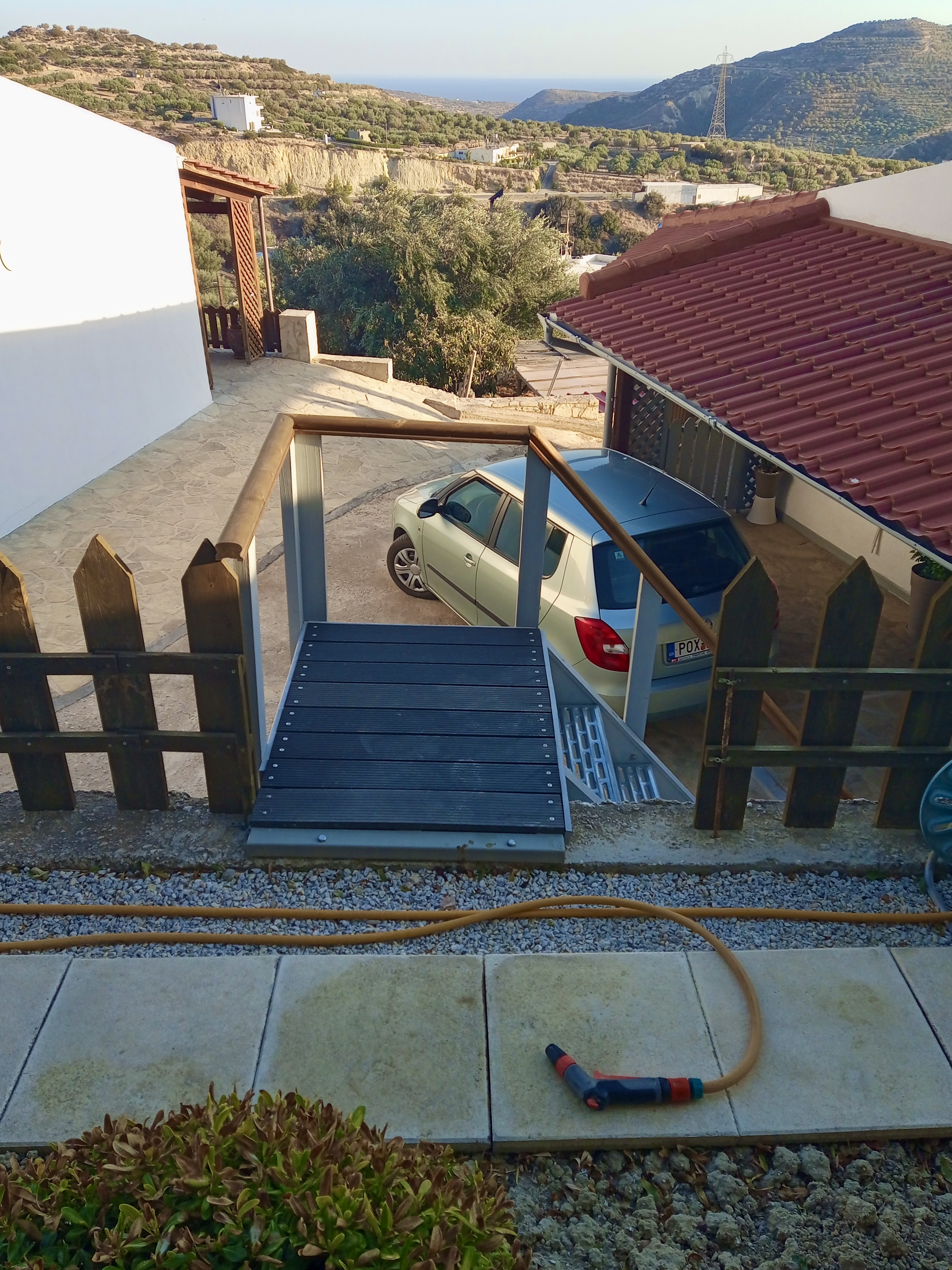
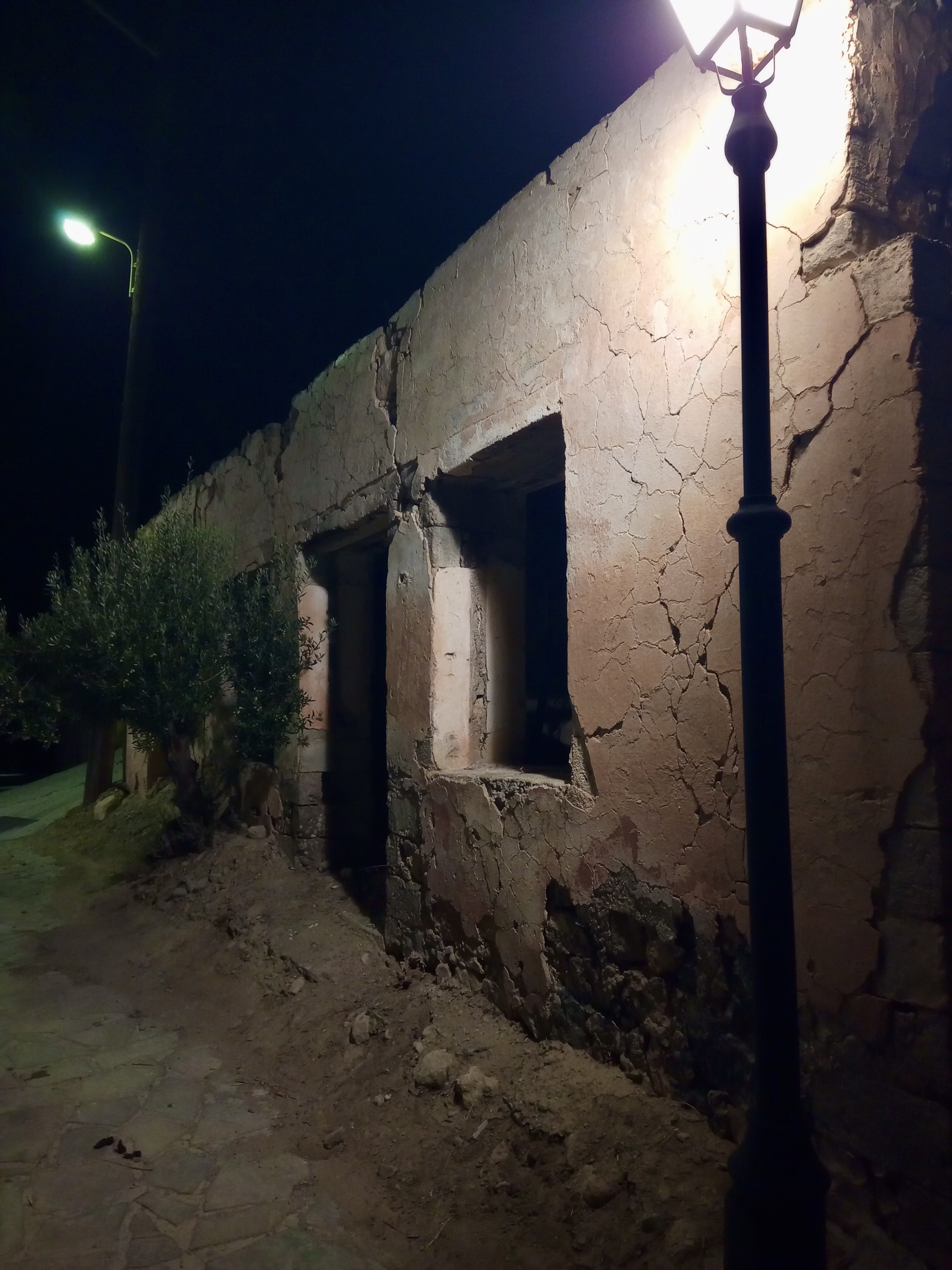
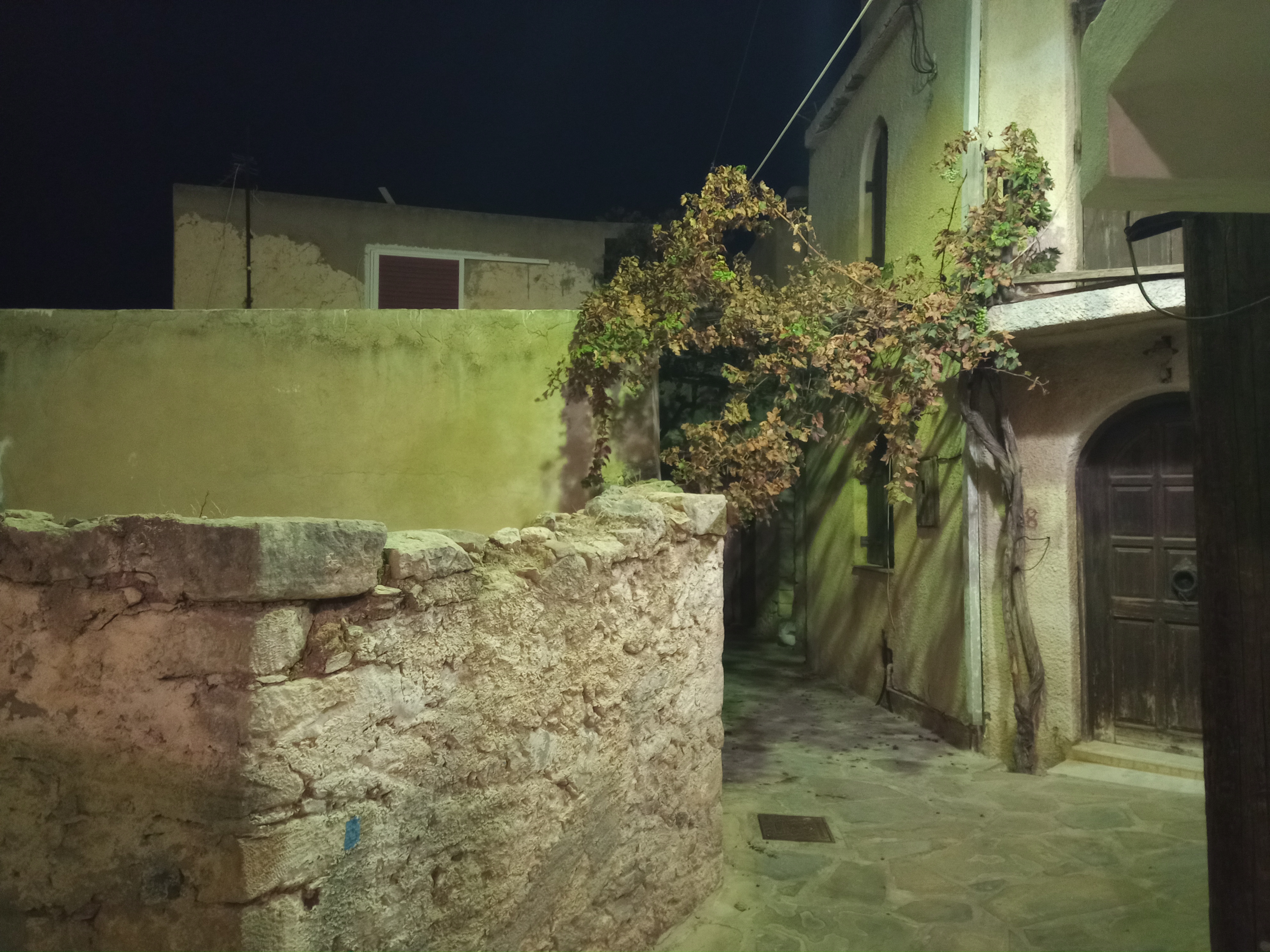
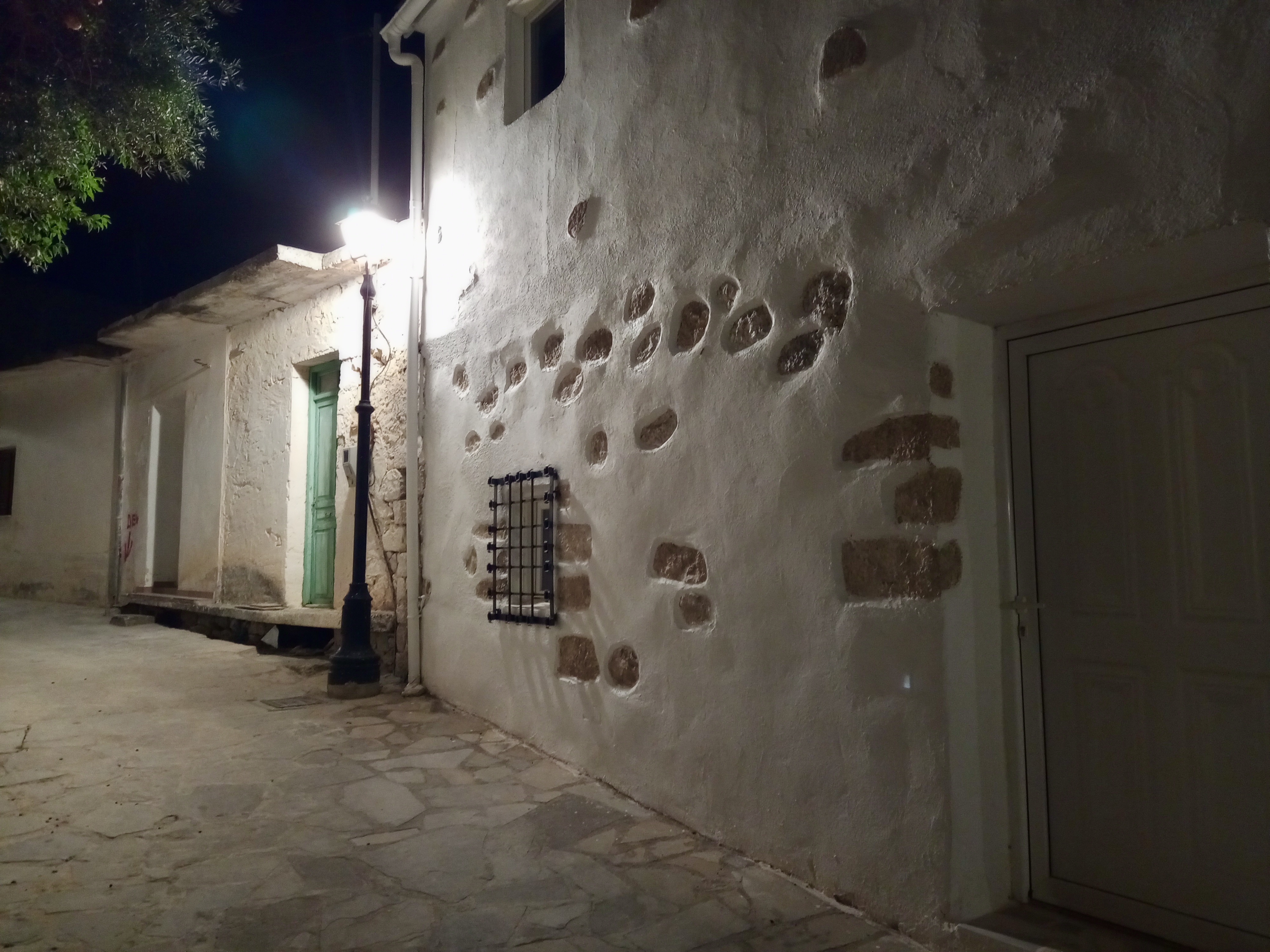
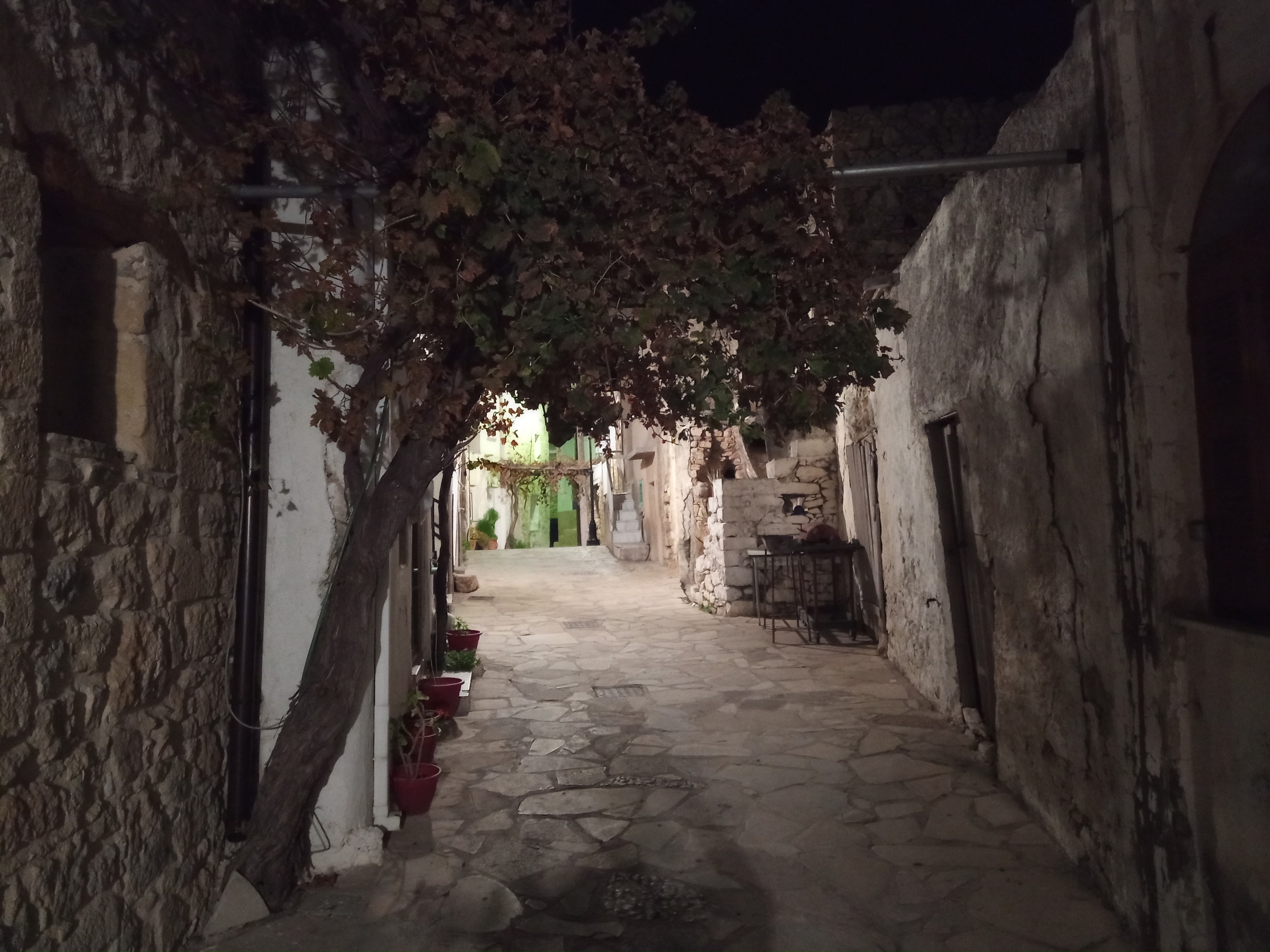
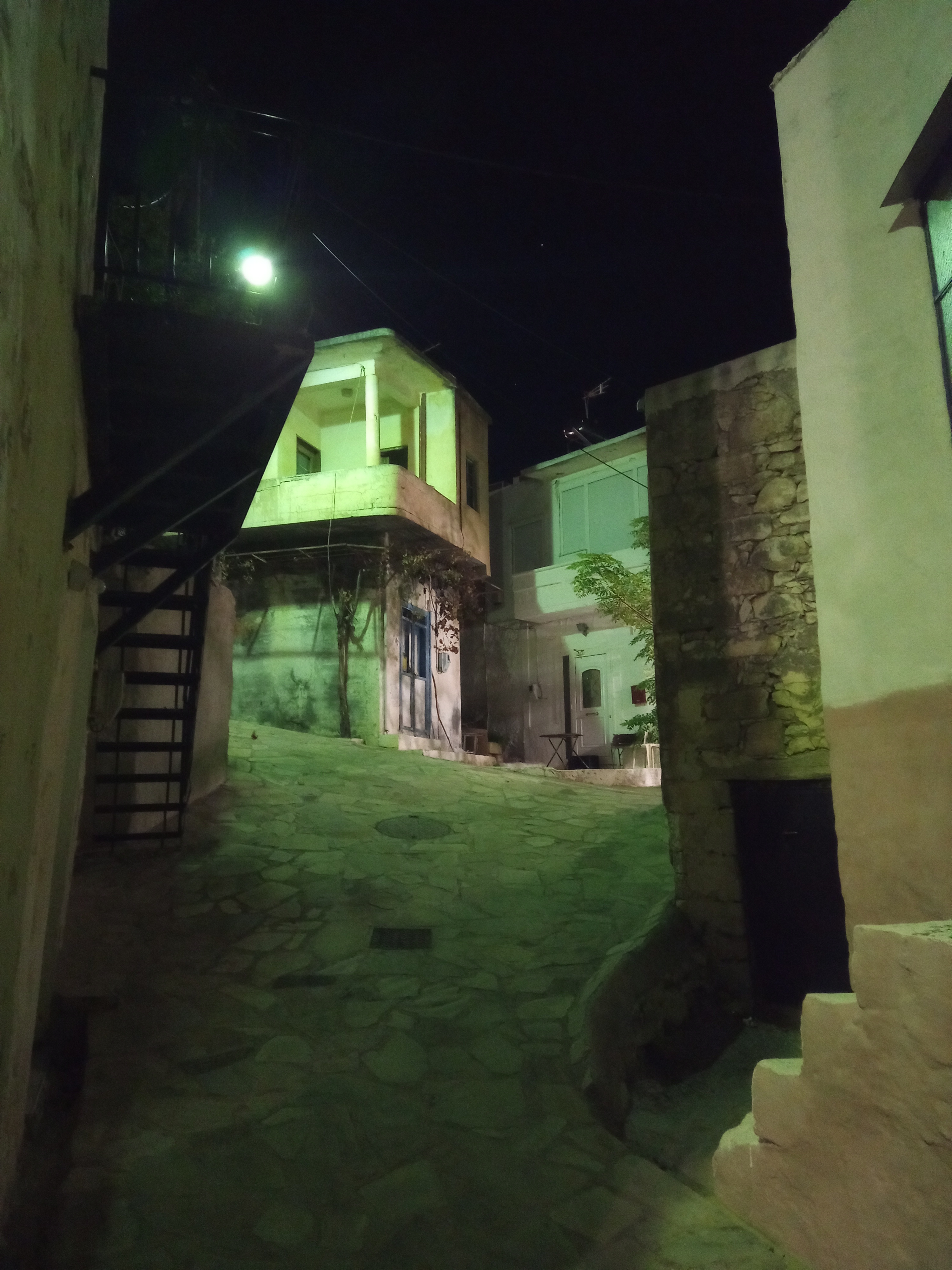
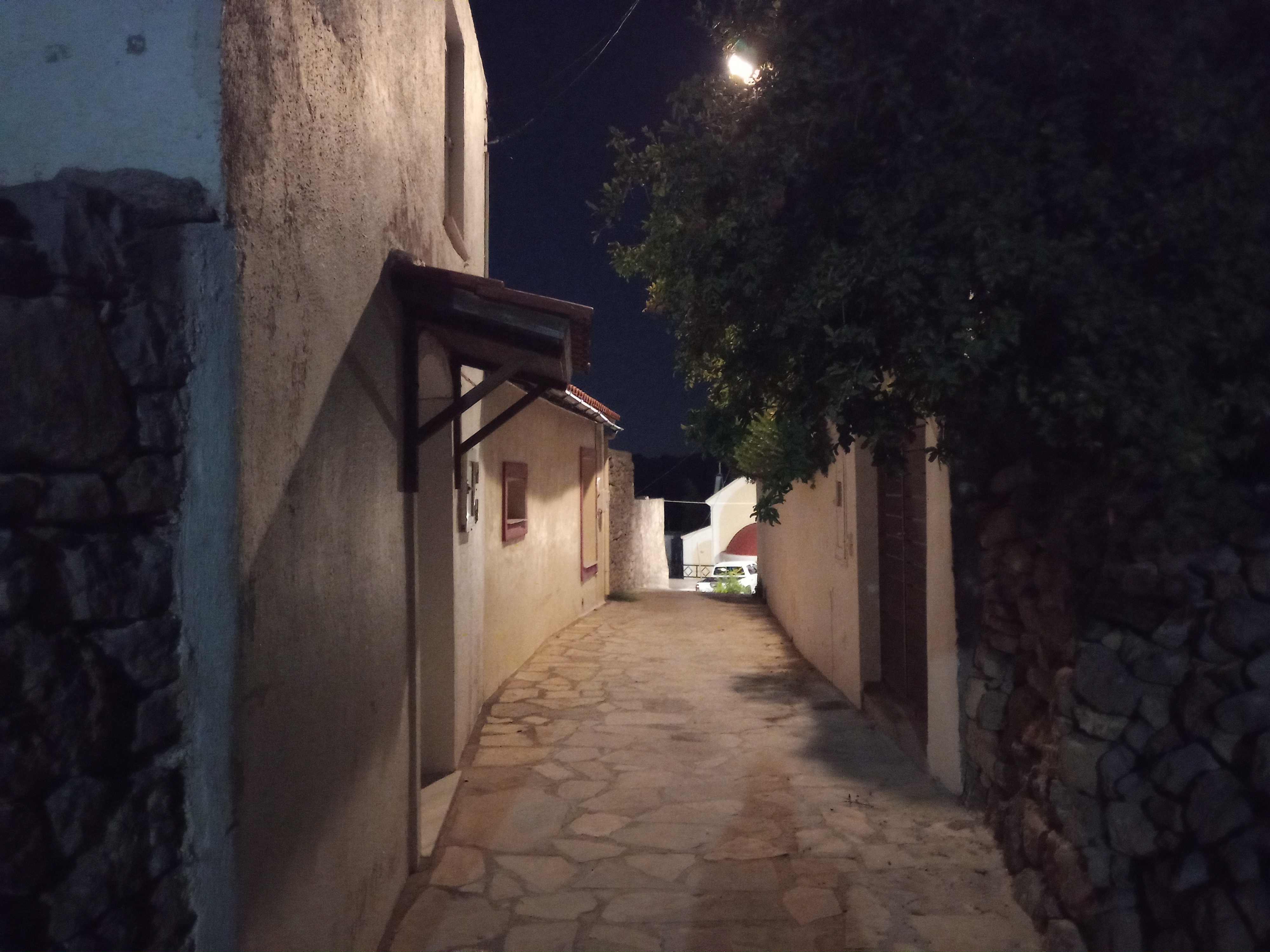
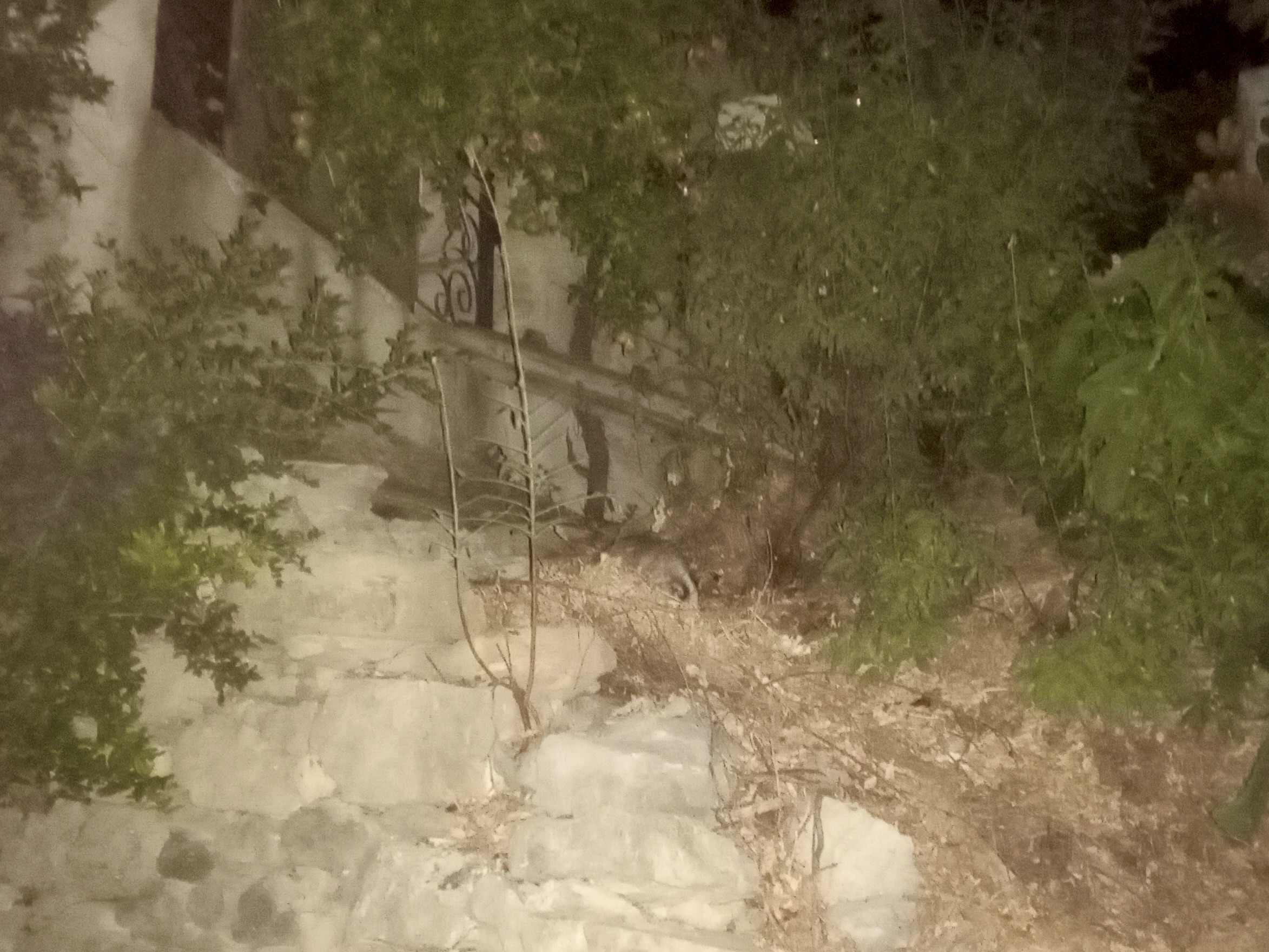
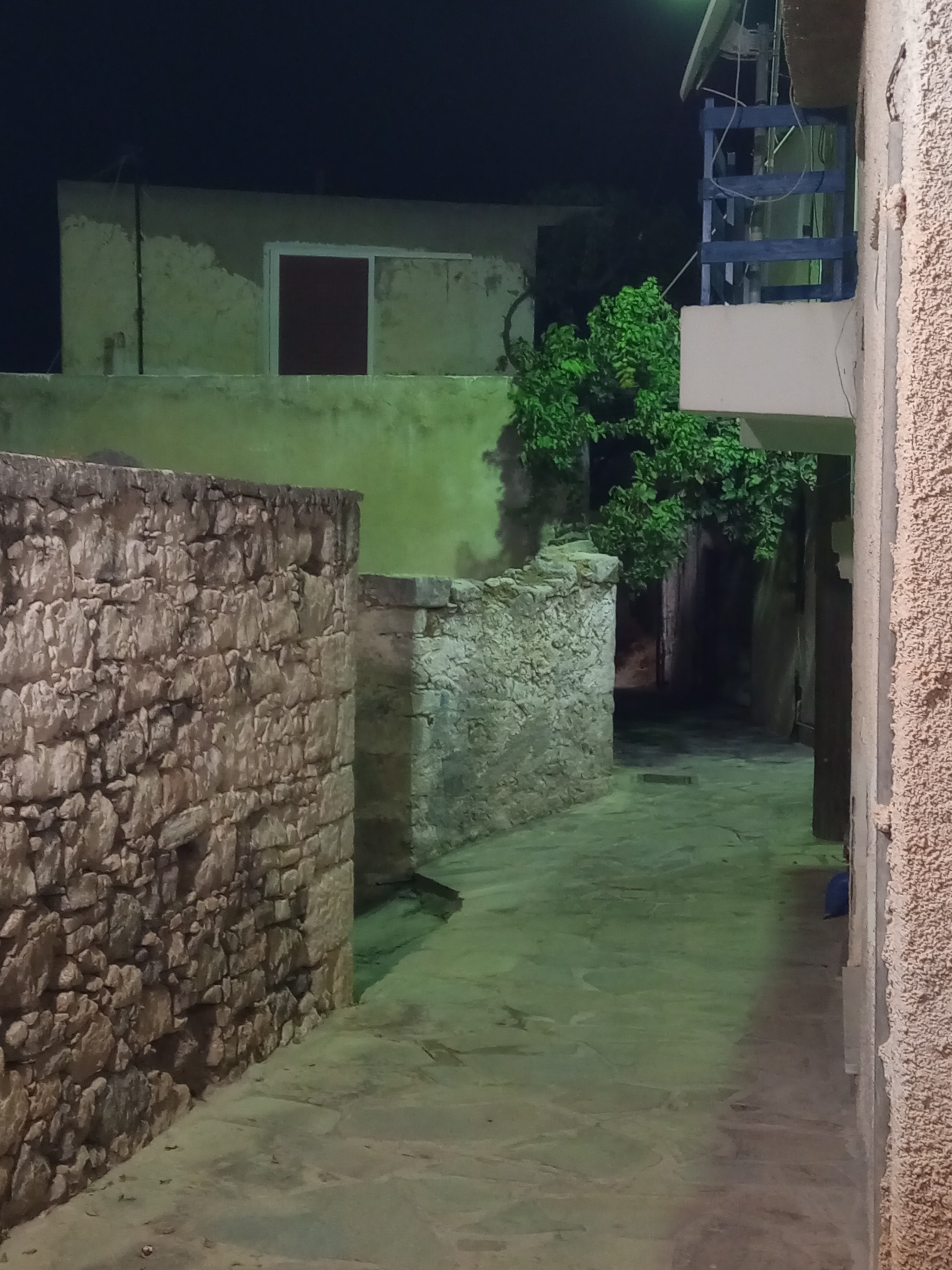
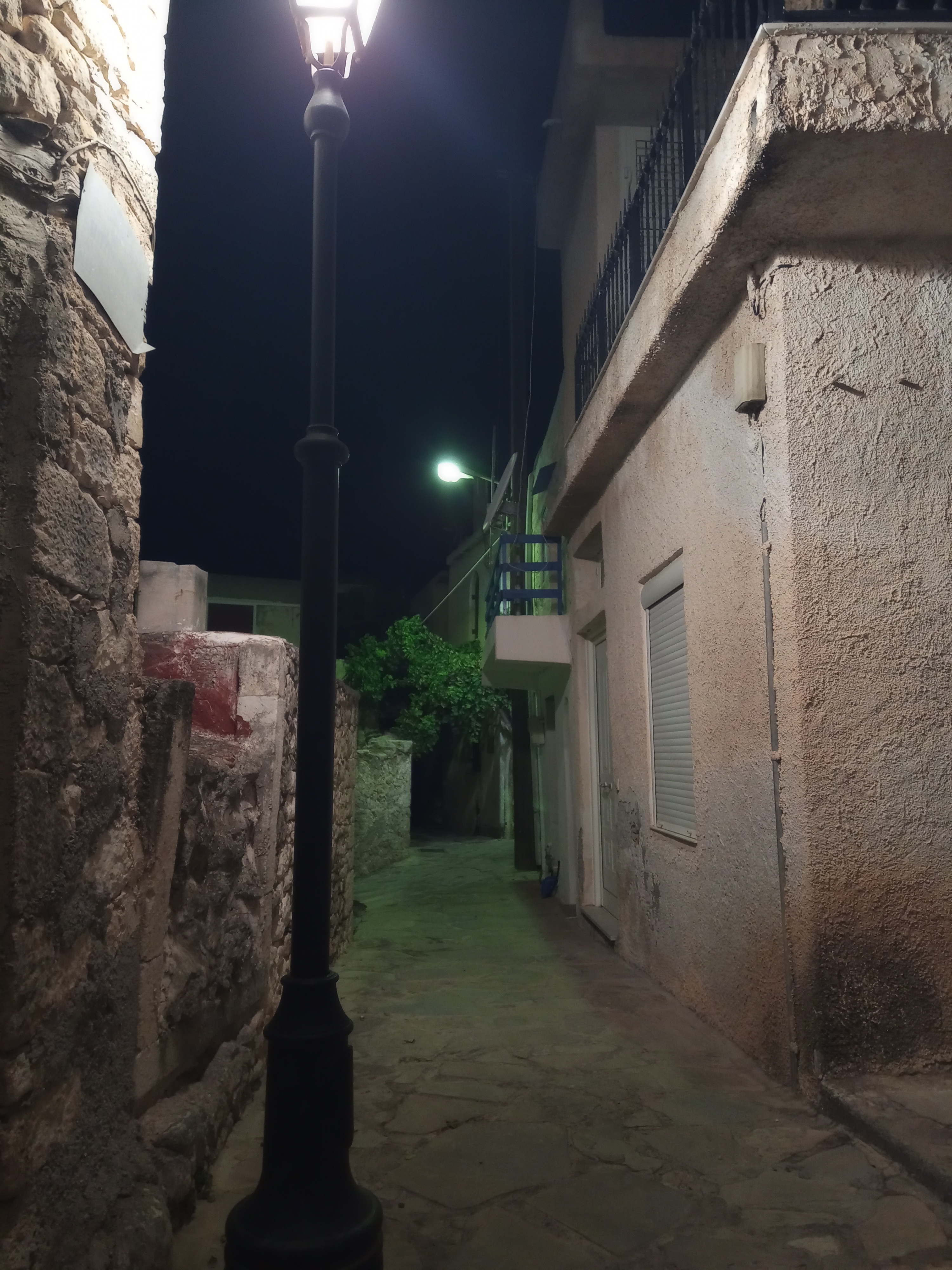
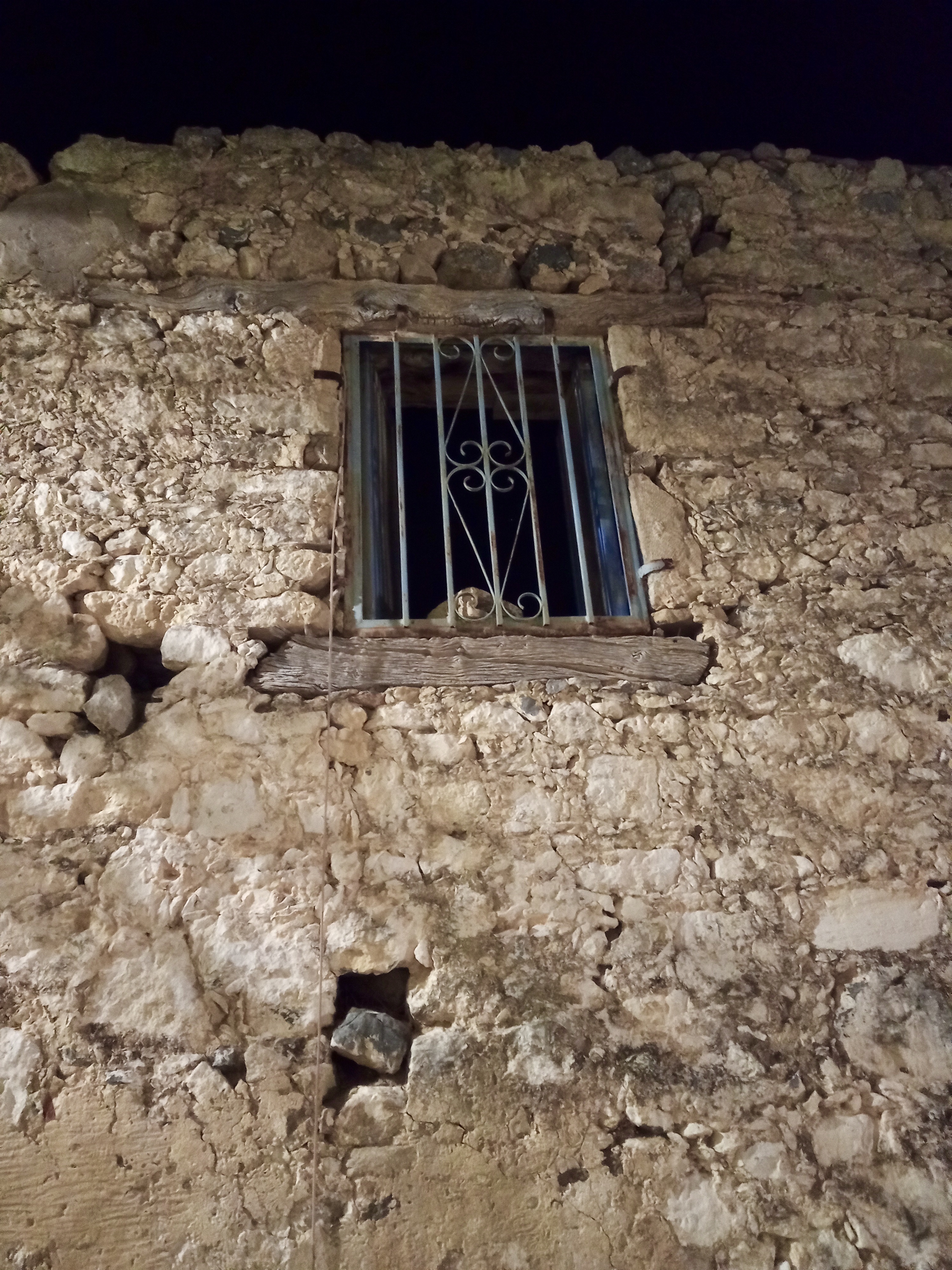
This first batch is yet another collection from a night-time village walk, we’re talking midnight on Sunday…

The next batch are from the town and sea front all taken this past week or two…

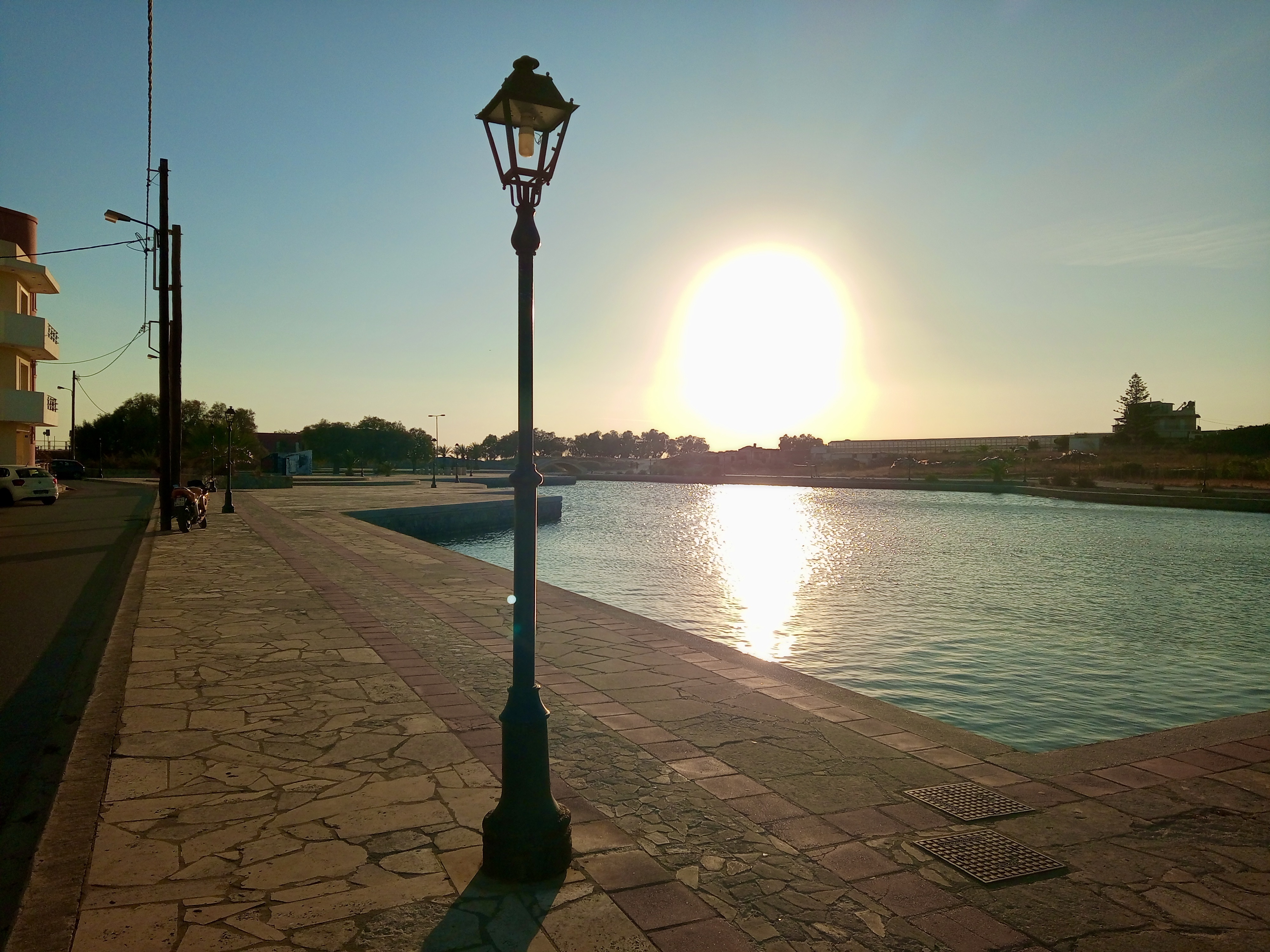
That final shot above was taken looking directly at the setting sun at 6.00pm on Tuesday.

Click HERE to go to my Amazon Author Page. There you can browse and purchase all of my written works.

Village People

This is indeed a huge island. I know I’ve probably mentioned this before, but Crete is as wide from West to East as Wales UK is from North to South. To get from where we live to Chania is about 220 kilometres, or about three and a half hours by road, and that’s nowhere near the full distance from coast to coast, as Chania is still another 47 kilometres from Platanos in the West, and from our village to Kato Zakros on the East coast is about 83 kilometres. Plus, the roads you’d need to travel in order to complete both journeys are anything but straight and wide.

Peppered all across the steep mountainsides of the island are innumerable villages, ranging from small hamlets of a few houses, to those with a selection of shops, kafeneions and even the occasional branch of a bank. It never ceases to fascinate us to visit a small village from time to time, simply to absorb the ambience, take in the often breathtaking views, and marvel at the tenaciousness of those residents who still live in the less accessible ones. If you take what’s laughably called the ‘main road’ west from Ierapetra, you very soon start ascending steep mountainsides and negotiating hairpin bends, often without safety barriers, that would make even James Bond break into a sweat. You need your wits about you and to engage very low gears in order to get round some of those bends without plunging over the all-too-close-by edge and plummeting hundreds of feet down a wooded hillside to a certain death.

Once you get past Myrtos, where the road takes a sharp turn to the right away from the coast and up into the hills, you don’t drive without paying very rapt attention to what you’re about, and all the more so if you have a passenger or three, since their lives are in your hands, after all.

Thus it was that on the morning of Sunday September 29th we found ourselves taking a random left turn a thousand feet or so above the coast to the west of Myrtos, where the sign informed us that the only village at the end of the road we were taking was called Gdochia (pronounced, if you can manage it guhdO’hia, with a soft guttural ‘g’ and a ‘d’ that’s like the ‘th’ in ‘the’, got it?). As you descend the mainly single track lane (at least it is tarmac-ed), you catch amazing glimpses of steeply sloping mountains, clad primarily in olive groves, but also with maquis (look it up! Well, ‘cos I’m such a nice bloke, I’ve done it for you, just click that link to find out) through which you momentarily see the azure and glistening Libyan Sea far below.

When you enter the village the word ‘sleepy’ instantly comes to mind. Talk to a few residents and you find that the place is probably only populated by around fifty or so souls these days. In fact the Wikipedia entry says its populations is currently around 30, whereas around twenty years ago it was over a hundred, and thereby hangs a familiar tale, told by small villages all over not only Crete, but rural Greece in general.

Myrtos is the first half-decently populated village/town to the East, and that’s around 6km away down a tortuously twisty-turny road. Heading west you’d arrive at Viannos in around 25 minutes, and the distance is about 19km. Getting out of Gdochia to travel to Iepapetra, you expect to drive for at least half an hour, and it’s only 22km. How quickly would you cover 22km (less than 14 miles) in the UK, for example? I suppose it would depend on which roads you were taking, but I’d say you’d more often than not cover that distance in around half that time.

One dark episode in the village’s history, and it’s a sadly familiar tale all across this island, was in September 1943, when the Nazis executed over 40 of the residents. Best leave that subject for now, although, as, is the case with so many of these villages, the more senior residents still remember such horrific events as if they were yesterday. And the residents of villages like Gdochia are now primarily elderly ones. It’s the case everywhere, since such villages as this one subsisted for centuries on farming, and the residents by and large seldom went more than a few kilometres away from their home village throughout their whole lives. Ierapetra, to a 19th century Gdochia resident, may as well have been in Australia, for all the chances they were ever going to have of going there.

Thus it’s easily understandable why such villages are haemorrhaging residents. In the past half-century or more, with the advent of technology, has come the desire on the part of young ones growing up to experience the consumer society, street cafés, restaurants, dance clubs, office jobs where they don’t need to get their hands dirty and that free them from 12 hour days toiling with back bent under the sweltering sun. Designer clothes and smart phones, cars and flash motorbikes, beaches where the young and beautiful hang out, all this you don’t get to experience if you follow on from your forefathers tilling the hard soil to grow vegetables, or perhaps produce olive oil.

In Gdochia, I’d say maybe half of the residents are now ex-pats from Germany and France, who’ve bought into this whole ‘small village among the bougainvillea, vines and olive groves’ dream. I’m not knocking those who’ve chosen this village to fulfil their dream, but it wouldn’t be for Yvonne and I, no. Since the village has no general store, and not even a kafeneion any more, if you simply wanted a carton of milk, or a few provisions, you’re looking at an hour’s journey by car there and back, probably down the serpentine mountainside into the coastal village of Myrtos. If you wanted to simply go out for the evening, the journey is a trying one there and back. Where we live, we have the best of both worlds. Our village is less than ten minutes from town, still has a rudimentary kafeneion, and yet is nevertheless a world away from the hubbub of a busy urban area.

Of the Greeks who still live in Gdochia, where so many properties are now closed up and silently rotting away, I’d say no one’s under around fifty years old. Those that are from that age upwards are among the doughty tough Greeks who yet decide to stay on the land, run around in pickup trucks and exhibit faces that display premature wrinkles owing to long days out in the Greek sun.

So, there you have it, my synopsis of the village people of Greece, born of a visit to one tiny hamlet. What the solution is to so many once thriving villages silently and relentlessly falling into decay and desolation, I don’t pretend to know. All I do know is that, if you want to experience such places while they still cling on to some semblance of life, do it soon, as many of these villages will for sure be ghost-towns within a decade to two.

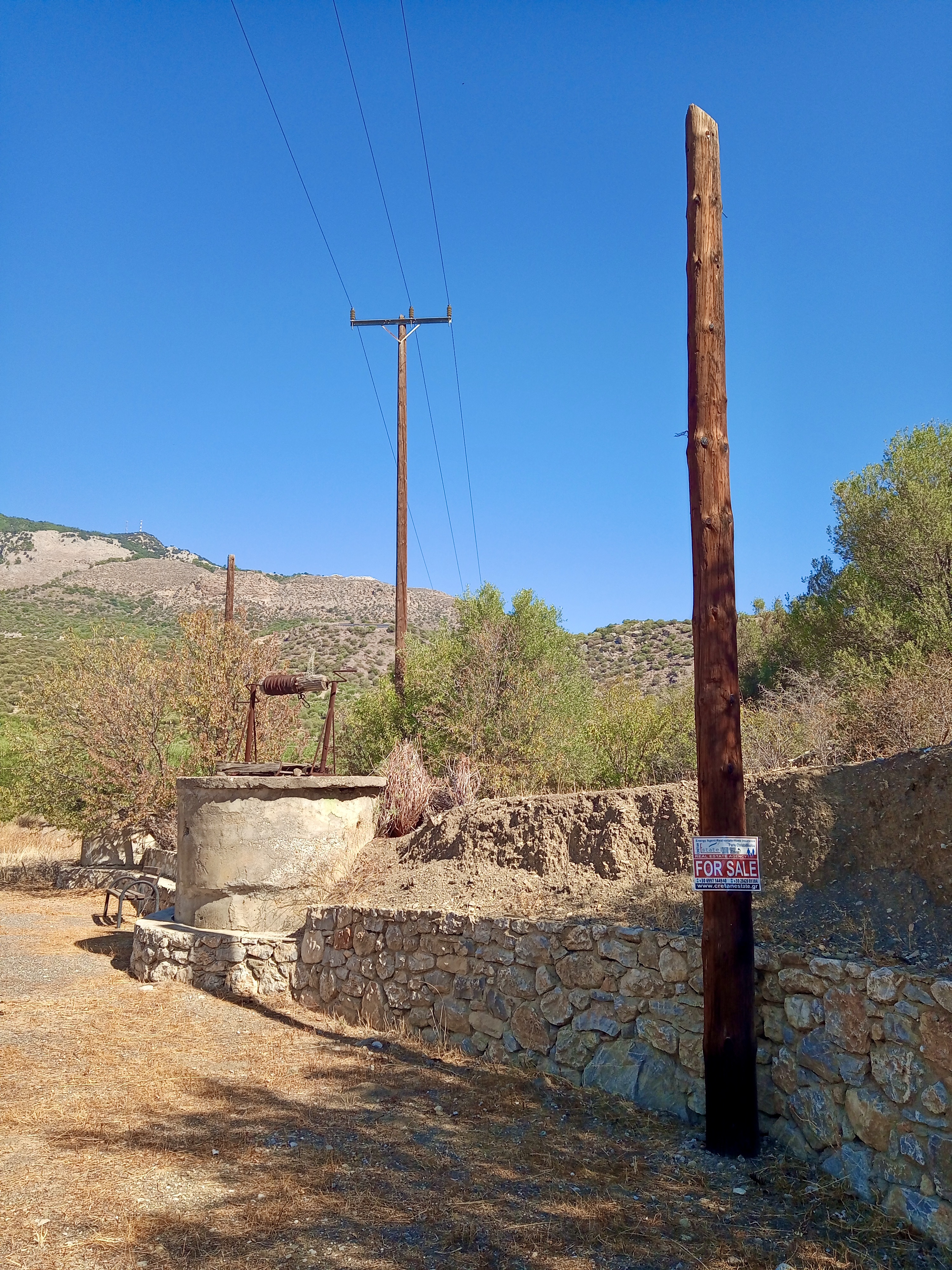
Below: Anyone want to buy a wooden post?

Click HERE to go to my Amazon Author Page. There you can browse and purchase all of my written works.

Appreciation, plus a rant about plastic inflatables

At this time of the evening, around 6.00pm in late September, the light of the sinking sun, viewed from our French windows or out on the veranda, for it’s only around an hour now until it sets behind the hills to our right, is quite magical as it throws into sharp contrast the shadows on the two hills that sit a few kilometres across the valley to the south of us. Even though they’re that far away, the bells of the local herd of goats are clearly audible, and the individual shadows of thousands of olive trees are pin-prick sharp. The sun, just for half an hour or so, sends its shafts across the northern slopes of those two hills owing to its prescribed arc in the daily sky during this season, and then it’s gone.

To the left of both hills, we watch the glistening last rays twinkling on the vast Lybian Sea, and further to the right between those two hills we can just make out another patch of sea, and, through that gap, as if positioned there deliberately, the island of Chrissi is clearly visible on days when the humidity is low enough to permit distant vision. It’s an island that has long drawn the interest of sun-seeking visitors and, when we first moved here in 2019, six or seven boatloads of lobster-red, shorts-wearing, sunglass-toting sun seekers would ply their way there from Ierapetra sea front throughout the summer season, their rucksacks perched between their knees as they sat aboard the vessels for the hour-long trip. These folk would be bussed here from other locations like Agios Nikolaos and Elounda, maybe even further away too, their coaches would park up a little way along the sea front from the harbour where the boats were tied up, and the reps would shepherd their flocks of human pleasure seekers as they walked in teams along the promenade to the area where they’d go aboard.

It always used to put me in mind of my ten years as an excursion escort on Rhodes when I saw this. How often had I stood at the door of a coach, waving my clipboard, or walked from the vehicle to some embarkation point, during those years? How often had I boarded an excursion boat with my guests and eagerly awaited for the onboard bar to open so as to pick up an iced coffee to sip while we made the crossing, or cruised to the first stop on a ‘bay to bay’ excursion? More often than I could count now, in retrospect.

These days, happily, there is only one of those six boats still making the crossing daily all throughout the summer season. Each of those vessels would carry two or three hundred passengers in the high season of July and August, which meant that Chrissi Island would be overrun by human bodies for several hours every day for months on end. 

The boats would tie up on the South side of the island, and the guests would traipse across the few hundred metres from the South to the North coast, where they’d experience paroxysms of delight as its pristine, white sandy beach came into view before them. On the paradisaic beach of Chrissi there was back then a plethora of umbrellas and sun loungers, along with a small bar, where a diesel generator would chug away all day long, keeping the drinks cool in the refrigerators that had been shipped over there to service the thirsty hedonists. Hundreds of bodies would roast all day before their owners would wend their weary ways back across the island for the trip back to Ierapetra and hence to their coaches for the journey back to their accommodation. Each guest would go back with their mind mulling over how beautiful had been the unspoilt and unbuilt-up environment within which they’d been privileged to spend the day.

Chrissi Island was a world away from anywhere they’d ever been, more often than not.

The problem was, the very fact that so many thousands would traipse across the island on an annual basis was threatening to destroy the very reason for making the visit. The tons of rubbish that insensitive tourists would leave behind continually would take a gargantuan effort to clear up at the end of each season. The delicate natural balance of the unique environment on that island was being thrown out of kilter ever more with the increase of tourism year on year. The flora and fauna there was under serious threat.

So it was that a couple of years ago the local powers that be, in an effort to stop any further desolation of the natural environment on Chrissi took the decision, rightly in my humble opinion, to stop this succession of daily human invasions. Starting last year, no boats were going to be allowed any more to tie up on the makeshift jetty on Chrissi Island, and no sun beds, umbrellas or beach bars at all would be set up on its tropical-looking beach. The only excursions that would be permitted, at least for a number of years in order to allow the natural environment to hopefully make a recovery, would be boats that would anchor a few hundred metres off from the beach, while their occupants could dive from the boat and those who were strong enough swimmers might make their way across to the beach for a while, but there would be no facilities there, no encouragement for people to linger for too long, else they would return with a serious case of sun stroke no doubt.

All these thoughts raced through my mind as I gazed appreciatively and in no small wonder upon the indescribable beauty of the Cretan countryside under that late evening sun, as its rays put on the best of all light shows in the final hour of a late September day.

Here’s just one single photo for you. Do you like it? (Warning: trick question):

I used to like it, I have to admit. I took it one baking hot morning as I stood with a bunch of day-trippers on the stone quay at the far end of St. Paul’s Bay in Lindos, Rhodes, back when I was still working as an excursion escort. There was a short overcrowded stretch of sandy beach right beside that quay; still is, of course, and, while we waited for our vessel to arrive at around 9.15am (the boat that would be our temporary home for the next seven hours while we chugged along the coast, stopping off at various bays for all the guests to enjoy a swim in the warm, clear waters of the Aegean Sea) this young woman drifted past, having settled herself into that inflatable flamingo, reading a book as she did so, not a care in the world, I imagined.

As the time has passed since I took that shot, my whole point of view about inflatable plastic ‘accessories’ has gone through something of a revolution, an awakening even. OK, so it was not so likely that in that particularly secluded bay that such a feather-light pleasure aid would fly away in the wind, but I have since seen rubber rings, inflatable beach balls and li-los taking off far too often as their neglectful owners have forgotten how light they were and left them unattended while a gust of wind grabbed them and whisked them out to sea. Once the breeze takes one of these inflatable plastic environmental disasters there’s precious little that can be done to catch it. How many times have I tried to swim after some kid’s bouncy blow-up ring or beach ball, only to give up several hundred metres off from the beach, having failed to make any impression on the distance between us? More than I care to remember. Many’s the time when I’ve only had just about enough puff to get back to the beach myself, feeling well depressed about yet more plastic pollution on its way out to sea to probably cause the death of some fish, turtle or other innocent, hapless sea creature.

I’m sorry if I upset anyone here, but to manufacture li-los, beach balls, inflatable armbands, or anything at all that people might want to blow up while on a breezy beach is the height of  irresponsibility in my book. I shudder when I see people arriving on the beach clutching all those awful feather-light plastic inflatable accessories, each one a disaster waiting to happen. A couple of years ago, one of the major UK tour operators ran a TV ad for their summer packages in which they actually used computer wizardry to spell out a whole sentence using various plastic inflatables, all apparently spread across the surface of the sea just off from a stupendously beautiful-looking beach, inviting people to take one of their wonderful summer breaks. That ad only ran for a short while and I like to think that the company that ran it withdrew it after too many complaints from people concerned about the environment. If that was the case, bravo to those who made the effort to complain.

In these environmentally aware days, when we’re being told again and again about the dangers of plastic in the natural world around us, doesn’t it seem rather odd that millions of tons of lethal plastic crap (for want of a better word) is littering the beaches of the world every single day? I have absolutely no doubt whatsoever that an alarming percentage of that stuff is getting taken by the wind and blown out to sea also on a daily basis. 

If you’re going to the beach, I’m sure you and your kids can do without a li-lo, a blow-up ring or inflatable flamingo, surely. If not for yourselves, think about what all that stuff is doing to the sea life on our delicate planet when it gets taken from your hands by the breeze. Remember Happy Feet and the plastic retainer for a six-pack of beer cans, or whatever they call those things? It’s all about educating both ourselves and our families, I suppose.

In the time it’s taken me to write this post, the sun’s set behind the hills in the West to our right, those hills that surround the magnificent Lasithi Plateau, so near to us and yet so far, owing to the precarious roads and tracks that lead up there from this side of that mountain range. Twilight, or as it’s called in Greek – liko’fos [λυκόφως] – is now upon us and little lights across the landscape are just beginning to twinkle as the natural light ebbs away into the darkness. There’s no moon at the moment, so the stars will be impossibly vivid tonight as we’ve no cloud cover at all and the humidity is low. I allow myself a nostalgic smile at the word likofos, because there was a taverna with that name just above our favourite beach when we used to take holidays on Skiathos. It’s on the path running down to Megali Ammos (Big Sand) beach, or used to be when we went there, which was some decades ago now. In fact, I notice that on Tripadvisor it is still there (just looked), but posted under the English name, Twilight, but when we used to go there it was only known by its Greek name.

Ah well, time to get up and do something. 

Click HERE to go to my Amazon Author Page. There you can browse and purchase all of my written works.
Back

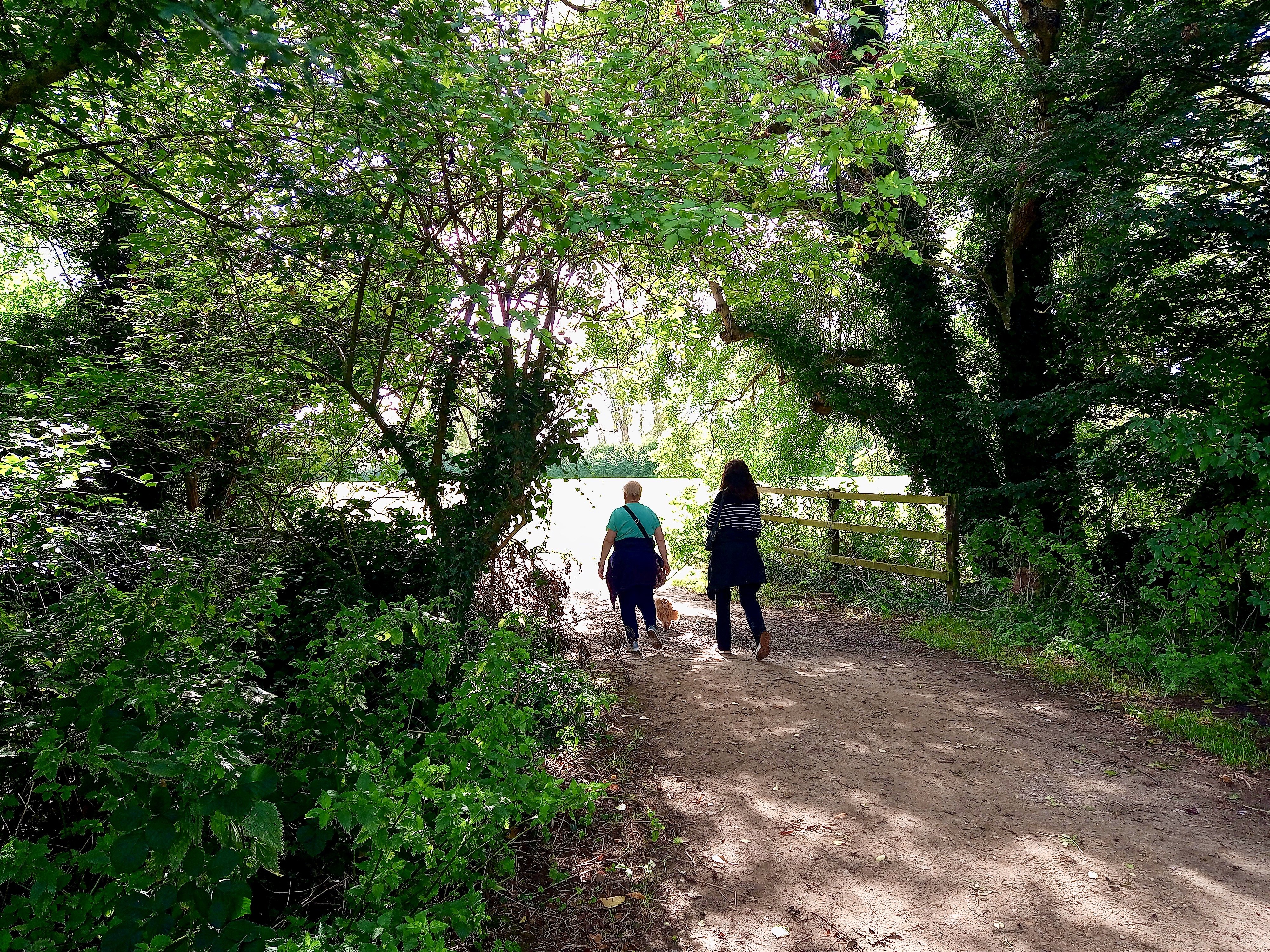
We’re back home after two very busy weeks in Wiltshire. My sister (seen in the above shot with Yvonne, during one of our ‘restorative’ walks while we were with her) lost her hubby recently and we promised to go over and do what we could to help her declutter the home and garage, since she had a mammoth task before her to accomplish it on her own. So we spent most of the fourteen days we were with her painting, cleaning, clearing out stuff for taking to a car boot sale (and actually doing the sale), or for Jane to put on the Marketplace in order to get it sold. So, it wasn’t really a holiday, so much as a ‘working’ trip to help out as best we could. The first three days we were in the UK it rained almost incessantly and I came down with a really catarrhal cold. Lovely. Still, the garage especially looked a lot different by the time we left to come home to Crete, so mission accomplished.

Not long before we went to the UK (on Sept 4th) we’d been having a conversation with Angla’i’a and Giorgo about the nocturnal animal life in and around the village. I’d remarked that I’d had a really good view of a barn owl, not more than thirty metres from their house. Now, I’m not the world’s top expert on birds, but there are a few things I know, and I do know a barn owl when I see one. We used to see them often back on Rhodes and, in the five years that we’ve now been living here, we’ve seen one in the village on several occasions. My most recent sighting was during one of my nocturnal walks around the village perimeter, and I’d happened to glance up to the top of a telephone pole (and those are much shorter than the ones carrying electricity cables) and there he was, in all his glory. I was close enough to see his eyes and he clearly ‘clocked’ me right away. Fortunately, though, he seemed in no hurry to fly away, maybe because he’s so unused to seeing humans around at 3.15am that he didn’t perceive me as a threat, I don’t know, but he remained on the top of that post while I studied him with immense pleasure.

I’d say that it was at least two or three minutes that I stood there while we studied each other before he decided to open his wings and swoop down in the other direction, silently of course. Barn owls make no sound at all when they fly; it’s a truly remarkable feat of engineering is a barn owl’s wing. So anyway, I happened to mention this to Angla’i’a, who promptly corrected me and said, “Oh that wasn’t an owl. We don’t have owls around here. What you saw was a δεκαοχτουρα.”

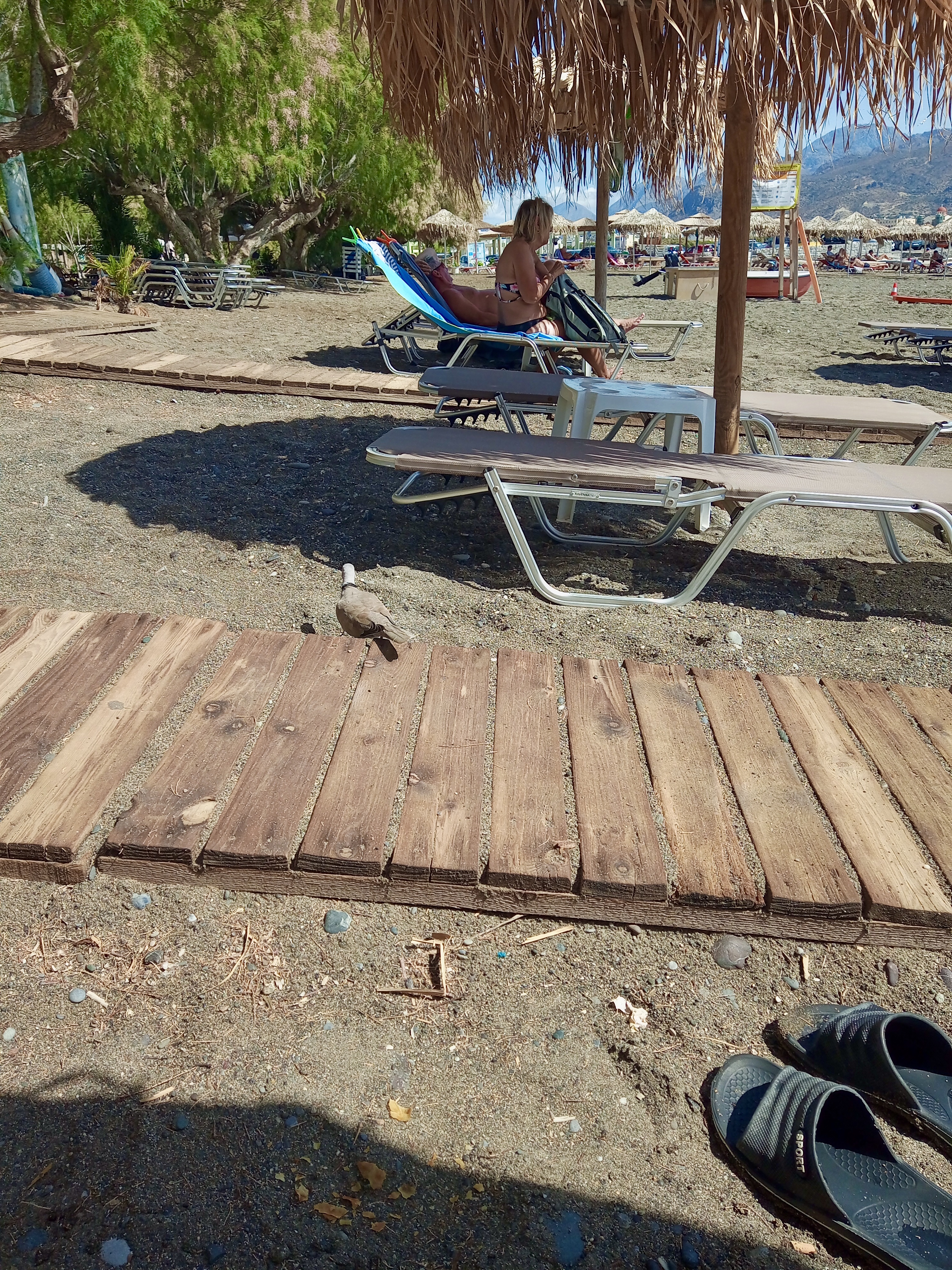
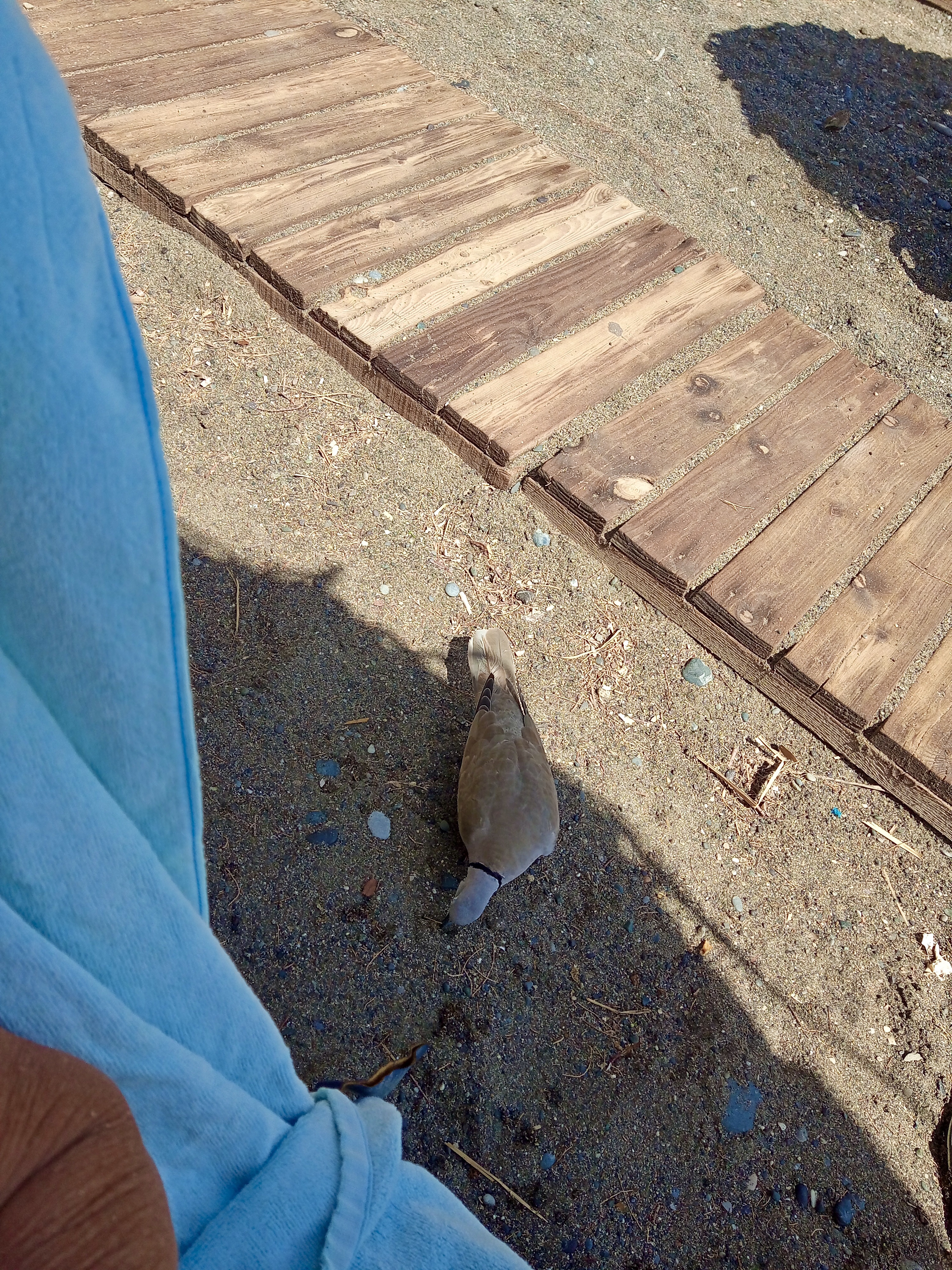
Now, if there’s anything I’ve learned over the years it’s never to argue with a local, but I knew that she was mistaken. A ‘dekaoktoura‘ is in fact a Eurasian Collared Dove, and they’re quite common around here. They’re also not nocturnal, …fact. Funnily enough, the day after we got home from the UK, we went straight to the beach for a coffee and a swim, picking up a spanakopita along the way for breakfast, since we had nothing in the house. Once I’d finished mine I shook the pastry crumbs out onto the sand, since there was a collared dove hanging around, no doubt because it had spotted what I was eating and thought that it might well be worth sticking around for a while. Its patience paid off too, because, after having approached my lounger a couple of times and then backed off, it eventually threw caution to the wind and tucked in…

If you’ve ever seen even a photo of a barn owl, then you’ll know that there’s no way anyone could confuse one with a collared dove. Still, I chose not to contradict my well-meaning neighbour, it pays to be diplomatic now and then, right?

It seemed to us that this year the weather in the UK was unusually cold and changeable for September. I have vivid memories of going back to school when I was at the City of Bath Boys’ School back in the late sixties and early seventies, and we’d be out on the school plateau playing football all through the lunch break, charging sweatily around in our shirtsleeves, shirt tails flying in the wind. In my mind’s eye I have a picture of one of my old school friends in particular, and I’ve no idea why it’s him, but there’s Steve Jones charging up the wing, deftly dribbling the ball towards the goal (marked by a couple of piles of jumpers) with a cider lolly on a stick dripping from his left hand. An ice cream van would regularly station itself right outside the school gates during hot sunny days (of which I seem to recall there were many in September back then), and most of us would spend our bus fare home on a cider lolly. They were deliciously cooling, after all.

Anyway, I was glad to change the subject after Angla’i’a had told me that my barn owl must have been a collared dove, and we moved on to more pressing matters, like the lack of rain this year and how it’s going to affect the olive harvest if we don’t have a few downpours before November. That conversation took place before we flew to Britain, and boy were we glad to be home when we felt the air temperature, even at 10.00pm, as we exited Heraklion airport to go find our car. We were even happier the next morning to be back where we most love to be at coffee time during the summer months…

Sorry about the feet – again.

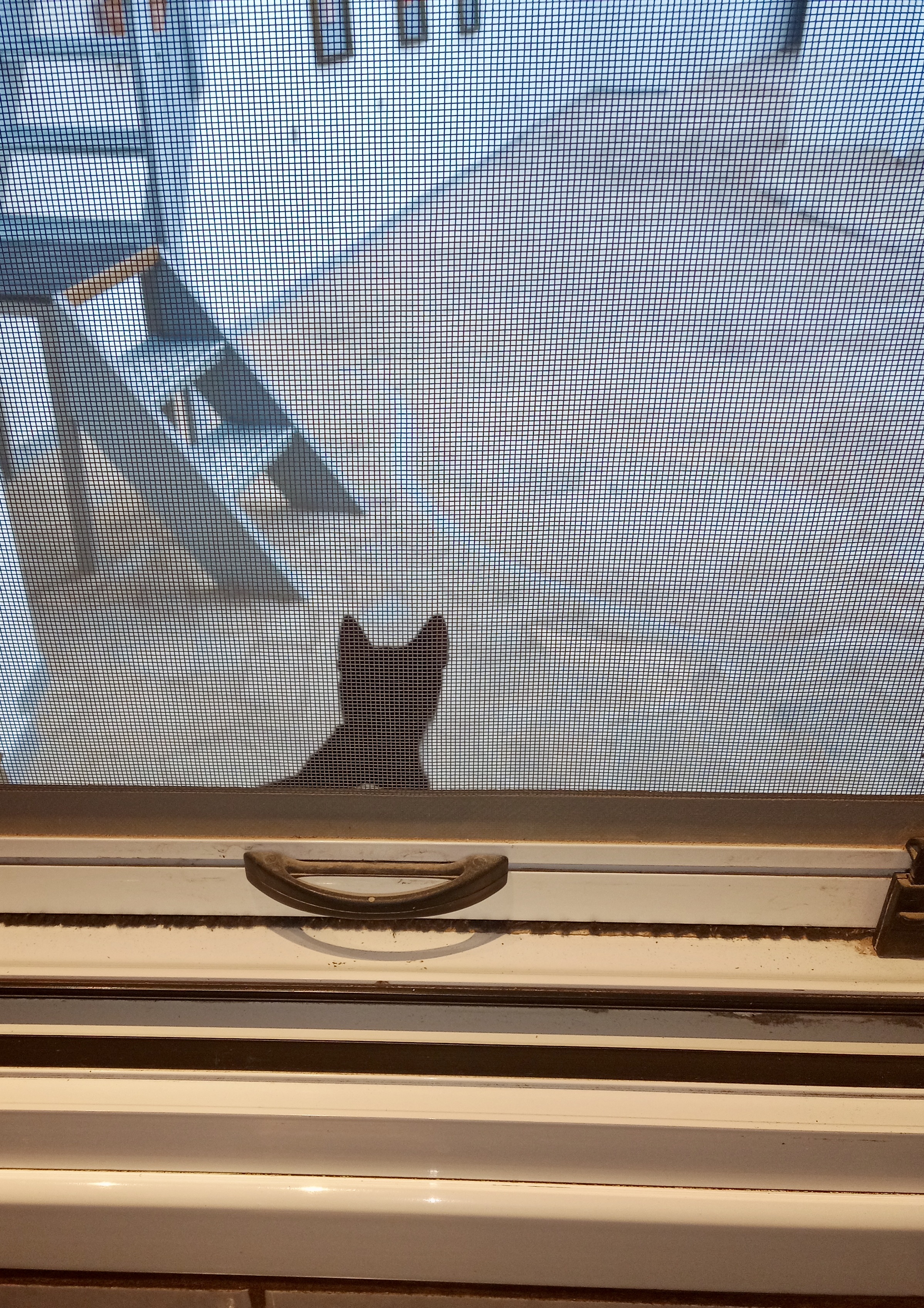
Cats have long memories, don’t they. Yesterday morning, the second after our return to our home here on Crete, I threw open the kitchen window as around 7.30am while I was boiling the kettle to make a cup of Earl Grey, and there, through the mosquito net, I saw a couple of black ears…

It was Groucho, of course. Once he realised that the window was open, he turned around and poked his nose right up to the net, evidently hoping for a few treats from the two-week absentees. Cheeky little devil. He could do this because we have a bench fixed to the wall outside that window, beneath which is one of my tool cupboards.

Well, must get on. See you soon (much sooner this time, OK?).

Click HERE to go to my Amazon Author Page. There you can browse and purchase all of my written works.

Where were we?

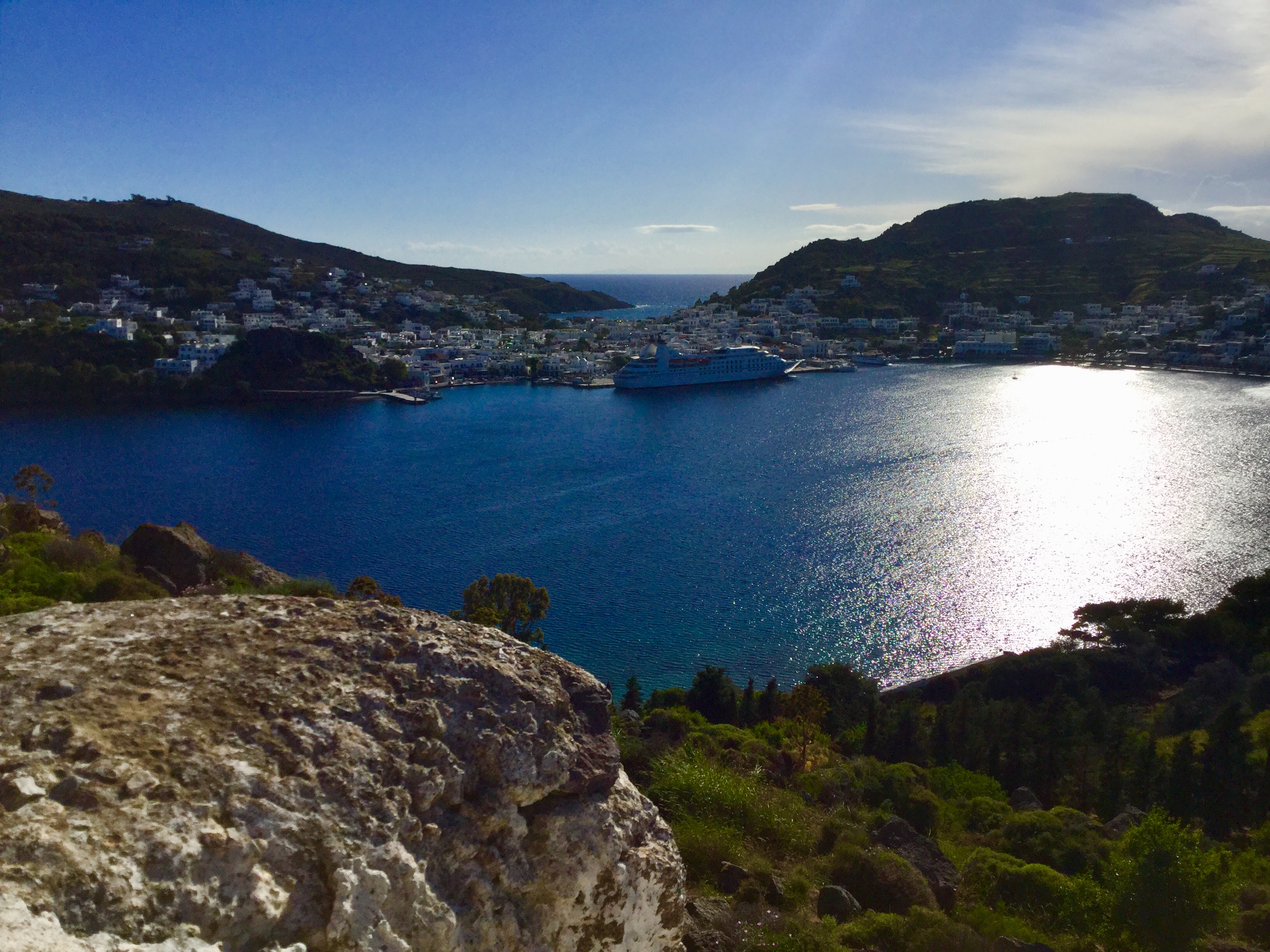
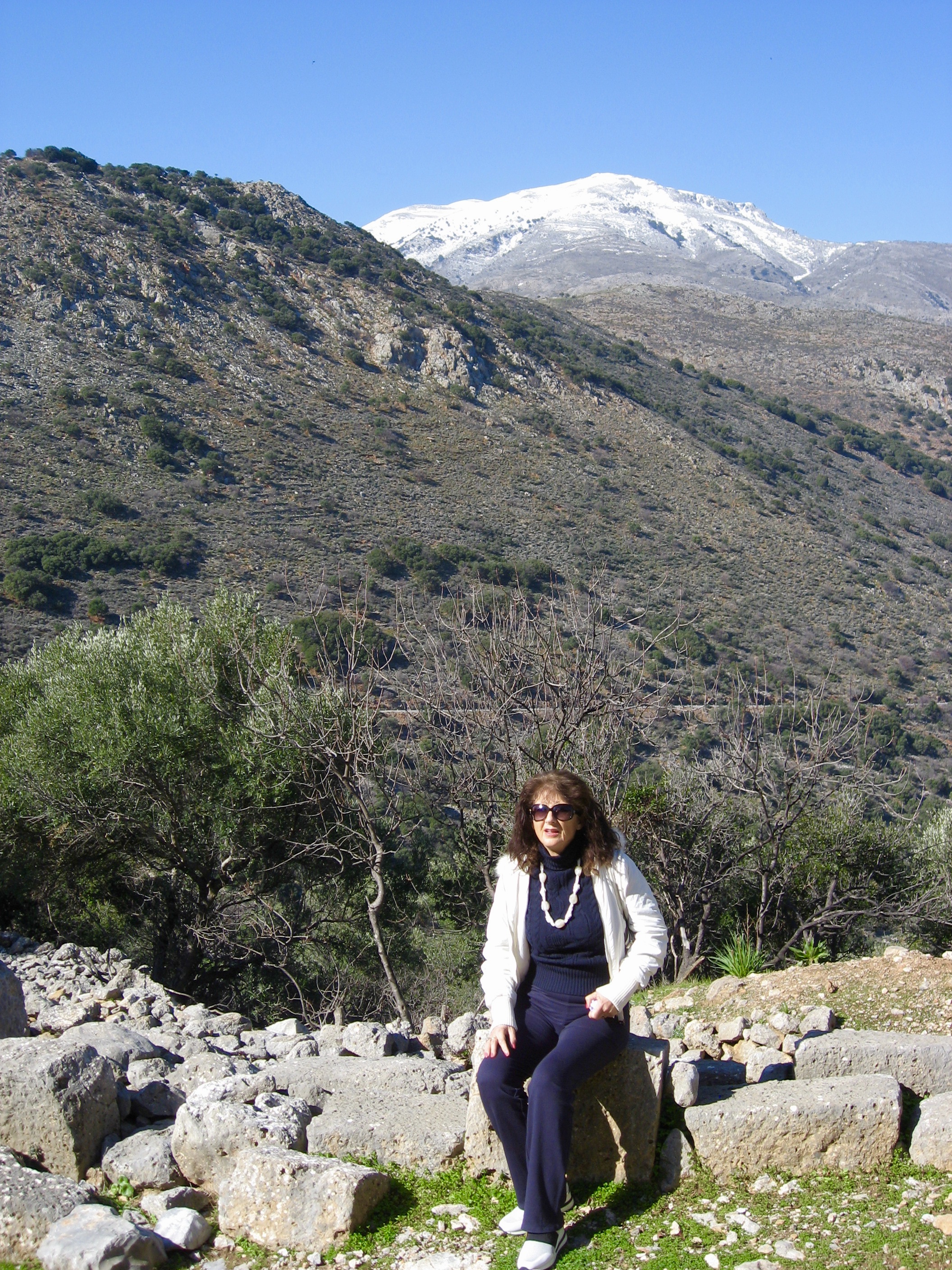
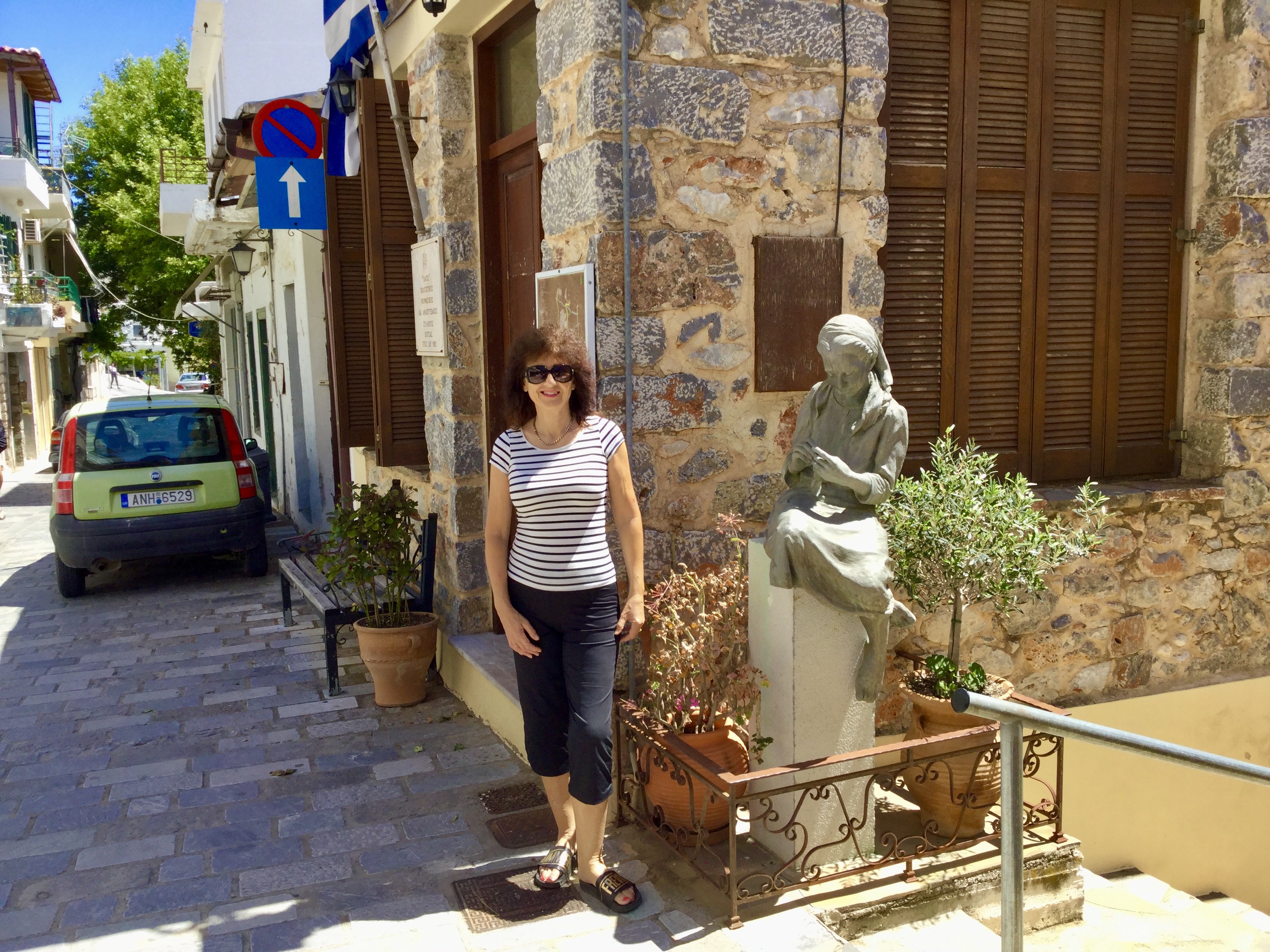
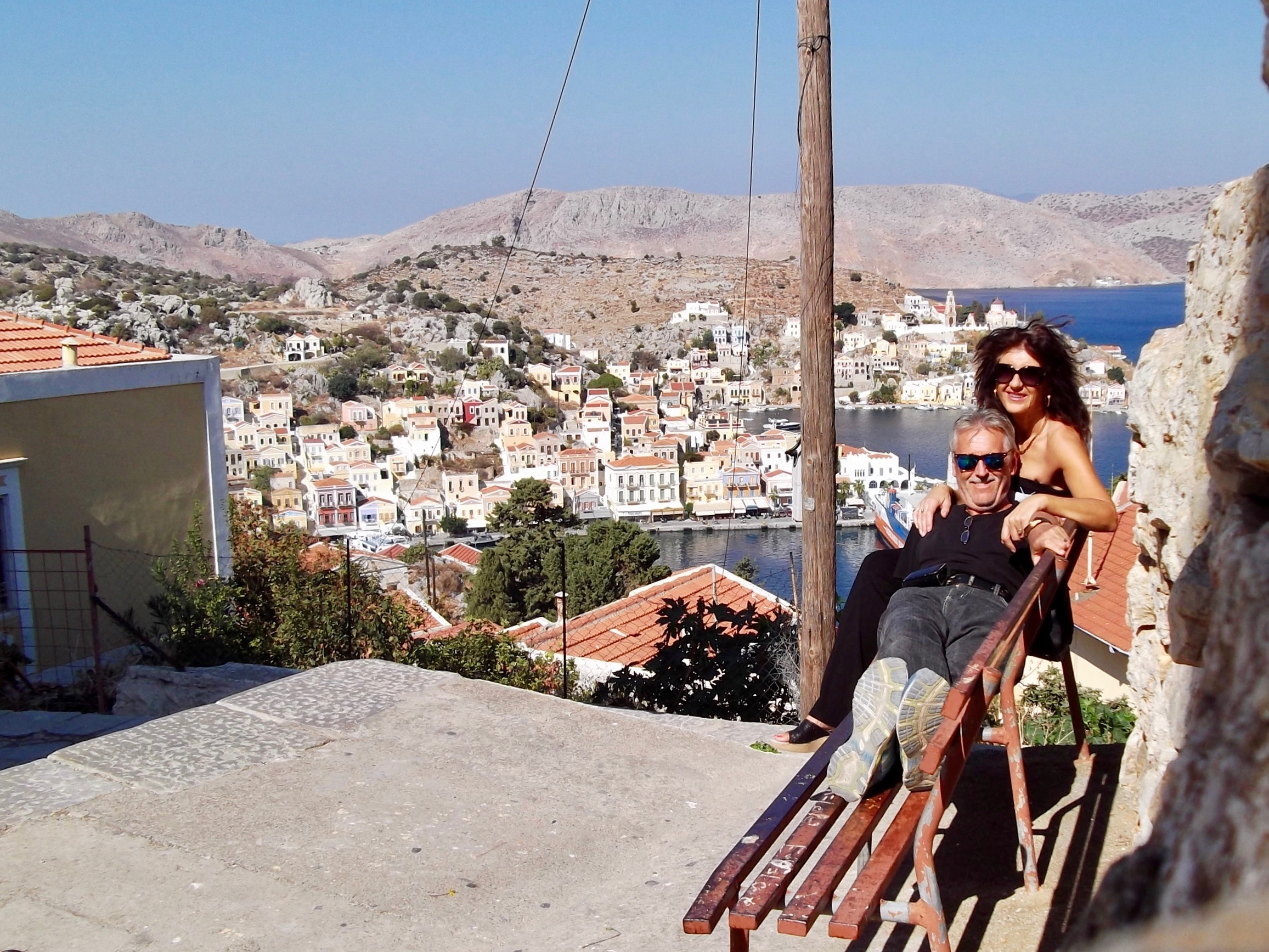
I thought it might be fun to post a load of my photos from the past few years and see if anyone can guess where they were taken. They’re not all on Crete (although most of them are), so be warned, you may need to have travelled somewhat to get them all. I’ll add a clue to each one.

  1. If you’ve ever visited the island below, you’ll have found it a bit of a revelation.

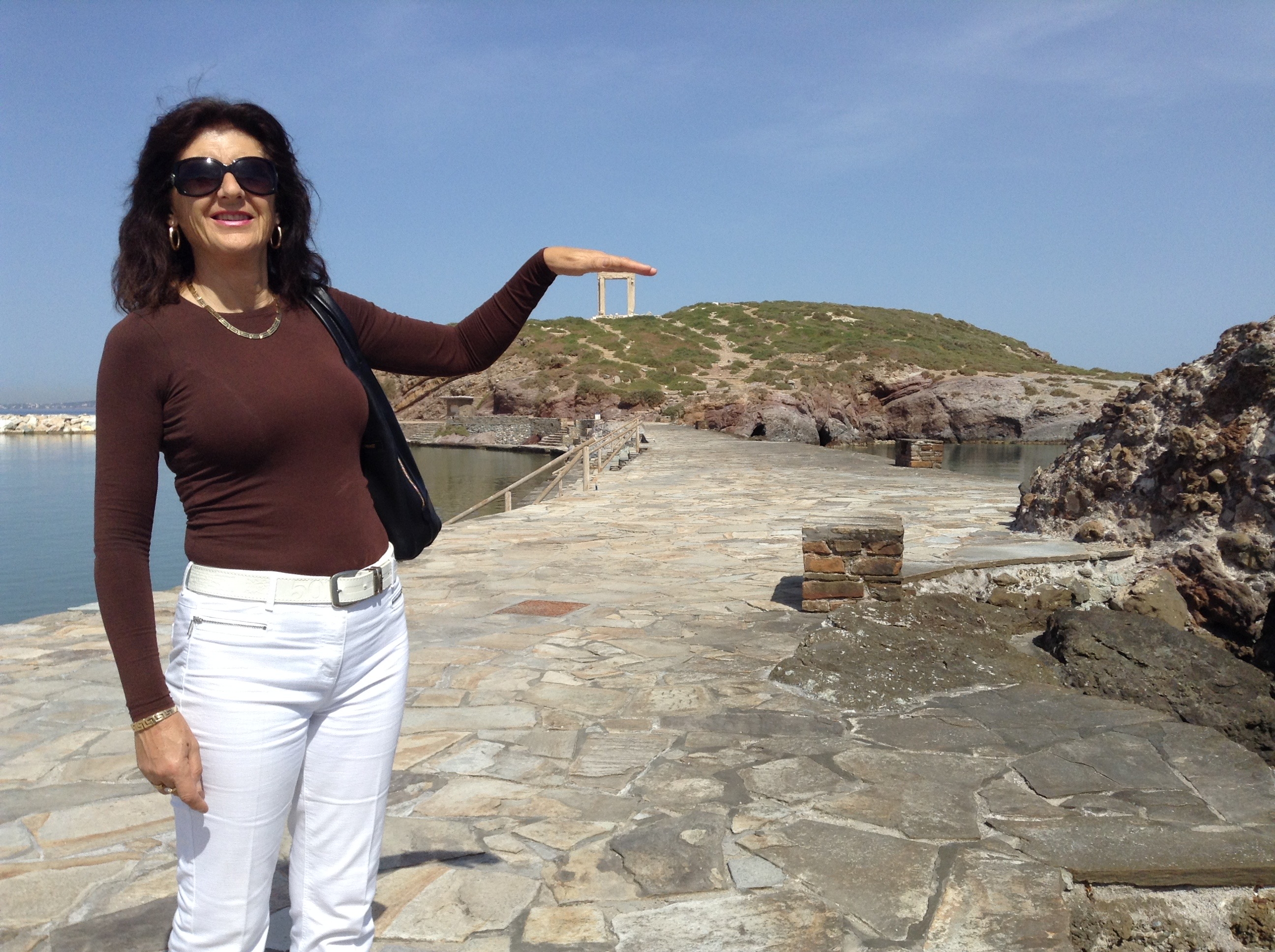
2. If you know about the ‘scorpion,’ then you’ll probably know about this amazing archeological site…

3. Well, if you got the one above, then the one below is a cinch…

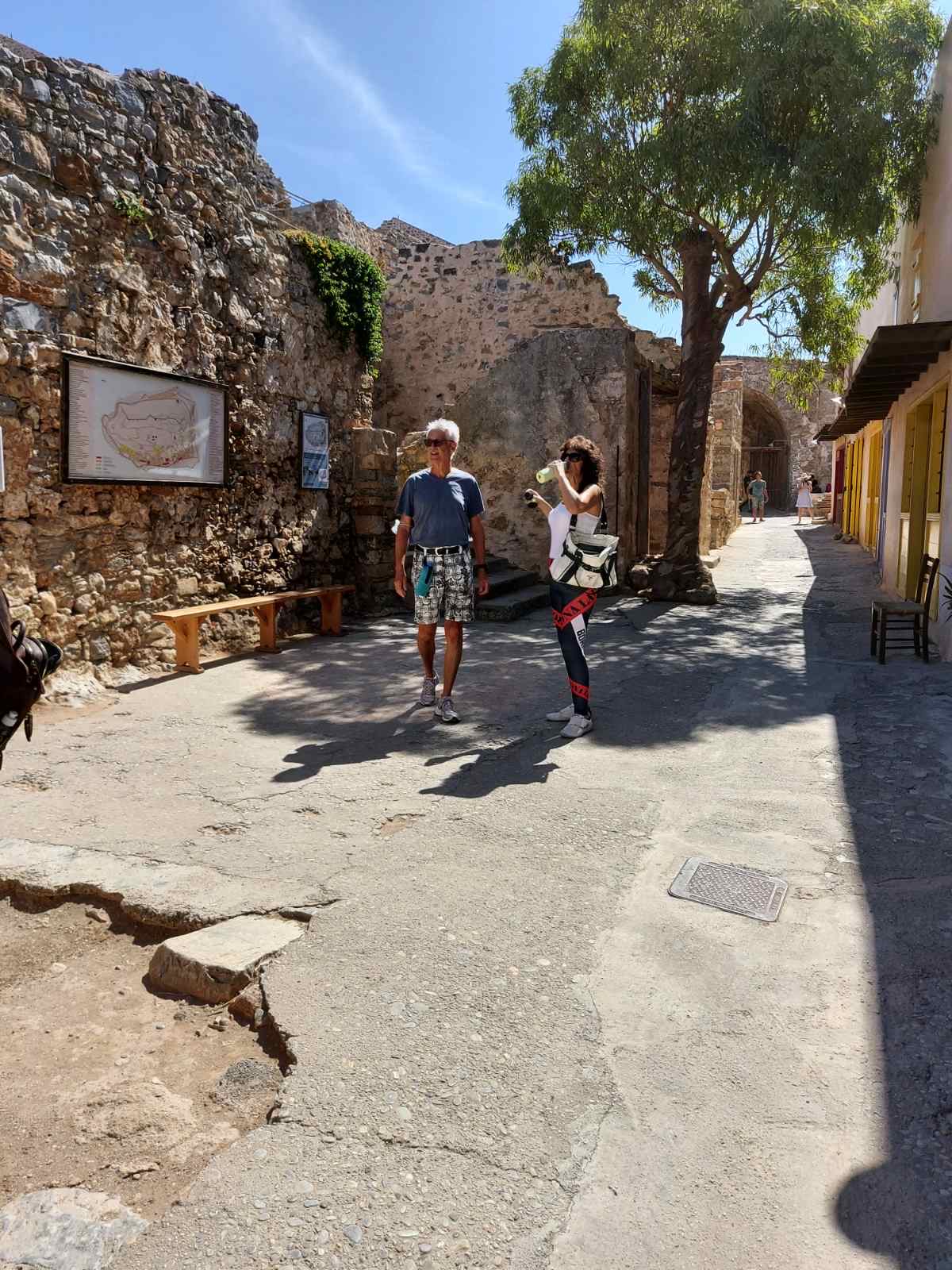
4. If you’ve read the amusingly titled ‘Carry on up the Kali Strata,’ by writer James Collins, you’ll have no trouble with this one…

5. Nothing to do with Christmas, although if you know the translation from the Greek, you might be forgiven for thinking it was…

6. Honestly, talk about ‘jerry builders.’ They never did finish this job…

7. The lighthouse should give this one away…

8. Not a London cathedral in sight either…

9. “Unclean! Unclean!”

10. The palm trees here are bountiful…

There you go. I wonder if anyone can get all ten.

Click HERE to go to my Amazon Author Page. There you can browse and purchase all of my written works.
Moonlight munchers

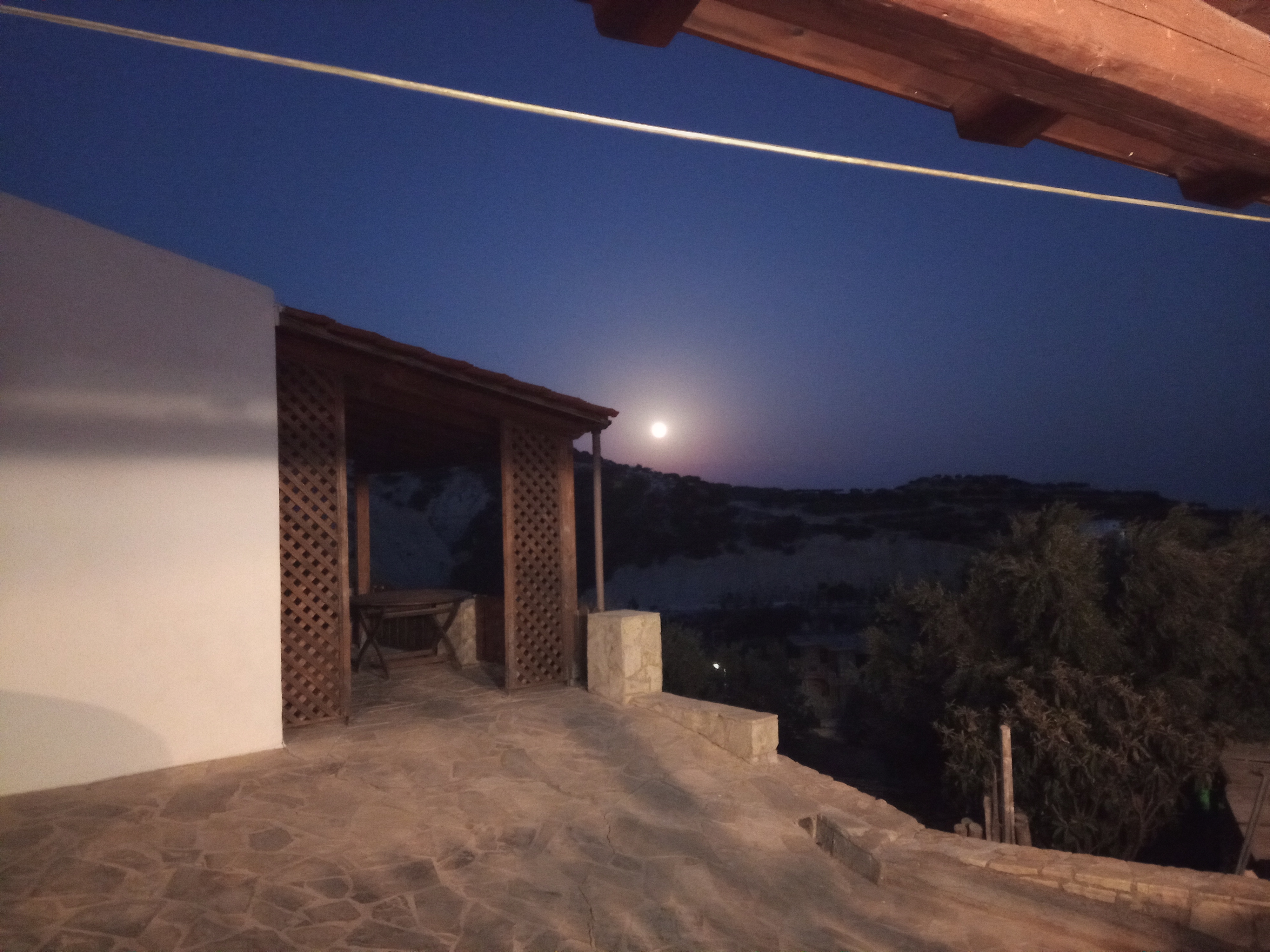
Last monday, at 8.40pm, when the moon had just risen over the hill to the east of us, that’s when I took the above photo. They were saying it was a ‘blue moon,’ but I take all this ‘wolf moon, blue moon, blood moon, half a lager moon’ stuff with a large pinch of salt, to be honest. All the years as I was growing up there were full moons every 28 days and that hasn’t really changed much has it. I mean when they say “oh, look, tonight the moon’s going to be bigger, redder, brighter, more cheesier (or whatever), you simply must rush out and see it” drivel, the moon looks the same to me. It’s always beautiful, and it’s always something that inspires awe. After all, it’s our planet’s sole satellite and even with the naked eye it’s astounding how well it reflects the light from the sun, which is on the opposite end of the sky.

Little did I know, though, as I stood admiring the brilliant moon, that later that same night I’d get the kind of treat that I’ve been looking out for for ages and not been able to fully record. I mentioned some time ago that we have badgers living in the close vicinity, but on the rare occasions when I’ve been privileged to see them, I hadn’t had my phone with me to capture the occasion. Last Monday, at well after midnight, as is my usual routine, I went outside at around 1.30am, having got up to mooch around because once again I wasn’t sleeping. Wandering around to the other side of the empty house next door, I heard the unmistakable sound of animal movement. The ‘house next door to the house next door’ has a tiled canopy around three sides and, at the furthest point behind the house, it becomes a carport, where we often park our car when the owner’s not in residence (with her permission, of course). On the top of the terracotta tiles there was the distinct sound of claws on baked clay, as it were.

‘Dammit,’ I thought, ‘sounds like we’ve got another stray dog or two on the prowl.’ The wall behind the house in question, which forms the side wall of the carport, borders on Yanni’s garden and orchard, he it is who lives behind us, and whose house is quite a lot higher than ours, owing to the fact the we live on a steep hillside. You can walk in one easy step from the roof of the carport to which I’m referring straight on to Yianni’s garden, as it’s that much higher than the driveway below. In the past there have been a couple of stray dogs hanging around the village on the odd occasion. They’re not dangerous and usually slope away from anyone who approaches them, tail between their legs. I simply don’t like the thought of them getting into our garden though, which also has an upper area on a level with the lowest part of Yanni’s, and is separated from his only by a rickety fence.

That part of Yanni’s ‘garden’ that’s immediately behind the driveway and carport of our furthest neighbour is rather overgrown, and shaded by a couple of not often tended trees. One’s an olive, which he hasn’t harvested for a number of years, and the other (well, the other two, to be precise) are almonds. He doesn’t look after that area much because it’s so steep, and so he kind of leaves it ‘natural’ which I suppose is good for a lot of the local insect life and other indigenous wildlife and, since it doesn’t cause us any bother, we’re all OK with that. TBH, we benefit from the almonds when it’s time to harvest them, since we can either pick some by reaching straight from our neighbour’s roof, or that of the carport, or by scavenging all the fallers, so that’s a bonus, when you consider how much almonds cost in the shops.

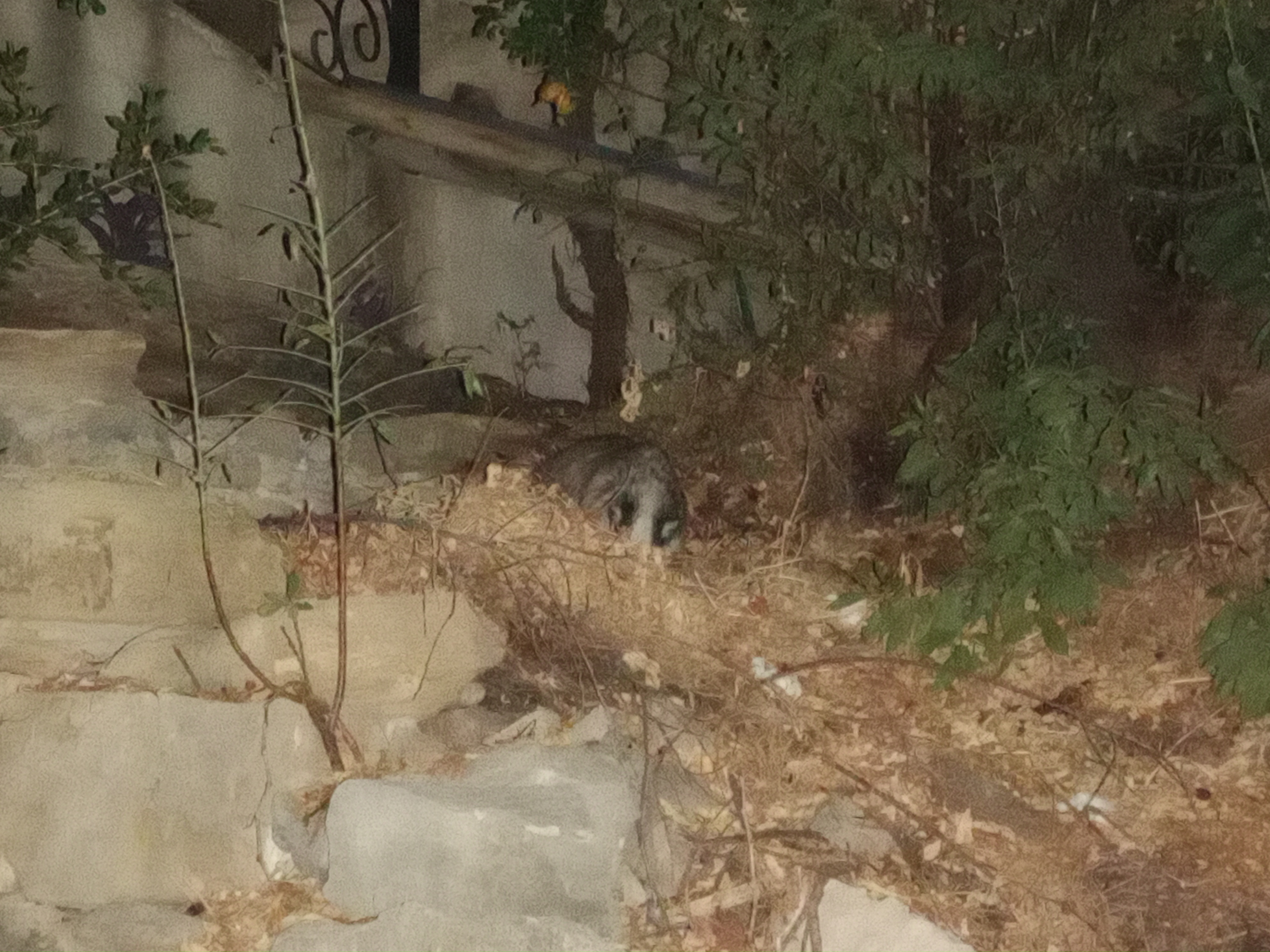
Just for once, I actually had my phone in my shorts pocket, and a jolly good job too, because once the creature that was making the noise came into view, I was overjoyed to see that it wasn’t a stray dog at all, no, it was an adult badger, not five metres from where I was standing. I watched it as it came right down to the edge of the carport roof, took a look at the eight-foot drop, and then strode off into Yanni’s garden, and up the slope towards his house. He chucks a lot of vegetable material and old leftovers out from his terrace for the stray cats, so I imagined that the badger was making its way up there to see what was about. Also, there’s a self-seeded pomegranate tree there too, which has been dropping fruit for a while, so maybe badgers are partial to a pomegranate or two, I don’t know. [Quick bit of Googling here]… Aha, I see that badgers will eat just about anything, see this post.

As I watched badger number one, another one came into view too. I was watching a pair!! Talk about excited. I haven’t been so excited since the last time… Well, I’ll just leave it there, shall I? Anyway, I pointed my modest mobile phone at the one I could see best and this was what I got…

The animal was so close that I could hear it chomping away at whatever it was eating. I also attempted a video, but the light’s nowhere near as good, but I’ll post it here anyway, because if you look closely enough (probably best to go full-screen) you will be able to see its head around centre of shot, and you can hear it munching too..

Of course, I’ve been out there every night since, and so far they’ve not shown up again. But even if I don’t get to see them for some time, this was so exciting that it’ll last me for a while. I’ve also had an excellent view of the local barn owl this past week or so too, sitting as it was, atop a wooden post just across the road from our neighbours Angla’i’a and Giorgo, also in the wee small hours. Didn’t get any shots or video though, sorry. I get the impression that nocturnal wildlife around here isn’t too timid in the presence of humans, because they so seldom see us.

I’ll just close out this one with a couple more shots from the past few days. We had to get the pump replaced on our car’s screen washer this week and, while we sat and waited as the auto electrician fitted the new part, I took this one below of a kitten making a pretty good attempt at camouflage on the bonnet (hood, folks) of a car that evidently hasn’t been anywhere (nor is likely to) for probably a few years now…

Below are two shots taken at 2.20am during another of my night time walks around the village perimeter…

Finally, the one below was taken at the newly refurbished café/bar Menam, at Pachi Ammos this very morning…

Click HERE to go to my Amazon Author Page. There you can browse and purchase all of my written works.
Pooling resources

The house next-door to ours is owned by a very nice English couple, and when they’re in residence we get along really well. Sadly, they don’t seem to get much time to spend over here at the moment, but that resulted this past week in their son and his wife, along with their two children staying there for a few days. The kids were about 5 and 9 years old, the youngest being a boy and the older of the two a girl. Two more inquisitive kids you’d be hard-put to meet. Some kids of that age are so rebellious and naughty that I could cheerfully have them caged, and in a soundproof room at that. These two, though, were outgoing, respectful and very inquisitive. The lad was constantly asking questions, wanting to know stuff, and he simply loved lorries and trucks. He wasn’t in any way cheeky, recalcitrant or aggressive, but he had an inexhaustible thirst for knowledge. In short, we got on with the whole family like a house on fire.

While chatting with Toby, the dad, he told me that when he mentioned to a friend that he was taking the family off to his parents’ house on a hillside in Crete, the first question was, “have they got a pool?” This led me to thinking about this whole ‘villas and pools’ thing, and that’s why I decided to throw caution to the wind and express my views on the subject in this post.

Where to start, that’s my dilemma. There are so many factors that you need to consider when forming an opinion about swimming pools that you need to make a list and work your way through it. Having lived in rural Greece for 19 years now, I can confidently say that (with very few exceptions) if you see a new-build villa around the coast of an island and it has a pool then it’s either owned by foreigners, or by Greeks who built it in order to either sell it to foreigners or to let to them during the holiday season. Greeks who have holiday homes don’t bother with pools. They make do with an outdoor shower somewhere in the garden. Why is this?
People who come here for holidays have no idea whatsoever of what constructing a pool and then maintaining it will cost. Firstly, the government here decides (rightly in most cases) that anyone who can afford to have a pool can well afford to pay for its licence. Firstly, at the outset a building licence for a pool costs several thousand Euros, and that’s just the permit to build the thing. In fact, a ‘tax on luxurious living‘ is levied on the owners or possessors of swimming pools – yes, that’s what the government calls it. Using a complicated system of calculation too, the cost of an annual licence for owning a pool is, on average, a couple of thousand Euros. On top of that you have the maintenance costs. Most people we’ve known over the years have paid for a private company to come in and maintain their pool on a regular basis. This again will add a few hundred a year to your budget, unless you want to do it yourself, in which case you’ll have to go and buy the chemicals required to keep the water from becoming discoloured, not to mention full of bacteria that can harm the health of anyone getting into the thing. Keeping the tiles from becoming caked in green deposits and other nasties isn’t easy either. You’ll also need a selection of tools too.

Most of the pools that pool bars and hotels use for tourists are emptied at the end of the season, which in itself is a minor disaster for the surrounding environment. When we lived near Pefkos, on Rhodes, any time that we went there during November (after all the tourists had gone and the place was becoming a near ghost town for the winter months) the roads would be awash for days with pool water being pumped out using bit fat pipes, which would syphon the water out and simply gush it on to the road, from where it would take the easiest downhill route to the nearest patch of soil. Could they not put that water to some practical use? Nope, owing to the amount of chemicals in it, of course.

Now, imagine all those chemicals simply being absorbed into the surrounding olive groves, vineyards and vegetable patches, eh? If you were to Google ‘what chemicals do I need to put in my pool?’ you would see something like this in the search results…

Screenshot

Not a particularly environmentally friendly image is it? And just one of those bottles or tubs usually sets you back around €100 too. One website alone shows the following as being essential to keep your pool ‘healthy‘ (some strange new use of that word that I wasn’t previously aware of) –

Screenshot

Lovely, eh? In fact click this link to see what one company recommends you consider putting into your lovely clear blue glistening pool. If you’ve gone and taken a look, remember, you’ll be swimming in that lot, plus it’ll all be absorbed into the local grapes and olives when the pool bars and hotels empty their pools come Autumn.

Now, by about this point you’re probably thinking that I’m a right old killjoy, I’m sure. OK, maybe I am, but anyone who truly cares about the natural environment must surely be alarmed by all of this, plus the fact that it never seems to get a mention in the media when they talk about preserving our planet. Can you imagine how many swimming pools have been constructed in tourist areas planet-wide this past few decades? I don’t want to depress you, but the facts do a pretty good job of that anyway.

About a decade ago, maybe slightly more now, Greece became virtually bankrupt, as anyone who has a relationship with or interest in the country will know only too well. One of the reasons for this was mass tax-dodging on a gargantuan scale. One of the ways that affluent people tried to avoid paying their pool licences was to declare on the paperwork that their pool wasn’t in fact for swimming in, but was actually a ‘water cistern’ for domestic consumption. In an earlier paragraph I stated that most Greeks don’t have pools, which holds true for the islands and rural areas. The only exception is the affluent suburbs of the cities, primarily Athens and Thessaloniki. In these areas the houses are a long way from the coast and thus a pool, much as it is in downtown Los Angeles I suppose, is a status symbol.

Most people are familiar with those pool covers that can be rolled up on a large drum at one end while the pool is in use, then extended to cover the entire pool when not so. I’m not kidding when I tell you that some of the richer pool owners in the Athens suburbs actually had their pool covers printed in a paving slab motiff, so that from above, when the pool cover was extended, it looked like a large patio area. It’s true I tell you. In fact back when the TV news was going on about the financial woes of the nation circa 2011-13, the news was that the government had started employing drones to fly over the affluent suburbs to spot pools that weren’t registered as such with the tax authorities. Heavy fines were imposed on any house owners who had pools that hadn’t been declared as such. Not a few celebrities got a mention during that time as having been caught out too.

One final thing on my list of things to consider when thinking about swimming pools is the water shortage. Most of the Greek Islands are currently facing massive and expensive decisions about how to procure enough water for domestic and agricultural use. Owing to the rapid increase of tourism this past four decades or so, water consumption has multiplied many times over, a problem exacerbated by the demand for swimming pools, of course, not to mention all those sweaty, sand-covered bodies coming back to their accommodation at the end of a long day’s lazing around, and then wanting to take a shower. Imagine the strain on the water infrastructure of a small island, when the population of that island increases a hundredfold during the months from May to October. I’ve mentioned before that, by the time we left Rhodes in September 2019, large swathes of the city (Rhodes Town) were having to go without water several times a week sometimes for up to 12 hours at a time, while the tourists splashed about in their water parks and pools with gay abandon. My good friends at the Top Three Bar would tell me that, after having been at work from the crack of dawn until way after midnight, they’d go home to their house in Analipsi several days in the week only to find that there was no water in their taps and they couldn’t even take a shower to remove the sweat from a day’s toil in temperatures in the mid-thirties.

What the solution to this is I don’t pretend to know. One thing I do know, however, is this: Looking after our planet begins with each individual taking their own responsibility for their ‘carbon footprint,’ their individual effect on the natural environment around them. That’s why, whenever anyone asks me, “do you have a pool?” My reply is, as I point my finger towards the glistening Mediterranean sea that’s always within sight, “Yup, there it is.”

The photo at the top, BTW, is taken from the Robinson Taverna, looking towards the Kalliotzina, at Koutsouras, just along the coast from here.

Click HERE to go to my Amazon Author Page. There you can browse and purchase all of my written works.