Musings from South East Crete. Accretions: "Growth or increase by the gradual accumulation of additional layers or matter. A thing formed or added by gradual growth or increase." This is a spasmodic diary of life in south eastern Crete by writer John Manuel.
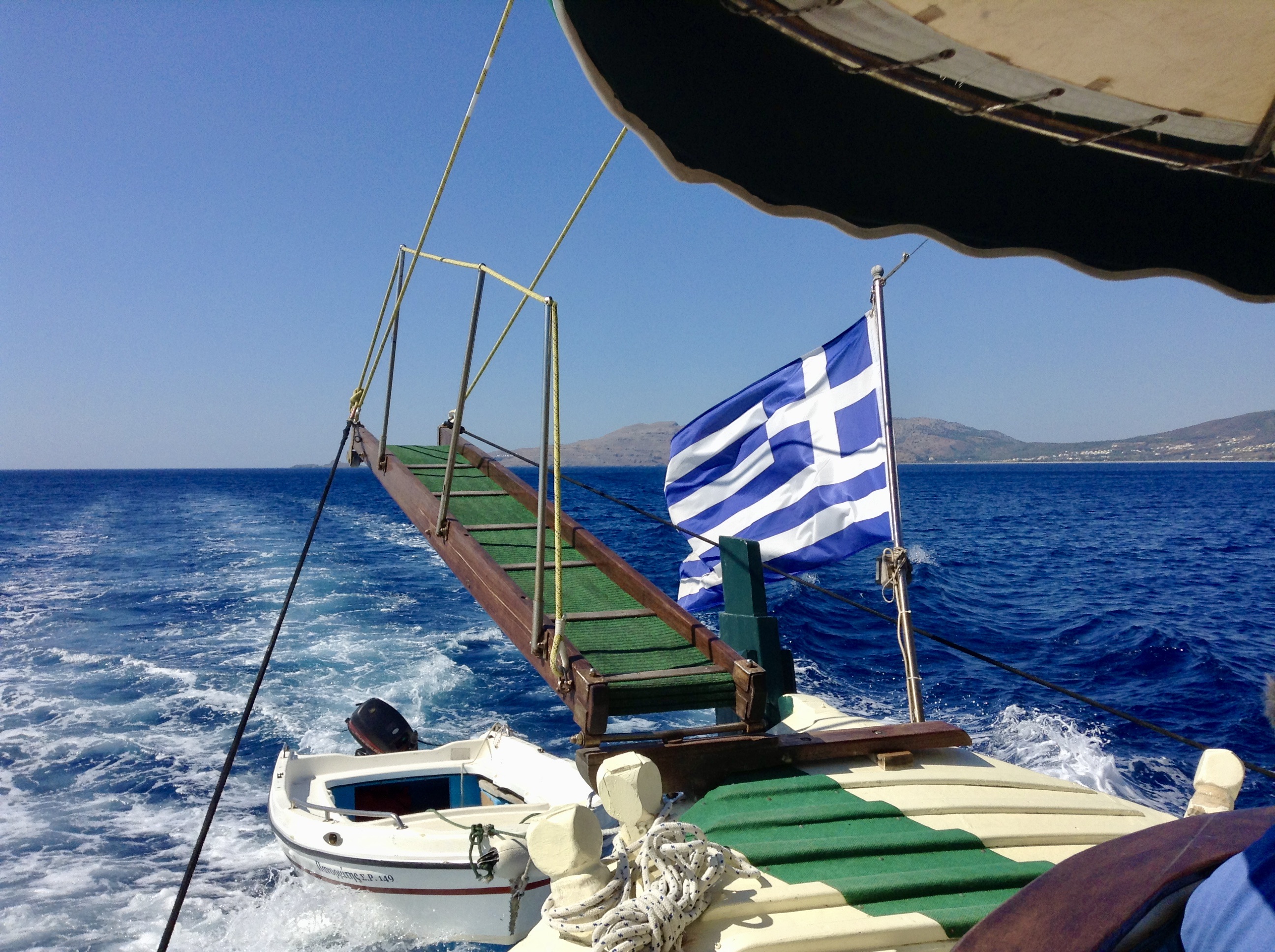
Here’s another post of images spanning our two decades of life here in Greece. The one above was taken on board the Triton, during one of my excursions while I was working as an escort on Rhodes from 2007/8 until 2018. This shot was taken in July 2016. There is another, much more modern vessel with the same name operating out of Mandraki Harbour, on which I also served now and then, but this one was a beautiful traditional caique, originally built to carry cargo, although people visiting Greece on their holidays would be forgiven for assuming that all vessels of this type were first built as fishing boats. Here’s another shot, showing her under way in all her glory…
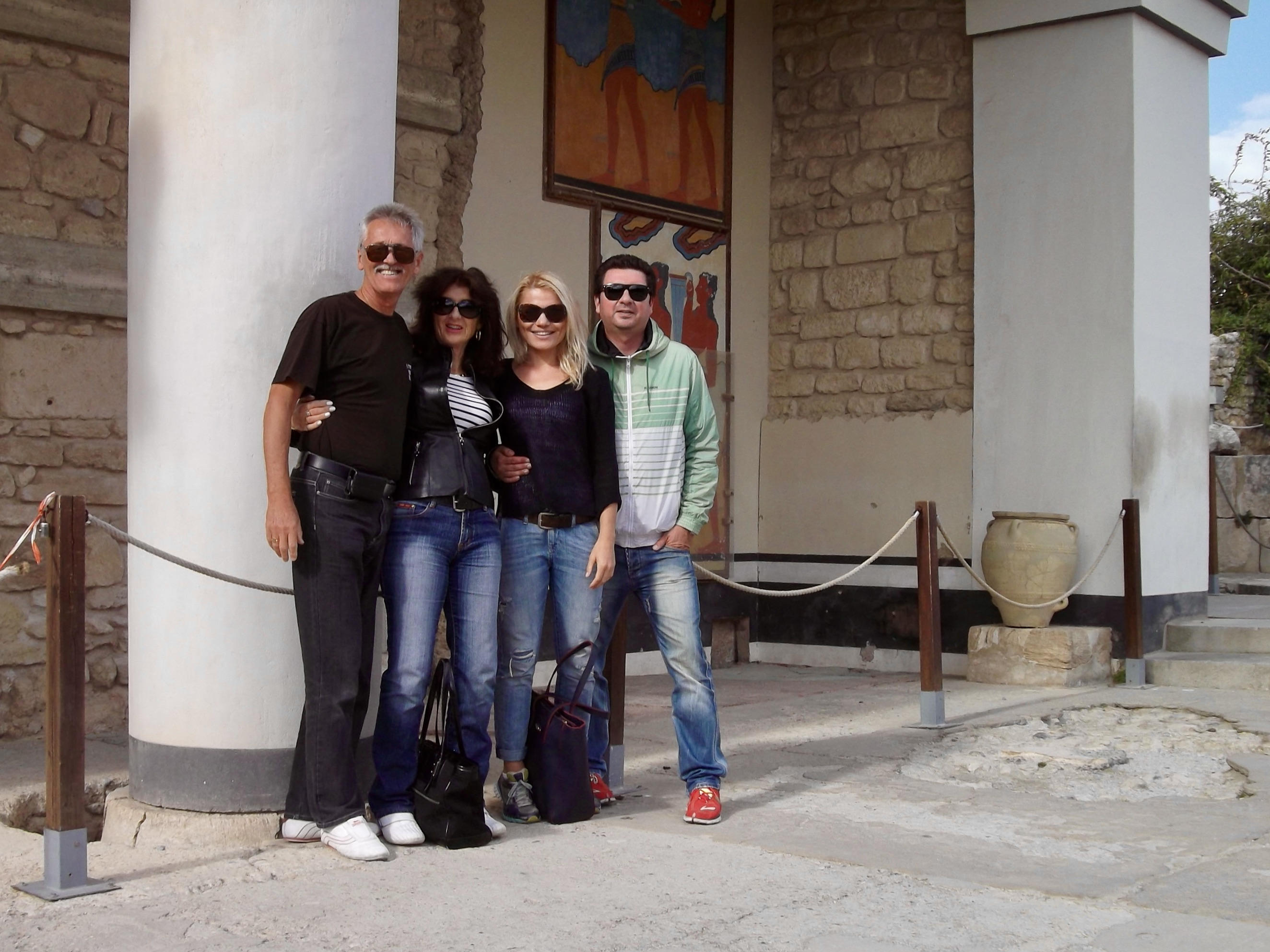
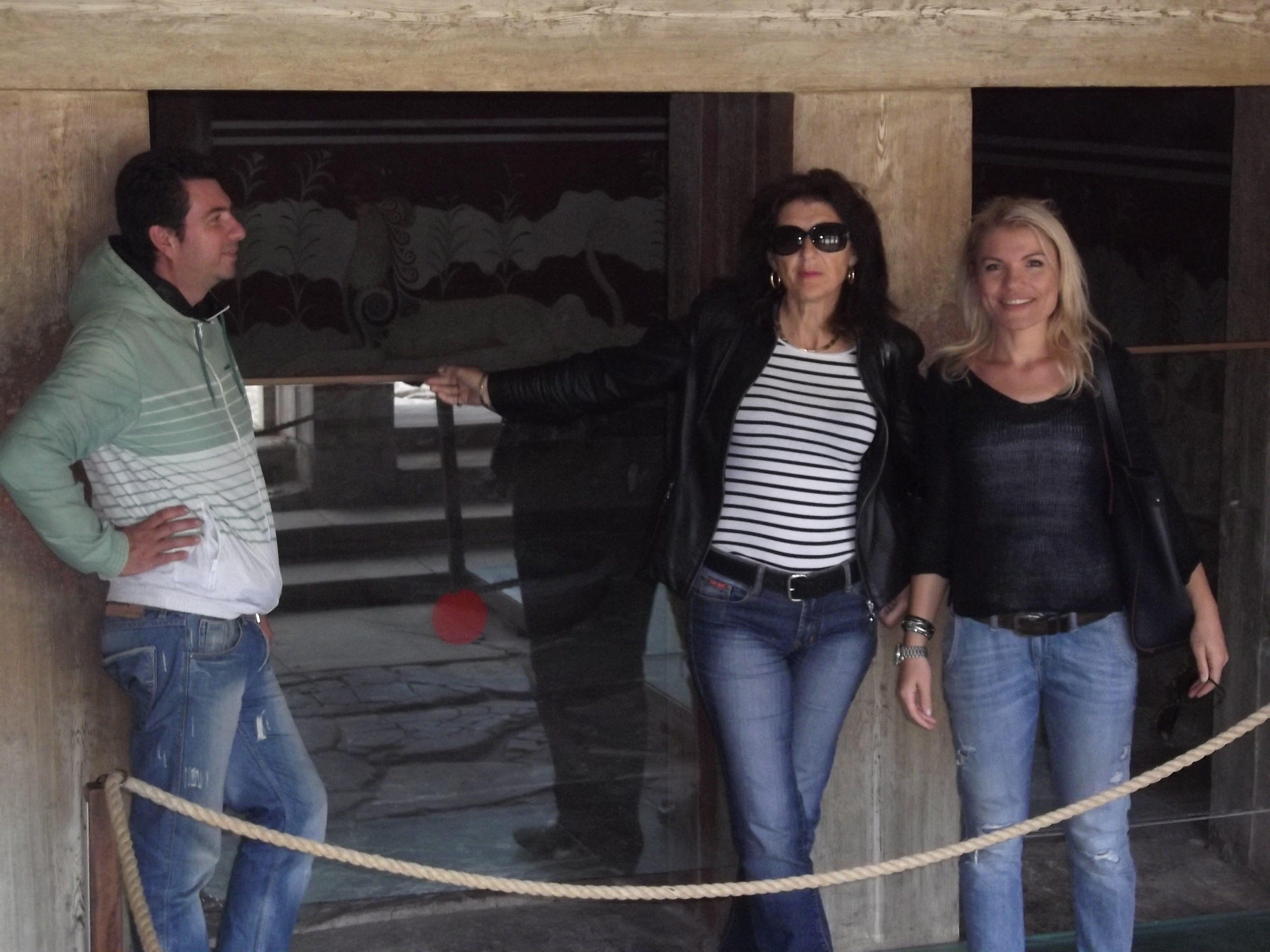
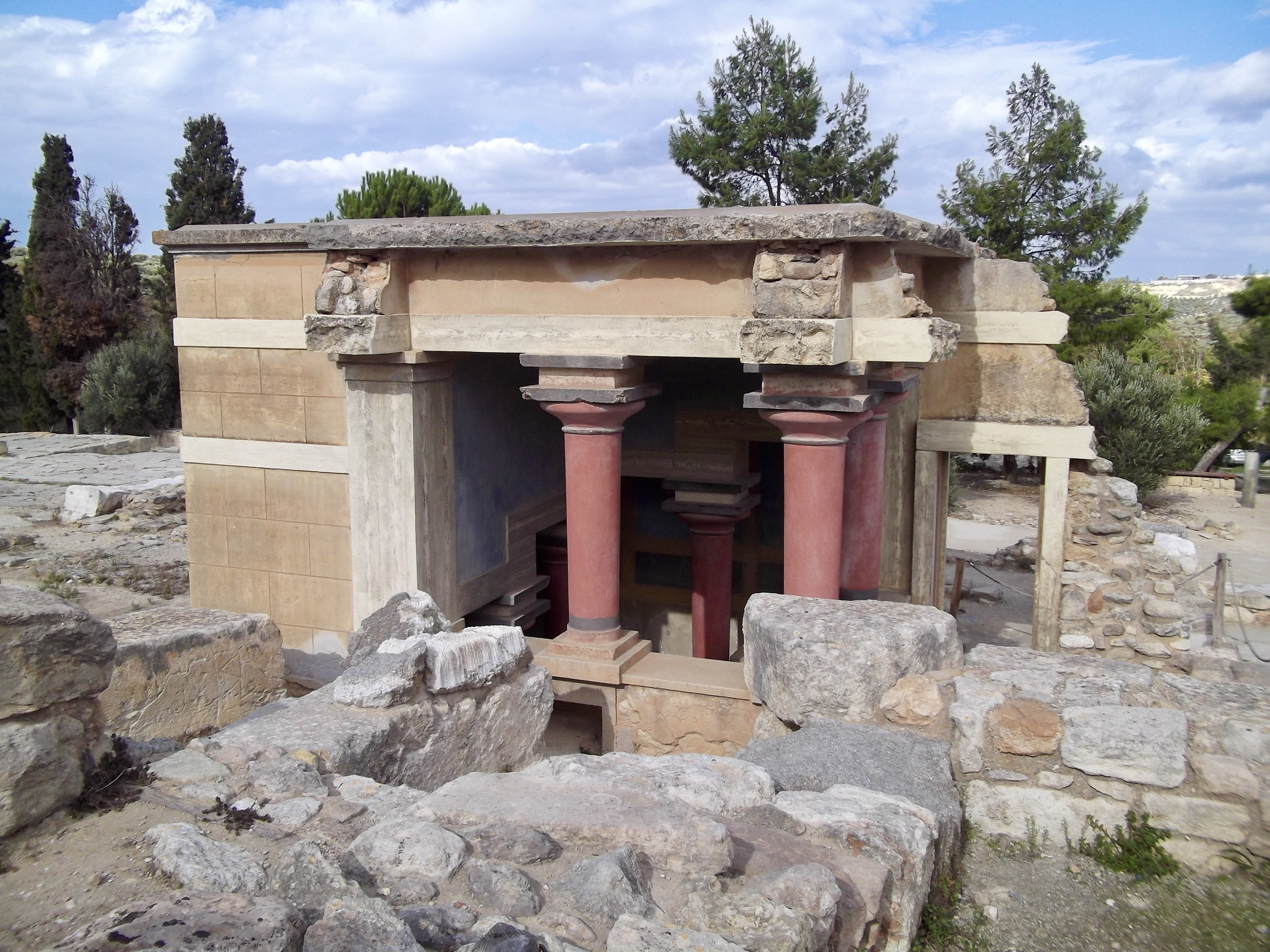
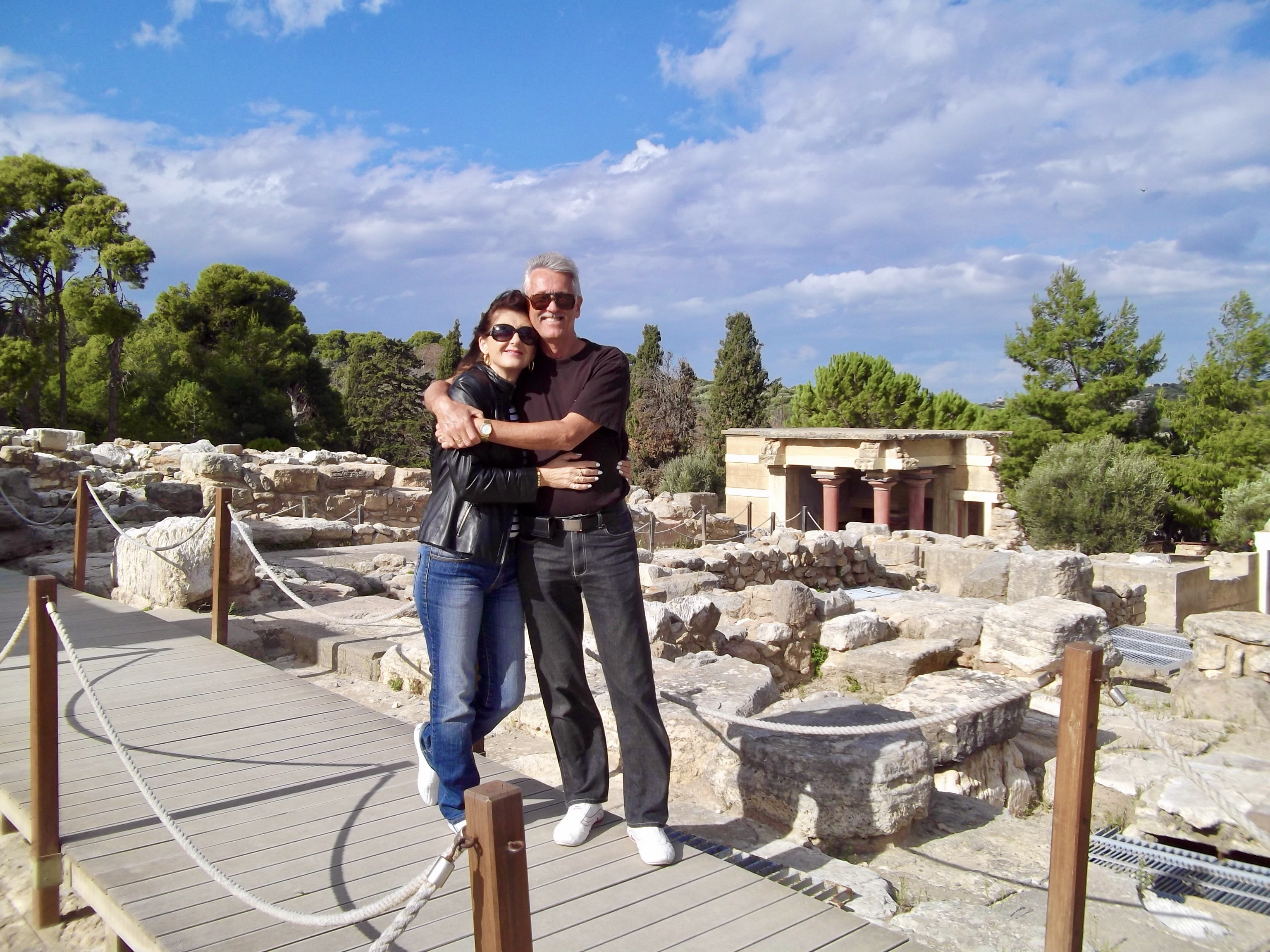
A true highlight of our earlier visits to Crete was when our good friends Timotheo and Sylvia (originally from Rhodes, but now living in Crete) surprised us by taking us to see the amazing Palace of Knossos. We went in November, so the place was virtually deserted, whereas if you go during the tourist season, be prepared to be among the hordes…
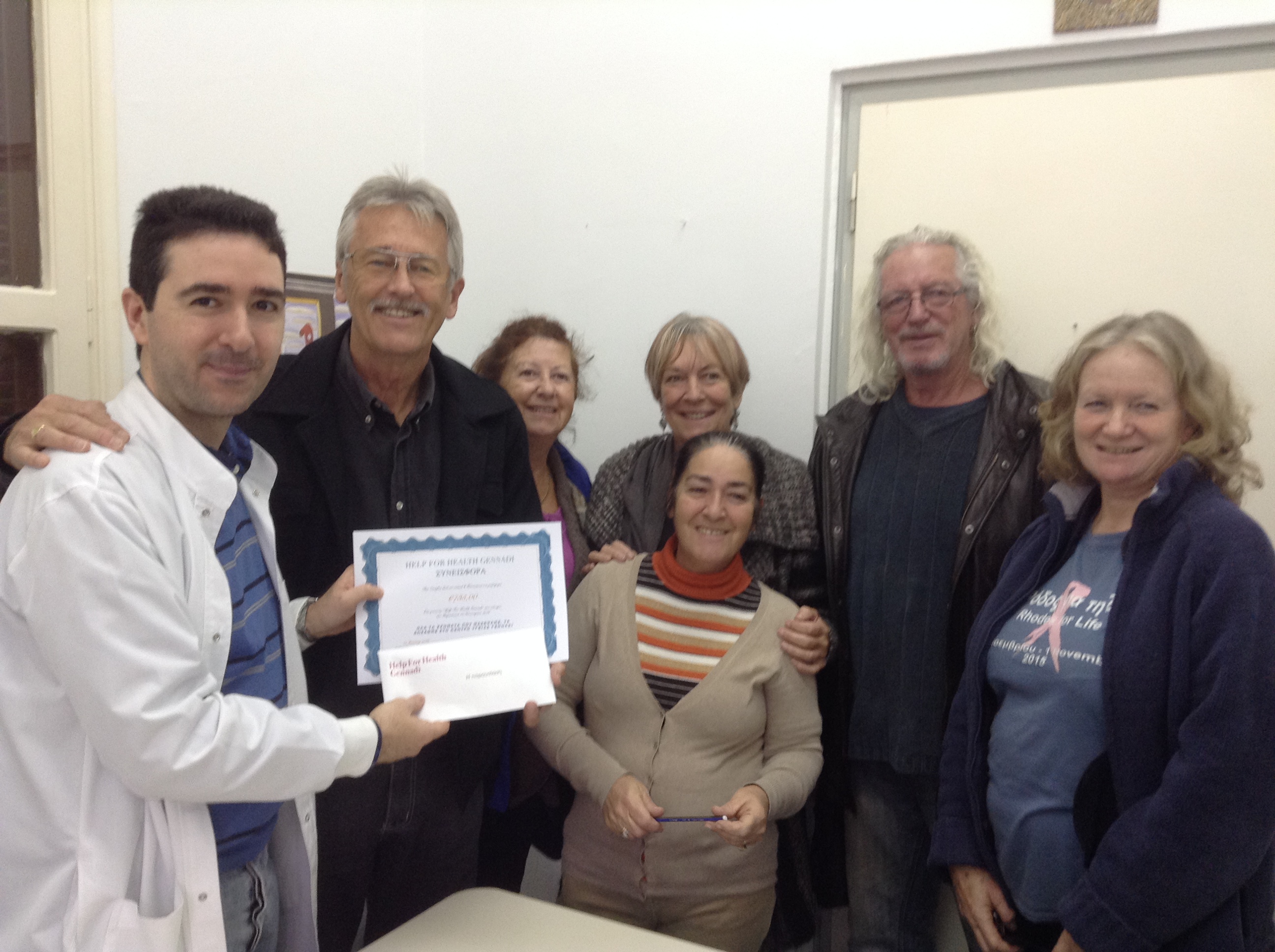
While we were living on Southern Rhodes, we ran a small charity event for a couple of years aimed at raising money for the local doctor’s surgery in the village of Gennadi. It was a great experience and to receive the gratitude of Doctor Niko and his team at an unexpected re-opening ceremony attended by some local dignitaries was truly humbling. The cash we were able to raise gave the surgery the opportunity to purchase much needed medical supplies and even one special piece of machinery for carrying out specific examinations (can’t remember now what it was though!)…
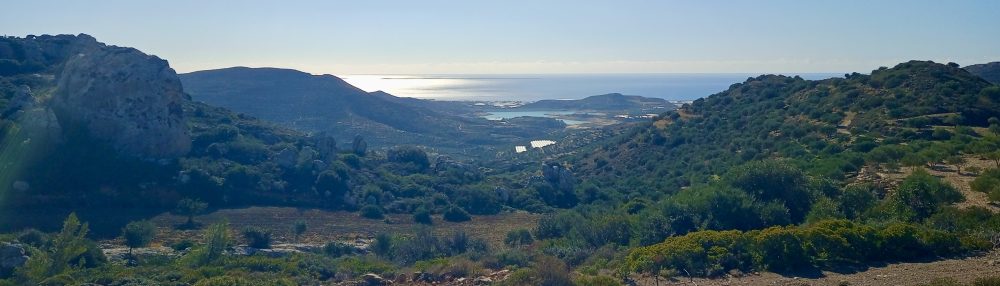
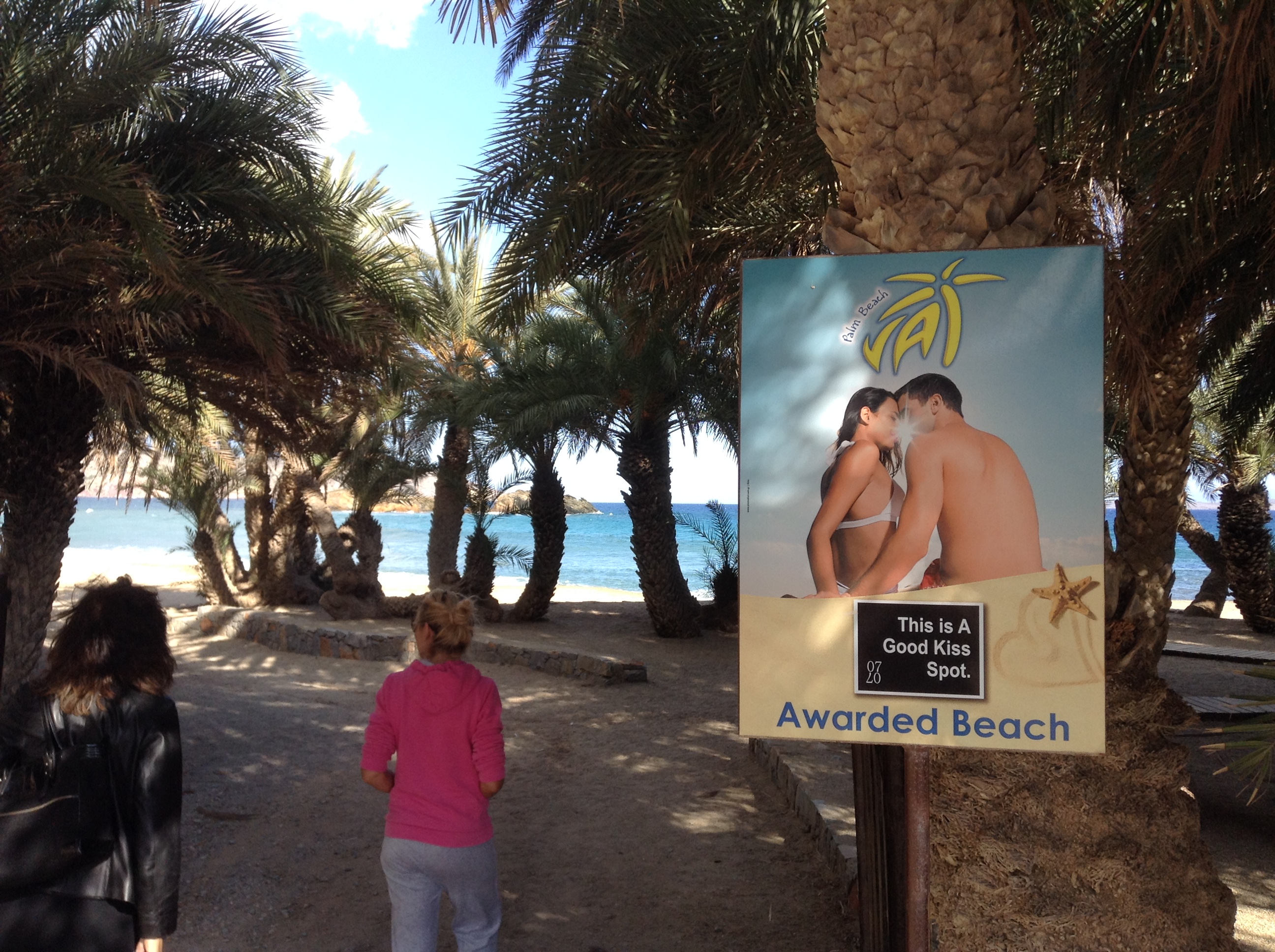
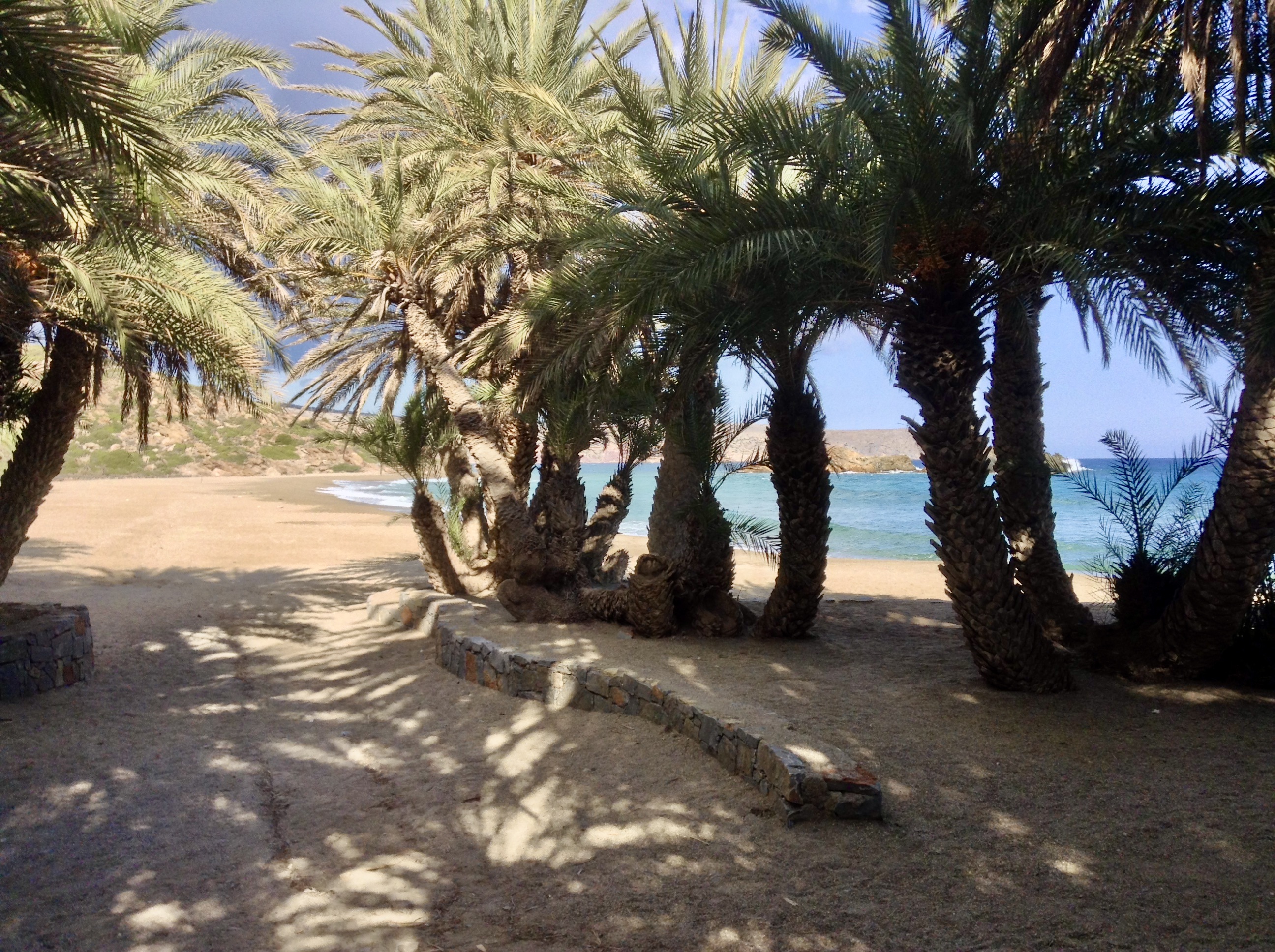
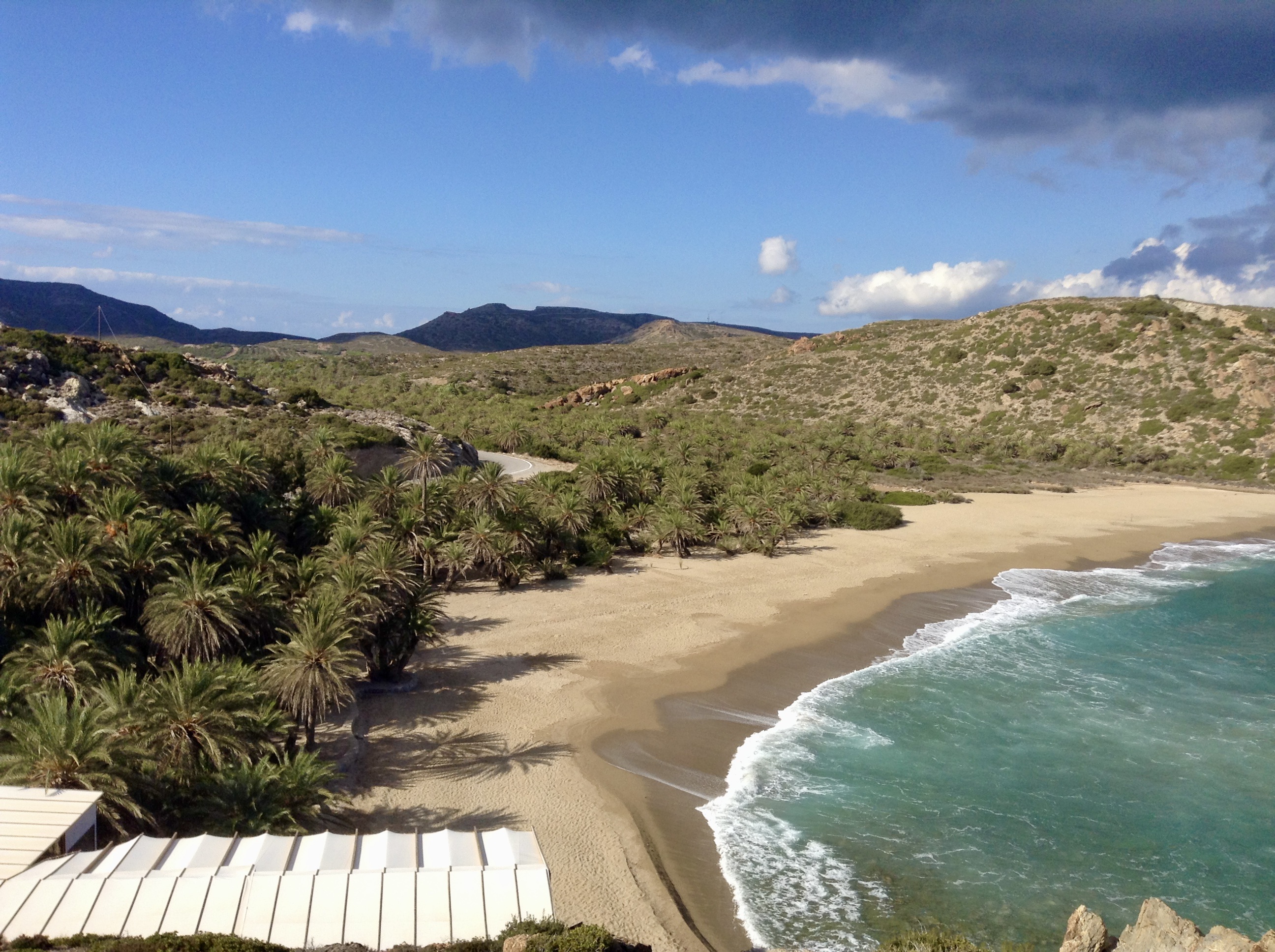
Finally, we’ve been to Vai quite a few times now, as it’s in our ‘county’ of Lasithi here on Crete, but I still well remember our memorable first ever visit, which was once again during November, when the beach was clear of umbrellas and the only people around were locals…
•
Click HERE to go to my Amazon Author Page, where you can browse and purchase all of my seventeen written works.
A good friend and fellow admin of mine on our Facebook reading Group ‘A Good Greek Read,’ Kathryn Gauci is also an accomplished author, whose books have never failed to delight and impress me. If you’ve never read any of her work, then best get started. She doesn’t always write about Greece, but when she does her passion for the country shines through every line. It may be good, if you’re not familiar with her work, to head over in the first instance to her website, which you can find by clicking HERE. Plus, I’d recommend starting your own Kathryn Gauci odyssey by reading the epic (and I use that word advisedly, because why it’s not already a major blockbuster movie is a mystery to me) ‘The Embroiderer.’
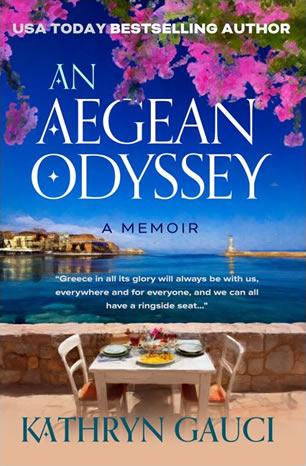
The main reason, however, for this post is twofold (OK, so maybe that should read, ‘the main reasons..?’); firstly she has a new book out, whose cover is shown at the top of this post. It’s called (as you’ll no doubt have keenly observed) An Aegean Odyssey, and it’s a must read, and I say that even though I’ve yet to read it myself. In my defence, I’m currently reading a book written by an old school friend of mine who lives in the USA, as I’d promised him that I would some time ago. But, as soon as I finish that one I’ll be starting on An Aegean Odyssey. As soon as I’ve read it I’ll be posting my review, both here and on its Amazon page, you can be sure of that. I always try to be objective, so my review will in no way be sycophantic, but I’d be very surprised if I weren’t blown away by this book, which I can’t wait to get stuck into. Anyway, watch this space.
Secondly, off the back of this new release by Kathryn, she graciously agreed to be interviewed about it, and I’m extremely proud to present that interview for you right here. So, let’s get started.
When you decided to become a writer, what made you return to Greece? What is your personal connection with the country?
I worked in Athens as a carpet designer from 1972-78 before moving to New Zealand, and finally Melbourne, Australia. Since then, I’ve been back several times. When I first worked in Athens, Greece was still under the military dictatorship and I witnessed it move from those dark days to democracy. It was a wonderful period of optimism. The carpet factory – Anatolia Carpets – was situated in Kalogreza/Nea Ionia, and I was also fortunate to work with the Asia Minor refugees who told me their family stories of life in Asia Minor and of The Great Catastrophe and the burning of Smyrna. I also learned about Greece in WWII too, as that period was still fresh in the minds of the Greek people. My apartment was in the suburb of Kypseli, where Lela Karagiannis lived. Lela was one of the most famous resistance leaders of WWII. There was also much evidence of the Civil War that took place after WWII, too. Many old walls were pot-marked with bullet holes. After the dictatorship fell, families of those who had been sent to Communist countries started to return. It was quite an emotional time. These were formative years for me and the Greek people welcomed me wholeheartedly. I can honestly say that those years helped shape my personality.
Did you know exactly what you were looking for when you returned to write the book?
No. All I knew was that I wanted to write and I wanted to find the old Greece that I’d experienced when I was there. Between the period when I left and when I returned to write, Greece, like everywhere, was changing, mainly through mass tourism and modernisation. Where we once used to bake our food at the bakery, people now had all the latest kitchen appliances. The suburbs that had once maintained a village atmosphere had moved on. The suburbs of Athens were also spreading out at an alarming rate, and places like leafy, aristocratic Kifissia were almost unrecognisable.
Which were the key locations you focused on?
Along with a few main areas in Athens, I wanted to explore islands I hadn’t previously visited. After much deliberation, I decided on Chios, Lesvos, Rhodes, Karpathos, and Crete, as I felt they would offer a greater diversity for me.
Were you planning to highlight specific cultural aspects such as art, literature and Greek culture, or did you focus on a certain period such as Ancient Greece, Byzantium, Ottoman Greece, or modern Greece?
I was open to exploring everything. As I have an art and design background, I am naturally drawn to all periods in history. I think it was a case of whatever that island had to offer as they are all different. With Chios, I was certainly immersed in the struggles with the Ottomans during the Greek War of Independence. The events that took place at the Byzantine Monastery of Nea Moni were a strong draw card for me. Lesvos was a mixture of the classical period, particularly with the writers of the time, and also the wonderful Roman mosaics, and its links with the Ottoman world, both during and after the Greek War of Independence and Asia Minor Catastrophe. In Rhodes, one cannot escape the Knights of Saint John although at the time I wanted to explore the smaller villages. Karpathos is unique because that not only has a different history, but wonderful beaches. And then there is Crete. I left Crete until the end because I wanted to explore everything from its Minoan past, its relationship with the Ottoman Empire, and WWII. In all of these places, I drew upon literature to help evoke the past and the Hellenic personality. I would also like to add that I have a love of Greek folk art, particularly Greek shop signs which are quite unique and unfortunately a dying art. I looked for these everywhere on my travels and quite a few led to some amusing episodes.
Did you explore Greece’s influence on the wider world, intellectually and artistically?
Yes, particularly when it came to the writers and artists who had influenced Western thinking, such as Eugene Delacroix, Lord Byron, Henry Miller, and of course, the classical writers. I also drew upon travellers’ tales when passing through Greece while it was under the Ottoman Empire.
How much emphasis did you place on the daily life of Greek people, past and present?
This is an important part of the book. While still being able to get off the beaten track, I interacted with the Greek people themselves who shared thoughts of their life and traditions. Some of these characters ended up in my earlier historical fiction books set in Greece.
Greek cuisine is a constant feature in your book. What are the regional dishes that you remember the most?
This is such a difficult question that I added a chapter specifically on recipes, including some of my favourites, and some that are unique to a certain place. It is not just the food that is important, but the importance attached to it: a sense that every meal will be a banquet no matter how big or small. Good food is very important to Greeks and they are extremely proud of their family and regional heritage. They place a great emphasis on food served in the time-honoured tradition, a special occasion, or simply for a friend. Spoon sweets are a great example of this hospitality.
Music also plays an important role in this journey. Can you explain why?
Music evokes a mood: a time and place that is special and will live in our memory. On this journey, I wanted to include some old favorites and a few new ones. The songs of Marinella, Vicky Moscholiou, and Haris Alexiou always remind me of my days in the carpet studio; Rebetika and the songs of Asia Minor too. In Lesbos I played Leonard Cohen as his songs recalled my days on Hydra, particularly So Long, Marianne. Then there was Rod Stewart’s Maggie May that reminded me of our carefree hippie parties. In Crete I played Glen Miller hoping that at times, the resistance and those soldiers left behind in WWII would have occasionally heard his music on clandestine BBC radio programmes. Elsewhere, I played classical music, particularly in spectacular or emotional settings when I was alone, surrounded by history or spectacular landscapes.
What can readers expect from your book?
I changed careers later in life. I loved my design years, but wanted a change and wasn’t afraid to take that leap of faith. If anything, I would like readers to realise that anything is possible if you truly set your mind to it. It may seem daunting to go out alone and explore pastures new, but at the same time it is liberating. You never know where it will lead and that is the exciting part. Finally, I would like to add that much of the time, I found myself alone in isolated places: by a beach, at the top of a mountain, overlooking vast areas of olive groves, and that sense of being alone with nature was like a rebirth. As I say in my book – “Greece in all its glory will always be with us, everywhere and for everyone, and we can all have a ringside seat.”
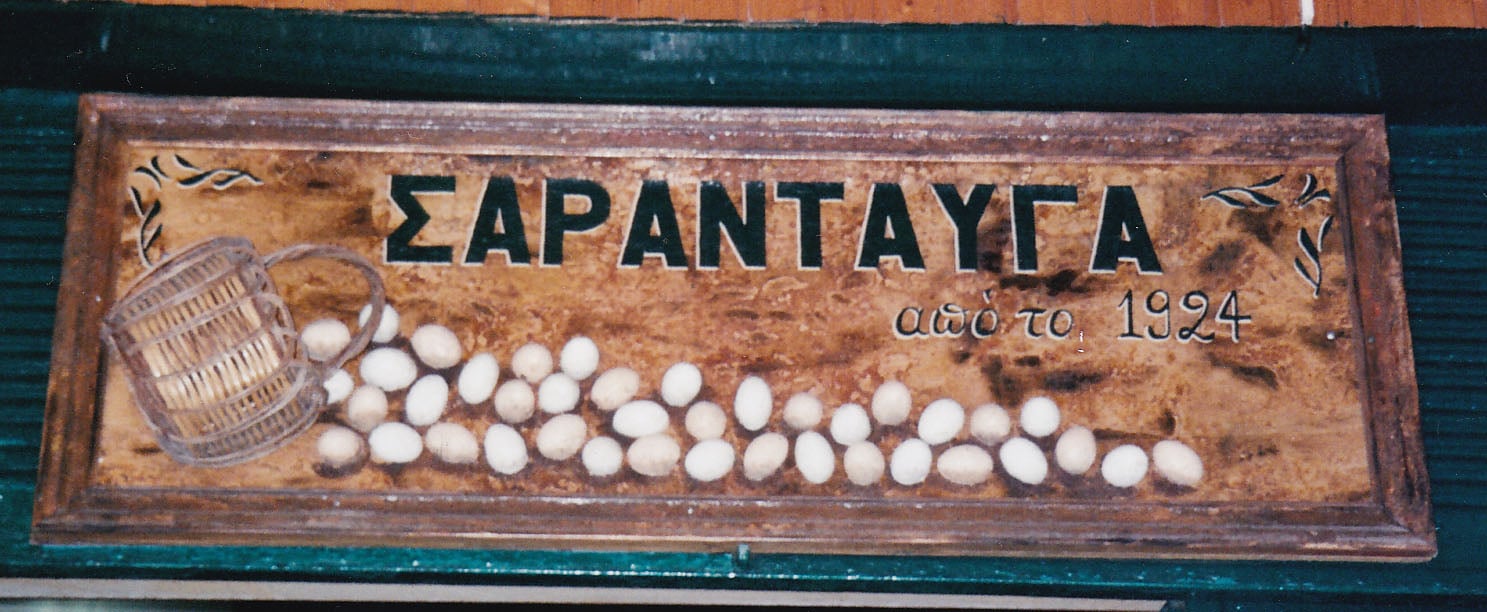
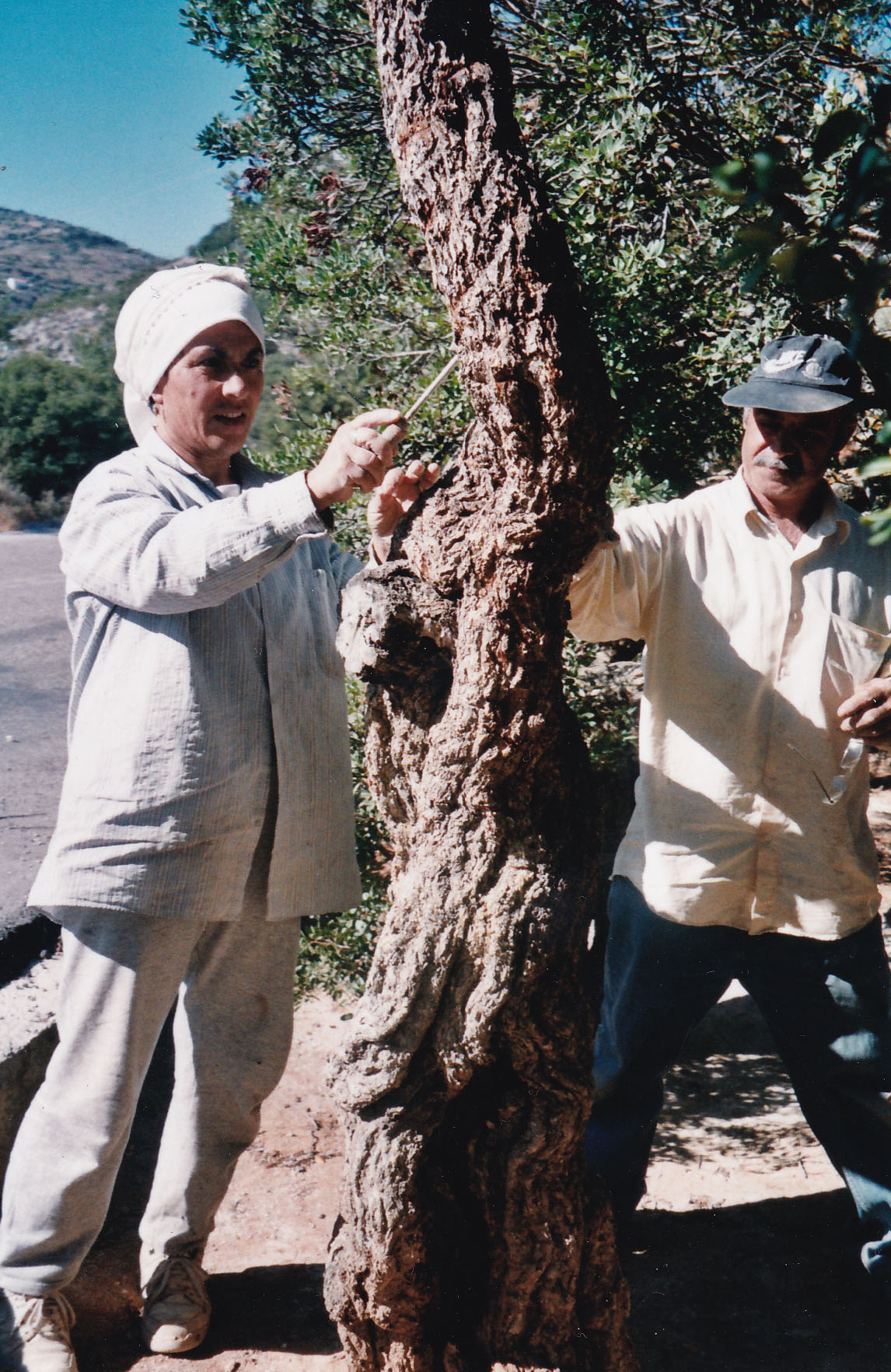
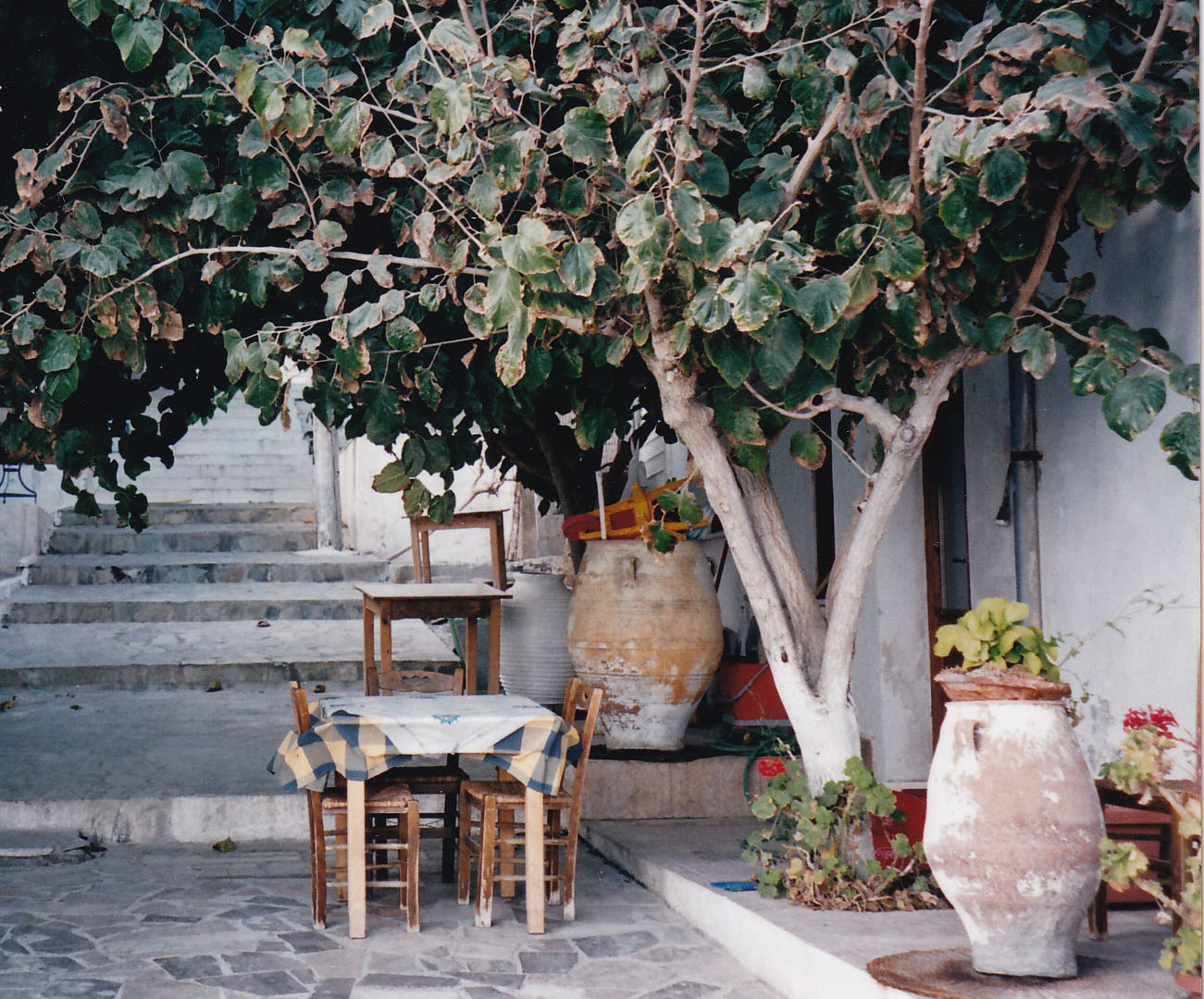
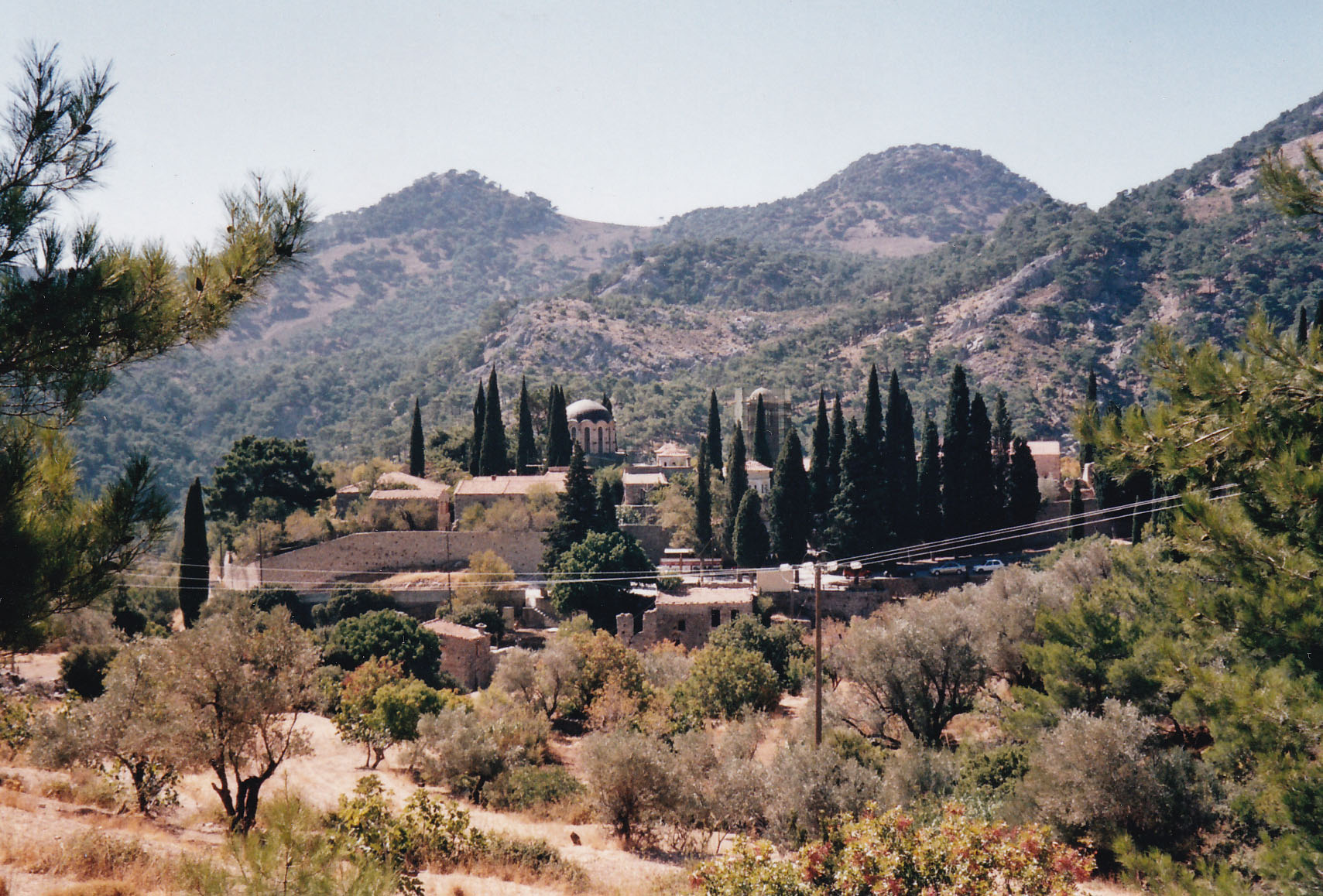
Amen to that, I say. Hope you found that enjoyable and enlightening. Here are a few photos from Kathryns’s own archive to inspire you…
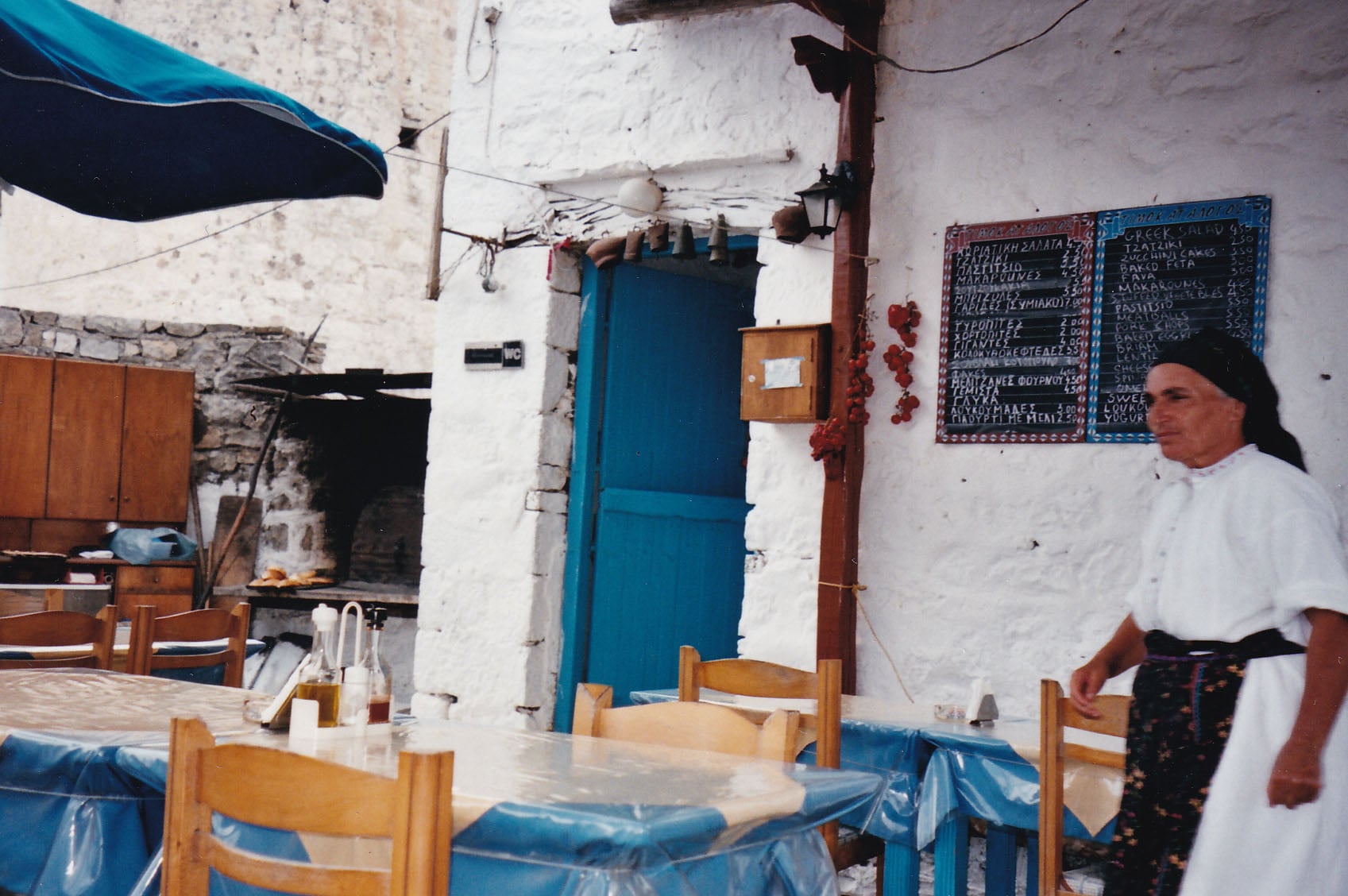
I particularly like that taverna sign, which translates as ‘Forty Eggs.’ There’s got to be quite a story behind that one! So, I do hope you’ll give Kathryn’s new memoir a try, and if you haven’t read any other books by her, I can only say that you’re missing out big time. On her website you can explore all of her works here.
•
Click HERE to go to my Amazon Author Page, where you can browse and purchase all of my seventeen written works.
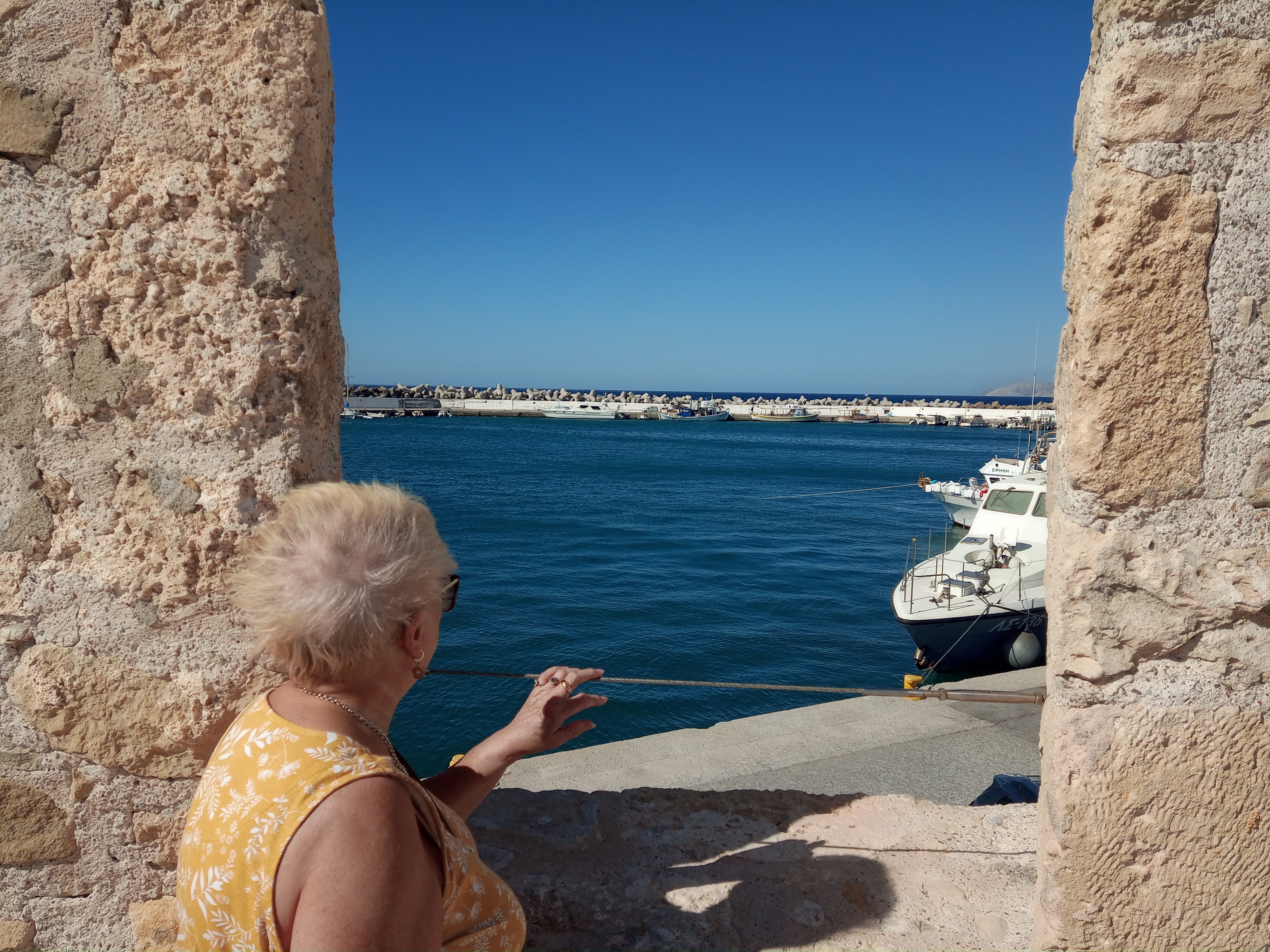
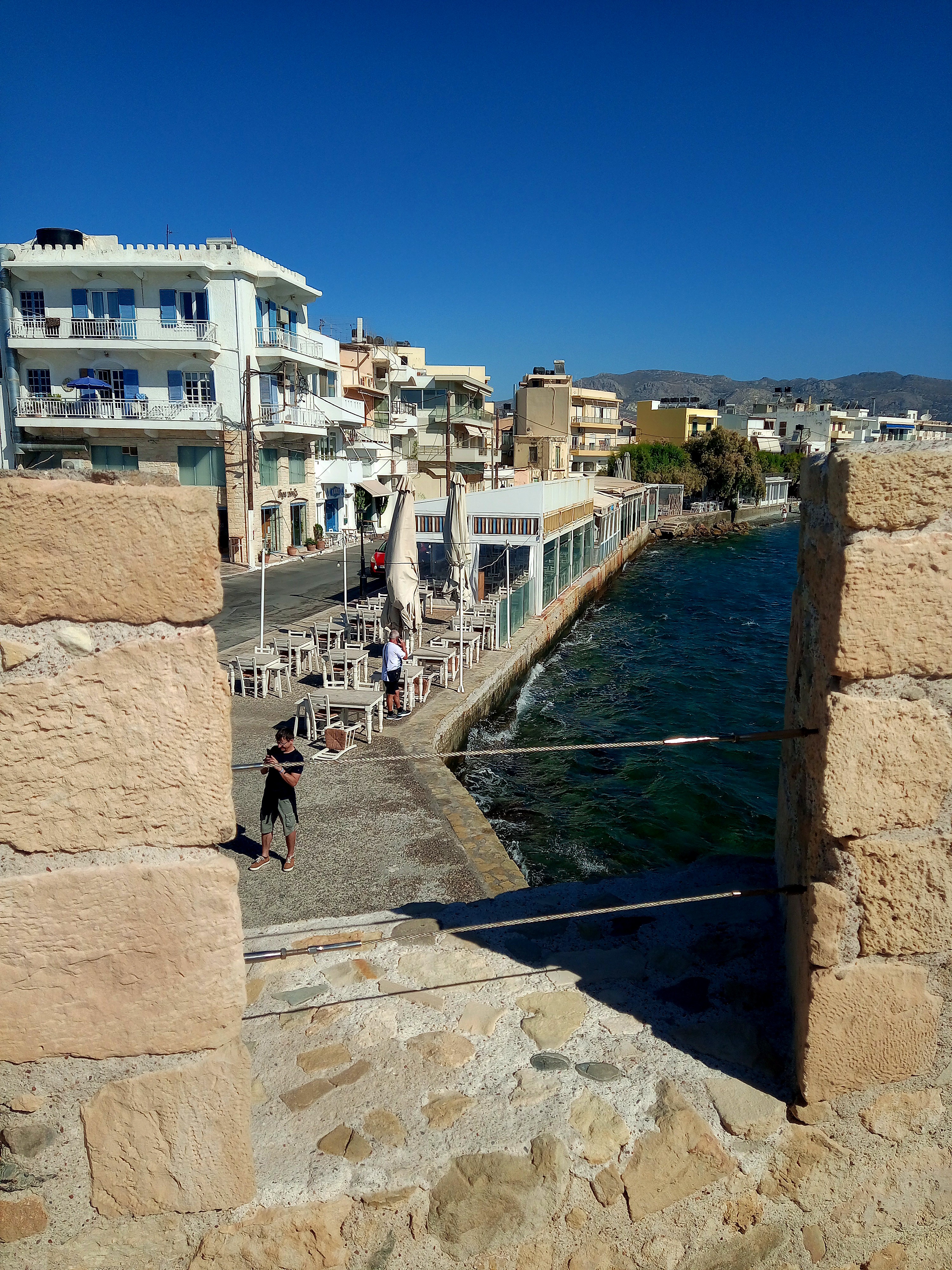
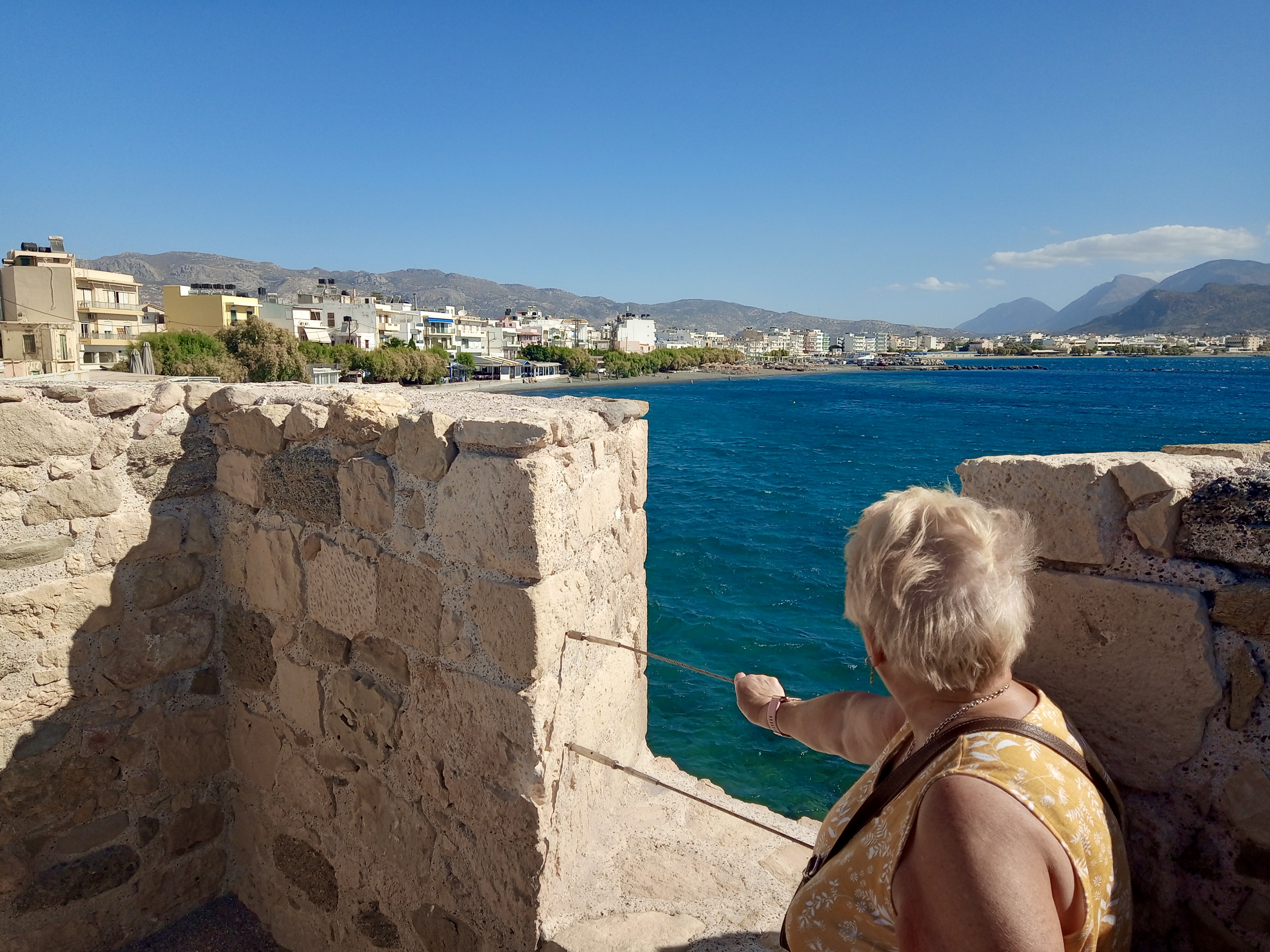
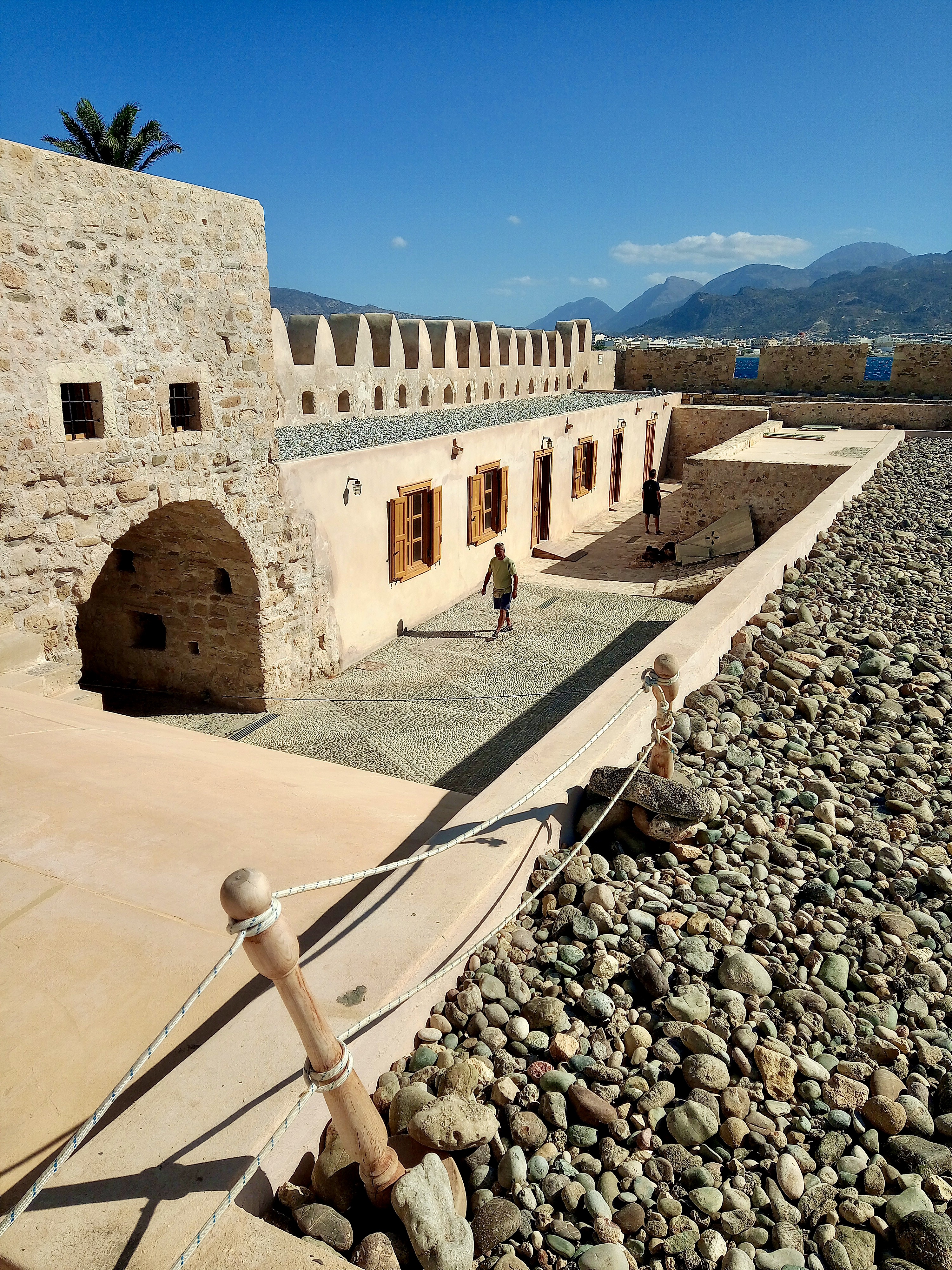
Well, my sister’s visit is drawing to a close, but I didn’t want her to go home without first seeing the beautiful job that had been done to renovate the fortress overlooking the harbour, so last Friday morning we eventually got there and took a few photos to prove it. It truly amazes me that the admission is still free. I can’t imagine such an historical monument in the UK being open to the public without there being an entrance fee and, to be honest, as long as it’s not extortionate, it makes a bit of sense. If they were to ask a mere one or two Euros I think that most people would be happy to fork out, if we want such structures to be preserved for posterity that is.
Here’s a potted history of the Fortress…
The harbour fortress at Ierapetra is called Kales/Fort Kalés. This modestly sized rectangular fortress sits on the harbour entrance and is the best-preserved fortification in an urban centre on Crete’s southern coast. Its construction dates to the Venetian period (broadly 13th–15th centuries) and was built to protect the port and town. Traditional Venetian fort-building shaped its rectangular layout. The fort suffered serious damage during the 1508 earthquake and also from Ottoman raids, and was altered during the Ottoman period (1645–1898) when repairs and modifications changed parts of its exterior and interior fabric. Its purpose was defensive control of the entrance to the harbour (preventing enemy ships from invading and protecting local trade) and nowadays, because it survives near the town centre, it’s a local historic monument illustrating Venetian/Ottoman military presence in eastern Crete. Today the fortress is an archaeological site that’s viewed as an important part of the town’s cultural heritage. Here are a few more of the photos we took last Friday. The place is very photogenic, I must say…
Anyway, I called this post ‘a quick swish a day keeps the scale away’ because I have a tip for anyone who’s resident in Greece and is fed up with how quickly their chrome bathroom fittings lose their lustre due to the build-up of limescale owing to the hardness of the water. Now, before I share this little piece of wisdom, apologies to anyone who already knows this OK? But we lived on Rhodes for a few years before we learned it from some fellow Brits who’d lived there a little longer than we had. Using strong chemical cleaners to restore the shine to your bathroom taps may be the easy option, but believe me it’s tragic for the environment, as it all goes down the plug-hole and eventually, one way or another, either ends up coming out of someone else’s tap, or in the sea, where there is already enough environmental damage done by us stupid humans to fill an encyclopaedia with depressing evidence. Yvonne and I are proud of the fact that the only cleaners we use in our bathroom are citric acid crystals, lemon juice or white vinegar.
But that wasn’t the case a few years ago when, owing to complete desperation, we resorted to buying that awful Cillit Bang stuff or something very similar, in order to get the limescale off our bathroom and kitchen chrome. One day we were discussing this with some neighbours on Rhodes when I asked to use their bathroom. I was amazed at how shiny their taps were, in view of the fact that their house was a couple of years older than ours. So I asked them how they managed to keep them so clean and shiny. You know what their answer was? And I still kick myself that it’s really so simple (but then, everything always is when you already know the answer), “Every time we use the lavatory, or the shower, or the sink, we simply wipe the fittings over with a dry towel before leaving the room. The limescale builds up when the water droplets that you leave all over the surface of the chrome evaporate in the heat, leaving the salts behind to make the surface become dull. Wipe the surface immediately and the problem disappears, et voila.”
I know, I know, some of you out there in internet land will be tut, tutting about how stupid we’d been. Yet equally, I bet there will be some out there who’ll be saying, “Well blow me down with a wet fart, but I didn’t know that!”
Above: No chemicals, no expense either, just a swish with a towel and, hey presto, no limescale.
No, it’s OK, no need to thank me. Here are some more photos, some of which are old, and some brand, spanking new:
Above: taken from the mountain road from Kritsa over to Prina, passing through the village of Kroustas along the way.
Above gallery: A few photos taken in Kritsa village, which is maybe a little too touristy for my liking, but is nevertheless worth a visit for all that, as it is a beautiful village. In fact this is a good time of the year to go, because it’s far less crowded than it would be during July and August. Just in case there is anyone out there looking at that photo of the statue of the young village girl and wondering who she is, she’s Kristotopoula, which is actually her nickname. If you want to know more about her, then the book Kritsotopoula: Girl Of Kritsa is a must. Written as a novel, but telling the true story of that brave young girl, it’s a great and also instructive Greek read.
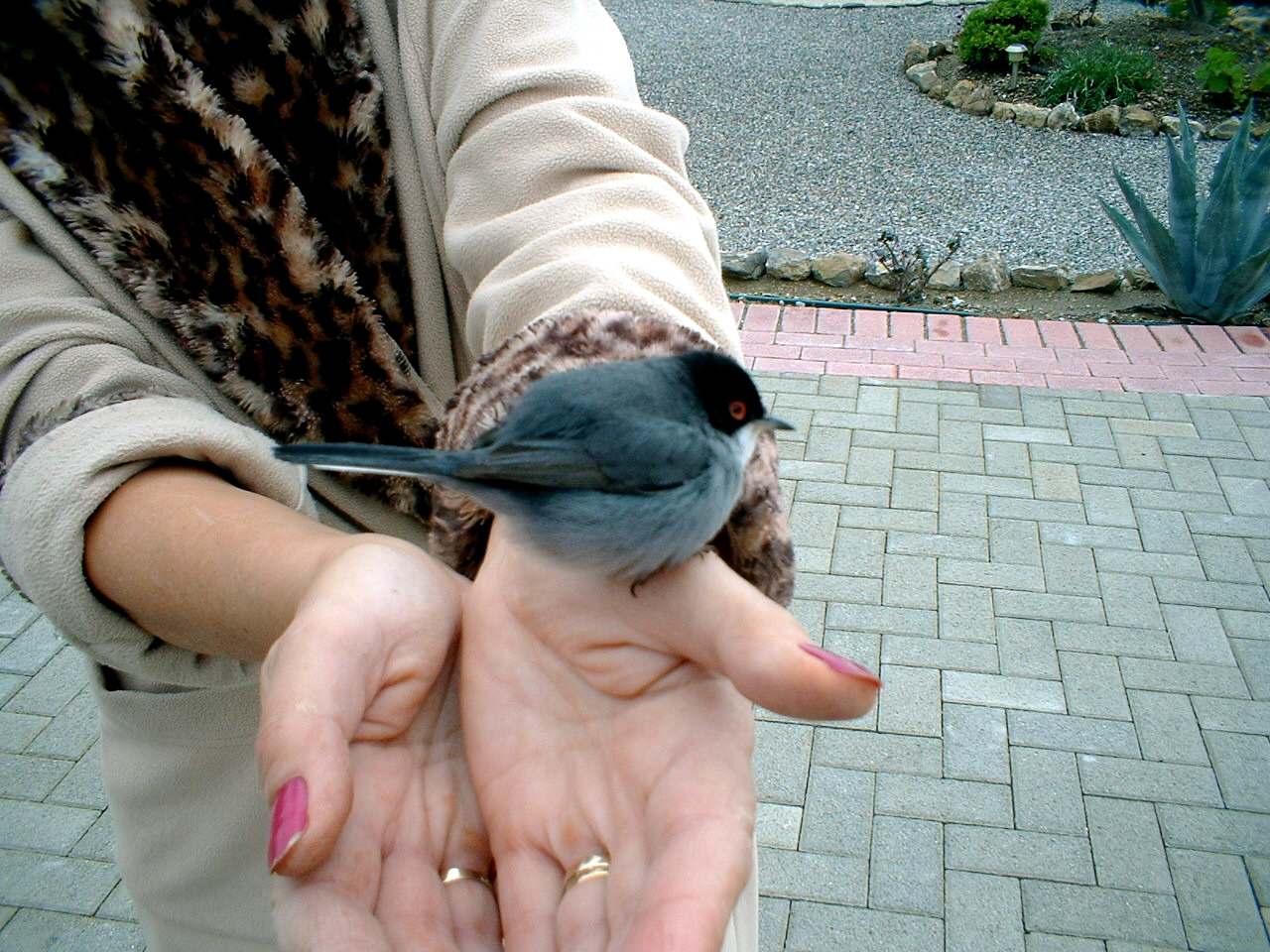
Above: Couldn’t resist chucking this one in again. It was taken many years back at our home on Rhodes. A tiny Sardinian Warbler flew into the glass of our French windows and stunned itself. He’s a male, as they’re the ones with the black heads. Females have brown heads and slightly duller plumage. We picked him up senseless from the path, smoothed his little head and body until he recovered his senses, then watched as he began to realise where he was sitting, whereupon he soon took off, none the worse for his ordeal.
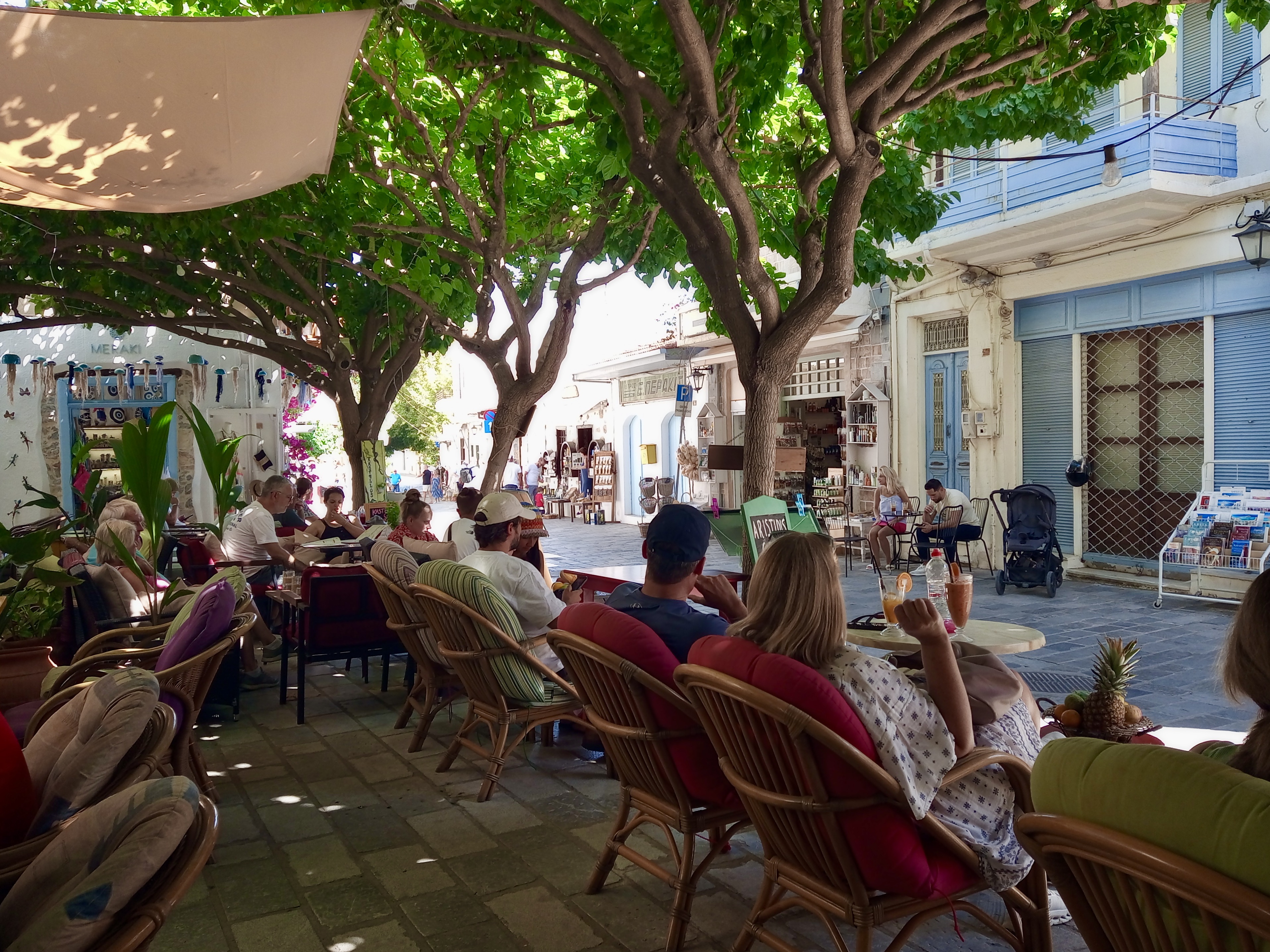
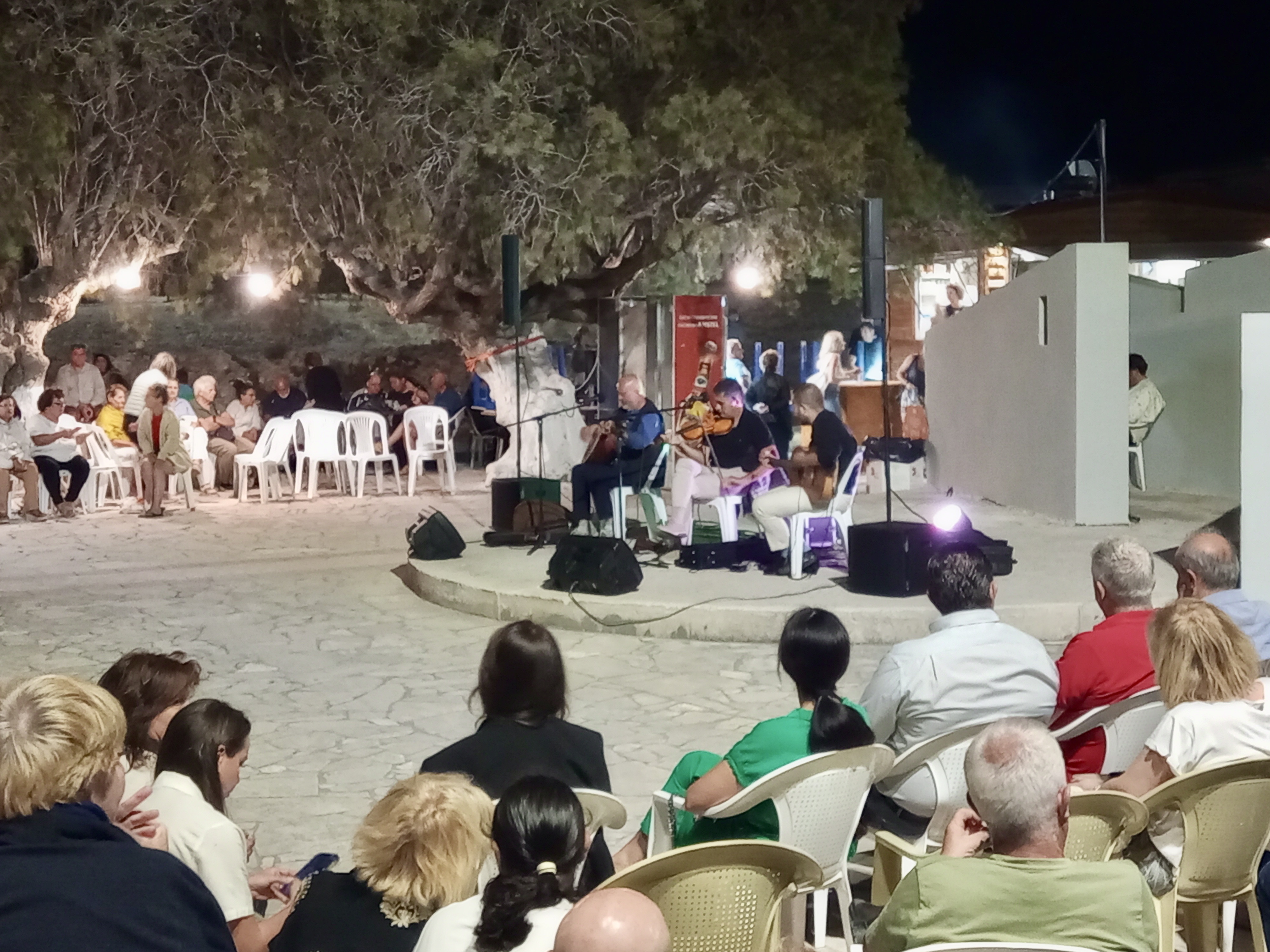
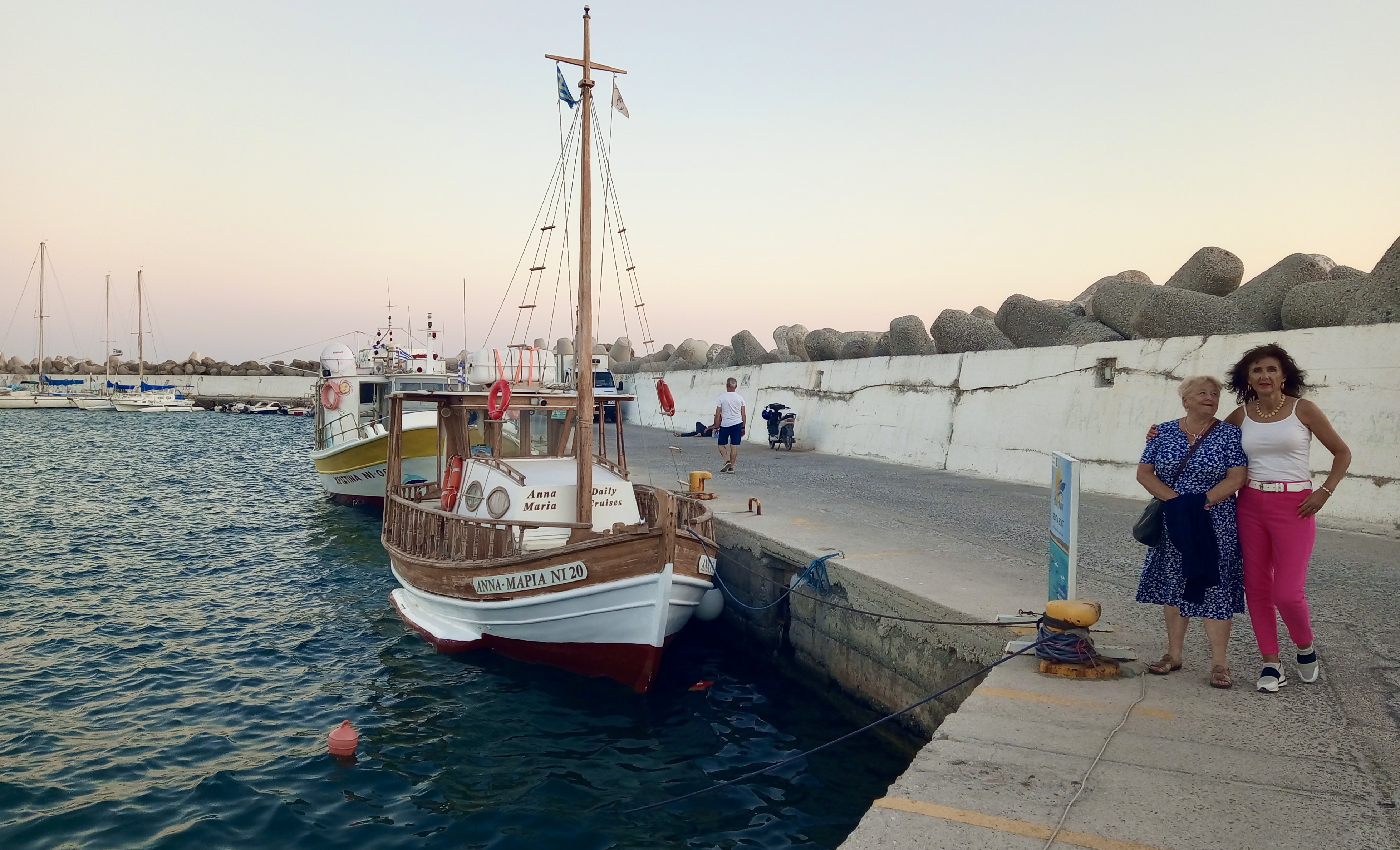
Above: A few more from around the village and town. The harbour and concert ones were taken early evening, which is why they’re not so ‘brilliant’ colour-wise.
•
Click HERE to go to my Amazon Author Page, where you can browse and purchase all of my seventeen written works.
I know, I try to be too clever for my own good sometimes. I called this post ‘Not the Dave Clark Five’ because it’s full of bits and pieces. Only those of my age group (I believe we’re supposed to be called ‘boomers’ these days. It’s so hard to keep up) will stand any chance of understanding that. I’ll leave it with you. There’s always ChatGPT after all.
My dear sister’s over from the UK at the moment, and it’s her first major excursion since losing her hubby, so she’s trying to get some serious quiet reflection time as well as de-stressing to the extent possible. On Sunday evening we went down to the sea front for a delicious meal at L’Angolo. Can’t be bad can it? I mean we ordered two ‘small’ vegetarian pizzas (evidently a new usage of the word ‘small’ that I wasn’t previously aware of, since they’re still quite big as it happens), one of their legendary lettuce salads (which consists of both red and green shredded lettuce, spring onion, as well as flaked Graviera, croutons and a dressing of balsamic sauce. In fact it could easily be a meal itself for one, possibly two) and a bottle of Malamatina Retsina and a large bottle of water and the bill for three of us was around €25. A result in anyone’s book, I’d say.
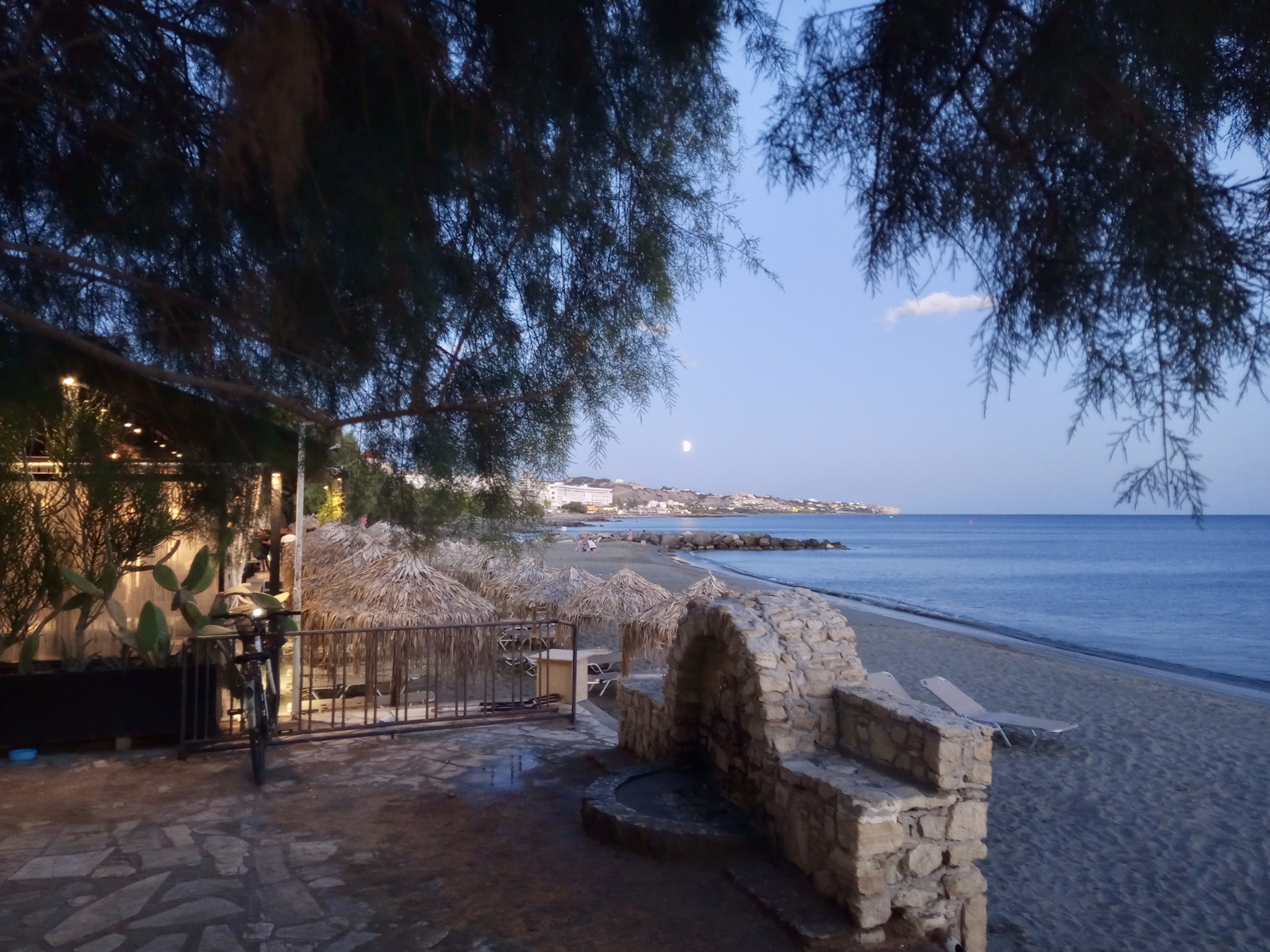
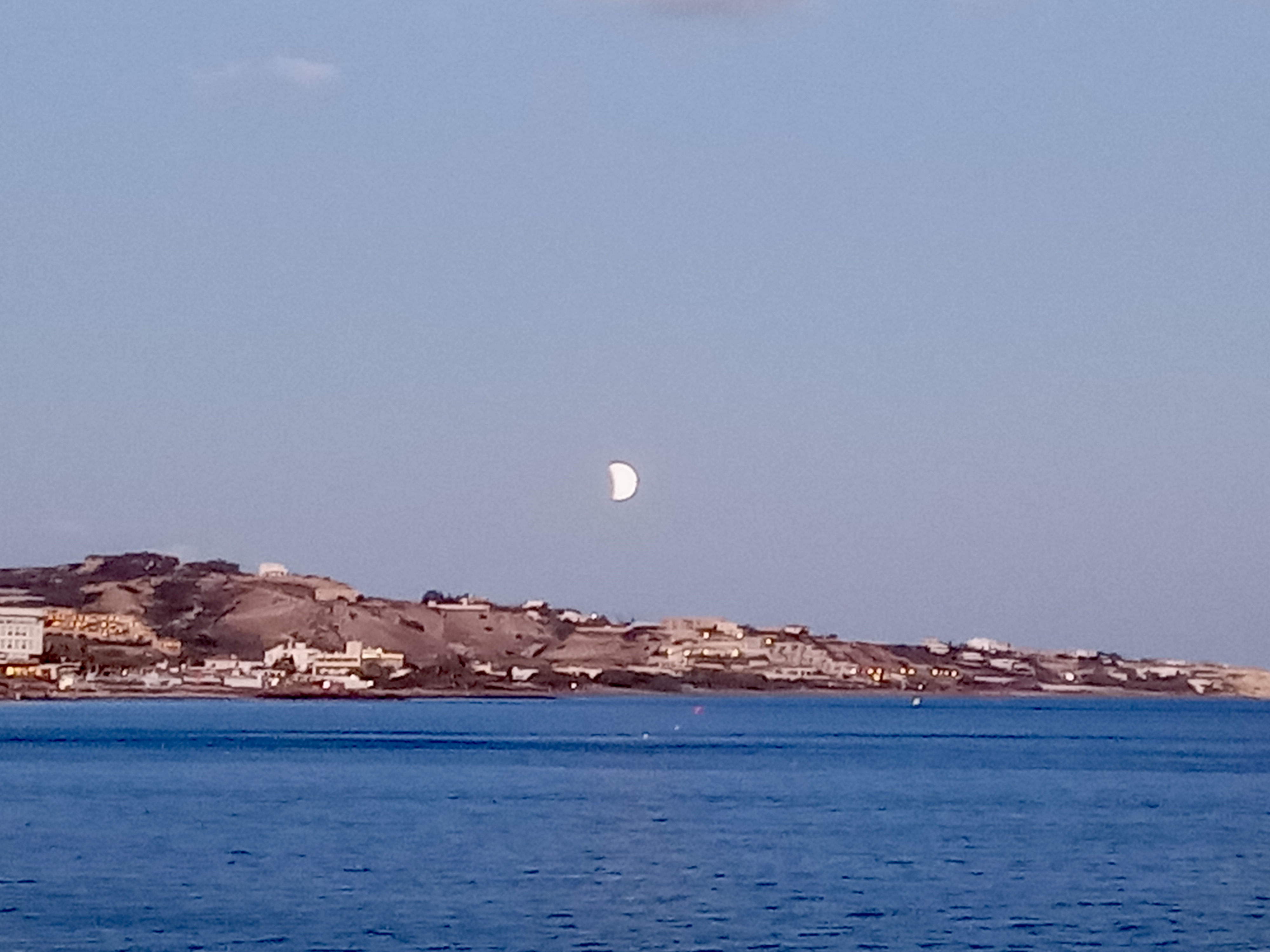
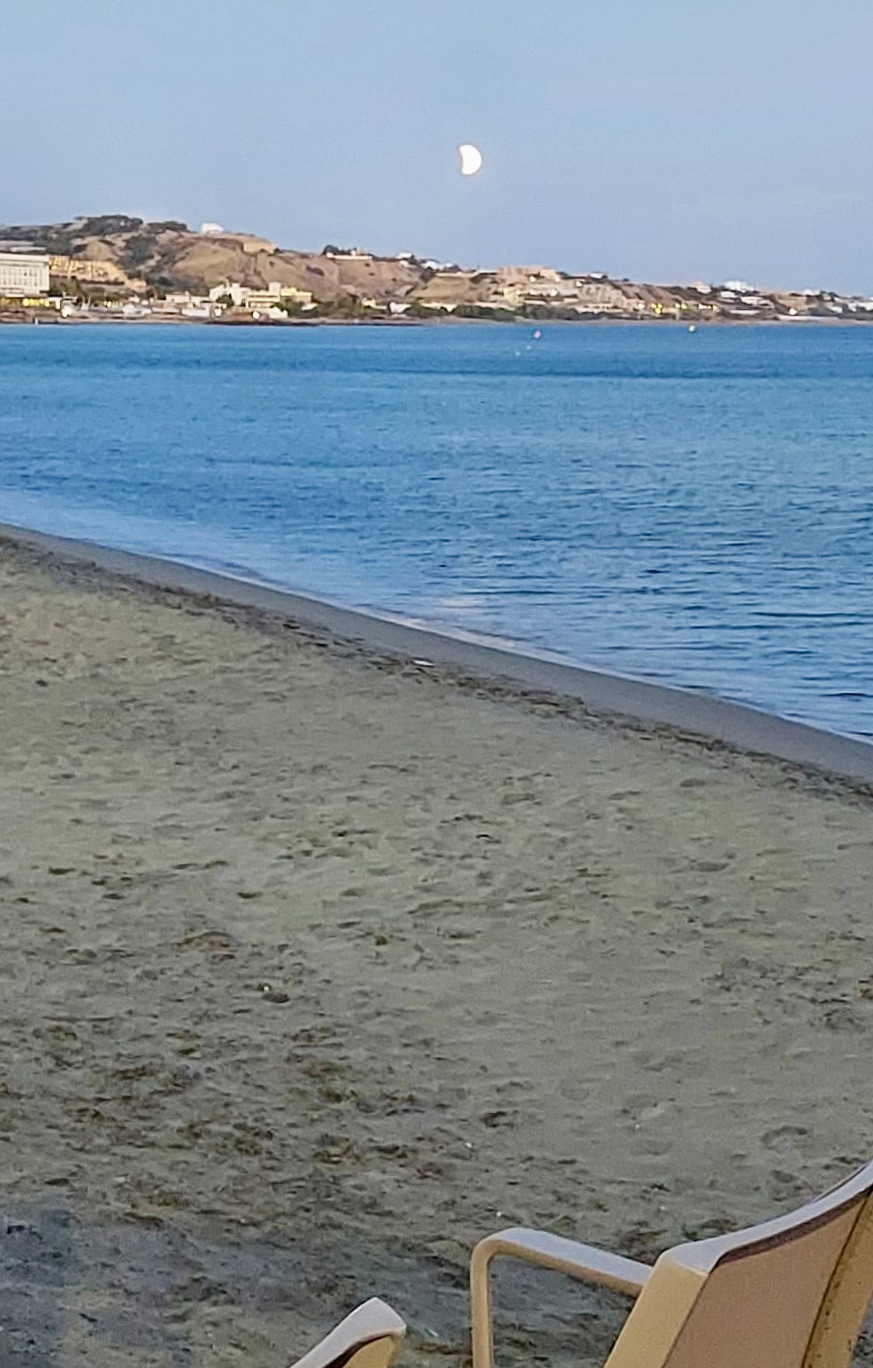
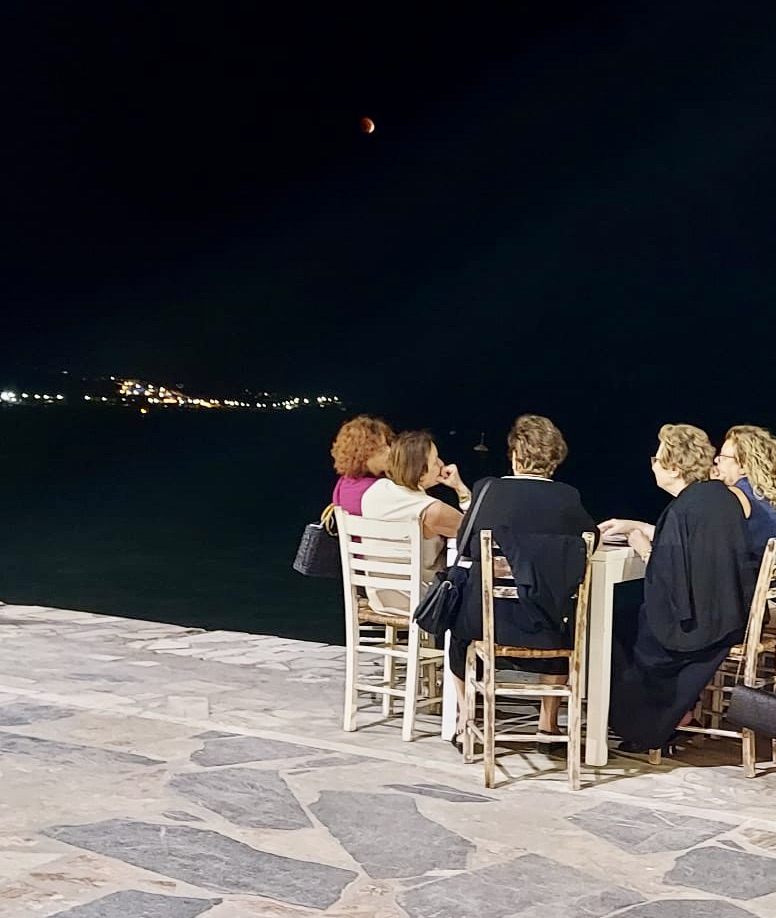
What we hadn’t realised until it began happening, was that it was not only a full moon that evening, but a lunar eclipse too. What a spectacle it was. In case your grandmother isn’t sure how to go about sucking eggs, a lunar eclipse is when the earth passes between the sun and the moon, and thus the shadow of our planet passes in front of the moon, obscuring it from sight for a while. I thought that it might last a few minutes, but it actually took what seemed like hours. In fact, the first slither of the earth’s shadow began to encroach upon the moon’s disc at around 7.20pm, and the whole moon wasn’t visible again until about 10.00pm. In fact the moon was totally in darkness for what seemed like an age. I presume it’s something to do with the fact that the earth’s a lot bigger than the moon, because when we have a solar eclipse (that’s when the moon gets between the sun and the earth, of course, the mischievous little devil) it usually only lasts a few minutes.
Anyway, the fact was that it made for an amazing evening, during which we could witness the whole spectacle as we stuffed our faces at our spot near the water’s edge, magic. I hear that large parts of the UK were unable to see it owing to cloud cover, sorry about that peeps. We only had mobile phones with which to photograph it, and they have the tendency to adjust the light levels so that what you see in the photo isn’t actually what you witness as you snap it, but nevertheless here are the snaps we took, and the one at the top of this post was one of the batch too (although taken as we strolled the waterfront before sitting at the restaurant)…
I know it can be annoying when people show you their family snaps, but here’s one anyway of the three of us at our table at the L’Angolo…
Jane, my sister that is, wanted a stroll around the village, so we took one yesterday evening at around 6.00pm. It’s a good time to go, since any earlier and it’s simply too flippin’ hot, especially as from our house, to start the circuit we have to walk up a steep lane for around 50 metres or more. That section of the walk is seriously cardiovascular, believe me. Add to that temperatures in the lower thirties and the possibility of the sun being on your back for part of the time, and you have the premise for the song ‘Mad dogs and Englishmen…’ (you finish it).
So, we set out at around six to circumnavigate the village, during which we also took a detour into the heart of it too, because I wanted Jane to see the remains of the old flour mill that still sit silently testifying to a bygone age when the villagers were self sufficient in bread and olive oil. It’s amazing to think that we’re still self-sufficient today when it comes to water, since ours (as I’m sure I’ve banged on about before) comes from a freshwater spring way up near the crag that sits above the village, protecting much of it from the north winds during the winter months.
When we reached the furthest extremity of the village, where the road goes around another crag, creating a blind bend on the way up to Meseleri, a small white car came around the bend, and slowed to a stop beside us, passenger window going down all the time. It was Angla’i’a, former village mayor and still – in our eyes – the village ‘mama.’ I introduced her to Jane, at which she leaned across from her driving seat and warmly shook my sister’s hand, and welcomed her to the village. Jane didn’t understand a word of what she said, of course, but then, she didn’t need to, she understood from the way it was said exactly what Angla’i’a meant, I’m sure.
We walked back toward home following the main road through the village, passing the kafeneio and then the raised section where Manoli’s house is, then a little later on Angla’i’a and Georgo’s. Manolis was sitting on his beaten up old chair right outside his house, his walking frame almost touching his left shoulder. We took a detour to go over and talk to him, since Yvonne and I hadn’t seen him for several weeks. I’d explained to Jane about his mischievous ‘eye’ and told her about the time when the mobile breast-screening unit had set up camp in the village hall, and Manolis had offered to help out and was quite disappointed when the staff told him that his assistance wouldn’t be necessary. I shook his hand and he extended it too to my sister.
‘I’ve told Jane that you’re a nonegarian, Manoli, but how old are you now? I can’t remember exactly.”
“Ninety three,” he replied with a degree of pride, and rightly so.
“And how’s your health holding out?”
“Eh! six herniated discs, my legs are liable to give way now and then, I can’t see so well, but hey! I’m OK. I can still get over to the kafeneio, so what do I have to complain about?” He replied. I decided not to mention his teeth, which were few and far between and bore evidence of the fact that ne never darkened the door of a dentist, especially to get them whitened, as seems to be the big fad these days. “And I always have my newest best friend to keep me company,” he continued. Seeing my expression, giving away the fact that I didn’t know what or who he was referring to, he simply tapped the walking frame, that familiar little twinkle in his eye again. “Never more than half a metre away these days!” he said, and chuckled.
Just before striking up the steep hill to our house from the road, I took Jane down the single-track lane to the village church and graveyard. On our way down and back up, we had to pass Angla’i’a’s hubby Georgo’s allotment. Sure enough, as we came back up to the road, right opposite their house, as it happens, there they both were, Georgos busy tending to the irrigation system in his olive grove. He too is the wrong side of ninety, but he still gets over the road every day to tend to his chickens, his vegetables and his olive trees. More power to him.
“So, when’s it going to rain then?” I asked Angla’i’a.
Throwing her head back, she replied with a very Greek “Ach!” which, in English, meant “Only the gods know that one!” I remarked on how this time of the day the temperature is just perfect for a stroll, since it was hovering around the 22-25 mark. “Ach,” came the reply again, but this time meaning something completely different, “Krio’no!” She replied, which means, “I’m cold.” And to emphasis the fact, she rubbed each upper arm with the opposite hand.
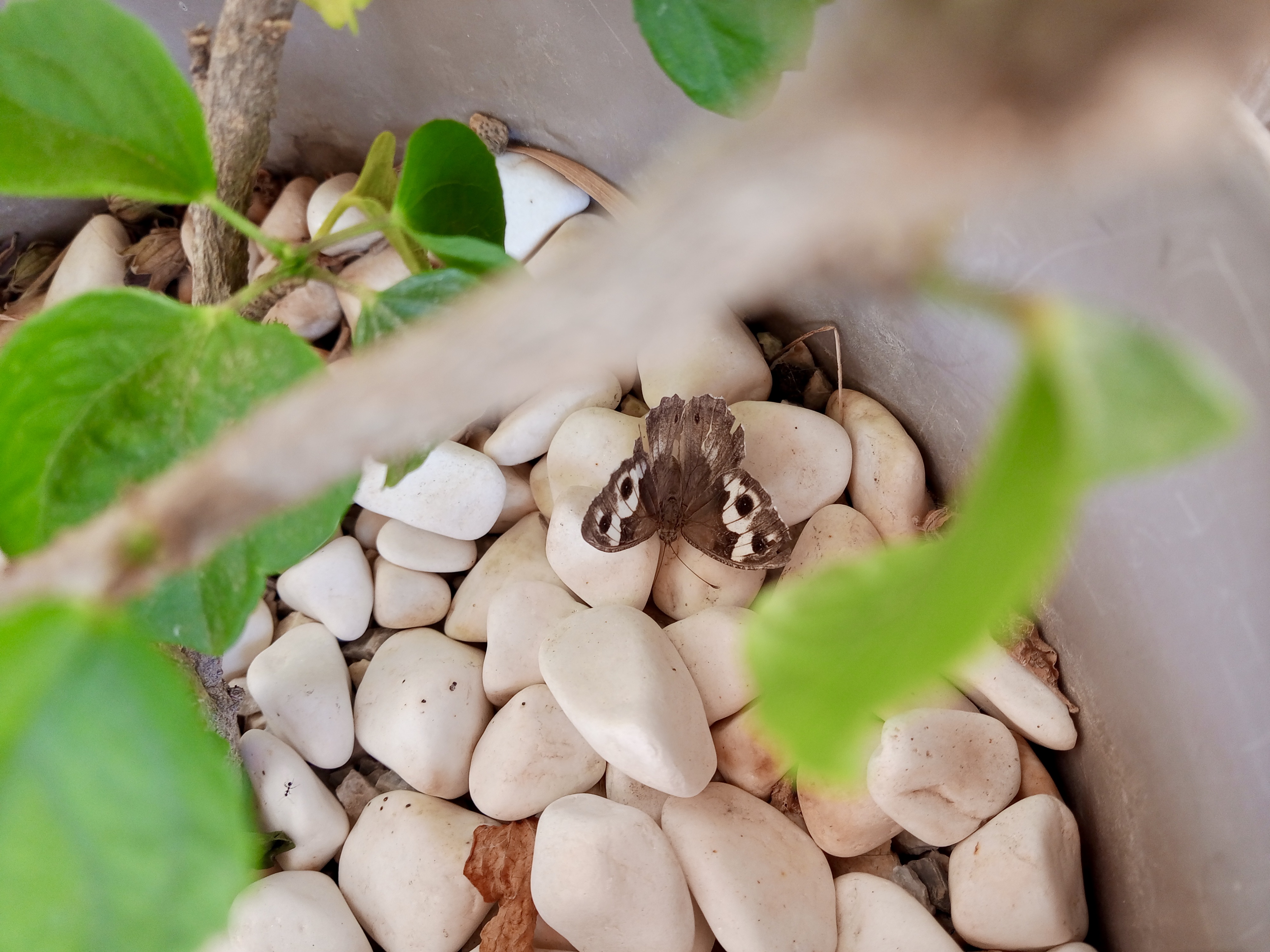
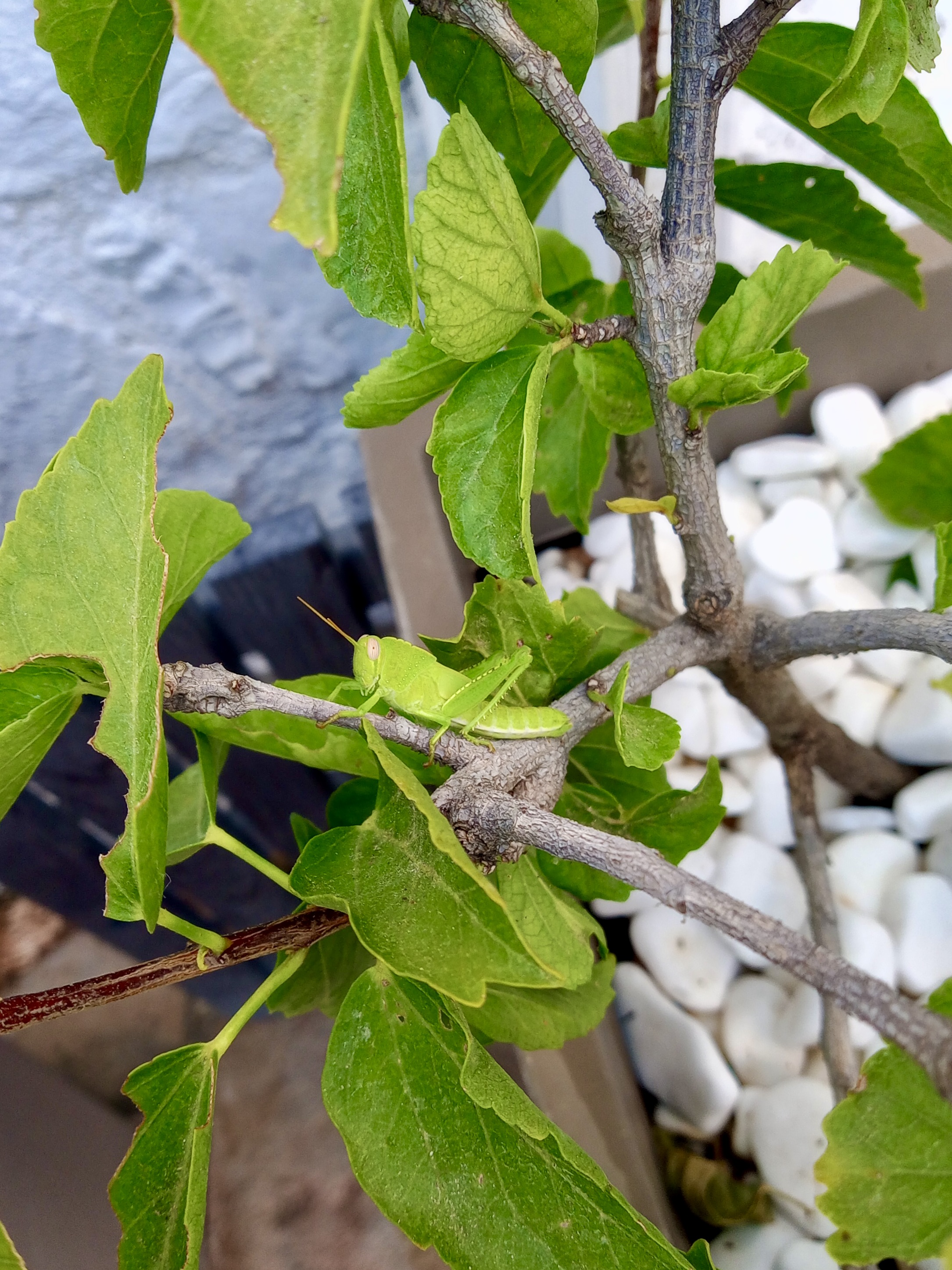
A few more recent photos for you…
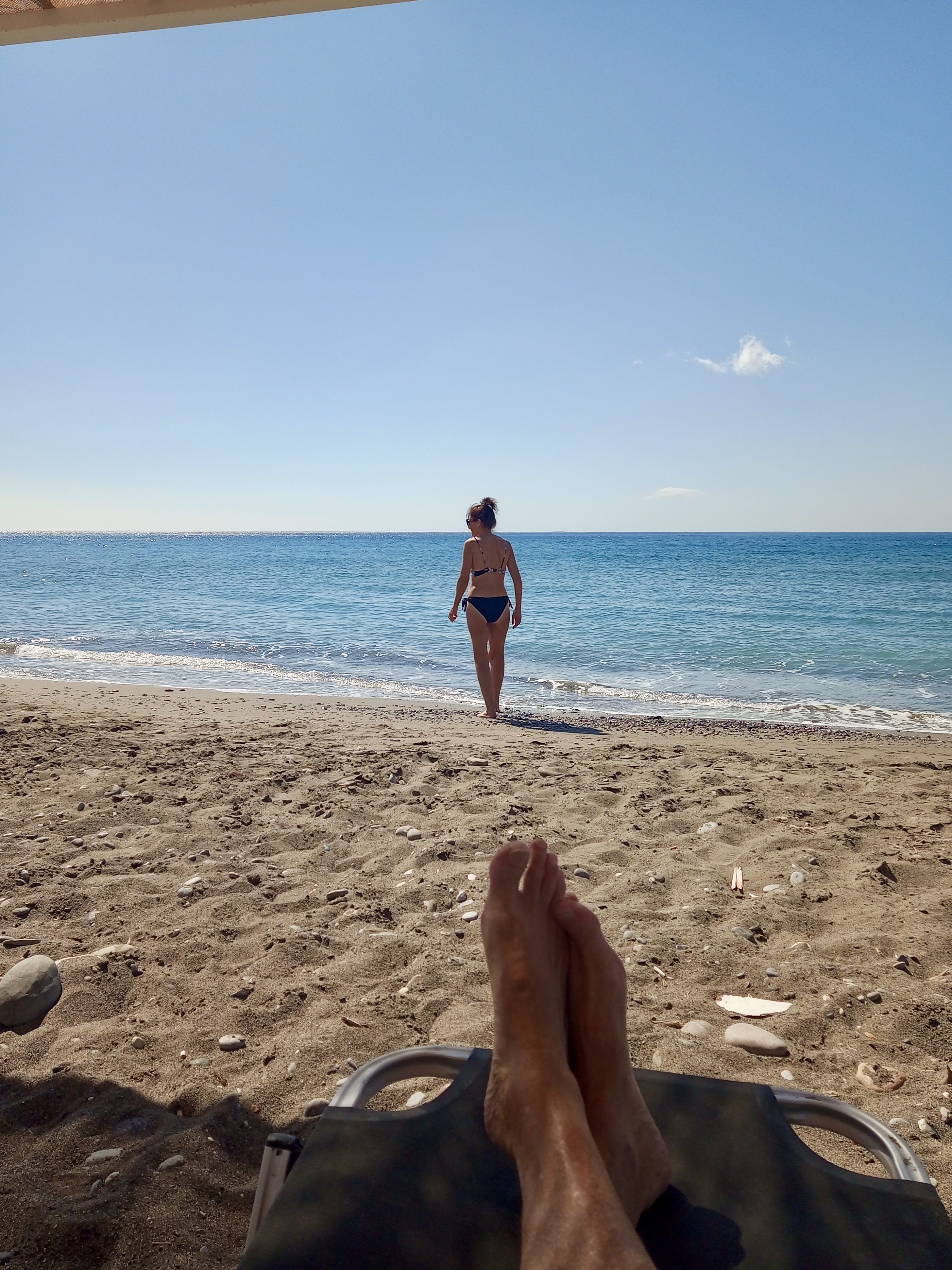
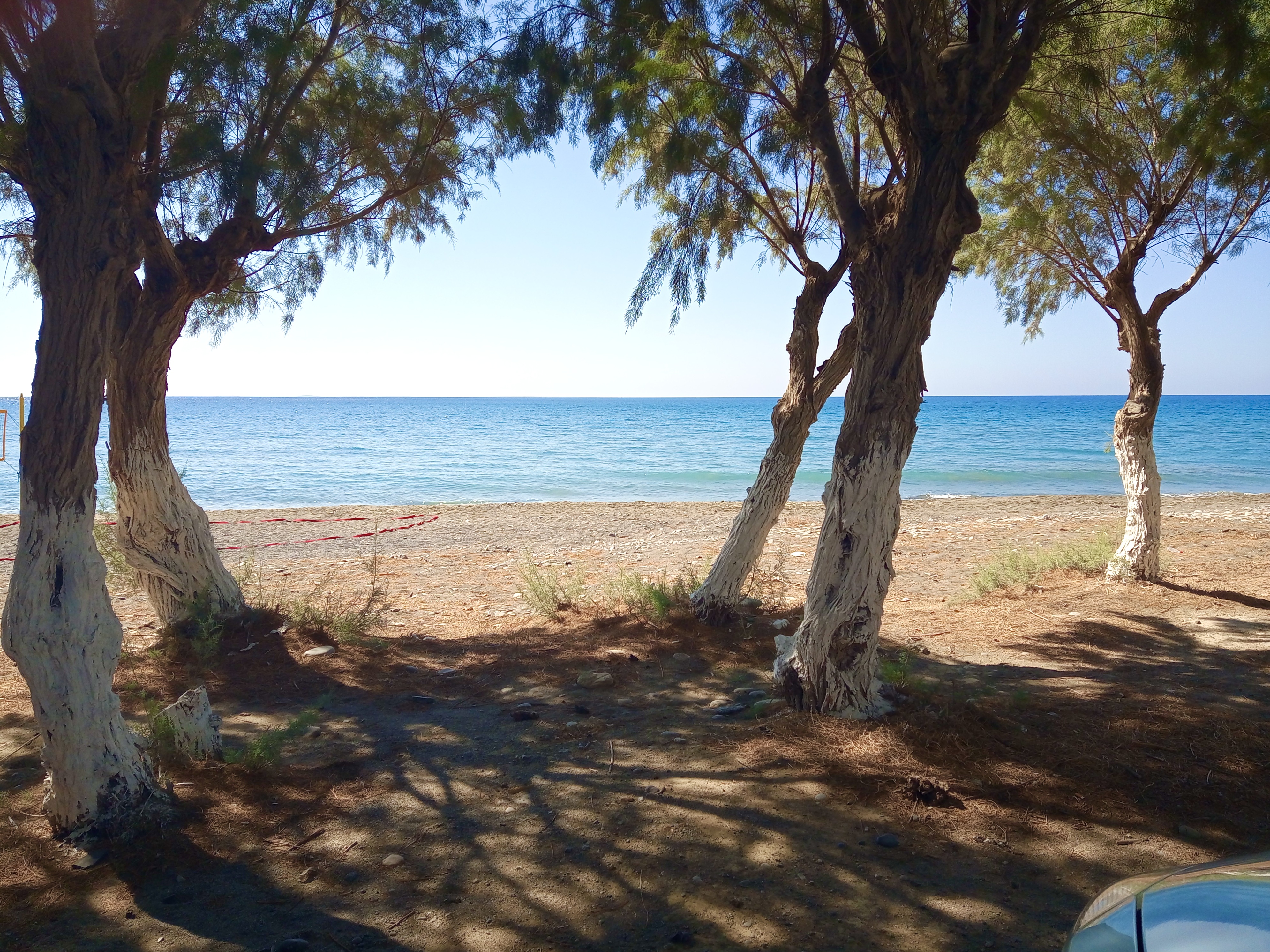
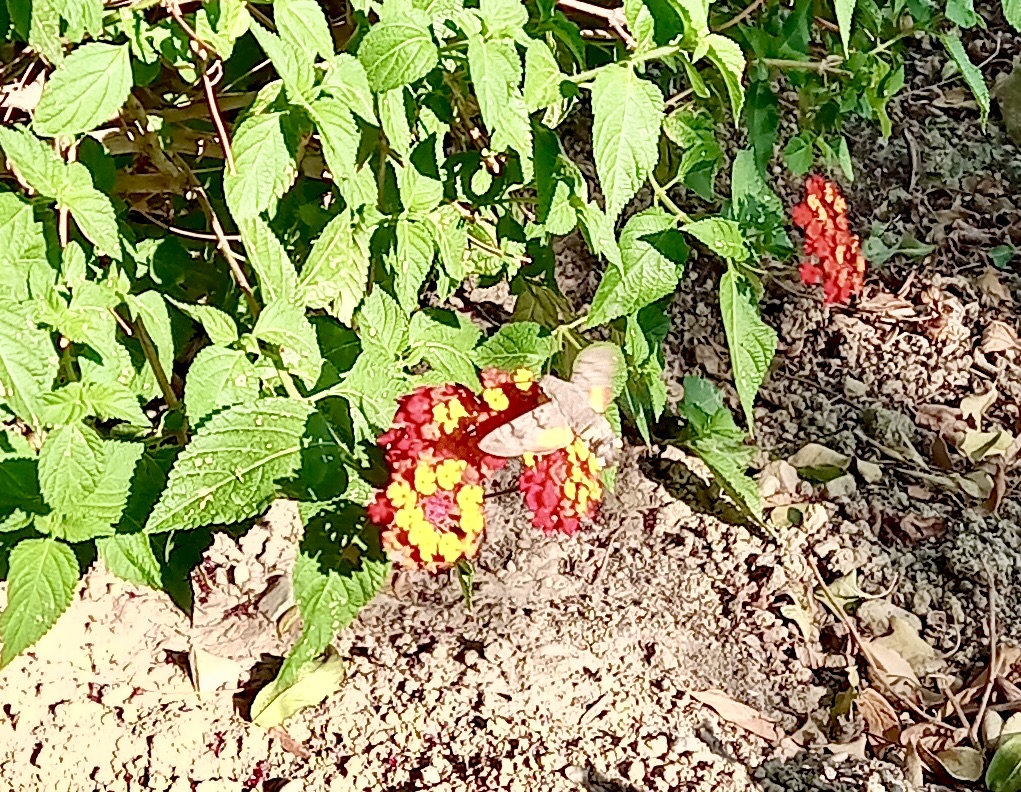
In that first gallery, does anyone know what butterfly that is sitting in one of our plant pots? I’m inclined to think it may be a Wood Nymph, but there are so many different types that I’m really not sure. And in that second batch, see the little green cricket/grasshopper, does anyone know if they’re a danger to our foliage? The hibiscus in which it’s sitting doesn’t seem to have been eaten, so I was loathe to disturb or do any harm to the little chap. He is rather handsome, I thought. The bench under the tree shot was taken at the village of Kalamafka, and the beach shots at Gra Ligia, where the beach is so gloriously under-crowded. I’d so rather be in Torremolinos …not.
•
Click HERE to go to my Amazon Author Page, where you can browse and purchase all of my seventeen written works.
The above shot is of the main beach at Lindos, Rhodes during the winter of 2017-18, when there’s not an umbrella or sunbed to be seen. When you see it looking like this, you truly appreciate how beautiful that beach is. It’s a shame how different it looks during the tourist season really. This whole thing about getting the balance right between tourism and over-tourism is such a hot potato these days. I’ve talked about this before, but although getting older’s not a lot of fun, I’m so glad that we were able to experience Greece during the golden era from the 1970’s through 90’s, when most people still stayed in village rooms, or pensions, and if there were any hotels, they were of a modest size and family-run. That was when if you came to Greece for a summer holiday, you knew you were in Greece and could hardly fail to interact with local people, and thus to experience their hospitality and open heartedness.
The photo below is from the early 1990’s, taken on Symi. We’d spent a couple of weeks staying in an old village house at the back of the town, and one evening we’d heard the sound of a local shindig as we walked back to our room, and made a slight detour to a nearby schoolyard. There, in full swing, was a local celebration going on. Our landlady, the owner of our accommodation, was seated at one of the tables with her friends, family and neighbours, and there wasn’t a foreign tourist to be seen. Of course, we hadn’t been seated for long (whilst also being plied with free wine and food by some of the locals), when Yvonne was up and away. She’s always been the same ever since we first met, the sound of laika music never fails to get her feet twitching. I could probably write a book simply about all the times when she’s got up and danced in tiny tavernas, sometimes saying that she was never going home, but was going to get a job dancing for the taverna owners and bringing the clientele in. She’d have been a success at it, trust me.
Actually (never miss an opportunity for a plug, that’s me), in the Ramblings from Rhodes books there are several tales of Yvonne’s dancing escapades, at least one of which, up a mountain on Samos some years ago, went a long way towards cementing better relations between Greece and Turkiye! [Yes, folks, that’s how we’re supposed to spell it now]
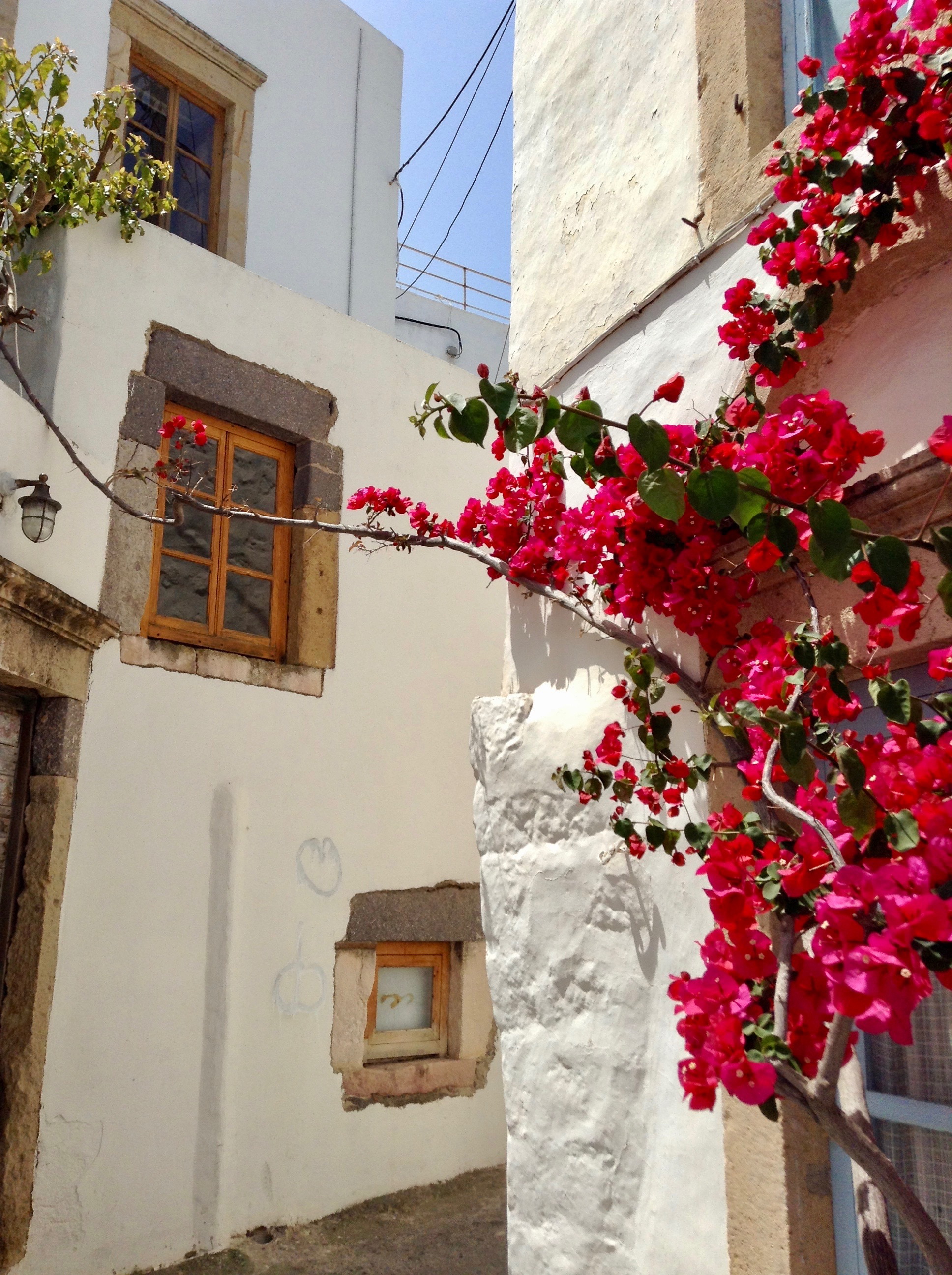
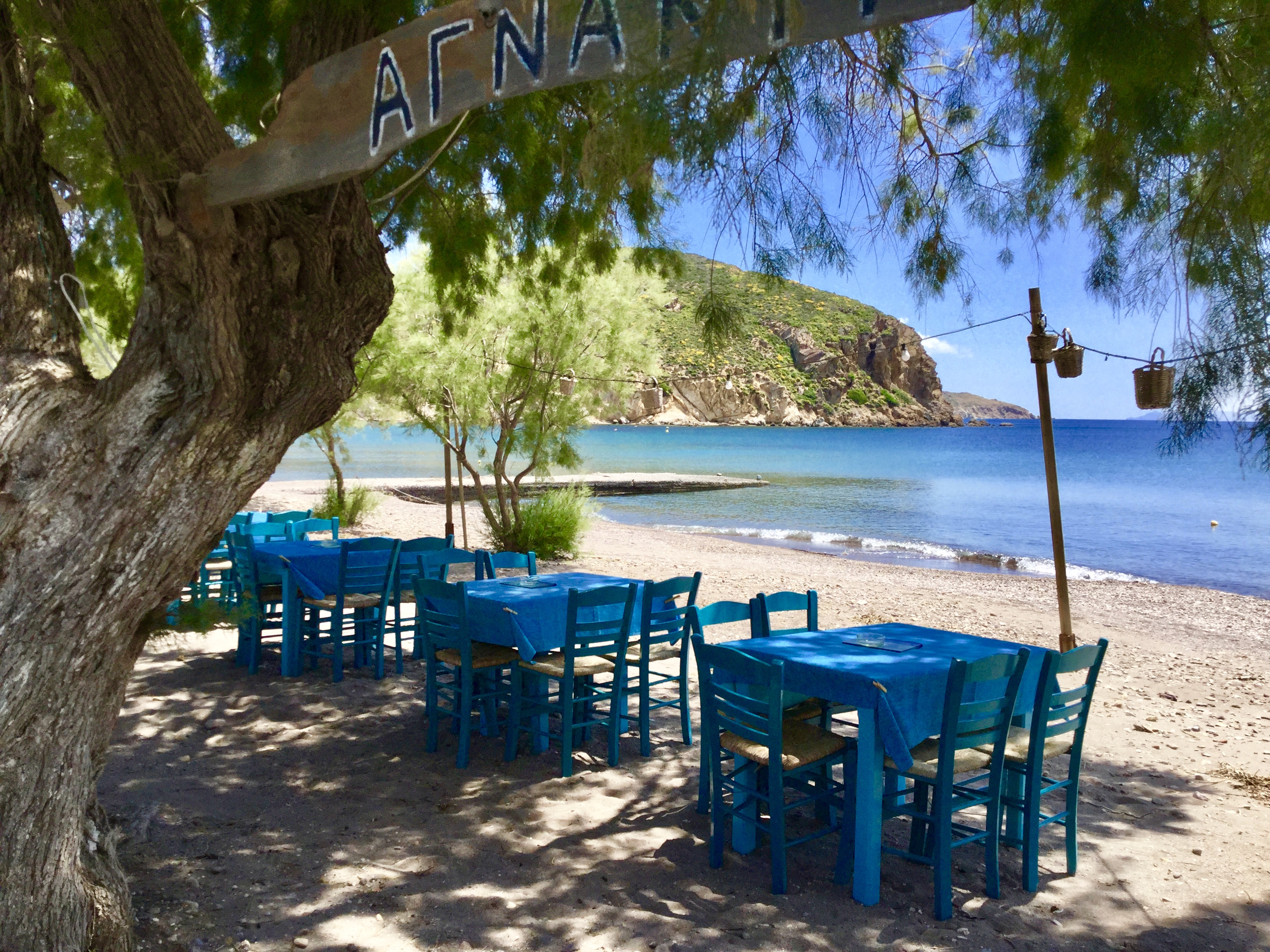
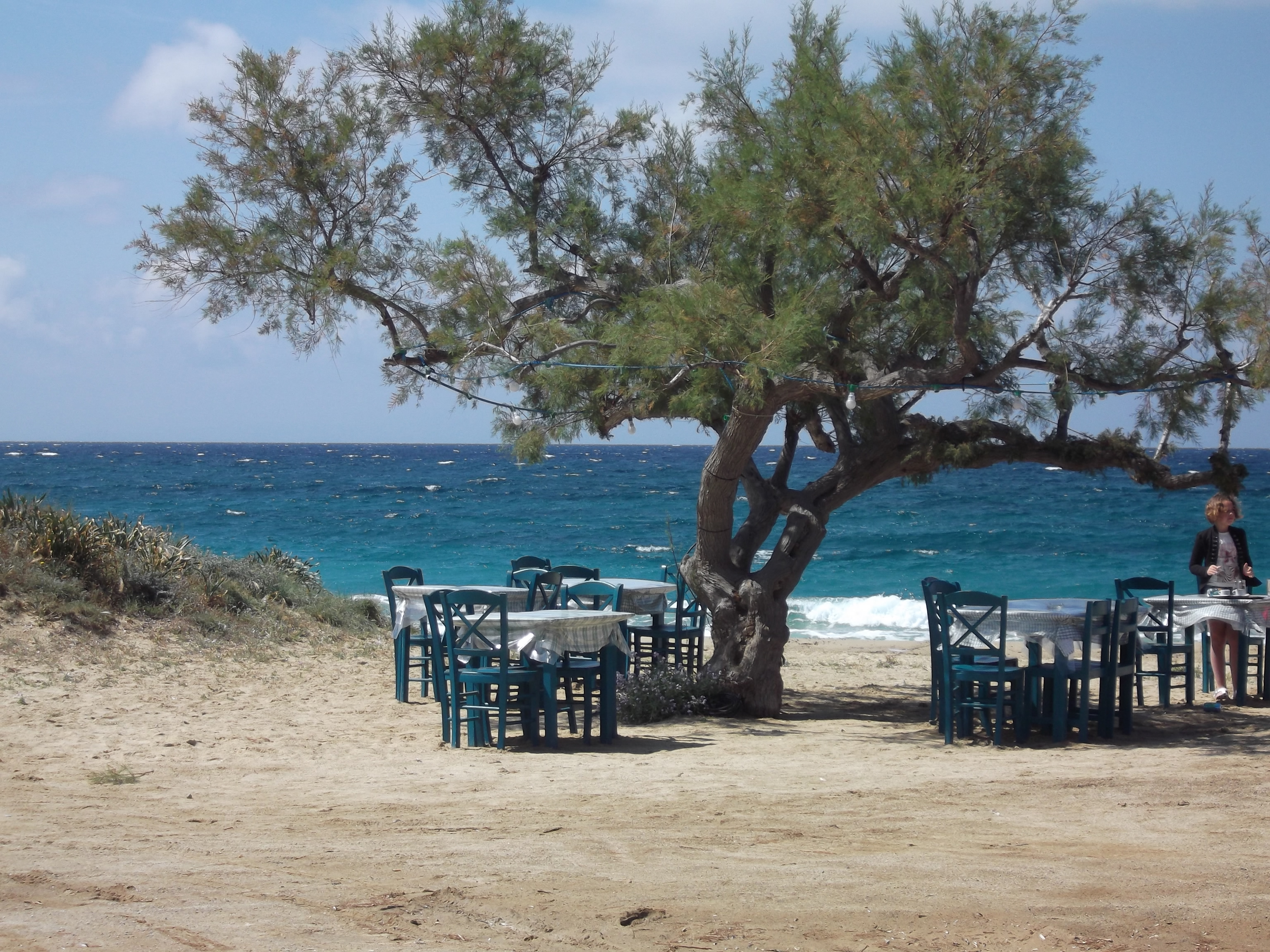
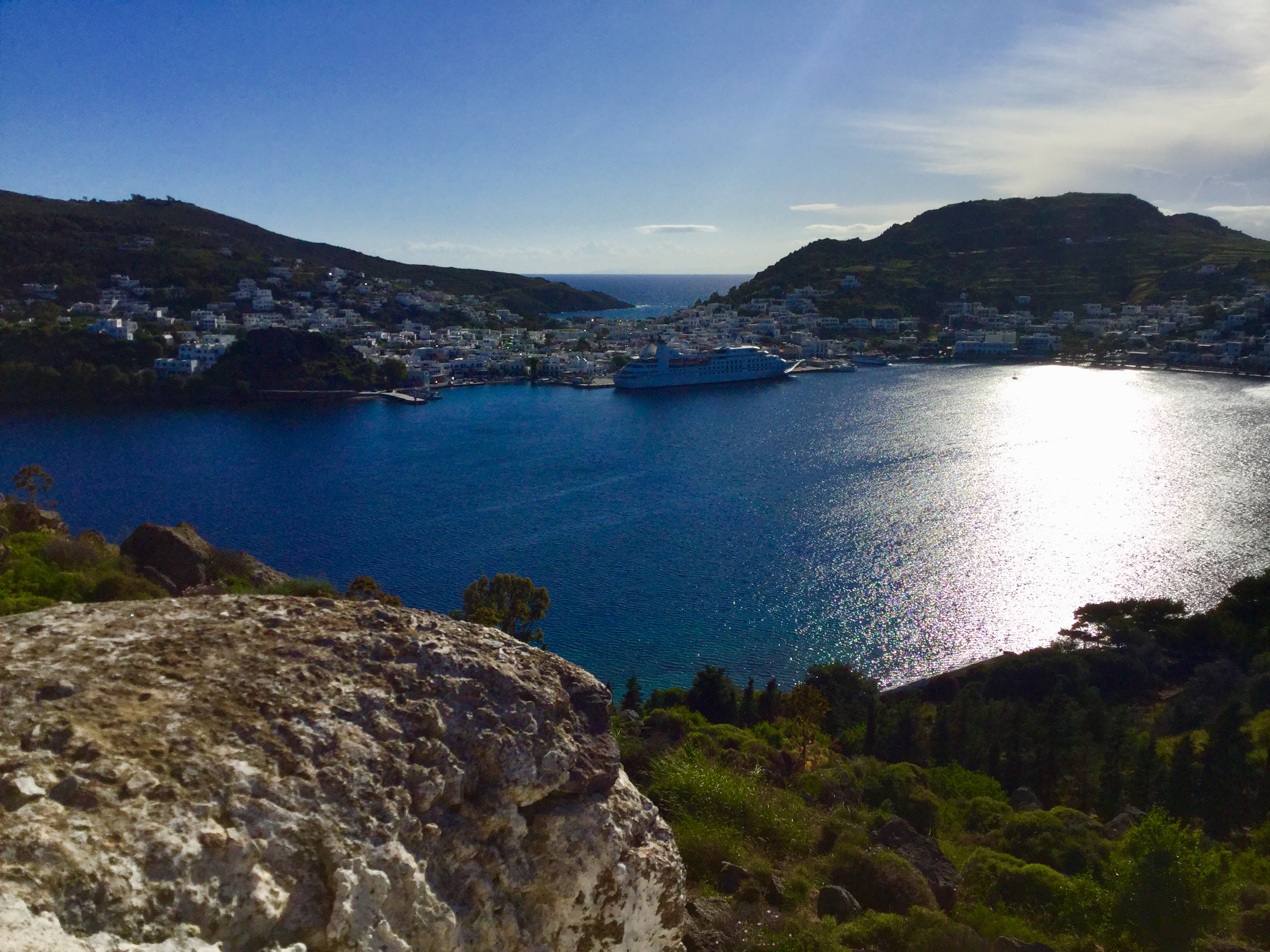
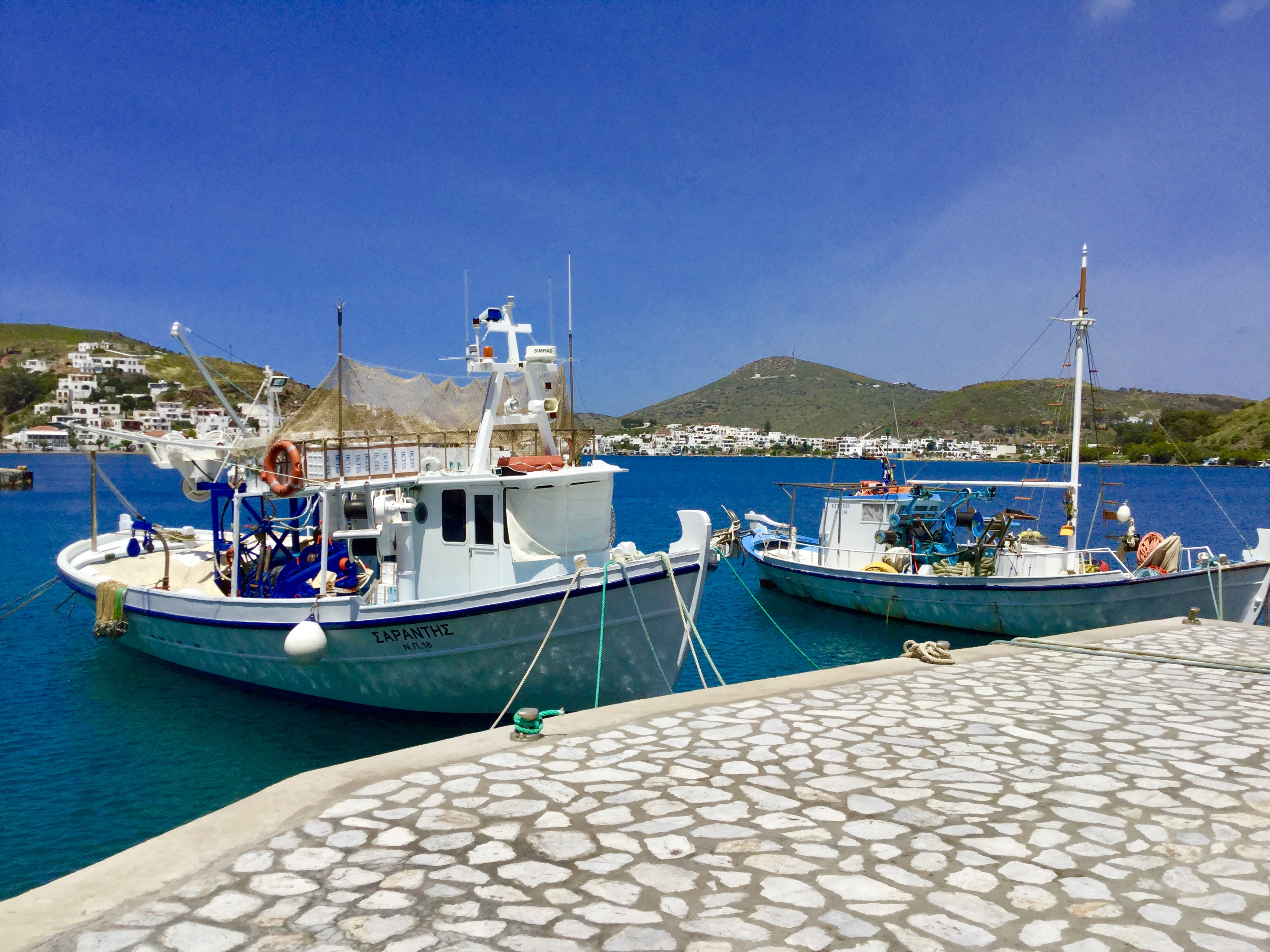
Here’s a gallery of more photos from Naxos and Patmos [and yes, I do mean Patmos, not Paros in this instance]…
I still have half a dozen or so CDs with photos backed up on them to sift through, so don’t think you’ve escaped my nostalgia trip just yet.
•
Click HERE to go to my Amazon Author Page, where you can browse and purchase all of my seventeen written works.
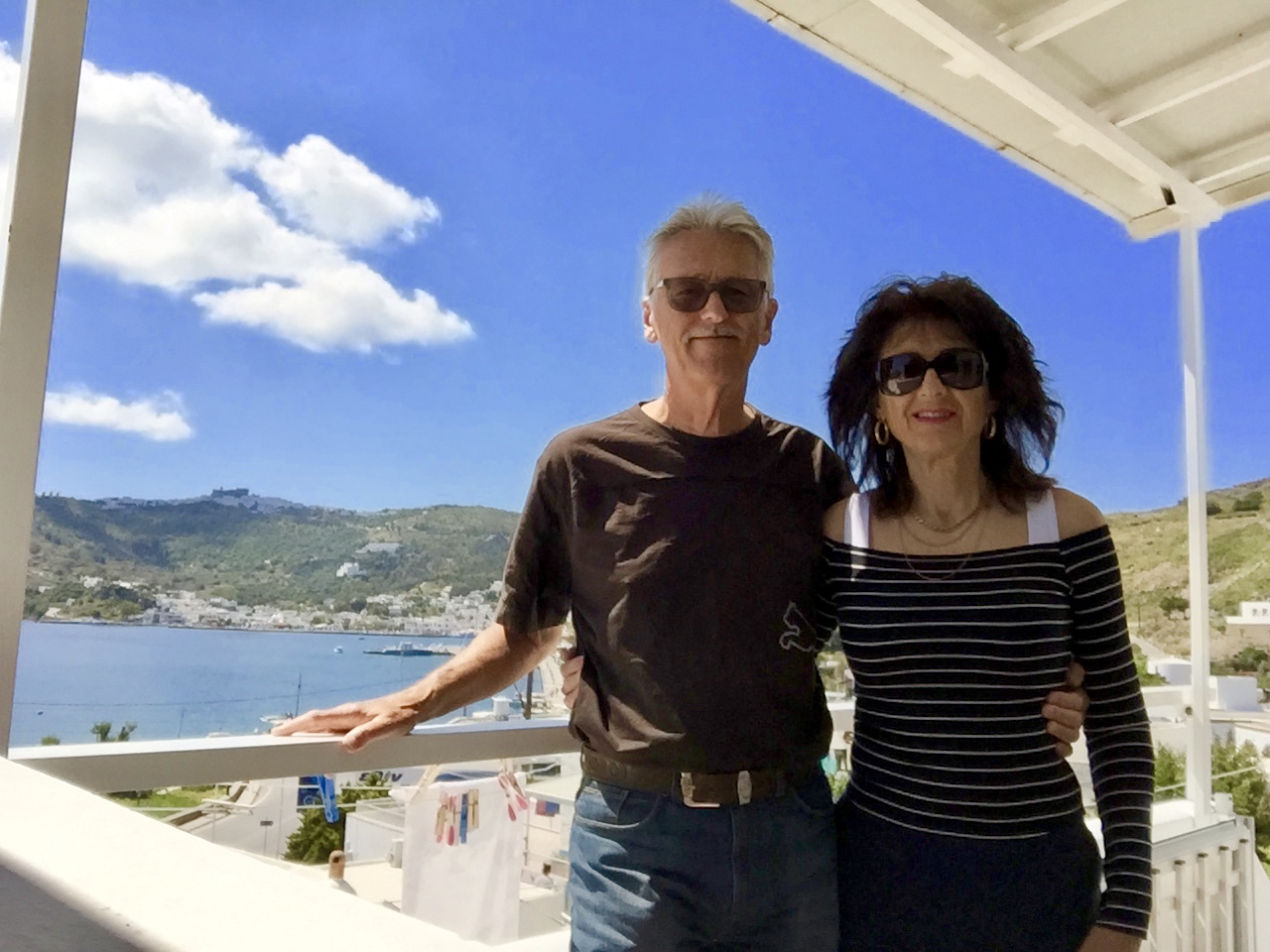
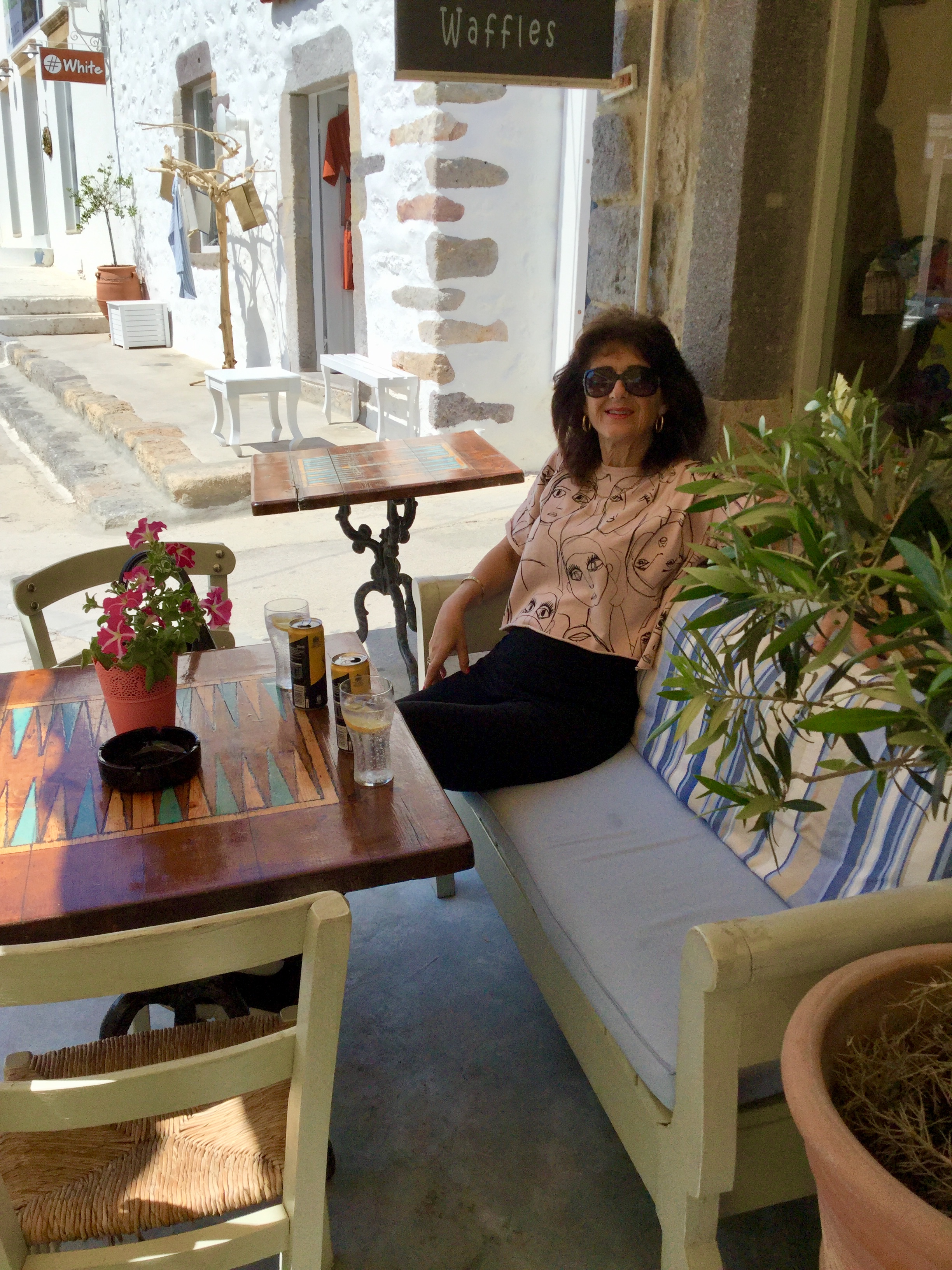
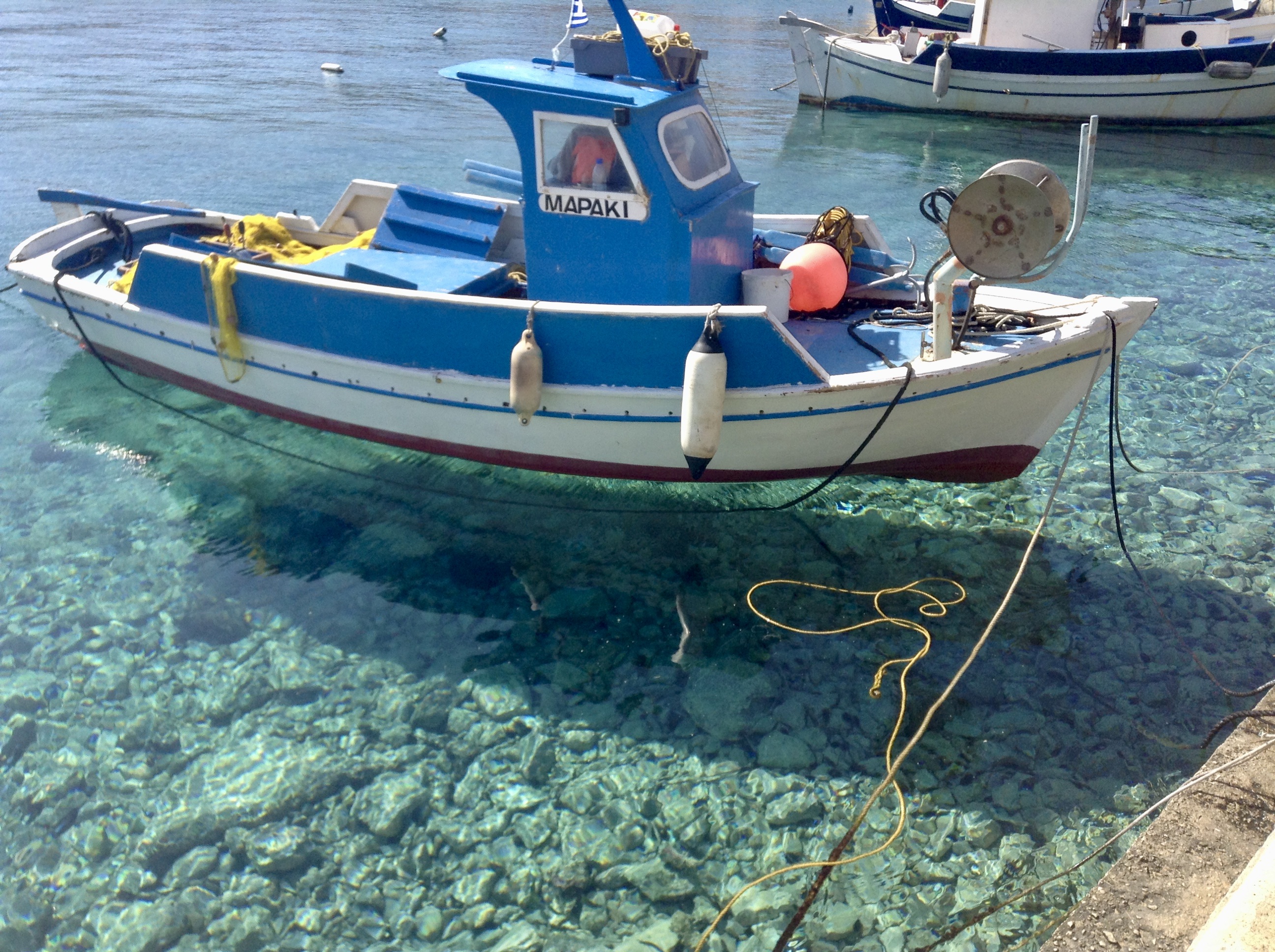
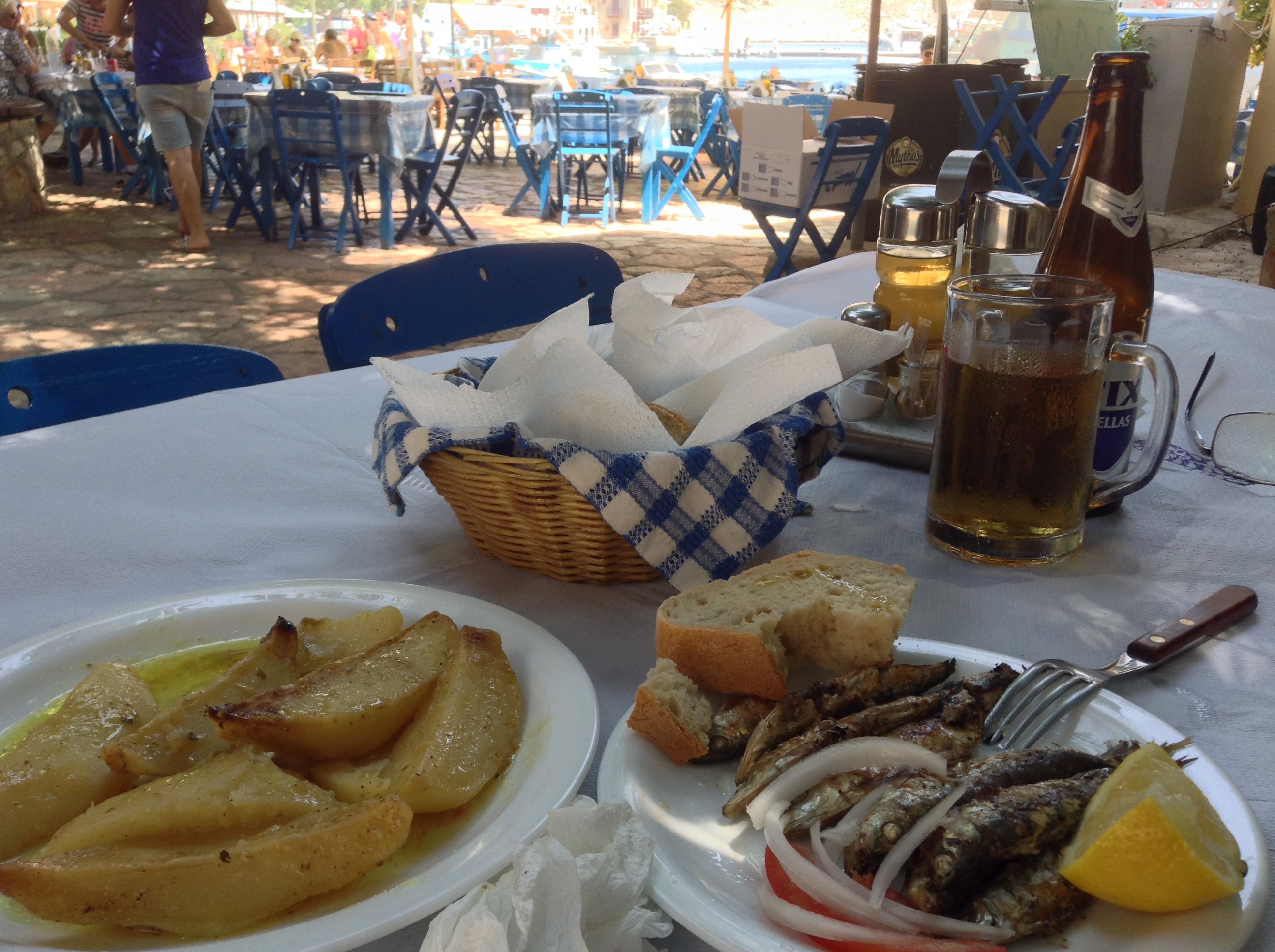
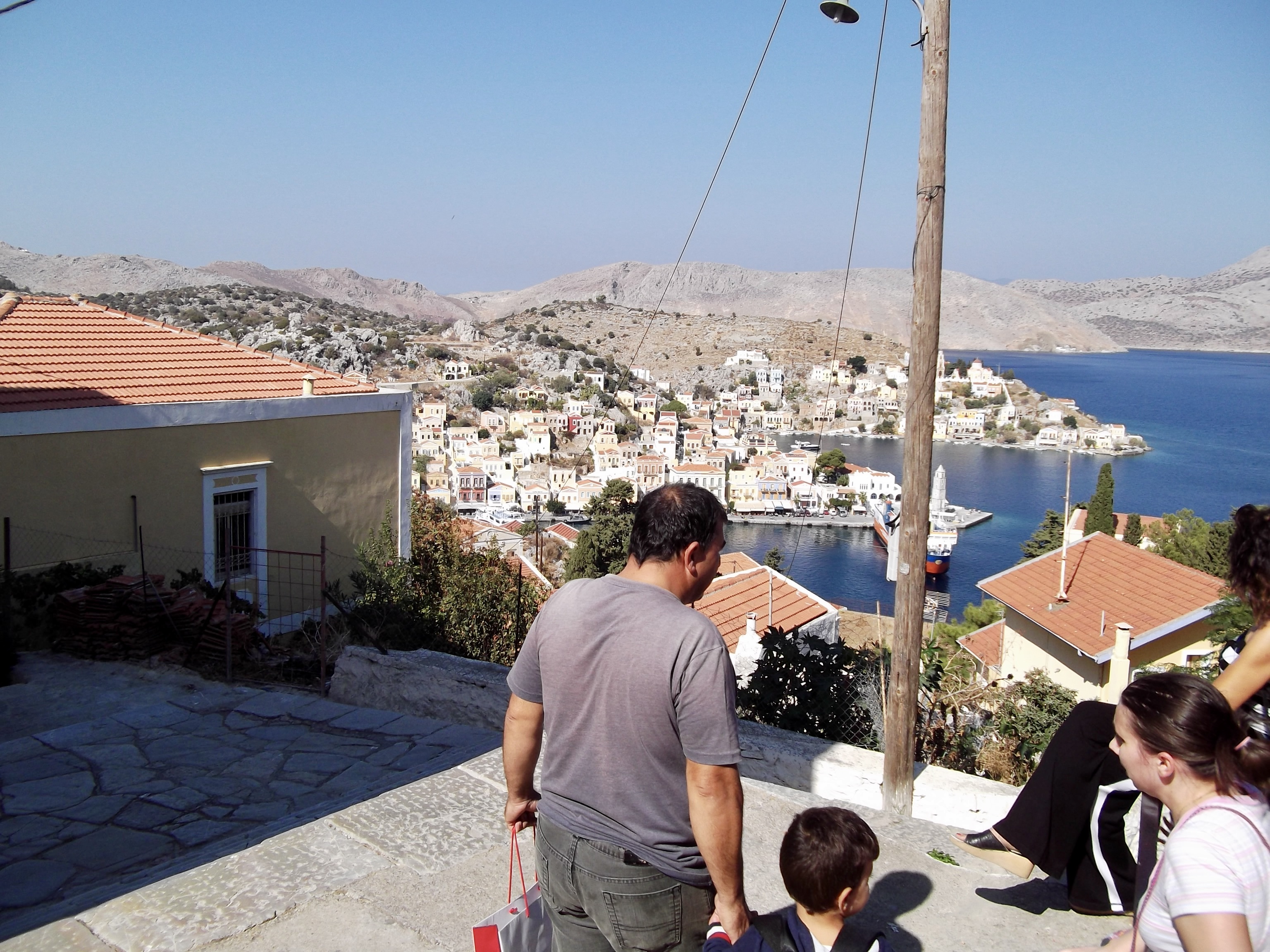
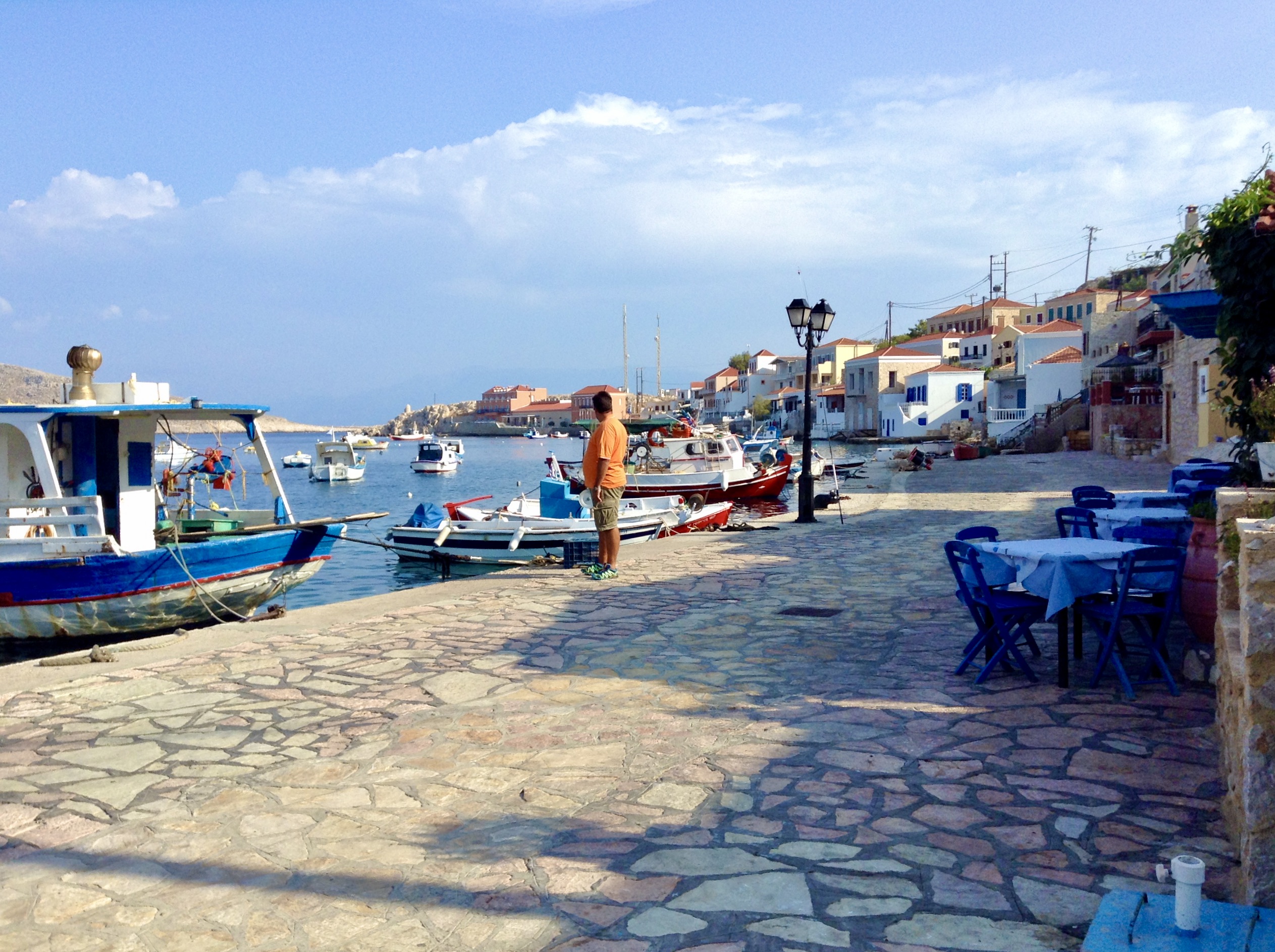
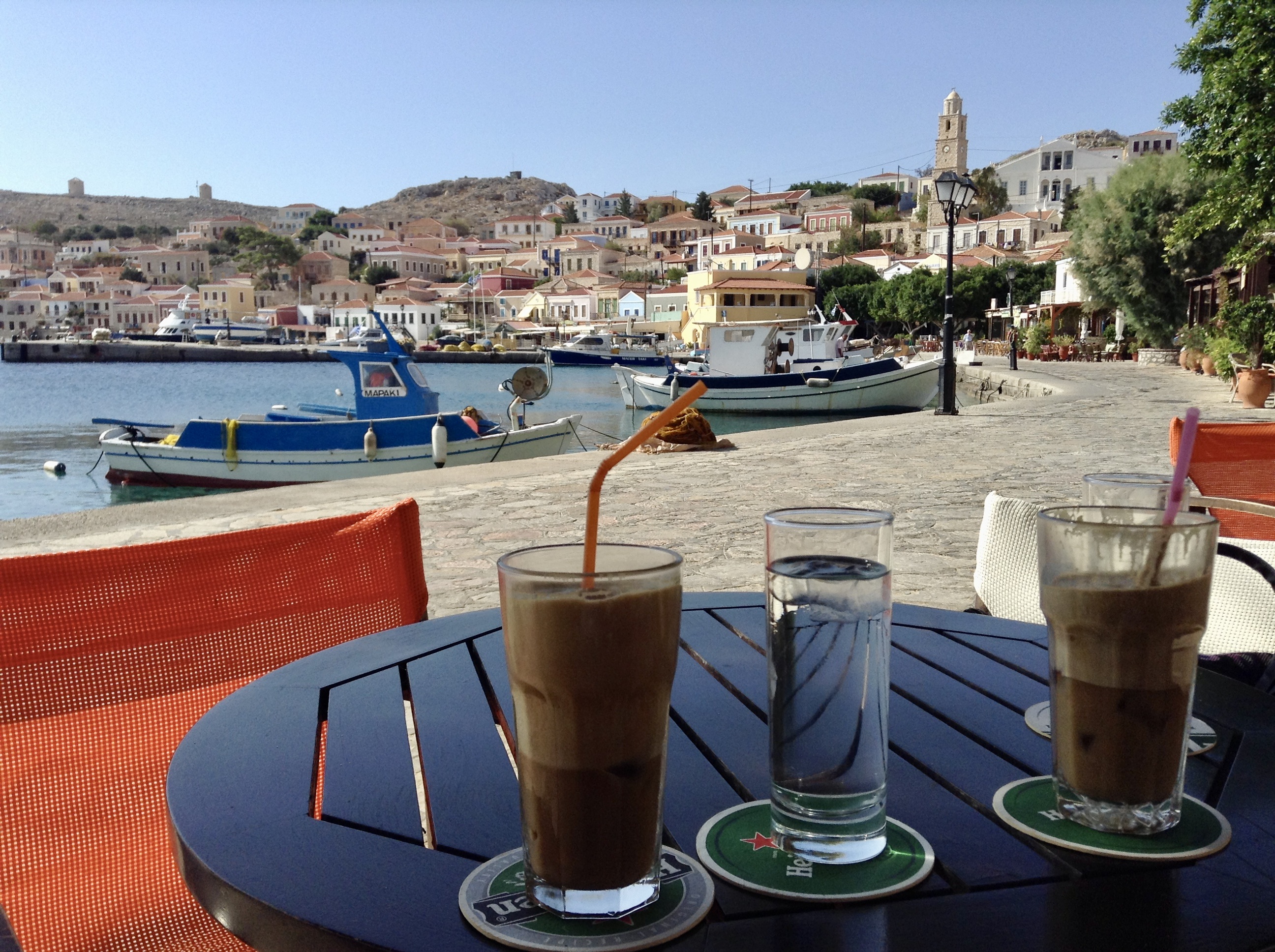
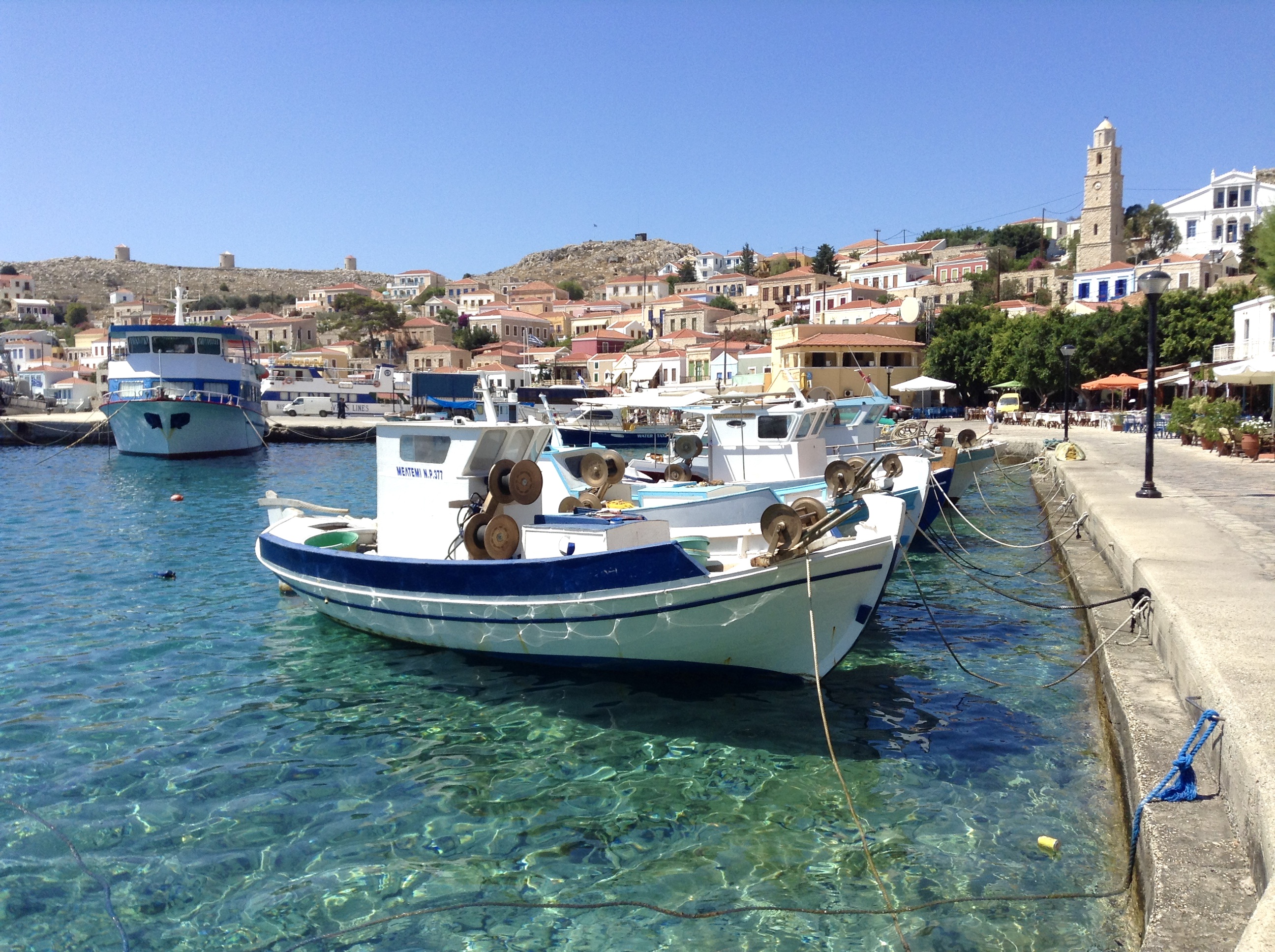
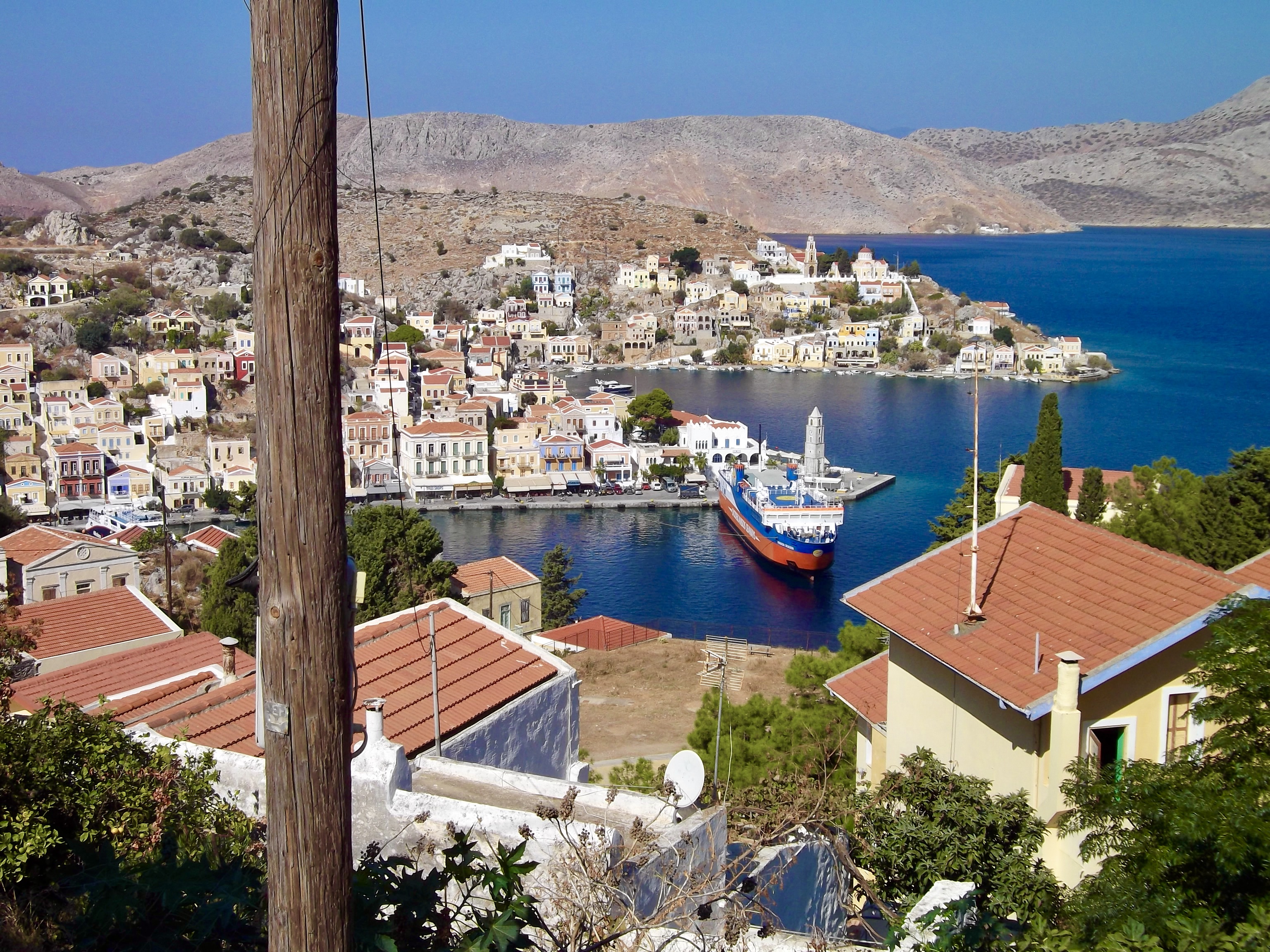
I’ve been marking our twentieth anniversary of moving from the UK to Greece with a lot of photos, so far posted on my ‘Books’ page on Facebook. The third collection I’m posting right here though. The ones in the gallery below are all taken on Symi or Halki [well, the one of Yvonne dancing on the boat just kind of snuck in there]. Hope you like these…
I’m still a long way from trawling through all the photos right back to 2005, so in all probability there’ll be a few more posts both here and on the Facebook page yet!
•
Click HERE to go to my Amazon Author Page, where you can browse and purchase all of my seventeen written works.
Above: That’s the lower olive tree in our lower garden, and the gate giving access to the lane
I think this must be a particularly good year for cicadas. Not only are they a deafening cacophony that makes my wife shout at them to ‘shut up’ while we’re having our morning coffee, much to my amusement, but they’re everywhere, it seems. All along our veranda they’re sitting on the wooden framework. When I’ve got the sail rolled up owing to the Meltemi (well, it’s not actually a sail, because it’s a 3m square rectangle), that can blow pretty strongly at this time of the year, there are usually a few cicadas hanging from the underside, the part that’s in the shade. Plus, during the night, if I walk down to the lower olive tree in our lower garden, sometimes it’s like a shower of kamikaze cicadas, as they seem to fly ‘drunk,’ as it were in the night, and often can be heard hitting the stoney ground like little missiles. I don’t mind them, because, even though they can be as big as your thumb, they’re completely harmless. I find them quite cute, to be honest, and when Yvonne tells them to ‘SHUT UP, I CAN’T hear myself THINK!’, I remark that the sound of the cicadas is one of those background noises that remind us that we’re in Greece and we ought to be grateful.
She often has the last laugh, though, because if you’ve ever walked along a shady lane in Greece during the cicada season, you’ll have noticed that they have an uncanny knack of detecting your approach. All the cicadas within about ten feet of you stop their chirping as you go by. Then, once you’ve reached a safe distance, they start up again. Of, course, when we’re on the veranda lazing on our loungers sipping our freddo espressos, they are fooled because we’re not actually moving, and thus the ones in the nearest olive tree, which is so close that it adds shade to that which we already enjoy from the ‘sail,’ just carry on regardless, and they can be really loud. That’s with the emphasis on the word ‘really.’ So Yvonne’s exclamation, amazingly enough, sometimes works, and the ones in our immediate vicinity obey her and shut up for a while. Or do you think that maybe she’s just got dark powers and communes with nature or something? The jury’s out.
We hadn’t seen our good neighbours Angla’i’a and Giorgo for quite a few months. I don’t know where the time goes, I really don’t. Anyway, as it happens we’d only just mentioned to each other that it was time we dropped into Angla’i’a’s kitchen to catch up, plus cadge an elliniko and hopefully get a couple of homemade pastries along with it, when she called me on the mobile. She was up at the house just above ours on the other side of the lane. It’s usually empty, as the current owners live in Athens but, as it’s the home they inherited down through the family, they usually decamp here to the village for a couple of weeks during August, when we‘re probably enjoying temperatures in the refreshing mid thirties here, whilst in the city it’ll touch 40 or more.
Angla’i’a was in the house cleaning up in preparation for the owners’ arrival on Sunday, when she found that the electricity wouldn’t switch on. As you may or may not know, here in Greece all domestic homes are powered by what my electrical engineer Dad used to call ‘three-phase,’ whereas in the UK domestic electricity is on a ‘single-phase,’ system. Every home has a fuse box set into the wall somewhere in the house, and the door to that box is usually glass-fronted, so you can see the little red lights glowing during the evening. If you peer into the box you’ll see a row (or several rows) of fuses, all of which have a trip switch. The main fuse for the whole house also has a trip, which is often slightly bigger and can be red (although not always) instead of black, which all the lesser ones are. Next to the main trip is a safety fuse with its own trip too, and it also has a little black button for resetting, because, owing to the tendency that the electricity supply here in Greece often has to experience current surges, that safety trip can indeed flip off without warning. One press of the reset button, and you can flip it back into the ‘on’ position, no harm done.
So, Angla’i’a had entered the house and thrown the main switch, which resulted in the safety trip immediately flipping to the ‘off’ position, thus disabling the power to the whole house. At a loss as to what to do, she’d decided to call me (Why me I’ve no idea. Maybe I give the impression that I’m good at this kind of thing, a false impression it would be then). I ran over there to see if it was anything obvious, although what might be ‘obvious’ about a line or two of trip switches that all look basically the same was in serious doubt. I flipped the mains switch to the ‘off’ position, then pressed the reset on the main safety fuse, flipped its lever to the ‘on’ position, then threw the mains switch back to ‘on.’ Bonk! The safety trip immediately flipped to ‘off.’ We had a good look around the place to see if they was any wiring that looked like it had shorted, or if any appliances may have been left plugged in that had seen better days and might need replacing, but there was nothing obvious. In fact the place is generally in very good repair.
The best I could do was to offer to call a friend from town who’s qualified electrician. It was a Friday lunchtime too, so we stood a fighting chance that he’d be able to come over and fix the problem. I called Panteli. Who said that yes, he could come up, so I sent him Angla’i’a’s number and left them to communicate with each other over when he might be able to come.
It was the next morning when we fulfilled our promise to drop by at Angla’i’a and Giorgo’s for a coffee. Once we were comfortably seated at their kitchen table, I asked her if Panteli had been able to fix the problem. “Oh yes,” she replied, “It was only a fuse needed. He fixed it in five minutes flat.” I’d kind of suspected that this would be the case, but the kind of fuse we’re talking about here wasn’t the type that your average bloke carries in his back pocket, but rather the kind that all professional ‘sparks’ would definitely have in their van.
What made us smile, though, was the fact that once Panteli had turned up, Angla’i’a had realised that she knew him, as he was the grandson of her cousin. She was soon explaining all the family connections involved, and which 90+ year old ya-yas or pappous were related to whom, that kind of stuff. If you’ve ever talked to a village resident in Greece about the complicated network of family connections that exists everywhere here, then you also know that we soon lost all hope of following the threads of who was related to whom. It didn’t matter, all’s well that ends well, eh?
As per usual, photo time…
Above: Some late afternoon photos I took in the village this past few days. They were actually shot at around 6.00pm. I don’t think Juliet would have stood much chance of survival if she’d had to rely on that balustrade on that balcony in the last photo, eh?
Above: Umm, I wonder if you can guess what time of the year it is then…
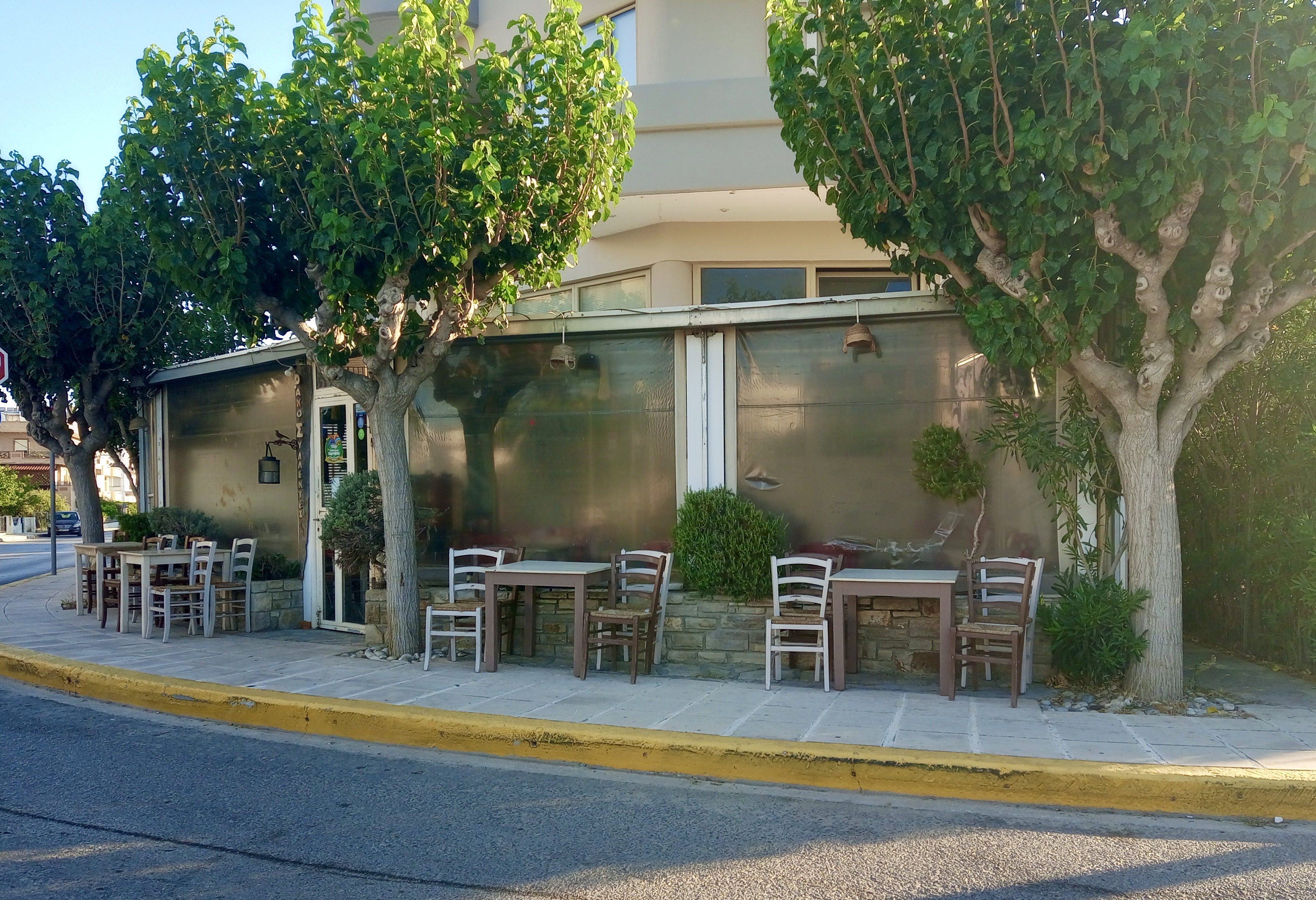
Above: A small corner kafeneio on the edge of the town. The locals are masters of exploiting every piece of usable space, aren’t’ they.
•
Click HERE to go to my Amazon Author Page, where you can browse and purchase all of my seventeen written works.
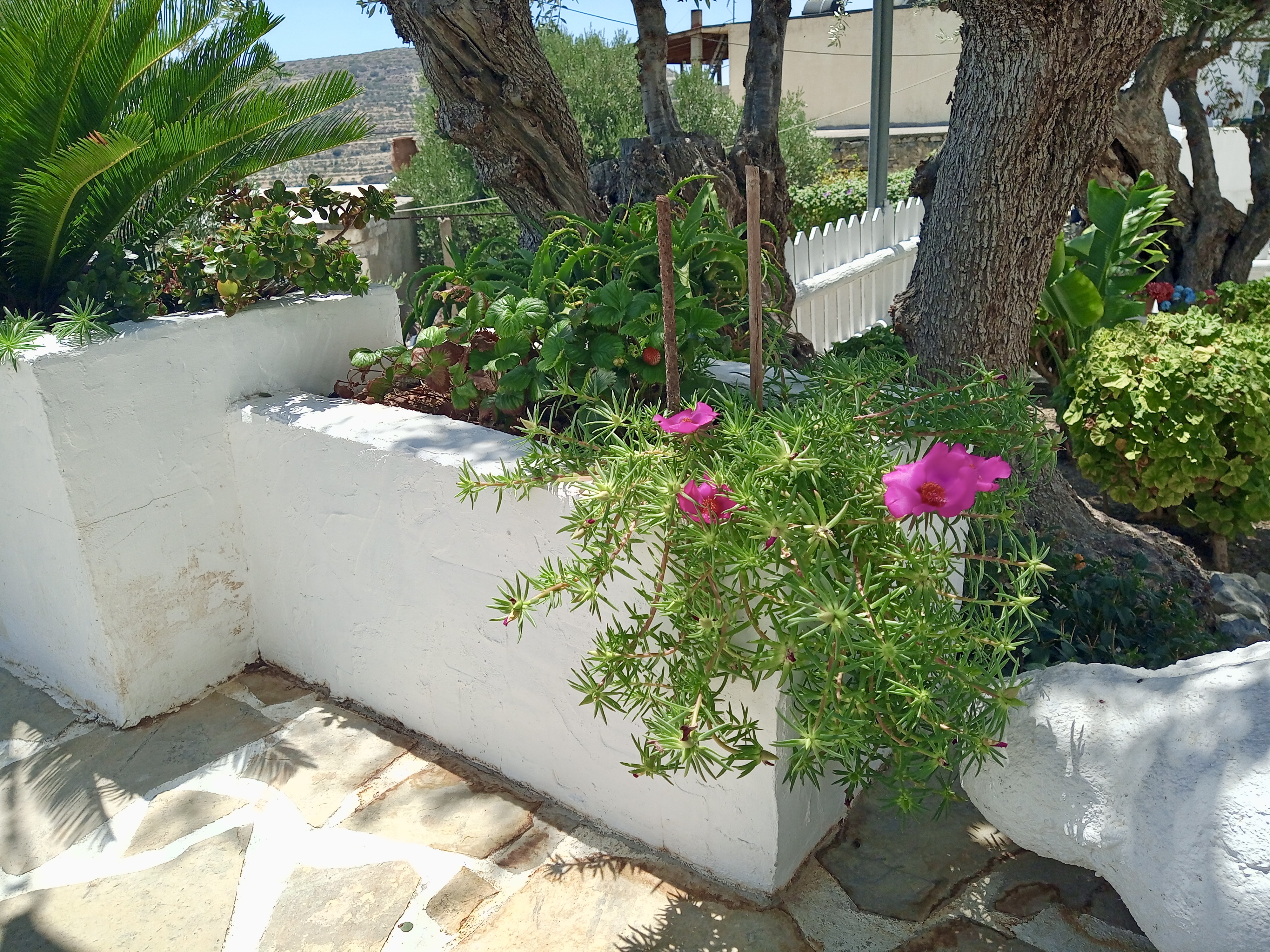
I really wanted to show you this wonderful trailing garden plant. Our neighbour Maria gave us a cutting a couple of years ago, after we’d seen it cascading over her stone balustrade and admired its bright magenta flowers, which seem to go on forever. Each flower lasts only one day, but it keeps on flowering seemingly indefinitely. We’d originally put the cutting in the flower bed in our upper garden, but it hadn’t done much and always looked like it was ready to give up on life. So, after I’d built the second of the two raised beds on our sundeck in the lower garden, I dug the plant up and settled it there, and the result is plain to see. It’s evidently much happier and seems to prefer being able to trail over wall and tumble gradually down.
Frankly, we had no idea what it was called, and neither did Maria, so only today I finally got around to using a plant ID app on my phone, and it turns out to be a version of Portulaca grandiflora-Hook, which is native to South America, and has the common name Moss-rose, even though it’s in no way related to actual roses. What’s really great about it is the fact that it hardly ever suffers if you forget to water it, and thus is ideal for this climate. Most plants here need to be drought-tolerant to survive, and this one gives value ad infinitum. I’ve no idea if it would survive in more temperate climates, but if you live in Greece and haven’t tried it, I can highly recommend it for a real splash of blousy colour. If you do live a long way further north, I’m sure it would be a probable winner under glass or on a sunny windowsill somewhere.
Just thought you might like to see it.
•
Click HERE to go to my Amazon Author Page, where you can browse and purchase all of my seventeen written works.
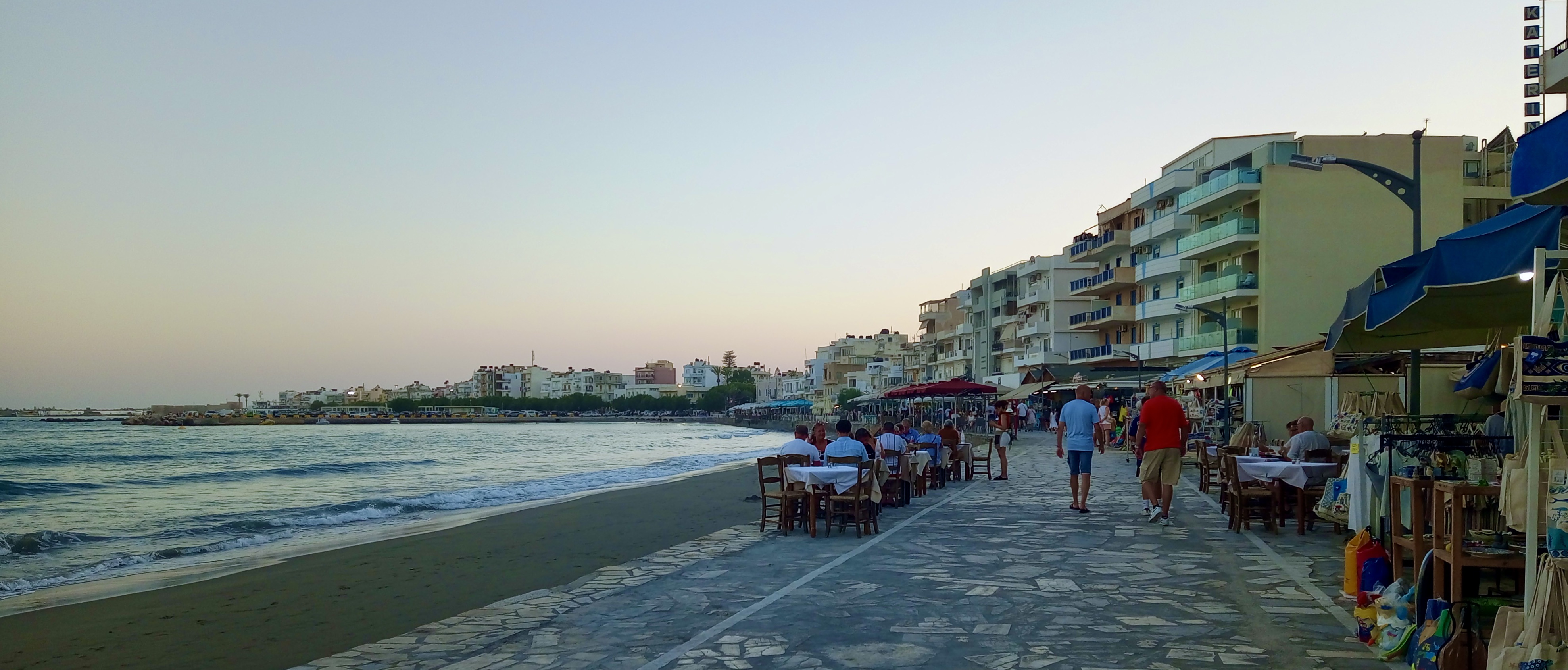
The above shot of Ierapetra’s ‘promenade’ was taken after sundown a couple of evenings ago. The atmosphere at that time of the day is lovely, with people strolling along enjoying the cooler temperatures, locals stopping to catch up with each other, some are having an early evening aperitif, it’s lovely, it really is. And with the temperatures we were having last week, a lot of people were only able to go out at this time of the day anyway. For over a week the daytime temperature reached 38 every single day, and one time (see previous post) the car showed 40 as we were driving home from doing the shopping.
Incidentally, and I know I’ve harped on about this several times before, I still can’t believe how many people seem to think that a thermometer placed in full sun will give them an accurate reading. The other evening I was talking to Niko, a Greek friend and father of three, who’s lived here all his life, and I mentioned that we’d endured 40ºC that day, so he showed me a photo that he’d taken with his phone of a thermometer treading 50.5, a look of eminent smugness on his face. I asked him where the thermometer in the photo was situated, and he replied, “outside.'”
“Yes, but where outside?” I asked him, “Was it in full sun, or the shade?” He eventually conceded that it was in full sun. So, trying to be as tactful as I could, and here was where all those Geography lessons I sat through back in school finally came in handy, I suggested he think about any time when he might have sat in a car during the winter months, when the temperature was maybe 18-19ºC outside, and with the windows closed. I well remember when we used to live in the UK, when it may have even been frosty outside, but the sky was totally clear, having sat in the car and having to open the windows because it was getting too hot in the car. Why is it that people are advised not to leave babies or animals in cars with the windows closed? It’s simple physics, the sunlight will heat the interior of a closed glass environment to a temperature that’s way above what it’s reading outside in the air. So, logic would tell us that a glass thermometer placed in full sunlight will experience the same phenomenon, right? The inside of that glass tube will get way hotter than the mean air temperature outside of that sealed tube. The end result? You won’t get a true reading.
I know, I’m sounding like a know-all, and please forgive me for that, but it’s quite important really. I had British friends back on Rhodes many years ago who told me that their garden had experienced over 30ºC during one day in January, when the actual temperature was around 19-20. I do, I must admit, find it amazing that so many people don’t understand this. At my school, when I was between the ages of eleven and sixteen, we used to have a ‘weather station’ in the school grounds and, during Geography, we’d be sent out to take the measurements of rainfall, wind speed and temperature. That weather station was a white louvred box on legs, and the inside was kept dark. It would give us accurate temperature readings all through the school year. I’ve always remembered that principle about true temperature readings ever since. Thank you Mr. Vickery.
I mean, as if 38ºC in the shade isn’t hot enough anyway. We’ve spent the best part of a week with the house all closed up and in darkness, so that we could keep the temperature indoors to a tolerable level, and it works to a degree, although we’ve still had to resort to using the air-con much of the time. The sea temperature now is around 25ºC, so it’s luxurious to take a dip and revel in the relative coolness. Come September the sea gets so warm that it’s almost not refreshing any more to go in for a swim. Mind you, we still do anyway.
Did I ever tell you that Yvonne-Maria, my wife, is rather averse to technology? She purports to not want to use computers and smartphones, saying that life would be so much simpler without them. She’s right, of course, but you can’t go backwards, can you. Anyway, I’ve taken a long time trying to get her to use her quite new phone lately, with very limited success, I have to concede. Mind you, there is one area in which I’ve succeeded handsomely, and that has to do with a certain app called E-Radio that I installed on her phone. When we’re on the beach she likes to listen to her favorite music, which is what can generally be termed as ‘Laika‘, which is predominantly bouzouki music. It’s very different from Cretan traditional music, since that doesn’t use the bouzouki, but rather the lyra, and every song seems to trundle on for about fifteen minutes, barely changing tempo at all from song to song. Incidentally, if you’ve clicked that link and gone to the Wiki page about ‘Laika’ you’ll note that they seem to insist on spelling it ‘Laiko.’ However, in Greece it’s definitely ‘Laika’ with an ‘a’, and if anyone were in any doubt about that they can use E-Radio to track down Yvonne’s favourite station, which is called Dalkas (pronounced ‘Dal-KAS‘ BTW), and you’ll hear the promo ads telling you the station’s name all the time, and, in the process, it regularly says ‘Mono Laika,’ which translates as ‘Only Laika,” since that’s the music genre that the station is dedicated to playing.
Anyway, I digress, as usual. I showed her a few weeks back, when her tiny transistor radio packed in for the last time, that she could use her phone to listen to Dalkas on the beach to her heart’s delight. Guess what, she now never goes to the beach without it. OK, so she’s still not up to speed with all the social media apps and stuff, and rarely makes a phone call, but at least she’s decided that the phone’s indispensable for one very good reason…
Any progress is better than none at all, right? Here are a few more recent photos…
Above: another from the sea front at just after sundown.
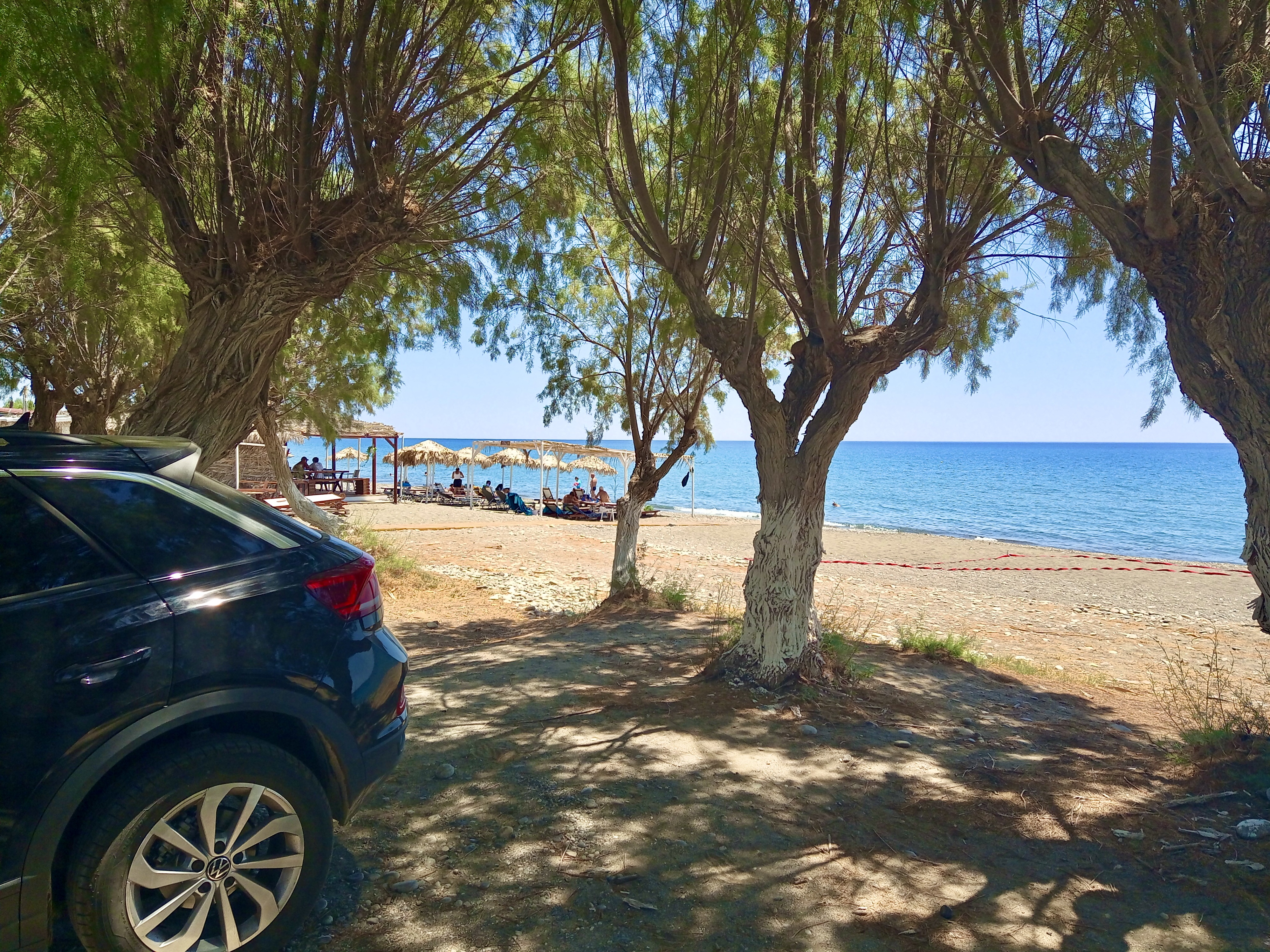
Above; Gra Ligia beach at around 1.00pm last Sunday. Just look at those hordes, eh? We can always get the car under the trees in some very much needed shade when we go there too.
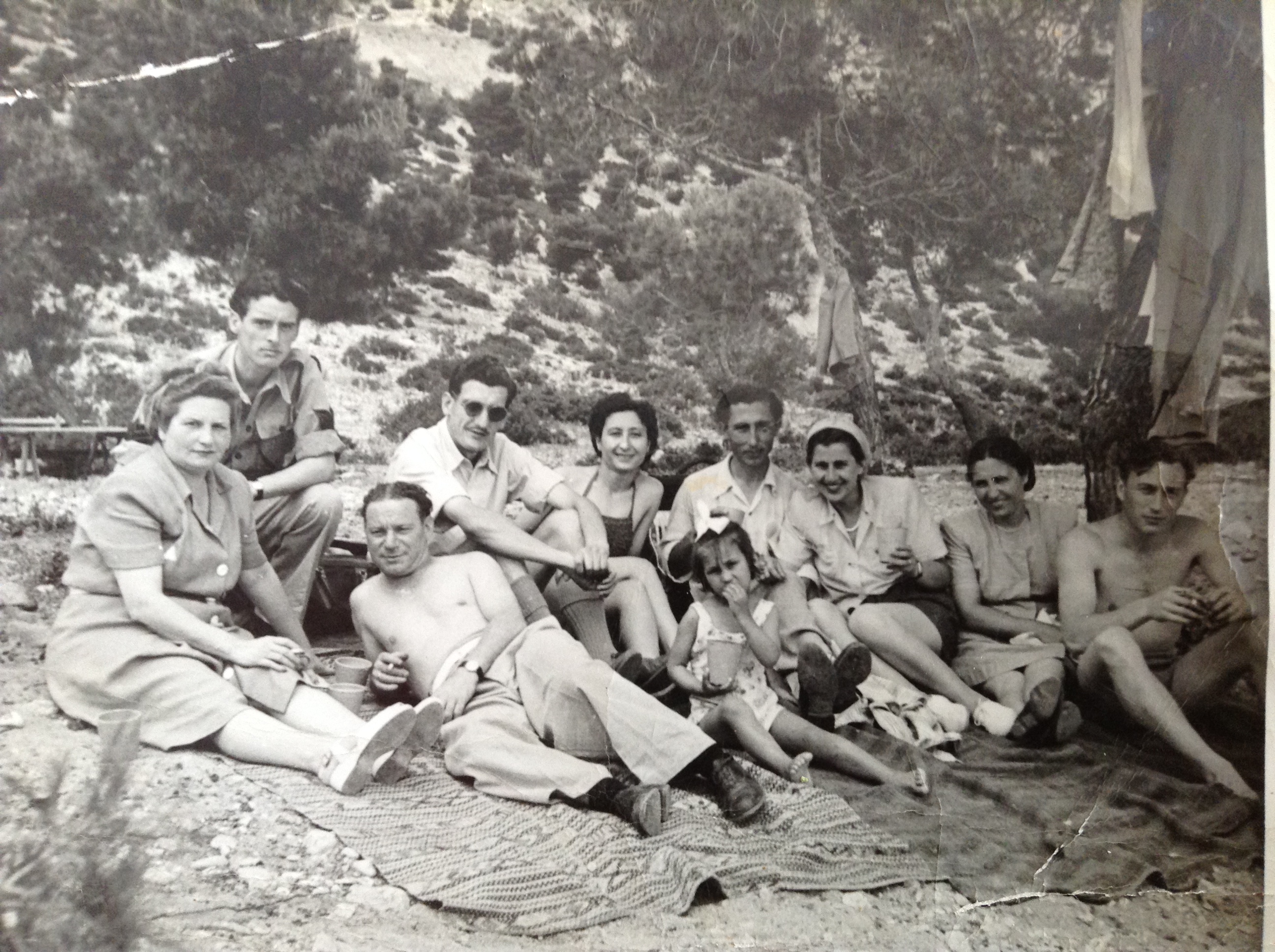
Above: This photo is around 80 years old. It’s taken on a beach near Athens in the 1940’s and shows my late parents-in-law before they were married, in company with others from my mother-in-law’s family and some of my late father-in-law’s fellow soldiers. The guy with the cool shades is Kenneth White, my father-in-law, and the young woman to his immediate left, and our right, is my mother-in law Lela. Next to her is her brother and thus my wife’s Uncle Theodorakis, who played the accordion beautifully, and I was privileged to hear him before he died, during a few magical nights at a waterfront taverna in Kalamos, north of Athens in 1977-78. His wife Vaso is the smiling woman with the headscarf and next to her is my wife’s auntie Effie. I never got to meet my father-in-law’s comrades, of course, but my wife’s family members were all still alive and well and living in Athens during my first few visits there in the late seventies. There are some affectionate anecdotes about them in my first book ‘Feta Compli’ by the way.
•
Click HERE to go to my Amazon Author Page, where you can browse and purchase all of my seventeen written works.
Above: Last Saturday evening, at around 10.00pm. The sea front at L’Angolo restaurant was buzzing. These heat-waves may be a bit difficult to deal with, but late in the evening, when the temperature’s hovering at around 30ºC, the best place to be is beside the sea. So that’s where we were, to enjoy our usual epic green salad with a large Pizza, not bad.
I’m a bit depressed though, to be honest. You know me, I’m sure. As a rule I like to keep positive, but occasionally I need to let off steam about something, and I’m feeling like doing so again now.
Let me explain. A couple of years ago we were on friendly terms with the lifeguards on the town beach, and they were a young couple, Mihalis and Spiridoula. They’re probably in Sydney now, because Mihalis told us that they couldn’t really make a living here in Greece, and that they’d worked out in Auz a few years before, and had come home because they wanted to be in their home country. However, the cost of accommodation here was becoming so out of proportion with their earnings, that they felt that the only way to get a half-decent living standard was to go back down under, so they said that they’d see that season out and then return to Australia.
Mihalis was the thinking type, and we had many a chat about world conditions and the state of the environment. Yeah, I know, nice light subjects for a hot day on a Greek beach, eh? I remember remarking that at least now there were recycling bins in evidence in Greece, a country that’s been very late coming to the ‘recycling & caring for the environment in general’ party, to put it charitably. When we’d first arrived in Greece on Rhodes back in 2005, there were no recycling facilities on that island at all, and the irony of it was that during the very summer of our arrival a big hotel in Rhodes Town was hosting an international conference on the importance of recycling. You couldn’t make it up, could you?
Nowadays, though, there are colour-coded dumpsters on most streets and – apart from a few wanton idiots who still chuck their general rubbish into whichever bin’s the nearest to their car window – people do seem to place their cardboard, glass, plastic and cans into the correct bin, which here on Crete is the blue one. I told Mihalis that I thought that this was an encouraging development, something to be positive about. His reply? “Sorry to disappoint you John, but they collect the contents of all bins, blue or green, makes no difference, in the same trash truck. Think about it, have you ever seen a recycling truck, painted in different livery, maybe with a recycling logo on the side, in Ierapetra? I happen to know that there are no recycling facilities here, it all goes into landfill, all of it.”
No doubt observing my reaction by my facial expression, he continued, “Look, I’m sorry to break it to you, but that’s the reason why most of the rubbish collections are done under cover of darkness. Whatever efforts you make to separate your recycling from household rubbish, it makes no difference. Ιt’s a bloody disgrace, but there it is.”
From that day to this, still fired with a basic need to live in hope, we continue to chuck everything that’s recyclable into the blue bins, and the normal rubbish in the green ones. I don’t want to blow our own trumpet here, but we actually have very little ‘normal rubbish’ to throw away anyway, because my wife always cooks with fresh vegetables, never packaged, and we steer well clear of packaged, processed foods as much as we can. Knowing, as I do, that there are European Union treaties and standards that have to be met by the member states, I’ve gone on believing that Mihalis may just have been wrong. Perhaps his opinion was coloured by a general disappointment in his home country, but either way, we’ve gone on trying to do the right thing. Yvonne and I find it impossible not to do whatever we can to help the environment, as should everyone with a brain IMHO.
So, to the reason why I’ve chosen to talk about this subject this time around. I’ve talked many times before about how, since I’m a bad sleeper, I often take a walk around the village during the night hours. All the local cats and dogs, probably even the local bat population, know me all too well by now, and they watch passively as I trudge by. Now and then I’ll pass a neighbour who’s also not sleeping, and they’ll be sitting quietly outside their front door, trying to keep slightly cooler when the temperature never drops below about 27-28ºC all night. We nod a quiet whispered greeting and I continue on my way.
Well, a few nights ago I took my walk at the crack of dawn. Well, it was actually around 4.30am, still before the blackness in the eastern sky had begun to develop its pre-dawn glow. As I walked back along the main road through the village, a loud noise reached my ears from a little way behind me. It was accompanied by nightmarish flashing lights that put me in mind of some hellish scene from a sci-fi movie or something, maybe the war of the worlds had actually begun. I soon realized that the sound was of machinery, including a diesel engined truck, and the clanking of dumpsters being heaved up by the rubbish truck’s lifting mechanism, which tips the dumpsters upside down and empties their contents into the truck’s gaping, hungry aperture at the rear end. I knew that a hundred metres in front of me were the two bins that serve our small lane, so I ducked behind a tree in the murkiness to see what happened when the truck reached our bins.
There are two bins beside the road at the bottom of our small, steep lane. One’s blue, placed there by the new village mayor Manoli after I’d suggested (when he’d asked us for suggestions) that there ought to be one, since our village, when he got elected, didn’t even have one blue (recycling) bin to its name, whereas Meseleri, five kilometres up the mountain, had about six. So now we do have one blue one and one green one (for regular waste) at several spots within the village, and, I’ve got to say, most villagers do put the right stuff in the right bin. The blue one’s often well full of cardboard packaging when someone’s had a new appliance delivered, for example. Good on them.
So, there I was, with a full and unimpeded view of our bins, watching from a dark recess behind a tree as the trash truck pulled up beside them. This was, of course, the regular dustbin-lorry (as we’d call them in the UK) and not one especially allocated to collect recycling, oh no. There are two men who stand on platforms either side at the back, and they cling on to metal grab-handles whilst the truck’s in motion. As the truck comes to a stop, the men leap off, grab the bins, wheel them to the truck, hook them up, then operate a control panel and the mechanism lifts the bins, then tips all the contents into the truck, where the hydraulic crushing mechanism takes over and compresses the waste before forcing it further back inside the truck’s ‘container.’
The men did exactly the same with both bins. In fact, when they emptied the recycling one, I heard the glass in it being smashed and shattered by the crushing mechanism too. To say I was crestfallen would be a huge understatement. Yes, I’d been warned a couple of years ago, but Greece is a member of the European Union, and as such has signed up to a whole raft of environmental measures. In fact, I’ve done some research and, at the risk of depressing you further, here are the facts as they stand, and it doesn’t make for pleasant reading:
There’s a European rule governing whether member countries need to recycle waste, and here are the facts. The main rule is part of the EU Waste Framework Directive (Directive 2008/98/EC, as amended by Directive 2018/851). This directive requires all EU member states to:
Take measures to promote recycling and reuse of waste and meet binding recycling targets:
By 2025: at least 55% of municipal waste must be recycled.
By 2030: at least 60%.
By 2035: at least 65%.
It also obliges countries to implement the following waste hierarchy: Prevention, reuse, recycling, recovery (e.g., energy recovery), disposal (landfill as a last resort).
Member states must report their recycling rates to the European Commission, which can take action (including infringement procedures) if targets aren’t met.
So, how is Greece doing on meeting these targets? The EU Waste Framework Directive (Directive 2008/98/EC, amended by Directive (EU) 2018/851) sets binding rules for recycling across member states, including:
Municipal waste recycling targets, to repeat the figures: 55 % by 2025, 60 % by 2030, 65 % by 2035. A landfill‑use limit: no more than 10 % of municipal waste may be landfilled by 2035
There is a requirement that member states measure and report recycling rates, with the Commission empowered to take enforcement or infringement actions if targets or reporting obligations are missed.
The current performance of Greece (as of latest data)?
In 2021, Greece recycled just 17 % of its municipal waste, far below the EU average of 49–50 %. Landfilling is still dominant, at around 77–80 % of waste. Waste generation per person is about 509–524 kg/year, slightly above EU average of 502–527 kg.
Is there a Risk involved when missing the EU targets? Oh yes… According to early‑warning assessments by the European Commission, Greece is at risk of failing to meet the 2025 recycling target and future landfill reduction objectives. Interestingly, In 2024, the Commission initiated an infringement procedure, issuing a letter of formal notice to Greece for failure to properly transpose the Directive and not reporting required data for 2020–2022. Plus, In December 2024, a reasoned opinion was sent concerning persistent non‑compliance with both the Waste Framework Directive and the Landfill Directive, focusing on deficiencies in waste facilities and untreated landfills.
OK, so Greece has implemented landfill taxes, increasing annually until 2027, with revenues redirected to fund recycling infrastructure and pay‑as‑you‑throw schemes. The Recovery and Resilience Plan (2021–2027) allocates €853 million to support recycling, separate collection, and waste treatment infrastructure. In early 2025, government reforms include redirecting 85 % of landfill tax revenue directly to municipalities, plus €70 million in bonuses to incentivise better performance*. Metrics reported for 2022 show recycling at just 17.3 %. Yes, seriously.
And, the consequences & penalties for non‑compliance?
Greece faces legal enforcement steps: formal notices and reasoned opinions, with risk of escalation to the Court of Justice of the EU if improvements aren’t made. Past examples of EU‑imposed fines: in 2000 Greece paid daily fines (over €17,000 per day) over failure to shut down an illegally operating toxic waste facility on – wait for it – Crete.
(*Which begs the question, if local councils are actually receiving this cash, what the blazes are they doing with it?)
There you go, then. One can only hope that things will get better, because it has to be wholly unacceptable for local councils to be duping the conscientious among their populace with the placing of recycling bins in the community, whilst not actually recycling anything, right?
•
Moving swiftly on, to lighter matters, here are a few photos…
Above: Well, I say ‘lighter matters,’ but look at the temperature as we drove home with the shopping the other day)
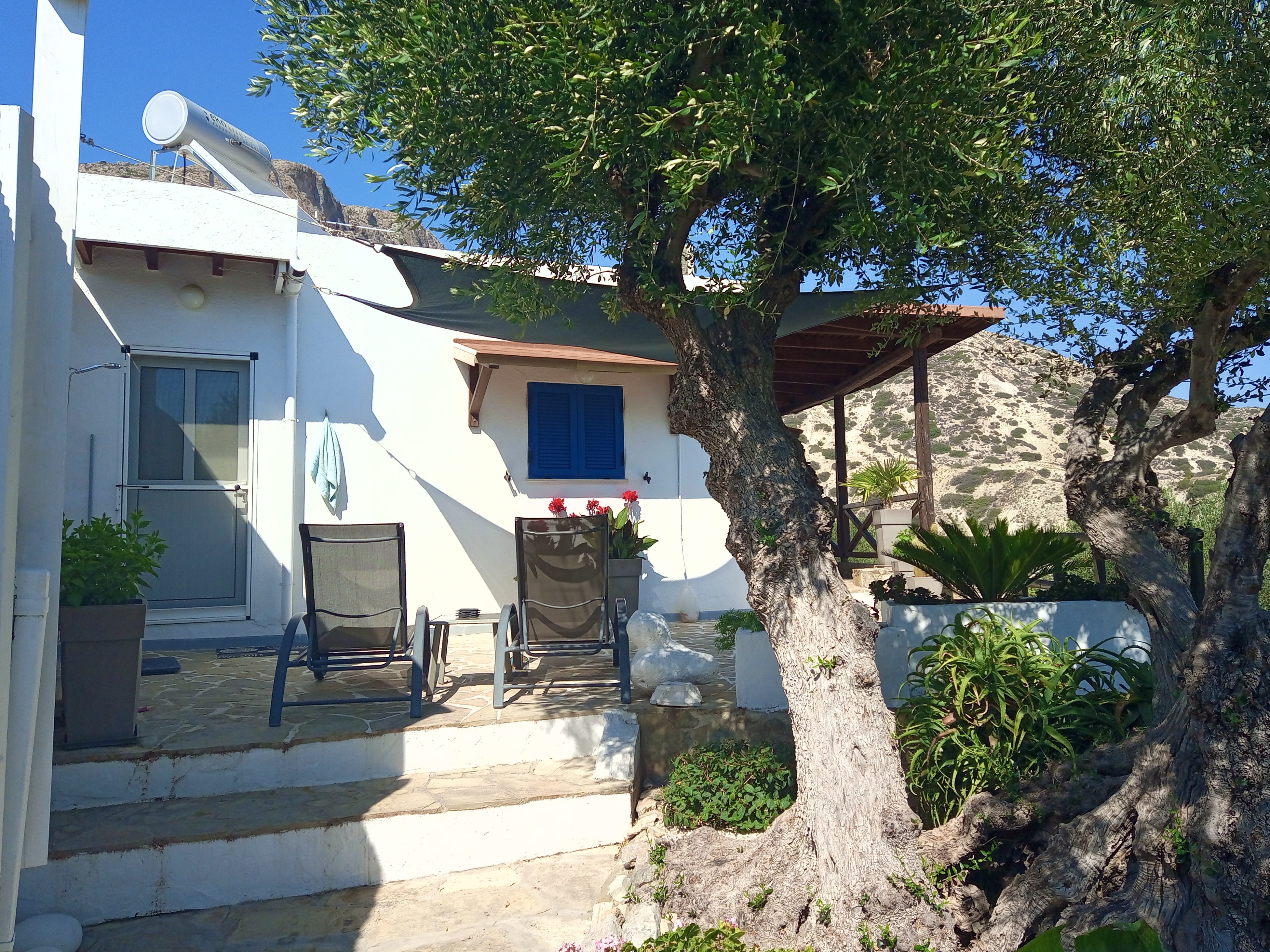
Above: Our ‘sun terrace’ yesterday. We rarely close the shutters on that bedroom window, but in these conditions it’s a must.
Above: The variety of different hibiscus flowers is amazing. We probably have about 6 different types in pots around the place and they’re all slightly different. This one’s truly ‘blousy’ when it’s in full bloom though, don’t you think?
Above: And, of course, the canas are a marvel to behold. Finally, the one below is of a dead wasp as the local ant population had just begun to arrive to do their ‘rubbish collection.’ Now, if you want to see a good example of natural recycling, look no further than the lowly ant.
•
Click HERE to go to my Amazon Author Page, where you can browse and purchase all of my seventeen written works.

















































 Accretions