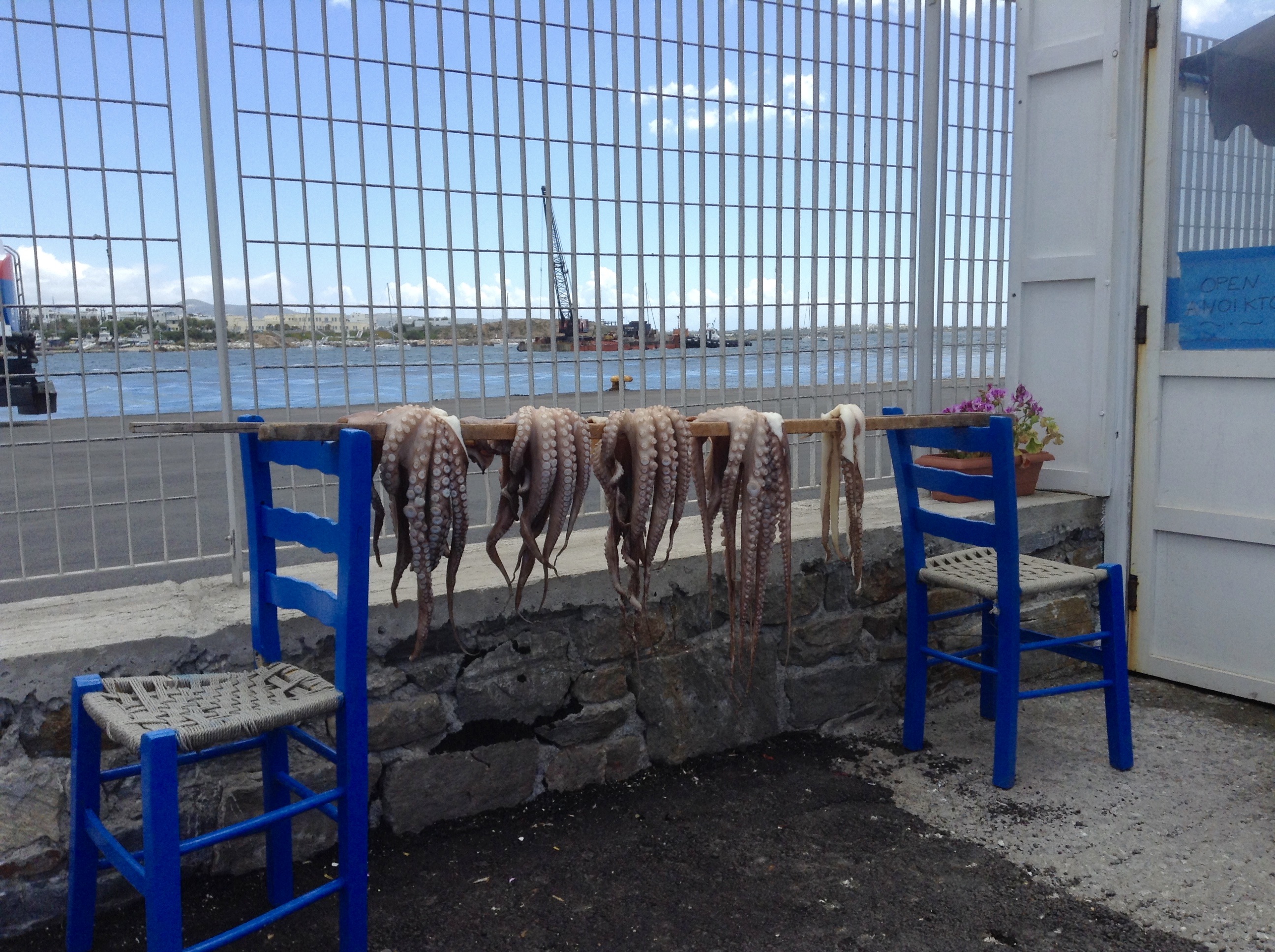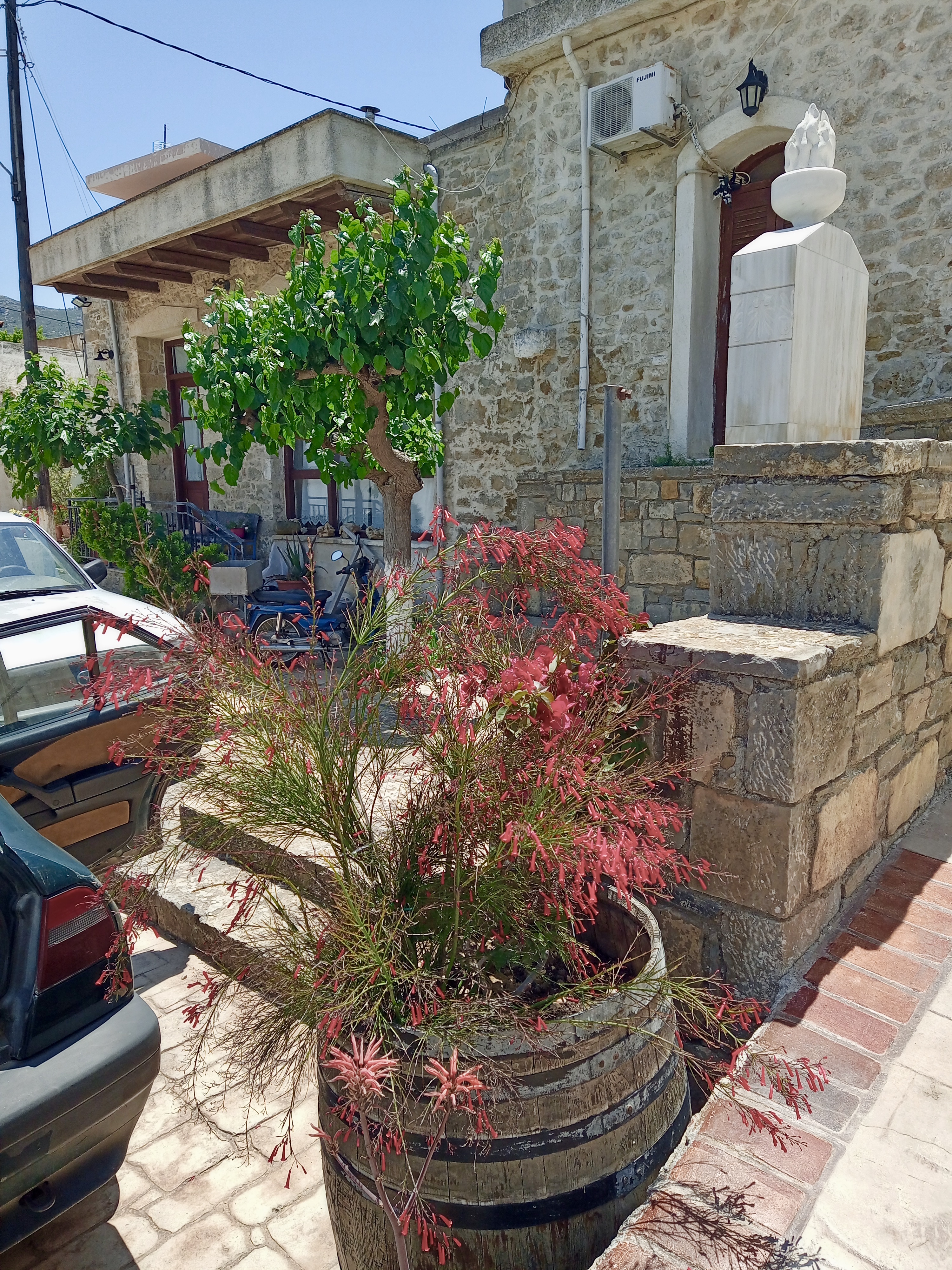
A Wonderful Life

We’re well into our summer routine now. Twice a week we head off downtown to do some shopping, and preceding the visit to the supermarket take a couple of hours on the beach with a Freddo and a swim. I always sit in full shade, while the beloved does a spot of ‘helio-therapy’ too. When I watch the tourists and see how so many of them stretch out in full sun at this time of the year it makes me marvel, it really does. Yvonne’s got that Greek olive-skin hue that means she seldom burns and always tans to a certain level and stops there. She’s not daft enough to spend too long in direct sunlight anyway, and even then has her head in the shade. I, on the other hand, am very Anglo-Saxon and would quickly burn if I were to lay in full sun, so I usually apply factor 50 if I have to be out in it but, like I said, apart from when I’m walking somewhere, I stay in the shade anyway.

When I look at some of those holidaymakers that don’t seem to realise the dangers that direct Greek sunlight can pose, I shudder, I really do. I lost a good friend to skin cancer back in Barry, South Wales, some years ago and he got it from being a window cleaner right there in Barry, not even here in the Med, where the sun is so much fiercer still. David (that was his name) used to work in shorts during the summer months and would simply get on with the job without thinking of putting on a high-factor layer of protection. The cancer began on his leg, of all places, but eventually it killed him, leaving behind a wife and two beautiful daughters. We’ve had a few friends out here in Greece too who’ve contracted skin cancer and had to have minor surgery to remove it, one person right on her face too, near her nose, so we’ve kind of got the message, as it were, the hard way.

It’s not just the dangerous nature of exposing so much flesh to the merciless Greek sun that keeps me in the shade either, it’s the fact that, even if I spend a couple of minutes out in it, apart from when taking a dip (and if I go snorkelling, I always apply cream liberally to the back of my neck, my shoulders and upper back), I feel distinctly like the Greek Pasca lamb would feel, were it still alive that is, while rotating on that spit every Greek Easter. Why would I want to deliberately make myself feel like I was being roasted? I’ve learned something about tanning too, and I’ll share it with you, even though you probably already know this. If you lay under an umbrella, or a tree, any shade at all, when the sun’s shining on a cloudless Greek summer’s day, you’ll tan anyway, because the ultraviolet that causes your body to produce melanin as a defence against the assault you’re inflicting upon it bounces off the surface of the ground around you. A lot of people who look at me think I must be a sun worshipper, because during the course of a long Greek summer I turn a very dark brown. I seldom burn, because I don’t sit or lay in the sun, but the secondary assault on my skin from reflected (‘bounced’) UV tans me whether I like it or not. There have even been occasions when I have gone red and sore from laying under an umbrella when the beach around me has been composed of particularly light, reflective sand, for example.

I’m banging on about this because I get quite upset when I watch these two-week tourists and wish I could get them to understand what risks they’re taking. You can always tell the new arrivals when you live over here, of course. They’ll be the ones who turn up on the beach, strip down to their cozzies and their skin is a similar hue to an uncooked pork sausage. Those whom you also know must be about ready to go home are the ones who are either by then bright red or maybe a shade of mid-brown, depending on whether they’re ginger, blond or mousy haired. You can spot the ‘must get to Tesco the day after I get home‘ types. We’ve all seen them in the UK. You go to Tesco (other supermarket brands are also available) in August and there they are, the blokes in shorts and the women in spaghetti tops, making sure that as much flesh is exposed as possible, even though it’s 17ºC outside, pushing their trollies and silently saying to those around them, “See! WE’VE just come back from somewhere hot, so there!”

Something else that makes my blood boil is these quad bikes. Check out this link for a story that’s all too familiar over here all through the summer season. What’s chilling in that story is the fact that the bloke who was killed wasn’t even going too fast, he simply didn’t have a clue as to how dangerous those things can be. We had a good friend back on Rhodes who rented scooters for a living. After we’d known him for a few years he added a couple of quad bikes to his fleet. Before we could even broach the subject, he told us up front, “I don’t want to rent these death-traps, but the tourists keep asking for them. They’re far too dangerous, but I don’t really have a choice.”

Manolis (that was his name) had no sooner started renting out those quad-bikes when one of his customers turned one over on the road and ended up in hospital. During our 14 years of living on Rhodes I’d say that at least once every summer someone died on one of those things, and always a tourist, never a local. Remember the talented, if ever-so-slightly outrageous, comedian Rik Mayall in the UK? Well, click this link and scroll down to the subheading “Quad Bike Accident,” then read that section. Although he died many years later, many people believe that he was never the same following the accident, and even he himself said, “I rose from the dead” when he’d recovered from it initially.

When I worked for ten years as an excursion escort, I must have accompanied forty different coach drivers, and every single one of them cursed those quad bikes for causing tailbacks on the roads. They’re simply not designed for road use and that’s the fact. Even off-road they ought to be driven by people who know how they behave in a variety of situations, not by some fun-loving tourist who thinks doing sixpenny turns on dusty Greek lanes is their idea of fun, truly. If you’re reading this and have perhaps wondered if renting a quad bike might be a blast, take my tip, please, don’t do it. Your holiday insurance almost certainly says in the small print too that they won’t cover you if you come a cropper, always assuming you survive, that is.

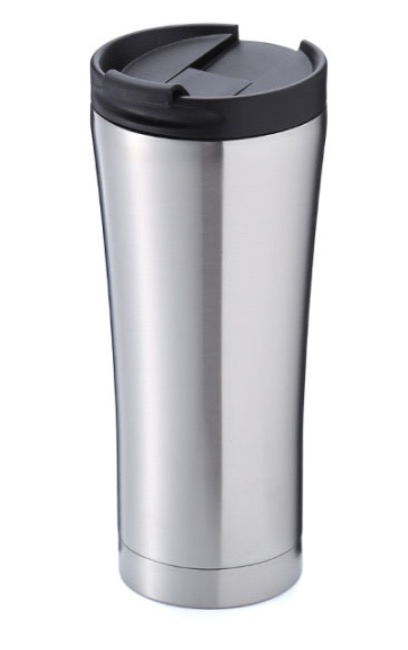
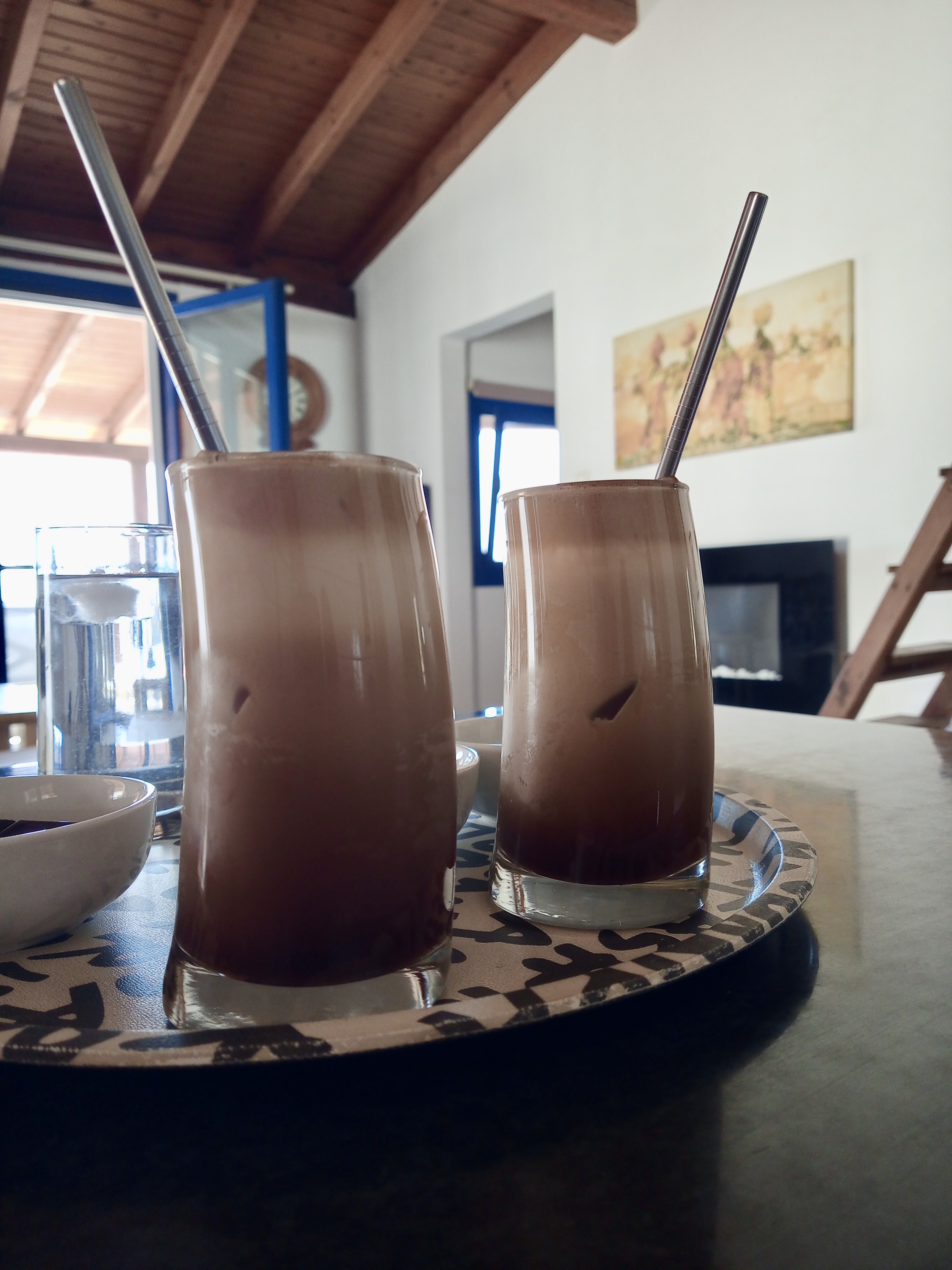
Eventually I come to the point of why I called this post ‘A Wonderful Life,’ and it’s this: We go to the same bar twice every week for our swim and iced coffee, and have of course got to know the staff who serve there very well. We’re also now on first name terms with the lifeguard and his girlfriend (also a lifeguard like him), since their ‘station’ is only metres from our favourite umbrella. We’re a bit pedantic about recycling and have a couple of vacuum mugs, you know the type…

..and when we get to the bar we hand them over to Gianni (who serves the guests on the beach) and he sees to it that our coffees are prepared in our own mugs, into which we then slide our own stainless steel straws too. I don’t want to sound preachy, sorry, but recycling to us is vital in this day and age when so much plastic is still leaching by the ton into the environment on a daily basis. I truly believe that when it comes to caring for the environment, every individual needs to teach by example. When we go for iced coffees, no cardboard cups or plastic lids, no plastic straws or cellophane ‘sleeves’ from them are used at all. We take our own mugs and straws, and take them home with us afterwards. It’s no hardship whatsoever and means that at least a tiny number less of plastic dross gets into the environment. I mean, each time someone orders an iced coffee it gets served up with a straw in a cellophane sleeve. OK, so some forward-thinking cafés are now using biodegradable straws in paper sleeves, but they are still, sady, in the minority. If you look around most beaches you’ll see tons of those little cellophane sleeves blowing freely along the beach and into the sea, it’s horrifying. OK, so people might extract the straw, crush the sleeve and then deposit it into an ashtray, but the breeze in very short order whips it out and sends it on its journey to who-knows-where.

Giannis, our ‘waiter’ as it were, greets us with a cheery kalimera when we arrive, but often looks very hot, harassed and sweaty. He wears a t-shirt and shorts, and has a closely shaved head (these here young whippersnappers will have their No.1’s these days won’t they), and runs up and down the beach all day. I’m reminded so often when I see him of a cartoon I once saw in some travel magazine or other. It showed a holiday-making couple in deckchairs on a sunny beach being served cool drinks by a waiter, whose shirt was stuck to his body by sweat and who had perspiration raining down from his face like a shower. The tourists were taking their drinks from him and remarking, in obvious rose-coloured appreciation of the climate over here, “Boy, you must have a wonderful life, eh?”

What I’m getting at is – and I’m not particularly blaming tourists for thinking this way, because they don’t know any different, as indeed neither did I during all those years when we used to come here for holidays when we still lived in the UK – when you’re on holiday and you see wall-to-wall blue skies and you realise that it’s like that for months on end over here, you can be mistaken for thinking that for those who live here it must be wonderful to have such marvellous weather in summer. What they fail to appreciate is that most people, like that poor chap that served them their drinks, work their blooming socks off week in week out, often for seven days a week, in order to earn enough to survive and, in many cases, get them through the winter too. If you were to ask Gianni, our friend, for example, how often he goes swimming in the sea, the answer will often be, “I don’t.” It’s not for lack of desire, it’s simply due to lack of time. To many who work in the tourism industry in countries where the summers are long and hot, it’s a long, sweaty, tiring trial looking after people who can afford to spend a week or two stretched on their sun beds, and it’s all they can do not to despise those people. They don’t, of course, because the tourists are their bread and butter, but I do think it’s a good idea to remind people now and then to show a little appreciation to these waiters, waitresses, tour reps, chambermaids, barmen and women etc for the way in which they usually keep a cheery face for our benefit, while they go to bed every night after a very long day’s work (often on split shifts) totally exhausted.

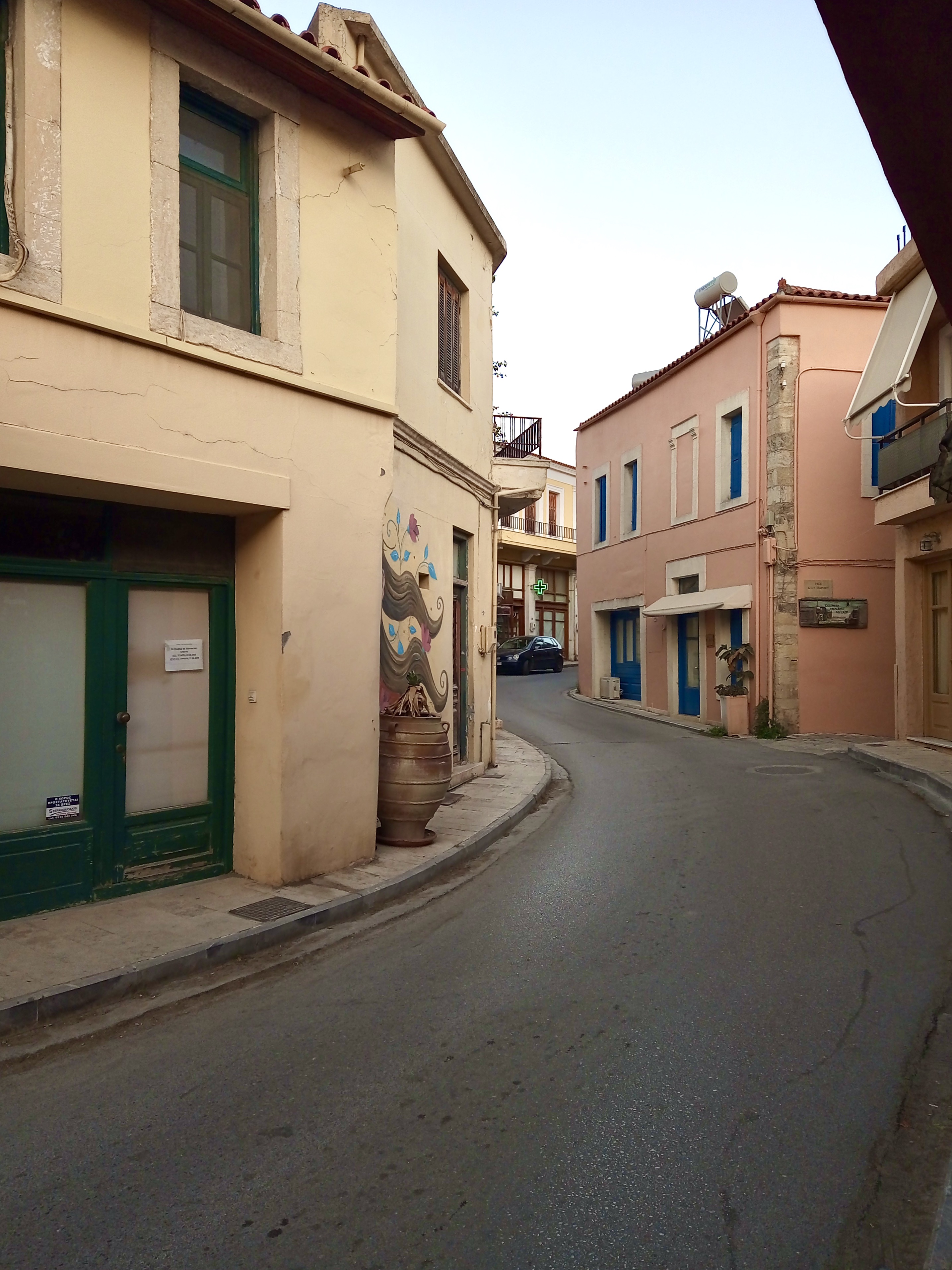
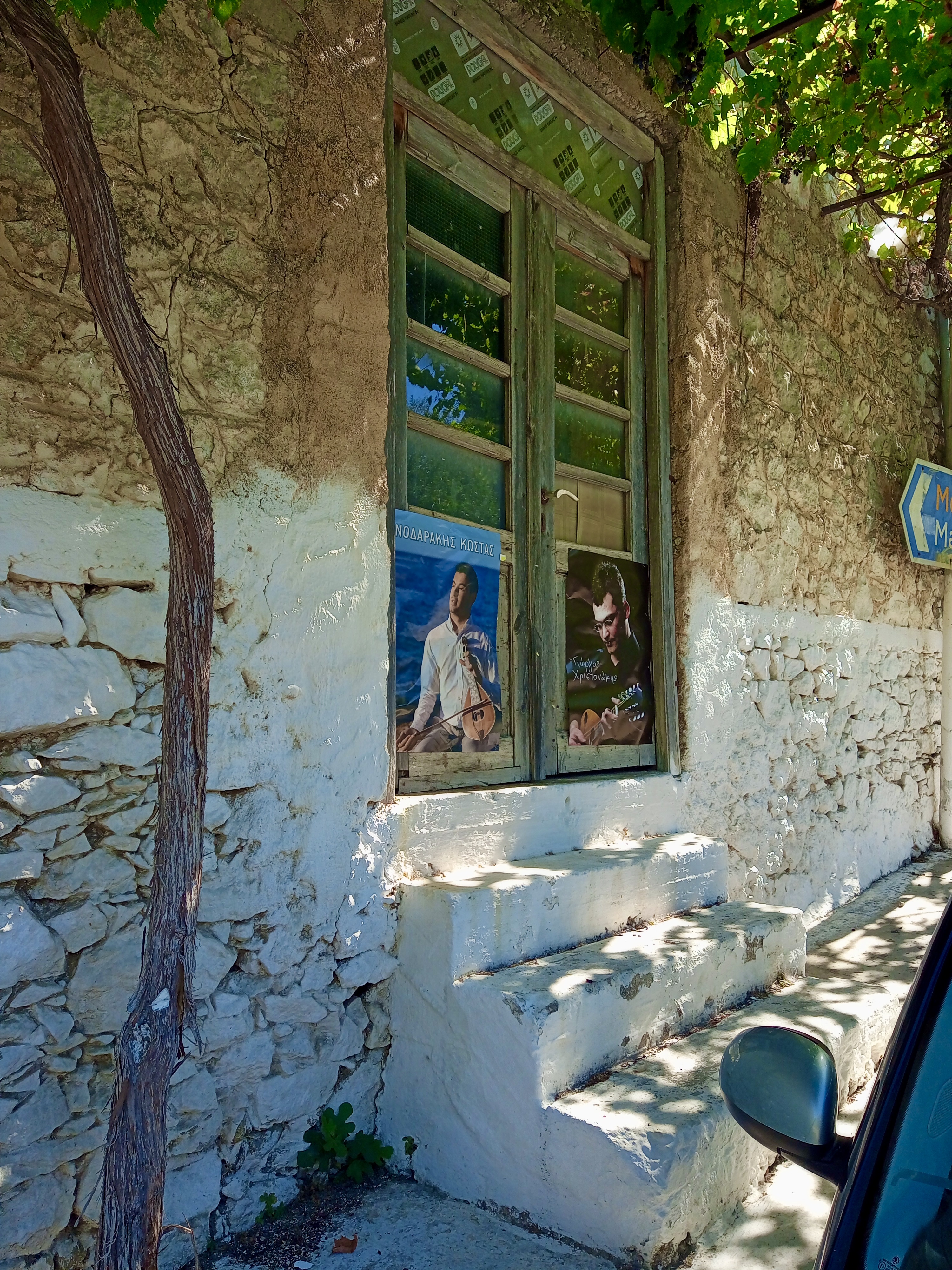
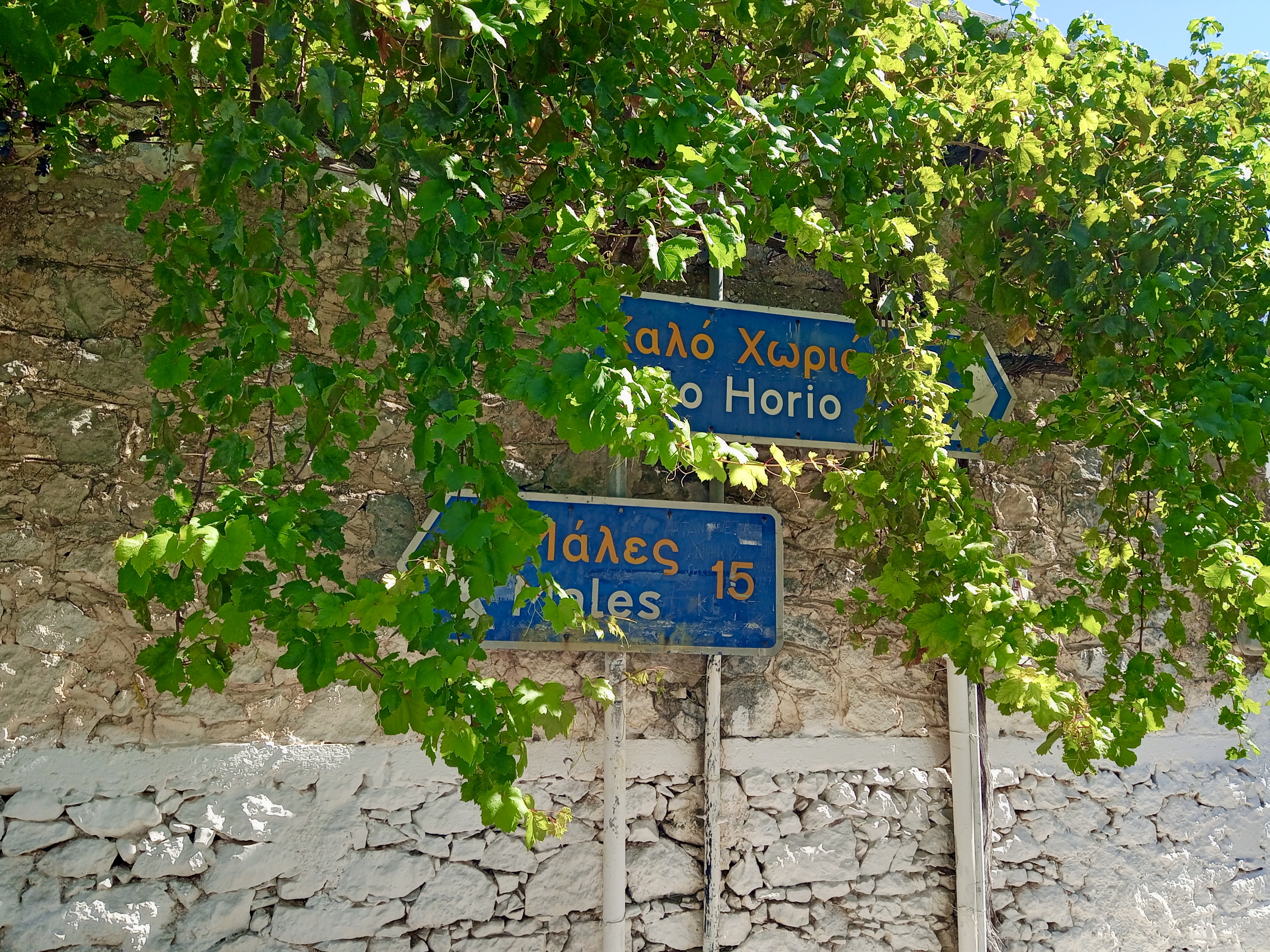
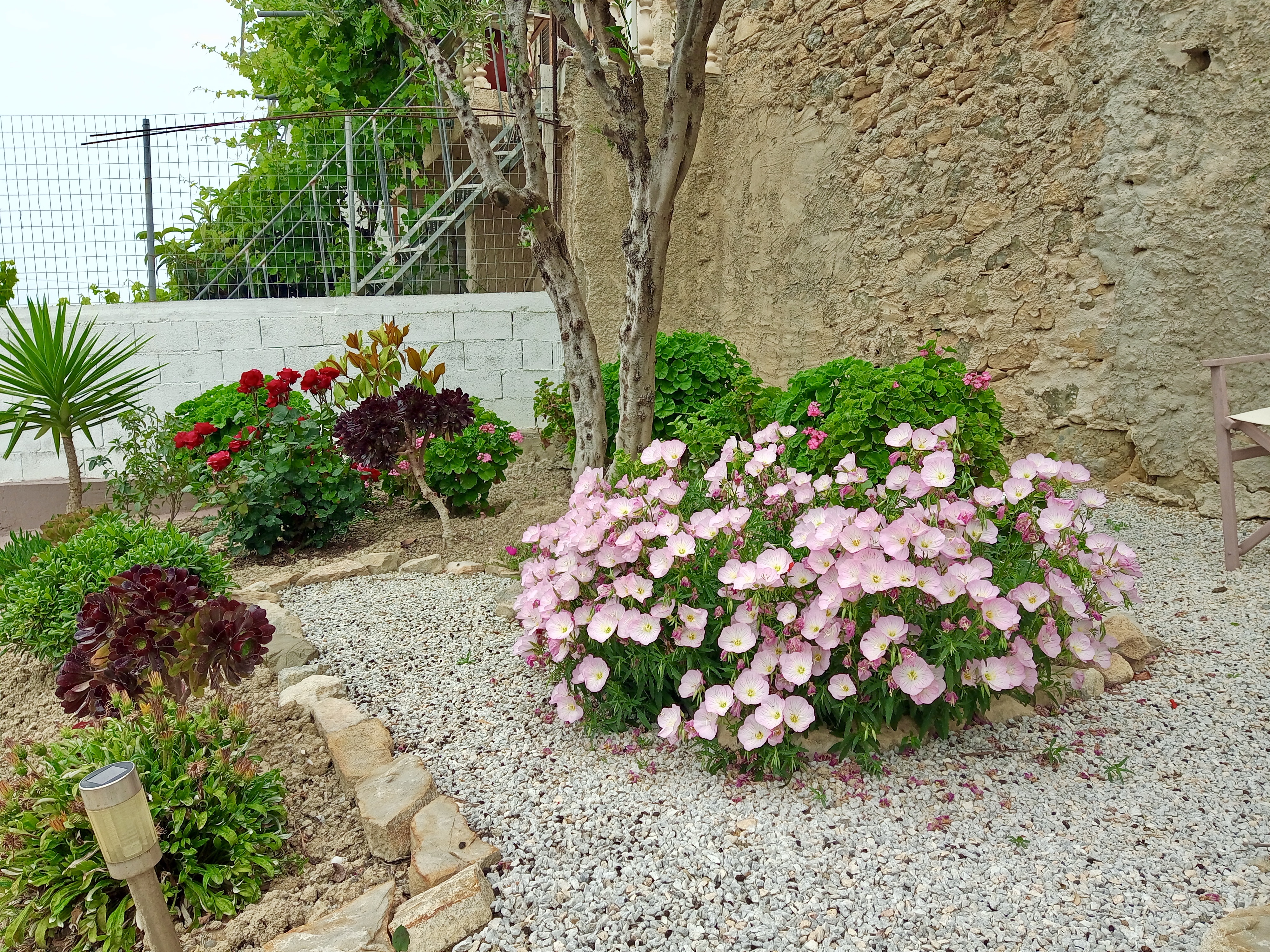
Another sermon over! The photo at the top of this post, in case you didn’t recognise it, is Heraklion of course. And here are a few more recent photos…

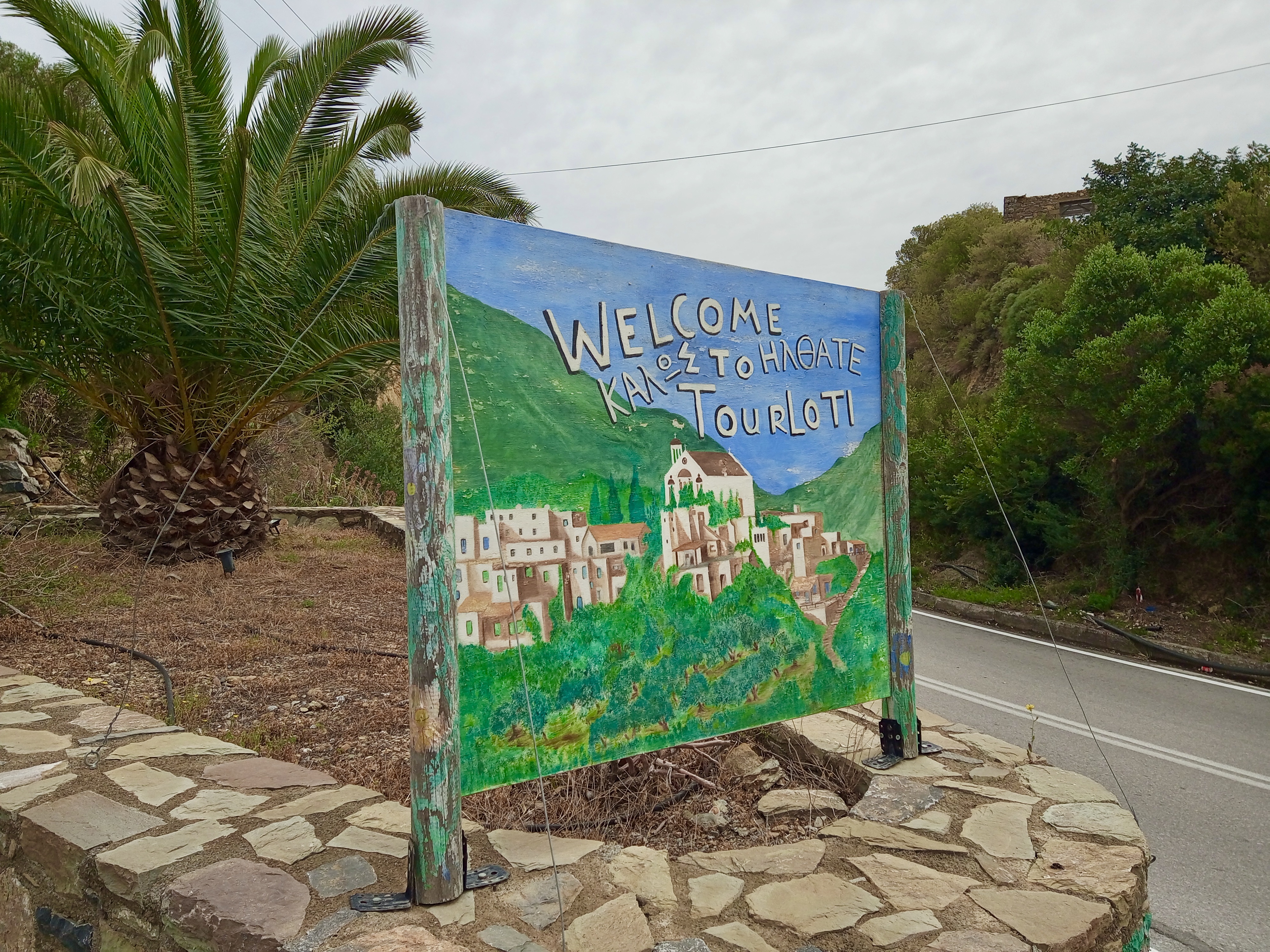
Above: The cheery sign indicating the entrance to the delightful village of Tourloti, on the road from Sitia to Pachi Ammos. That reminds me, we had a rather nice little experience there while travelling back from our week’s holiday in Sitia last May. Must write that up in a post soon.

Above: The town beach at Ierapetra at 8.00pm last Sunday evening. It’s a wonderful time to go for a swim, it really is.

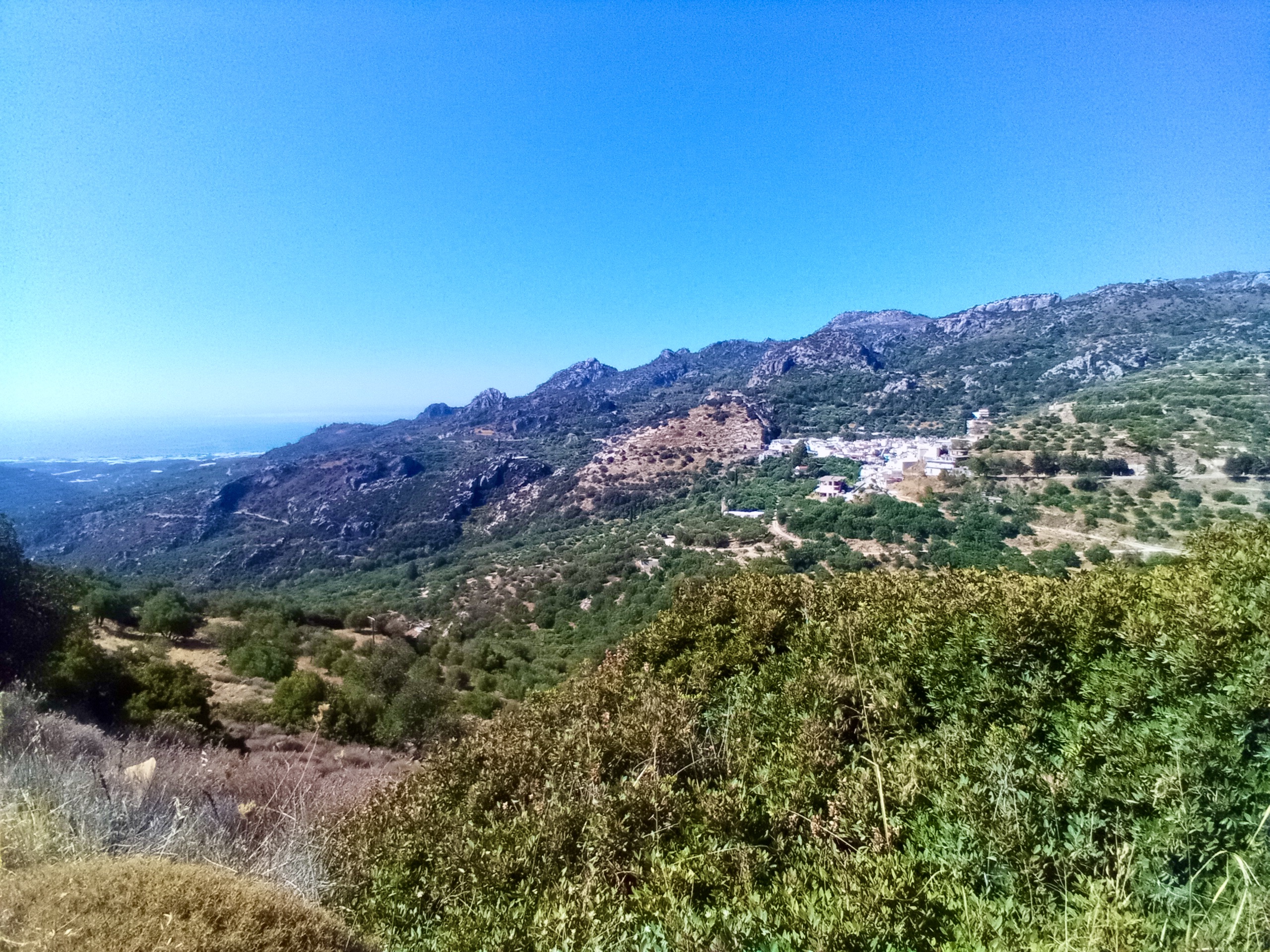
Above: The sleepy remote hillside village of Kalamafka, both from a distance and from up close.

Above: The reservoir just around the mountain from our village, still looking remarkably full following that wet spring we had this year.

Click HERE to go to my Amazon Author Page. There you can browse all of my written works.
Remergence

As usual the media in the UK knee-jerked over the fires in Greece. I saw some reports where they were giving the impression that it would be folly to go to Rhodes as it was in complete chaos with fire-refugees, both residents and tourists, fleeing everywhere. They gave the impression that the entire island was going up in flames whereas, even though it was indeed the worst fire disaster they’d ever experienced, still 70% of the island was unaffected. It seems to me that the only advice that ought to have been given to people who’d yet to go there, but had holidays booked, would have been simply to double-check the area where they were due to stay. Most would have found that their holiday accommodation was intact and that they needn’t worry unduly. Instead, reports on both major TV channels, at the height of the fires (which lasted well over ten days) indicated that the reporters felt that tour operators would be irresponsible to send anyone at all, and that they ought to be evacuating all their guests from the island.

In most of the areas where there were no fires and not much risk of them even approaching, the air quality was also not too badly affected, as the prevailing winds were taking the smoke and ash southwards, towards the areas that were definitely at risk, and then out to sea.

Now, as the dust and ash settles, and only a few pockets of fire remain, plus the operation to try to stop re-ignition from taking place (a common occurrence after fires of this nature) is going on apace, it’s important for anyone who can do so to think long and hard about how they can help the people who’ve lost homes and businesses in Greece, not just on Rhodes, of course. The best way is to come here and take a holiday, and see how welcoming the people will be when they sense the support they’ll be receiving in this way. 90% and more of Greece is unaffected anyway, and the azure sea, the pine forests and remote whitewashed villages, the quirky little tavernas and ancient archaeological sites, they’re all still here folks.
I don’t mind telling you that everyone here holds their breath during July and August as a regular occurrence. When you step outside in the searing heat that we experience during the two main summer months, you always scan the horizon for smoke, and heave a huge sigh of relief when you see none. Another bone I’d pick with the TV channels in the UK is that their reports used expressions like, “… and the entire island of Crete is on red alert!” The impression that gave was that if you lived in the UK and had a holiday booked on Crete then maybe you ought to reconsider. What the reports failed to mention (because their research into local conditions is abysmal) was that we’re on red or amber alert EVERY summer, and the vast majority of the time that’s all it remains, an alert, with a view to making local residents take more care about cigarette ends, BBQ’s etc. It goes with the territory when you consider the vegetation and the climate in these parts, global ‘boiling’ aside.

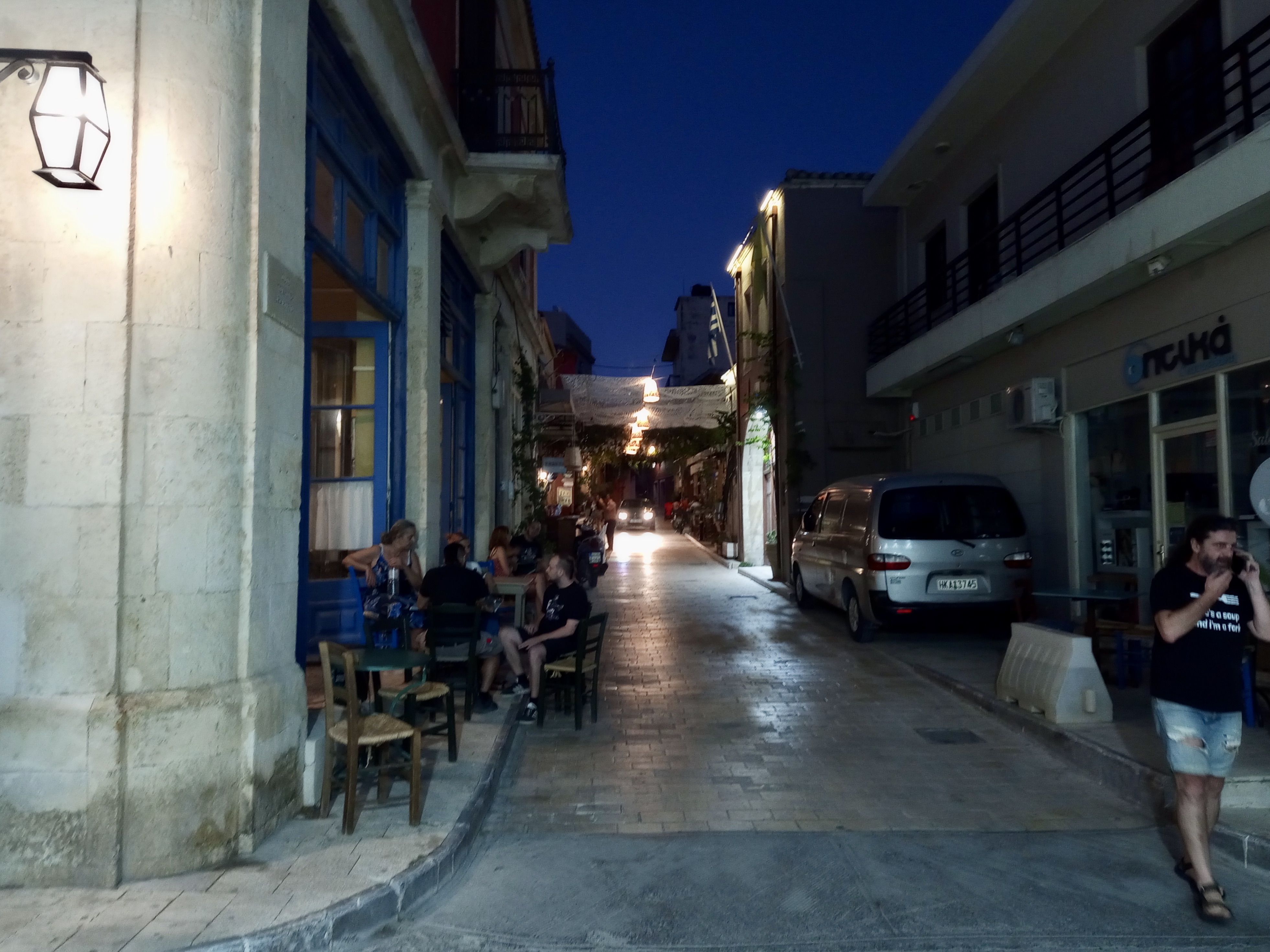
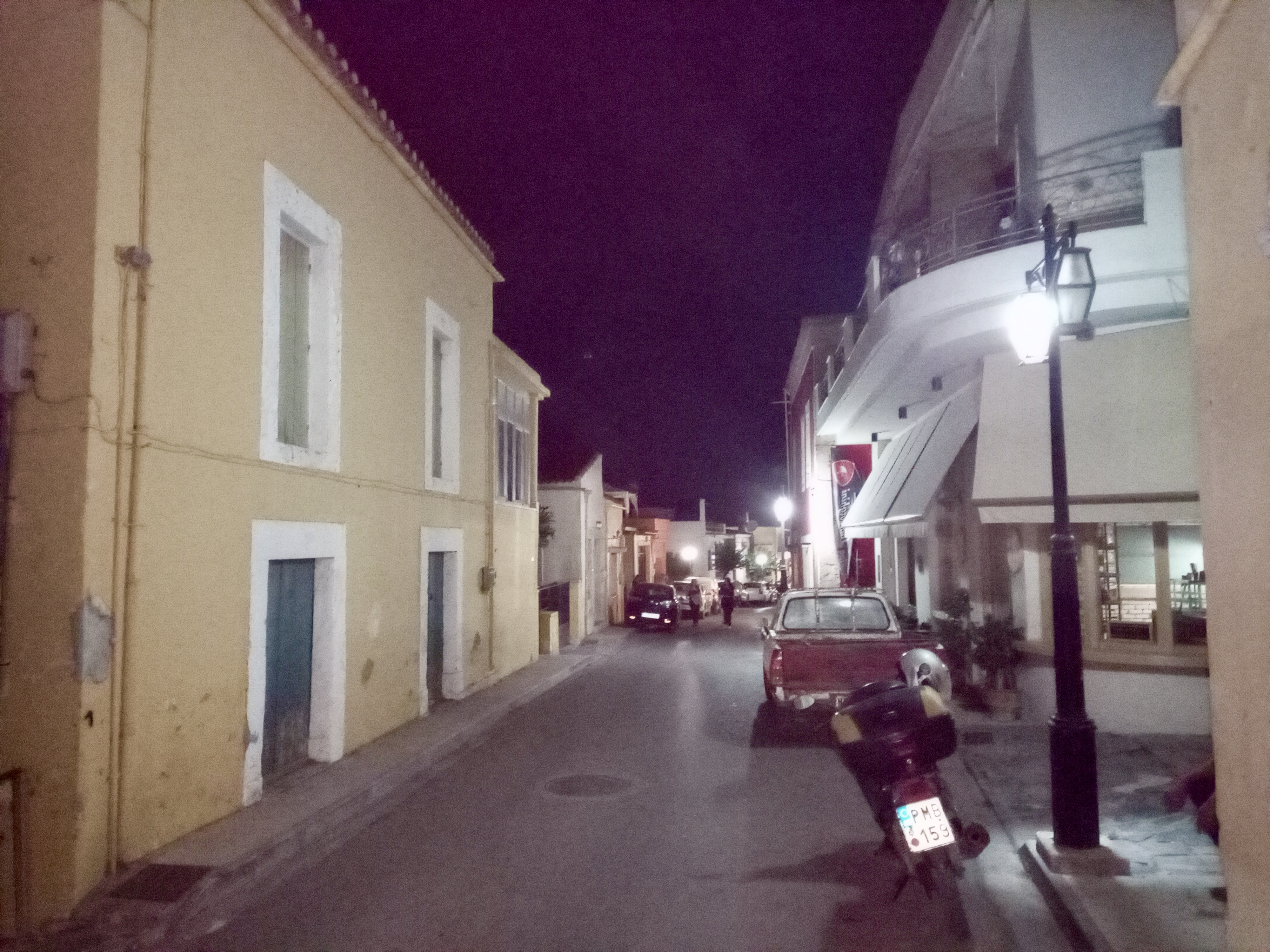
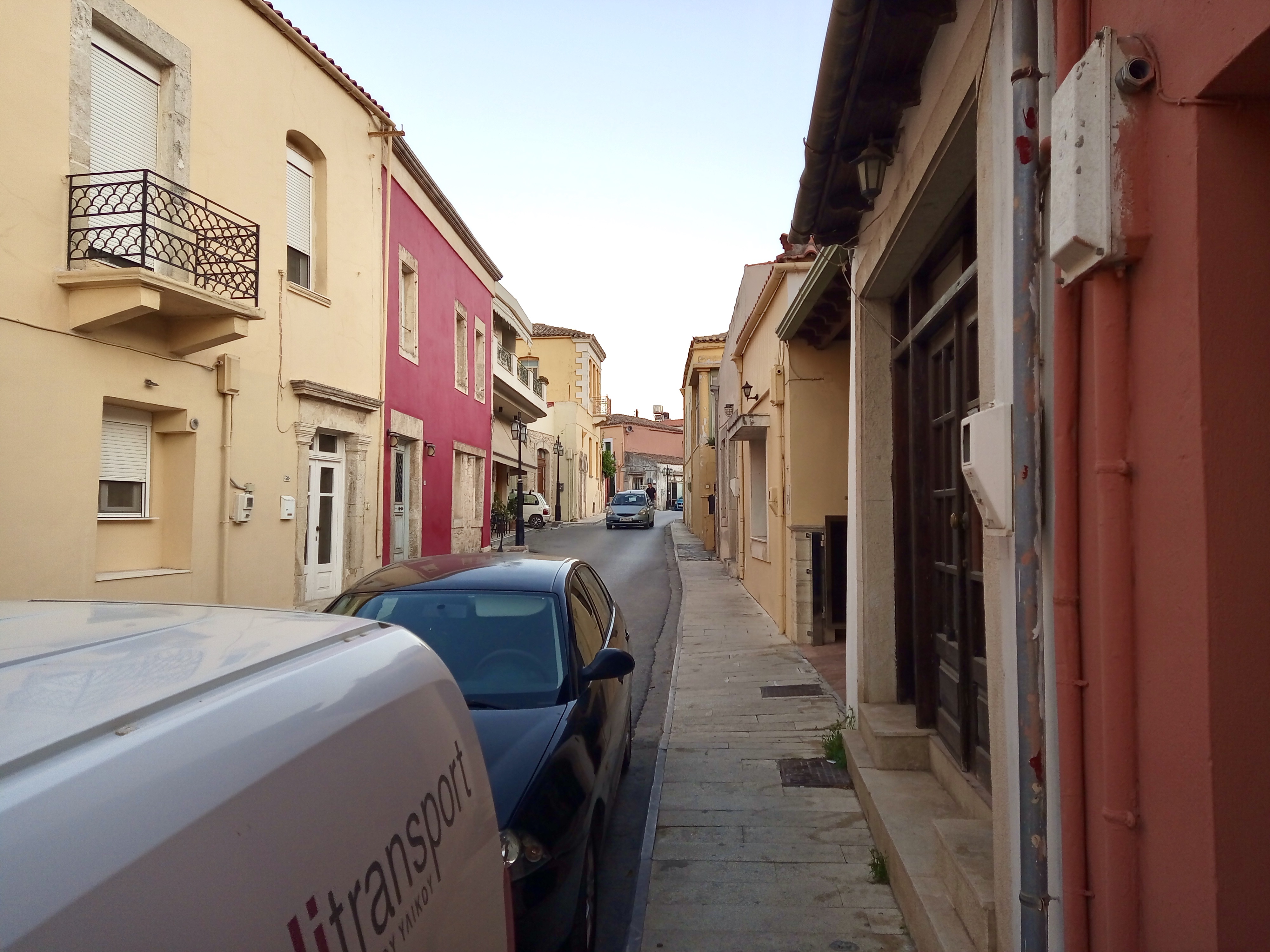
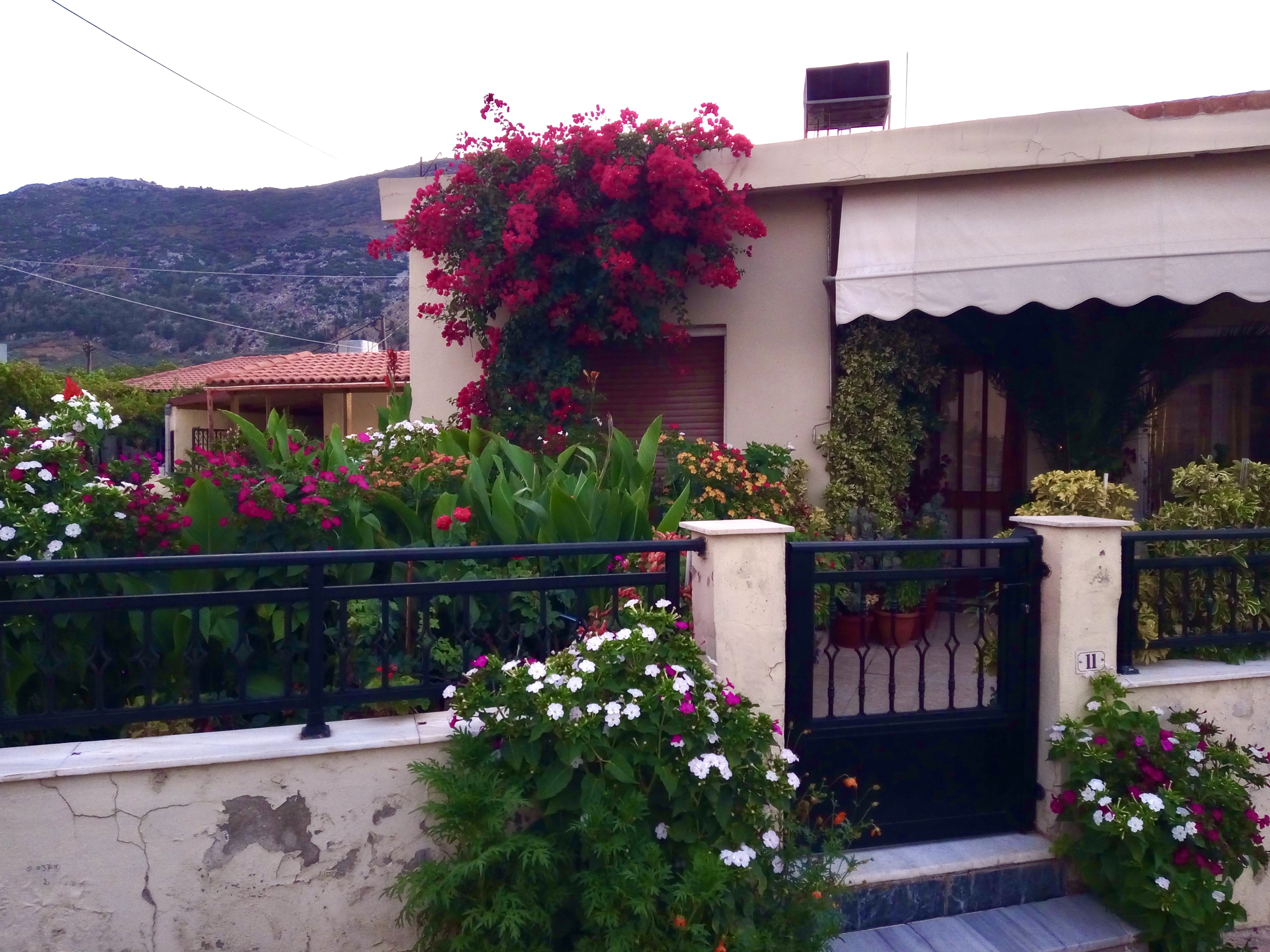
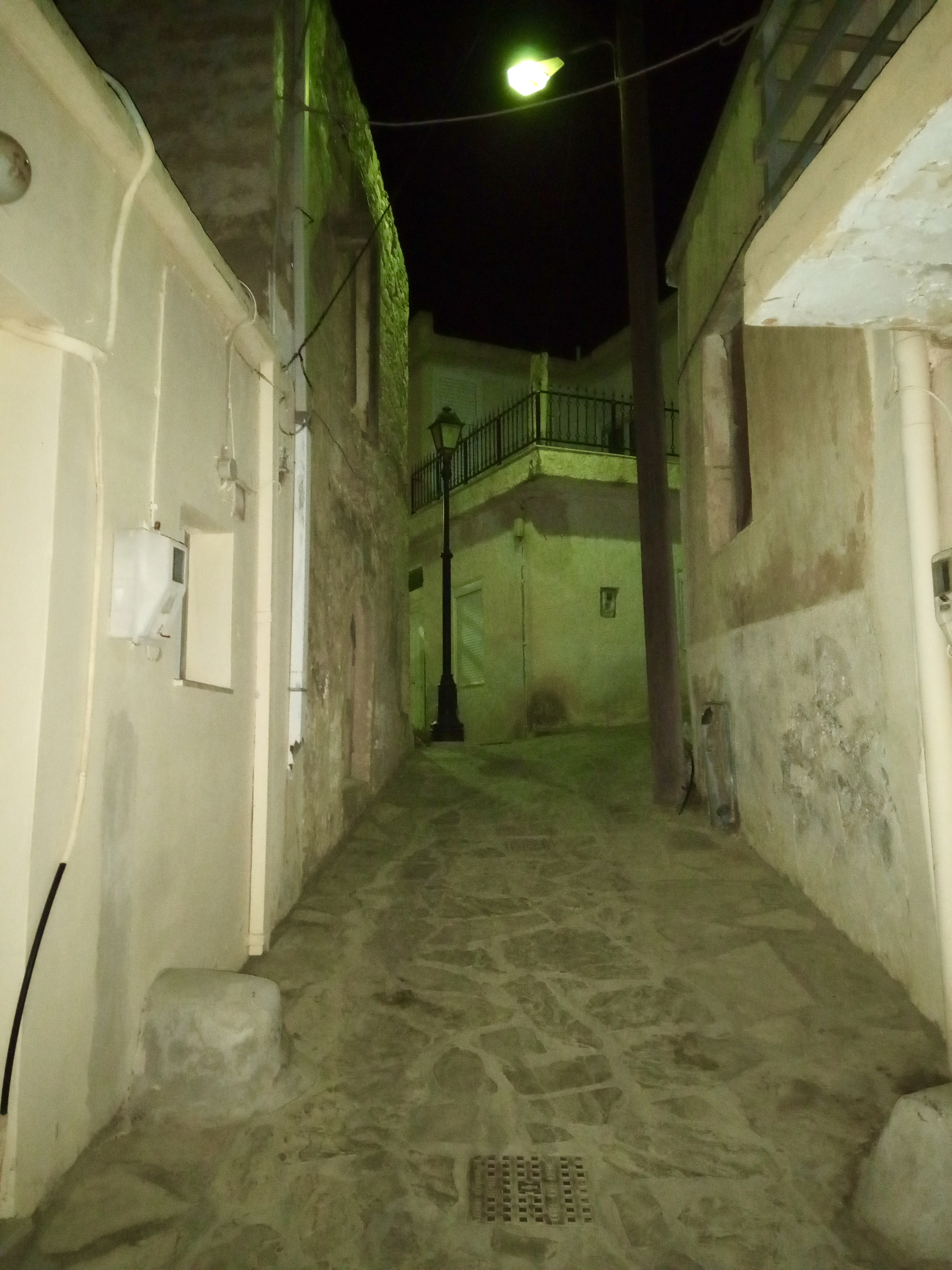
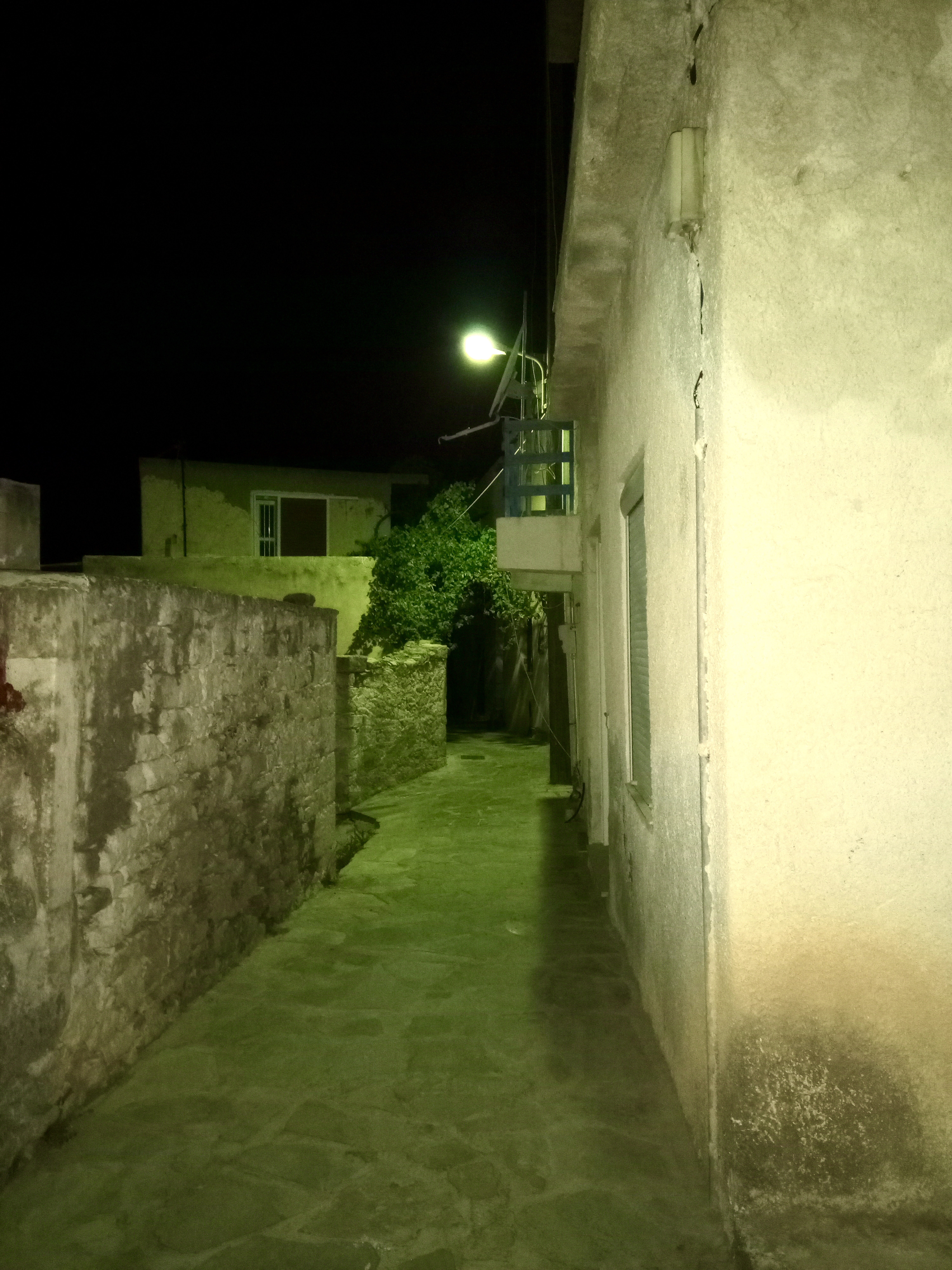
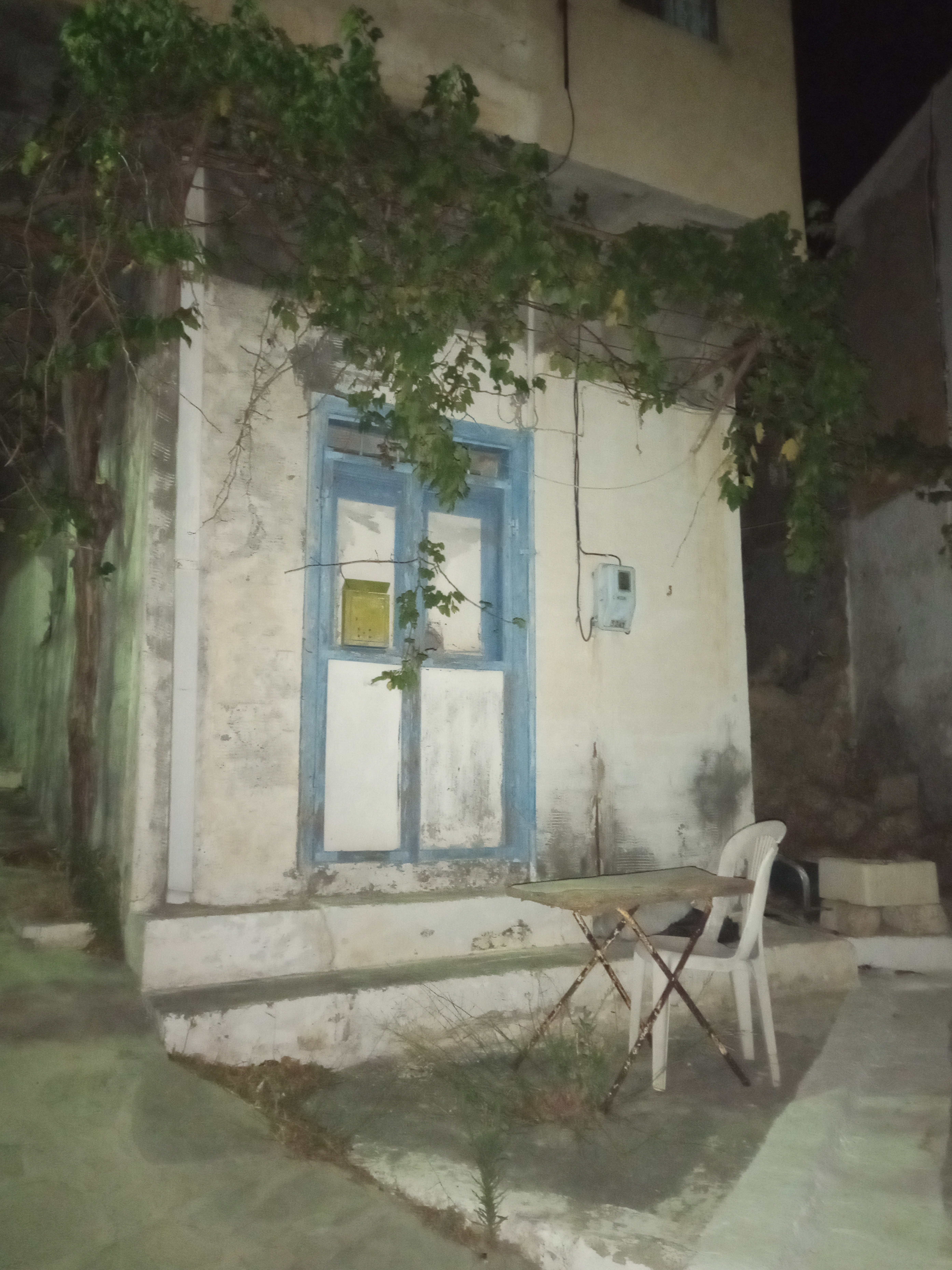
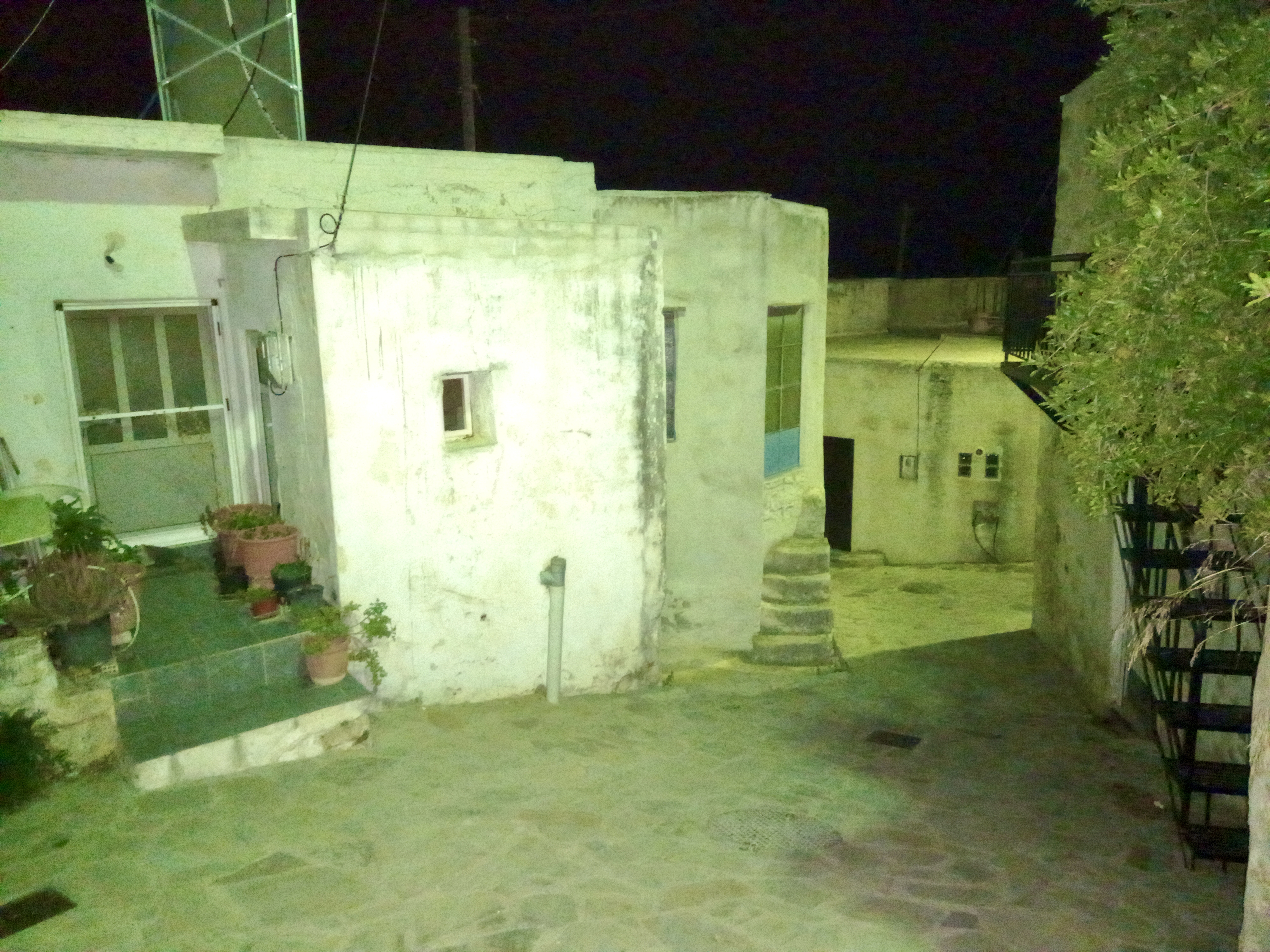
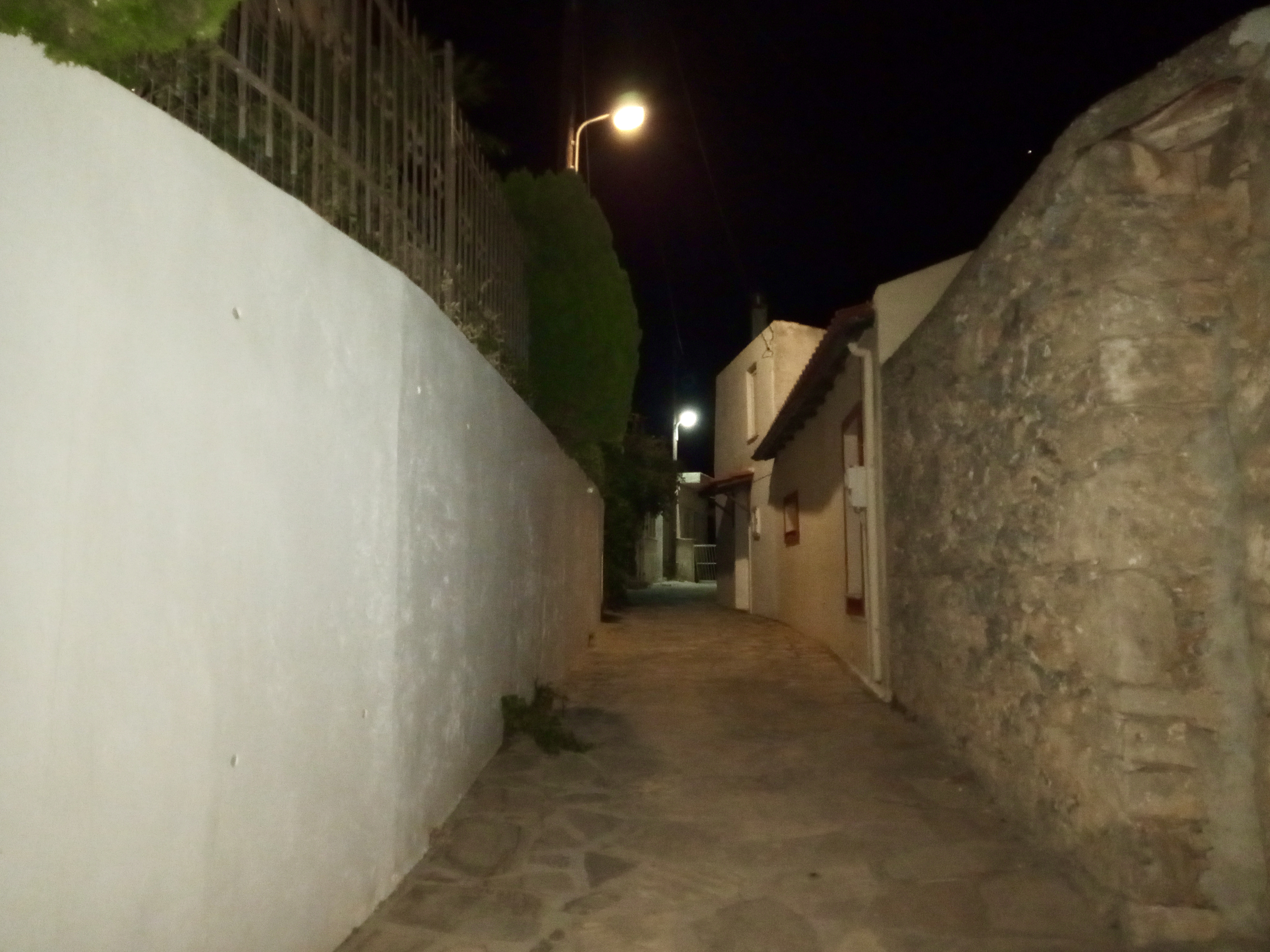
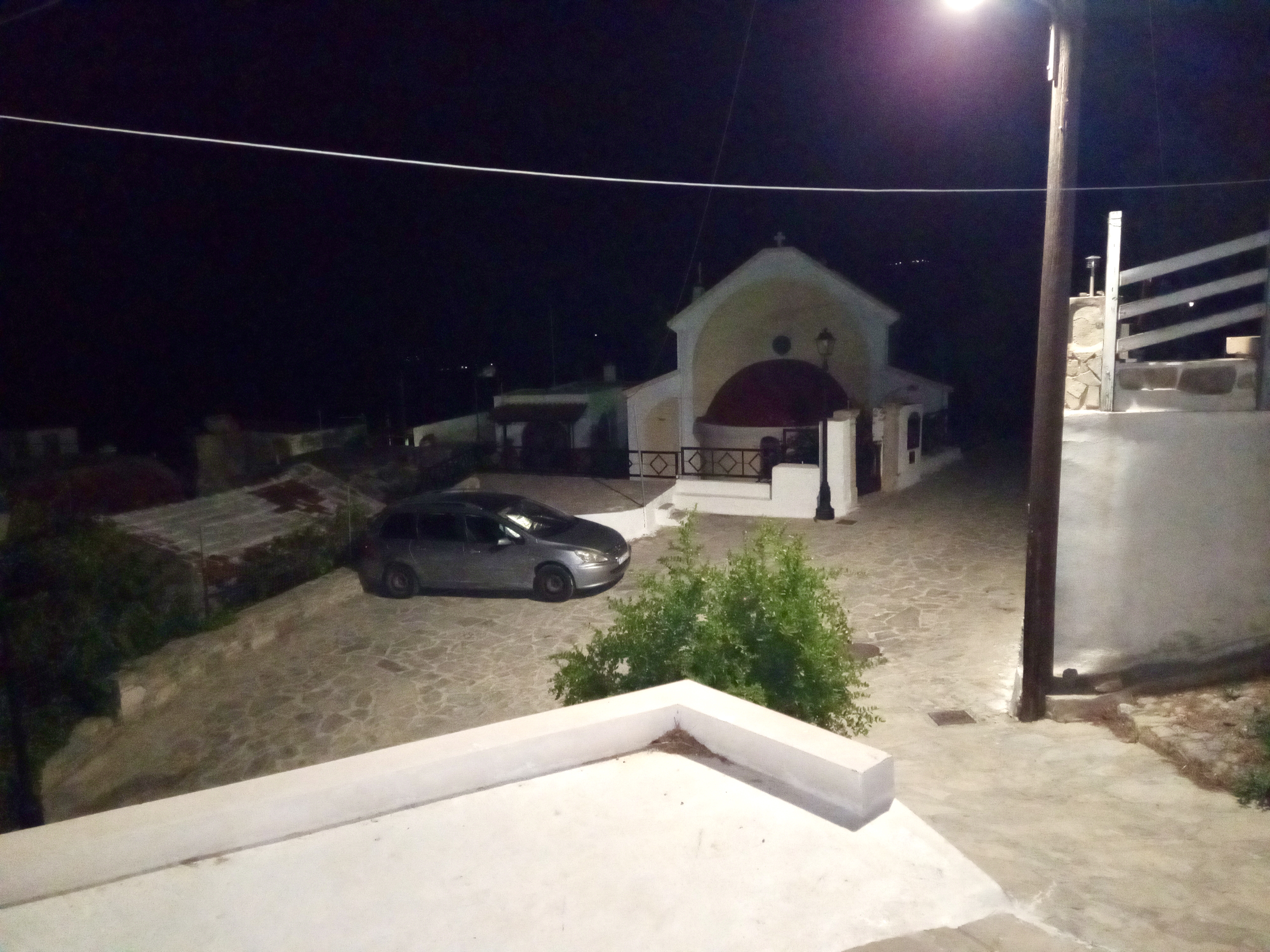
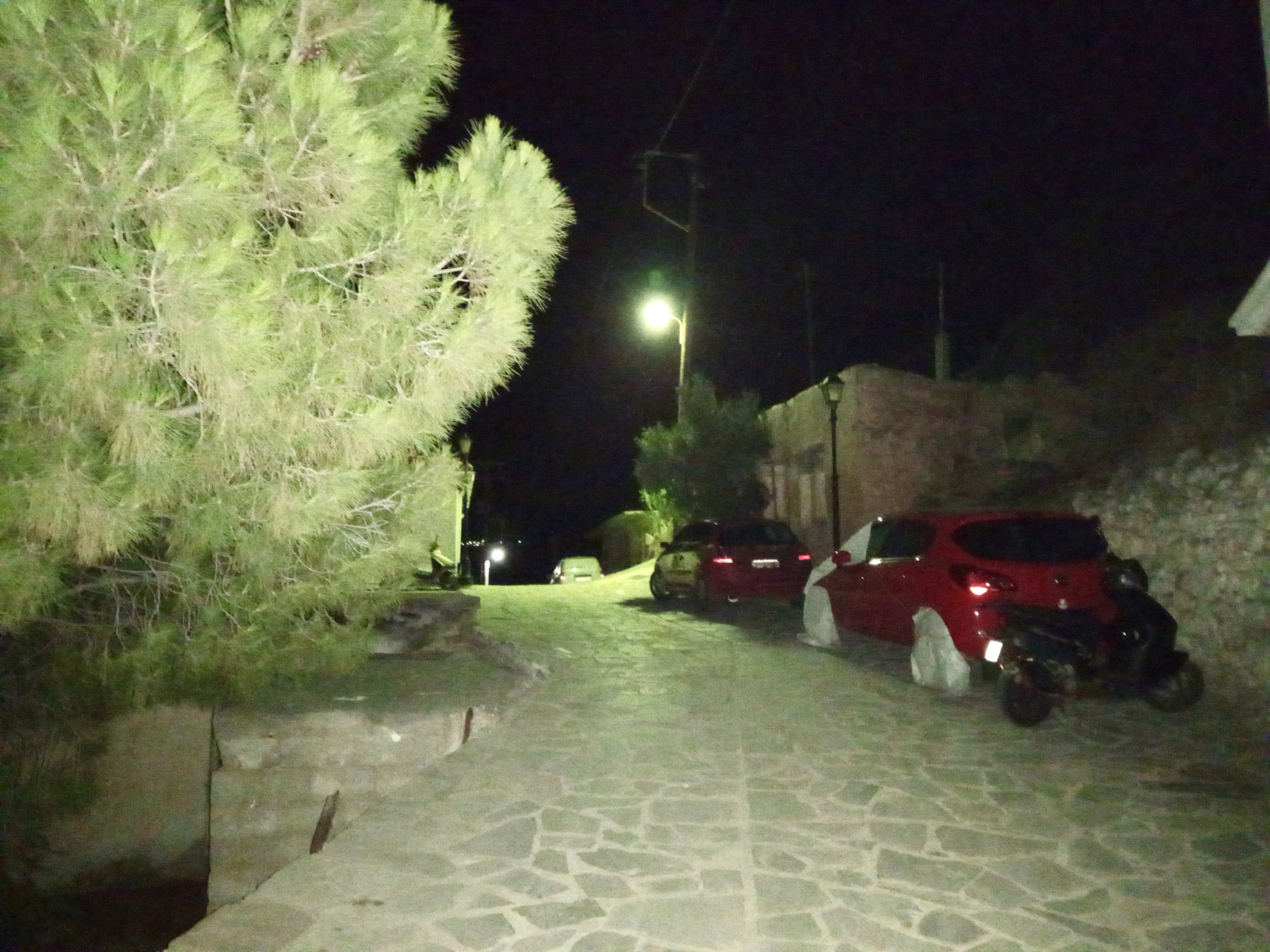
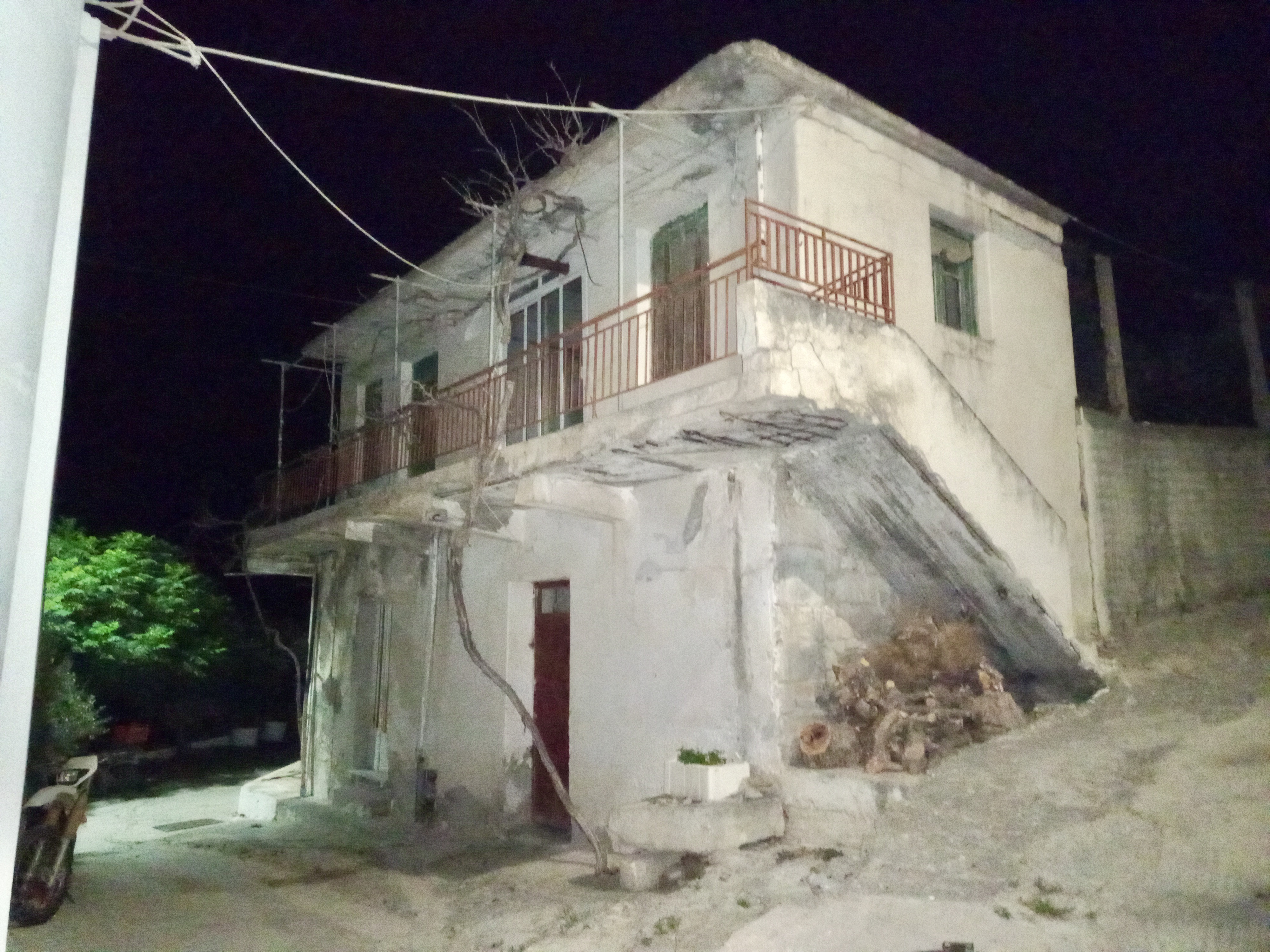
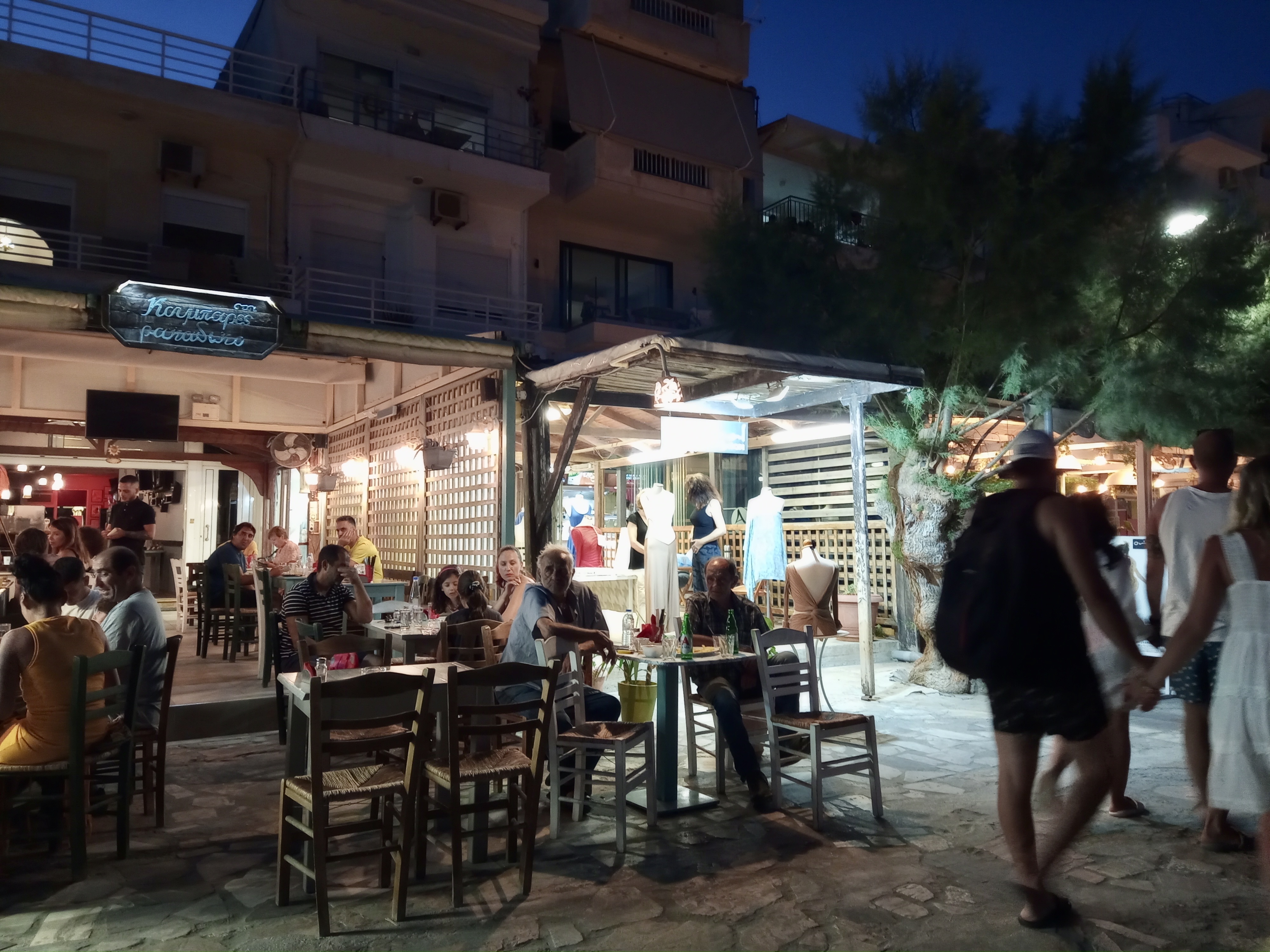
During the most recent heatwave, which only began to abate yesterday, we had temperatures in the mid-30’s overnight and, as I’m not a good sleeper anyway, I would take walks around the village at 3.30am, for example. So here below are some photos I took during such a walk a couple of nights ago. I rather like the atmosphere when the place is all tucked up and asleep. The greenish hue to some of these photos is due to the camera on my phone I think, and not to any odd natural nocturnal phenomenon…

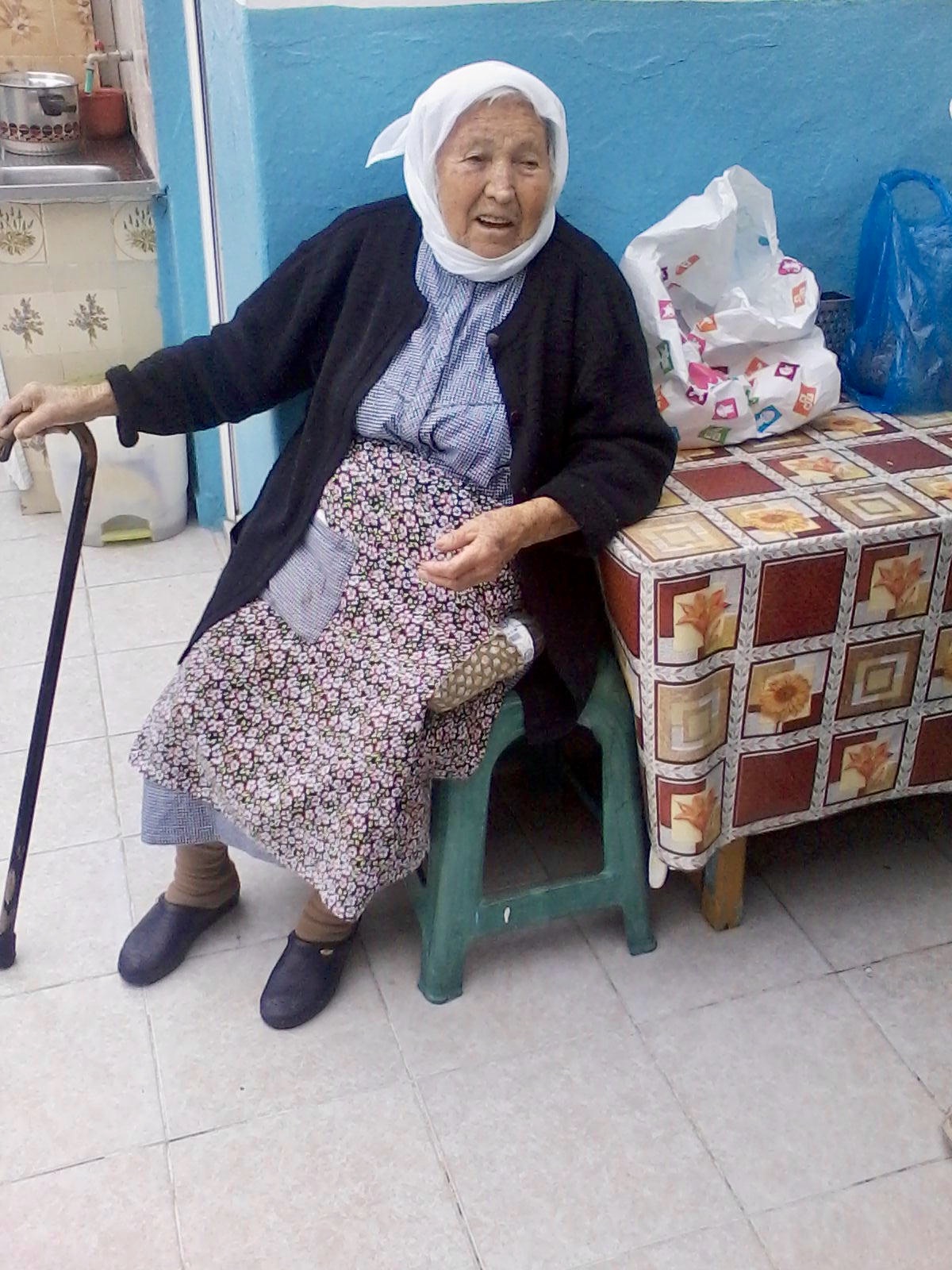
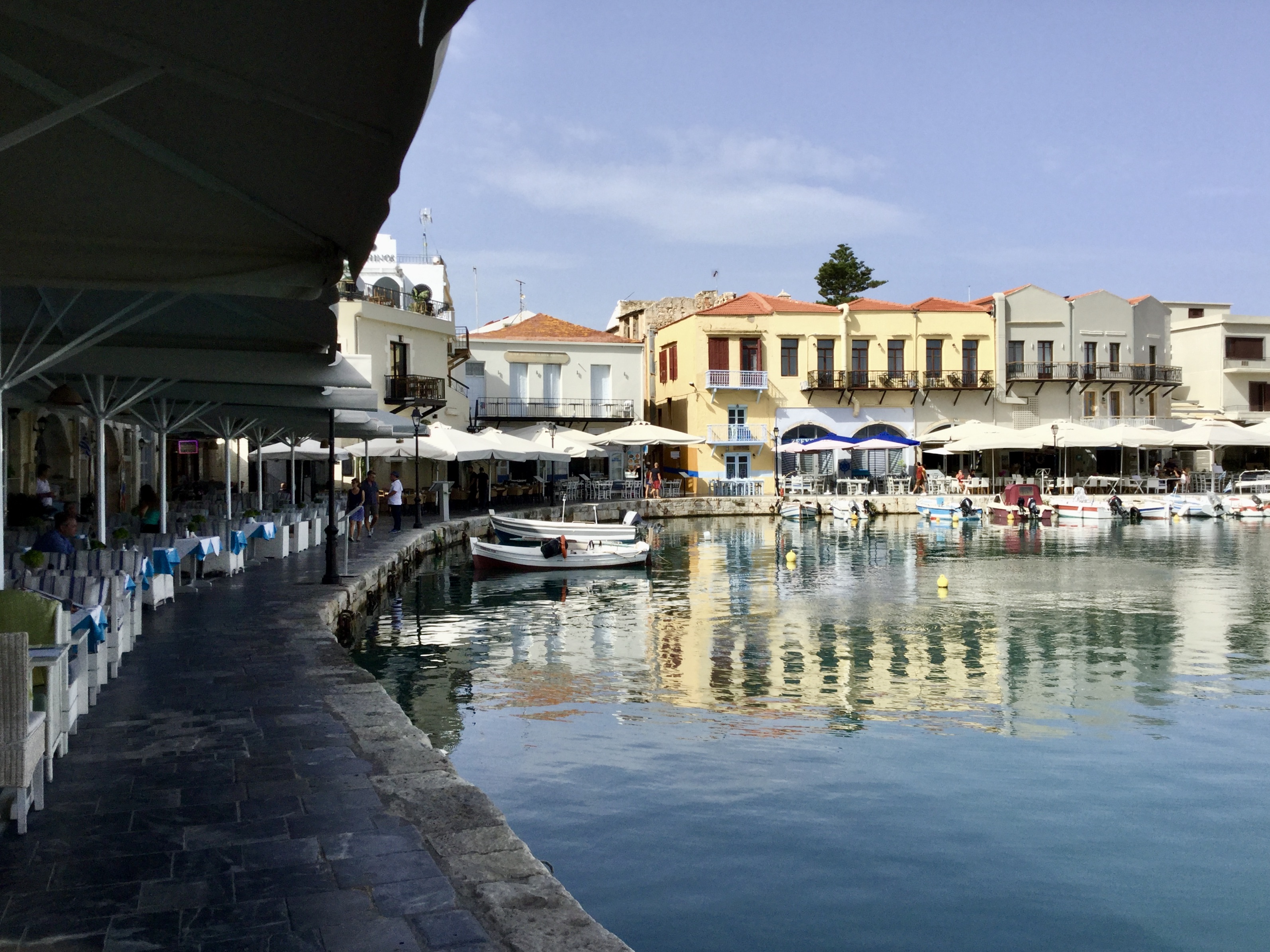
And to finish off, a couple of archive shots that I quite like. The first is of an old ya-ya in Arhangelos on Rhodes, and the second is Rethymnon, here on Crete…

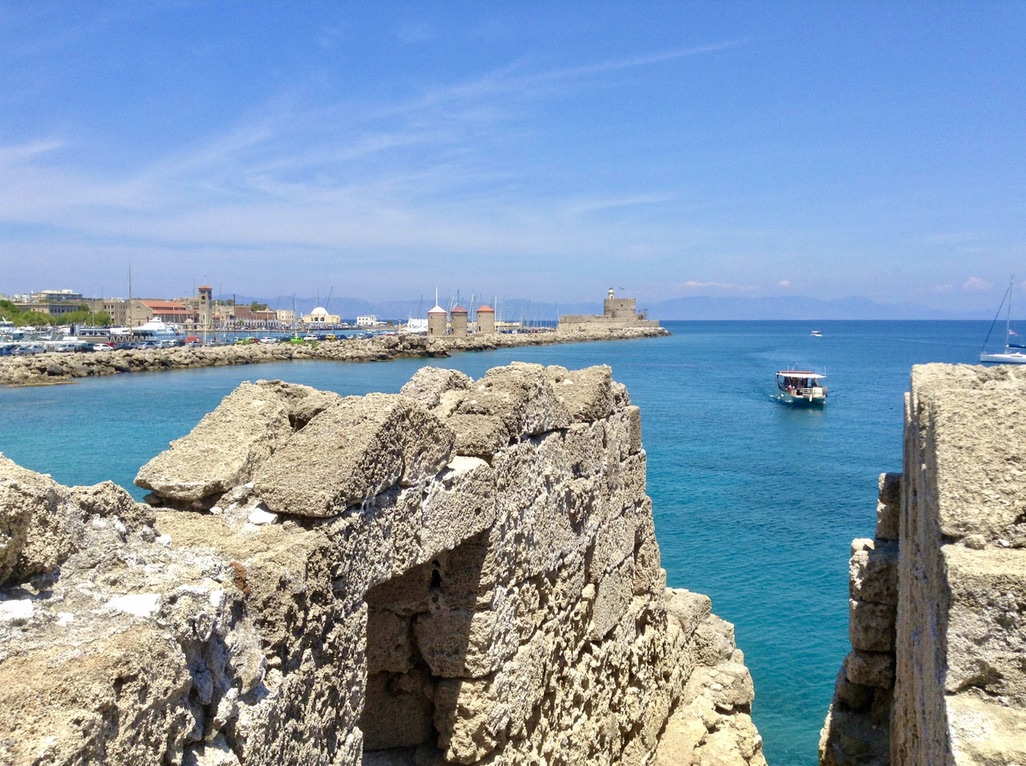
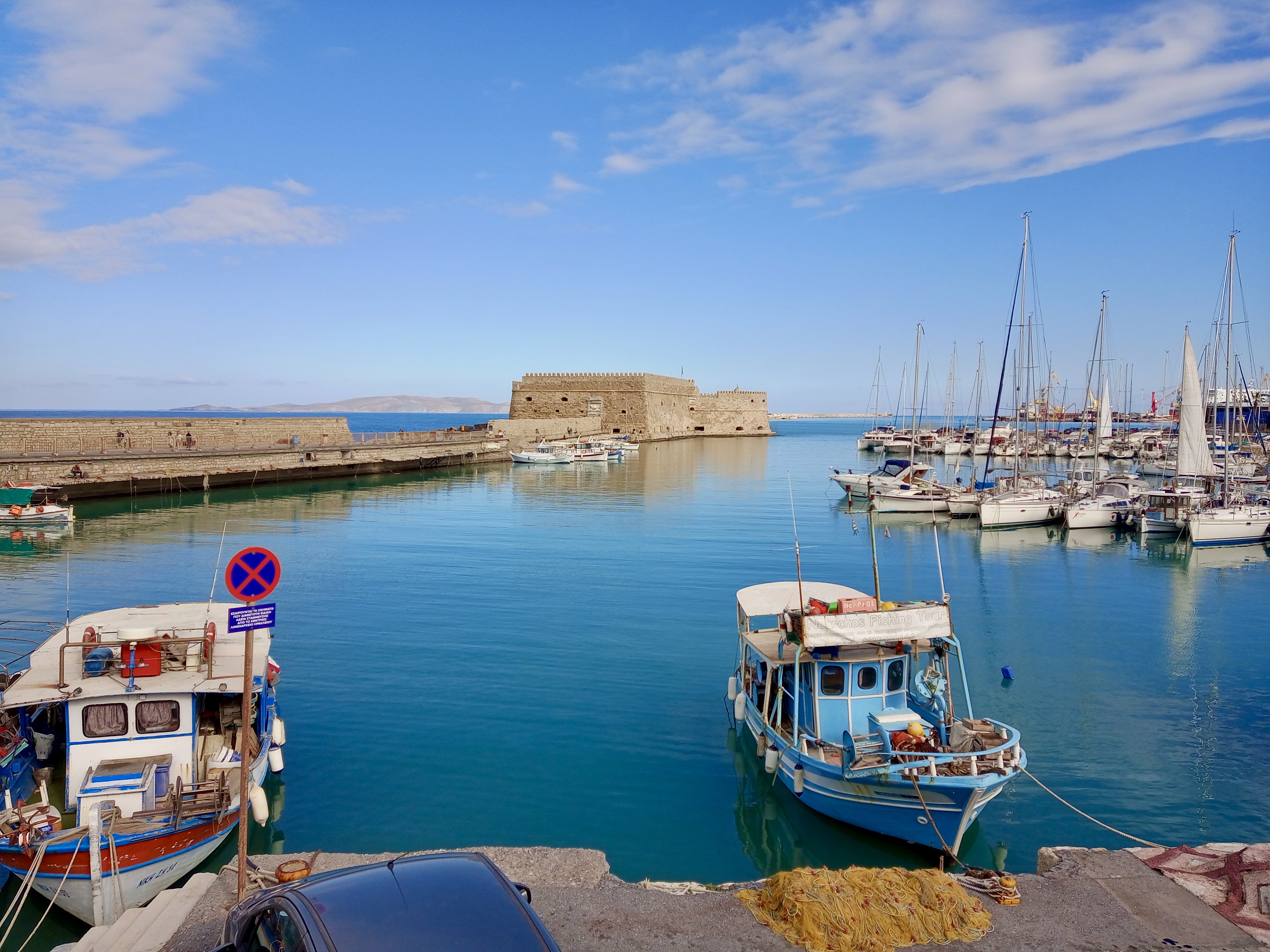
The photo at the top of this post is of the harbour at Rhodes, taken from that section of the medieval wall that separates the Mandraki area from the commercial port.

Click HERE to go to my Amazon Author Page. You can browse all my written works right there.

Devastation

This post will not contain any photos, I think everyone’s seen enough of those, and of all the video on the TV bulletins and various websites. I don’t want to add to the sense of voyeurism that sometimes accompanies pieces about this subject. Our former home in Kiotari on Rhodes, where we spent 14 years of our lives, has been completely destroyed by the fires which, as I type this, are still raging and in many parts out of control.
Every summer there are outbreaks of fire in the Greek islands and rural areas, it’s a fact of life and has been for many years. How they start is often a mystery, but also far too often the result of either human devilment, or human idiocy, a description which, come to think of it, would include ‘human devilment’ anyway. On rare occasions fires can start simply as a result of some wanton throwing of a plastic water bottle as rubbish into the environment. Most of us remember that, when we were at school, we were taught in physics about how to start a fire, sometimes experimenting with a magnifying glass and a piece of paper. Not so many people realise that a plastic water bottle, if it still has some of it contents within, can easily become a magnifying glass under the intense Greek sun, eventually igniting the tinder-dry vegetation on which it lies. Sadly, though, in the years that we spent living on Rhodes, all too often people were eventually arrested for starting fires in the bush for sheer devilment or, worse still, with the intention of clearing an area of natural beauty that’s protected under law from development, so that, once the ‘heat dies down’ as it were, yet another new hotel or retail complex can be built on land that is no longer of any interest owing to it having been laid waste by the flames.

Even further back in the mists of time, when we spent 24 years living in South Wales, much of which is also an area of outstanding natural beauty (notably the exceptionally lovely Vale of Glamorgan), there was over the years a series of fires that destroyed a number of public houses, strangely enough, all with thatched roofs. Each time a pub was burnt down, it rose again from the ashes, fully renovated but, sadly, often no longer with the formerly ‘protected’ thatched roof, which was of course very expensive to maintain. ‘Insurance’ fires were a known phenomenon back then.

When someone is stupid enough to start a fire in the climate that prevails here in Greece during the summer months, in the expectation that in some way it is bound to be controlled or limited in the area to which it may extend, they almost never bargain for the sheer devastation, misery and expense that they’re going to be responsible for. When we lived on Rhodes, the worst fire we saw was the great fire of 2008, which happened in August and was even then the worst fire for a couple of decades. That fire almost reached Kiotari and the house where we lived, and for a few days about 70% of the sky above the house was the colour of a strong cup of tea, Canadairs flew fast and low across the rooftop and burning pine needles and ash fell constantly all around us. It was the wind direction that saved us then, but not so this time. In fact, I reckon that most people who’ve lived in rural Greece for any length of time can identify the sound of one of those aircraft long before they see one, and no one wants to see one. If you do see a Canadair, you know that danger is near and that somewhere not too far away a fire is raging.

The long-term effects of large bush and forest fires are staggering to consider. The livelihoods of many folk are put at risk, many Greeks have no property insurance on homes that have been in their families for generations, the effects on wildlife are incalculable, and soil erosion is the inevitable result, as hillsides are denuded of vegetation that once retained the moisture with its stems, foliage, trunks and roots but is no longer there. Habitat is gone and species are put under ever more threat of extinction. Fires, wherever they occur, are events that completely change the history of an area, fact. It has been argued that, over a couple of decades, there can be some benefit to the landscape, as the carbon that seeps into the soil makes it more fertile. OK, I get that, but in the meantime much of the soil is washed away by the winter rains anyway. After the vast fires on Rhodes in 2008, large sleeper-like tree trunks were installed horizontally across hillsides that had once been clad in pine forest, to help stop the soil from being washed away while the environment regenerated itself, but many of these were stolen during the winter months by people with chainsaws cutting logs for their stoves and fireplaces.

Having now been lurking inside the house (OK, except for the fact that last evening we enjoyed a lovely meal beside the sea down in Ierapetra, although even at 11.00pm it was very sweaty outside) for three days owing to the current heatwave, we ‘ve not only seen hours of news coverage of the current fires on Rhodes, but also been exchanging messages with friends and acquaintances who still live there. It seems to me that this event has completely devastated a huge part of the island and Kiotari, once viewed by many townsfolk as the choice part of the island in which to have a home, has been hit the hardest. Estimates vary, but they all refer to a five figure amount of people who’ve had to be evacuated from homes, villages and hotels in the area. We’ve seen or heard about businesses that we patronised for years having simply gone, and the valley at the head which our former home used to sit, which was once lush with maquis and pine woodland, is a black charred mess as far as the eye can see. Deer used to wander past our front gate during the winter months and there were several species of mammal that lived in and around the house, all gone.

I’m no expert, but it seems to me that the recovery period from this devastation is going to run into decades. The sheer size of the area that now resembles a scene from an apocalyptic hollywood movie is difficult to take in. Extreme climate events are happening more and more frequently, of that there is no doubt, but human tomfoolery adding to the problem is hard to take, it really is. There has been little speculation so far on the TV news about how all this started, and it seems that it started some 50km away to the north from where the flames currently rage, but when the investigations begin, I really do hope that it doesn’t lead to some human devilment because, if it does, it’s hard to be charitable and not want to see a very harsh penalty dealt out to the guilty party or parties.

As I write this there are still more than half a dozen villages evacuated, awaiting their fate. Asklipio, the village where we used to collect our mail, is burning, and local volunteers are striving desperately in extreme heat to try to save what they can. I’m not going to say ‘pray for Rhodes,’ since it’s not the right thing to say. Praying isn’t much good if those who say those prayers aren’t that bothered about communicating with the Creator the rest of the time, is it? Plus, the problems in this world need to be considered on a much larger scale than this one event. Why should the Creator, if you believe that there is one, act quickly to save Rhodes, when dozens of Ukrainian cities have been laid waste, when millions of people are starving as a result of famine or warfare in other parts of the planet, when extreme weather events are causing flash floods and landslides elsewhere?

The best anyone can do is perhaps to support the island once next year’s season comes around by visiting it, in the hope that such an event as this will not occur again for many a long year. Yes, the place will look different in some parts, but the local residents will doubtless welcome you with open arms. If there are any appeals for financial or other types of aid, then contribute if it’s within your power. That’ll do a sight more good than asking for divine intervention, when that’s more likely to occur when the Creator calls ‘enough’ to man’s ongoing march to destroy this planet through negligence, ignorance or the quest for power. (I always found this verse most intriguing… Revelation 11:18).

Like thousands of other people, I feel a deep sense of shock at what we’re seeing in my former home. I never thought in a million years that the BBC News at Ten in the UK would be showing footage of the local beach where we used to swim, even of the very lane up which our home was situated, yet that’s what I saw when I tuned into that news programme from here last night. Locally, there are appeals from some to report to the police anyone seen throwing a cigarette butt out of a car window. Right now, I don’t think I’d hesitate to take down the number and report it. Years ago when we lived on Rhodes, on more than one occasion I saw glowing cigarette-ends being thrown from the window of the car in front while driving in the summer months. I don’t get these people at all. Why is it that so many seem to think that they don’t need to take care for the benefit of others?

Anyway, enough said. I just wanted to express my feelings about what is surely the worst disaster ever to strike the island of Rhodes. Already it’s reported that it is for sure the largest evacuation of humans ever undertaken in Greece, that’s how bad it is. For all that, there are large areas of the island that are untouched. Let’s just hope that they will still be able to make a living for the remainder of this summer. It does make my blood boil when I see bad reporting too. One piece on a web site I read only hours ago was entitled “Fires rage in Rhodes Town.” Talk about stupidity and poor journalism.

Thanks for reading my piece. Stay safe, but above all, be wise and show social responsibility in all that you do, eh?

Click HERE to go to my Amazon Author Page. You can browse all my written works right there.

Business on the beach

Giannis is probably in his early fifties, and is beginning to lose the battle when it comes to belt size around the waist. He’s also well on the way to needing to rub sun cream on his bonce too, since the hairs that he has left on top are of sufficient scarcity that he’s taken to doing what so many men do these days who are going bald, and that’s having the barber do a ‘No. 1’ all over. If you’re not familiar with the No. 1 in hairdressing/barbershop terms, try googling it.

He moved with his second wife Marina to Ierapetra a year or so after we did and they rent a flat on the seafront, with a gorgeous view from above of the tamarisk trees and the cafés and tavernas that sit beneath them along that stretch of the town’s coastline. It didn’t take us long to notice that whenever we go for a coffee and a swim on the beach during the summer months, Giannis invariably turns up, sits under an umbrella on a director’s chair that he’s carried down to the beach with him from the bar area, and begins fiddling with his mobile phone, much like a teenager. He doesn’t usually use a sun-bed, preferring as he does to sit upright on a canvas and wood director’s chair. The café staff don’t seem to mind and, in fact, all the local Greeks anyway have the habit of rearranging sun-beds and chairs as and how they like to, while they’re passing their hour or two on the beach and drinking their iced coffees and generally having ‘parea’ of a weekday morning.

We became friends with Gianni not all that long after he moved into the area, and regularly exchange a few words of greeting when either he or us are heading for the shower after a dip in the sea. Although while seated on the beach he’s seemingly preoccupied by his phone, he nevertheless still takes a moment to have a cooling dip every now and then.

One day I received a ‘friend’ request from Gianni on Facebook. As you do, I took a look at his main profile before deciding whether to accept, and saw that his profile photo was one of him standing in front of a pile of coloured plastic crates that are all stacked in front of a wall and brimming with fresh tomatoes, peppers and cucumbers. It’s very evidently taken in a warehouse or trade market premises of some sort. There are hundreds of crates stacked several deep along the wall behind him. It thus seemed fairly obvious to me that the photo had some connection to Gianni’s work.

Next time I saw him on the beach, and sure enough he had no sooner got himself seated on his chair under an umbrella than he’d got his phone out and was studying it intensely, I thought I’d ask him if his profile pic was indeed taken at his place of work. Although it had to be a former place of work, I surmised, since these days he’s seldom missing from the beach from 11 until 1.00pm on weekdays. Had he retired early? Had he lost his job? I was curious to see the mystery solved.

I didn’t want to offend him, but I wanted to get to the bottom of why he was so preoccupied with his phone while on the beach. It seemed that he didn’t simply go to the beach to enjoy a spot of relaxation and a cooling swim, no, there was something else going on. I asked him, tactfully, “So, Gianni, do you have the Kindle app on your phone then?”

“No, I don’t read a lot of books,” he replied.

“Ah, right. Maybe you catch up on the news on your phone, is that it?”

“Nope.”

By now I knew that he knew that he was stringing me along. He was well aware that I was curious as to why he spent so much time on that phone, and was seeing if I’d be able to wring it out of him. 

“Oh, and you’re not talking to friends or relatives from where you lived before, is that it?”

“No, I’m working, if you really want to know.”

“You’re working? Really? What is it that you do then?” I thought I may as well go for the jugular since he’d thrown me a line.

“I’m a fruit and veg broker. Basically I negotiate a price to buy a crop of peppers, cucumbers, tomatoes, whatever, from the farmer, then sell the shipment on to a retailer, or maybe a hotel chain. I’ve been working from home for a few years now, which is why we could make the move here to Ierapetra. We were fed up with the city (Athens), and thought that this might be a much nicer place to live, better quality of life, that sort of thing.”

“Right, I get it now. So that’s what you’re doing on the phone all the time.”

“That’s what I’m doing on the phone all the time. I prefer to come down here to do it, because Marina my wife is vacuuming, washing, cooking, cleaning, all that stuff, at home and I can’t concentrate on the job. So I grab an iced coffee and start work down here on the beach under a parasol. Plus I can take a dip when I feel like it.”

“Wow. So the beach is like, your office, eh?”

“Yup, good way to think of it.”

“Not a bad way to make your living then, Gianni. Plus I suppose with all the thermokipia around here there are plenty of farmers who are keen to shift their produce. Why do they need you though?”

Because it’s a lot easier for them to sell an entire truckload or harvest in one go than to sell a little here, a little there. I take the whole thing off their hands for a price we both agree on, then I find customers at the other end to sell the stuff on to. I’ve become quite good at it over the years, even though I say so myself.”

With that he said it was time he took a dip. The temperature was stroking 38ºC and there were beads of sweat along his brow. I took my cue from him and did likewise. Now each time we see each other, I say, “another boring day at the office then, Gianni?”

Giannis smiles.

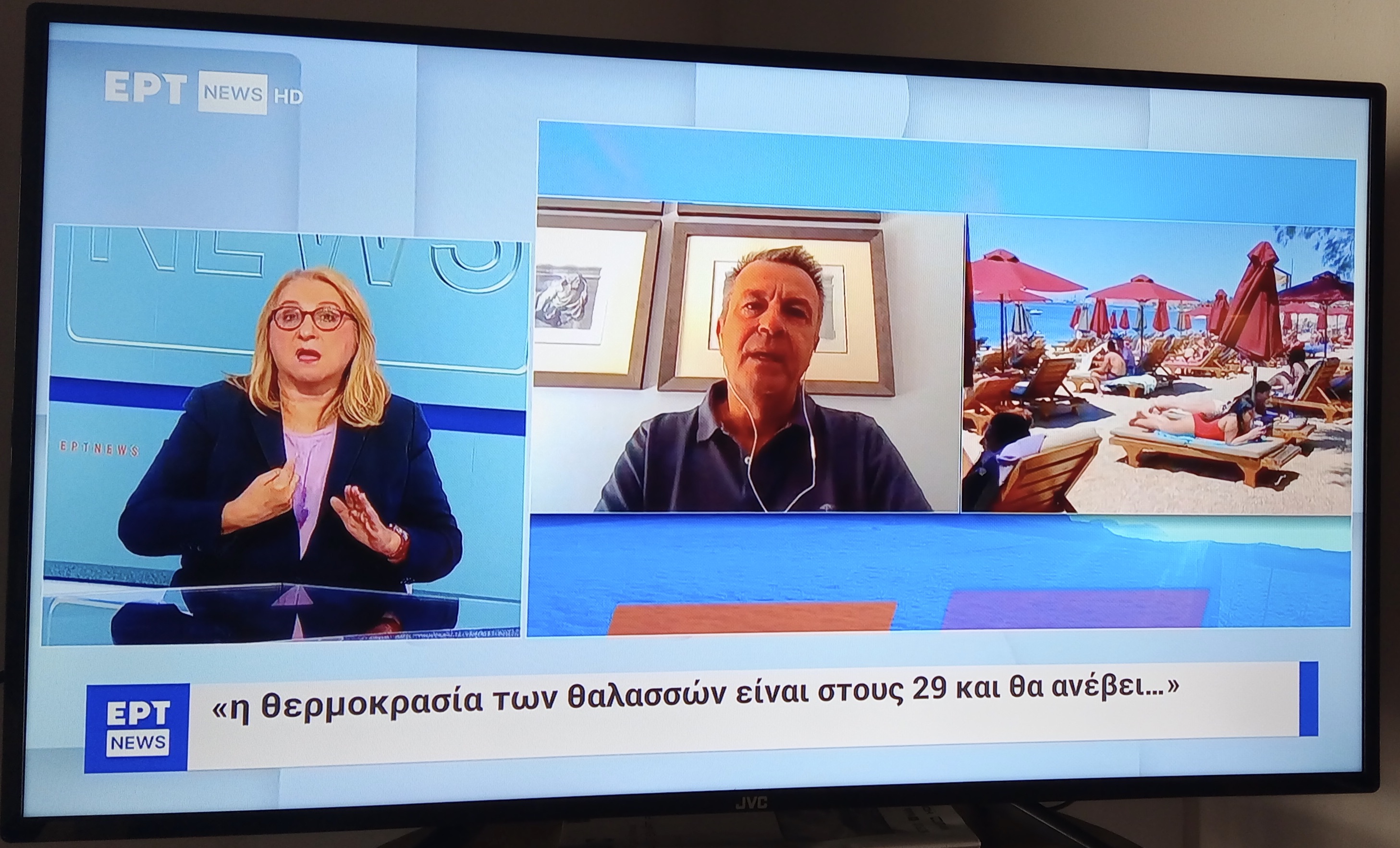
I’ve been meaning to make some observations for some time now about the very ‘inward-looking’ TV news bulletins on the major TV channels here in Greece. All the channels, without exception, broadcast hour-long news on a nightly basis. The thing is, though, much of the content of these so-called ‘international’ bulletins is home-grown. My theory is (and I think I also discussed this in one of the ‘Ramblings From Rhodes’ books) that they simply don’t have the budget to garner news reports from all around the world, and so they pack their 60 minutes with extended reports about why people are heading to the beach in July and August (shock horror!). While the rest of the world is teetering on the edge of a major conflagration owing to Russia apparently having a crazed megalomaniac (allegedly) at the helm this past twenty years or so, or people in some other country are dying of famine due to extended droughts, Maybe somewhere in South America extreme weather conditions have brought about some major landslides, China’s rattling its sabres about Taiwan, and so on and so on, here in Greece people see twenty minutes and often more of their hour-long ‘international’ news report showing video loops over and over again of lots of girls’ flesh as the reporter, logo-festooned microphone in hand, strolls the water’s edge on some beach or other trying to find something original to say about the fact that it’s summer again, and it gets very hot.

If I had a Pound for every beach babe sprawled on a sunbed who’s had a TV reporter shove a microphone up her nose while the camera shoots liberal footage of her cleavage, while she opines ever-so seriously about the fact that she simply had to head for the beach when she finished work at 1.30pm, because it’s just so hot, I’d be a very rich man. News alert!! It’s July in Greece! It’s hot. OK, OK, I hear you. There’s a heatwave afflicting us at the moment. True, but, even though climate change is happening, nobody with a brain argues about that, the fact is that we do get temperatures around the 40 mark every summer here is not exactly a surprise. The world is going down the tubes, but watch Greek TV news and you get the distinct impression that what really matters is how many of the young beautiful people are heading for the beach today.

Above: Another ‘international’ TV News programme about what really matters in the world. The caption reads, in all seriousness, “The sea temperature is around 29 and rising.” Gulp.

Actually, I wonder if Giannis has a second reason why he likes to do his business on the beach?

Actually, since it is so hot at the moment, here are a few photos taken up on the Lasithi Plateau back in March, to help you feel a little cooler…

Click HERE to go to my Amazon Author Page. You can browse all my written works right there.

For better or for worse…

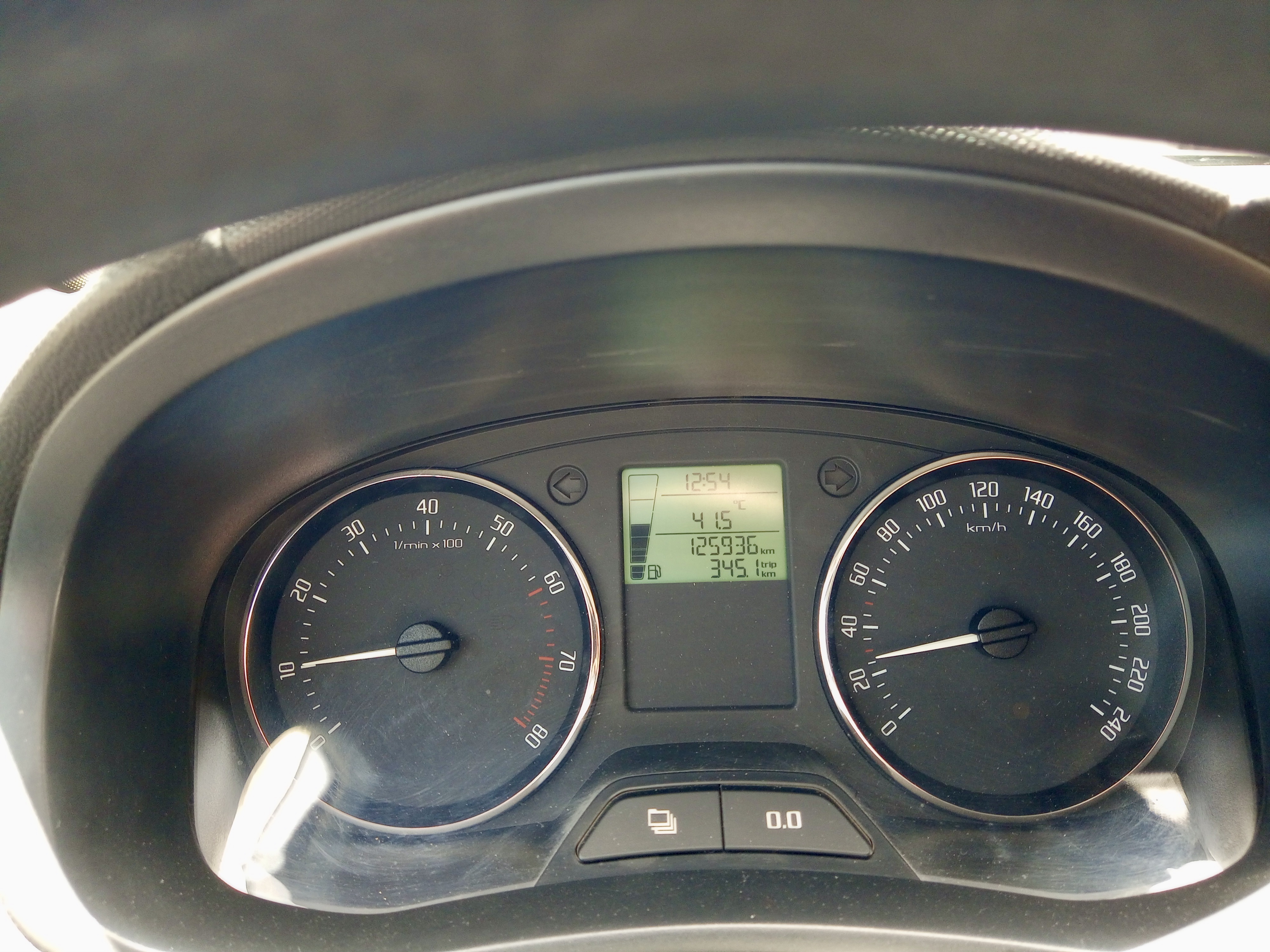
Most people are aware that we’re under a bit of a heatwave at the moment. Driving back from town yesterday the temperature outside the car was showing 42º, but was only a cool 40 when we got home to the house. I don’t like it this hot, I have to admit, even though while we were enduring a cool and changeable March-through-June this year I swore that once the summer finally hit us I’d never complain about the heat this time. Even while we were enjoying our iced coffees on the beach under a straw parasol, the breeze that was blowing across our bodies was hot, like we were in a fan oven or something. Mind you, it’s when you get weather like this that you truly appreciate just how simply wonderful it is to get into that sea.

What have I got to tell you about this time? Oh yes, went round to visit a couple we’ve now known for a few years this week, the hubby Giorgos is 80 and his wife Ritsa is 76. They’re both in very good health though, I’m glad to say. Something I’d heard recently prompted me to ask about how they first met and that sparked off a truly amazing story. Well, I say amazing, it is from a British person’s standpoint, since in the UK for the past half a century and more people have by and large been free to choose who they want as a life-partner, and young people get out and about and hang-out from some time in their early teens, right?

Actually, what sparked off my curiosity was the fact that, at least here in Crete, I don’t know about the rest of Greece, among the more traditional families it’s almost unheard of for a woman whose husband has died to remarry. It’s like they’re expected to honour the memory of their deceased spouse forever, and to remarry would somehow show disrespect for the mate who is no more. Of course, with the passing of time, things have been slowly changing, but it’s still very much an ongoing tradition in the villages. If a woman is unfortunate enough to lose her hubby while still quite young, she may end up condemned to a life of many decades on her own, wearing black the whole time. She’d rather endure that than bring dishonour on the family by showing a lack of respect for her deceased husband. 

When it comes to how a couple first meet, well, it seems that here in the islands, especially those that still have remote communities, a couple still, as recently as a few of decades ago, had little choice in the matter. Giorgos, the friend to which I referred above, told us that he was on his way to Canada, on a ship bound for Halifax Nova Scotia, when the news came through that the Generals had staged a coup and taken over the government in Greece. Giorgos had relatives in Canada and he was going there to work for a living and stay with them. He says that the ten-day crossing of the Atlantic was so unpleasant that he spent much of the time throwing up over the ship’s rail. In those days, when there was no internet or mobile phones, the passengers who were privileged enough to have a cabin would get a brief summary of the world’s news slid under their door on a single print-out each morning, after the ship’s telex had received the details during the night. That was how he learned of the start of the ‘dictatorship’ in April 1967. When the ship docked in Halifax, there were Greek officials present cross-examining the Greek passengers in the search for communist sympathisers. If they decided that you were one, then you didn’t stand much chance of starting that new life on the other side of the Atlantic. 

Anyway, after only two years in Montreal, Giorgos received a letter from home. His parents told him that he needed to return as soon as possible, because the family had struck a deal with another family for Giorgos to marry one of their daughters, the young Ritsa.

All this I heard in response to my question, “So, how did you two meet, then?”

Ritsa takes over the narrative. She says, “I was sent to meet this Giorgo fellow, and he was told to look me over and say if I’d ‘do’ as it were. I’d never met him before, but in March 1969 we first met, and in June of that year I became his wife. That was when we started to get to know each other, because before the marriage we hadn’t been allowed to spend even one hour alone without other family members being present.” They’ve now been married for 54 years, and neither of them seems any the worse for not having known each other before the big day. Fortunately as it turned out, I suppose, they both really did fall in love with each other and had two lovely children, both of whom are now married with children of their own and living nearby. 

Hearing about the culture of never allowing single youths to be alone with someone of the opposite sex reminded me of what my own wife Yvonne told me about the time when she spent the entire five weeks of her summer holiday with her cousins in Athens when she was fifteen. In the UK, at that age, you just went out and came in when you wanted to, even in the 1960’s, and it came as quite a shock and became a real irritation to her that she couldn’t simply go out and take the ‘electriko’ down to Athens centre without at least one of her cousins going with her. To have gone out alone would have been a potential cause for shame in the family. All this, remember, at the time when the hippie culture, Carnaby Street, the “Summer of Love” and all that stuff was all the rage in the USA and the UK. 

Despite the obvious contrasts with the culture in the UK and America, Greek family bonds are still today much stronger than they appear to be in those other countries. Greece may be a long way behind the ‘civilised west’ in such matters, but they’re also a few decades behind when it comes to divorce, crime rates and people living alone and isolated in urban communities. Every cloud, eh?

And so to a few photographs…

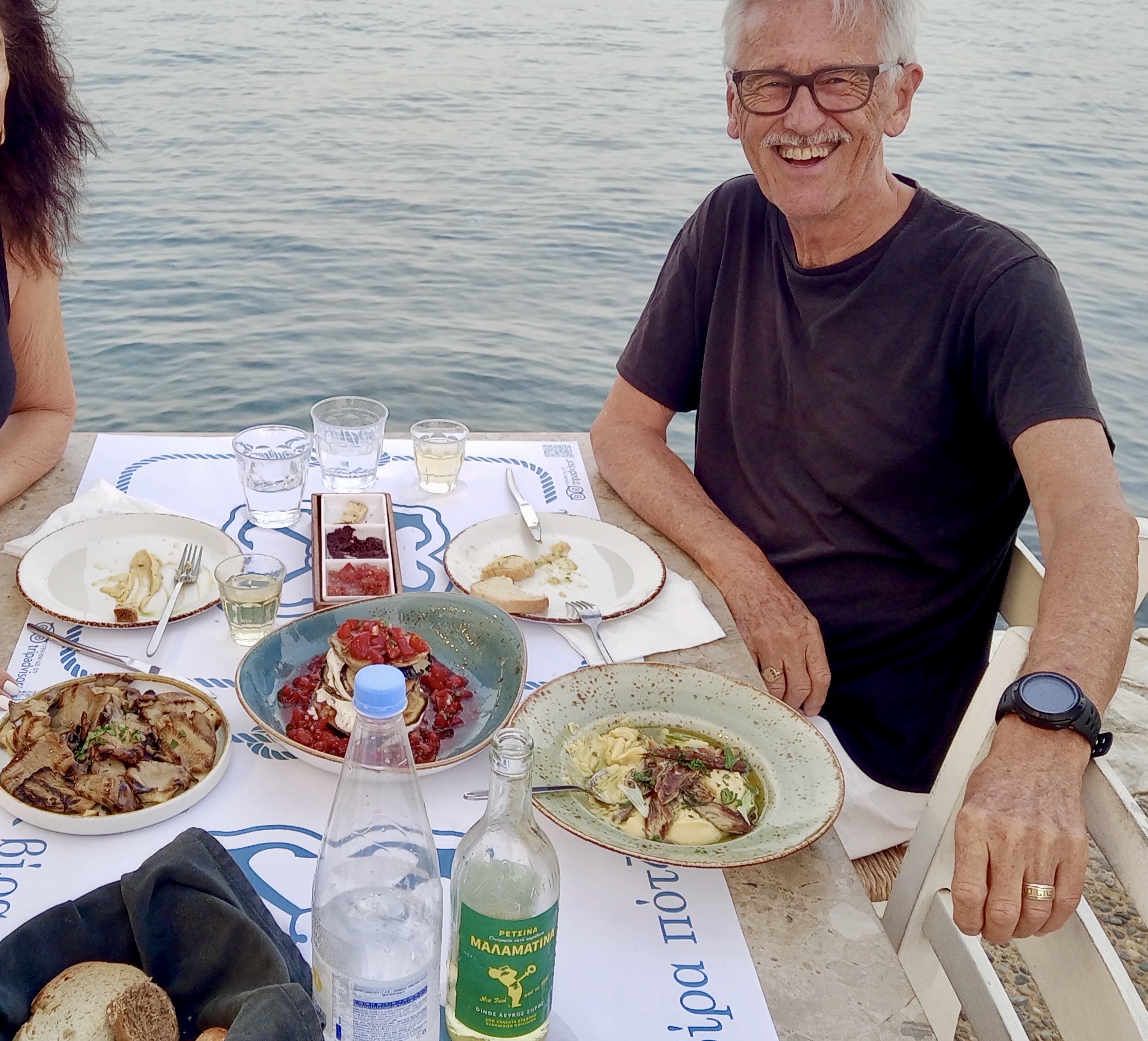
Above: The amazing and unique food at the Βίρα Πότζι restaurant in Ierapetra.

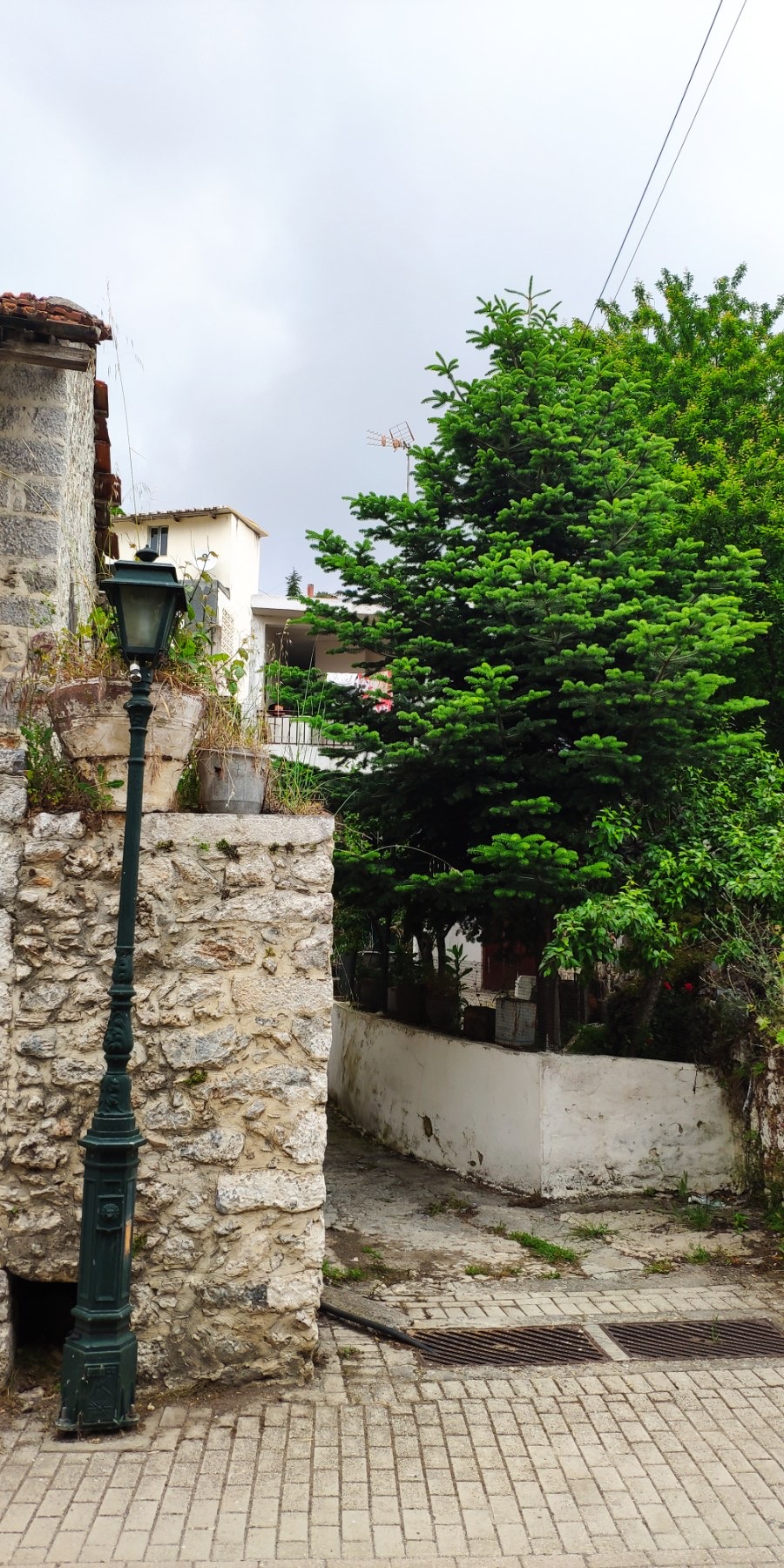
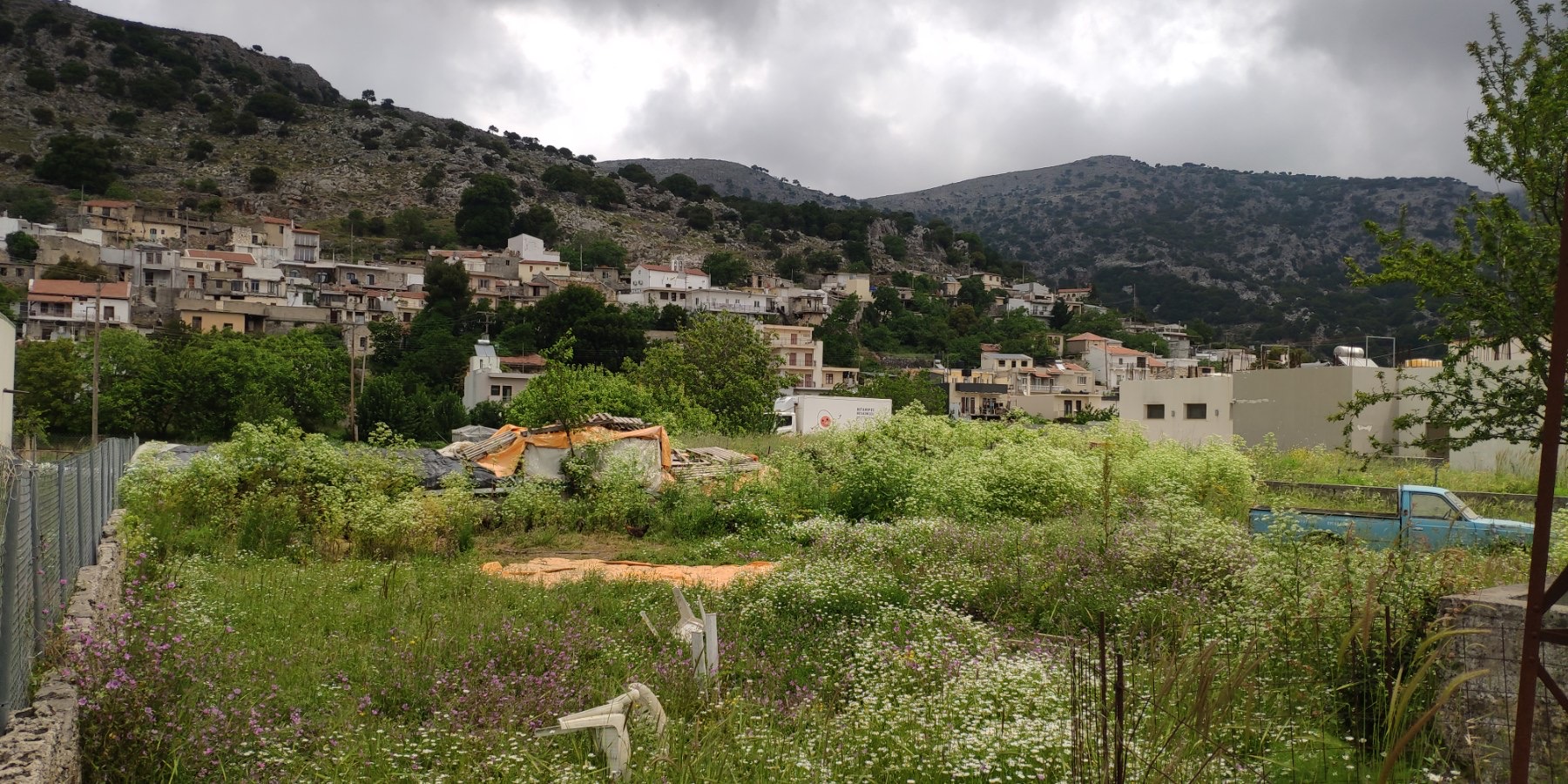
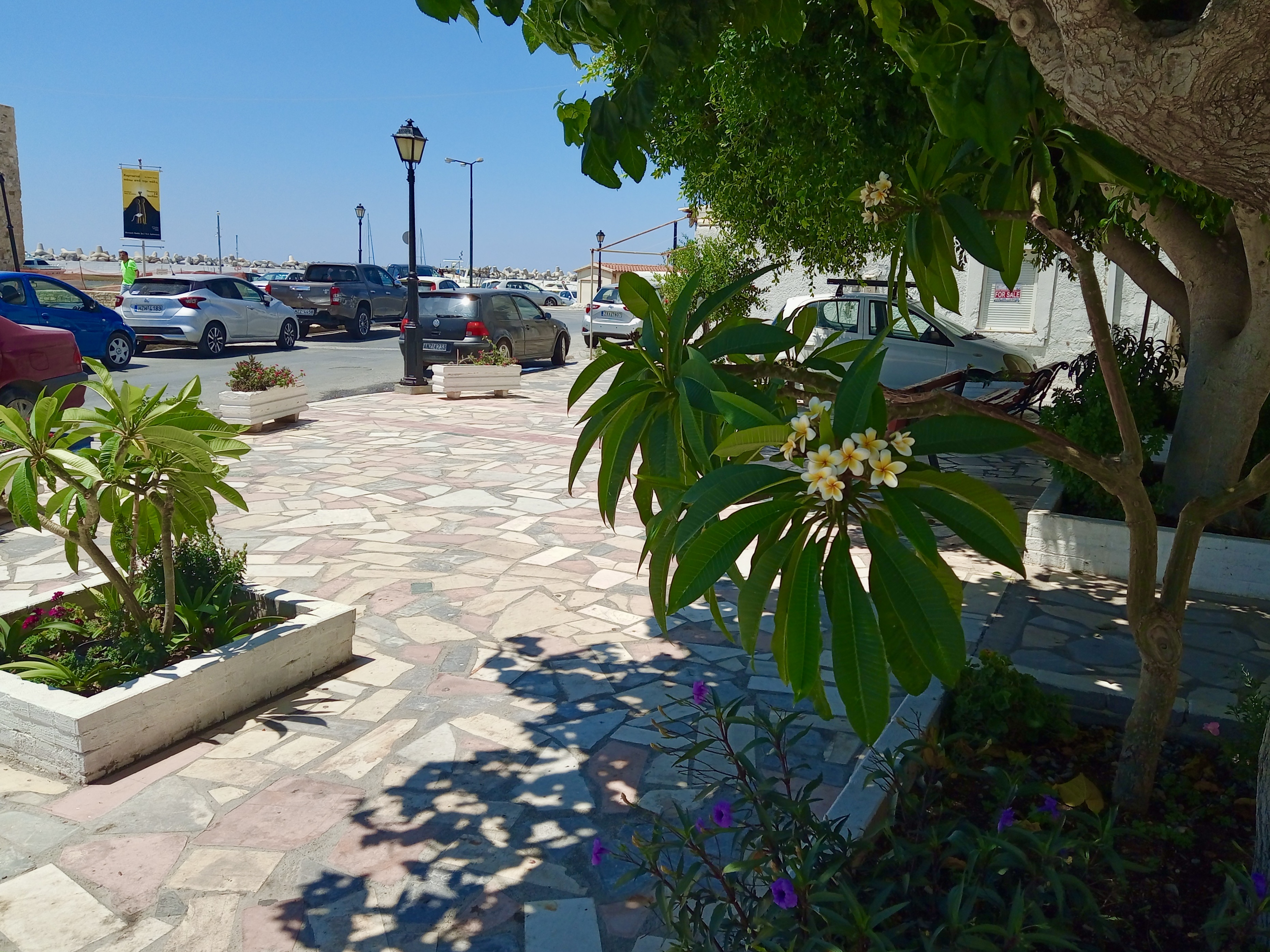
Above: A few shots taken around the town this past few days.

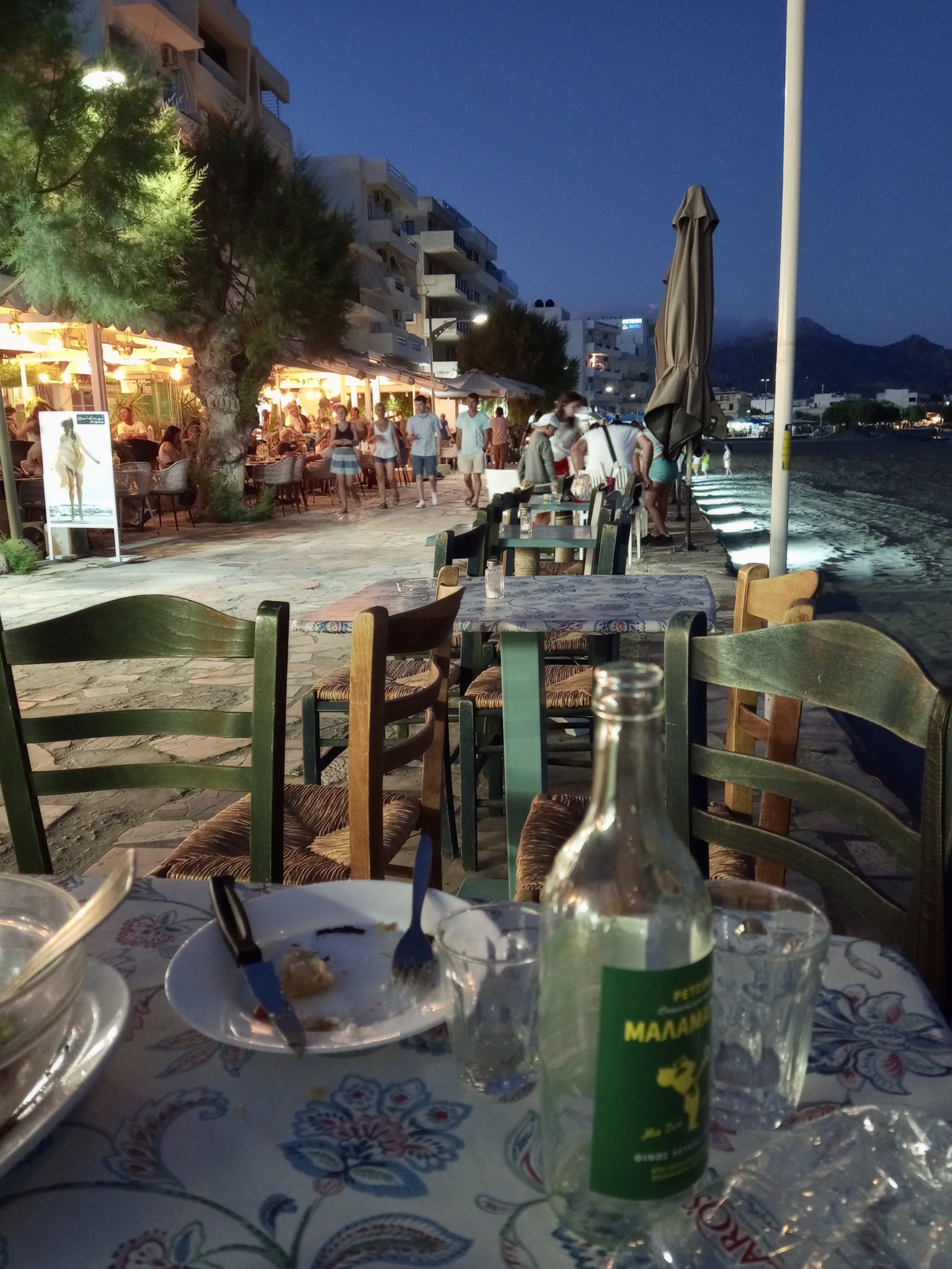
Above: At the rather traditional, yet quite funky Στσι Κουμπάρες taverna on Ierapetra sea front. In the first of those two photos, you can just about make out the newly-manufactured sandy beach that the local authority has created in front of the ‘promenade’ in Ierapetra. It’s the source of a lot of controversy, because something was needed to stop the erosion of the promenade when it gets pummeled by waves during rough days in wintertime, but this solution hasn’t proved all that popular. In the past you could sit where we were and look down at the fishes in the water. Now the water is 25 metres out across a barren stretch of imported sand, that also causes a problem at the tables when the wind blows in the wrong direction. To have shored up the seafront with steel, concrete and stone was probably too expensive, according to the Dimos anyway, so the sand was the cheaper option. The only thing is, they tried the same thing last year, and by the time this summer arrived, most of the sand that had been bulldozed on to the sea front had been washed away. It remains to be seen how it will all play out I suppose.

Above: The dial on my car’s dash showing the temperature outside as we drove home from town yesterday.

Click HERE to go to my Amazon Author Page. You can browse all my written works right there.

My back pages

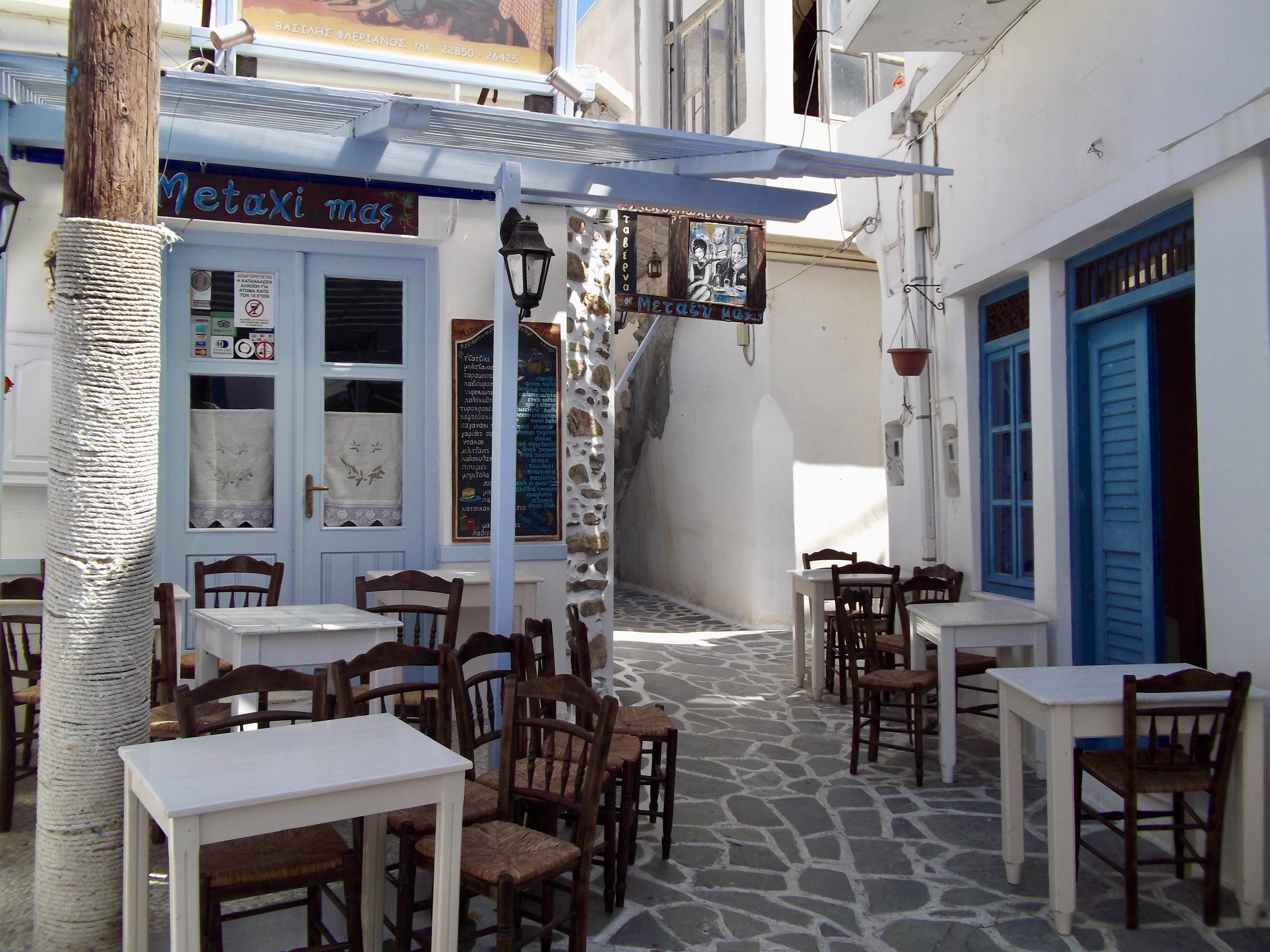
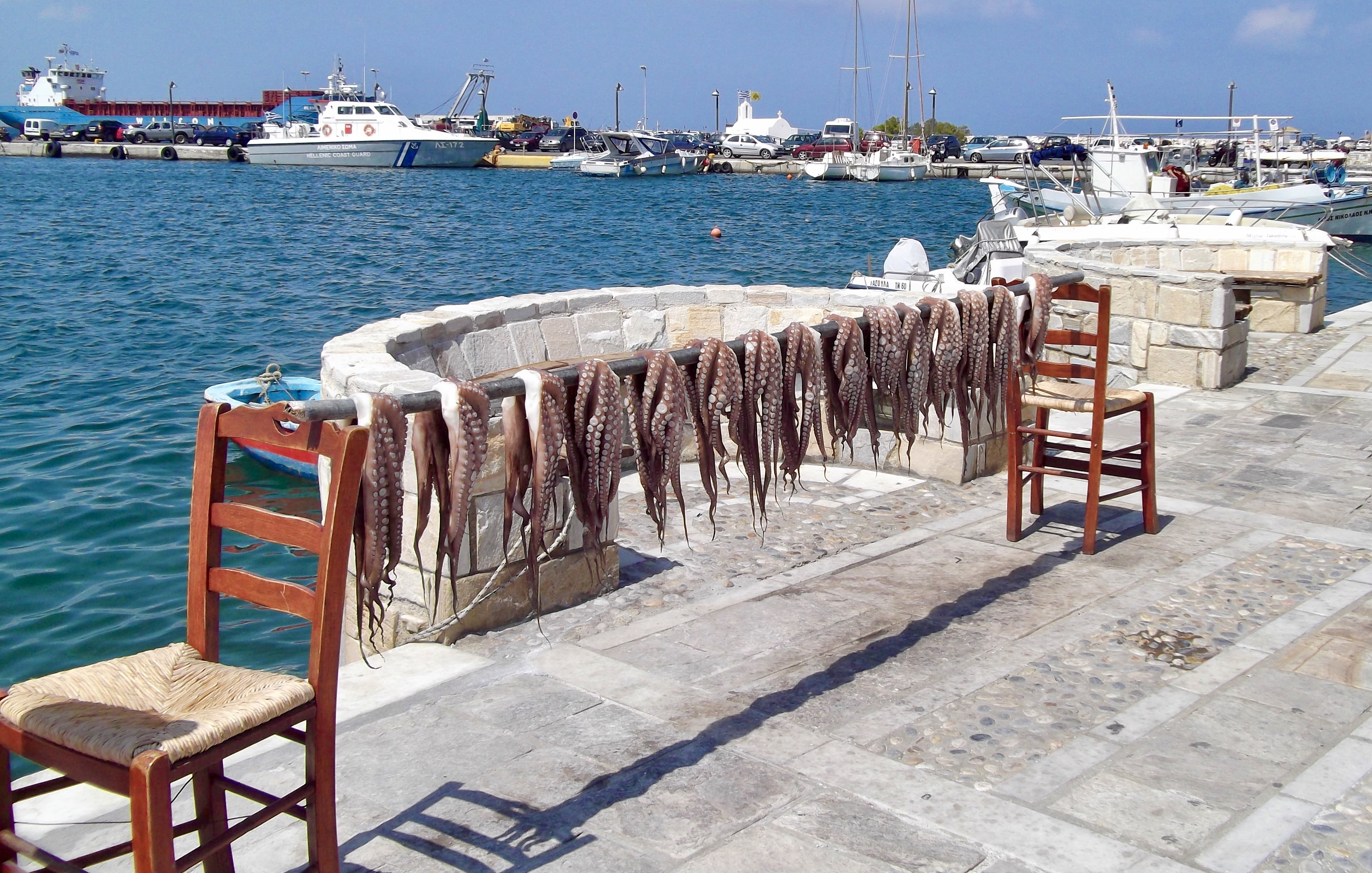
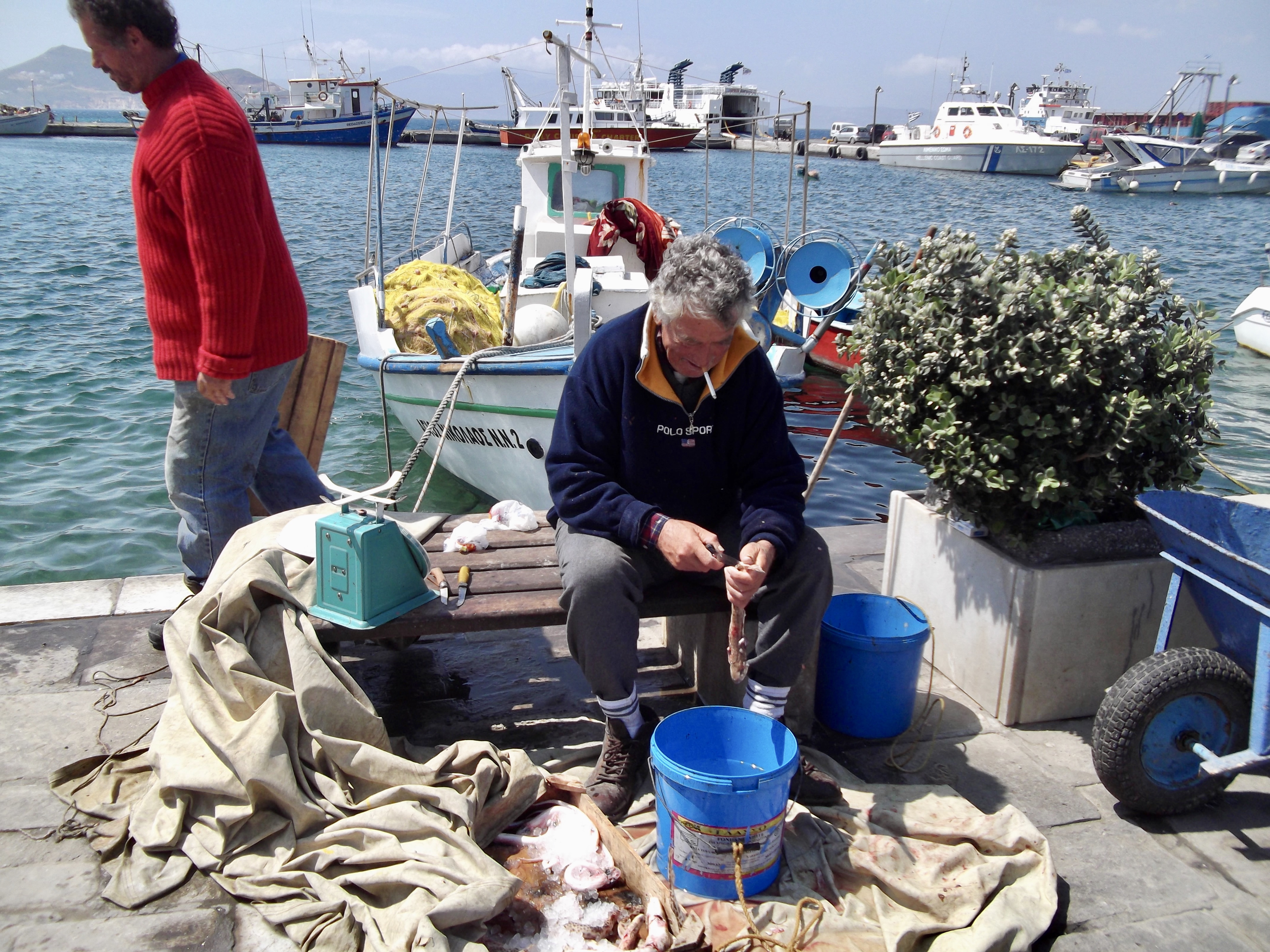
That photo is taken from above the lovely and very remote village of Apollonas, in the far north of Naxos. A more laid-back and unspoilt part of Greece it would be difficult to imagine. I’ve been trawling through thousands of my old photos taken during our time living in Greece (2005 – the present), initially with the intention of selling some on a few photo-library websites but instead, as you can probably imagine, I’ve been getting lost in reveries of experiences enjoyed whilst visiting all these amazing places.

So, with this post I thought I’d mention some fairly innocuous stuff about home this past week or so, and then begin what may become a series in which I dig out some of my favourite photos from some of the beautiful places we’ve had the privilege of visiting here in this quite remarkable, nay, astounding country, during all the years that we’ve been blessed to live here (despite the flaming bureaucracy!).

Firstly, though, here are a couple of tips that you might just not know about. OK, so if you already do, sorry, and maybe you might want to skip a couple of paragraphs. The first concerns how to keep biting insects from off your exposed flesh, since Greece seems to be well stocked with such little perishers. The ones that cause the most misery are almost invisible and I think that a lot of people believe that they’ve been bitten by a mosquito, when actually it’s more likely to have been a ‘no-see-um’ or, as I also call them, a ‘flying full-stop.’ These little pests fly straight through mosquito nets, they’re that small. So, if, like us, you like to sleep with the windows open and the moonlight gently caressing your flesh as you sleep, the mozzie nets will be no help. You’ll awake to find little raised blotches all over the place, and they’ll be itching like hell. They don’t do any lasting harm, but I’m one of those people they seem to make a beeline for and I often end up with a dozen or so bites, including in parts I’d rather not mention.

Now, if you do discover that you’ve been ‘got,’ as it were, the best thing to ease the itching is the quite marvellous Lane’s Tea Tree Oil and Witch Hazel Cream, also called (for some inexplicable reason) Teangi. I always keep a few tubes of the stuff in, and as soon as I get bitten I rub it into the bite. Within minutes the itching is gone. But, “prevention is better than cure” I hear you cry, and I agree. That’s why I want to mention this…

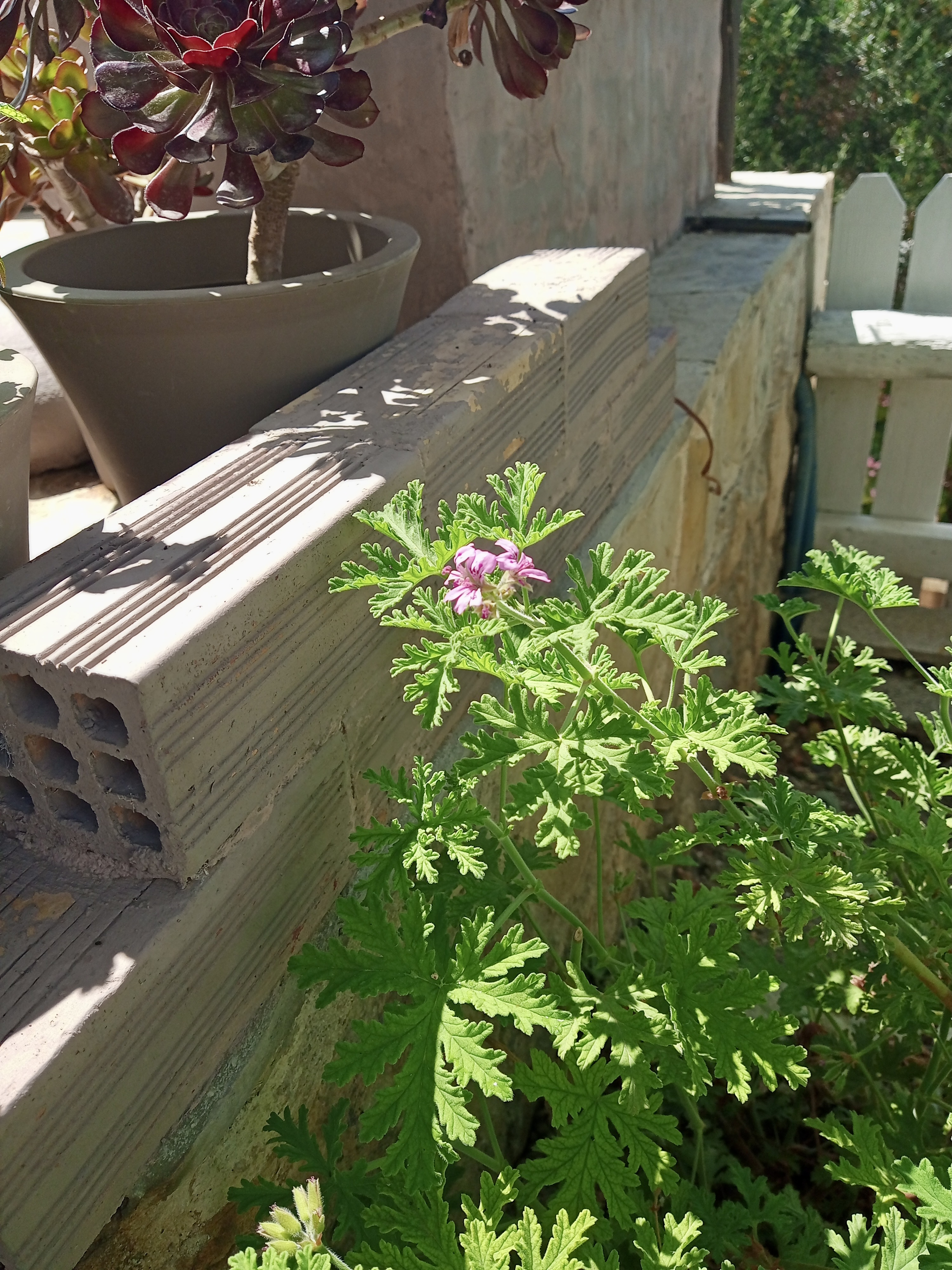
Above: That’s one of two lemon geranium plants that we have in our garden. Frankly, it’s an essential and you really ought to not be without it if you live here. All you need to do, whenever you’re going to be outside for a while, is to pick a leaf or two, bruise it between your fingers, then rub the ‘juice’ liberally along your exposed flesh. It’s fairly common knowledge that citronella deters insects, and this stuff smells exactly like that. It’s not an unpleasant smell, rather like strong lemon of course, hence the plant’s name. Whenever the better half or I go out to do some gardening, or even to sit and have a drink, we rub the leaves all over us and, voila, no insect bites. In fact flying insects (all kinds) will give you a wide berth once they detect it on you. It’s 100% natural and costs nothing once you have the plant established in your garden. Now, I realise that this will apply more to people who live here than to holidaymakers, but you will see lemon geraniums all over the place, often in pots, as locals know all about its properties. So why not ‘borrow’ a leaf or two as you pass by, bruise it between your fingers and apply it right then and there. Lots of Greeks even use it to make a refreshing natural lemon-flavoured drink in the summer too, by the way.

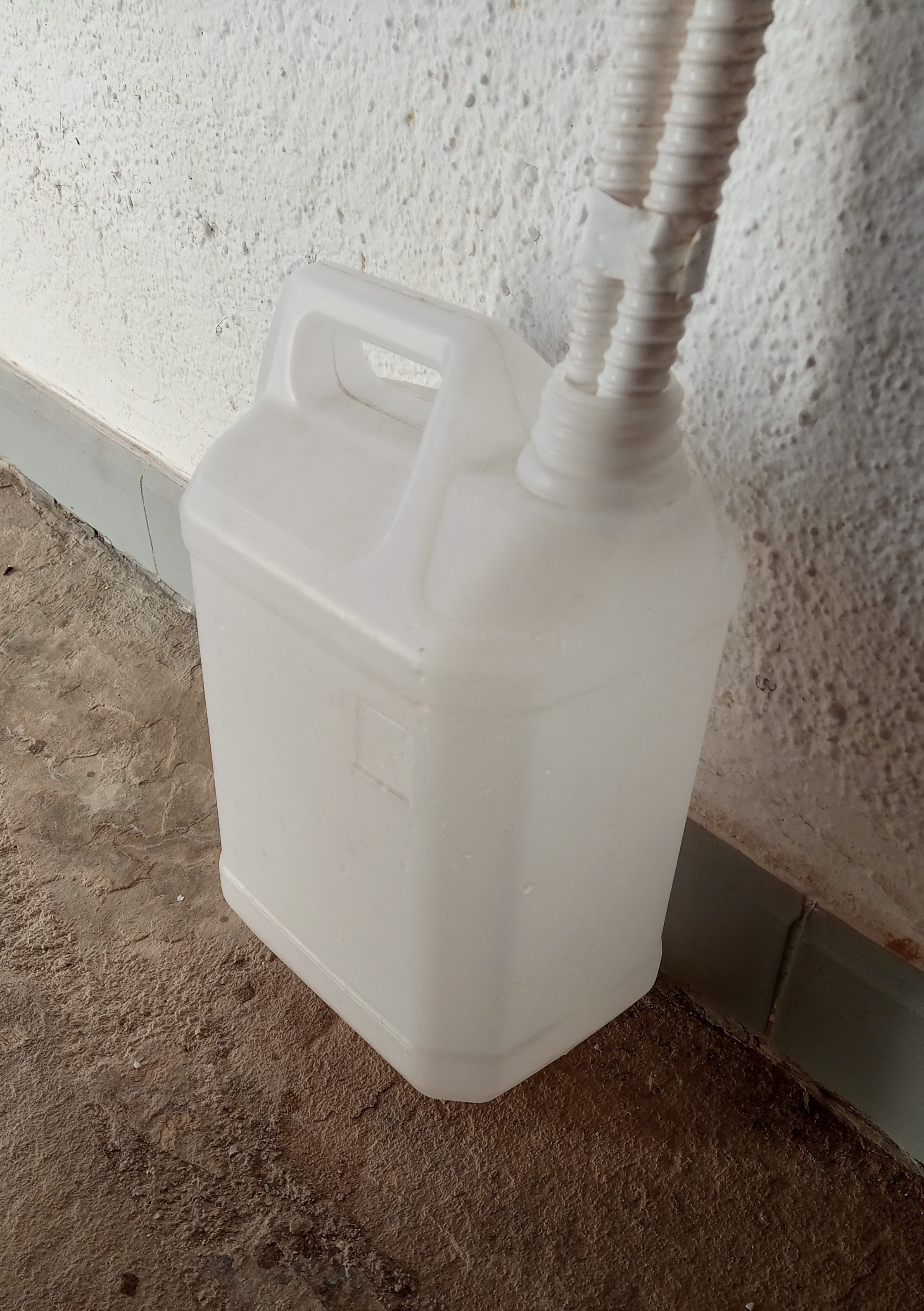
Tip number 2. Take a look at this really dull photograph…

Now, you may well have seen that people will put a water receptacle on the end of the pipes leading from their air-con units, right? The one above is outside on the floor below the outdoor unit whose indoor unit we have in our lounge. Did you know that this water is to all intents and purposes ‘distilled?’ It’s been harvested from the moisture in the air and thus is free of the minerals that a lot of Greece’s tap water is pretty packed with. Incidentally, a sub-tip here: How do you keep the taps in your bathroom and kitchen from becoming dull with all the minerals left on them when the water evaporates? It’s simply a matter of remembering to wipe them with a towel or soft cloth each time you finish using them. If you don’t leave water on the surface of a tap then it won’t evaporate and leave all that limescale. The taps in our house are as clean and shiny as the day they were fitted. I picked that tip up from Tom, our old neighbour on Rhodes, who gets a lot of mentions in A Plethora of Posts, chapter 21. What about the water you’ve harvested from the air-con unit then? Most people have sealed batteries on their cars these days, but if you don’t, then you can use it to top up the battery fluid but, primarily, what I do is use it to top up the screen-wash bottle. Using tap water in there soon clogs up the jets and they’re a devil of a job to clean once they get clogged from inside with salts from the water. If you top up your screen-wash bottle with this water, it’ll give you a nice clean windscreen and not clog up your jets, and there’s nothing worse than having your jets clogged, that’s what I always say.

Oh, and you can use it in your steam iron too. Nearly forgot that!

There you go. Just maybe those tips (plus the extra one thrown in for free) might just be new to you.

The village is quiet at the moment, apart from the deafening chirping of the cicadas that is. We’re into the hottest two months of the year now and the forecast is for a heatwave this coming weekend. After the spring we experienced this year though, there’s no way I’m going to complain about the heat. Manolis is now walking around permanently with a walking frame, but he still gets about just the same, bless him. He shuffles over to the kafeneion to sit with Heraklis, then along to Angla’i’a’s for another coffee and a brief session of putting the world to rights. Of course, the hot topic this past few weeks has been the general election, after the second round of which the ruling party (New Democracy) of sitting Prime Minister Kyriakos Mitsotakis ended up with 158 of the 300 seats in the Greek parliament. Thus they get another four years. We try very hard not to get into such discussions, because, well, basically, whatever you say you can’t win! What is notable, though, is how our neighbours can often be diametrically opposed politically, yet still don’t fall out in any nasty way, so that’s good. Everything’s solved by an elliniko anyway, eh?

Photos, yes, that was it, favourite shots from the past 17 years. Here are some more…

Above: All of these are taken on Naxos.

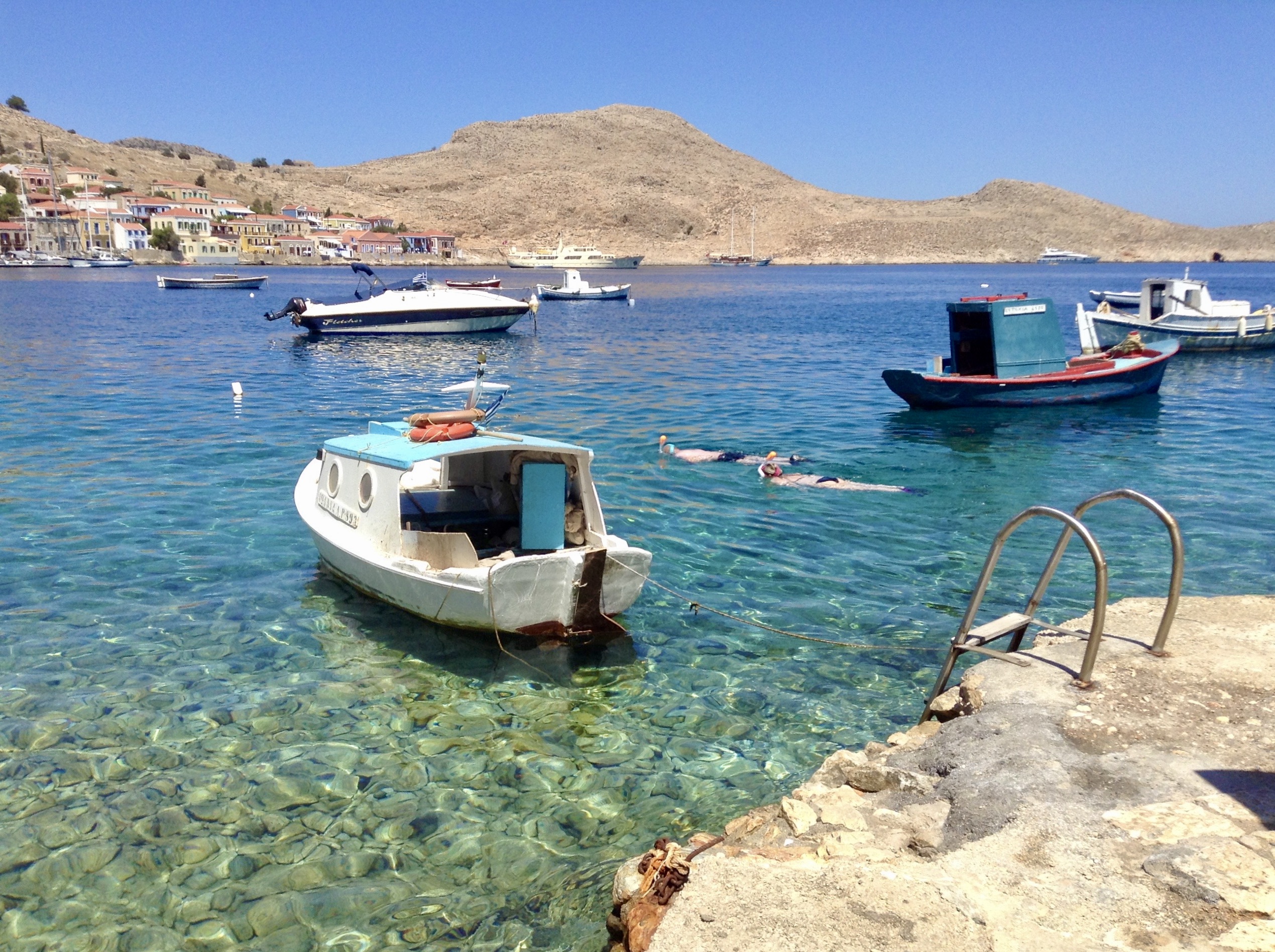
Above: Three from Halki, which has to be one of my top five favourite places anywhere in Greece. The 4th is from part-way up the Kali strata, on Symi, looking down on the impossibly pretty harbour area.

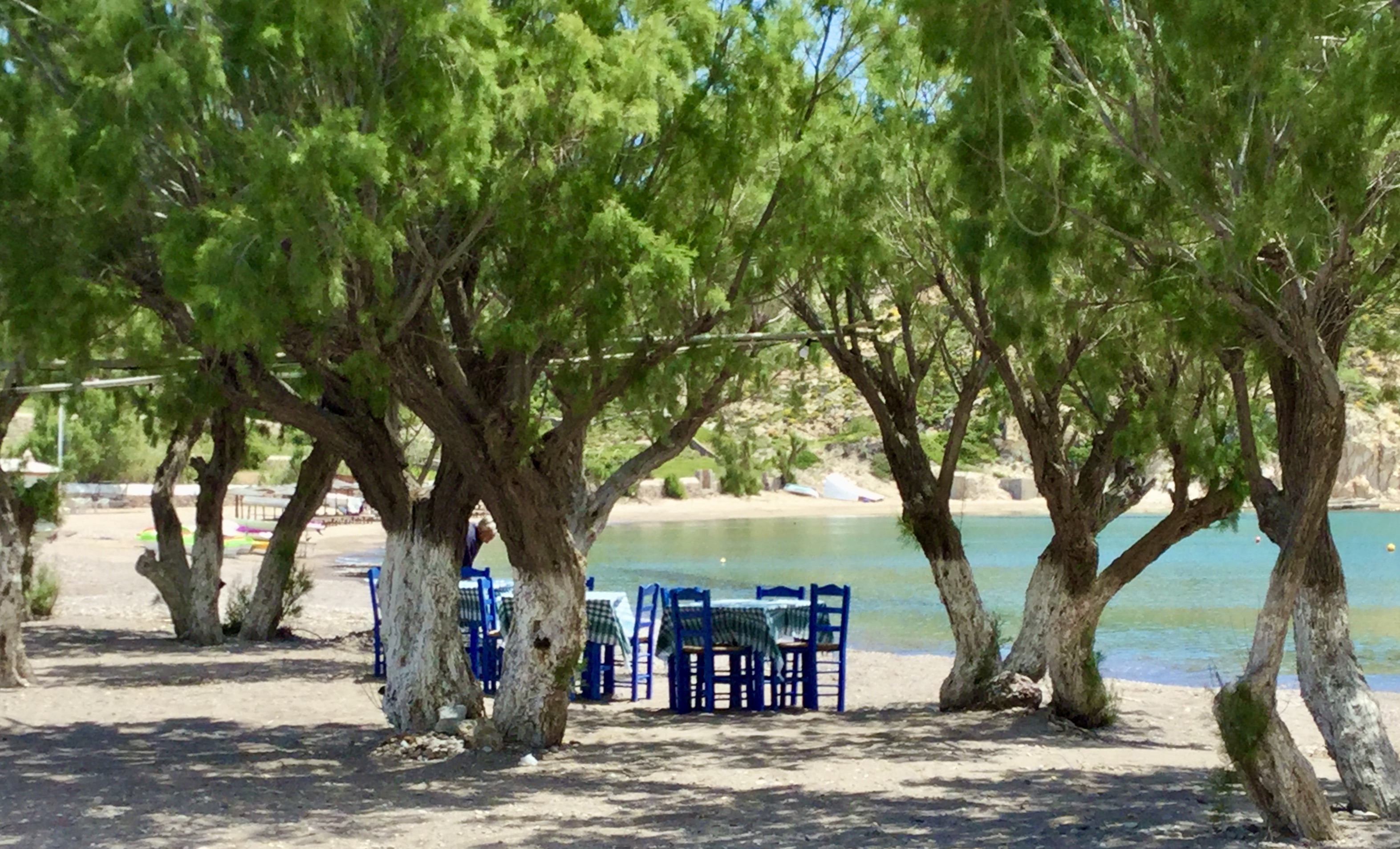
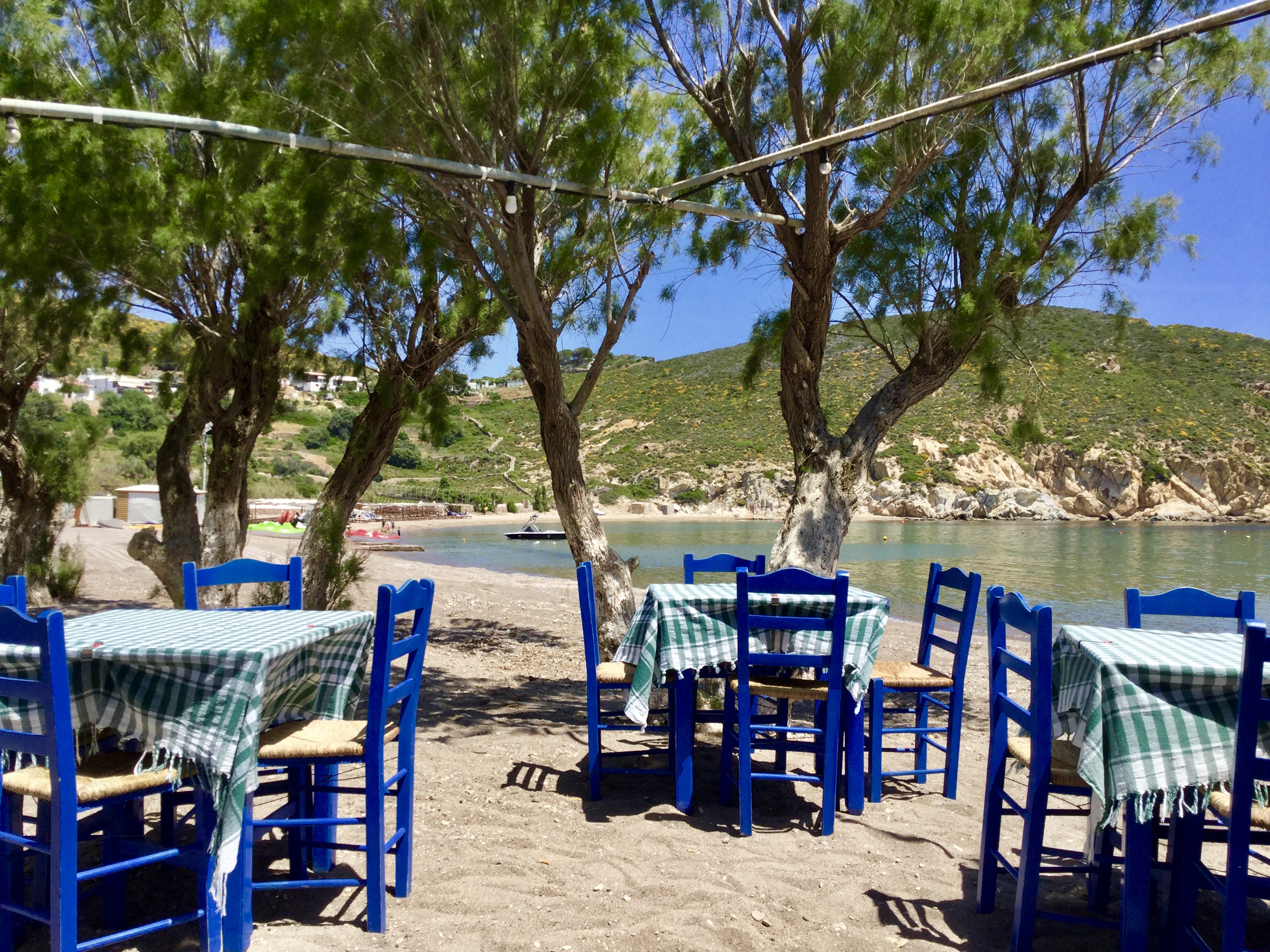
Above: All on Patmos, which has to be up there with Halki as one of my top 5 in Greece. What is it exactly about rickety taverna tables and chairs right beside the sea? Whatever it is, I’m suffering from it and there’s no cure.

Click HERE to go to my Amazon Author Page. You can browse all my written works right there.

Moving Islands

I’ve been asked on more than one occasion recently (possibly even – ooh – two or three, in fact) about how we ended up moving from Rhodes to Crete. Well, there are two ways to answer that, the first being in the book that I’m sort of writing (but don’t hold your breath, as if you would anyway) in a very relaxed kind of way, which is under the working title of “Moving Islands,” and the second is in a kind of abridged explanation here on the blog. So here goes.

I’ll try and make this as concise as I can (not that I succeed in that department all that often, I’ll admit), because a) I don’t want to lose what niche audience that I have for this drivel, and b) the book might well one day see the light of day and who’ll want to buy it if they’ve already read the whole thing right here? 

We arrived on Rhodes (and THAT story you’ll have to shell out to read in my “Ramblings From Rhodes” series of four very entertaining and – more to the point – extremely keenly priced books, beginning with “Feta Compli!”) in August 2005. My wife had a Greek mother but was raised, as was I, in the gorgeous Georgian City of Bath, in the West of England. We spent 14 years on Rhodes, living as caretakers in a new-build villa in the south of the island, in the area known as Kiotari. Our home over there was a large, spacious semi-detached bungalow on a hillside overlooking the sea, the other half of which was the holiday home of the owners, a couple who’d been friends of ours for many years. That house wasn’t ours, it belonged to the other couple, but the arrangement suited both couples, at least in the beginning. It had been intended that the villa remain in the family and be passed on to the couple’s three adult sons when the time came, but various changes on the island, together with the dreaded Brexit (who remembers that, eh?) led to our landlords having to make the decision during the summer of 2019 to put the place on the market. Thus our life plan was thrown to a degree into disarray.

We would never have left that house until we were carried out were it not for this change in circumstances, but, to be honest, with all the ways in which Rhodes had changed over the 14 years that we’d lived there, not only did we understand why our landlords had decided to sell up, but we too were presented with an opportunity to think carefully about what we wanted to do.

Back in November of 2015 we’d paid our first visit to Ierapetra to visit a couple of friends who’d moved there back in 2008 from our part of Rhodes. They’d been on at us for years to come over, and eventually we did. Even though it was quite a cold spell of weather for the time of year, with chilly winds blowing, the weather during that week had been bright and sunny and we’d quite fallen in love with the little town. Ierapetra seemed to have everything that we’d ever looked for through all the years when we’d been taking holidays in Greece, always looking for places that weren’t over-developed with tourism, places where we could still hear mainly Greek voices in the cafés, bars and restaurants, places where we would not need a vehicle, but could walk to a nice beach if we fancied a swim in the sea, or take a meal right at the water’s edge when we wanted to. 

We both remarked, on the journey back to Rhodes on November 30th 2015, on the good old Prevelis ferry, as we sat and enjoyed watching and listening to two Cretan musicians on the upper deck as they played a lute and a lyra whilst their appreciative audience tapped their feet and applauded every tune, that we’d been quite smitten by Ierapetra. What a great place it would be to live. Of course, at that time the possibility of that ever happening was entirely zero as far as we could see. Incidentally, if you’ve got time to go and read a bit more about that visit, go to my previous blog “Ramblings From Rhodes.” If you go back to December 2015, there are 6 posts about that first ever visit we did to Ierapetra.

So, fast forward to August 2019. When our landlord broke the news to us that we were going to in all likelihood lose our home in Kiotari, Rhodes, as chance would have it we’d already booked for a second visit (only four years after the first. After all, it never does to rush things, eh?) To stay with our friends in Ierapetra. We’d booked to go over for a week in September. Thinking hard about what we ought to do, it was Yvonne, my ever sage wife, who suggested that now would be a good time to extract the capital that we’d kept to one side from the sale of our house back in South Wales from the account where it was sitting, and see if we could buy a place, since that would significantly release a lot of disposable income as I had just reached retirement age (I know, I look so much younger, don’t I? DON’T I??) and my work as an excursion escort was coming to an end.

We still hadn’t really thought about leaving Rhodes, but since we were going to be in Crete for a week, what would be the harm in checking out a few estate agents over there? The fact was too, that property in Rhodes wasn’t so cheap any more and we couldn’t have got much more than a hovel that would need serious amounts of cash to be thrown at it if we’d limited our search to that island.

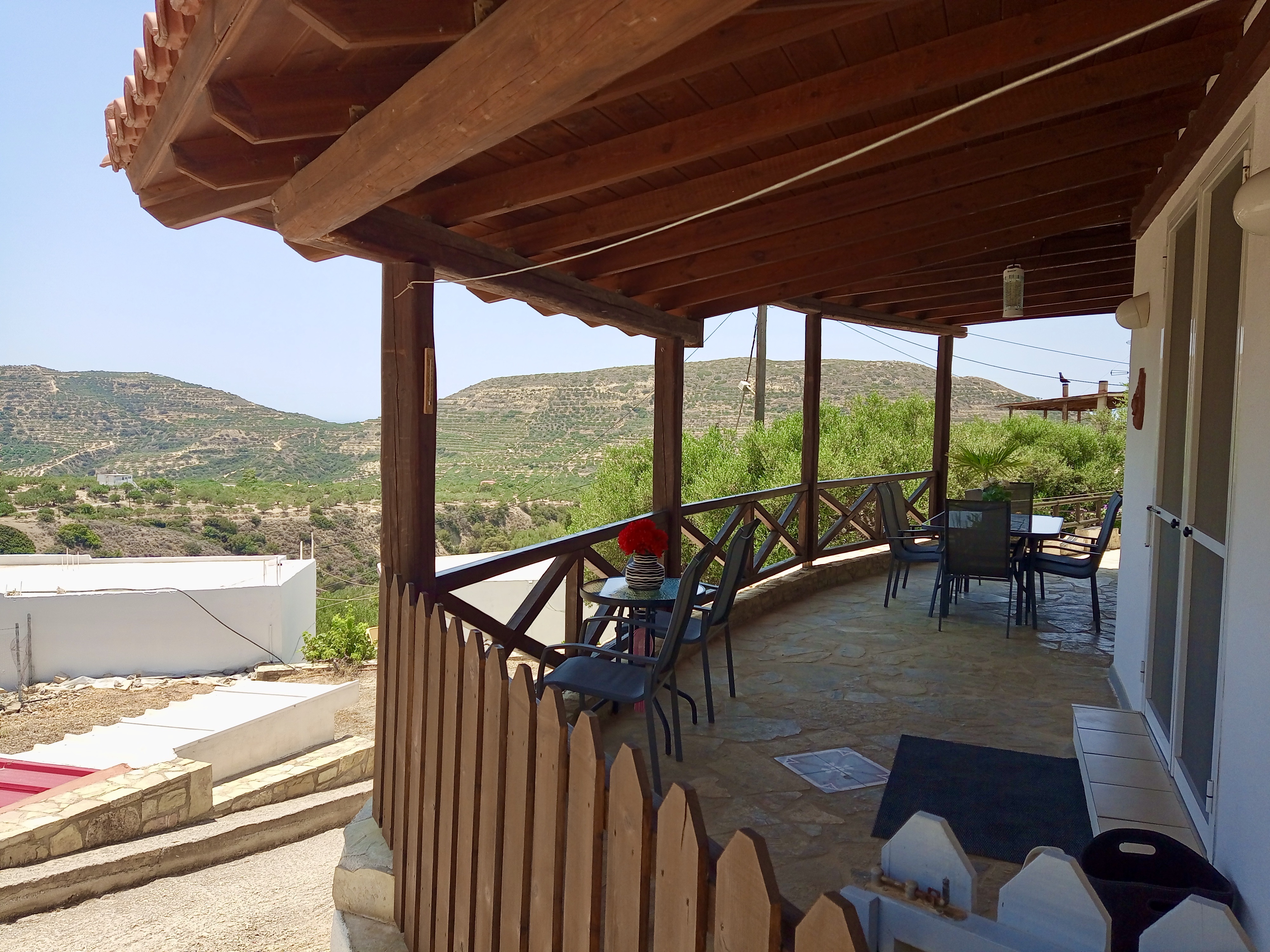
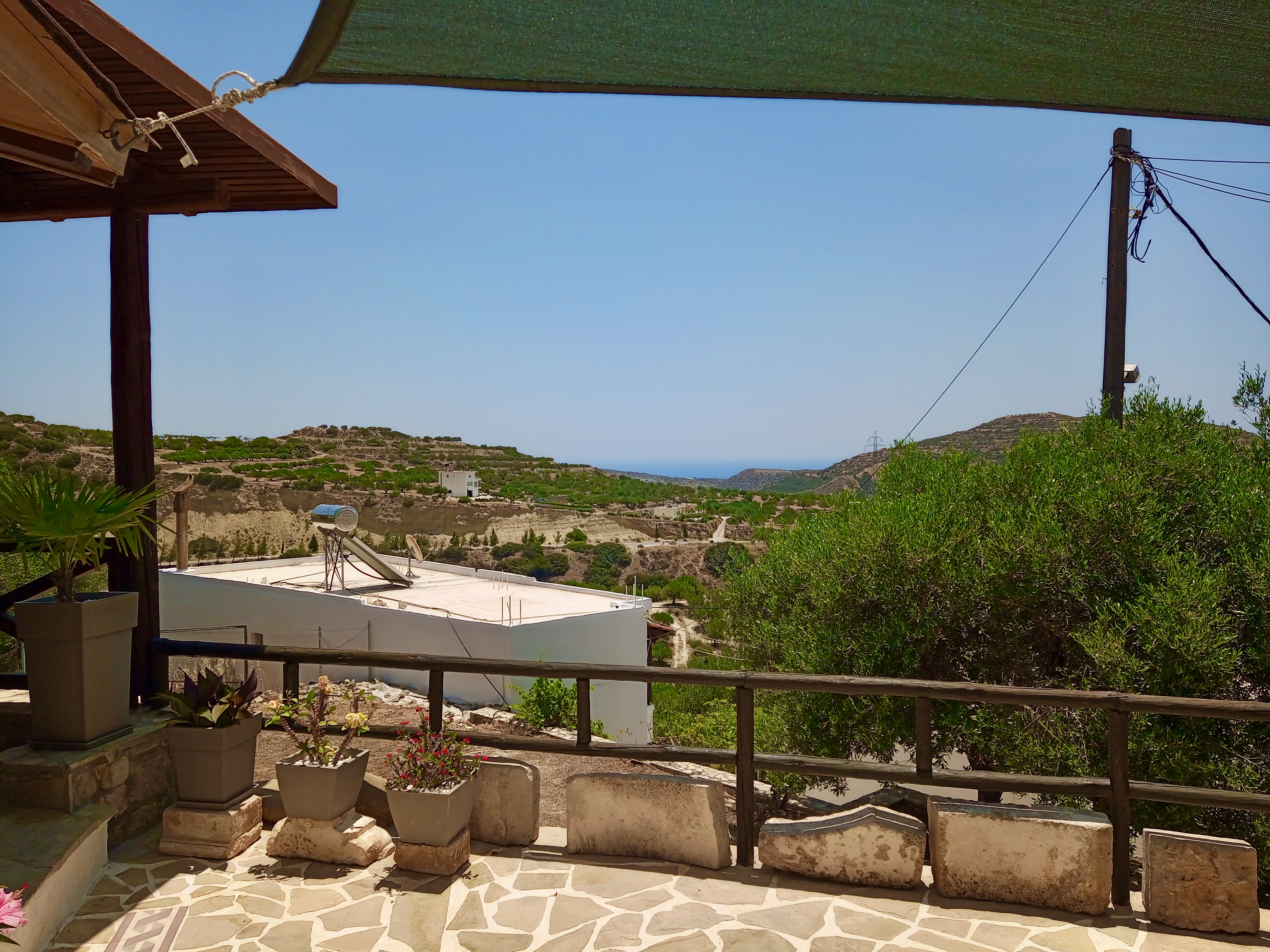
That’s about it, really. After spending an amusing couple of days being shown a bunch of derelict wrecks of houses and flats, Yvonne did a bit of surfing on-line and turned up this amazing little chalet-style house here in Makrylia, on a beautiful hillside with an amazing view from the veranda down through olive-clad hillsides to the Libyan Sea, we arranged a viewing, and the rest, as they say, is history.

Quite what is involved in moving lock, stock and wooden pallets from one island to another though, well for that story you will have to hold on for the book to come out. Don’t tell me I don’t know about building anticipation eh?

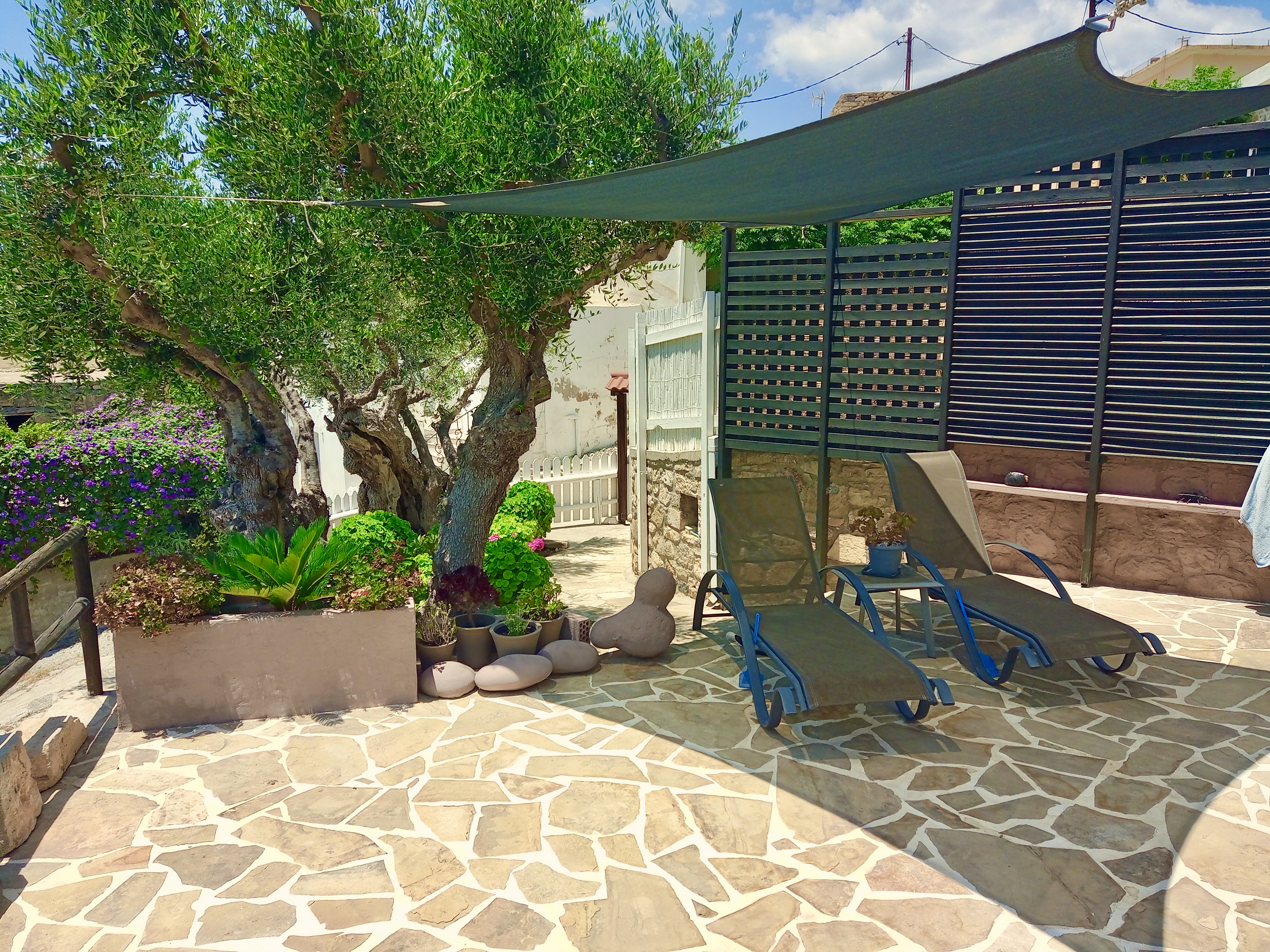
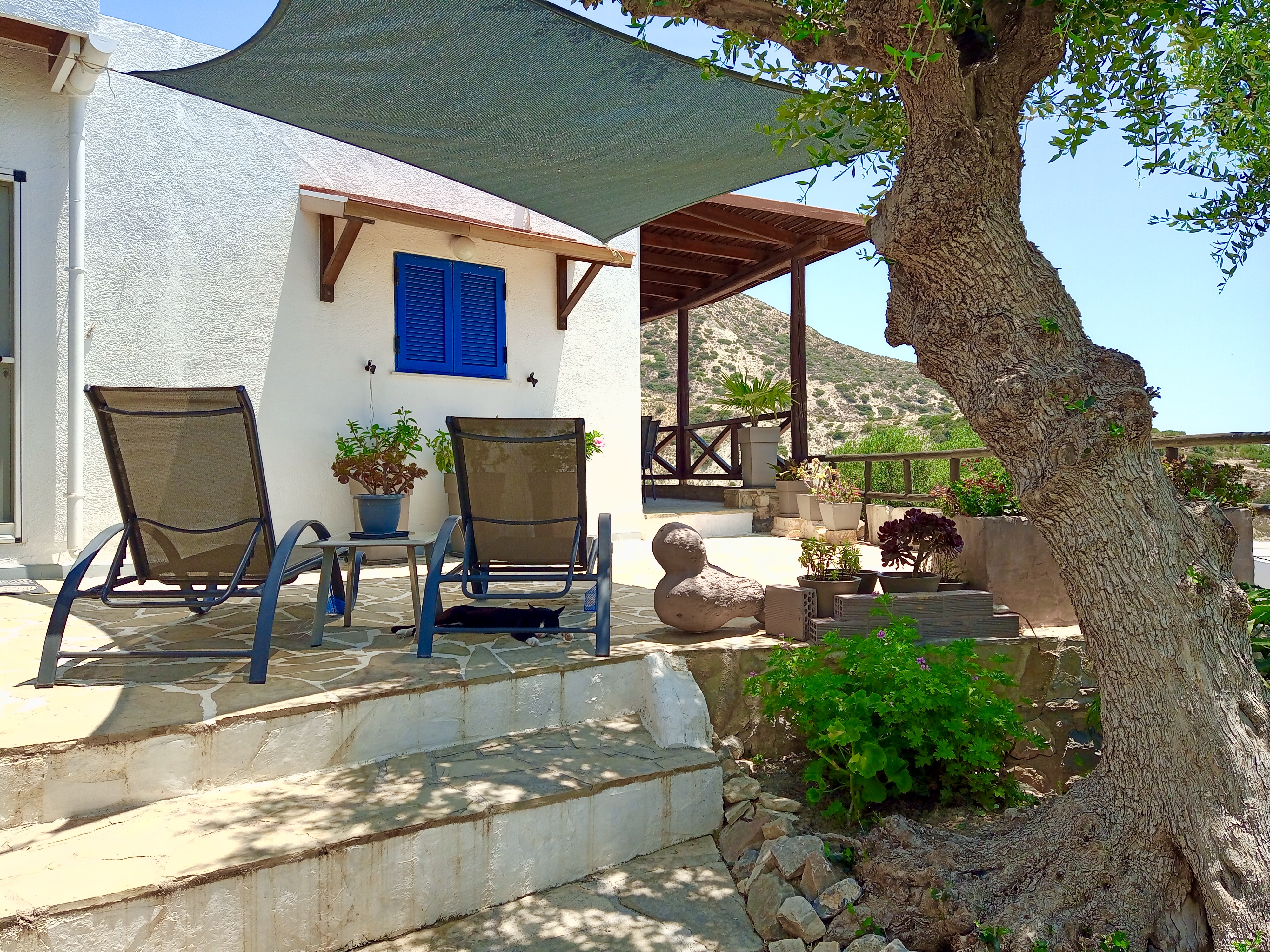
Gallery above: That’s it, that’s our little home. The sea is down there in those view shots, honest, but when the humidity is a bit high it gets rather hazy and the horizon less distinct. Ierapetra is just behind the hill across the way there.

Above: And finally, yes it’s that time of year again.

Click HERE to go to my Amazon Author Page.

The ratchet

Evangelia and her little group of octogenarians are huddled together on their rickety wooden chairs under the vine that’s trained across the short distance between her front door and the gate into her chicken pen. The narrow alley that runs past her front door is scarcely wide enough for the four or five of them, but they’re OK, they’re putting the world to rights with sober nods of the head and copious hand gestures as the temperature hovers in the lower thirties. Yes, finally, after a number of false starts, summer is upon us. Evangelia operates on a different time schedule to most people. The generally accepted time for everyone to be quiet whilst everyone sleeps is from around 3.00pm until 5.00pm or thereabouts. Evangelia (and, it seems, her few close associates as in sister, cousins, second cousins etc), gets up before 6.00am almost every day of the year and thus is usually ready for her ‘afternoon’ sleep at around 12.00 noon. Thus she is again up and about by three, and sets out her few chairs for the expected arrival of her little band of debaters. They too, evidently work to a similar time clock to their regular hostess.

The photo at the top of this post was taken at Taverna Kleio, along the coast a little away to the east of the town. Normally, at this time of the year there are tables all over the courtyard and even a clutch of them out on the beach itself, from where one can usually catch an amazing glimpse of the sun as it sets to the west over the hills above the seaside town of Ierapetra. This past Sunday, which was June 18th, when the summer has normally already been upon us for something like two months, there had been a pretty heavy rainstorm during the daylight hours and all the diners had to eat inside. It’s unheard of for this time of the year. Our friends from the UK (who own the house beside ours in the village) are here at the moment and so we went to Kleio’s for the evening meal together. The fact that it was wet outside though, did nothing to spoil the quality of the food there, which is always top notch. Good food and good company more than compensate for a weird weather pattern, thank goodness.

So many times this past two months or so we’ve woken up to clear skies and thought, ‘Right, summer’s here, the ratchet has turned and we shan’t see much cloud or any rain now at least until October,’ only to find that the nights have turned cool again for the time of year, the clouds have again bubbled up and the weather’s become unsettled for yet a few days more. This past Monday though, I almost hesitate to say, I went outside at 8.30am and the temperature on the veranda was around 25ºC. There was that unmistakable feel in the air that summer is at last here to stay. The prospect of it being too hot in the sun was finally a real one and the need to walk the streets while seeking out the shady side once more a necessity. Every year summer hits us as if the weather were operated by a kind of ratchet, which gets turned up virtually overnight, so that one day it’s spring, the next it’s summer, and normally it stays with us right through until early October, often longer. We’re fast approaching the 18th anniversary of our arrival in Greece as permanent residents and we’ve truly never known a summer to start so late. It’s the hot topic on TV chat shows, and – sadly – unusually heavy torrential rains have created flash floods that have brought a lot of damage to parts of northern Greece this past week or so. In all the café/bars the people talk about it, and the bars along the south-western end of the town beach have never waited so long to put their umbrellas and sun loungers out by the waterside.

This past few days though, the air has had that unmistakable underlying warmth that doesn’t go away for a few months now. We’ve taken a couple of swims in the sea and it’s finally lost its chill. It’s simply gorgeous to go in and the prospect of it remaining so for months is tantalising. The sky is that deep Greek blue that is rarely seen even on sunny days in the UK. As the Greeks say, ‘sto kato kato’ [when you get down to it] it’s ruddy marvellous to be here.

Most of the photos that I’ve taken this past few days have been right here at the house. So, here they are…

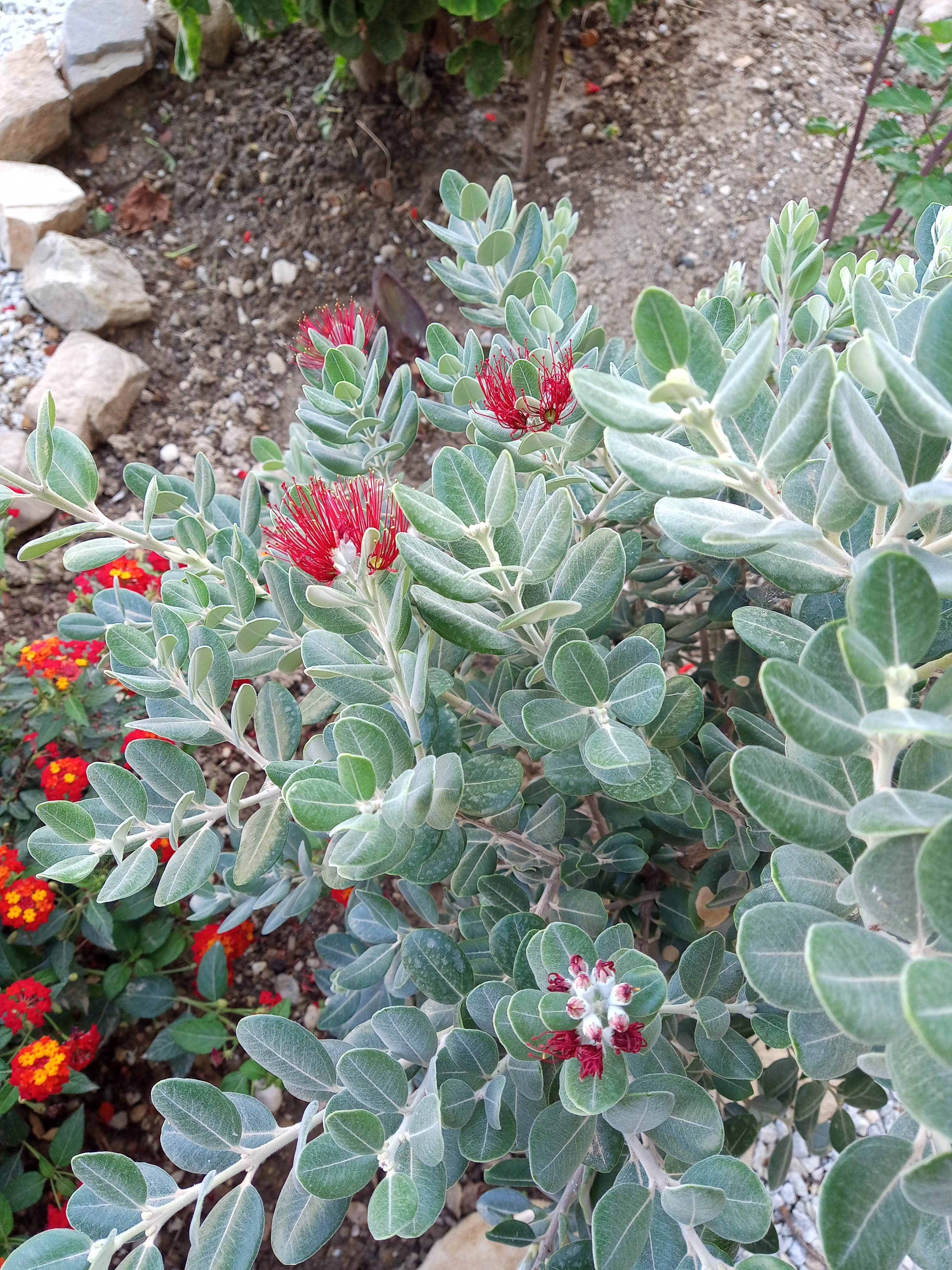
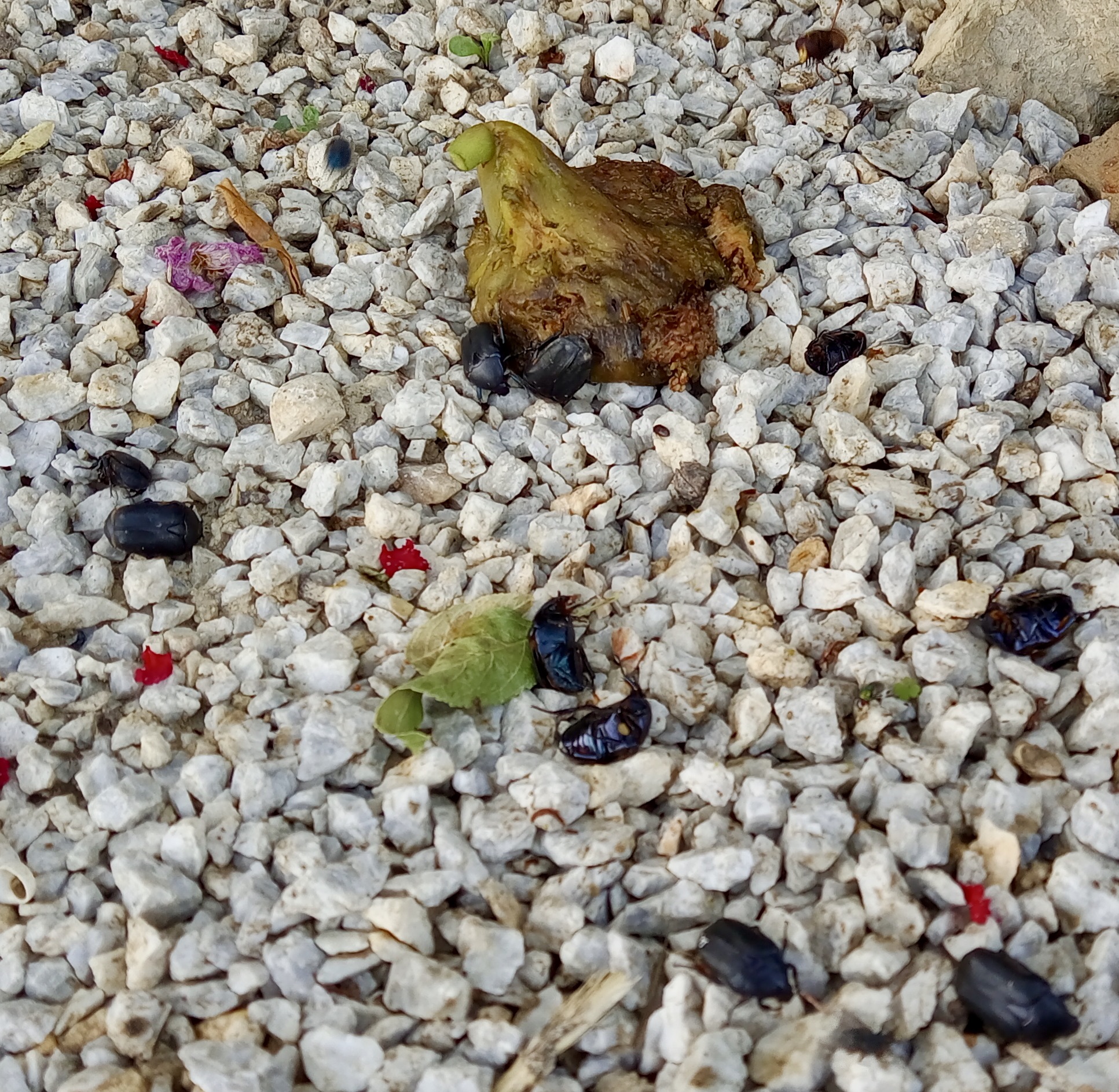
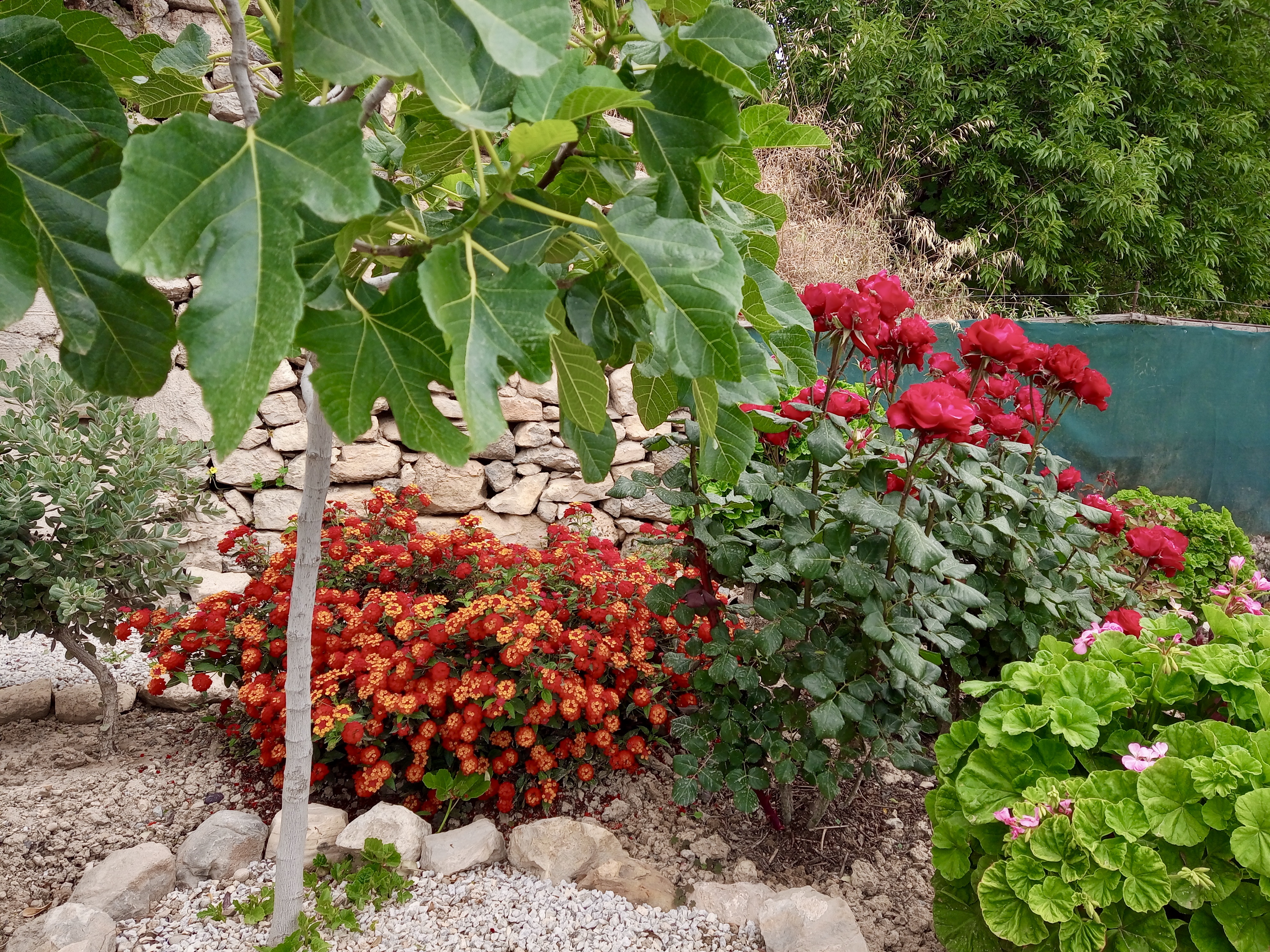
The first one in that little gallery is of a plant that we put in not long after we whipped the upper garden into shape, and we thought that it was never going to flower. Now that it has, we’re not only thrilled but surprised, as we never expected the flowers to resemble those of a bottlebrush plant. The thistle (artichoke) is the same one I photographed in the previous post, as it’s come out into even more flowers. Go on, tell me that it’s not a beautiful, blousy plant, eh? The shots of our fast-developing fig tree are also exciting, as it looks like we may be in for quite a crop in the coming weeks. Here’s hoping that those black beetles that you can see in the photo below this paragraph and that I discovered on the tree a couple of weeks ago don’t come back and eat the lot before we can.

Finally, here are a few more of the upper garden (what makes you think we’re chuffed with it then?)

Click HERE to go to my Amazon Author Page.

Taking a view

I thought I’d just post some recent photos this time. Summer has definitely arrived, as I mentioned in the previous post. We’ve actually now been able to take coffee on the beach this past couple of weeks and the temperatures have rocketed over what they were just a couple of weeks ago. Overnight, especially, it’s now staying around 20ºC+ and we can sleep with just a quilt cover over us, minus the quilt. It had seemed, just days ago, like this was never going to happen this year. And so to some recent photos from around the area…

Above: Gra Ligia, 28th May 12,20pm.

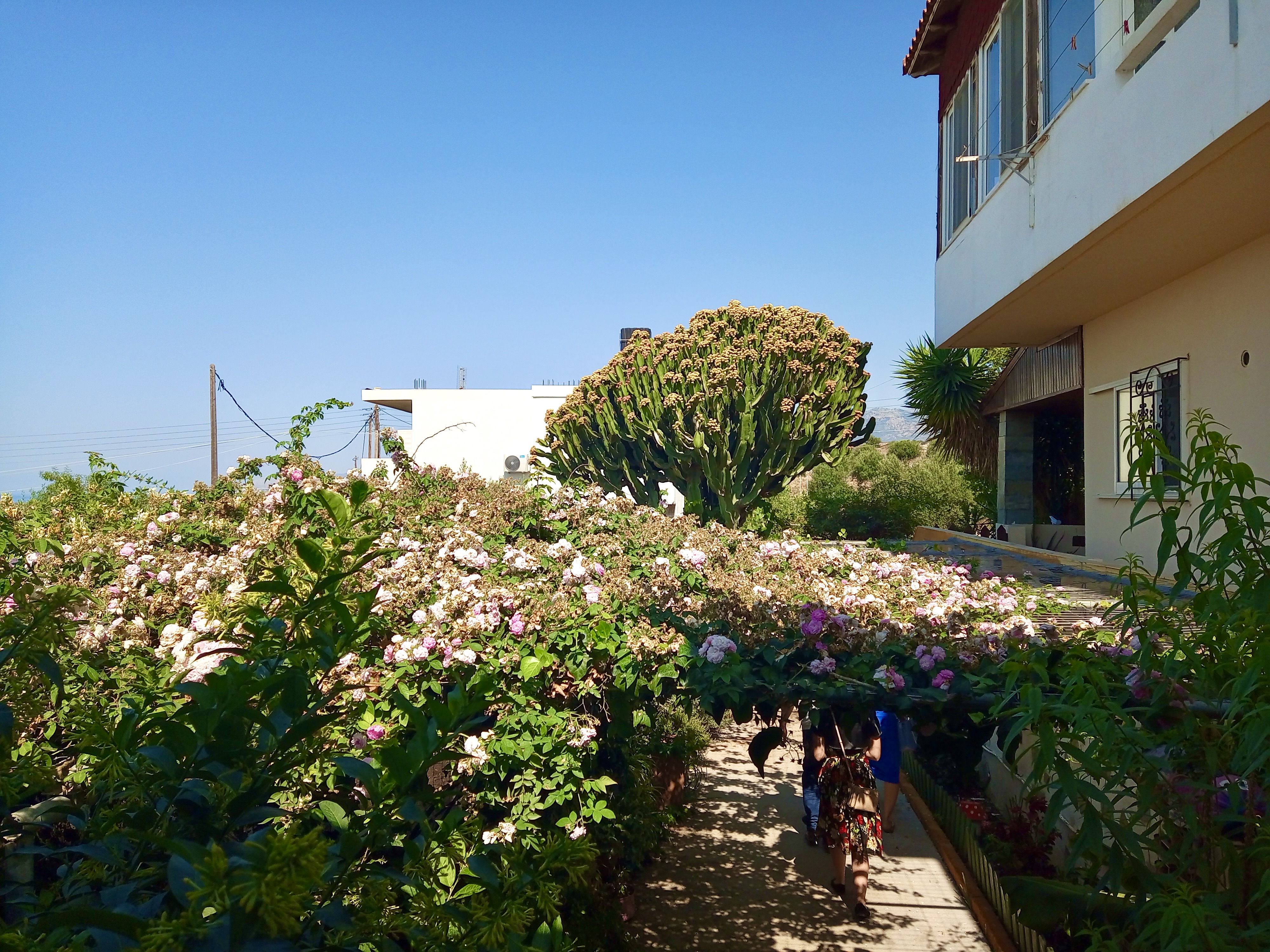
Above: That’s what you call a cactus, isn’t it? The entrance to a friend’s house is along this path, which runs under a wired rose bush that just smells divine at the moment. The cactus towers probably 20 feet above our heads as we pass beneath it.

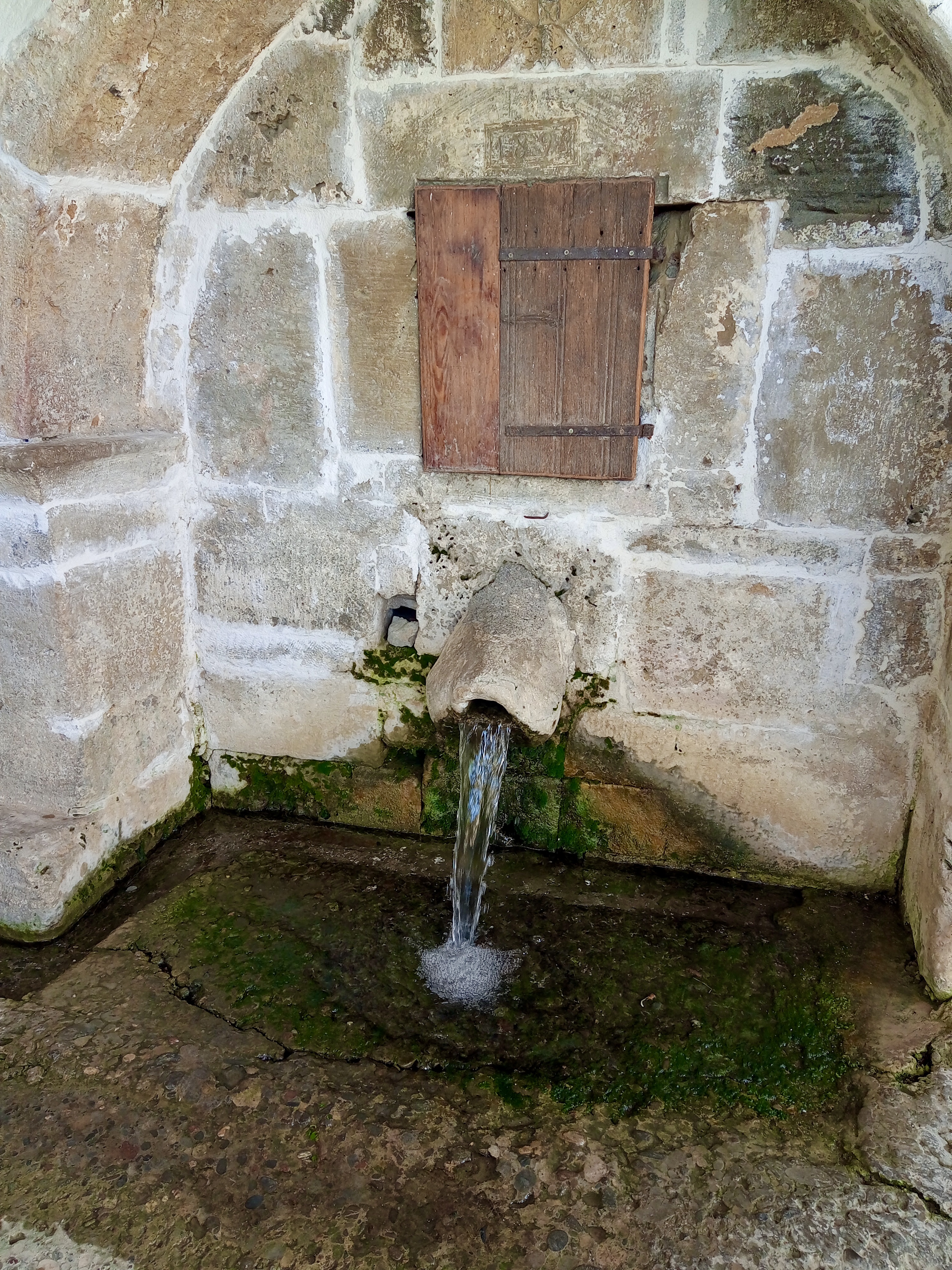
Above: In the village of Prina, next-but-one village up from us, passing Meseleri. This is the well-preserved village communal washing house and water source. You can see from the close-up of the stone lintel above the fountain that it dates from 1893.

Above: This little sign, almost too insignificant to notice as you walk past the doorway, translates as “Christoforos’ kettle [or cauldron].” What does it mean? It means that this is where they make the village ‘raki!’ The link takes you to a Wikipedia page where raki is called ‘tsikoudia‘ (pronounced tsikoudYAH), which is what some Cretans also call Raki (which, incidentally, is properly pronounced with the accent on the last syllable and not on the ‘a.’ It’s the same with the village of Kritsa, which English speakers usually pronounce KRITsa, when it is actually kritSAH. In fact, if you’re serious about pronouncing Greek words correctly, you can always take a safe bet that the syllable you should be stressing isn’t the one you want to stress!).

Above: Three more shots from the village of Prina, all taken late morning June 4th.

Above: A corner of the central square in the village of Meseleri. Here’s a link to a site that’s in English too.

Above: in an earlier post “One Firework” I mentioned our wedding anniversary (April 20th, if you’re interested), and the fact that my lovely sister and her hubby in the UK sent us a bouquet, which was delivered by one of the local flower shops in Ierapetra. I also said that the bouquet contained a spray of Sea Lavender, and remarked that it’s one plant that you should never throw away once all the other blossoms in the bouquet have withered. Why? Here’s the proof. The bouquet arrived on April 20th, yet look at the Sea Lavender now in the middle of June, still exhibiting its gorgeous purply-blue colour, and it’ll go on doing that for probably a couple of years yet. Good eh?

Above: Not a lot of people know this, right, but artichokes, which the Greeks like to eat (although quite why eludes me, since the rigmarole involved in getting to the actual bit that they eat seems hardly worth the effort, see this post) are actually a thistle. If you leave the artichoke on the plant instead of picking it when it’s at the right stage for eating, it’ll go on to burst into flower. This plant, which is on the ktima belonging to the bloke who sold us our house, and is situated just below the veranda of our nextdoor neighbours, is around seven feet tall, as you can see from those photos. Don’t encourage me to eat artichokes, will you, but I’ll tell you what, the plant, when it flowers, is truly a wonder to behold and I love to gaze at it. I even find myself wondering if John Wyndham had been thinking of one of these when the inspiration for a science fiction novel came to him…

Above: Taken at 11.50am this morning on Ierapetra beach as we took our iced coffees and had a gorgeous dip in a sea that’s now already up to 22ºC. Go on, tell me that the Caribbean is the place to go, eh? They get hurricanes, and it gets dark at tea time all year round!!! No, I know it’s wrong to make comparisons, but a few years ago back in Rhodes I once had a British bloke on one of my sea excursions whom I caught at the stern of the boat gazing at the endless blue sky and looking very pensive. As I approached him, he looked at me and asked me, “Is it always like this then?”

“Sorry?” I replied, “but like what exactly?”

“You know,” he replied, “so blue.” I kid you not good blogreading folk out there. He actually didn’t realise that with a three or four hour flight from good old Blighty, he could enjoy a holiday in the summer where he’d be lucky to see a cloud in two weeks. He told me that he always went to the Caribbean, 10 hour flight, jetlag and all, because he’d believed that it was the place to go to get the right weather, even though, by his own admission, it would cloud up in the afternoons most days and rain for an hour from around 4.00pm. By the time he’d boarded the boat on my excursion, he’d already had a few days to settle into his first ever summer visit to Greece. He actually told me, and I tell no lie, “If I’d known how great the weather was here in Greece, I’d not have spent all that cash and flown all that way for the past ten years, when for a lot less cash and a lot shorter flight I could have had this!”

Click HERE to go to my Amazon Author Page.

A departure, and some (green) developments

The weather throughout March, April and May this year has been unprecedented in both its changeability, and its low temperatures for the time of year. The one week [14-21 May] we spent in Sitia turned out to be the best and most consistent week of weather in all of that time period, so we could well be grateful for small mercies. Usually summer starts at the beginning of May, when you can almost wake up one day and literally overnight the skies have cleared, the temperature’s ratcheted up a few notches and the air is warm to the skin. During May (usually at the start of the month) the cafés on the town beach in Ierapetra put out their umbrellas and sun loungers and our several months of coffees on the beach, along with a swim for an hour or two, begin.

Not so this year. As I mentioned a few posts ago, January and February were decidedly summery, apart from slightly cooler evenings that is, and we enjoyed weeks of sunny, settled weather. Once March got under way, however, it all took a turn for the worse and it became unusual for the sun to shine for more than a couple of days at a time before the clouds returned, and along with them, more often than not, the rains too. It’s no exaggeration to say that many days during April and May were no warmer than they would have been during January in a normal year. Every time we watched Saki doing the weather forecast, the word ‘unsettled’ was a regular of his vocabulary as he described what we were to expect, and he wasn’t wrong. In this part of the Aegean the summer season for tourists from Northern Europe usually begins towards the end of April, with everything being open once May comes around. This year the whole thing’s at least a month late.

To be honest, it’s not a great bother to us, but when we have been taking coffee down on the seafront we have found ourselves feeling quite sorry for the early season tourists, whose faces have said it all. The locals have been sat around in jeans, quilted jackets, scarves and boots, and the holidaymakers have ambled past in their shorts, strappy tops and flip flops. It’s made us feel chilly just to look at them. At first we said to ourselves, “Why don’t they put something ON? It’s only 18º for goodness sake.” But then we’ve thought about it and realised that they probably didn’t have any proper clothes, after all, they’re in southern Greece in May and it’s usually more like 24-27ºC which, compared to temperatures where they’ve come from, is tropical. Let’s face it, a lot of people who come here,even if they do plan to see a few sights, fully expect to spend a lot of time either on the beach or around the pool. You don’t really want to be on a beach when there’s more cloud than sun and there’s liable to be a shower at any moment, let’s be fair.

Anyway, last Saturday, June 3rd, looked like it ‘ll turn out to have been the day when summer finally did switch itself on this year, a full month later than normal. Friday June 2nd had been wet and grey all day, goodness only knows what the tourists did with themselves, and we’d stayed indoors reading. Saturday dawned bright and clear, with the temperature at 8.00am already well above 20ºc. This was more like it. I must admit that by this time we were very ready to be complaining about being too hot. Down on the seafront at around 11.15am, I took this one…

Now that’s how it’s supposed to look at this time of year. Just returning for a few moments, though, to our short break in Sitia, when it came time for us to depart for home on Sunday morning May 21st, as we came down the stairs into the lounge area, there was Nikos along with his wife, her mother and her aunt. They all made sure to be there to see us off. I don’t know whether I mentioned this before, but Niko’s mother-in-law is around 84 and she and her sister still clean the rooms for the guests. A few times when we’ve been a little late setting out of a morning to stroll along the front to choose a café in which to take our iced coffees, Maria and her sister have been in the room nextdoor changing sheets, towels, mopping floors etc. No wonder that amazing woman (well, both of them, but her sister’s ‘only’ about 80) is still so fit and mobile.

As I settled up with Niko and Eleni, Maria asked whether we had eggs at home, which, of course, we didn’t. “I’ll give you some from our own hens to take home with you,” she said and scuttled off around the corner into the kitchen. She soon returned with a bag of probably a dozen fresh eggs, plus two more items. One was another bag packed full of aubergines, cucumbers courgettes and tomatoes that were easily larger than tennis balls, and the other was one of those oval-shaped clear plastic cake dishes you get from the zacheroplasteia here, and on it were several generous slices of orange cake from her own fair hand, plus some sweet bread and koulourakia, all under cling-film. Interestingly, although she handed us the bag of vegetables and the dish, the bag of eggs she placed on the table for us to pick up. This odd superstition about it being bad luck to actually hand someone a bag of eggs I mentioned some time back in this post, when Angla’i’a had given us eggs back in the village. On more than a few occasions since we’ve tried to get Angla’i’a to simply hand us her gift of eggs from her chickens, but she always refuses resolutely, insisting that she put them down for us to pick them up. Well it seems the superstition is held fairly widely over this region then.

After the usual round of hugs, cheek-kisses and warm pats on the back, accompanied by promises from us to return again as soon as we can, we packed ourselves, our luggage and all the gifts into the car and set off for home. All those kind gifts from old Maria were not only heartwarming, but they also meant that we wouldn’t need to go shopping quite so urgently when we got home. I’ll post a bunch more photos from Sitia, other than those I’ve already posted here on the blog, on my Facebook page after I’ve completed this post, rather than gum up my disk space with WordPress, who are a little careful about how many gb of space we use up with photos on our blog accounts. The photo at the top of this post was taken at 9.06pm in Sitia, the first night that this bar (The Black Hole Music Bar) was open for the season, several weeks later than usual, owing to the weather this year.

Here are a few photos of random subjects from the past couple of weeks….

Above: Developments on the orange tree. The first of the two photos above was taken on May 3rd at 4.00pm. Tiny oranges, not much larger than pearls, are beginning to form behind the dead flowerheads of the tree. I managed by accident to get a worker bee in the shot too, nice eh? The second was taken on Thursday June 1st, almost a month later. Look how that fruit is developing, isn’t it a wonderful thing to observe? The rains have actually been good for the citrus fruit trees too, so every cloud has a silver lining, right? Amazingly too, if you look close enough, you’ll see that I caught a bee in this one too, only this time it looks like a bumble bee. Both are great pollinators, of course. You’ll need to click on the photos to get the full-sized versions.

Above: Taken on May 1st, during a brisk walk around ‘dingly dell,’ this shows carob pods deveoping on the tree.

Above: Taken on May 13th, the day before we set off for Sitia. It’s a little corner of the village at around 4.30pm.

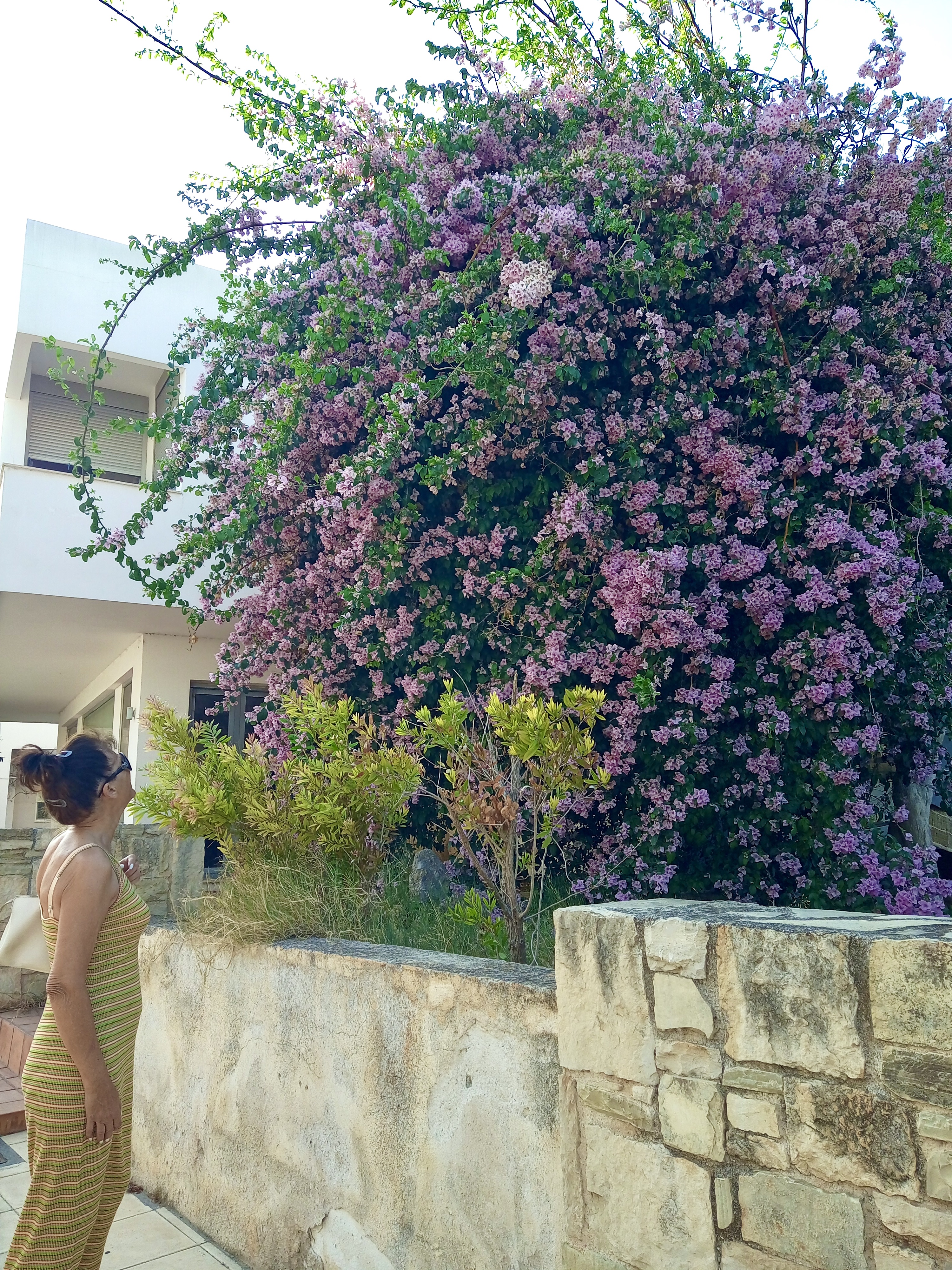
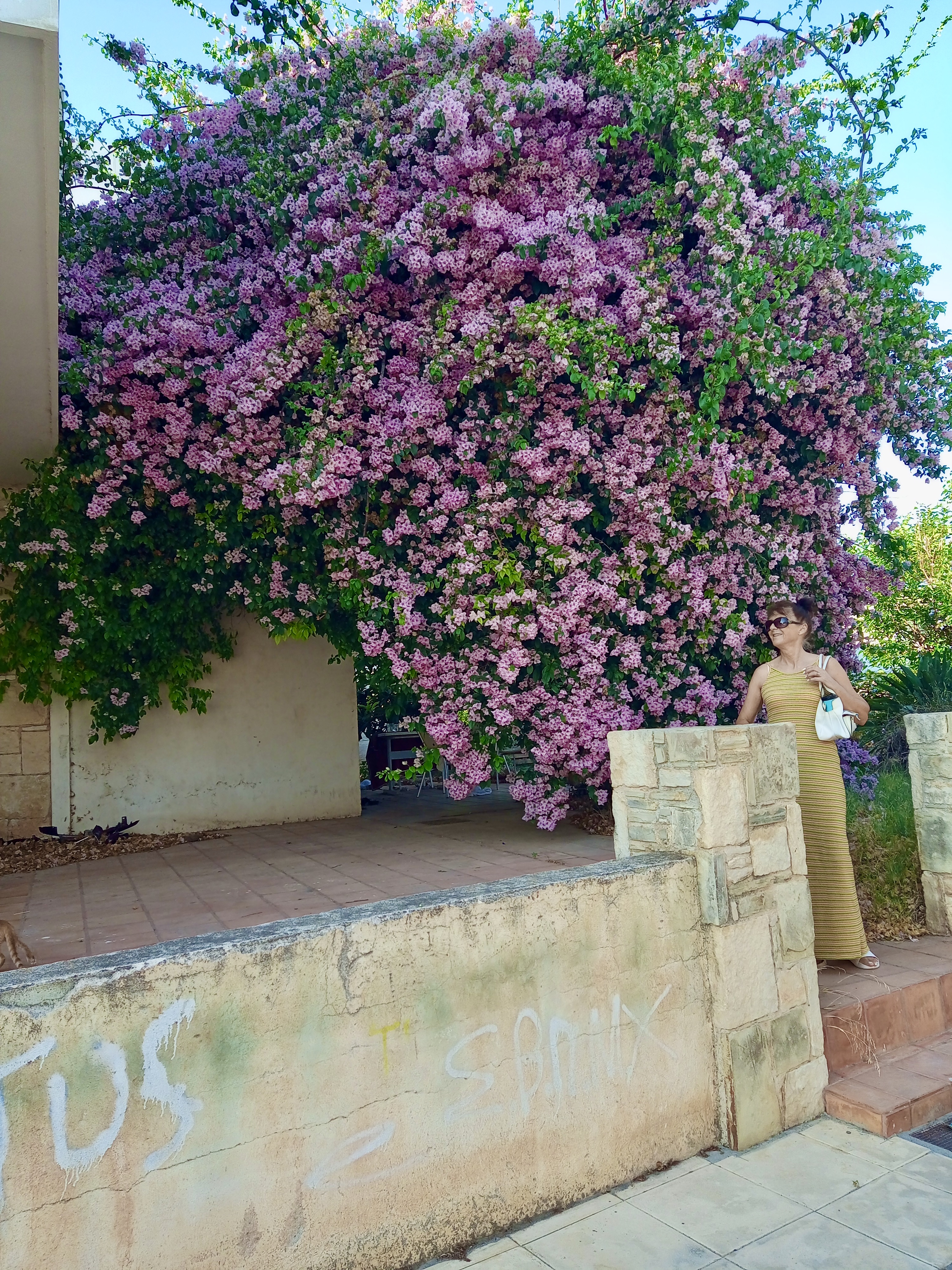
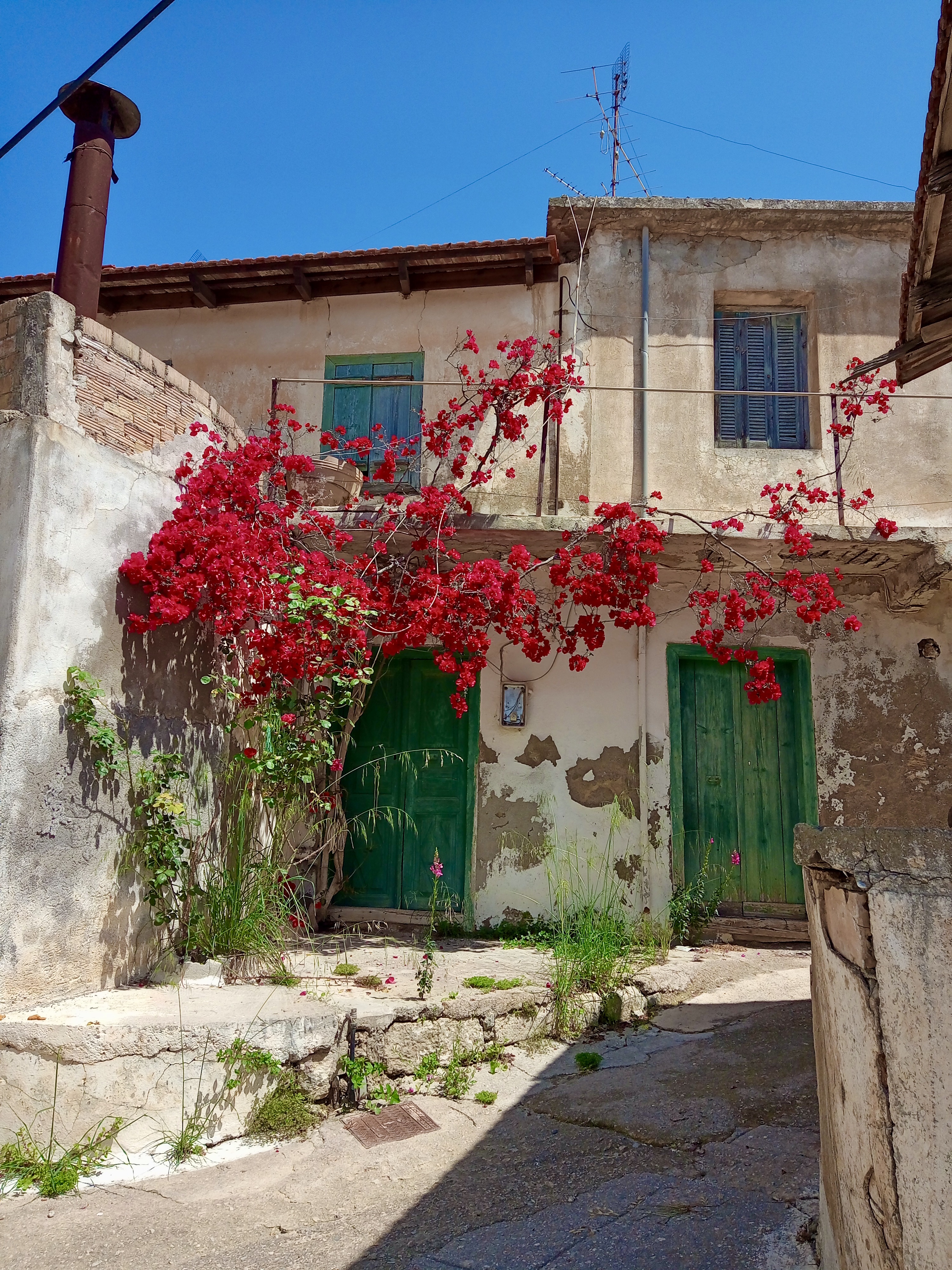
Above: There can be few sights more lovely than bougainvillea against a bright sky, don’t you agree? These were taken May 29th at 4.00pm in our neighbour’s garden.

That’ll do for this one. Don’t forget to check out the Facebook page for lots more photos from Sitia in May this year.

Click HERE to go to my Amazon Author Page.