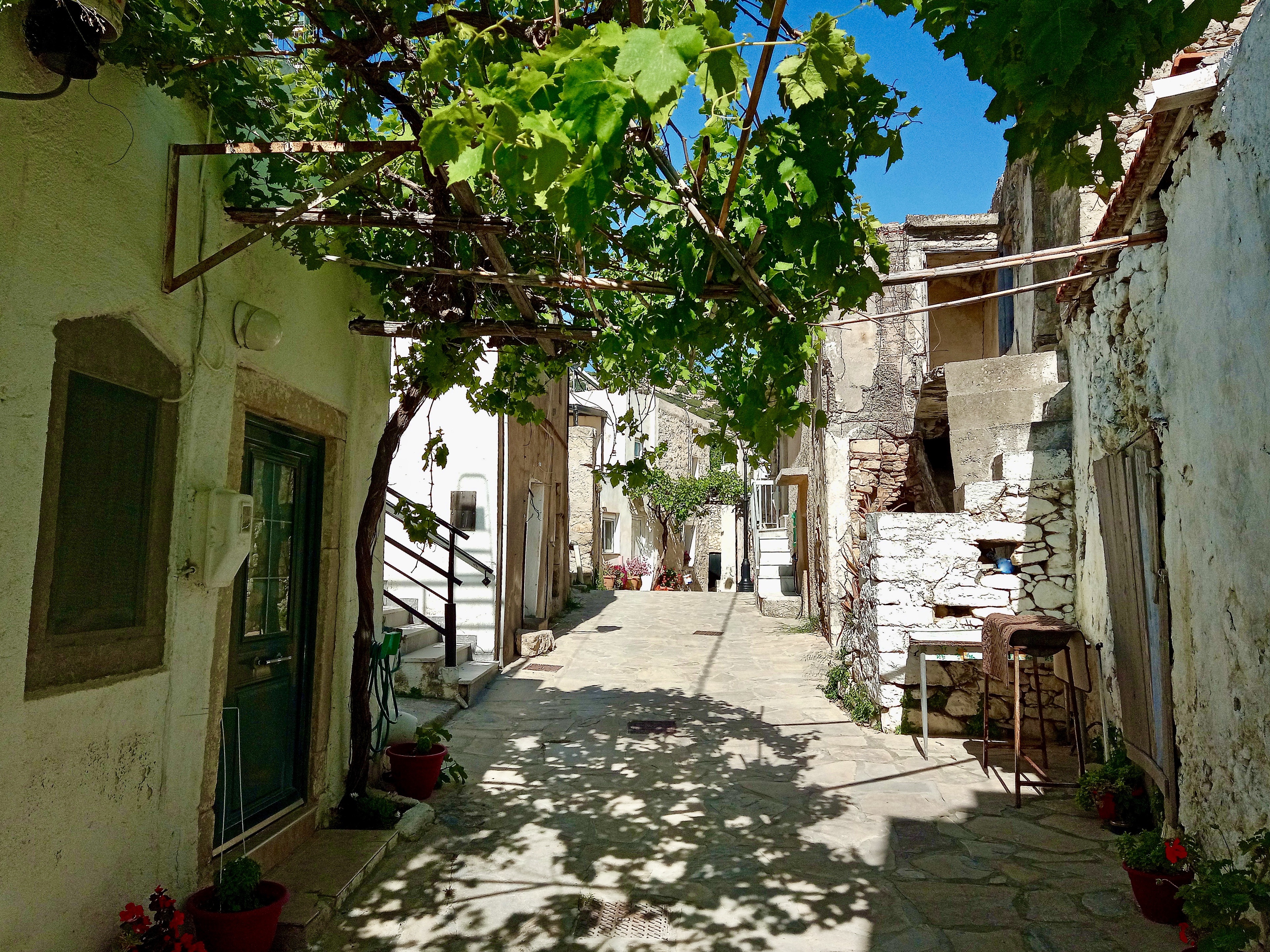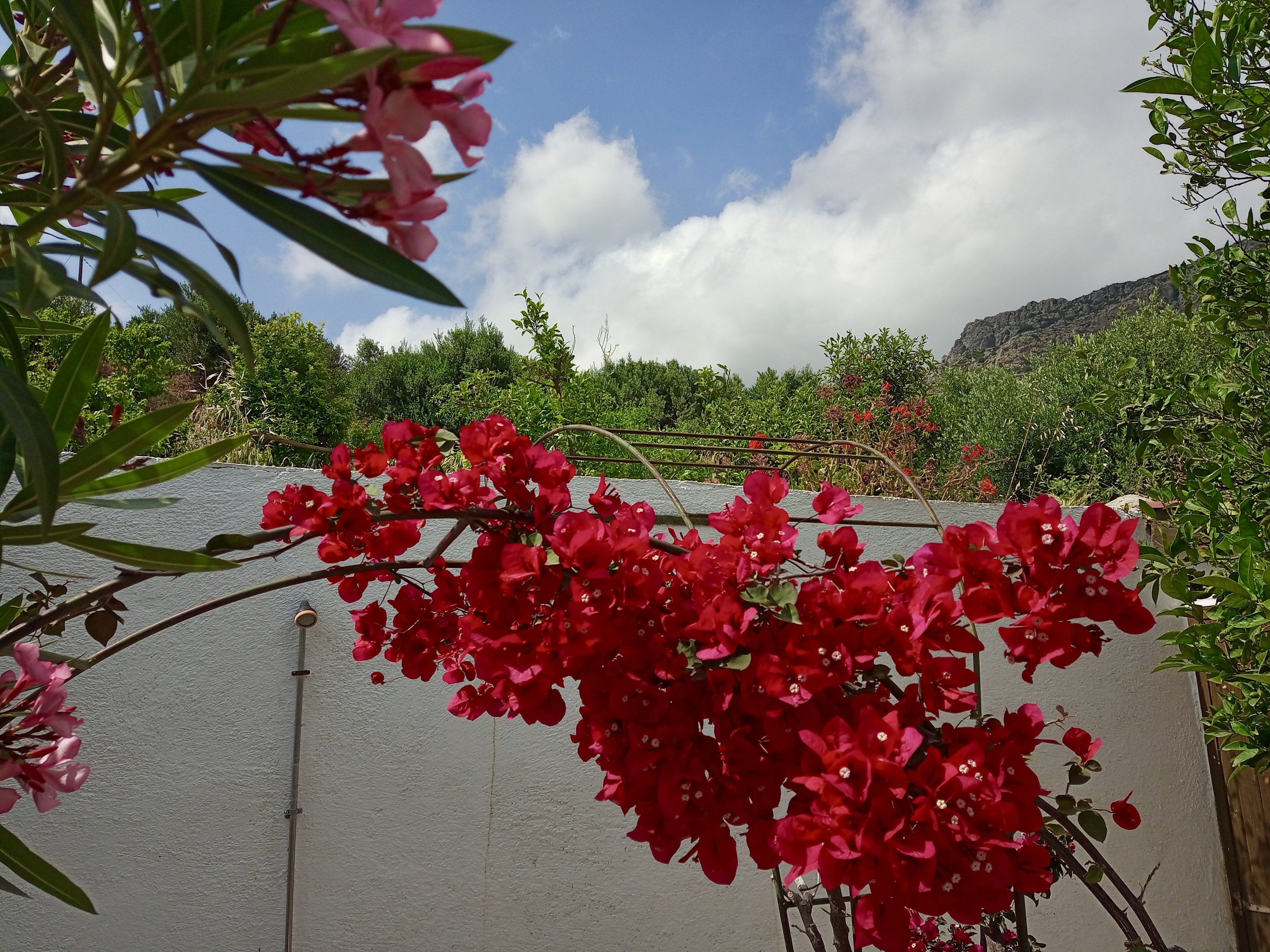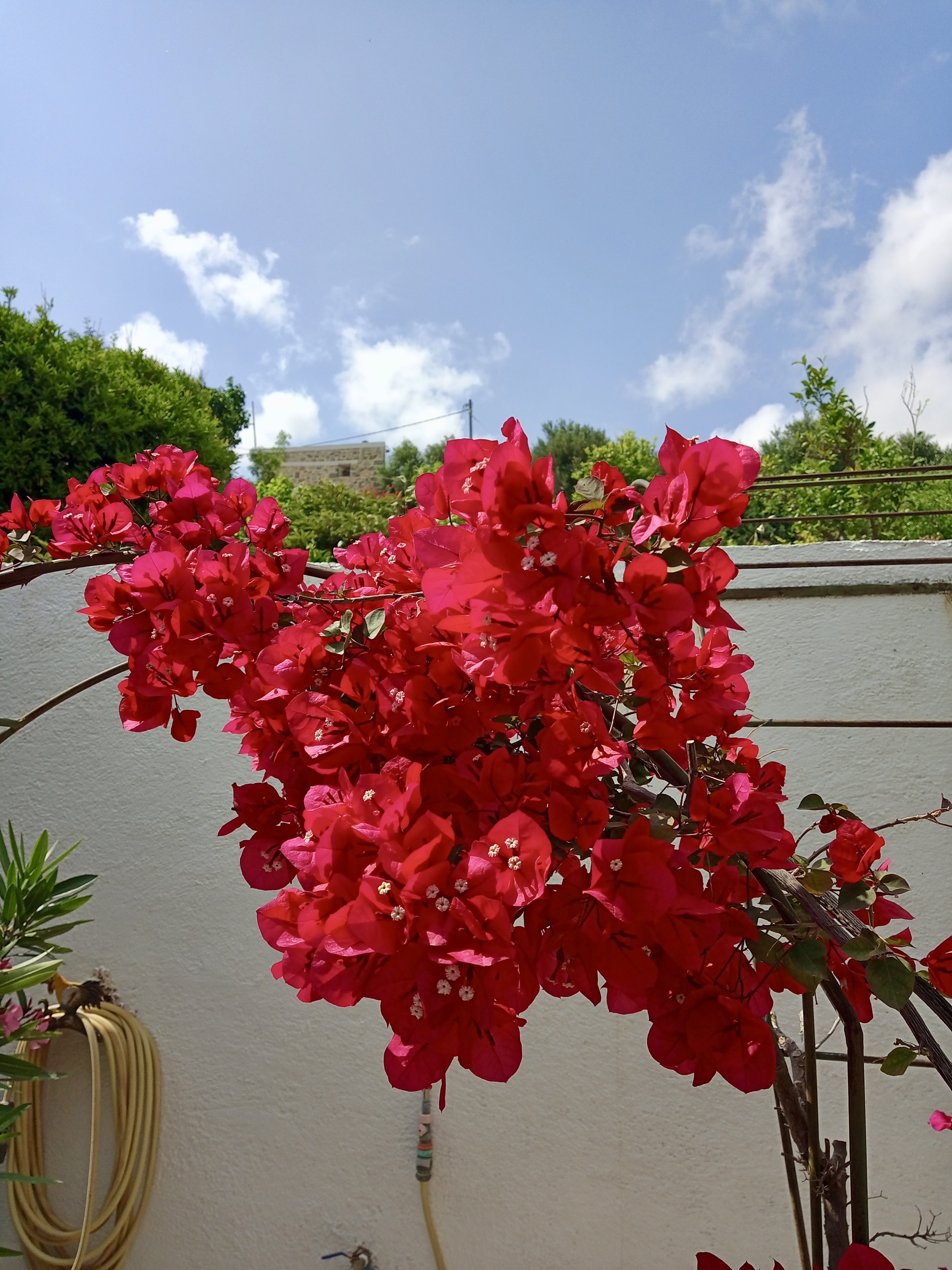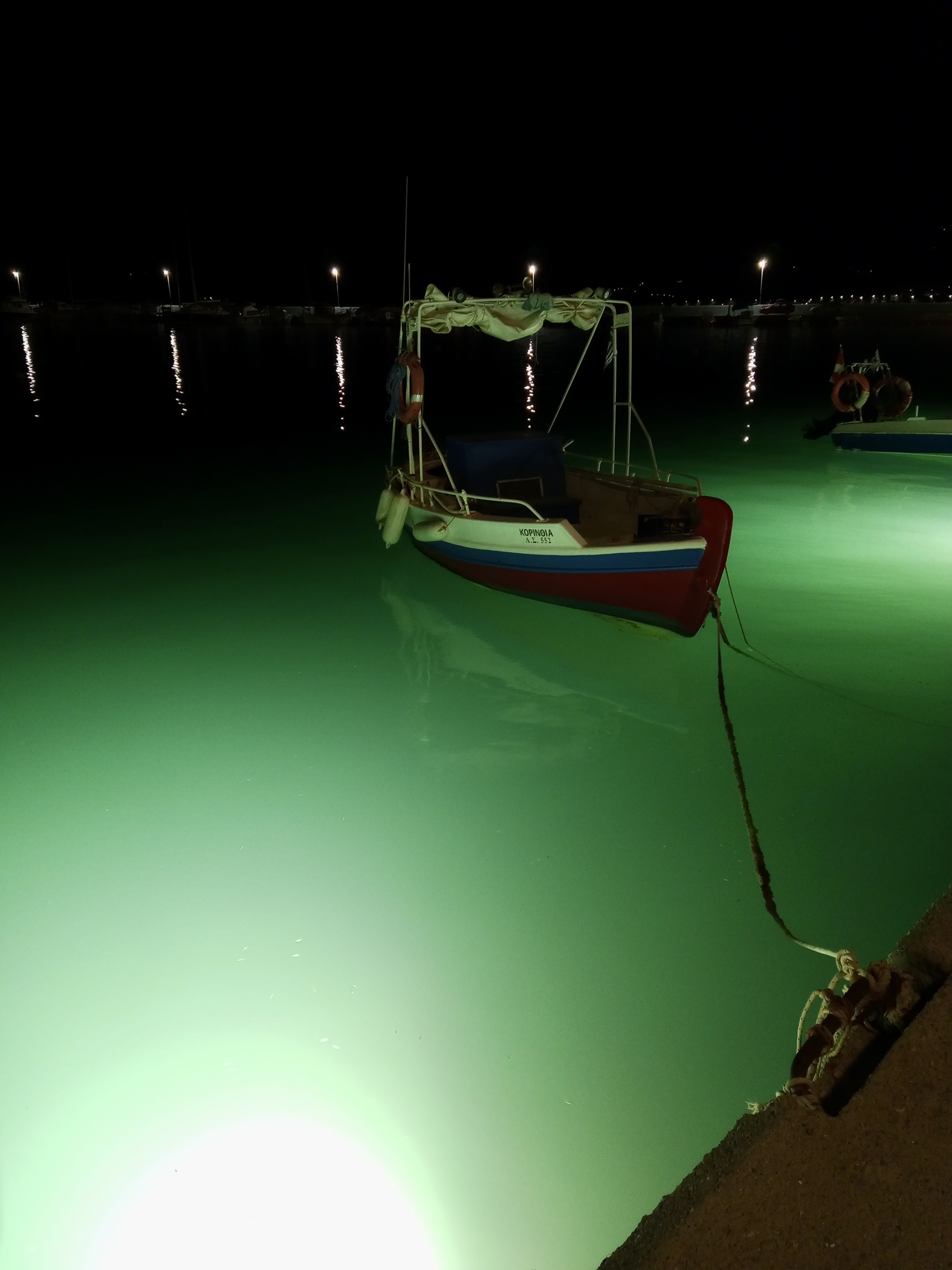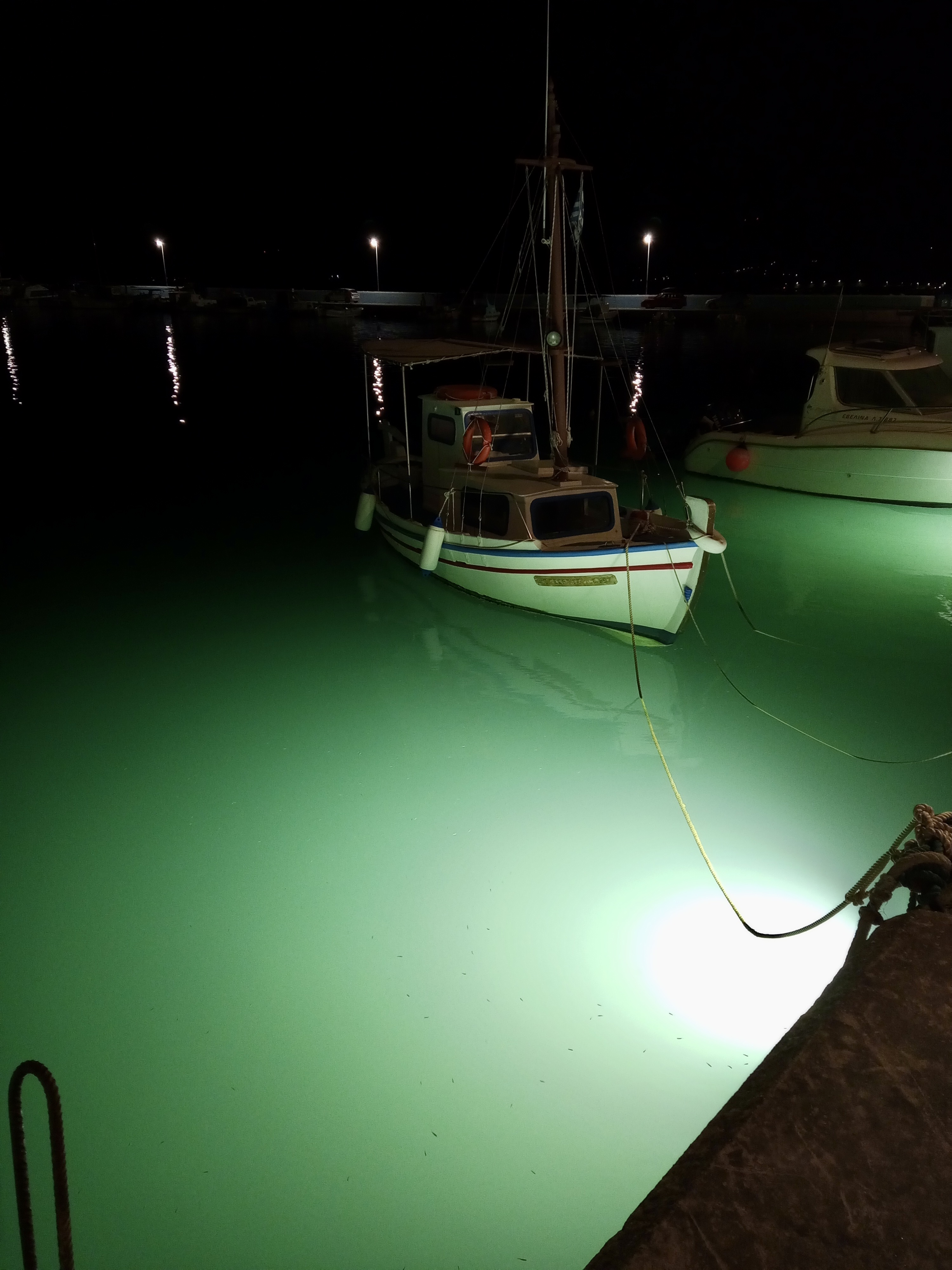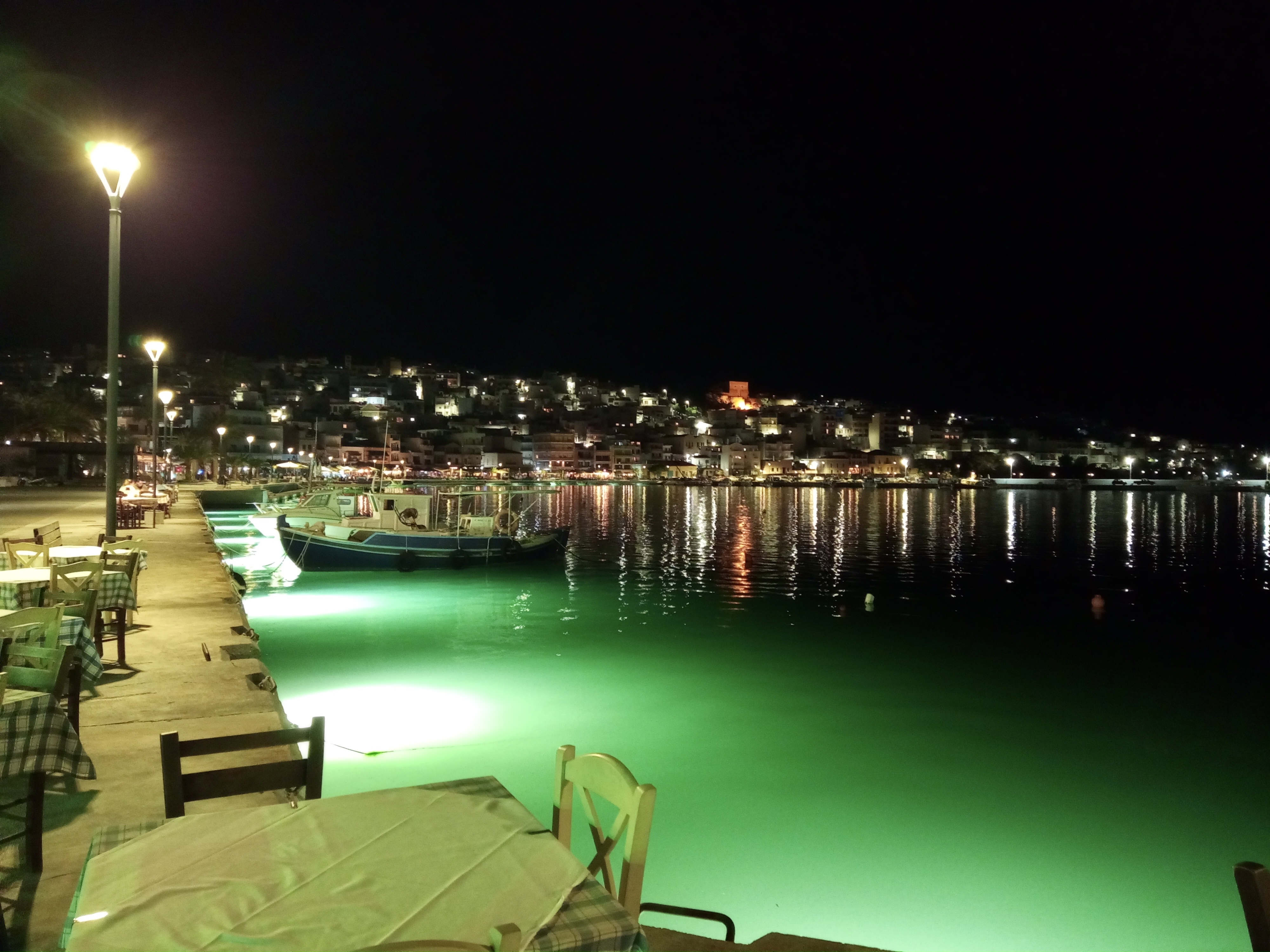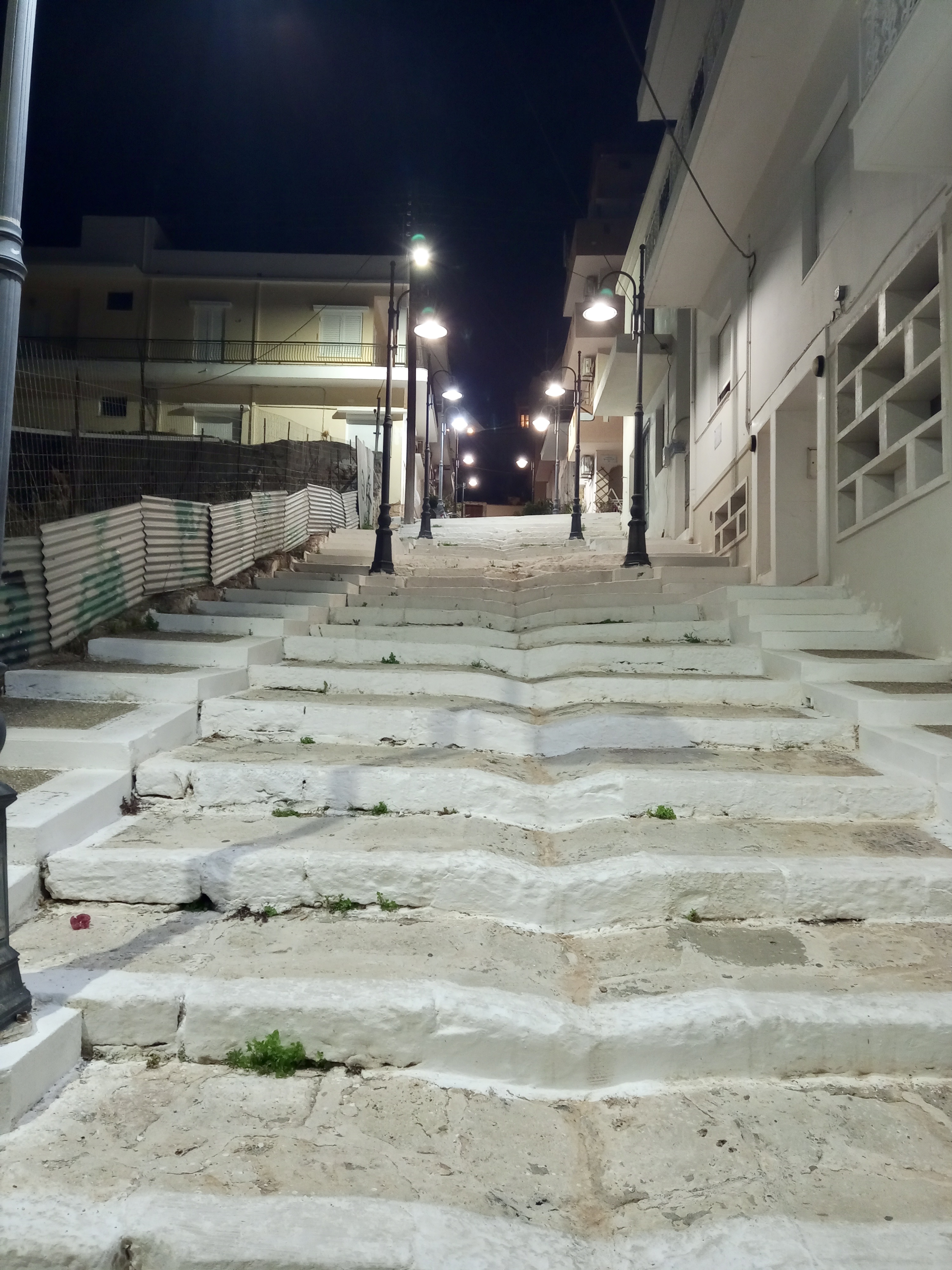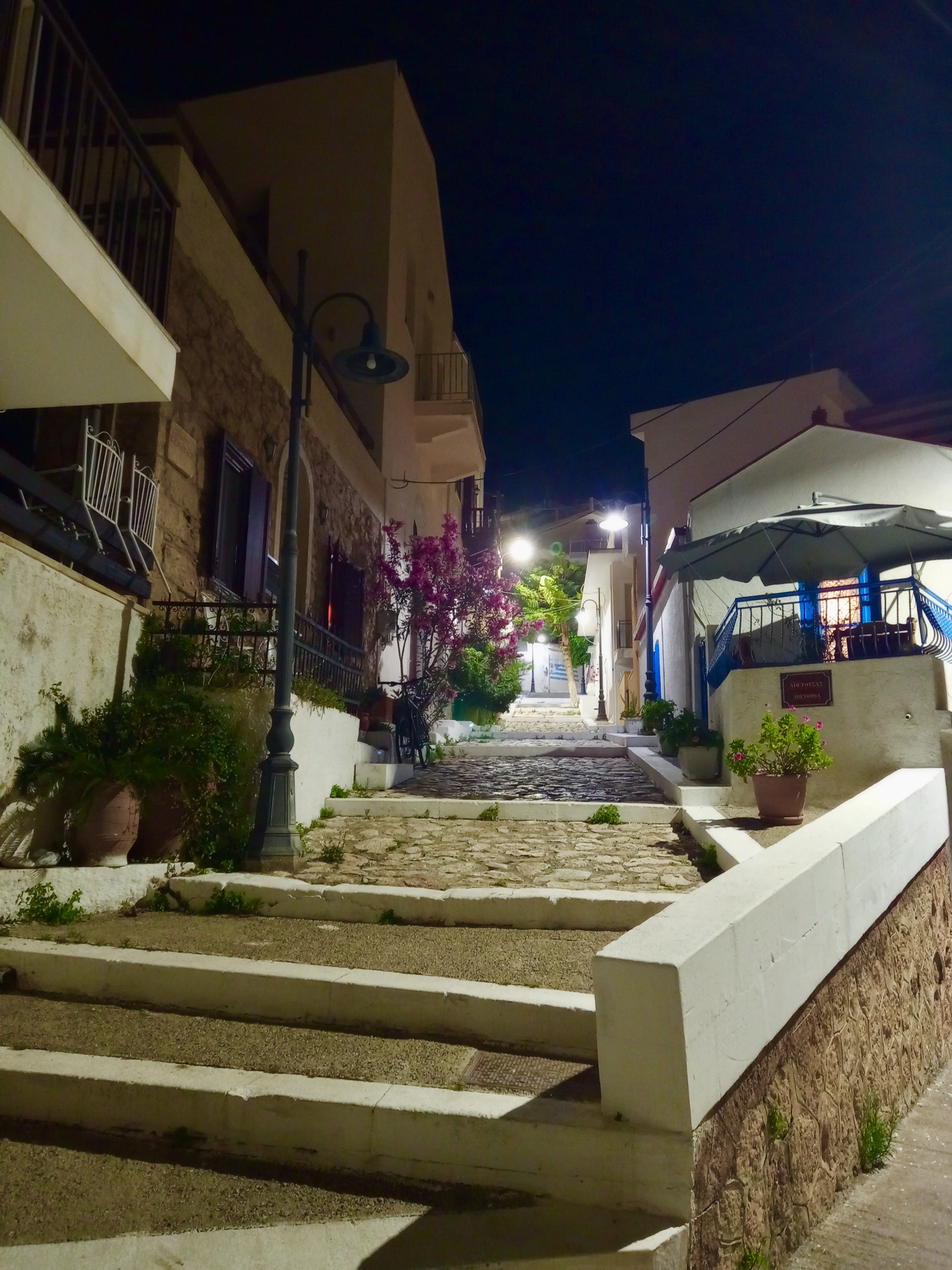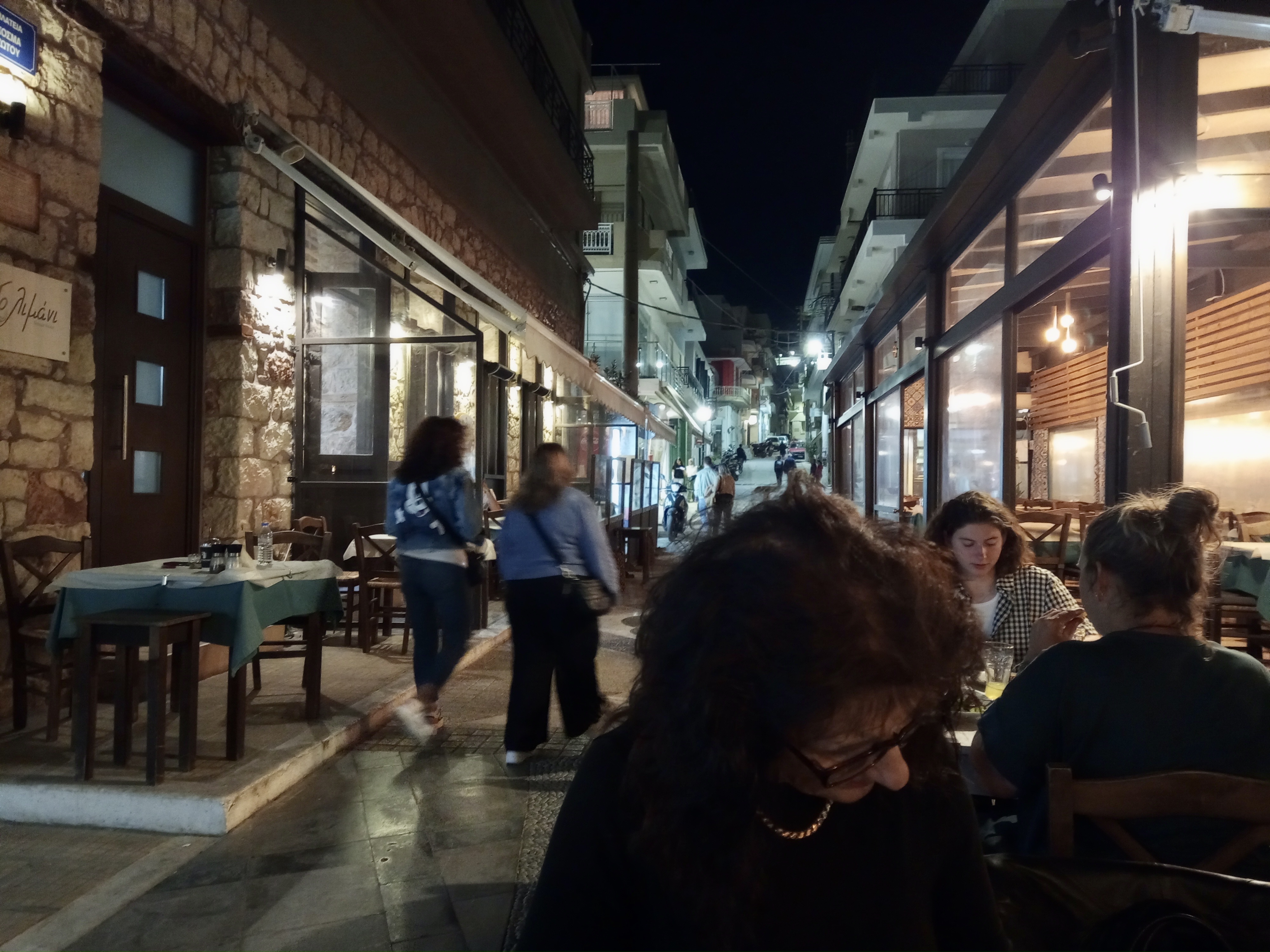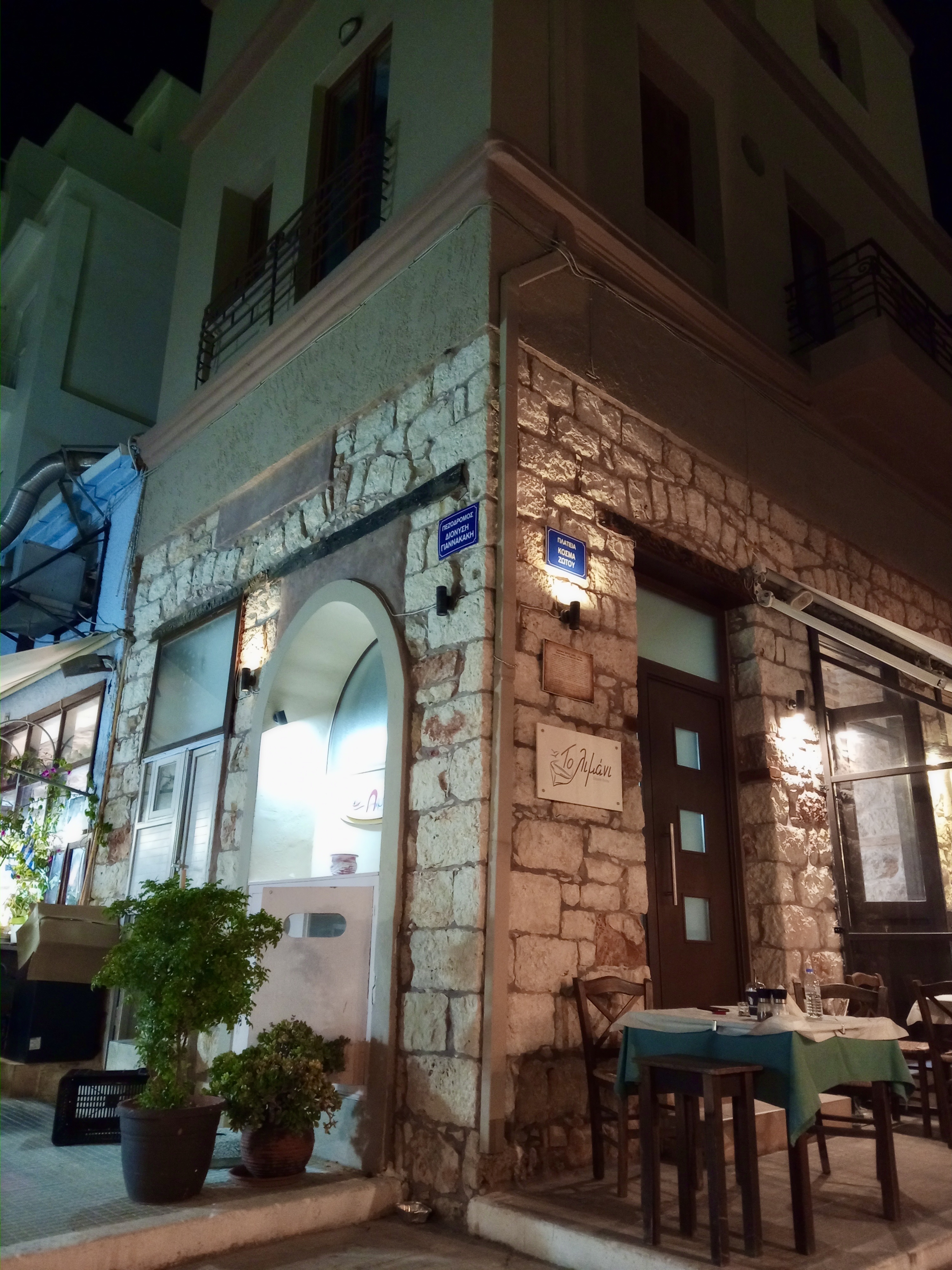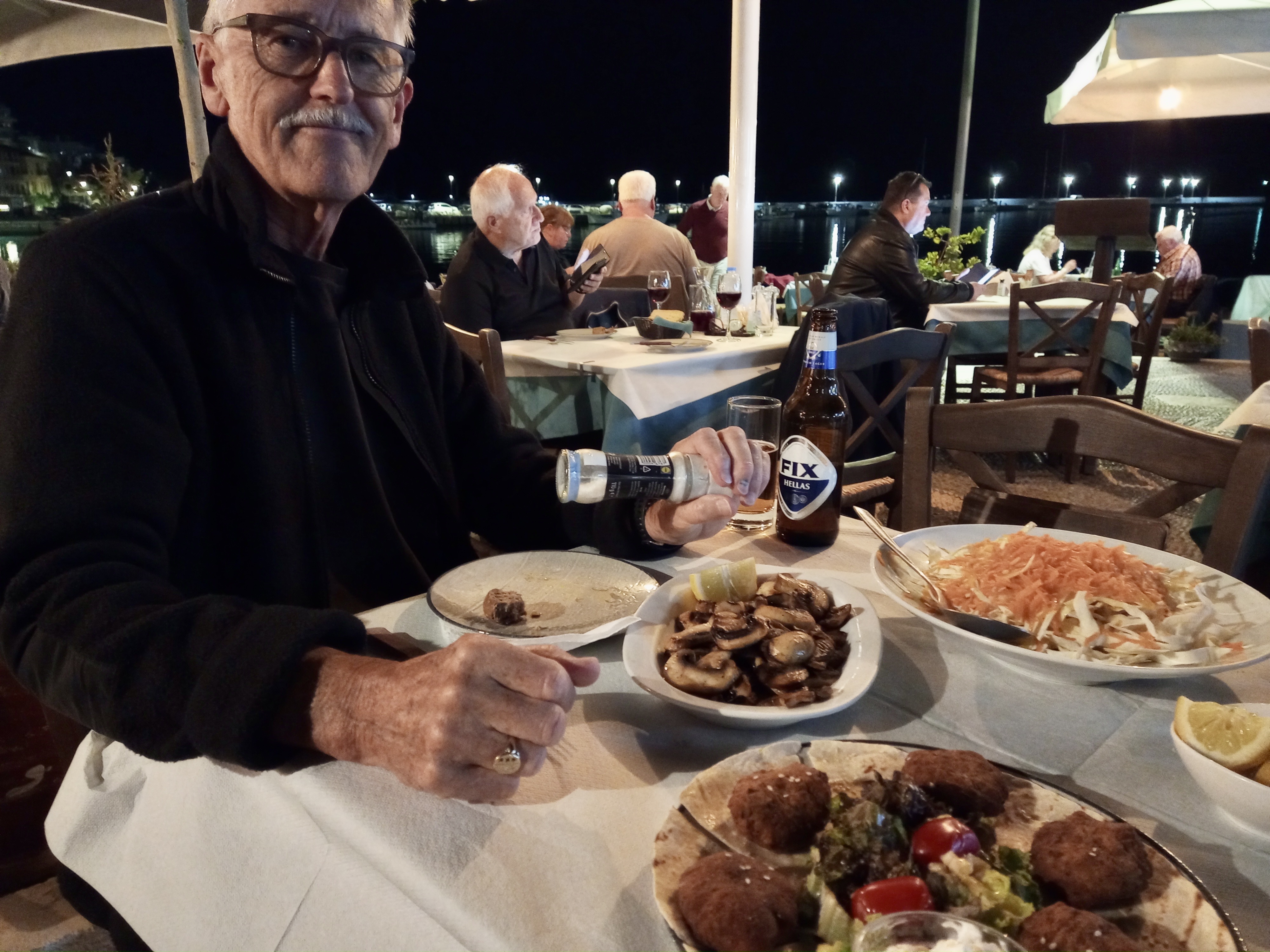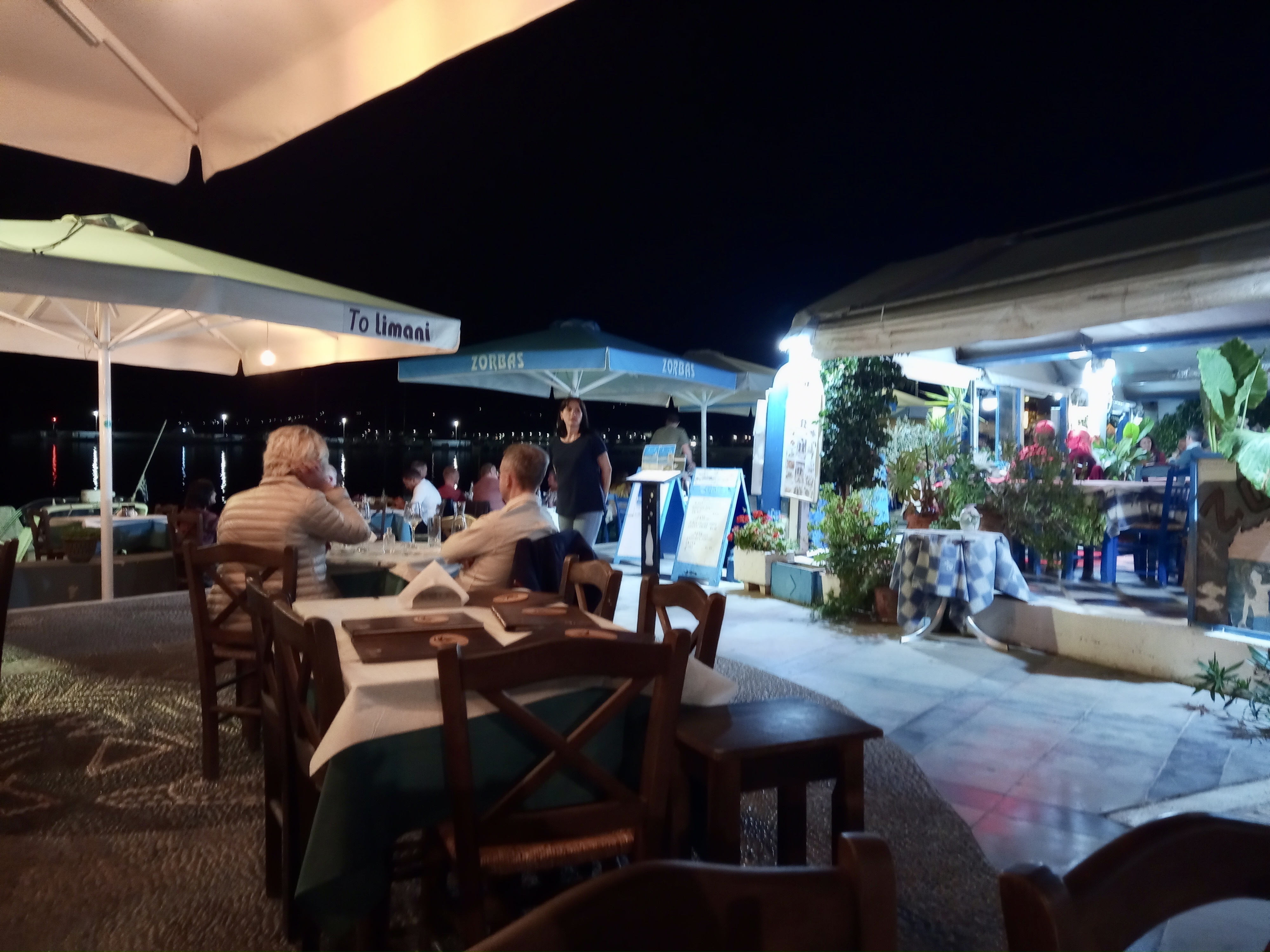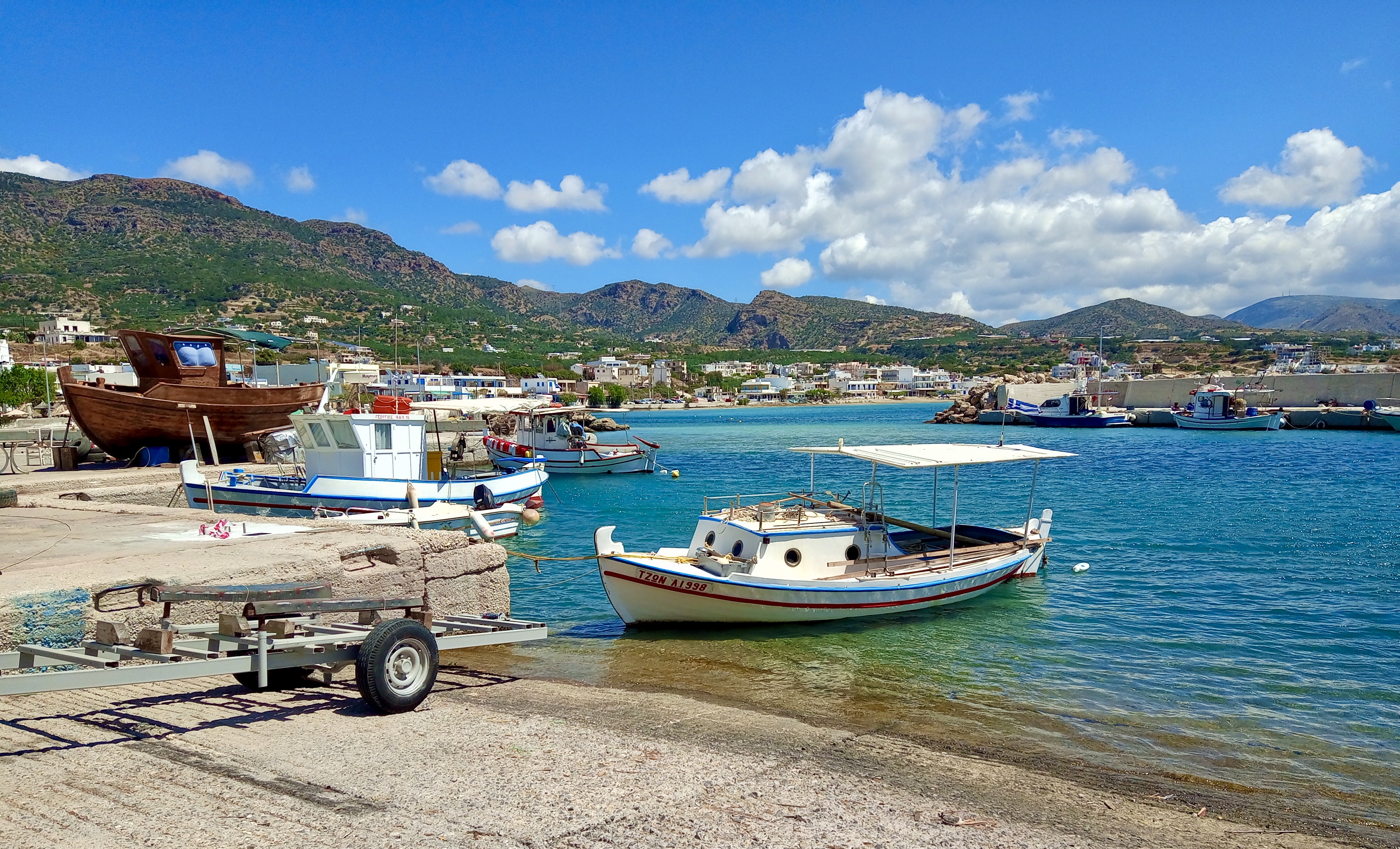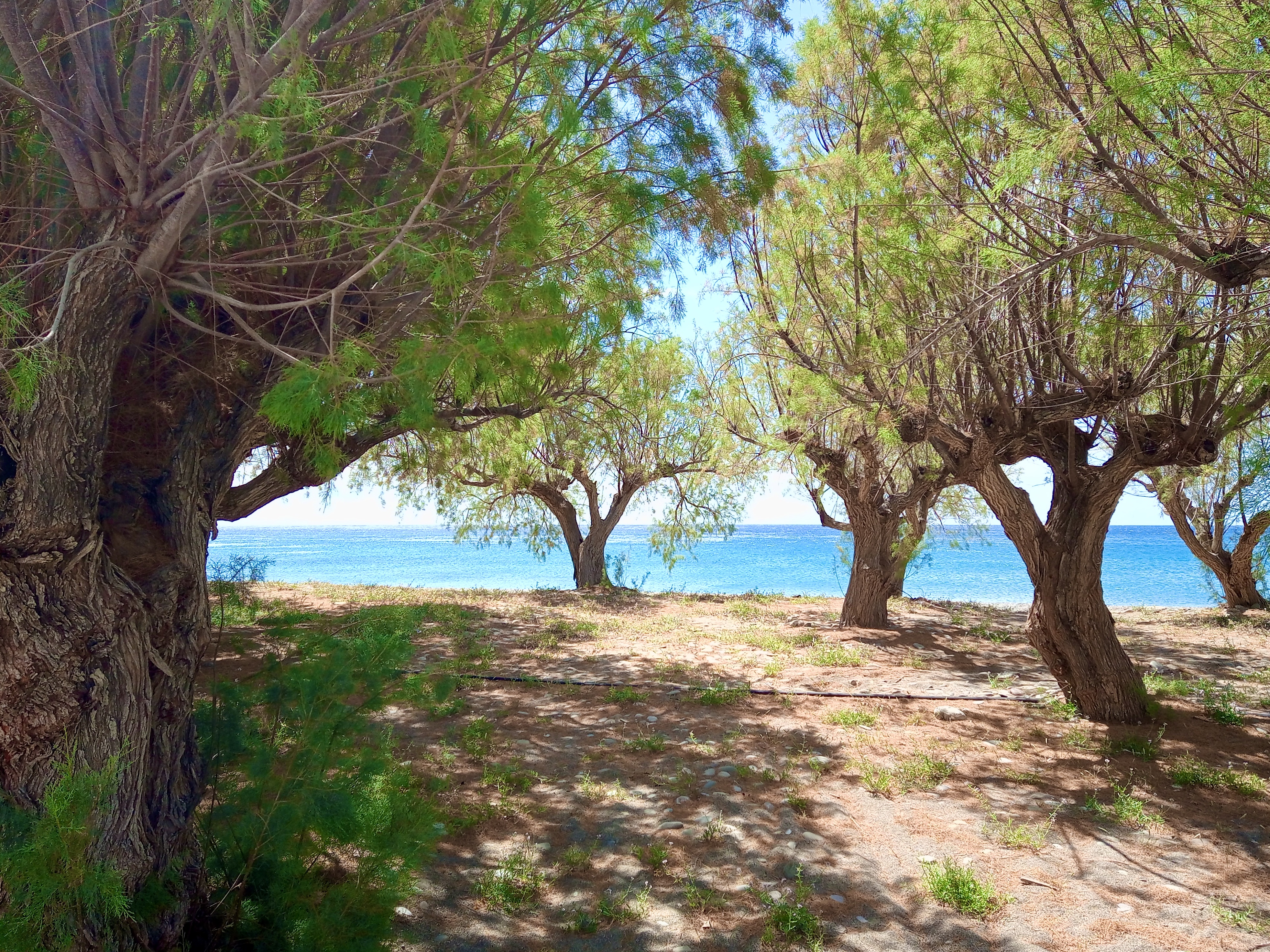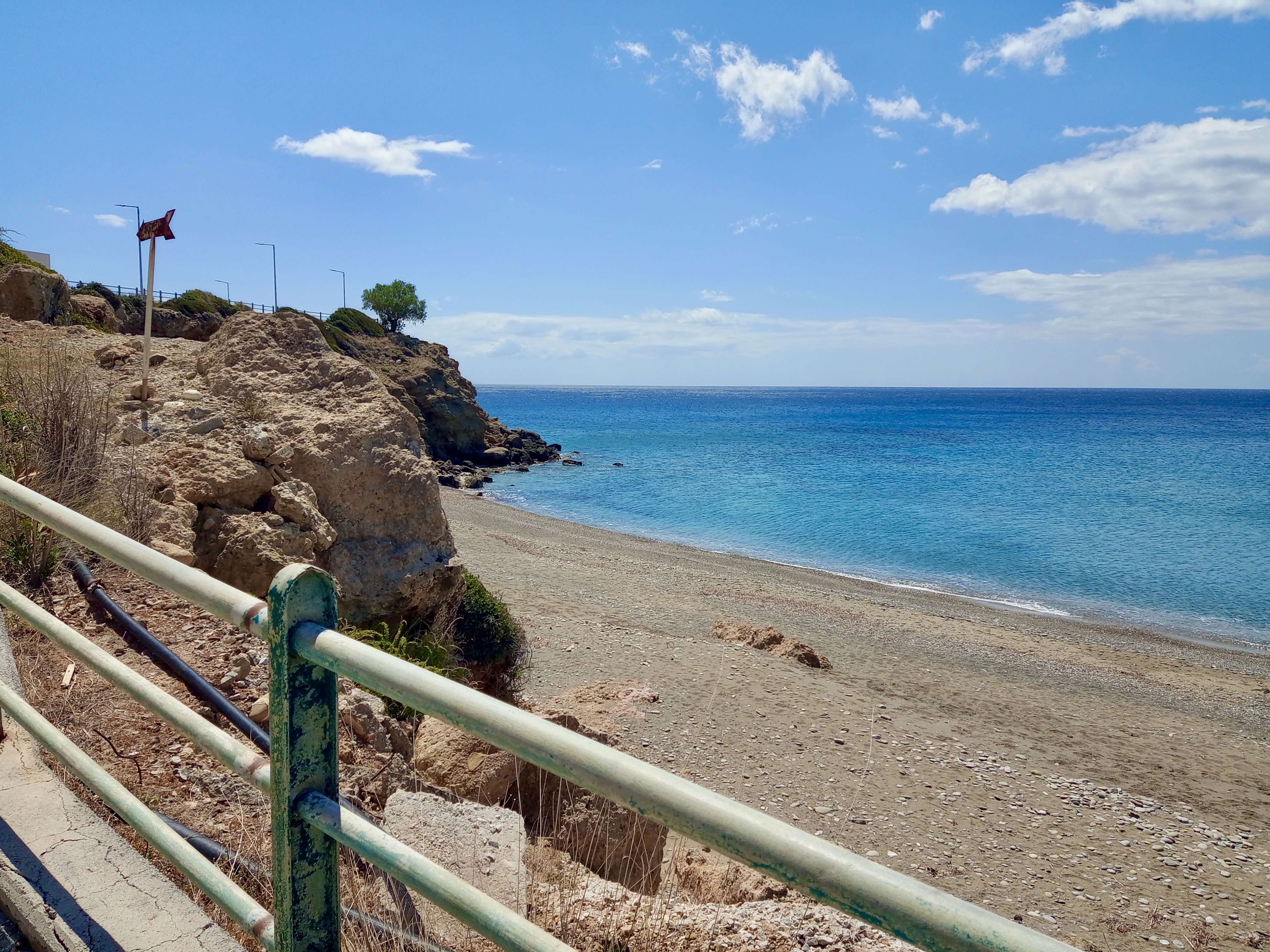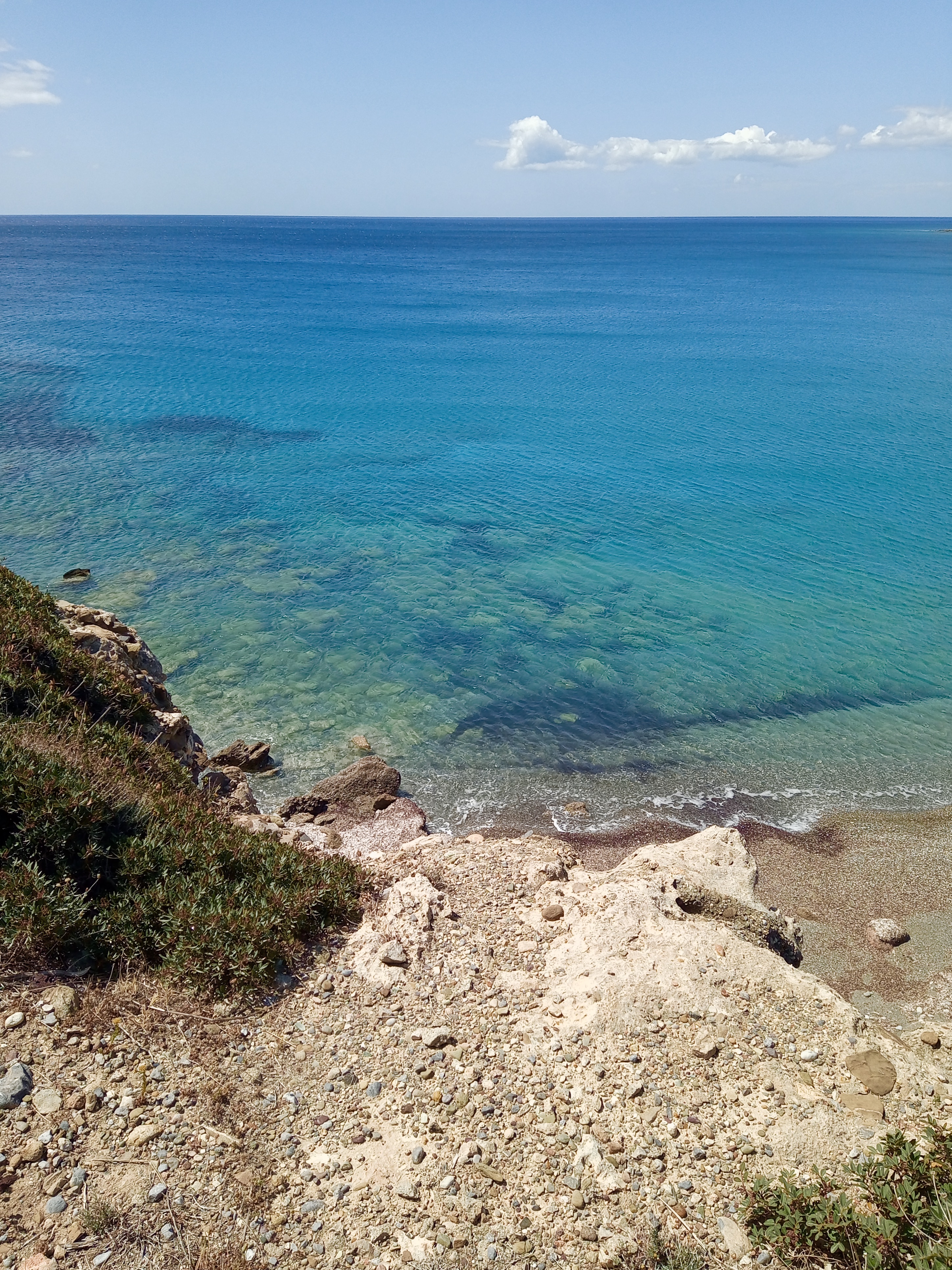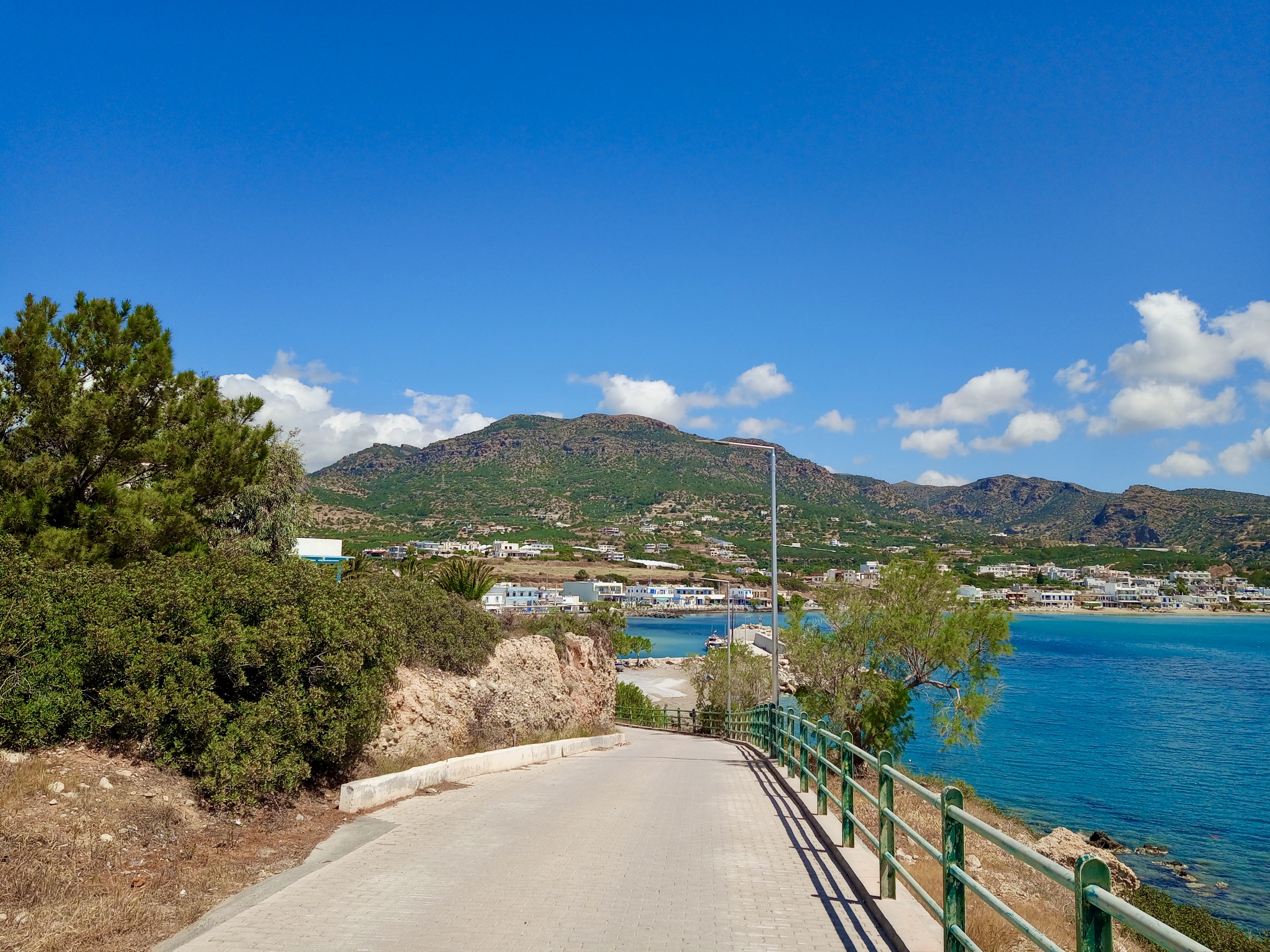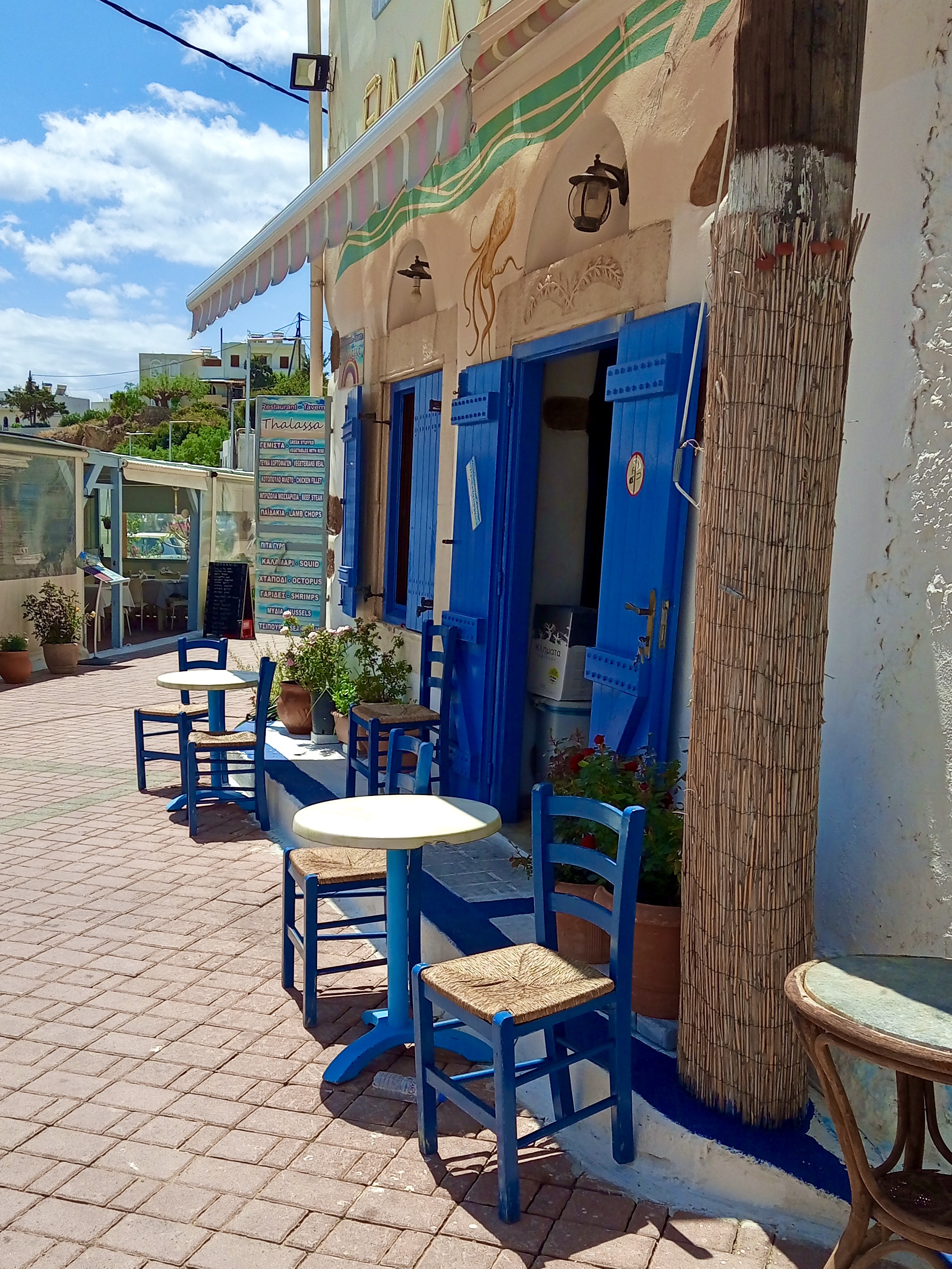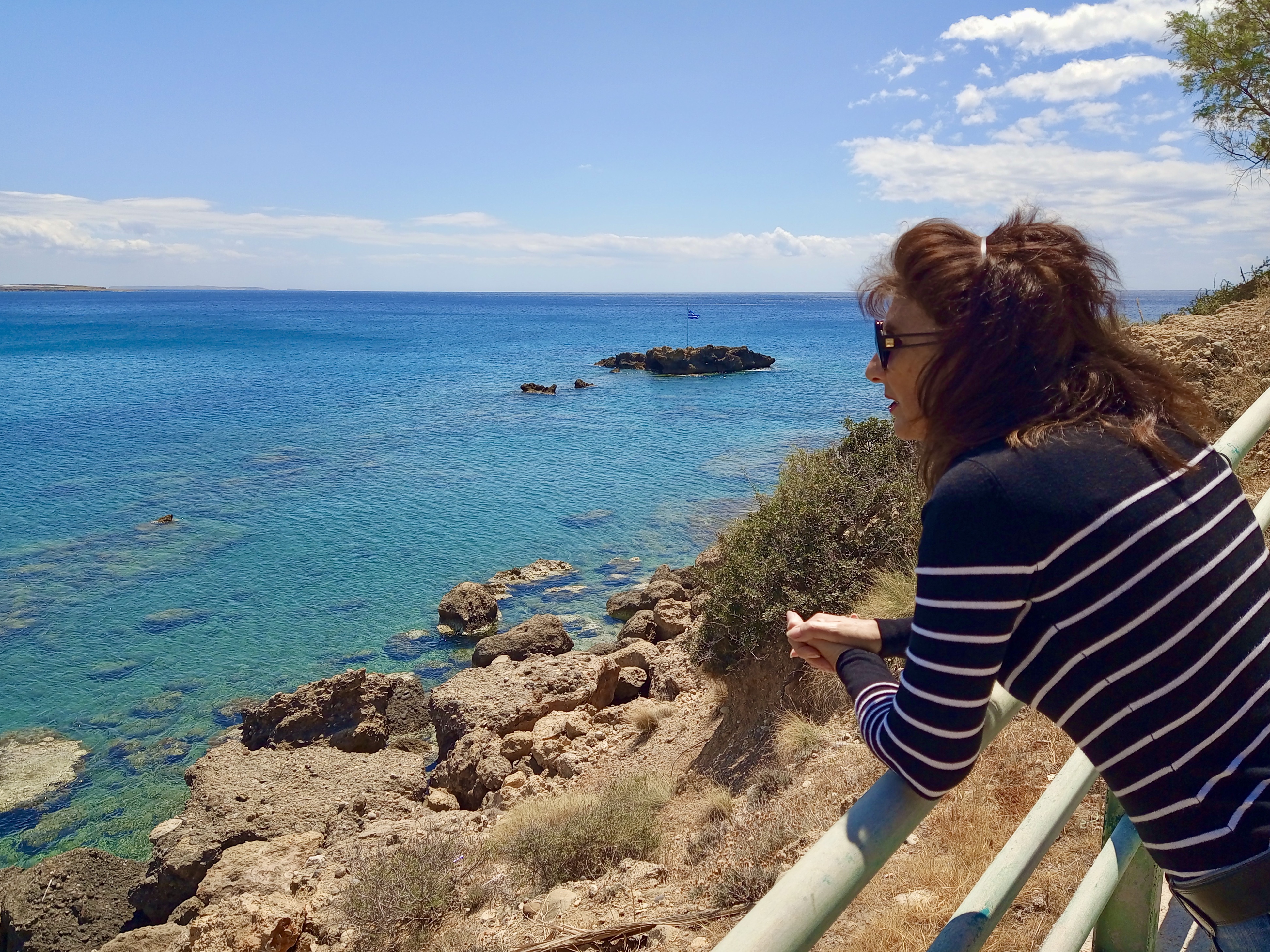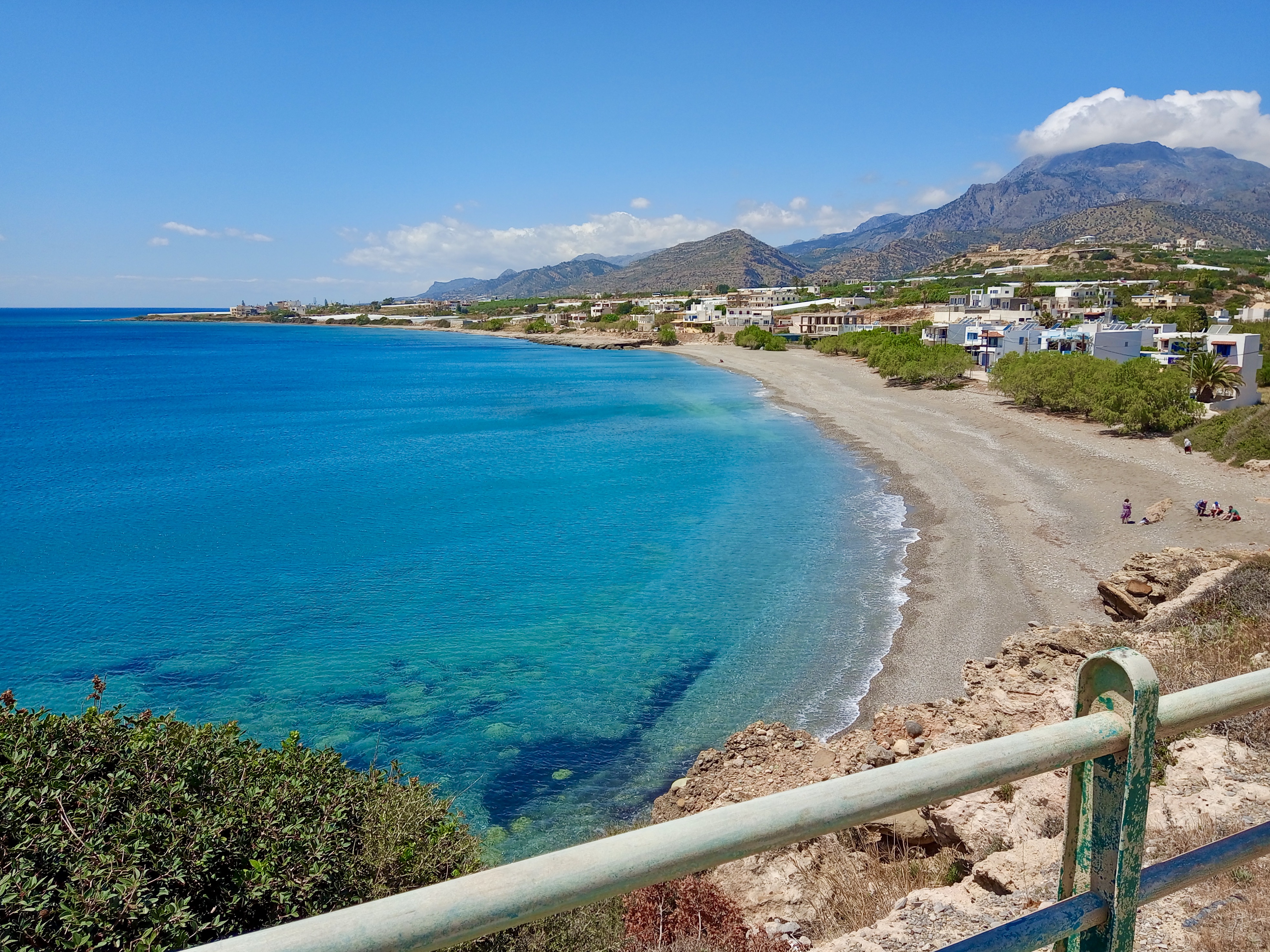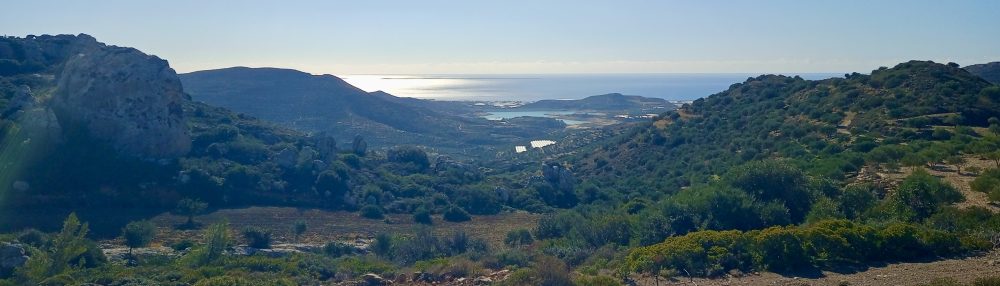
Siti-ing around? (bad pun, I know)

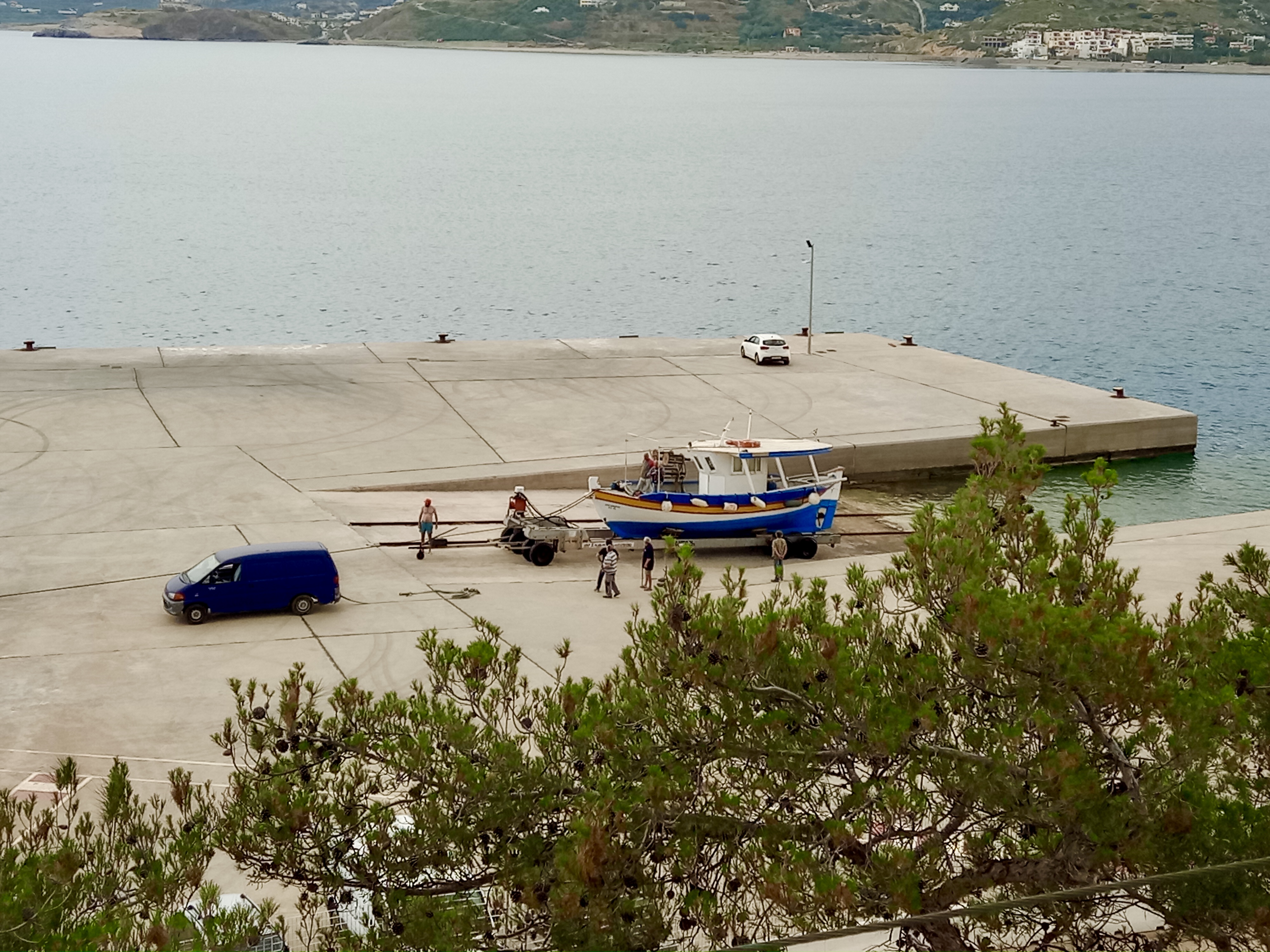
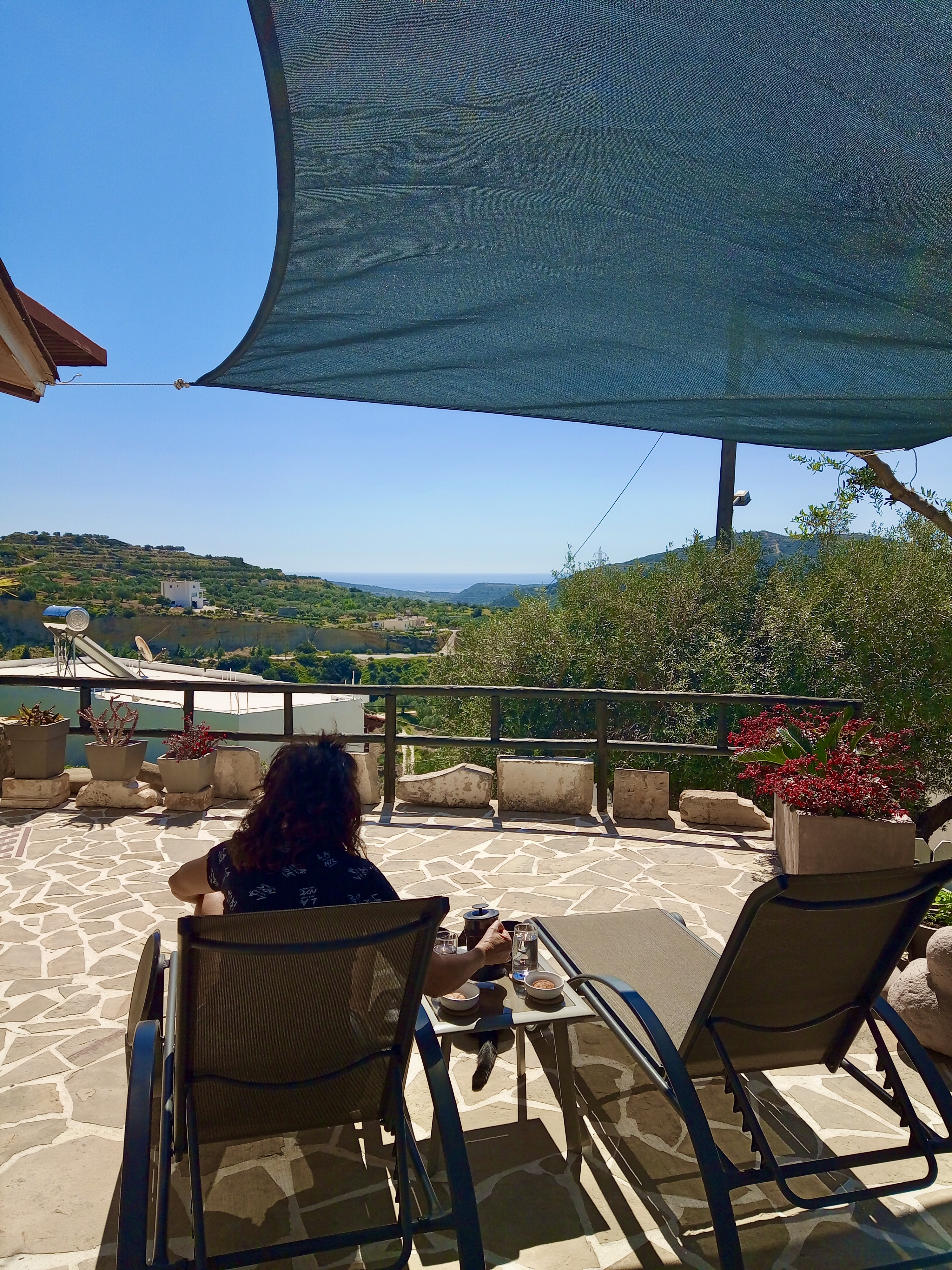
Sitting on our modest little veranda at the Nora Hotel, with a panoramic view of the seafront restaurants, bars and beach southwards to our far right, round through the hills straight across the bay to the east, where one can see the road that winds its way along the coast from Sitia and then up through the hills towards Palekastro and Vai, looking directly downwards we could see the vehicles and foot passengers on the quayside as the numbers would grow in anticipation of the arrival of the ferry either to Kassos, Karpathos and on to Rhodes, or back the other way towards Heraklion, the Cyclades and eventually Piraeus. Looking to our left we could see the open sea beyond the impressive harbour wall that ensures that the waters directly below the hotel remain calm for most of the time, irrespective of how many ‘provata’ (Lit: ‘sheep,’ the Greek equivalent of what in the UK we’d call ‘white horses’) there may be in evidence further out to sea to our north. 

For many decades the ferry that plied these waters was the Prevelis, a ship built in the far east back in 1980, and subsequently purchased by ANEK shipping lines in the Aegean, who then operated her from Piraeus through the Cyclades, down here to Crete and then up to Rhodes via Kassos, Karpathos (occasionally Halki) and terminating at Rhodes. By today’s standards she’s quite small, and also, of course she’s now in her fifth decade of service and was becoming (even after a major refit a few years ago) inadequate for the demands of a ship servicing her route. So, this year, for the first time, we noted that the ferry running the same schedule as that which the Prevelis used to, is now the very comfortable, modern and much larger Blue Star Chios. We’ve travelled on Blue Star ferries many times and all their boats are superb, modern, and very stable, even in choppy seas.

So, since the ferry only passes through Sitia twice a week, it was an enjoyable spectacle to have a grandstand seat as she tied up and all the regular quayside hubbub took place while foot passengers came and went, often walking exceedingly close as huge articulated trucks backed on or drove off the ramp, and an assortment of vehicles were marshalled into and out of the ferry’s cavernous rear doors, which are hydraulically lowered to become the ramp, of course, while she’s tied up. Had there been a daily service, we may have been a little put out by the frequent noise, as she’d sound her horn too while turning to reverse up to the quay, but twice a week is altogether different, and I found myself riveted as the whole shebang went on a few metres below me. I’ve watched these port-calls many times, both from aboard the ship herself, or, as in this case, from a vantage point on land, and it never ceases to hold my attention for the duration, which can often be half an hour or so. I know how to live.

Our short breaks usually follow the same pattern. We park the car up and then don’t touch it for a whole week. When we mention to friends here in Ierapetra that we’re going to spend a week in Sitia, or maybe when we’ve come home that we spent a week there, the response is always the same. “Oh, you’ll want to go to Vai, you’ll be wanting to have a meal in Palekastro, go and swim in Zakrou Bay, eat lunch at the Hiona Taverna on the beach east of Palekastro etc. (or, in the past tense, ‘you’ll have done all those things…’).” The fact is, we’ve done all that in the past, and the last thing we want to do when taking a short break is to jump in the car and drive more of the twisty-turny roads around these parts. One place we really don’t want to go to during the season is Vai. Yes, all right, it’s a special place from a botanical and scenic point of view, but it’s also far too developed for tourism for our liking. I mean, you have to pay to park there for starters!! What? We’ve never been anywhere where we’re charged to park the car while living in Greece and we’re not going to start now thank you very much. Vai is the place to go right at the end of the season, or on bright, sunny winter days. That’s when it’s truly a paradise. Plus, the toll booth for the car park is closed. I know, that’s a luxury that holidaymakers don’t have, and they have little choice if they want to see it, and it is worth seeing, but to go during the holiday season. Got to have some perks from living here all year round, eh?

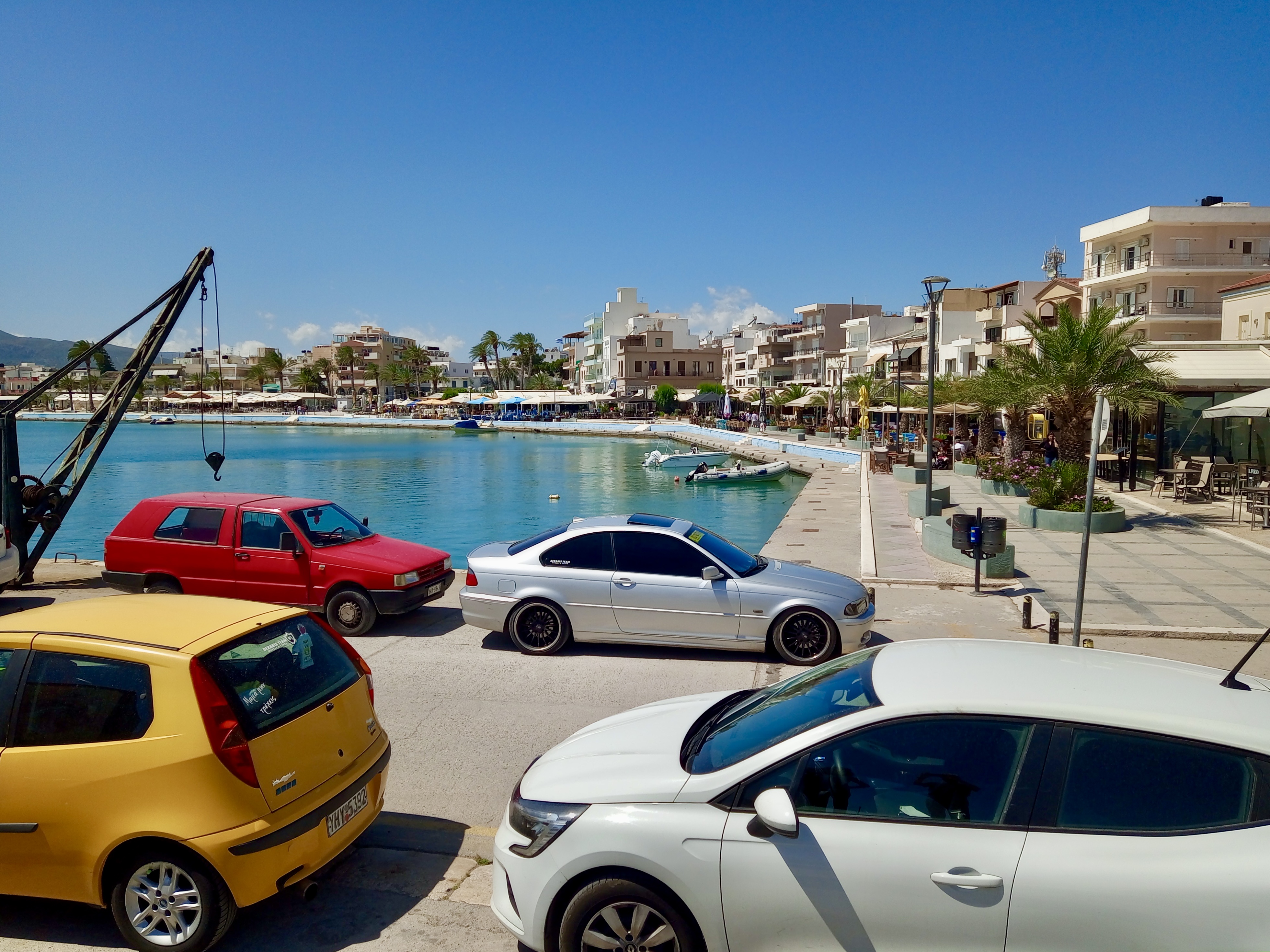
No, when we get to the Nora Hotel, where we can park up right across from the front door, we get all the stuff out of the car, lug it up to our room, and then walk everywhere for the duration, it’s bliss. Our days follow the same pattern, since at this stage in our lives we’re way past all that ‘visiting archaeological sites and walking around ruins’ phase, after having been coming to Greece for nigh on fifty years and having lived here for nearly eighteen of those. Nope, we get up, fix our muesli and fruit breakfast, sit out on the balcony to eat it, then get ready (which usually takes another hour and a half) before stepping out for the short walk to the sea front in town, where there’s a fabulous choice of café-bars to choose from in which to take our morning freddo espresso and then people-watch ’til the cows come home.

What’s lovely about Sitia too, is the fact that, while there is tourism of course (mainly French), still the majority of voices around you as you sip your coffee are Greek. I know, I admit it unreservedly, we are a couple of tourist snobs. We fail to see the attraction of being anywhere where the only voices you hear are those of your own compatriots, or of people from half the countries in northern Europe, all sitting there in their shorts, floppy fishing hats and strappy tops to show off their tattoos (no offense).

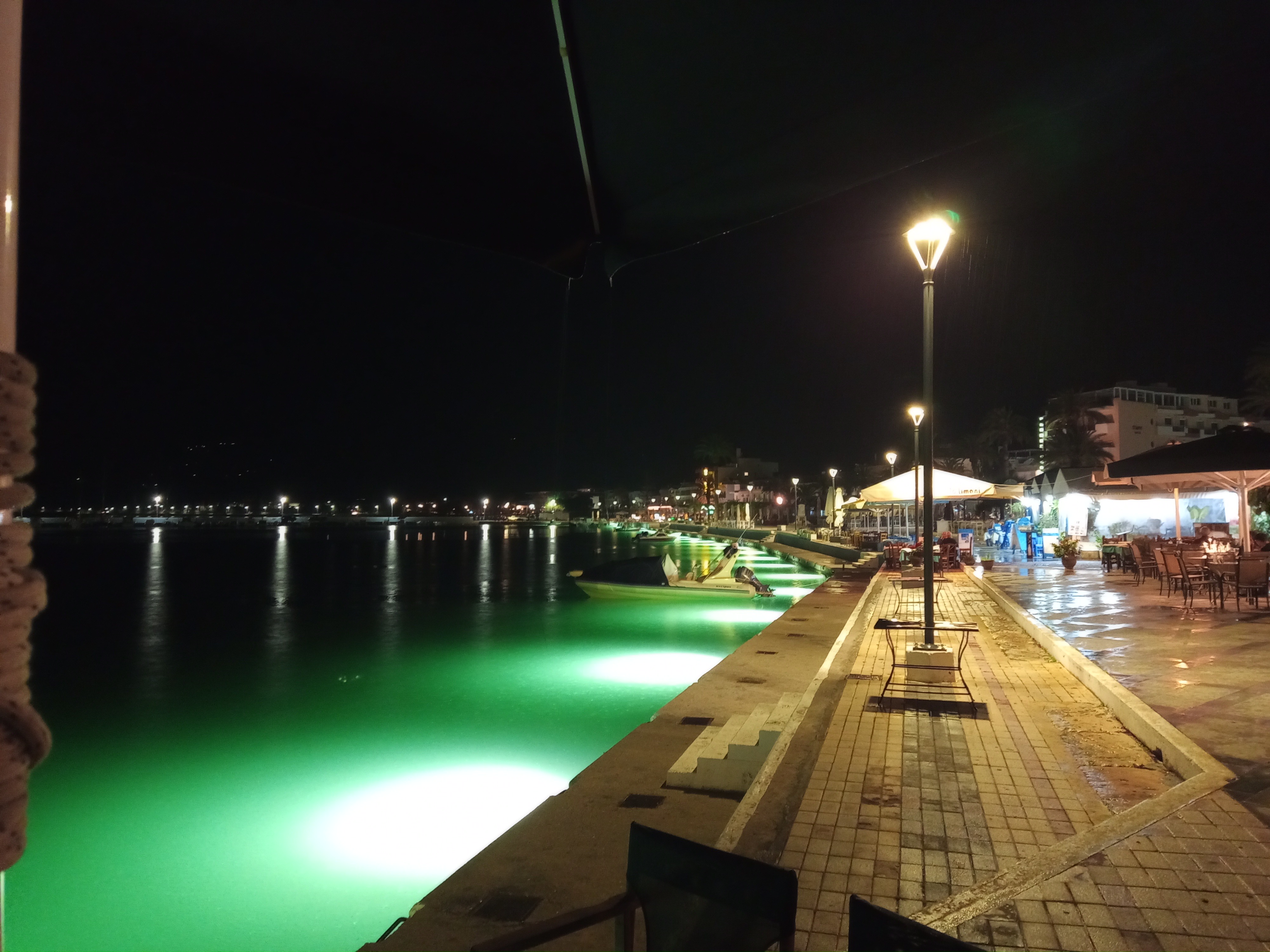
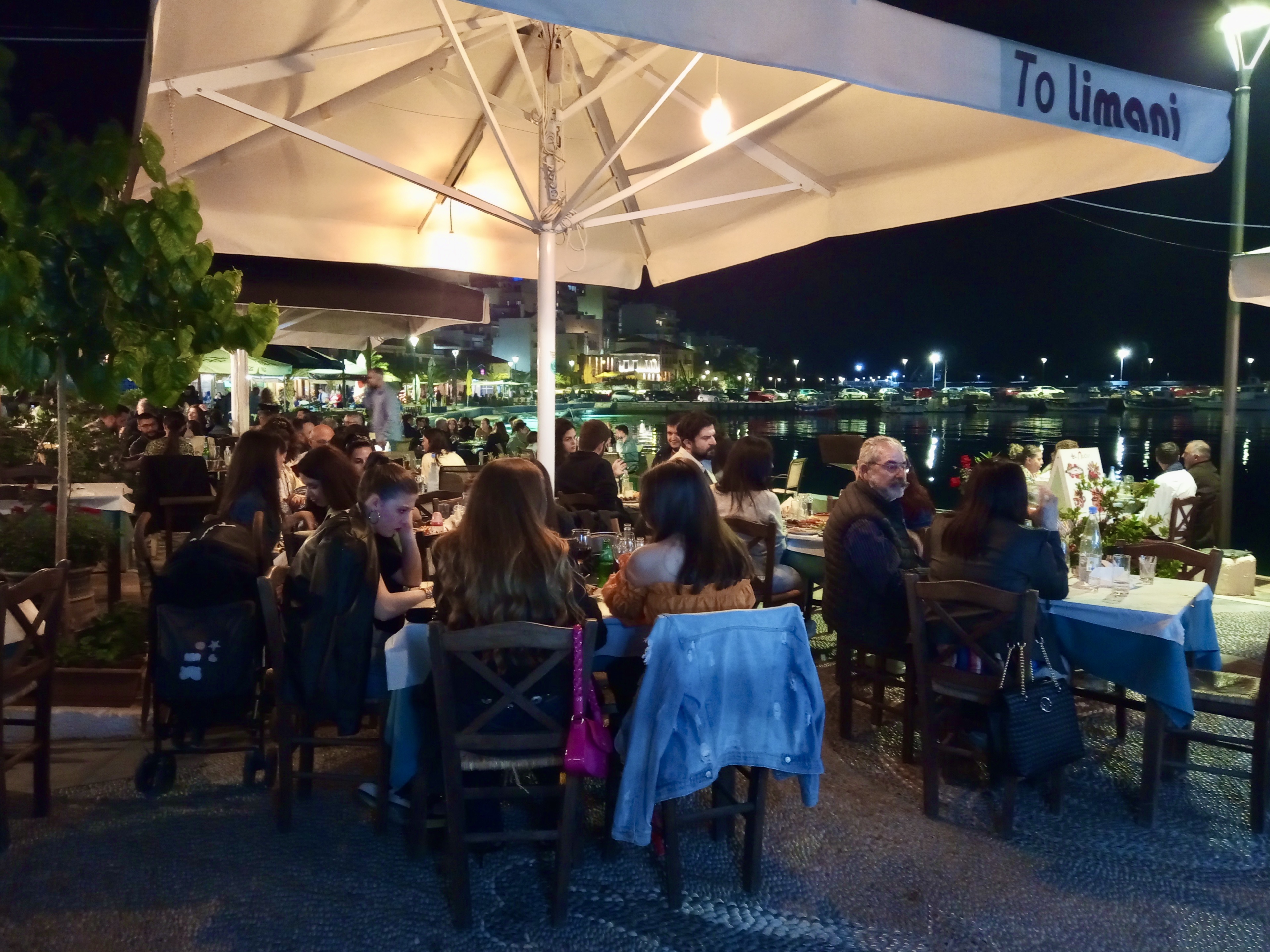
Having enjoyed the sheer pleasure of sitting for as long as we like over our coffees, we drift back to the room, maybe eat a lunch of fresh bread, chopped tomatoes and cucumber, fix ourselves a cup of Earl Grey, then slip into bed, read a book for a while, before drifting off for the afternoon siesta. We’ll get up around 5.00pm, maybe 5.30, then mooch about the room and veranda for a few hours before setting out once again around 9.00pm to go and select a taverna in which to eat the wonderful food that’s on offer here (whatever you do, order the grilled mushrooms at To Limani taverna). The great thing about going out to eat that late is that’s when most Greeks eat out. Usually the tourists arrive at the restaurants at around 7.30pm, maybe 8.00pm, and are paying their bills by the time the Greeks arrive for the ‘second sitting’ as it were. I’m sorry, but I don’t get why people would want to eat in all-inclusive hotels, where they have the unbridled joy of eating in a bustling ‘canteen’ packed with their fellow countrymen and women. It’s nice that in Sitia there are not that many hotels of any size. Most accommodation is small, which tends to attract the more discerning traveller anyway, the kind of person who truly wants to absorb some of the atmosphere of the country which they’re visiting.

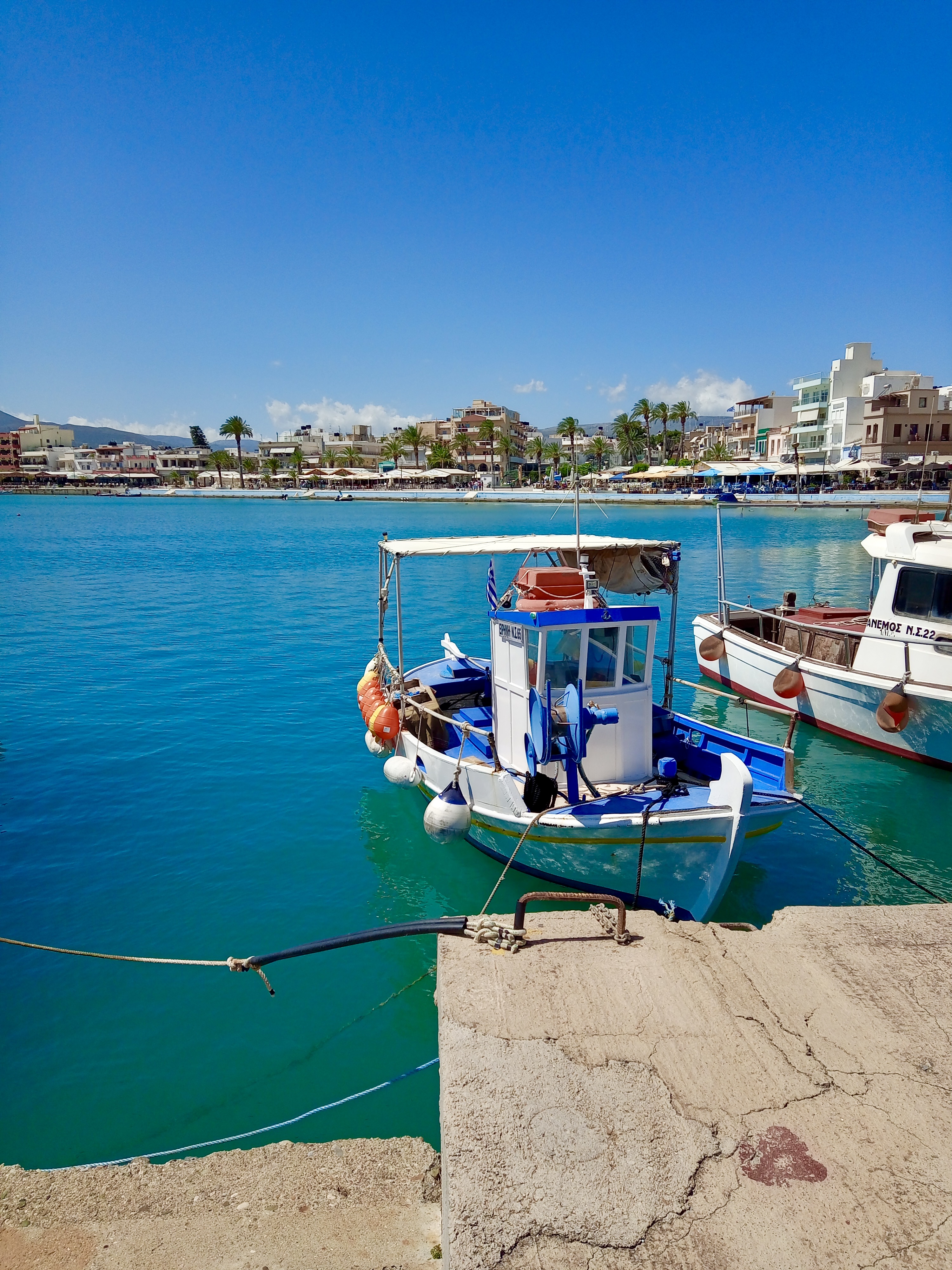
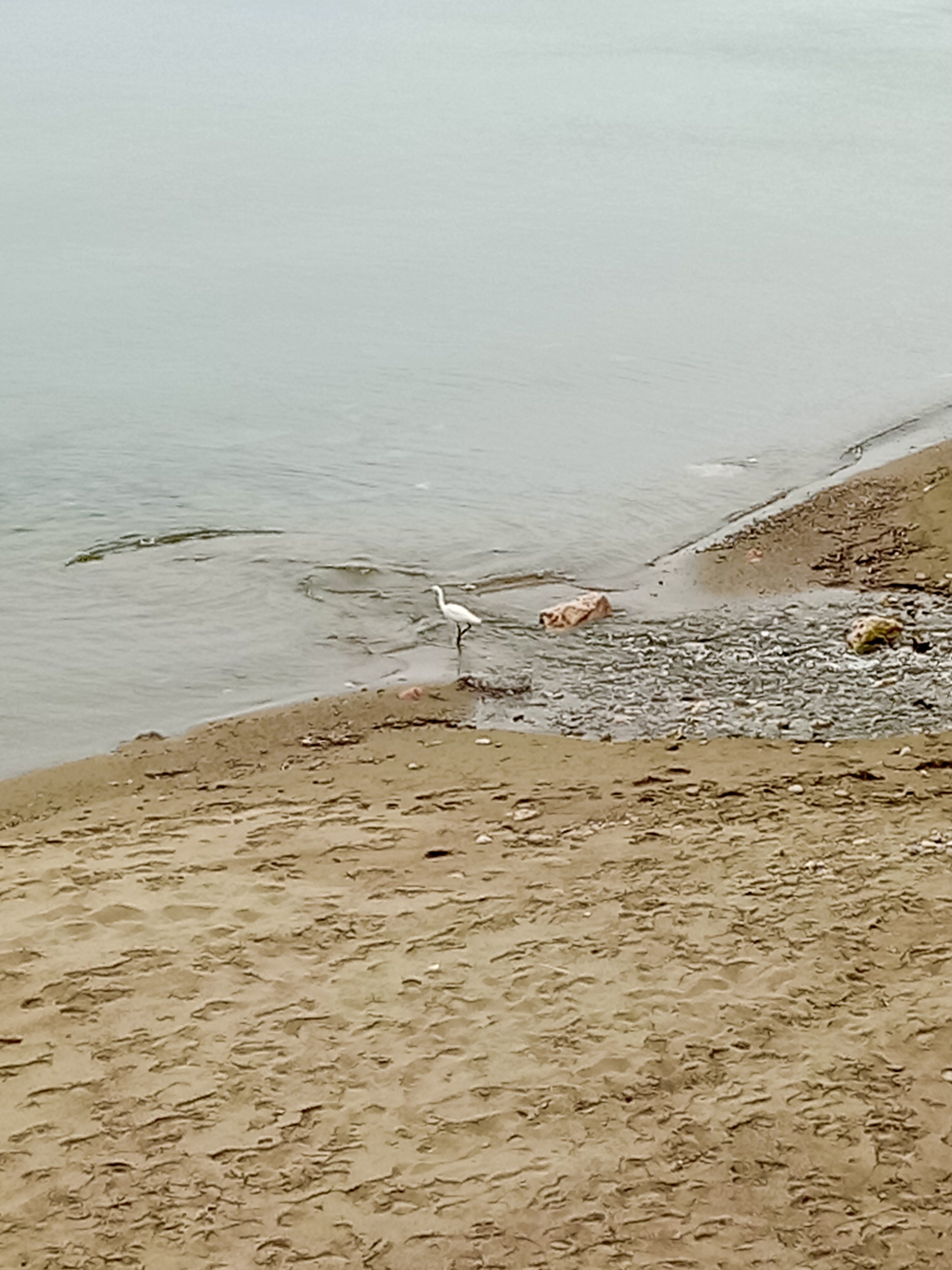
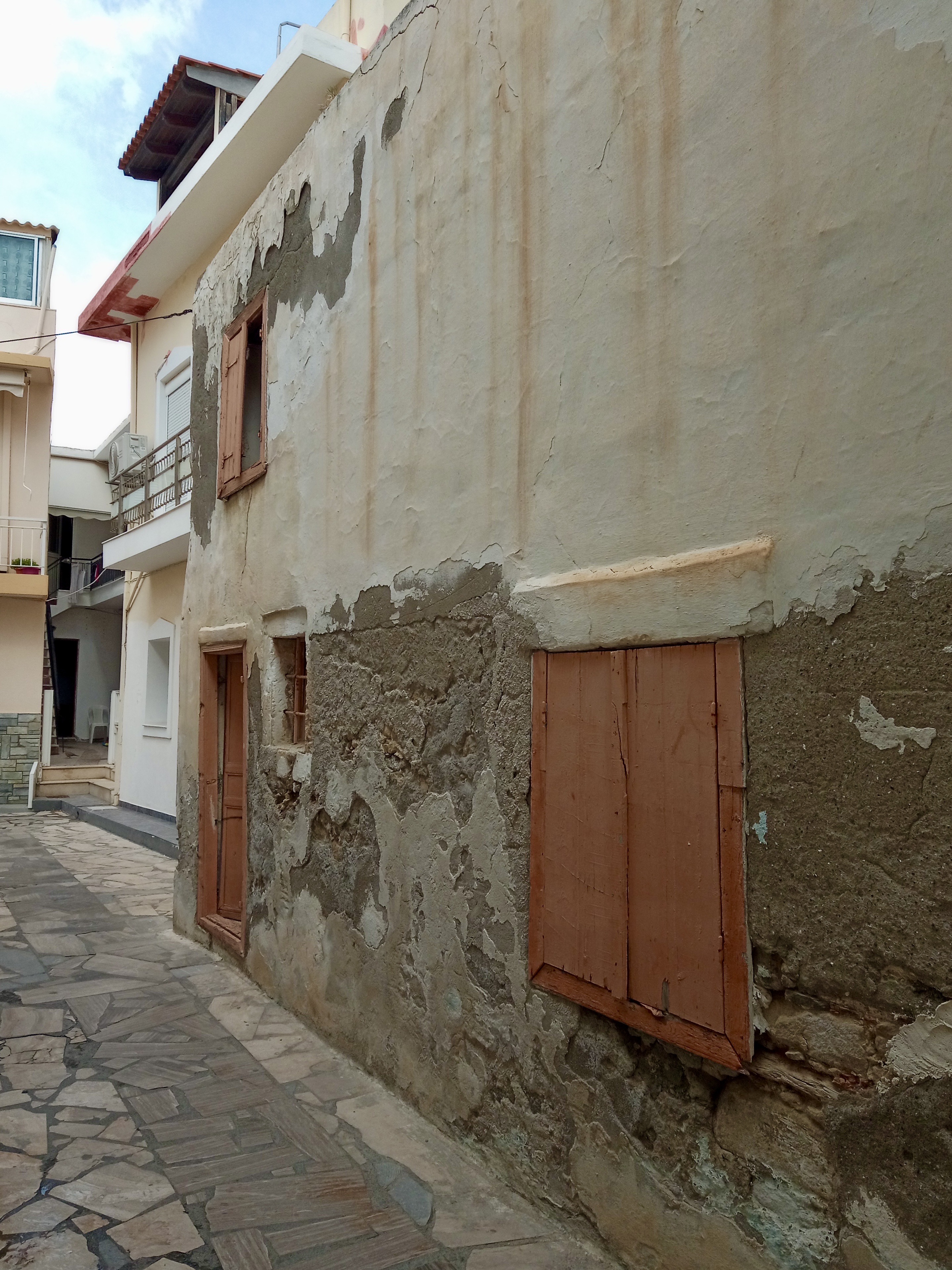
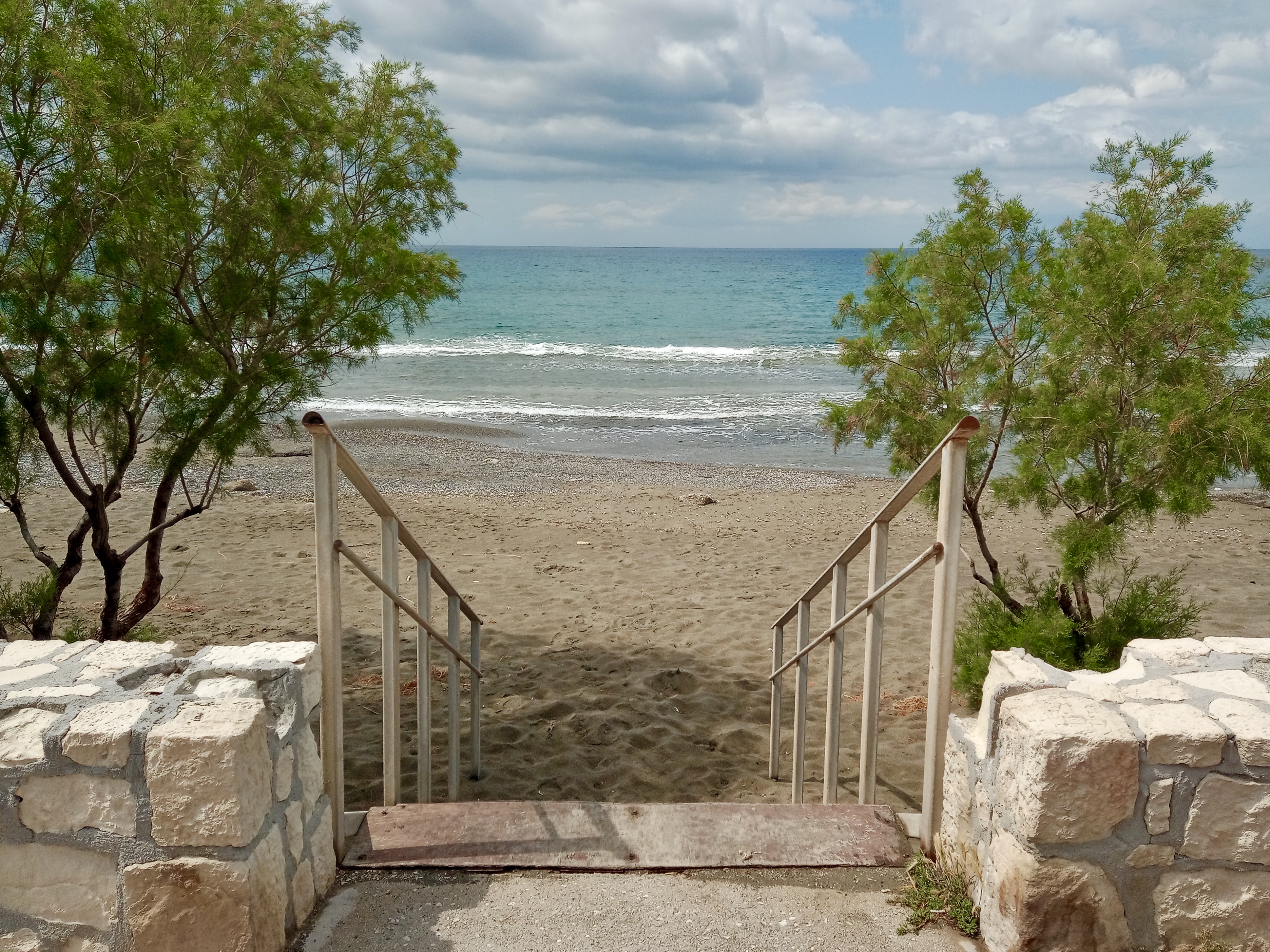
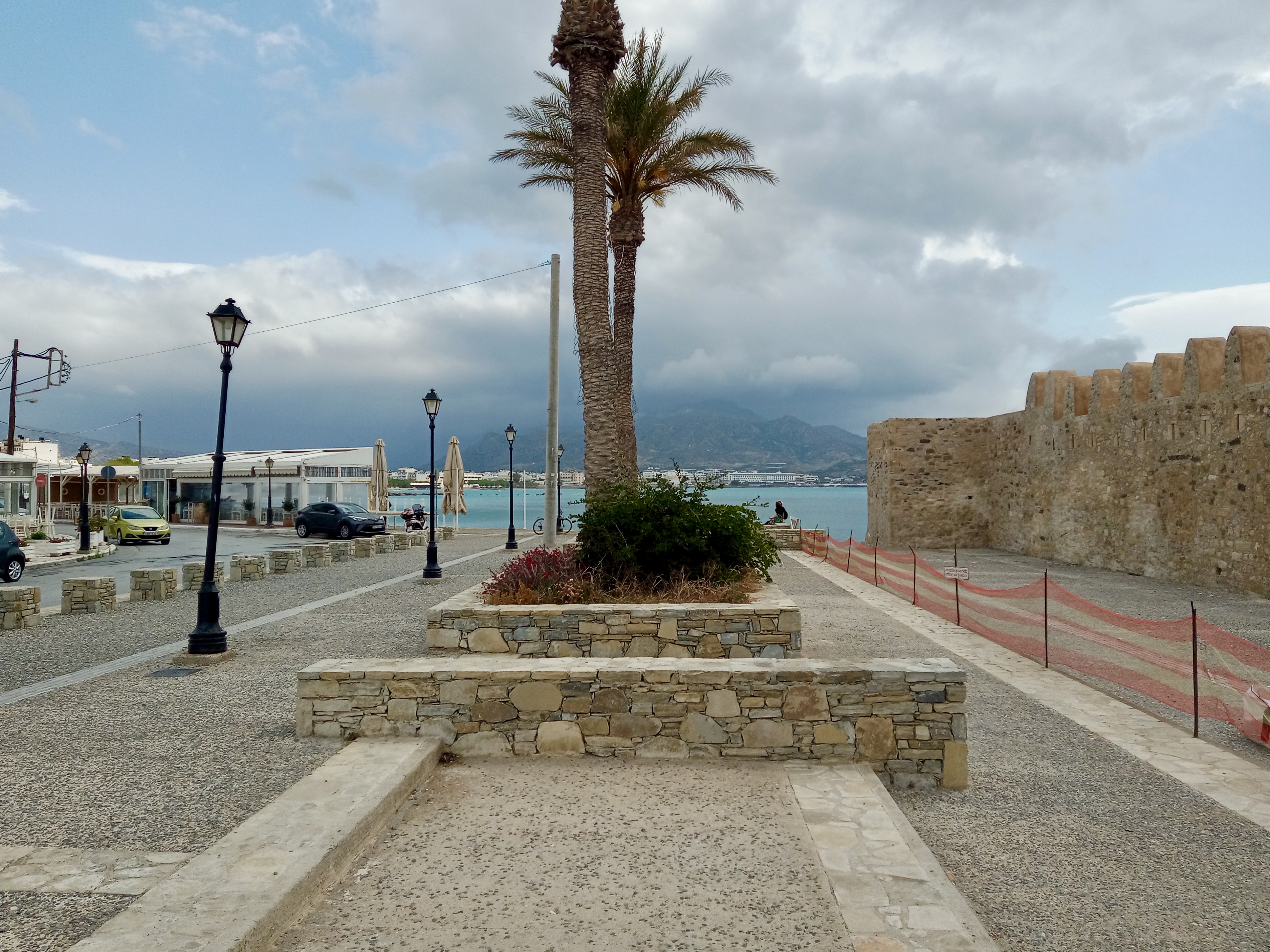
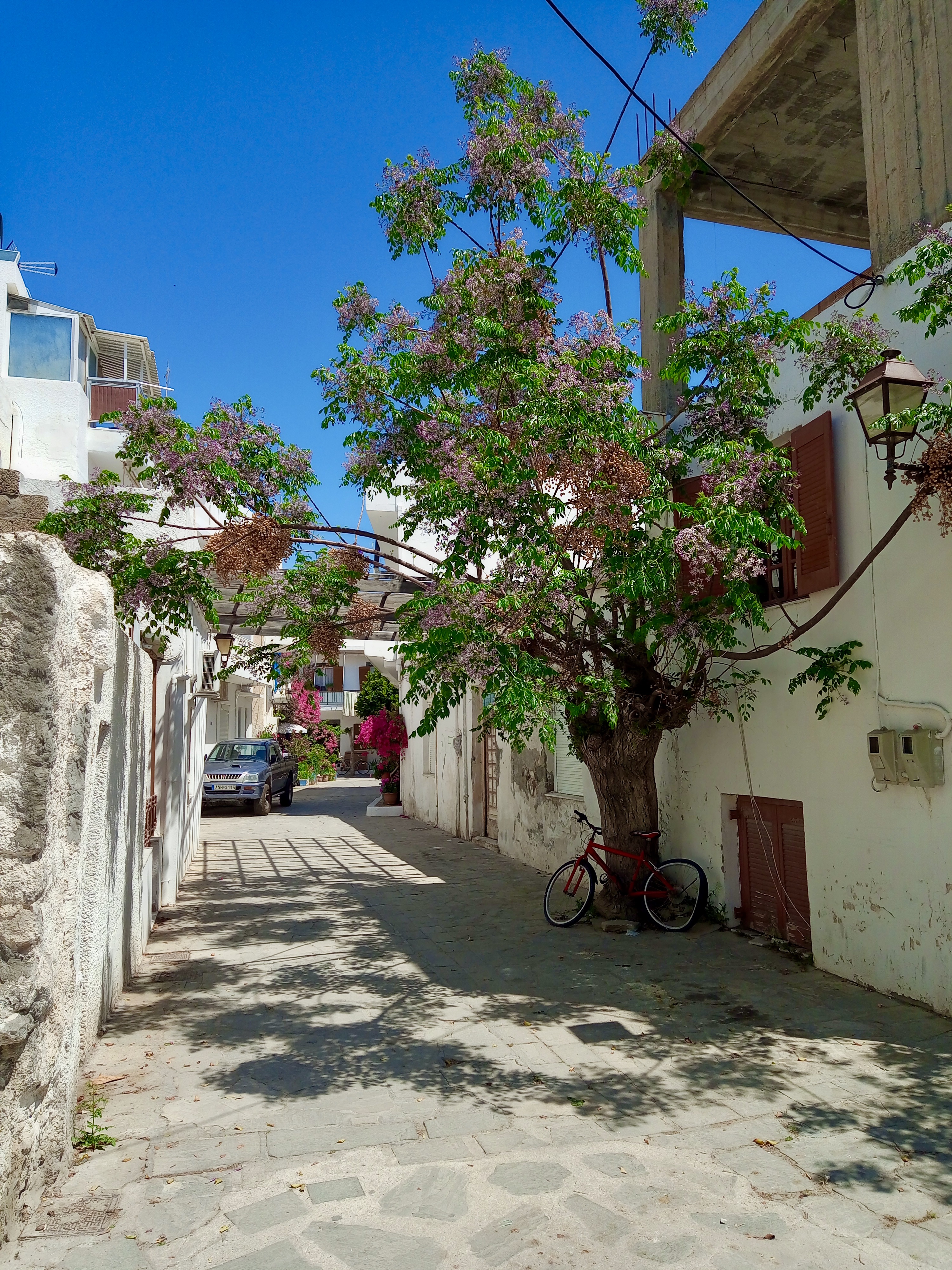
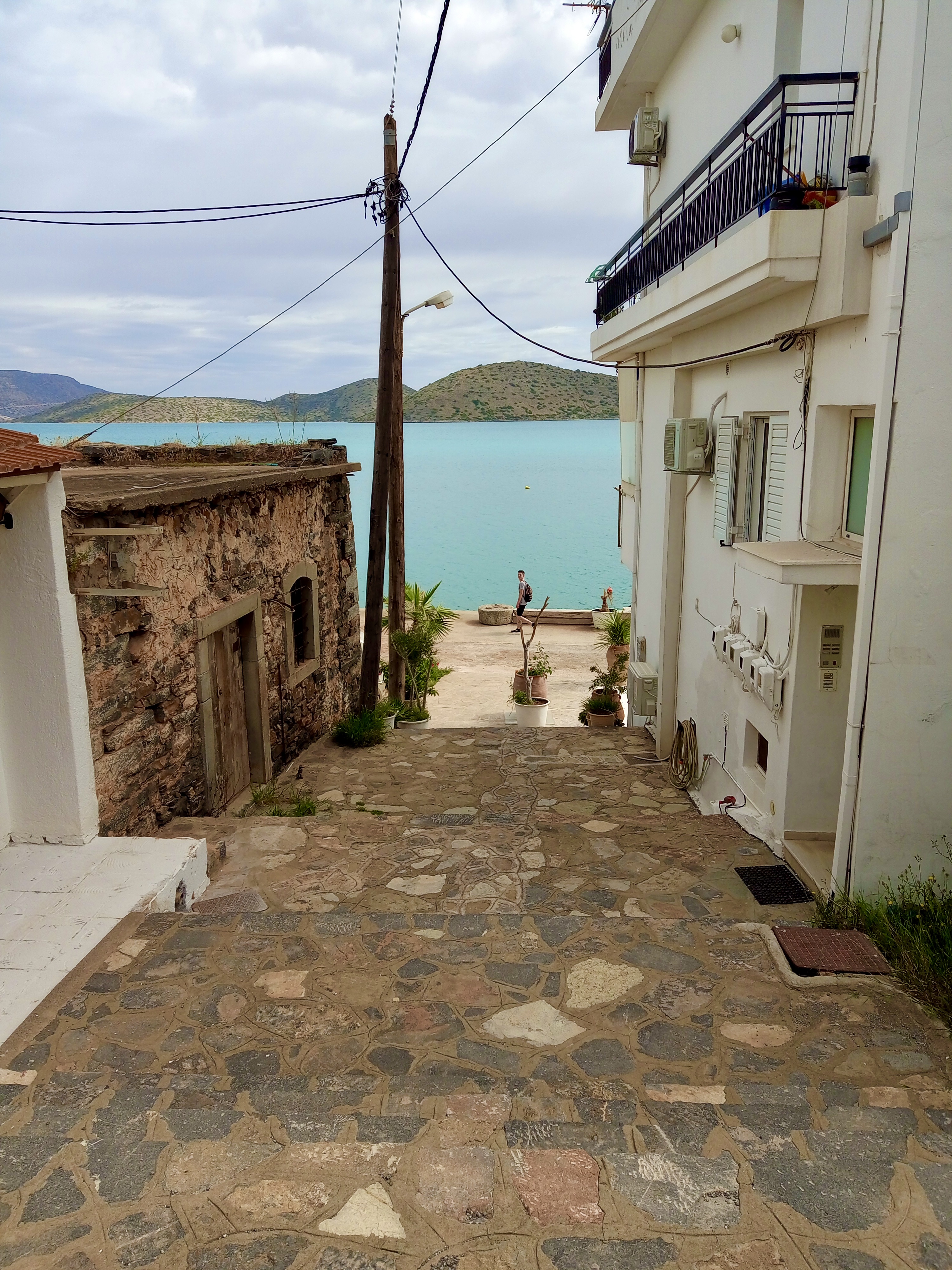
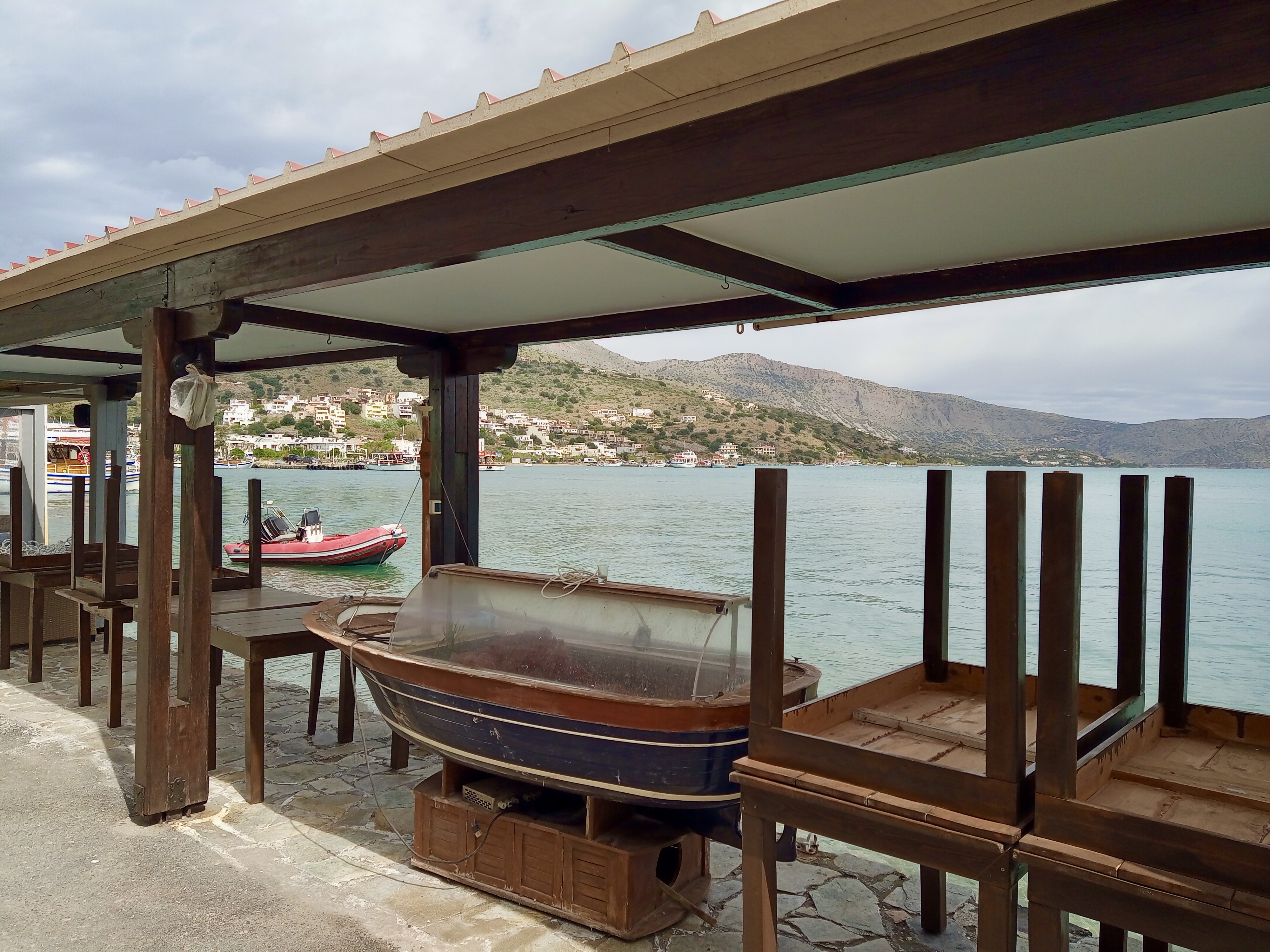
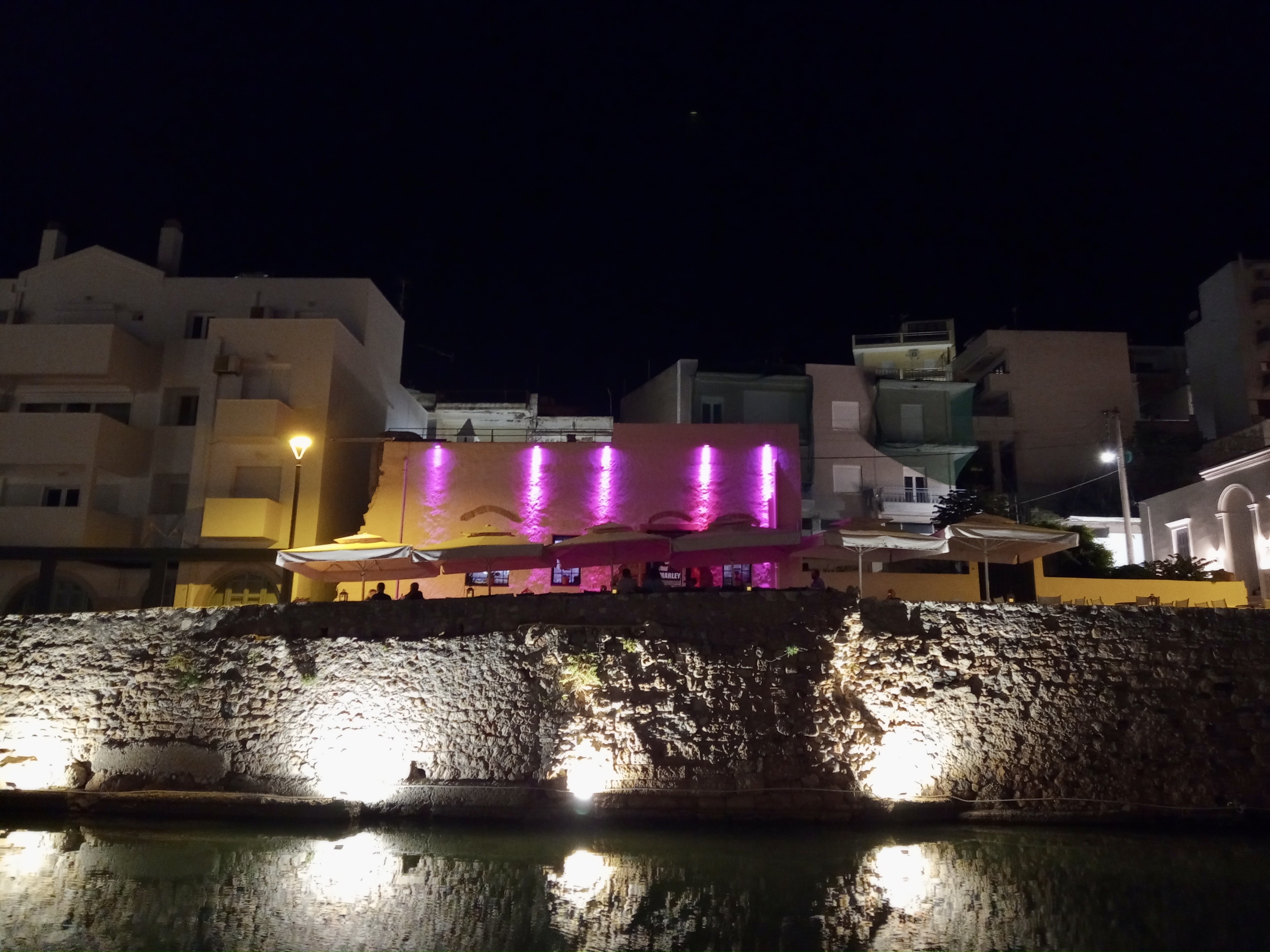
Which brings me to a bit of a cleft stick that the local business community in Sitia seems to have got itself into. I’ll tackle that in the next post though. Meanwhile, here’s batch no. 2 of the photos…

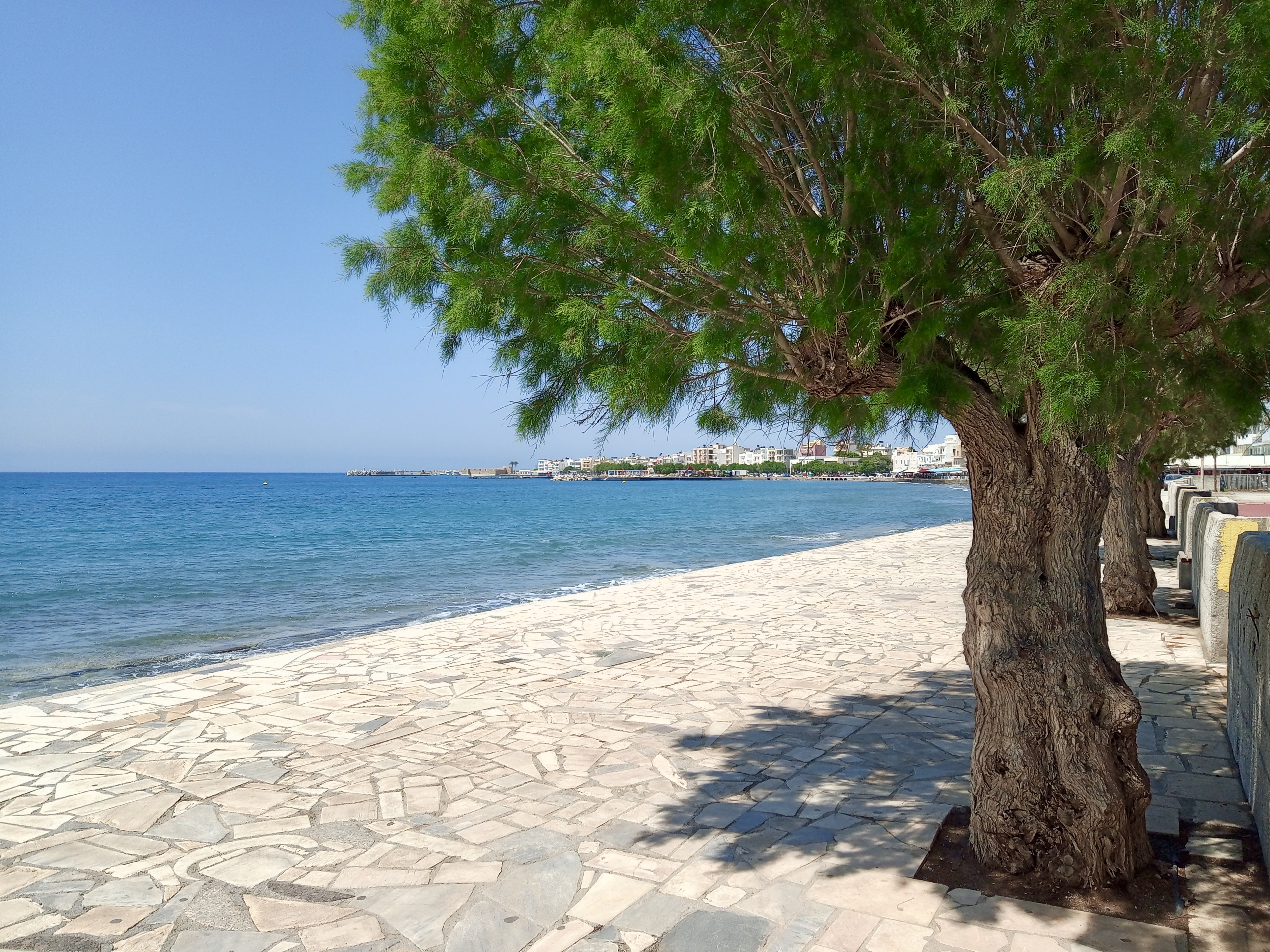
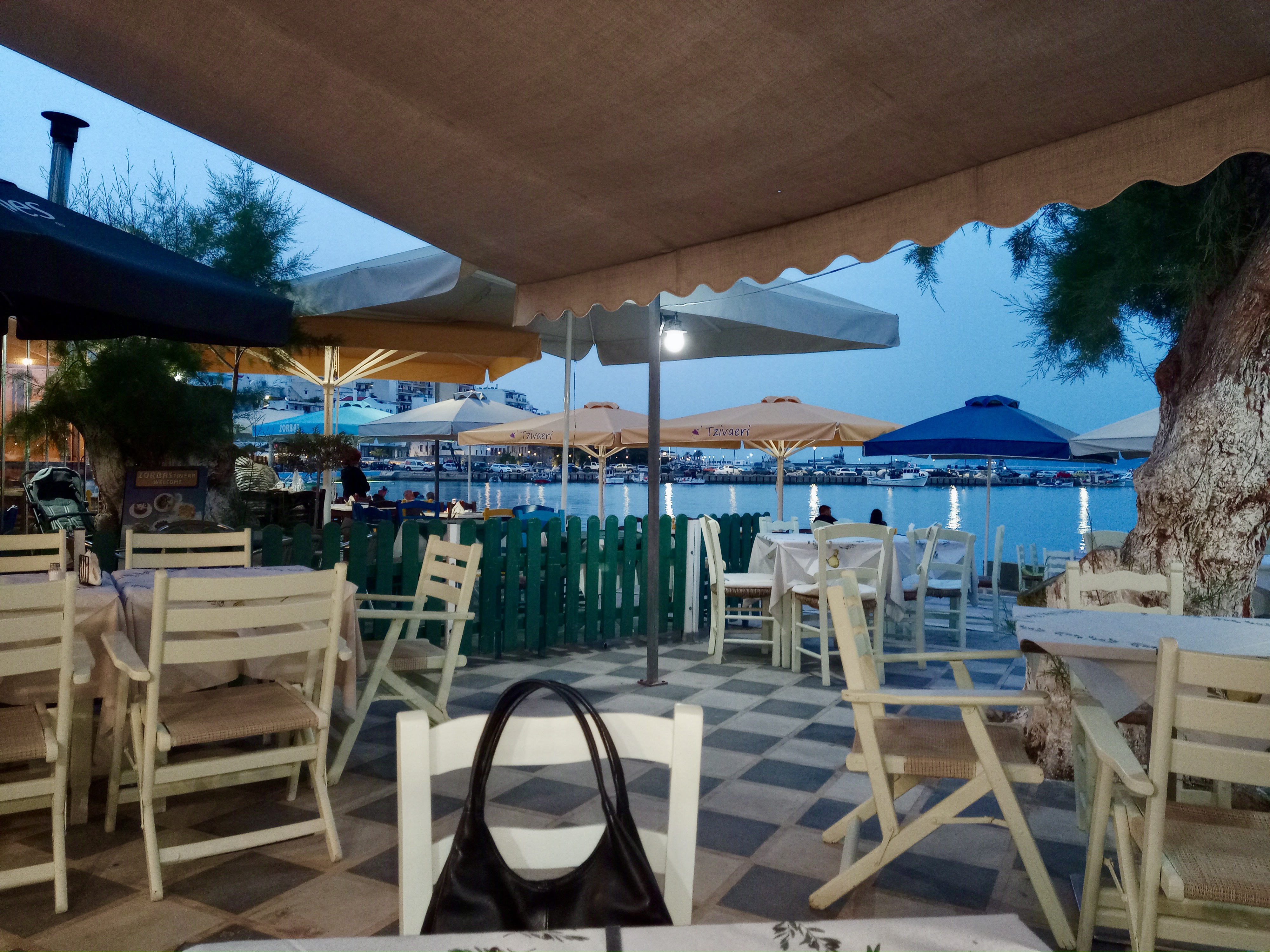
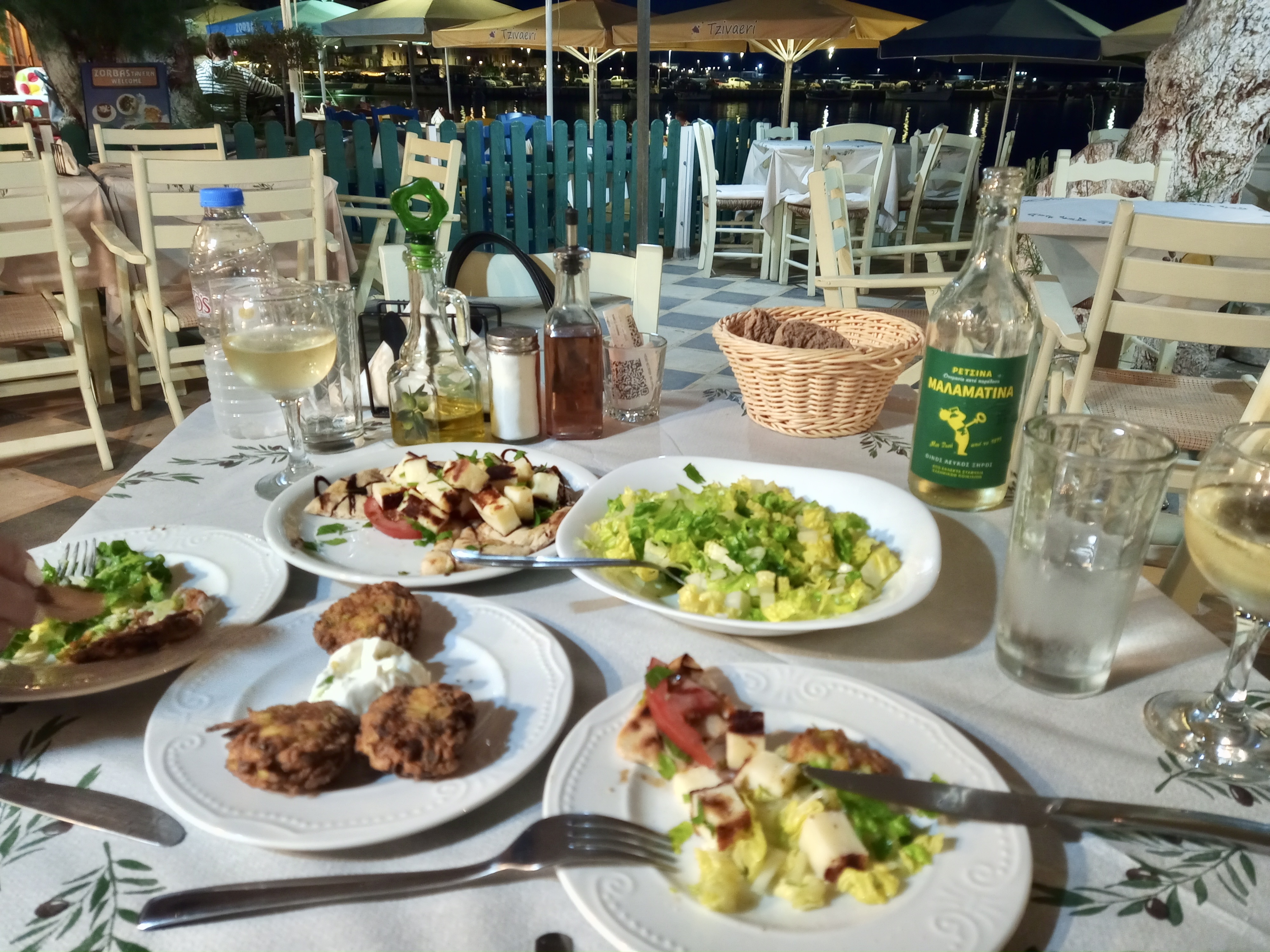
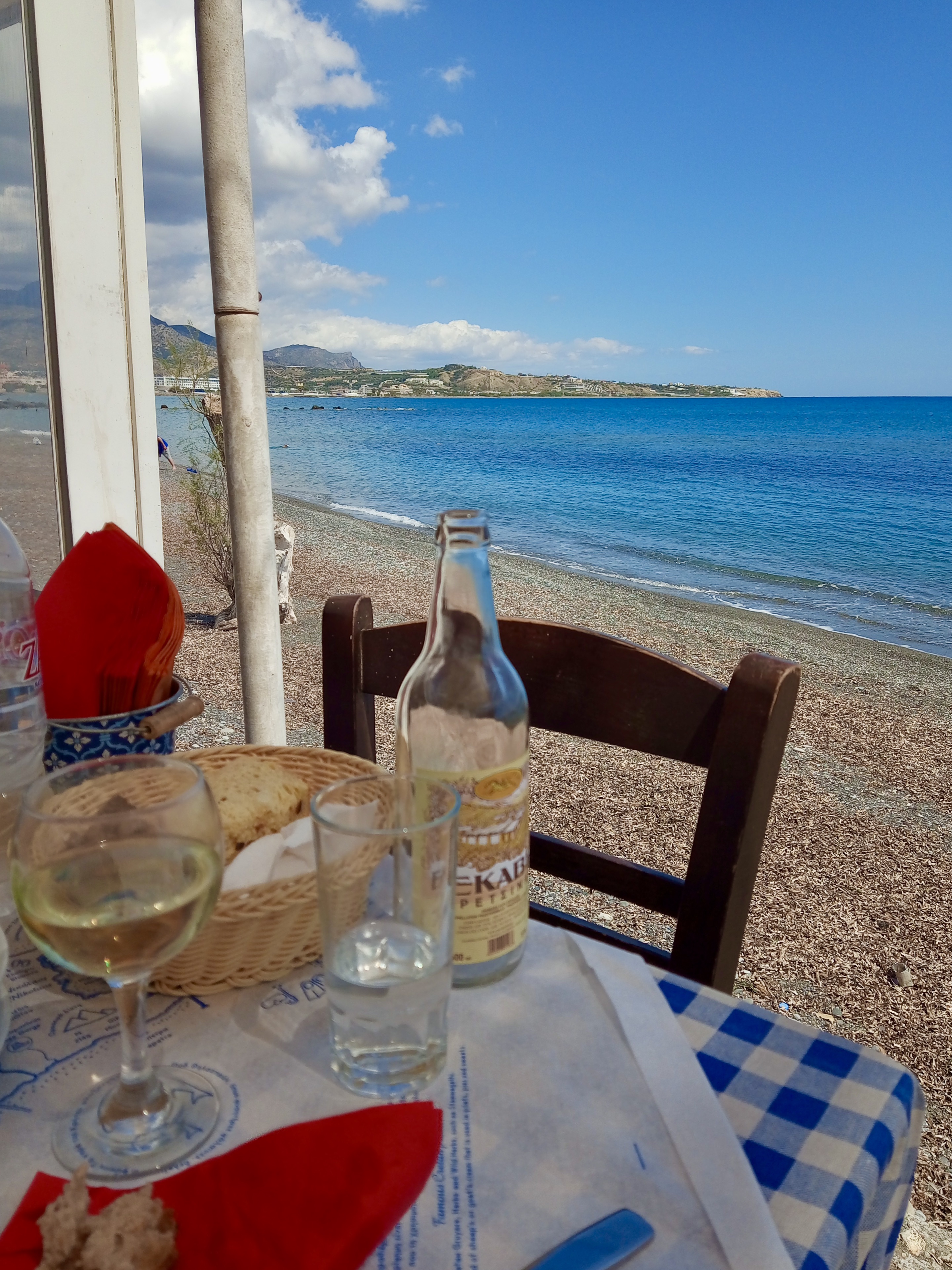
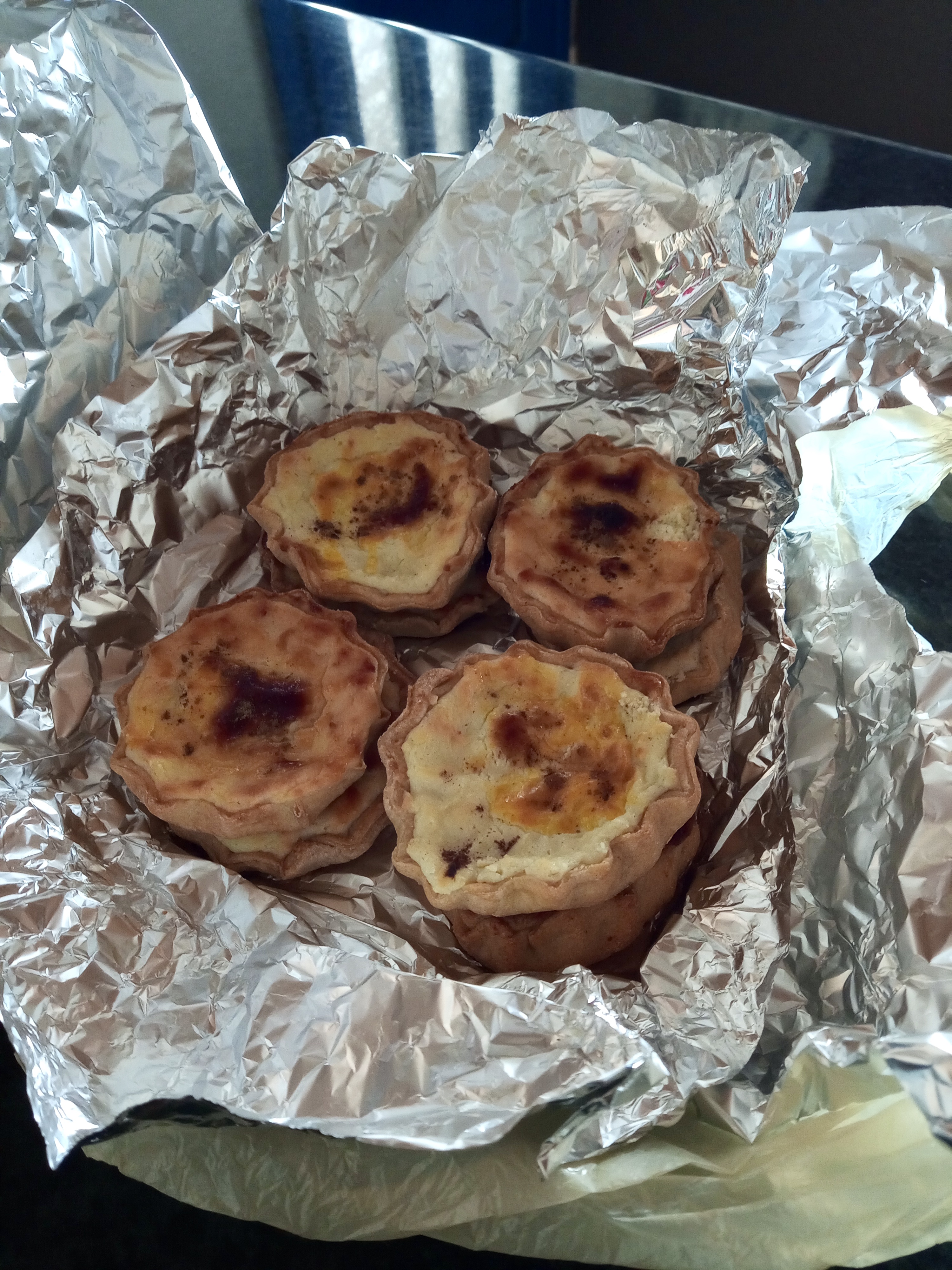
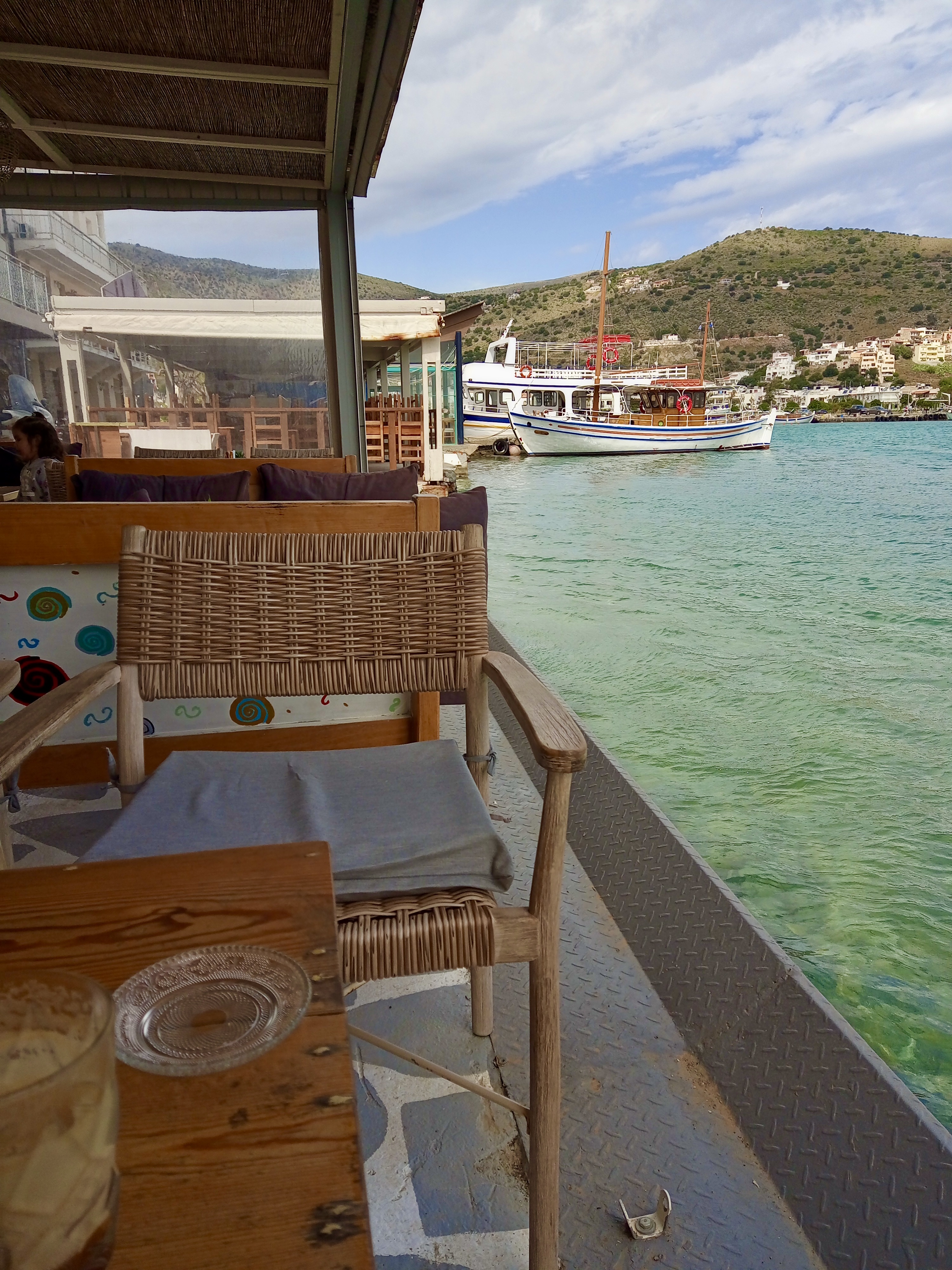
Somewhere above I mentioned the To Limani taverna, so these below [plus the one at the top of this post] were taken there…

Click HERE to go to my Amazon Author Page.
Away again

The cats’ feeling insecure, I can tell. We’ve just returned from another extremely enjoyable week-long break in Sitia and he’s currently acting like he worries that we’ll not be there the next time he looks for us. Since he’s been in the habit during the past months of disappearing for days at a time, we’re well convinced that he has a second home, who knows, maybe a third or a fourth. Whatever the case, he can survive quite happily without us when he wants to. Cats are well-known as exhibiting rather independent ways when it suits them and, unlike most dogs, a cat is never really yours, it’s usually the case that he or she deigns to allow you to enjoy his or her presence when he or she wants something, usually a cuddle, some fussing, or – as is more often the case – food.

   So, when we left for Sitia on Sunday May 14th, we hadn’t this time made any arrangements for anyone to come and feed him. Angla’i’a, the village mayor, told us not to be so soft. “He’s a cat, he’ll be fine, just you wait and see,” she told us when we’d broached the subject a few days before leaving. “Half the time he’s along the street keeping Manoli company when you’re wondering where he is. Anyway, I’ll keep an eye out, but he’ll still be here when you get back, mark my words,” she’d said in her usual authoritative manner.

   Of course, she was right. When we drove back up the lane on Sunday 21st he’d been nowhere to be seen, but the next morning, when I ventured outside at 07.00 hours, he came running up to me, meowing like crazy and insisting on being picked up and reassured that we were indeed back. He looked a little rough around the edges, no doubt from a few run-ins with interlopers (nothing too unusual about that, except that when we’re in residence I often intervene before he and a local feral bully come to blows, sending the street urchin packing while Mavkos sits near my feet with a definite air of relief, even smugness, about his face). He’d quite evidently done OK but I’m convinced that whatever he’d been eating for the days of our absence, it hadn’t been as nutritious as the food we usually give him. Plus he’d have had none of the nice little treats that we pamper him with either, his tasty salmon nuggets, or his nice moist salmon ‘sticks’ that he wolfs down in seconds as a rule.

   Anyway, as of now he’s still acting very ‘clingy,’ and I have to keep telling him that, no, we’re not about to abandon him again for a while. I’m sure he knows what I’m saying, I do, honestly.

Our time in Sitia, when I wasn’t worrying about Mavkos that is, was equally as enjoyable as last year. In fact it was one year and one week since we last did the same thing, (See the posts from May 2022) and we’d again booked into our snug, if very basic, little room at the Hotel Nora, near the harbour where the ferries come in twice a week. It’s called a ‘hotel,’ but it would be better described as ‘village rooms’ with a reception area, and that’s why we so love the place. Nikos and his wife, plus his pethera Maria, and her sister, welcomed us like long, lost relatives. We’re convinced that one reason was that our previous stay of 7 nights was in all probability the longest any guests had ever stayed with them. More often than not the Nora acts as a kind of overnighter for those who’ve just come off the ferry, or for those who are due to board the next one that ties up. When you enter the building you’re met with a small reception desk in a quite acceptable lounge area, but there is no restaurant, no pool, in fact no other facilities. The reception desk, though, is manned by one of the family 24/7, which just affords the place that little extra bit of security (like Sitia is rife with housebreakers and muggers anyway). The lounge actually serves as the TV room for the family, and every evening they can be encountered sitting around one of the small tables watching a Greek soap opera on Alpha TV.

   It’s that very ‘family’ feel that makes us love staying there so much. Once you’ve settled into your room, nothing’s too much trouble for Niko or his kin. As soon as we arrived this time around, after all the hugs and cheek-kisses had been dispensed with, Nikos, a stocky, ruddy-faced man with a perpetual smile on his round face, told us, “Anything you want, you only have to ask, it’s no problem at all.” Frankly, though, above asking him for a kettle (which he almost fell over his own feet in his hurry to supply us with), there was nothing more we could have wanted. The room is very basic, but the place is truly spotless. Yes, the bathroom could be modernised a bit, true, but the sink had a plug in it, I mean talk about luxury, come ON! Anyone who’s ever stayed in village rooms will know that a plug for the bathroom sink is usually something that you never, ever see, and wouldn’t even expect to. The amount of clean, fresh, brilliantly white towels they supply you with leads us to insist that they not change them quite so often. We can never use all the towels they give us anyway, so we make sure that those ones we do use last us a while, so as to keep their laundry bill down a little. I”ll not divulge here how much we pay per night, but I will say that I believe it’s a completely unbeatable nightly rate for this day and age on a Greek island. 

So, here is the first clutch of photos from this year’s stay. Expect a series of posts before I’m through with this year’s Greek holiday!

Click HERE to go to my Amazon Author Page.
Pass the parcel, and an old-town wander

Mousmoulia is what they’re called in Greek, and in English they’re loquats. You can see Loquat trees all over the place here and it’s about now when they’re laden with plum-sized fruits that are somewhere between yellow and orange in colour. Inside they have a largish sized kernel, again, probably similar in size to the pip in a plum, although their flesh doesn’t resemble plums all that much in any other respect. Apparently they originated in China, but now they’re grown in all kinds of diverse parts of the globe. Clinging to the surface of the kernel’s ‘chamber’ is a kind of opaque membrane that often stays with the fruit’s flesh when you extract the pip. Before you can eat the fruit it’s best to remove that membrane, as it’s kind of tough to chew, even though it looks like a thin layer of ‘mica,’ which anyone who’s into electronics will be able to explain. I used to be a partner in a small electronics company and we used to use ‘mica’ washers in the production of the product. That’s the only reason why I’m aware of the stuff.

They taste a little weird for my liking and, to be honest, I can live without them. The only trouble is, in villages like ours the trees are currently laden with the fruit and the locals will simply eat them raw, or use them to make a kind of marmalade. I’m told that the leaves of the tree can also be used to make a herbal tea, although I don’t think I’ve met anyone here who bothers with that. By far the most often consumed teas here are Chamomile and ‘chai vounou,’ or ‘mountain tea,’ which is made from a specific plant that grows higher up the mountain slopes and is considered to be exceedingly good for the health. Here you’ll often be offered a choice of the two if you ask for tea when being entertained. It’s far more likely that your host will offer you those than what we Brits would call ‘proper tea,’ or even Earl Grey. If you wander around the local branch of Lidl (for those outside of Europe, a supermarket chain originating in Germany) here in Greece, you’ll see mountain tea in see-through cellophane packets on sale alongside all the other teas in their range. We prefer to buy it from the local dried herb shop, but the mountain tea in Lidl is nevertheless a Greek product.

Anyway, we have a very prolific mousmoulia tree in George’s plot just below our veranda and, although the land belongs to him, he tells us to pick and eat the fruit of the few trees he has planted there, since he rarely comes to the village these days. There are also lemons, figs, almonds and mandarins down there, so it’s a handy little food source as the seasons roll around.

The thing is, even though we’re not into mousmoulia, we know that our near neighbours have eaten them since they were born and thus will always have a use for them. They, however, don’t have access to George’s plot, and so, as I gazed down at the fruit-laden tree a few days go, I resolved to go down there, pick all the soft, ripe fruit and give them to Maria and her mum Evangelia across the lane from us. In times past Evangelia would regularly shuffle over there with a bucket to collect both the fruit (always leaving some for us too) as well as fists-full of horta, a staple in her diet, as is the case with so many elderly Greeks of her generation. It’s been explained many times I know, but the habit of picking and eating horta, which is a plant whose leaves resemble the dandelion, is thought to have originated during the Second World War, when the occupying Nazis seconded virtually all of the fresh fruit and vegetables from the locals to feed their soldiers. Without horta, even more thousands of Greeks would have starved than did so. Evangelia cannot now gain entry to George’s plot since his son was up here a few months ago and decided to put a padlock and chain on the gate. I have a way of getting in, but it would be well beyond Evangelia’s physical abilities to do so, sadly.

Thus, rather than see all those ripe fruit fade and wither on the tree, I picked a big bagful of them and left them outside Evangelia’s door when she was taking her siesta. That, it seemed to the both of us, was the best solution and it would mean that all that fruit wouldn’t go to waste, since in no way did we want it.

That was one day last week. Only a day or two later, as I’d risen early because my body refused to stay asleep beyond around 6.30am, I was sitting at the kitchen table bashing away on my laptop’s keyboard, taking the occasional sip from a comforting mug of Earl Grey tea, when a shadow passed in front of the window above the kitchen sink, directly to my left. Fortunately I was wearing my dressing gown. Had it been another few weeks time, I may well have been sitting there starkers, as that’s the usual way we wander around the house during the summer days, as it’s simply too hot to wear anything. It must have now been around 8.30am; still quite early, although, of course completely light outside.

Thinking it might have been the cat (although quite how he’d have managed to get up as high as the window would have been a mystery) I turned to see what was happening. Staring straight in through the open window, through the mozzie screen, was the face of sixty-something Christina, from a little further up the hill, she who had made us a batch of cakes and biscuits after we’d taken a few minutes to pass the time with her in the olive groves when she’d been feeling a little like an outcast. My initial reaction was to shout ‘What the hell are you doing snooping around like that woman?!’

It goes without saying that I didn’t do that, though. After a few milliseconds while I gathered my thoughts, I gave her a sweet smile (even though I was immensely irritated to have been interrupted) while she pointed to something lower than the window sill, where we have a bench which I use to fiddle around with various DIY and gardening stuff, and whispered, “Gianni, I’ve just come back from the horafi, and I thought you might like these, OK? I’ll leave them here for you. Give my love to Maria.” And she was gone like a twilight spectre in the dawn.

‘OK,’ I thought, although she’d frightened the living daylights out of me, ‘I guess she was just being thoughtful. She probably hadn’t expected anyone to be up but, since I was, she’d let me know that there was something out there for us.’ Once I’d given her a few minutes to beat a retreat, I opened the front door and took a look at what she’d left for us.

There, on the bench, was a big bag full of mousmoulia.

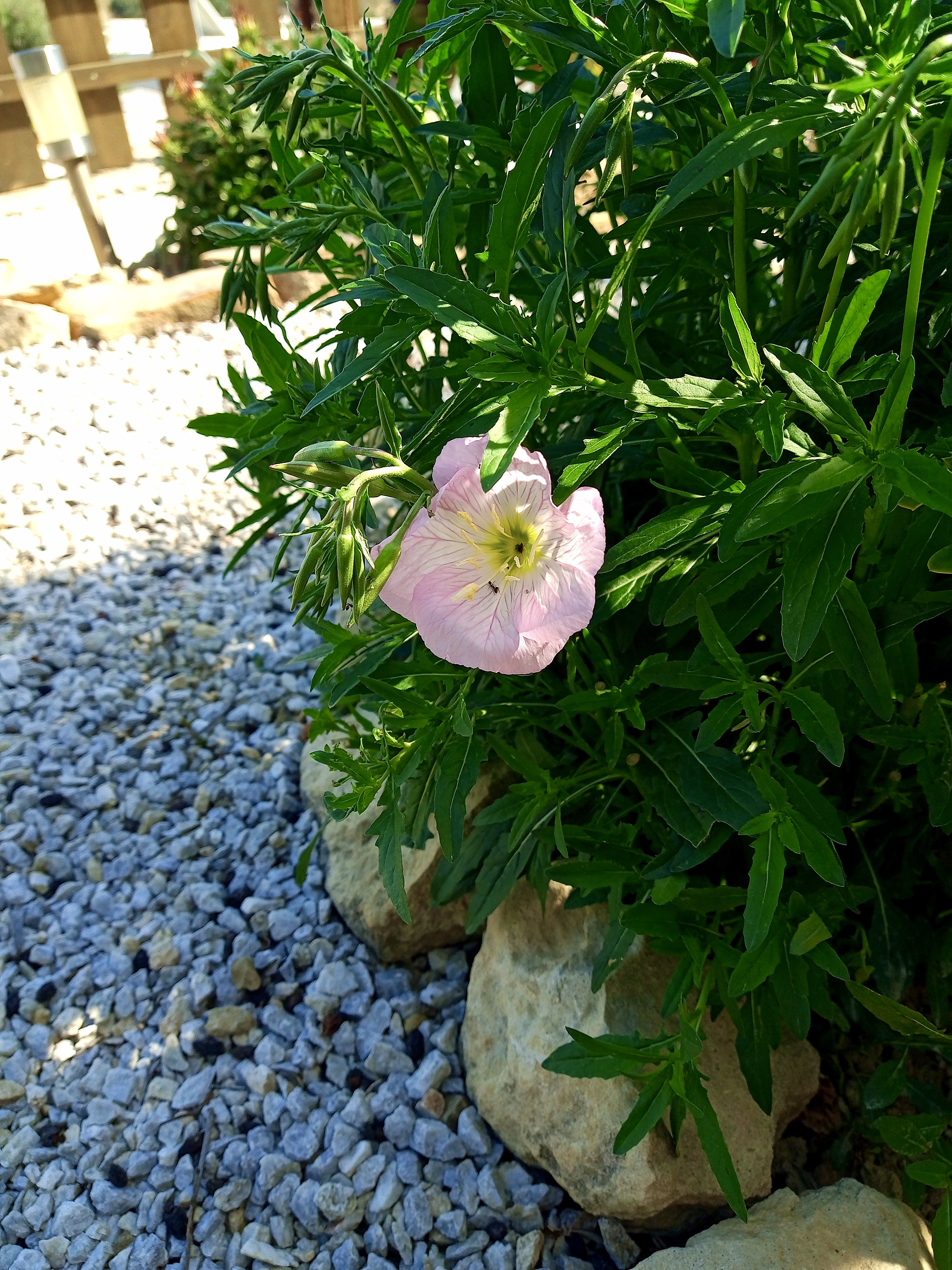
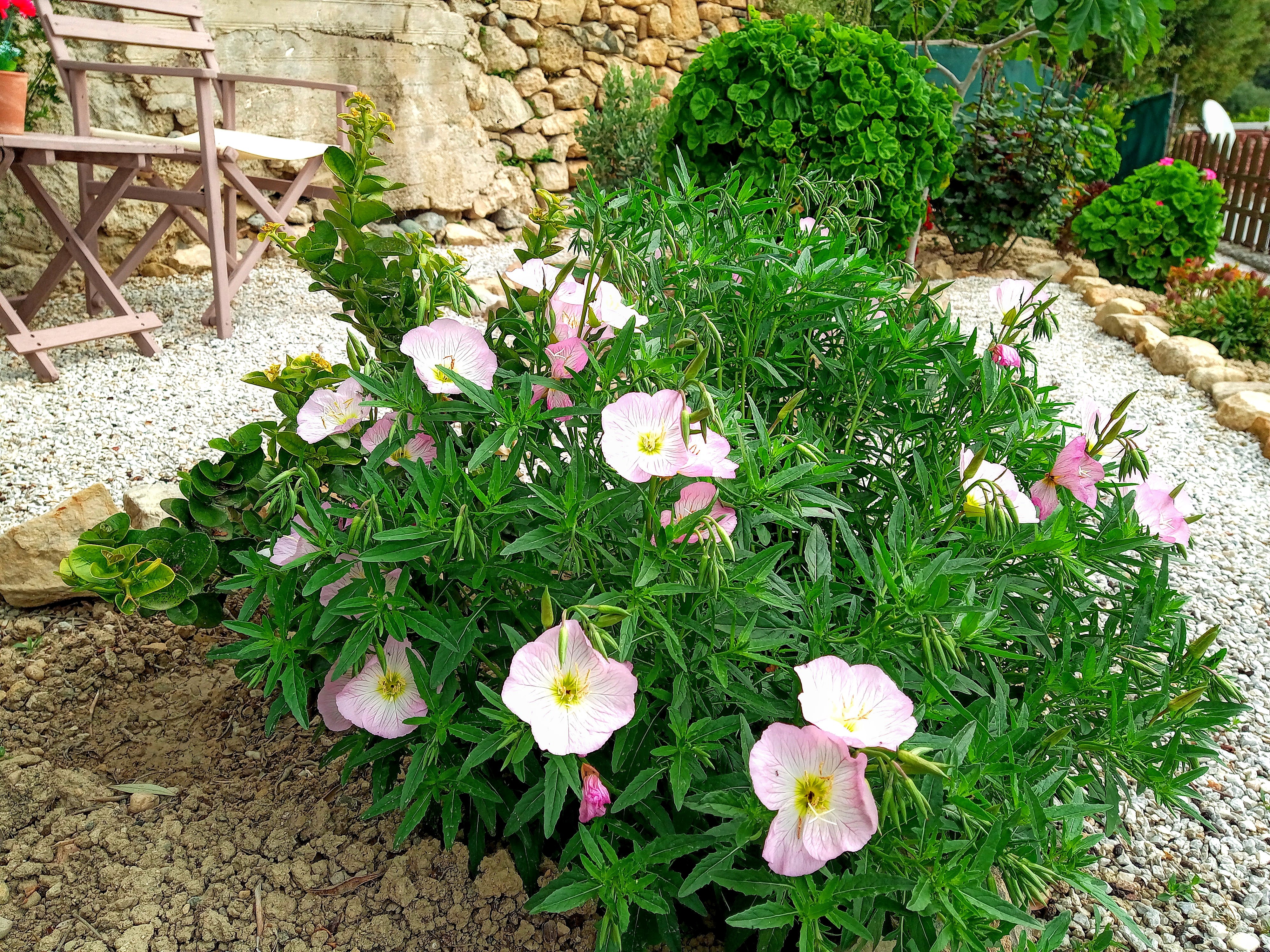
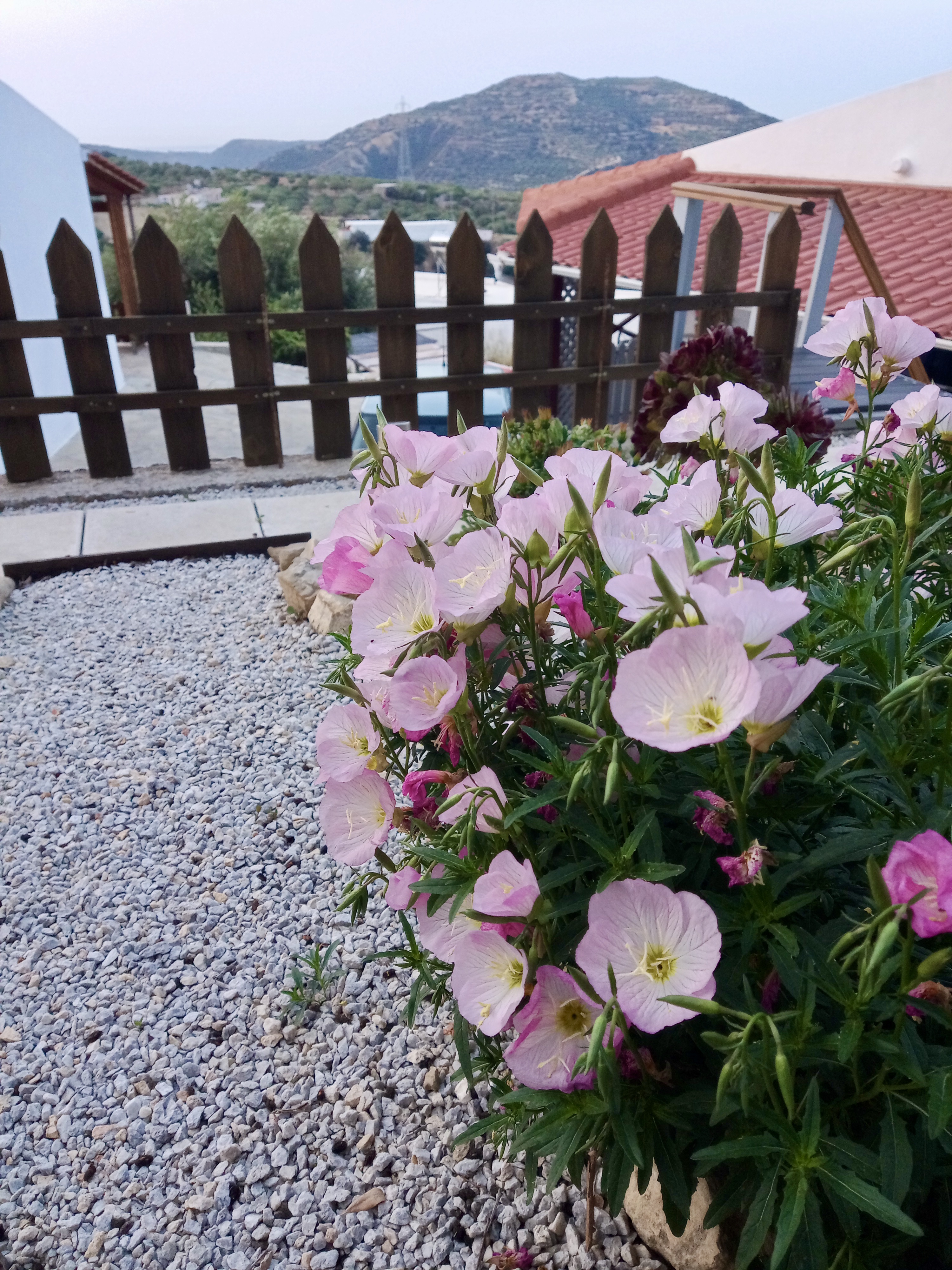
Last May, as we took a week’s break in Sitia (which we’re doing again this year, next week in fact) we’d been rather taken by a flowering plant that was growing in many of the displays along the walkways of the town, especially around the cafés on the harbour front. On our return home we sought the plant out in a local garden centre and bought a couple of small seedlings to plant in our upper bed. It’s a perennial that flowers for at least a month from about now onwards, and we loved the delicate pinky-white flowers. Well, those two tiny seedlings grew very vigorously during the succeeding months, and now, well, look…

It’s exciting to see from those photos that there are loads of buds still to come out. Isn’t it a great addition to the colour palate up there though?

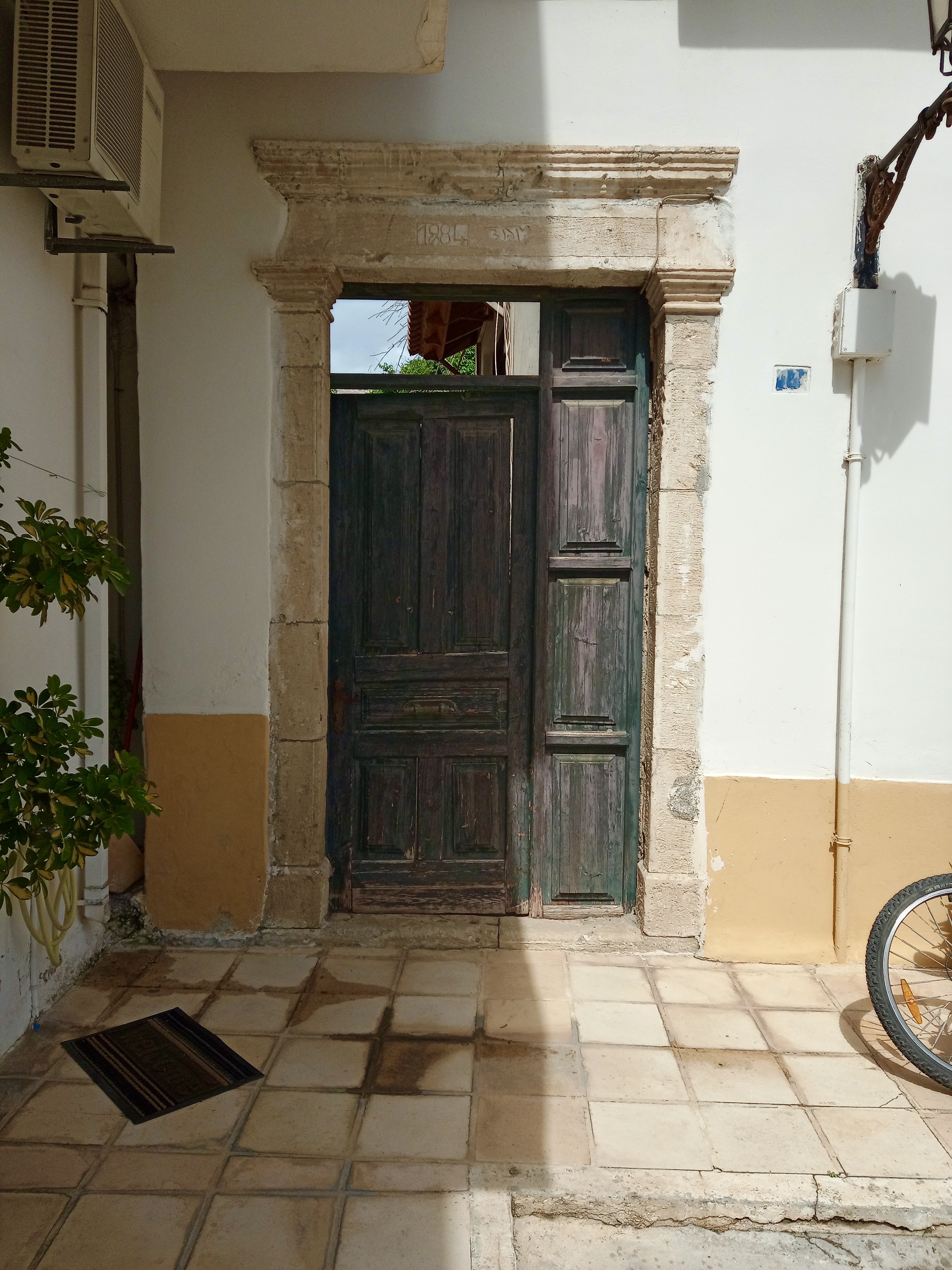
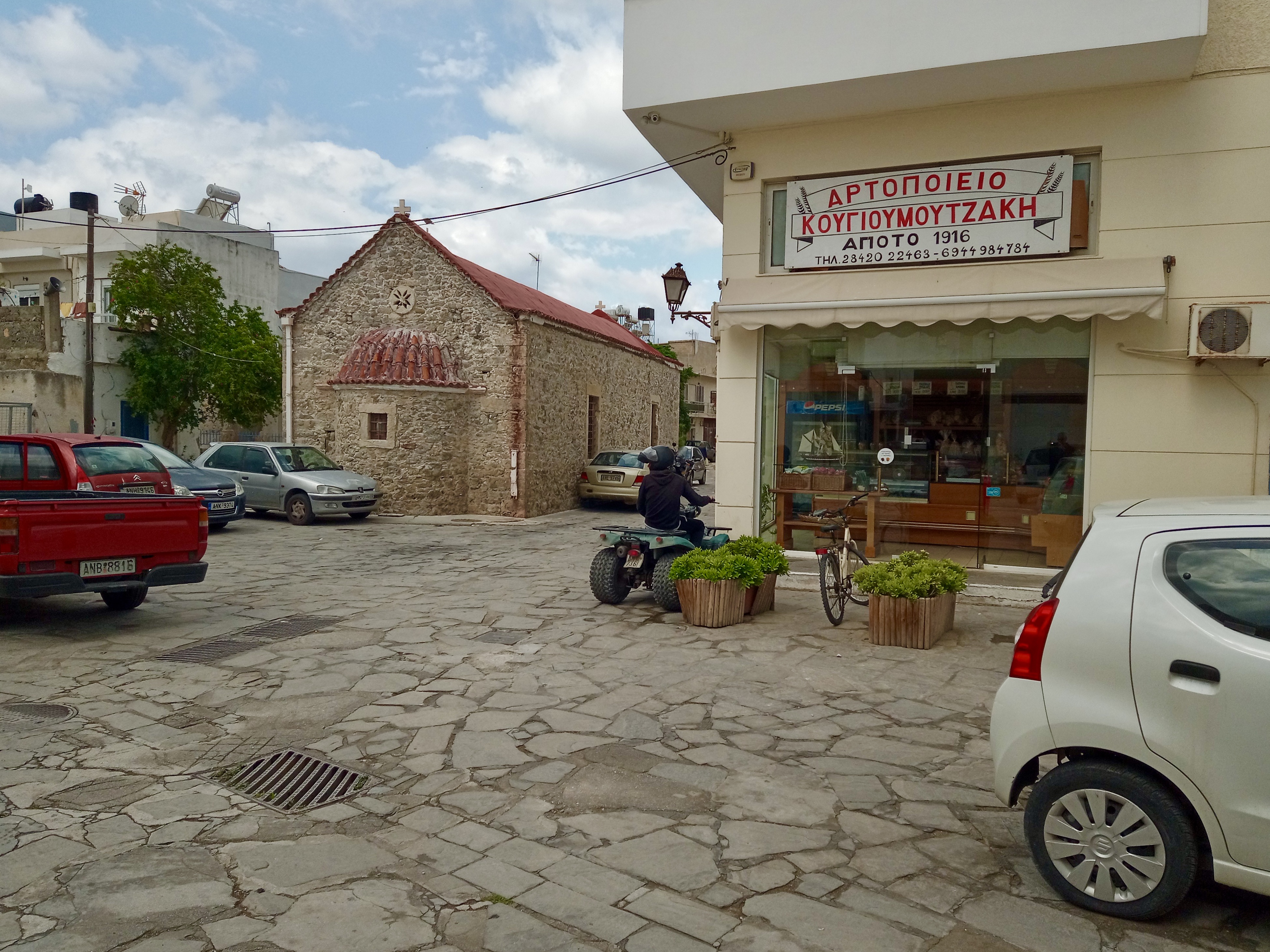
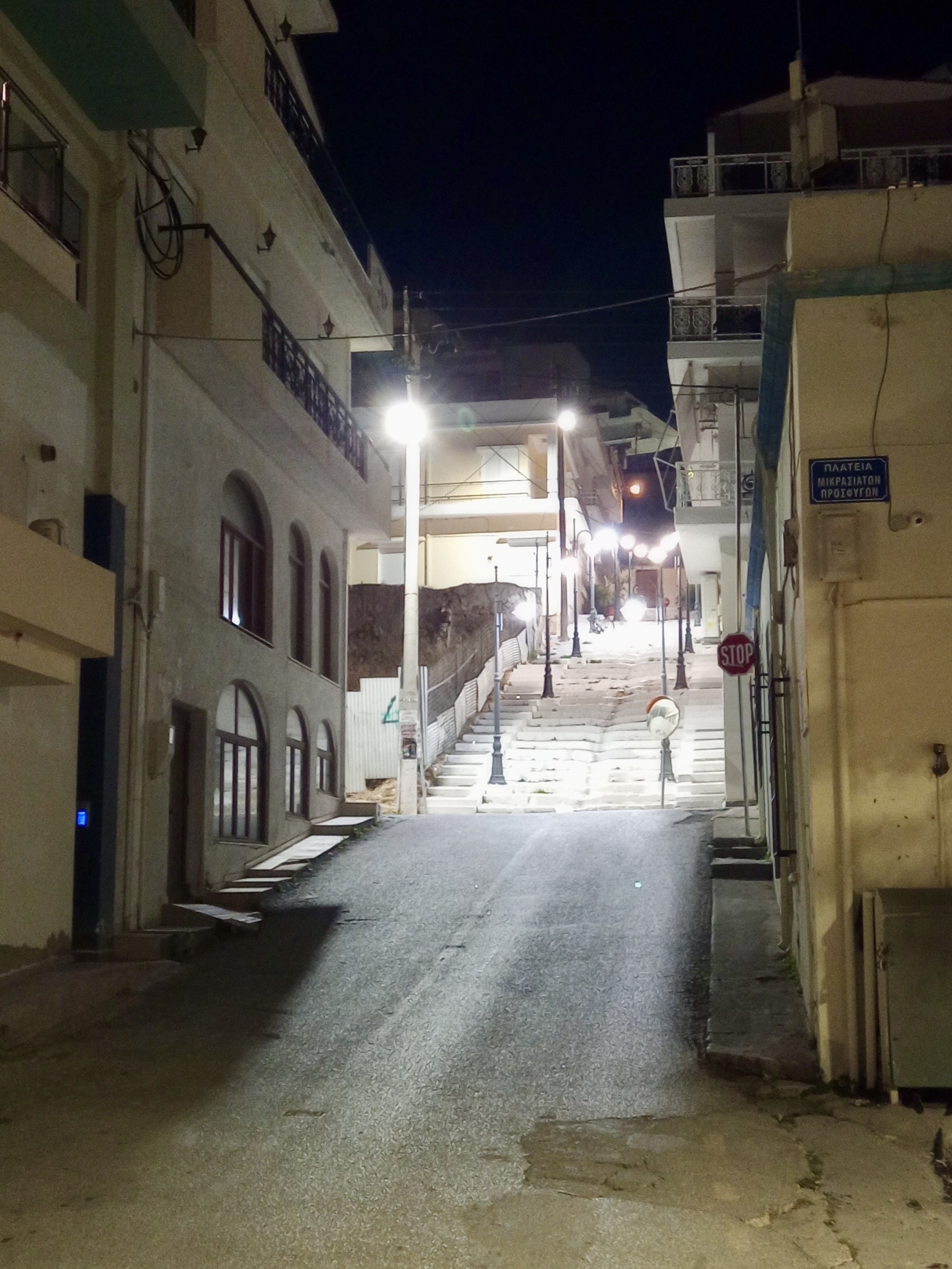
Last Saturday Yvonne (Maria) had a hairdresser’s appointment. so I took myself off to take some photos of the nooks and crannies around the old town. The results are below. Hope you like this selection…

That corner bakery just across from the church (photo no. 2) took me back to the days when we used to take holidays in the Greek islands. Don’t you just adore that early morning stroll along from your rooms to the local bakery (always assuming you’re not staying in one of those huge faceless A.I. hotels, of course) to pick up a loaf or two for the lunch that day? As you approach the bakery that divine smell of Greek bread baking in the oven meets your nostrils well before you get to the door and you feel like eating half the stock in the shop, right? Well, as I drew near to that corner the familiar aroma took me back to wonderful past times when we’d holidayed in such places as Poros island, Kefalonia, Symi, Skiathos, Samos, Naxos and others. There are few smells as evocative of a Greek holiday in some small accommodation among the locals as that.

Finally, at 8.00pm last Saturday, we rather liked the shape of a cloud over the hill to our east, so I snapped this shot of it…

Look after yourselves.

The latest work of fiction, “The Lone Refugee” (Click on cover image)

The latest work of non-fiction, “Greek Oddities” (Click on cover image)

And here’s the link to the new short story “Outage.”

Confusion

The village where we’ve now lived (extremely happily) for the past three and a half years is called Makrylia. It’s pronounced, by the way, Makreel-yáh, with the emphasis on the ‘yah’ at the end. I know, for us Brits, getting our tongues around Greek names can be quite a minefield. I make no claims as to being an expert, but my theory is that we Brits tend to apply rules from the Latin languages (as in French, Italian, Spanish) when we’re trying to pronounce foreign names, which usually means that we would stress entirely the wrong syllable when pronouncing Greek words and names, because Greek is of (so I understand) Indo-European origins. It goes without saying that Greek is one of the oldest languages still spoken, even though it’s morphed somewhat from the ancient to the modern version over time, but as it’s not part of the Latin family, the same rules of pronunciation don’t apply.

I’ll try and illustrate what I mean. Brits have taken some Greek cuisine to their hearts and so one often hears of someone in the UK cooking mousSAH-kah, right? Brits will emphasis the middle syllable, and understandably so, whereas a Greek will pronounce it moussaKAH, with the emphasis on the last syllable. What makes it doubly hard is that when you change the position in a sentence that a name occupies, it often changes which syllable you need to stress as well. I know, pass me the aspirin, eh? I learnt this the hard way when a few years ago a British girl who’d married a Greek corrected me over the name of one of Greece’s major biscuit manufacturers, Papadopoulos (The McVities of Greece, in fact!). Now, if you use that name as the subject of a verb, then you stress the third syllable, as in PapaDOPoulos. But, if you say these biscuits are from Papadopoulos, you should say they’re from PapadoPOUlou. Yes, even the end of the name changes with the differing ‘cases’ as they’re called.

The nearest town to us is Ierapetra, which most Brits will pronounce ear-a-PETra, because they think according to the Latin language rules, right? Whereas, Ierapetra is actually pronounced Yeh’RAPetra, get it? Stress the ‘RAP’ and you get it right. I can see that you’re now losing interest, and that’s understandable, but the reason I embarked upon this little explanation is because our village’s name is often confused with that of another, which is 25km east of us, and it’s on the coast, Makrygialos. Of course, at this point I should at least refer to the fact that even the Greeks (as is often seen by their rather inventive road-signs) will spell Greek names in an assortment of ways when writing or printing them using Roman instead of Greek letters. Hey ho, moving swiftly on…

Some months ago I ordered an accessory for my laptop, or tablet (can’t remember which now, but it was a cable of some sort) from an online Greek Electrical retailer. As is probably the case in the UK and elsewhere, these companies often don’t tend to use the Greek postal service (ELTA) to send out goods, preferring to use instead a selection of private couriers. The system works pretty well in my experience as – owing to the fact that no one in a village has a specific address – the courier’s local office will see your mobile phone number printed on the package and call you as soon as the package is in their hands. Then they’ll either send a vehicle to the village, where you meet the driver at a convenient spot, or they’ll ask you to drop by the office when you’re next in town. My cable arrived and the courier’s office called me. I answered it, expecting to get the call anyway, and the nice lady at the other end said:

“Kyrie Manuel?”

“That’s me.”

“It’s …….. Courier company here, we have left a package for you at the village post office, OK? You can drop in and collect it at any time.”

“Um, at the post office you say?”

“Yes, why, is there a problem?”

“Well, there probably is, because there is no post office in our village. Do you mean the kafeneio?”
“No, the driver says the post office. You are in Makrygialo, right?”

“No, sorry, I’m in Makrylia.”

“Oops, wait a minute and I’ll call you back.”

Sadly for them, they admitted that it was their mistake. They’d read the address in hurry, and read it wrongly. The label was very clear in saying ‘Makrylia,’ and they were very apologetic, sent the driver back to Makrygialo, which is a one hour round trip from Ierapetra, then brought it up to the village here, which is less than ten minutes from town. I couldn’t fault their humility in admitting their mistake, and, as it happened, I ordered something else not long afterwards, and it came through the same courier, who had a good laugh with me this time around and said that they were not so likely to make the same mistake a second time.

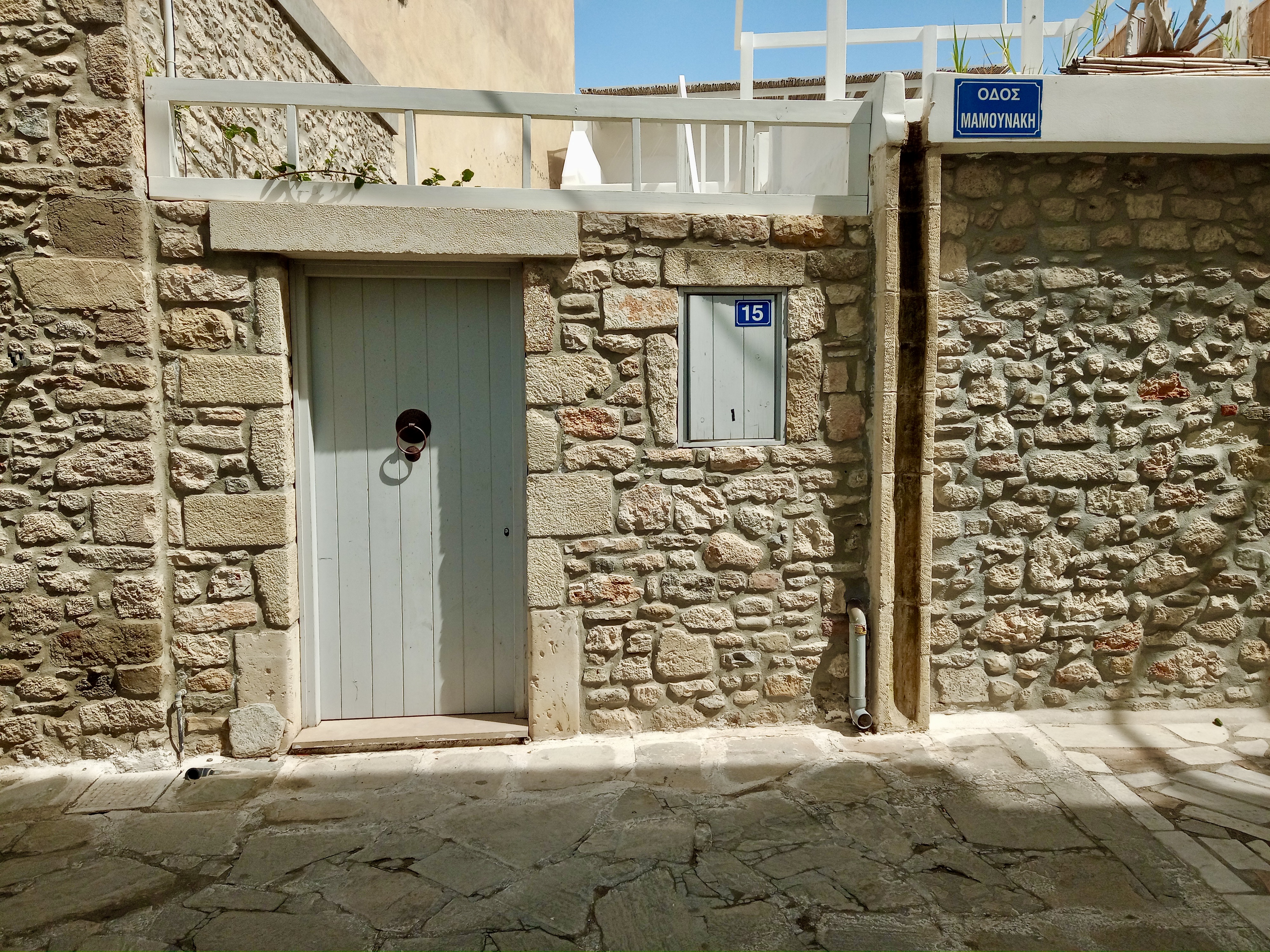
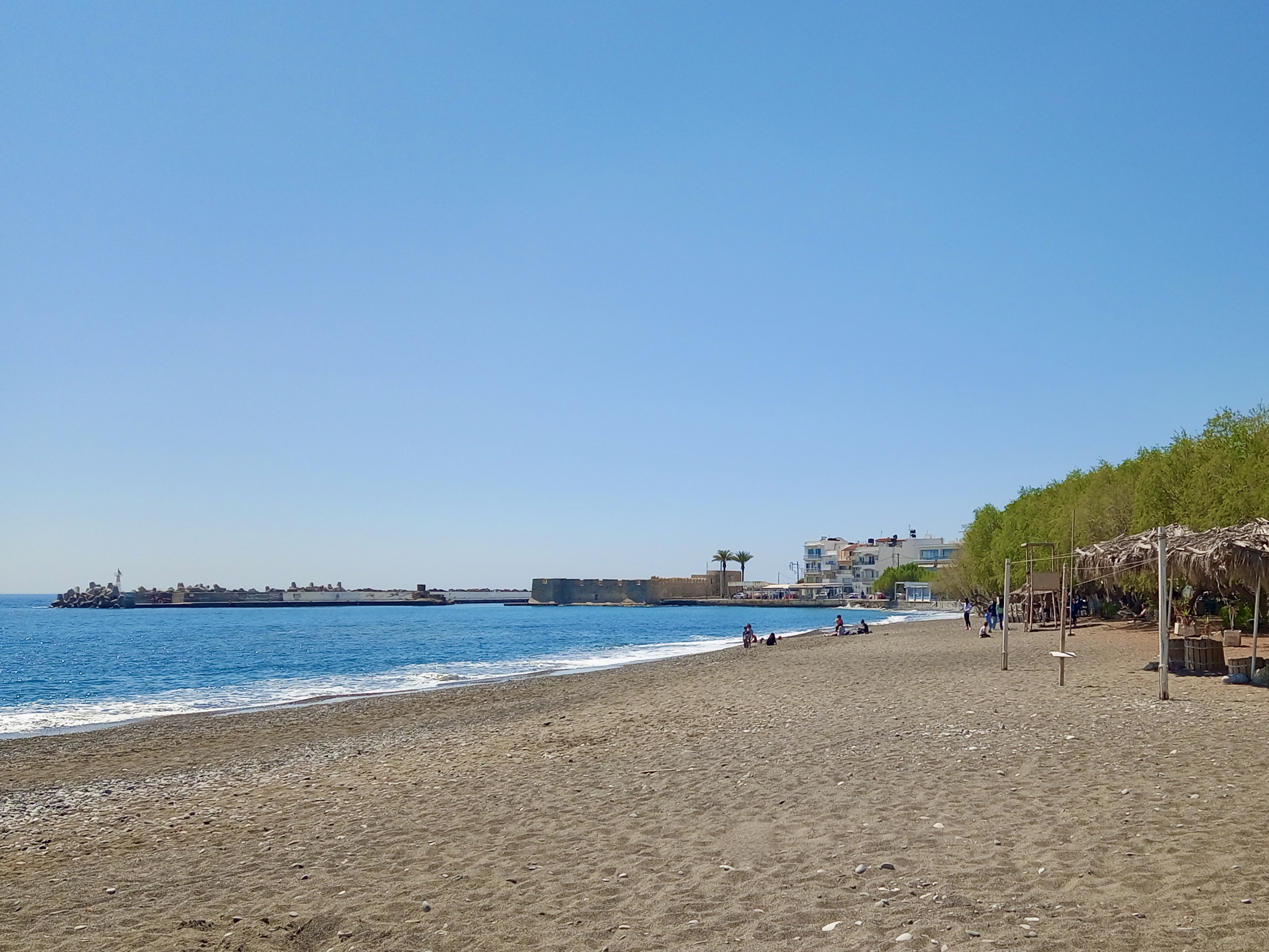
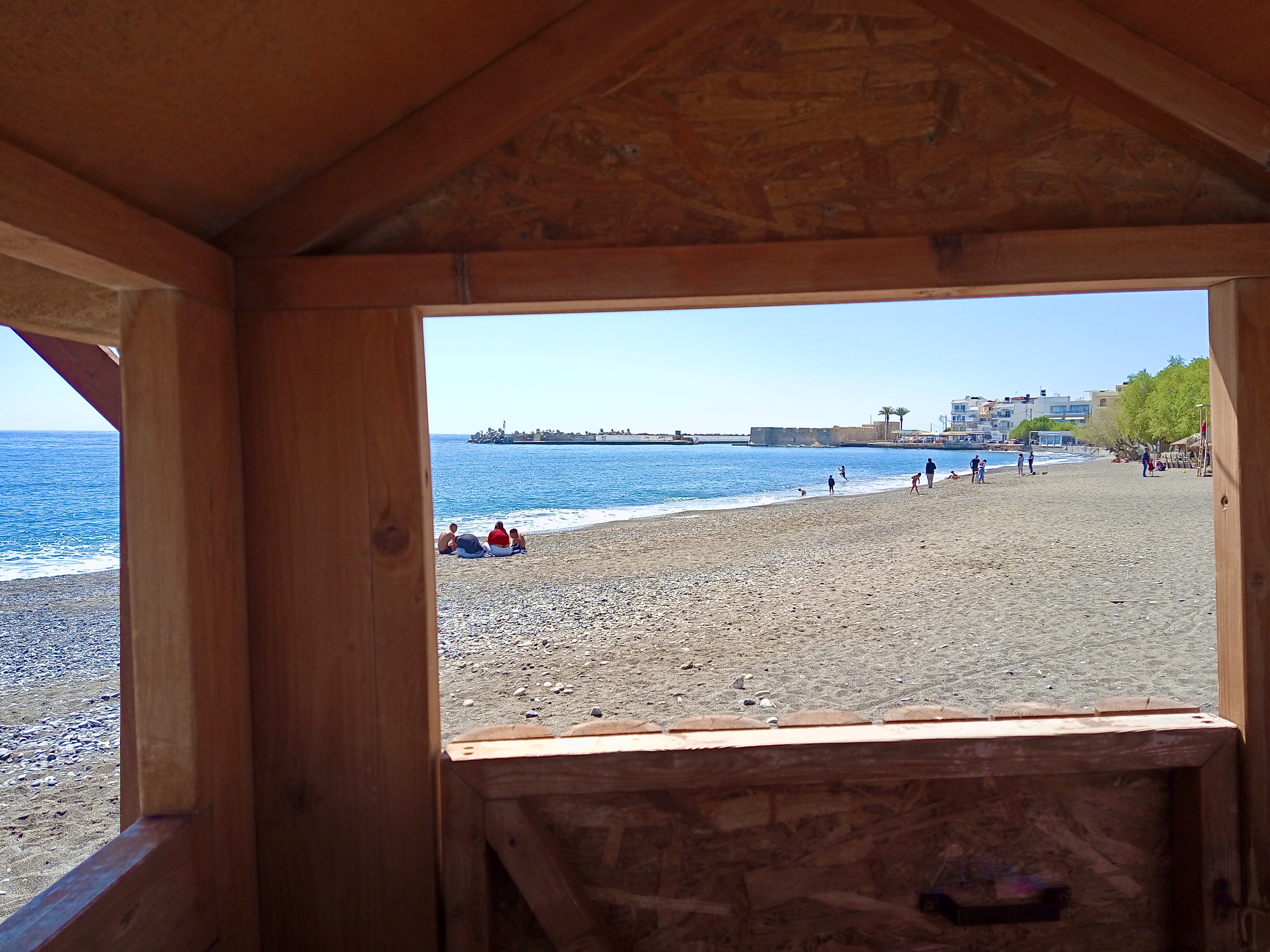
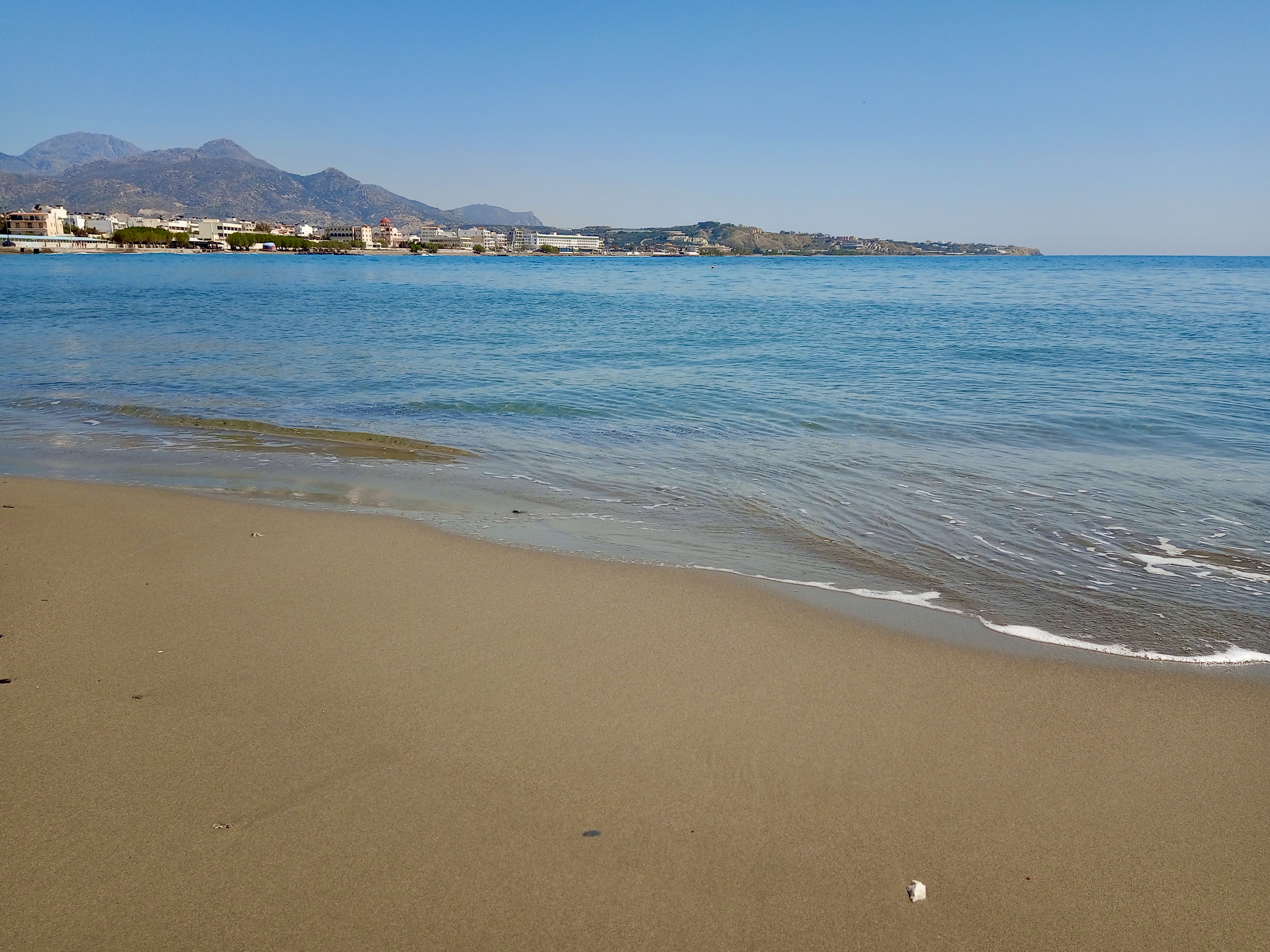
While I’m on the subject of Makrygialos, We went there the other day to see someone, and had a coffee on the delightful sea front near the tiny harbour. The photo at the top of this post was taken there on Thursday April 27th at around midday. As it happens, a couple of years before we upped sticks and moved out to Greece in 2005, we had two very enjoyable holidays there and so it’s quite nice to be able to go there these days at whim and see the place again. The village has changed a bit since then, after all it is twenty years ago when we had those holidays, but I’m glad to say that the sleepy, essentially Greek charm of the main harbour area and sea front going east from there will still charm the pants off any true Grecophile looking for a quiet holiday away from the hordes.

Be careful though, if you think about going there for a holiday. Make sure you avoid the couple of hotels that are on the periphery of the village, where you’ll get the same homogenous holiday as you’d get anywhere in Europe. Having said that, there is an excellent choice of small accommodations to be had, where you can truly relax, interact with the locals and maybe read my novel “The Crete Connection,” in which much of the action centres around a fictional taverna that’s meant to be in Makrygialos. In fact, if you have the book in hand, you can probably ID the restaurant that I used for the one in the novel, although there has been some building work that’s gone on either side of it that’s not included in my description, I must say. Here are the rest of the photos that I took last Thursday…

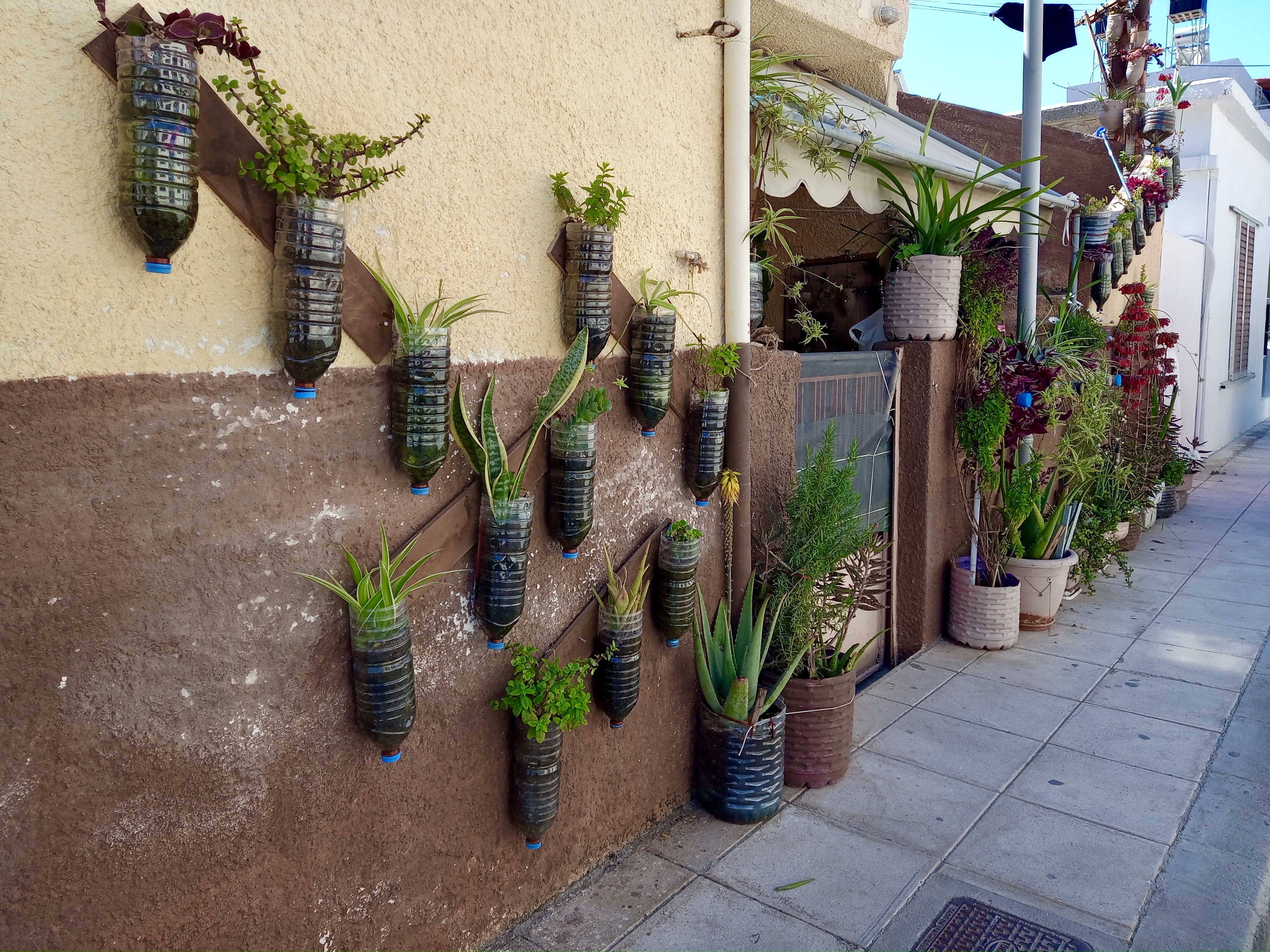
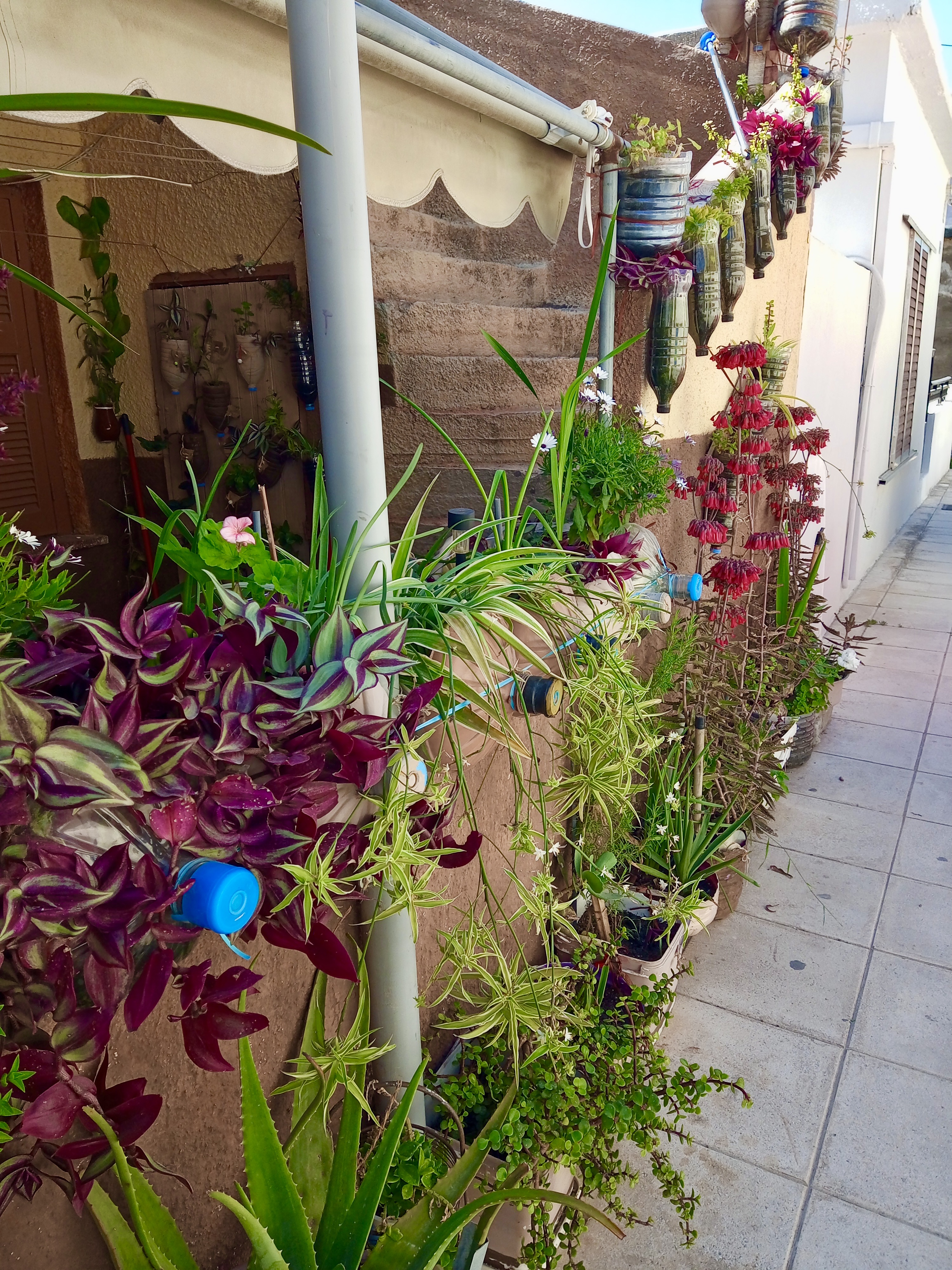
Finally, on an entirely unconnected theme, I mentioned a few posts ago about how the Greeks recycle without even being aware of it. How about this for a wall on the outskirts of town (Ierapetra) that shows how the resident has done wonders with old water bottles to spruce up a drab street…

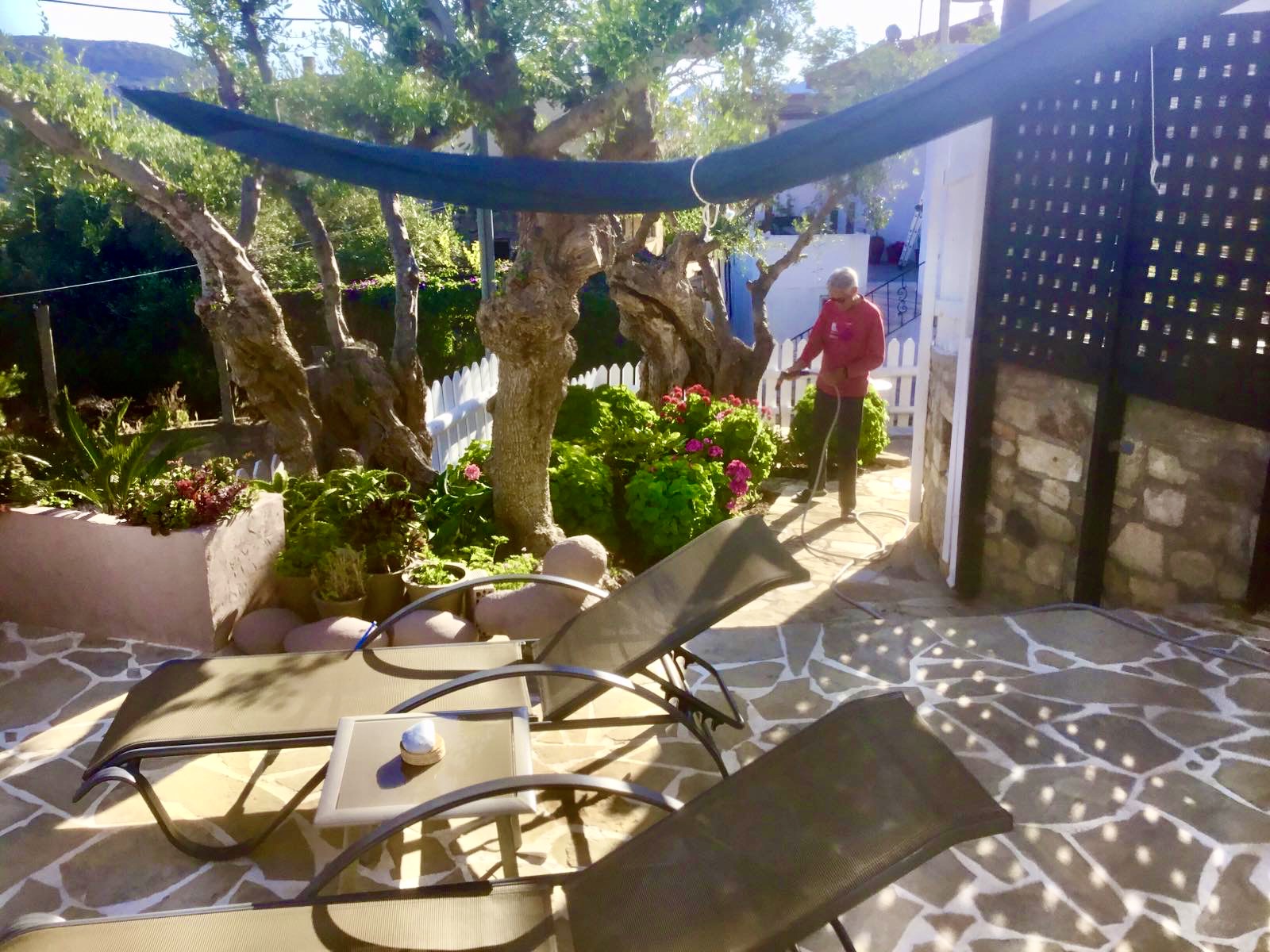
Lastly, here’s one that the beloved took of me watering the lower garden the other evening…

The latest work of fiction, “The Lone Refugee” (Click on cover image)

The latest work of non-fiction, “Greek Oddities” (Click on cover image)

And here’s the link to the new short story “Outage.”

One Firework

I know, I know, I say this every year, but it’s exciting to see everywhere opening up and getting ready for summer. I’m nothing if not predictable and, as I’ve probably said in every blog post about the subject that I’ve ever posted, by the time we get to this stage we’re itching to be feeling too hot, to be able to take our coffees on the beach and to feel the need to go into the sea to cool off. By the time October’s well towards the back end we’re always saying the opposite: Bring on the cooler days so we can get our jeans on again, so we can do some country walks and a long session of gardening without fearing an attack of sunstroke.

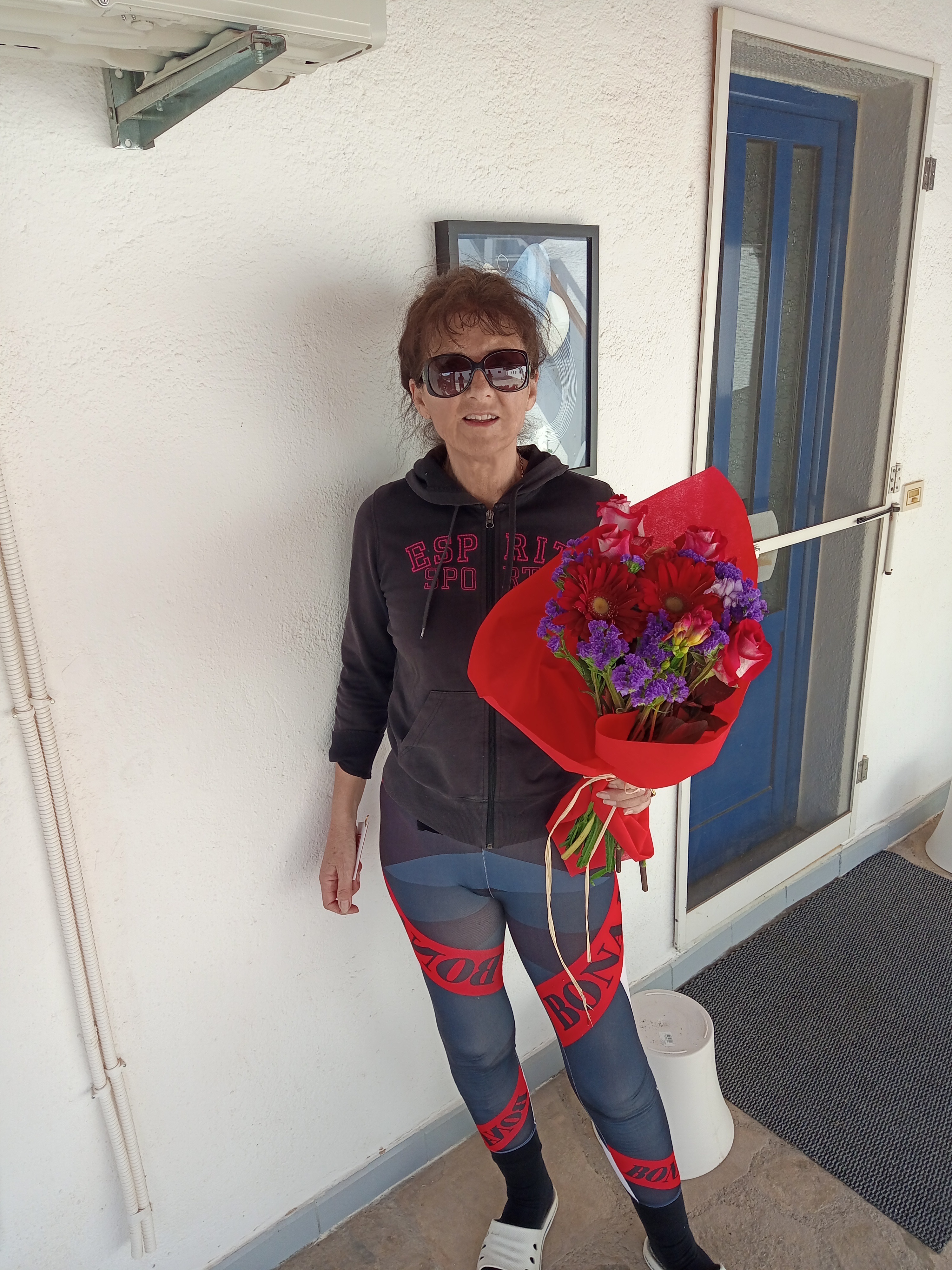
Last week it was our wedding anniversary. Now, I’m not at liberty to tell you how many years because I don’t relish the thought of being killed. See, it’s like this, if you factor in the age to which my beautiful and lovely wife admits to being these days, along with the actual year in which we tied the knot, then we’d have been married quite a few years before she was born. You see my dilemma don’t you fellas? Yeah, thought so. Still, all that aside, we did receive a couple of lovely surprises, one from more than 2000 miles away and the other from just down the road. Over in deepest Wiltshire in the UK my sister and her hubby are currently going through a very hard time, since my dear brother-in-law has some major health issues to deal with and it’s a huge worry for the both of them. No need to go further down that route here, but I only mention it because we considered that they probably had some much larger things on their mind than our little old wedding anniversary this time around. Yet how lovely when a local flower shop in Ierapetra telephoned to tell us they were about to deliver a bouquet. When it arrived, the attached card contained some beautiful wishes, written in a Greek hand but with English words. It was from Jane and Martin, my sister and hubby. Plus, the Greeks, one has to say here, are superb at presentation, always making even the simplest of gifts look a million dollars. They love to wrap things in coloured paper, tie a silky ribbon around it where possible and, if it’s edible, pack it in a very impressive box made of coloured and often printed cardboard.

Thus the first of our surprises brightened an already beautiful day…

Cut flowers, of course, are very ephemeral. You look at them, appreciate them, then they’re gone. But what thrilled us about this bouquet was that the spray included a nice purple burst of Sea Lavender. Now, if you know anything about that, it’s sometimes also called the ‘everlasting flower,’ because if you put it in a vase and let it dry, it retains its colour for years. It’s the ideal plant to use in a dry display because it’ll remain vivid for ages and ages, so we’ll have a hard time forgetting this loving thought from my dear sis and hubby all that distance away.

The second of our surprises was when a couple, probably our best friends from nearly 18 years in Greece, turned up halfway through the evening with a large, quite heavy box. When we opened it…

Now, this kind of ‘cake’ isn’t anything like the ones you’d get in the UK. In fact they usually call them ‘tourta,’ and when you cut them they’re layered inside and very, very rich and gooey. What added that little bit of pzazz was that it came with a sparkler, which, of course we immediately lit and the video shows the result. The only problem we had with this was, as a rule we don’t eat this kind of thing, but then neither do our friends Timotheo and Sylvia, but the occasion demanded something a bit out of the ordinary, eh? We all tucked into a slice, accompanied by coffee (a given) and then the rest went into the fridge. There was no way that the two of us could ever get through the remainder, so Maria and Dimitri down the lane were only too pleased to help us out when we took a large chunk down to them. Maria told me how much she thought this kind of cake costs, which further increased our appreciation for the kind of friends we have here!

We went out on the day too, and we had lunch (no surprises here) at the Konaki, on the beach. As usual an excellent meal was taken and we didn’t have to tell Gianni what we wanted to order. He already knew.

Another year has rolled around, and here are a few photos from the past few days…

Above: In the village of Stomio (well, the outlying parts) there are lots of hothouses (thermokipia) and, OK, they’re not everyone’s cup of tea to look at. But one has to hand it to the owners of this farm, because look what an amazing effort they’ve made to make the entrance to their place look nice.

Above: Now isn’t he (or she) a beaut, eh? We have a small plant tray of water on the floor outside, mainly for the cat to drink from. However, most nights if you go outside in the small hours, you’ll find this little (well, not so little actually) chap, who’ll actually get into the water sometimes, but then will hang around the area eating bugs. For the latter reason alone he’s very welcome any evening! We’re fairly confident that he’s a European Toad.

Above: In Ierapetra Old Town earlier today. A Jacaranda is just bursting into flower.

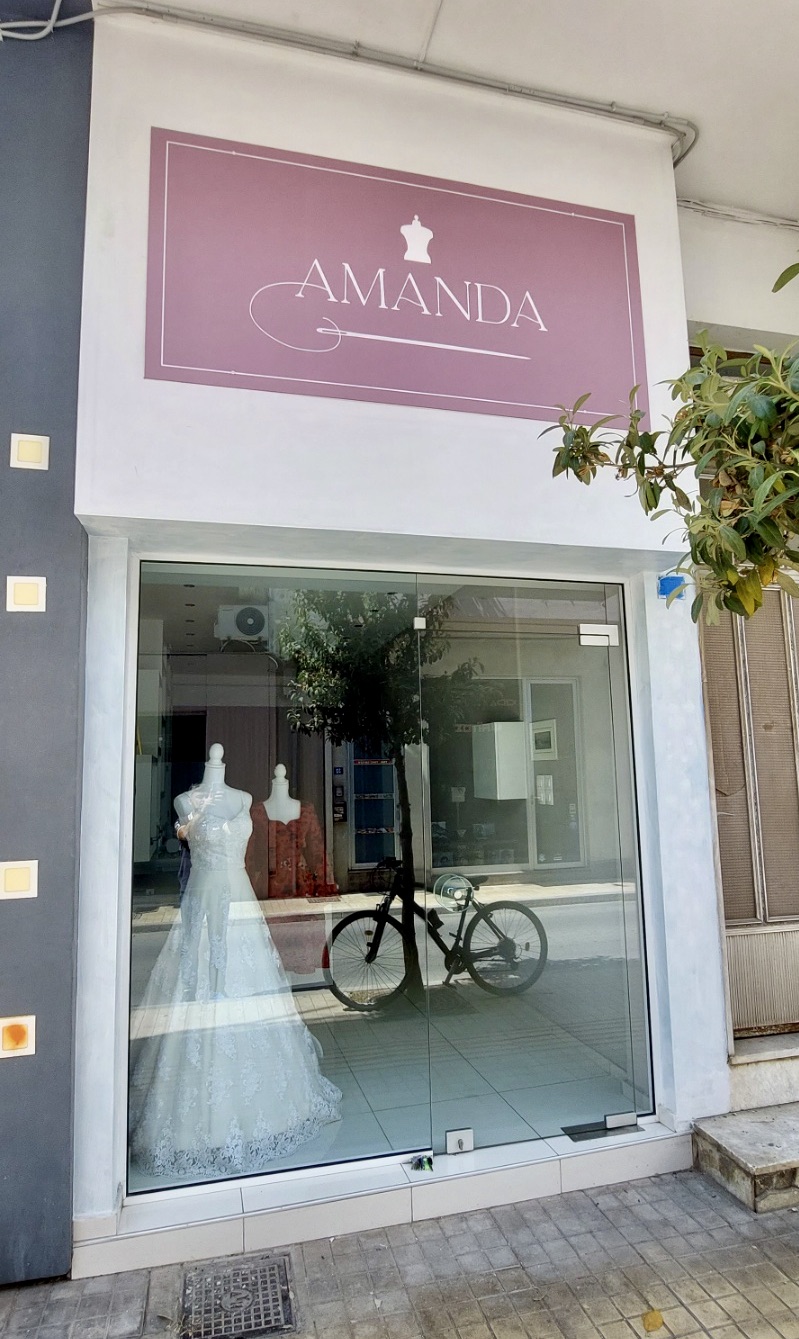
Above:In need of some modernisation‘ would be an estate agent’s description of this house. It’s one of the diminishing number of truly characterful old houses in the Old Town area. Lastly, the photo below is of our young friend Eirini (Amanda), who’s a very talented seamstress and dressmaker. She’s just opened her new shop in the town, offering an alteration and dressmaking service. She can take things in, take things out, and make an entire wedding dress or morning suit from scratch. We wish her the very best of success and I was touched when she and her dad asked me (as a retired graphic designer) for my input in designing the logo. Another friend had come up with the chosen typeface, and I did the rest. The needle below, along with the simplified mannequin above, hopefully conveys to the passer-by what she’s all about. If you live in the area, she’s just along the street from the main Post Office. If you do go there, tell her John sent you!

The latest work of fiction, “The Lone Refugee” (Click on cover image)

The latest work of non-fiction, “Greek Oddities” (Click on cover image)

And here’s the link to the new short story “Outage.”

Creativity

The season for taking long(-ish) country walks is coming to a close, as the days become longer (at an amazingly fast rate) and warmer, resulting in the outcome that, when you get back to the house, the first thing you feel compelled to do is take all your togs off and take a tepid shower. I can confess here and now that we’ve already taken our first tentative outdoor showers this year, having been seduced by the baking sunshine that we’ve enjoyed a couple of times this past few weeks, a harbinger of the successive ‘scorchio‘ summer days that will soon be upon us, no doubt kicking in without much warning during the first week of May. For several months every summer we barely give a second glance to our indoor shower, taking all our showers in the garden, where it’s bliss to do so under the shade of the ‘sail,’ and then feel yourself drying off even before you can towel yourself down.

I’ve talked before about the fact that you can always tell instantly if a house is owned by Greeks or foreigners by whether it sports a swimming pool or simply an outdoor shower area, which can sometimes simply consist of a piece of hose hooked up to a fence or wall, just at sufficient height to do the necessary, as it were. If there’s a pool, then more than likely it’s foreigners who’ve bought their place in the sun in order to live the dream, often whilst blissfully unaware of what it’s going to cost them to run and maintain that status symbol that puts one in mind of a David Hockney painting. Greek’s houses more often than not (with the exception only of a few suburban areas of Athens where the politicians and TV stars live) won’t waste time and money on a pool when a shower head screwed to a fence will be all that’s needed to cool off during the long, often unbearably hot, summer months.

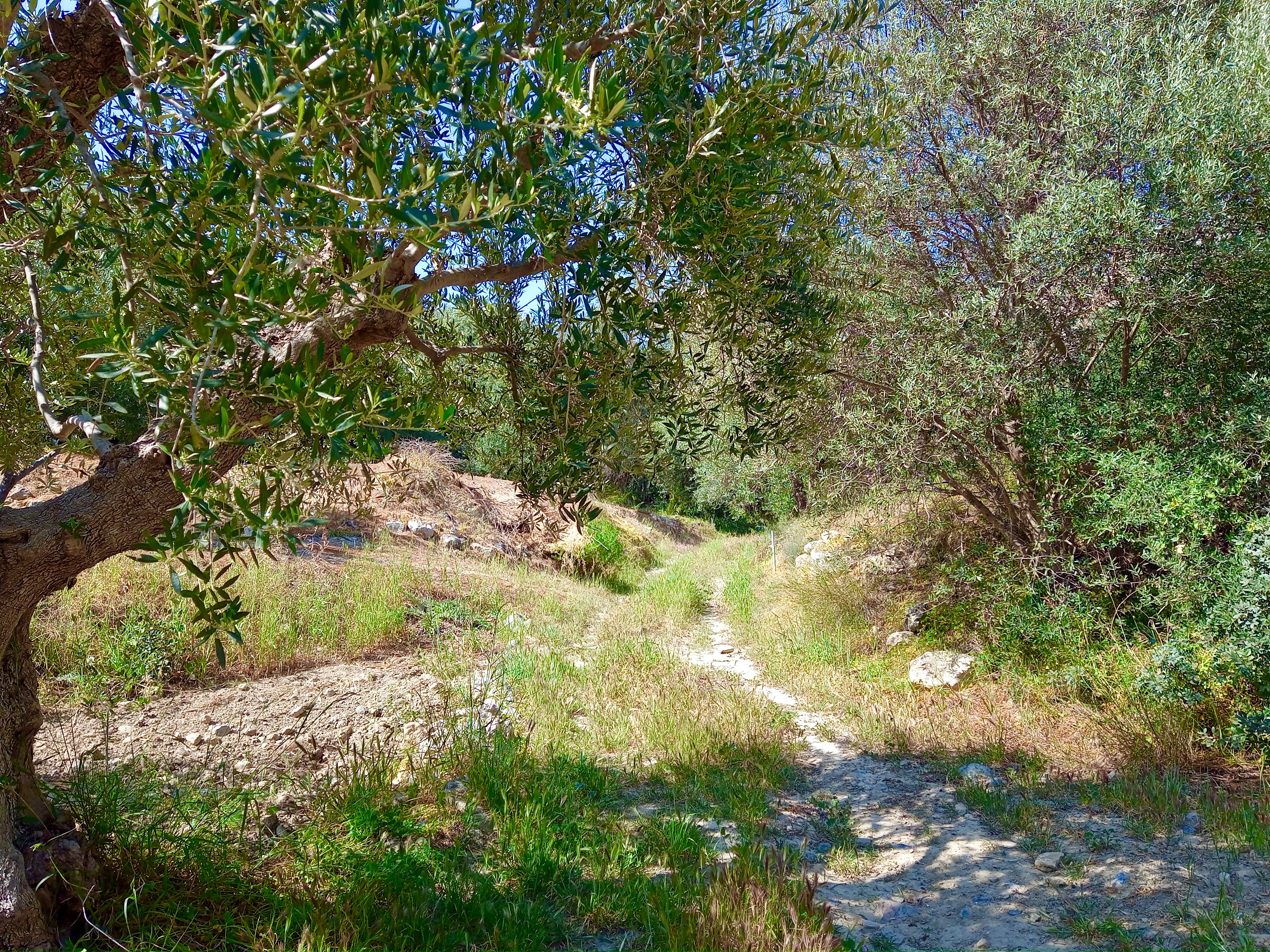
So, right now, we’re well aware that the long (sometimes 10k) walks that we may do during the winter months here will once again give way to the short walk from the car to the beach when we fully enter ‘summer’ mode. The photo at the top of this post was taken a couple of afternoons ago, at around 4.00pm, an hour when we’re usually sleeping. Now and then, when we both can’t seem to drop off, it’s a mixed blessing because, even though not to be able to sleep in the afternoon can be a bit irritating, it’s also a glorious time to go for a quiet stroll in the countryside around the village, because the rest of the world is asleep, and there’s a beautiful calm about the place. The only sound we could hear during that half-hour walk was that of all the many birds that abound in the rural landscape at the moment, and the breeze in the trees. Oh, and the occasional lizard that’s just woken up from its winter sleep and is now rustling in the undergrowth.

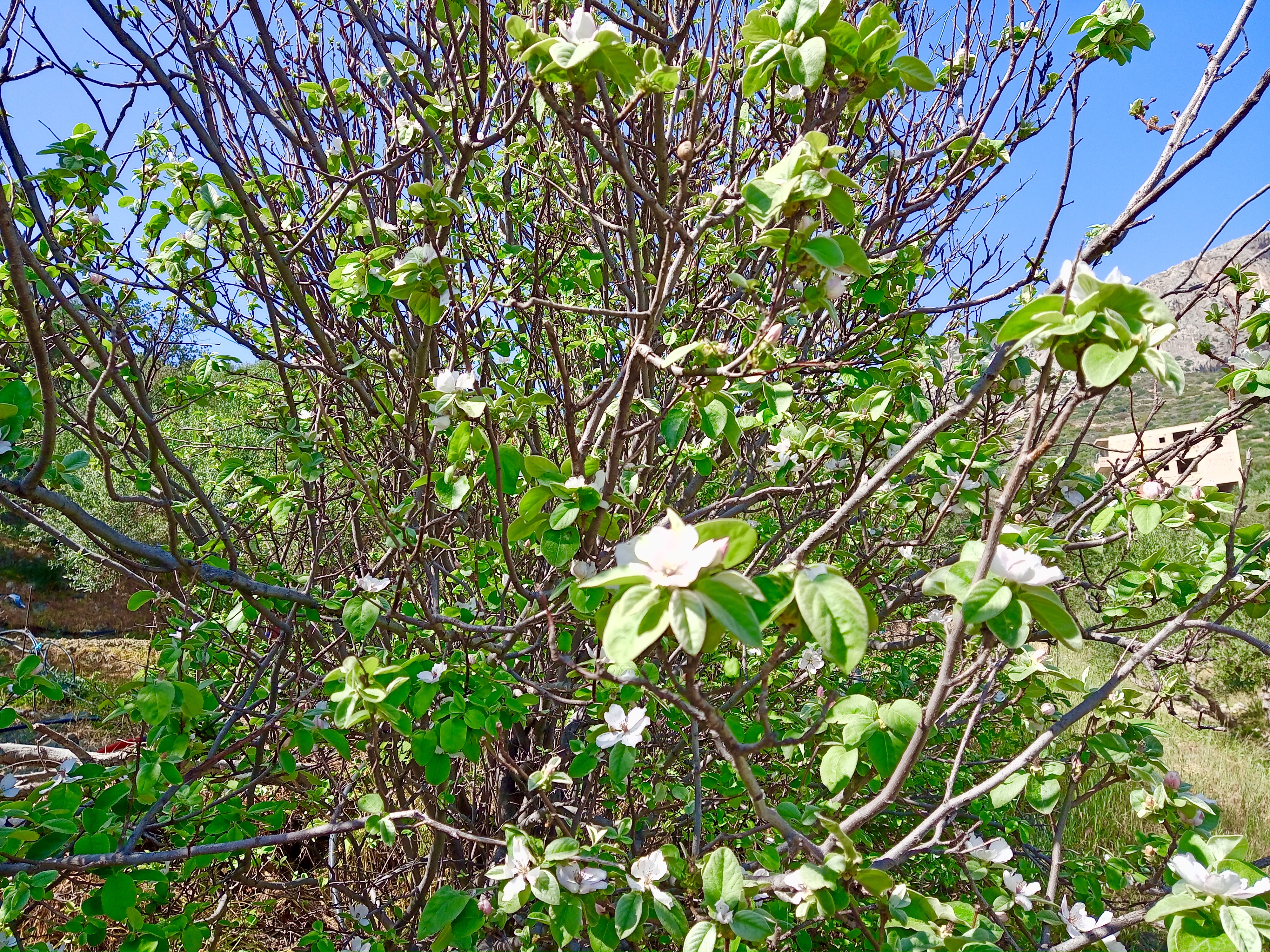
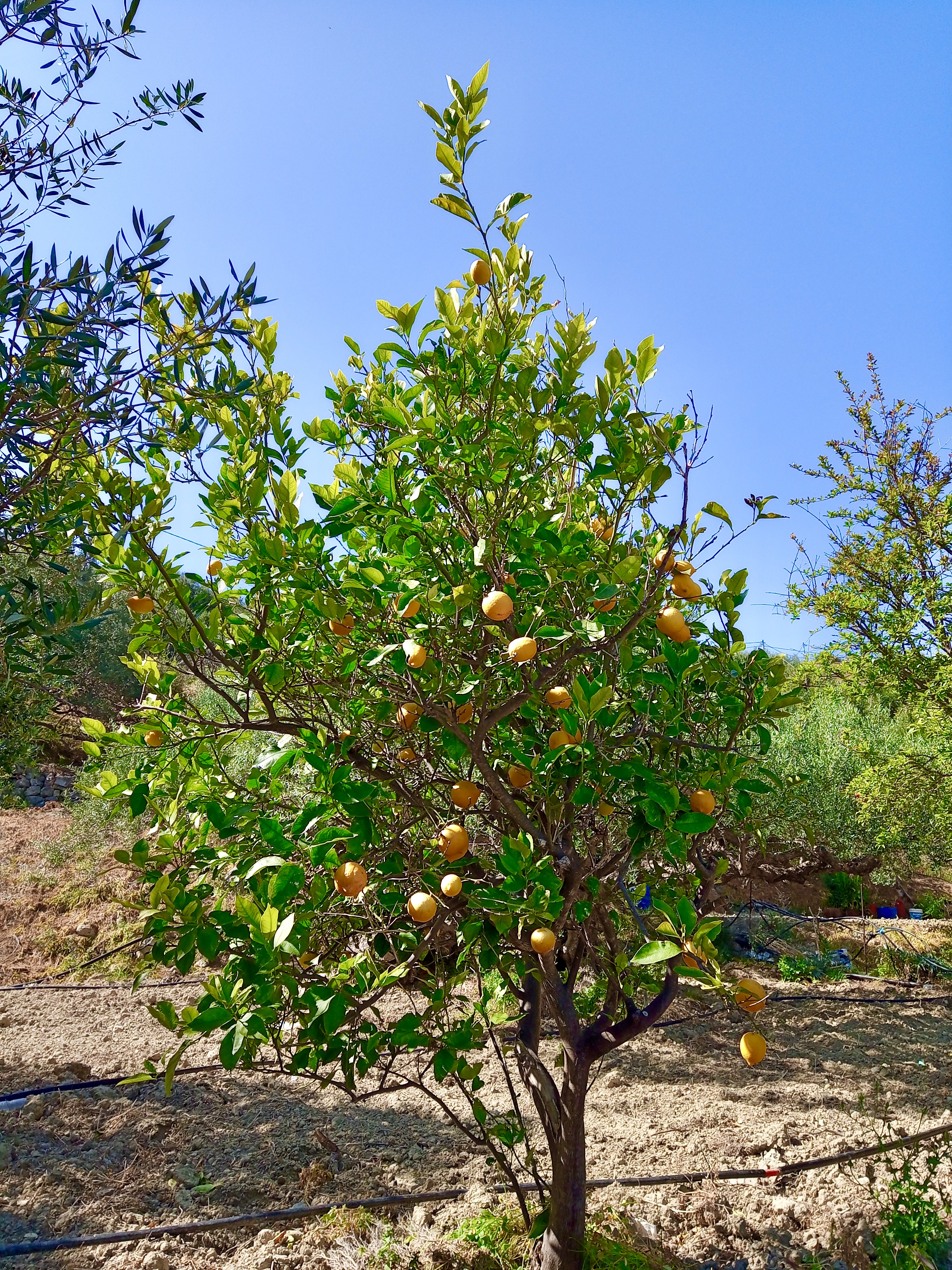
I took the next two during the same walk…

That lovely tree with the white blossoms on it, we couldn’t be sure what it was. We theorised that it was maybe a citrus of some kind, but we don’t really have a clue. If anyone out there can enlighten us, then please post a comment. I’d be fascinated to learn more about it. The lemon tree is a good specimen, and a good illustration of something else I’ve mentioned before (notably in my Ramblings From Rhodes series of books), and that’s the fact that people here generally don’t pick lemons until they need them. Of course, there are trees that are grown for the market, but local people, almost without exception, have trees for their own use, and these are minor miracles in that the fruit will stay ripe and ready for harvesting for months on end, meaning that you only need to pick the fruit as and when you need it. It’s testimony to the trust among local people too that the tree I photographed is down a dirt track in someone’s unfenced horafi that’s hidden from prying eyes, meaning that, had we been the types to steal a few fruit, we could have done so. No one around here steals from their neighbours. It’s as simple as that.

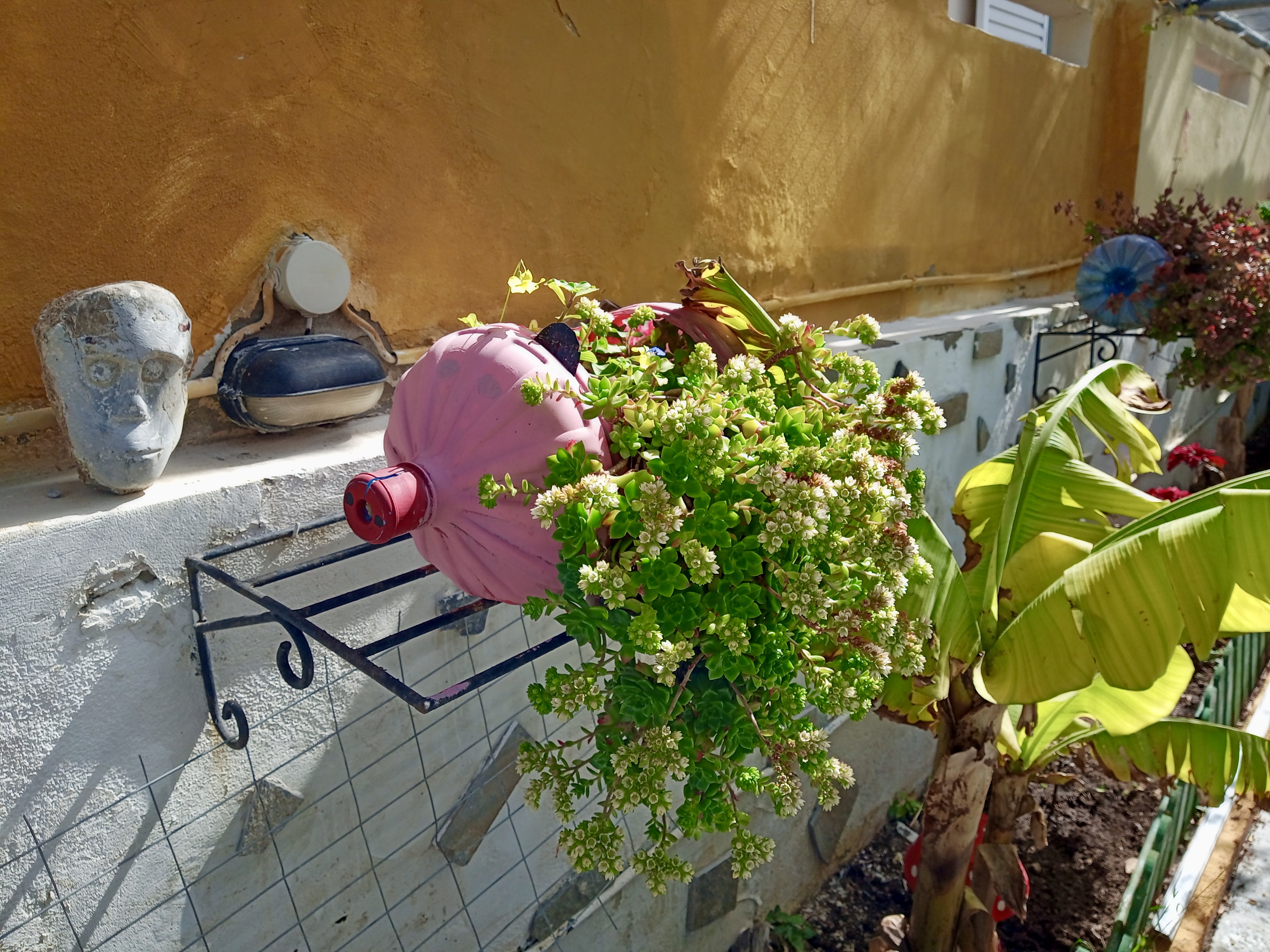
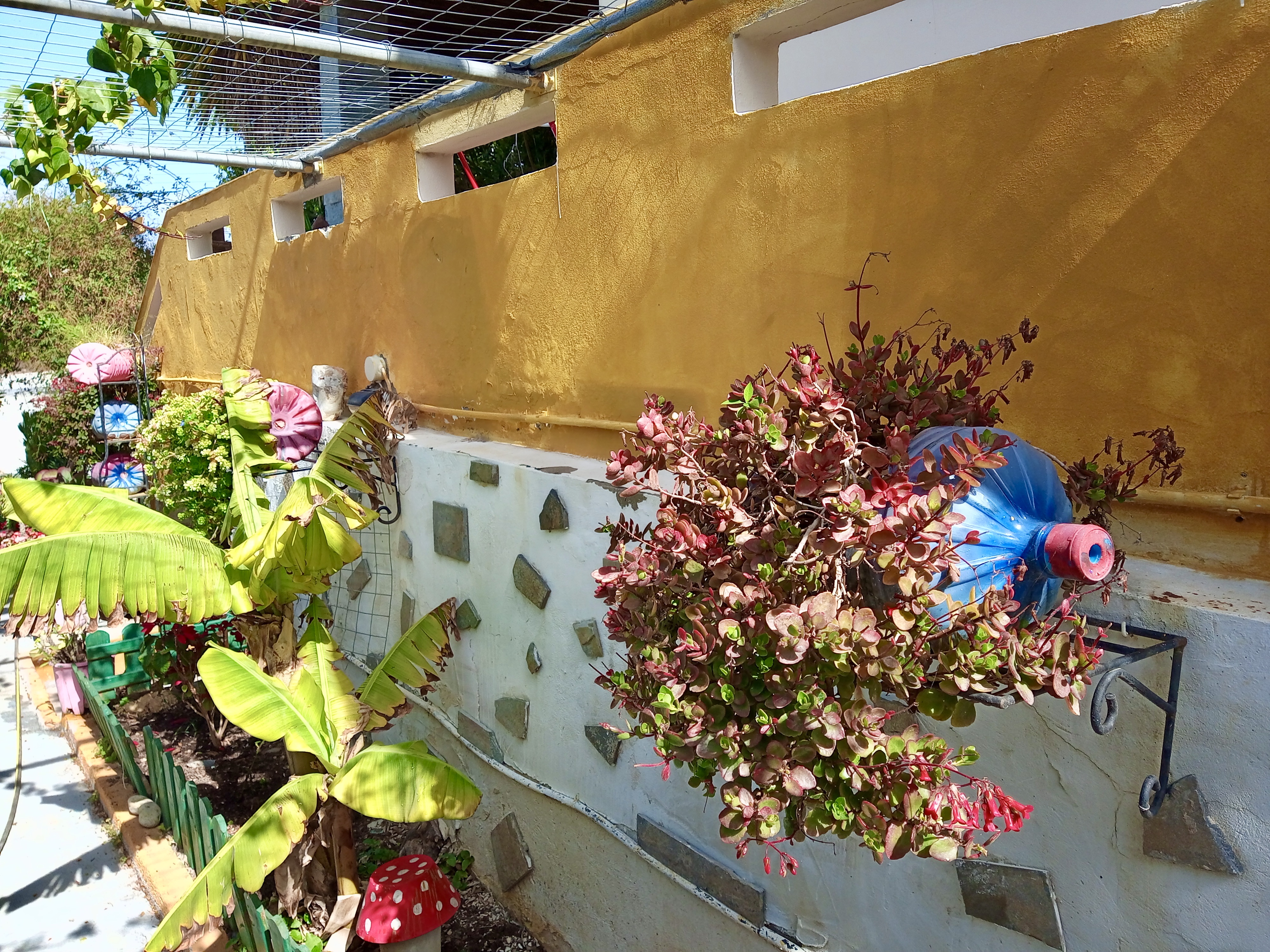
Lastly, I’ve also often talked about the fact that, even without being aware of it, many Greek people practice recycling in sometimes most inventive ways. Having the opportunity yesterday to drop by on a good friend, Maria, who lives along a lane among some thermokipia very near to Ierapetra, I was struck by her creativity with old water bottles, the kind that are used in office water dispensers. I’m sure you’ll have come across them at some point. Maria is around seventy and lives next-door to her daughter, who uses her as a regular child-minder for her toddler while she’s at work during the week. Because she’s at home most of the time, she busies herself manufacturing creams and pastes for all kinds of useful purposes. On this visit she gave us a couple of small pots of perfumed moisturising cream that she’d made herself, using all natural ingredients. One was for the man to use after a shave (and thus for moi), and the other a more general moisturiser that my wife can use at the end of the day. Maria also paints all kinds of lovely floral designs on to flower pots and frequently gives them as presents to people that she knows. One thing you can be sure about in Maria’s case, she’s never the type to say “I’m bored.”

Just look at what a little creativity can do when you have some old water bottles (and some paint) on your hands though, as you look at the photos I took of the wall beside the path leading to Maria’s front door…

Just to finish off this post: I’m addressing this bit to fellow Cretan residents: Is it me, or are there more than the usual number of locusts around this year? We seem to be coming across them very frequently whilst outdoors. They often take off when disturbed, giving the impression sometimes that they may have been a small bird as they fly off and you just catch them out of the corner of your eye. I often wonder if we ought to try and bump them off when we find them sitting on a plant in the garden. My gut instinct is to leave them be, but my beloved says they’ll eat our precious plant foliage and ought to be dispatched without mercy. What do you think?

The latest work of fiction, “The Lone Refugee” (Click on cover image)

The latest work of non-fiction, “Greek Oddities” (Click on cover image)

And here’s the link to the new short story “Outage.”

One step forward…

I am sure no one needs reminding of the well-known expression ‘one step forward, two steps back.’ Well, it seems that this could be applied to the spring’s efforts to oust the winter this year. I don’t know whether it’s all down to climate change, because there have always been unusual ‘highs’ and ‘lows’ in weather patterns, but this winter’s certainly been a rum one. After a January and most of February that resembled spring, with warm sunshine and very little cloud, wind or rain, ever since the middle of March we seem to have been regressing to what we usually expect of the middle of winter. Lately we’re getting a couple of days of sunny weather and climbing temperatures, then the clouds come, the rain falls (delighting the Greeks, at least, since they think primarily about next winter’s olive harvest and the water supply situation, for starters) and the temperatures drop to what we’d consider low even in January.

This is our 19th winter living in Greece, and we’ve so far never had any heating on, or needed any, once we got past the first week of March, simply because the mean temperatures in the southern Aegean don’t necessitate it. This year, however, just when we think about putting the ‘calorifers‘ away for the summer, we find ourselves sitting on the sofa of an evening and rubbing our calves (not to mention my earlobes), since they feel cold. I write this on April 11th and the top temperature we’ve seen today, when we’ve had some sunshine for part of the time, has only been around 15ºC. That’s lower than the average daytime temperature in January if there’s some sunshine to be had. At 9.00am this morning it was only 11ºC, when by rights it ought to have been already in the mid-teens. April daytime temperatures usually are well into the lower 20’s and we’ve only seen that once or twice this past couple of weeks.

I know what’s going to happen though, some day soon we’ll wake up and feel that summer is upon us. Whatever the weather does over here, every year we seem to find that the summer tends to arrive instantly, and we whip out the shorts to do some gardening and think about iced coffees on the terrace instead of making a filter. I do feel sorry for the early tourists this year, though. Those few that we’ve seen, while we, like all the locals, have been drinking coffee on the waterfront in our jeans and fleeces, have been strolling along in shorts, sandals and t-shirts making us feel positively frozen at the thought. Still, I usually say that the weather here’s got to be better than it is in Northern Europe anyway, right? Not necessarily. I exchanged messages with someone in Germany a couple of days ago, when we were taking refuge inside the house all day long owing to the dull sky and frequent rainfall, not to mention disappointing temperatures, and she replied that it was gloriously sunny and warm over there. How dare they, eh?

Best thing to do is start posting some photos…

Above: Our neighbour Christina’s been at it again, she turned up the other day with these. They’re called ‘Kalitsounia‘ and they’re a Cretan speciality. There are quite a few versions of them and they’re usually sweet-tasting, although containing cheese, often Misithra.

Above: This one was taken on March 25th. It was another of those days when we were fooled into thinking that spring was upon us. I actually dug the ‘sail’ out and put it up fo the first time this season.

Above: These were taken at Elounda at around 11.30am on April 6th. It was yet another day when the weather regressed to what we’d expect on a worse-than-average day in January. Local folk were out painting chairs and tables, setting them out in order to get their restaurants open for Greek Easter (which is this week, as you probably know). Mind you, we still found it warm enough to sit beside the sea with a Freddo espresso, so I oughtn’t to complain too loudly. We were there to visit the Eklektos bookstore, which is sadly going to close its doors this coming July in all probability. For more information about that, check out my ‘John Manuel – The Books’ Facebook page, where I posted quite a long piece about this recently. It’s the post that begins, “Some sad news that will affect you if you are an avid reader...”

The latest work of fiction, “The Lone Refugee” (Click on cover image)

The latest work of non-fiction, “Greek Oddities” (Click on cover image)

And here’s the link to the new short story “Outage.”

Slipping into “Sitting out” mode

Almost imperceptibly summer is creeping up on us. It seems that the village is already in early evening ‘sitting out’ mode, with the light evenings having arrived and the air also having begun to warm up. I’ve just been for a power walk around the perimeter of the village and found myself waving a hello to half the inhabitants, or so it seemed to me. Doing a power walk around our village is a pretty good way of getting about fifteen minutes of aerobic activity going on in the heart.

Leaving the house and going uphill towards Sofia’a hovel (for that’s what her home is, in all honesty), one climbs a one-in-three hill (as we used to call it in the old money) for about two hundred metres. Right outside of Sofia’s door the lane narrows to the point where no normal 4 wheeled vehicle could pass, although Dimitri on his quad bike often takes that route when going about his daily business of caring for his sheep, goats and various horafia that the family have dotted about the hillsides around the village. I’ve probably mentioned before that the street that goes up past our house was once steps, and was concreted over in order to facilitate motorised vehicles. I’d say though, that if you’re not driving a 4×4, and one with a low centre of gravity at that, you take your life in your hands trying to drive anything up further than our side gate, it’s that steep. When you think about how steep a street has to be in order to be comprised of steps in the first place, you get the idea of how steep it is now it’s concrete instead.
Anyway, as usual I digress. About a further fifty meters up from Sofia’s front door is the tiny village one up/one down of Christina and her ‘husband’ Gianni. Now here’s where it gets interesting. See, they’re in their sixties at the very least, and they’re not actually married. Giannis is the brother of the village ‘Mayor,’ our friend Angla’i’a, and she doesn’t have a good word to say about him. It’s her opinion that they’re claiming some kind of state benefits owing to the fact that they’re not man and wife, and that her brother is quite economical with the truth when it comes to what he tells the government about his situation health-wise. The net result of this intrigue is that Christina, who’s a sweet, long-suffering lady really, gets a raw deal from quite a few of the villagers owing to the fact that she’s living with Mr. Misery, Gianni, who I have to say we do find to be quite surly and not very loquacious. Let’s face it, he’s a grumpy old git to most people.

We were taking a walk up to what we call ‘Dingly Dell’ the other day and encountered Christina coming the other way along the steep dirt track that leads out of the village into the olive groves. Naturally, we stopped to pass the time of day with her and, for the first time, she kind of opened up to us a little. We have quite often exchanged a few friendly words while passing her house, but seldom more than that really. This time we talked for a while and she told us that she felt that the villagers were quite judgmental of her and that she didn’t always feel accepted. She isn’t from around these parts, but hails from somewhere near Athens. How she came to be shacked up with a Makryliot like Gianni isn’t all that clear, but here she is and here she stays. 

As we talked we asked about how she really was and she told us that she appreciated us and loved to see us. She felt we showed her love (we thought we were just being neighbourly) and always had smiles on our faces. She told us that she thought of us as good people, not inclined to judge her (we just thought we were being normal), and she was so glad that we’d come to live here. To be honest, we found ourselves warming to her all the more as we realised that we’d never actually seen her pass the time of day with anyone other than Sofia, who has dementia, and Christina goes down to her house most days to check that she’s all right. We finally said our goodbyes and ‘kali sinexeias’ and went on our respective ways, but not before Christina had promised to drop by the house some time. We continued climbing up the lane and agreed that there was quite a little “Peyton Place” going on, even in this small village of around 100 inhabitants, it seemed.

If you’re old enough to remember Peyton Place, then you’ll know that it was one of the very first ‘edgy’ soap operas ever to run and was set in small-town America, somewhere in Massachusetts, apparently. It was pretty racy for the era and ran for about five years in the late sixties. In fact the name “Peyton Place” has become synonymous with scandalous goings on, and people of a certain generation still use the expression today. Well, I just did, didn’t I? To get an idea of just how the series was pitched, it gets referred to in the rather clever Tom T. Hall song that was a massive hit for Jeannie C. Riley in 1968, “Harper Valley PTA.” 

Looking back over what I’ve written so far in this post, it is getting a bit long-winded isn’t it? Cutting to the chase then, the day after we’d had the chat with Christina in the lane, she turned up at the house with a couple of bags of goodies. There were cheese pies, spinach pies and some delicious biscuits that go really well with morning coffee, and she told us that everything she’d made herself. The pies were uncooked and frozen, so that they could go into the freezer and be dug out and cooked as required. She left promising to return the next day with yet more examples of her home cooking, and all this because we’d taken the time to stop and have a friendly natter with her.

Just a small part of Christina’s gift.

We may not have much money, but we certainly see life, as my mum used to say.

Going back to the power walk around the village (after all, that was what started me off on all of this), when you get to the highest point you’ve really got a thumping heart if you’re ‘stepped it out’ because, passing the church, you then go along a level section for about fifty metres before starting the descent on the western side of the village. Walking down that lane I saw Poppi sitting in her glass-enclosed terrace and she gave me a wave. When you eventually get to the bottom you double-back on yourself following the ‘main road’ through the village, passing the kafeneio (where Adonis was just pulling up in his battered old Suzuki Vitara mini 4×4), the mailboxes and the homes of Manoli (he of the frequent falls and fractured hip), Angla’i’a and George, then back up the hill past Maria and Dimitri’s to our driveway. That last bit from the road up to the house is another heart pumper for about 70 metres too. 
Boy did I feel righteous by the time I got to our front door and eased off my trainers. This walk was done at around 6.30pm, and it seemed that the whole village was now into evening ‘sitting outside the door on a rickety old chair and keeping company for a while’ mode. This mode will last well into November now, signalling warmer air and light evenings, and it’s a great feeling, especially because all around the village there are blackbirds adding their exquisite tuneful songs to the bird chorus. I’ve mentioned this before too, I think, but something I learned about blackbirds many years ago, when I actually used to read up on native birds when we’d do our nature rambles in the UK, was that they begin to sing in late February and always stop by the end of August, often a week or two before. Thus, if you hear blackbirds singing, you know it’s the most ‘optimistic’ time of the year, if you get my meaning. The blackbirds here follow the same cycle as they do in the UK, and so the months when you will never hear one sing are September through January.

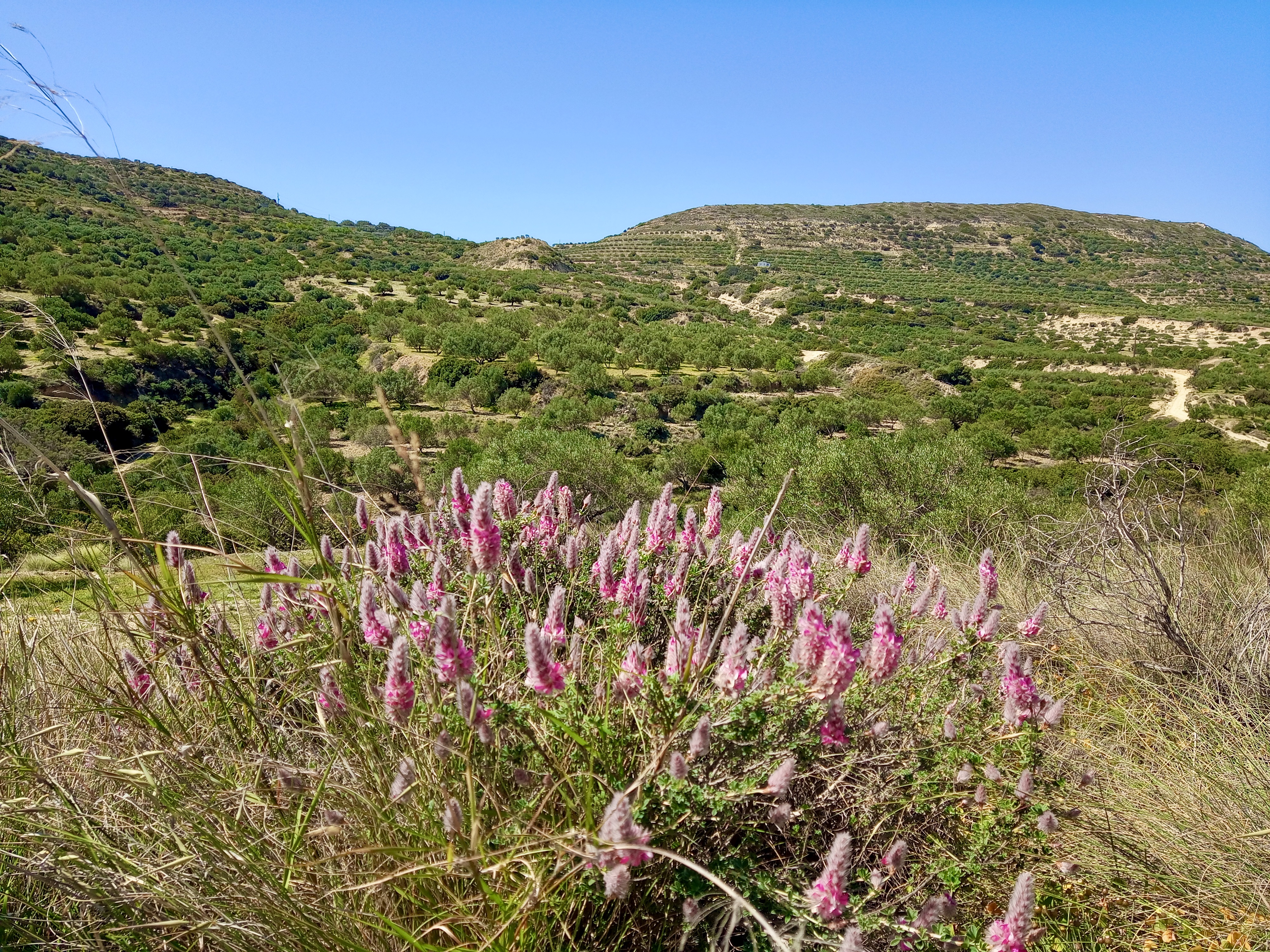
Time for this post’s batch of photos, quite a few of which were taken on a country walk we did a few days ago. If you look closely at the last one in this series of six, you’ll see just how much colour there is in the tiny wild flowers underfoot, and it can all easily be missed if you don’t take a moment to look closely enough…

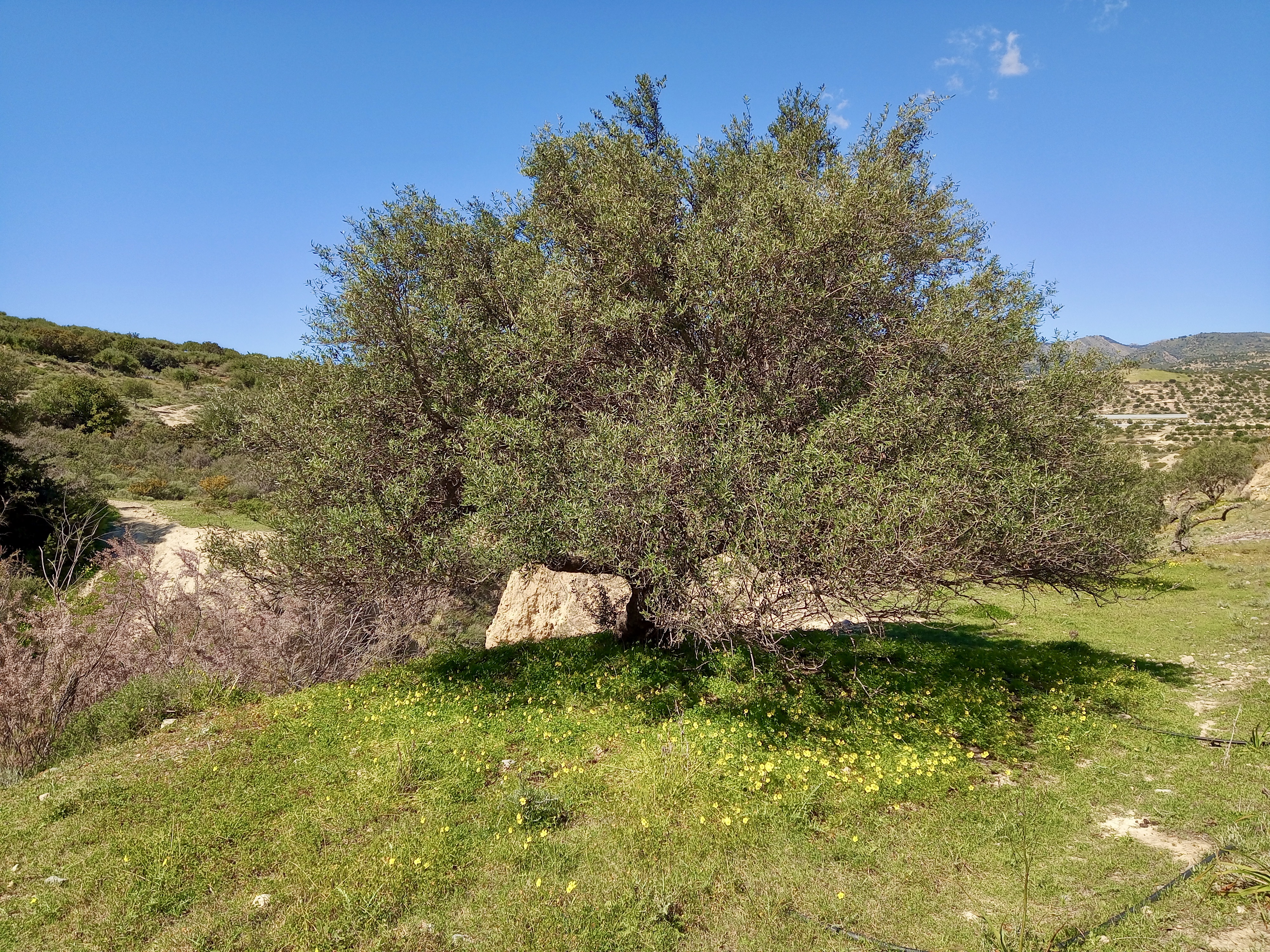
This next one below I rather like, because it shows how the shade from the olive trees attracts that plant with the pretty yellow flowers whose stems taste of lemon (all the children pick and suck them) and they flourish better in that shade than in full sun. In some olive groves at this time of the year there are hundreds of these yellow patches, one around each tree trunk, and it looks lovely…

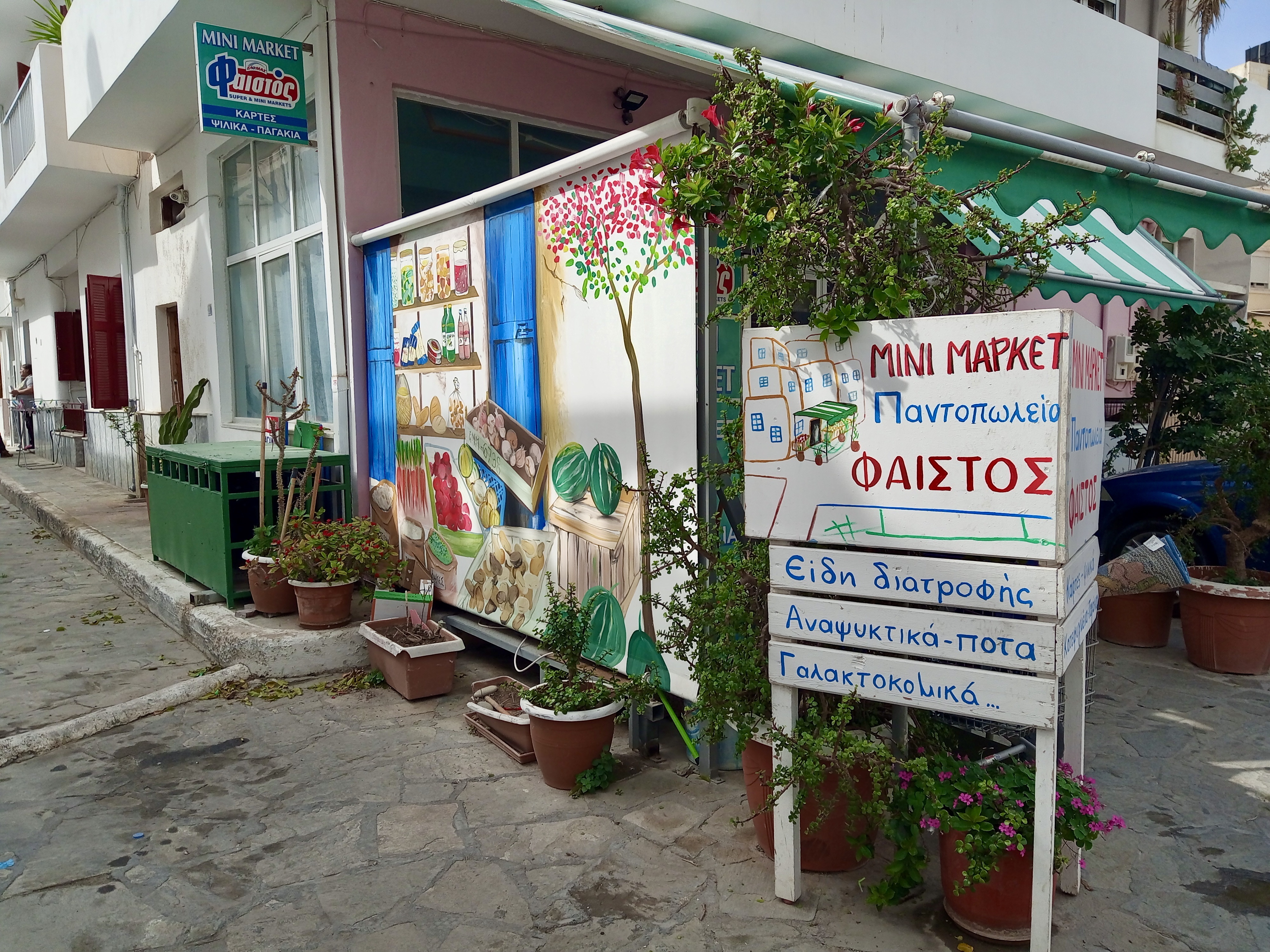
Last but not least, here’s a tiny ‘supermarket’ in a backstreet in the old town of Ierapetra taken Sunday April 2nd at around 11.00am. We liked the way the owner’s painted a lovely ‘general store’ scene on the canvas roller blind on the side…

The latest work of fiction, “The Lone Refugee” (Click on cover image)

The latest work of non-fiction, “Greek Oddities” (Click on cover image)

And here’s the link to the new short story “Outage.”

Appreciation

Some people are braver than others. Admittedly today has been truly beautiful weatherwise, and so we were compelled to have lunch out at the Konaki on the seafront, but as for taking a dip, I was still of a mind to leave it a few more weeks before sampling the sea temperature, so I passed on that one. Not so my beloved, whose head you can see in the above photo. Mind you, she did admit when she came out that it was flippin’ freezing, but that tingling sensation you get all over your body when you’ve towelled off and put some clothes back on is really great, not least because it allows you to feel super-smug (well, that’s my way of looking at it!).

Today has been cloudless and the sun has reminded us of just how fierce it’s going to become as the weeks wear on from here on in. The clocks went forward last night, as we in Europe all know, and so the lighter evenings are upon us too, so we’ve just come in from an early evening sit at the small table on the upper garden area, full of anticipation of visits to the beach for our iced coffees, combined with cooling dips during the summer months, of outdoor showers taken after a spot of gardening in the coming summer temperatures and of throwing all the windows and doors open for hours on end to let some air circulate through the house whenever there’s a hint of a breeze.

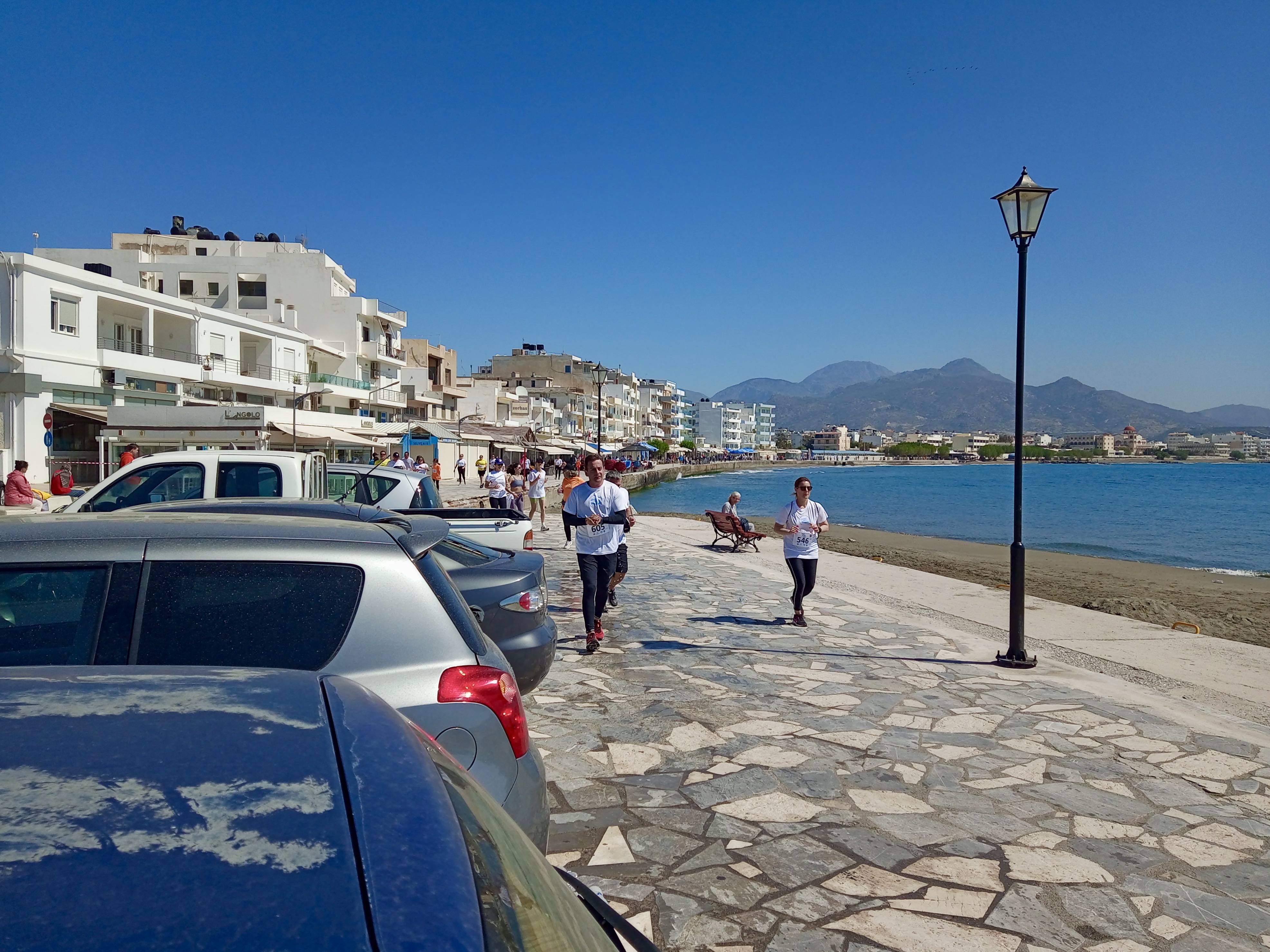
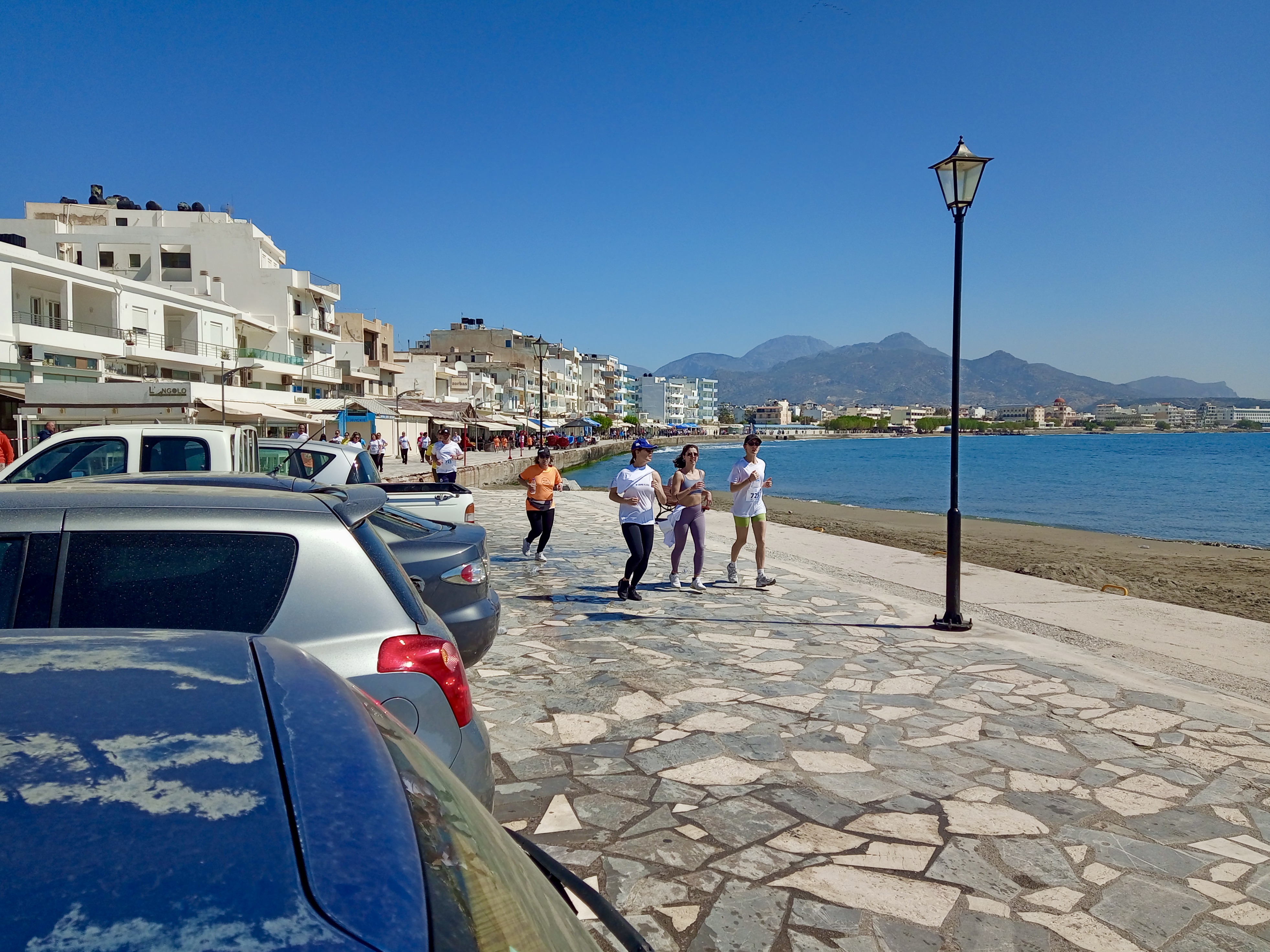
There was some kind of a charity run on in town today, which for some reason we’d not known about, so as we hit the waterfront there were all these far too fit people jogging along showing the rest of the world just how fit they were, or weren’t, depending on who you interpret the pronoun ‘they’ to apply to. We settled into our chairs at the Tortuga coffee bar to watch with bemused expressions as the runners filed past, some of whom I have to say, didn’t look like they’d run in quite a while. Those, of course, were the ones bringing up the rear.

To be honest, today was one of those days when you simply have to take stock of where you are in life and then count your blessings, and I have to admit, in all humility, that I have more than my share. As we strolled the sea front and then sat down for a lunch that was as good as it always is at Gianni’s Konaki taverna, everything about the day shouted “You ought to be grateful for what you have and where you live.” And, boy, are we. As I’ve probably rattled on about before, the Konaki is just perfect in so many ways. Giannis, the owner and very hands-on manager, is a portly guy in his late fifties with less teeth than he has gums, and a hairline that’s easily given up on having any close relationship with his forehead. He’s always in good humour and, as he arrived at our table, Yvonne said to him, “So, what are we having, then?”

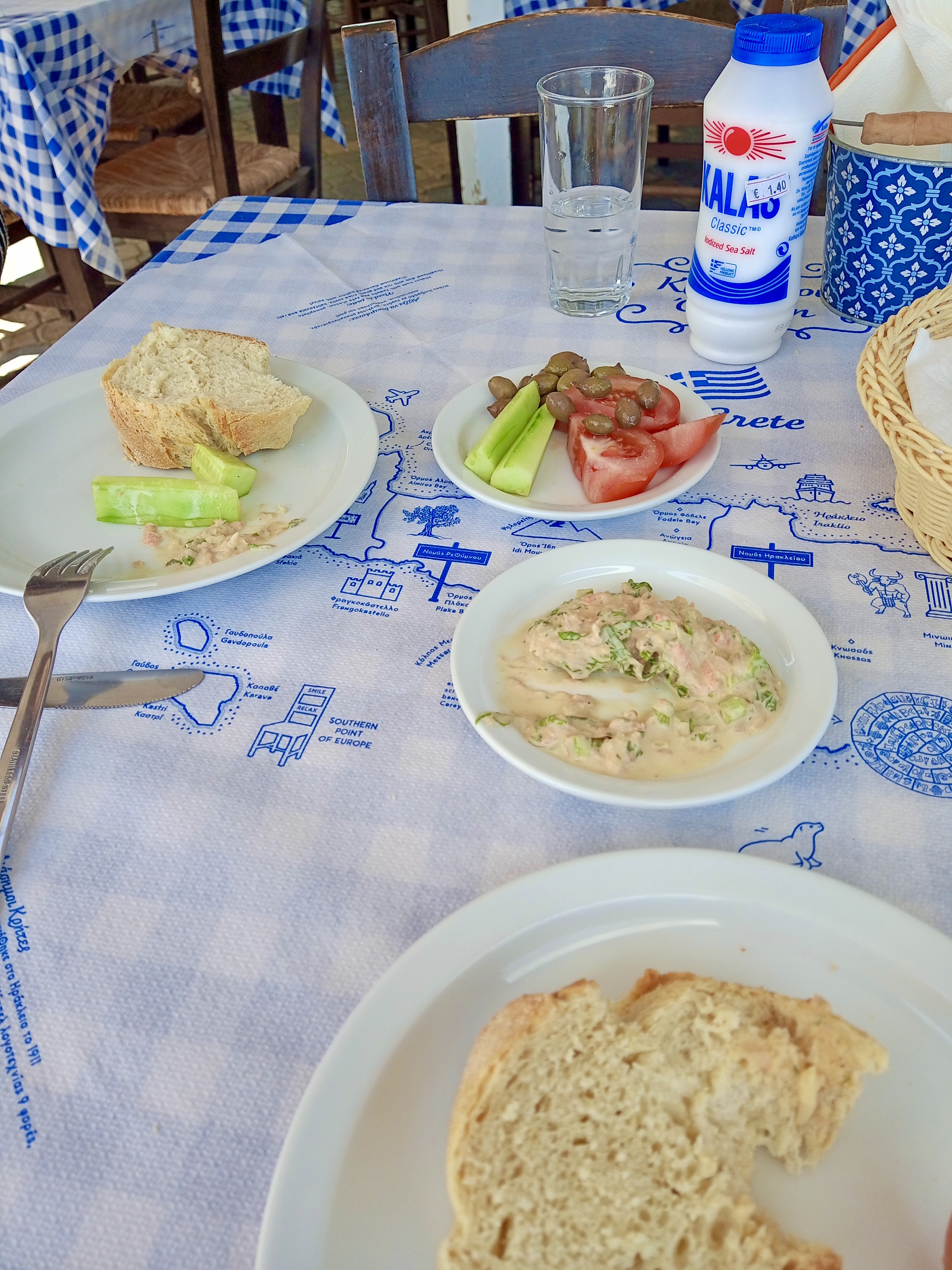
With no hesitation whatsoever, Giannis got his pen and pad ready, grinned and said, “Green salad, gigantes, kolokithokeftedes, and a bottle of Retsina.” Exhibiting a satisfied grin, we affirmed that he was correct and he was soon coming back with a small dish of chopped tomatoes and cucumber, some tiny green olives and a delicious tuna salad dip. One of his nephews (who often wait at table when they’re busy) came along too with a basket of the softest, freshest bread we’ve ever eaten in a restaurant on a Sunday (taverna bread is notoriously often slightly stale on Sundays, as the bakeries aren’t baking), plus a bottle of water and two long glasses. We were all set up for what to us is the perfect light lunch, just a few metres from the gently lapping Mediterranean Sea, and the tantalising prospect of many months to come during which we’ll be doing likewise as often as we can. Small wonder I called this post ‘Appreciation.’

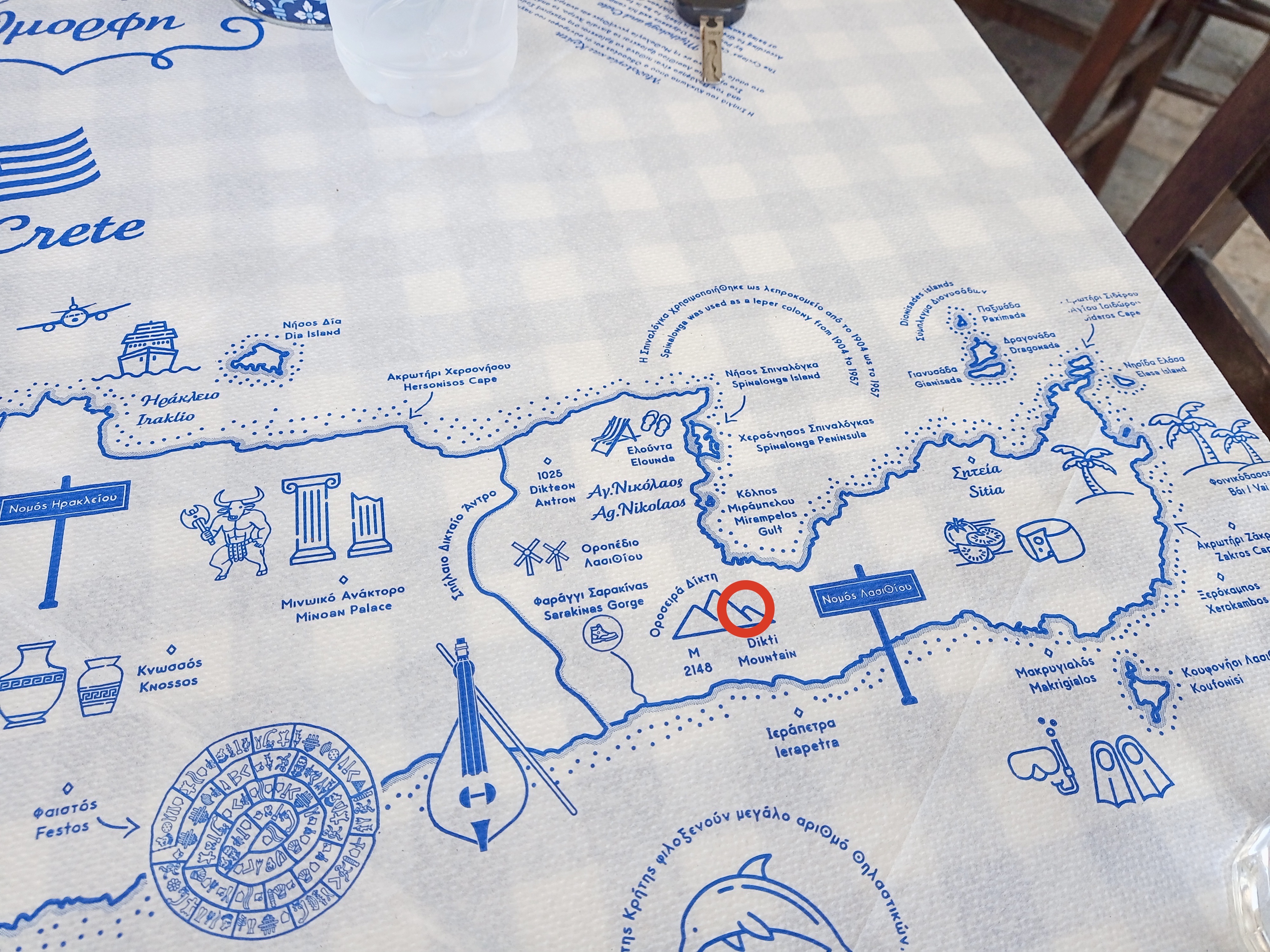
While I’m on the subject of appreciation for what we have in life, the paper tablecloths in the Konaki show a simplified map of the island, and so I snapped a photo before the food arrived. I’ve since added a small red circle (Photoshop, I freely admit. Well, actually, since I gave up work, I’ve switched from the extremely expensive Photoshop to a brilliant alternative called Pixelmator Pro, which I can thoroughly recommend) and it shows where we are very privileged to be living this past three and half years and counting…

As you can see from the above photo, more by luck than judgement we’ve ended up living in the narrowest part of the entire island of Crete, which we’ve come to appreciate all the more as the time’s passed since we found our cozy little house. That red circle is about where we live. Setting out in either direction from home, we can be on a beach, or at least at the coast, within ten minutes, north or south. It’s such a bonus, because if the wind’s strong from the north (the prevailing direction), we can head south, and if it’s in the south (much less often) we can head north, if we’re looking to have a swim in flat-calm waters or drink a coffee or eat out without everything being blown off the table. We never planned it that way, but it’s yet another aspect of living here that we’re grateful for.

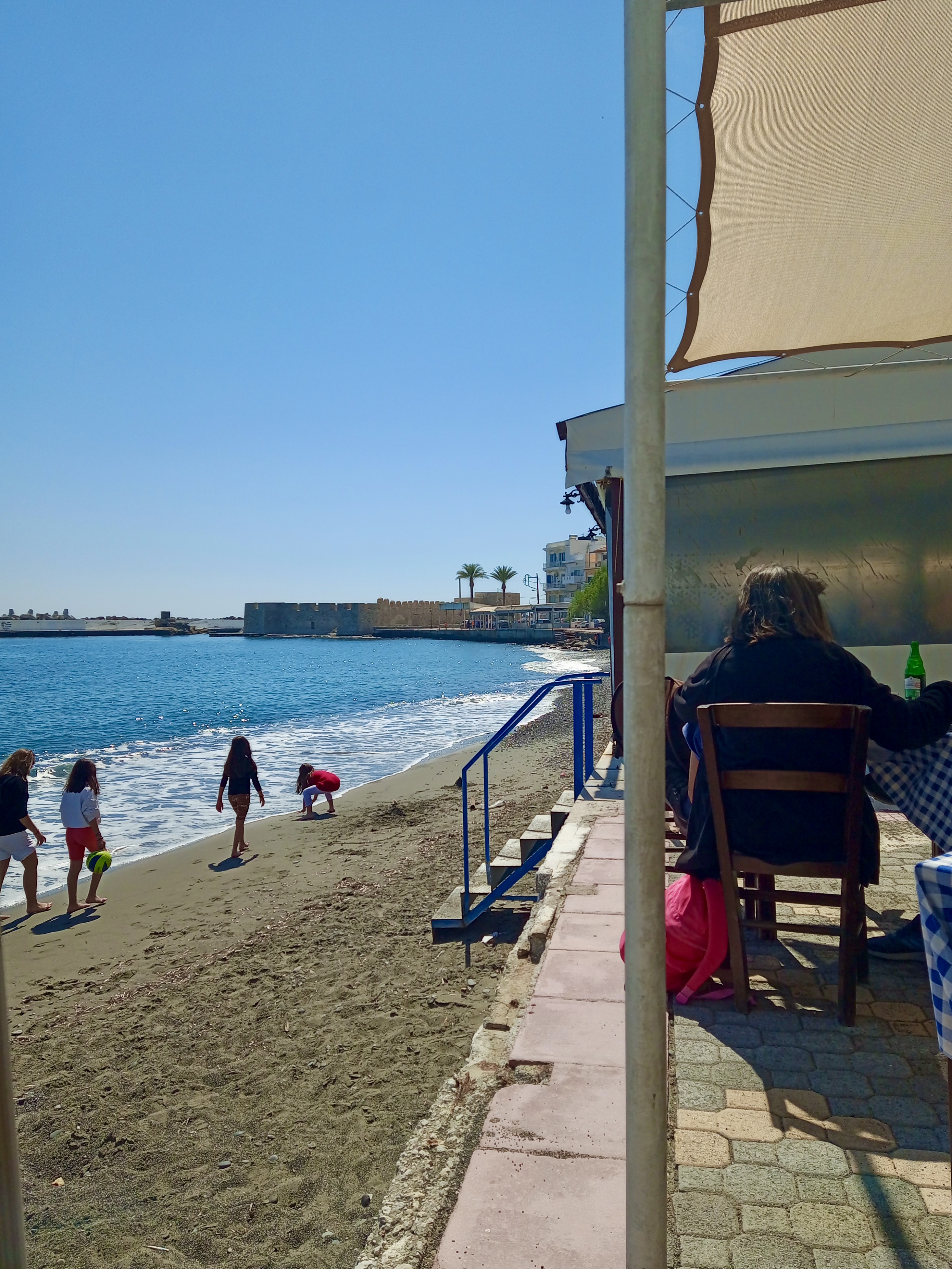
Here are some more photos from the seafront today (I reckon they ably show why I’m gushing on about how fortunate we are to have our little life here these days)…

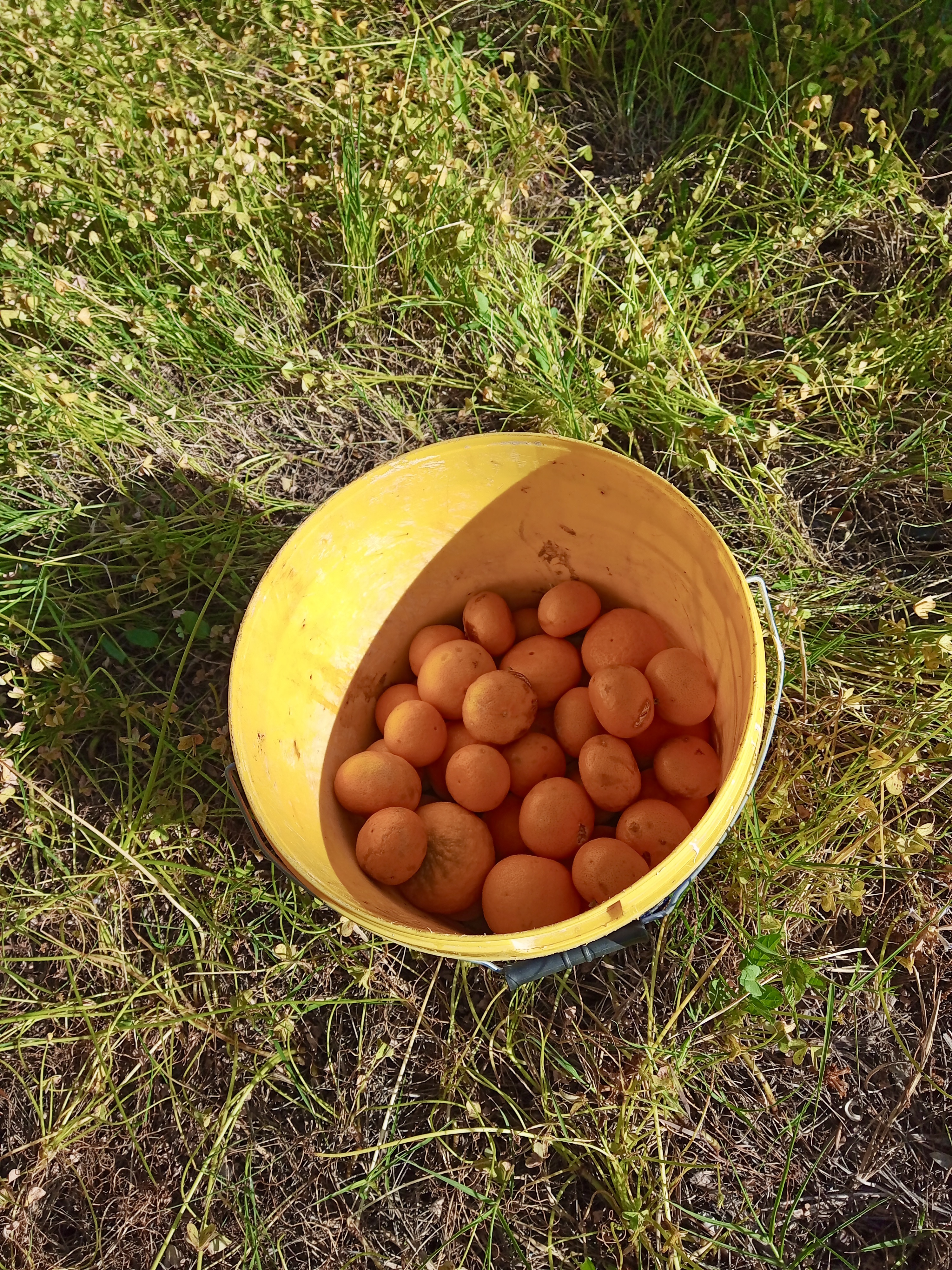
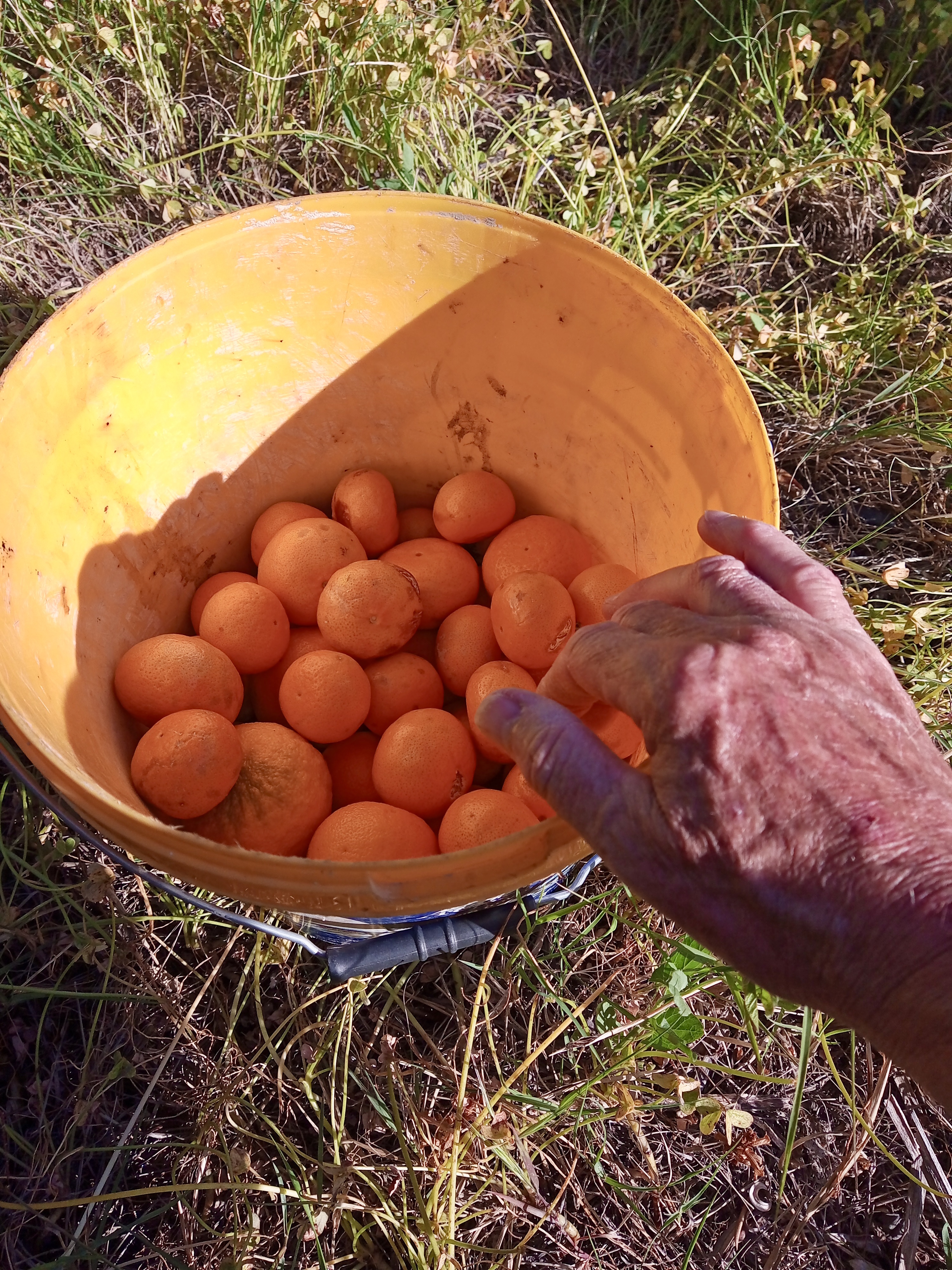
Back home this afternoon, I went out and picked a few mandarins, which further made me think about what a relaxing and pleasant way that was to pass a few minutes in the warm March sunshine…

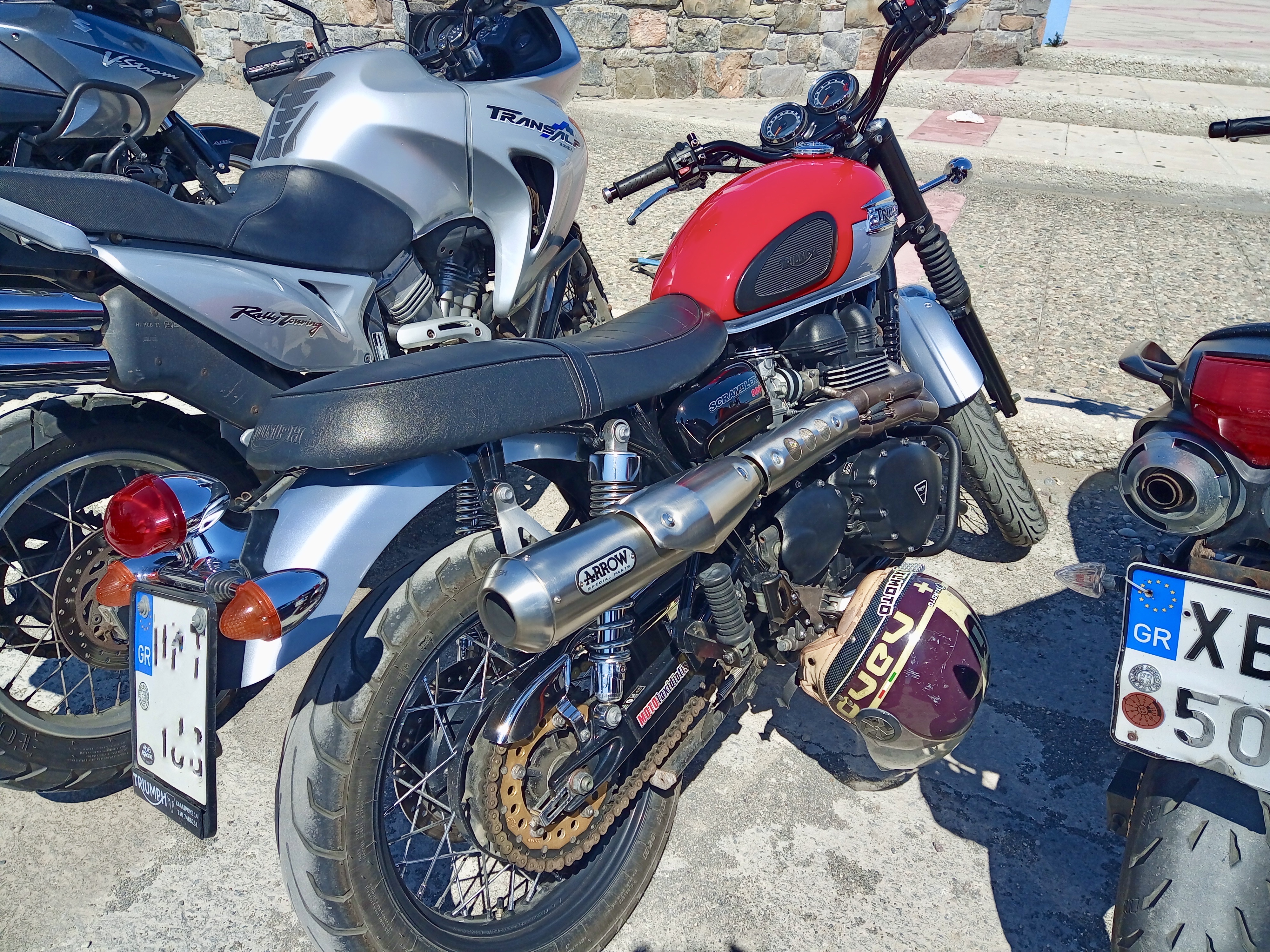
Many moons ago, back in the UK, I was a fairly keen motorcyclist. I don’t have the kind of cash these days that I’d need to buy the kind of bike I’d like, so we stick with four wheels, but on Sundays the Greek motorbikers usually get out on the road and go for a jolly, and the weather today was perfect for that purpose. Back on Rhodes they used to do a complete island tour quite often, and even from a kilometer up the track where we used to live, you could, if you were out in the garden, hear some of them thundering past on the road through Kiotari, sometimes going a tad too fast, if I’m going to express my view. Anyway, as I was waiting for my very courageous wife to get changed after her swim, a few Greek bikers arrived beside where I was standing and parked up, in order to go off for something to eat. My attention was immediately drawn to a very classic-looking machine that soon had me salivating. Among the huge Japanese bikes (nice, but two-a-penny), there was one bloke who evidently had some excellent taste and discernment. He parked up his Triumph 900, which I took to be a Bonneville, and on close inspection saw that it was decalled with the name “Scrambler,” which I believe is a variant in the Bonneville range. Anyway, it was quite evidently tenderly cared for and immaculately clean and sported some very impressive ventilated disk brakes front and rear. So, just for those very few who read this who might just appreciate it…

Well, you know, someone out there might appreciate that!

The latest work of fiction, “The Lone Refugee” (Click on cover image)

The latest work of non-fiction, “Greek Oddities” (Click on cover image)

And here’s the link to the new short story “Outage.”

Just a bunch of photos really…

This past few days I’ve taken a few photos that I rather like. You know what happens, I’m sure, you snap away at random with the phone and then transfer them to your laptop and some of them delight you with just how good they look, while others disappoint and you reach for the ‘delete’ button. The photos below are the ones that have survived the process. I’ll place a brief description under each where necessary.

Above: At 9.40am on Sunday we were just leaving the village when Yvonne almost gave me the impression that she was choking on something. I slowed the car and asked if she was OK, and she replied, “Look, LOOK!” Stopping the car and looking right, past her head and through her window, I saw what had amazed her so much. I don’t think I’ve ever seen a rainbow that hugs a hillside like this (OK, I’m sure someone out there has just whispered, “You should get out more”). The night had been one of quite heavy showers and the sky was in the process of clearing to give us a gloriously sunny, if slightly cool for the season, day. The white patch high on the mountainside just above the ‘bow’ and towards the left-hand end is the village of Kalamafka by the way.

Above: The distant mountain that we can see due west from just above or below the village here, and the one we often call the ‘Kourabietha‘ during the winter months, was dusted with a fresh coating of snow yesterday morning at around 10.00am. Its peak just sneaks itself above the nearer ridge and most winters remains white for months. This winter, owing to the milder weather that we’ve had, it’s very often been devoid of snow, or at the most streaked with a few white lines in the hollows. Owing to the three or four day spell of unusually cool weather for March that has just passed, during which we here saw a little rain, it obviously fell as snow up there and the Kourabietha once again lived up to its name.

Above: On our way up to Meseleri yesterday morning to help some friends clean a village house there, we had a little time to kill while waiting for them to catch us up, since they were travelling up from the town to meet us. So we pulled the car up a few hundred metres before the village and strolled a few metres down the lane towards the beautifully dramatic gorge that sits just below the road up there. It’s where I filmed Griffon vultures flying below us a couple of years back. What’s nice about this photo is the fact that it’s still early in the day and the so the shadow of the crag on the left is still deep due to the sun still being low in the west.

Above: These five were the best of the bunch that I took as a kind of ‘study of a Meseleri backstreet‘ at around midday yesterday, Monday March 20th 2023. Although the derelict buildings are sad, it’s also nice when you see one that’s been renovated and now has residents again. Having said that it’s sad seeing those empty houses, it also allows your imagination to run wild when you contemplate the history of such places. It seems to me that many of us particularly like old doors and doorways. Maybe it’s because a door is the eye to the building, through which so many people must have passed over the centuries that such buildings have existed. Or am I just getting soppy in my old age?

Last of all, once we got home from the ‘house-clean,’ we took coffee in the upper garden with the part-time third member of our household, Mavkos the cat. We’re now calling him the ‘part-time third member’ because he’s evidently got his feet firmly under the table elsewhere in the village too, and can be absent from our house for days on end. Just when we think he’s slung his hook, as it were, he’ll waltz up to the French windows, or curl up on a patio chair in the expectation that we’ll still love him and feed him. Of course, drat him, he’s right.

Oh, and even ‘laster’ of all, look how the wild gladioli we scavenged from a country lane not long after we first moved here and planted in the lower garden have prospered. Every spring they’re just that little bit bigger as a bunch and it thrills us to look at those exquisite, if delicate and small, magenta flowers…

The weather’s really warming up from yesterday, and there’s a definite hint in the air of the hot summer days to come. Every time we reach this time of the year we find ourselves saying, “bring on those stifling hot summer days.” We say that equally as often as, come November, we find ourselves saying, “Bring on those fresher, cooler winter days when we can actually go for country walks and do some gardening in comfort.”

Fickle blighters we are, aren’t we?

The latest work of fiction, “The Lone Refugee” (Click on cover image)

The latest work of non-fiction, “Greek Oddities” (Click on cover image)

And here’s the link to the new short story “Outage.”