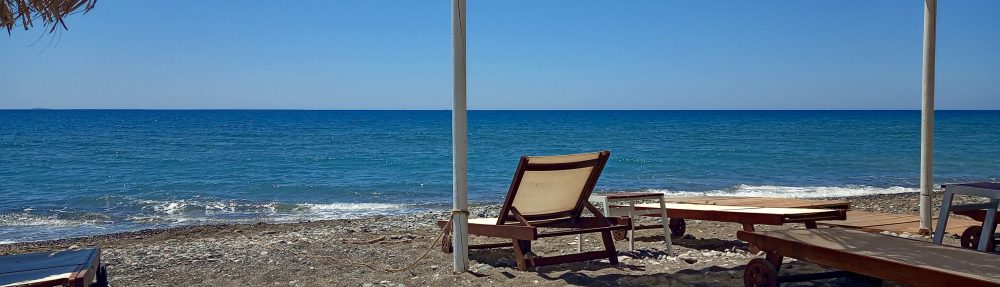
If you set out from just behind the sea front at Ierapetra, a few metres from the main police station (which stands just set back a little from the water’s edge) along the street called Dimokratias, you’re heading almost exactly due West. The first couple of hundred metres is a quite pleasant, tree-lined street with a few retail businesses and some very nice café/bars along it, until you reach the first set of traffic lights. The street is almost dead straight until the lights, and not much different for another few kilometres all the way to Gra Ligia village after that. However, once you get past the traffic lights and you’re heading out of the downtown area, the road becomes much less attractive to the eye, lined as it is all the way to the village with wholesalers selling animal feed, bulk fertilizer for farmers, tyre depots, builders’ yards and the like.
What few street-name signs there are still suggest that the road beyond the lights, heading up the slight incline towards the large church at the top, next to the fork in the road, the right turn of which leads all the way up into the mountains to the village of Kalamafka, is still called Dimokratias. However, that would be wrong because, from those lights, where Dimokratias meets the periferiako (ring road), on the corner of which is the smaller of the two branches of the Sklavenitis supermarket chain in Ierapetra, the road has, since the 1970’s, been called Pavlos Kouper. A quick consultation with Google Earth reveals the truth of this…

Now, it wouldn’t be an unreasonable thing to ask the question, “‘”what would a small Greek town on the island of Crete be doing re-naming a street ‘Pavlos Kouper,'” would it? The answer is connected to the local area’s major change in fortunes that took place back around the years 1966-71. Just who was this man, Pavlos Kouper?
Born in the Netherlands in June 1939, Paul Herman Felix Kuypers (as his name was spelt in his home country) grew up to become an agriculturalist. He also developed a love for Greece and, after spending some time on the island of Syros, settled here in Ierapetra, aged 27, in 1966. While on Syros he’d begun experimenting with new planting techniques, specifically involving vegetables and, after moving to Ierapetra, perfected his craft, being the first person to construct thermokipia, or hothouses, covered with polythene and measuring a couple of stremmata in size. One ‘stremma‘ is 1,000 square metres, by the way, and all locals here measure land area in stremmata, rather than acres or hectares. One stremma is around a quarter of an acre, or 0.1 of a hectare.
Local farmers were soon cooperating with Kouper and built their own thermokipia at a rate of knots. Following his methods they were soon increasing their yields significantly and the result was quickly converted into major increases in sales and profits from the production of salad vegetables and, primarily, hot peppers. In short, Paul Kouper revolutionised the agriculture of the area and, in a very short time, made local landowners very prosperous. If you visit this area you can’t fail to notice that in places much of the landscape is covered in these huge hothouses. OK, so pretty to look at they are not, but if I had to choose between those hothouses and huge hotels dedicated to mass tourism as a means of making an area a decent living, then give me the hothouses every time.
The existence of mass production of vegetables, and in particular hot green peppers, in the area has meant that southern Lasithi has not needed to give itself over to the worship of the package holiday as have many other areas, not only of Crete, but of the rest of coastal Greece and her islands too, in recent decades. It’s the primary reason why, if you laze around in a café in Ierapetra, or take a meal in a local taverna or restaurant, the majority of voices you’ll hear around you are still Greek, and not a babble of other European languages. Locals here are generally well off and the reason is all down to Paul Kouper. Ierapetrans can well afford to drink coffee out many times each week and to patronise their favourite taverna as often as they like. There is no shortage of expensive German and Japanese limousines and 4×4’s in the area.
What became of ‘The Dutchman,’ as Kouper came to be affectionately called by the locals around here? Tragically, after a mere five years in Ierapetra, Kouper was killed in a traffic accident in 1971, leaving behind a wife and small child. His legacy, though, has grown and developed and that’s why the local authority decided to re-name a street after him in the 1970’s and they even erected a bust in memory of the great man which now stands beside the road from Ierapetra to Myrtos, which passes through the village of Gra Ligia…

As it happens, we made some friends of a family that owns a number of hothouses not long after arriving in the area back in September 2019. They invited us out to their house, which in the USA would probably be called a ‘ranch,’ and it sits in a secluded area a few hundred metres from the main road in Gra Ligia. The house was constructed from scratch to be large enough to house not only the couple and their children, but also the grandparents, and a couple of the children who’d already grown up and married had their own private wings with their own front doors. They have an outdoor covered entertaining area as big as a tennis court and, as we sat there on their shady terrace, amongst all the tall palms, yuccas and other leafy architectural plants that afford the place shade and coolness even in the heat of the Cretan summer, our host Giorgos told me, after I’d asked how they made their living, “Gianni, this whole place is built on peppers!”
“Peppers?” I asked him,
“Yes, hot green peppers, we export them all over Europe. it’s the profits from growing them that built this house.”
Well, there’s one family that has a lot of affection for ‘The Dutchman,’ I’d say. The local farmers do grow other vegetables as well, of course, in particular tomatoes (all varieties), cucumbers, lettuce, aubergines and courgettes, to name a few, but it seems that peppers are the main crop that most folk make their living out of.
I called this post ‘Two Great Men,’ didn’t I? Well, one thing that Paul Kouper has in common with the great French Emperor Napoleon is the town of Ierapetra. Of course, Kouper made the town his home and stayed for five years until his untimely death, whereas Bonaparte only reputedly passed one night of his life in the old town here back in 1798. If you haven’t already done so, maybe read my post entitled Figs, a flag, a fortress and some flutterybies some time. You need to read all the way to the bottom of that post, but then all is revealed. Plus, the following post (both from July 2022) Small Corners and Sealed Doorways in the Sunshine also sheds a little light on the Napoleon episode too. Of course, old Bonaparte could never have known that his fame would be eclipsed in this small corner of the world by a young Dutchman almost two centuries later, eh?
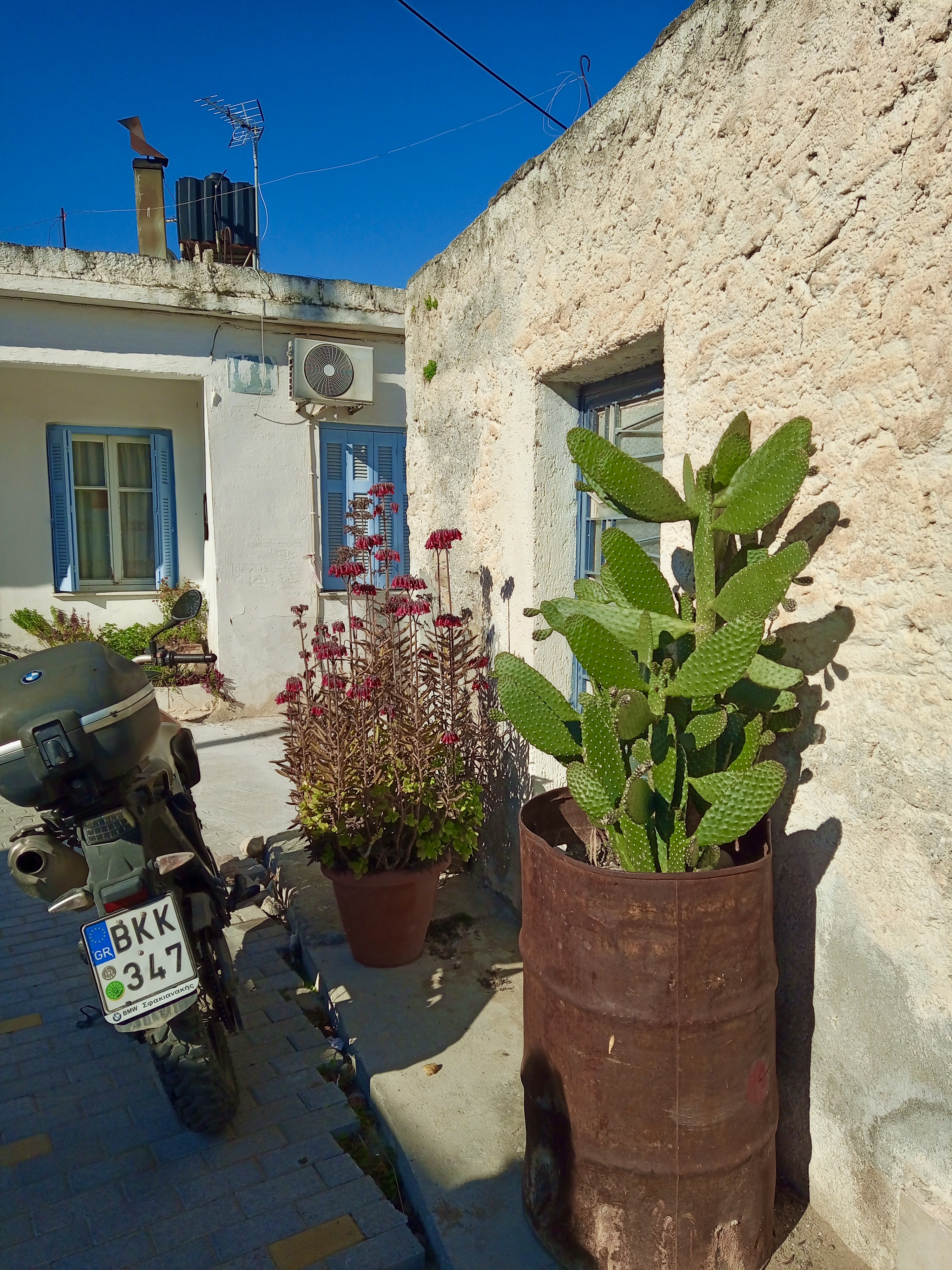
Time for a few photos, then. The gallery below is of some photos all taken in the village of Kentri last Sunday morning. The village is almost connected to Ierapetra these days, as the town has grown northwards towards the village in the past few decades, leaving not very much undeveloped land to separate the two. The village does, however, have an old part that quite surprised us when we discovered it…


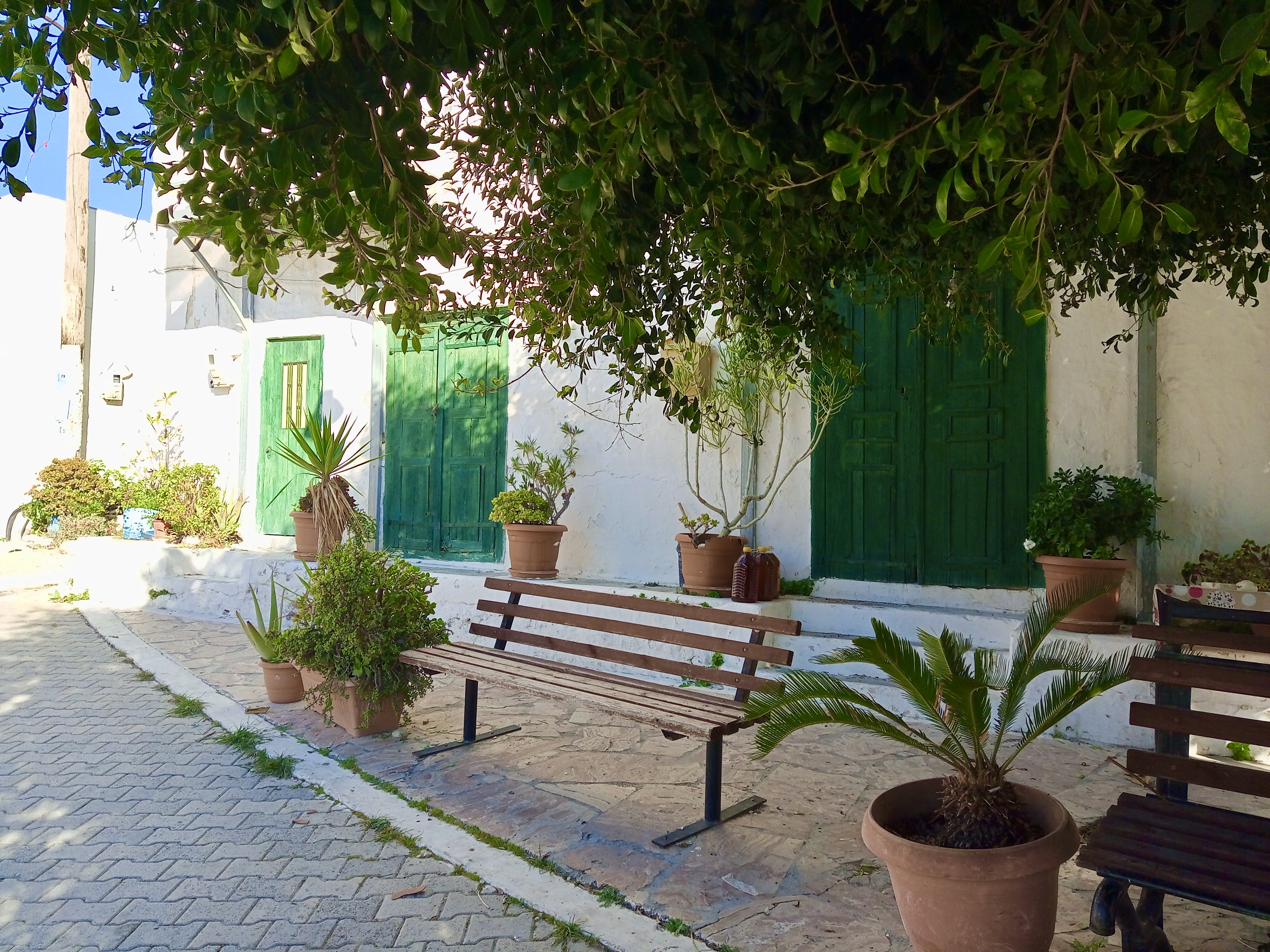


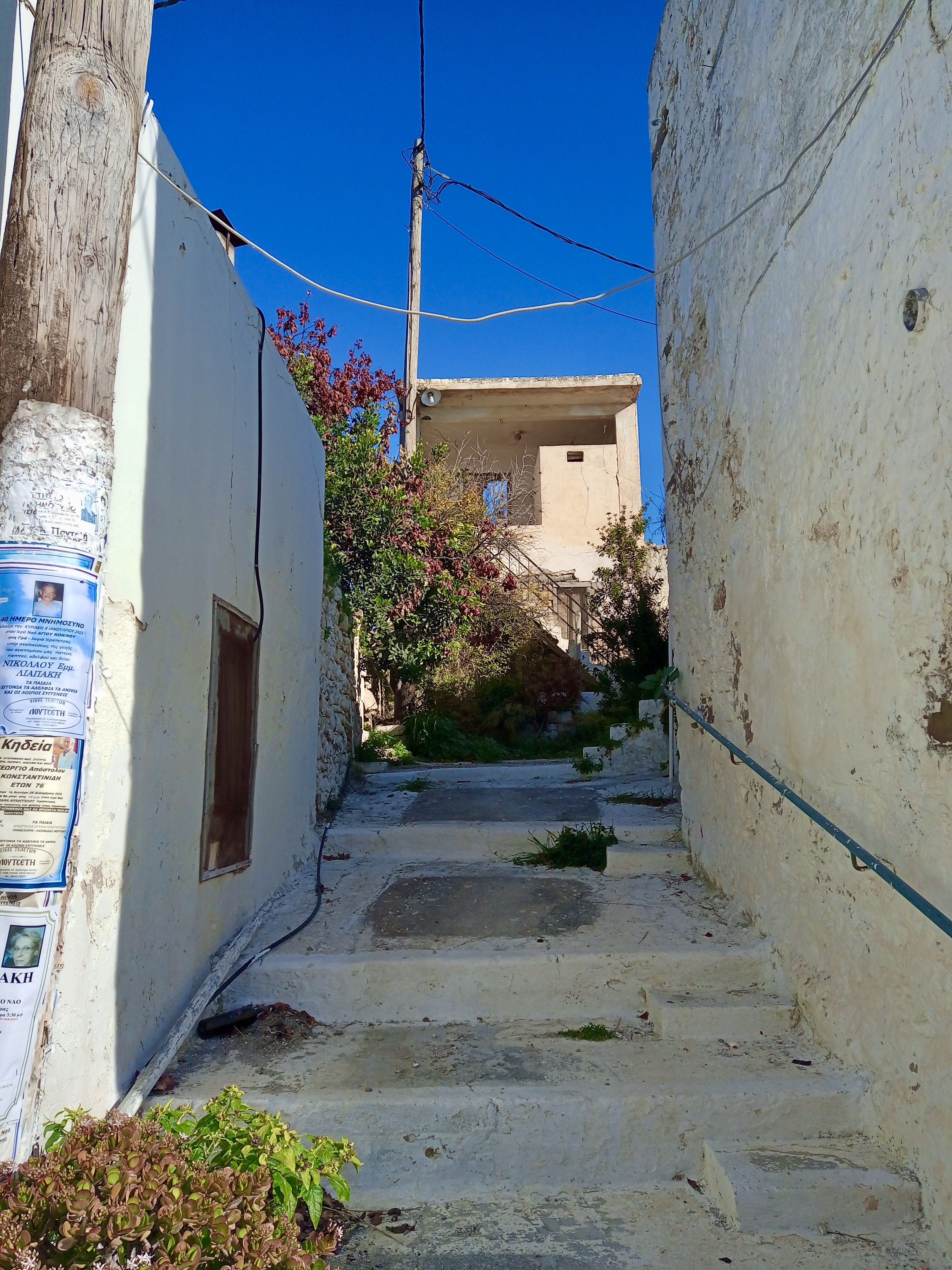


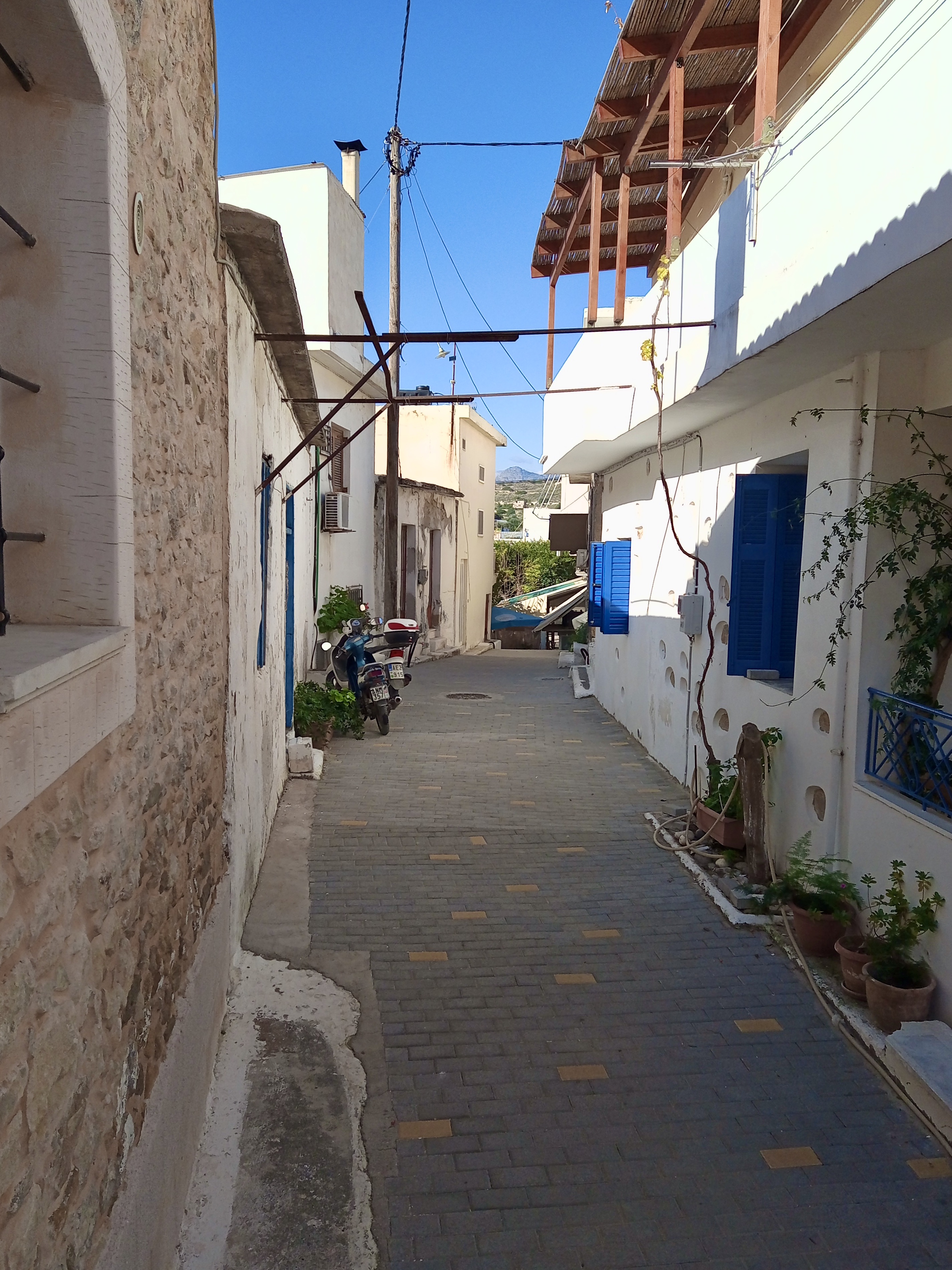

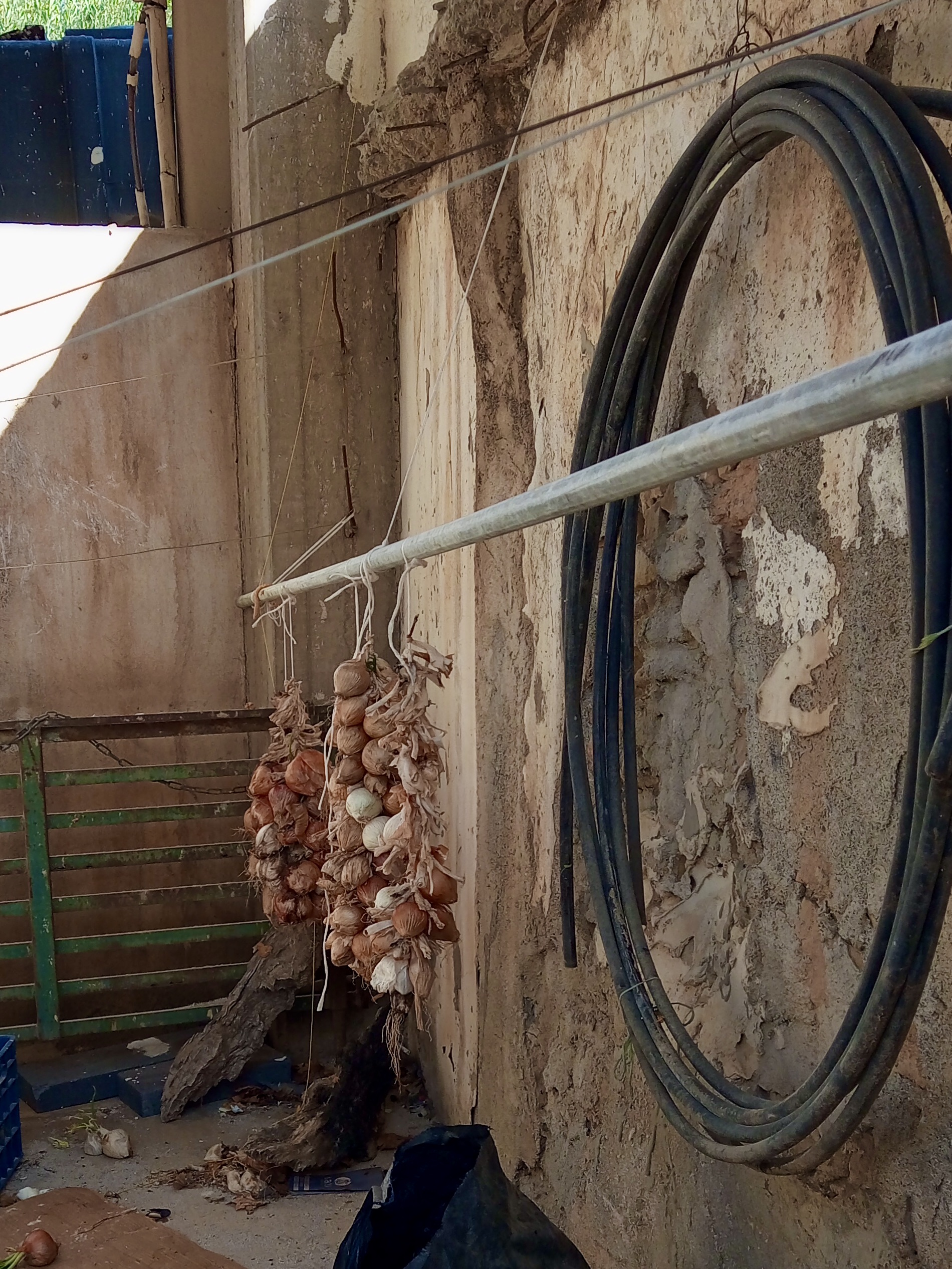
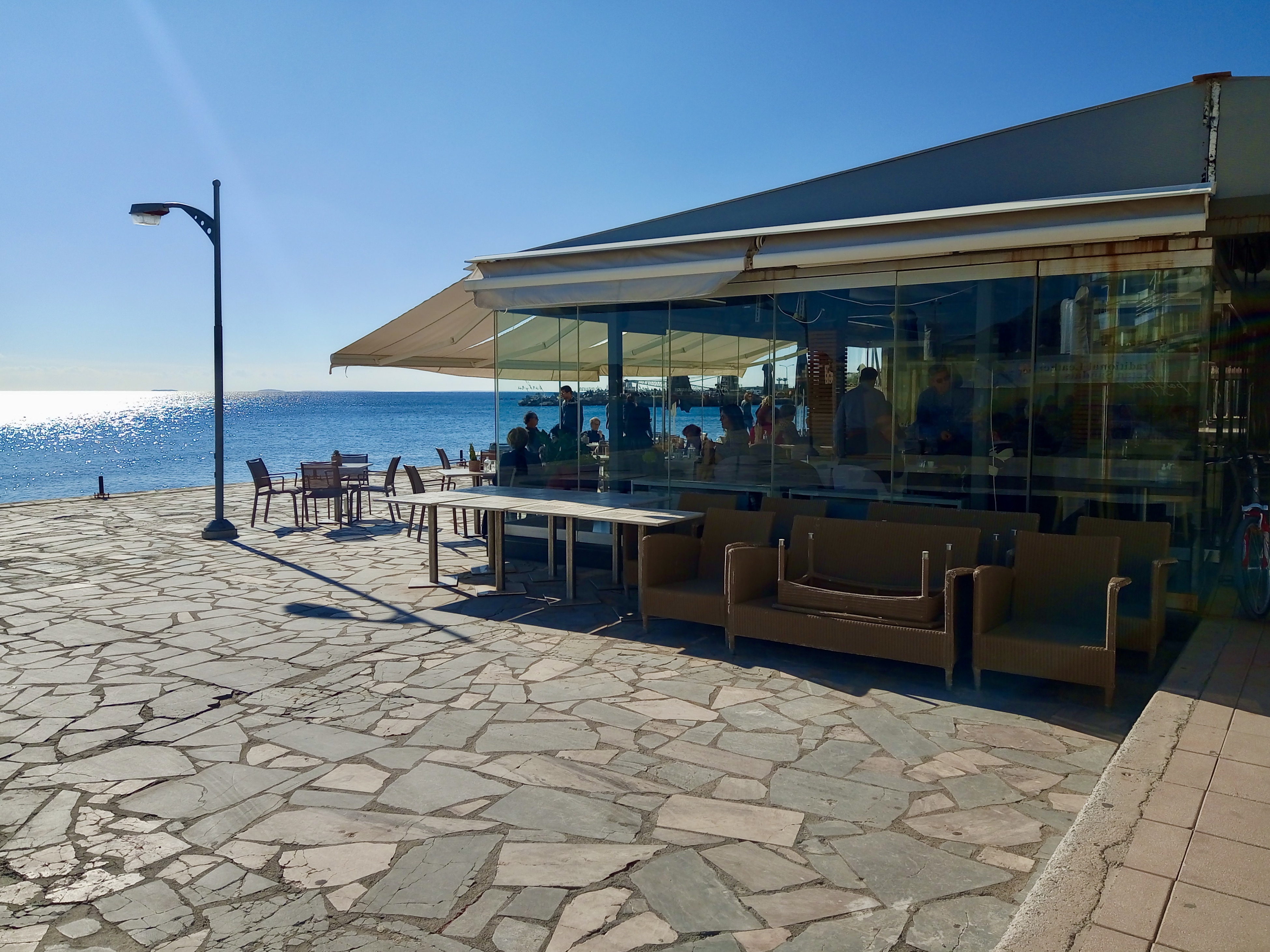
Here is just a tiny selection from Ierapetra this past few days too…

•

The latest work of fiction, “The Lone Refugee” (Click on cover image)
The latest work of non-fiction, “Greek Oddities” (Click on cover image)
 Accretions
Wish they would dispose of used plastic responsibly . Tons of it abandoned.
True enough Tom, although it’s not always good to generalise. I know of many local friends here who try their best to protect the environment, and wherever you go, whatever country, there are people to be found who disrespect the environment around them. The last place we lived in the UK was an area of outstanding natural beauty in South Wales, but if I had a Pound for every farm gate that was blocked by fly-tippers, for example…