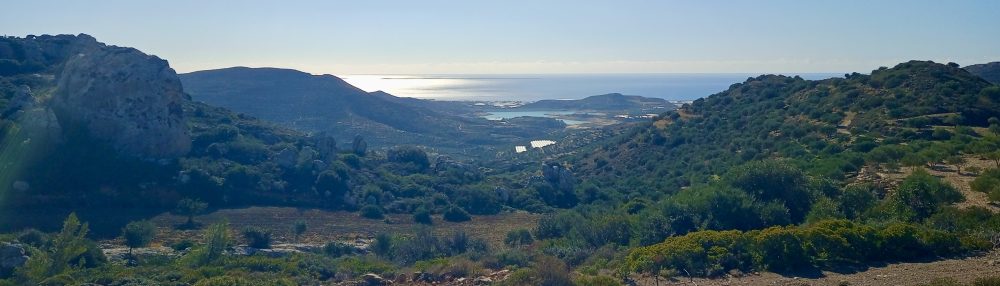
The village where we’ve now lived (extremely happily) for the past three and a half years is called Makrylia. It’s pronounced, by the way, Makreel-yáh, with the emphasis on the ‘yah’ at the end. I know, for us Brits, getting our tongues around Greek names can be quite a minefield. I make no claims as to being an expert, but my theory is that we Brits tend to apply rules from the Latin languages (as in French, Italian, Spanish) when we’re trying to pronounce foreign names, which usually means that we would stress entirely the wrong syllable when pronouncing Greek words and names, because Greek is of (so I understand) Indo-European origins. It goes without saying that Greek is one of the oldest languages still spoken, even though it’s morphed somewhat from the ancient to the modern version over time, but as it’s not part of the Latin family, the same rules of pronunciation don’t apply.
I’ll try and illustrate what I mean. Brits have taken some Greek cuisine to their hearts and so one often hears of someone in the UK cooking mousSAH-kah, right? Brits will emphasis the middle syllable, and understandably so, whereas a Greek will pronounce it moussaKAH, with the emphasis on the last syllable. What makes it doubly hard is that when you change the position in a sentence that a name occupies, it often changes which syllable you need to stress as well. I know, pass me the aspirin, eh? I learnt this the hard way when a few years ago a British girl who’d married a Greek corrected me over the name of one of Greece’s major biscuit manufacturers, Papadopoulos (The McVities of Greece, in fact!). Now, if you use that name as the subject of a verb, then you stress the third syllable, as in PapaDOPoulos. But, if you say these biscuits are from Papadopoulos, you should say they’re from PapadoPOUlou. Yes, even the end of the name changes with the differing ‘cases’ as they’re called.
The nearest town to us is Ierapetra, which most Brits will pronounce ear-a-PETra, because they think according to the Latin language rules, right? Whereas, Ierapetra is actually pronounced Yeh’RAPetra, get it? Stress the ‘RAP’ and you get it right. I can see that you’re now losing interest, and that’s understandable, but the reason I embarked upon this little explanation is because our village’s name is often confused with that of another, which is 25km east of us, and it’s on the coast, Makrygialos. Of course, at this point I should at least refer to the fact that even the Greeks (as is often seen by their rather inventive road-signs) will spell Greek names in an assortment of ways when writing or printing them using Roman instead of Greek letters. Hey ho, moving swiftly on…
Some months ago I ordered an accessory for my laptop, or tablet (can’t remember which now, but it was a cable of some sort) from an online Greek Electrical retailer. As is probably the case in the UK and elsewhere, these companies often don’t tend to use the Greek postal service (ELTA) to send out goods, preferring to use instead a selection of private couriers. The system works pretty well in my experience as – owing to the fact that no one in a village has a specific address – the courier’s local office will see your mobile phone number printed on the package and call you as soon as the package is in their hands. Then they’ll either send a vehicle to the village, where you meet the driver at a convenient spot, or they’ll ask you to drop by the office when you’re next in town. My cable arrived and the courier’s office called me. I answered it, expecting to get the call anyway, and the nice lady at the other end said:
“Kyrie Manuel?”
“That’s me.”
“It’s …….. Courier company here, we have left a package for you at the village post office, OK? You can drop in and collect it at any time.”
“Um, at the post office you say?”
“Yes, why, is there a problem?”
“Well, there probably is, because there is no post office in our village. Do you mean the kafeneio?”
“No, the driver says the post office. You are in Makrygialo, right?”
“No, sorry, I’m in Makrylia.”
“Oops, wait a minute and I’ll call you back.”
Sadly for them, they admitted that it was their mistake. They’d read the address in hurry, and read it wrongly. The label was very clear in saying ‘Makrylia,’ and they were very apologetic, sent the driver back to Makrygialo, which is a one hour round trip from Ierapetra, then brought it up to the village here, which is less than ten minutes from town. I couldn’t fault their humility in admitting their mistake, and, as it happened, I ordered something else not long afterwards, and it came through the same courier, who had a good laugh with me this time around and said that they were not so likely to make the same mistake a second time.
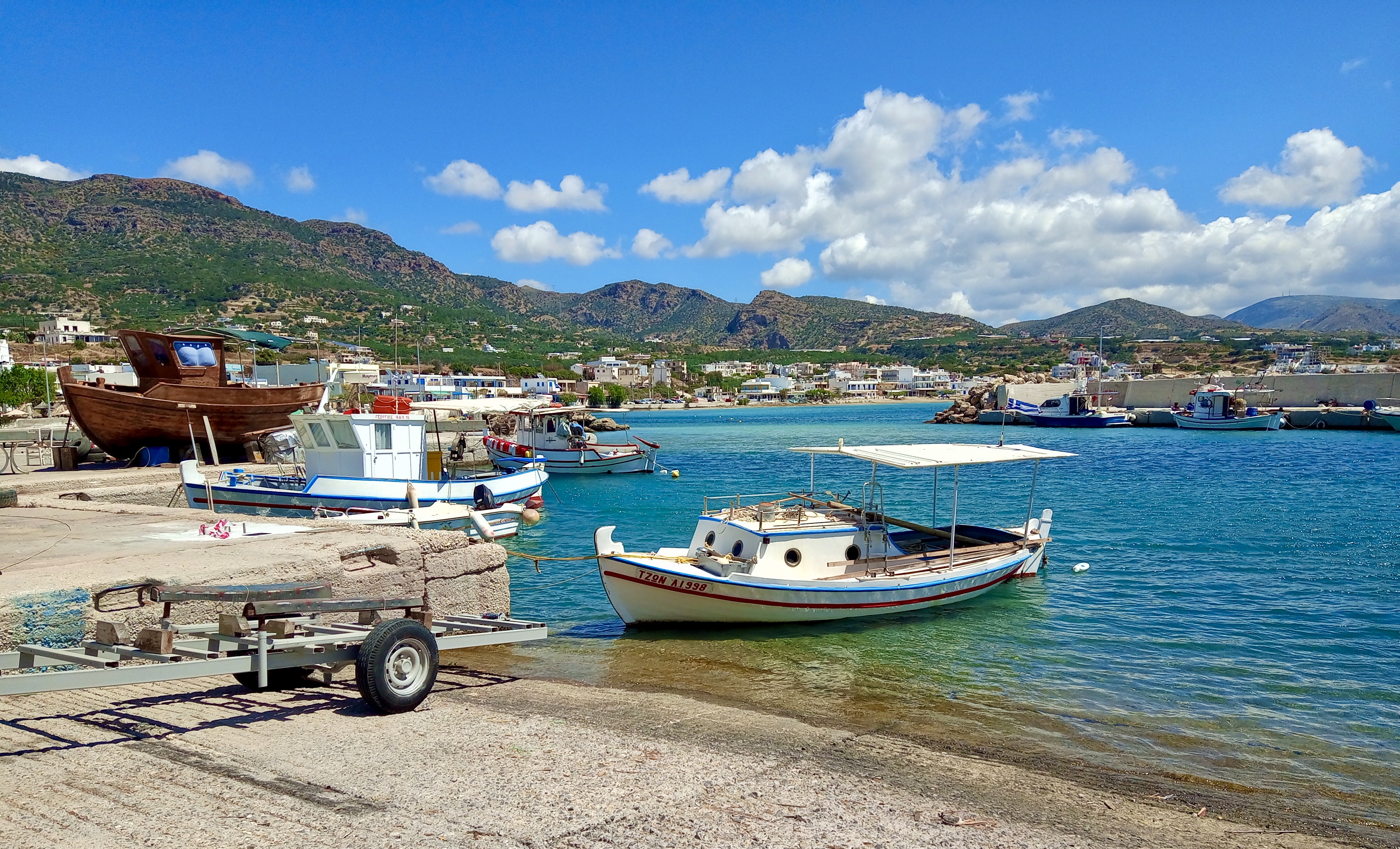
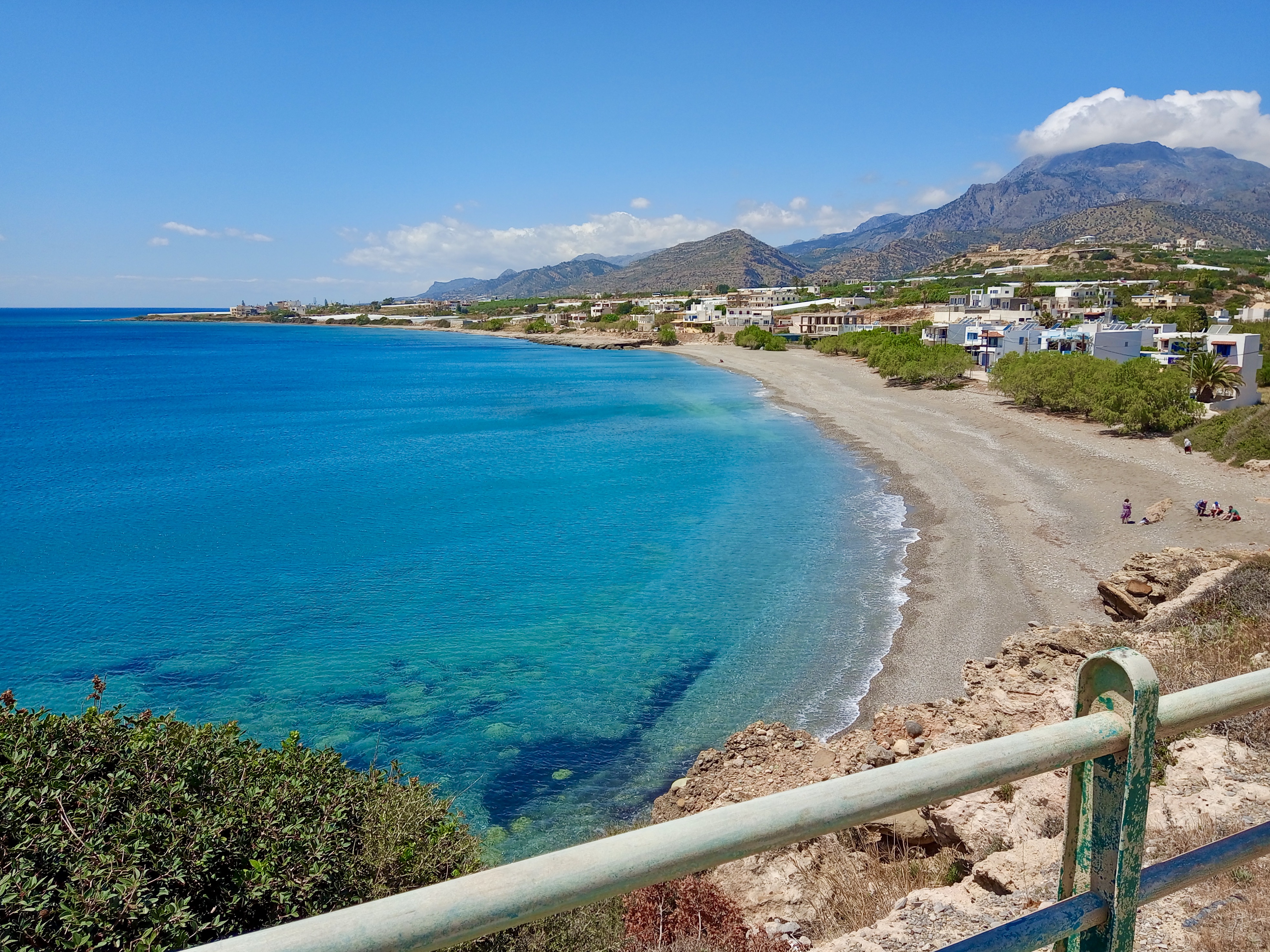
While I’m on the subject of Makrygialos, We went there the other day to see someone, and had a coffee on the delightful sea front near the tiny harbour. The photo at the top of this post was taken there on Thursday April 27th at around midday. As it happens, a couple of years before we upped sticks and moved out to Greece in 2005, we had two very enjoyable holidays there and so it’s quite nice to be able to go there these days at whim and see the place again. The village has changed a bit since then, after all it is twenty years ago when we had those holidays, but I’m glad to say that the sleepy, essentially Greek charm of the main harbour area and sea front going east from there will still charm the pants off any true Grecophile looking for a quiet holiday away from the hordes.
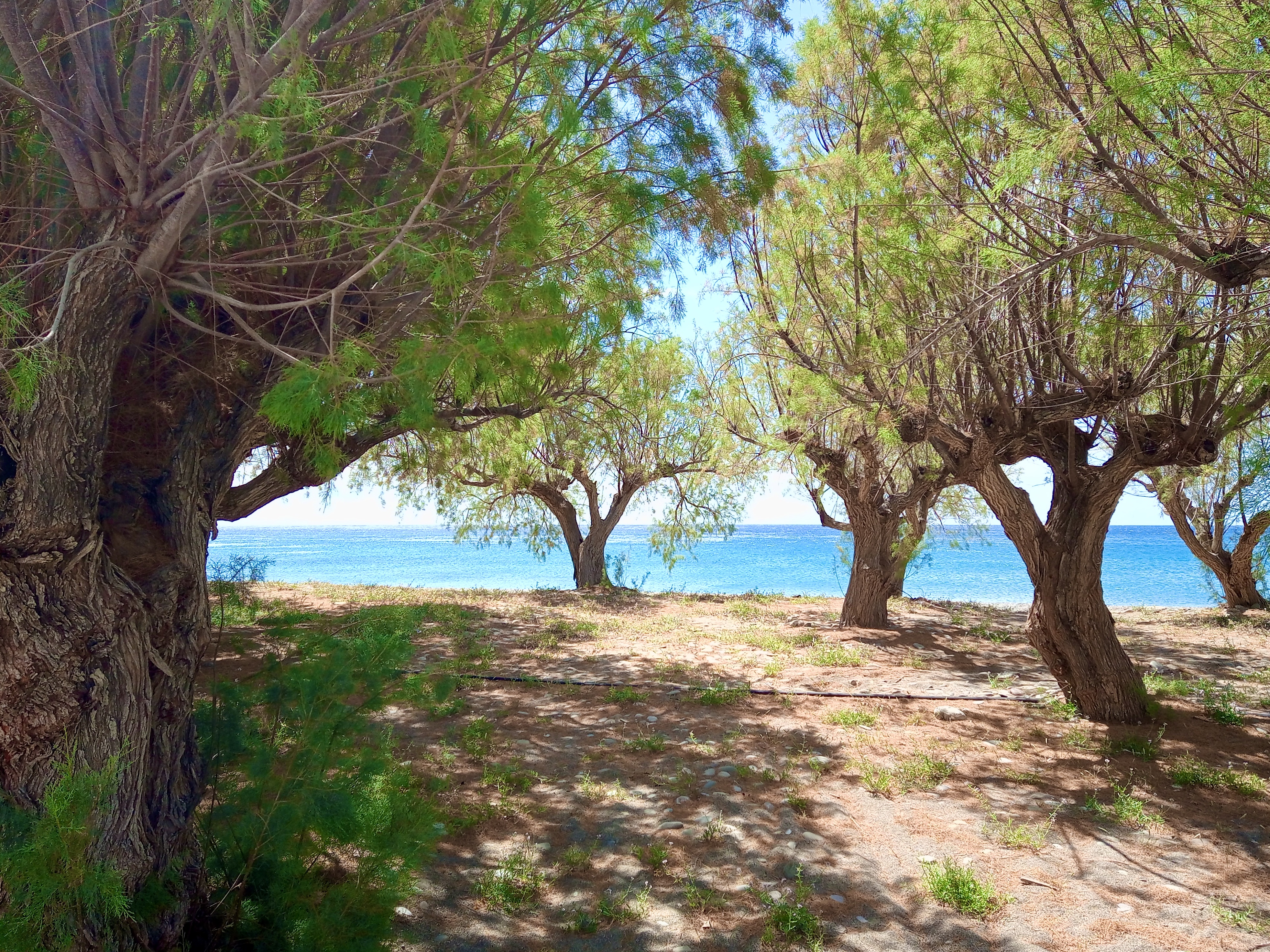
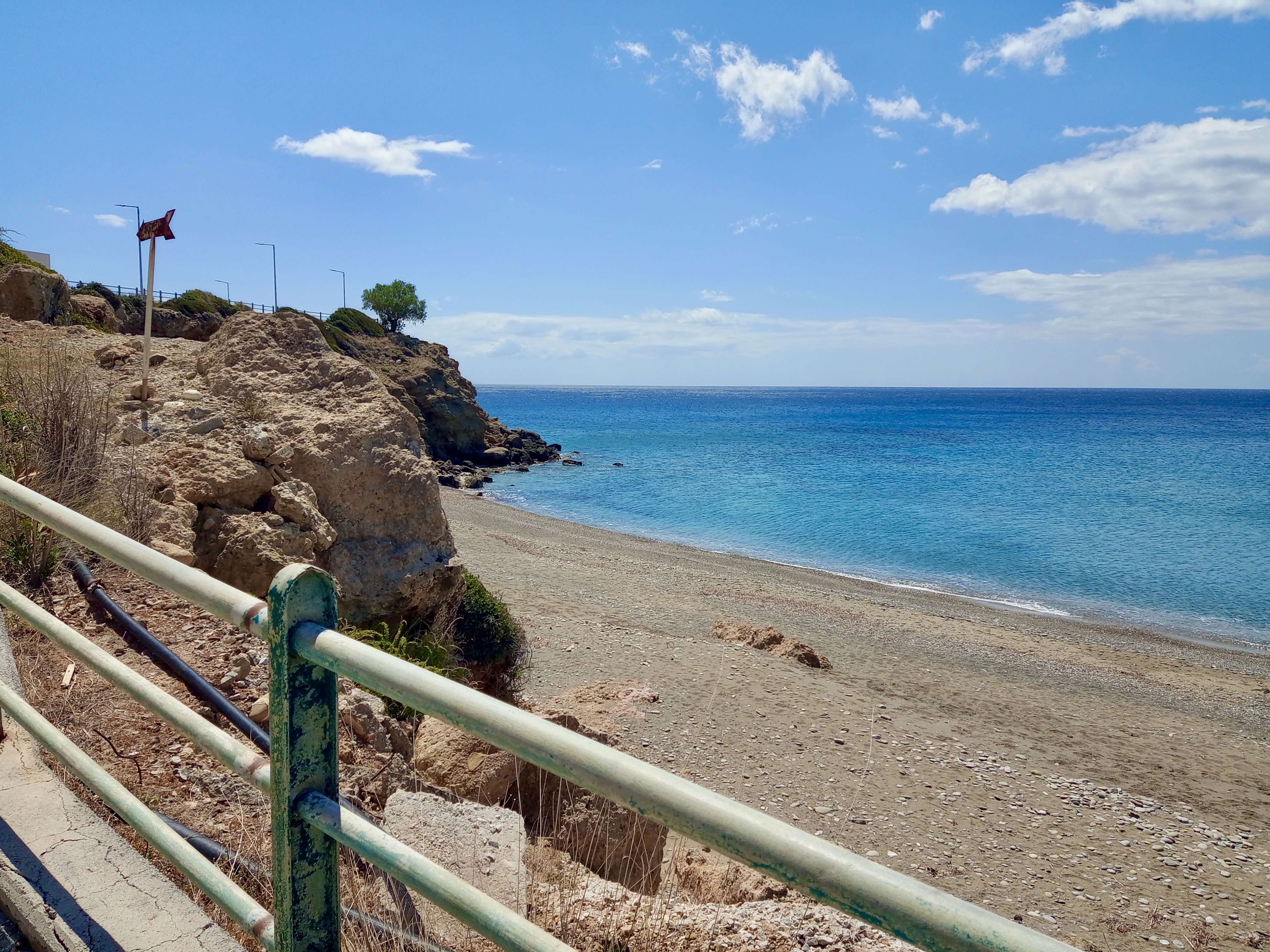
Be careful though, if you think about going there for a holiday. Make sure you avoid the couple of hotels that are on the periphery of the village, where you’ll get the same homogenous holiday as you’d get anywhere in Europe. Having said that, there is an excellent choice of small accommodations to be had, where you can truly relax, interact with the locals and maybe read my novel “The Crete Connection,” in which much of the action centres around a fictional taverna that’s meant to be in Makrygialos. In fact, if you have the book in hand, you can probably ID the restaurant that I used for the one in the novel, although there has been some building work that’s gone on either side of it that’s not included in my description, I must say. Here are the rest of the photos that I took last Thursday…
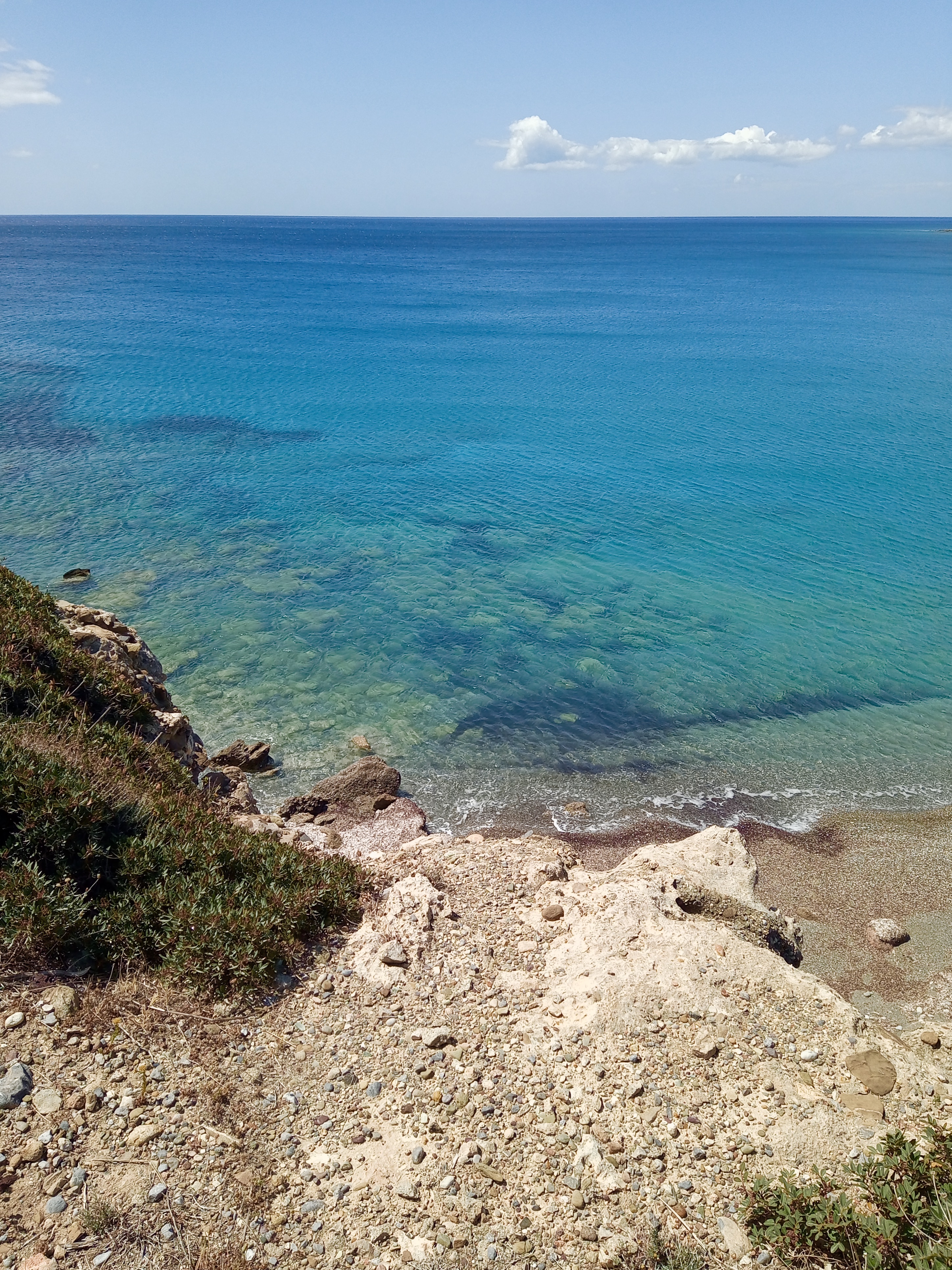
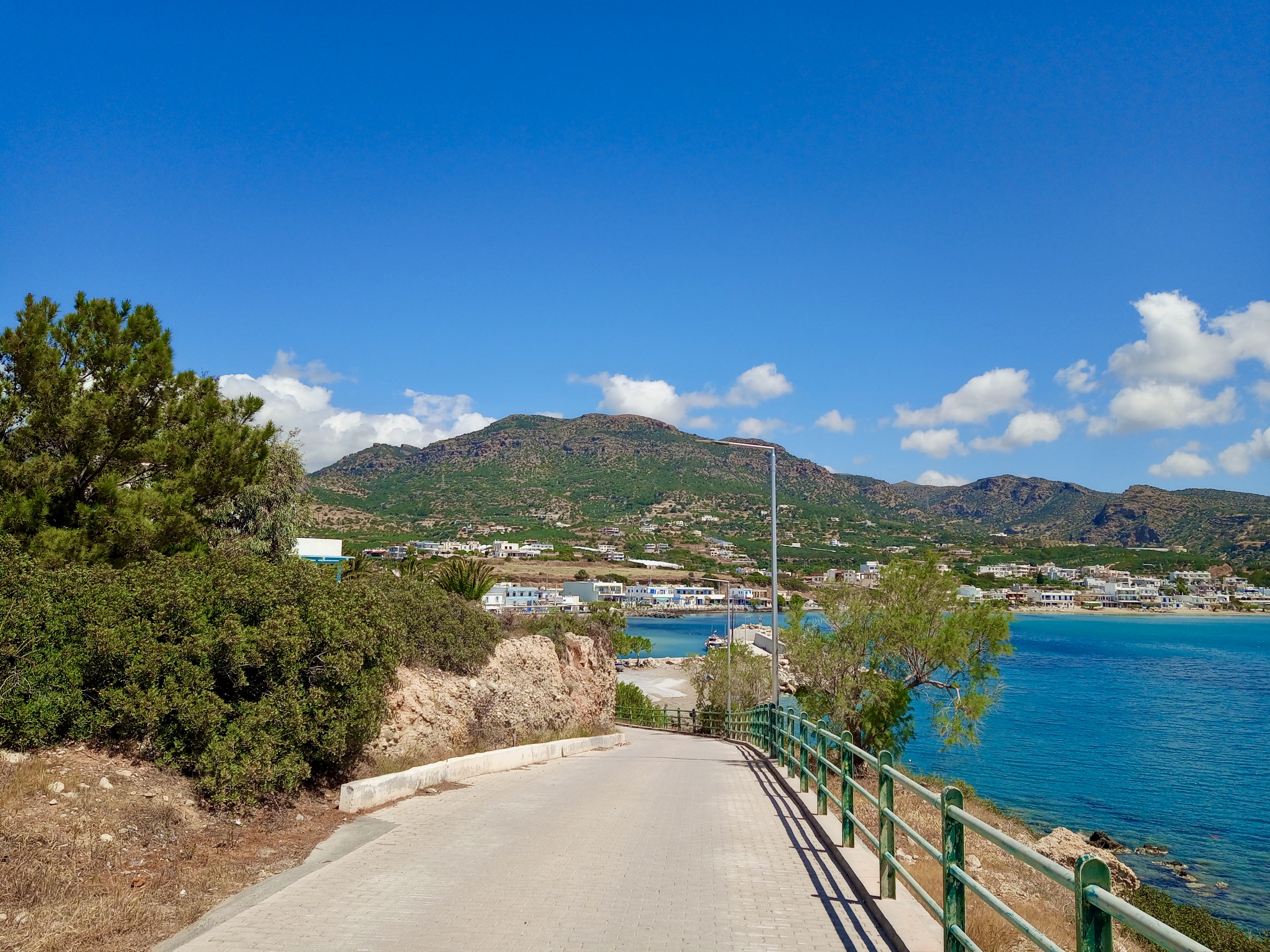
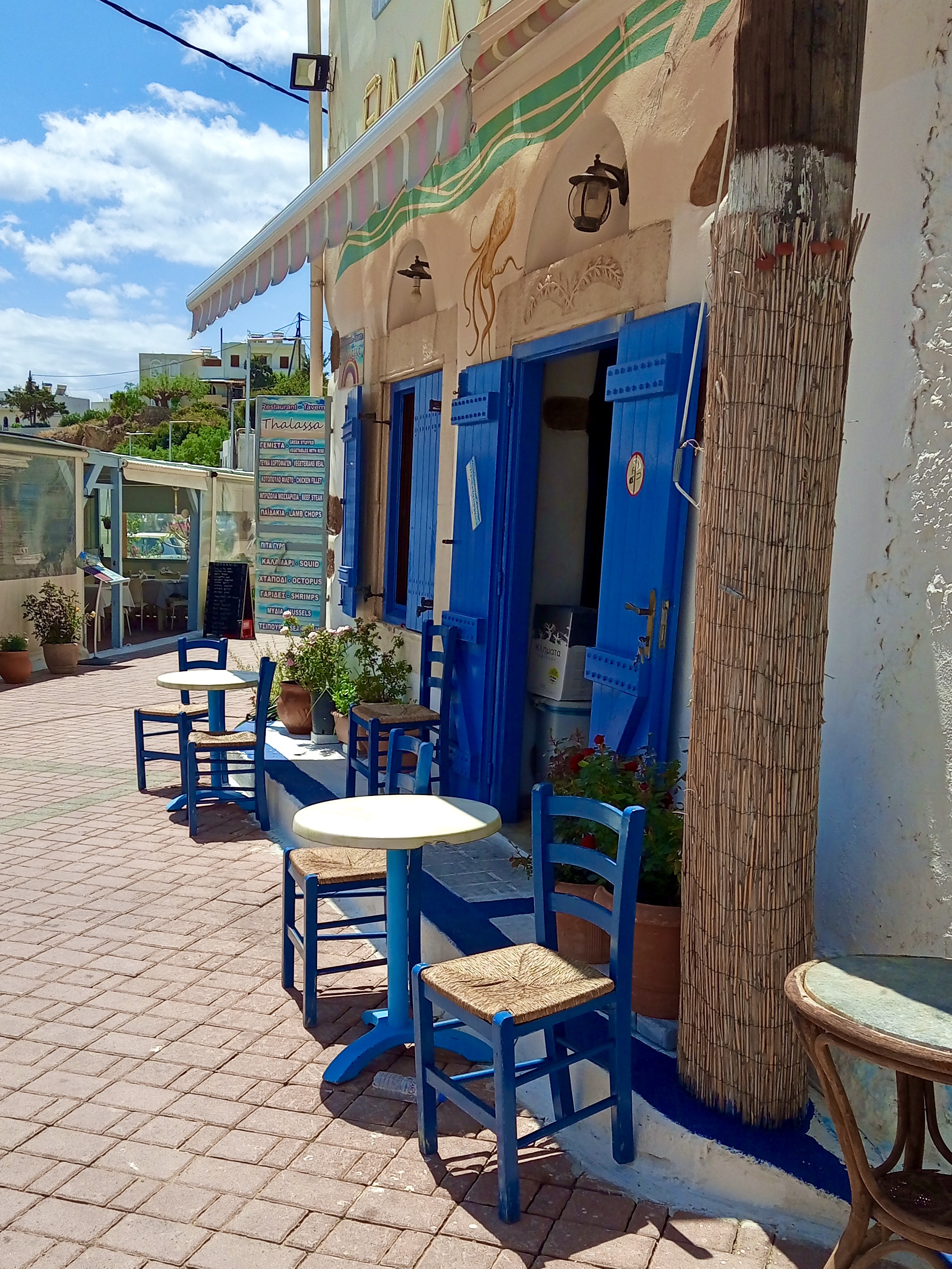
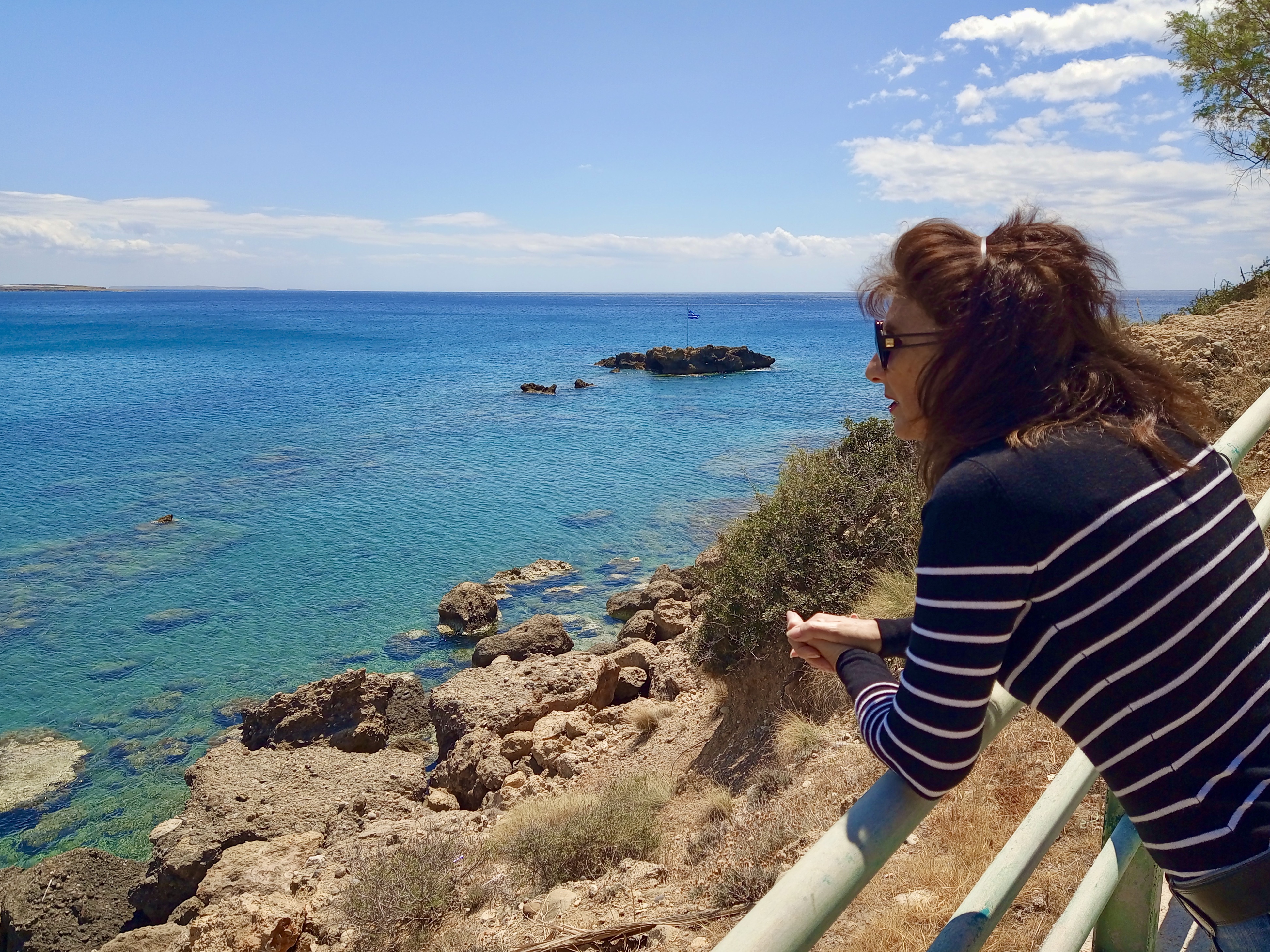
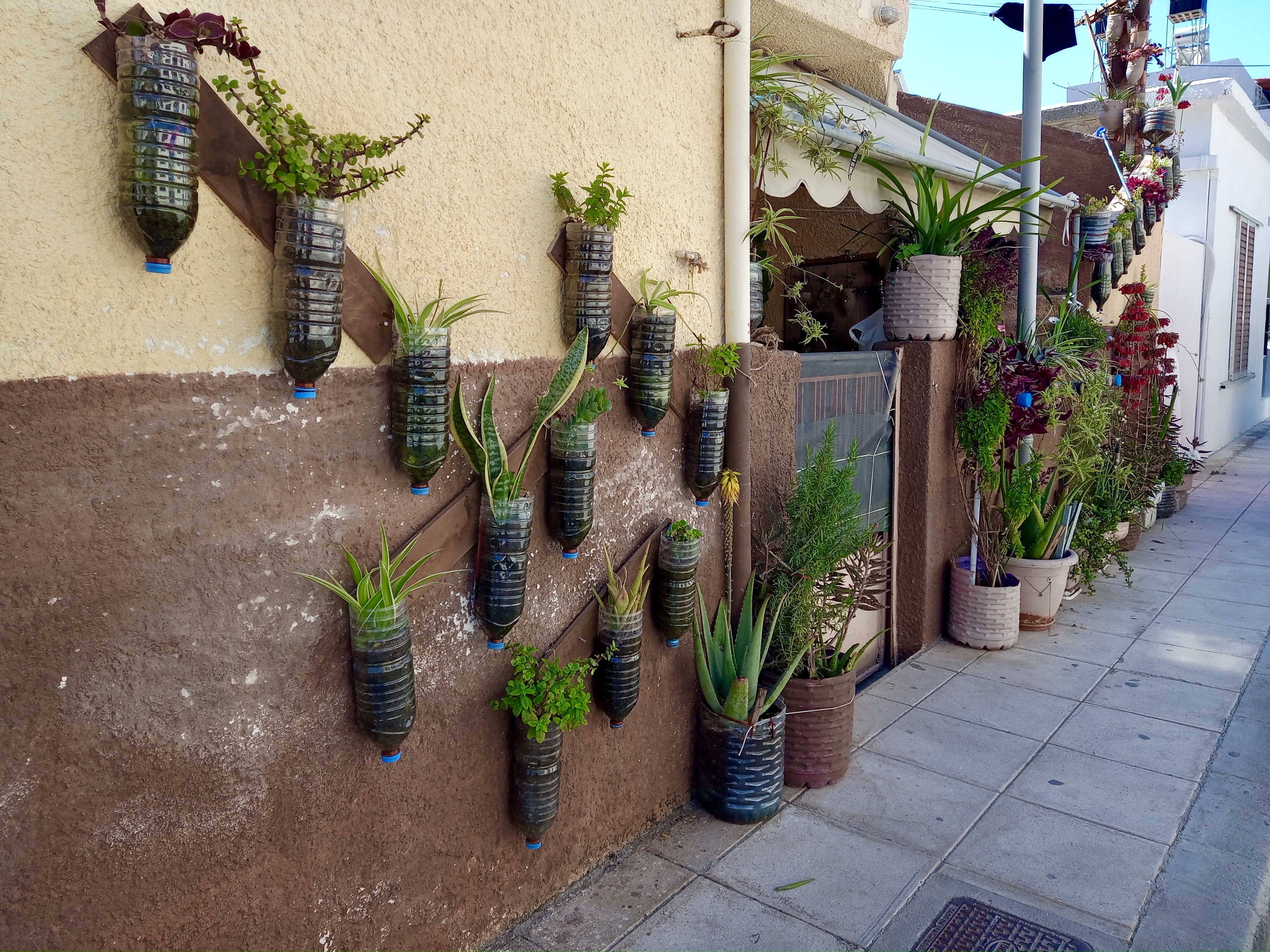
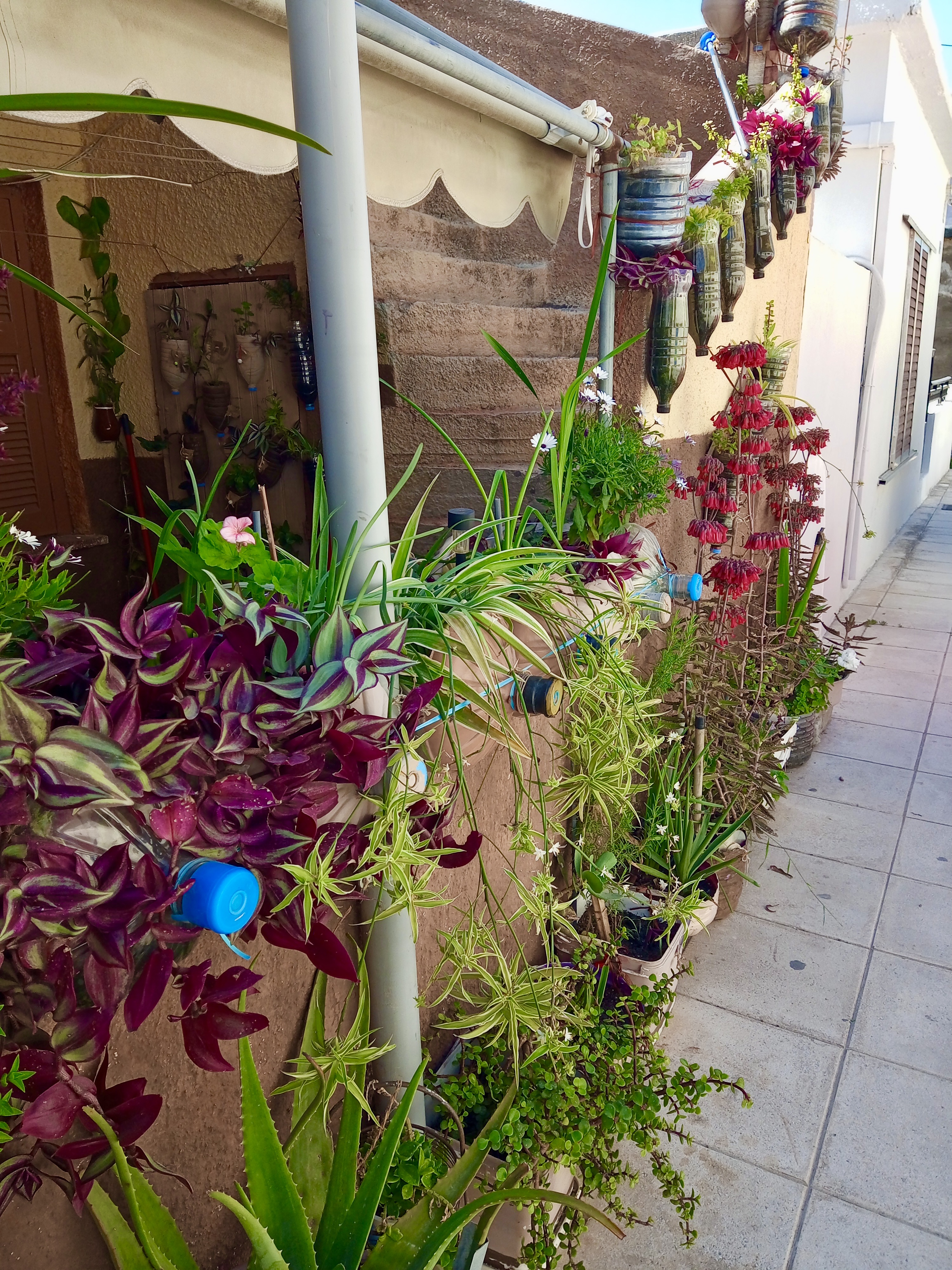
Finally, on an entirely unconnected theme, I mentioned a few posts ago about how the Greeks recycle without even being aware of it. How about this for a wall on the outskirts of town (Ierapetra) that shows how the resident has done wonders with old water bottles to spruce up a drab street…
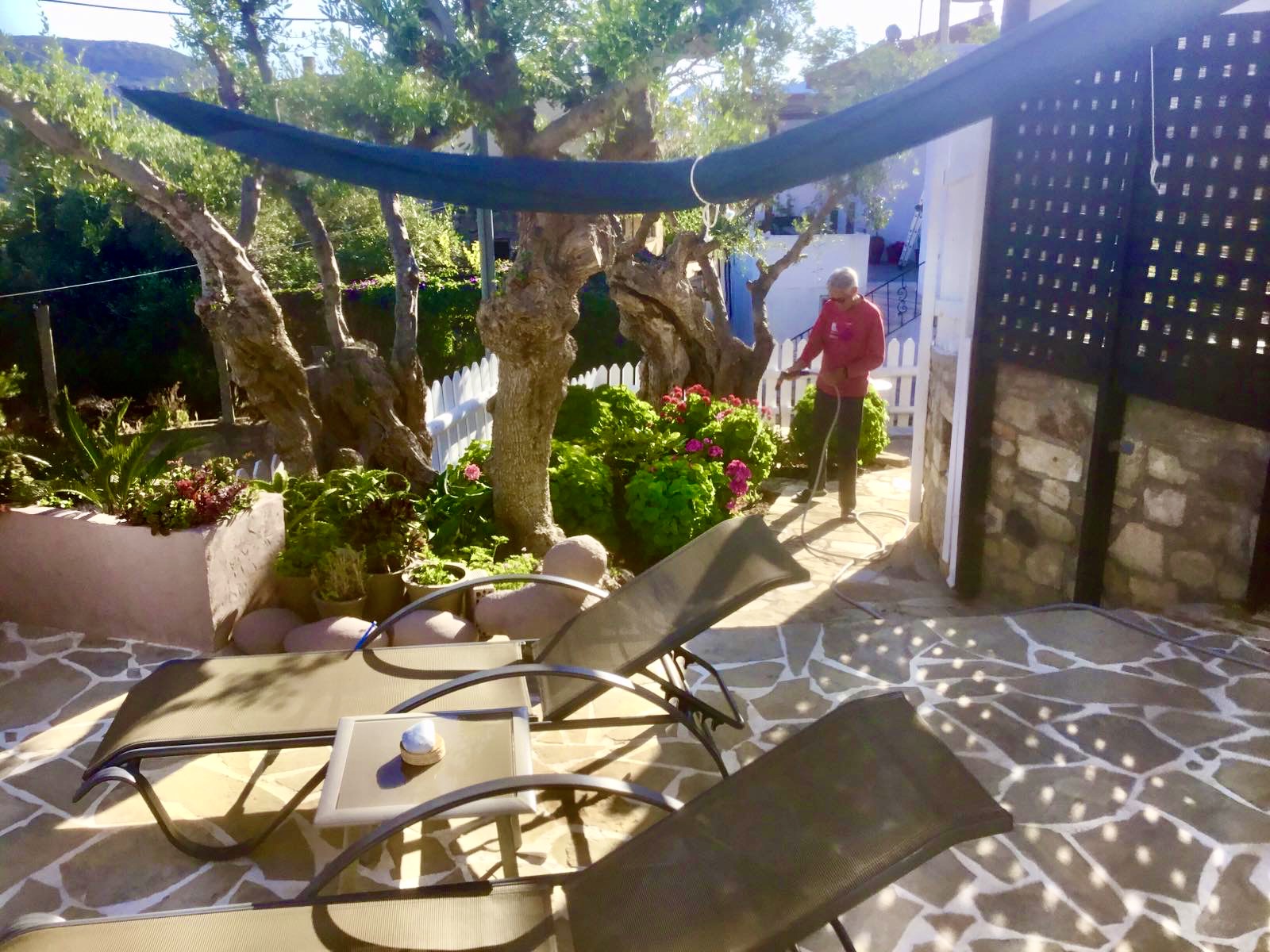
Lastly, here’s one that the beloved took of me watering the lower garden the other evening…

The latest work of fiction, “The Lone Refugee” (Click on cover image)
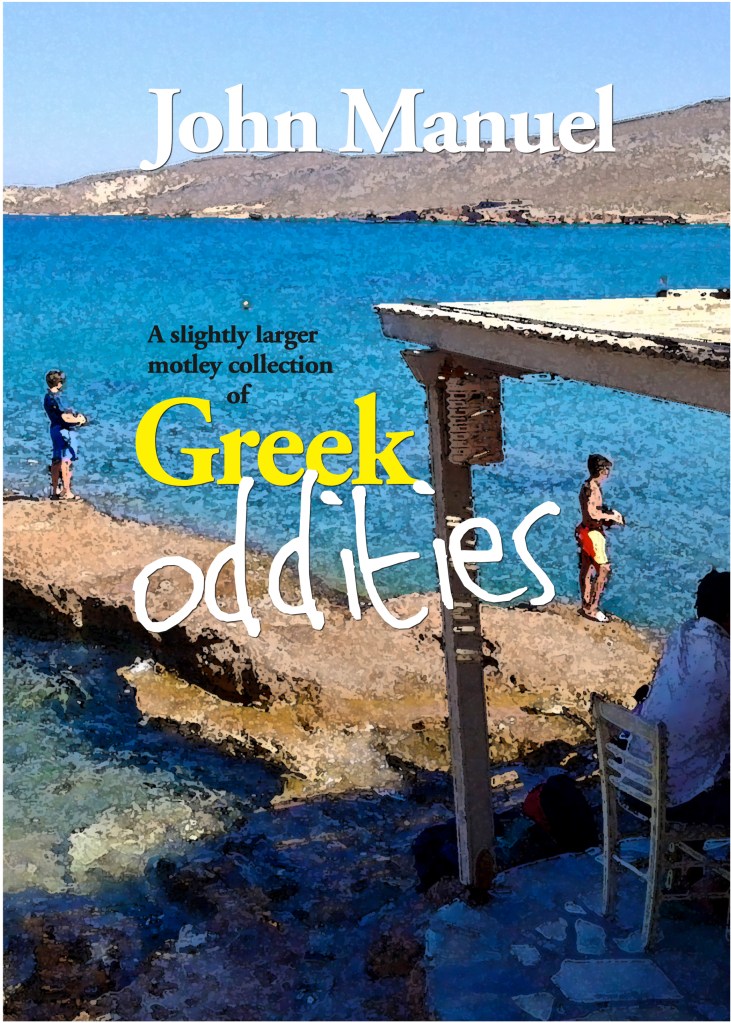
The latest work of non-fiction, “Greek Oddities” (Click on cover image)
And here’s the link to the new short story “Outage.”
 Accretions
Lovely pics John as always and pleased to note the mention of Makrigialos too.
It will be our 5th and last stop touring Eastern Crete in two weeks and we’re hoping for quiet authenticity. Also, some sun would be a great change from frosty damp Wales!
My heart yearns to get back to our favourite destination in Greece – beautiful Makrigialos! We have been holidaying in that lovely, friendly village over 30 times now, since the late 80s & have seen some changes, but ones that were all for the better. Even the large all-inclusive hotels have been kept apart from the main village, so that the essence of the Cretan atmosphere, along with all of the Cretan hospitality, is untainted by the commercialism of the large corporate hotels. We’re just counting the days before we return in mid-June, but hope that time will stand still, once we’ve arrived! Thanks, John, for the great descriptive & educational review!